airports

DAL: 5 Things We Love About Dallas Love Field Airport

The “5 Things We Love About…” series marches on. Even though we are forced to stay on the ground and close to home.

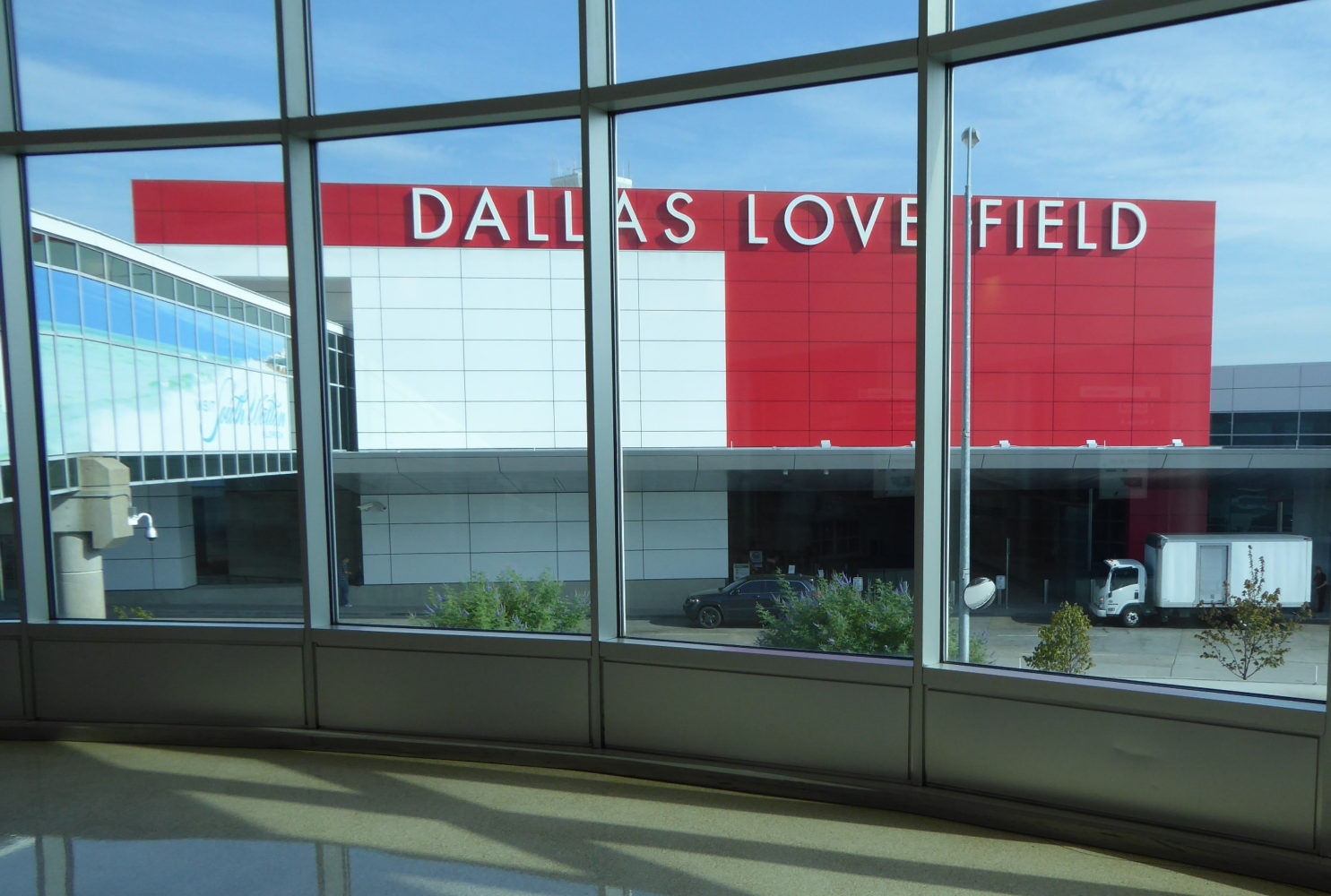
So today we are celebrating some of the features and amenities we love at Dallas Love Field Airport (DAL).
Keep in mind that some of the things we love at DAL airport may be temporarily closed due to health concerns. But we are confident they will be back.

If we miss one of the features you love about Dallas Love Field Airport, please drop a note in the comments section below.

And be sure to take a look at some of the other airports on the “5 Things We Love About…” list. The series will continue as long as there are airports to visit. There are a lot of airports, so we will just keep this occasional feature going here on StuckatTheAirport.com

5 Things We Love About Dallas Love Field Airport
1. Live at Love Stage

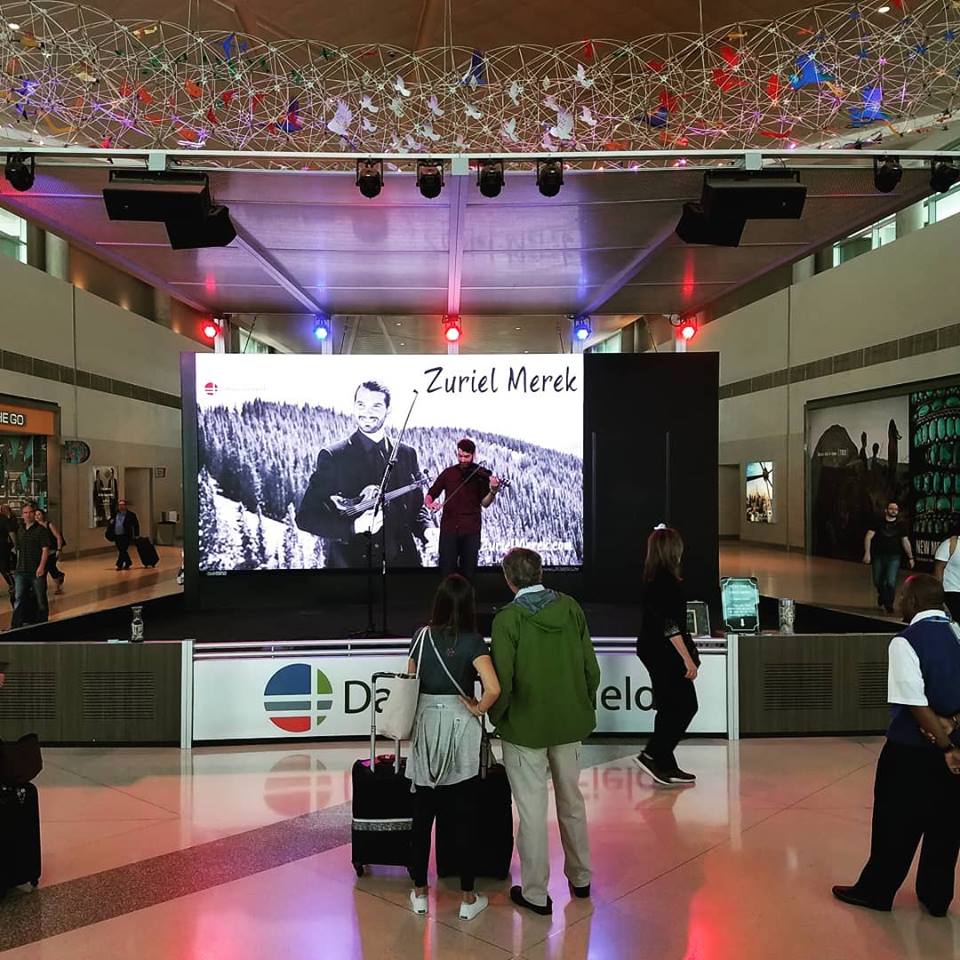
The Live at Love Stage at DAL airport presents daily, lunchtime musical performances by local artists. The music is piped throughout the terminal, so you can still enjoy the music at your gate, in a restaurant or a shop.
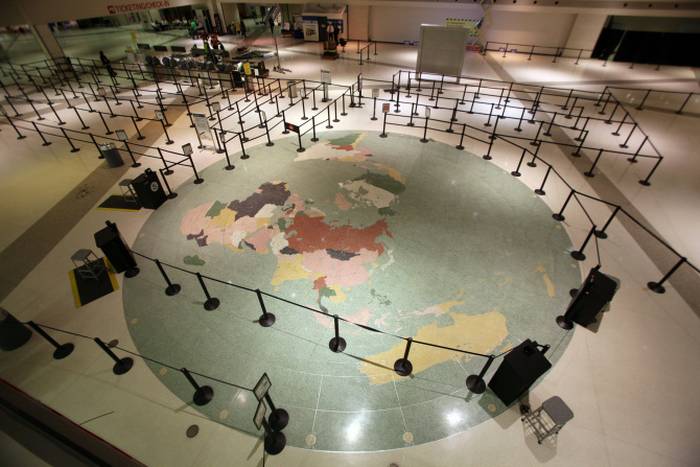
2. The Love Field Art Program
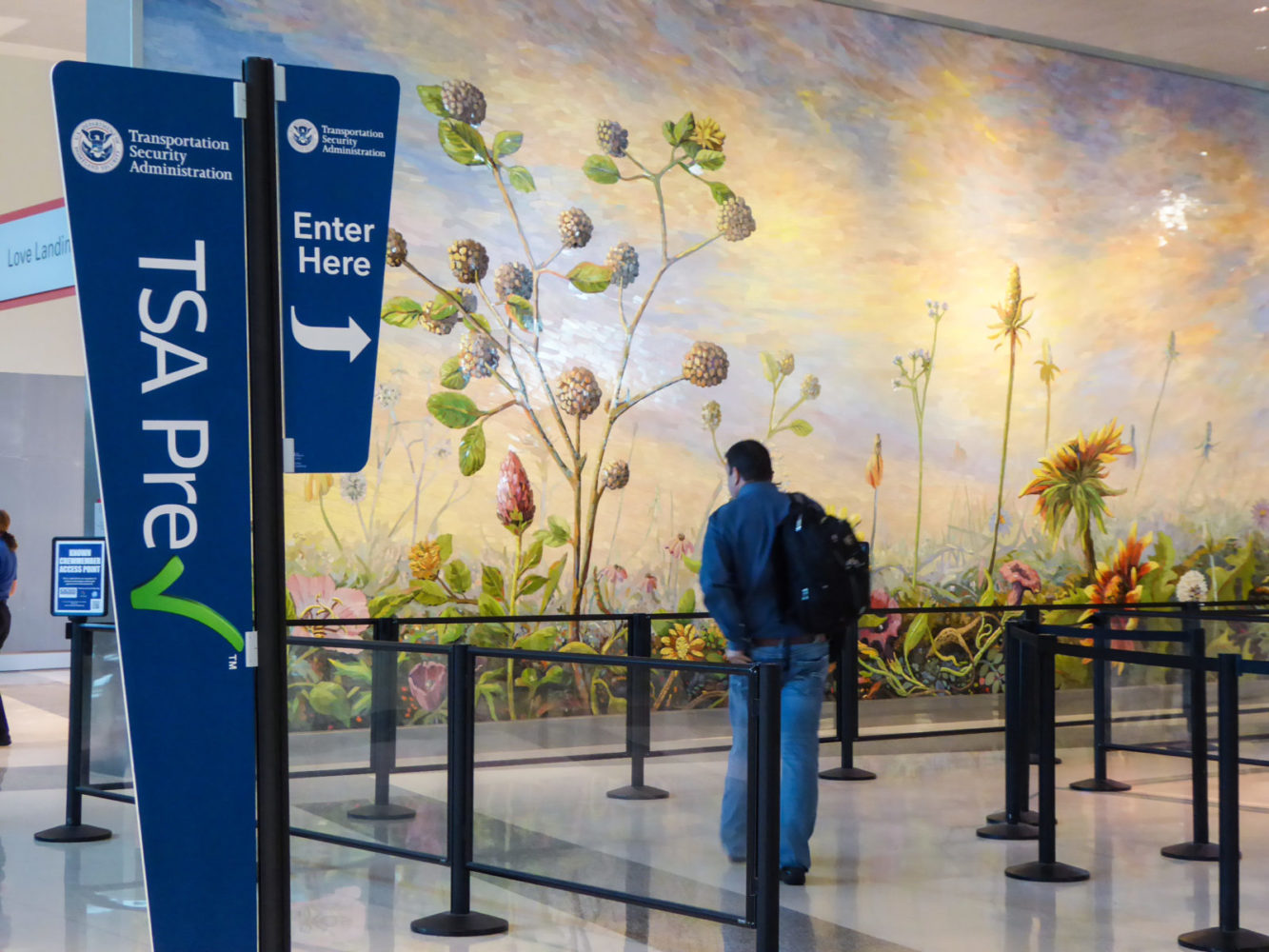
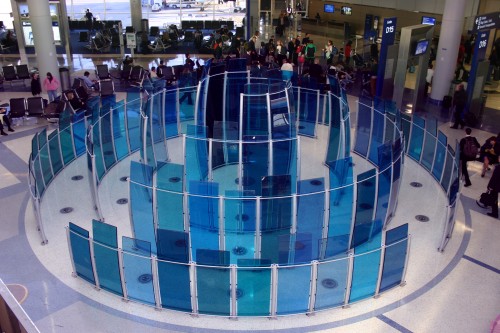
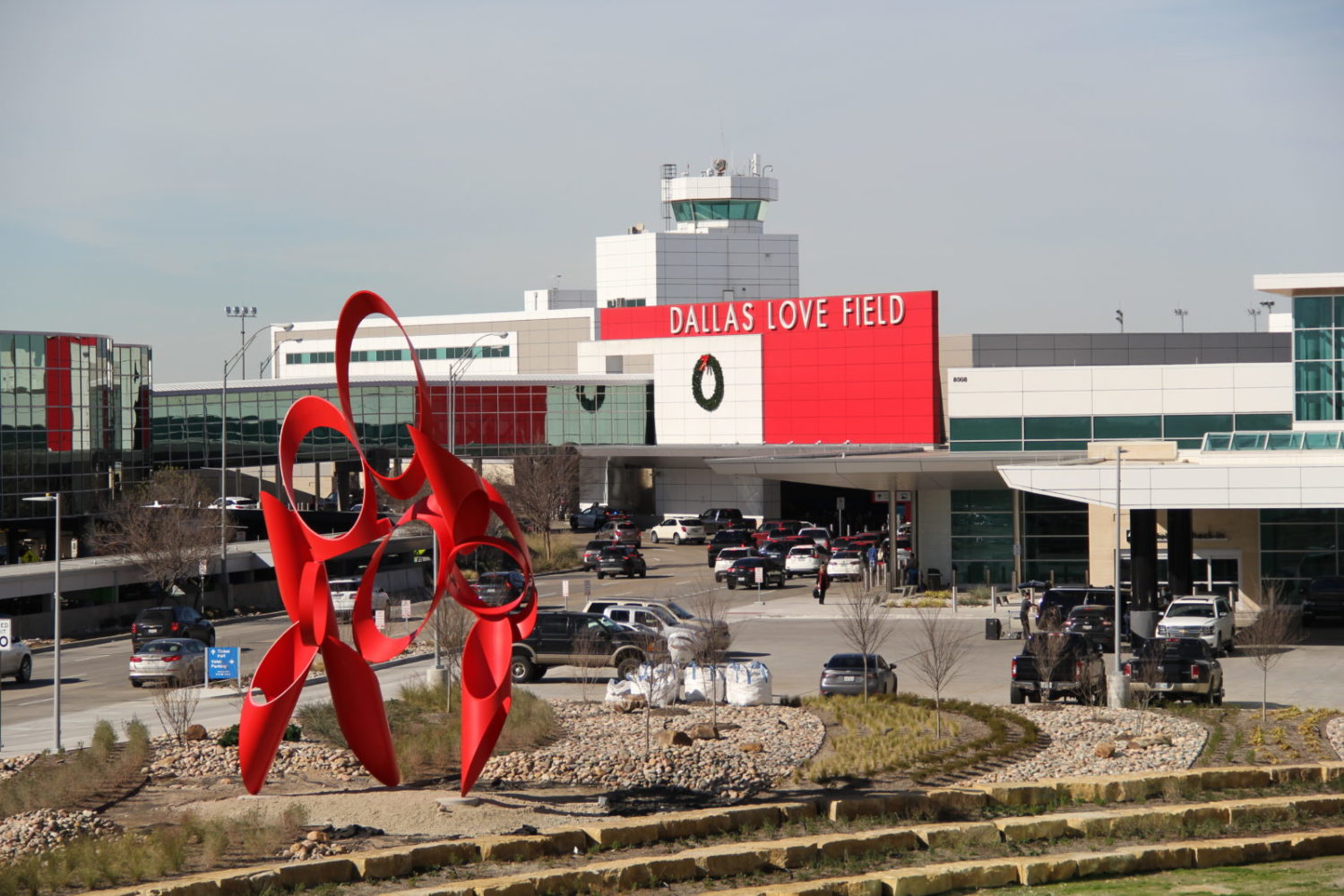
Love Field has a robust art program, with both permanent artwork and changing exhibitions to enjoy both before and after security. You can even join an airport art tour.
3. The LBJ Plaque
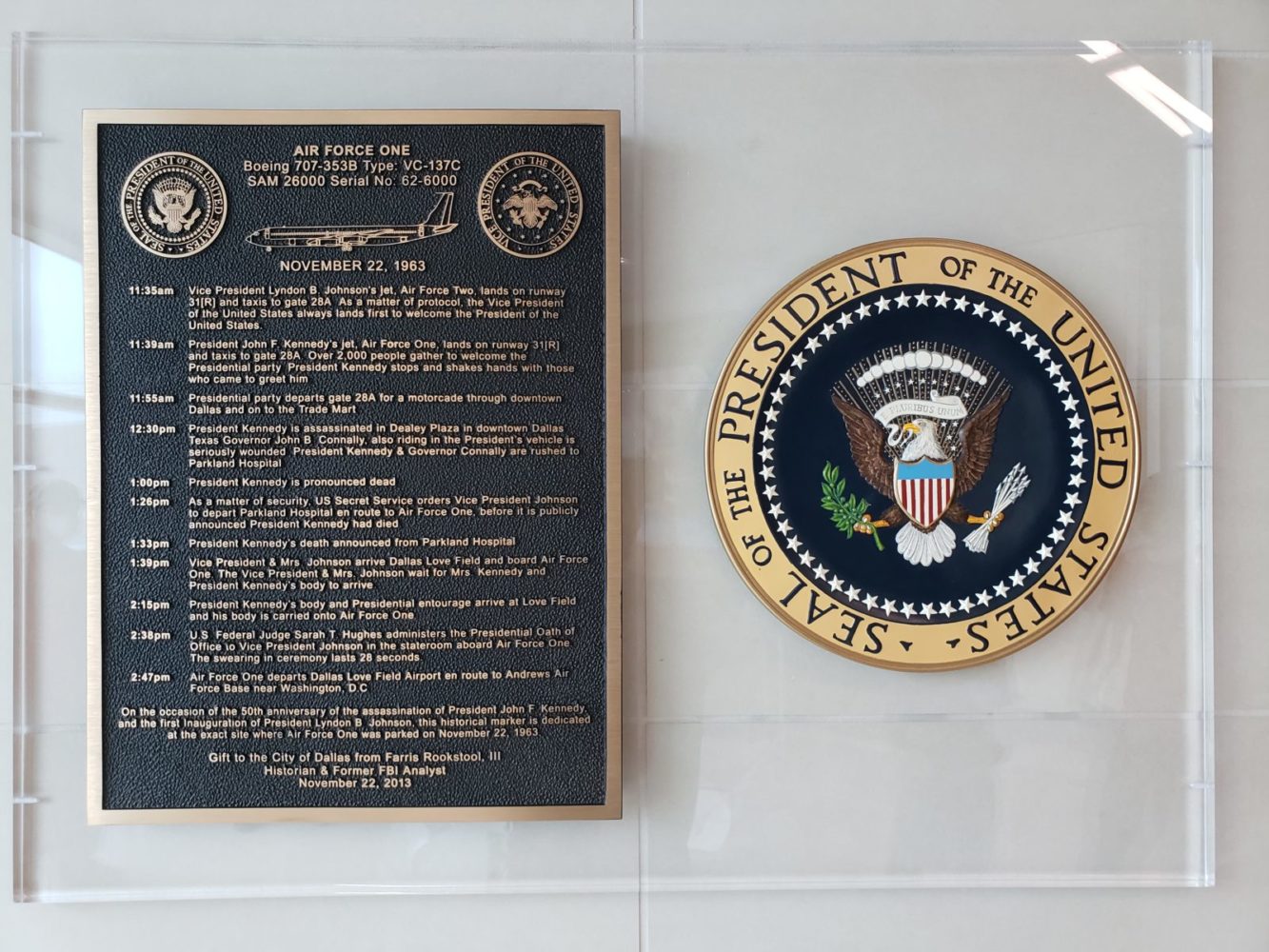
Following the assassination of President John F. Kennedy in Dallas on November 22, 1963, Lyndon B. Johnson took the oath of office as President aboard Air Force One as it sat parked on the ramp at Dallas Love Field.
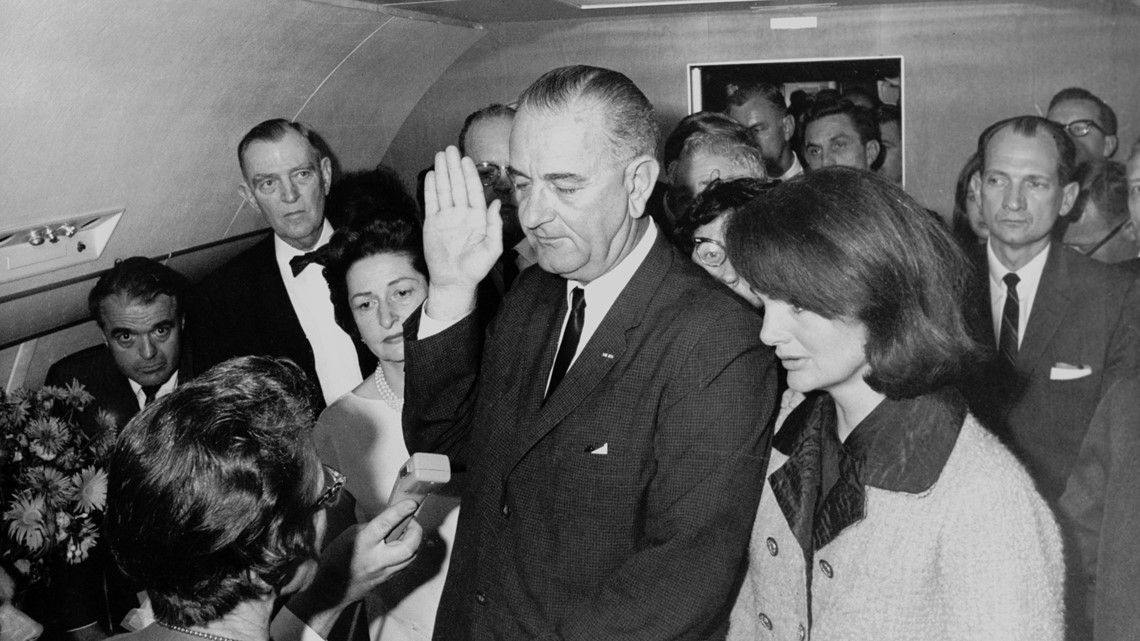
Johnson is the only President sworn-in west of the Mississippi River and an exhibit at the Love Field Observation Deck recognizes the event with a plaque and a presidential seal on loan from Amy & Farris Rookstool, III

At night, a light illuminates another plaque out on the aircraft apron that shows the exact location of Air Force One at the swearing-in.

Here’s a note from Mr. Rookstool:

 “I spent 11 years working on honoring this Presidential History at Dallas Love Field. As a child I was at DAL on November 22, 1963. Never in a million years would I have ever imagined that I would be the historian responsible for marking this historic site at the airport. The LBJ inauguration was the first and only time a President has ever been sworn in aboard and aircraft (Air Force One) at an airport.

4. Lil’ Love Lounge at Love Field

The children’s play area at Dallas Love Field Airport was a popular spot before it had to temporarily close due to COVID-19 health concerns. DAL officials promise it is coming back with a fresh new theme.

5. The Souvenirs at DAL Airport

Here at StuckatTheAirport.com, we’re a big fan of quirky, locally-themed souvenirs. The shops at Dallas Love Field Airport offer plenty of options.

Did we miss one of your favorite amenities at Dallas Love Field Airport? Let us know in the comments section below.

What airport should we feature next?
Airports empty – but busy

Airports keeping busy

As travel begins, very slowly, to gear up, most airports still feel quite empty.

But that doesn’t mean airport teams aren’t keeping busy.

Someone was having fun with the airport code for Hartsfield-Jackson Atlanta International Airport (ATL):

Denver International Airport (DEN) shared some very corny jokes:

Dallas Love Field (DAL) is celebrating its history:

And McCarran International Airport (LAS) in Las Vegas is having fun with its Vegas-themed public awareness campaign.

TSA’s new rules for security checkpoints

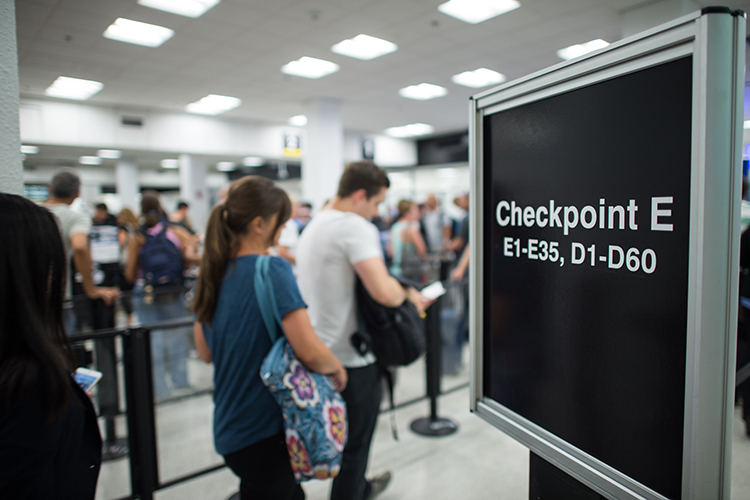
As we head into the Memorial Day holiday and a slight uptick in air travel, the Transportation Security Administration rolling out some new rules for the security checkpoint screen area in response to COVID-19.

Some of these strategies are already in place. Others will show up at checkpoints by mid-June.

Scan you own boarding pass

Still no word about TSA taking passenger temperatures, but TSA officers will now ask passengers to place their paper or electronic boarding pass on the ticket readers themselves. TSOs will still examine your document, but they won’t touch it.

Clear bags for food

TSA also now asks passengers to put any carry-on food items in a clear plastic bag and place that bag in a bin at the checkpoints.

“Food items often trigger an alarm during the screening process; separating the food from the carry-on bag lessens the likelihood that a TSA officer will need to open the carry-on bag and remove the food items for a closer inspection,” TSA says in a statement.

“This allows social distancing, reduces the TSA officer’s need to touch a person’s container of food, and reduces the potential for cross-contamination. TSA Precheck members do not need to remove items from their bags,” TSA adds.

If you haven’t flown since the pandemic arrived, you’ll see TSA checkpoint officers wearing facial protection and gloves. Passengers are also asked to wear masks at checkpoints as well and be prepared to lower their masks if requested. At many airports, masks are now required throughout the terminals and on the planes.

Airports upping their safety act with helmets and more

What are airports up to now?

If you’re heading to an airport now or sometime in the future, the new normal is going to be, well, different.

Masks for everyone, please.

As more and more airlines now require each employee and passenger to cover their mouth and nose with a mask or cloth, airports from Seattle to Singapore are adding that requirement to anyone entering the terminals.

https://twitter.com/ChangiAirport/status/1259382157039960064?s=20

Temperature checks may become the new normal.

Airports in Asia have been scanning travelers’ temperatures for quite some time.

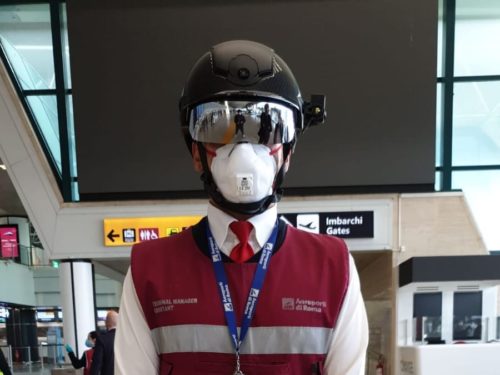
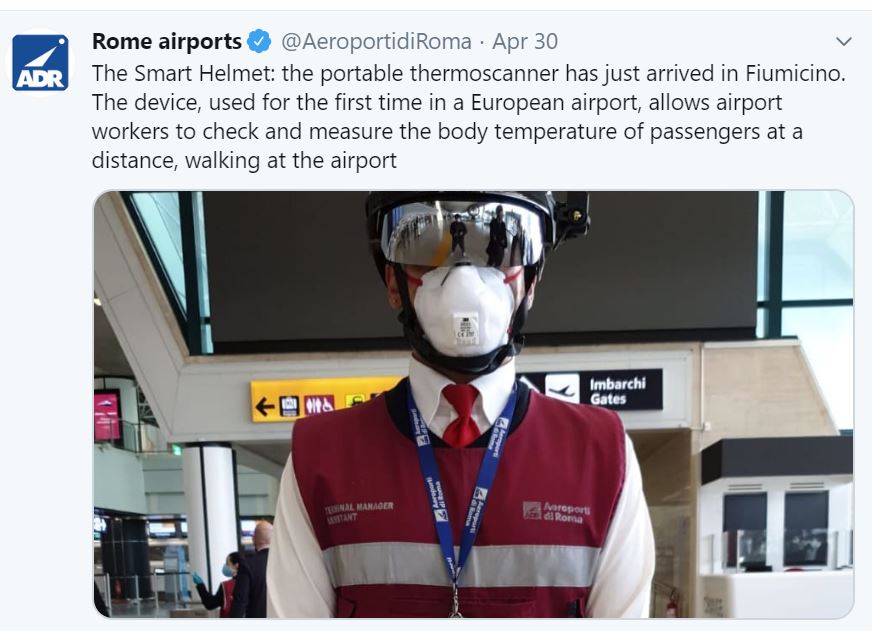
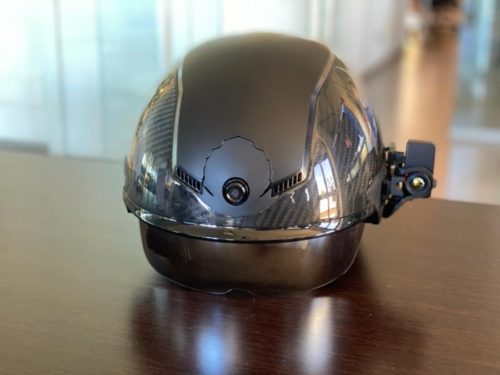
Now Fiumicino Airport in Rome is using ‘smart helmets’ to check the temperature of passengers.

The device is worn by airport workers and allows them to check and measure the body temperature of passengers at a distance.

Frontier Airlines, which stepped back from charging an extra fee to keep middle seats free, will begin pre-boarding temperature screenings for passengers on June 1.

Customers will be screened via touchless thermometers prior to boarding.

If the temperature reading is 100.4 degrees or higher, they will be given time to rest and, if the flight departure time allows, get another temperature check.

“If the second check is 100.4 degrees or higher, a Frontier gate agent will explain to the customer that they will not be flying that day for the health and safety of others,” the airline said in its statement. Any passenger with a 100.4 degrees or higher fever will be offered the option to rebook travel on a later date or make other arrangements.

And don’t be surprised if in the not-too-distant future TSA officers scan you for a fever at the same time they’re looking through your stuff.

What do you think of these moves? Will it make you feel safer when you fly?

23 airports hosting 1 big music festival May 6

Airports are really lonely and miss serving as the front doors to their cities.

So they’re working hard to stay in touch with their communities with updates on their Covid-19 responses, of course, but also with educational and cultural activities.

Case in point: 23 North American airports are joining together on Wednesday, May 6 to host the JetStream Music Festival.

The online event celebrates local music from each of the host cities and kicks off at 5 p.m. CST on May 6 on each of the participating airports’ Facebook Live.

Here’s how the JetStream Music Festival will work:

Each airport will feature a 10-minute set from a local musician.

Each musician will have a virtual tip jar so you can contribute during the stream.

Here’s the lineup:

  • Gina Chavez – Austin-Bergstrom International Airport (AUS) 
  • Don Hicks – Fort Lauderdale Hollywood International Airport (FLL)
  • Eddy Fabrizio Castellanos – Jacksonville International Airport (JAX)
  • Jane Kramer – Asheville Regional Airport (AVL)
  • Chuck Courtenay – Savannah/Hilton Head International Airport (SAV)
  • Lauren Eylise – Cincinnati/Northern Kentucky International Airport (CVG)
  • Kendal Conrad – Lehigh Valley International Airport (ABE)
  • Chill Moody – Philadelphia International Airport (PHL)
  • Julian Taylor – Toronto Pearson International Airport (YYZ)
  • Honey & Blue – John Glenn Columbus International Airport (CMH)
  • Big Blitz – Pittsburgh International Airport (PIT)
  • Key to Adam – Yeager Airport (CRW)
  • Zuriel Merek – Dallas Love Field Airport (DAL)
  • John Hayes – Minneapolis-Saint Paul International Airport (MSP)
  • The Honey Vines – Evansville Regional Airport (EVV)
  • Robin Barnes – Louis Armstrong New Orleans International Airport (MSY)
  • Rhythm Kings – Milwaukee Mitchell International Airport (MKE)
  • Leah Leyva – Albuquerque International Airport (ABQ)
  • Patrick Contreras – Fresno Yosemite International Airport (FAT)
  • Tyler F. Simmons – John Wayne Airport (SNA)
  • Jordan Richard – Portland International Airport (PDX)
  • Nico Hueso – San Diego International Airport (SAN)
  • Tomo Nakayama – Seattle-Tacoma International Airport (SEA)

Hot or not? This U.S. airport testing for fevers.

Courtesy Paine Field Airport

What will air travel be like once the ‘stay home’ advisories are lifted?

Here’s a preview:

The passenger terminal at Paine Field (PAE) in Everett, WA, north of Seattle, just installed a fever detection system. The system is non-invasive, non-contact and scans passengers in the security checkpoint area to see if they’re running a fever.

Systems like this are in use in many Asian airports and in other parts of the world. But this seems to be the first time a fever detection system has been installed at a U.S. airport.

How does the Elevated Body Temperature Detection system work?

How does the Elevated Body Temperature Detection system work? Here’s how Athena Security describes it:

“The system identifies the face of the subject, ignores hot spots like hot lights above and other hot objects on the person like a cell phone or hot coffee. The person looks at the camera and the system finds the hottest point on the face near the eyes, called the inner canthus. Near the eyes is the area that most closely correlates with basal body temperature, so the subject needs to remove glasses and look at the camera.”

Athena Security also notes that the fever detection system only identifies elevated temperature. It does not diagnose any disease or virus, such as COVID-19.

The Paine Field passenger terminal is operated by Propeller Airports, which says the system is installed and operating in the area before the TSA checkpoint, which the airport, not TSA, controls.

Any passenger flagged as having a temperature will be offered secondary screening. If a fever is confirmed, “the passenger and the airline will determine their ability to travel,” Propeller Airports said in a statement.

While the fever detection system it is not a TSA-sponsored initiative, “the agency supports efforts by airports and airlines that help reduce the spread of the virus and allow a prudent return to normal operations,” TSA spokesman Lorie Dankers told Stuck at The Airport via email.

The fever detection is not the only innovative safety technology at Paine Field Airport. Last month the airport began using an innovative and proprietary UV technology to disinfect the terminal.  

The small Paine Field passenger terminal in Everett, WA opened in March 2019. Before schedule reductions due to COVID-19, Alaska Airlines and United Airlines were operating about 24 flights a day from PAE

What do you think? Are you willing to have your temperature taken at the airport?

Airports: “We’re open”

Restaurants, shops, bars, schools and offices in many communities are closed.

But airports? For now, they’re open.

Although activities in and around the terminals are different, with far fewer passengers and flights than normal.

Philadelphia International Airport (PHL) has opened its garages to free parking. And posting a list of which dining, shopping and service locations are open.

Boston Logan International Airport (BOS) has shifted its dining options to take-out and in-terminal delivery service from At Your Gate.

At San Francisco International Airport (SFO), all restaurants are open for now, but many with reduced hours. Bars are closed. And, as with restaurants in many cities, service is take-out only.

Seattle-Tacoma International Airport (SEA) is sharing a list of which restaurants remain open for grab-n-go food options.

The Transportation Security Administration (TSA) and Hartsfield-Jackson Atlanta International Airport (ATL) have closed the North and South terminal checkpoints.

Here are recent messages from other airports.

As with everything else in the world right now, situations are changing. So if you’re headed to an airport, check ahead.

And, on Wednesday morning, not long after an earthquake was reported near Salt Lake City, the airport tweeted this:

Some airports close or cut back seating areas, restaurants, stores

Airline schedule cuts, the drop in travel and orders in some cities and states to close the dine-in area of restaurants and bars means some airports are cutting back the hours of concessions or closing them altogether.

We’ll likely see more of this in the days to come.

Here’s the start of our list.

Fewer flights, but TSA + airports still fighting germs

Pretty much every airline is spooling out schedule cuts in response to reduced passenger demand, concerns about coronavirus and government-imposed restriction.

American Airlines, Delta Air Lines, Etihad, Norwegian and Singapore Airlines are just a few carriers that have made serious schedule adjustments in the past few days.

Fewer planes will be in the skies, but airports remain open.

And the Transportation Security Administration, which recently confirmed that three of its officers at Mineta San Jose International Airport (SJC) tested positive for the COVID-19 virus, is finally getting into gear with security checkpoint-specific advice for travelers.

TSA is reminding travelers that it is OK to bring individually packaged alcohol or anti-bacterial wipes in carry-on or checked luggage. Jumbo containers of hand wipes are also allowed in carry-on or checked luggage, says TSA, as are liquid hand sanitizers.

For safety reasons, savvy travelers already know to put personal stuff such as wallets, keys, phones, loose change, etc., inside their carry-ons and not loose in the bins going through the x-ray machines.

But those bins don’t get cleaned very often – if at all – and are full of germs.

So, TSA is reminding travelers to keep their personal items from touching the bins and to wash their hands as soon as possible after going through the screening process.

Airports are continuing their efforts to stay extra clean as well.

Airports with award-winning customer service

Considering the current coronavirus concerns, you may not be spending much time hanging out in airports for a while.

But when you do venture out, let’s hope it is to, from or through one of the airports that got top honors this week in the Airport Service Quality Awards given out by Airports Council International (ACI), an organization representing airports around the world.

The awards are based on passenger surveys that rate each airport in 34 categories, including facility access, check-in, security screening, stores, restaurants and restrooms.

Here are the airports in North American that will take home some of the 140 awards given:

Best Airports by Size – North America:

Under 2 million passengers

Capital Region International Airport – LAN (Lansing, Michigan)

Jean-Lesage International Airport – YQB (Quebec, Canada)

Between 2 and 5 million passengers – North America

Courtesy El Paso International Airport

El Paso International Airport – ELP (El Paso, Texas)

Portland International Jetport – PWM (Portland, Maine)

Between 5 and 15 million passengers – North America

Cincinnati/Northern Kentucky International Airport (CVG) – Cincinnati, Ohio

Indianapolis International Airport (IND) – Indianapolis, Indiana

Jacksonville International Airport (JAX) – Jacksonville, Florida.

Between 15 and 25 million passengers – North America

Dallas Love Field Airport (DAL) – Dallas, Texas

Tampa International Airport (TPA) – Tampa, Florida

Between 25 and 40 million passengers – North America

MSP’s award-winning restroom

Minneapolis – St. Paul International Airport (MSP) – Minneapolis, Minnesota

Over 40 million passengers – North America

Dallas Fort Worth International Airport (DFW) – DFW Airport, Texas

Toronto Pearson International Airport (YYZ) – Toronto, Canada