TSA security checkpoint

PHX joins list of airports where you may reserve your TSA time

No one loves standing on airport TSA security lines. Except maybe Amelia the Airplane, the mascot for Phoenix Sky Harbor International Airport (PHX).

Now, PHX joins the list of airports where passengers may cut their TSA line wait time by booking ahead. The pilot program is called PHX RESERVE and it kicks off first in PHX Terminal 3.

Travelers may go online and book their reservations up to 72 hours ahead of their flight. When their reservation slot comes around, passengers then go through a dedicated entry TSA entry point.

Better yet: the program, which is an example of ‘virtual cueing’, is free.

Here is a bit more information about the program:

The dedicated PHX Reserve security entry point will be available daily between 4 a.m. and 3 p.m. Reservation times can be made for between 60 minutes and four hours before a passenger’s flight. Individuals can book a spot for themselves or for up to 10 people traveling as a group.

“We are proud Sky Harbor can offer another great service to our customers to make their travels easier and more flexible,” said Chad Makovsky, Director of Aviation Services for the City of Phoenix Aviation Department. “What’s good for our passengers and guests is good for the air travel industry as a whole.”

The ability to schedule a time to go through the airport security checkpoint line is a welcome amenity being offered at other airports too, under a variety of names. The list includes:

SEA Spot Saver at Seattle-Tacoma International Airport (SEA)

DFW Fast Pass at Dallas Fort Worth International Airport (DFW)

LAX Fast Lane at Los Angeles International Airport (LAX)

VirtuaLine in Terminal A at Newark Liberty International Airport (EWR).

If we missed the TSA reservation program at your airport, let us know and we’ll add it.

Travel Tidbits from airports, airlines, and museums near you

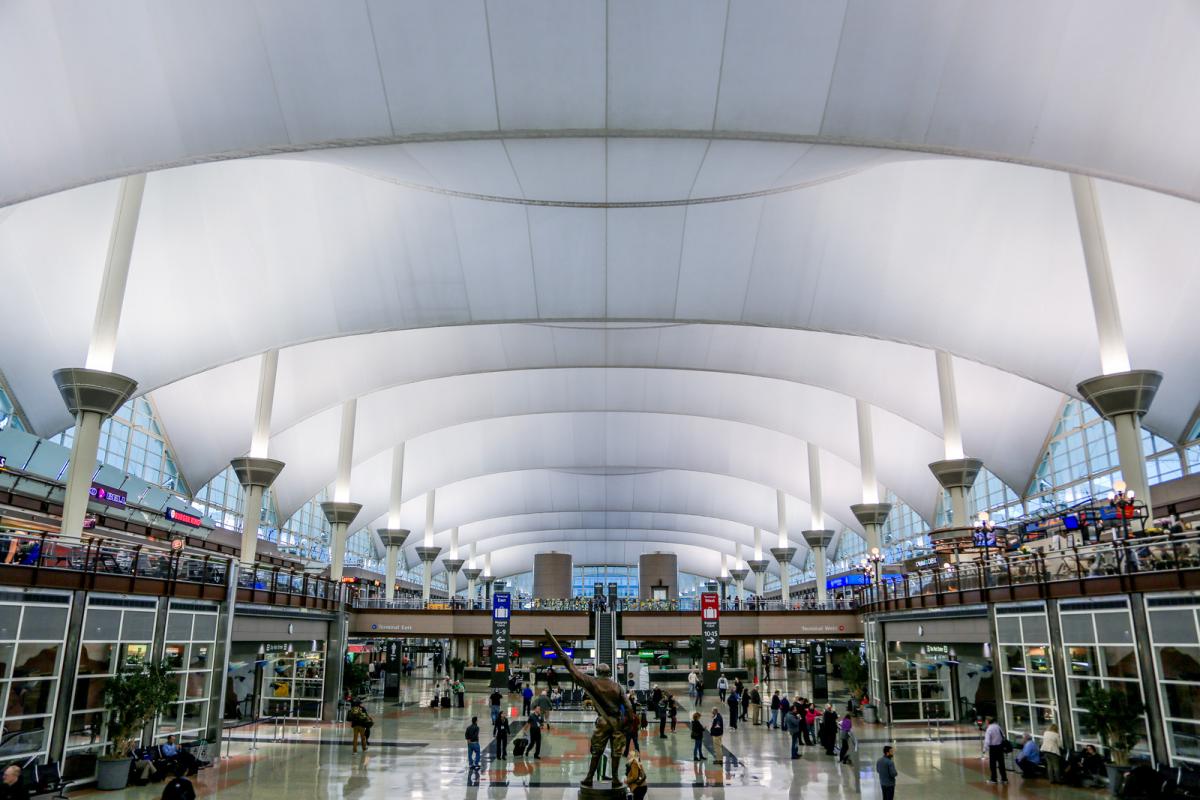
Changes at Denver International Airport Checkpoints

Denver International Airport (DEN) is making some big changes at several of its security checkpoint lanes this week, with the goal of making traveling through the airport easier.

You can read all the details about DEN’s TSA Checkpoint shuffle here, but one new feature that caught our attention is the Travel-Lite Lane that TSA will be offering at the North Security Checkpoint. This express lane is set aside for ravelers with only one item, such as a backpack, briefcase, or purse. A great idea for those who have checked their suitcases and/or are traveling light.

Zip it! Check out the Zipper Dress made by a Southwest Airlines Ramp Agent

Places We’d Go: John Soane’s Museum in London

Throughout the pandemic, Viking Cruises’ Viking.TV has been providing lectures and behind-the-scenes visits to wonderful places all over the world. We’re big fans of Museum Mondays and this week’s offering is a documentary about restoring one of our favorite places in London, Sir John Soane’s Museum, to its original state.

Take a look.

Ready for the summer travel tsunami?

(This is a slightly different version of a story we wrote for NBC News online)

Summer travel may cause some headaches

Memorial Day weekend and a unusual travel season are just around the corner.

Experts expect a summer travel tsunami fueled by a dip in Covid-19 infection rates, rising vaccination rates, and the reopening of attractions, resorts, and other tourist destinations.

AA predicts that 34 million Americans will take road trips 50 miles or more from home during the Memorial Day holiday, May 27-31. That is a 52 percent increase compared to last summer — although still about 9 percent below the pre-pandemic levels in 2019.

More than three-quarters of Americans (77 percent) plan to take trips this summer, according to the latest results of a Harris Poll survey.

But with everyone rushing to go somewhere – anywhere – travelers may find their dream destinations hard to book or sold out already.

“Travelers should be aware that there is still limited supply, as airlines haven’t brought back fleets in full, there are hotels that haven’t opened or are at limited capacity, and car rental fleets are still reduced,” said Kelly Soderlund of travel management company TripActions. She advises travelers determined to hit the road this summer to book as arly as possible to avoid being disappointed by a lack of inventory or by high prices.

Here are some of the summer travel “hiccups” travelers may encounter — and some tips for how to handle them.

High Gas Prices

AAA says motorists will be met with the highest gas prices since 2014.

Gas prices were expected to flirt with $3 per gallon leading up to Memorial Day weekend. But last week’s shutdown of the Colonial Pipeline caused prices to spike weeks ahead of the holiday.

“Americans will still take their road trips,” says AAA spokesperson Jeanette McGee, “They just may not travel as far as originally planned and may spend a little less.”

To save money on gas, make sure your car is tuned up and your tires are properly inflated, join gas station rewards programs, and download one or more gas price apps to your smartphone so you can compare prices on the road.

Crowded planes, high ticket prices

Right now, flights are 77 percent full on average, compared to 85 percent to 90 percent pre-pandemic, said Scott Keyes, founder of Scott’s Cheap Flights. “But hidden under that topline average is the fact that popular leisure flights to places like Hawaii and Florida are regularly seeing completely full planes. With Memorial Day such a popular time to travel, expect airports to be crowded and planes filled to capacity.”

While the dirt-cheap fares airlines floated during the pandemic are long gone, there is some good news for air travelers.

“Two new budget airlines, Avelo and Breeze, will introduce more low-fare seats and increase competition,” said travel industry analyst Henry Harteveldt of Atmosphere Research. In addition, “United Airlines just announced it is adding more domestic flights, and Southwest is adding new flights between the mainland U.S. and Hawaii.”

Long lines at security checkpoints

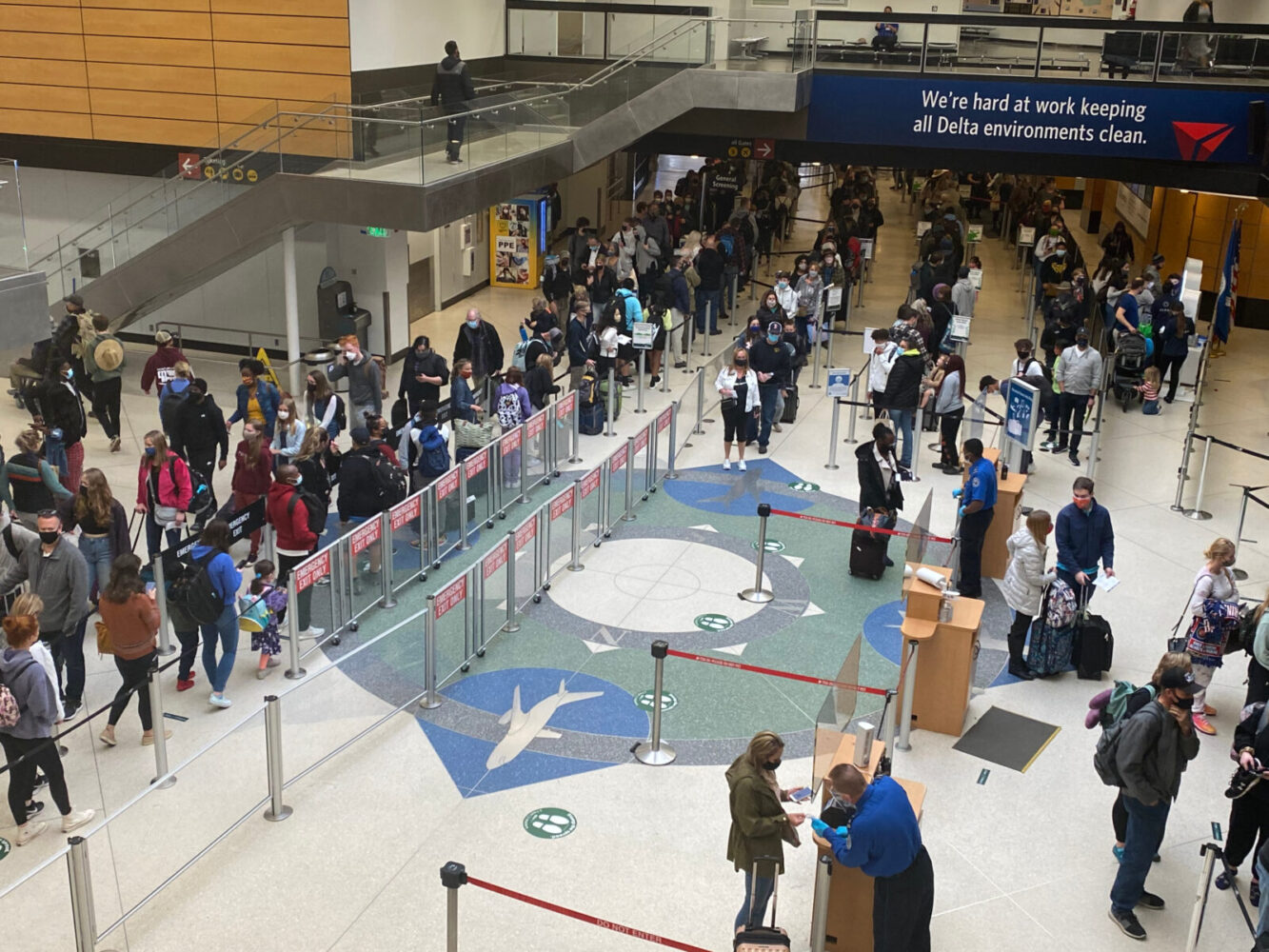
Passenger volumes continue to rise at airports across the country. In many airports, that means the return of long lines at security checkpoints.

“We are encouraging people to arrive at their airports early, like they were asked to do prior to the pandemic,” TSA spokeswoman Lisa Farbstein said.

Expect longer lines at airports where the TSA is short-staffed and unable to open all checkpoints during the busiest times. Elsewhere, lines may stretch out because passengers who have not flown in the past year have rusty packing skills. In addition to finding a lot of oversize liquid containers in travelers’ carry-on bags, TSA officers are finding that many passengers are still forgetting to leave their firearms at home.

For a refresh on what can be put in carry-on bags, travelers can consult TSA’s “Can I Bring?” feature online and on the MyTSA app or tweet to @AskTSA.

High Hotel Rates

Have your heart set on a beach vacation? So does everyone else. So this summer is an especially good time to seek out hotels in secondary or alternative cities.

For example, Adit Damodaran, an economist at Hopper, a price comparison site, found that while hotels in Southeastern beach destinations, such as Myrtle Beach, South Carolina; Galveston, Texas; and Fort Lauderdale, Florida, are booking up quickly, hotels in Florida towns with similar vibes — like Jacksonville, Tampa, Fort Myers and Daytona Beach — are showing increased availability.

Elusive rental cars

During the pandemic, many car rental companies sold off big chunks of their fleets. Now, many Americans who hope to rent cars for summer road trips are finding cars unavailable or renting at a premium.

To increase your chances of finding a rental car for this summer’s vacation, Priceline and others suggest booking your car at the same time as, or even before, you book your flights, booking a travel bundle that includes a car rental, checking for cars at off-airport locations and exploring services such as Zipcar and peer-to-peer car-sharing programs.

Shifting protocols

This summer, “travelers researching a destination will need to pay attention to how that location is handling Covid protocols and what might be expected of you as a visitor to the community,” said Tori Middelstadt of Oregon’s Willamette Valley Visitors Association.

That includes noting and adhering to the rules about masking. Last week, the Centers for Disease Control and Prevention said fully vaccinated people can forgo wearing masks indoors and travel in the U.S. without getting tested before or after they travel.

But a federal rule not set to expire until Sept. 14 requires that masks be worn when traveling by air, rail, or bus. Cities, states, and individual businesses are still able to set their own rules.

The current unknowns of travel and the pressures around booking that first vacation in over a year understandably make many travelers anxious.

“There are just too many variables in play right now, from the basics, like availability, to the more complicated, like Covid-19 protocols. If you’re thinking about a summer trip, you need to move past the thinking part and swiftly get yourself to the booking process,” said Erika Richter of the American Society of Travel Advisors.

This airport lets you reserve your security checkpoint time

Now you can reserve your time on the TSA line at SEA Airport

(This is a slightly different version of a story we wrote for USA TODAY)

The good news: air travel is picking up.

On Sunday May 2, TSA screened more than 1.6 million passengers, the most since March 12, 2020.

The bad news: long wait times at security checkpoints may be back coming back too.

Courtesy Port of Seattle

At times during spring break, the lines to go through the security checkpoint stretched into the food court at Orlando International Airport (MCO). At Seattle-Tacoma International Airport, lines snaked across the sky bridge and into the parking garage.

TSA is in the process of hiring 6,000 new screening officers ahead of the predicted summer travel surge. And that should help move things along.

So too could a new pilot program that debuts Tuesday at SEA airport.

The program, called SEA Spot Saver, will attempt to streamline wait times by offering digital reservations, or “virtual queuing” for passengers to go through the screening process.

Here’s how it works

The program will operate daily through August 31, 2021, from 4 a.m. to noon (the airport’s peak travel period) at two checkpoints (2 and 5) and offer expedited screening to general screening passengers for free. No membership or account sign-up is required.

Expedited, non-reserved screening remains available to passengers enrolled in Trusted Traveler programs such as TSA PreCheck and CLEAR.

SEA Spot Saver will be testing two options.

Alaska Airlines passengers can sign up for a security checkpoint appointment online up to 24 hours before their scheduled departure time or once they are in the terminal.

Passengers will receive a QR code to use at checkpoint 5 at their reservation time. This option is offered by Pangiam, and powered by WhyLine and Copenhagen Optimization.

The second option, operated by VHT, is for passengers flying on Delta Air Lines and all other carriers. This option allows passengers to begin booking a checkpoint appointment time by scanning a QR code once they are in the terminal. Passengers will show their emailed reservation appointment at checkpoint 2.

Both options give passengers a 15 minute window for their appointment times. The Alaska Airlines option lets you book up to 12 passengers in a group. The Delta/other airlines option lets you book a group of up to 10.

SEA will be the only airport in the United States currently testing a “virtual queuing” system as a solution for crowded general screening lines. 

Montreal-Trudeau International Airport (YUL) has offered screening reservations since 2014 through SecureXpress, but that program is currently on hold due to the pandemic.

“The pandemic has left very few passengers coming and going through YUL,” said YUL spokeswoman Anne-Sophie Hamel via email, “As such, there is no line-up to get through security, and the service is simply not useful right now.”

From October 2020 through April 30, 2021, Denver International Airport (DEN) piloted the VeriFLY app and program. Passengers could book a timed checkpoint appointment, but they also had to file health data information before arrival and get temperature checks on site.

Port of Seattle officials say that after the pilot program is completed late this summer, they will evaluate usage, customer feedback, and line efficiency and, if successful, launch a broader program. 

“These are the innovations and ideas that we love to make our guest experiences more convenient and stress-free, especially as more people get back flying again,” said Charu Jain, Alaska’s senior vice president of merchandising and innovation. “With very little effort, guests can lean on technology to get them through the security process quicker.”

Airport amenity of the week: VeriFLY at Denver Int’l Airport

Have you been through an airport security checkpoint recently?

We have. And it has us worrying that as passenger numbers increase TSOs and travelers will too easily revert to the pre-COVID checkpoint mentality and not pay attention to social distancing and safety.

That’s why we’re not even waiting until Friday to declare the ‘Airport Amenity of the Week.’

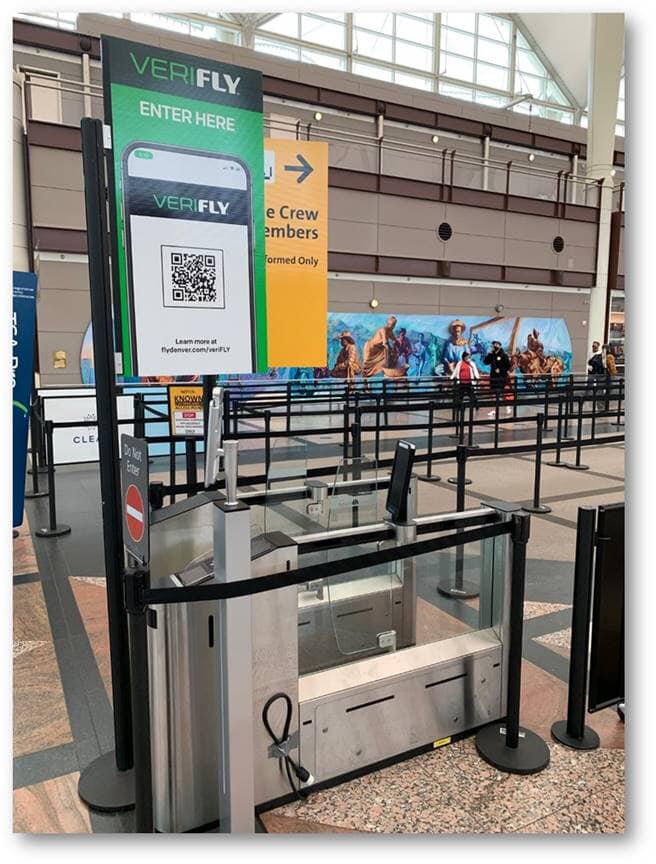
We’re giving the nod to Denver International Airport (DEN), which is the first airport in the U.S. to begin using the VeriFLY app to let passengers reserve a checkpoint time and then travel to the gates in a reserved train car.

Here’s how it works:

Travelers download the VeriFLY app (only available for iPhone for now), create an account, and then reserve a time to through the checkpoint on their travel date. There’s a 15-minute show-up window and there are a limited number of reservations per hour.

Passengers must fill out a health survey within 24 hours of their flight. Then, on the day of their flight, they go to the designated VeriFLY lane at the south screening checkpoint at their reserved time.

A touch-less, electronic gate will scan the access code on the app. And temperatures will be taken before passengers move to either a standard or Precheck TSA screening lane.

Once through security, passengers using the VeriFLY system will travel to their respective concourses in a reserved train car. For social distancing, only 12 VeriFLY travelers will be allowed in the train car at a time.

Face masks/covering are, of course, required for all travelers.

We hope – and expect – more airports will begin using this system.

Airports welcome back travelers with new rules, protocols and promises

Airports are joining airlines in ramping up service and welcoming passengers back to terminals that have been all but empty for months due to a record coronavirus-induced drop in air traffic.

And, like the airlines, most every airport is going all out to proclaim extreme vigilance in keeping facilities clean and travelers safe.

Mask required for all passengers entering the terminals?  Yes at airports in Los Angeles, Chicago, Miami, Denver, Seattle, Portland, San Francisco, New York, Washington, D.C. and in many other cities. Airports in some other cities, such as Charlotte, recommend face masks be worn in the terminals although most airlines now require passengers wear masks from the curb to – and onto – the planes.

Don’t have a mask? Airports will have them for you.

The Federal Government is in the process of distributing more than 86 million masks to airports. Hartsfield-Jackson Atlanta International Airport (ATL) now has a stash of 4.7 million masks for distribution. Seattle-Tacoma International Airport (SEA) has 2.5 million masks ready to hand out.

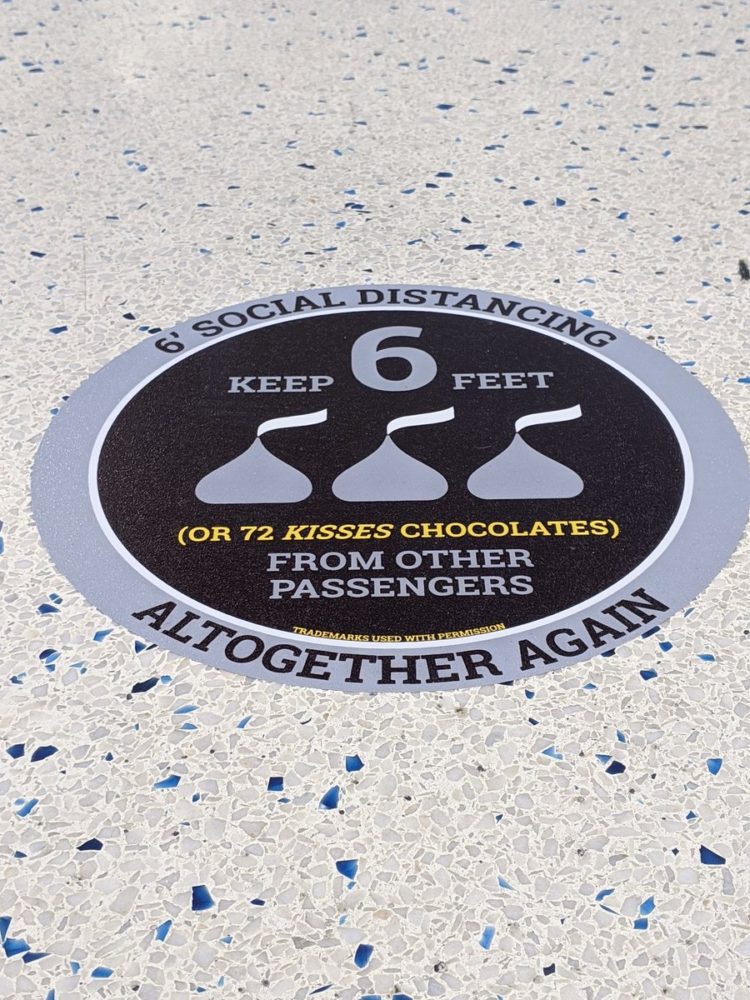
Floor decals marking six-foot lengths to encourage social distancing? Check.

Harrisburg International Airport (MDT), not far from Hershey, PA, reminds travelers to stay 6 feet or 72 KISSES chocolates away from other passengers.

Upgraded and robust cleaning protocols? Check. Airport employees – and in some cases, robots, such as the autonomous robotic floor scrubbers at Pittsburgh International Airport – are wiping, washing, spraying and sanitizing at every turn.

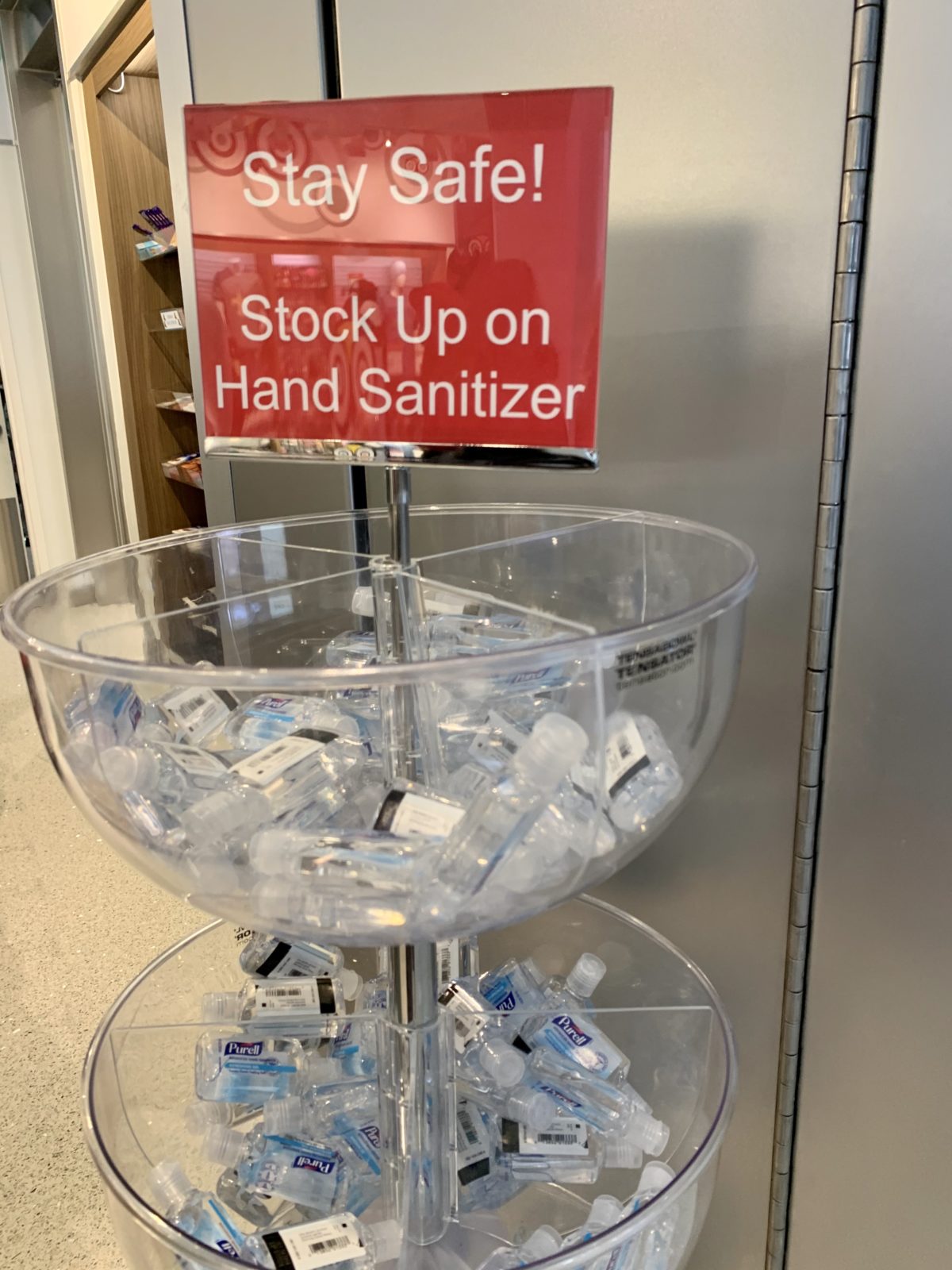
Oodles of hand sanitizing stations? Check. Some airports have added hundreds of sanitizer dispensers and, like Seattle-Tacoma International Airport (SEA), now note the dispenser locations on maps and apps.

Plexiglass barriers at check-in counters, security checkpoints and gates? Check.

Step stools to make it easy for kids (and short people) to wash their hands in airport bathrooms? Check. More than 200 airports (and counting) now have Step ‘n Wash devices in the restrooms.

Shops and vending machines selling personal protective equipment? Check.

Many airport shops now stock PPE supplies and PPE vending machines are installed at McCarran International Airport in Las Vegas and at Denver International Airport. Hudson just announced plans to roll out PPE vending machines at 27 major airports in North America.

Branded plans and promises

Like the airlines, airports are also rolling out branded plans to underscore their commitment to cleanliness and passenger safety. 

The Houston Airport’s “FlySafeHouston” program includes adding facial comparison technology at 15 gates by October and UV disinfecting cuffs for escalators, among other measures.  

At Louis Armstrong New Orleans International Airport it’s the “MSY Travel Ready” plan. Los Angeles International Airport (LAX) has a Travel Safely at LAX plan. Jacksonville International Airport has its JAX Airport Cares program. And at Miami International Airport, it’s #MIACares.”

In many cases airport COVID-19 response plans highlight new technology and bonus efforts being made. 

For example, the “Traveler Confidence Plan” at Ted Stevens Anchorage International Airport notes that the main escalators have “newly installed UV-C handrail sterilization modules” and that the airport has new high-capacity floor cleaners.

The #ReadySetROC initiative at the Greater Rochester International Airport (ROC) in New York promises that enhanced cleaning includes a regular misting of anti-bacterial cleaner/solution on seating and surfaces.

At McCarran International Airport in Las Vegas, which installed the country’s first vending machine filled with personal protective equipment (PPE), the campaign is dubbed “LAS All In,” and includes Vegas-themed slogans such as “Don’t roll the dice: Stay 6 ft apart!” and “We’re doubling down on cleaning and sanitizing.”

TSA has new safety protocols too

This summer travelers will also encounter some new protocols at most every airport security checkpoint in response to the COVID-19 pandemic. 

The Transportation Security Administration’s updated security procedures now allow travelers to carry up to 12 ounces of hand sanitizer in carry-on bags, but require those containers to be screened separately. Passengers may also wear their face masks during the TSA screening process but should be ready to lower or adjust the mask for an identity check.

To avoid having TSA officers touch passengers’ paper boarding passes or mobile devices, TSA will ask all passengers to scan their own boarding pass and hold it up for a TSA officer to do a visual check.

And TSA now asks that any food packed in carry-on bags to removed and scanned separately. So to avoid having your food contaminated in a bin or on the belt, be sure to pack it inside a clear plastic bag.

TSA maps its COVID-19 cases

Airports are getting quieter and quieter, but some people are still flying.

So Transportation Security Administration officers are among the workers who must still show up for work.

Unfortunately, it turns out TSA workers aren’t immune to COVID-19 and there are have been some TSA officers who have tested positive for the virus. So it’s possible some passengers may have been exposed to the virus by these officers at some airports.

But which airports?

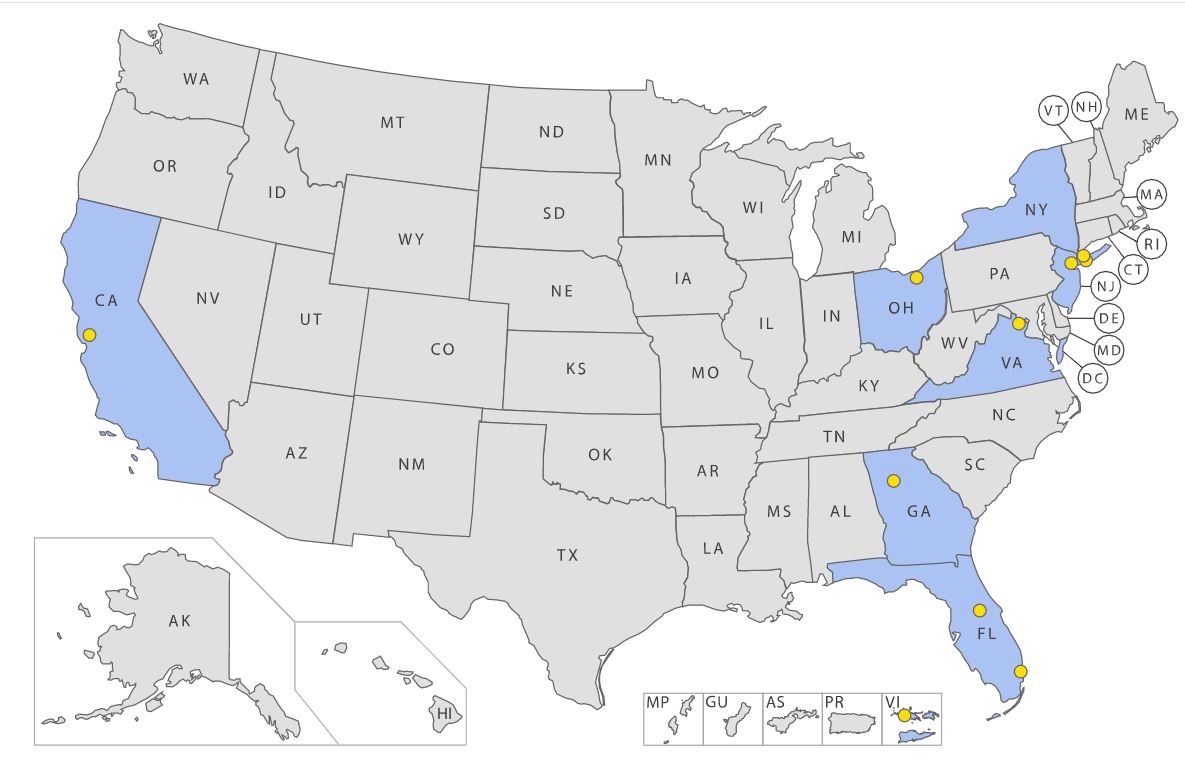
TSA has put together a map and is keeping a list.

Here’s what it looked like on March 23, 2020.

As of March 23, TSA said 25 screening officers had tested positive for COVID-19. An additional five non-screening employees who TSA says “have relatively limited interaction with the traveling public,” have tested positive for the virus as well.

Here’s the list of where TSA officers tested positive for the virus:

  • Newark-Liberty International Airport (EWR)
  • John F. Kennedy International Airport (JFK)
  • Hartsfield-Jackson Atlanta International Airport (ATL)
  • Orlando International Airport (MCO)
  • LaGuardia Airport (LGA)
  • Cleveland Hopkins International Airport (CVG)
  • Cyril E. King International Airport (STT; St. Thomas, VI)
  • Washington Dulles International Airport (IAD)
  • Norman Mineta San Jose International Airport (SJC)
  • Fort Lauderdale – Hollywood Int’l Airport (FLL)
  • Louis Armstrong New Orleans International Airport (MSY)

TSA says it continues to work with the CDC and state and local health departments to monitor local situations.

In the meantime, passengers will find that at some airports TSA has closed some checkpoints and is staffing others with reduced hours.

Fewer flights, but TSA + airports still fighting germs

Pretty much every airline is spooling out schedule cuts in response to reduced passenger demand, concerns about coronavirus and government-imposed restriction.

American Airlines, Delta Air Lines, Etihad, Norwegian and Singapore Airlines are just a few carriers that have made serious schedule adjustments in the past few days.

Fewer planes will be in the skies, but airports remain open.

And the Transportation Security Administration, which recently confirmed that three of its officers at Mineta San Jose International Airport (SJC) tested positive for the COVID-19 virus, is finally getting into gear with security checkpoint-specific advice for travelers.

TSA is reminding travelers that it is OK to bring individually packaged alcohol or anti-bacterial wipes in carry-on or checked luggage. Jumbo containers of hand wipes are also allowed in carry-on or checked luggage, says TSA, as are liquid hand sanitizers.

For safety reasons, savvy travelers already know to put personal stuff such as wallets, keys, phones, loose change, etc., inside their carry-ons and not loose in the bins going through the x-ray machines.

But those bins don’t get cleaned very often – if at all – and are full of germs.

So, TSA is reminding travelers to keep their personal items from touching the bins and to wash their hands as soon as possible after going through the screening process.

Airports are continuing their efforts to stay extra clean as well.

TSA takes on Star Wars, pups and checkpoint firearms.

Today’s tidbits come from some of the social media notices shared by the folks at Transportation Security Administration (TSA).

First: On its @askTSA site, TSA is answering questions from Star Wars fans heading to a Disney park to visit the Galaxy’s Edge attraction.

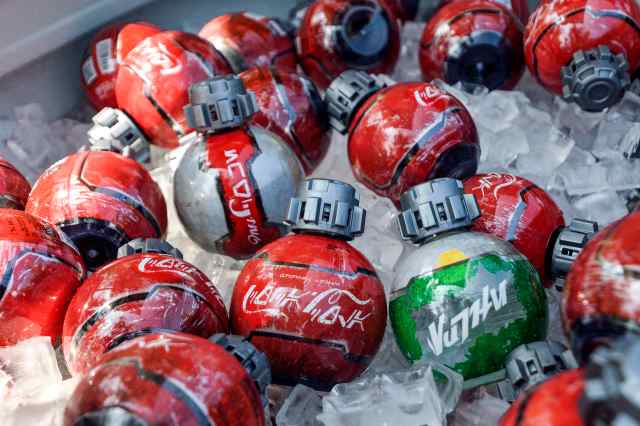
People are curious about how TSA will deal wtih some of the out-of-this-world souvenirs, like “thermal detonator” coke bottle souvenirs.

TSA says don’t try putting these ‘thermal detonator’ soda bottle souvenirs in carry-on luggage. Athough they’re filled with soda, they look like something else.

And that’s why they say those items should be put in checked bags.

TSA also shared the winner of its National Dog Day Cutest K9 contest. Congrats to Alfie!

https://www.instagram.com/p/B1oYetynNrp/?utm_source=ig_web_copy_link

And, as it does most every week, TSA reported the number of firearms found in carry-on bags at airport checkpoints in the previous week.

Between August 19 and 25, TSA officers found 69 firearms in carry-on bags.

That tally is actually on the low end.

But, of the 69 firearms discovered in carry-on bags last week, 59 were loaded and 23 had a round chambered.

Travel Tune-up: “Ask TSA” offers answers.

Want to avoid the TSA tangle? Just ask.

Bowling balls? Yes, you can take them as carry-on

Our column this week for CNBC tackled the TSA experience and offered tips on what you may – and may not – pack in your carry-on. Here’s the story.

Last week, the Transportation Security Administration shared a photo on social media of a missile launcher found in a passenger’s checked bag.

“Man said he was bringing it back from Kuwait as a souvenir,” said TSA spokeswoman Lisa Farbstein on Twitter, “Perhaps he should have picked up a keychain instead!”

As a division of the Department of Homeland Security, TSA is responsible for overseeing security at the nation’s airports. But weighing in on the pros and cons of travel souvenirs and answering questions about what items are permitted on airplanes has become part of the job.

“We get a lot of questions about what people can take through the checkpoints,” said Janis Burl, the @AskTSA manager. “A lot are about food – i.e. ‘Can I take a sandwich?’ [Answer: yes] And over the past few months we’ve gotten a lot of questions about that’s kid toy slime.” [Also yes, but only if the slime is 3.4 ounces or less and is carried with a travelers’ liquids and lotions in the allowed one-quart zip bag.]

On its website – under the header “What Can I Bring?”, and on its app, TSA has an extensive catalog of things travelers may or may not pack in their carry-on or checked bags. Items are listed alphabetically and by category and the list can be searched.

Under “Toys” there are seven examples and TSA notes that while fidget spinners and remote controlled cars are allowed in carry-on luggage, realistic replicas of firearms and explosives are not. The TSA directory also has a helpful note about adult toys (ahem), which are allowed in both carry-on and check bags.

What about toy lightsabers, including those purchased or custom built (to the tune of $200) at Disney’s new Star Wars: Galaxy’s Edge attraction?

TSA’s “What Can I Bring?” database says “Sadly the technology doesn’t currently exist to create a real lightsaber. However, you can pack a toy lightsaber in your carry-on or checked bag,” and adds, “May the force be with you.”

With summer travel in full-swing, it’s good to know ahead of time that tent spikes or poles, strike anywhere matches, spear guns, pool cues, Magic 8 Balls, firecrackers, bear spray, baseball bats and bowling pins are not allowed as carry-on items, but that bowling balls are allowed. 

Also allowed as carry-on: compasses, amethyst crystals, fresh fruit, fishing rods, live lobsters (in a clear, plastic, spill proof container), seashells, fruit gummies, cooked lasagna, jelly beans, electronic bathroom scales and frozen water bottles, as long as the water is completely frozen when presented for screening.

And while the Federal Aviation Administration is emphatic that drones not be flown near airports, TSA allows drones in carry-on bags. However, the agency encourages travelers to check with their airline about specific rules for taking drones on board.

For items not found in TSA’s database, and for travelers who want to make sure a specific item will fly, there is a team of ten full-time TSA employees who monitor and respond to questions sent in via Twitter (@AskTSA) and Facebook Messenger.

Team members are on duty 8 a.m. to 10 p.m. (ET) weekdays, 9 a.m. to 7 p.m. weekends and holidays, (including Christmas) and are quick to respond to all manner of “Can I bring?” questions sent in.

One passenger recently asked about traveling with jars of pickles. They were advised that pickles without liquid in a zip bag were good to go as carry-on, but that pickles with pickle juice were only allowed in a carry-on bag if packed in a container of 3.4 oz. or less.

Another passenger wrote to @AskTSA inquiring about traveling with a whole cantaloupe she’d grown in her garden.

“I want to take it to my mom,” the traveler tweeted to TSA. “You can,” TSA responded, adding “We hope your mom enjoys the treat!”

Other recent questions have covered verything from quesadillas to roach bait. And Burl says, when in doubt, sending along a photo is always helpful.

It may seem as if the “AskTSA” team has likely seen it all by now, but Burl says they sometimes gets stumped.

“If you send in a photo and we don’t know what it is, we’ll go to Google to figure it out.”

And while the @AskTSA team uses its knowledge, TSA’s database and, sometimes, a bit of Googling, to give travelers a thumbs up or down on traveling with certain items in carry-on or checked bags, Burl says the final say-so on any whether an items is a ‘go’ rests with the Transportation Security Officer (TSO) on duty at the checkpoint.

“If they’re looking at something that doesn’t look right, they can make that decision,” said Burl.

In addition to its website, Twitter and Facebook accounts, TSA also has a very popular and informative Instagram account that can help travelers learn about what can fly.

A recent post, in honor of National Kitten Day, for example, noted that kittens, catnip and balls of yarn are good to go through security checkpoints, but warned that cats (and other pets) must be removed from their carrier while the carrier goes on the X-ray belt for screening.⠀⠀⠀⠀⠀⠀⠀⠀⠀⠀⠀⠀⠀⠀⠀⠀

https://www.instagram.com/p/BzvT82fHPGY/

TSA also produces occasional quirky-but-entertaining and educational “They brought what? videos.