U.S. citizens, especially with underlying conditions, should not travel by cruise ship. #CDC notes increased risk of #COVID19 on cruises. Many countries have implemented screening procedures, denied port entry rights to ships and prevented disembarking. https://t.co/jh93gZTkpCpic.twitter.com/jI6S0UceVg
The CDC is also discouraging older adults and anyone with underlying health issues from taking long plane trips and spending time in crowded places.
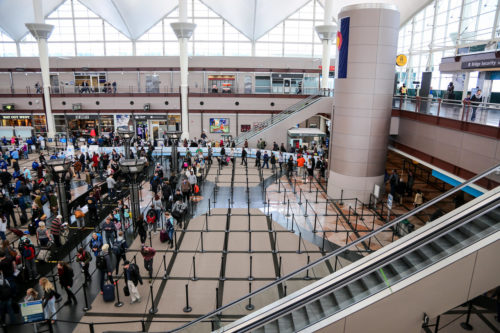
Airports would count as crowded places. Although with so many flights canceled and so many travelers staying home, airports are far less crowded than usual.
But for those who are traveling, airports and airlines are continuing to scrub facilities and share information about what they’re doing to keep passengers safe.
Here are just a few messages from the past few days.
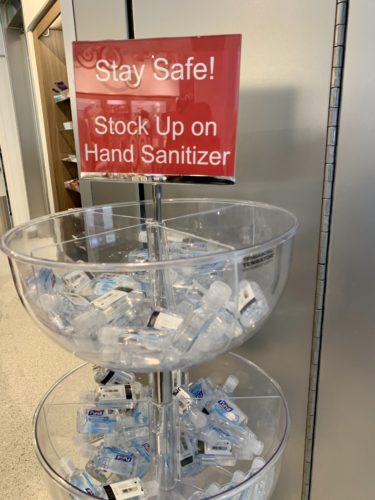
Ensuring the safety of passengers is a top priority. So when hand sanitizing stations are on back order from the manufacturer, our carpenters just custom-build and install our own. Learn more about what we’re doing to protect the airport here: https://t.co/VQSY7A9kdbpic.twitter.com/iUdxthBLzy
— Pittsburgh International Airport (@PITairport) March 6, 2020
— San Francisco International Airport (SFO) ✈️ (@flySFO) March 7, 2020
It’s business as usual at LGB. There has been no reduction in flight service because of #COVID19. We are working hard to keep our airport clean and safe by dedicating staff to disinfecting frequently touched objects and surfaces. #COVID19LongBeachpic.twitter.com/nVey3DLMcv
If your airline cancels your flight, your employer restricts business travel or an organization cancels its scheduled conference or event, your decision about whether to go or stay home will be made for you
But if you’re in the wait-and-see mode or decide to pack your bags and go, here’s what medical experts say about avoiding germs while flying.
Before you fly
During normal times, airports and airplanes are germ-ridden places.
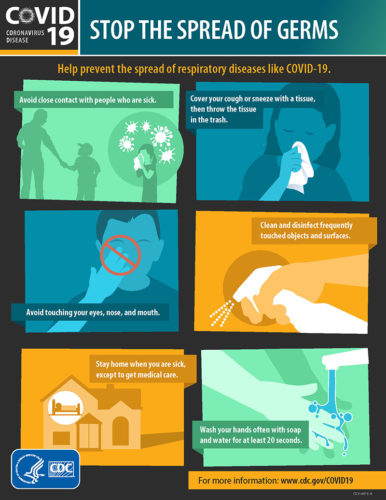
So, experts say now is the time to pay extra attention to the health and hygiene rules you likely practice anyway, such as washing your hands often and packing items like hand sanitizer, tissues and extra supplies of medications. You may also want to make copies of your health insurance paperwork before flying.
Travelers hitting the road in the next few days, weeks or months should double-check the Centers for Disease Control and Prevention website for up-to-date information about travel advisories and risk assessment by country and think through contingency plans before leaving home.
“Have someone available in case you need help with emergency travel plans or need to get home quickly,” said Jonathan Fielding, professor of public health and pediatrics at the University of California, Los Angeles and chair of the U.S. Task Force on Community Preventive Services, established by the Department of Health and Human Services.
But keep in mind that as the virus spreads “you never know when a city you’re in or about to travel to is going to be sealed off, flights canceled, or travelers quarantined,” he said.
At the airport
At airports, germs can
linger on the screens at self-service check-in kiosks, on the bins and belts at
security checkpoints, on escalator handrails, food court tables, in restrooms
and gate seating areas.
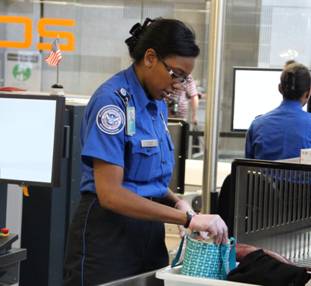
Generally, to avoid germs at the security checkpoint, you should never walk barefoot through the metal detector, said Charles Gerba, a microbiologist and professor at the University of Arizona. Place your shoes on the belt, not in a bin. Put whatever you can, including your jacket, your phone and the contents of your pockets, into your carry-on instead of into a bin. And take a moment to use hand sanitizer in the post-security repacking area before rushing off to the food court or your gate.
Airports
across the country say they are increasing the frequency of cleaning routines
and the intensity of cleaning products at “high touch” areas in shuttle buses,
washrooms, security checkpoints, food courts and other areas, adding hand
sanitizer stations and taking other actions to keep passengers and employees
healthy.
Denver International Airport is
installing sanitary wipes in jet bridges to allow passengers to
sanitize their seats on planes. And in a list of new protocols at Seattle-Tacoma
International Airport, officials say more than 100 new hand
sanitizers have been installed throughout the airport, with 100 more to be
installed soon. Cleaning frequencies at high touch points have been increased
and contractors are being equipped with hospital-grade disinfectant and wipes
for faster response and cleaning.
But passengers should
still take extra precautions. “Our studies have found that viruses can spread
very rapidly via the hands because of the large number of surfaces that you
touch,” Gerba said. He advocates washing your hands often, using hand
sanitizers with at least 60% alcohol and using disinfecting wipes on hard
surfaces in airports.
And before your flight,
“wait in the least crowded areas of the airport and try to stay at least six
feet away from anyone else,” said UCLA’s Fielding, “And try to board the plane
last, after the line has thinned, so you’re not stuck waiting in a tight space
with lots of other people as they board.”
Avoiding germs on the plane
While many airlines are
canceling flights and temporarily reducing schedules on some routes in response
to COVID-19, they are also sharing details about increased cleaning routines
and adjusted in-flight service routines on aircraft still flying.
On Wednesday, for
example, American Airlines said it was enhancing cleaning procedures on
international flights and aircraft that remain overnight at airports. “This
move, which will touch the majority of our aircraft each day, includes a more
thorough cleaning of all hard surfaces, including tray tables and armrests,”
the airline said in a statement.
On its blog, Alaska Airlinesshared a video explaining how its airplanes get cleaned and noted that its crews are paying extra attention to sanitizing armrests, seat belts, tray tables, overhead controls for air vents, light buttons and call buttons, and the interior and exterior handles to lavatories.
Despite the airlines’ efforts, “I advise people to bring their own
germicidal wipes to rub down the high touch surfaces, the armrest, meal tray
and the button that makes your seat go back,” said Paul Pottinger, infectious
disease specialist at UW Medicine, the health-care system at the University of
Washington in Seattle. “It’s also mighty neighborly to offer one of those wipes
to the person you’re sitting next to.”
Pottinger doesn’t recommend the use of face masks for healthy
travelers because he says there is very little evidence to support their
effectiveness at keeping away respiratory viruses.
“If people like to use them though, that’s OK, but I worry that
they are so uncomfortable that a traveler may end up fiddling with the mask and
actually increase the risk of getting sick by forcing them to touch their face,
nose and mouth,” he said.
And when it comes to the overhead air vent, the consensus is that
having it blow air toward you is better than using it to blow air away.
“The air in the plane blower has been filtrated, which can remove more than 99% of dust and microbes in the air,” said Fielding of UCLA. “By having the vent blow on you, you create an invisible air barrier around you that creates turbulence – simultaneously blocking any droplets that may have viruses within them and forcing them down to the ground.”
All the head-spinning news about the Coronavirus (COVID-19),
may have you wondering what to do if, like us, you have plane tickets and
travel plans booked for the next few days, weeks or months.
If your airline cancels your flight or your organization
cancels its event, your decision about whether to go or stay home may be
decided for you. Then, getting refunds, credit for future travel or an
itinerary for a different destination may be what keeps you busy.
If you’re in the wait-and-see mode and decide to pack your
bags and go, here’s what some airports and the TSA are doing to help you – and their
employees – stay safe.
Airport
security checkpoints
During normal travel times, airport security checkpoints are germy places and now is certainly not the time to walk barefoot through the metal detectors or put your shoes in the bin on top of your coat.
To avoid germs – and leaving stuff behind – we always recommend putting whatever you can, including your coat, the contents of your pockets, a purse, your lunch and anything you’re carrying, into your carry-on instead of into the bins. And put your shoes on the belt, not into a bin.
There are always bottles
of hand sanitizers at the checkpoints. Now there are more. Your tax dollars pay
for those, so don’t be shy about really cleaning up in the recombobulation area
post-security.
A TSA spokesperson says the
nitrile gloves officers usually wear when patting you down or looking through
your stuff adds a layer of protection against germs and that, for now, TSA has
authorized personnel who come into close contact with travelers to wear
surgical masks – if they want.
Fighting germs in airports
In general, airports across the country say they are increasing
the frequency and intensity of cleaning efforts in washrooms and other areas.
Airports are also encouraging passengers to follow the
U.S. Centers for Disease Control’s advice on washing hands, covering coughs and
otherwise trying to prevent the spread of germs by staying home if not well.
And airport officials say they’re monitoring the impacts
of the coronavirus and working closely with local
and federal partners and airlines to reduce
the risk to passengers.
Denver International
Airport (DEN) is adding sanitary wipe stations in jet bridges so passengers can
sanitize their seats on planes and putting extra bottles of hand sanitizers at
the security checkpoints and information booths.
DEN notes that it is one of the airports that use checkpoint screening trays with antimicrobial treatments.
As you may imagine, Seattle-Tacoma International Airport
(SEA) and its passengers are on high alert.
SEA is keeping its Traveler
Update page very up-to-date with advice for travelers and the latest COVID-19
news.
Airport spokesman Perry Cooper said the airport is doing additional
cleaning and has been increasing those efforts as the situation has progressed.
“We have reviewed and updated the type and strength of
cleaners to be even more efficient,” said Cooper, “And have also added over 50
new hand sanitizer stations in the international areas as well as increasing
them in the general areas of the airport.”
Resolved to fly more in 2020? How to keep your stuff.
In 2019, airline passengers tried to take hundreds of thousands of prohibited and banned items through airport security checkpoints in the United States.
It doesn't matter how "lovely" this pink and gold handled knife is with pink hearts, the word "Love" emblazoned on the handle and 3 small pink hearts cut into the blade. It's still just another knife, prohibited from being carried onto a plane. Caught by #TSA at @tfgreenairport. pic.twitter.com/SExqafS3qr
— Lisa Farbstein, TSA Spokesperson (@TSA_Northeast) December 31, 2019
Transportation Security Administration officers found hatchets, inert grenades, fireworks, firearms (most of them loaded) and so many knives that the TSA doesn’t even keep a count.
Instead, the agency boxes them up, weighs them and hands pallets of knives and other “voluntarily abandoned” property over to state agencies to be sold as surplus property.
A man brought this revolver to the @TSA checkpoint at @tfgreenairport on Sunday and was arrested by the police. He told officials that he had no idea how it came to be in his possession. pic.twitter.com/ykP3hee3US
— Lisa Farbstein, TSA Spokesperson (@TSA_Northeast) December 30, 2019
TSA officials say passengers who don’t want to leave a banned item behind at the checkpoint have a few options:
If
the item is approved for checked baggage, a passenger can put the item in a
carry-on bag and go check it in or ask the airline to retrieve an already
checked back and put the item in there.
Another option: Airport Mailers and some other companies have kiosks set up near security checkpoints at many airports where travelers may package up items and pay to mail them home.
— Lisa Farbstein, TSA Spokesperson (@TSA_Northeast) December 27, 2019
But
it’s not just items on TSA’s “no fly’ list that get left
behind at airports.
Each
month, TSA also collects and catalogs 90,000 to 100,000 other items that are
perfectly legal to travel with, but which are inadvertently left behind at
airport checkpoints by harried and distracted travelers.
Those
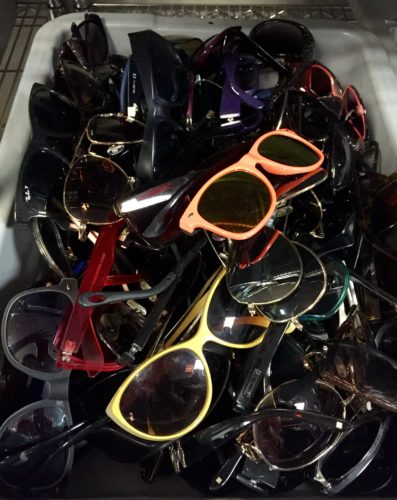
items range from scarves and sunglasses to laptops, smartphones and some odd
“How did they forget THAT?” items such as bowling balls, violins, gold teeth
and urns and boxes filled with human cremains.
On a post-holiday tour of TSA’s Lost & Found room at Reagan National Airport, we spotted plenty of those items, as well as multiple bags filled with left behind IDs.
We also saw shelves lined with ballcaps, CPAP breathing machines, winter coats, car key fobs that will cost $200 or more to replace, car seats, canes and fully packed carry-on bags.
It’s
easy to see how hats and scarves get left behind in the bins, but what about
laptops, entire carry-on bags and other essential items?
Besides
the “people are in a rush,” factor, TSA spokeswoman Lisa Farbstein has some
theories:
“When
it comes to laptops, many brands are grey and the same color as the checkpoint
bins, so it can be easy to overlook your laptop,” says Feinstein. “Also, if a
bin has an advertisement in the bottom, travelers’ eyes may be drawn to the ad
and cause them to miss the driver’s license and keys still in the bin.”
The number of bins people use may also contribute to the pile-up in the Lost & Found. If you’ve scattered your stuff across multiple bins (coats here, electronics there, a flat laptop and an ID in another bin), you may overlook items in the last bin as you rush to take your stuff out and stack up the used bins.
The pile of canes?
“It’s not that we have so many miraculous recoveries at TSA checkpoints,” says Farbstein, “I think attendants and family members helping wheelchair users who also have canes often forget to pick up the canes once they’re through the checkpoint.”
Keeping
your stuff out of Lost & Found
TSA keeps items left behind at security checkpoints for a minimum of 30 days and posts phone numbers on its website where travelers can contact the Lost & Found department at each airport.
(Keep
in mind that airports and airlines will have their own lost and found
procedures for things left in the terminals and on airplanes.)
To improve your chances of getting your stuff back – or not
losing it in the first place – Farbstein offers these tips:
Tape a business card or some other form of ID to
your laptop or smartphone. “So many models are alike, so this can make all the
difference in getting yours back,” said Farbstein.
Before you get to the checkpoint, or while
you’re standing online, take time to consolidate all your miscellaneous items
(i.e. scarves, hats, gloves) and take everything out of your pockets (keys,
phones, wallets, etc.). Instead of putting small items in a bin, put them in
your carry-on in an extra plastic bag you’ve packed just for that purpose. If
you don’t put loose items in the bin to begin with, you eliminate the chance of
leaving anything in the bin on the other side.
Pay attention to everything you put in the bins,
including things that may have a high emotional value. “A laptop may cost thousands of dollars, but I can assure
you that an old beat-up stuffed animal that a child has left behind is valuable
to the parent who is now dealing with a crying child,” says Farbstein.
Help is on the way
Looking forward, as part of a $96.8 million contract
awarded last year to Smiths Detection, in 2020 most large and major airports in
the United States will be getting computed technology 3D X-ray scanners at the
checkpoints. This new machinery will allow travelers to keep their electronics
in their carry-on bags and reduce the chance of so many laptops and other
gadgets getting left behind.
(My story: “How to avoid leaving stuff behind at the TSA checkpoint” first appeared on CNBC in a slightly different version)
Our story about airports and airlines getting rid of single-use plastics first appeared on CNBC.
Business and leisure travelers concerned about climate
change and “flight shame” may do their part by purchasing carbon offsets and adjusting
the number of trips they take on airplanes.
Airports and airlines are trying to save the planet too with
a wide range of sustainable initiatives that include cutting down the use of
single-use plastics and making reusable water bottles essential travel amenities.
BYOB at SFO Airport
In 2019, San
Francisco International Airport (SFO), launched an ambitious Zero Waste
Concessions Program designed to significantly reduce the amount of single-use
disposable plastics used at the airport.
Noting that in 2018 nearly four million slow-to-biodegrade plastic
water bottles were sold at the airport, in August 2019 SFO became the first
airport in the nation to ban the sale of single-use plastic water bottles.
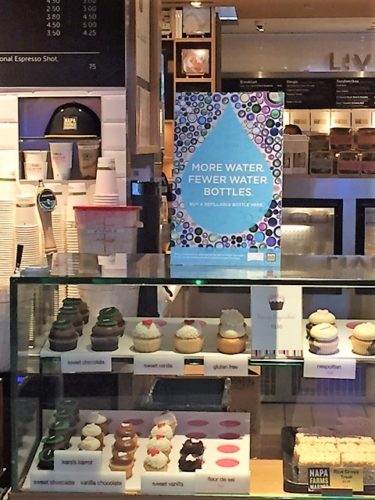
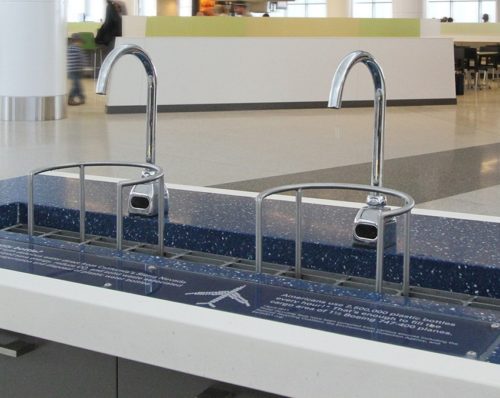
SFO now actively encourages each passenger to bring their
own reusable water bottle with them to the airport and get free water from one
of the hydration stations in the terminals.
Bottled sodas, teas and juices are currently exempt from the
policy. And bottled water is still being sold, but only in approved packaging made
from recyclable aluminum or glass, or in compostable packaging.
Single-use plastics banned at other airports too
Airports in a growing number of other cities in the United States, and around the world, are getting serious about sustainability projects that are good for the environment and, in some cases, the bottom line.
“Whether through their participation in the Airport Carbon Accreditation program, implementation of more sustainable business practices, or even by the elimination of drinking straws and other single-use plastics, airports are taking a variety of approaches to be good neighbors in their communities,” said Scott Elmore, Vice President, Communications & Marketing for Airports Council International – North America
In February 2019, Glasgow
Airport offered all 5,300 people working in an around the airport free,
reusable bottles.
In September 2019, Dallas Fort Worth International Airport
(DFW) announced a campaign to phase out all single-use plastic straws at the
airport.
🥤🐋 Starting today, we're phasing out plastic straws in the Airport. Learn more about the impact single-use plastic straws and this initiative specifically will have on the environment with this short video. pic.twitter.com/0e4sFqHqgN
In October 2019, the Airports
Authority of India (AAI) announced that at least 55 airports in the country
had banned single-use plastic items such as straws, plastic cutlery and plastic
plates.
Over and above 35 AAI airports that were declared 'Single-use Plastic Free,' 20 more AAI airports have joined the crusade. AAI is committed to preserve the environment and do its bit. #AAICarespic.twitter.com/otAHbr5O7R
And January 1, 2020, is the deadline for Dubai’s two airports, Dubai International Airport (DBX) – the world’s busiest airport for international travelers – and Dubai World Central Airport (DWC) to be entirely free of single-use plastics such as plastic cutlery, drinking straws, meal packaging and bags.
“Along with our partners, including
global brands such as McDonalds, Costa Coffee and Starbucks, we are committed
to not only removing single-use plastics but in their place providing
appropriate and importantly sustainable alternatives,” said Eugene Barry, Dubai
Airport’s Executive Vice President – Commercial, in a statement.
Barry says finding
replacements for plastic bottles remains a challenge for the airports, so for
now bottle recycling efforts are being beefed up.
Change is coming. Find out how Dubai Airports and its partners are preparing for the pledge to ban single-use plastics at the world’s busiest international airport,@DXB.🌍 pic.twitter.com/nUqJzBk5Rh
Going forward, a bill passed by the Atlanta City Council and waiting for the mayor’s approval is set to ban single-use plastics in the city and at Hartsfield Jackson Atlanta International Airport (ATL) by the end of 2020. Following the new law shouldn’t be too much of a reach: ATL’s guidelines for increased sustainability already seek to divert 90% of the airport’s total waste from landfills.
Not all airports are nixing the plastic water bottles,
though.
In its food court, Portland
International Airport (PDX) eliminates a great deal of plastic with its Green
Plate Program that gives travelers the option of having meals served on
reusable plates with reusable utensils.
But the airport’s environmental team hasn’t pressed to impose
a ban on plastic bottles because “not every traveler chooses to tote around
what can sometimes be a very expensive refillable bottle,” said PDX spokesperson
Kama Simonds, “Further, what if
travelers to our airport were unaware of the ban? This could have unintended
consequences of either leaving folks with less hydration and/or potentially
having a sugary drink as the option, which isn’t healthy.”
Airport vendors and airlines doing their part
HMSHost, which operates dining
venues in more than 120 airports around the world, says it is on track to honor
its commitment to eliminate plastic straws in its North American operations by
the end of 2020.
The company has already eliminated plastic
cocktail stirrers and currently only provides straws on request in its casual
dining restaurants.
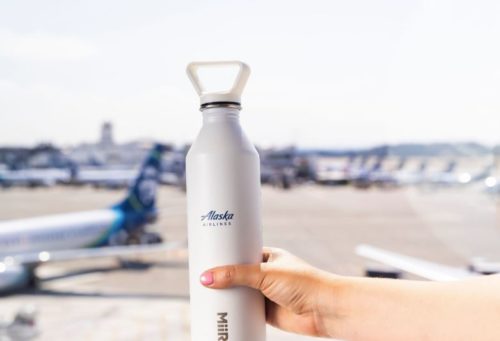
In September, Alaska Airlines kicked off a “FillBeforeYouFly”
initiative, asking passengers to help reduce the use of single-use plastic
bottles inflight by bringing their reusable water bottles to the airport and
filling them at airport hydrations stations before their flight.
In November, Scandinavian Airlines (SAS) introduced sustainable
meal packaging that includes paper with a coating made of organic
plant-based plastic instead of oil-based plastic as well as cutlery made of
plant-based plastic.
And earlier this year, Air
New Zealand removed individual plastic water bottles
from its Business Premier and Premium Economy cabins and switched to compostable plant-based coffee cups
made from paper and corn instead of plastic.
The airline is encouraging passengers to bring their
own reusable cups on board aircraft and into lounges. And, in a truly tasty
move, ANZ is running a test program to serve coffee and ice-cream in edible,
vanilla-flavored cups made by New Zealand-based twiice.
The rink opens will be open through January 20 and is in the pre-security area on the DEN Plaza between the airport terminal and the Westin hotel. Skate rentals will also be free.
Hours:
9 a.m. to 9 p.m. daily through January 20, 2020. As a bonus, on Friday
afternoons there will be hot chocolate, hot cider and a variety of winter
activities, including live entertainment.
More
airport ice-skating
The TWA Hotel, across the road from the
JetBlue terminal at John F. Kennedy International Airport will also be setting
up an ice-skating rink.
This rink opens November 30 adjacent to the hotel’s 1958 Lockheed Constellation Connie airplane-turned-cocktail lounge and will stay open through February.
Free skating shows are planned, but if you want to get out on the ice admission will be $15 for adults and $10 for kids under 12. Skate rentals will be $10; $8 for kids under 12. Hours: Monday to Thursday 4 p.m. to 9 p.m.; Friday: 4 p.m. to 10 p.m.; Saturday and Sunday 10 a.m. to 10 p.m.
Even more airport ice-skating
If you find yourself at Germany’s Munich International Airport this
holiday season, you’ll find free ice-skating (and a curling rink) too.
For the 21st year, the large roofed open space between Terminals 1 and 2 at Munich Airport has been transformed into a winter wonderland, with a winter market, more than 45 Christmas trees, live music, activities for kids and adults, a pine forest and a free ice-skating rink. Skates can be rented for a small fee.
Germany’s Dusseldorf Airport has ice-skating too.
“Airport on Ice“ offers passengers and visitors free ice-skating from November 30 until January 5. Skate rental is also free. Hours: Friday from 5 p.m. to 9 p.m. Saturdays and Sundays: 11 am to 7 pm.
Free short stories
The list of airports where hurried passengers can pick up a free short story is growing.
The dispensers, by French Company Short Edition, are slim kiosks that invite curious readers to push a button to request a short story that will take an estimated one minute, 3-minutes or 5-minutes to read. Stories print out on eco-friendly paper and there’s an option to request kid-friendly stories.
Colorado has a robust craft brewing scene and there are
plenty of places to order a local or regionally brewed beer at Denver
International Airport (DEN).
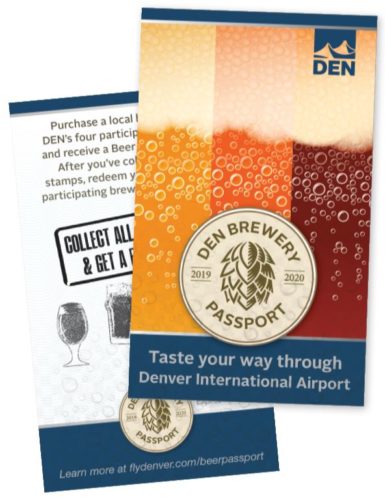
The airport even has a Beer Passport you can use to score a
free pint.
Here’s how it works:
Pick up a beer passport at an airport information booth or at
one of the four participating airport brewpubs, which include: the Tivoli
Brewery (pre-security inside Tom’s Urban); Breckenridge Brewery (Concourse A,
by Gate A71); New Belgium Brewery (Concourse B, by Gate B30); Great Divide
Brewing Co. (Concourse C; by Gate C32).
Order a beer at each of the four brewpubs and be sure to get
your passport stamped when you order.
Once you have all four stamps, swap the passport for a free pint at any of the participating breweries.
No need to drink all four beers in one airport visit: the free Beer Passport program runs through April 1, 2020.
At Nashville International Airport (BNA) your beer crawl can score you a free beer koozie.
Introducing the BNA Beer Crawl Here's how it works: 1. Visit all three beer kiosks at BNA 2. Take a photo of the finished card with a punch from each location 3. Post the photo on Facebook, Instagram or Twitter and tag BNA. 4. We’ll mail you a free BNA koozie! pic.twitter.com/9QR7umbO1U
More than 70 airports around the country now have
programs that invite certified therapy animals and their owners into the
terminals to hang out with and help de-stress travelers.
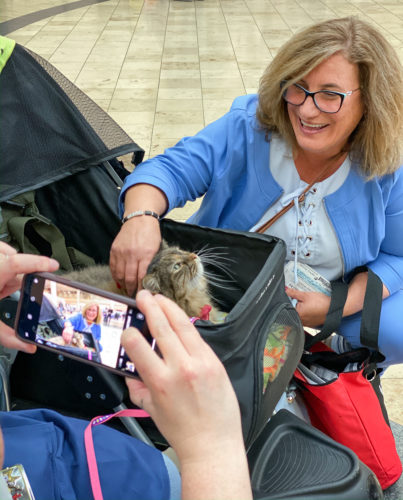
Dogs make up the bulk of the animal team members but
there are a few exceptions, including Stiches, an 11-year-old, 13-pound
mixed-breed cat that recently joined the Animal Ambassador program at Minneapolis-St. Paul International Airport
(MSP).
Boston Logan International (BOS) is serious about its
commitment to reduce congestion and encourage passengers not to drive to the
airport.
Their latest incentive is as creative as it is unusual and fun.
Passengers who take a ferry operated by the Massachusetts
Bay Transportation Authority (MBTA) or commercial water taxi service to the
Logan Airport Boat dock are given an orange “Ticket
to Skip” pass when they board the free Logan Airport shuttle from the dock
to the terminals. Passengers can then
give that orange pass to a security checkpoint officer to get preferred lane
access and move ahead of the line.
The MBTA ferry and the water taxis run year-round and serve
the Boston waterfront as well as the nearby Hingham and Hull communities.
More airports add gate pass programs
At first it sounds counter-intuitive: why
would someone who is not flying want to go through the security checkpoint
hassles just to hang out inside an airport?
Especially during the holidays.
But it can be a real bonus if you want to have
a send-off meal or drink with a friend or family member, accompany them to
their gate or be there to greet them when they step off their flight.
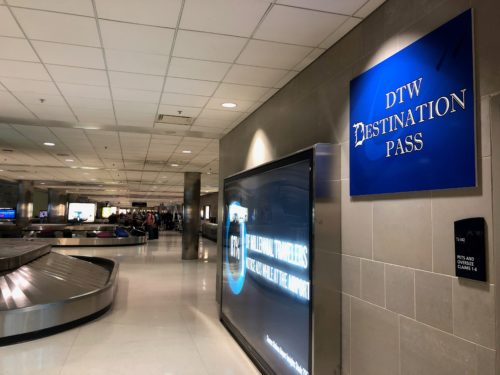
Through the holiday season (until January 5,
2020) Detroit Metropolitan Airport (DTW) is
testing the DTW Destination Pass program. The program invites non-flying guests
to apply for day passes to visit the airport. Passes are issued for both DTW terminals,
Tuesday through Sunday, from 8 a.m. to 8 p.m.
Two other airports, Pittsburg International Airport (PIT) and Tampa International airport (TPA) have permanent gate pass programs in place.
The number of passes issued each day is limited at each airport, but on December 7, Pittsburgh International is inviting the community to come by for a Holiday Open House, which will include dining and shopping specials, live music and other entertainment and, of course, visits with Santa.
And officials at the Louis Armstrong New Orleans International Airport (MSY) promise that a 7-day a week gate pass program will be rolled out “in the coming weeks” for the brand new MSY terminal.
The occasion: a celebration and a last goodbye to the old terminal in anticipation of the opening of a brand new terminal Wednesday morning, November 6.
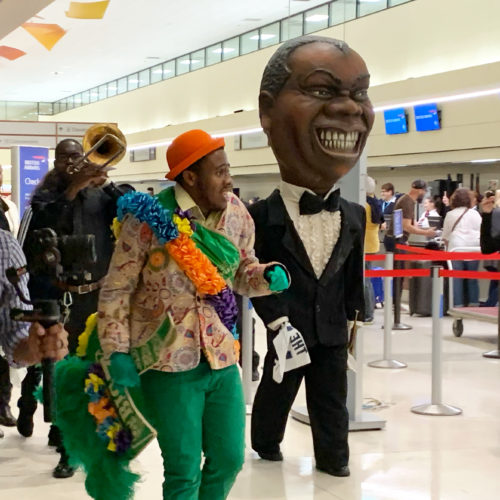
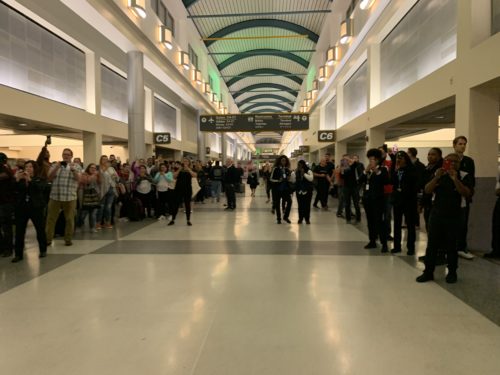
The old terminal, with its low ceilings, worn seating areas and multiple ticketing lobbies for different airlines, was closing down as the parade marched by.
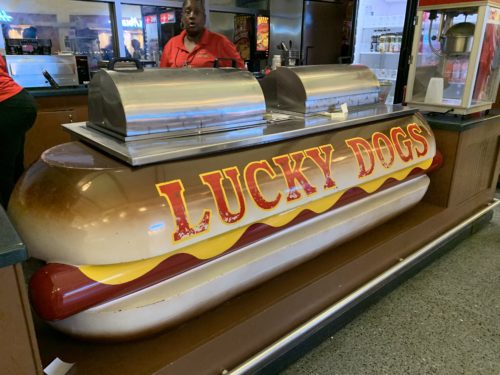
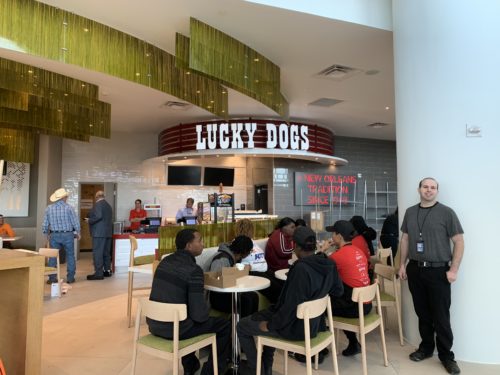
The last flights of the night were boarding and the Lucky Dogs stands were wrapping up business.
During the day on Tuesday, workers hurried to put finishing touches on restaurants and concessions.
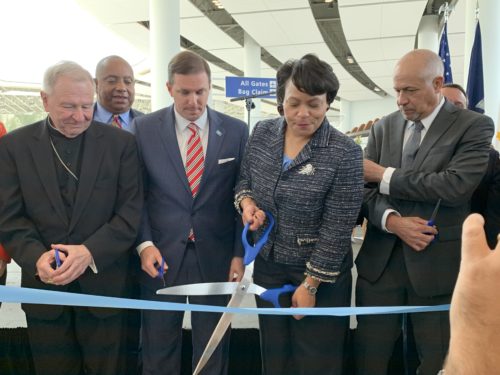
There were speeches and a ribbon-cutting ceremony.
And, of course, cake.
The new Louis Armstrong New Orleans International Airport terminal is a beauty.
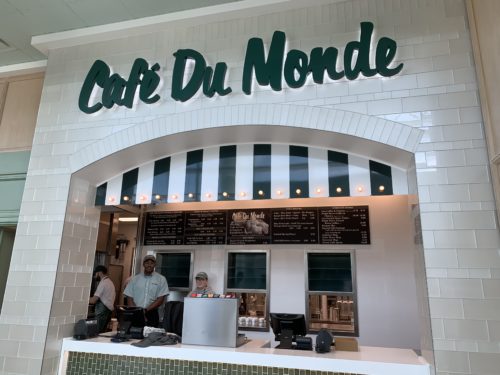
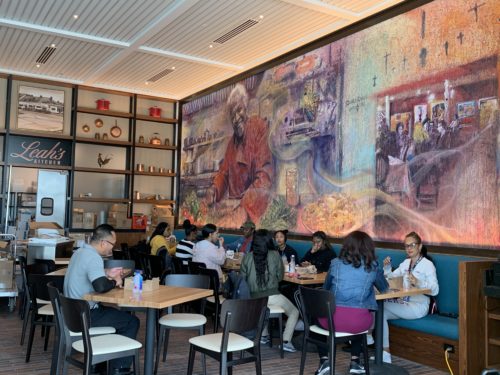
There are 3 concourses, a central security checkpoint, stages for live music, a Delta Sky Club with views of the airfield activities and oodles of restaurants and shops that represent the charm of the city.
Here are some snaps from a pre-opening tour.
Entrance to the Delta Sky Club
Stuck at the Airport will be on hand for the first flight out of the new terminal at 5:00 AM on Nov 6, so stay tuned for more snaps and stories.
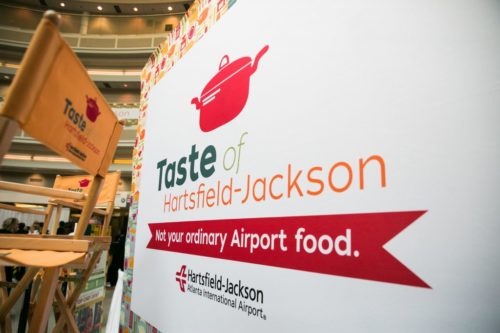
The pre-security event gives travelers and locals a chance to sample dishes from more than 30 airport eateries.
Participants range from One Flew South, Cat Cora’s Kitchen, Atlanta Chophouse and Brewery, Atlanta Braves All-Star Grill and Paschal’s to Piece of Cake and Krispy Kreme.
Tasting tickets are $15 for a
book of 10 and you’ll need to hand over 1 ticket per taste.
You can purchase tickets on-site and 100% of the proceeds will benefit the Atlanta Community Food Bank, a local nonprofit that distributes millions of pounds of food to community kitchens, shelters, senior centers, food pantries and more throughout the year.
The event runs from 11 a.m. to 4
p.m. and includes music and a cooking competition with two airports chefs
competing for the title of Taste’s Top Chef 2019,
At many airports, curbside pick-up is moving away from the curb.
On October 29, Los Angeles International joins the growing list of
airports where curbside traffic has gotten so bad that taxis and ride-hailing
services such as Uber to Lyft are no longer permitted to pick up at passengers
at the curb.
“We have heard from our
guests that the current system with ride pickups can be frustrating.” “said
Keith Wilschetz, Deputy Executive Director for Operations and Emergency
Management at Los Angeles World Airports, said in a statement
“Frustrating” is a polite
way of describing how excruciating and time-consuming using a ride-app at LAX
can be.
During peak times, app users
now often spend upwards of 45 minutes to an hour between waiting for their ride
to arrive curbside and sitting in traffic to get out of the Central Terminal
Area.
“That’s if the drive doesn’t
cancel on you,” said LAX spokesman Heath Montgomery.
At LAX, bad curbside traffic is about to get worse as the airport construction associated with terminal redevelopment and the new automated people mover begins.
“We will be losing more than 30% of our curb front, so doing nothing is
not an option,” said Montgomery.
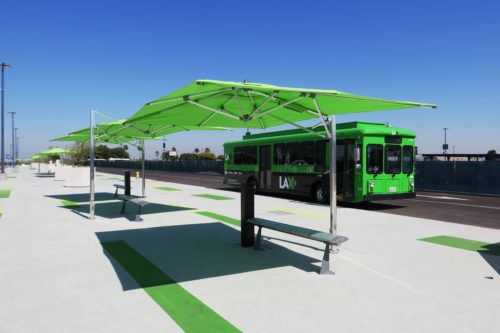
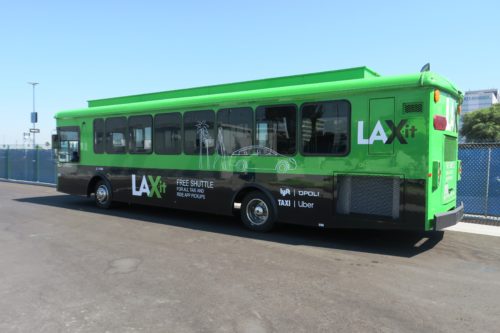
The solution at LAX is to move the pick-up area for both taxi and ride app users away from the
terminal curbsides entirely to a new area, dubbed “LAX-it,” just east of
Terminal 1.
Passengers will be able to
walk to the new pick-up area from some of the terminals and a shuttle will
pick-up passengers at all terminals in a dedicated lane on the lower/arrivals
level lane.
LAX officials say getting from the airport to the pick-up lot should be
no more than 15 minutes (from most terminals) and exiting the terminal should
be faster because drivers no longer must battle backups in the Central Terminal
Area.
Once it rolls out on October 29, the LAX-it system will no doubt need
some tweaks.
For now, some passengers are worried the new system will be confusing
and pick-up time will be no shorter than it is now. In a statement, Lyft said
it looks forward to working with LAX on providing “the best possible pick-up
and drop-off experience for all users,” but Uber outlined its long list of concerns
with the plan in a letter to airport officials.
How do other airports tackle curbside congestion?
Back in 2016, Seattle Tacoma International Airport
worked with ride-app providers to move pick-ups inside the airport parking
garage, adjacent to space set already aside for other commercial ground
transportation operators.
“We have since made traffic flow process
improvements,” said SEA spokeswoman Kate Hudson, “We’re lucky in Washington
state that cars must have front and near license plates as it allows passengers
to locate their vehicle from both angles.”
The Port of Seattle staffs the ride-app pick-up area and
contracts for additional ambassadors during peak times.
With a goal of diverting at least 45% of ride-hailing pick-up
activity away from the terminal roadways, in summer 2018 San Francisco International Airport relocated pickups for Uber Pool,
Express Pool and Lyft’s shared categories to the Domestic Parking Garage. And in March 2019, Uber X and Lyft offered their customers the option to
be picked up in the Airport’s Domestic Hourly Garage at $3 less than the
curbside rate.
“To date, these
measures have only shifted about 21% of [ride-hailed] pickup activity off the
terminal roadways, falling short of the 45% diversion rate,” said SFO spokesman
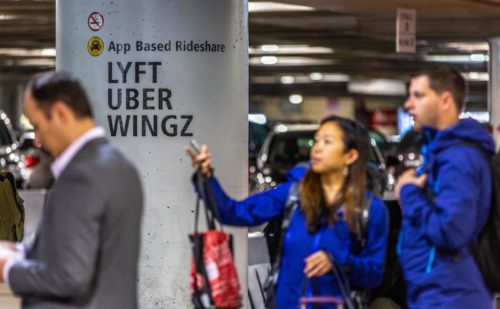
Doug Yakel, so as of June 5, 2019 SFO relocated all domestic terminal pickups
for ride-apps, including Uber, Lyft, and Wingz, from the curbside to the 5th
floor of the Domestic Hourly Parking Garage.
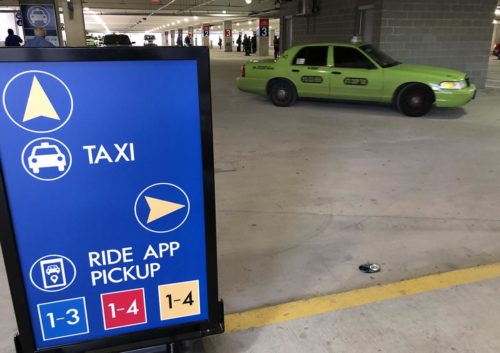
In mid-November 2018, Austin-Bergstrom
International Airport (AUS) moved the pick-up area for all taxis
and ride-app companies to the ground level of the airport’s Rental Car
Facility.
“In the new space, dedicated taxi lanes are to the immediate
left, while three ride share pick-up lanes are on the right,” said AUS spokesman
Bryce Dubee, “The three ride share lanes are color-coded in blue, red and
yellow with corresponding numbers 1-4 so that both passengers and drivers have
a specific spot to meet up.”
The overall walking distance is about 750 feet, so before the
switch was made the airport purchase four ADA-compliant 12-passenger electric
shuttles to provide transport between lower-level locations and also leased an
electric autonomous vehicle to transport passengers on the upper level of the
garage.
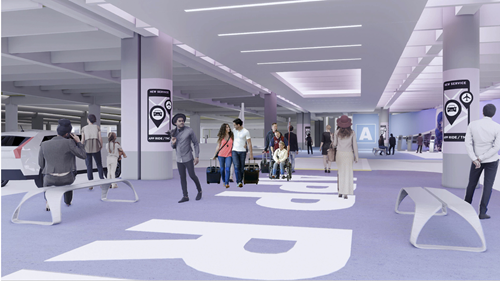
Looking ahead, at the end of this month, Boston Logan International Airport (BOS) will move both pick-ups and drop-offs for app ride passengers to new dedicated curb areas.
“The new areas – conveniently located in the Central Parking – will be protected from the weather, brightly lit, and connected to all terminals via moving walkways,” said BOS spokeswoman Samantha Decker. “The new areas will also provide all the services passengers expect, including luggage carts, wheelchair services, and bag check service.”
(My story about airports relocating pick-up spots for Uber, Lyft, Wingz and taxis first appeared on USA TODAY)
Here’s a great new airport service and a candidate – already – for Airport Amenity of the Week:
Baggage Nanny, an on-demand baggage pickup, storage and delivery service, is now operating at San Diego International Airport.
The company plans to expand its service to other airports soon.
The service addresses the problem of what to do with your luggage when you land at an airport but can’t yet check into your hotel and – on the other end – what to do with your luggage once you check out of your hotel and head back to the airport.
Through Baggage Nanny’s website, travelers arriving at an airport can make a reservation to drop off their bags at a kiosk in the terminal.
Baggage Nanny will hold onto that bag and then deliver it to the traveler’s hotel or another address in town at a specified time. Baggage Nanny will also pick up bags and store them at the requested terminal for the traveler ahead of their departure.
The cost: $20 for storage, no matter what size/weight and includes delivery within a 15 mile radius. Extra charges apply for destinations beyond the 15 mile radius.
Right now, Baggage Nanny has a kiosk in Terminal 1 at the San Diego airport. The plan is to expand to Terminal 2 as well and to additional airports, including Portland International Airport, Austin-Bergstrom International Airport, Nashville International Airport, Louis Armstrong New Orleans International Airport and Hartsfield-Jackson Atlanta International Airport.