COVID-19

Museums are in big trouble

Courtesy The Field Museum

In ‘normal’ times, when we’re not in airports, we’re in museums.

And the ongoing pandemic is wreaking havoc with museums.

“The financial state of U.S. museums is moving from bad to worse,” said Laura Lott, President and CEO of the American Alliance of Museums.

AAM has been surveying its membership since the pandemic began. And in its latest survey of 850 museum directors around the country it finds that 30% of museums remain closed since the March lockdown.

“Those that have reopened are operating on an average of 35% of their regular attendance—a reduction that is unsustainable long-term,” says Lott. “Those that did safely serve their communities this summer do not have enough revenue to offset higher costs, especially during a potential winter lockdown,” she adds.

And, as we know, communities around the country have already begun to institute winter lockdowns.

Here are some other key points from the survey that are sure to alarm museum-lovers.

 *Over half (52%) of museums report that they have six months or less of operating reserves.

*Over half (53%) of responding museums have had to furlough or lay off staff. And about 30% of museum staff around the country are currently out of work.

*On average, museums responding to the survey anticipate losing approximately 35% of their 2020 operating income and an additional 28% of normal operating income in 2021.

Why care?

Because besides the wonderful exhibits museum present and the special collections they protect, museums employ a lot of people. And they add a lot to the economy of their communities.

Prior to the pandemic, museums supported 726,000 direct and indirect jobs and contributed $50 billion each year to the economy, according to
AAM.

What will help museums make it through the pandemic?

Museums are asking federal, state, and local governments for financial support.

They deserve it.

We can help out museums by making donations to our favorites. By joining museums as new members or by making sure to renew our memberships. We can give memberships as holiday gifts, shop in museum giftshops (many are online), and we can make a point to visit the museums that are open in our communities and/or offering activities online.


Airlines ban passengers who won’t wear masks. Should airports?

(A slightly different version of our story on airport masks policies first appeared on USA TODAY)

Although COVID-19 cases are surging, holiday flight bookings are up.

The uptick in travel is tied to pent-up demand for travel. And to recent studies that say air travel is as safe or safer than many other routine activities on the ground.

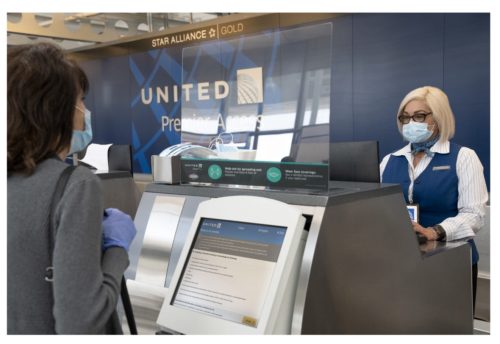
Most every airline now requires passengers to wear face coverings and passengers who refuse to comply may find themselves on a carrier’s no-fly list.

But what about airports?

Many groups have been urging the current administration to issue a mask requirement for all commercial travel. But no federal law currently requires passengers to wear face coverings in airports.

Airports in locations that have state or local mask requirements do have the authority to cite, ticket, or, in some cases, eject travelers that fail to comply.

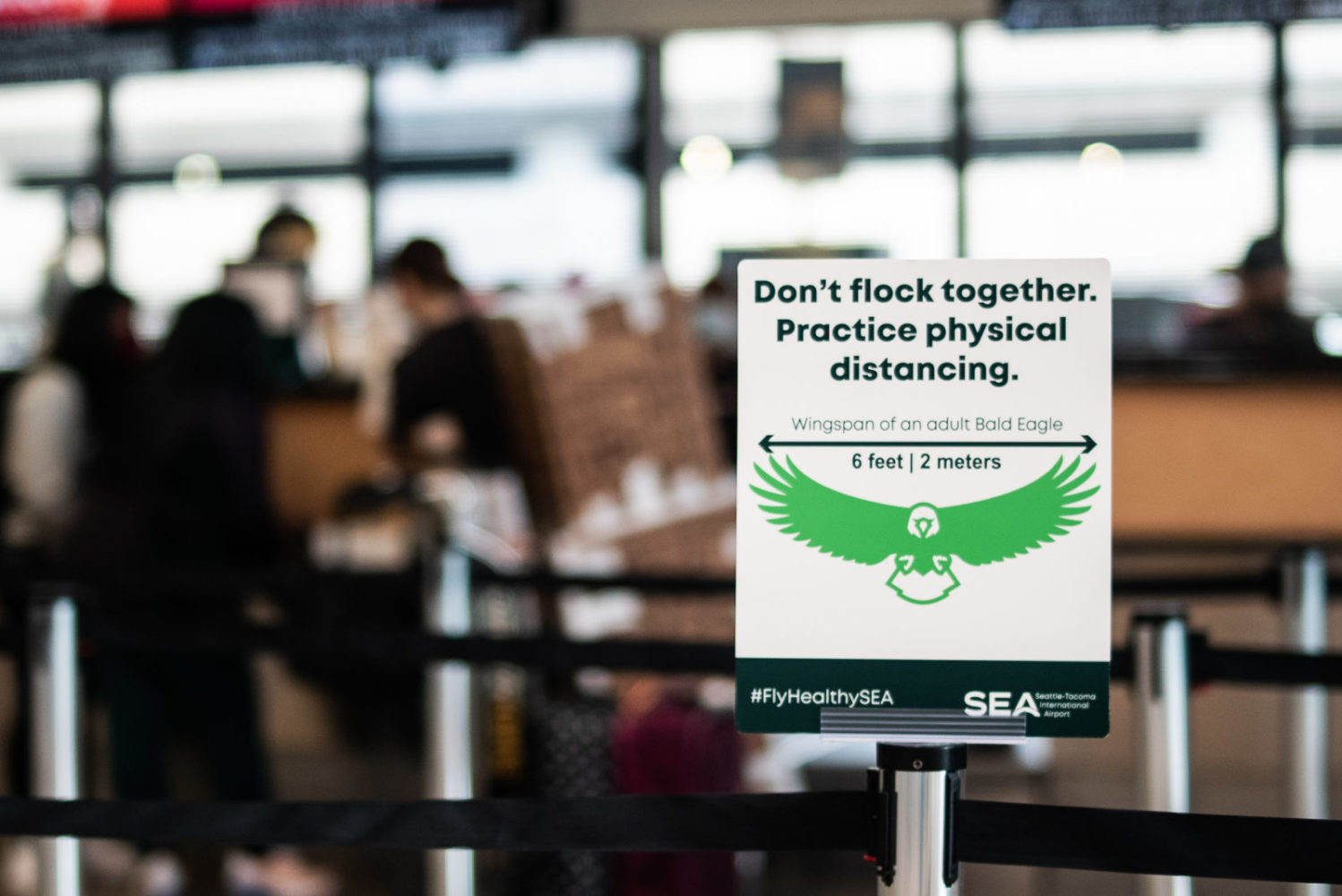
But in most cases, airports report they are instead relying on audio and visual messaging, personal reminders and the airline policies.

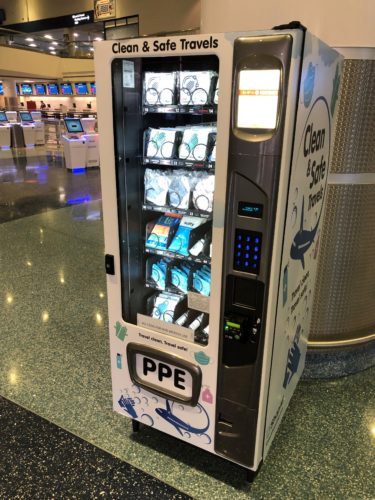
Airports around the country are also handing out the more than 86 million face masks delivered over the summer to airports by the U.S Department of Transportation (DOT), the Federal Emergency Management Agency (FEMA), and other agencies.

At Charlotte Douglas International Airport (CLT) messaging on the public address system reminds passengers that face coverings are required by the governor’s mandate. Reminders of the face-covering requirement also appear on shuttle buses, entrance doors, and throughout the terminal. 

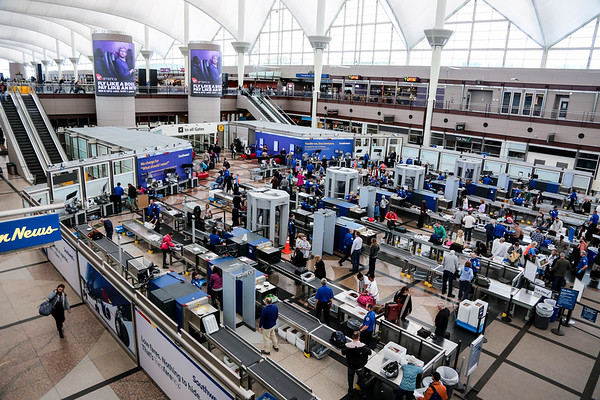
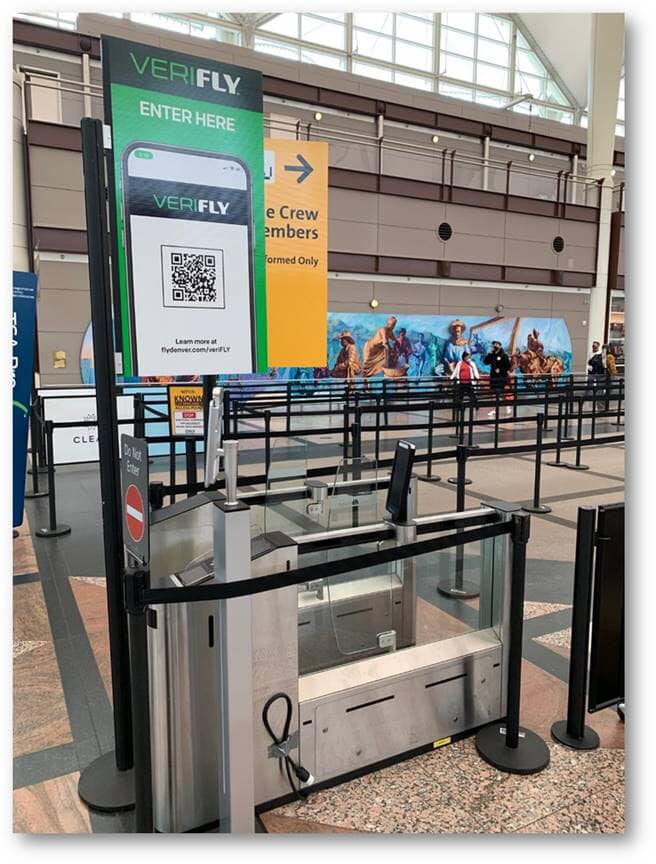
In addition to signage about wearing masks, at Denver International Airport (DEN) all employees are encouraged to politely remind a passenger to wear their mask if it is not on or not on properly.

“We may offer a person a complimentary mask to encourage compliance,” says airport spokesperson Alex Renteria, “If a person acts aggressively, law enforcement may be called. But we have not had an instance where a traveler refused to wear a mask.”

At Los Angeles International Airport, Travel Safety Ambassadors patrol some terminals to remind guests about the airport’s mask policy and hand out free face coverings if needed. 

“We do our best to remind people from the moment they step into the building,” said airport spokesman Heath Montgomery, “But the airlines are the ones with the authority to decline service to those who refuse to comply with face-covering policies.”

Other efforts

Phase 2 of the Harvard T.H. Chan School of Public Health’s study on the risks of flying during the COVID-19 pandemic will focus on the curb-to-curb airport journey.

But there is no firm timetable for the release of that phase of the report.

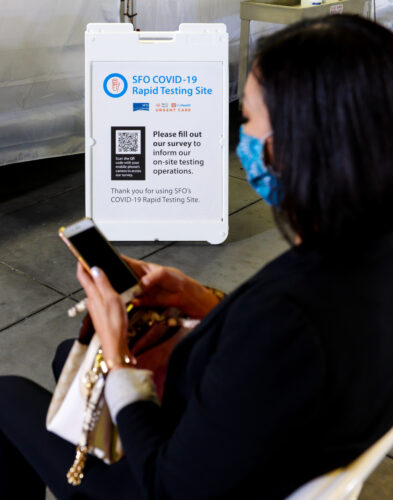
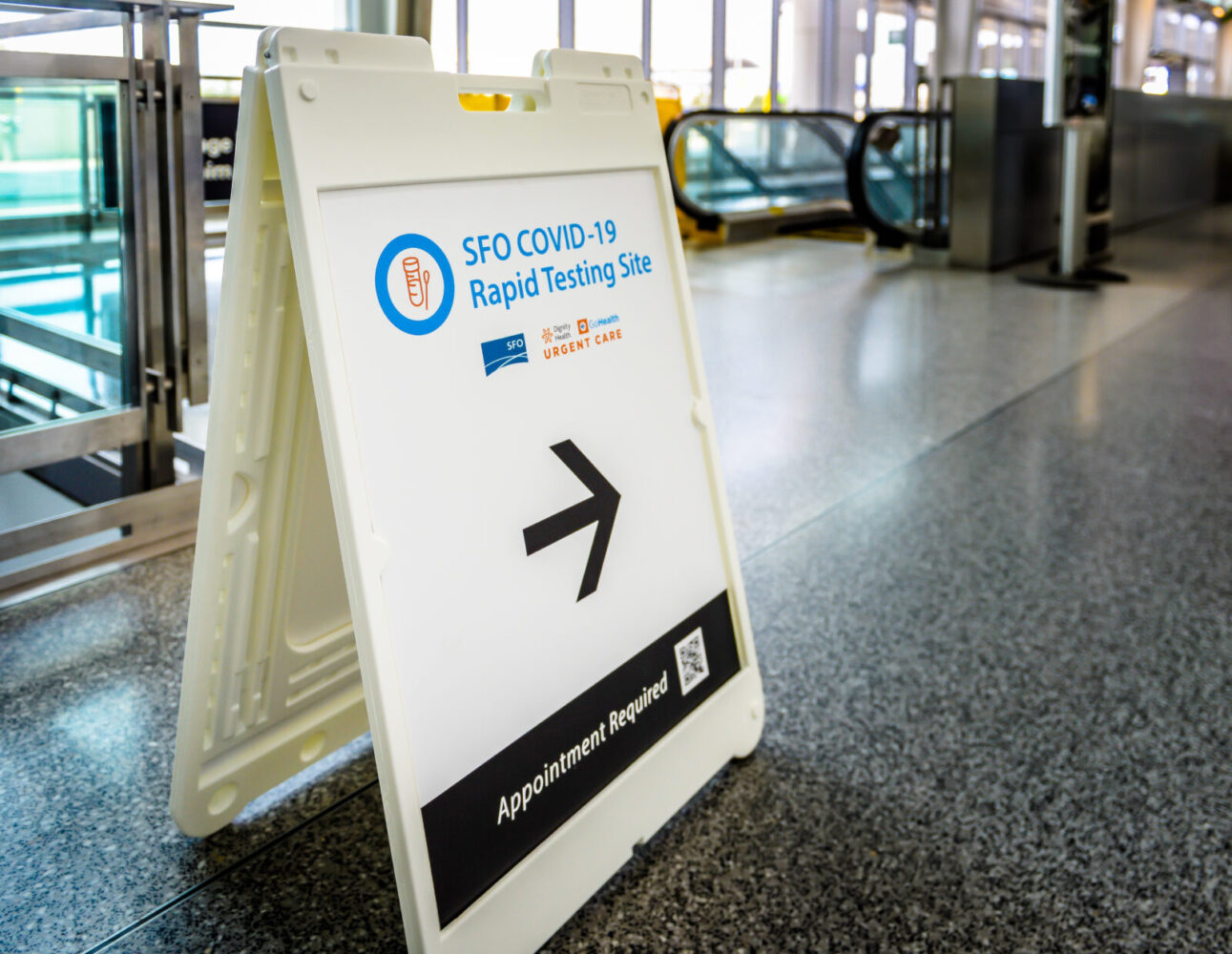
In the meantime, in addition to encouraging passengers to mask up, airports continue to reassure travelers with assertive terminal-wide cleaning procedures, COVID-19 testing services, and other health and safety regimes.

Election results & vaccine news are good news for travelers

[This is a slightly different version of a story we wrote for NBC News]

Are you feeling better about traveling somewhere?

Since March 2020, COVID-19 and government-mandated border closings have triggered $443 billion in cumulative losses for the U.S. travel economy, according to the U.S. Travel Association.

Spikes in COVID-19 cases have many grounded travelers worried that the country may go into lockdown mode. But others are buoyed by the fact that President-elect Joe Biden has named a coronavirus task force. And by the promising news from Pfizer about progress made on a COVID-19 vaccine.

Theresa Kauffman of Fort Worth, Texas is anxious to travel to see her parents and her mother-in-law. “You know how when you’re sick and get diagnosed by a doctor and you feel relieved to have a plan? That’s how this feels for travel,” said Kauffman. With the vaccine news, “It feels like we can start to hope again.”

Hospitality industry groups are encouraged by the president-elect’s support of science-based coronavirus-fighting strategies. And by his plan for a coordinated government COVID-19 response for a path to economic reopening and the return of international travel.

The U.S. Travel Association applauds “President-elect Biden’s objective of helping the industries most heavily impacted by the pandemic. The travel industry accounts for more than a third of overall U.S. unemployment, and policies to promote relief, recovery, and stimulus for travel businesses are integral to a U.S. economic turnaround.”

Gregory Miller, Executive Director of the Center for Responsible Travel, expects that a national mask mandate will be implemented.

“This would reduce COVID virus transmission considerably and likely increase the prospects for us to return sooner to traveling by air and public transportation with more safety and confidence,” Miller said.

And Airports Council International – North America (ACI-NA) is looking forward to working with the President-elect on an infrastructure investment package.

“The entire travel industry is still suffering from the abrupt, sustained drop in tourism and business travel, and airports need help to get through this prolonged downturn.” said Kevin Burke, ACI-NA’s President and CEO.

A pent-up desire to travel

Due to the global pandemic, there is a great deal of pent up demand for travel.

In a pre-election survey of clients by the Virtuoso luxury travel network, 72 percent said they were ready to travel. 92 percent said that the election made them want to travel.

“We’re already seeing evidence of that confidence coming back with people booking stays for Thanksgiving and the holiday season,” said Virtuoso managing director Misty Belles.

Post-election, it looks like a lot more people are considering traveling.

KAYAK’s Data Dashboard shows that searches hit a 3 month low on election day (Tuesday, November 3), down 62 percent year over year. But in this post-election week, searches are trending upwards. On Monday, November 9, Kayak says searches were up 8 percent week over week and up 21 percent from election day.

And it is not just leisure travelers who are anxious to get back on the road.

The pandemic has forced many college students to forego travel and study experiences abroad, says Linfield University media professor Michael Huntsberger. He says it’s especially hard for seniors, who won’t have another opportunity. “But though COVID-19 has foreclosed these programs for 2020, students are anticipating future opportunities as soon as travel restrictions are lifted, and safety protocols are in place.”

Harrison Ford a new fan of Airlink disaster relief group

You know Harrison Ford as an actor from the Star Wars and Indiana Jones movies.

Avgeeks know Ford is a fan of vintage planes and a licensed pilot.

Now he’s also a big fan and a supporter of Airlink.

The non-profit connects airlines with non-governmental organizations (NGOs) to help get personnel and emergency supplies to sites around the world experiencing natural disasters and protracted emergencies.

We’re not sure if Ford is standing in his airplane hanger in front of his own airplanes to deliver this message of support. But we’re glad he’s learned of this organization and understands its importance. And is helping spread the word.

Stuck at the Airport first wrote about Airlink in 2016. Back then airlines were reaping benefits from soaring passenger numbers and low energy costs. And there was a $15 billion funding hole in global disaster relief.

Disasters haven’t disappeared. And disaster relief is still very much in need around the world. So the service Airlink provides to get personnel and supplies where needed during and after hurricanes, earthquakes, wildfires and, now, COVID-19 is more important than ever.

Lots of major airlines, airline manufacturers, companies, organizations, and individuals support this 10-year old organization. You can too. With a cash donation or by donating frequent flyer miles you have sitting in your account on Alaska Airlines and United Airlines.

Hawaii bound? Get tested for COVID-19

Hawaii reopens to tourists on October 15. Yay, right?

But the only visitors who will be able to skip the 14-day quarantine rules will be those with proof of testing negative for COVID-19 within 72 hours before they depart the mainland.

Hawaii officials will only accept test results from approved providers.

Here’s information about those testing partners from the Hawaii State Department of Health. The list was posted on 10/13/20 and will likely be updated.

Be sure to check with providers for prices and updated information.

Where to get tested

AFC Urgent Care – COVID-19 tests are available at clinics on the AFC Urgent Care website. Tests available for ages five and older. Schedule in advance to guarantee appointment availability. A printed version of the results is provided prior to leaving the clinic.

Bartell Drugs – Only for Alaska Airlines passengers to Hawaii at select Bartell Drugs locations. Tests available for ages five and older. Appointments are required at least one day in advance. Guaranteed results within 72 hours.

Carbon Health – Tests offered at dedicated sites with results delivered within two hours. Tests available for ages five and older for Alaska Airlines passengers in Seattle only. ($135)

CityHealth Urgent Care – CityHealth Urgent Care offers tests utilizing state-of-the-art Abbott Lab instrumentation for results in 15 minutes. Tests available for ages five and older.  

Color  Tests available for ages five and older for United Airlines passengers going to Hawaii from San Francisco International Airport.

CVS Health – Travelers may schedule an appointment up to two days in advance at select CVS Pharmacy drive-thru locations. Tests available for ages 12 and older. Pre-registration is required. ($139).

Discovery Health MD – Individuals traveling to Hawaii may schedule testing online with same ($329) and next day ($279) results at designated testing sites. Tests available for ages five and older. A limited number of walk-ups can be accommodated.

Kaiser Permanente – Kaiser Permanente members may schedule a test online, or contact the appointment call center or nurse advice line in their home region for scheduling instructions.

Quest Diagnostics – Individuals may order and schedule the company’s COVID-19 Active Infection Test online and select from more than 500 Walmart drive-thru pharmacy locations for a nasal swab test.

Vault Health – At-home tests with real-time audio-visual supervision are available. Tests available for ages five and older. Tests are mailed with accurate results in 72 hours or less.

Walgreens – Drive-thru testing locations available. Appointment required.

COVID-19 Testing Information from Airlines and Airports

If you are heading to Hawaii, your airline will offer information about COVID-19 tests and current requlations.

Here are links to the pre-travel testing requirements for Hawaii travelers and additional information about testing options from airlines – and from Oakland International Airport.

Alaska Airlines 

American Airlines 

Hawaiian Airlines 

Oakland International Airport 

Southwest Airlines

United Airlines 

If you go, send us a postcard.