tourism

Welcome Back, Tourists. Here are the Rules.

[This is a story we wrote for NBC News]

Americans embarking on spring break trips and summer vacations this year face a bevy of new fees, rules, and restrictions in some popular destinations that are rethinking how many visitors to welcome and what types of behavior to accept.

As the post-pandemic travel rebound continues, the return of tourists — and their wallets — is good news for most destinations. At the start of this year, more than half of Americans had plans to travel in the next six months, according to the U.S. Travel Association, and a third of leisure travelers are planning to travel more this year than last.

But taking a page from Venice, Italy, which banned cruise ships in 2021, and Amsterdam, which is launching a campaign to discourage its rowdiest revelers, many U.S. cities are welcoming back visitors on new terms — in some cases with higher price tags.

Lake Tahoe, California

This year, the Lake Tahoe, California, region had the misfortune to land on Fodor’s Travel’s list of places to reconsider visiting in 2023, after suffering traffic congestion, crowded hiking paths, and trashed beaches. It was the downside of a pandemic-era boom in visitors that many outdoor destinations saw while other activities were suspended or came with greater health risks.

“Locals felt the city was too small for the influx of people coming into town,” said Sonia Wheeler, community service officer for the South Lake Tahoe Police Department. “People couldn’t get home from the grocery store sometimes because there was too much traffic from tourists heading to or from the ski resorts.”

Officials hope to strike a new balance. Policies rolled out during and since the pandemic have tightened restrictions on vacation rentals around Lake Tahoe, with a combination of caps and outright bans in towns along its shoreline.

Now, sixteen area groups are trying to hammer out a stewardship plan that recognizes that “our environment, our economy, and our communities are wholly interconnected,” said Tahoe Regional Planning Agency Executive Director Julie Regan. Ideas on the table include parking reservations and encouraging off-peak visits, an agency spokesperson said.

In the meantime, strict enforcement of new laws targeting vacationers — including $500 fines for noise complaints and for using outdoor hot tubs from 10 p.m. to 8 a.m. — have helped.

“Locals still have concerns about the influx of tourists,” Wheeler said, “but since most vacation rentals have been outlawed, except for certain areas of town, our officers aren’t responding to as many complaints.”

The pandemic was a mixed blessing for many destinations

Early on, it gave some communities “a chance to breathe and enjoy their towns, and parks, and beach without the crowds, traffic, noise, etc.,” said Alix Collins of the nonprofit Center for Responsible Travel. But it “also gave them a time to think about how to better manage tourism moving forward.”

As with Lake Tahoe, many areas’ recalibration efforts are “more of a result of the pot boiling over” from tourism pressures, particularly “on traffic, housing, and daily life,” said Seleni Matus, the executive director of the International Institute of Tourism Studies at George Washington University in Washington, D.C.

Elsewhere, the challenge is getting visitors to better coexist with locals.

“A good example is Port Aransas, Texas,” said Cathy Ritter, whose consulting firm, Better Destinations, helped the Gulf Coast town on a barrier island outside Corpus Christi develop a marketing campaign and a mascot aimed at guests.

One goal, she said, was “to educate visitors on the etiquette of using the golf carts locals use to get around.”

Fees At Popular Hawaii Parks

In Hawaii, where state officials expect tourist numbers to recover fully by 2025, a program of timed reservation tickets for out-of-state visitors that rolled out at popular state attractions just before the pandemic is being expanded.

As of last May, nonresident visitors at Oahu’s Diamond Head State Monument, one of Hawaii’s most heavily trafficked parks, must pay $5 per person for timed entry reservations and $10 for parking. Previously, all comers were welcome, anytime, for $1 per person and $5 for parking.

“Before we put the timed reservation system in place, Diamond Head could have more than 6,000 visitors on a busy day,” said Curt Cottrell, administrator of Hawaii’s Division of State Parks. “Everyone wanted to hike at sunrise or in the morning, and the parking lot could be a crushing mass of walk-ins, Ubers, rental cars, and trolleys.”

The timed system caps visitors at 3,000 daily and spreads them out throughout the day. “Now the summit isn’t crowded, there aren’t long lines at the bathrooms and we’re generating four times the revenue with half the people,” Cottrell said.

Separately, a proposed $50 “green fee” — modeled on arrival charges levied in Ecuador’s Galápagos National Park ($100 per person), Bhutan ($200 per day), Costa Rica ($15 per person), Palau ($100 per person) and elsewhere — is working its way through the Hawaii Legislature.

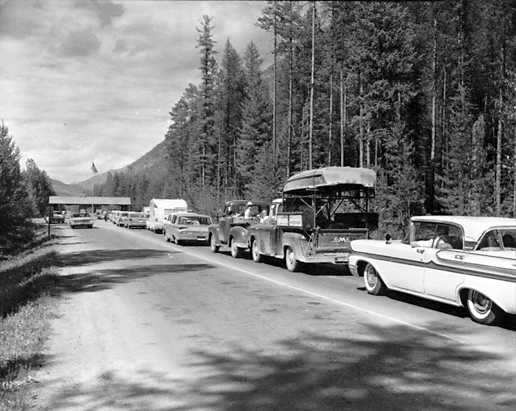
Glacier National Park visitors 1960

On the U.S. mainland, a timed vehicle reservation program — piloted over the last two summers to reduce crowding during popular times at Rocky MountainGlacier, and Arches national parks — will be back in force this summer.

The reservation fee is in addition to vehicle entry fees collected at most national parks.

“Visitation numbers continue to climb toward pre-pandemic levels,” said Jenny Anzelmo-Sarles, chief spokesperson for the National Park Service. “Parks piloting these systems are seeing less congestion at the entrance stations, on the roads and trails, and in parking areas, resulting in improved visitor experiences and visitor safety.”

The changes have drawn some concerns about potential inequities in accessing public parks.

“I love and support” efforts to protect destinations and improve the visitor experience, said Todd Montgomery, director of the Sustainable Tourism Lab at Oregon State University, “but how you do that can be a slippery slope.”

Extra fees and reservation systems can create barriers for visitors with limited travel budgets, those who can’t easily access the internet, and people whose jobs make it difficult to plan vacations months ahead, Montgomery said, “so it needs to be done in a thoughtful, equitable and fair way.”

Other outdoor destinations are focused on coaxing better conduct out of guests.

Starting in 2017, trail ambassadors stationed at many popular Oregon trailheads have been offering advice to visitors on safety, ethical use of public lands, and Leave No Trace practices.

“At the time, we were hearing from local sheriff’s offices needing support for search and rescue, from land managers about increasing issues around trash and dog poop on trails, and visitors creating social trails in unauthorized areas,” said Elizabeth Keenan of the Mt. Hood and Columbia River Gorge Regional Tourism Alliance.

“All those issues increased during the pandemic, with new recreators and ‘pandemic dogs’ out on the trails,” Keenan said. Ambassadors now spend more time guiding visitors to restrooms and water access, describing the terrain and elevation for better decision-making, and passing out poop bags, she said.

Some communities are simply steering visitors away.

Citing concerns that a potential oil or sewage spill from a visiting cruise ship could harm California’s Monterey Bay National Marine Sanctuary, the Monterey City Council voted in February to stop providing dockside support to cruise liners, effectively telling them to go somewhere else.

And they are. Before the pandemic, 15 to 20 cruise ships stopped at Monterey Bay each year, said City Manager Hans Uslar. “Now I see in their advertising that the port of Monterey is out, and instead they’re spending another day at sea,” he said.

Before the pandemic, tourism income in Monterey County averaged about $3.2 billion annually, of which about $1.5 million came from cruise passengers, Uslar said.

“I’m OK with the loss of the cruise income,” he said, “because in return, the product we are selling — which is the natural beauty of Monterey Bay — is now a tiny bit safer. And that is not something you can quantify in millions of dollars.

The (Not So) Impossible Road Trip

Icy snow is covering our town. So we spent the holiday weekend just dreaming of places we want to go and making a list of new and old favorite sights we want to see in the new year.

The Impossible Road Trip – An Unforgettable Journey to Past and Present Roadside Attractions in all 50 States” turns out to be a great aid to our adventure planning

When the book by Eric Dregni first showed up at our house, we thought the “impossible” in the title meant the book was all about historic roadside attractions and quirky destinations across the United States we’d never get to see.

But now that we look closer, we see that the long-gone spots mentioned here simply offer context for all the corny, quirky, and unique places that are still around.

Like the Big Duck in Flanders, NY. The World’s Largest Buffalo Monument in Jamestown, North Dakota. The Cardiff Giant in Cooperstown, NY, And many places across the country where you can spot statues of dinosaurs, muffler men, and Paul Bunyans

Here’s a look inside the book, which includes infographic maps, themed roundups, and some wonderful photographs taken by the late architectural critic and photographer John Margolies.

We checked to see if some of our favorite attractions in Washington were included and were pleased to the Zillah’s Teapot Dome Gas Station and Seattle’s Hat ‘n’ Boots included. (These photos are not from the book).

Courtesy VIsit Yakima

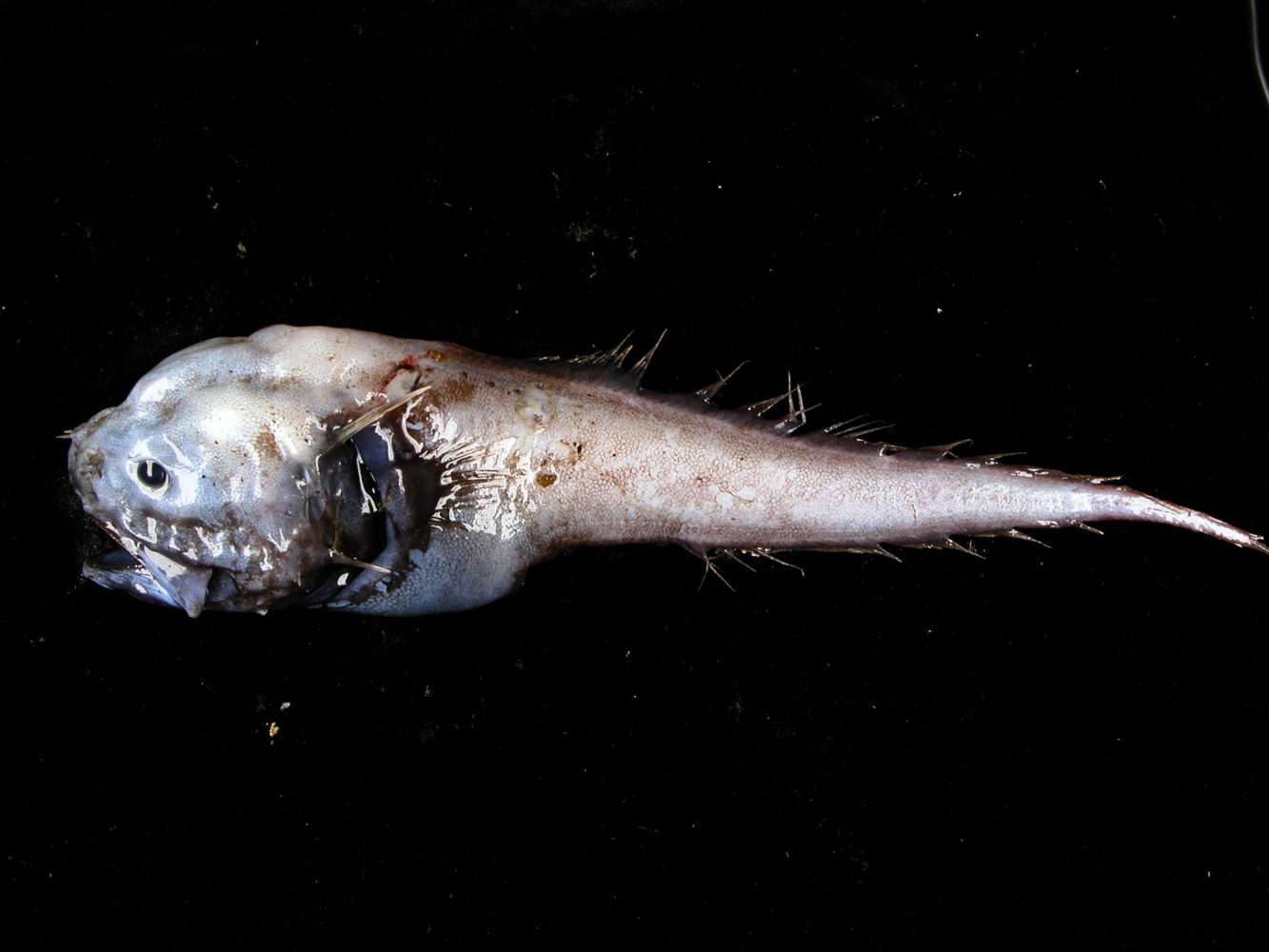
Visit Victoria, B.C; see a bony-eared Assfish

Victoria Boney Eared Ass fish

Bony-eared Assfish from the Royal B.C. Museum

With the Canadian dollar currently worth just 69 US cents, now is a good time to take that vacation up north.

One of my favorite Canadian cities is Victoria, B.C., which is just a one-hour float plane ride or a 3 hour high-speed passenger ferry ride from my home base of Seattle.

And my favorite place to visit in Victoria is the Royal B. C. Museum, which is filled with world-class exhibitions and permanent galleries – and which has lots of treasures tucked away in the vaults.

There’s an admission charge to enter the museum (well worth it), but there’s a new gallery – the Pocket Gallery – that is free for everyone and filled with objects from the collection that are rarely or never put on view.

The first Pocket Gallery exhibition, Finding Fishes, features beautifully crafted replica fish and preserved fish collected from the BC coast and among the specimens on display is the Bony-eared Assfish, the first of its kind found anywhere in BC.

What to do in Denver

I spent a few days poking around Denver while waiting for the new Westin to open out at the airport and, thanks to the enthusiastic folks at the Colorado Tourism Office, Visit Denver and a host of others, found plenty to keep me entertained and planning a return trip.

Here’s a quick look at a few places I had a chance to visit.

DENVEr LEOPOLDBros

If you’ve got someone driving you into the city from the airport, plan your arrival to coincide with the Tasting Room public hours at Leopold Bros. distillery, on the way into town. On the menu: tasty, award-winning, small batch whiskies, gins, vodka, liqueurs and a few other spirits all made right there.

In town, I stayed at the Crawford Hotel, located inside Denver’s historic, restored Union Station.

Denver Crawford

The station’s Great Hall – which has more than a dozen restaurants, bars and boutique shops – serves as the hotel’s lobby and has become a living room-style gathering spot for locals. Upstairs, some of the 112 rooms are “Pullman-style,” in a nod to the heyday of train travel, with ‘classic” and roomy “loft’ rooms rounding out the other options.

The Oxford Hotel, which first opened in 1891, is a block from the train station. In the lobby you’ll find a cozy, wood-burning fireplace and a caged canary (a holdover from the days when miners were frequent guests) and, upstairs, this vintage “business center.”

Guests who take the time to type a letter can have it mailed for free.

Denver Oxford

While in town, I visited the bigger-than-I-imagined Denver Art Museum, spending most of my time with the Western American Art collection, and toured Hostel Fish, where they have a fresh, modern take on the classic hosteling experience.

denver hostel fish

In addition to meals inside The Source and AvantiF&B, two multi-merchant venues, I sat down to dinner at Ophelia’s Electric Soapbox, a popular restaurant and music venue in a former brothel, and visited the wizards at The Inventing Room dessert shop, where chef Ian Kleinman whipped up some crazy treats, including chocolate cinnamon nitro popcorn.

Denver _InventingRoomNitroPopcorn

Back at Denver International Airport, I made sure to arrive well ahead of my flight so I could enjoy a meal at Root Down,, in the center core of Concourse C.

The menu there is “field to fork” and the decor is very definitely fun and funky.

Denver AIrport Root Down

On the road: Deadwood and Wall Drug

Wall Drug Jackalope

Two South Dakota spots I recently visited – Deadwood and Wall Drug – face with the classic tourism challenge: how to get people to come visit. And then visit again.

Here’s a slightly edited version of the story I put together for CNBC:

Since its Gold Rush-era founding in 1876, the South Dakota frontier town of Deadwood has been through several booms and busts.

Yet it retains a veneer of the Wild West and keeps fresh the stories of legendary residents such as Calamity Jane and Wild Bill Hickok.

But Deadwood is trying not to live up to its name: the town that helped spawn a popular cable series is looking for a shot of something new.

“All destinations need to evolve over time, even those that that wish to remain the same,” said Alan Fyall, a professor in the Rosen College of Hospitality Management at the University of Central Florida in Orlando.

Since November, 1989 — the year that Deadwood joined Las Vegas and Atlantic City as a cohort of then U.S. cities with legal non-reservation gaming — more than $18 billion has been wagered in the town. That activity has generated millions of dollars in tax proceeds to restore historic buildings in Deadwood, and to promote tourism statewide.

But despite the addition of keno, craps and roulette this past summer, Deadwood is no longer confident of its winning hand.

Recently, state data showed the city’s gaming revenues have plateaued, prompting some officials to suggest the town has to adapt to a more competitive landscape.

“Gaming is now ubiquitous nationwide, and Deadwood can’t just rely on gambling or its Western culture anymore,” said South Dakota Gov. Dennis Daugaard

On that score, Deadwood’s Revitalization Committee recently commissioned a 96-page action plan that contains recommendations on how the town can capitalize on its history and place in popular culture.

Deadwood’s popularity is at least partly attributed to HBO’s three-season-long “Deadwood” TV series (which was canceled in 2006 but is still popular online) and attractions such as Kevin Costner’s memorabilia-filled Midnight Star casino and restaurant on Main Street.

“The town has so many things going for it beyond gaming,” said Roger Brooks, whose tourism consulting firm put together the revitalization report. “Plus, with a name like Deadwood, it doesn’t get much better when it comes to being able to stand out.”

Brooks would like Deadwood’s Wild West-themed streets to be more authentic and pedestrian friendly. He’s also urged the town to create a central plaza where regular entertainment and activities can take place. Meanwhile, the town’s business community is grabbing the proverbial bull by the horns and rallying around those recommendations.

“We developed 55 action items from the report, and have been busily working on making them happen,” said Mike Rodman, executive director of the Deadwood Gaming Association and a member of the Revitalization Committee.

Currently, the town is building a new welcome center and in town more technology-friendly parking meters now accept credit cards and cell-phone payments.

“We also cleaned up our signage, put up baskets of flowers on the street lights and wrapped some electrical boxes to make them less visible,” said Rodman.

Next on the list: finishing plans for two downtown plazas and raising the $8.8 million needed to move that part of the plan forward, said Rodman.

Meanwhile, at Wall Drug

Deadwood may need to change, but Wall Drug credits its success to remaining pretty much the same.

Now a block-long oasis of kitsch visited annually by more than a million visitors traveling along a lonely stretch of Interstate 90, Wall Drug got its start in the 1930s when the owners of a struggling drug store put up highway signs advertising free ice water.

Thirsty Depression-era travelers pulled over for refreshments and purchased ice-cream and other small items while they were there.

Over the years, Wall Drug evolved into one of the country’s most famous pit stop, with a cafe, restaurant, art gallery and shops that sell everything from postcards and T-shirts to jackalope hunting permits, turquoise jewelry and high-end cowboy boots and western wear.

Dozens of free, photo-friendly attractions were built as well, including a giant jackalope, a replica of Mt. Rushmore, a shooting gallery arcade and a giant Tyrannosaurus rex that roars to life every 15 minutes.

The ice water is still free, the coffee is just 5 cents and many grandparents make a point of reliving their childhood Wall Drug experience with their grandchildren.

“My father and my grandparents wanted Wall Drug to be someplace where people could stop, have a nice meal and enjoy themselves without spending much money if they didn’t want to,” said Rick Hustead, current Wall Drug chairman and the oldest grandson of founders Dorothy and Ted Hustead.

“Our guests spend on average two and a half hours here and 50 percent of our business is repeat customers, so we must be doing something right,” Hustead added.

Wall Drug coffee

North to Alaska? The rush is on.

ALASKA LAKE HOOD SEAPLANE BASE

It’s not Klondike-era gold nuggets they’re after, but the gold that comes from mining tourism.

Airlines, cruise companies and chains such as Cabela’s and the Hard Rock Cafe are heading north to Alaska hoping to cash in on a rising tide of visitors to the Land of the Midnight Sun.

After three consecutive years of growth, Alaska’s visitor count reached an all-time high of nearly 2 million guests between May 1, 2013, and April 30, 2014, according to the Alaska Division of Economic Development.

Those 1,961,700 visitors beat the 2007-20008 record by 5,000 people.

“For many national brands such as Hard Rock, Alaska felt too far away to be relevant to expanding a national presence and many thought it would be too difficult to run a successful branch in the state,” said Calum MacPherson, area vice president of operations at Hard Rock International, “but we’ve seen a shift in recent years.”

Hard Rock now sees Anchorage as a “thriving, up-and-coming city that is uniquely positioned with a growing and flourishing cruise business” he said. He also noted that the local population was listed by the Census Bureau as having the nation’s second-highest median income in 2011.

After a soft opening early this summer, the Hard Rock Cafe Anchorage will have a grand opening Sept. 19 at its downtown Anchorage location at Fourth Avenue and E Street, which is where the long-distance Iditarod sled dog race begins each year.

Hard Rock Cafe Anchorage_courtesy Hard Rock International

Earlier this year, Cabela’s opened a 100,000-square-foot store in Anchorage selling hunting, fishing and outdoor gear with wildlife displays, an aquarium, indoor archery range, a mountain replica, deli, fudge shop and other tourist-friendly attractions on-site. Bass Pro Shops, with a wetlands nature center, stuffed animals, an aquarium and other tourist-friendly features, opened an outpost in July.

The new tourism record for Alaska was boosted by increases in the number of cruise visitors, greater air service, growth in winter travel and an aggressive state-led tourism marketing campaign, said Joe Jacobson, director of the state’s Division of Economic Development.

Close to a million visitors toured Alaska by cruise ship last year, lured by great scenery, not to mention a reduction in the state’s passenger head tax from $46 to $34.50.

“After that, many ships returned to Alaska and new ships entered the market,” Jacobson said. Holland America added departures that brought 6 percent more guests in 2013 over 2012, Celebrity Cruises sent one of its new Solstice Class ships to Alaska for the first time and new ships entered the market, he said.

Increased air service helped Alaska boost tourism numbers as well. Virgin America and Icelandair entered the market with service to Anchorage, and several other carriers (JetBlue, United and Delta,) increased the number of their Alaskan flights.

One number that isn’t rising is the age of the average visitor.

The most recent Visitor Statistics Program report that looked at demographics (2011-2012) found that the average age decreased slightly, from 51.6 to 50.7, between 2006 and 2011.

“The glaciers took my breath away,” said Renee Brotman, a leadership coach and organizational consultant from Goodyear, Arizona, who recently visited Alaska on a cruise and is already planning a return trip. “Juneau and Ketchikan are such charming small towns. You can stand in the middle of the street and look up and see glorious mountains all around you.”

Looking ahead, Alaska’s Division of Economic Development doesn’t do a formal tourism forecast. “But because changes in cruise ship deployment have a significant impact on the Alaska visitor market—51 percent of year-round visitors and 59 percent of the summer market—cruise industry schedules for Alaska provide a good indicator of what to expect,” said Caryl McConkie, the agency’s development specialist.

Cruise Lines International Association Alaska estimated that the state will see 972,000 cruise visitors during 2014, compared with 999,600 during 2013, due in part to the redeployment of two Princess ships to Asia.

“Strong early bookings for 2015 indicate that we may make up for some of the loss of passengers in 2014,” McConkie said, “Princess is replacing the Island Princess with the larger Ruby Princess in 2015, increasing lower berth capacity by just over 1,000 passengers per voyage.”

Climate change might help the 2016 cruise season warm up as well.

Since the 1990s, expedition-style cruise companies such as Polar Cruises, have offered sailings on smaller ships (with up to 199 passengers) that leave traditionally plied Alaska waters to explore Iceland, Greenland and sections of the Northwest Passage, which connects the Pacific and the Atlantic Oceans.

In 2016, Crystal Cruises plans to be the first luxury line to navigate the Northwest Passage route.

During a cruise from Aug. 16 to Sept. 17, 2016, the 68,000-ton Crystal Serenity, which carries 1,070 passengers, will travel from Anchorage/Seward to New York City, through Arctic waterways historically not navigable by large ships.

On its website, Crystal explains that a cruise is now possible because the “amount of ice in the Northwest Passage has declined considerably over the years, especially at the end of the summer in the southern reaches of the Passage,” creating a window of time when its 13-deck vessel will have minimal risk of running into “ice concentrations.”

Prices for the voyage start at $19,975 per person.

(My story about tourism in Alaska first appeared on CNBC Road Warrior).

Cities, airports butt heads over rideshare services

App-powered ridesharing services such as Uber and Lyft keep butting heads with regulators in cities around the country, claiming that rules for traditional taxis are outdated and not applicable to new transportation models.

Here’s my story on the latest chapter in the battle that appeared on CNBC Road Warrior.

Glacier National Park visitors 1960

After a few weeks of negotiations with state and city authorities and the threat of a restraining order, Lyft worked out a deal to start service in New York City beginning Friday at 7 p.m.

Manhattan, Queens, the Bronx and Staten Island will, for now, get a limited version of the service that was originally planned, but the deal means Lyft is putting operations in Buffalo and Rochester on hold by Aug. 1 while it works out a variety of insurance and regulatory issues.

In Memphis, Tennessee, Uber and Lyft continue service despite recent cease-and-desist orders from the city.

Uber spokesman Lane Kasselman said via email that while the company was not aware of any actions taken by the city of Memphis, “any attempt to restrict consumer choice and limit economic opportunity does nothing but hurt the thousands of residents and visitors who already rely on Uber for safe, affordable and reliable transportation.”

But Lyft spokeswoman Erin Simpson said the company took the cease-and-desist letter “as an opportunity to start a conversation with local leaders about Lyft’s peer-to-peer model and how we can work together to craft new rules that prioritize safety.”

Consumer alerts and cease-and-desist orders against Uber, Lyft and other transportation network companies are in effect in more than a dozen other cities and states. But while the so-called transportation disruptors have gained regulatory approval in Seattle, Minneapolis and a handful of other jurisdictions around the country, pushback at the national level continues.

Through its “Who’s Driving You?” campaign, the Taxicab, Limousine & Paratransit Association is tracking insurance alerts regarding rideshare companies and soliciting and sharing passenger complaints and negative news stories about the services.

“We would like to see ridesharing companies following a single set of rules designed to protect the public in the taxicab space,” said Dave Sutton, spokesperson for TLPA’s ‘Who’s Driving You?’ campaign.

TLPA also recently drew attention to the fact that the Airport Ground Transportation Association, a trade organization for airport ground transportation operators, airports and others, issued a warning to North American airports.

“Transportation Network Companies have moved beyond city regulations to now challenge airport ground transportation regulations as not applying to them. They intend to operate at airports and challenge airport officials to stop them,” said Ray Mundy, AGTA executive director, in the warning.

That plan already seems to be underway.

In 2013, when California became the first state to regulate ridesharing services, the Public Utilities Commission included a provision prohibiting TNCs from operating “on the property of or into any airport unless such operations are authorized by the airport involved.”

But in June 2014, law enforcement officials at five major California airports (LAX, OAK, SAN, SFO and SJC) told the commission that many ridesharing services were flouting those rules by continuing to operate at the airports without permits.

“We’ve invested a lot of work since last fall, trying to find a way to create a lawful way for TNCs to operate at airports,” said Doug Yakel, spokesman for San Francisco International Airport. But he said while SFO is in discussions with several TNC companies regarding permits, “thus far we have not completed this process for any company.”

Airports in Chicago, Raleigh-Durham, North Carolina, and many other cities have also grappled with the TNC issue.

Now Airports Council International-North America, the trade organization for North American airports, is getting involved.

While “it is unacceptable for TNCs to simply ignore regulations and requirements with which they disagree, as has been the case at some airports … the demand for transportation network companies cannot be overlooked and must be addressed,” said Deborah McElroy, ACI-NA executive vice president.

ACI-NA has put together a task force to help airport officials establish regulations and work out reasonable solutions, although given the circumstances at individual airports, the appropriate solutions may differ greatly, said McElroy.

And while “there’s no handbook yet” for dealing with TNCs in cities and airports, “we’re just seeing the beginning of a new method of transportation that’s vastly superior to what came before,” said Joshua Schank, president and CEO of the Eno Center for Transportation. “They will eventually find a way to regulate them and make them safe.”

You kill it, these hotels will cook it

If you sometimes wonder where the food served at a hotel restaurant comes from, you might want to check out one of the programs I profiled for CNBC Road Warrior where the on-site chef will cook up what guests catch, shoot or forage.

Me? I think I’m going to try the forage option.

MarlinWatkinswithTurkey_courtesyTurkeyTrotAcresLodge

Courtesy Turkey Trot Acres

Farm-to-table meals have become so popular that hotels are now getting in the game with an even closer-to-the-source experience by offering chef-prepared meals using food hooked, foraged or shot by their guests.

You might visit Turkey Trot Acres in Candor, New York, for a wedding reception, reunion, barbecue or zombie-fest, but wild turkey hunting in the spring and fall is what this upstate lodge is best known for.

Turkey Trot specializes in three-day guided hunting packages that start at $1,200 and include single-bed rooms, meals and guides. And while not everyone bags a turkey, those who do usually pose proudly with their bird before it goes into the cooler.

“Turkey Trot will clean the turkey for you, package it and tell you how to cook it. And if you want it prepared for dinner, they’ll do that too,” said Marlin Watkins, a well-known turkey call maker from southeast Ohio who’s been a regular at the lodge for the past 25 years.

“But when you harvest a wild turkey it’s such an event that most people would rather take it home to show off to their friends and family. I’ve seen a lot of turkeys go home in the back of a Cadillac,” Watkins said.

Next winter, Viceroy Snowmass, near Aspen, Colorado, will be adding a “you kill/we cook” option to its menu of hotel activities. From Nov. 8 to Jan. 18, guests will be able to hunt for pheasant, duck and goose—but not turkey—with guides from the Aspen Outfitting Company. The hotel’s executive chef, Will Nolan, will show guests how he breaks down the game and then prepares it for a meal. The cost: $2,200, not including accommodations.

“Guests are constantly looking for ways to get closer to their food, and I can’t think of a more intimate experience,” said Nolan. “The most memorable meals are those that you actually have a part in creating, so this fits the bill in a number of exciting ways.”

Michigan’s Catch & Cook program, a joint project of a half dozen public agencies and commercial associations, connects charter fishing clients and charter boat operators in the state’s Great Lakes region with about 50 restaurants, many of them linked to hotels and inns, which will cook and serve the day’s catch.

The program began in 2012 and has reeled in a net full of economic benefits.

“Distinctive experiences like Catch & Cook are likely to be told and retold,” said Jordan Burroughs, a wildlife outreach specialist at Michigan State University. Charter boat businesses benefit through positive word-of-mouth, restaurants get added business during the early afternoon—a traditionally slower and less profitable part of the day—”and communities benefit when visitors extend their stay, supporting local restaurants and presumably, other local businesses,” Burroughs said.

In Florida, the Hyatt Regency Sarasota has a “You Catch ‘Em, We’ll Cook ‘Em” offer for visiting anglers, including those who dock at the hotel’s 32-slip marina. For $40 per person, the chef at the Hyatt’s Currents Restaurant will grill, blacken, sear or pan fry a fisherman’s cleaned and filleted catch and serve it up with soup or salad, sides of fresh vegetables, other accompaniments and dessert.

A similar program, called “Hook N’ Cook,” is offered at the Westin Cape Coral Resort at Marina Village in Cape Coral, Florida. There, chefs at two onsite dining venues will prepare a guest’s freshly-caught and cleaned fillet for a typical plate fee of $15, with other menu items included with the meal at an additional cost, said Stefanie Eakin, the Westin resort’s marketing manager.

Nita Lake Lodge_foraging

Courtesy Nita Lake Lodge

Each Wednesday morning during September and October, guests may go foraging for wild and edible plants, shoots, lichens and mushrooms with the executive chef of Nita Lake Lodge in Whistler, British Columbia.

Wednesday evenings, those same guests can dine with their fellow foragers on a five-course meal using the ingredients plucked that morning in the Whistler Valley. Tickets are $70 per person, plus tax, for the foraging foray and the dinner.

The class spends a great deal of time talking about and studying false or deadly look-a-likes. “All amateur foragers learn a key rule,” said Paul Moran, the executive chef at the lodge’s Aura Restaurant, “When trying to identify wild plants and mushrooms, even if you are 99 percent sure something is edible, if you still have 1 percent of doubt, it’s not worth eating.”

After the flight? Try a bike share in the city.

It’s great to fly to a new city for business or leisure travel, but how will you get around once you’re in town?
In more and more cities, bike-share programs – along with mass transit- are the answer.

Here’s a story I put together for CNBC Road Warrior on some of the bike-share programs rolling out around the country:

Pronto Bikes

Despite some financial and legal challenges, bike-sharing programs are rolling out in cities throughout North America.

Locals and visitors in Minneapolis, New York, Washington and about 30 other North American cities can now buy daily, weekly or annual program memberships and/or pay hourly fees to check out a bike to ride around town.

Cities such as Tampa; San Diego; Portland, Oregon and Vancouver, British Columbia, will soon be launching programs.

Seattle is the latest city to announce that it is joining the bike-share bandwagon, with a start date in September for Pronto Emerald City Cycle Share, which will kick off with 50 docking stations around town for 500 blue and green bikes.

As in other cities, grants, private sponsorships and user fees will make the bike-share program possible. But with a contribution of $2.5 million from Seattle-based Alaska Airlines, the Emerald City is the first to have its bike-share program sponsored by an airline.

“We’re excited to help residents and visitors get out and explore,” said Joe Sprague, the airline’s vice president of marketing. “Our investment in this program is an investment in our community.”

It may seem odd that a traditionally fuel-guzzling form of transportation is supporting a very green one, but Alaska Airlines has a strong sustainability program.

“Biking in a city puts smiles on people’s faces, and airlines want to be associated with people having fun while traveling,” said Andy Clarke, president of the Washington, D.C.-based League of American Bicyclists.

That fun has bubbled over to political and policy decisions in other cities.

“When Paris introduced their system a decade ago, it was striking how many mayors around the world said ‘I want that,’ ” said Clarke.

And biking through a city is no longer seen as unconventional.

“Maybe 10 years ago biking would have been a granola effort in the sense that people choosing to bike were part of the environmental movement,” said Joshua Schank, president and CEO of the non-profit Eno Center for Transportation.

“Bike-sharing has helped change that. In places like Washington, D.C., and Chicago you see people in suits and ties riding the bikes because it’s a convenient and effective way to get to work. Not because they’re saving the Earth,” said Schank.

While setting up a bike-share program may seem as easy as putting up some racks with bikes, “it’s complicated and not cheap, easy or free. There’s a lot to it,” said Clarke.

And these programs are not without flats.

In January 2014, Montreal-based Public Bike System Company (known as Bixi), which provided bike-share equipment to programs in several countries, sought bankruptcy protection with more than $44 million in debt.  Contributing to the company’s financial downfall was a problem with the software for bike docking stations in some major cities, which caused those cities to withhold payments.

The company was sold in April.

“That raised a bunch of question and has hampered a few cities from pushing ahead,” said Clarke. “They’re asking more questions about the financial implications, but I don’t think it will have much of a lasting effect on the take-up of bike share programs.”

Portland, Ore.-based Alta Bicycle Share, which manages bike-share programs in cities including Chicago, New York, Boston, and Washington, is working with 8D Technologies to begin installing improved docking and software systems in bike-share cities that once relied on Bixi. Seattle’s Pronto program will be the first.

The cost of setting up bike-share programs is also coming down.

“When the bike-share concept came to the U.S. in 2010, it cost about $6,000 per bike to get on the street, including the kiosks, racks and installation,” said Josh Squire, CEO of Miami-based CycleHop, which is working on launching programs in Tampa, Atlanta, Phoenix, Orlando, Louisville and Ottawa.

Now with smart bikes and new technology, it’s possible to get a program going for $3,000 to $5,000 per bike, said Squire. “And more sponsors—including banks, health-care companies and, now, airlines—are stepping up to help shoulder the costs, paying $500 to $1,000 per year per bike to sponsor the programs.”

For travelers wanting to try out a bike-share program in a new city, Clarke has a few tips.

Bring a helmet. And if you think you’ll want a bike for a half or full day, consider getting one from a traditional bike rental outlet. That may end up being less expensive than bike-share programs, which often don’t charge members for rides under 30 minutes, but start a meter running after that.

“But in a city like Washington, D.C., that can still be cheaper than one cab ride,” said Clarke.

And nothing beats the experience of riding up and down the National Mall on a bike.”