pet travel

Pets are fetching their piece of the travel boom

(This is a slightly different version of a story we wrote for NBC News online).

Travelers have been crowding into airports in record numbers this year — including on four legs and leashes.

Tom Carpenter and his wife travel with their Havanese dog whenever they can. “His daycare would be $350 for a 10-day trip, so paying hotel fees and $100 each way to take him on a plane is worth it,” the 67-year-old Anacortes, Washington, resident said. “Plus, Mori hates being left alone.”

The Carpenters are among the many pet owners who are getting more comfortable bringing their animals on their journeys, adding to the broader demand for pet-related services far afield of veterinarian offices.

“I saw an uptick in people traveling with their pets early in 2024,” said Heather Eisenstadt, founder of Top Dog Pet Travel, a central Florida agency specializing in pet-friendly bookings.

She recently helped a client bring her dog on a trip to Europe for a Taylor Swift concert by landing in Paris and taking Le Pet Express — a minibus for those traveling with pets — through the Channel Tunnel to the U.K. (A second Swiftie was interested but balked at the cost, Eisenstadt said.)

Twenty-two percent of cat and dog owners reported taking their animals on at least three flights over the past year, up from 13% for dogs and 14% for cats in 2022, according to an August report from the American Pet Products Association (APPA), an industry group. Rates were up sharply for both types of animals tagging along on road trips too.

Young people are driving the trend. Thirty-eight percent of consumers ages 18-34 told Morgan Stanley researchers this year that they often travel with pets; 30% of those 35-54 and 13% of people 55 and older said the same.

“There is no product segment that has, or had, the growth of the pet market,” said Simeon Gutman, a retail analyst at Morgan Stanley. “It’s a telling indication of the prioritization that people have for their pets.”

The APPA estimates that pet ownership spiked during the pandemic and is returning to normal, with one or more pets now residing in 63% of U.S. households. And while many consumers have been getting more budget-conscious, they’re not holding back on spending on their animals.

Last year, Americans dropped more than $183 billion on pets, according to the Bureau of Economic Analysis, for everything from pet food and toys to vet visits and grooming. Even after stripping out the effects of inflation, pet spending rose by nearly a third from 2017 to 2023.

“We expect the industry to bark back by the end of 2025 and into 2026, after temporarily soft post-COVID demand,” the Morgan Stanley researchers said in their June report. The bank forecasts the pet industry to grow “faster than nearly all retail sub-segments” by the end of this decade, with spending on pet services set to more than double.

While analysts don’t track pet travel outlays specifically, some airlines and hotels appear eager to welcome more furry guests — aware that many visitors will pay a premium for it.

For one thing, arranging kennels or pet sitters can be a costly hassle for those leaving animals behind. “There’s also less stress,” said Patrick O’Brien, the APPA’s chief digital officer. “You’re not worrying if your pet is being taken care of the way you would.”

“I will always travel with my new pet, and I won’t spare any expense for accommodations,” said Annette Sacks, a 69-year-old retiree in Blairstown, New Jersey, who recently adopted a 5-year-old Chihuahua-mix rescue named Alonza.

U.S. airlines typically charge $95 to $150 per flight for small pets to fly in cabins, but some are hiking those rates. In February, American Airlines raised its carry-on pet fee from $125 to $150 each way; United Airlines followed suit in April.

Airlines don’t share how many pets fly each year in cabins, but the U.S. Department of Transportation said 188,223 animals flew as cargo in 2022, the latest year with complete data. That was less than half the number it was in 2019, though both United and Delta Air Lines have since discontinued the option, except for some military and foreign service personnel.

Some pet owners say they wouldn’t make use of it anyway. “I’d worry about the conditions in the cargo hold, the possibility of careless treatment and the fact that Mori would be out of my sight,” Carpenter said.

For dog owners who rule out cargo and can’t, or would rather not, squeeze their animals into under-seat carriers, Bark Air runs charter flights between New York’s Westchester County Airport and airports near Los Angeles, London and Paris. The service, offered by dog-centric company Bark, debuted in May with $6,000 domestic and $8,000 international one-way fares for each pet and their person.

When it comes to lodging, Airbnb said pet-friendly listings grew by 14% between June 2023 and June 2024, and 1 in 4 properties on its rental marketplace now welcome pets. About 30% of Vrbo properties are pet friendly, a spokesperson said, holding steady over the last couple years. Hosts on both platforms set their own pet fees.

Many hotels that accommodate pets charge nonrefundable fees, typically of up to $150 per stay. Most that do so provide food and water bowls, waste bags, treats, toys and bedding. Some brands, such as Motel 6 and Kimpton Hotels & Restaurants, have welcomed pets at no extra charge for decades.

Sonesta International Hotels hosts about 30,000 pets annually with flat fees starting at $75, a spokesperson said, adding that searches for pet-friendly bookings across its properties have surged 400% this year.

Nine of Hilton’s 24 brands are pet-friendly, including Hampton, Embassy Suites and Hilton Garden Inn. Pet fees vary by property but start at $50 and come with a perk that started rolling out in January 2022: Guests get online or phone access to pet behaviorists, nutritionists and vet techs at Mars Petcare who can offer advice about traveling with cats or dogs.

Some hotels hope to entice pet owners with splashier packages.

In May, the Bellyard Hotel in Atlanta introduced a “Very Important Pet (VIP)” package starting at $400 a night, not including the $150 pet fee. It includes a pet photo shoot, a welcome kit with organic treats, pet props and outfits, a round of drinks (cocktails for people, “dog beer” for dogs) and a day pass to a nearby dog park with ramps, tunnels and a sprinkler.

At Conrad Washington D.C., guests who check in with pets get dog beds, water bowls, branded scarves and pet bag dispensers. But the hotel is also offering a new “Lab of Luxury” package for a two-night stay in a “Bark View Suite.” It includes an Hermès pet collar and leash, a Tiffany & Co. water bowl, a pet photo session and an afternoon picnic with car service to several dog-friendly wineries in northern Virginia. The price is $5,999 and covers both a $500 donation to the Humane Society and the standard pet fee.

So far, there have been no takers for either hotel’s high-end offering.

Avery Price doesn’t want to break the bank to take her two German terriers, Brave and Bashful, on vacation. But the 41-year-old warehouse supervisor from Allentown, Pennsylvania, sees hotel pet fees of up to $200 as reasonable.

“I find it very difficult to leave them behind,” she said. “My girls are definitely my family.”

Airlines offering heat waivers & banning pets from cargo

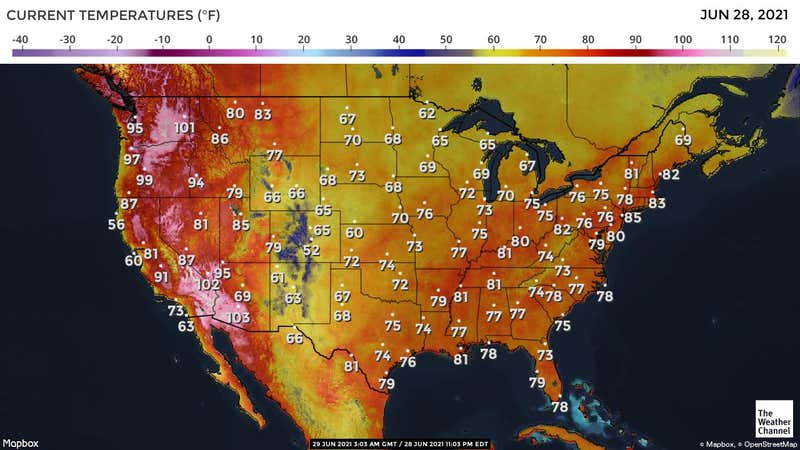
A heatwave in the Pacific Northwest and some other parts of the country is adding another challenge to air travel as we head into a holiday weekend.

As a result, some airlines, including American Airlines and United Airlines, are offering fee-free travel waivers. And Alaska Airlines has put a ban on pets traveling as cargo to and from more than a dozen cities until at least after the July 4th weekend.

Here are some of the details, and useful links to policies as of Monday evening, June 28:

Seattle-based Alaska Airlines is ‘pre-canceling’ some flights and has travel advisories posted for many cities experiencing heatwaves, including BurbankFresnoNew OrleansOntarioPalm SpringsPhoenixPortlandRedmondSacramentoSeattleSpokaneTexas, and Tucson.

And while Alaska Airlines isn’t offering change fee waivers as of Monday evening, it is pre-canceling some flights.

“While we never want to let our guests down, only a small fraction of our flights have been pre-canceled and we are doing our best to re-accommodate those guests,” the airline said on its website, “

And, because of the heat, through July 7, Alaska Airlines is not accepting animals for travel in the baggage departments to or from most of the affected airports listed above. Ticketed pets are still permitted to travel in the cabin with their owners.

Waivers offered by American and United Airlines

American Airlines’ change fee waiver offer is in effect for ticketed travelers through June 29 for trips to, through, or from the cities below. The airlines’ website notes that this information was current as of June 25, 2021, so if record-breaking heat continues in these areas, the waiver could be updated or extended. Check the website for details.

  • Billings, Montana (BIL)
  • Boise, Idaho (BOI)
  • Bozeman, Montana (BZN)
  • Eugene, Oregon (EUG)
  • Eureka Arcata, California (ACV)
  • Idaho Falls (IDA)
  • Jackson Hole, Wyoming (JAC)
  • Kalispell, Montana (FCA)
  • Medford, Oregon (MFR)
  • Missoula, Montana (MSO)
  • Portland, Oregon (PDX)
  • Redmond / Bend, Oregon (RDM)
  • Reno, Nevada (RNO)
  • Sacramento, California (SMF)
  • Salt Lake City, Utah (SLC)
  • Seattle, Washington (SEA)
  • Spokane, Washington (GEG)

The heat-related travel waiver on United Airlines also currently covers travel booked through June 29 and includes this long list of cities:

  • McKinleyville, CA (ACV)
  • Boise, ID (BOI)
  • Bozeman, MT (BZN)
  • Cody, WY (COD)
  • Eugene, OR (EUG)
  • Everett, WA (PAE)
  • Great Falls, MT (GTF)
  • Helena, MT (HLN)
  • Idaho Falls, ID (IDA)
  • Jackson, WY (JAC)
  • Kalispell, MT (FCA)
  • Medford, OR (MFR)
  • Missoula, MT (MSO)
  • Moab, UT (CNY)
  • North Bend, OR (OTH)
  • Pasco, WA (PSC)
  • Portland, OR (PDX)
  • Redding, CA (RDD)
  • Redmond, OR (RDM)
  • Reno, NV (RNO)
  • Sacramento, CA (SMF)
  • Salt Lake City, UT (SLC)
  • Seattle, WA (SEA)
  • Spokane, WA (GEG)
  • Twin Falls, ID (TWF)
  • Vernal, UT (VEL)
  • West Yellowstone, MT (WYS)

Alaska Airlines to give emotional support animals the boot

Back on the leash

The U.S. Department of Transportation (DOT) has ruled that airlines no longer have to make the same accommodations for emotional support animals as they do for trained service dogs.

So it was just a matter of time before airlines starting to change their policies.

And now the changes have begun.

“This regulatory change is welcome news,” said Ray Prentice, director of customer advocacy at Alaska Airlines, in a statement. “It will help us reduce disturbances on board while continuing to accommodate our guests traveling with qualified service animals,”

Alaska Airlines is the first to take action. Starting January 11, 2021, the airline will only allow trained service dogs to travel for free in the cabin.

Under the revised policy, Alaska will only accept two service dogs per guest in the cabin, including psychiatric service dogs. Anyone flying with service dogs will have to complete a DOT form attesting that their animal is a legitimate service dog, is trained and vaccinated, and will behave during the flight.

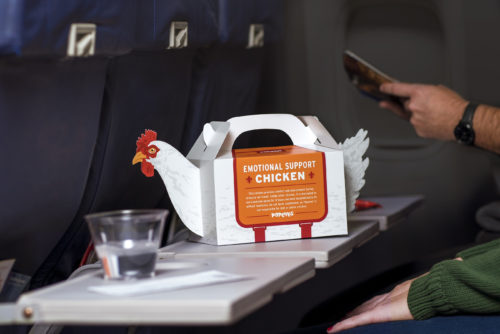
Emotional support animals, whether they be pigs, monkeys, hamsters, lizards, or miniature horses, will no longer be allowed in the cabin.

Pets, including dogs, cats, rabbits, and household birds, can still fly, but they must be ticketed, at $100 each way. And passengers who bring pets onboard must keep them in a carrier, which counts towards the carry-on bag allotment.

So no more emotional support animals taking up a seat or a tray table. Or getting under you feet.

P

Pet hotel opens at Austin-Bergstrom Int’l Airport


It almost makes you want to get a pet – just so you can leave it at the airport.

Austin-Bergstrom International Airport now has a ‘pet hotel’ combined with a covered parking facility, making it easy for travelers to park their cars and drop off their pets for boarding.

So everyone gets a vacation.

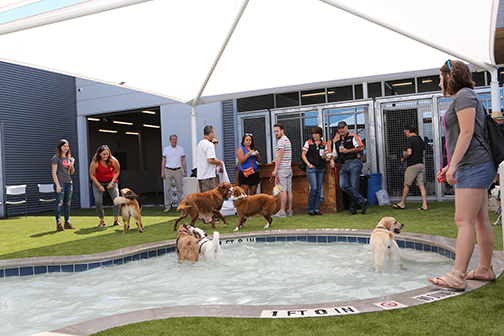
Bark&Zoom is being operated by Austin’s own Taurus Academy, and offers dog and cat boarding, a pet pool (!), and indoor and outdoor play yards.  Both scheduled and emergency veterinary appointments are available.

Parking services, offered by the company’s sister organization, Park&Zoom, include valet services and car car services.

Better yet, the facility will be open 24/7, so people and their pets can get reunited right away.


Animals at the airport – why so many?

Airports are going to the dogs – and to the pigs.

More than 30 airports around the country now have regular programs that bring certified pet therapy dogs and their handlers into the terminals to mingle with passengers and help ease the stress of traveling.

And during 2016, some airport pet therapy teams broadened their membership beyond dogs.

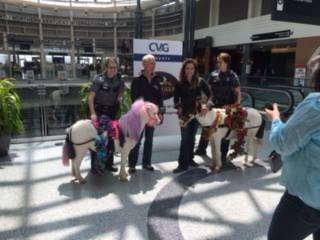
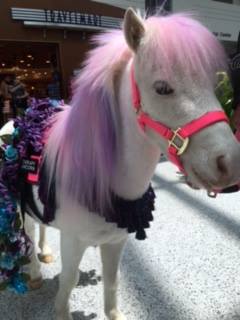
Last summer, when passengers were encountering excessively long lines at security checkpoints at many airports around the country, Cincinnati/Northern Kentucky International Airport began welcoming miniature therapy horses and their handlers to visit several times a month.

And as the winter holiday travel season went into high gear, two airports announced that pigs were joining their pet therapy teams.

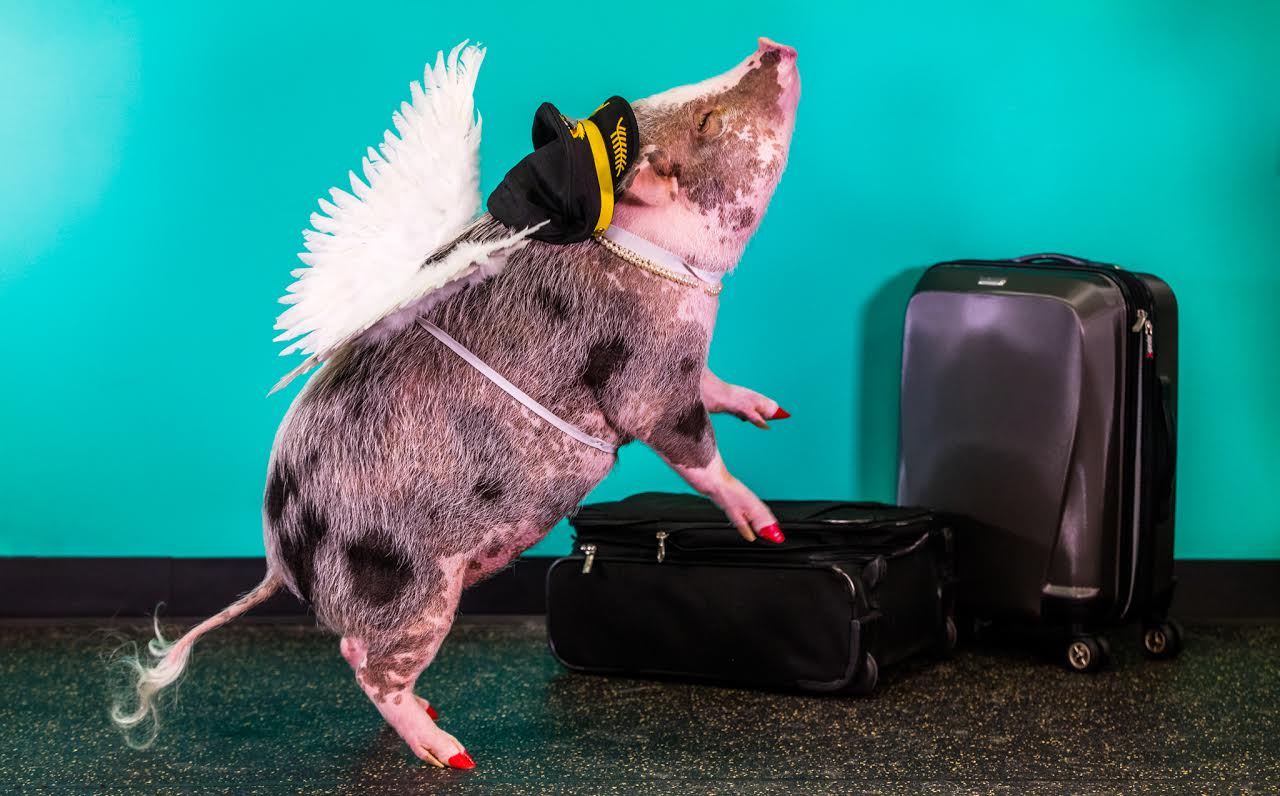
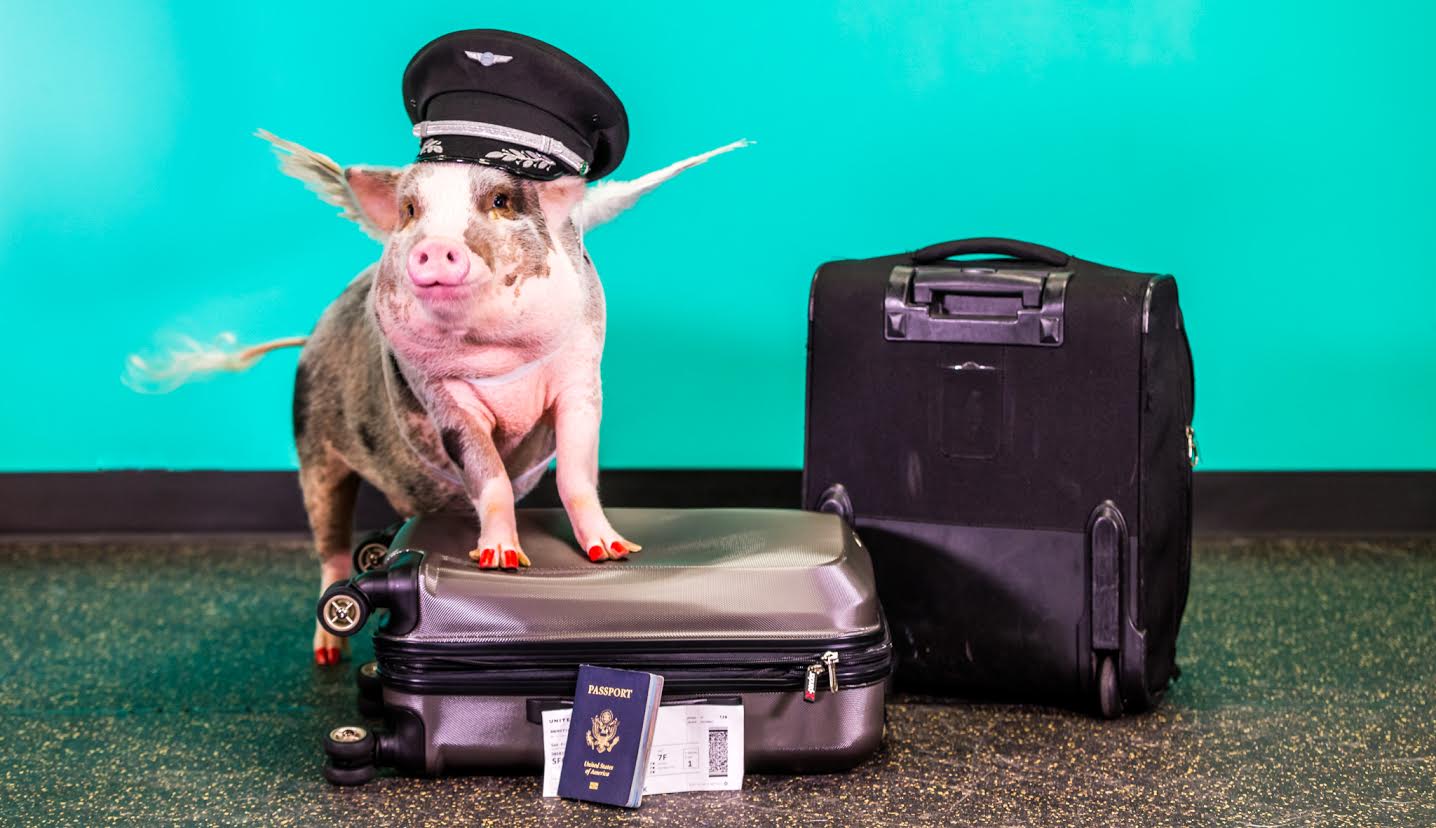
LiLou, a Juliana-breed pig, joined San Francisco International Airport’s Wag Brigade.

And a pot-bellied pig named Bacon Bits is now part of Albany International Airport’s Canine Ambassador program.

More animals in the air

Of course, not all the animals you see in airport terminals these days are just there to be petted.

According to the American Pet Products Association, there are around 77 million pet dogs and 85 million pet cats in the United States — and a growing number of their owners take them along when they travel by air.

And when they fly as carry-on passengers in the cabin, those pets need to have tickets.

On Alaska Airlines and JetBlue, the domestic fee for a pet in the cabin is $100 each way. On American Airlines, Delta Air Lines and United Airlines, its $125 each way. Frontier Airlines charges $75 each way, and on Southwest the fee is $95 each way.

In some cases, more than one small pet can travel in a pet carrier (and avoid an extra fee), but some airlines will tack on an extra fee if there’s a stopover of more than four hours.

Emotional support animals

The costs to take a pet on a plane can add up, which may be part of the reason an increasing number of passengers are claiming that their animals aren’t just pets but official service or “emotional support” animals which, by law, get to fly for free.

Like Frontier Airlines, which had an issue earlier this year with a passenger’s emotional support marmoset, each airline website lists very specific conditions under which they will accept service animals or therapeutic/emotional support animals on their plane.

An official identification card and/or a written statement from a mental health professional is usually required, but many websites make it easy for pet owners to acquire ‘fake’ documentation — for a fee.

“It doesn’t matter if it’s a duck or a mini horse, as long as a passenger has the correct paperwork, they’re allowed to fly with an emotional support animal and nobody can say anything about it,” said veteran flight attendant Heather Poole, author of Cruising Attitude.

Poole says it’s not a flight attendant’s job to determine which passengers are flying with true support animals or which ones have simply secured paperwork to avoid paying a fee for their pet to fly, but “I can spot a fake emotional support animal a mile away,” said Poole. “It’s usually growling or barking at other support animals. That, or it’s dressed nicer than its owner.”

2017 may bring changes — or at least some clarification — in how airlines and passengers define service or emotional support animals.

While noting that its ACCESS Advisory Committee was unable to reach agreement on updated rules regarding service animals, the U.S. Department of Transportation recently said it intends to draft its own rules.

“The guide dog and animal training groups all agree this is a problem, so does the community,” said Eric Lipp of the Open Doors Organization. “One solution floated is to have a national registry and certification for service animals so they are given ID. The DOT could also fine a passenger and make big news. That would help, but who wants to do that?”

(A slightly different version of my story about animals in airports and on airplanes first appeared on NBC News Travel.)

Best new airport amenities from 2016

People love to complain about all the time they must spend in airports on their way to someplace else.

But, more and more, many airports have turned into darn fine places to hang out in thanks to the addition of art and history exhibits, appealing restaurants and shops and a wide array of welcome amenities.

During 2015, for example, many airports worked out their differences with ride-hailing services such as Lyft, Uber and Wingz and added lactation stations for nursing mothers.

This week and next, StuckatTheAirport.com will run down some of the best new amenities airports added during 2016.

Today: animals at the airport

During 2016, indoor pet potties popped up at hundreds of airports thanks to a Department of Transportation ruling that requires airports to create at least one relief area on the sterile side of each terminal to accommodate service animals.  Traveling pets and the many working dogs at airports get to use the pet lavs without going back out through security as well.

And while it’s no longer rare to have teams of certified pet-therapy dogs and their handlers roaming terminals to engage with passengers and ease the stress of travel, this year several airports welcomed their first non-canine team members.

Miniature therapy horses from Seven Oaks Farm now visit Cincinnati/Northern Kentucky International Airport two or three times a month and both San Francisco International Airport and New York’s Albany International Airport have certified therapy pigs on their teams.


Now there’s a pig on duty at SFO Airport

sfo-pig

An increasing number of airports now have teams of therapy dogs on duty in the terminals to help ease the stress of travel.

Back in May, Cincinnati/Northern Kentucky International Airport added a miniature therapy horse to the mix.

Now comes LiLou the pig – who joins the Wag Brigade at San Francisco International Airport on Monday.

sfo-pig-2

LiLou is the first pig to be certified in the SF SPCA’s Animal Assisted Therapy (AAT) program and was a perfect fit for SFO, which was determined to expand the type of animals in the Wag Brigade.

LiLou is sure to be quite the hit. In addition to be being a pig at the airport – she does tricks.

According to the stat-card Wag Brigade handlers will be distributing for LiLou in the airport, she can wave, greet you with her snout, play the piano and give a bow after her performance. She will also be twirling and standing up on her back hooves to entertain travelers.

sfo-pig-3

SFO’s Wag Brigade team has at least one dog on duty every day of the week, with up to 3 dogs at a time working their 2-hour shifts.  LiLou doesn’t have a regulars slot in the schedule just yet, but airport officials say the Juliana Pig will be on site at least once a month.

sfo-pig-1

Dogs, miniature horse, a pig. Which animal do you think will show up next in an airport pet therapy program?

(All photos courtesy of SFO Airport)

Cyber Monday flight deals

virgin-america-pups

Don’t put away that credit card just yet. Virgin America (and other airlines) are still rolling out Cyber Monday airfare deals.

Virgin America’s Cyber Monday deal is good for you – and for dogs:

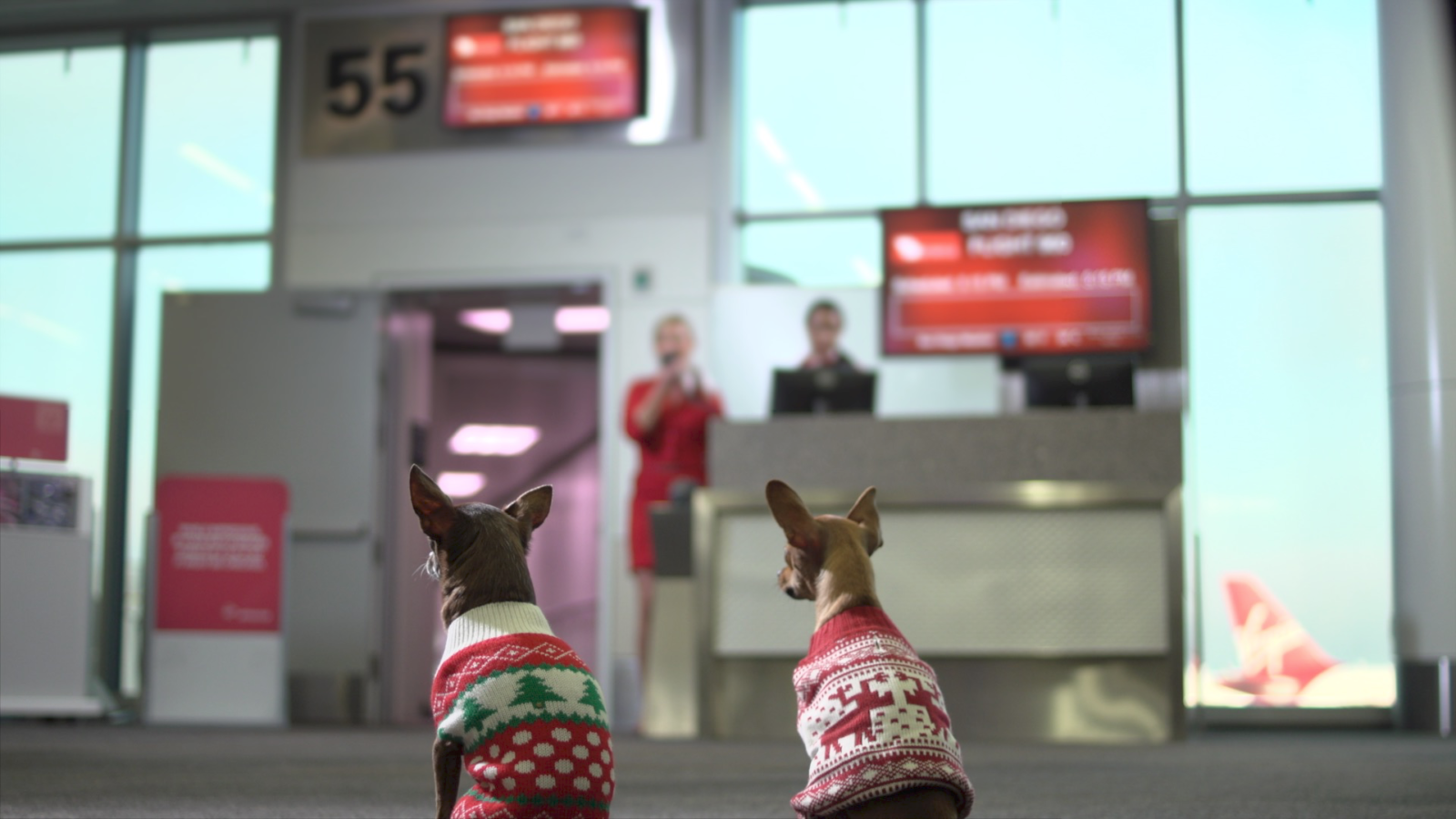
The carrier’s #TinyDogsTinyFares will offer up to 30 percent off fares nationwide. Use code: TINYFARES.

In addition to giving you the discount, Virgin America is also donating $10 per ticket booked on virginamerica.com during the sale to San Francisco Animal Care and Control (SF ACC), the ASPCA and Animal Haven.

On Cyber Monday, Virgin America is also making another “Operation Chihuahua” airlift and flying 24 Chihuahuas from San Francisco to New York so they can be adopted. Seems that there’s an overpopulation of Chihuahuas in California shelters and lots of people seeking to adopt small dogs on the east coast.

Dogs from CATS on duty at Denver Airport

Photo courtesy Denver International Airport

Photo courtesy Denver International Airport

Denver International is the latest to join the pack of airports with a team of therapy dogs on duty to help relieve stress and anxiety for passengers.

Denver’s crew is called CATS – which stands for Canine Airport Therapy Squad – and each one of the dogs is registered with the Alliance of Therapy Dogs and is trained, certified and insured.

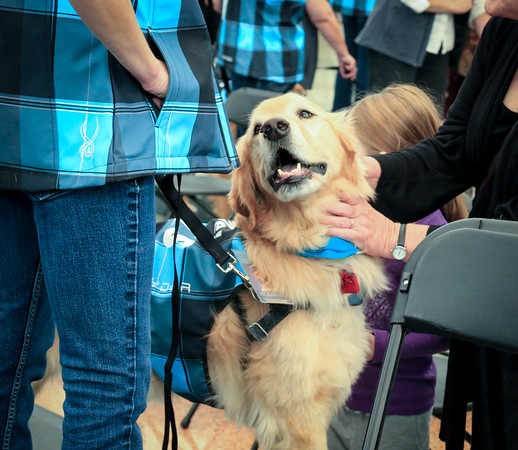
CATS dogs will be easy to spot: they’ll be wearing “Pet Me” vests.

Want a preview? Denver International Airport has a gallery of pooch pictures on line.

Pets on planes

American Airlines first class pets

Courtesy American Airines

People fly first class, so why not pampered pets?

That’s the idea behind the specially designed travel compartments designed for small dogs and cats on select transcontinental American Airlines flights popular with business travelers and entertainment industry VIPs.

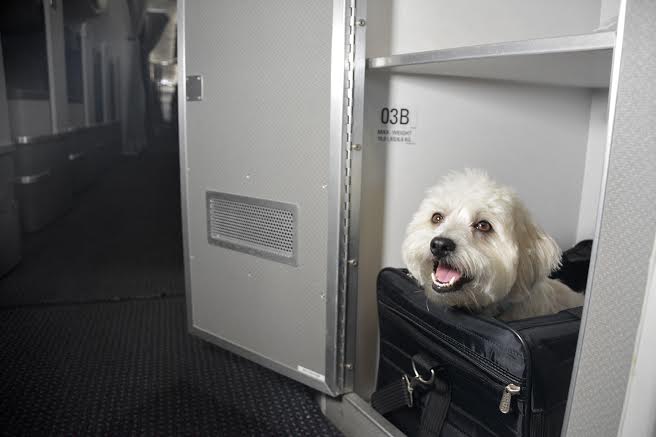
The pet cabins—two per plane—are at the front of the first-class section of the 17 Airbus 321 aircraft the carrier uses on flights between New York’s JFK International and both San Francisco and Los Angeles International Airports.

The planes’ full lie-flat seats in first class don’t allow for under-the-seat storage of a pet carrier during takeoff and landing, but the airline designed the cabin with special ventilated compartments for pets.

For $125 each way, passengers booking first-class tickets may reserve a pet compartment for their furry companion. While pets traveling first class on these flights won’t get an amenity kit, champagne or an oxygen mask in case of emergency, their tickets cost the same as those pets traveling under the seat in coach.

“Obviously, the airline understands the needs of their [first-class] passengers and has compromised by allowing a special space for their pets,” said Susan Smith of PetTravel.com. “I think it’s great.”

It’s not just first-class passengers who want to travel with their pets. Eighty million U.S. households now have pets, and a growing number of those animal lovers now take their pets along when they fly.

Domestic airlines I contacted wouldn’t divulge how many pets they ticket as carry-on passengers each year. However, each has a formal program and detailed policies for how to get a pet on a plane, at prices that can top $125 per pet, each way for a domestic trip.

For each animal allowed, the airlines list charges, size and weight restrictions for pets and pet carriers, and required travel certificates.

Frontier Airlines, for example, charges $75 per pet carrier each way and allows cats, dogs, rabbits, guinea pigs, hamsters and small household birds on board. Although each passenger may only bring aboard one pet carrier, there is no limit placed on the number of pet carriers allowed on each flight.

Southwest Airlines only allows dogs and cats as carry-on passengers, charges a $95 pet fare each way and allows up to six pet carriers on each flight and sells its own carry-on compliant pet carrier ($58) online and at the airport counters.

The charge for in-cabin pets on United Airlines—cats, small dogs, rabbits and birds—is $125 each way, with an additional $125 charge for each stopover of more than four hours on domestic flights.

While some passengers take their pets out of the carriers during a flight, Barbara DeBry of PuppyTravel.com urges her clients to follow airline rules that require pets to remain in their carriers the entire flight. Otherwise, it could make for a rather unpleasant experience.

“There was a recent incident where a woman refused to put her dog in the carrier and ended up being removed from the flight in handcuffs,” said DeBry, “She may have ruined it for everyone else.”

For those whose pets are too big, too unruly or otherwise unsuitable to travel with you as in-cabin passengers, there are other options. Pets can travel as checked baggage or as cargo, with an escort or courier service. If your budget allows, you can also fly by private jet.

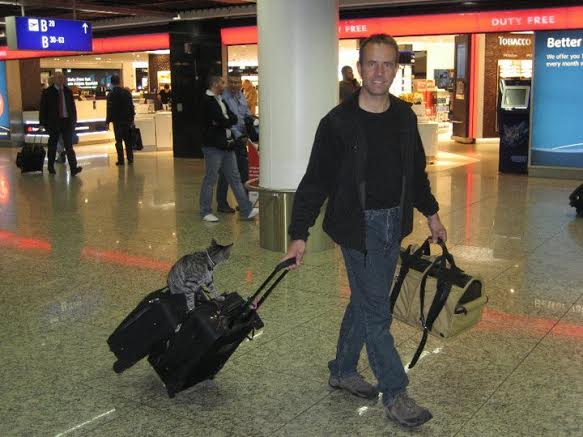
Cats on suitcase

Courtesy: Marco Feldhoff

“We work with charter services, which are quite expensive,” said Susan Smith of PetTravel.com, “but we’re aiming toward shared charters to bring the cost down.”

An option in the future might be transporting an animal on its own via an airline that only carries pets.

Pet Airways flew about 9,000 pets on small Beechcraft 1900 twin turbo-prop planes between 2009 and 2011, but ceased operations during the recession,” said company founder and CEO Dan Wiesel We were not able to tap into enough capital to survive.”

Wiesel says he’s working on resurrecting the airline now. “The economy is good, and pet parents still want an alternative to flying their pets in cargo.”

(My story about Pets on Planes first appeared on CNBC)