It’s not just the DOT that wants airline passengers to be kind and courteous this holiday season.
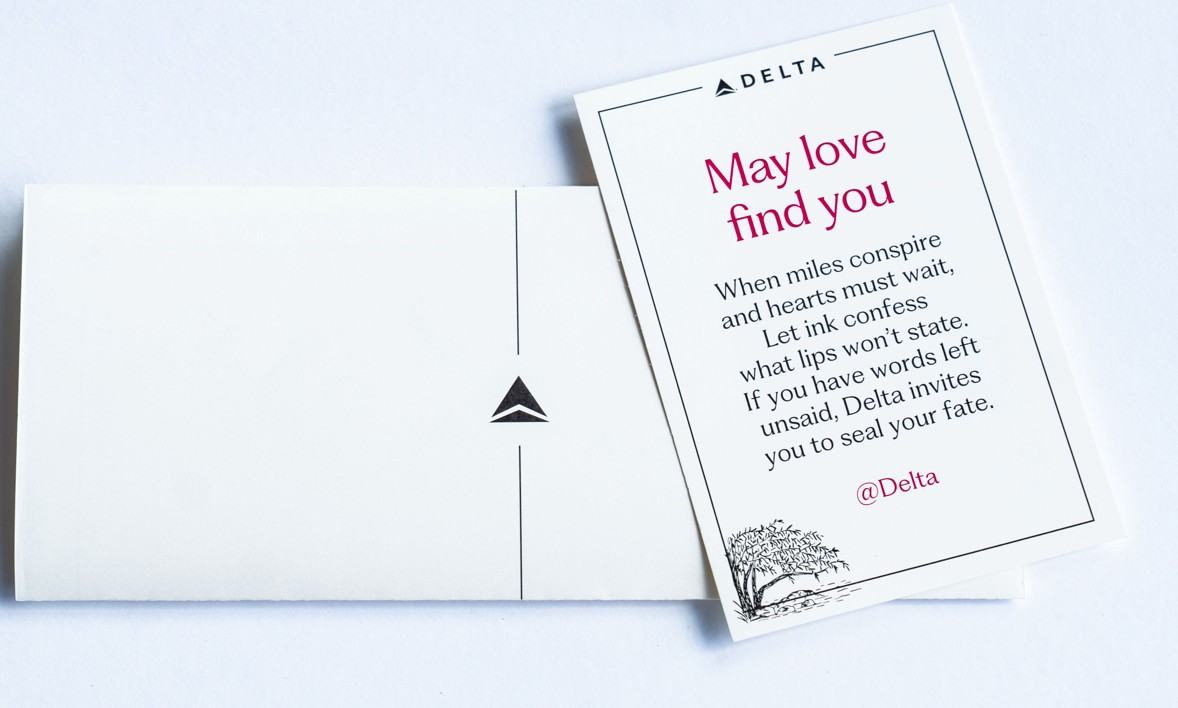
Delta Air Lines has rolled out a Centennial Cheer program for the holiday that will reward travelers for assorted moments of kindness.
The campaign caps off Delta’s 100th Anniversary Celebrations and is designed to encourage, recognize and reward 100,000 acts of kindness between Delta passengers and employees now through January 5, 2026.
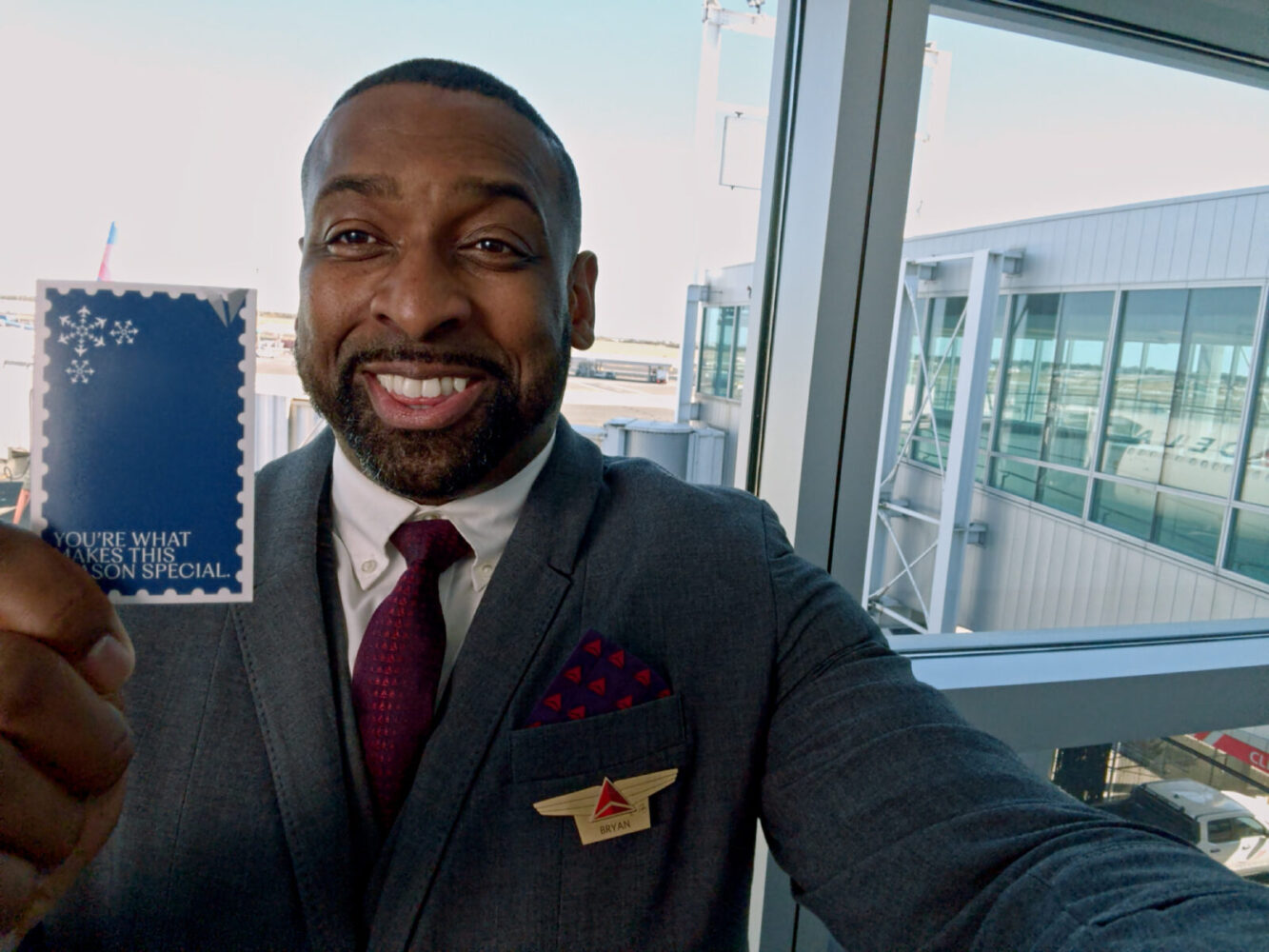
According to the airline, Delta employees are on the lookout for travelers who go out of their way to be nice and will be rewarding those “caught in the act” with limited-edition Holiday Medallion cards that are redeemable at the Delta Shop for various gifts, from Centennial merch to a limited number of Centennial Gift Sets featuring two commemorative trading cards and a $500 Delta Gift Card valued at $500.
“Whether it’s helping a seatmate with their bag, sharing a phone charger or simply thanking a reservations specialist, those gestures create the kind of connection that makes travel feel special. That’s what Centennial Cheer is all about, recognizing and celebrating the kindness we see every day,” said Erik Snell, Delta’s chief customer experience officer.
Delta will also be sending out holiday-edition Well Done Certificates so Medallion Members can acknowledge Delta employees. More than 40,000 certificates will be sent to Delta 360°, Diamond Medallion and Platinum Medallion Members with confirmed holiday travel. Eligible Members can also request these certificates by visiting deltamedalliontags.com
As part of its celebration of 100 years of flight, Delta Air Lines is debuting a new in-flight safety video.
The video covers all the important FAA-required safety points, of course. But the new video also takes passengers on a tour through the history of air travel and the evolution of Delta’s logo and the uniforms worn by flight attendants and pilots throughout the years.
There’s even a cameo by ‘Deltalina,’ a flight attendant who first made an appearance in a Delta Air Lines safety video in 2008 and became a fan favorite for her “no smoking” finger wag.
Here are some travel tidbits from the Stuck at the Airport inbox to help you ease into the week, including music and travel advice, contests for travel adventures and, of course, airport news.
Hello Kitty Day coming to Oracle Park
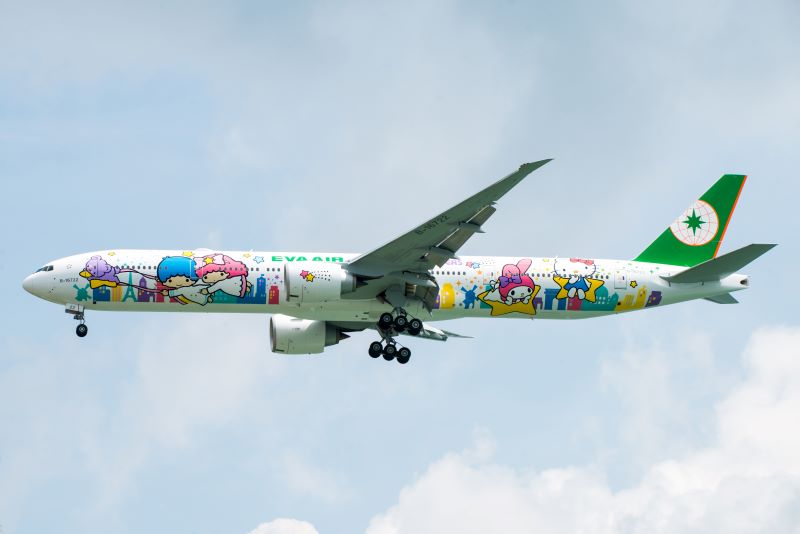
EVA Air is teaming up with the San Francisco Giants to host Hello Kitty Day at Oracle Park in San Francisco on Saturday, May 11, 2024.
As part of Hello Kitty Day, the first 15,000 fans to enter Oracle Park on May 11 will each receive a Hello Kitty Bucket Hat. On that day, EVA President, Clay Sun, will throw out the first pitch while Hello Kitty and the Giants Mascot Lou Seal mug on the field.
For planespotters: EVA’s Hello Kitty “Shining Star Jet” is flying between San Francisco International Airport (SFO) and Taoyuan International Airport (TPE) in Taipei, Taiwan. The Boeing 777-300ER is flying two days a week, on Fridays and Sundays, now through May 26. It will then shift to Sundays only, from June 2 to June 23.
Musical Travel Guides for Europe, courtesy of Air Canada
Air Canada asked three Québec artists – Charlotte Cardin, Alexandra Stréliski and Sarahmée – to create music playlists to go with their favorite European cities.
And Alexandra Stréliski shares her faves in Amsterdam.
The playlists are available on the Air Canada website and Spotify. Give a listen.
Airline Satisfaction Study: Niceness wins.
J.D. Power’s 2024 North American Satisfaction study is out and concludes that investments some airlines have been making in trying to improve the overall flight experience with friendly, attentive service are paying off.
“The big takeaway from this year’s study is the power of people to positively influence the overall flight experience,” said Michael Taylor, J. D. Power senior managing director of travel, hospitality, retail and customer service. “Airlines investing in staff training and recruitment are finding ways to overcome the negative effects of crowded gates and planes simply by being nice to their customers.”
The North America Airline Satisfaction Study measures performance in seven categories: airline staff; digital tools; ease of travel; level of trust; on-board experience; pre/post-flight experience; and value for price paid. Scores are tallied on a 1,000-point scale.
Here are the top lines in Customer Satisfaction, but segment.
First/Business: Delta Air Lines ranks highest with a score of 743. JetBlue Airways (736) ranks second.
Premium Economy segment: Delta Air Lines ranks highest for a second consecutive year, with a score of 716. Alaska Airlines (687) ranks second and American Airlines (684) ranks third.
Economy/Basic Economy: Southwest Airlines ranks highest in customer satisfaction in the economy/basic economy segment for a third consecutive year, with a score of 685. Delta Air Lines (651) ranks second and Allegiant Air (633) ranks third.
Between the storms in many regions of the country and the grounding of all Boeing 737-9 MAX aircraft for inspection, there are a lot of flight cancellations, schedule disruptions, and airline travel alerts.
Here are links to the current travel advisories and waivers (as of early Tuesday, January 9, 2024) in effect for some of the major airlines. Be sure to check your airline’s website for the latest updates on these advisories,
Alaska Airlines
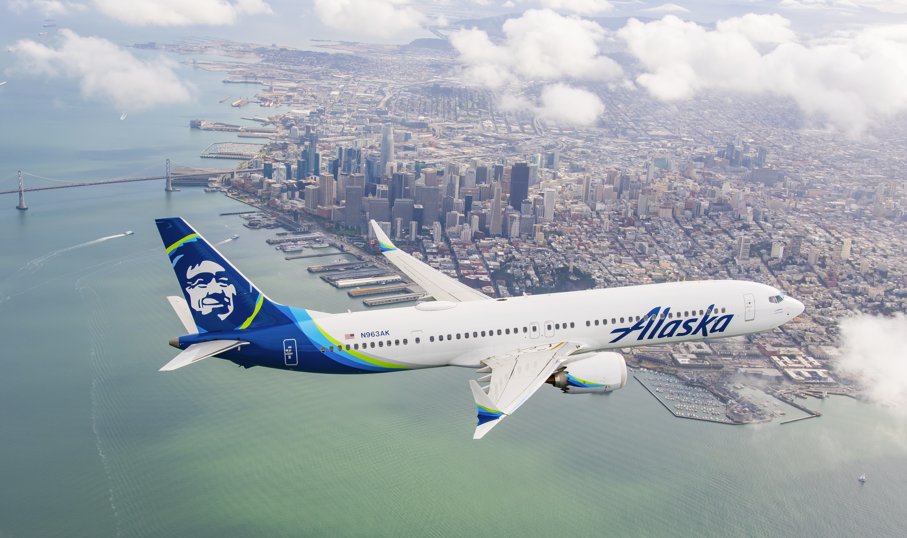
On its website, Alaska Airlines is advising travelers that due to Boeing 737-9 MAX aircraft inspections and winter weather in the Northeast, they are offering a flexible travel policy for travelers who want to change or cancel their flights. Original travel dates include January 9.
American Airlines
American Airlines has a travel alert for close to 60 cities that may be affected by severe weather in the Eastern US and Canada. The airline will waive your change fee if you traveling in any fare class and are scheduled to fly January 9-10 and can travel instead January 9 – 15. See here for more details on American Airlines’ travel advisory.
JetBlue has also issued travel alerts for winter weather in the Midwest and the Northeastern US.
In the Midwest, the airline will waive change/cancel fees and fare differences for customers traveling through January 9 to or from Chicago (ORD), Detroit (DTW), Kansas City (MCI), Milwaukee (MKE), and Minneapolis – St. Paul (MSP). The travel alert covers about 15 airports in the Northeast. Customers may rebook their flights through January 13.
Southwest Airlines
Southwest Airlines has travel alerts posted for the Midwest and the East Coast.
United Airlines
For those scheduled to fly on a Boeing 737-9 MAX airplane, United Airlines offers these options:
You can reschedule your trip and have the change fees and fare differences waived. Your new flight must be a United flight departing by January 18, 2024. Tickets must be in the same cabin and between the same cities as originally booked. Trips rebooked after January 18, 2024, will still have the change fee waived, but there may be a fare difference. Cancelling and getting a full refund is also an option.
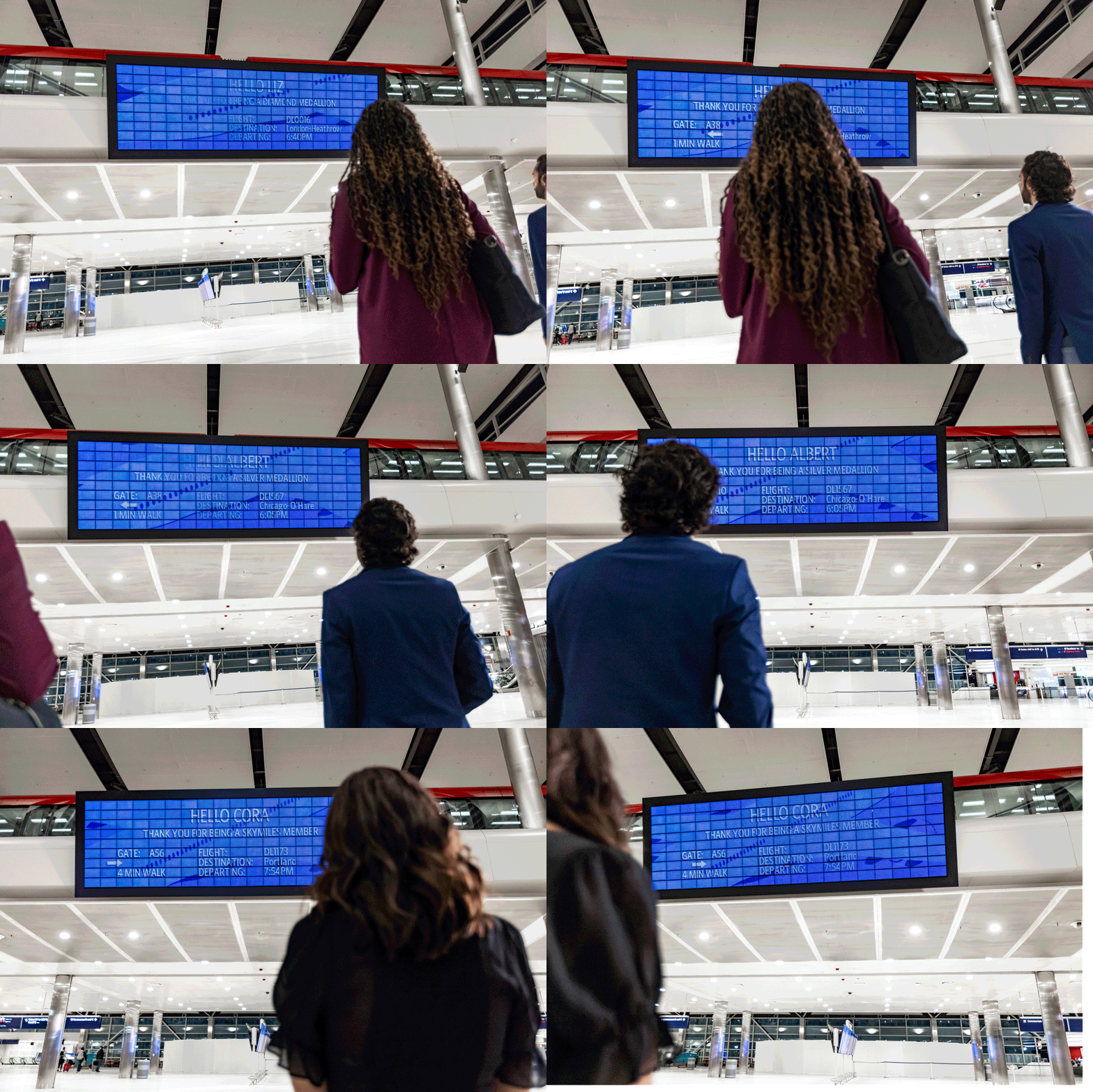
At Detroit Metropolitan Airport (DTW), one flight display board gives passengers very personalized messages.
It seems sort of sci-fi, but thanks to a technology named Parallel Reality, up to 100 people at a time can look at one of the giant digital screen that usually displays dozens of flights and instead see just their own name and their own flight details.
Delta passengers who opt into the experience do so by scanning their boarding pass once they are through the security checkpoint in Concourse A of DTW’s McNamara Terminal.
Customers enrolled in Delta’s biometric digital identity program simply show their faces to a camera at the kiosk.
Then, motion sensors installed in the terminal ceiling go into action, linking a moving person to their flight data and allowing the ‘magical’ display board to direct the flight info to a specific ‘target.’
Passengers who don’t opt into the Parallel Reality flight information experience will see generic content on the digital screen.
Like we said, sort of sci-fi. But very cool. And a technology we might soon see in use at other airports, or in theme parks, shopping malls, parking garages, and hotels.
(This is a slightly different version of our story that first appeared on ThePoints Guy site.)
Long delays, rampant cancellations, and packed planes have turned air travel into an endurance sport for even the most seasoned travelers. And the challenges can be even greater for the more than 25 million Americans with disabilities that make travel difficult even in ordinary times.
A handful of airports, airlines, and community groups have made an effort to provide certain flyers the opportunity to navigate security, crowded airport terminals, and the boarding process beforehand.
But such programs are limited, and the industry continues to have a poor track record in transporting wheelchairs and scooters and providing reliable and consistent service to passengers with additional needs such as mobility and physical issues as well as sensory and cognitive disabilities.
Minneapolis-St. Paul International Airport is out to change that.
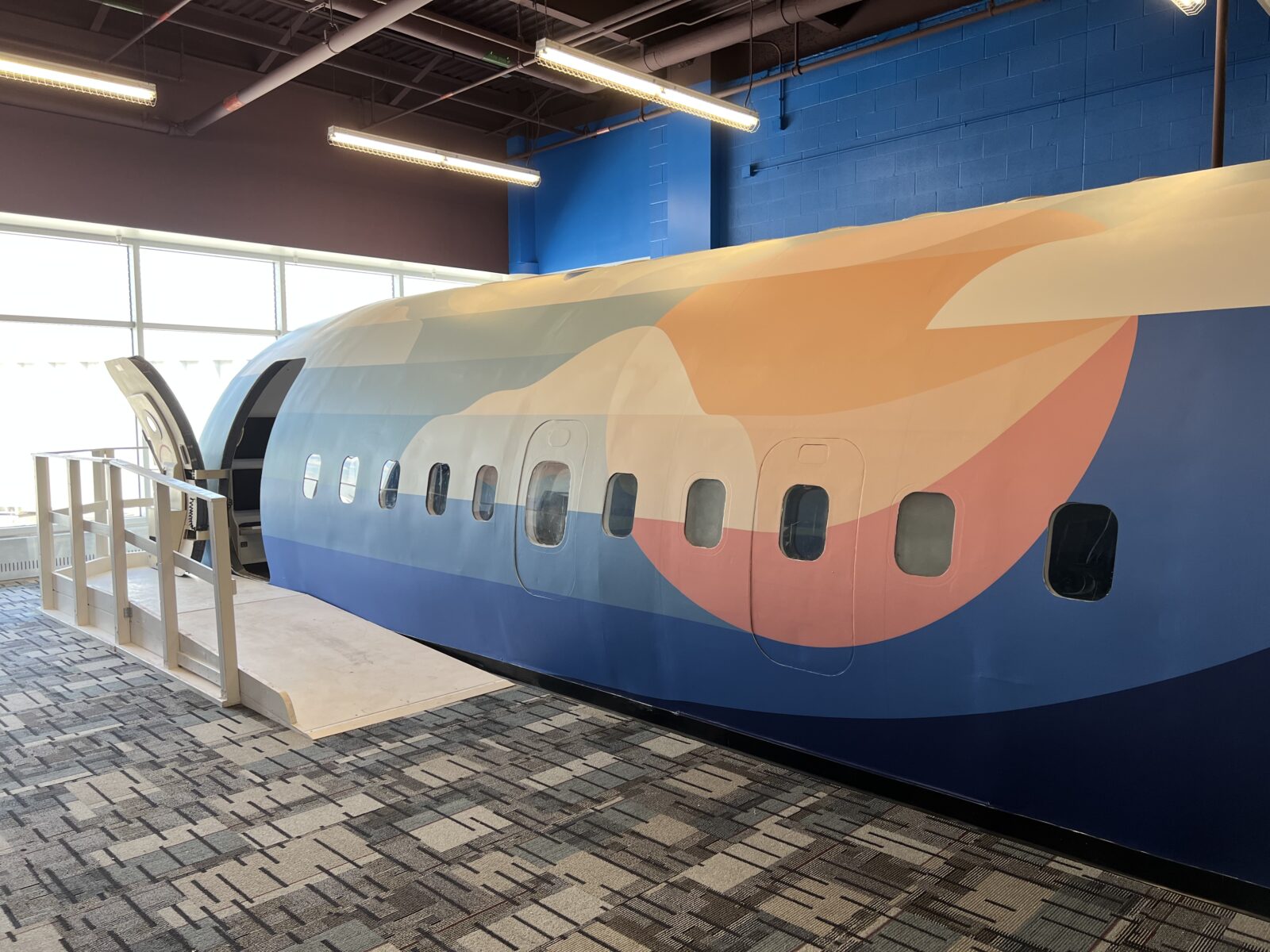
In an industry first in May, the airport — in partnership with Delta Air Lines — installed a mock airplane cabin on-site to give flyers with a wide range of special needs an opportunity to become familiar with a realistic aircraft cabin.
“Being able to test out an airplane cabin could help people who have never flown, who use wheelchairs, older adults, people with autism, and anyone who has any reservations about flying,” said Eric Lipp, executive director of the Open Doors Organization, which works with businesses on accessibility issues, “It will recognize that everyone’s needs are different and encourage more people to fly.”
In the two years preceding the pandemic, nearly 15 million people with disabilities traveled by air, generating $11 billion in revenue for airlines. That was up from $9 billion in 2015, according to a report from the organization. And, Lipp said, “The true economic impact is potentially double since people with disabilities typically travel with one or more other adults.”
The 33-foot-long cabin had been used to train Delta’s in-flight teams in Atlanta and includes a (nonworking) lavatory and 42 standard coach seats from a retired Boeing 737. Delta shipped it in pieces to the Minneapolis airport, where it was reassembled in an unused retail space. Airport carpenters added cutouts so that every row has a window, and local youth artists painted the cabin and the surrounding walls with blue skies and landscape to make it sensory-friendly.
“My 5-year-old son, Remi, has autism and I felt it was important for him to experience the airport before the day we actually had to travel,” said Cassandra Welch, who brought him to the mock cabin recently. “Remi did well and sat nicely in his seat and was able to see what the cabin looked like, and what the airplane bathroom looked like.”
Welch also brought along her family and some relatives. “We will be traveling together in August, so it was great that we could all be there for this experience.”
Tiffany Owen, a first responder, also wanted to give her traveling companion a chance to get acquainted with flying before she booked a trip. Hazy, a rescue pit bull, is Owen’s service dog and helps her manage stress and anxiety. The visit was arranged through Soldiers 6, a local nonprofit group that provides service dogs to military veterans and first responders in Minnesota.
“I’ve flown before, but Hazy has never been on an airplane,” she said. But Hazy quickly got the hang of it. ”When we walked in, Hazy wanted to have her own seat next to me,” she said. “I had to train her to realize she’s on an airplane and would be sitting on the floor between my legs.”
Owen said it means a lot to her that the airport “has gone to great lengths to make sure that both me and my service animal feel comfortable, and that we can go back to the airport again for more training if we need to.”
The mock cabin, which is free and available by appointment, isn’t just for flyers.
Airline personnel, flight crews, and companies that provide service to passengers who need help getting to or from their airplane seats have access to the cabin for training, too.
The Minneapolis-St. Paul branch of Prospect Airport Services, which provides wheelchair attendants and other services for airlines at airports across the country, now runs weekly staff training sessions in the mock cabin. There is a big focus on transferring passengers in wheelchairs to their seats, which can be a complicated and delicate process.
Loretta Halligan, the company’s general manager at the Minneapolis airport, said that before the mock cabin arrived, orientation for new passenger service assistants mainly took place in a classroom, with a wheelchair, an airline seat, and a video. The actual training in how to transfer passengers didn’t begin until new hires could shadow someone with experience.
“Now, new employees can start practicing lifting a person on and off an aisle chair on a ‘real’ plane right away,” she said, adding that watching a video “is nothing compared to having that hands-on experience during your first day of training.”
That training could have been invaluable during the earlier days of the pandemic, “when social distancing made it difficult for people to be lifted and transferred to vehicles or planes,” Lipp said. “Guiding people who are blind also became more difficult with social distancing.”
Although the mock cabin has been open for just about two months, Phil Burke, assistant director of customer service at the airport, says sessions are getting booked up far in advance. He also said airports in Houston, Denver, and Kansas City, Missouri, have been in touch with him and are planning to install mock airplane cabins in their terminals, too.
Now you can reserve your time on the TSA line at SEA Airport
(This is a slightly different version of a story we wrote for USA TODAY)
The good news: air travel is picking up.
On Sunday May 2, TSA screened more than 1.6 million passengers, the most since March 12, 2020.
JUST IN: @TSA officers screened 1,626,962 people at airport checkpoints yesterday, Sunday, May 2. It is the first time since the pandemic hit that passenger volume has topped 1.6 million in a single day and the highest checkpoint throughput since March 12, 2020. Mask-up!
— Lisa Farbstein, TSA Spokesperson (@TSA_Northeast) May 3, 2021
The bad news: long wait times at security checkpoints may be back coming back too.
Courtesy Port of Seattle
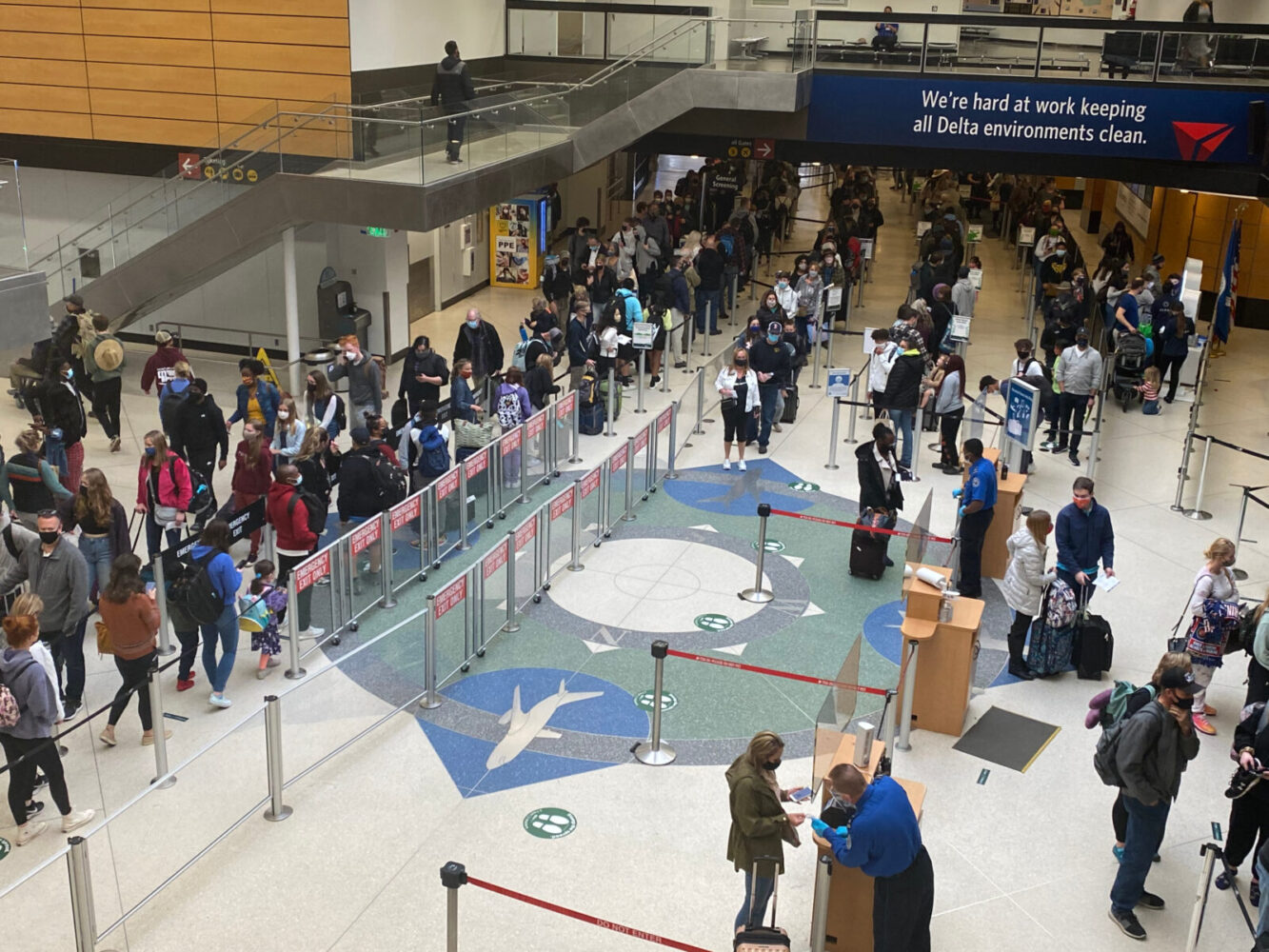
At times during spring break, the lines to go through the security checkpoint stretched into the food court at Orlando International Airport (MCO). At Seattle-Tacoma International Airport, lines snaked across the sky bridge and into the parking garage.
TSA is in the process of hiring 6,000 new screening officers ahead of the predicted summer travel surge. And that should help move things along.
So too could a new pilot program that debuts Tuesday at SEA airport.
The program, called SEA Spot Saver, will attempt to streamline wait times by offering digital reservations, or “virtual queuing” for passengers to go through the screening process.
Here’s how it works
The program will operate daily through August 31, 2021, from 4 a.m. to noon (the airport’s peak travel period) at two checkpoints (2 and 5) and offer expedited screening to general screening passengers for free. No membership or account sign-up is required.
Expedited, non-reserved screening remains available to passengers enrolled in Trusted Traveler programs such as TSA PreCheck and CLEAR.
SEA Spot Saver will be testing two options.
Alaska Airlines passengers can sign up for a security checkpoint appointment online up to 24 hours before their scheduled departure time or once they are in the terminal.
Passengers will receive a QR code to use at checkpoint 5 at their reservation time. This option is offered by Pangiam, and powered by WhyLine and Copenhagen Optimization.
The second option, operated by VHT, is for passengers flying on Delta Air Lines and all other carriers. This option allows passengers to begin booking a checkpoint appointment time by scanning a QR code once they are in the terminal. Passengers will show their emailed reservation appointment at checkpoint 2.
Both options give passengers a 15 minute window for their appointment times. The Alaska Airlines option lets you book up to 12 passengers in a group. The Delta/other airlines option lets you book a group of up to 10.
SEA will be the only airport in the United States currently testing a “virtual queuing” system as a solution for crowded general screening lines.
Montreal-Trudeau International Airport (YUL) has offered screening reservations since 2014 through SecureXpress, but that program is currently on hold due to the pandemic.
“The pandemic has left very few passengers coming and going through YUL,” said YUL spokeswoman Anne-Sophie Hamel via email, “As such, there is no line-up to get through security, and the service is simply not useful right now.”
From October 2020 through April 30, 2021, Denver International Airport (DEN) piloted the VeriFLY app and program. Passengers could book a timed checkpoint appointment, but they also had to file health data information before arrival and get temperature checks on site.
Port of Seattle officials say that after the pilot program is completed late this summer, they will evaluate usage, customer feedback, and line efficiency and, if successful, launch a broader program.
“These are the innovations and ideas that we love to make our guest experiences more convenient and stress-free, especially as more people get back flying again,” said Charu Jain, Alaska’s senior vice president of merchandising and innovation. “With very little effort, guests can lean on technology to get them through the security process quicker.”
Delta also announced on Tuesday that it is extending the expiration date on travel credits and bringing snacks back starting April 14. Passengers flying Delta One or First Class on select domestic coast-to-coast flights will see hot food options return in early June. First Class customers on some other U.S. routes will be served boxed meals beginning in early July.
Alaska Airlines now part of oneworld airline alliance
As of March 31 Alaska Airlines becomes the newest member of the oneworld airline alliance. That means that “as a Mileage Plan member, you can earn Alaska miles on all 14 member airlines when you fly to as many as 1,000 destinations in more than 170 countries and territories,” the airline said in a statement.
The new membership also means the benefit enjoyed by Alaska’s elite flyers will be honored on other member airlines.
“You’re an MVP Gold? Without doing a thing, you now also have Sapphire tier status in oneworld (75K fliers are Emerald and MVPs are Ruby in the alliance),” the airline notes, and, “Depending on your tier status, oneworld travel priveleges include priority check-in, access to more than 650 international first and business class lounges, preferred boarding, fast track through security, priority baggage benefits and more.”
Hair Rollers harbor finches
People try to smuggle things – foods, animals, drugs, etc – through airports all the time. U.S. Customs and Border Protection recently spotted a guy who was trying to 29 finches in these hair rollers.
During a secondary baggage inspection at JFK Sunday, CBP officers discovered 29 finches concealed in hair rollers. After consulting with @USFWS, CBP ag specialists quarantined the finches and turned them over to @USDA Veterinary Services.
If Iceland wasn’t high on your travel list before now, the volcanic eruption going on now should be grabbing your attention. Another reason to make plans to head that way: this package offer from Icelandair available to book through April 13 for travel from 10 US cities. Along with roundtrip airfare and three nights hotel, with breakfast, vaccinated travelers get a visit to the new Sky Lagoon, a Northern Lights Board Tour and a one-day pass for the Hop On Hop Off city sightseeing bus.
Iceland looks more surreal than usual with the ongoing volcanic eruption: Glowing lava streams slowly make their way down the volcano. It’s a dark, mysterious & dramatic sight. Are you planning a trip to this epic scene? Watch nature‘s raw power at play: https://t.co/XAMDbieJfUpic.twitter.com/qB60O9CLPY
Here are some of the travel tidbits we’ve gathered so far this week.
Delta extends middle seat block
Most other airlines have stopped blocking the middle seats. But Delta Air Lines says it is extending its policy of blocking middle seats on all flights through April 30, 2021. Perhaps others will do the same.
“We want our customers to have complete confidence when traveling with Delta, and they continue to tell us that more space provides more peace of mind,” said Bill Lentsch, Chief Customer Experience Officer, in a statement. He added that the airline will “continue to reassess seat blocking in relation to case transmission and vaccination rates.”
SkySquad partners with At Your Gate
As Valentine’s Day approaches, here’s a nice match-up of airport services.
SkySquad, a service that provides airport assistance services from the curbside to the plane door, and from the gate to the curb, is partnering with airport food delivery company At Your Gate.
SkySquad’s customers include families with young children, seniors, pet owners, and anyone who needs a helping hand through the airport.
The company currently operates at Washington’s Reagan National Airport (DCA), Dulles International Airport (IAD), and Cincinnati/Northern Kentucky International Airport (CVG). The partnership with At Your Gate extends the SkySquad services to JFK, Newark, Boston, and Philadelphia airports. At those airports At Your Gate staff will step in to escort SkysSquad customers through the terminals.
Bonus United Miles for donations during Black History Month
In honor of Black History Month, United Airlines, Chase and Visa are giving bonus miles for donations made to select non-profits that provide educational opportunities to Black students and which support human and civil rights policies.
Now through March 15, 2020, United Explorer and United Club cardmembers will receive five miles for every dollar up to $1,000 donated to the Thurgood Marshall College Fund, The Leadership Conference Education Fund, The NAACP Legal Defense and Educational Fund, and The United Negro College Fund. More details here.
New Centurion Lounge at Denver Int’l Airport
American Express has opened its 14th Centurion Lounge. This one is at Denver International Airport (DEN) on the Concourse C Mezzanine, near Gate C46.
The new lounge is 14,000-square-feet (the second-largest Centurion Lounge location to-date) and has some enticing amenities, including Italian-inspired cuisine, a live-action cooking station, a Craft Beer Bar with seasonal selections from Colorado breweries. The lounge also includes a new feature: a game room with pool and shuffleboard tables, and other activities.
As another month of being grounded kicks in, here are some travel tidbits that got our attention.
Delta Air Lines’ “No Mask- No Fly” list is growing
If the rule is “Wear a mask when you’re on the plan,” then we’re all for passengers being put on no-fly lists if they don’t comply.
Delta Air Lines says it now has about 130 people on its “no mask – no-fly” list.
.@Delta CEO Ed Bastian says there's about 130 people on the airline's no-fly list for refusing to wear masks. "We're going to make certain that we enforce it even if the federal government doesn't give us the back up to put a regulation in place." https://t.co/SKz8IXQA12pic.twitter.com/vsgDrV8KtW
Miss airline food? This company will sell you some
Tamam Kitchen, which provides in-flight meals for Israel’s El Al airlines, Turkish Airlines and some other international carriers that fly out of Tel Aviv, is selling its meals to people on the ground.
We found some interesting insights about what business travel might look like in the future in a new global survey from SAP Concur, a company that tracks business expenses for companies.
96% of business travelers surveyed expect their employer to make critical changes when travel resumes.
Those changes include mandatory personal health screenings for traveling employees (39%), limiting business travel to only the most business-critical trips (39%), and easier access to PPE like gloves or facemasks (33%).
What is the plan if employers do not make changes?
65% of respondents intend to act if their employer does not make these changes:
Nearly one in five (18%) plan to look for a new role inside or outside the company that does not require travel. That number is higher in the U.S., where nearly one in four (23%) plan to consider new roles that do not require travel if their concerns are not addressed.