cruises

More travelers are booking ‘up.’ Are you?

(Our travel trends story first appeared on NBC News in a slightly different form)

Consumers who got a taste of higher-end amenities during the last couple of years’ travel boom aren’t too keen to go back to basic economy.

And the travel industry doesn’t want them to.

“If revenge travel was then, emboldened travel is now,” said Erika Richter, a spokesperson for the American Society of Travel Advisors. The group sees customers taking advantage of the upgraded offerings operators are dangling.

With travel volumes still trending well ahead of pre-pandemic highs, “premium leisure travel is definitely on the rise,” said Henry Harteveldt, president of Atmosphere Research Group, which analyzes the travel industry.

At the top end of the market, the most deep-pocketed consumers are still spending heavily on high-dollar getaways and exclusive experiences. Now, airlines, hotels, and cruises are prodding passengers of less lavish means to go premium, too — in some cases revising down what counts as “luxury.”

Upgrading from basic

Caleb Cash-Tobey and his husband have been springing for larger rooms and suites than they used to. Each year, the Fort Smith, Arkansas-based couple takes one major trip as well as smaller monthly ones that they’re increasingly comfortable enhancing with extra amenities, such as evening turndown service and in-room breakfast.

“We’ve learned that we should take the experience when it is offered because some experiences are no longer available in the post-Covid world that we may have really enjoyed,” Cash-Tobey. One example: a Champagne-augmented tour of the British crown jewels that a favorite London hotel discontinued.

Kristin Winkaffe, a travel adviser with Avenue Two Travel in Columbus, Ohio, said customers are becoming “more inclined to treat themselves to experiences that they may not have considered a few years ago. They’re now prioritizing the quality of their vacations over budget constraints.”

The travel industry is happy to oblige

Both international and domestic airlines are increasing their premium cabin capacities, a pre-pandemic trend that shows no sign of letting up. Major carriers have been adding extra legroom in premium economy and expanding some business and first-class cabins, looking to nudge more flyers out of their cheapest seats and into pricier ones.

Delta Air Lines President Glen Hauenstein told investors in October that revenue from premium offerings jumped 17% from the prior year, “outperforming the main cabin by five points.” Its premium select tier for long-haul flights, situated between economy options and the upscale Delta One, was revamped in late 2022 and has performed “above expectations,” he said.

“The airlines have realized that if they price these products in the right way, they can coax enough people to trade up,” Harteveldt said. His firm found last year that 1 in 3 travelers either booked a premium option or considered one, down just slightly from 38% in 2022, “when we were still in the throes of revenge travel and when people still had more savings.”

Some consumers are shelling out on upgrades that are more about practicality than self-pampering.

“Since the pandemic, I now only book changeable airplane tickets and hotels,” said Cathy Raines of Washington, D.C. That typically adds about 15% to her bills, Raines said, but she thinks it’s worth it for the added flexibility.

Kristin Chambers, founder of the Boston-based luxury travel agency Travellustre, said many of her clients now ship their luggage ahead of arrival and book VIP services like airside pickups, expedited service at customs and immigration, or cars to hotels. “Travelers are increasingly willing to invest in aspects of their journey that will guarantee an elevated level of service,” she said.

Suitcase kids

Seattle resident Rebecca Ross and her husband have ruled out Airbnb-style accommodations without 24-hour staff. “Life is too short to be standing around with a roller bag and a double-parked car wondering how to get in. We’ve vowed that our lodging must have a front desk with a human,” she said. That sometimes means spending more but often just requires a little extra time to hunt down, she added.

Morning Consult report in September put it bluntly: “Forget first-class seats and penthouse suits — luxury travel is about customer service.” If that means redefining what counts as premium to include things like the ability to speak to a real support agent, the researchers found consumers may welcome it all the same.

First-class flights, fancy hotel stays, and fine dining hold less appeal now than simply “feeling relaxed,” “experiencing comfort” and great service, the report said, adding that brands can find opportunity by treating the latter as high end: “The experiences that comprise ‘new luxury’ don’t require the traveler to be affluent.”

The high end gets higher

Some amenities certainly do, though, and wealthy customers are scooping them up.

Many “ultra-high-net-worth individuals” ditched first-class seats on commercial flights for private jets during the pandemic, and the habit stuck, said Doug Gollan, founder of Private Jet Card Comparisons, a buyer’s guide to these services.

“New flyers racked up record-high private flight hours in 2021 and 2022, and 95% of these newcomers have continued to fly privately,” he said — at an average cost of about $40,000 for a two-hour trip.

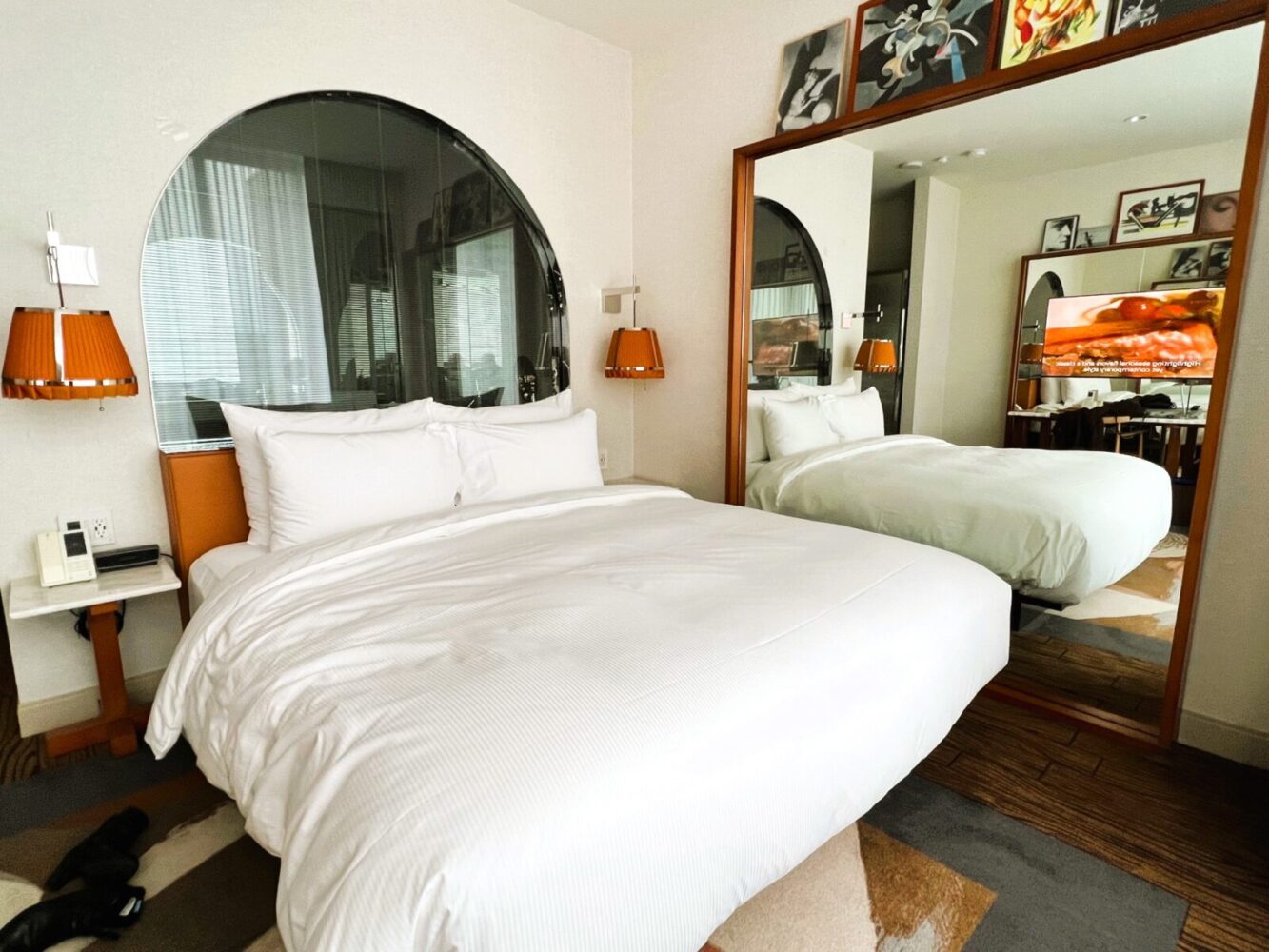
Lodging operators have also seen strong demand from offerings aimed at higher-dollar guests. “Booking patterns continue to overwhelmingly favor premium suites, and some categories are booked months to years in advance,” said Gebhard Rainer, the CEO of Sandals Resorts International.

The company’s newest resort, Sandals St. Vincent and the Grenadines, won’t open until March, but its beachfront butler villas that start at $1,111 per person per night, and two-story overwater units starting at $1,570 per person per night, have already sold out dates well into 2025, Rainer said.

The Westin Poinsett Hotel in Greenville, South Carolina, put together a “Home Alone” themed holiday package with prices ranging from $599 to more than $1,000 a night — over-the-top rates for the local market during what’s usually a slow holiday season there. It sold out with 93 bookings and many guests asking about reservations for next year.

“I have been in the industry for 25 years between Washington, D.C., and Greenville, and by far this was the most successful package I have ever seen,” said John Geddes, the hotel’s sales and marketing director. “Guests were spending a minimum of four to five times the amount they would generally spend.”

Tour organizations and cruise lines report much the same.

“Travelers are willing to pay more for exclusive experiences,” said Terry Dale, CEO of the United States Tour Operators Association. As a result, organizers “are curating itineraries to include personalized services and experiences with more exclusivity, going beyond the standard offerings.”

Holland America, a subsidiary of Carnival Cruise Line, is seeing more guest bookings for premium spa services like its thermal suites and hydropool, said spokesperson Bill Zucker. “Our private cabanas are selling out regularly. And our new direct luggage service, where guests can have their luggage shipped directly to and from their home, is proving to be very popular,” he said.

Lindblad Expeditions, which operates National Geographic-branded cruises, replaced its Islander I luxury yacht with the more luxurious Islander II for Galapagos voyages in 2022, raising the average fare by 45%.

“Some nail-biting ensued,” said Lindblad Chief Commercial Officer Noah Brodsky, but the Islander II is already 78% booked for this year. That’s well ahead of historical trends, he said, “and an indication of the uptick in premiumization.”

It’s not just winter weather. Many holiday travelers also face poor service.

This is a story we wrote for NBC News

Holiday Travelers face bad weather and bad service

A frigid arctic blast is threatening to derail holiday travel this week. But even those who reach their destinations on time may have reason to grumble: Some will have to make their own hotel beds, wipe their own in-flight tray tables and wait in lines at airport lounges — or pay more for a smoother experience.

While travel demand is roaring back, many hotels, airlines, cruise operators and airports are still racing to hire and train workers. Some companies are tightening access to perks and amenities, in a few cases by raising prices. That means the level of customer service will likely take a hit, industry experts say.

Nearly 113 million Americans are forecast to take to the roads and skies between Dec. 23 and Jan. 2, according to AAA, up 3.6 million from last year and just shy of pre-pandemic numbers. But employment levels in the leisure and hospitality sector are still 5.8% lower than in February 2020, when the industry employed around 980,000 more people than it did last month, federal data shows.

“Everyone is jumping back onto the travel wagon again, but in some cases, these wagon wheels may still be a bit wobbly,” said Corey Green, a travel adviser with AAA in Wilmington, Delaware.

Flying?

The good news: While holiday airfares remain high, ticket prices are inching down and the labor crunch is easing.

“After a summer with numerous problems with flight delays and cancellations, U.S. airlines have been successful in hiring a lot more pilots and flight attendants, and getting them trained,” said Henry Harteveldt, a travel industry analyst at Atmosphere Research Group. “They’ve also been hiring people to work at airports, reservation offices and elsewhere. So I anticipate that from the airline side, we’ll have a good Christmas and New Year’s season.”

What to expect at airports

But some fliers say the customer experience remains rocky.

“Since summer, when I’ve flown between the U.S. and the U.K., lounges have been so packed that it is sometimes impossible to find a seat,” said Rachel Franklin, a geography professor based in the United Kingdom. She added that she’s seen “used dishes accumulate in teetering piles on tables, so you can’t sit there either.”

To address overcrowding, some airlines are tightening lounge access and limiting or eliminating day passes.

Starting Jan. 1, Delta Air Lines’ Sky Club memberships will be available only to “Silver Medallion” and other elite-level fliers, and fees are going up. By Feb. 2, members traveling in basic economy will be cut off from lounges unless they pay with certain cards.

Alaska Airlines will also raise lounge membership fees starting next year. And beginning Feb. 15, the carrier will grant complimentary lounge access only to passengers with certain long-distance, first-class tickets.

Delta, which expects its 2023 earnings to nearly double thanks to strong demand, pointed to an earlier statement by Dwight James, senior vice president, customer engagement and loyalty: “While we’re thrilled to see so many customers enjoy the fruits of our teams’ hard work, our goal now is to balance the popularity of the Clubs with the premium service and atmosphere for which they were designed — and that our guests deserve.”

Seattle-based Alaska said its lounges “have become so popular during certain times of the day, we’re making adjustments to our complimentary First Class access policy to allow for a bit more elbow room.”

For now, Harteveldt said, “you don’t want to plunk money out in advance for a lounge pass only to be told, ‘Sorry, we’re not accepting them.’ Instead, wait to buy a lounge pass until you’re at the airport and are confident you will be able to enter.”

Many airport employees say they’re overworked and their teams are understaffed, making it hard to maintain quality service for so many passengers.

Earlier this month, Service Employees International Union members working as baggage handlers, cabin cleaners, ramp agents, wheelchair attendants and janitors demonstrated at 15 U.S. airports, calling for higher pay and better conditions. “We’re so short-staffed, they make it almost impossible for you to take a sick day,” Omar Rodriguez, a ramp agent and cabin cleaner for contractor Swissport USA at New York City’s LaGuardia Airport, said in a union statement. “We get blamed for delays, but we’re only given a few minutes to clean and don’t have enough people to do the work.”

Swissport said it “denies any unfair labor practices” and “fully complies with applicable regulations and provides competitive wages and benefits.”

Inside terminals, concessions operators are also struggling to hire and keep staff at shops, restaurants and bars. So passengers should be prepared for longer lines, limited operating hours and some commercial spaces that have yet to reopen.

Checking into a hotel?

Hotel guests may also find some service reductions still in place.

Many properties that suspended daily housekeeping to maintain social distancing have been slow to restore that amenity, said Jan Freitag, the national director of hospitality analytics for CoStar Group, a commercial real estate research firm. “They say, ‘Of course, we’re here if you need a towel or something,’ but they will not automatically clean your room.”

Some labor groups say hotel operators are taking advantage of pandemic policies to make long-term cost cuts, and they encourage guests to demand housekeeping during their stays — especially since many are now costlier. Room rates were up 15% in November this year over November 2019, according to Freitag. “That’s just the national average,” he said. “If you are in a 4- or 5-star property or resort, you are paying much higher rates, in some instances 30% more than in 2019.”

At most 2- and 3-star properties, he said, guests generally must request housekeeping, and while pricier rooms are more likely to include it, “some high-end properties may not have enough staff to offer housekeeping either.”

There are currently more than 100, 000 open hotel jobs nationwide, including nearly 20,000 housekeeping roles, according to the American Hotel and Lodging Association. “Recruiting workers continues to be the top challenge for many hoteliers,” said Chip Rogers, the trade group’s CEO.

Going on a holiday cruise?

One potential bright spot can be found at sea: During the summer, several cruise lines had to cancel voyages due to staffing shortages, but major disruptions have been largely resolved.

“It’s highly unlikely your holiday cruise will be canceled due to lack of staffing,” said Colleen McDaniel, editor-in-chief of Cruise Critic, a travel site run by Tripadvisor. “But just like so many other industries, you might notice some staffing or supply chain-related effects onboard.”

That could affect service quality a bit. Many cruise lines are adding fresh staff en masse, and a lot of those crew members are new to the industry, she said, “so training is ongoing and is critical to the onboard experience.”

Bottom line

Passengers across the board should “be prepared to pay a little more than usual if you want the vacation of your dreams,” Green said. Or be flexible with timing to avoid the busiest periods most prone to service snags.

“This year, I moved my annual holiday travel to earlier in December,” said Abby Rhinehart, an educational researcher in Tucson, Arizona. “It was a little strange to celebrate so early in the month, but I think it was worth it to avoid all the stress.”

Museum Monday highlights from Viking.TV

Courtesy Kon-Tiki Museum

We’re setting off for Iceland in a few weeks to join Viking for one of their Welcome Back cruises. So we have been poking around the company’s website.

One impressive resource there for the general public is Viking.TV. It was created in response to the pandemic and this channel is chock full of videos about art, culture, history, food, music, architecture, and destinations around the world.

Our favorite feature is Museum Monday. Stop in and you’ll see that there are now more than 60 videos about museums and collections. including some wonderful behind the scene tours.

You’ll find your own favorites, but here are a few of the videos that captured our attention and our imagination this week. We started with a visit to the Kon-Tiki Museum in Oslo, Norway, home to Thor Heyerdahl’s original Kon-Tiki raft and the papyrus boat Ra II.

We also went down a rabbit hole at London’s British Museum learning about how prepared the museum for lockdown and toured the collection of the Alaskan objects at the Sainsbury Centre in Norwich, England.

Ready for a ‘vaxication’?

(This is a story we wrote for NBC News)

Ready to Travel?

A growing wave of relaxed restrictions, along with an increasing number of vaccinated Americans, is leading to a surge in “vaxications” and other trips, after a year of pandemic-induced lockdowns.

Mothballed restaurants, hotels and attractions, canceled cruise seasons, and record low airline passenger traffic are making way for a brisk uptick in travel plans. Around half of Americans set to take a trip in the next three months, according to an analysis from the U.S. Travel Association.

“People have an 18-month supply of events, visits and vacations to catch up on,” said Michael McCall, professor of hospitality business at Michigan State University. “There is a substantial pent-up desire to travel. Families have not hugged or spent time together.”

After more than a year of closure, Disneyland looks set to open in April, along with many other theme parks. Dollywood theme park, for example, in Pigeon Forge, Tennessee, opened for the season last weekend, just in time for spring break, as is its tradition.

Live indoor music has already returned to New Orleans, although dancing inside clubs remains prohibited.

Business is brisk right now at Biloxi Shrimping Trip in Biloxi, Mississippi, which got hit hard during the pandemic. In March 2020, “we lost all our group travel clients and walk-up business for the year in just a few days,” said owner and operator Mike Moore, “But the start of 2021 has been surprisingly busy, even compared to last year. Our vessel has been operating steadily with walk-ups and the phone is starting to ring for groups visiting in the fall and also for spring of 2022.”

Urban areas are seeing visitors return, too.

“Since the beginning of February 2021, we have begun to see more travelers from outside our region,” said Rudd Schupp, chef concierge at tourist information center Visit Seattle.

While great airfare deals have lured some to Seattle from California, Utah, Montana and Texas, many visitors from the neighboring states of Oregon and Idaho “just wanted to get in the car and drive somewhere,” Rudd said.

Road trips were popular last summer, but even more people could be hitting the road this summer. Travelers in a recent TripIt survey said they will be ready to head out on a road trip as early as June in a personal car (83 percent) or in a rented car or RV (60 percent), with more than 60 percent planning to drive for Memorial Day, Fourth of July and Labor Day trips.

Many of those trips will include hotels stays, but many road trippers will stay in their RVs and in campgrounds.

Jon Gray, CEO of RVShare, a peer-to-peer RV rental marketplace, said bookings for spring break are already up by 114 percent compared to last year.

Private and public campgrounds are also seeing an uptick in reservations, with some opening earlier than usual this year. Advance reservations were already up by 150 percent as early as January at many campsites affiliated with the Jellystone Park franchise network, which has nearly 80 family campgrounds across the U.S. and Canada. Campspot, a campground reservation software system, said guests are booking longer and more frequent trips, with a nearly 300 percent increase in guests booking multiple trips.

Even the hard-hit cruise industry is hoping to salvage some of its 2021 season. While the Centers for Disease Control and Prevention lifted its no-sail order in October, the restrictions in the Framework for Conditional Sailing Order that replaced it have led most major cruise lines to voluntarily extend their sailing suspensions.

Some cruise lines have announced that when cruises return, all crew and passengers will be required to have proof of negative Covid-19 tests and vaccinations. In the meantime, “we continue to see significant interest among cruisers in returning to sea,” said Colleen McDaniel, editor-in-chief of Cruise Critic.

Based on a recent survey of our readers, 42 percent shared that they are currently looking to book a future cruise — and a majority of those are looking to sail within the next 12 months. So, though they are not yet able to sail, they’re eager to do so when the time is right,” McDaniel said.

LAX Flight Path Museum airplane models

Air travel has already picked up significantly, with the Transportation Security Administration screening the largest number of passengers last week since the pandemic hit. While the numbers are still way down compared to pre-pandemic times, traffic is rising enough to give airlines confidence to bring back many paused routes and introduce new services: Hawaiian Airlines just launched a new nonstop service from Orlando, Florida, to Honolulu; JetBlue Airways will soon begin flying between Hartford, Connecticut, and Miami; and American Airlines announced 10 new, returning and seasonal routes out of Austin, Texas.

“Airlines are seeing more people shopping for flights on their websites and they are getting more queries through travel agencies. They are seeing booking volumes build,” said Henry Harteveldt, president of Atmosphere Research Group. “Because international travel restrictions still exist between the U.S. and many countries, most of the demand is domestic or to the few countries where Americans are allowed to visit, such as Mexico and Costa Rica. But there is hope on the horizon.”

Passengers whose flights or travel plans were canceled during the pandemic are also sitting on billions of dollars of travel vouchers, many of which expire soon. “Airlines want you to use that credit, so this may be a great summer for people to get out on the road and into the skies,” Harteveldt said.

Travel experts say anyone wishing to take a trip should be exercising caution, especially in light of the CDC’s recommendation that travel be avoided where possible, even for passengers who are vaccinated.

“If you’re considering travel sometime this year, it’s more important than ever to do your due diligence ahead of any trip to ensure it is safe and enjoyable,” said Paula Twidale, senior vice president for AAA Travel.

How will the pandemic leave its mark on travel?

Dreaming about travel? Us too. But how will our journeys be changed by the pandemic?

(This is a slightly different version of a story we prepared for NBC News.)

Sanitizing stations, “stand here, not there” floor stickers, and cotton swabs up the nose were not part of the travel experience before the COVID-19 pandemic.

But as travelers edge their way back into airports and hotels and onto airplanes, cruise ships, and ski slopes, they will be dealing will all that – and more.

But for how long? We asked some industry experts to tell us which new travel trends, technologies, and protocols they think will stick around.

Who will travel and what will they expect?

“Businesses are connecting with their customers virtually and leisure travelers are discovering the joys of staying local,” says Chekitan Dev, a professor at Cornell University’s School of Hotel Administration in the SC Johnson College of Business. “Many business travelers will lower their number of trips, and leisure travelers will shift from ‘hyper-global’ to ‘hyper-local’ travel for the foreseeable future.”

For well into 2021 travelers will be expected or required to wear masks and observe physical distancing. And airlines, airports, hotels, and cruise lines will be expected to continue making health, safety, and cleanliness a priority.

“People will look at a dirty rental car or bus or airport or airline cabin or hotel room and wonder, ‘Uh oh, am I putting myself at risk?’ says Henry Harteveldt, a travel industry analyst at Atmosphere Research Group. “Travelers will continue to hold travel brands’ feet to the fire to keep their facilities clean.”

Entertainment

Once we move past this pandemic “we’re going to have amnesia about some of this and likely go back doing many of the same things we used to do before,” says Devin Liddell, futures and design strategist with Seattle-based Teague global design consultancy.

Theme parks, museums, and other attractions will reopen, and Liddell says the best operators will retain systems put in place to orchestrate the flow of people. For example, “ski resorts that require reservations will likely create a better experience for everyone on the lift lines,” he says.

Hotels

Hotels will likely maintain flexible cancellation policies and keep in place the intensive protocols for cleaning guest rooms and public spaces.

But instead of housekeeping only upon request or not at all during a stay, “elective housekeeping will be more about providing guests with an easy ‘opt-out’ of housekeeping services,” says Bjorn Hanson, adjunct Professor at New York University’s Tisch Center of Hospitality. 

Cruising

Most major cruise lines are maintaining – and extending – the voluntary suspensions of sailings until sometime in 2021.

When sailings resume there will be changes onboard.

“The buffet will move away from the more traditional self-serve approach toward a more crew-served style – something that lines have already said will likely be a more permanent change,” said Colleen McDaniel, Editor-in-Chief of Cruise Critic. And “changes to muster drills could also stick around beyond the pandemic. Rather than mass events that put all passengers in small spaces at once, we’ll continue to see this more self-driven.”

Airports

At airports, “the pandemic has dramatically accelerated the adoption of countless new technologies and protocols to keep people healthy and safe and streamline the entire air travel experience,” says Kevin Burke, president and CEO of Airports Council International-North America.

“Many of these changes will outlast COVID-19,” he adds.

Those technologies and protocols include sanitizing robots, restrooms that alert maintenance crews when cleaning is needed, contactless check-in, bag check and credential authentication, and the increased ability to order and pay for food or duty-free items from a mobile device and receive a contactless delivery anywhere inside the airport.

The current pandemic will change future airports as well.

“We plan to implement many public health procedures into the design of our new terminal building,” scheduled to open in 2023 said Christina Cassotis, CEO at Pittsburgh International Airport, “It will be the first post-pandemic terminal to open in the country that will be designed with these issues in mind.”

Materials in airports are going to change, too, says Luis Vidal, president and founding partner at Luis Vidal + Architects. “The use of new photocatalytic devices based on antibacterial, antiviral, and ‘autocleaning’ material, such as titanium dioxide, silver or copper, in high-use areas will become the norm.”

Airlines

(PRNewsfoto/United Airlines)

Airlines will maintain stringent cleaning and sanitizing protocols. Generous rebooking and cancelation policies may stretch out for a while. But most airlines will soon stop blocking middle seats.

Coming back soon: the full range of in-flight services, especially at the front of the plane.

“The traveling public is not happy with the bare bones on-board experience right now,” says Harteveldt of Atmosphere Research. “They understand the need for limits, but people are saying they won’t accept paying for a premium experience and getting something that is subpar.”

Vaccines, Travel Corridors, and insurance 

As the COVID-19 vaccine becomes available, it may become a ‘must-have’ for travelers.

The new normal for global travel may also include digital health passports displaying a traveler’s vaccine or negative test status and, by spring, travel corridors (also known as travel bubbles) that allow travel between countries with low COVID-19 infection rates, says Fiona Ashley, VP Product & Solution Marketing SAP Concur.

While there are some great fare deals being offered right now, as demand returns, so will higher prices.  And going forward, travelers will likely need to factor in the added costs of COVID-19 tests and travel insurance.

“Travel insurance may become a non-negotiable as destinations continue to require medical insurance, and travel suppliers tighten their refund policies,” said Megan Moncrief Chief Marketing Officer of travel insurance comparison site Squaremouth

“The Covid-19 pandemic highlighted the vulnerability of the global travel industry. I think travelers will be more cautious about investing in expensive trips without insurance.”

What now? A new week of coronavirus travel alerts

News related to the spread of coronavirus and its impact on travel seems to be coming faster than we can keep up with it.

On Sunday, the U.S. State Department issued a notice urging U.S. citizens not to travel by cruise ship.  

The CDC is also discouraging older adults and anyone with underlying health issues from taking long plane trips and spending time in crowded places.

Airports would count as crowded places. Although with so many flights canceled and so many travelers staying home, airports are far less crowded than usual.

But for those who are traveling, airports and airlines are continuing to scrub facilities and share information about what they’re doing to keep passengers safe.

Here are just a few messages from the past few days.

World’s first hybrid electric-powered cruise ship arrives in North America

When it comes to the environment and sustainability, cruise ships and many cruise ship operators get failing grades when it comes to controlling carbon emissions, recycling and treating water, waste and sewage.

But thanks to new technology and the scrutiny of passengers, government agencies and environmental groups, the tide is beginning to turn in favor of the earth.

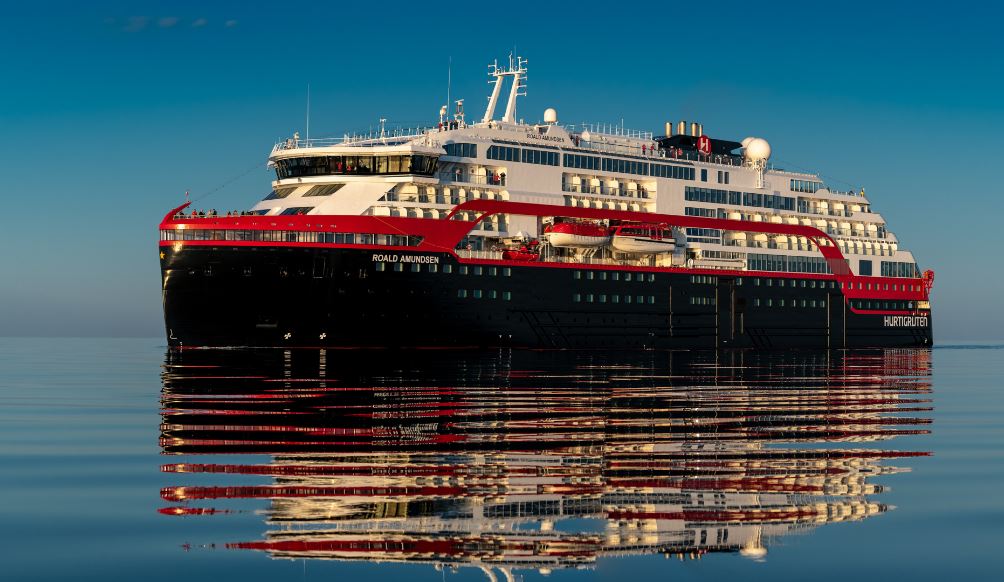
Norwegian cruise operator Hurtigruten is on the leading edge of that effort with the world’s first hybrid electric-powered expedition ship, which recently made history as the first ship of its kind to traverse the Northwest Passage.

The 530-passenger MS Roald Amundsen is named for the Norwegian explorer who was the first person to navigate the Northwest Passage by boat and the first person to cross Antarctica and reach the South Pole.

Hurtigruten’s sustainability policies include a ban on single-use plastics and the goal of being totally emission-free within 20 years. The Roald Amundsen moves the company towards that goal by featuring a hybrid operating system that uses large banks of batteries to supplement the power of the main engines, which run on low sulfur marine gas oil.

“Excess, unneeded energy from the engines is stored in the batteries and when the engine needs extra energy, we draw it back from the batteries and feed it into the engines,” Hurtigruten CEO Daniel Skjeldam told NBC.

That reduces fuel usage, allows the engines to operate at their optimum levels and lowers CO2 emissions by 20 percent.  

The ship also has the option to run on battery power alone for limited periods, during which time it uses no fuel and creates zero emissions.           

Charging the batteries from the ship’s excess energy is essential, said Skjeldam, because there are currently no power charging stations for ships to plug into in port.

The company’s next hybrid ships will be different, he says.

Those ships will have plug-in capability and be able to recharge at power stations Skjeldam expects to be set up along the Norwegian coast and elsewhere.

The world’s first hybrid-powered cruise ship set sail from Norway in July and is now in Vancouver, B.C. preparing for a season of expedition cruises in Antarctica. Hurtigruten will debut a second hybrid-powered ship, the MS Fridtjof Nansen, in 2020. A third, yet unnamed hybrid-powered ship will be delivered in 2021.

Hurtigruten’s next generation of hybrid ships, along with a half-dozen of its retrofitted existing ships, will run on a mixture of battery power, liquified natural gas (LNG) and biogas made from organic waste, such as dead fish.

“Bio-gas is like a Kinder Egg of fuel; it is like those chocolate eggs with treats inside,” said Skjeldam. “Passengers on our ships will eat fish. The waste from that fish and from the fish farming industry will go into a production plant that generates gas for our ships and creates fertilizer for the agriculture industry.”

Skjeldam says that, for now, Hurtigruten’s hybrid ships and its commitment to far-reaching sustainability practices is an expensive proposition.

“We expect the technology to be cheaper in the future. But we know passengers don’t want to visit beautiful, pristine places on an operator that is not taking the nature they sail to seriously. Some cruise lines say they’re green, but passengers can tell the difference.”

Other cruise lines do their part – or not

The world’s largest cruise company, U.S.-based cruise ship operator Carnival Corp., was in court this week to address charges that it continues to violate environmental laws by discharging plastics, food, or “gray water” into protected areas.

“Compliance, environmental protection, safety — it’s the first thing,” Arnold Donald told the court. “Without it, we don’t have a business.”

On the positive side, though, Norwegian Cruise Lines Partners recently announced that it is on target to reach its goal of replacing all single-use plastic bottles across its fleet by Jan. 1, 2020.

Lindblad Expeditions announced its intention to become a carbon-neutral company starting this year by making investments to offset 100 percent of its emissions.

And the global cruise industry is working as a group to meet a goal the Cruise Lines International Association announced in 2018 of reducing the rate of carbon emissions across the industry fleet by 40 percent by 2030.

(My story about the world’s first hybrid electric-powered cruise ship first appeared on NBC.com)

Cruising with astronauts in Italy

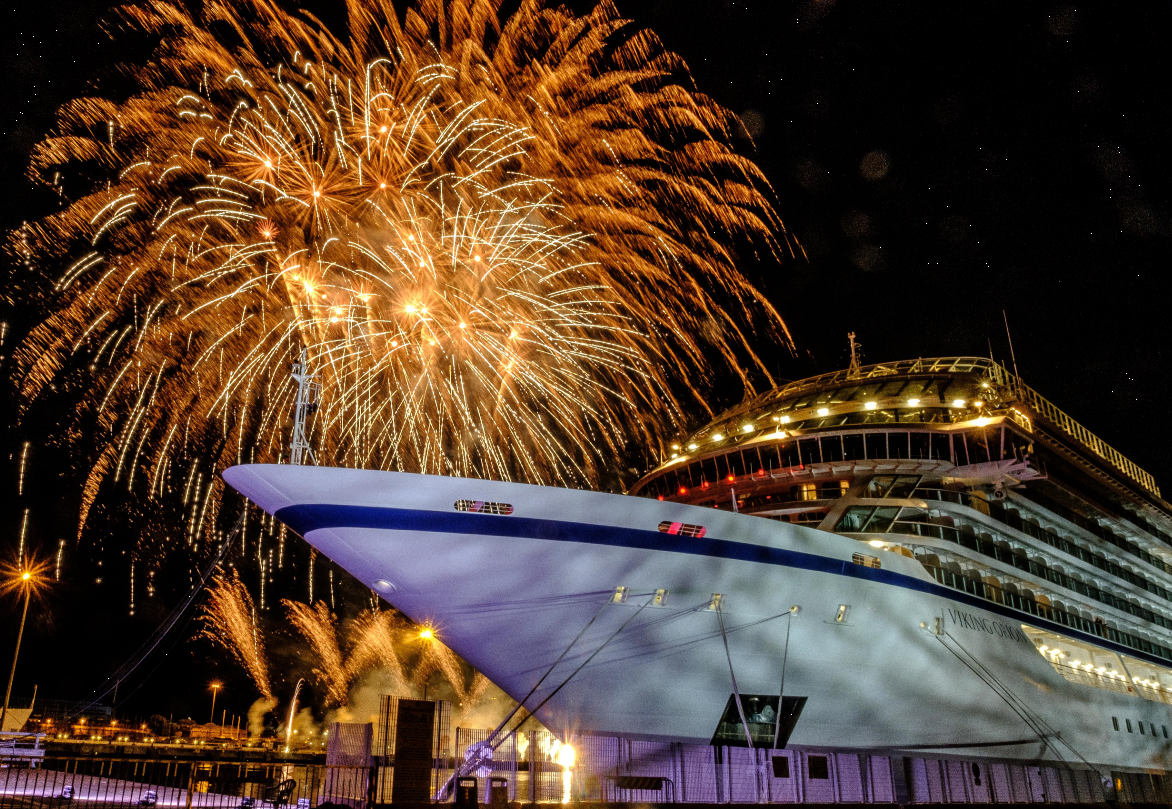
I’m incredibly fortunate – and very starstruck – to be sailing this week on Viking’s fifth and newest ocean ship, the Viking Orion, during its maiden voyage with her ceremonial godmother, American chemist, emergency room physician and retired NASA astronaut Dr. Anna Fisher, who brought along dozens of special guests, scientists, astronomers and more than a dozen of her fellow former and current astronauts.

The 930-guest, 47,800-ton Viking Orion is named after the Orion constellation and in honor of Dr. Fisher’s work on NASA’s Orion exploration vehicle project.

I’m prowling the decks with a print-out of the photos of the astronauts and other space experts hoping to meet them all and ask them questions about everything from travel tips learned from space travel to memories of their first flights. (Getting them to sign my press release would be awkward, right?)

Their answers will appear here and in various assigned stories I’ll share links to later, but in the meantime, here are some photos and tidbits from the spectacular naming ceremony that took place in Livorno, Italy that included musical performances, tributes to Nordic mythology, a flying ‘spaceman’ who traveled over the crowd and around the ship by jetpack and fireworks.


In Livorno, the ship was docked beside the city’s historic Medici-built Fortezza Vecchia (Old Fortress) and a special interactive exhibit was set up inside to tell the stories of exploration technology throughout history – from the Vikings’ solar compass to Galileo’s gravitational and projectile motion experiments.

Among the special features on this ship is a  26-seat planetarium-like theater called the Explorers’ Dome – showing special panoramic films about exploration, such as “Journey to Space” and “Life Under the Arctic Sky” in a fully immersive environment.

Viking Orion continues her maiden season sailing itineraries in the Western and Eastern Mediterranean this summer before heading east to sail Viking’s newest itineraries in Asia, Australia and Alaska.

Stay tuned for more.

North to Alaska? The rush is on.

ALASKA LAKE HOOD SEAPLANE BASE

It’s not Klondike-era gold nuggets they’re after, but the gold that comes from mining tourism.

Airlines, cruise companies and chains such as Cabela’s and the Hard Rock Cafe are heading north to Alaska hoping to cash in on a rising tide of visitors to the Land of the Midnight Sun.

After three consecutive years of growth, Alaska’s visitor count reached an all-time high of nearly 2 million guests between May 1, 2013, and April 30, 2014, according to the Alaska Division of Economic Development.

Those 1,961,700 visitors beat the 2007-20008 record by 5,000 people.

“For many national brands such as Hard Rock, Alaska felt too far away to be relevant to expanding a national presence and many thought it would be too difficult to run a successful branch in the state,” said Calum MacPherson, area vice president of operations at Hard Rock International, “but we’ve seen a shift in recent years.”

Hard Rock now sees Anchorage as a “thriving, up-and-coming city that is uniquely positioned with a growing and flourishing cruise business” he said. He also noted that the local population was listed by the Census Bureau as having the nation’s second-highest median income in 2011.

After a soft opening early this summer, the Hard Rock Cafe Anchorage will have a grand opening Sept. 19 at its downtown Anchorage location at Fourth Avenue and E Street, which is where the long-distance Iditarod sled dog race begins each year.

Hard Rock Cafe Anchorage_courtesy Hard Rock International

Earlier this year, Cabela’s opened a 100,000-square-foot store in Anchorage selling hunting, fishing and outdoor gear with wildlife displays, an aquarium, indoor archery range, a mountain replica, deli, fudge shop and other tourist-friendly attractions on-site. Bass Pro Shops, with a wetlands nature center, stuffed animals, an aquarium and other tourist-friendly features, opened an outpost in July.

The new tourism record for Alaska was boosted by increases in the number of cruise visitors, greater air service, growth in winter travel and an aggressive state-led tourism marketing campaign, said Joe Jacobson, director of the state’s Division of Economic Development.

Close to a million visitors toured Alaska by cruise ship last year, lured by great scenery, not to mention a reduction in the state’s passenger head tax from $46 to $34.50.

“After that, many ships returned to Alaska and new ships entered the market,” Jacobson said. Holland America added departures that brought 6 percent more guests in 2013 over 2012, Celebrity Cruises sent one of its new Solstice Class ships to Alaska for the first time and new ships entered the market, he said.

Increased air service helped Alaska boost tourism numbers as well. Virgin America and Icelandair entered the market with service to Anchorage, and several other carriers (JetBlue, United and Delta,) increased the number of their Alaskan flights.

One number that isn’t rising is the age of the average visitor.

The most recent Visitor Statistics Program report that looked at demographics (2011-2012) found that the average age decreased slightly, from 51.6 to 50.7, between 2006 and 2011.

“The glaciers took my breath away,” said Renee Brotman, a leadership coach and organizational consultant from Goodyear, Arizona, who recently visited Alaska on a cruise and is already planning a return trip. “Juneau and Ketchikan are such charming small towns. You can stand in the middle of the street and look up and see glorious mountains all around you.”

Looking ahead, Alaska’s Division of Economic Development doesn’t do a formal tourism forecast. “But because changes in cruise ship deployment have a significant impact on the Alaska visitor market—51 percent of year-round visitors and 59 percent of the summer market—cruise industry schedules for Alaska provide a good indicator of what to expect,” said Caryl McConkie, the agency’s development specialist.

Cruise Lines International Association Alaska estimated that the state will see 972,000 cruise visitors during 2014, compared with 999,600 during 2013, due in part to the redeployment of two Princess ships to Asia.

“Strong early bookings for 2015 indicate that we may make up for some of the loss of passengers in 2014,” McConkie said, “Princess is replacing the Island Princess with the larger Ruby Princess in 2015, increasing lower berth capacity by just over 1,000 passengers per voyage.”

Climate change might help the 2016 cruise season warm up as well.

Since the 1990s, expedition-style cruise companies such as Polar Cruises, have offered sailings on smaller ships (with up to 199 passengers) that leave traditionally plied Alaska waters to explore Iceland, Greenland and sections of the Northwest Passage, which connects the Pacific and the Atlantic Oceans.

In 2016, Crystal Cruises plans to be the first luxury line to navigate the Northwest Passage route.

During a cruise from Aug. 16 to Sept. 17, 2016, the 68,000-ton Crystal Serenity, which carries 1,070 passengers, will travel from Anchorage/Seward to New York City, through Arctic waterways historically not navigable by large ships.

On its website, Crystal explains that a cruise is now possible because the “amount of ice in the Northwest Passage has declined considerably over the years, especially at the end of the summer in the southern reaches of the Passage,” creating a window of time when its 13-deck vessel will have minimal risk of running into “ice concentrations.”

Prices for the voyage start at $19,975 per person.

(My story about tourism in Alaska first appeared on CNBC Road Warrior).