As the COVID-19 crisis continues, airlines are grounding aircraft and cutting flight schedules. And fewer and fewer travelers are passing through airports.
But in most cities airports are considered essential facilities. So they remain open.
One example: Pittsburgh International Airport (PIT), which must stay open not only for the remaining commercial flights currently flying, but because it is home to two military bases: U.S. Air Force and Pennsylvania National Guard.
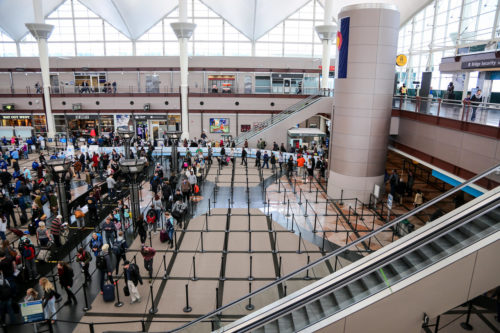
Anyone passing through PIT airport right now will find it quieter than usual.
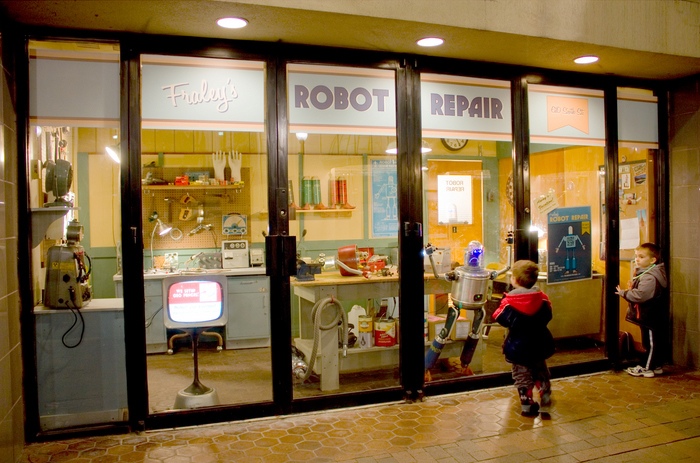
But they might notice something different in the art installation known as “Fraley’s Robot Repair.”
Toby Fraley/Blue Sky PIT
Atticus Fraley created this storefront robot repair shop and sometimes makes changes to the items inside.
His most recent addition was to give a robot a hand-lettered sign with an inspirational message for this stressful time:
So Transportation Security Administration officers are among the workers who must still show up for work.
Unfortunately, it turns out TSA workers aren’t immune to COVID-19 and there are have been some TSA officers who have tested positive for the virus. So it’s possible some passengers may have been exposed to the virus by these officers at some airports.
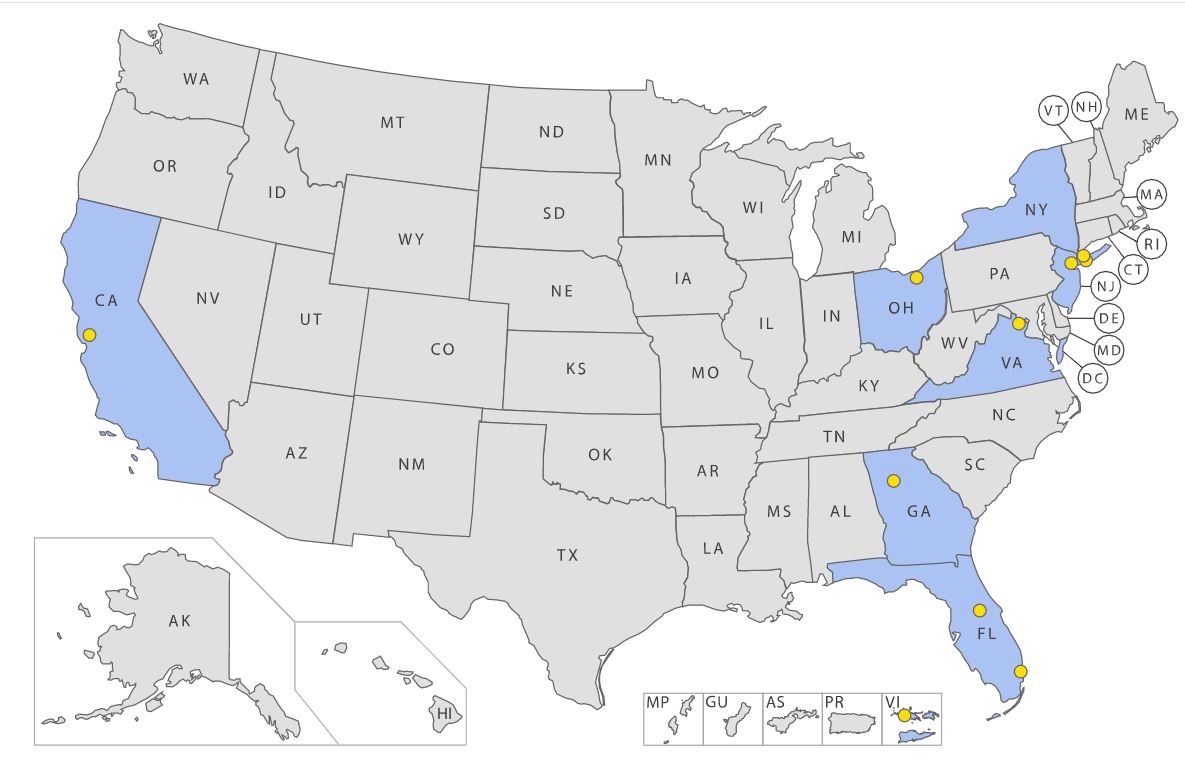
As of March 23, TSA said 25 screening officers had tested positive for COVID-19. An additional five non-screening employees who TSA says “have relatively limited interaction with the traveling public,” have tested positive for the virus as well.
Here’s the list of where TSA officers tested positive for the virus:
Newark-Liberty International Airport (EWR)
John F. Kennedy International Airport (JFK)
Hartsfield-Jackson Atlanta International Airport (ATL)
Orlando International Airport (MCO)
LaGuardia Airport (LGA)
Cleveland Hopkins International Airport (CVG)
Cyril E. King International Airport (STT; St. Thomas, VI)
Washington Dulles International Airport (IAD)
Norman Mineta San Jose International Airport (SJC)
Fort Lauderdale – Hollywood Int’l Airport (FLL)
Louis Armstrong New Orleans International Airport (MSY)
TSA says it continues to work with the CDC and state and local health departments to monitor local situations.
In the meantime, passengers will find that at some airports TSA has closed some checkpoints and is staffing others with reduced hours.
KCI reports that over the weekend several hand sanitizer dispensers were ripped off the walls in airport restrooms.
It’s unfortunate that several hand sanitizer dispensers were ripped off walls in our rest rooms. We can’t replace them. We’re doing all we can for public health, despite this act. We have plenty of soap & paper towel dispensers intact & there are other hand sanitizer dispensers. pic.twitter.com/kUsLqzc4wh
— Kansas City International Airport (@Fly_KansasCity) March 22, 2020
As you may imagine, wall-mounted hand sanitizer dispensers are in high demand right now and are sold out almost everywhere.
“We are not able to purchase any more for months,” KCI Airport explains on its Facebook page.
KCI says it’s doing all it can to protect the health of its customers, “but this act makes that difficult.”
Right now the airport can only get hand sanitizer in dispenser bags. And if it transfers that hand sanitizer into bottles, the airport knows it’s likely those bottles would disappear too.
Airport officials say they’re reviewing the surveillance footage outside the restrooms. But for not, KCI reminds travelers that it has “plenty of soap and paper towel dispensers intact, and there are still hand sanitizer dispensers in most restrooms.”
Earlier this month, in a note outlining its efforts to address COVID-19, Kansas City Aviation said its custodial team had stepped up cleaning and disinfecting efforts in restrooms and public areas.
“Throughout the day, they are checking and refilling soap, paper towel and hand sanitizer dispensers,” KCI officials said. “Airlines, concessionaires and other tenants have increased cleaning efforts in their areas, including post-security. Flyers are posted in restrooms, a Health Department educational video is running on flight information displays and CNN Airport Channel is running a video on its monitors.”
The “Stay at Home” order does NOT include airports as they are “Essential Infrastructure”. Essential employees are allowed to commute to/from work plus people driving to/from the airport for essential travel or to transport air travelers. @BuildKCI New Terminal is essential. https://t.co/EbL2iF9gVP
— Kansas City International Airport (@Fly_KansasCity) March 22, 2020
Fallout from COVID-19 is happening so fast that moments before our story about hotel occupancy rates posted on CNBC we had to cut a tidbit about a hotel bar offering a creative “squirt and sip” – a squirt of hand sanitizer and a drink – because the bar had been ordered to close.
And since the story posted – on Wednesday – many more hotels around the country have closed because they had few – if any -guests.
Major hotel chains are
temporarily closing properties and seeing occupancy rates tumble as travelers
stay at home during the coronavirus outbreak.
Global hospitality
research company STR said Wednesday that for the week of March 8-14, hotel
occupancy was down 24.4% to 53% year-over-year. Meanwhile, revenue per
available room, a key industry metric, fell 32.5% to $63.74.
The numbers echo plunging demand for air travel and cruise ships as travel slows to a trickle. There have been more than 200,000 cases of the coronavirus so far, and governments are imposing restrictions to combat the spread. The United States border with Canada will temporarily close to “non-essential traffic” due to the coronavirus pandemic, the leaders of both countries said Wednesday morning.
“To no surprise, the
hurt continued and intensified for hotels around the country,” said Jan
Freitag, STR’s senior VP of lodging insights in a statement. “The performance
declines were especially pronounced in hotels that cater to meetings and group
business, which is a reflection of the latest batch of event cancellations and
government guidance to restrict the size of gatherings.”
Even before Nevada ordered the closure of casinos and other businesses, MGM Resorts International and Wynn Resorts announced the temporary closure of their properties in Las Vegas. That includes well-known hotels like the Bellagio, MGM Grand Mandalay Bay, The Mirage and others.
Following the closure of its U.S. theme parks, Disney closed all its owned and operated hotel locations at Downtown Disney in Anaheim and Disney Springs in Orlando, beginning Tuesday. The Disney owned and operated hotels at Walt Disney World Resort and Disney’s Vero Beach Resort will close at 5 p.m. on Friday, March 20, the company said in a statement.
Home share bookings in
major cities are also feeling the pinch.
For example, Airbnb bookings for the week of March 1-7 in Rome and Beijing were down 41% and 96%, respectively, compared to bookings made January 5-11, according to AirDNA, which analyzes vacation rental data.
“2020 got off to a fast
start with our booking rate quite high in the months of January and February,”
said Jon Ingalls, an Airbnb host in Seattle, “We’ve now had cancellations for
March and have had virtually no bookings for the spring.”
Checking in? Making
sure your room is clean
If you do happen to be checking into a hotel in the near future, global and independent hotel brands such as Red Roof, Marriott International and Hilton are being proactive about sharing specifics about their cleaning efforts.
In addition to the
cleaning and disinfecting protocols used in guest rooms, Marriott is reassuring
guests that its hotels have increased the frequency of cleaning and
disinfecting in public spaces, “with a focus on the counter at the front desk,
elevators (and elevator buttons), door handles, public bathrooms and even room
keys,” the company said in a statement.
As clean as hotels say
their facilities are, when you check in you may want to do some spot cleaning
of your own, especially on the “high touch” spots housekeeping staff may have
missed and previous guests are sure to have touched. That includes door
handles, TV remote controls, lamp switches, bathroom faucets, shower soap
dispensers and the toilet flush handle.
“Hotel housekeeping may be doing a good job,” said Sheryl Kline, a professor of Hospitality Business Management at the University of Delaware who has studied hotel cleanliness, “but if you bring your own wipes you’ll know that those spots have been disinfected.”
Kline also suggests
taking bed scarves and bedspreads off hotel room beds, “because those may not
be cleaned every day.”
Spot cleaning your hotel
room is fine, but Paul Pottinger, an infectious disease specialist at UW
Medicine, the health-care system at the University of Washington in Seattle,
says the first thing to clean when you enter a hotel room is your hands, “which
may have picked up germs on your journey to the hotel, from surfaces in the
lobby and in the elevator ride up to the room.”
Need to cancel?
In general, hotels and
home share companies are being flexible with cancellations.
On Sunday, Airbnb
updated its extenuating circumstances policy regarding cancellation in response
to COVID-19 to include a full refund for guests with reservations for stays
(and Airbnb Experiences) made on or before March 14, 2020, with check-in dates
between March 14 and April 14, 2020.
IHG, which includes brands like Holiday Inn, Intercontinental, and Kimpton, is waiving cancellation fees for existing and new bookings at all its properties globally for stays through April 30, 2020.
Marriott updated its policy on March 13 to allow guests with existing reservations to cancel or make changes without charges up to 24 hours before arrival, until April 30, 2020. And on March 16, Hilton updated its policy and is now waiving fees for changes or cancellations made up to 24 hours before a scheduled arrival until April 30, 2020 as well. That includes “Advance Purchase” rates described as non-cancellable when first booked.
Given the fast-changing
nature of COVID-19 and community responses, many hotels are following the lead
of airlines and regularly updating their cancelation and refund policies, in
many cases extending the applicable dates.
Airline schedule cuts, the drop in travel and orders in some cities and states to close the dine-in area of restaurants and bars means some airports are cutting back the hours of concessions or closing them altogether.
We’ll likely see more of this in the days to come.
Here’s the start of our list.
To all of our loyal guests, Bar Symon CLE @goingplacesCLE , per the recent governmental mandate, will be closed until further notice. We appreciate all of your support during these uncertain times and are looking forward to serving you in the future. Stay safe
With the Governor's order earlier today, restaurants & bars at GRR have closed seating areas. Concessions are still offering grab & go options for travelers. Our Visitor Information Desk is also closing effective at midnight tonight. More info here: https://t.co/9hiRTD0uQt
— Gerald R. Ford International Airport (@FlyGRFord) March 17, 2020
CVG Concessions Update: Per Governor Beshear’s order earlier today, restaurants & bars at CVG have closed seating areas. Concessions are still offering takeaway/carry-out options for travellers. Please support our concessions if you are traveling through CVG!
We are too. But airports around the world are going all out to keep travelers and germs apart during this scary coronavirus time.
But for those worried about germs that may be spread by petting those stress-busting therapy pups, Reno-Tahoe International Airport (RNO) has some good news.
In addition to all the COVID-19 precautions they are taking, Reno-Tahoe Airport is also sanitizing the pups on the Paws 4 Passengers team after each ‘use.’
So go ahead. If you’re traveling you can safely pet those pups. RNO is operating with safe pup-cleaning-protocol.
And we suspect other airports are doing this too.
We not only sanitize handrails & restrooms at RNO, we sanitize our Paws 4 Passengers therapy dogs! Pups are in the terminal now greeting passengers and spreading love, but not germs. After each scritch and pet, their owners wipe down the dogs with medical-grade sanitizing wipes. pic.twitter.com/iU1RIuSgTA
— Reno-Tahoe Int’l Airport (@RenoAirport) March 13, 2020
Know about other creative ways airports are keeping you germ free? Let us know!
U.S. citizens, especially with underlying conditions, should not travel by cruise ship. #CDC notes increased risk of #COVID19 on cruises. Many countries have implemented screening procedures, denied port entry rights to ships and prevented disembarking. https://t.co/jh93gZTkpCpic.twitter.com/jI6S0UceVg
The CDC is also discouraging older adults and anyone with underlying health issues from taking long plane trips and spending time in crowded places.
Airports would count as crowded places. Although with so many flights canceled and so many travelers staying home, airports are far less crowded than usual.
But for those who are traveling, airports and airlines are continuing to scrub facilities and share information about what they’re doing to keep passengers safe.
Here are just a few messages from the past few days.
Ensuring the safety of passengers is a top priority. So when hand sanitizing stations are on back order from the manufacturer, our carpenters just custom-build and install our own. Learn more about what we’re doing to protect the airport here: https://t.co/VQSY7A9kdbpic.twitter.com/iUdxthBLzy
— Pittsburgh International Airport (@PITairport) March 6, 2020
— San Francisco International Airport (SFO) ✈️ (@flySFO) March 7, 2020
It’s business as usual at LGB. There has been no reduction in flight service because of #COVID19. We are working hard to keep our airport clean and safe by dedicating staff to disinfecting frequently touched objects and surfaces. #COVID19LongBeachpic.twitter.com/nVey3DLMcv
All the head-spinning news about the Coronavirus (COVID-19),
may have you wondering what to do if, like us, you have plane tickets and
travel plans booked for the next few days, weeks or months.
If your airline cancels your flight or your organization
cancels its event, your decision about whether to go or stay home may be
decided for you. Then, getting refunds, credit for future travel or an
itinerary for a different destination may be what keeps you busy.
If you’re in the wait-and-see mode and decide to pack your
bags and go, here’s what some airports and the TSA are doing to help you – and their
employees – stay safe.
Airport
security checkpoints
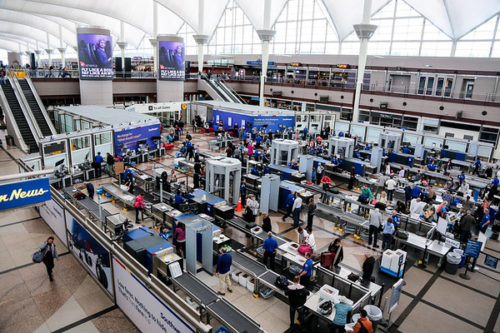
During normal travel times, airport security checkpoints are germy places and now is certainly not the time to walk barefoot through the metal detectors or put your shoes in the bin on top of your coat.
To avoid germs – and leaving stuff behind – we always recommend putting whatever you can, including your coat, the contents of your pockets, a purse, your lunch and anything you’re carrying, into your carry-on instead of into the bins. And put your shoes on the belt, not into a bin.
There are always bottles
of hand sanitizers at the checkpoints. Now there are more. Your tax dollars pay
for those, so don’t be shy about really cleaning up in the recombobulation area
post-security.
A TSA spokesperson says the
nitrile gloves officers usually wear when patting you down or looking through
your stuff adds a layer of protection against germs and that, for now, TSA has
authorized personnel who come into close contact with travelers to wear
surgical masks – if they want.
Fighting germs in airports
In general, airports across the country say they are increasing
the frequency and intensity of cleaning efforts in washrooms and other areas.
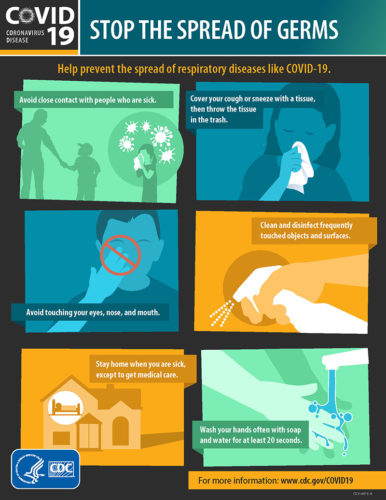
Airports are also encouraging passengers to follow the
U.S. Centers for Disease Control’s advice on washing hands, covering coughs and
otherwise trying to prevent the spread of germs by staying home if not well.
And airport officials say they’re monitoring the impacts
of the coronavirus and working closely with local
and federal partners and airlines to reduce
the risk to passengers.
Denver International
Airport (DEN) is adding sanitary wipe stations in jet bridges so passengers can
sanitize their seats on planes and putting extra bottles of hand sanitizers at
the security checkpoints and information booths.
DEN notes that it is one of the airports that use checkpoint screening trays with antimicrobial treatments.
As you may imagine, Seattle-Tacoma International Airport
(SEA) and its passengers are on high alert.
SEA is keeping its Traveler
Update page very up-to-date with advice for travelers and the latest COVID-19
news.
Airport spokesman Perry Cooper said the airport is doing additional
cleaning and has been increasing those efforts as the situation has progressed.
“We have reviewed and updated the type and strength of
cleaners to be even more efficient,” said Cooper, “And have also added over 50
new hand sanitizer stations in the international areas as well as increasing
them in the general areas of the airport.”