books

What We’re Reading: Waiting for Spaceships

This is a slightly different version of a story we first prepared for The Points Guy site. All images courtesy Ted Heutter

In “Waiting for Spaceships: Scenes from a Desert Community in Love with the Space Shuttle,” photographer Ted Huetter documents the thousands of people who would gather to welcome home the space shuttles on their return to Earth.

For thirty years – from April 12, 1982, to July 21, 2011 – these were the five orbiters that flew in space for the National Aeronautics and Space Administration’s Space Transportation System (STS), or space shuttle, program. (A sixth space shuttle, Enterprise, was a test vehicle that didn’t go into space).

As NASA proudly notes, the space shuttles flew 135 missions and not only repeatedly carried people into orbit, but they also “launched, recovered and repaired satellites, conducted cutting-edge research and built the largest structure in space, the International Space Station.”

While all the space shuttle missions took off from the Kennedy Space Center in Florida, more than 50 of those missions landed in the Mojave Desert at Edwards Air Force Base in California, about 100 miles from Los Angeles.

And, as photographer Ted Huetter documents in Waiting for Spaceships: Scenes from a Desert Community in Love with the Space Shuttle, thousands of people would gather to welcome the space shuttles on their return to Earth.

“Some spectators came because they had helped build the shuttles,” while many viewers came from greater Los Angeles and “adventurous retirees from around the country made Florida to California treks in the recreational vehicles, bookending the trips with the shuttle launch and landing,” Huetter writes.

But he also notes, “The only snag was that they had to watch [the landings] from a harsh patch of desert about three miles from the runway.”

To accommodate the enthusiastic and dedicated spectators, a day before each scheduled shuttle landing the Air Force would open an authorized viewing site where people could set up camp.

At that remote site, the military directed traffic and supplied tanks of potable water, portable sanitary facilities, generators, streetlights, a first aid station, and a command post, Huetter reports, “but generally kept a low profile and a friendly presence.”

Huetter was working in Los Angeles and made the trek to the desert to camp with the shuttle aficionados for eight of the space shuttle landings during the 1980s, beginning with STS-4, the fourth mission for the Space Shuttle Columbia, which landed at Edwards Air Force Base on Independence Day, July 4, 1982. STS-4 was also the fourth shuttle shuttle mission overall and the final test flight before the program was deemed officially operational.

“I was there as a fan like most of the people at the public landing site, to experience some spaceflight history,” in person instead of watching it on TV, said Huetter.

For each shuttle landing adventure, Huetter packed his camera gear along with his camping gear. And the photographs he took during those trips not only document a unique slice of the space age but also of the viewing site and of the people who gravitated to it year after year.

His images, taken with film in the pre-digital camera era, show the landing runways, but also the diverse range of RVs and tents, the food and souvenir vendors and the diversity of people waiting, mingling, enjoying themselves, and, finally, welcoming the shuttles home. His selected shots are organized to create a composite of twenty-four hours at the campsite, from the arrival of the first campers to the touchdown of the shuttles.

Here’s where you can see the retired Space Shuttles

Space Shuttle Atlantis is at the Kennedy Space Center Visitor Complex in Merrit Island, Florida, where the vehicle is displayed in flight, along with dozens of interactive exhibits about the history, technology and impact of NASA’s Space Shuttle Program.

Space Shuttle Discovery is on view at the National Air & Space Museum’s Steven Udvar-Hazy Center in Chantilly, Virginia.

Space Shuttle Endeavour is at the California Science Center in Los Angeles, California but is off view while construction of a 200,000-square-foot addition to the main building is underway.

Space Shuttle Enterprise, NASA’s prototype orbiter, is at the Intrepid Museum in New York City.

Space Shuttle Challenger exploded shortly after takeoff on January 28, 1986. Space Shuttle Columbia disintegrated returning to Earth on February 1, 2003.
For National Book Lovers Day: our new book

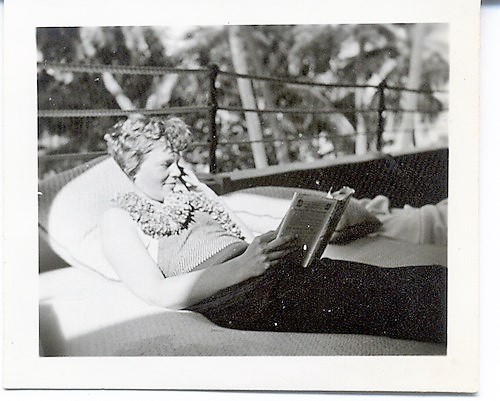
Amelia Earhart Reading,” International Women’s Air & Space Museum,

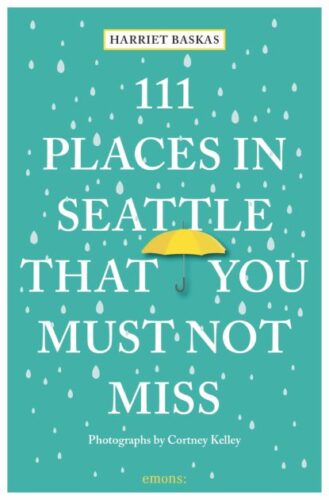
August 9 was National Book Lovers Day and we celebrated by visiting some of the places in Seattle that are featured in our new book, 111 Places in Seattle That You Must Not Miss, which begins shipping today.

The book is part of the international 111 Places series, which offers locals and experienced travelers guides to hidden treasures, overlooked gems, and charming curious places in great cities.

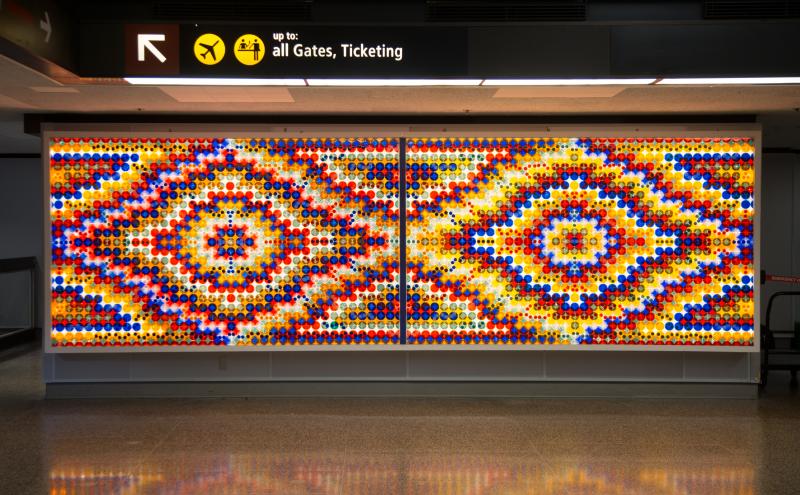
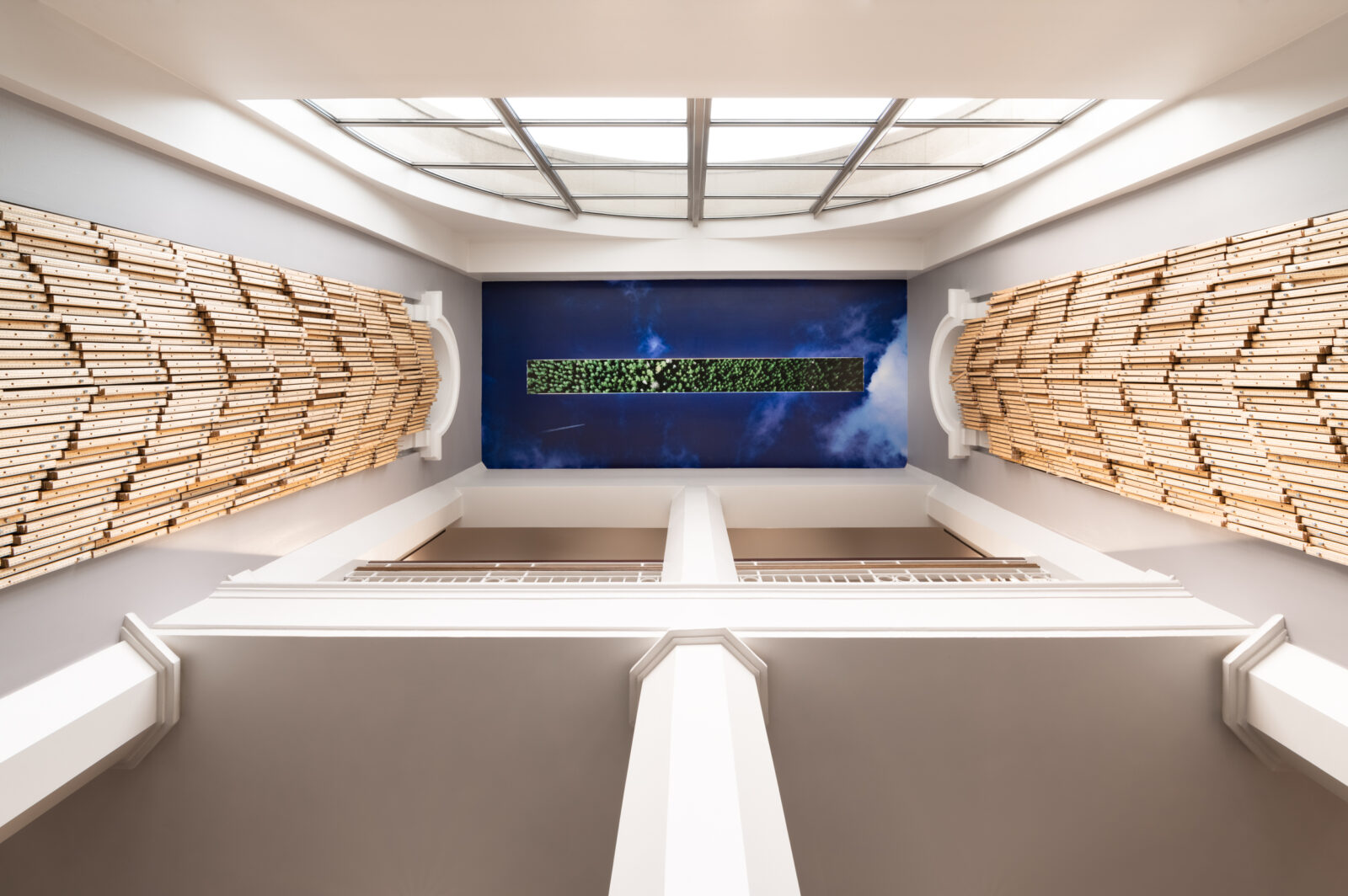
For the Seattle guide, I’m pointing readers to many airport and aviation-related items around town, including the art collections at both Seattle-Tacoma International Airport (SEA) and King County International Airport – Boeing Field (BFI).

Richard Elliot’s ‘Eyes on the World’ at SEA
Brad Miller’s “30,000 Feet” Photo by Joe Freemans Courtesy 4Culture

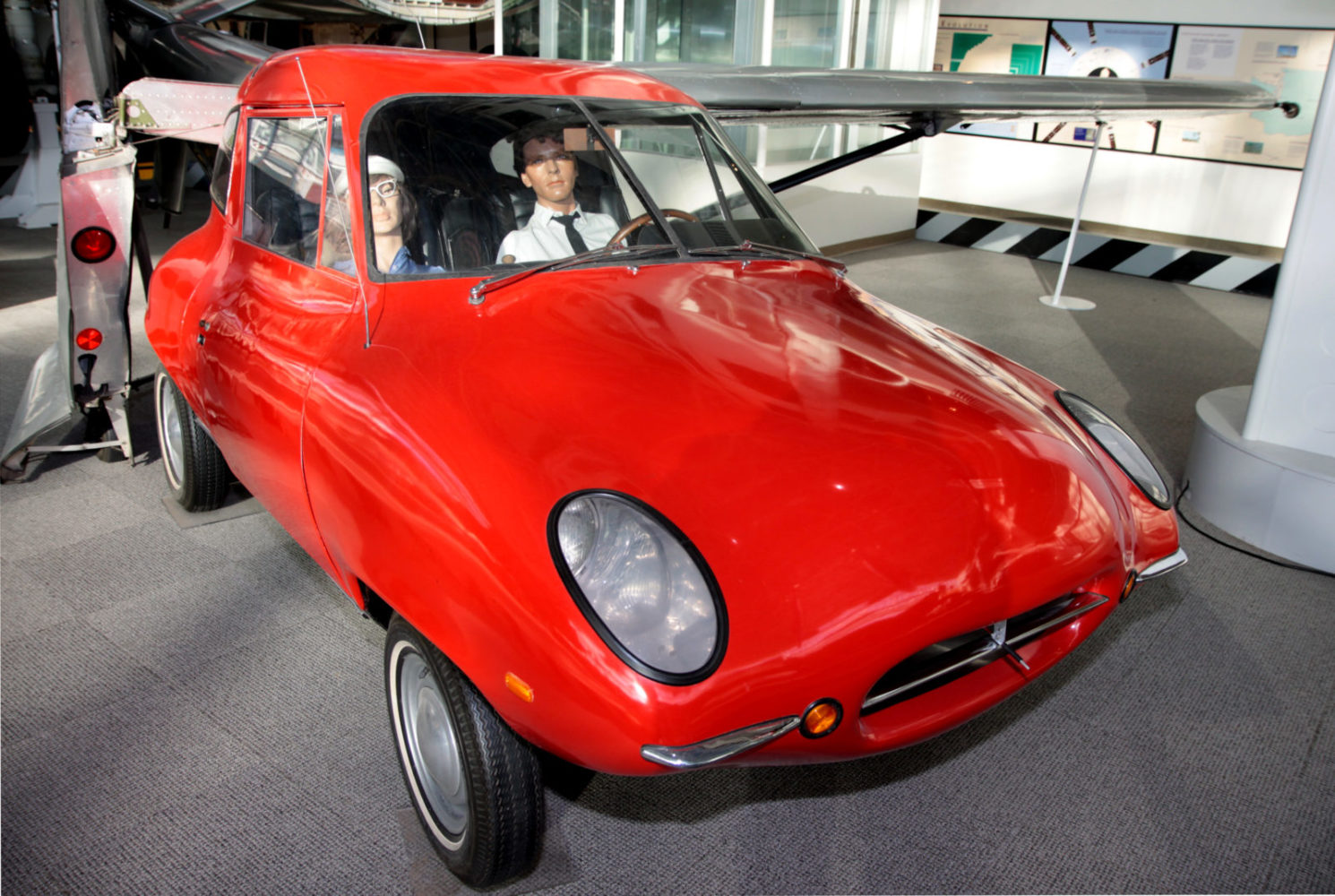
The Museum of Flight is represented in the book, with the story of the Taylor Aerocar, an early flying car that worked.

Taylor Aerocar III, one wing folded back for ground travel, one wing attached for flight.

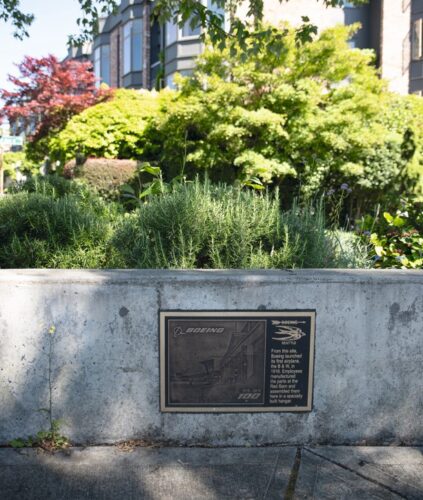
And we also point people to the tiny pocket park on the shores of Lake Union where they’ll find a plaque marking the spot where the first Boeing plane took off.

The plaque reads “From this site, Boeing launched it first airplane, the B&W, in 1916.”

Of course, there are plenty of other non-aviation sites in the book, including the Giant Shoe Museum, the world’s greenest commercial building, a haunted staircase, the Rubber Chicken Museum, a shop where you can buy personalized magic wands, the place where you can rent a rowboat for free, and lots more.

We hope you’ll get a copy of 111 Places in Seattle That You Must Not Miss from your favorite bookseller.

More libraries at airports for Nat’l Library Week

This week we’re marking National Library Week by highlighting libraries of all sorts at airports.

We started earlier this week with an airport library list put together by the Stuck at the Airport librarian that includes libraries, book exchanges, and short story dispensers at more than 10 airports stretching from Amsterdam to Philadelphia and San Francisco.

Here are some more libraries to look for at airports around the country. Let us know if we missed yours.

Here’s the FLYBRARY (get it?) at Redmond Municipal Airport (RDM) in Oregon.

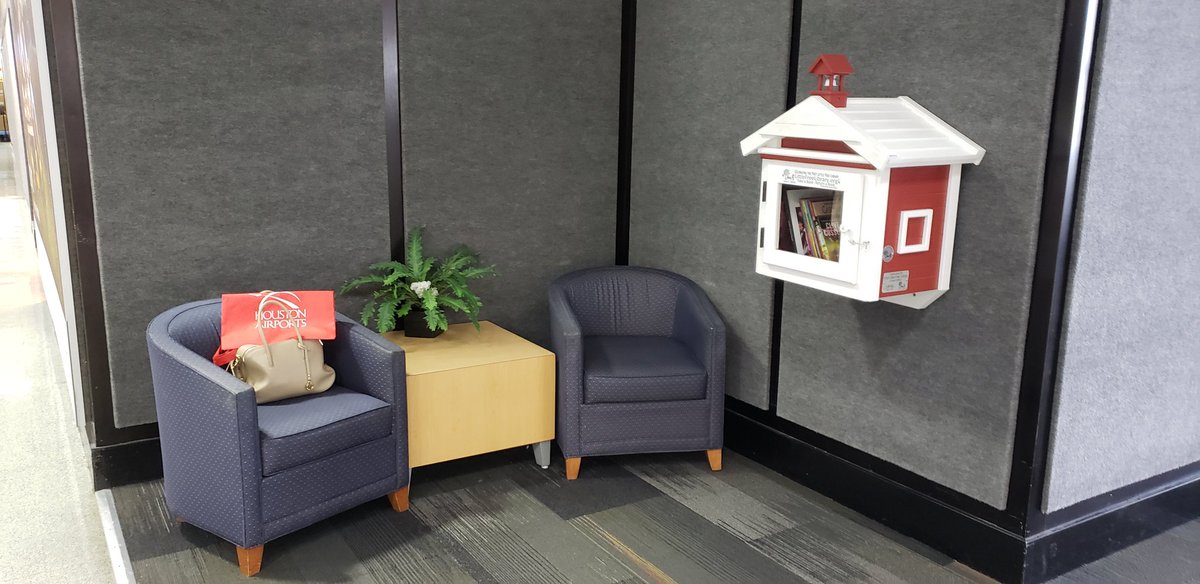
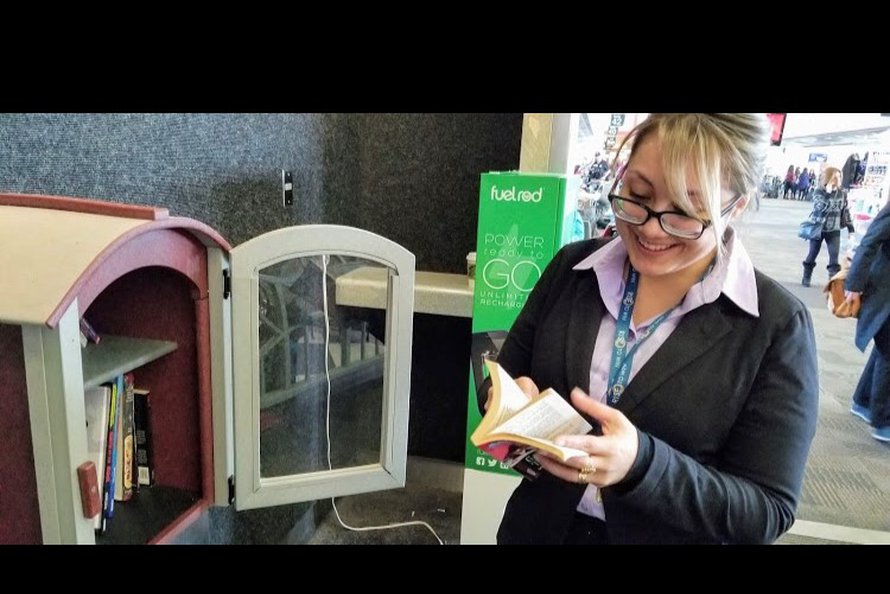
And here are some little libraries from Houston’s William B. Hobby (HOU) and George Bush International Airport (IAH).

And Mineta San Jose International Airport (SJC) is very proud of its library too.

It came in the mail: Beautiful books and a snazzy suitcase

Test-driving a colorful carry-on

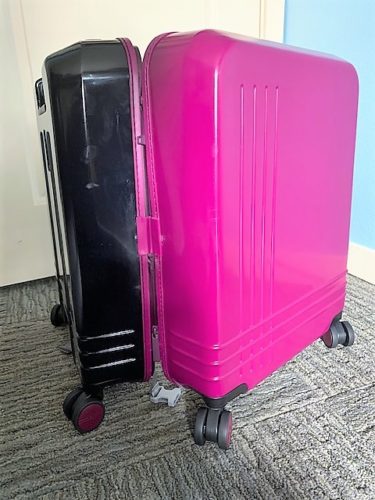
A week before COVID-19 made staying home the right thing for us to do, we had the chance to test drive the Roam luggage carry-on we were invited to design for ourselves.

We’ve been reading about these bags. And besides offering a line of 4 carry-ons and check-ins that are super light and durable, Roam lets each customer customize the color of their suitcase, from the front and back shells to the zipper, the wheels and the handle.

Here’s how our Jaunt XL turned out.

Pretty, right?

If we were to do it again, we’d go a bit wilder with the colors, but this design still stands out in a crowd.

We’re grounded, for now, so the bag has only been road-tested once.

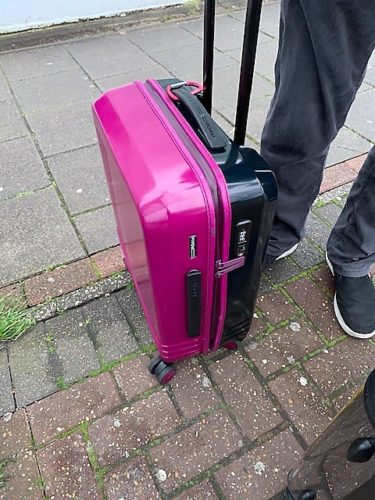
But our Roam bag made it home nick-free after traveling as checked luggage to and from London, through a half dozen London Underground stations and a neighborhood with bumpy sidewalks.

Books we may have time to read

We love the fact that books show up in the Stuck at the Airport mailroom. But we don’t always have time to sit down and read them.

The upside of sheltering in place is that now we do.

Here are two recent arrivals we’ll spend time with this week.

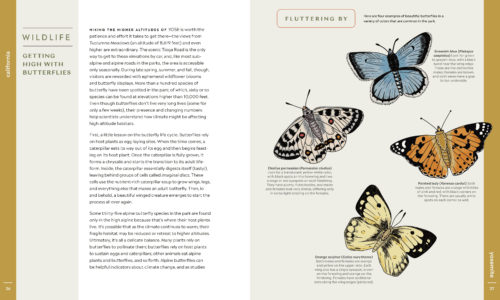
Many national parks may be closed to visitors right now in the interest of social distancing, but Scenic Science of the National Parks – An Explorer’s Guide to Wildlife, Geology and Botany, by Emily Hoff and Maygen Keller, is a good armchair prep tool for when heading to a park makes sense.

The book is filled with scientific tidbits, insider tips, recommended hikes and notes on all sorts of wonders to explore in 60 national parks around the country.

Tokyo Travel Sketchbook – Kawaii Culture, Wabi Sabi Design, Female Samurais and Other Obsessions, is chock full of the charming images Spanish artist Amaia Arrazola created while spending a month in Tokyo.

If travel restrictions have put your trip to Japan on hold right now, try touring Tokyo virtually through Arrazola’s keen and quirky observations.

Souvenir Sunday: Aerial Geology book

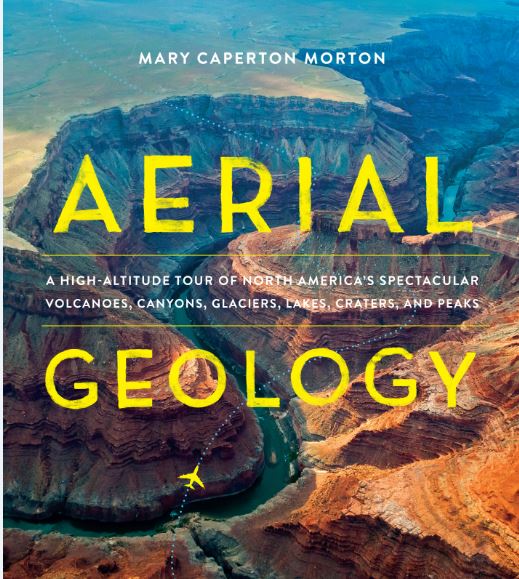
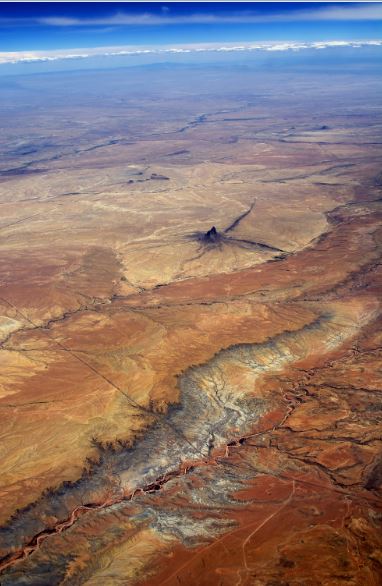
Anyone who’s looked out an airplane window will surely have wondered about – and wondered at – the landscape below.  Mary Caperton Morton has clearly done that and put together a book that goes a long way to explaining how those great views got that way.

Aerial Geology:  A High-Altitude Tour of North America’s Spectaular Volcanos, Canyons, Glaciers, Lakes, Craters and Peaks (coming soon from Timber Press) is filled with incredible images, descriptive illustrations and fact-filled, geology-based explanations of how each site was formed and what makes each landform noteworthy.

I love all the photos in this large-format book, but one of my favorite features is the little box by each landform titled “Flight Pattern” that lets you know where you’d be flying when you’re most likely to spot the image featured.

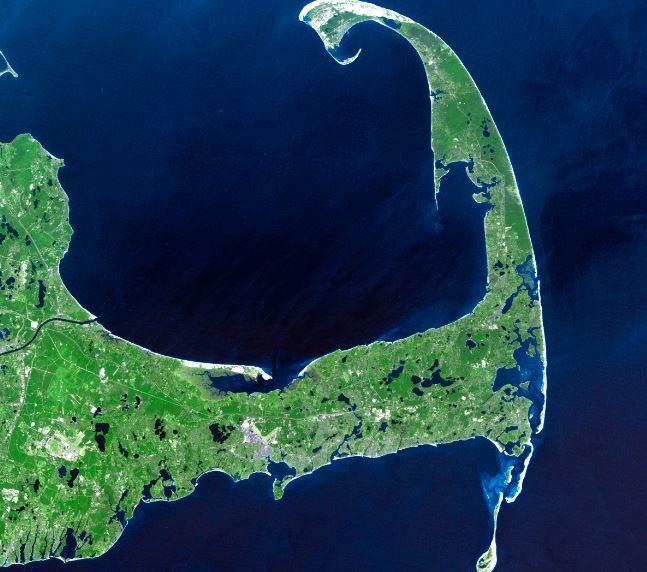
Here are couple of images from the book:

Cape Cod – Massachusetts, credit NASA


Shiprock – in northwest New Mexico – credit Malcolm C. Andrews/AerialHorizon Photography


Souvenir Sunday: summer reading

Browsing for and buying a book – an actual book – in an airport bookstore is a treat I especially enjoy before a long flight.

Sometimes I choose a title that catches my eye, but most often I pick up something that’s been on my ‘to read’ list.

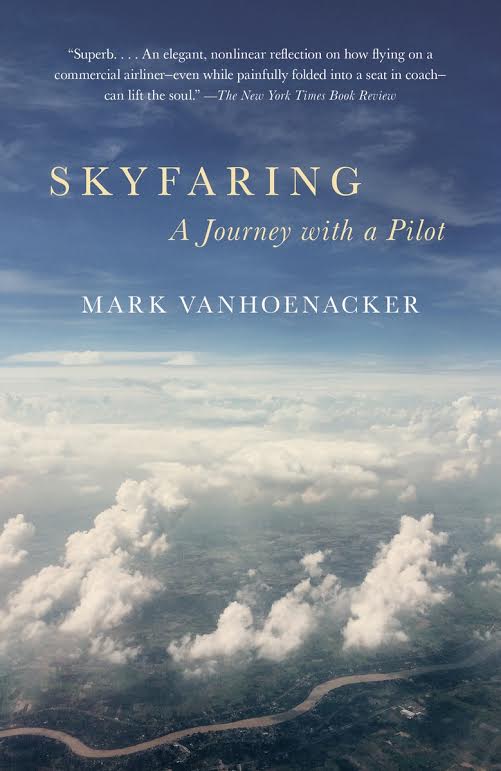
Today the choice is the just-out-in-paperback edition of Mark Vanhoenacker’s Skyfaring: A Journey with a Pilot (Vintage Departures)

Skyfaring

The New York Times review of the book says this is “an unusual entry into the air-travel genre. For one thing, the author is a commercial pilot, flying the Boeing 747 from London to cities across the globe. For another, he doesn’t speak of disasters, not even in passing…..”

Sounds promising and appropriate for in-flight reading, doesn’t it?

Vanhoenacker …”can put one in mind of Henry James,” the review continues.

“In “Skyfaring” we regularly come upon phrases like “the water gyre of the planet,” “technical rectitude,” “the ichthyology of our sea-sky” and “the light-filled clerestory of the world.” This is a volume that seeks to leave high contrails in your mental sky, and it does so in a manner that is nearly always appealing.”

Even better.

Now let’s just hope my seatmate isn’t a talker…

Souvenir Sunday: Fantastic Cities coloring book

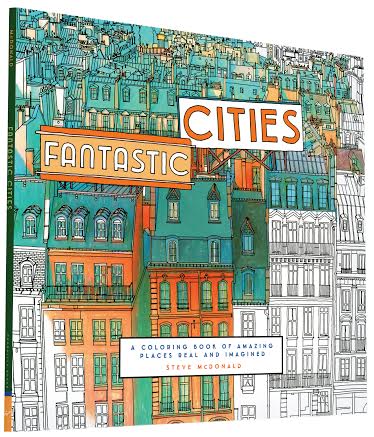
Fantastic Cities cover

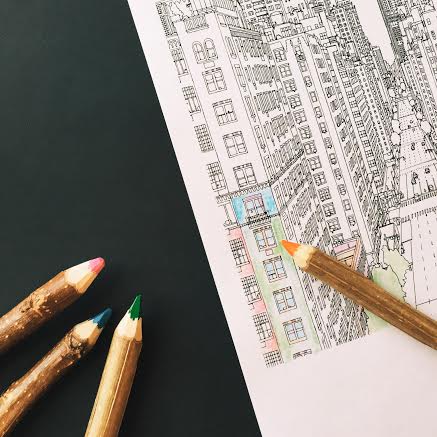
Here’s an activity book perfect for those lazy, hazy days of summer or those crazy days when you just need to take a break, focus on simple, creative tasks and chill out.

Fantastic Cities: A Coloring Book of Amazing Places Real and Imagined
– out in a few weeks from Chronicle Books – is a coloring book for adults filled with Steve McDonald’s intricate aerial views and bird’s eye perspectives of cities from around the world.

Large (12″ by 12″) detailed images inspired by places in Canada, Tokyo, Istanbul, San Francisco, Sydney and other cities around this world offer a great opportunity to get out the colored pencils, some markers, crayons or watercolors and dream about your next adventure.

Airline ads from the Mad Men era

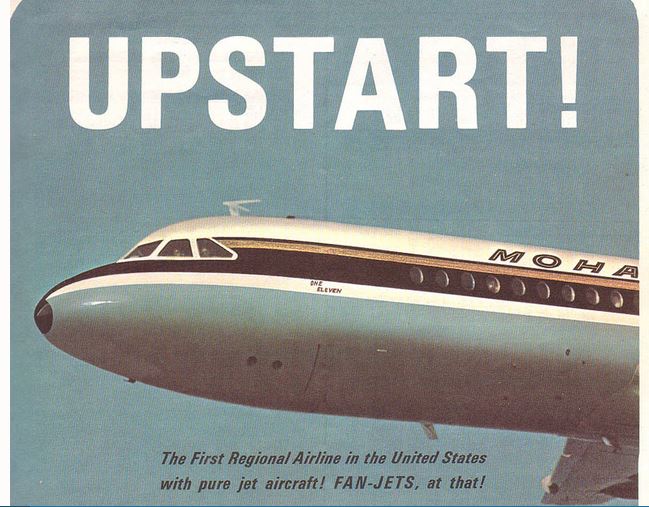
Mohawk

The final season of Mad Men kicks off tonight and that gives us yet another excuse to look back at the real work done by advertising men and women on behalf of airlines during the glory days of the industry.

We get help from an impressive new book – in looks, size (it measures 12.2″ by 16.1″), weight (it tips the scales at over 14 pounds) and price (it will set you back $400, although the pre-order price is about $250) – that details the artwork of airline ads from the mid 1940s through the mid 1970s.

Air_France_Nr_196

Created by M. C. Hühne, Airline Visual Identity: 1945-1975 is a lushly printed and encyclopedic tour though the artwork and the advertising images that helped build airline brands.
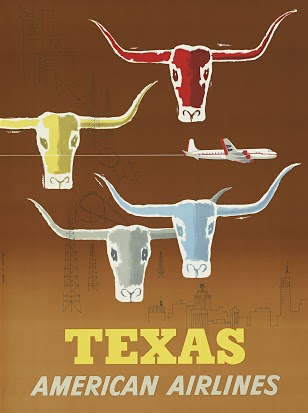
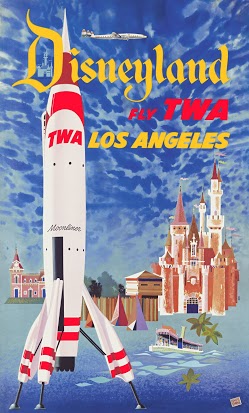
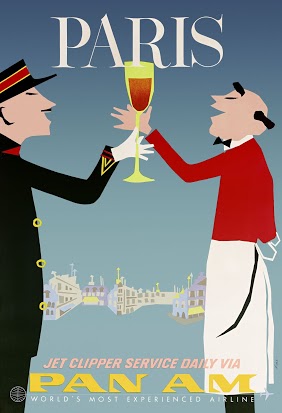
Here are a few more samples of images in the book reproduced directly from the originals, with special care given to getting the colors and special effects just right.

American_Airlines_texas

TWA_Disney

Pan_Am_paris

(All images except Mohawk Airlines courtesy Airline Visual Identity 1945-1975)

Travel Tidbits: sculpture at JFK; bookstore at DEN

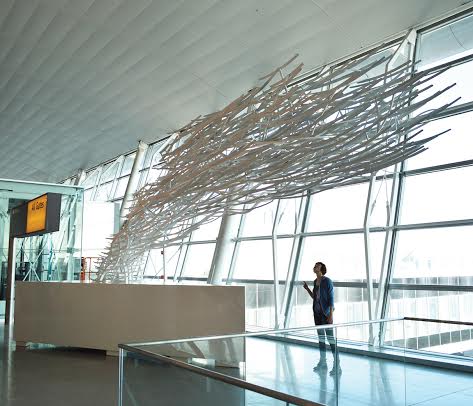
This new sculpture, called “Outside Time,” by Dimitar Lukanov, was recently installed in the Departure Hall of Terminal 4 at JFK International Airport in New York.

JFK SCULPTURE

Part of a three-part project, this 4600-pound steel and aluminum sculpture is 15 feet tall and 11 feet wide and is “a veritable drawing in space, a breathless, effortless, instantaneous gesture in the air [that] aspires to halt, even momentarily, the relentlessness of time,” said Lukanov.

DEN TATTERED COVER

Meanwhile, while we’re sad to learn that Powell’s City of Books will close two of the three branches it has a Portland International Airport, over at Denver International Airport, the second of four planned branches of The Tattered Cover, the iconic line of Colorado bookstores, has opened in the center of the A Concourse.

The other two Tattered Cover branches at DEN will open later this year.