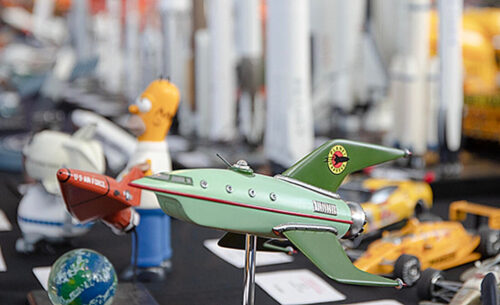
Last February, we flew to Portland International Airport (PDX) to join 150 foodies and avgeeks at Loyal Legion Beer Hall for an event that promised to take us on a tasty tour of airline history in 7 courses. The dinner was designed by former Emmy-award winning “Simpsons” writer-turned culinary connoisseur, Bill Oakley as a tour […]
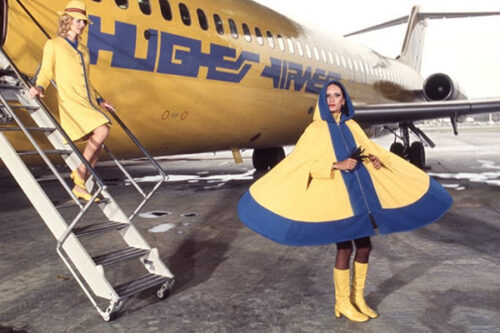
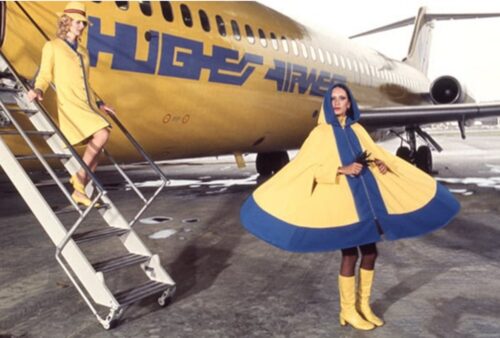
(Western Airlines flight attendant Lorraine Coccio Ditsworth aboard a flight in her winter uniform) In Seattle, WA, the Museum of Flight has a new exhibitio on flight attendant fashion titled Runway to Runway. On view are more than 100 flight attendant uniforms and accessories, such as hat, scarves and handbags, from the museum’s vast collection. […]
Seattle’s Museum of Flight will debut a new exhibition, Runway to Runway, on April 25 featuring the styles and stories of flight attendant uniforms through the years. Included are more than 100 items ranging from classic suits and skirts, to capes and go-go boots, hats, handbags and scarves. The exhibit also has it’s own special soundtrack and […]
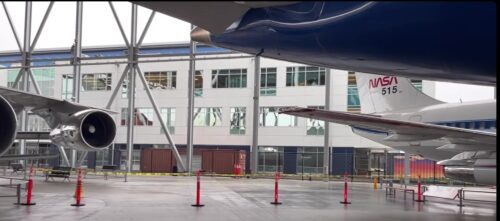
Wonder Woman’s Invisible Plane is a rare gem in the collection of Seattle’s Museum of Flight. Acquired by the museum in April 1, 2013, the museum keeps this curious and precious artifact in a secret location and rarely puts it on display. But the departure of the large-scale MiG-21 Project featuring a decommissioned Soviet MiG-21 […]
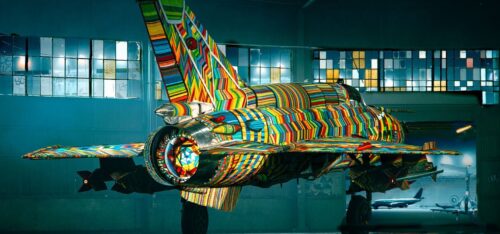
(Courtesy of the MiG-21 Project) Seattle’s Museum of Flight is taking a bold and very colorful step in the world of art and aviation. Starting June 21, the museum is displaying The MiG-21 Project. The installation is the culmination of South African artist Ralph Ziman’s multi-year collaborative effort to cover a decommissioned Cold War-era, Soviet-designed […]
Last February, we flew to Portland International Airport (PDX) to join 150 foodies and avgeeks at Loyal Legion Beer Hall for an event that promised to take us on a tasty tour of airline history in 7 courses. The dinner was designed by former Emmy-award winning “Simpsons” writer-turned culinary connoisseur, Bill Oakley as a tour […]
(Western Airlines flight attendant Lorraine Coccio Ditsworth aboard a flight in her winter uniform) In Seattle, WA, the Museum of Flight has a new exhibitio on flight attendant fashion titled Runway to Runway. On view are more than 100 flight attendant uniforms and accessories, such as hat, scarves and handbags, from the museum’s vast collection. […]
Seattle’s Museum of Flight will debut a new exhibition, Runway to Runway, on April 25 featuring the styles and stories of flight attendant uniforms through the years. Included are more than 100 items ranging from classic suits and skirts, to capes and go-go boots, hats, handbags and scarves. The exhibit also has it’s own special soundtrack and […]
Wonder Woman’s Invisible Plane is a rare gem in the collection of Seattle’s Museum of Flight. Acquired by the museum in April 1, 2013, the museum keeps this curious and precious artifact in a secret location and rarely puts it on display. But the departure of the large-scale MiG-21 Project featuring a decommissioned Soviet MiG-21 […]
(Courtesy of the MiG-21 Project) Seattle’s Museum of Flight is taking a bold and very colorful step in the world of art and aviation. Starting June 21, the museum is displaying The MiG-21 Project. The installation is the culmination of South African artist Ralph Ziman’s multi-year collaborative effort to cover a decommissioned Cold War-era, Soviet-designed […]
They are easy to miss as you cross the pedestrian bridge connecting the main campus of Seattle’s sprawling Museum of Flight to the museum’s Space Gallery and Aviation Pavilion across the street. But as part of the delightful Art+Flight exhibit currently underway at Seattle’s Museum of Flight, there is a display of charming motivational posters […]
(Handpainted Mural by Joe Nix) Seattle’s Museum of Flight is already well-known as the largest nonprofit air & space museum. Now the sprawling aviation museum is making a bid for being well-known for commissioning and exhibiting art. The Museum of Flight’s Art+Flight project, running through January 7, 2024, includes dozens of artworks in all mediums by […]
Valentine’s Day is around the corner and airports and airlines are getting to land some love. In Las Vegas, the pop-up marriage license bureau is back at the Harry Reid International Airport (LAS) to help streamline the uptick in weddings that take place in Sin City around Valentine’s Day. Philadelphia International Airport (PHL) will once […]
We’re not sure how this will work. Or why it is happening. But we’re sure it will be great. On September 21, from 3 pm to 5 pm, the University of Stuttgart Academic Orchestra will take over all five main galleries at Seattle’s Museum of Flight. The plan is for the Orchestra to divide into […]