TWA Hotel at JFK

Stuck at the Airport goes to London

Tower Bridge at night – Courtesy London Partners

The Stuck at the Airport team is in London this week on a trip organized by our friends at Gatwick Airport (LGW).

The assignment?

Find out if it’s easy to land at Gatwick Airport on a flight from the U.S. See if it’s easy to take public transit to and from the airport to London, Brighton, and other nearby destinations. And find fun things to do.

As they say: tough job, but someone has to do it. And Stuck at the Airport is up for the challenge.

Here’s how our journey is going so far.

Seattle to New York

Our ride from our home base airport, Seattle-Tacoma International Airport (SEA), to New York’s John F. Kennedy International Airport (JFK) was on JetBlue, to connect to one of JetBlue’s flights to Gatwick.

The airline begins service between Boston and Gatwick on August 4, and we’ll be on the inaugural flight out of Gatwick. So stay tuned for details from that adventure.

But first: the TWA Hotel

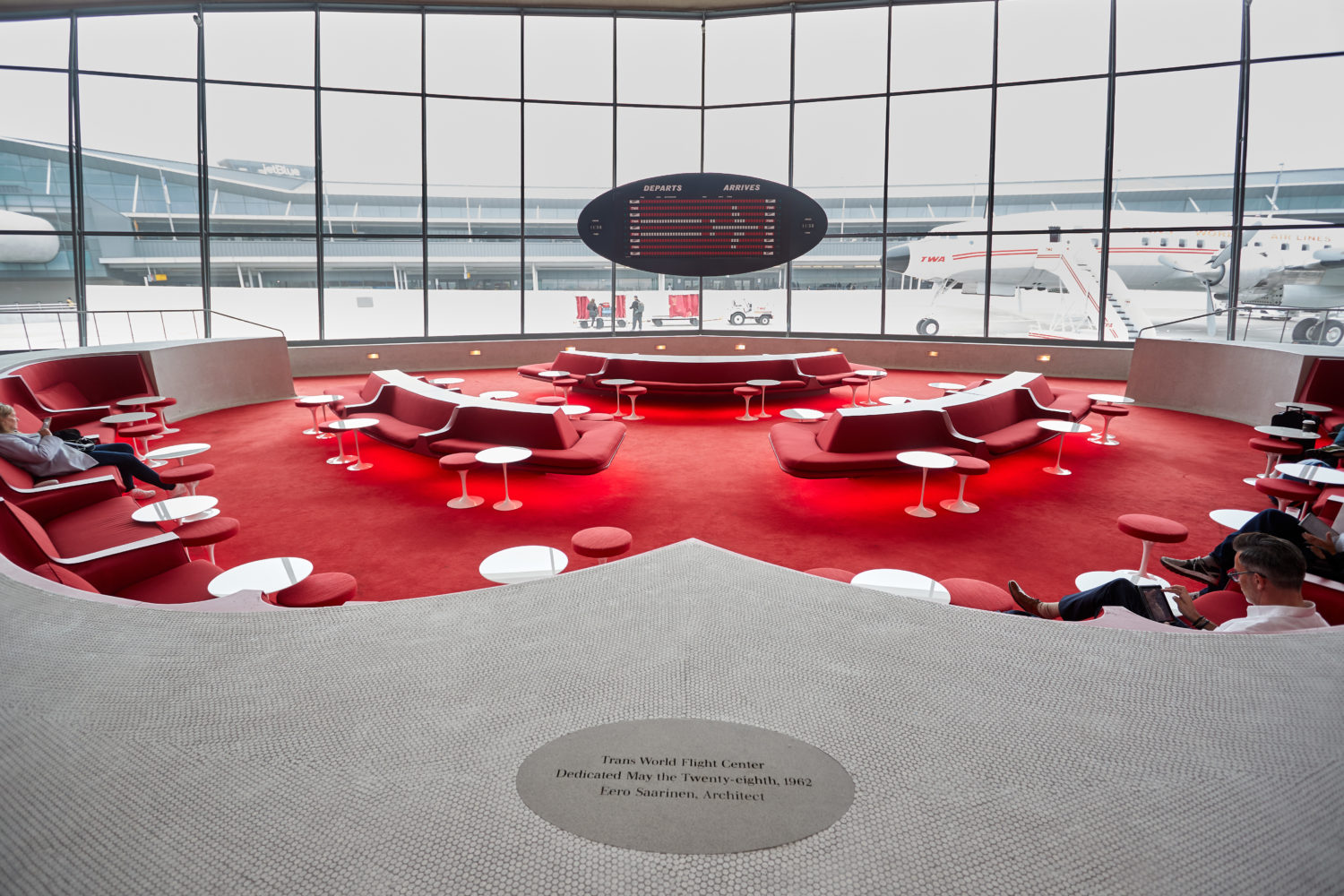
We chose an overnight layover at JKF so that we could stay at the TWA Hotel, which is oh-so-conveniently connected to JetBlue’s T5 terminal via elevator and a red-carpeted flight tube that is the perfect passageway to the 1960s.

The hotel is built inside the restored and reimagined Eero Saarinen’s landmark 1962 TWA Flight Center at JFK and has restaurants, bars, retail outlets, and some fun 60s throwback activities in the lobby.

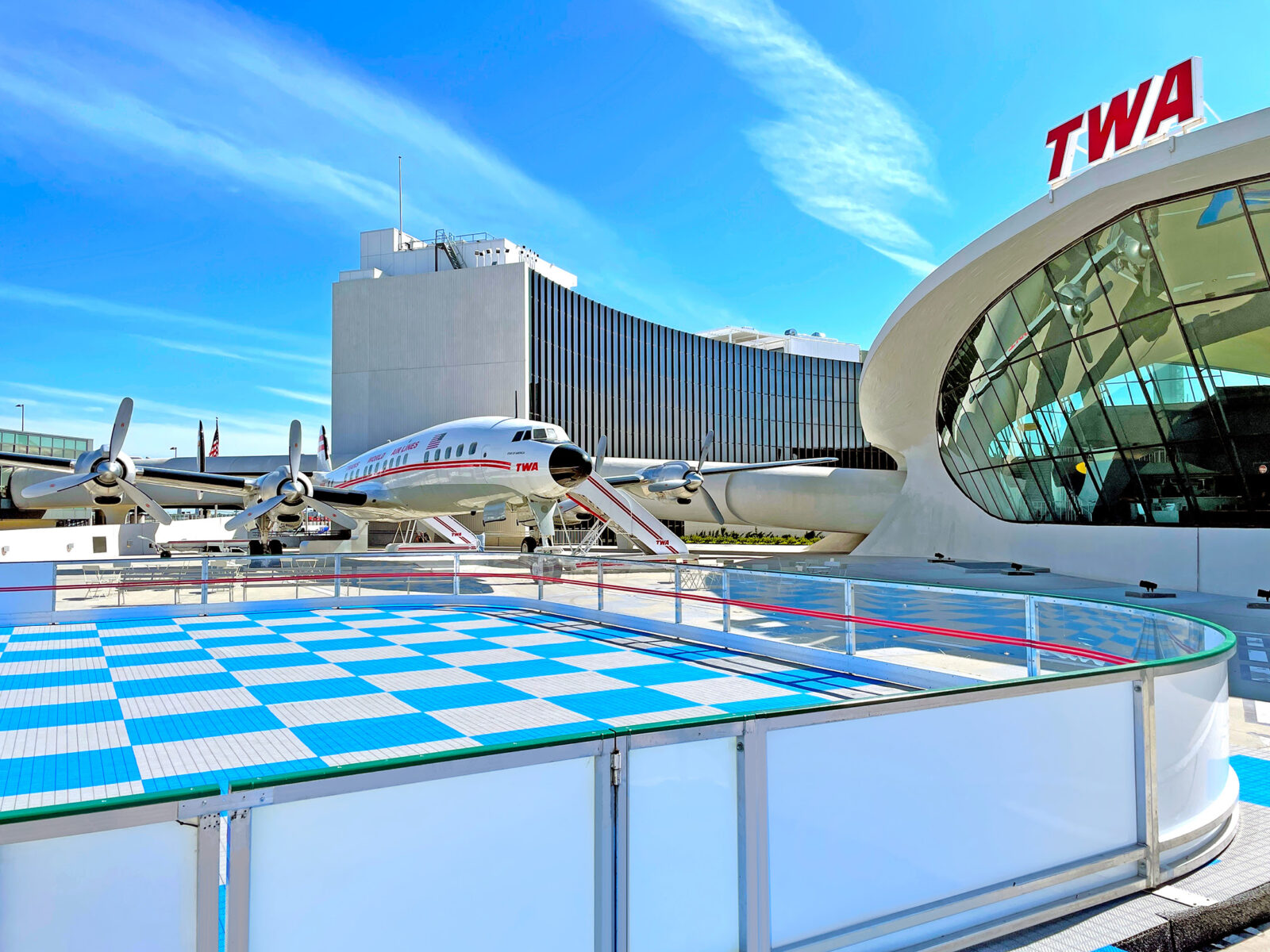
There’s an infinity pool on the roof (fees apply) and, out in the back on the ‘tarmac, there’s a Lockheed Constellation “Connie” L-1649A that has been transformed into a cocktail lounge. This summer, guests and visitors can go roller skating rink or ride bumper cars on the hotel’s tarmac as well. (Fees apply).

You don’t need to be staying at the hotel to enjoy the lobby and tarmac activities. And many activities, including photo ops in cool spaces, Twister, and long-distance phone calls on retro pay phones, are free.

Arriving at Gatwick Airport

The JetBlue flights to Gatwick Airport leave JFK at around 7:30 pm and land at Gatwick the following morning at around 7:30 am. That means you can plan a full day in the city.

Our flight landed early, so I was glad Gatwick Airport had arranged for me to rest and refresh at the onsite YOTELAIR London Gatwick Airport.

This was the first YOTEL to open in the United Kingdom – way back in 2007 – and offers short-stays (from 4 to 8 hours) in very compact ‘cabins’ that are perfect for naps, a refresh after a long flight, or an overnight if you have a very early flight or late arrival.

Each cabin is super compact, with a bed, bathroom, small desk, WiFi, USB ports, mood lighting, smart TV, and a little bit of storage space. (You can also leave luggage at the front desk, or ‘Mission Control.’)

I had everything I needed for a refresh and even discovered a small fold-out stool hanging on the back of my cabin door just as I was leaving. Coffee, tea, and bottled water are complimentary at the front desk and guests can borrow alarm clocks for wake-up calls. Meals can be ordered and delivered as well.

Here’s a snap of Gatwick Airport’s mascot, Gary Gatwick, checking out the Yotel cabin. You’ll see more (lot’s more) of him during our London visit as he’s my travel partner for the week.

Gatwick to London in less than 30 minutes

It’s always a delight to have an ‘aha’ moment when traveling and learn about a tool or service that you know will change your travel habits.

In the past, I’ve always arrived in London at Heathrow Airport and headed to town via the London Underground, known as the Tube. The new Elizabeth Line seems like its speeds up the travel time, but in the past, the ride from Heathrow to central London could take up to 45 minutes and become very crowded as it got closer to the city, especially during rush hour times.

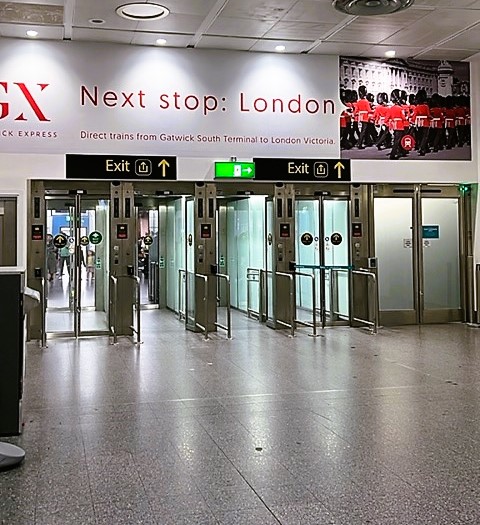
But traveling from Gatwick Airport to London on the Gatwick Express was far easier and way more pleasant.

The ride from the Gatwick Airport train station to Central London’s Victoria Station on the direct Gatwick Express was a 30-minute breeze.

I liked that this is a train (not a subway) and that the train station is easy to access, with a major upgrade on the way. Trains run every 15 minutes and travelers can use an Oyster smartcard to pay for rides. Prices vary by time and type but are discounted 10% when purchased online or via the app.

Trains from Gatwick also go to the Sussex coasts, for example, Brighton and Eastbourne.

It would have been easy to transfer to underground Tube lines once I arrived at Victoria Station, but my hotel was an easy 10-minute walk and along the way, I passed the Victoria Palace Theatre, where Hamilton is playing.

As I mentioned, Gatwick Airport mascot Gary Gatwick is my tour guide this week, and he received a very enthusiastic welcome at the check-in desk at the St. James’ Court.

Our agenda this week will include a lot of touring in London, Brighton, and West Sussex – all places easily accessible from Gatwick Airport.

So please stay tuned as we catch up on our adventures each day. Have some tips on places we should go? Please add them to the comments.

Off to Gatwick. But first, bumper car rides at JFK

Stuck at the Airport is heading to London today for a week-long adventure organized by airport mascot Gary Gatwick and his friends at Gatwick Airport (LGW), who suspect that not that many Americans don’t know the airport is just half an hour from downtown London by express train. Or that gin is distilled at the airport. (Stay tuned for that…)

Our journey to London starts in Seattle with a direct flight to New York’s John F. Kennedy International Airport on JetBlue and an overnight at the very hip, super retro, landmark TWA Hotel.

We’re looking forward to hanging out in the Sunken Lounge, taking a dip in the rooftop infinity pool with runway views, visiting the Twister Room, and touring the onsite museum about TWA’s history and the Jet Age.

And, of course, we’ll have a cocktail or two in the Lockheed Constellation “Connie” that has been transformed into a cocktail lounge.

We missed out on the roller skating rink the hotel had on its tarmac, but we are pleased to see that bumper car rides are now offered instead on a race course near the Connie cocktail lounge.

Cars have names like Hammer Time, The Bumpty Dance, Nervous Wrecker, and One Hit Wonder. And operate Fridays from 4 to 8 pm and Saturdays and Sundays from Noon to 8 pm. Which is perfect for our day-long layover.

Ride sessions are $20 for adults and $16 for kids under age 12. No reservations are available; it’s first come, first served until November 2022.

Maybe we’ll bump into you there.

Roller skating is back at JFK’s TWA Hotel

Fans of roller skating, fun at-the-airport activities, and the landmark TWA Hotel at JFK Airport (i.e.: everyone) will be looking forward to the return of the hotel’s retro-style roller skating rink.

The Roll-A-Rama at the Runway Rink opens for the season on April 15.

The checkered rink is located by the hotel’s 1958 Lockheed Constellation “Connie” airplane/cocktail lounge and is made up of 2,668 tiles.

The rink will open to the public on weekends only, weather permitting, through November 22.

Hours for skating will be Fridays from 4 to 8 PM and Saturdays and Sundays from 12 to 8 PM.

50-minute skate sessions will cost $20 for adults and $16 for kids under 12. The fee includes use of a pair of old-style four-wheeled “quad skates” (patented in 1863).

If you have your own roller skates, you are welcome to bring them along.

If you’re planning to go, note that admission to the rink can only be purchased by credit card and is first-come, first-served; no advance tickets are available.

And because that’s the way they roll, the TWA Hotel team shared some great roller skating factoids. Note that you can burn 350 calories in an hour of roller skating, so go ahead and have a retro cocktail in the Connie.

Roller skating at JFK Airport? Yup, at the TWA Hotel

Air travel is back on, but what about fun activities at airports?

That’s back on too. At least at New York’s JFK Airport, where the TWA Hotel adjacent to Terminal 5 is operating a summer roller rink next to the hotel’s 1958 Lockheed Constellation “Connie” airplane.

A 50-minute skating session costs $20 per adult and $16 for kids 12 and includes the skate rentals, although you can bring your own. Helmets are available for rent. The rink is cleaned between each session.

Sound like something you want to do? The TWA Hotel’s Roll-A-Rama ( great name, right?) is open Fridays from 4 PM to 8 PM and on Saturdays and Sundays from 12 PM to 8 PM.  Tickets are on a first come, first served basis and capacity may be limited.

To help you get in the mood, here are some ‘by the numbers’ factoids about roller skating put together by the TWA Hotel.

“Runway Chalet” now at JFK’s TWA Hotel

The 512-room TWA Hotel across the street from the JetBlue terminal at JFK Airport tempts travelers with a retro lobby complete with clacking flight board and the Sunken Lounge lobby bar.

Through February, the hotel has an ice-skating rink set up out back, right next to the 1958 Lockheed Constellation Connie airport-turned-cocktail lounge. (Skating fee: $15/adults; $10 kids under 12; skate rental: $10 adults/$8/kids; two free ice-skating shows each evening).

Now there’s another reason to stop by the hotel before or after a flight:

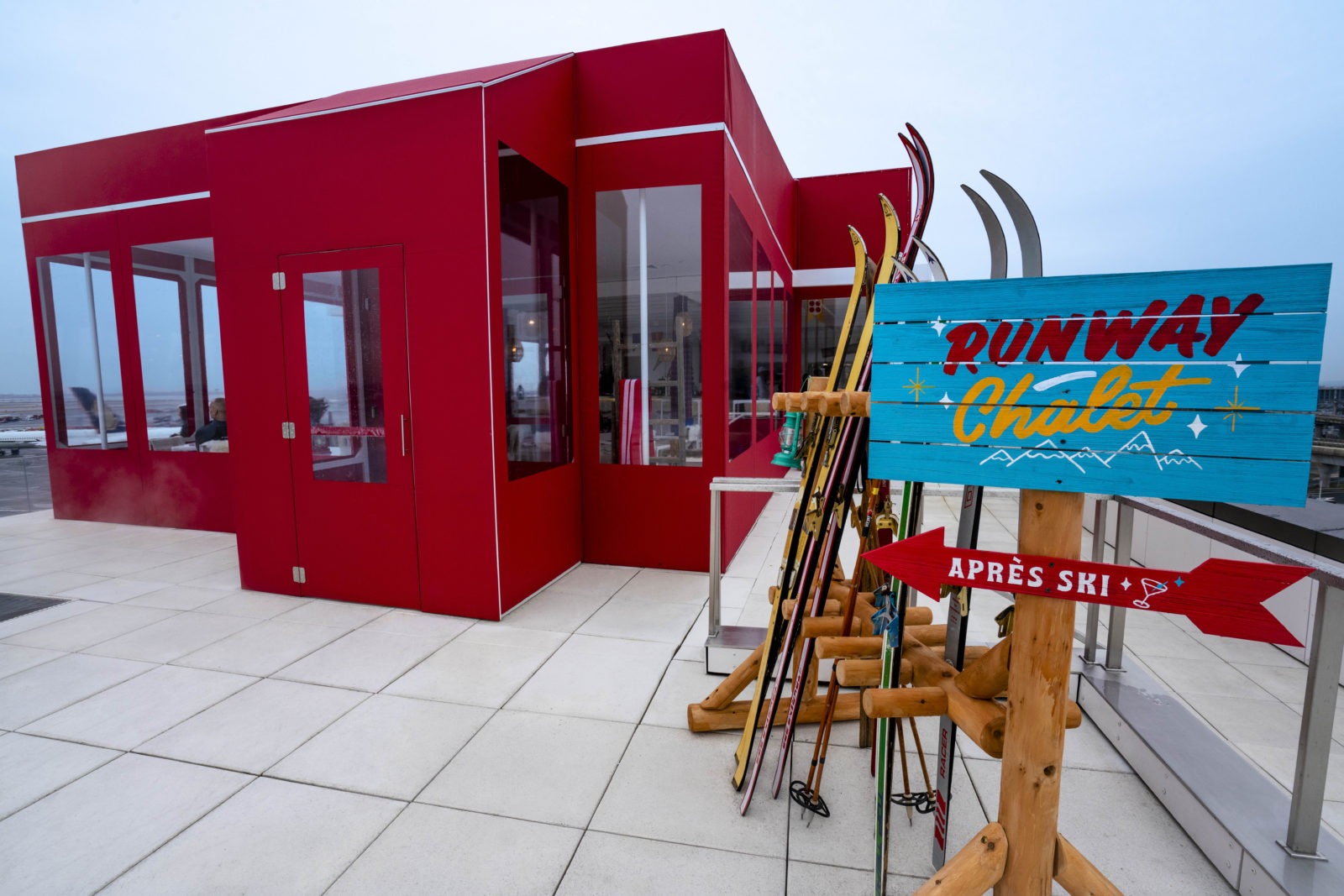
The Runway Chalet, a 1960s style ski lodged-themed bar, has landed at the hotel’s rooftop pool.

The tented and heated ‘chalet’ is decorated with vintage skiing gear and a retro ski lodge style fireplace.

The menu includes chocolate or cheese fondue, burgers and other items while the cocktail list includes concoctions such as the Idlewild Hot Toddy (Sailor Jerry rum and hot cider, with a cinnamon stick) and The Weather Delay (Belvedere vodka, hot chocolate and marshmallows).

Both the chalet and the rooftop infinity pool (heated to 95 degrees and referred to as a ‘pool-cuzzi’) offer views of JFK’s Runway 4 Left/22 right.

No need to be a checked-in guest to visit the Runway Chalet at the TWA Hotel’s Pool Bar, which is open from 11 am to 11 pm daily.

Doesn’t this sound more fun than waiting for an extra hour or two at the gate?

3 airports where you can go ice-skating this winter

What’s better than an airport with an ice-skating rink?

Three airports with ice-skating rinks, of course!

Denver International Airport (DEN) is bringing back its free outdoor skating rink for the fourth season.

Starting November 22, DEN’s ice-skating rink will be in the pre-security area on the DEN Plaza, which is between the airport terminal and the Westin hotel.

Time on the ice is free. And, recognizing that not everyone has their own ice skates, or travels with them, there is free skate rental as well.

DEN’s skating rink hours will be from 9 a.m. to 9 p.m. daily from November 22 through January 20, 2020. As a bonus, on Friday afternoons there will be hot chocolate, hot cider and a variety of extra winter activities, including live entertainment.

Skating at the TWA Hotel at JFK

This year there will an ice-skating rink created at the TWA Hotel across from JetBlue Terminal 5 at John F. Kennedy Airport (JFK) as well.

The custom 56-by-44-foot Runway Rink will be created near the hotel’s 1958 Lockheed Constellation Connie airplane-turned-cocktail lounge and operate seven days a week starting November 30 and running through February 2020.

While skating shows are planned, time on the ice at the TWA Hotel’s Runway Rink won’t be free. Admission will be $15 for adults and $10 for kids under 12. Skate rentals will $10 ($8 for kids under 12).

Hours:

  • Monday through Thursday from 4 PM to 9 PM
  • Friday from 4 PM to 10 PM
  • Saturday and Sunday from 10 AM to 10 PM

The TWA Hotel will also be selling retro knit hats and scarves as well as beers, Sno-Caps candy and other snacks.

Skate in a Winter Wonderland

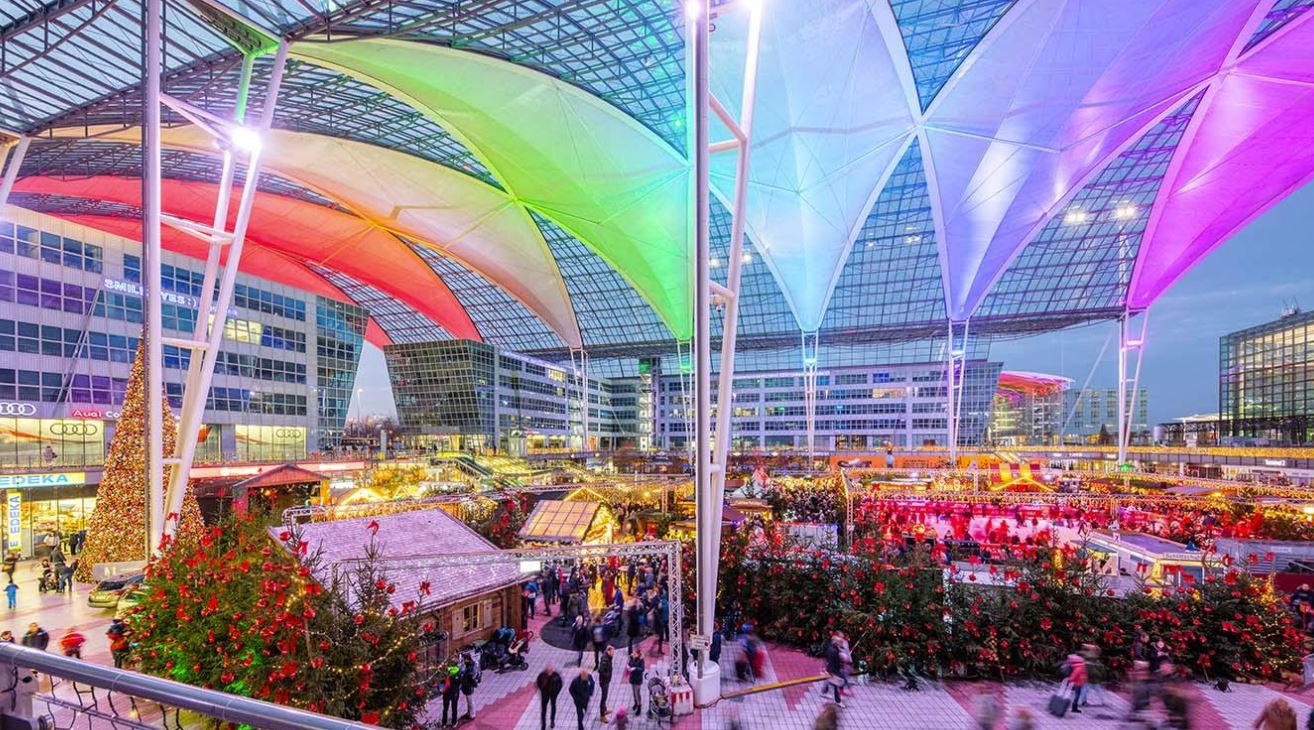
If you’re traveling to or through Germany’s Munich Airport (MUC) this holiday season, you’ll find an ice-skating rink already up and running.

For the 21st year, the large roofed open space between Terminals 1 and 2 and Munich Airport is transformed into a winter wonderland, with a winter market, more than 45 Christmas trees, live music, activities for kids and adults, a pine forest and a free ice-skating rink. Skates can be rented for a small fee and there’s a bonus rink for curling set up next to the skating rink as well.

Hours: 11 am to 9 pm. Daily.

Airports going off the grid

Should airports go off the grid? Pittsburgh Int’l Airport – and others – think so.

Aerial view of Pittsburgh International Airport. Courtesy PIT Airport

Remember that 11-hour power outage at Hartsfield-Jackson Atlanta International Airport in December 2017?

The blackout canceled hundreds of flights, stranded thousands of passengers and cost Delta Airlines alone an estimated $50 million in lost business?

Since then power outages linked to everything from equipment failures, faulty wires and an explosion at an electric power station have disrupted operations at numerous airports.

The list includes Washington’s Reagan National Airport, Los Angeles International Airport, New York’s LaGuardia Airport, John Wayne Airport in Orange County, CA, Philadelphia International Airport and McCarran International Airport in Las Vegas.

And just last Saturday, power at the New Orleans International Airport went out – twice – due to high winds associated with Tropical Storm Olga.

In addition to flight cancelations and delays, a celebratory open house for the new $1 billion terminal opening November 6 had to be postponed by a few hours.

Microgrids to the rescue?

During power outages at airports, generators and other forms of back-up power usually kick-in to power essential emergency lighting. But boarding, deplaning, airfield activity and the business of the airport often come to a standstill.

That’s just one reason Pittsburgh International Airport (PIT) recently declared its intention to become the first major U.S. airport to create a self-sufficient energy system – or microgrid – using only energy sources (solar and natural gas) from its own property.

“After watching what happened in Atlanta and Los Angeles, I think every airport CEO across the country, and probably around the world, wondered if they were ready and prepared,” said PIT Airport CEO Christina Cassotis.

“Here the answer is yes, but we’d like to make sure we can continue to operate in any circumstance,” she said,

To that end, Pittsburgh International Airport plans to have its microgrid in place by 2021 to power the entire airport, including the airfield, the on-site Hyatt hotel, and a Sunoco station.

Power for PIT’s microgrid will be generated through the airport’s onsite natural gas wells and almost 8000 solar panels covering eight acres of the airport land. A connection to the traditional electrical grid will remain, but only as an option for emergency or backup power when needed.

“It has everything to do with resiliency and redundancy,” said Cassotis, “We wanted to make sure we could do everything with the assets we have to enhance the safety of the traveling public and ensure continued operations. As a bonus, we get to lower the cost of energy.”

Many military facilities, college campuses, hospital complexes, industrial parks, and other large institutions already have some sort of microgrid in place to ensure uninterrupted power.

In general, these systems are connected to existing grids but can disconnect and operate on their own with power from batteries, diesel-powered generators or, ideally, solar or another source of renewable power, said Craig Schiller, a Manager specializing in aviation at the global energy non-profit Rocky Mountain Institute (RMI).

Detroit Metro Airport (DTW) already has a microgrid in place. Airports in Los Angeles, Denver, San Diego, Boston, Orange County, CA and elsewhere are now exploring and creating microgrids as well.

To help move the process along, early next year RMI will publish an airport microgrid toolkit funded by a $450,000 grant from the National Academies of Sciences, Engineering and Medicine’s Transportation Research Board.

Microgrids can give airports greater control over the energy they need and use and, in many cases, save airports money on energy costs, said RMI’s Schiller, “But the bottom line is maximizing an airport’s ability to meet its function.”

TWA Hotel is a microgrid island


Most microgrids are designed to connect to existing power grids.

But the 512-room TWA Hotel and conference center opened in May 2019 in the landmark Eero Saarinen-designed TWA Flight Center at JFK Airport’s Terminal 5 is an “islanded microgrid” operating independently of New York City’s electric grid.

The hotel has its own 9,000-square-foot microgrid/cogeneration power plant on the roof, fueled by natural gas.

The plant generates all the electricity for the hotel campus and harvests waste heat from engines for hot water and other uses. A battery storage system helps with peak loads and backup.

“Think of it as a Tesla on the hotel’s roof,” said Tyler Morse, chief executive of MCR/Morse Development.


“The entire city and the airport could be down, but the hotel would still be operating, with people having cocktails at the bar,” said Mike Byrnes, Senior Vice President for Veolia North America, which has operators on duty 24/7 to operate and maintain the hotel’s microgrid.

Beyond ensuring that cocktails can continue to be served during a blackout, the TWA Hotel’s power plant will also contribute to the business’s bottom line.

Hotel developer Morse said the Con Edison electric bills would have cost $5 million per year. “The $15 million we spent to build the plant will be paid back in three years,” said Morse, “And we’ll be saving $4 million annually.”

Which should be enough to buy everyone a round of drinks, or three, in the lobby bars in the next New York City blackout.

(My story about Airport Microgrids first appeared on CNBC in a slightly different version.)