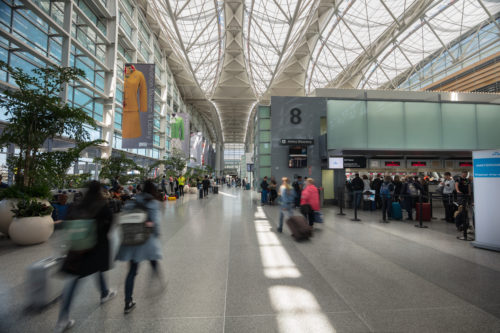
Because the schedule for international flights from SFO will be reduced by 52% by April 1, the airport will temporarily close one part of the International Terminal.
On April 1, and through at least through the end of May, SFO will close Boarding Area A (Gates A1 to A15) in the International Terminal and consolidate all international flight departures to Boarding Area G, which houses Gates G1-G14.
The SFO Medical Clinic (in the Int’l Terminal Main Hall, by the A Gates); the Grand Hyatt at SFO and the Int’l Parking Garage A will still be open, but this will allow SFO to close a security checkpoint and consolidate Custom & Border Protection staff.
Consolidation is going on at other airports as well. So if you are traveling, be sure to check the airport and airline websites.
TSA’s COVID-19 Count Keeps Increasing
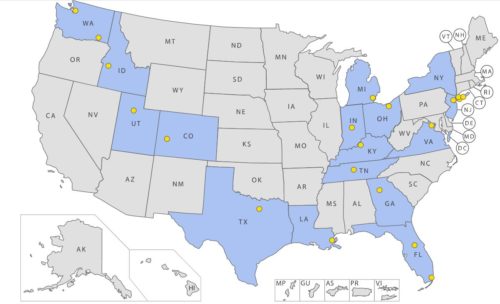
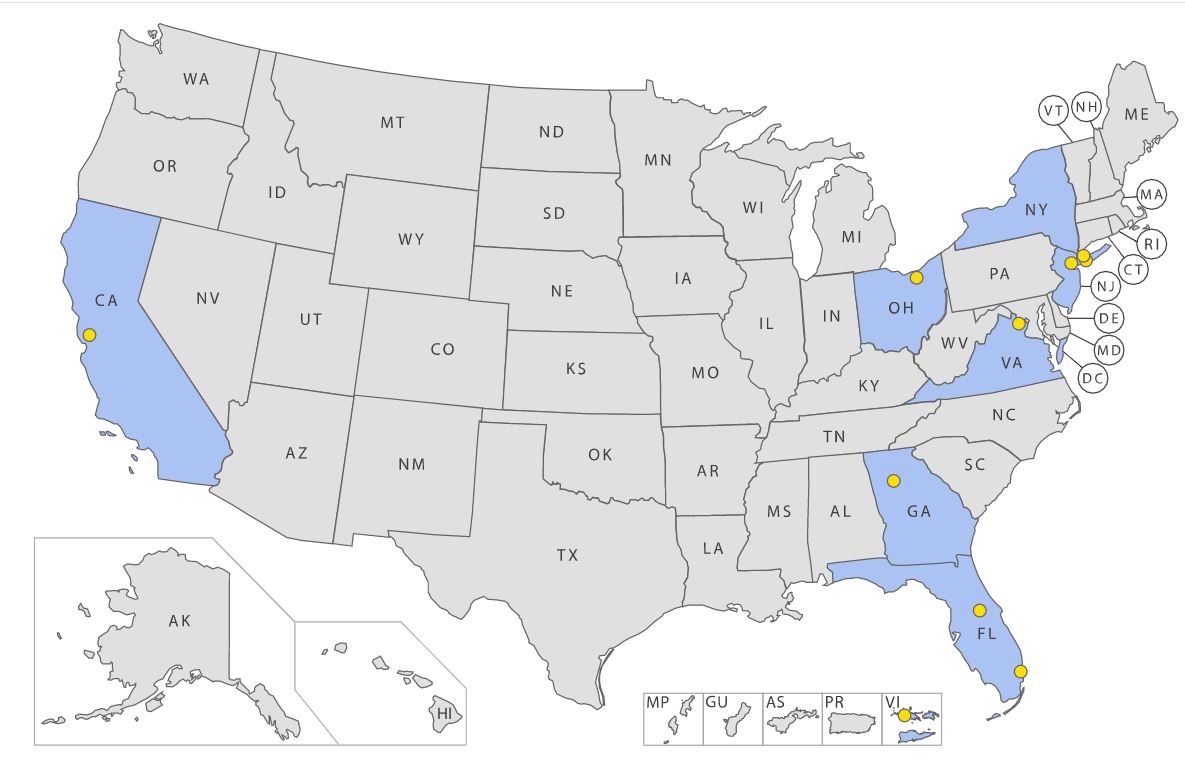
Over the weekend, TSA updated its map and its list showing
which states and which airports have TSA screening officers who have tested positive
for COVID-19.
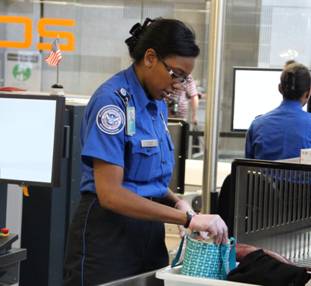
On Saturday, March 28, TSA reported that over the past two weeks 55 TSA screening officers have tested positive for COVID-19.
TSA says 19 others who had “relatively limited interaction with the traveling public” tested positive as well.
We hope those officers recover quickly, of course. But if you’ve traveled through an airport in one of the blue states on the map during the past few weeks, be sure to check this list to see which airports are affected.
The list includes the last date the officers worked, the checkpoints they were stationed at and their shift hours.
If you think you may have passed through the checkpoints where these officers were stationed, please be sure to check with your doctor about what steps to take next.
So Transportation Security Administration officers are among the workers who must still show up for work.
Unfortunately, it turns out TSA workers aren’t immune to COVID-19 and there are have been some TSA officers who have tested positive for the virus. So it’s possible some passengers may have been exposed to the virus by these officers at some airports.
As of March 23, TSA said 25 screening officers had tested positive for COVID-19. An additional five non-screening employees who TSA says “have relatively limited interaction with the traveling public,” have tested positive for the virus as well.
Here’s the list of where TSA officers tested positive for the virus:
Newark-Liberty International Airport (EWR)
John F. Kennedy International Airport (JFK)
Hartsfield-Jackson Atlanta International Airport (ATL)
Orlando International Airport (MCO)
LaGuardia Airport (LGA)
Cleveland Hopkins International Airport (CVG)
Cyril E. King International Airport (STT; St. Thomas, VI)
Washington Dulles International Airport (IAD)
Norman Mineta San Jose International Airport (SJC)
Fort Lauderdale – Hollywood Int’l Airport (FLL)
Louis Armstrong New Orleans International Airport (MSY)
TSA says it continues to work with the CDC and state and local health departments to monitor local situations.
In the meantime, passengers will find that at some airports TSA has closed some checkpoints and is staffing others with reduced hours.
Pretty much every airline is spooling out schedule cuts in response to reduced passenger demand, concerns about coronavirus and government-imposed restriction.
American Airlines, Delta Air Lines, Etihad, Norwegian and Singapore Airlines are just a few carriers that have made serious schedule adjustments in the past few days.
Fewer planes will be in the skies, but airports remain open.
And the Transportation Security Administration, which recently confirmed that three of its
officers at Mineta San Jose International Airport (SJC) tested positive for the
COVID-19 virus, is finally getting into gear with security checkpoint-specific advice
for travelers.
VIDEO: Wondering what you can take in your carry-on bag to stay healthy? ✅ hand sanitizer ✅ disinfecting wipes ✅ face masks ✅ and remember, you can ask our officers to change gloves More info at https://t.co/tDqzZdAFR1pic.twitter.com/QVdg3TEfyo
TSA is reminding travelers that it is OK to bring individually
packaged alcohol or anti-bacterial wipes in carry-on or checked luggage. Jumbo
containers of hand wipes are also allowed in carry-on or checked luggage, says
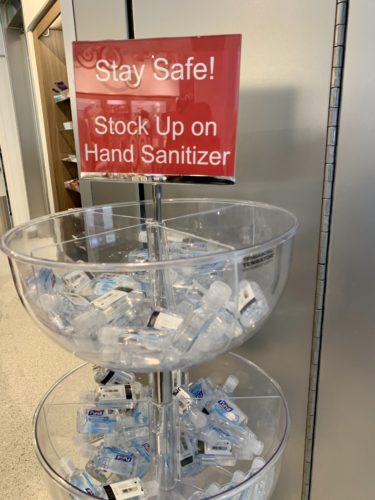
TSA, as are liquid hand sanitizers.
For safety reasons, savvy travelers already know to put personal
stuff such as wallets, keys, phones, loose change, etc., inside their carry-ons
and not loose in the bins going through the x-ray machines.
But those bins don’t get cleaned very often – if at all – and are
full of germs.
So, TSA is reminding travelers to keep their personal items from
touching the bins and to wash their hands as soon as possible after going
through the screening process.
Airports are continuing their efforts to stay extra clean as
well.
At all hours of the day, our cleaning crews work to deep clean the airport, focusing on “high touch” areas (handrails, escalators, elevator buttons and restroom doors) so that travelers can use our facilities with comfort.
The health and safety of our travelers, employees, and all airport users are SAN's top priorities. SAN is working closely with public health authorities to help manage and mitigate the spread of Novel Coronavirus (COVID-19). For more information: https://t.co/5p7VmkjG1hpic.twitter.com/y8CqAjpeQ0
All the head-spinning news about the Coronavirus (COVID-19),
may have you wondering what to do if, like us, you have plane tickets and
travel plans booked for the next few days, weeks or months.
If your airline cancels your flight or your organization
cancels its event, your decision about whether to go or stay home may be
decided for you. Then, getting refunds, credit for future travel or an
itinerary for a different destination may be what keeps you busy.
If you’re in the wait-and-see mode and decide to pack your
bags and go, here’s what some airports and the TSA are doing to help you – and their
employees – stay safe.
Airport
security checkpoints
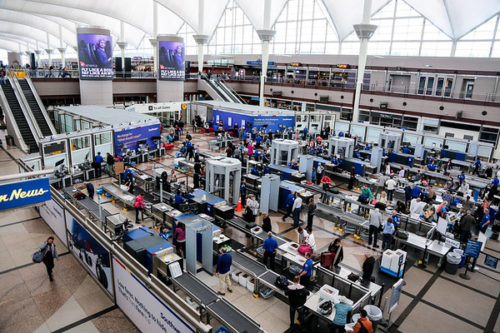
During normal travel times, airport security checkpoints are germy places and now is certainly not the time to walk barefoot through the metal detectors or put your shoes in the bin on top of your coat.
To avoid germs – and leaving stuff behind – we always recommend putting whatever you can, including your coat, the contents of your pockets, a purse, your lunch and anything you’re carrying, into your carry-on instead of into the bins. And put your shoes on the belt, not into a bin.
There are always bottles
of hand sanitizers at the checkpoints. Now there are more. Your tax dollars pay
for those, so don’t be shy about really cleaning up in the recombobulation area
post-security.
A TSA spokesperson says the
nitrile gloves officers usually wear when patting you down or looking through
your stuff adds a layer of protection against germs and that, for now, TSA has
authorized personnel who come into close contact with travelers to wear
surgical masks – if they want.
Fighting germs in airports
In general, airports across the country say they are increasing
the frequency and intensity of cleaning efforts in washrooms and other areas.
Airports are also encouraging passengers to follow the
U.S. Centers for Disease Control’s advice on washing hands, covering coughs and
otherwise trying to prevent the spread of germs by staying home if not well.
And airport officials say they’re monitoring the impacts
of the coronavirus and working closely with local
and federal partners and airlines to reduce
the risk to passengers.
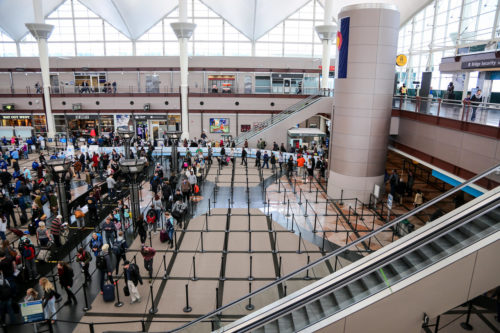
Denver International
Airport (DEN) is adding sanitary wipe stations in jet bridges so passengers can
sanitize their seats on planes and putting extra bottles of hand sanitizers at
the security checkpoints and information booths.
DEN notes that it is one of the airports that use checkpoint screening trays with antimicrobial treatments.
As you may imagine, Seattle-Tacoma International Airport
(SEA) and its passengers are on high alert.
SEA is keeping its Traveler
Update page very up-to-date with advice for travelers and the latest COVID-19
news.
Airport spokesman Perry Cooper said the airport is doing additional
cleaning and has been increasing those efforts as the situation has progressed.
“We have reviewed and updated the type and strength of
cleaners to be even more efficient,” said Cooper, “And have also added over 50
new hand sanitizer stations in the international areas as well as increasing
them in the general areas of the airport.”
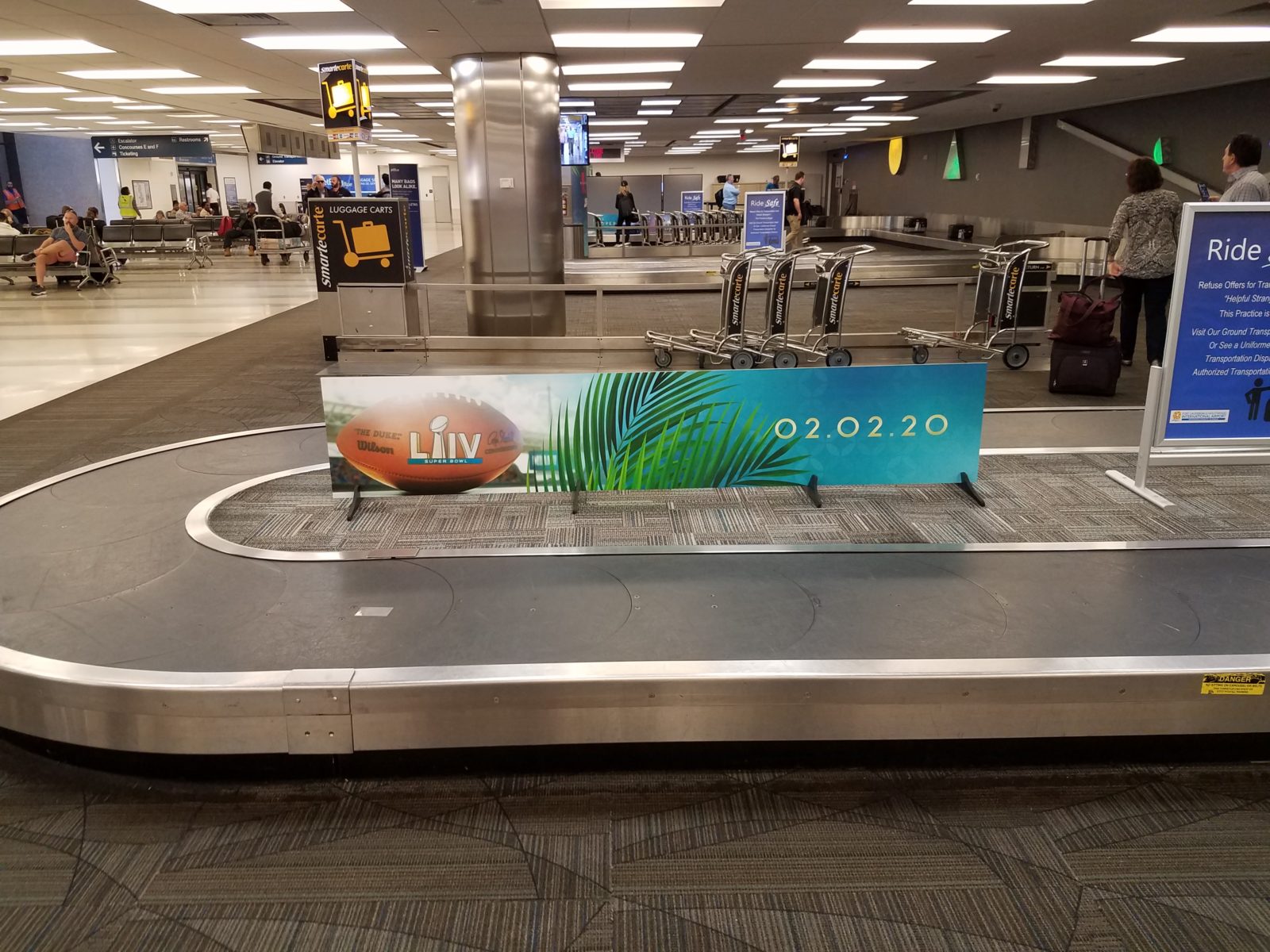
Long before the final matchup was set for Super Bowl LIV on February 2 at Hard Rock Stadium in Miami, South Florida airports and security officials were making game plans.
The task: deal with record-setting numbers of arriving and departing fans.
“There won’t be a place on the airport where you won’t see
some reference to the Super Bowl,” said airport spokesman Greg Meyer.
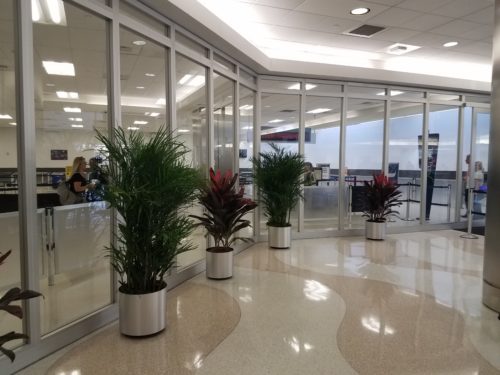
To prepare for and impress sports fans, many of whom may be visiting the airport and the area for the first time, FLL has put 160 live plants throughout the terminals and artificial greenery in the restrooms.
Teams are polishing terrazzo floors, shampooing the carpeting, pressure cleaning the sidewalks, scouring the restrooms and detailing the shuttles that run between the terminals and the rental car center.
“We do much of this cleaning normally,” said Meyer, “but
doing it just prior to the game will make sure we look our best.”
Before and after the big game, FLL will have extra staff on duty and more than 60 volunteers on-site to help guests navigate through the airport.
Airport concessionaires are doing their part too. Store hours are extended hours and there’s plenty of official team and game gear for sale.
Magically, memorabilia to celebrate the winning team will be for sale immediately after the game.
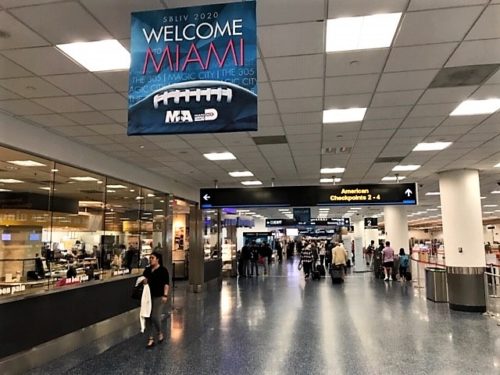
MIA is about 18 miles from Hard Rock Stadium and expects above-average passenger traffic on the three days prior to and the day after Super Bowl Sunday. On Monday, Feb 3, about 90,000 passengers are projected to depart MIA, which would be a single-day record for departures at the airport.
In addition to a pre-game facility spruce-up, MIA is adding some bonus features as well.
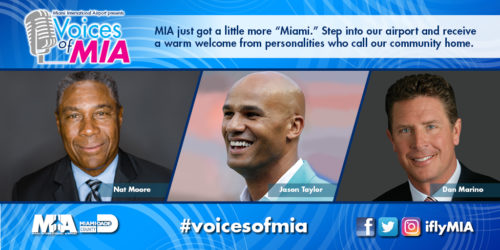
Through Super Bowl Sunday, MIA’s public address system will
be playing rotating welcoming messages from three former All-Pros: Miami
Dolphins legends Dan Marino, Nat Moore and Jason Taylor.
And through the end of February, travelers can view Duane Hanson’s iconic, hyperrealist sculpture, “Football Player” on the D Concourse, between Gates D47 and D48.
Also through the end of February, the Wolfson Moving Images exhibition on Concourse F is featuring archive video from past Miami Super Bowls and Miami Dolphins history on a set of old-style flight monitors.
Both FLL AND MIA also have detailed airport navigation information, arrival, and departure tips on their websites. Each airport also has important alerts about human trafficking, on the “Countdown to Takeoff Playbook” posted on their respective websites.
And passengers arriving before the Super Bowl on Thursday and Friday (1/30 and 1/31) at Palm Beach International Airport (PBI), 58 miles from Hard Rock Stadium, will be greeted with special welcoming messages as well as giveaways and promotional items in the Bag Claim level.
Concessionaires at PBI are laying in the
sports-themed memorabilia as well.
TSA gearing up for the game
During the Super Bowl week, TSA, local and county police
departments, Customs and Border Protection, and other agencies will be adding
extra teams and showing a hi-visibility presence at all area airports
And to help with the crush of fans leaving on February 3, some security checkpoints will open early at both FLL and MIA and additional checkpoints will stay open 24 hours.
While not all security precautions being taken can be
shared, according to TSA spokeswoman Sari Koshetz, FLL will have 6 extra canine
teams, additional support from Federal Air Marshals (FAMs) and the Broward
Country Sheriff’s office, and 40 extra Transportation Security Officers on duty
to help at checkpoints and baggage areas.
Koshetz says 10 additional TSA canine teams will also join the eleven TSA canine teams already at MIA. There will be 60 additional TSA Officers to augment the TSA Miami Officer staff and help keep additional checkpoint lanes open on throughout the day.
Follow the countdown plan
The Transportation Security Administration (TSA), the National Football League, hospitality organizations and the airports are encouraging passengers heading home after the game on February 3 to follow the “5-4-3-2-1” plan.
The campaign encourages travelers to check out of hotels 5 hours before departure flight time; to return rental cars 4 hours before their flights, and to check-in at the airline ticket counters 3 hours before their flights. TSA hopes travelers will go through security at least 2 hours before their flights and be at their gates an hour before flight time.
For security reasons, TSA is
also asking Super Bowl travelers heading home after the big game to pack their
commemorative programs in carry-ons, not in checked bags.
In previous years, the
composition and thickness of these programs prevented TSA’s machines and human
scanners from seeing beneath the booklets in checked bags, requiring those bags
to alarm and be opened.
(My story about airports and TSA getting ready for Super Bowl fans first appeared on USA TODAY in a slightly different format.)
In its annual Year in Review, the Transportation Security Administration (TSA) today shared the tally of the number of firearms its officers found at airport checkpoints around the country all last year.
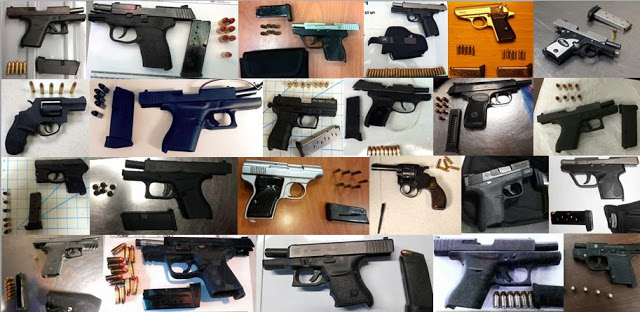
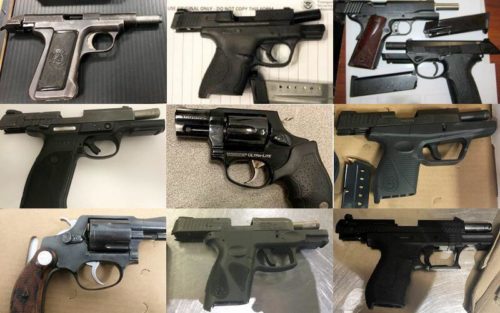
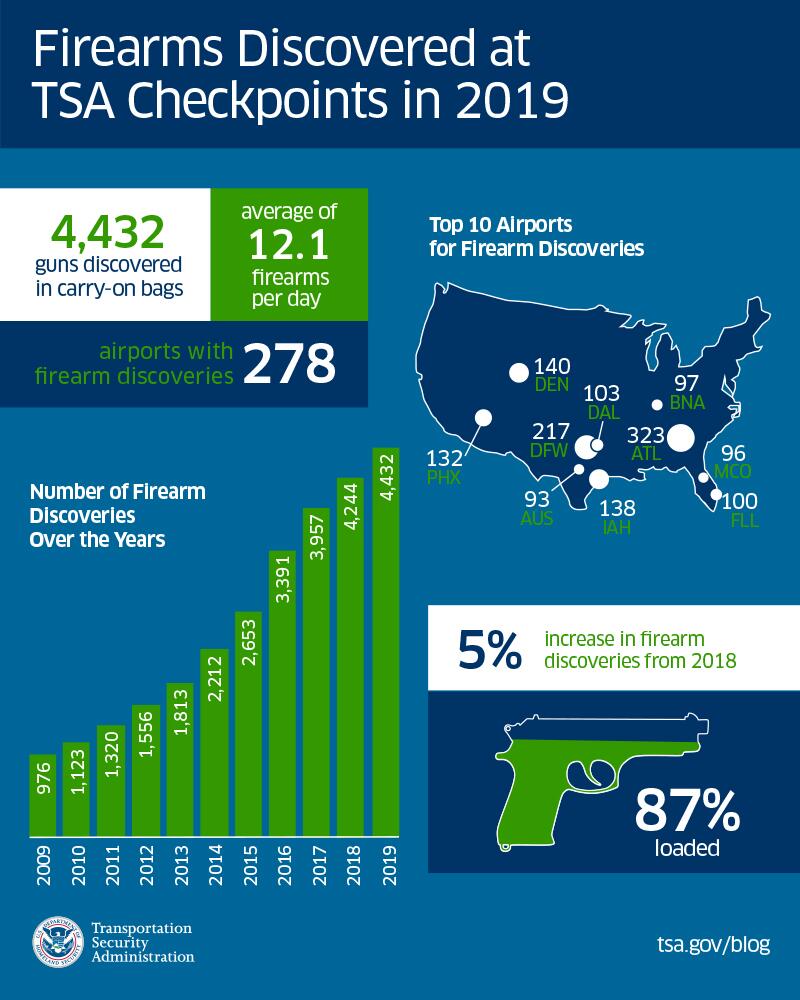
The total: an alarming and record-setting 4,432 firearms were found at airport security checkpoints in 2019.
That’s an average of 85.2 firearms per
week, or 12.1 firearms per day.
It’s also a 5% increase the 4,239 firearms discovered at
airport checkpoints in 2018.
Here are some more stats from TSA’s 2019 firearm finds:
*Of the 4,432 firearms found, 3,863 were found loaded. And1,507 of those firearms had a round loaded.
*TSA found guns at 278 of the country’s 440 federalized airports, but firearms showed up more often at some airport than others.
Here are the Top Ten Airports where the most firearms were found:
Hartsfield-Jackson Atlanta International Airport (ATL): 323. That’s 25 more firearms than were found at ATL in 2018
Dallas/Fort Worth International Airport (DFW): 217
Denver International Airport (DEN): 140
George Bush Intercontinental Airport (IAH): 138
Phoenix Sky Harbor International Airport (PHX): 132
Dallas Love Field Airport (DAL): 103
Fort Lauderdale-Hollywood International Airport (FLL): 100
Nashville International Airport (BNA): 97
Orlando International Airport (MCO): 96
Tampa International Airport (TPA): 87
For the record, firearms aren’t allowed past airport security
checkpoints. But TSA says many firearms owners say “Oops, I forgot that was in
my bag,” when their weapons are found at the airport.
Being caught with a gun at the airport can get you arrested,
fined more than $13,000 per violation and cause you to lose your TSA Precheck
status, should you have that.
Resolved to fly more in 2020? How to keep your stuff.
In 2019, airline passengers tried to take hundreds of thousands of prohibited and banned items through airport security checkpoints in the United States.
It doesn't matter how "lovely" this pink and gold handled knife is with pink hearts, the word "Love" emblazoned on the handle and 3 small pink hearts cut into the blade. It's still just another knife, prohibited from being carried onto a plane. Caught by #TSA at @tfgreenairport. pic.twitter.com/SExqafS3qr
— Lisa Farbstein, TSA Spokesperson (@TSA_Northeast) December 31, 2019
Transportation Security Administration officers found hatchets, inert grenades, fireworks, firearms (most of them loaded) and so many knives that the TSA doesn’t even keep a count.
Instead, the agency boxes them up, weighs them and hands pallets of knives and other “voluntarily abandoned” property over to state agencies to be sold as surplus property.
A man brought this revolver to the @TSA checkpoint at @tfgreenairport on Sunday and was arrested by the police. He told officials that he had no idea how it came to be in his possession. pic.twitter.com/ykP3hee3US
— Lisa Farbstein, TSA Spokesperson (@TSA_Northeast) December 30, 2019
TSA officials say passengers who don’t want to leave a banned item behind at the checkpoint have a few options:
If
the item is approved for checked baggage, a passenger can put the item in a
carry-on bag and go check it in or ask the airline to retrieve an already
checked back and put the item in there.
Another option: Airport Mailers and some other companies have kiosks set up near security checkpoints at many airports where travelers may package up items and pay to mail them home.
— Lisa Farbstein, TSA Spokesperson (@TSA_Northeast) December 27, 2019
But
it’s not just items on TSA’s “no fly’ list that get left
behind at airports.
Each
month, TSA also collects and catalogs 90,000 to 100,000 other items that are
perfectly legal to travel with, but which are inadvertently left behind at
airport checkpoints by harried and distracted travelers.
Those
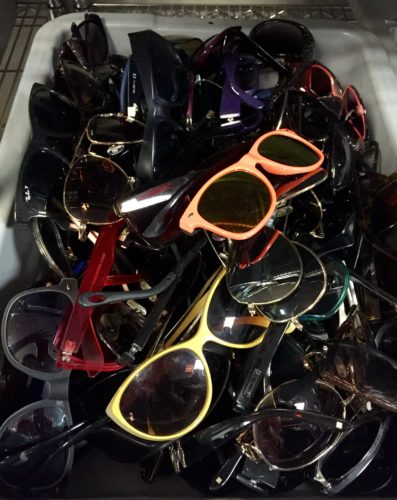
items range from scarves and sunglasses to laptops, smartphones and some odd
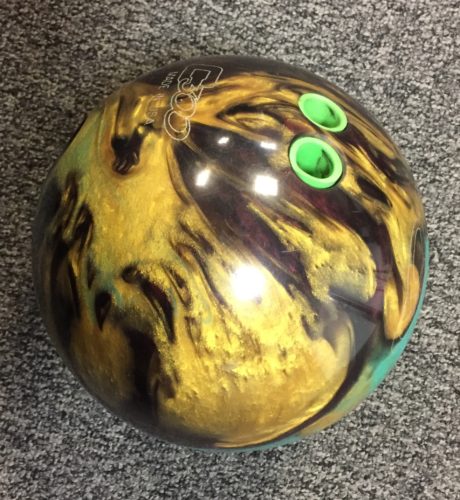
“How did they forget THAT?” items such as bowling balls, violins, gold teeth
and urns and boxes filled with human cremains.
On a post-holiday tour of TSA’s Lost & Found room at Reagan National Airport, we spotted plenty of those items, as well as multiple bags filled with left behind IDs.
We also saw shelves lined with ballcaps, CPAP breathing machines, winter coats, car key fobs that will cost $200 or more to replace, car seats, canes and fully packed carry-on bags.
It’s
easy to see how hats and scarves get left behind in the bins, but what about
laptops, entire carry-on bags and other essential items?
Besides
the “people are in a rush,” factor, TSA spokeswoman Lisa Farbstein has some
theories:
“When
it comes to laptops, many brands are grey and the same color as the checkpoint
bins, so it can be easy to overlook your laptop,” says Feinstein. “Also, if a
bin has an advertisement in the bottom, travelers’ eyes may be drawn to the ad
and cause them to miss the driver’s license and keys still in the bin.”
The number of bins people use may also contribute to the pile-up in the Lost & Found. If you’ve scattered your stuff across multiple bins (coats here, electronics there, a flat laptop and an ID in another bin), you may overlook items in the last bin as you rush to take your stuff out and stack up the used bins.
The pile of canes?
“It’s not that we have so many miraculous recoveries at TSA checkpoints,” says Farbstein, “I think attendants and family members helping wheelchair users who also have canes often forget to pick up the canes once they’re through the checkpoint.”
Keeping
your stuff out of Lost & Found
TSA keeps items left behind at security checkpoints for a minimum of 30 days and posts phone numbers on its website where travelers can contact the Lost & Found department at each airport.
(Keep
in mind that airports and airlines will have their own lost and found
procedures for things left in the terminals and on airplanes.)
To improve your chances of getting your stuff back – or not
losing it in the first place – Farbstein offers these tips:
Tape a business card or some other form of ID to
your laptop or smartphone. “So many models are alike, so this can make all the
difference in getting yours back,” said Farbstein.
Before you get to the checkpoint, or while
you’re standing online, take time to consolidate all your miscellaneous items
(i.e. scarves, hats, gloves) and take everything out of your pockets (keys,
phones, wallets, etc.). Instead of putting small items in a bin, put them in
your carry-on in an extra plastic bag you’ve packed just for that purpose. If
you don’t put loose items in the bin to begin with, you eliminate the chance of
leaving anything in the bin on the other side.
Pay attention to everything you put in the bins,
including things that may have a high emotional value. “A laptop may cost thousands of dollars, but I can assure
you that an old beat-up stuffed animal that a child has left behind is valuable
to the parent who is now dealing with a crying child,” says Farbstein.
Help is on the way
Looking forward, as part of a $96.8 million contract
awarded last year to Smiths Detection, in 2020 most large and major airports in
the United States will be getting computed technology 3D X-ray scanners at the
checkpoints. This new machinery will allow travelers to keep their electronics
in their carry-on bags and reduce the chance of so many laptops and other
gadgets getting left behind.
(My story: “How to avoid leaving stuff behind at the TSA checkpoint” first appeared on CNBC in a slightly different version)
Today’s tidbits come from some of the social media notices shared by the folks at Transportation Security Administration (TSA).
First: On its @askTSA site, TSA is answering questions from Star Wars fans heading to a Disney park to visit the Galaxy’s Edge attraction.
People are curious about how TSA will deal wtih some of the out-of-this-world souvenirs, like “thermal detonator” coke bottle souvenirs.
TSA says don’t try putting these ‘thermal detonator’ soda bottle souvenirs in carry-on luggage. Athough they’re filled with soda, they look like something else.
And that’s why they say those items should be put in checked bags.
Thanks for asking! Replica and inert explosives aren't allowed in either carry-on or checked bags.
Our column this week for CNBC tackled the TSA experience and offered tips on what you may – and may not – pack in your carry-on. Here’s the story.
Last week, the Transportation Security Administration shared a photo on social media of a missile launcher found in a passenger’s checked bag.
“Man said he was bringing it back from Kuwait as a
souvenir,” said TSA spokeswoman Lisa Farbstein on Twitter, “Perhaps he should
have picked up a keychain instead!”
.@TSA officers at @BWI_Airport detected this missile launcher in a checked bag early this morning. Man said he was bringing it back from Kuwait as a souvenir. Perhaps he should have picked up a keychain instead! pic.twitter.com/AQ4VBPtViG
— Lisa Farbstein, TSA Spokesperson (@TSA_Northeast) July 29, 2019
As a division of the Department of Homeland Security, TSA is
responsible for overseeing security at the nation’s airports. But weighing in on
the pros and cons of travel souvenirs and answering questions about what items
are permitted on airplanes has become part of the job.
“We get a lot of questions about what people can take
through the checkpoints,” said Janis Burl, the @AskTSA manager. “A lot are
about food – i.e. ‘Can I take a sandwich?’ [Answer: yes] And over the past few
months we’ve gotten a lot of questions about that’s kid toy slime.” [Also yes, but
only if the slime is 3.4 ounces or less and is carried with a travelers’ liquids
and lotions in the allowed one-quart zip bag.]
On its website – under the header “What Can I Bring?”, and on its app, TSA has an extensive catalog of things travelers may or may not pack in their carry-on or checked bags. Items are listed alphabetically and by category and the list can be searched.
Under “Toys” there are seven examples and TSA notes that
while fidget spinners and remote controlled cars are allowed in carry-on
luggage, realistic replicas of firearms and explosives are not. The TSA
directory also has a helpful note about adult toys (ahem), which are allowed in
both carry-on and check bags.
What about toy lightsabers, including those purchased or custom built (to the tune of $200) at Disney’s new Star Wars: Galaxy’s Edge attraction?
TSA’s “What Can I Bring?” database says “Sadly the
technology doesn’t currently exist to create a real lightsaber. However, you
can pack a toy lightsaber in your carry-on or checked bag,” and adds, “May the
force be with you.”
With summer travel in full-swing, it’s good to know ahead of
time that tent spikes or poles, strike anywhere matches, spear guns, pool cues,
Magic 8 Balls, firecrackers, bear spray, baseball bats and bowling pins are not
allowed as carry-on items, but that bowling balls are allowed.
Also allowed as carry-on: compasses, amethyst crystals,
fresh fruit, fishing rods, live lobsters (in a
clear, plastic, spill proof container), seashells, fruit gummies, cooked
lasagna, jelly beans, electronic bathroom scales and frozen water bottles, as
long as the water is completely frozen when presented for screening.
And while the Federal Aviation Administration is emphatic
that drones
not be flown near airports, TSA allows drones in carry-on bags. However,
the agency encourages travelers to check with their airline about specific
rules for taking drones on board.
For items not found in TSA’s database, and for travelers who
want to make sure a specific item will fly, there is a team of ten full-time
TSA employees who monitor and respond to questions sent in via Twitter (@AskTSA) and Facebook Messenger.
Team members are on duty 8 a.m. to 10 p.m. (ET) weekdays, 9
a.m. to 7 p.m. weekends and holidays, (including Christmas) and are quick to respond
to all manner of “Can I bring?” questions sent in.
One passenger recently asked about traveling with jars of
pickles. They were advised that pickles without liquid in a zip bag were good
to go as carry-on, but that pickles with pickle juice were only allowed in a carry-on
bag if packed in a container of 3.4 oz. or less.
Another passenger wrote to @AskTSA inquiring about traveling
with a whole cantaloupe she’d grown in her garden.
“I want to take it to my mom,” the traveler tweeted to TSA. “You can,” TSA responded, adding “We hope your mom enjoys the treat!”
Other recent questions have covered verything from quesadillas to roach bait. And Burl says, when in doubt, sending along a photo is always helpful.
Thanks for reaching out! Your friend will be happy to hear that chicken quesadillas are allowed through the security checkpoint.
It may seem as if the “AskTSA” team has likely seen it all
by now, but Burl says they sometimes gets stumped.
“If you send in a photo and we don’t know what it is, we’ll
go to Google to figure it out.”
And while the @AskTSA team uses its knowledge, TSA’s
database and, sometimes, a bit of Googling, to give travelers a thumbs up or
down on traveling with certain items in carry-on or checked bags, Burl says the
final say-so on any whether an items is a ‘go’ rests with the Transportation
Security Officer (TSO) on duty at the checkpoint.
“If they’re looking at something that doesn’t look right,
they can make that decision,” said Burl.
In addition to its website, Twitter and Facebook accounts,
TSA also has a very popular and informative Instagram account that can help
travelers learn about what can fly.
A recent post, in honor of National Kitten Day, for example,
noted that kittens, catnip and balls of yarn are good to go through security
checkpoints, but warned that cats (and other pets) must be removed from their
carrier while the carrier goes on the X-ray belt for screening.⠀⠀⠀⠀⠀⠀⠀⠀⠀⠀⠀⠀⠀⠀⠀⠀
https://www.instagram.com/p/BzvT82fHPGY/
TSA also produces occasional quirky-but-entertaining and
educational “They
brought what? videos.
In
2018, travelers left TSA almost $1 million in inadvertent “tips”
Passengers in a rush to get through the airport security checkpoint often leave behind belts, mobile phones, laptops and other valuable items.
They also leave lots of coin and cash.
According to a report due out today from the Transportation Security Administration, during FY 2018 travelers left for than $960,000 – ($960, 105.49 to be exact) – in the plastic bins at airport checkpoints around the country.
That’s $90,265.93 more than the $869,839.56 travelers left behind as inadvertent ‘tips’ for TSA in FY 2017.
It is $92, 293.10 more than the $867, 812.39 passengers forgot to pick up in FY 2016.
And it’s a whopping, $194,346.34 more than passengers left behind in FY 2015.
By law, TSA is allowed to use these funds for projects it considers important for civil aviation security.
In past years some of the left-behind funds have been used to promote and improve the TSA Pre-Check program, for checkpoint maintenance, and for translation of checkpoint signage into different foreign languages.
Much of unclaimed money from the past few years remains in TSA’s coffers. In fact, as of March 15, 2019, when TSA actually completed its report, NO funds from 2017 had been expended.
And that funds are now included in the list of funds the Department of Homeland Security has its eyes on to help fund border operations, NBC recently reported. (Although the law specificially says the funds are to be used for civil aviation protection.)
Who are the
biggest tippers?
As you might suspect, some of the county’s
largest airports collect the most unclaimed coins and cash at the security
checkpoints.
TSA’s Unclaimed Money at Airports report for FY
2018 shows that passengers at New York’s John F. Kennedy Airport (JFK) left
behind the most money: $72, 392.74.
Next on the list: Los Angeles International
Airport (LAX), where $71,748.83 was unclaimed in the bins.
Miami, Chicago O’Hare and Newark Liberty
International are in the Top 5 of airports where passengers leave behind the
most coins and cash.
Here’s the Top Ten list:
1. JFK
72,392.74
2. LAX
71,748.83
3. MIA
50,504.49
4. ORD
49,597.23
5. EWR
41,026.07
6. DFW
36,707.99
7. SFO
33,264.80
8. LAS
33,038.23
9. MCO
32,687.10
10.
IAD 31,090.38
Why would travelers leave so much
money behind at checkpoints? And why does the tally just keep going up?
According to TSA spokesperson Jenny Burke, one reason may be that more people are traveling. Many airports are serving a record number of passengers and TSA is, therefore, screening a record number of passengers.
That makes the pool of possible
inadvertent “tippers” much bigger.
Another reason: In this age of credit and debit card transactions, travelers find it more valuable to spend their time getting to their gate than stopping to scoop up a few pennies or dimes.
(A slightly different version of my story about TSA’s report on unclaimed money from FY 2018 first appeared on USA TODAY. )