Hotels

Extended Stay hotels playing the long game

[This is a story we wrote for, and which first appeared on NBC News in a slightly different form]


Courtesy Home2 Suites by Hilton

Extended Hotels are having a moment

As travel picks up and the phenomenon of remote work continues to blur the lines between business and leisure, extended-stay hotels are having a moment.

Last year, the average occupancy rate for extended-stay properties climbed to 73% percent, compared to just 56 percent for hotels in general, according to data from STR, a research firm. Now, big hotel operators and real estate developers are investing heavily to make that moment last.

 “There is a definite blurring of business and leisure that includes longer stays since employees can work from anywhere,” says Daniel Finkel, chief commercial officer for TripActions, a corporate travel service.

 That blur has turned Airbnb and some other vacation rental companies into money-minting machines. During an earnings call last week, Airbnb CEO Brian Chesky told investors that 2021 was the company’s “best year in history.” He also described the changing landscape: Over the past two years, the average stay increased by 15 percent. Stays of a week or more now represent half of all nights booked, and long-term stays of 28 nights, or more, have become Airbnb’s fastest-growing type of booking.

 The hotel industry has heard the message

 Although extended-stay hotels still account for less than 10 percent of the total lodging market, their share has been growing, according to STR. And nearly every major hotel brand is adding, or has announced plans to add, properties that cater to travelers looking to stay awhile. Chains such as Extended Stay America, Homewood Suites by Hilton, and Residence Inn by Marriott, for instance, are light on amenities, but typically offer more space, full kitchens or kitchenettes, and lower rates than full-service hotels. 

 Wyndham Hotels & Resorts, which already operates the mid-priced Hawthorn Suites chain, plans to launch its first economy-level, extended-stay brand this spring. CEO Geoff Ballotti announced the launch last week during an earnings call with investors, where he described the extended-stay market as “recession and pandemic proof.”

 “I see it (extended stay) as one of the fastest-growing and one of the most exciting segments in the hospitality business,” said Kevin Davis, Americas CEO for the hotels and hospitality division of JLL, a commercial real estate service company.  “The sector has attracted a tremendous amount of investor interest.” 

 In January, real estate heavyweights, Blackstone Inc. and Starwood Capital Group, which includes nearly a dozen hotels brands, together ponied up $1.5 billion for more than 100 properties from WoodSpring Suites. That deal came just a couple of months after the pair paid more than $6 billion for Extended Stay America, with more than 650 locations across the country.

What’s the attraction?

 What’s the attraction? For 2019, the last ‘normal’ year for the industry, the average profitability for all full-service U.S. hotels was 27 percent, according to Carter Wilson, senior vice president of consulting for STR. “But it is not uncommon to see extended-stay properties putting 40 percent to 50 percent to the bottom line,” he said, even though prices are low.

A five-night stay at Extended Stay in Minneapolis, for instance, starts at about $75 a night. Marriott’s Residence Inn, one of the higher-priced, extended-stay options, costs $111 a night.

But fewer amenities and longer stays mean operating costs are lower, too. Housekeeping is typically offered once a week, rather than every day. Room service, if available at all, is limited. No one is restocking the minibar or replacing the coffee pods, and with fewer guests coming and going, the front desk requires fewer workers.

Peter Caputo, a senior hospitality executive with Deloitte, thinks the luxury equation could change, as the market expands, and new players come in. Even full-service hotels have been seeing more travelers who stay for a week. “People are used to having more space at home and now that they’re back traveling, road warriors will want more space and more upscale amenities wherever they are staying. Much like boutique hotels might offer,” Caputo said.

WhyHotel, for instance, turns apartments that are yet to be leased into temporary hotel rooms available for extended stays. The start-up has properties in a handful of cities, including Nashville, Tennessee, where a two-week stay starts at $160 per night for a studio. Prices are higher in New York City and Miami.

Pets getting the extended stay treatment too

Some hotel operators are looking to cash in by appealing to the needs of a different type of traveler altogether: one that often has four legs. Hilton WorldWide Holdings, for instance, recently made its extended-stay properties 100 percent pet-friendly. Pet fees at the company’s Homewood Suites and Home2 Suites start at $50 per stay. Hilton has also partnered with the pet food giant Mars Petcare to offer on-call pet experts who can answer guests’ questions on pet health, wellness, and behavior.

That could be a selling point for millions of pet owners, who have yet to road-test the new companions who entered their lives during the pandemic.

Airlines, tourist hot spots ready for return of International Travelers

(This is a slightly different version of a story we prepared for NBC News)

Starting Nov. 8, the United States will begin welcming welcoming fully vaccinated international air travelers, under a new less restrictive set of Covid-19 regulations.

The new rules require that, with very limited exceptions, non-U.S. citizens flying to the U.S. from more than 30 countries must be fully vaccinated and test negative for the coronavirus three days before they board their flight.

“For passengers who are not fully vaccinated, the rules will tighten to require a test taken no more than one day before departing to the United States,” the Centers for Disease Control and Prevention said in a statement.

The CDC is also requiring airlines to collect contract tracing information from passengers boarding flights to the United States.

The relaxed restrictions are good news for a U.S. travel industry that has been hammered by the pandemic — and (mostly) good news for international travelers hoping to visit the U.S. for business or leisure. 

Already, airline searches — and sales — for flights to the U.S. have spiked.

“We have seen an increase in ticket sales for international travel over the past weeks, and are eager to begin safely reuniting the countless families, friends and colleagues who have not seen each other in nearly two years, if not longer,” Nicholas Calio, president and CEO of airline trade association Airlines for America, said in a statement.

Along with increased tickets sales, though, come increased prices. The cost of an international flight is up by an average of 12 percent from last month, Adit Damodaran, economist for travel booking app Hopper.

“We expect international prices to rise another 15 percent from now until the holidays,” he said. 

Travelers heading to the U.S. are likely to find crowded airports and long check-in lines.

Many airlines are still struggling with staffing and retraining issues, said Daniel Burnham, senior member operations specialist at Scott’s Cheap Flights. And because airline personnel will now be tasked with verifying vaccine records and Covid-19 test results at the check-in counter and collecting contact tracing information, “this will likely cause crowding in the early days of implementing these new rules at many European airports.”

What will happen to airfares and hotel rates?

“Travel searches on Expedia and Hotels.com have been simmering in anticipation of the borders reopening and came to a full boil the moment the U.S. pinpointed November 8,” said Melanie Fish of Expedia Brands. “Increased demand in 2022 is likely going to mean fewer travel bargains are out there.”

The bargains are likely to fade first at hotels in popular U.S. cities. “It’s expected that city hotels in the U.S. will be in high demand — a reverse in trend over the past 18 months,” says Misty Belles, vice president for global public relations at Virtuoso travel network. “So, say goodbye to low rates and flexible cancellation policies.”Cities such as Orlando, New York, and Seattle are excited to welcome back international visitors, who contributed significantly to local economies in typical, pre-pandemic years.

Casandra Matej, president and CEO of Visit Orlando, notes that the new requirements for vaccinated international travelers visiting the U.S are “especially valuable for families traveling with children under age 18, who will be exempt from the vaccination requirement and allowed entry as long as they meet the negative testing requirements.” That’s a plus for the theme-park-rich Orlando area.

Kauilani Robinson, director of public relations for Visit Seattle, said “we hope to see our international visitations climb back to pre-pandemic levels, but know it will take some time to get there since travel booked right now is largely cautionary travel and booked at the last minute. But we’re expecting to see that increase as we get into November.”

In New York City, international travel typically generates 50 percent of tourism spending and 50 percent of hotel room nights. “International visitors stay longer and spend more,” said Fred Dixon, president and CEO at NYC & Company, the city’s visitors bureau. “The decision to open international borders safely is the news we have been waiting for and the shot in the arm for our industry.”

There is not yet a universally recognized mobile travel pass or travel passport for vaccine and COVID-19 test results. But there are tools, to help travelers figure out what will be required of them at the check-in counter. These include Delta FlyReady, United Airlines’ Travel-Ready Center, and Verifly, which is used by American Airlines, Alaska Airlines, and others. IATA, the International Air Transport Association, has developed a Travel Pass currently recognized by more than 50 international airlines. 

Bonus: Here’s a short spot we did for NBC News Now based on this story.

Ready for July 4th travel adventures?

(This is a slightly different version of a story we wrote for NBC News)

Swimsuit packed? How about your patience?

If you are heading out of town for the July 4th holiday weekend, you will likely need both.

More than 47.7 million Americans will on the nation’s roadways and in the skies during this Independence Day holiday, July 1–5, says the American Automobile Association (AAA).

That will be very close to pre-pandemic levels and the second-highest Independence Day travel volume on record.

In normal times holiday travel can be frustrating. But as the nation makes its way out of the pandemic, there is a lot more than usual riding on this weekend.  

Road Trips Still Rule

Despite the shortage of rental cars and the highest gas prices in seven years, AAA expects more than 91% of holiday travel will be by car. An expected 43.6 million Americans will drive to their destinations, says AAA. That the highest on record for this holiday and 5% more than the previous record set in 2019. 

All those cars hitting the road means congested highways.

“With travelers eager to hit the road this summer, we’re expecting nationwide traffic volumes to increase about 15% over normal this holiday weekend,” says Bob Pishue, a transportation analyst with INRIX. “Drivers around major metro areas must be prepared for significantly more delays.”

In addition to loading up tunes and travel apps, experts suggest holiday road trippers do a refresh on safe following distances and remember that many motor home drivers are still getting used to maneuvering their new RVs.

Advice for Air Travelers

3.5 million people are planning to fly over the July 4th holiday, and air travel volumes are expected to reach 90% of pre-pandemic levels. That is an increase of 164% compared to last year, says AAA.

Earlier this month, analysts at travel site Hopper said a good deal on domestic airfare for July 4th was around $302 round-trip and $775 round-trip for international travel, on par with 2019’s July 4th prices. Prices will, of course, spike closer to holiday weekend, when Hopper expects average domestic round-trip prices to be closer to $500.  

If you do not have tickets yet and are determined to fly somewhere, Hopper economist Adit Damodaran suggests checking with low cost/budget carriers, such as Southwest and Spirit, especially on their new routes. Newcomers Breeze and Avelo, serving secondary airports, may still have good fares as well.

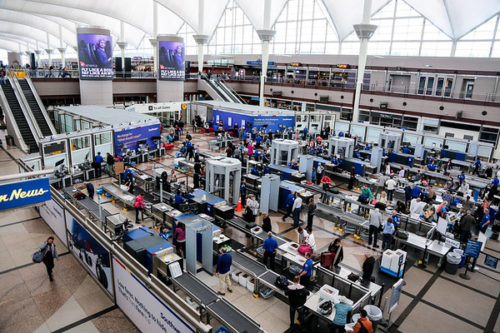
Getting through airports during holiday weekends was frustrating before the pandemic. This year, it could be much worse, due to a temporary shortage of TSA officers, airline staff, and airport shop and restaurants workers. Add to that new airport protocols, the rash of unruly travelers, and passengers who show up at the security checkpoint with everything from oversized liquids to guns and other prohibited items because they’re forgotten how to pack.  
“The challenge will be to keep things moving smoothly,” says Sherry Stein, Head of Technology for SITA, an air transport technology company. But “mobile-enabled technology such as self-service bag tag kiosks that limit contact while improving efficiency” will help.

What about buses and trains?

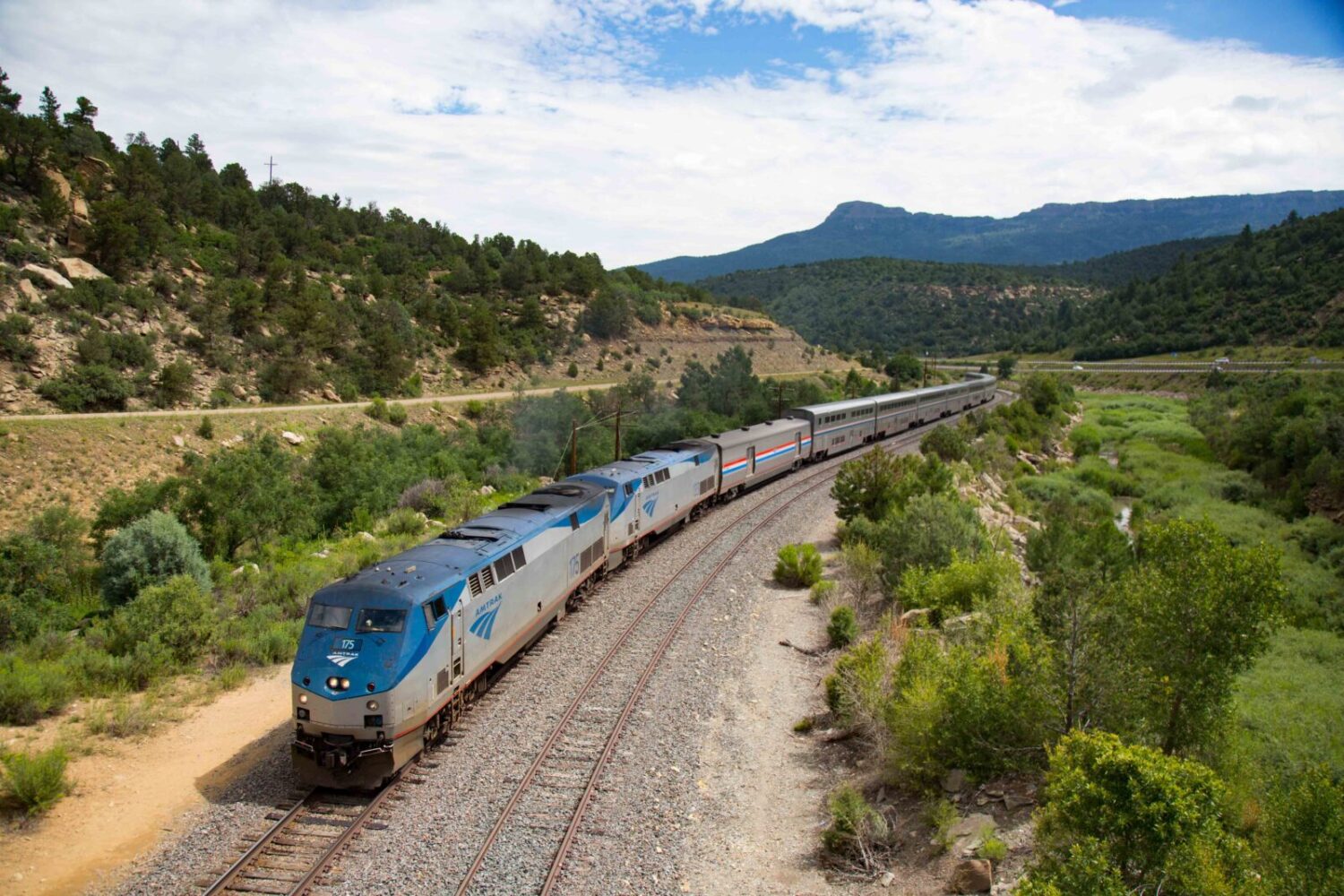
Southwest Chief near Fishers Peak, Colorado.

AAA expects 620,000 Americans to travel by bus, train, and other modes this holiday weekend, an increase of over 72% compared to last year.  

While overall ridership on Amtrak is running at about 55% of pre-pandemic levels, says Doug Duval, an Amtrak spokesman, “We are currently showing riders down 14% compared to FY19. This is trending to be the best holiday since the pandemic started.”

Bus ridership is on the rise too, says Jan Jones, program coordinator for the Hospitality and Management program at the University of New Haven.  

But staffing is a problem here too. “During the pandemic, bus lines furloughed and laid off many employees, “Drivers aren’t rushing back,” says Jones, “So, July 4th travelers may be limited in terms of where they can go by bus.”

Hotels and campsites

TripIt trip planning company reports that lodging reservations are well above the reservation volume for last year, at 163% of 2020 bookings. 

Many travelers have already booked their July 4th hotel stays and desirable properties in popular destinations, such as Hawaii, Florida and beach destinations in Maryland and South Carolina may already be filled up or showing high prices.

But late planners are not totally out of luck. “If you know the hotel or hotel brand you want to stay with, try their mobile apps or websites because they usually offer a best rate guarantee,” says Paul Barron, EVP Marketing, Hospitality at Amadeus. Loyalty program members booking directly on a hotel website often receive personalized offers not available on other sites, he added.

Campgrounds and RV resort operators are reporting higher than usual bookings for this July 4th holiday too. But not all spots are taken; websites for camping enthusiasts, such as CampFlorida.com, are reporting plenty of vacancies still available.

Too daunting? Ditch the drama.

While you may be itching to get back to big cities and popular tourist locales, for this July 4 holiday, “You will likely find more availability for flights and hotels or vacation rentals near smaller towns,” says Jen Moyse, Senior Director of Product for TripIt.

Or do a pivot and “don’t travel at all,” says Virtuoso travel advisor Jessica Scot, of Denver’s J. Scott Travel. “Instead, spend the long weekend penciling out your travel schedule for the future. If there is anything the pandemic taught us, it is not to wait to take that dream trip, or to visit a far-away friend or family member.”

Time to hit the road

Topiary Dinosaur in Seattle’s Fremont neighborhood getting a spring refresh

Overnight car trips. Visits to roadside attractions. Airport hang-out time. It all seems possible now that the weather is getting nice and so many people are vaccinated and honoring all the stay-healthy rules.

When we go. We won’t be out there alone.

Our email is filled with studies, surveys, and proclamations about the travel rebound already underway.

AAA Travel expects more than 37 million people to travel 50 miles or more away from home over the Memorial Day holiday weekend. That is an increase of 60% over last year when a record low 23 million people traveled.

Are there deals to be had at hotels and attractions and on planes? Don’t count on it

“Travel inflation is real and deals are hard to come by for summer and out months,” says Clayton Reid, CEO of global travel, tourism, and marketing company MMGY Global. “While we do expect deals in city centers to some degree, where the recovery of urban hotels and attractions is lagging, demand is so high that prices are actually going up in many places. Even airfares are on the rise because demand is outweighing airlines’ reduced schedules.”

Deals may not matter

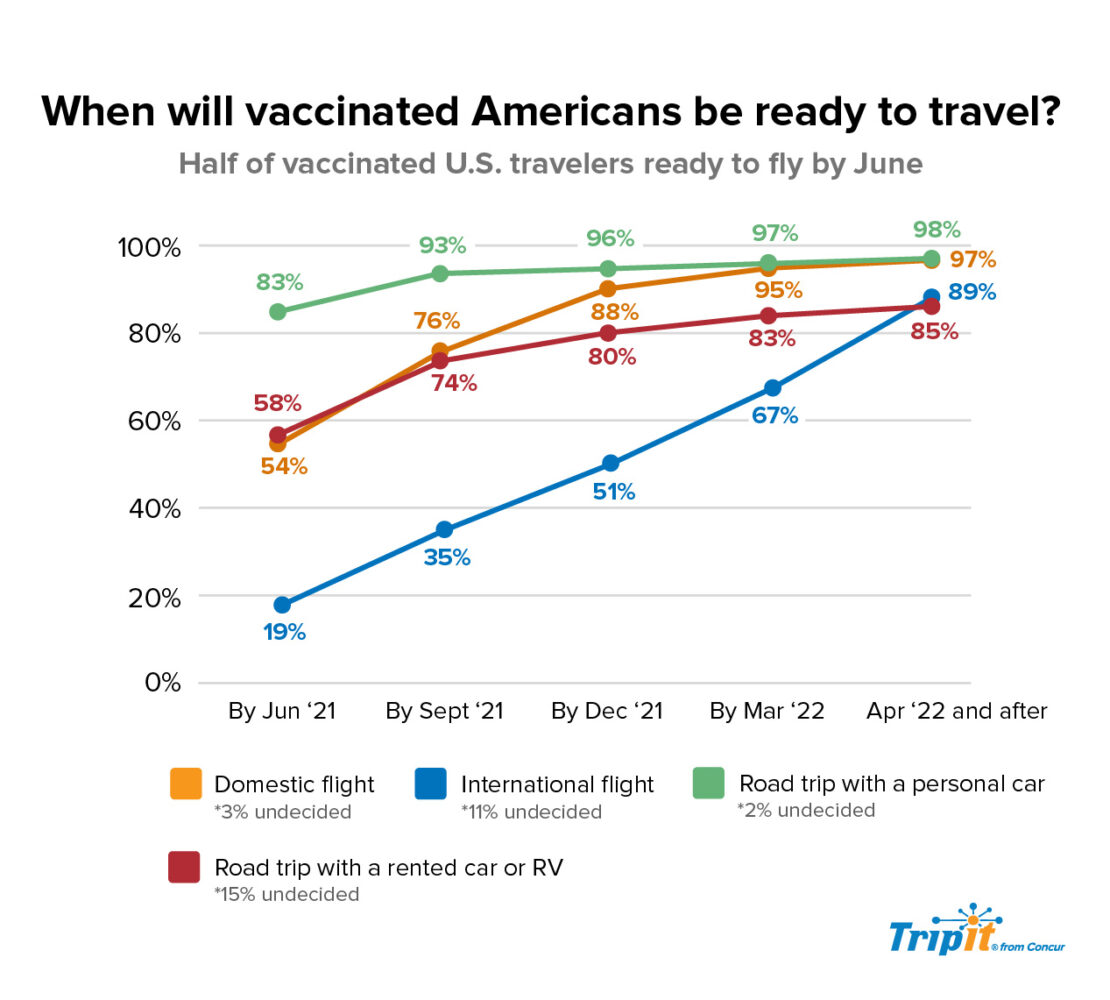
This colorful Tripit chart shows that vaccinated Americans are ready to get out on the road as soon as they can. What about you?

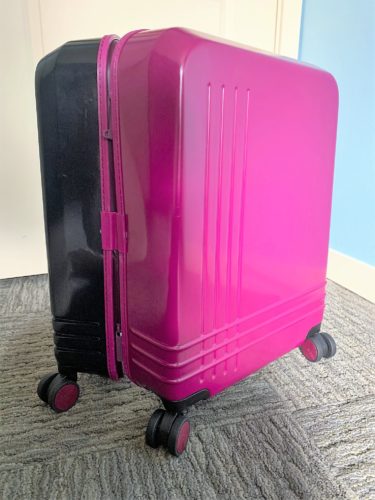
We’re ready. Our suitcase has been patiently waiting by the door.

Amelia Earhart at Union Club Hotel in Indiana

Here’s a nice way to celebrate the life and legacy of Amelia Earhart during Women’s History Month.

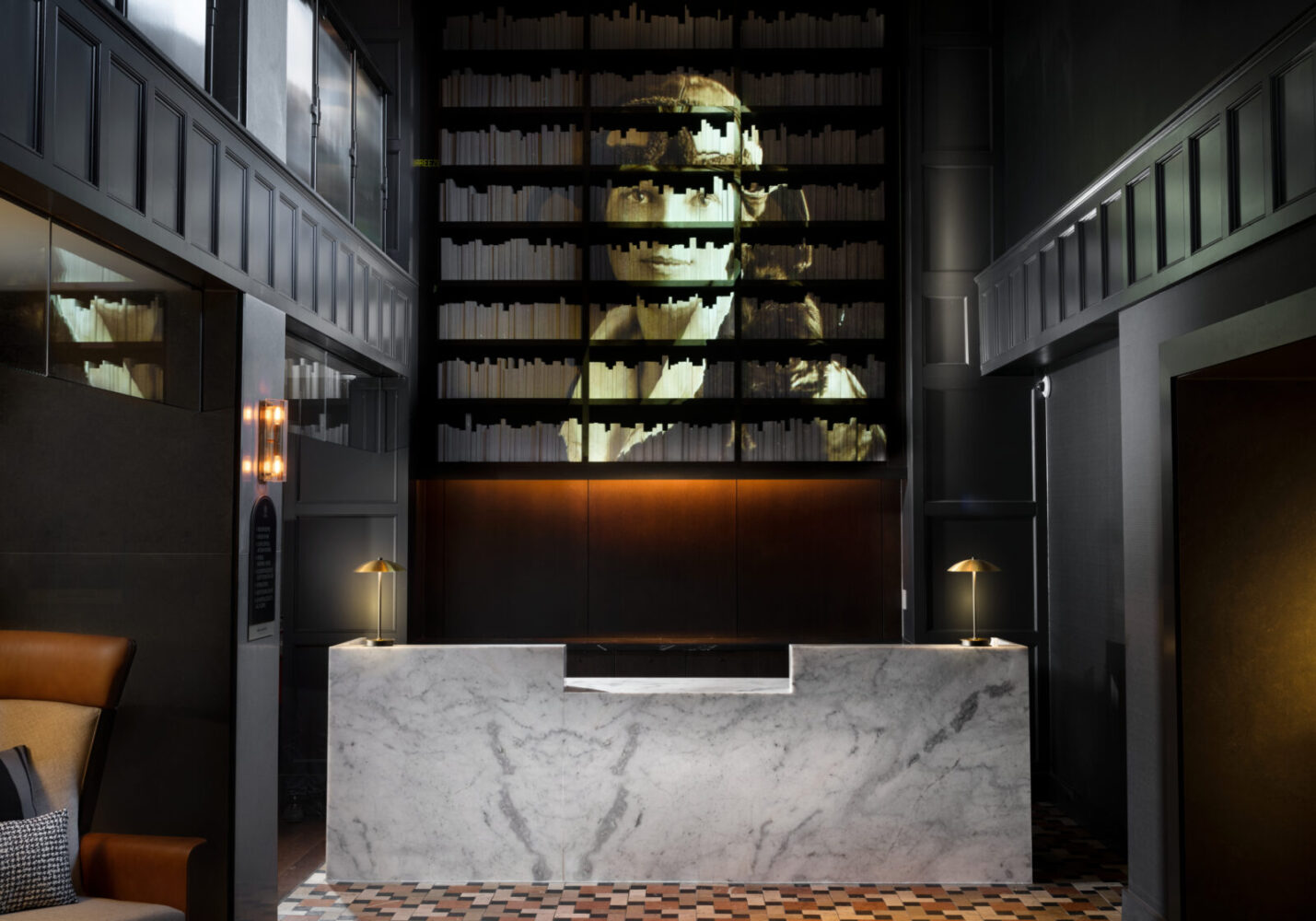
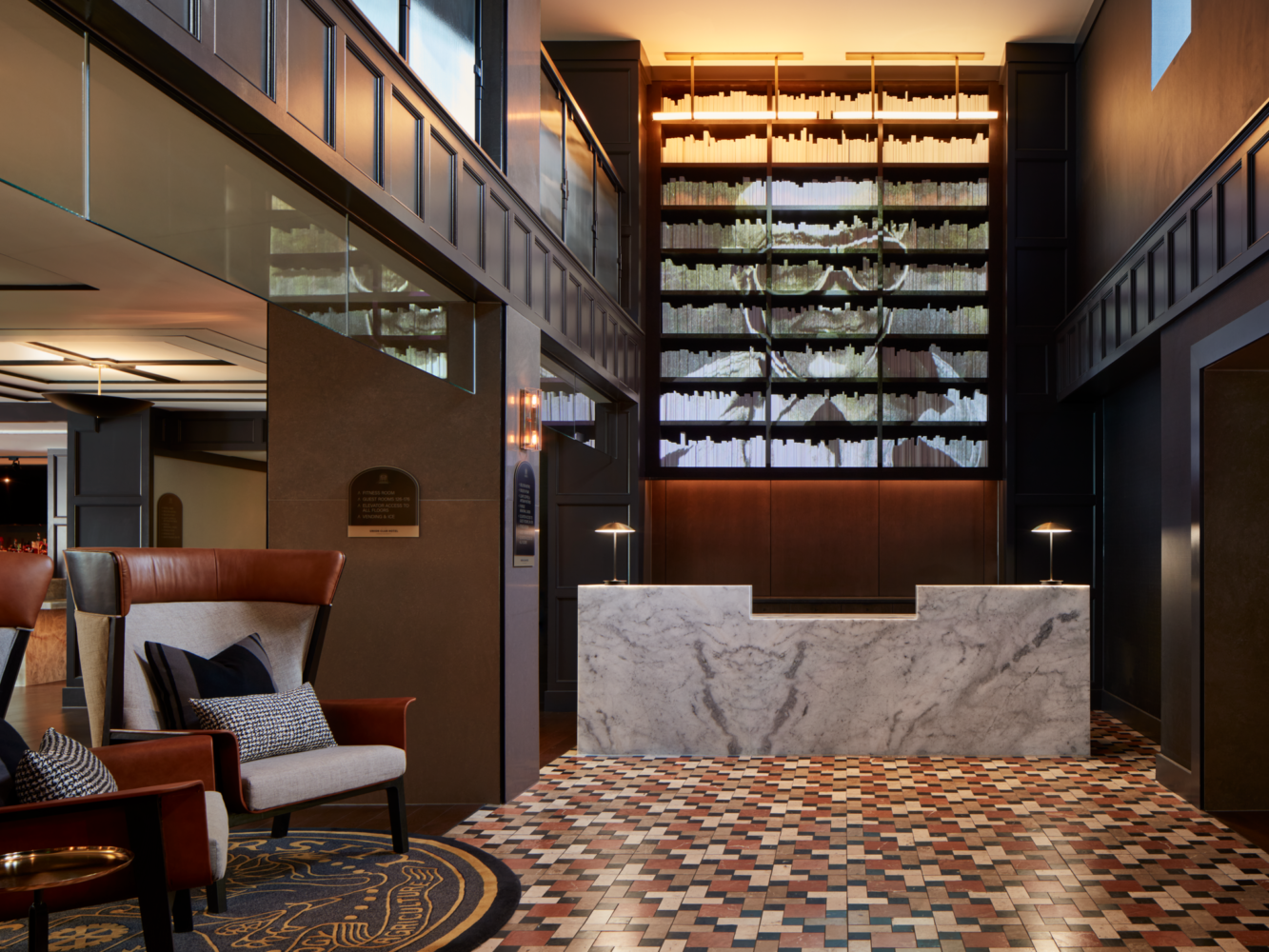
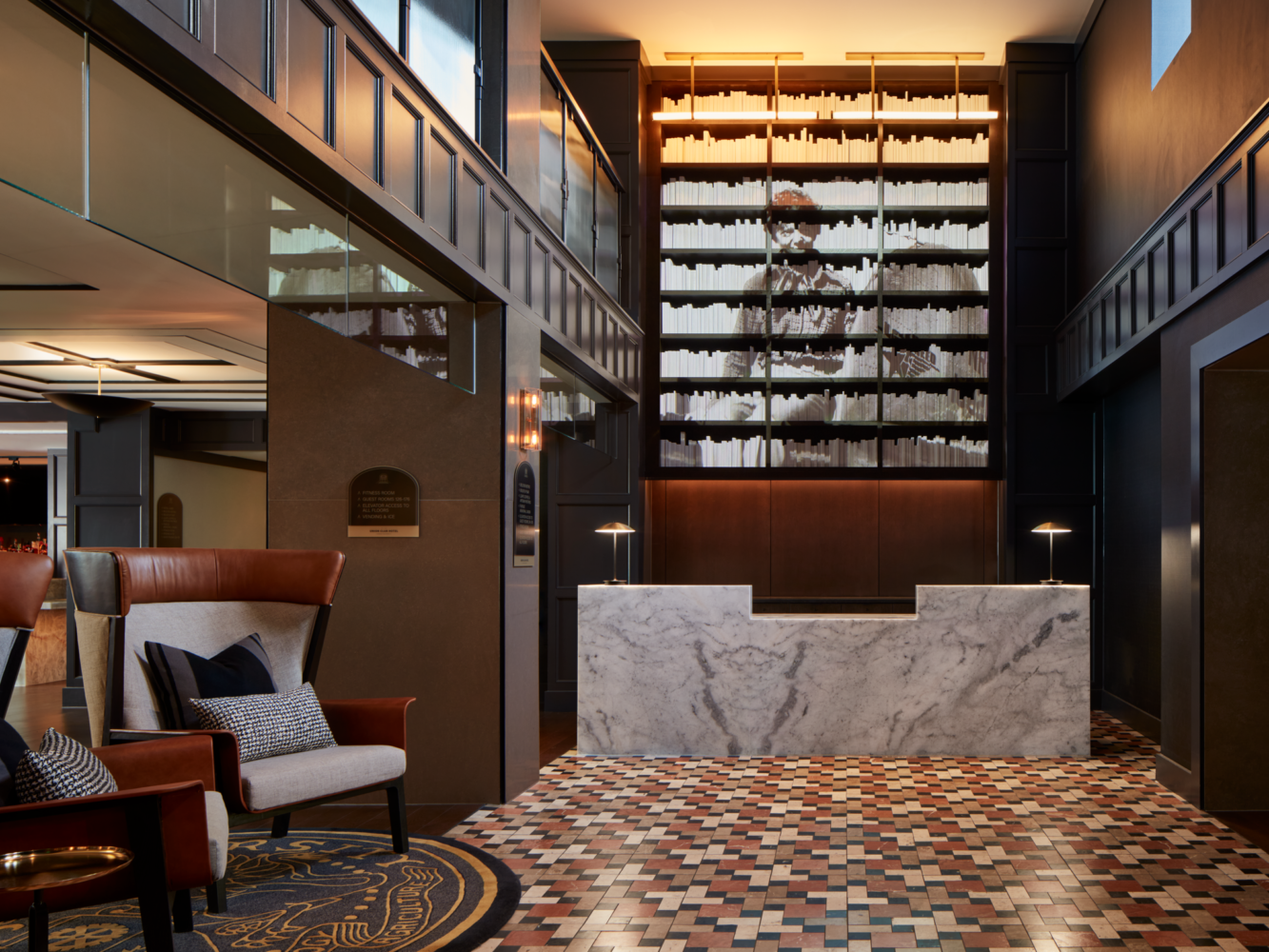
In West Lafayette, IN, Purdue University’s recently renovated Union Club Hotel now has an installation with 14 different images of Amelia Earhart projected on the two-story bookcase behind the reception desk.

Earhart was the first woman to fly across the Atlantic Ocean and the first person ever to fly solo from Hawaii to the U.S. mainland.

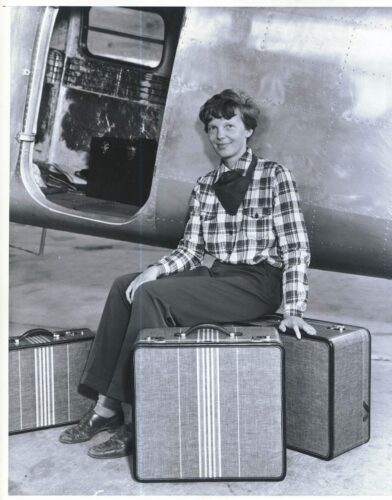
She also earned money from product endorsements: her “real aeroplane” luggage was a big seller.

Courtesy Purdue University Libraries, 

The installation at Purdue’s Union Club Hotel is especially appropriate. Earhart served on the university faculty as a career counselor and an adviser in aeronautics. The University helped to finance her first airplane. And today there is digital access to the Amelia Earhart Collection.

The collection is a treasure-trove of photographs, artifacts (luggage, goggles, smelling salts), postage stamps, letters, and papers.

We’re looking forward to checking into this hotel and spending time in the library learning more about Amelia Earhart.

Travel on the rebound? Bookings say yes.

[This is a slightly different version of the story we prepared for NBC News]

As the pace of Covid-19 vaccinations is ramping up, so is consumer confidence — and with it, a surge in travel bookings.

“Many travelers are feeling optimistic that they will be able to vacation abroad this year. Many people are already actively planning their next big trip; even for trips more than four months out,” said Shibani Walia, senior research analyst at Tripadvisor.

2020 was the worst year in history for air travel demand, according to the International Air Transport Association, with global passenger traffic falling more than 65 percent, compared to 2019. The hotel industry also tanked, surpassing 1 billion unsold room nights, according to hotel industry research firm STR. The story was much the same for cruises, attractions, and tours, with the World Tourism Organization calling 2020 the worst year on record.

Pent up demand fuel bookings

With a comprehensive vaccine schedule and pent-up demand for leaving home, vacation planning and bookings are on the rise for late 2021, 2022, and beyond.

Spirit Airlines announced Thursday it would start training new pilots and flight attendants as of next month, in preparation for a spike in leisure travel.

“We just got our first shot. So maybe we could plan a trip this summer or later this year,” says Vicky Stein of New York. “I’d love to visit my son in Vancouver, B.C. But that depends on the regulations in Canada. At this point, I’d be happy to go to Vermont.”

A recent Tripadvisor survey found that 80 percent of U.S. consumers planned to take at least one overnight domestic leisure trip in 2021. Just over one-third of respondents planning at least three domestic trips this year. Popular destinations such as Orlando are already seeing a hopeful booking rebound.

“The region expects 2021 spring break travel to mirror the Christmas and New Year holidays, when occupancy reached 50 percent,” said Daryl Cronk, senior director of market research for Visit Orlando. “This would be a significant improvement over last year’s 12 percent, one of the lowest points of the year.”

Tripadvisor’s survey also found a strong interest in international travel planning. Nearly half (47%) of all respondents said they are planning to travel internationally in 2021.

Already, the majority of hotel clicks for trips taking place from May onwards are to international destinations, Tripadvisor noted. “This is an early signal that travelers are feeling increasingly confident they will be able to travel abroad in 2021, at least in the back half of the year.”

Italy, France, Japan, Australia, and Greece are at the top of most travelers’ lists, said Misty Belles, managing director at Virtuoso travel network, citing customer planning.

Cruises may make a comeback

Travelers are also eyeing cruises, a good sign for the many cruise lines that had to abandon entire sailing seasons.

“We’re seeing growing confidence from cruisers as vaccines begin to be distributed,” said Colleen McDaniel, editor-in-chief at Cruise Critic. “Both because they see it as a step in the right direction for the return of travel, and because they’ll feel most comfortable sailing knowing that they and their fellow passengers have been vaccinated.”

Many cruisers are making their bookings further out.

“Our 136-day 2021-2022 Viking World Cruise sold out more than a year in advance,” says Richard Marnell, Executive Vice President of Marketing for Viking. “And we have had such strong demand for our new Mississippi River cruises that we opened additional dates for sale in 2023 sooner than expected.” 

Rich and Suzi McClear of Sitka, Alaska, whose 2020 Holland America Line world cruise was cut short due to the pandemic, are anxious to go back to sea. “We’re rebooked for a 2022 world cruise. We’re also booked for the 2023 world cruise, which we view as an insurance policy in case the 2022 cruise does not go,” they said in an email.

Should you book a trip too?

Most travel companies now have flexible and more generous booking and cancellation policies, and prices are historically low. So, it can be a good time to book future trips.

Airfares, for example, are 20 percent lower compared to last year, said Adit Damodaran, economist for travel app Hopper. “Domestic airfare prices are expected to rise in mid-to-late March and gradually return to 2019 levels over the course of the year. And it is not too early to book for 2022, especially if you’re booking with trip protection or flexible booking options.

Hotels add COVID-19 testing to amenity lists

Courtesy Arora Group

Skip the lines and get a COVID-19 test at your hotel

(This is a slightly different version of our story for NBC News)

You may not be able to work out in hotel gyms or hang out in lobby bars just yet. But at an increasing number of hotels, guests can now get COVID-19 tests as part of their stay.

The tests are offered in partnership with a local laboratory or medical company and at an extra, sometimes hefty expense. But now that a negative COVID-19 test is required for crossing many state and country borders, hotels hoping to stand-out are adding medical testing to their list of amenities.

Results before you fly

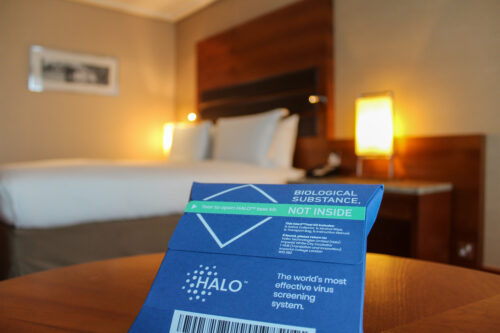
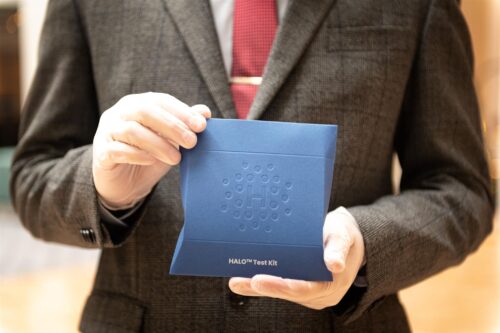
“Test and Rest” packages starting at about $240 at the Sofitel Heathrow and about $200 at the Sofitel Gatwick allows guests to check-in and take a self-administered saliva COVID-19 test from a kit.

Twice a day, the hotel sends test samples via courier to a HALO testing laboratory. Results, plus a certificate to be printed at reception, are emailed to guests so they can go from the airport hotel to the plane.

“It seemed to be the right thing to do to both encourage travel and get people booking airport hotels again,” said Raj Shah, Commercial Director – Hotel Division of the Arora Group. The company operates several hotels at both Heathrow and Gatwick.

COVID-19 testing at resorts and boutique hotels

In Las Vegas, the REVIV wellness spa at the Cosmopolitan offers COVID-19 PCR testing ($100) with results and documents promised within 24-hours. Antibody tests ($40) are also available, with discounts offered to guests who bundle their tests with some of the spa’s treatments.

With HELIX Urgent Care, Florida’s Palm Beach Marriott Singer Island Beach Resort & Spa provides COVID-19 testing for guests three days a week. The fee is $125, with results promised in 48 hours or less.  

Both the W South Beach in Miami Beach and Chateau Marmont Hotel, Cottages and Bungalows in Hollywood are partnering with Sollis Health to offer guest COVID-19 PCR tests with a 24-hour turnaround. Test prices are $175 at the W South Beach and are included as part of the amenity package at Chateau Marmont, where rates start at about $475 a night.  

For $299, the Nemacolin, a resort in Farmington, PA, is offering guests rapid COVID-19 tests that are analyzed on-site, with results in 15-20 minutes. “Should a positive test result occur, you will be expected to re-test immediately,” the resort tells guests.

And at the Nobu Hotel Palo Alto in California’s Silicon Valley, guests simply ask their private concierge to arrange an on-site COVID-19 test. A licensed medical professional then arrives in full personal protective equipment (PPE) to administer the test. And couriers take the samples to a certified laboratory for expedited results. The white-glove service starts at $500.

What do you think of this new hotel amenity?

How will the pandemic leave its mark on travel?

Dreaming about travel? Us too. But how will our journeys be changed by the pandemic?

(This is a slightly different version of a story we prepared for NBC News.)

Sanitizing stations, “stand here, not there” floor stickers, and cotton swabs up the nose were not part of the travel experience before the COVID-19 pandemic.

But as travelers edge their way back into airports and hotels and onto airplanes, cruise ships, and ski slopes, they will be dealing will all that – and more.

But for how long? We asked some industry experts to tell us which new travel trends, technologies, and protocols they think will stick around.

Who will travel and what will they expect?

“Businesses are connecting with their customers virtually and leisure travelers are discovering the joys of staying local,” says Chekitan Dev, a professor at Cornell University’s School of Hotel Administration in the SC Johnson College of Business. “Many business travelers will lower their number of trips, and leisure travelers will shift from ‘hyper-global’ to ‘hyper-local’ travel for the foreseeable future.”

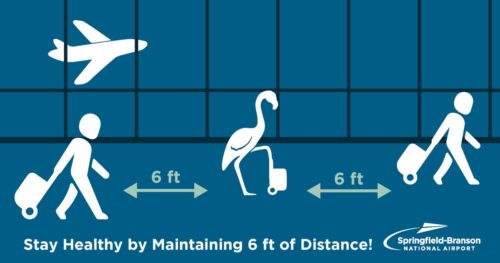
For well into 2021 travelers will be expected or required to wear masks and observe physical distancing. And airlines, airports, hotels, and cruise lines will be expected to continue making health, safety, and cleanliness a priority.

“People will look at a dirty rental car or bus or airport or airline cabin or hotel room and wonder, ‘Uh oh, am I putting myself at risk?’ says Henry Harteveldt, a travel industry analyst at Atmosphere Research Group. “Travelers will continue to hold travel brands’ feet to the fire to keep their facilities clean.”

Entertainment

Once we move past this pandemic “we’re going to have amnesia about some of this and likely go back doing many of the same things we used to do before,” says Devin Liddell, futures and design strategist with Seattle-based Teague global design consultancy.

Theme parks, museums, and other attractions will reopen, and Liddell says the best operators will retain systems put in place to orchestrate the flow of people. For example, “ski resorts that require reservations will likely create a better experience for everyone on the lift lines,” he says.

Hotels

Hotels will likely maintain flexible cancellation policies and keep in place the intensive protocols for cleaning guest rooms and public spaces.

But instead of housekeeping only upon request or not at all during a stay, “elective housekeeping will be more about providing guests with an easy ‘opt-out’ of housekeeping services,” says Bjorn Hanson, adjunct Professor at New York University’s Tisch Center of Hospitality. 

Cruising

Most major cruise lines are maintaining – and extending – the voluntary suspensions of sailings until sometime in 2021.

When sailings resume there will be changes onboard.

“The buffet will move away from the more traditional self-serve approach toward a more crew-served style – something that lines have already said will likely be a more permanent change,” said Colleen McDaniel, Editor-in-Chief of Cruise Critic. And “changes to muster drills could also stick around beyond the pandemic. Rather than mass events that put all passengers in small spaces at once, we’ll continue to see this more self-driven.”

Airports

At airports, “the pandemic has dramatically accelerated the adoption of countless new technologies and protocols to keep people healthy and safe and streamline the entire air travel experience,” says Kevin Burke, president and CEO of Airports Council International-North America.

“Many of these changes will outlast COVID-19,” he adds.

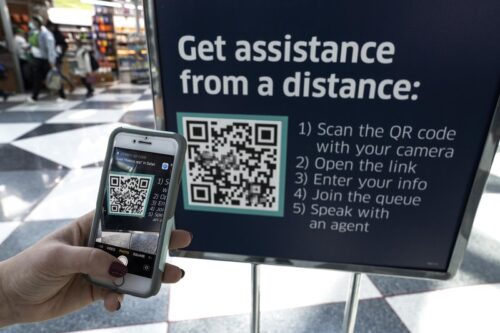
Those technologies and protocols include sanitizing robots, restrooms that alert maintenance crews when cleaning is needed, contactless check-in, bag check and credential authentication, and the increased ability to order and pay for food or duty-free items from a mobile device and receive a contactless delivery anywhere inside the airport.

The current pandemic will change future airports as well.

“We plan to implement many public health procedures into the design of our new terminal building,” scheduled to open in 2023 said Christina Cassotis, CEO at Pittsburgh International Airport, “It will be the first post-pandemic terminal to open in the country that will be designed with these issues in mind.”

Materials in airports are going to change, too, says Luis Vidal, president and founding partner at Luis Vidal + Architects. “The use of new photocatalytic devices based on antibacterial, antiviral, and ‘autocleaning’ material, such as titanium dioxide, silver or copper, in high-use areas will become the norm.”

Airlines

(PRNewsfoto/United Airlines)

Airlines will maintain stringent cleaning and sanitizing protocols. Generous rebooking and cancelation policies may stretch out for a while. But most airlines will soon stop blocking middle seats.

Coming back soon: the full range of in-flight services, especially at the front of the plane.

“The traveling public is not happy with the bare bones on-board experience right now,” says Harteveldt of Atmosphere Research. “They understand the need for limits, but people are saying they won’t accept paying for a premium experience and getting something that is subpar.”

Vaccines, Travel Corridors, and insurance 

As the COVID-19 vaccine becomes available, it may become a ‘must-have’ for travelers.

The new normal for global travel may also include digital health passports displaying a traveler’s vaccine or negative test status and, by spring, travel corridors (also known as travel bubbles) that allow travel between countries with low COVID-19 infection rates, says Fiona Ashley, VP Product & Solution Marketing SAP Concur.

While there are some great fare deals being offered right now, as demand returns, so will higher prices.  And going forward, travelers will likely need to factor in the added costs of COVID-19 tests and travel insurance.

“Travel insurance may become a non-negotiable as destinations continue to require medical insurance, and travel suppliers tighten their refund policies,” said Megan Moncrief Chief Marketing Officer of travel insurance comparison site Squaremouth

“The Covid-19 pandemic highlighted the vulnerability of the global travel industry. I think travelers will be more cautious about investing in expensive trips without insurance.”

How sad it is out there in the world of travel?

You know that the current health crisis has caused people to cancel trips and airlines to temporarily slash flight schedules to the bone.

Here are few other measurements that underscore how bad it is right now.

TSA screening numbers hit record low

On Tuesday, April 7, the Transportation Security Administration screened just 97,310 passengers and flight crew members at all airports across the country.

That’s a record low for TSA and down 95% from the 2,091,056 passengers screened at airports a year ago on the same weekday.

TSA screening officers also continue to test positive for COVID-19.

On Wednesday, April 8, TSA reported that in the previous 14 days, 43 screening officers and 7 non-screening officers who’d had limited interaction with travelers tested positive for COVID-19.

TSA is updating that list daily. The agency is also posting the airport, last day worked, checkpoint location and shift times for each TSA officer who tests positive. So you can check to see if you may have been exposed.

Hotel occupancy rates way down

Hotels around the country are experiencing shocking year-over-year declines, according to data from STR.

Comparing the week of March 29 through April 4, 2020 with the same time period last year:

Occupancy across the country is down 68.5%, to 21.6% and average daily rates (ADR) are down 41.5% to $76.51.

When you look at the Top 25, the numbers are worse:

The Top 25 markets were down over 74 %, to 19.4%, with the Oahu, Minneapolis-St. Paul, New York and Seattle markets getting hammered the worst.

In some cities, hotels are renting rooms to local governments to house health care workers, first responders, military personnel, people who have been ordered to quarantine, infected patients and homeless people at risk from the virus.

Hotels having COVID-19 troubles

Fallout from COVID-19 is happening so fast that moments before our story about hotel occupancy rates posted on CNBC we had to cut a tidbit about a hotel bar offering a creative “squirt and sip” – a squirt of hand sanitizer and a drink – because the bar had been ordered to close.

And since the story posted – on Wednesday – many more hotels around the country have closed because they had few – if any -guests.

Major hotel chains are temporarily closing properties and seeing occupancy rates tumble as travelers stay at home during the coronavirus outbreak.

Global hospitality research company STR said Wednesday that for the week of March 8-14, hotel occupancy was down 24.4% to 53% year-over-year. Meanwhile, revenue per available room, a key industry metric, fell 32.5% to $63.74.   

The numbers echo plunging demand for air travel and cruise ships as travel slows to a trickle. There have been more than 200,000 cases of the coronavirus so far, and governments are imposing restrictions to combat the spread. The United States border with Canada will temporarily close to “non-essential traffic” due to the coronavirus pandemic, the leaders of both countries said Wednesday morning.

“To no surprise, the hurt continued and intensified for hotels around the country,” said Jan Freitag, STR’s senior VP of lodging insights in a statement. “The performance declines were especially pronounced in hotels that cater to meetings and group business, which is a reflection of the latest batch of event cancellations and government guidance to restrict the size of gatherings.”

Even before Nevada ordered the closure of casinos and other businessesMGM Resorts International and Wynn Resorts announced the temporary closure of their properties in Las Vegas. That includes well-known hotels like the Bellagio, MGM Grand Mandalay Bay, The Mirage and others.

Following the closure of its U.S. theme parks, Disney closed all its owned and operated hotel locations at Downtown Disney in Anaheim and Disney Springs in Orlando, beginning Tuesday. The Disney owned and operated hotels at Walt Disney World Resort and Disney’s Vero Beach Resort will close at 5 p.m. on Friday, March 20, the company said in a statement.            

Home share bookings in major cities are also feeling the pinch.

For example, Airbnb bookings for the week of March 1-7 in Rome and Beijing were down 41% and 96%, respectively, compared to bookings made January 5-11, according to AirDNA, which analyzes vacation rental data.

“2020 got off to a fast start with our booking rate quite high in the months of January and February,” said Jon Ingalls, an Airbnb host in Seattle, “We’ve now had cancellations for March and have had virtually no bookings for the spring.”

Checking in? Making sure your room is clean

If you do happen to be checking into a hotel in the near future, global and independent hotel brands such as Red Roof, Marriott International and Hilton are being proactive about sharing specifics about their cleaning efforts.

In addition to the cleaning and disinfecting protocols used in guest rooms, Marriott is reassuring guests that its hotels have increased the frequency of cleaning and disinfecting in public spaces, “with a focus on the counter at the front desk, elevators (and elevator buttons), door handles, public bathrooms and even room keys,” the company said in a statement. 

As clean as hotels say their facilities are, when you check in you may want to do some spot cleaning of your own, especially on the “high touch” spots housekeeping staff may have missed and previous guests are sure to have touched. That includes door handles, TV remote controls, lamp switches, bathroom faucets, shower soap dispensers and the toilet flush handle.

“Hotel housekeeping may be doing a good job,” said Sheryl Kline, a professor of Hospitality Business Management at the University of Delaware who has studied hotel cleanliness, “but if you bring your own wipes you’ll know that those spots have been disinfected.”

Kline also suggests taking bed scarves and bedspreads off hotel room beds, “because those may not be cleaned every day.”

Spot cleaning your hotel room is fine, but Paul Pottinger, an infectious disease specialist at UW Medicine, the health-care system at the University of Washington in Seattle, says the first thing to clean when you enter a hotel room is your hands, “which may have picked up germs on your journey to the hotel, from surfaces in the lobby and in the elevator ride up to the room.”

Need to cancel?

In general, hotels and home share companies are being flexible with cancellations.

On Sunday, Airbnb updated its extenuating circumstances policy regarding cancellation in response to COVID-19 to include a full refund for guests with reservations for stays (and Airbnb Experiences) made on or before March 14, 2020, with check-in dates between March 14 and April 14, 2020.

IHG, which includes brands like Holiday Inn, Intercontinental, and Kimpton, is waiving cancellation fees for existing and new bookings at all its properties globally for stays through April 30, 2020.

Marriott updated its policy on March 13 to allow guests with existing reservations to cancel or make changes without charges up to 24 hours before arrival, until April 30, 2020. And on March 16, Hilton updated its policy and is now waiving fees for changes or cancellations made up to 24 hours before a scheduled arrival until April 30, 2020 as well. That includes “Advance Purchase” rates described as non-cancellable when first booked.  

Given the fast-changing nature of COVID-19 and community responses, many hotels are following the lead of airlines and regularly updating their cancelation and refund policies, in many cases extending the applicable dates.