flight attendants

Air Canada braces for a strike

Your options if you have an Air Canada ticket

Air Canada’s negotiations with CUPE, the union representing 10,000 flight attendants on Air Canada and Air Canada Rouge, aren’t going well.

And if no agreements can be made, a strike is expected to begin Saturday, August 16 at 01:00 ET.

In preparation, the carrier began a “phased wind-down” of its operations on Thursday and will be canceling hundreds of flights by this weekend.

For those with booked flights, the airline is offering options for refunds, flight changes and alternate travel arrangements.

If you’re booked on Air Canada with plans to travel between August 15 and August 18, you can change your flight for free if you purchased an Air Canada ticket or redeemed points for an Aeroplan flight reward no later than August 13, 2025.

You can rebook for another date between August 21 and September 12, 2025, or cancel your itinerary and put the unused portion towards a future travel credit.

If you keep your current booking and your flight is cancelled due to the labor dispute, Air Canada says it will attempt to rebook you on another flight, including those operated by other airlines, but is warning travelers that due to the summer travel peak, “rebooking you within an acceptable timeframe is low. If your travel is disrupted, you can always choose a refund.”

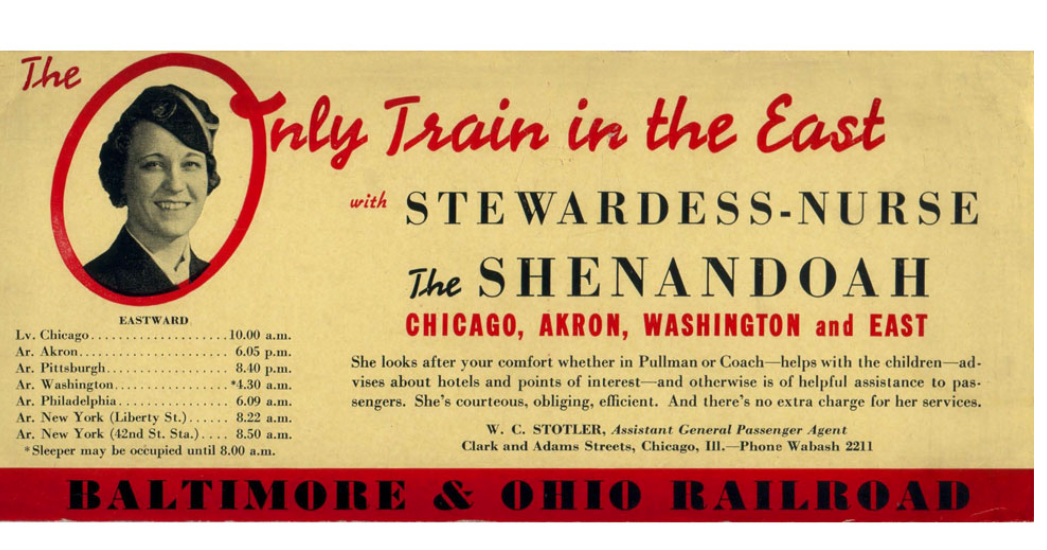
Airlines once had “stewardess-nurses.” So did trains.

The first ‘stewardesses’ on airplanes also had to be registered nurses.

In 1930, Boeing Air Transport Office – which later became United Airlines – was only hiring male pilots. But Ellen Church, a registered nurse with a pilot’s license, wanted to fly.

So she convinced the airline to test out having nurses on board to help passengers feel more confident about flying.

The job description had plenty of requirements. And lots of restrictions.

In addition to being a registered nurse, those early ‘stewardesses’ could weigh no more than 115 pounds, and they could not be taller than 5 feet, 4 inches. They had to be single and they had to be under 25 years of age.

As for the job description, these early stewardess nurses had to care for and reassure sick and frightened passengers.

The stewardess-nurses had to take tickets, load and unload luggage and help fuel the plane. They also had to pass out lunches, clean the aircraft, and tighten the bolts that held the seats to the floor.

Trains had ‘stewardess nurses’ too

Stewardess nurses weren’t limited to planes.

According to a story from the School of Nursing at the University of Virginia, not long after airlines began hiring nurses, train lines did too.

Union Pacific hired seven nurses in 1935 to staff the Challenger, a deluxe coach train, and by 1938 at least 94 nurses working on four railroads.

New film documents flight attendants fight for rights

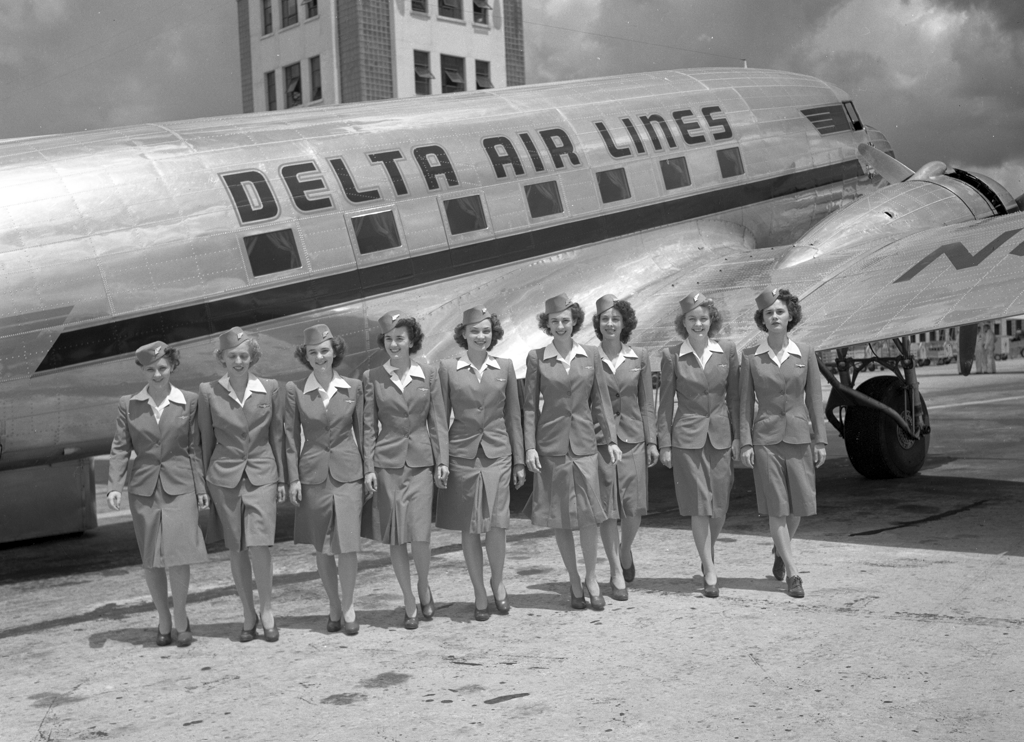
(Courtesy Delta Air Lines)

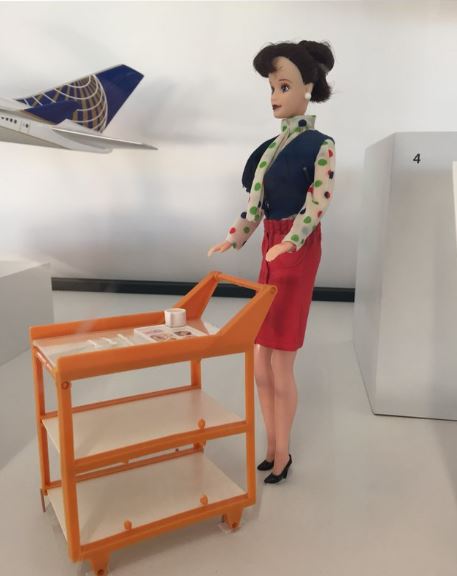
The new “Fly With Me” film tells the story of women hired as ‘stewardesses’ in the days when airline policies dictated everything from their weight to their marital status.

(Courtesy United Airlines)

More importantly, the film documents those women who went on to fight – and win – battles for equal pay, gender and race equality, and workplace reform.

(Courtesy Alamy)

“So many of the women who became flight attendants were young, ambitious, and adventurous,” said Sarah Colt, who directed the film with Helen Dobrowski. “Some thought they’d do the job for 2 or 3 years and then follow societal norms of the 50s and 60s and get married and move on. But the job became much more of a career for them,” said Colt.

On the job, pilots – who were all male – could be married.

Stewardesses could not.

On the road during layovers, each pilot had a single hotel room. Stewardesses had to share.

Stewardesses could not wear eyeglasses and had to ‘retire’ once they reached age 32 – long before they had enough years on the job to secure a pension.

“No other job offered as much freedom with such a high cost of conformity,” said Julia Cooke, the author of “Come Fly the World: The Jet Age Story of the Women of Pan Am,” in the film.

It didn’t take long for stewardesses to get savvy. And their fight for rights in all aspects of the job mirrored, matched, and helped push forward what was taking place in the broader women’s and equality rights movement.

The film includes almost two hours of first-hand accounts, archival footage including everything from vintage airline commercials to TV news reports, as well as comments and insights from historians and legal experts.

And step by step “Fly With Me,” takes us through important milestones in the history of the flight attendant rights movement, expertly making connections to world events underway at each stage.

(Courtesy San Diego Air and Space Museum)

Where to see “Fly With Me”

“Fly With Me” premieres as part of the American Experience series on Public Broadcasting TV, PBS, Tuesday, February 20, 2024, 9:00-11:00 p.m. ET (check local listings). The film will also stream on PBS.org and the PBS App.

Travel Tidbits from Airports Near You

Lots of fun – and important – events taking place at airports this week.

Airports have been celebrating Valentine’s Day all week.

Flight attendants picketed at airports across the country on Tuesday and Alaska Airlines flight attendants voted to authorize a strike.

Indianapolis International Airport (IND) figured out what to do with the basketball court that appeared in the Civic Plaza.

And Hartsfield-Jackson Atlanta International Airport (ATL) is now home to the largest American Express Centurion Lounge.

Travel Tidbits from airports here and there

Flight attendant unions mark an anniversary

Shuffleboard (!) at United Airlines’ new DEN lounge

Sheep at London’s Gatwick Airport

Formula 1 car at Schiphol Airport

Pancakes for a cause at Vancouver Int’l Airport

Why are airline passengers so rude & unruly?

[Our story on the rise of unruly airlines passengers first appeared on NBC News)

Air travelers picked up some bad habits during the pandemic that they can’t seem to shake.

Unruly passenger incidents rose 47% globally last year from 2021, even as pandemic-related restrictions faded, according to recent data released this month by the International Air Transport Association, an airline trade group.

Reports of bad behavior rose from a rate of 1 incident per 835 flights to 1 per 568 over that period, IATA found.

Conflicts over mask requirements, which drove a surge in unruly conduct during the depths of the coronavirus pandemic, have largely dissipated.

But as air travel continues to rebound — a record 257 million passengers are expected to hit the skies on U.S. airlines this summer — other sources of contention are still triggering disruptions at alarming rates. And some say official data may only capture a fraction of the problem.

“The public does not hear about the 99% of would-be incidents that are resolved by flight attendants without event,” the Association of Flight Attendants President Sara Nelson said in an email. “We deescalate conflict as aviation’s first responders on nearly every flight.”

Industry experts say that they can only speculate about what’s going on.

“I’m not sure if there is an overall increase in a feeling of self-entitlement,” said aviation security expert Jeffrey Price, the owner of the airport management consultancy Leading Edge Strategies, “or if people are, for some reason post-Covid, feeling more empowered to assert what authority or influence they believe they have.”

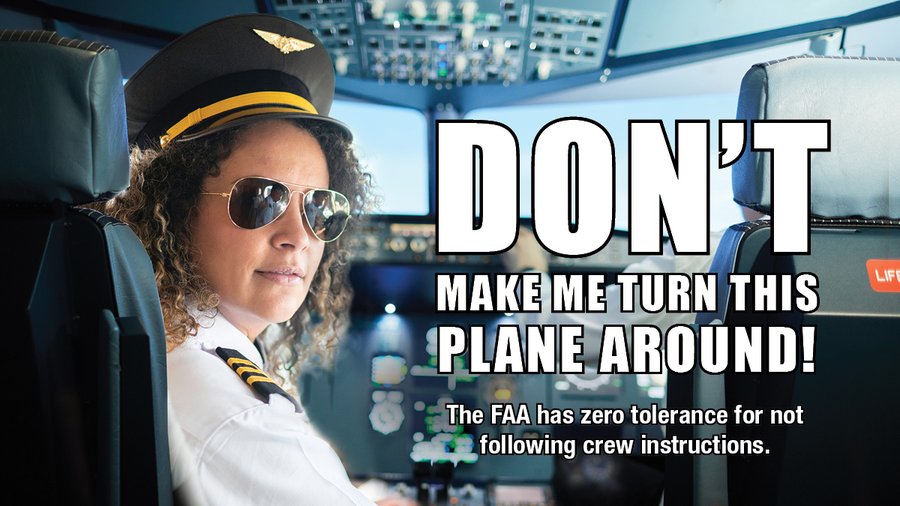
Looking at more than 20,000 reports submitted by around 40 airlines worldwide, IATA found the most common types of unruly conduct last year were non-compliance with crew instructions, followed by verbal abuse and intoxication.

In the last few weeks, a Delta Air Lines flight heading to Detroit from Paris was diverted to Canada for an emergency landing over the behavior of an unruly passenger. And a traveler denied boarding at Hartsfield-Jackson Atlanta International Airport was arrested after allegedly having slapped a Spirit Airlines employee.

While extreme incidents like those remain rare, “it is very concerning to see the frequency of reported unruly incidents increasing,” said Jonathan Jasper, IATA’s senior manager for cabin safety. “And the key here is that the numbers are only a part of the story. It’s the behavior behind the numbers that is causing us some concern.”

IATA attributed last year’s jump in noncompliance to infractions ranging from passengers’ smoking cigarettes or vaping on planes to failing to fasten their seat belts, refusing to stow cabin baggage during takeoff and landing, and drinking their own alcohol onboard.

IATA’s study doesn’t break down incident rates by region. In the U.S., Federal Aviation Administration data shows the problem remains elevated despite having eased considerably from pandemic peaks.

In 2019, the FAA logged 1,161 unruly passenger reports and just 1,009 in 2020, when lockdown orders sharply restricted air travel.

But as flight volumes began ticking back up, the reports skyrocketed to a record high of 5,981 in 2021 — around 72% of which had to do with masking rules, the FAA said.

Last year, the agency tallied 2,455 unruly passenger reports in the U.S., still far above pre-pandemic levels but a sharp drop nonetheless. The decline came in a year when a federal judge struck the Centers for Disease Control and Prevention’s mask mandate for public transportation in late April 2022, by which point masking-related unruly conduct had dipped to 63% of FAA reports.

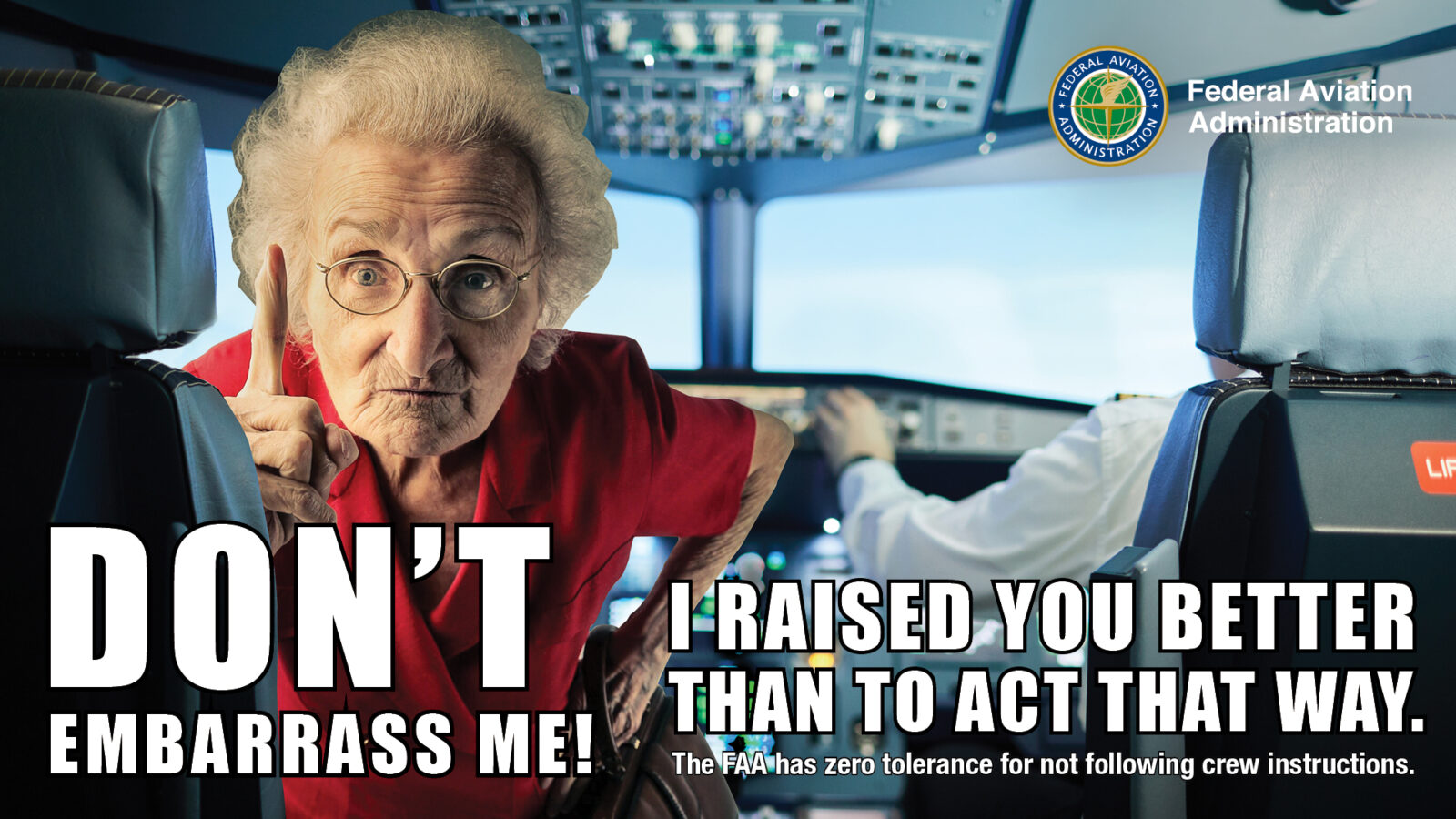
When mask mandates were overturned, however, the agency had already spent well over a year enforcing a “zero-tolerance” policy for unruly behavior.

In January 2021, it rolled out penalties such as hefty fines and the threat of federal criminal prosecution, including potential jail time, for any passenger who “assaults, threatens, intimidates, or interferes with airline crew members.” The FAA said this April that it had referred more than 250 of the most serious cases to the FBI since last 2021.

While instances of noncompliance fell at the start of last year as more airlines and governments around the world dropped their mask mandates, IATA found the rate beginning to rise again as 2022 wore on, ending the year up.

Some aviation experts say many customers have most likely lost patience with airlines over high ticket prices, widespread delays and cancellations and sliding service quality in recent years.

“Flying is an altogether less enjoyable experience,” said Philip Baum, the managing director of the aviation security consultancy Green Light Ltd.

He noted that the industry let go of huge numbers of personnel early in the pandemic and has struggled to recruit and train new ones. Many airline and airport workers may now be less experienced and more stressed, adding strain to interactions with shorter-fused customers.

In addition, Baum said, “The reality is that post-pandemic, those experiencing poor mental health is on the increase, some of whom may find the depersonalized service offered a trigger.”

Nelson also pointed to the pandemic’s long shadow, saying it “exposed deep social division and resentment over rising inequality,” and she criticized public officials’ “mixed messages and contempt for rules that protect our collective safety” as having made matters worse.

“Our cabins are microcosms of humanity, so this anxiety, confusion and division continues to show up in behavior on our planes,” she said.

Aviation most likely isn’t the only industry more customers are lashing out at. In the National Customer Rage Survey, released in March, a record 74% of consumers said they experienced issues in the marketplace in the previous 12 months.

And 43% of respondents said they had raised their voices at customer service, up from 35% in 2015. Labor shortages in recent years were probably a factor in the jump, the researchers said at the time.

Whatever the underlying causes, the problem shows few signs of fading from air travel.

The FAA had already recorded 822 reports of unruly passengers as of June 11 — less than halfway through a year when global passenger volumes are projected to reach 92% of pre-pandemic levels, up from 72% last year.

In fact, after a slight dip in February to 122 unruly passenger incidents, the FAA received 169 reports in May — the highest monthly level so far this year.

The agency didn’t respond to requests to comment further on its data.

Travel Tidbits

Better rest times for flight attendants

On Tuesday, the U.S. Federal Aviation Administration finalized rules requiring airlines to give airline flight attendants at least 10 hours of rest time between shifts.

Under existing rules, flight attendants get at least nine hours of rest time. However, due to a variety of circumstances, that time off often ends up being much shorter.

Fresh Art at John Wayne Airport

A new exhibit at John Wayne Airport (JWA) in Santa Ana, California features ceramic art by Hawaiian artist Randy Au.

“Vegetable Series” is inspired by Au’s love for nature. The ceramic shapes are inspired by squash gourds that are glossed and gilded in gold. The intricate designs are inspired by Oriental, Egyptian, and American culture and history. 

Look for the exhibit post-security in the Thomas C. Riley Terminal at John Wayne Airport, between Terminals B and C, across from Gate 14, until March 2023. 

Crazy – and charming – travelers

Travel has been sort of crazy this week. But there is some sign of charming behavior out there.

There’s the saga of the drunken, raving passenger on Frontier Airlines who was duct-taped to his seat after assaulting and groping flight attendants.

At first, Frontier Airlines suspended the flight attendants involved. The reason? They had not followed the proper procedures. That didn’t fly with the Association of Flight Attendants – and many others. But the airline later came to its senses and said it now supports the crew members and will pay them.

On the other hand…

Not all people on airplanes and in airports are crazy. Some are just charming.

TSA offering self-defense training to flight crews.

As airline passenger volume ticks up, many passengers are packing something the Transportation Security Administration and airlines would rather they’d leave home: a combative attitude.

“Passengers do not arrive at an airport or board a plane with the intent of becoming unruly or violent; however, what is an exciting return to travel for some may be a more difficult experience for others, which can lead to unexpected, and unacceptable, behaviors,” said Darby LaJoye, TSA Senior Official Performing the Duties of the Administrator.

The Federal Aviation Administration (FAA) is reporting an alarming spike in incidents of unruly passengers.

Here is part of a table from the FAA showing all the cases investigated that cited violations of one or more FAA regulations or federal laws.

There are 3,082 incidents so far in 2021, compared to fewer than 200 cases in any of the past five years.

You’ve no doubt seen and read about all the crazy incidents on planes with passengers refusing to comply with federal regulations to wear face masks. But not as well-publicized are the incidents that have been taking place in airports.

TSA shared this in a statement:

Two separate incidents this month have triggered referrals to law enforcement for passengers in Louisville, KY and Denver, CO. In Louisville, a passenger allegedly assaulted two TSOs while attempting to breach the exit lane and is facing state criminal charges for criminal trespass, fleeing and evading police, misdemeanor assault, and resisting arrest. The Denver incident involved a passenger allegedly biting two TSOs and remains under investigation. Both passengers also face a potential civil penalty of up to $13,910 for each violation of TSA security requirements.” 

Here’s something that may help:

In early July the TSA is restarting its Crew Member Self-Defense (CMSD) training. Under the voluntary program, which was paused due to COVID-19 restrictions, Federal Air Marshals train flight crew members in defensive measure techniques for responding against an attacker in a commercial passenger or cargo aircraft.

During the training, flight crew members learn to identify and deter potential threats, and if needed, apply the self-defense techniques against attackers.  The four-hour training is offered to flight crew members free of charge and is held at 24 locations around the United States.

“Through this training program, TSA’s Federal Air Marshals are able to impart their specialized expertise in defending against and de-escalating an attack while in an aircraft environment,” said LaJoye, “

Sara Nelson, the president of the Association of Flight Attendants-CWA, would like the course to be compulsory.

Assaulting or threatening a member of the flight crew is a federal crime and perpetrators may face civil penalties, criminal fines, or imprisonment. In May 2021 alone, the FAA proposed civil penalties ranging from $9,000 to $15,000 against five airline passengers for allegedly interfering with and, in two cases, assaulting flight attendants who instructed them to obey cabin crew instructions and various federal regulations. 

How a 747 design change proposal spurred the ’60-foot rule’

United Airlines’ final charter flight to say goodbye to the airline’s fleet of 747 airccraft, was quite a party and you can see my story and photos on the event on the Runway Girl Network.

But during all the hoopla, a representative of the flight attendant’s union mentioned to me that debate over a change in the 747 design back in the mid-1980s spurred an important safety rule – the FAA’s 60-foot rule – that applies to just about all airplanes today.

The short version of the story is that in 1984 Boeing proposed taking out a set of exit doors on the 747 jumbo jet to make more room for seats. Flight attendants and pilots – and their unions – raised concerns over the ability to get everyone off the plane in an emergency without those doors and pushed back.

The Federal Aviation Administration ruled on the side of safety.

Read my full story on how this came about in my Runway Girl Network story here.

Photo courtesy Boeing Company