The podcast from Raleigh-Durham International Airport (RDU) is called The Fly Angle. Episodes so far have covered how the airport attracts new air service, shopping at the airport, aircraft noise, and where to find great craft beer at the airport.
Grab your favorite libation and hit play on our newest podcast episode 🍺 We're chatting with @RaleighBrewing owner Kristie Nystedt about the Triangle beer scene and RDU's Raleigh Taproom location.
Now masking up at the airport is a law. So get with the program.
Most airports and airlines have been requiring travelers to wear proper face masks while traveling through the terminals and on the planes for months. But enforcing the rule has been difficult at times because there was no federal backing. Now, finally, there is. Effective February 2, a new CDC order requires masks to be worn at all U.S. airports and on other forms of transportation.
If you have to travel, please remember that face coverings are required at all times at PDX. Effective February 2nd, 2021, a new @CDCgov order also requires masks at all U.S. airports and other forms of public transportation. Learn more: https://t.co/A1pYSSnEen#TravelSafePDXpic.twitter.com/BNIS2ESy76
Face masks have been required at LAX for many months, but now federal law also requires it. Please wear a proper mask at LAX. Refusal to do so will result in being escorted from the property. Please help everyone #TravelSafelyhttps://t.co/srWxtMjravpic.twitter.com/KhPIlIlaNI
The Transportation Security Administration (TSA) will be helping to enforce this new law at security checkpoints and other places in the airport. And their staff is authorized to impose fines for mask scofflaws if need be:
“Depending on the circumstance, those who refuse to wear a mask may be subject to a civil penalty for attempting to circumvent screening requirements, interfering with screening personnel, or a combination of those offenses,” TSA said in a statement.
Masks. You know them. You (maybe) love them. Until further notice, masks are required in all airports across the United States. While wearing your mask through security, be prepared to adjust it so the TSA Officer can visually confirm your identity. https://t.co/UltmqaKgHbpic.twitter.com/gwALwLjYpN
5 Ways Your Next Airport Visit Could Be Contactless
(This is a slightly different version of a story we prepared for USA TODAY)
In addition to cleaning, sanitizing, and setting up COVID-19 testing stations, airports are responding to the pandemic by making the journey through the terminal increasingly touch-free.
In pre-COVID days, some of the new contactless services would have been presented as convenient amenities. Today, they are part of the tool kit for keeping passengers safe and healthy, and confident enough to travel.
Contactless Airport Parking
Before the pandemic, some airports offered travelers the option to reserve and prepay for parking online. An assured spot in the terminal garage during busy times was the attraction. Sometimes perks such as close-in spaces and discounted rates enticed travelers to give the amenity a try.
Now, many more airports are promoting and launching touch-free parking systems. Travelers can avoid having to push a button to get a ticket on the way in and bypass the payment kiosk or staffed booth on the way out.
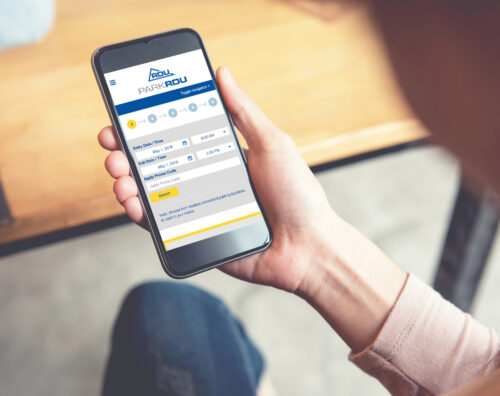
For example, at Raleigh-Durham International Airport (RDU) customers who book parking online get a scannable QR code via email that opens the garage gate. A license plate reader recognizes their vehicle when they exit. San Francisco International Airport’s new touchless online parking system, rolled out right before Thanksgiving, works with scanned QR codes as well.
Contactless check-in & bag drop, biometric gates
Pre-pandemic, most passengers knew about but did not always use online check-in, digital boarding passes, and technology that let them print their own luggage tags at home and check in their own bags at the airport. Now those no or low-contact options are all but mandatory.
Airports and airlines are also piloting and fast-tracking a wide range of biometric technology and other tools that make the airport journey a bit more touch-free.
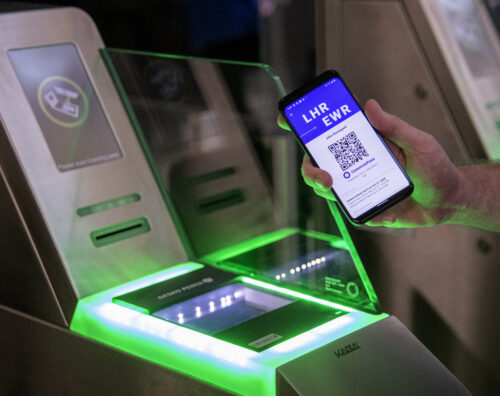
Aviation technology company SITA and Los Angeles International Airport (LAX) recently piloted a system that allows passengers to use smartphones to operate check-in kiosks and avoid having to touch the communal screens. SITA’s Smart Path biometric touch-free boarding and exit gates are also operating at Orlando International Airport.
And multiple airlines are now testing a digital health passport, called CommonPass. The app will safely store health information needed for travel and eliminate the need for passengers to hand over paper copies of COVID 19 test results.
The security checkpoint
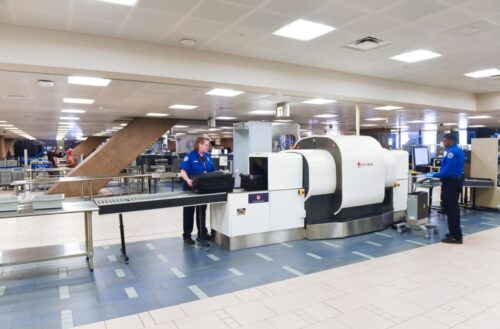
The Transportation Security Administration is reducing touchpoints at many airport security checkpoints.
More than 834 Credential Authentication Technology (CAT) units that reduce the time needed to confirm a traveler’s identity and allow travelers to put their own IDs into the scanner are now in use at 115 airports. And new computed tomography checkpoint scanners at 267 airports give TSA officers a 3-D view of carry-on bags. This decreases the need to open and touch bags and reduces the contact time between TSOs and passengers.
Touchless food ordering and delivery
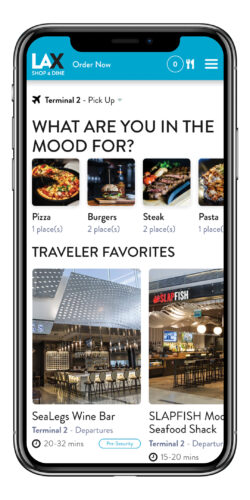
Before COVID-19, the Grab app let hungry travelers skip lines and use their mobile devices to order meals for pick-up from a limited number of restaurants in a limited number of airports.
Avoiding airport lines is more important now. So, airports in Los Angeles, Denver, Minneapolis-St. Paul and other cities are partnering with Grab to create accessible platforms that expand touch-free ordering options and broaden the number of participating concessions.
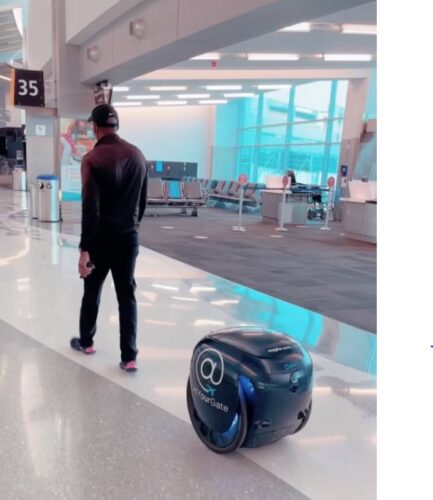
In a growing number of airports, runners for At Your Gate make in-terminal deliveries of meals and other items ordered via mobile devices from airport restaurants, newsstands, and retail shops.
The service, currently offered at LGA, JFK, EWR, DEN, BOS, SAN, MSP, PDX, and PHL is getting even more convenient and contactless at SAN and some other airports with the introduction of robots.
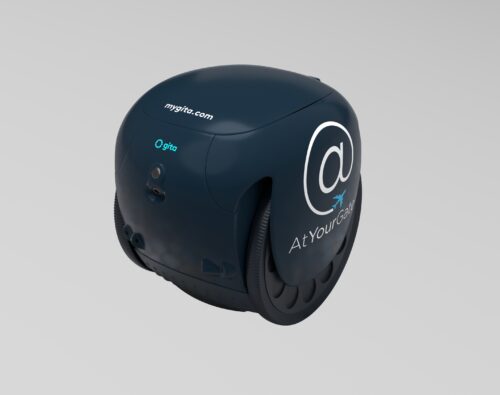
In partnership with Piaggio Fast Forward, At Your Gate delivery teams in JFK, MSP, DEN, and SAN will soon be joined in their rounds by small Gita robots. Each follow-along robot has a bin that can carry up to 40 pounds and will be used for contactless delivery of meals and retail items ordered.
Virtual information booths
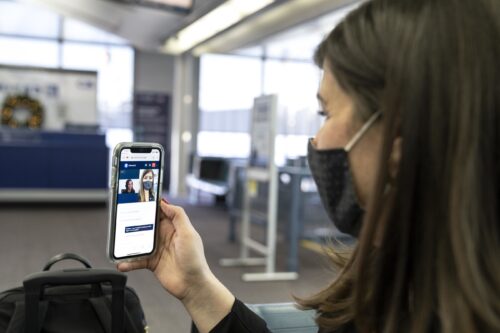
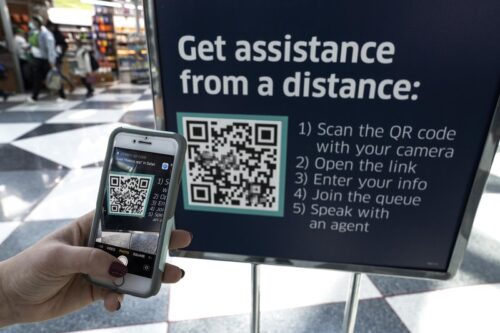
Many airport information desks are going contactless. At Louisville Muhammad Ali International Airport (SDF), LAX, DEN, BWI and other airports, passengers now use a touch-free tablet, a kiosk, or their own mobile device to connect with customer service agents who answer questions live, but from a distance.
Airlines are jumping on this bandwagon too. In December United Airlines debuted its “Agent on Demand,” service which lets customers in the airline’s hub airports use a mobile device to call, text, or have a live video chat with a customer service agent.
Dreaming about travel? Us too. But how will our journeys be changed by the pandemic?
(This is a slightly different version of a story we prepared for NBC News.)
Sanitizing stations, “stand here, not there” floor stickers, and cotton swabs up the nose were not part of the travel experience before the COVID-19 pandemic.
But as travelers edge their way back into airports and hotels and onto airplanes, cruise ships, and ski slopes, they will be dealing will all that – and more.
But for how long? We asked some industry experts to tell us which new travel trends, technologies, and protocols they think will stick around.
Who will travel and what will they expect?
“Businesses are connecting with their customers virtually and leisure travelers are discovering the joys of staying local,” says Chekitan Dev, a professor at Cornell University’s School of Hotel Administration in the SC Johnson College of Business. “Many business travelers will lower their number of trips, and leisure travelers will shift from ‘hyper-global’ to ‘hyper-local’ travel for the foreseeable future.”
For well into 2021 travelers will be expected or required to wear masks and observe physical distancing. And airlines, airports, hotels, and cruise lines will be expected to continue making health, safety, and cleanliness a priority.
“People will look at a dirty rental car or bus or airport or airline cabin or hotel room and wonder, ‘Uh oh, am I putting myself at risk?’ says Henry Harteveldt, a travel industry analyst at Atmosphere Research Group. “Travelers will continue to hold travel brands’ feet to the fire to keep their facilities clean.”
Entertainment
Once we move past this pandemic “we’re going to have amnesia about some of this and likely go back doing many of the same things we used to do before,” says Devin Liddell, futures and design strategist with Seattle-based Teague global design consultancy.
Theme parks, museums, and other attractions will reopen, and Liddell says the best operators will retain systems put in place to orchestrate the flow of people. For example, “ski resorts that require reservations will likely create a better experience for everyone on the lift lines,” he says.
Hotels
Hotels will likely maintain flexible cancellation policies and keep in place the intensive protocols for cleaning guest rooms and public spaces.
But instead of housekeeping only upon request or not at all during a stay, “elective housekeeping will be more about providing guests with an easy ‘opt-out’ of housekeeping services,” says Bjorn Hanson, adjunct Professor at New York University’s Tisch Center of Hospitality.
Cruising
Most major cruise lines are maintaining – and extending – the voluntary suspensions of sailings until sometime in 2021.
When sailings resume there will be changes onboard.
“The buffet will move away from the more traditional self-serve approach toward a more crew-served style – something that lines have already said will likely be a more permanent change,” said Colleen McDaniel, Editor-in-Chief of Cruise Critic. And “changes to muster drills could also stick around beyond the pandemic. Rather than mass events that put all passengers in small spaces at once, we’ll continue to see this more self-driven.”
Airports
At airports, “the pandemic has dramatically accelerated the adoption of countless new technologies and protocols to keep people healthy and safe and streamline the entire air travel experience,” says Kevin Burke, president and CEO of Airports Council International-North America.
“Many of these changes will outlast COVID-19,” he adds.
Those technologies and protocols include sanitizing robots, restrooms that alert maintenance crews when cleaning is needed, contactless check-in, bag check and credential authentication, and the increased ability to order and pay for food or duty-free items from a mobile device and receive a contactless delivery anywhere inside the airport.
The current pandemic will change future airports as well.
“We plan to implement many public health procedures into the design of our new terminal building,” scheduled to open in 2023 said Christina Cassotis, CEO at Pittsburgh International Airport, “It will be the first post-pandemic terminal to open in the country that will be designed with these issues in mind.”
Materials in airports are going to change, too, says Luis Vidal, president and founding partner at Luis Vidal + Architects. “The use of new photocatalytic devices based on antibacterial, antiviral, and ‘autocleaning’ material, such as titanium dioxide, silver or copper, in high-use areas will become the norm.”
Airlines
(PRNewsfoto/United Airlines)
Airlines will maintain stringent cleaning and sanitizing protocols. Generous rebooking and cancelation policies may stretch out for a while. But most airlines will soon stop blocking middle seats.
Coming back soon: the full range of in-flight services, especially at the front of the plane.
“The traveling public is not happy with the bare bones on-board experience right now,” says Harteveldt of Atmosphere Research. “They understand the need for limits, but people are saying they won’t accept paying for a premium experience and getting something that is subpar.”
Vaccines, Travel Corridors, and insurance
As the COVID-19 vaccine becomes available, it may become a ‘must-have’ for travelers.
The new normal for global travel may also include digital health passports displaying a traveler’s vaccine or negative test status and, by spring, travel corridors (also known as travel bubbles) that allow travel between countries with low COVID-19 infection rates, says Fiona Ashley, VP Product & Solution Marketing SAP Concur.
While there are some great fare deals being offered right now, as demand returns, so will higher prices. And going forward, travelers will likely need to factor in the added costs of COVID-19 tests and travel insurance.
“Travel insurance may become a non-negotiable as destinations continue to require medical insurance, and travel suppliers tighten their refund policies,” said Megan Moncrief Chief Marketing Officer of travel insurance comparison site Squaremouth
“The Covid-19 pandemic highlighted the vulnerability of the global travel industry. I think travelers will be more cautious about investing in expensive trips without insurance.”
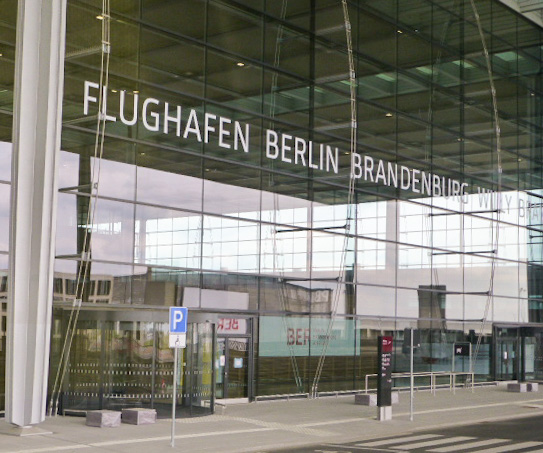
After 9 years of delays and false starts, Germany’s third-largest airport, Berlin Brandenburg “Willy Brandt” Airport (BER) is scheduled to open on October 31, 2020.
We won’t be able to be there for the opening, but we’re looking forward to a visit once this COVID-19 business is resolved.
In the meantime, here’s a recap of our 2014 visit to the airport site, when we joined a bus tour of the unopened airport.
Our report first appeared on USA TODAY.
Berlin Brandenburg Airport is late for an important date
The highlight of my late June visit to the unopened and much-delayed Berlin Brandenburg Willy Brandt Airport was racing down a runway as a passenger in a tour bus going more than 60 miles per hour.
It was also one of the saddest parts of the tour.
That’s because due to technical glitches, cost overruns, corruption and project mismanagement, tour buses – not airplanes – are likely the only vehicles that will be barreling down the BER runways for quite some time.
Under construction since 2006, Berlin’s much-needed new airport was designed to serve 27 million passengers, with an initial opening target date of November 2011.
That date was pushed back to June 3, 2012, and, despite trial runs during which the airport authority did tests of the baggage carousels, check-in desks, and security checkpoints, and simulated what it termed “all imaginable scenarios,” a problem with the airport’s fire safety and suppression system was discovered.
With just four weeks’ notice, opening day was called off.
Since then multiple target dates for a new opening day – six or seven, it’s hard to keep count – have come and gone. Now all the company managing the project will say is that “an opening date is expected to be announced at the end of the year.”
2016 has been bandied about as the next possible opening date, but additional problems and embarrassing operational revelations keep cropping up.
In May, there was an announcement of a suspected corruption case involving bribes for the awarding of contracts. In early June, there was out-of court settlement between the airport management company and airberlin, the major tenant at Berlin’s outdated Tegel Airport, over claims the airline felt it was due because of delays in the switchover.
And at the end of June, it was revealed that the engineer responsible for designing the new airport’s fire safety system was in fact just a draftsman, not a real engineer, and had been fired.
Besides showing off any progress, one reason the airport authority offers BER tours “is because it’s important that people don’t only read about the airport in the newspaper and see the reports on TV,” said an airport spokesman.
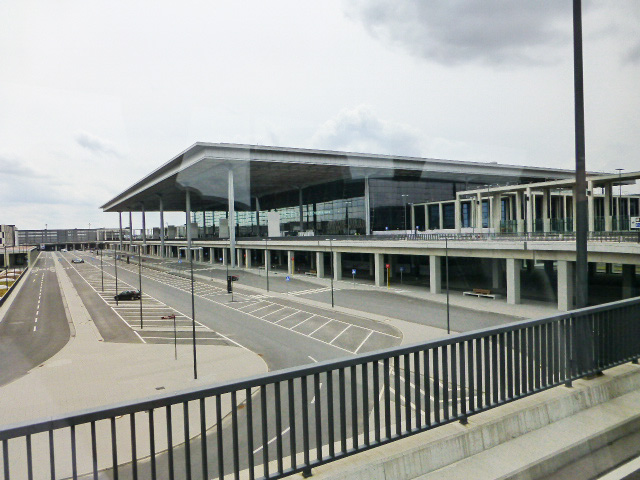
Tour buses stop first at a 105-foot-tall observation tower offering a bird’s eye view of the unopened airport terminal, the unused runways, empty parking lots, and assorted other facilities-in-waiting.
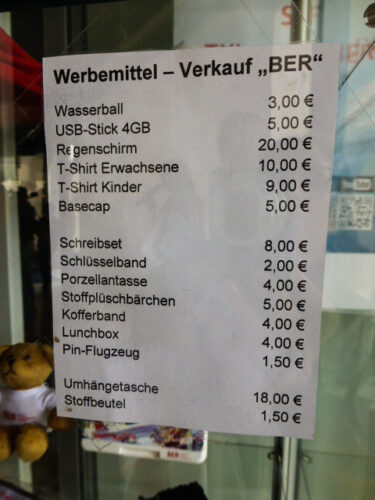
At the bottom of the tower is an airport information center, with a scale model of the airport and a glass cabinet of souvenirs emblazoned with the BER logo.
The staff on duty the day I visited said they don’t sell many of these souvenirs to tourists. And they seemed amused when I asked about purchasing some BER t-shirts, baseball caps, tote bags, inflatable plastic beach balls, and small, plastic lunch boxes.
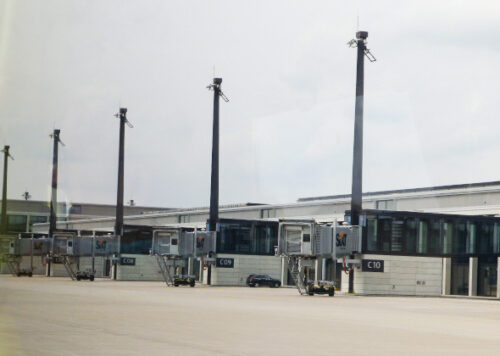
Our tour bus then drove slowly past the very quiet office, cargo, and airport security facilities and by the railway station, where empty trains run each day to make sure systems remain working.
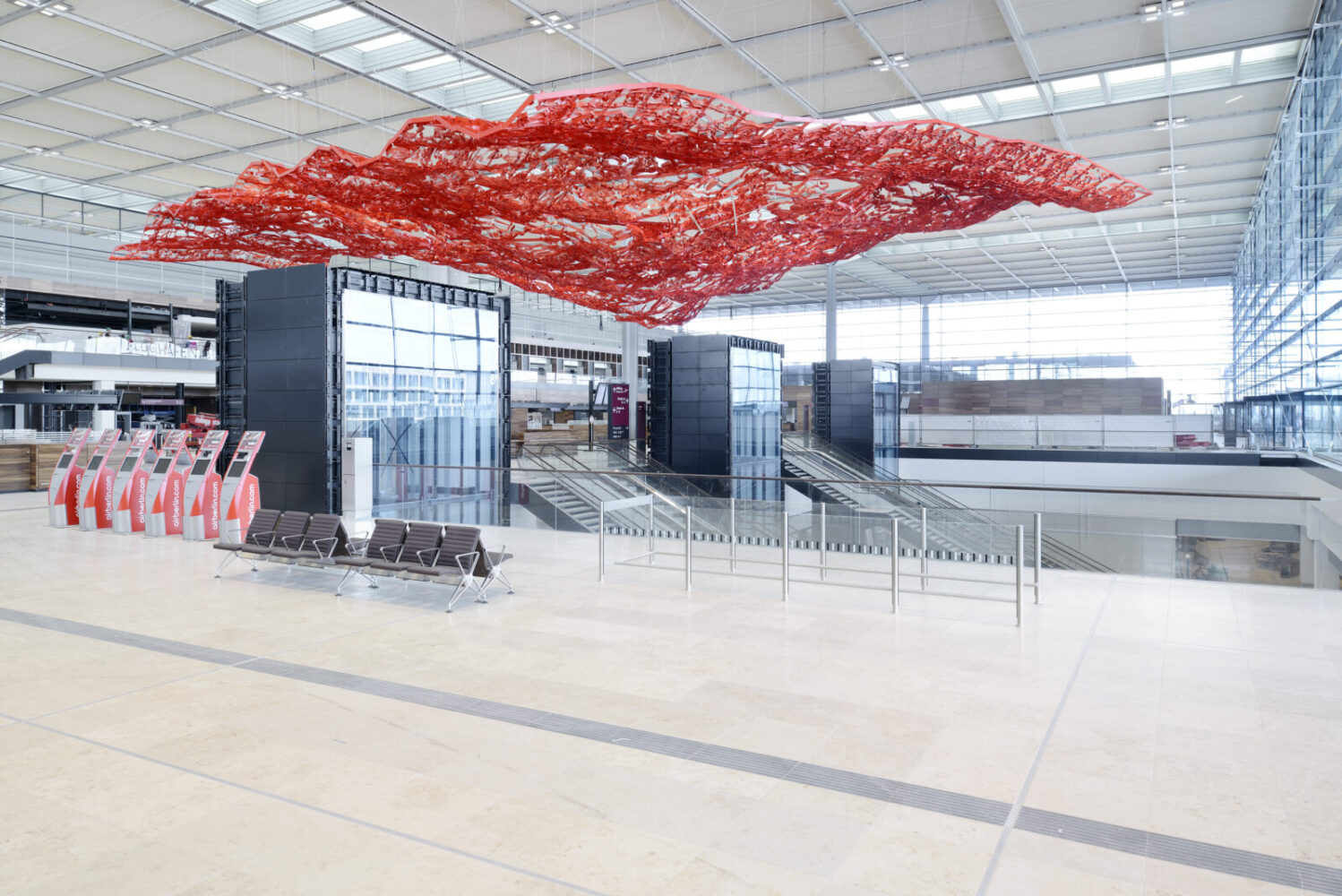
Photo ops of the front of the main terminal building were only offered from inside the bus, but the terminal’s glass façade offered a glimpse of “The Magic Carpet,” by Pae White. The large, red, work of art, one of several pieces specially-commissioned for the airport, hovers over the check-in lobby.
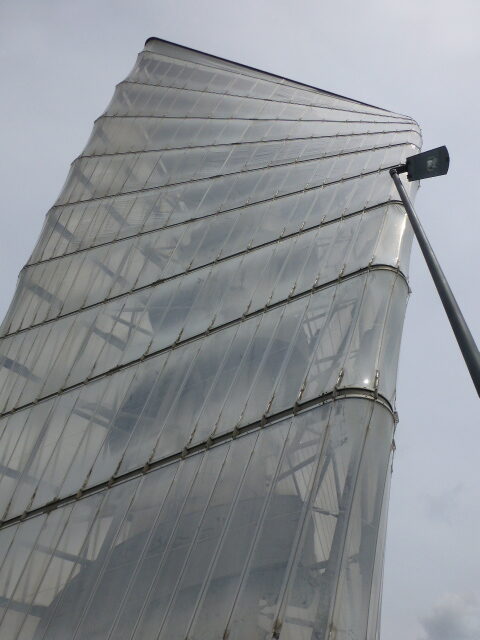
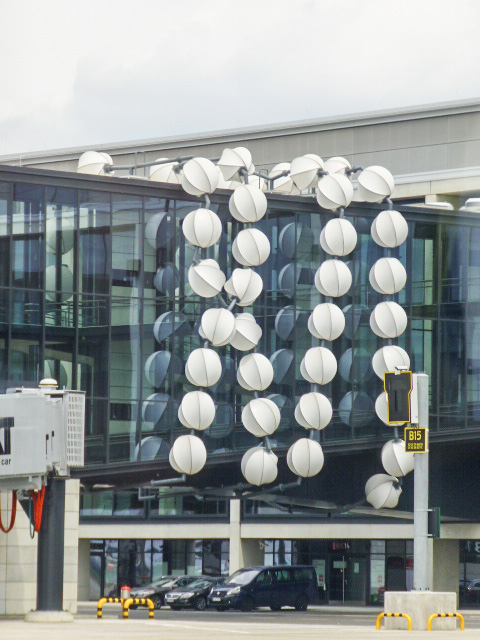
Out back, the bus pulled up at BER’s one A380-compatible gate, which has a jet bridge draped with Olaf Nicolai’s “Gadget,” a piece of art that looks like a string of giant pop beads and is designed to change colors to match those of the livery of the airplane at the gate.
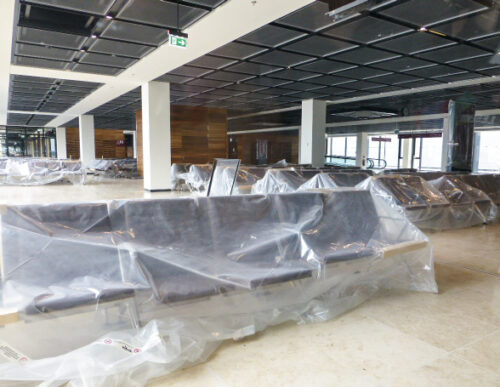
Tour-goers were allowed off the bus here and invited up a set of not-quite-finished stairs for a look at a gate area where seats were installed, but still wrapped in plastic, and ceiling panels gaped open.
“It’s not unusual for big projects like this to be over budget,” said Johann Bammann, a retired architect whose tour ticket was a gift from a friend. But delays are dragging on too long, he said, “it’s time for the city to have a new front door.”
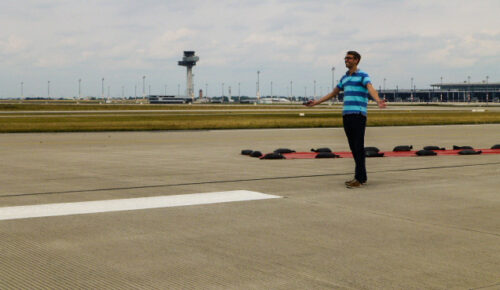
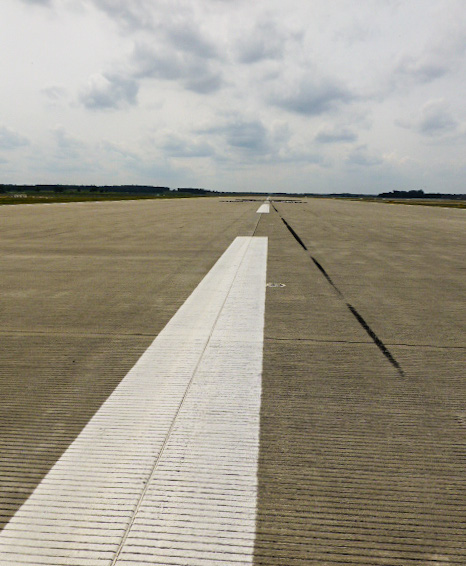
After a stop near the control tower, the bus made that dash down the runway, stopping to let passengers out to run around and pose for photos.
“It’s just unbelievable. I can’t understand why it’s taking such a long time to open this airport,” said Barbel Liedtke, a former Berlin-based Pan Am Airlines employee taking the tour with a friend. “But I’m sure there are a lot of people to blame.”
Our first post sharing examples of how airports are embracing the “How it Started Twitter meme got so long that we’ve started a new post.
Please let us know if you find new responses that should be added. We’ll add them as we find them.
We've got the historic preservation edition of the "How it started, how it's going" meme that's going around. We are, after all, the oldest municipal airport in California! What changes do you see in this 1956 photo of our historic terminal compared to present day? #LBHistory 🧐 pic.twitter.com/Z9bQnDDrP7
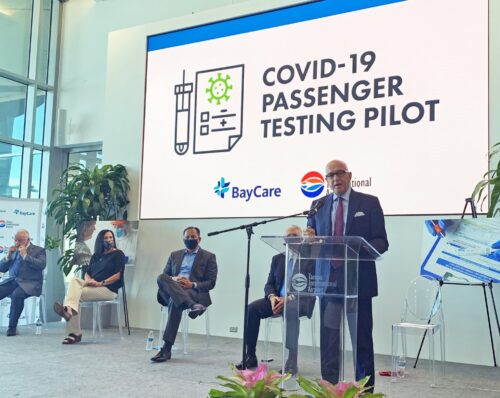
Because so many countries, and some states, require arriving travelers to have proof of a recent negative COVID-19 test, airports and airlines are rushing to make those tests available at the airport.
Those services, many of which are labeled as pilot programs, include COVID-19 sniffing dogs at the Helsinki Airport; XpresSpa’s new XpresCheck program at JFK International and Newark Liberty International airports: and Alitalia’s COVID-tested flights.
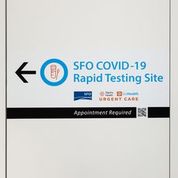
In advance of Hawaii reopening its doors to travelers on October 15, United Airlines is offering COVID-19 testing at San Francisco International Airport. And Hawaiian Airlines is setting up drive-through testing at both SFO and Los Angeles International Airport (LAX).
In most cases there is charge from $80 to more than $250 for the tests. In some cases, the tests are free.
More COVID-19 tests for air travelers.
A new bundle of airport and airline-hosted COVID-19 testing programs was announced on Tuesday, Sept. 29.
Tampa International Airport (TPA) will run a pilot program in October offering travelers both rapid antigen tests and PRC, Polymerase Chain Rection tests. Fees apply.
Oakland International Airport (OAK) will begin offering free, rapid-result COVID-19 tests to employees and the public beginning Oct. 6. An expansion of the program is planned for October 15, when travel to Hawaii reopens.
And American Airlines announced it is working with several foreign governments to offer pre-flight COVID-19 tests for customers flying to international destinations.
The program starts in October with flights from Miami International Airport to Jamaica for residents returning home and for flights to the Bahamas.
There are plans to expand to other markets soon.
For American’s domestic flights from Dallas Fort Worth International Airport (DFW) to both Honolulu (HNL) and Maui (OGG), the airline is working with a vendor offering several testing options, including onsite rapid testing at DFW airport. Fees apply.
No doubt other airlines and airports will be rolling out COVID-19 test programs soon. But already the offerings are confusing and, in many cases, costly. Here’s hoping some sort of consistency evolves in the next few months.
This summer several airports, including Ontario International Airport (ONT) in Southern California, turned their empty parking lots into drive-in movie theaters.
We’re pleased this temporary airport amenity sticking around into the fall. We see at least two airports will be hosting drive-in movie nights in advance of Halloween.
Nebraska’s Lincoln Airport (LNK) will show Disney’s ‘Hocus Pocus’ for free during a drive-in movie night on October 16. They’ll also be hosting a kid’s Halloween costume contest.
And on October 17, Akron-Canton Airport (CAK) will host a drive-in movie night in the airport Economy parking lot. ‘Harry Potter & the Sorcerer’s Stone’ will be shown.
Grab a broomstick and prepare to journey through the skies as you sit back, relax and watch Harry Potter & the Sorcerer’s Stone in our Economy Lot. Learn more: https://t.co/653AUjfdj7pic.twitter.com/8L4ZXwvH1s
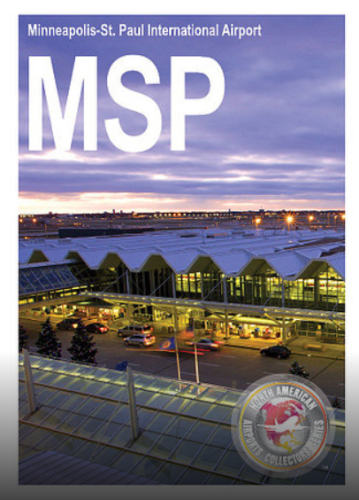
MSP sits on land that, back in 1914, was home to Snelling Speedway.
Auto racing gave way to airmail service and Speedway Field. In 1923 the airport was renamed Wold-Chamberlain Field in honor of two local pilots who lost their lives in combat during World War 1.
The airport’s first passenger service was in 1929 and in 1948 the MSP acquired its current name: Minneapolis-St. Paul International Airport.
Please keep in mind that some of the amenities we feature here may be currently unavailable due to health concerns. We’re confident they’ll be back.
5 Things We Love About Minneapolis-St. Paul International Airport
1. Award-winning restrooms at MSP
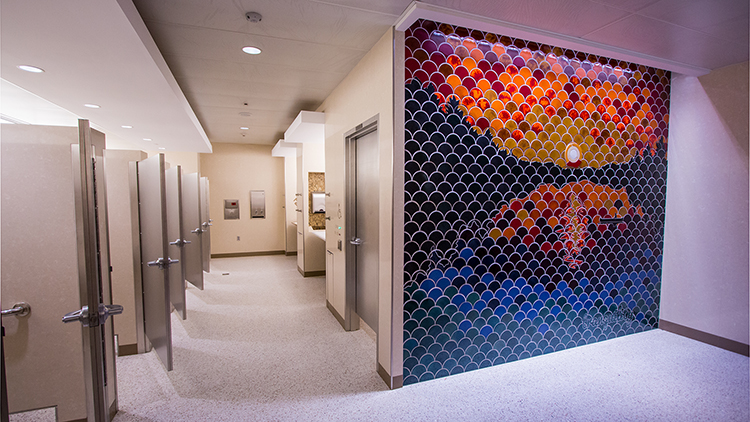
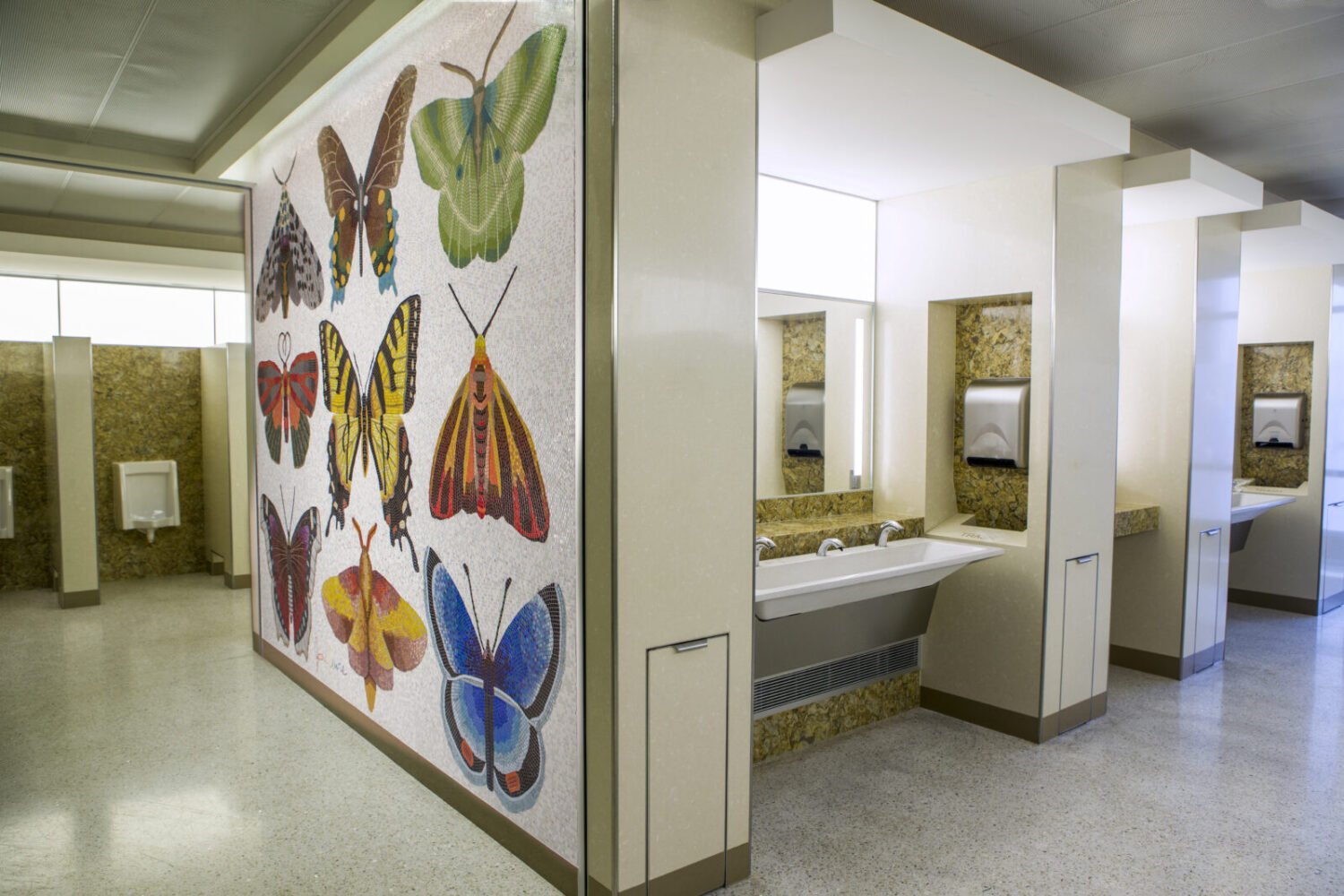
Clean bathrooms are an important airport amenity. Add art and an airport’s bathrooms can become something people talk about and give awards to.
That’s what happened when several sets of MSP restrooms were remodeled to feature stunning artist-made mosaics and the latest in cleaning technology.
In 2016, MSP Airport won first place in an annual contest that crowns America’s best public restroom. That was the first time an airport loo won the award.
2. The arts program at MSP
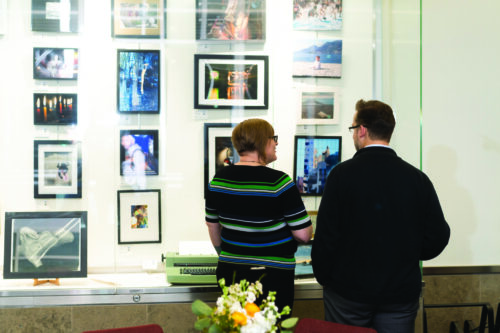
In 2019, MSP airport presented more than 900 live music and dance performances.
This summer, local authors began online readings from their books and Once the pandemic is over, the plan is to have monthly readings in the art gallery in the Airport Mall in Terminal 1.
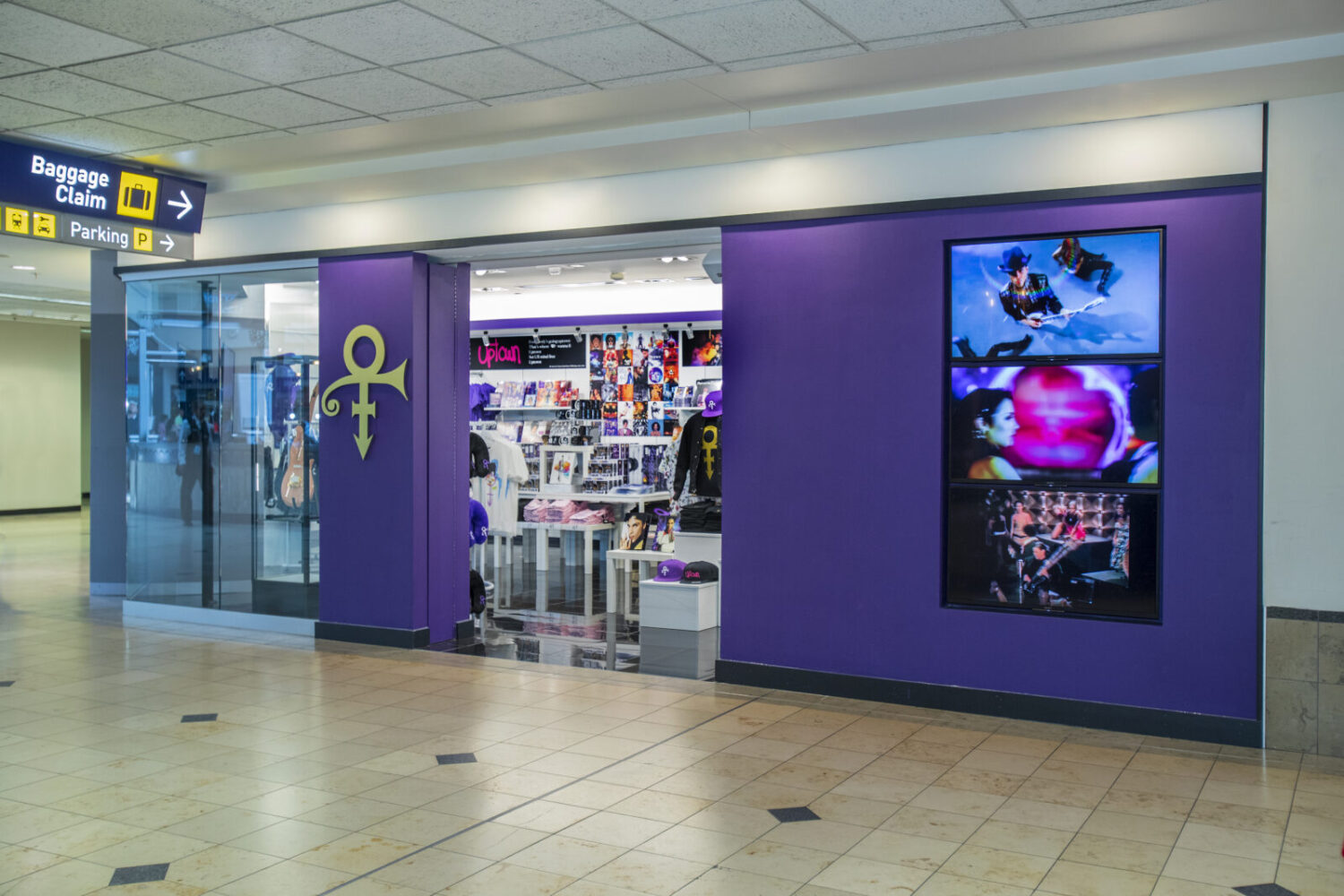
3. The Prince store at MSP
The late musician Prince is a beloved Minnesota-born icon.
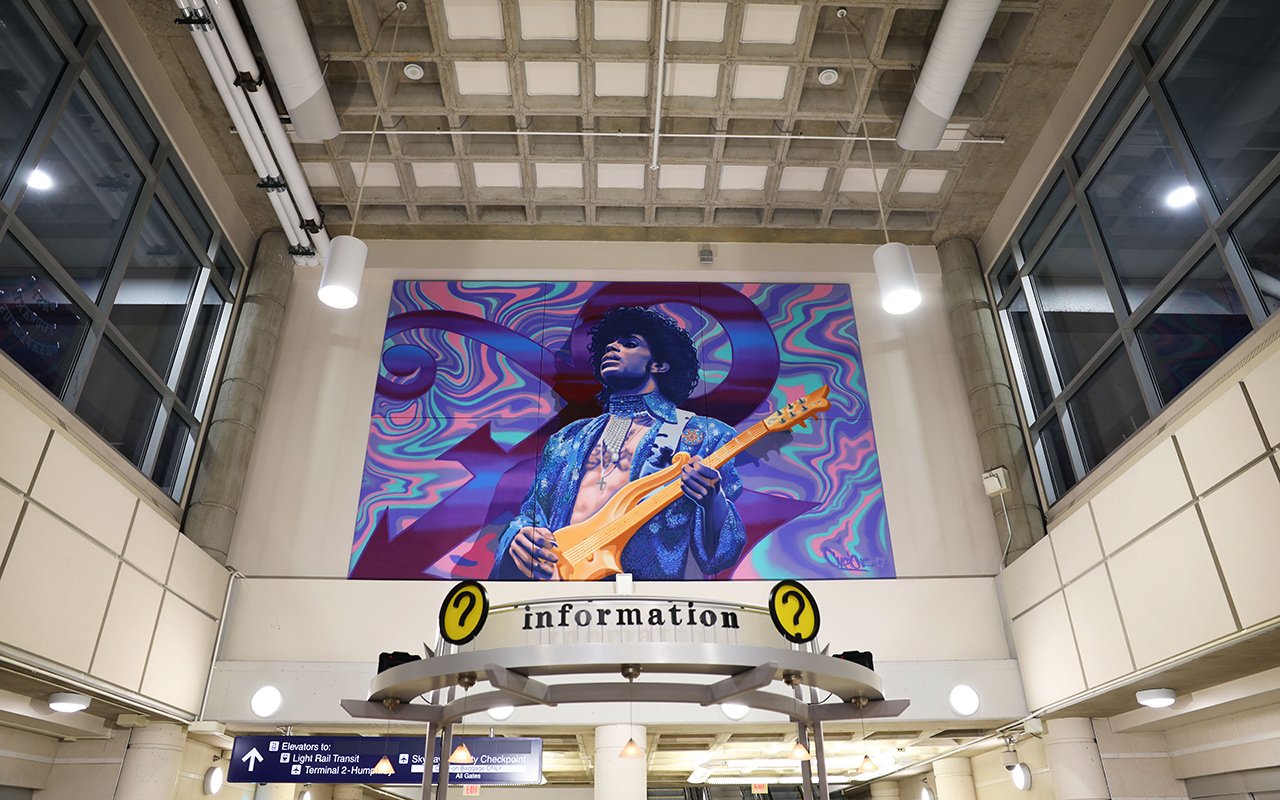
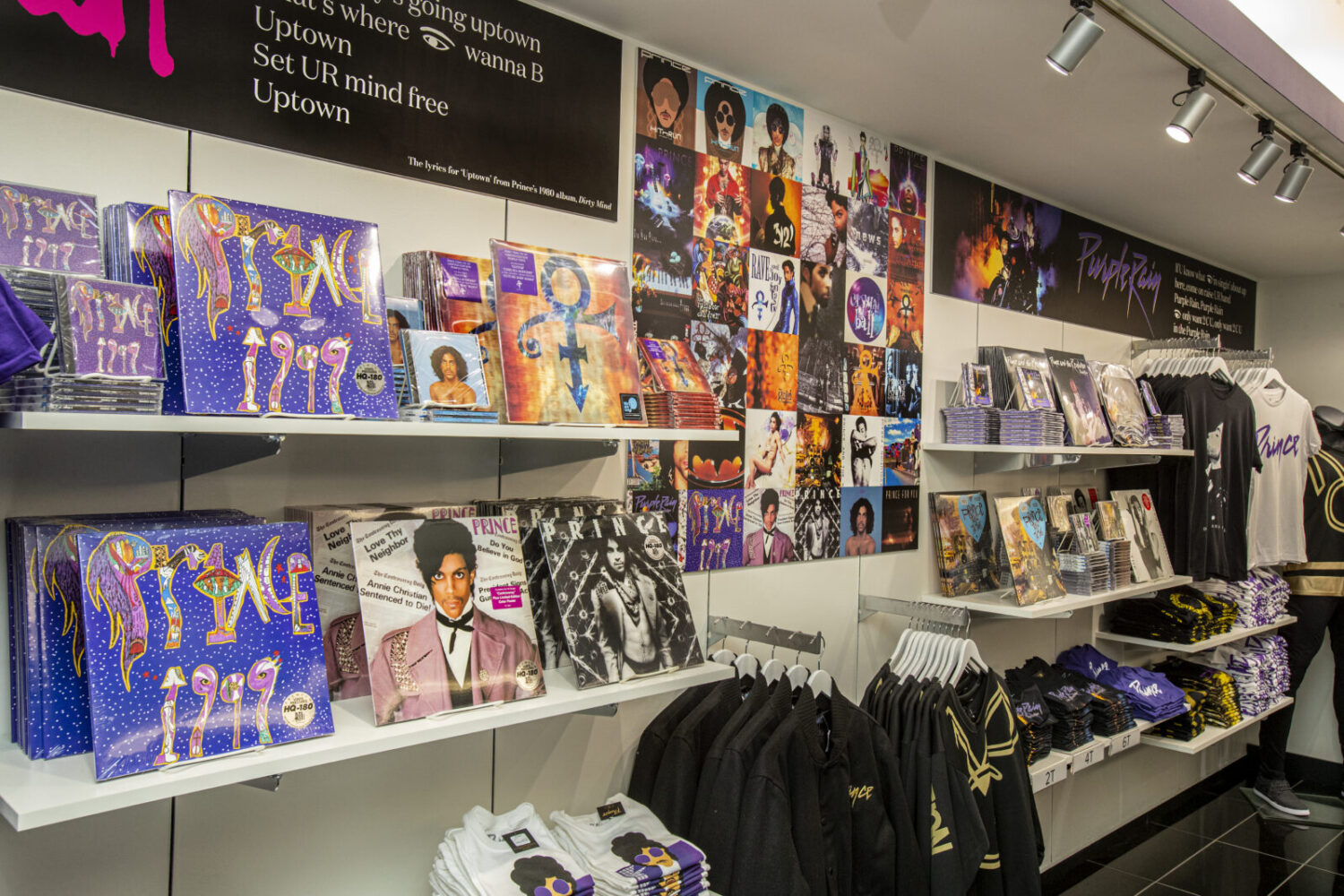
In addition to a giant 16-foot-by 24-foot mural of Prince by artist Rock Martinez, MSP airport also has a Prince store in Terminal 1 where fans can buy all sorts of Prince-branded merchandise.
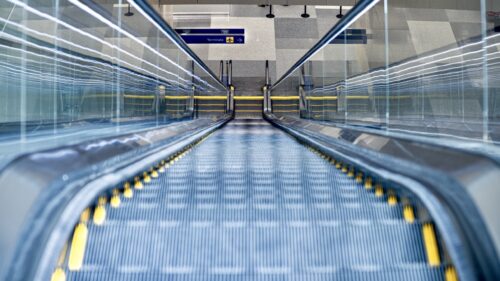
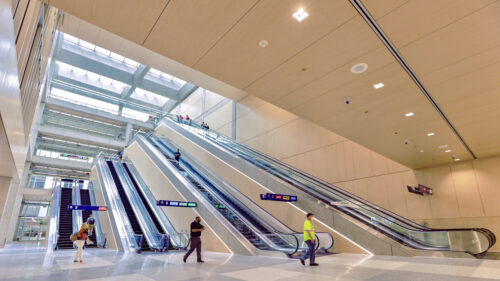
The escalator is 55 feet tall, travels about 100 feet per minute and is capable of transporting 9,000 people per hour.
The ride – up or down – takes 1 minute and 15 seconds.
All rental car services, off-airport parking shuttles and all bus services are in the new Silver Ramp.
5. Animal ambassadors at MSP
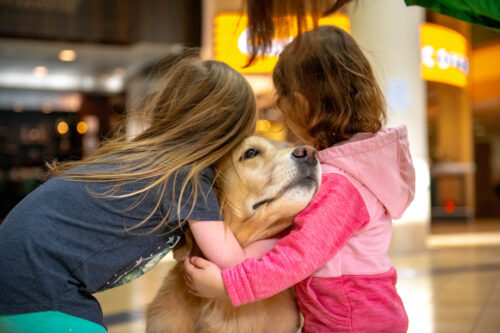
98 therapy dogs – and a therapy cat named Stitches – serve as animal ambassadors at MSP airport, helping reduce travelers’ stress.
Bonus: The hotel at MSP Airport
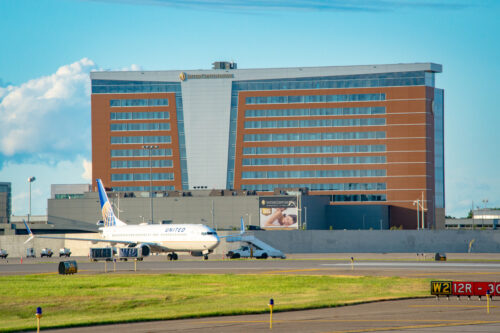
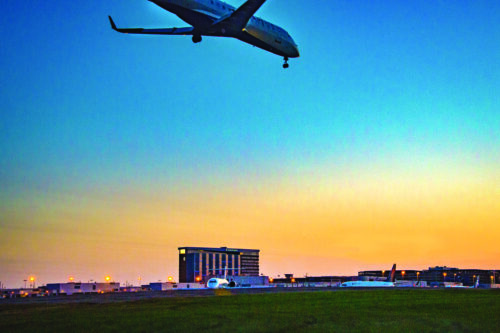
MSP Airport has a hotel located between the inbound and outbound roadways at Terminal 1 with direct access to Concourse C via a skyway.
The 291-room, 12-story Intercontinental MSP Airport has two restaurants, a cocktail bar, a TSA checkpoint (currently closed due to COVID), a fitness center, a thermal pool, and a collection of work by local artists.
One thing MSP Airport does not have is an aircraft viewing area with an outdoor pool.
That was a great April Fools Day joke from 2018 that we’re still wishing might come true.
We're excited to announce our new aircraft viewing area with an outdoor pool! Tickets for entry will be available later this year. Check out https://t.co/qYS9EZv0f7 for more information. pic.twitter.com/rKqwuYdiuL
Keep in mind that some of the amenities we love may be temporarily unavailable due to health concerns. We are confident they will be back.
If we miss an amenity you love at RNO, please let us know in the comments section below.
And feel free to nominate another airport to be featured in the 5 Things We Love About… series.
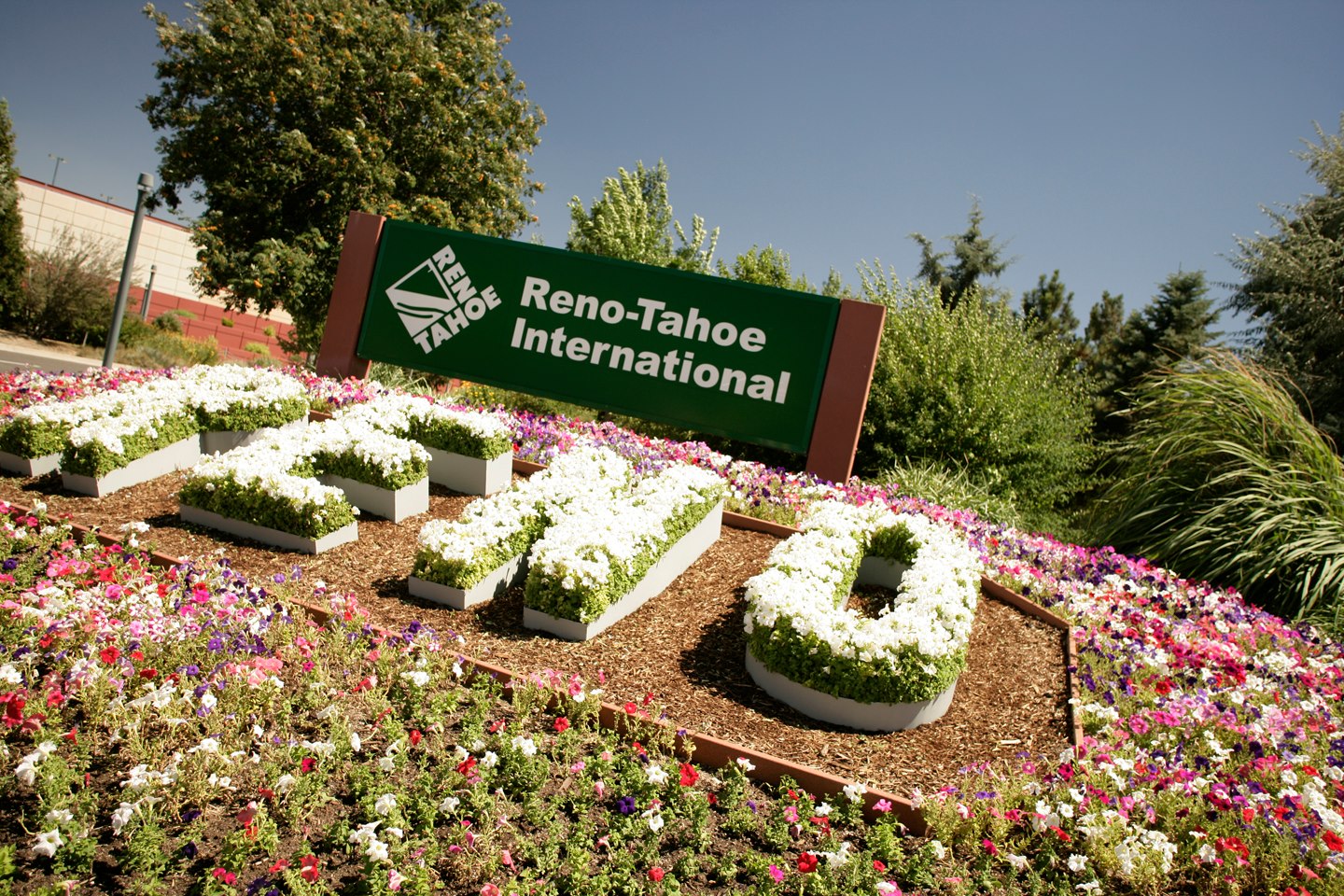
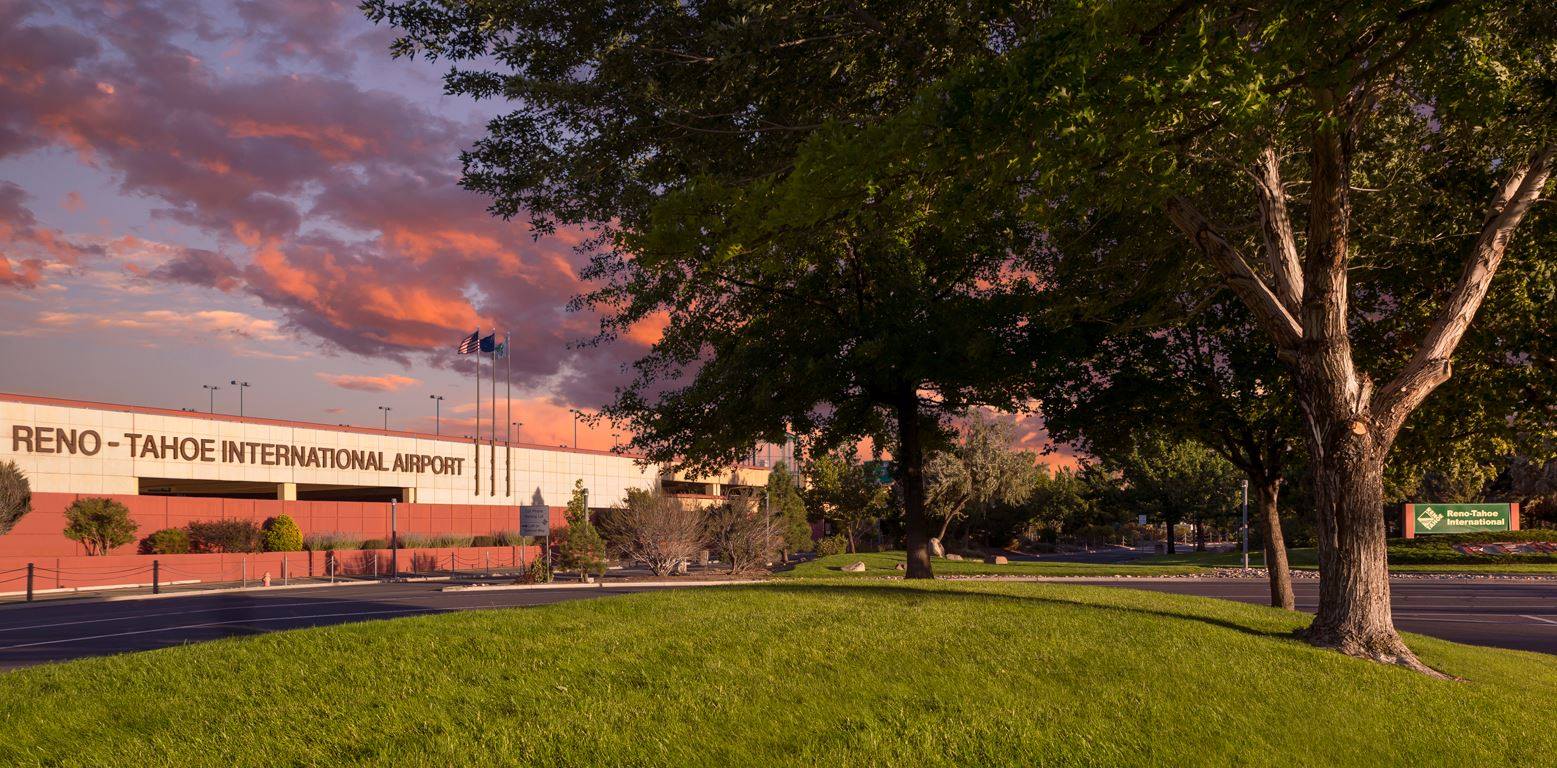
5 Things We Love About Reno Tahoe International Airport (RNO)
1. RNO’s Kindness Take Flight Team
Passengers traveling through RNO often encounter members of the airport’s Kindness Takes Flight team marking a holiday or just doing something fun and, yes, kind.
On National Compliments Day they handed out free compliments.
On National Chocolate Cake Day, it was complimentary chocolate cupcakes and on National Popcorn Day (which we celebrate every day), the team distributed popcorn. And on National Dog Day, traveling pups received milk bones.
Sometimes, the teams gets a little far out. Like when they went to a galaxy far, far away for inspiration for their May the 4th Be With You celebration.
(Part 1) May The Fourth (and your mask) be with you today. Many airlines require masks or facecoverings for passengers flying right now. Check with your airlines before arriving at RNO. pic.twitter.com/gBIaTedbPr
— Reno-Tahoe Int’l Airport (@RenoAirport) May 4, 2020
(Part 2) Social distancing we must practice. Even with The Force, you must travel safely. Maintain at least 6 ft. between other humans and droids. Wash & sanitize your hands frequently. Lower your light sabers at the security checkpoint. Be safe this May The Fourth. @bigvicmediapic.twitter.com/8xOALb4lst
— Reno-Tahoe Int’l Airport (@RenoAirport) May 4, 2020
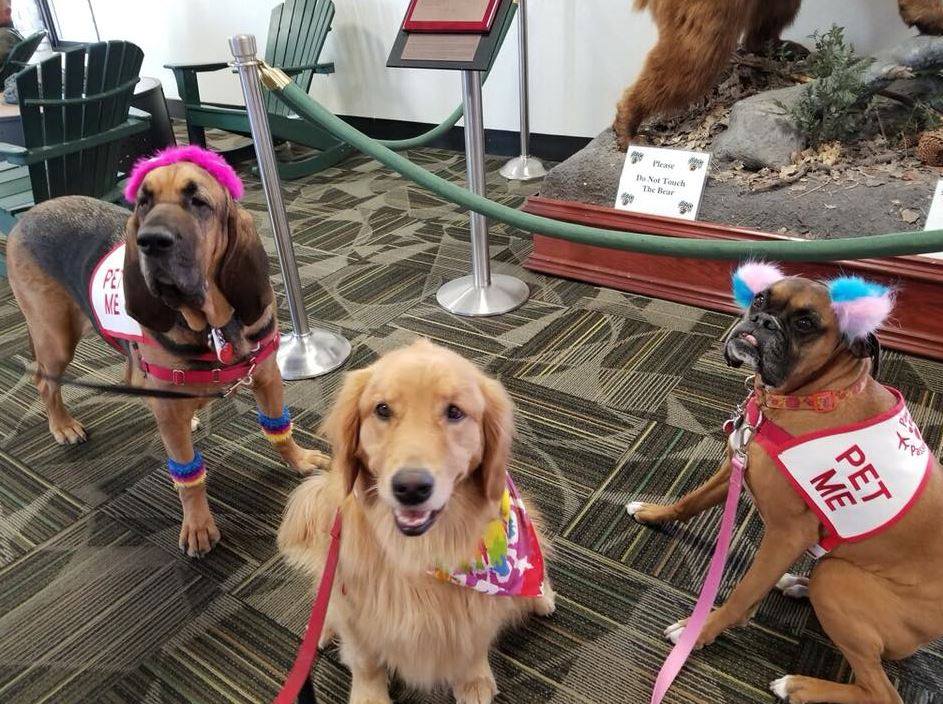
2. RNO’s Paws 4 Passengers team
Like an increasing number of airports around the country, RNO has a pet therapy program to help passengers destress while in the airport.
Before the program was put on pause (you thought I was going to say ‘paws,’ didn’t you) due to health concerns, RNO’s Paws 4 Passengers pups were “sanitized for your protection.”
We not only sanitize handrails & restrooms at RNO, we sanitize our Paws 4 Passengers therapy dogs! Pups are in the terminal now greeting passengers and spreading love, but not germs. After each scritch and pet, their owners wipe down the dogs with medical-grade sanitizing wipes. pic.twitter.com/iU1RIuSgTA
— Reno-Tahoe Int’l Airport (@RenoAirport) March 13, 2020
The Paws4Passengers therapy dog program at RNO is, um, pawsed at the moment, but look what they did. They like you! They really like you!@APTherapyDogspic.twitter.com/WqwEncgQXl
— Reno-Tahoe Int’l Airport (@RenoAirport) May 1, 2020
3. RNO and Burning Man
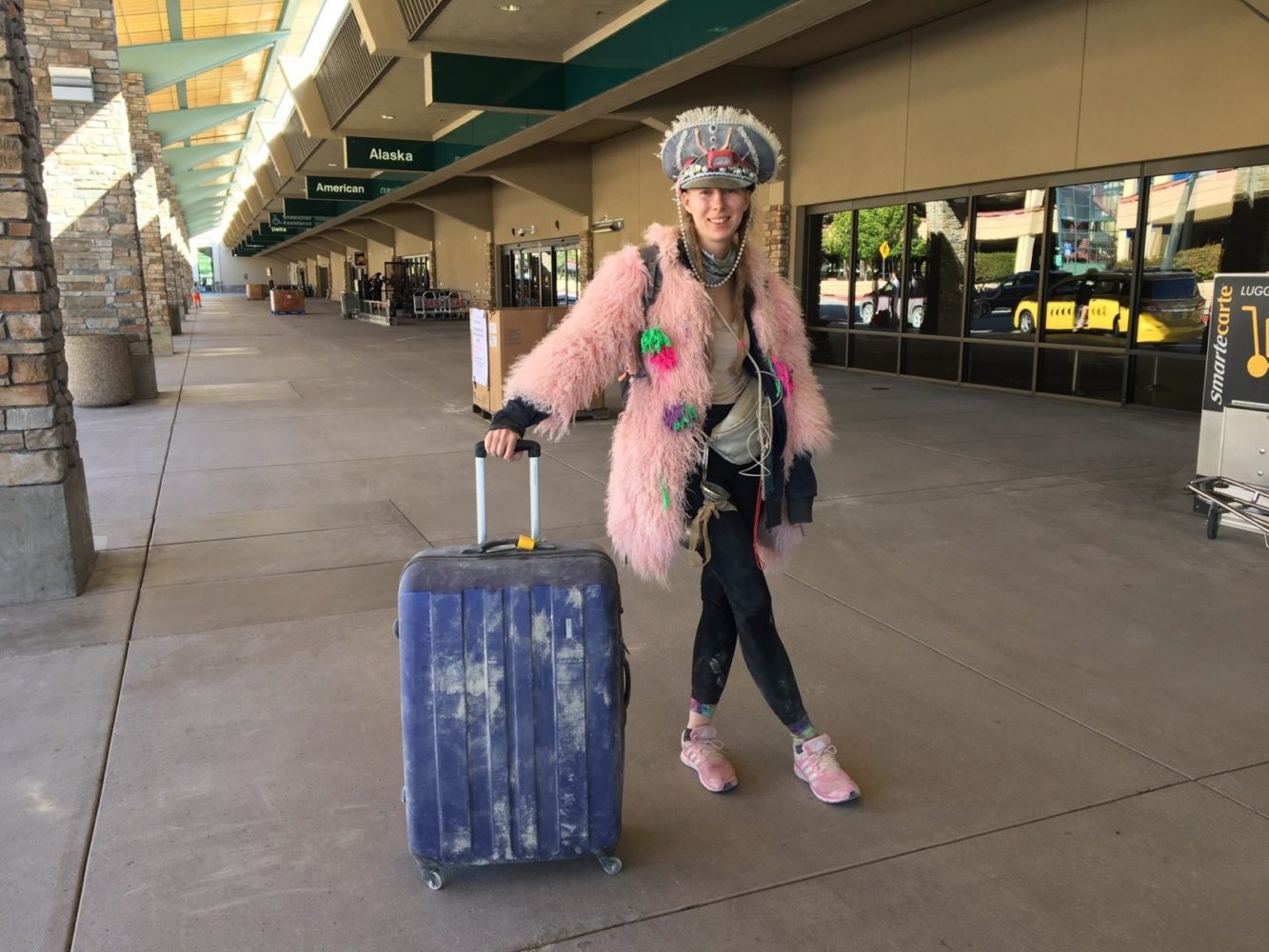
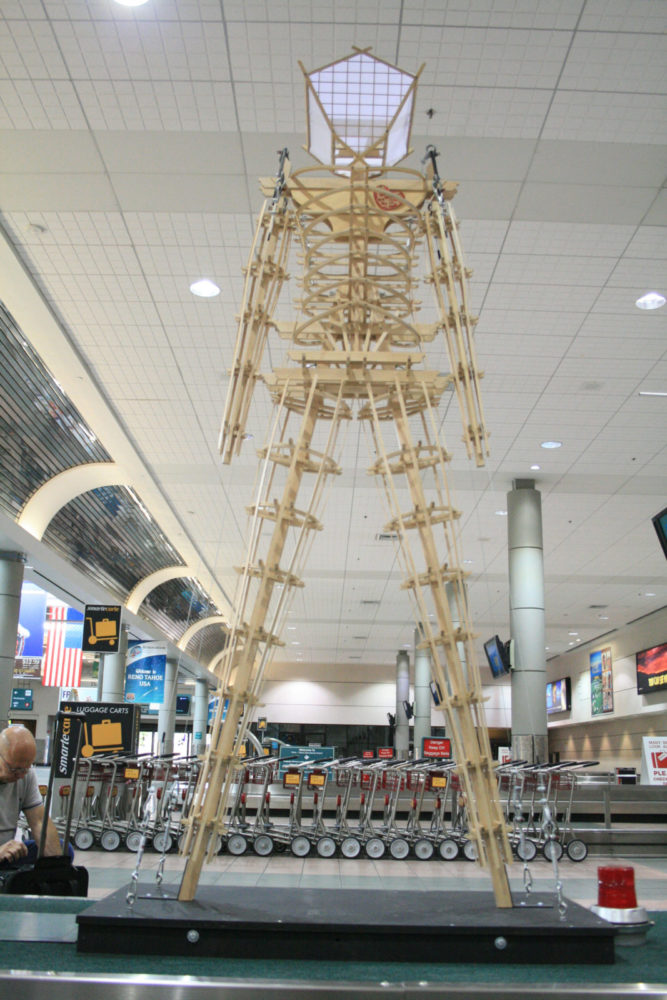
Each year – except this year – about 20,000 of the 70,000 attendees at the extravaganza in the Black Rock desert known as Burning Man arrive and depart Nevada through Reno-Tahoe International Airport.
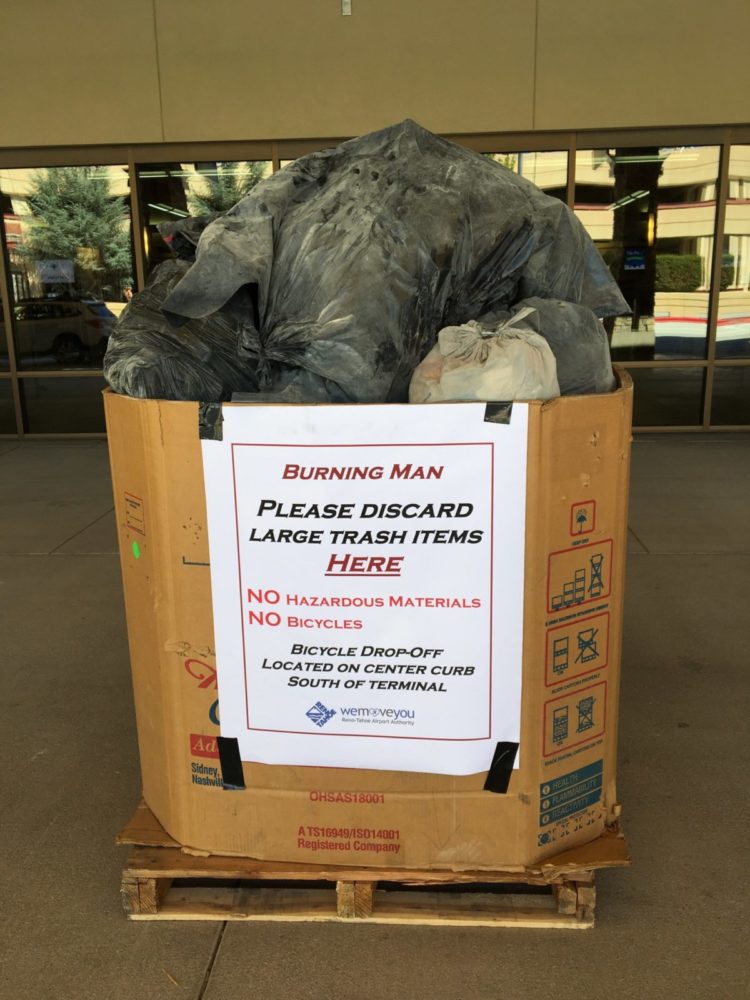
For tired and dusty revelers on their way home, the airport makes sure to have giant containers for the trash that must be taken off the festival site and plastic bags to wrap the luggage covered in Black Rock sand.
There is even a place where bikes purchased for transportation on the Burning Man site can be donated to local community groups instead of being thrown away.
4. Shopping at RNO
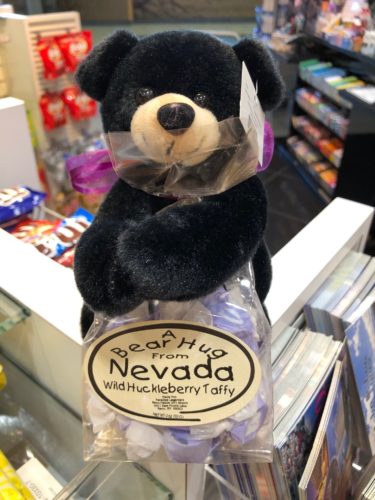
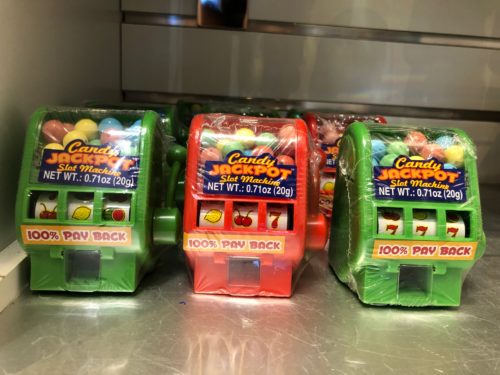
Here at StuckatTheAirport.com, we are big fans of shopping for offbeat and locally-themed items in airport shops.
RNO does not disappoint.
5. Bonus amenities at RNO
In addition to free local calls, bicycle parking and the common-use Escape Lounge, Reno-Tahoe International Airport (RNO) has real gaming machines on both concourses, in the Taphouse bartops and in the lobby of the terminal.
Did we miss any of the features and amenities you love at Reno-Tahoe International Airport?
If so, please leave a note in the comments section below. And let us know which airport you would like to see featured in our “5 Things We Love About…” series next.