This new Delta Air Lines in-flight safety video is fun. And the pop-up version is educational. And look – there’s Deltalina.
Safety
How scary are those “scary” airports?
What makes an airport scary?
For some, it’s those full-body scanners and long lines at security checkpoints. Others dread a flight cancellation that leaves them stranded and trying to get some shut-eye on an airport floor.
For its Scariest U.S. Airports list, travel website Airfarewatchdog.com defined scary as an airport where landings and take-offs may be quite tricky.
John Wayne Airport, in Santa Ana, Calif., made the list because “due to strict noise reduction requirements, pilots must ascend at full throttle and then abruptly cut back their engines.” Chicago’s Midway International Airport was added because it has runways that are “close to 2,000 feet shorter than the ones at new airports.” And Colorado’s Telluride Regional Airport, which Airfarewatchdog notes is higher than any other commercial airport in North America, is considered scary because pilots are not allowed to make touch-and-go landings, and so “only have one shot to land on the runway, which dips in the middle.”
The other “scary airports” on this list include:
- Aspen/Pitkin County Airport, Aspen, Colo.
- Sitka Rocky Gutierrez Airport, Sitka, Alaska
- Yeager Airport, Charleston, W.Va.
- San Diego International Airport, San Diego, Calif.
- LaGuardia Airport, New York, N.Y.
- Catalina Airport, Avalon, Calif.
Reagan National Airport in Washington, D.C. was added to the list because it is between overlapping no-fly zones that offer pilots a narrow path to steer clear of CIA headquarters, the Pentagon and the White House.
“If you stray too far to the left of the Potomac, you’ll risk a significant fine and potential violation,” said Kent Wien, a pilot who writes the Cockpit Chronicles feature for Gadling.com. “Too far to the right and you can’t successfully negotiate the last turn before the runway.”
It all does sound a bit scary. But should passengers with tickets into or out of any of these airports be very concerned?
“Lists like this seem to make me want to throw my coffee cup at the computer screen,” said Patrick Smith an airline pilot and author who blogs at AskThePilot.com. “They give people an idea that there really are unsafe or dangerous airports. But if any of these airports was really unsafe,” Smith said, “no airline would go anywhere near it.”
Smith said New York’s LaGuardia Airport is an example of an older airport with shorter runways and a “spaghetti snarl of runways and taxiways.” But he said “certain airports from a pilot’s perspective are just more challenging than others.”
And Smith said some of those challenging features can offer rewards for passengers. “Coming from Boston to LaGuardia Airport, you sometimes come right down the Hudson River and get a gorgeous view of Manhattan. There’s nothing harrowing about it,” he said.
“These places aren’t really ‘scary,'” said Wien, “They just offer pilots an opportunity to do something slightly out of the ordinary.”
Even Airfarewatchdog founder George Hobica admits that the airports on the “Scariest U.S. Airports” list may not really be so scary. “Let’s face it; flying is the safest way to travel other than on your own two feet. So some might prefer to call these airports ‘thrilling’ rather than scary.”
My story about “scary airports” first appeared on NBCNEWS.com.
Fun, new videos from Air New Zealand and British Airways
Air New Zealand, which brought us highly entertaining in-flight safety videos featuring flight attendants dressed in nothing but cleverly applied paint and that pixie-ish, always-exercising Richard Simmons (both videos below), now brings us another version of this in-flight necessity.
It’s definitely not as titillating at the “Bare Essentials” video (below), but it is sort of cute and has ‘guest appearances’ by Snoop Dogg, President Obama and others.
And, here’s a fun video made by British Airways (set to “London Calling,” by the Clash) urging locals NOT to travel during the London summer Olympics.
And, as promised, here are those earlier Air New Zealand videos.
And, because we don’t have Rico around any more (Air New Zealand killed off this cute, but somewhat creepy puppet) here’s the safety video Rico helped out with.
Avatars to offer assistance at NY-area airports
On Monday, the Port Authority of New York & New Jersey introduced a wide variety of customer service improvements at JFK, Newark Liberty and LaGuardia airports, but it was AVA, the airport virtual assistant, that got all the attention.
In July, when the computerized avatars begin offering automated information at LaGuardia’s Central Terminal Building, at Newark’s Terminal B and at JFK’s Terminal 5, it will be the first time the hologram-like technology will be used at a North American airport.
Other improvements to be rolled out in the next 90 days include additional (live) customer care agents during peak travel times, an expanded effort to halt taxi hustling, the installation of additional power poles to charge electronic devices and cleaner restroom facilities.
Here are some more details from the plan:
At Newark Liberty, more than 100 chairs and more than 50 tables will be added to food courts in Terminals A and B, full-time restroom attendants will be on duty in Terminal A and additional quality control visits will be made to airport stores “to ensure customers are treated fairly.”
Newark, JFK, LaGuardia (and Stewart International Airport) are now included in the free FlySmart mobile app that offers real-time flight notifications for smart phones, terminal maps and basic listings for ground transportation and concessions.
The Port Authority is also starting a “We Listen” campaign to give travelers a chance to meet with airport management.
These short-term initiatives, the Port Authority points out, dovetail with the agency’s long-term efforts to improve the infrastructure at all three airports.
It all sounds promising. Except perhaps for those virtual assistants. In the promo “AVA” says she never takes a vacation, but when I arrived at Dubai International Airport recently, the representative meeting our group said the virtual assistants that were supposed to be on duty there hadn’t been working “for quite some time.”
Airport to stop thrill seekers at “blowback beach”
Security measures will be increased at Maho Beach on the Caribbean island of St. Maarten in response to this video-gone-viral showing a woman being injured by jet blast from a JetBlue airplane.
The beach is just steps from Princess Juliana International Airport, where airplanes take off and land so low over the beach that the area has become a popular attraction for plane spotters and tourists. The St. Maarten Tourism Bureau even markets Maho Beach as a tourist attraction.
But despite posted signs warning that a blast from a jet’s engines can cause “extreme bodily harm and/or death,” thrill seekers often gather by the fence at the end of the runway and try to hold on through the jet blast of a departing plane.
You Tube videos show beachgoers seemingly enjoying being buffeted by airplane blowback, but in a video posted April 6 and viewed so far more than 4.7 million times, a woman is shown being blown from the fence and tumbling head first toward a concrete barrier.
In a statement released Thursday by Princess Juliana International Airport, officials say the woman’s injuries “were reportedly not debilitating,” but that in response to this and other incidents, heightened security measures at the airport and on the beach are now being considered.
“Incidents such as this unfortunate one emphasize the need for all our visitors to heed the clear warnings — about the dangers of jet blast — posted along the airport fence,” the statement said.
Measures currently in place include double fencing, warning signs, and brightly painted guardrails, the statement said, “all of which have been implemented in consultation with the government to deter dangerous activity.”
The airport also plans to work with the St. Maarten government on stricter enforcement of the warnings posted along the fence.
While it acknowledges the obvious attraction of planes landing so close to the beach and knows that this has added to the popularity of the destination, the airport said in the statement that “no amount of excitement or thrill can justify putting one’s life in danger.”
(My story Airport aims to stop thrill seekers at ‘blowback’ beach” first appeared on mnbc.com’s Overhead Bin)
Lessons learned from the Singapore Airlines Training Center – part 1
It’s been fun this week to learn about and, better yet, experience, the plush seats and top notch service offered to business and first class passengers on board Singapore Airlines’ new A380 service from JFK to Frankfurt and Singapore.

Demo of bed in First Class suite on Singapore AIrlines A380
But there’s also a serious side to these giant airplanes: safety.
That’s why I was so interested – and so attentive – on a tour of the Singapore Airlines Training Center.

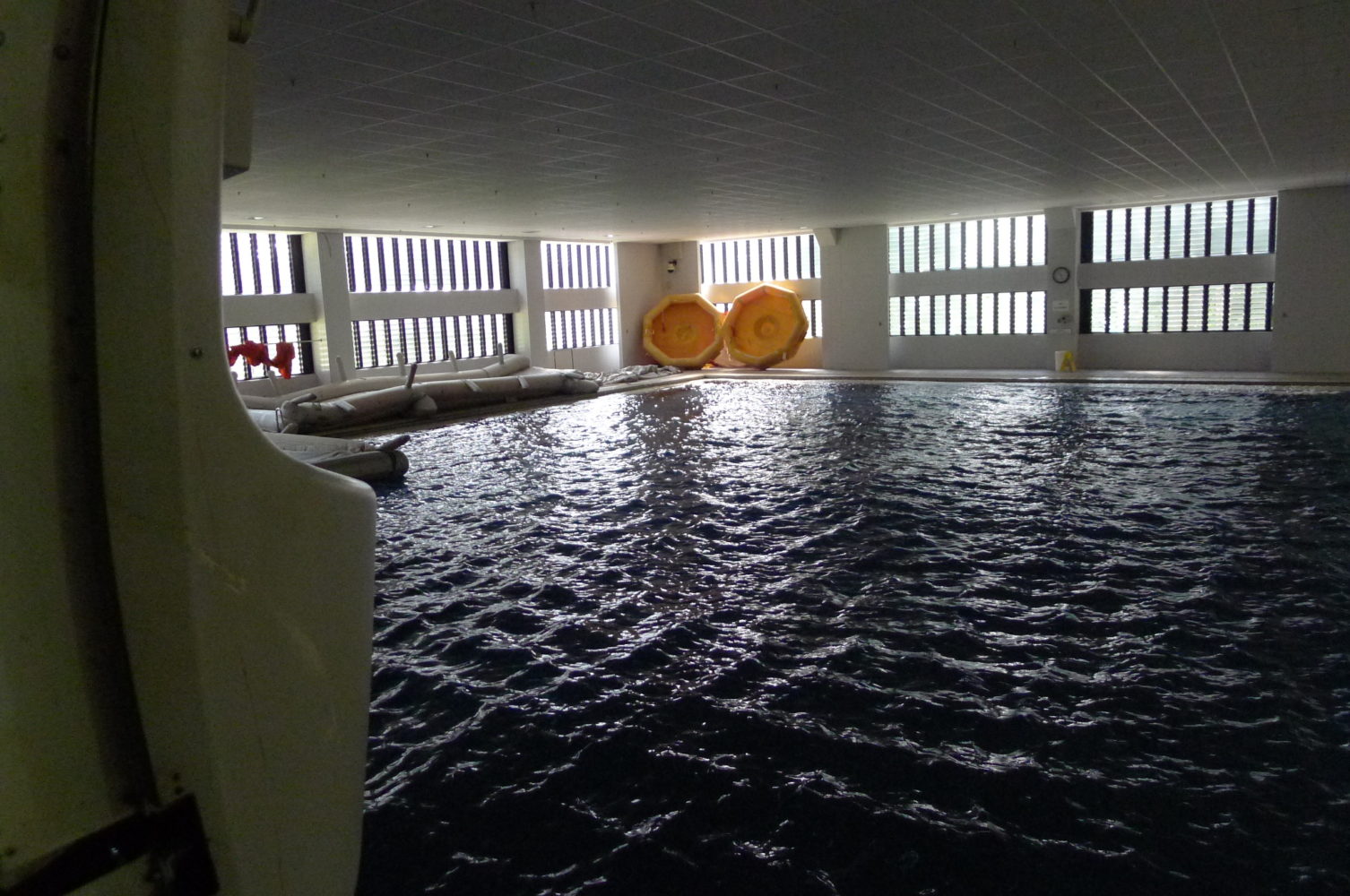
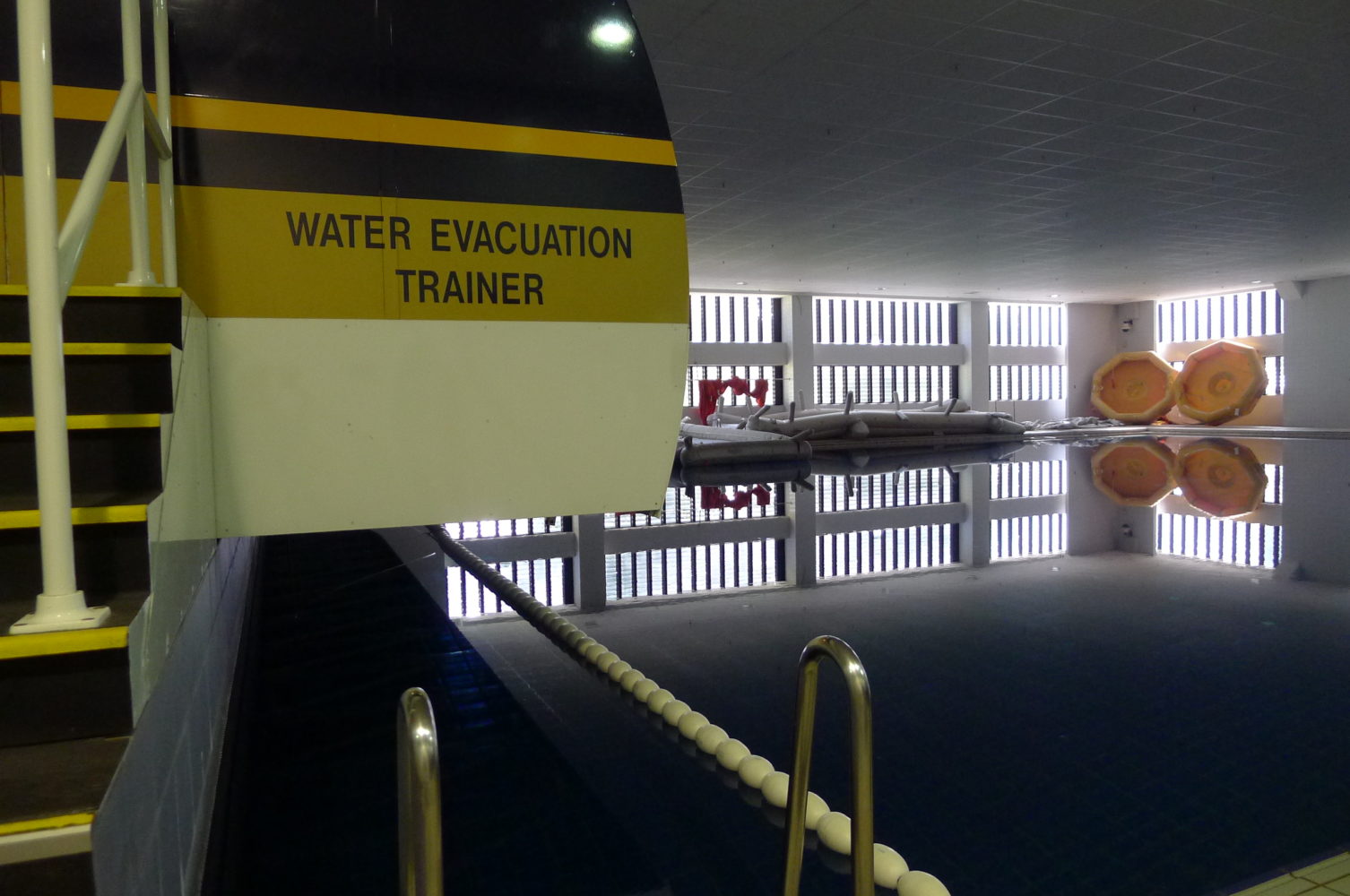
A mock-up of the A380 is set up here and, on a tour of the facilities, we learned that not only is the drop from the door to the floor exactly the same height as it would be out in the ‘real ‘ world, but that every member of the Singapore Airline’s crew must return here each year for a training ‘check-up’ that includes deploying and going down these slides.
That way, if there’s an emergency, crew members “don’t think; they respond,” the trainer on duty told us.
I wondered what the famously polite Singapore Airlines crew members are taught to do in an emergency with a passenger who might balk at going down a slide.
“Those passengers would feel a gentle, but firm, push,” the trainer told us.
I would have liked to try out that evacuation slide, but thought twice about even asking to jump into the cold, choppy waves outside the water evacuation pod used for practice in the next room:
Noticing the heels and the outfits some members of our tour group were wearing, the trainer also offered some “dress for success” tips in case of a flying emergency: Thumbs up on loose slacks and low heels. Thumbs down on pantyhose, high heels and clothing apt to be flammable.
I’d heard those tips before – and mostly ignored them – but after getting a close look at these evacuation paths – and heights – I’m going shopping for new, safer, travel outfits.
Next up: Transforming flight attendant trainees into crew-worthy gems.
Note: I’m in Singapore as a guest of Singapore Airlines.
Hans Christian Andersen’s unusual baggage
I had the chance to visit the Hans Christian Andersen Museum in Odense, Denmark a few days ago and was surprised to see this coil of rope on display.
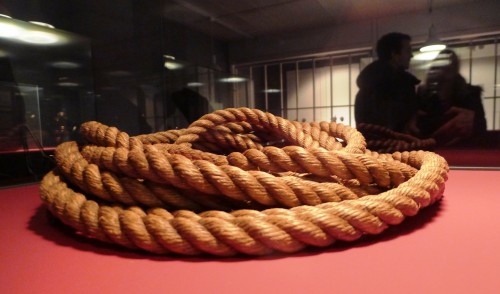
Andersen wrote Thumbelina, the Snow Queen, the Emperor’s New Clothes and more than 150 other fairy tales and stories. And while he loved to travel and is credited with that pithy “To travel is to live” quote, he also evidently harbored some serious fears about perishing in a fire while on the road.
Andersen’s solution?
He always traveled with this rope in case he needed a fire escape.
Crazy? Maybe. But it probably gave him some peace of mind.
And you? What do you always take along when you travel?
Your airplane seatbelt may also be an airbag
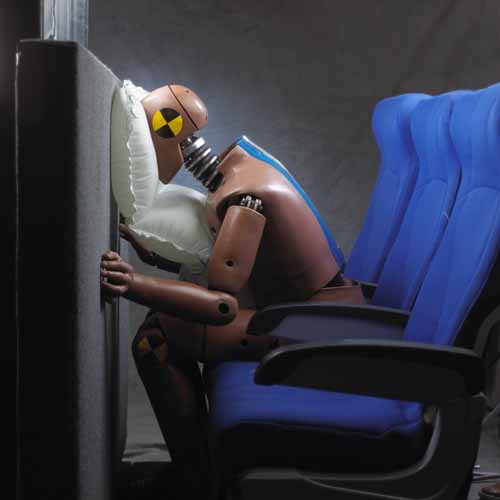
Buckle up, you dummy!
Airbags on airplanes have arrived and they’re not just a special perk for first-class passengers.
In fact, if you’ve been seated in a bulkhead row, near an exit-row door or in business- or first-class seats on newer planes, you may have already strapped on an airbag and not even noticed.
Unlike automobiles, airplane airbags aren’t built into the vehicle but added onto seatbelts in what looks like just some extra padding.
“Sometimes when I’m boarding a plane and see people looking around wondering why their seatbelt looks different, I stop and explain,” said Chris Muklevicz, vice president of sales and marketing for aviation restraints at AmSafe, the company that makes the only airbags certified for commercial aircraft. “But then passengers around them start asking why then don’t have them, too.”
In an interview earlier this week at the 2011 Aircraft Interiors Expo in Seattle, Muklevicz explained that seatbelts with airbags were developed as a cost-effective way for airlines to meet the Federal Aviation Administration’s (FAA) requirement that, as of October 2009, all seats on new airplanes must be “16g” seats — able to withstand stresses and impacts of up to 16 times the force of gravity. The previous requirement was 9gs.
Most seats on new airplanes do meet the guidelines in part because they have seats in front of them that can add some cushioning in an accident. Bulkhead and front-row seats and those swanky pod-like units in some first- and business-class sections often don’t. The added protection offered by a $2,000 seatbelt airbag (versus the $50 traditional seatbelt) helps bring those seats up to code.
“Airlines could remove seats from those positions, but they don’t want to lose that potential revenue,” Muklevicz said.
The new seat code was put in place because tests and real-life incidents show passengers have a good chance of surviving an accident if seats aren’t first torn from the floor during a crash. According to the National Transportation Safety Board, more than 80 percent of commercial airline accidents are survivable because they occur on the ground or during take-off or landing when the aircraft is close to the ground and flying at relatively low speeds.
Muklevicz said the seatbelt airbags are designed to keep a passenger conscious after an impact. “If the passenger is conscious and it’s possible to get out of the plane, this can make a big difference in survival if there’s smoke and fire,” he said.
Right now, there are more than 70,000 airbag-equipped seatbelts in service. Half of those are on commercial airplanes and half are on general aviation aircraft. “Luckily, it hasn’t yet been tested in a real commercial aircraft crash,” Muklevicz told me, “but there are have plenty of reports of it saving lives on private aircraft.”
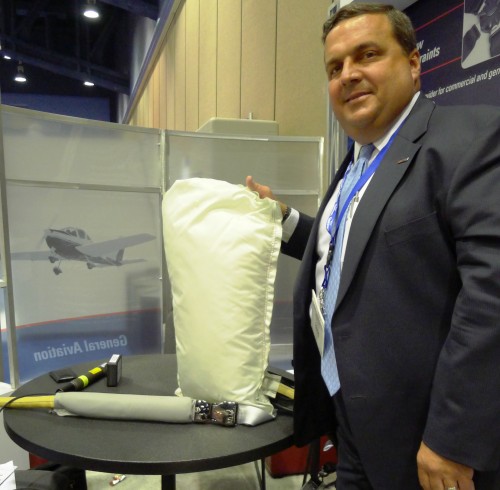
AmSafe's Chris Muklevicz with seatbelt airbag
(A slightly different version of this story first appeared on msnbc.com’s Overhead Bin.)
How 9/11 changed the airport experience
As the 10th anniversary of the 9/11 tragedy rolls around, many travelers are thinking back to where they were that day and what they were doing as the horrific details began to emerge. Some are recounting their blessings, remembering how close they came to being part of the carnage.
Count me among them.
In the summer of 2001, I was on the road promoting my guide book, Stuck at the Airport, which detailed services and amenities at the many of the nation’s airports. (Modern versions of those guides are now online at USATODAY.com) Airport shops offering massages or manicures were a rare find back then; an airport with a website was even rarer.
I got a call from a woman at the Port Authority of New York & New Jersey, the operator of LaGuardia, JFK and Newark airports. She invited me to visit her office at the World Trade Center and chat with her staff about how airports could be more welcoming. “We can’t pay you to come out here from Seattle,” she said, “But if you’re in town anyway and can come by, we’ll take you out for a nice meal.”
That seemed like a good excuse to visit family back east. So we picked a date: September 12. My thank-you meal would be at Windows on the World, the restaurant at the top of the North Tower.
Then and now
Since then, as you well know, pretty much everything about the airport experience has changed.
Before 9/11, my airport review ritual went like this: I’d fly into an airport, stash my belongings in a gate-side locker (remember those?), and spend several hours walking from concourse to concourse, terminal to terminal, asking questions, taking pictures and making detailed notes.
On a cheap weekend fare I’d often fly in and out of an airport (or two) on the same day, taking advantage of the long layovers other travelers despise.
I visited more than 100 airports this way, many of them multiple times, and only once – in July, 1999 in Memphis – was I ever stopped by someone from airport security and questioned about what I was doing.
More often than not, it was other travelers who noticed my note-taking and assumed I worked for the airport. They’d stop me to ask for directions and tips on where to shop or find something to eat.
I not only took notes about what was offered inside airports, I made note of what people did in the airports.
Read. Sleep. Chat. Try to get some work done. Eat. Drink. Talk on the telephone. The same as now, but without all the cell phones, laptops and searching around for an electrical outlet.
Back then there were a lot of small children squealing “There’s daddy!” as tired-looking businessmen streamed off planes. And plenty of grandmas and grandpas rushing to plant wet kisses on squirmy babies they may have been meeting for the first time. There were waves of teary goodbyes and joyous reunions at the gates. And thinking back now, I realize the last time I saw my father smile at me before his final illness was at an airport, while we chatted as I waited to board a delayed flight.
Now it’s all grumbling about the Wi-Fi signal and jostling for a good spot so you can board the plane first and find a place to stash your carry-on bag. No last minute kisses, hugs and good wishes as the door to the jet way is about to close. No waves and tears at the window as a plane backs away.
I miss that.
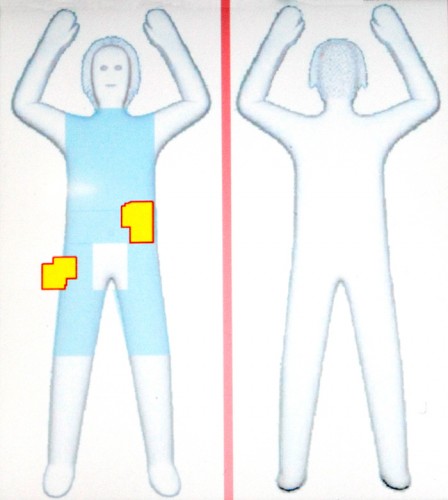
But, setting aside for a moment the long lines, x-ray machines, body scanners and icky, intrusive pat-downs we must now endure at the security checkpoints, the post 9/11 world of airports has some upsides.
Recognizing that passengers were spending lots more time inside airports – and needing to diversify income sources once cash-strapped airlines began balking at footing the bills – airports began bulking up on services and amenities in the terminals.
Now, kiosks offering manicures and massages are no longer rare sightings at airports. Many terminals have wine bars, sports bars and fine restaurants where you can settle in and really relax. The selection of shops at some airports now rivals those offered at neighborhood malls and, with medical clinics, hair salons, pharmacies, convenience stores, play areas, art galleries and – hooray – free Wi-Fi, popping up along many airport concourses, it’s getting easier and easier to get distracted and miss a flight.
I’ve done that; more than twice.
But, as pleasant as it may be to have fun while being stuck at the airport, the sobering reality is that some of these amenities were ushered along in response to tragedy. And while I’m all for safety and security in the skies, I’m still mourning the loss of that one airport amenity that allowed for a last hug from a loved one before stepping onto a plane.
What pre-9/11 airport experience are you missing?
(This article originally appeared on USATODAY.com as my September, 2011 At the Airport column.)
Souvenir Sunday: socks at the airport
Every Sunday here at StuckatTheAirport.com, is Souvenir Sunday. The day we look at some of fun, local and inexpensive items you can pick up when you’re hanging around an airport.
But here’s something cheap – free, actually – you can pick at just about any airport that you’d be better off leaving behind: germs.

(MRSA Photo Credit: Janice Haney, Centers for Disease Control and Prevention)
In working on another topic for next week’s At the Airport column on USATODAY.com, I’ve been e-chatting with a podiatrist who has important advice for anyone heading to the airport wearing flip-flops or sandals: put on socks!
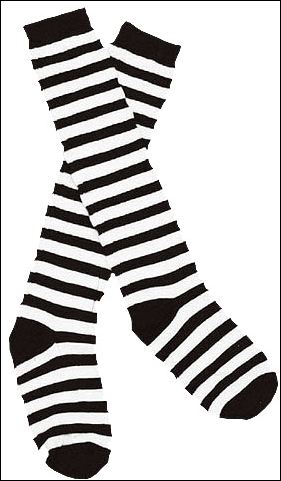
“When the TSA has every single person remove their shoes and stand barefoot in the same place where hundreds of prior people have, you create a scenario where infection has the potential to spread,” warns Dr. Nirenberg. “Persons with fungus, warts or bacterial infections are still told to remove footwear and these could be spread to people who have breaks or fissures in the skin of their feet.”
Ick!
Sure, you want to get through the security line quickly. But when you’re dressing to go to the airport wear put on some socks. If you forget and find yourself standing barefoot on that mat with the white foot outlines on it, your next stop should probably be an airport shop where you can buy yourself an inexpensive pair of souvenir socks.