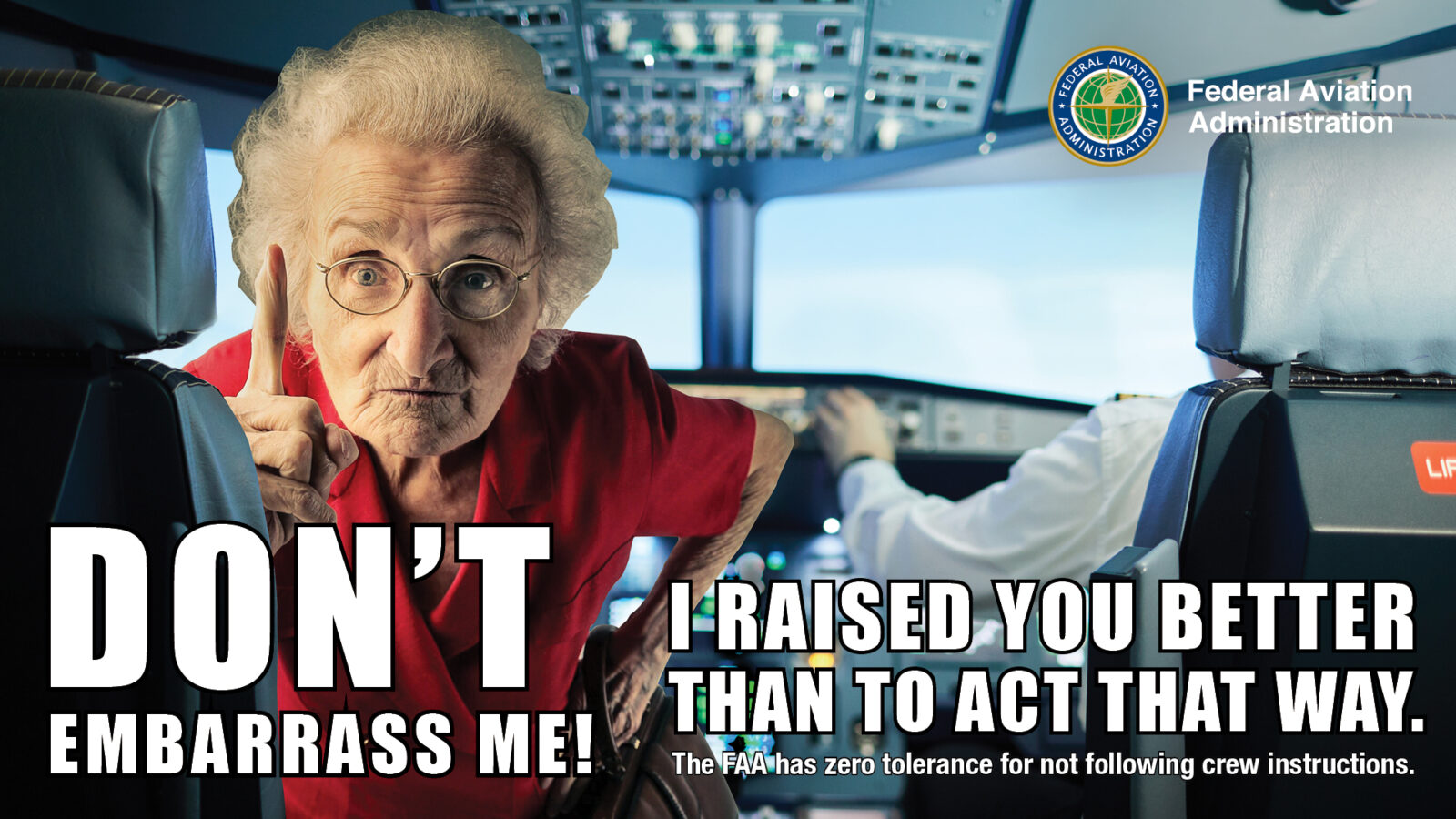
unruly passengers

Why are airline passengers so rude & unruly?

[Our story on the rise of unruly airlines passengers first appeared on NBC News)

Air travelers picked up some bad habits during the pandemic that they can’t seem to shake.

Unruly passenger incidents rose 47% globally last year from 2021, even as pandemic-related restrictions faded, according to recent data released this month by the International Air Transport Association, an airline trade group.

Reports of bad behavior rose from a rate of 1 incident per 835 flights to 1 per 568 over that period, IATA found.

Conflicts over mask requirements, which drove a surge in unruly conduct during the depths of the coronavirus pandemic, have largely dissipated.

But as air travel continues to rebound — a record 257 million passengers are expected to hit the skies on U.S. airlines this summer — other sources of contention are still triggering disruptions at alarming rates. And some say official data may only capture a fraction of the problem.

“The public does not hear about the 99% of would-be incidents that are resolved by flight attendants without event,” the Association of Flight Attendants President Sara Nelson said in an email. “We deescalate conflict as aviation’s first responders on nearly every flight.”

Industry experts say that they can only speculate about what’s going on.

“I’m not sure if there is an overall increase in a feeling of self-entitlement,” said aviation security expert Jeffrey Price, the owner of the airport management consultancy Leading Edge Strategies, “or if people are, for some reason post-Covid, feeling more empowered to assert what authority or influence they believe they have.”

Looking at more than 20,000 reports submitted by around 40 airlines worldwide, IATA found the most common types of unruly conduct last year were non-compliance with crew instructions, followed by verbal abuse and intoxication.

In the last few weeks, a Delta Air Lines flight heading to Detroit from Paris was diverted to Canada for an emergency landing over the behavior of an unruly passenger. And a traveler denied boarding at Hartsfield-Jackson Atlanta International Airport was arrested after allegedly having slapped a Spirit Airlines employee.

While extreme incidents like those remain rare, “it is very concerning to see the frequency of reported unruly incidents increasing,” said Jonathan Jasper, IATA’s senior manager for cabin safety. “And the key here is that the numbers are only a part of the story. It’s the behavior behind the numbers that is causing us some concern.”

IATA attributed last year’s jump in noncompliance to infractions ranging from passengers’ smoking cigarettes or vaping on planes to failing to fasten their seat belts, refusing to stow cabin baggage during takeoff and landing, and drinking their own alcohol onboard.

IATA’s study doesn’t break down incident rates by region. In the U.S., Federal Aviation Administration data shows the problem remains elevated despite having eased considerably from pandemic peaks.

In 2019, the FAA logged 1,161 unruly passenger reports and just 1,009 in 2020, when lockdown orders sharply restricted air travel.

But as flight volumes began ticking back up, the reports skyrocketed to a record high of 5,981 in 2021 — around 72% of which had to do with masking rules, the FAA said.

Last year, the agency tallied 2,455 unruly passenger reports in the U.S., still far above pre-pandemic levels but a sharp drop nonetheless. The decline came in a year when a federal judge struck the Centers for Disease Control and Prevention’s mask mandate for public transportation in late April 2022, by which point masking-related unruly conduct had dipped to 63% of FAA reports.

When mask mandates were overturned, however, the agency had already spent well over a year enforcing a “zero-tolerance” policy for unruly behavior.

In January 2021, it rolled out penalties such as hefty fines and the threat of federal criminal prosecution, including potential jail time, for any passenger who “assaults, threatens, intimidates, or interferes with airline crew members.” The FAA said this April that it had referred more than 250 of the most serious cases to the FBI since last 2021.

While instances of noncompliance fell at the start of last year as more airlines and governments around the world dropped their mask mandates, IATA found the rate beginning to rise again as 2022 wore on, ending the year up.

Some aviation experts say many customers have most likely lost patience with airlines over high ticket prices, widespread delays and cancellations and sliding service quality in recent years.

“Flying is an altogether less enjoyable experience,” said Philip Baum, the managing director of the aviation security consultancy Green Light Ltd.

He noted that the industry let go of huge numbers of personnel early in the pandemic and has struggled to recruit and train new ones. Many airline and airport workers may now be less experienced and more stressed, adding strain to interactions with shorter-fused customers.

In addition, Baum said, “The reality is that post-pandemic, those experiencing poor mental health is on the increase, some of whom may find the depersonalized service offered a trigger.”

Nelson also pointed to the pandemic’s long shadow, saying it “exposed deep social division and resentment over rising inequality,” and she criticized public officials’ “mixed messages and contempt for rules that protect our collective safety” as having made matters worse.

“Our cabins are microcosms of humanity, so this anxiety, confusion and division continues to show up in behavior on our planes,” she said.

Aviation most likely isn’t the only industry more customers are lashing out at. In the National Customer Rage Survey, released in March, a record 74% of consumers said they experienced issues in the marketplace in the previous 12 months.

And 43% of respondents said they had raised their voices at customer service, up from 35% in 2015. Labor shortages in recent years were probably a factor in the jump, the researchers said at the time.

Whatever the underlying causes, the problem shows few signs of fading from air travel.

The FAA had already recorded 822 reports of unruly passengers as of June 11 — less than halfway through a year when global passenger volumes are projected to reach 92% of pre-pandemic levels, up from 72% last year.

In fact, after a slight dip in February to 122 unruly passenger incidents, the FAA received 169 reports in May — the highest monthly level so far this year.

The agency didn’t respond to requests to comment further on its data.

Airlines & Aviation Leaders Gather in Istanbul

The Stuck at the Airport team is in Istanbul this week for the annual general meeting of the International Air Transport Association (IATA) and the World Air Transport Summit.

CEO & representatives from more than 300 airlines are here, along with government officials, equipment suppliers, and all manner of other aviation world players. And the agenda includes not only assessing how the industry is doing now, post-COVID-19, but how it’s going to handle itself going forward.

Unruly Passengers – Still A Growing Problem

The annual report on the number of unruly passenger incidents worldwide always gets our attention.

And this year’s report is both surprising and alarming.

We thought that the incidences of unruly passengers would have dropped when the airline mask mandates did.

But according to IATA data, the number of reported unruly passenger incidents worldwide actually increased in 2022 compared to 2021.

The latest figures show that there was one unruly incident reported for every 568 flights in 2022.

That’s up from one per 835 flights in 2021.

The most common categories of incidents in 2022 were non-compliance, verbal abuse, and intoxication.

In 2022, non-compliance incidents were up about 37% over 2021.

What’s considered non-compliance? Infractions such as smoking, refusing to fasten a seatbelt, failing to store baggage when told to, or consuming your own alcohol on board an airplane.

Physical abuse incidents are also on the rise. While IATA says physical abuse incidents are rare, they’re nevertheless up 61% over 2021, occurring once every 17,200 flights.

What is the airline industry doing about unruly passengers?

Mandatory pre-flight refresh classes in onboard etiquette aren’t on the table quite yet. (Although we like that idea.) But the airline industry has some strategies it is working on to address the unruly passenger issue.

Those strategies include:

*Getting more countries to ratify the Montreal Protocol 2014, which gives governments the necessary legal authority to prosecute unruly passengers no matter their state of origin;

*Training more crew members on how to de-escalate incidents on the planes;

*And asking airports, airport bars and restaurants, and duty-free shops to help spread the word on the consequences of unruly behavior on airplanes.

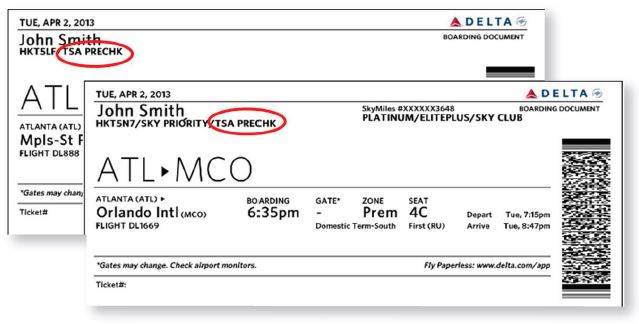
How to lose your TSA PreCheck status

Unruly airline passengers may face fines and the wrath of crew members and other passengers.

Now, under a new partnership between the Transportation Security Administration (TSA) and the Federal Aviation Administration (FAA), unruly passengers may also end up kicked off the TSA PreCheck roster.

TSA PreCheck gives travelers access to expedited security screening. Precheck-qualified travelers don’t need to remove shoes, laptops, belts, light jackets, or take out their bag of lotions and liquids. The fee is $85 for five years and requires fingerprinting and a background check.

Under the new partnership, the FAA will share information with TSA about passengers facing fines for unruly behavior. And TSA may then remove those passengers from TSA PreCheck screening eligibility.

“If you act out of line, you will wait in line,” FAA Administrator Steve Dickson said. “Our partnership aims to promote safe and responsible passenger behavior. One unruly incident is one too many.” 

“TSA has zero tolerance for the unruly behaviors, especially those involving physical assault occurring aboard aircraft,” said TSA Administrator David Pekoske. “This partnership with FAA will help ensure the safety and security of all passengers and hold those who violate federal regulations accountable for their actions.”

Other ways to lose TSA PreCheck Status

On its website, TSA spells out other actions that might cause a traveler’s PreCheck status to be revoked ‘for a period of time.’

The list includes refusing to wear a mask, making a bomb threat, or bringing a firearm to an airport or onto an aircraft:

If you commit certain violations of federal security regulations, such as refusal to wear a mask in U.S. transportation systems covered by the January 31, 2021 Security Directive and subsequent amendments, assault, threat, intimidation, or interference with flight crew, physical or sexual assault or threat of physical or sexual assault of any individual on an aircraft, interference with security operations, access control violations, providing false or fraudulent documents, making a bomb threat, or bringing a firearm, explosive, or other prohibited item to an airport or onboard an aircraft, you are denied expedited screening for a period of time.

FAA fines flyers for punching, biting, & being truly unruly

A lot of airline passengers have been misbehaving. Madly.

Since January 1, 2021, the Federal Aviation Administration (FAA) has received approximately 3,889 reports of unruly behavior by passengers. That includes about 2,867 reports of passengers refusing to comply with the federal facemask mandate. (The mask mandate that was just extended until January).

The FAA can fine passengers for this behavior and the agency is doing just that.

This week the FAA proposed $531,545 in civil penalties against 34 airline passengers for alleged unruly behavior. That brings the total for 2021 to more than $1 million.

Most of the fines involve the refusal to comply with the mask mandate. But many passengers are also being fined for outrageous and often bizarre behavior.

Here are some examples of the most outrageous incidents from a list released by the FAA this week:

* $45,000 against a passenger flying on a May 24, 2021, JetBlue Airways flight from New York, N.Y., to Orlando, FL., for allegedly throwing objects, including his carry-on luggage, at other passengers; refusing to stay seated; lying on the floor in the aisle, refusing to get up, and then grabbing a flight attendant by the ankles and putting his head up her skirt. The passenger was placed in flexi-cuffs and the flight made an emergency landing in Richmond, VA.

*$42,000 against a passenger on a May 16, 2021, JetBlue Airways flight from Queens,  N.Y., to San Francisco, Calif., for allegedly interfering with crewmembers after failing to comply with the facemask mandate. This passenger was also cited for making non-consensual physical contact with another passenger, throwing a playing card at a passenger and threatening him with physical harm. The was more: the passenger was making stabbing gestures towards certain passengers and was snorting what appeared to be cocaine from a plastic bag, which the cabin crew confiscated. The passenger became increasingly agitated and the crew equipped themselves with flex cuffs and ice mallets to ensure the safety of the flight if his behavior worsened. The flight diverted to Minneapolis, Minn., where law enforcement removed the passenger from the aircraft.

*$32,500 against a passenger on a Jan. 2, 2021, Southwest Airlines flight from Orlando, Fla., to Kansas City, Mo., for allegedly assaulting passengers around him because someone in his row would not change seats to accommodate his travel partner.

The passenger told his travel partner he would need to bail him out of jail for the physically violent crimes he threatened to commit. The captain returned the flight to the gate, and law enforcement met the passenger. Southwest banned the passengers from flying with the carrier in the future.

*$30,000 against a passenger on a Jan. 3, 2021, Frontier Airlines flight from Atlanta, Ga., to New York, N.Y., for allegedly interfering with the flight attendants’ deplaning procedures upon arrival. This person tried to gain entry to the flight deck by physically assaulting two flight attendants, threatening to kill one of them, and demanding that they open the door. The captain called for law enforcement to meet him after exiting.

*$25,500 against a passenger on a March 11, 2021, Frontier Airlines flight from Orlando, Fla., to Providence, R.I., for allegedly repeatedly kicking the aircraft bulkhead; screaming obscenities at the passenger next to her; locking herself in the lavatory for 30 minutes; yelling obscenities at the flight attendant after they informed her through the lavatory door that the captain turned the fastened seatbelt sign on and she must return to her seat; throwing corn nuts at passengers and shoving both her middle fingers in the flight attendant’s face when they instructed her to stop throwing the nuts. The passenger was issued a “red card” notice, and in response, she again put both her middle fingers in the flight attendant’s face. Law enforcement removed her from the flight upon arrival.

 The list, and the fines, go on – and on – and are part of what the FAA has dubbed its Zero Tolerance campaign against unruly passenger behavior. The agency has requested that airports work more closely with local law enforcement to prosecute egregious cases and asked airports to do what they can to stop passengers from trying to bring their “to-go” cups of alcohol aboard aircraft.


Crazy – and charming – travelers

Travel has been sort of crazy this week. But there is some sign of charming behavior out there.

There’s the saga of the drunken, raving passenger on Frontier Airlines who was duct-taped to his seat after assaulting and groping flight attendants.

At first, Frontier Airlines suspended the flight attendants involved. The reason? They had not followed the proper procedures. That didn’t fly with the Association of Flight Attendants – and many others. But the airline later came to its senses and said it now supports the crew members and will pay them.

On the other hand…

Not all people on airplanes and in airports are crazy. Some are just charming.

TSA offering self-defense training to flight crews.

As airline passenger volume ticks up, many passengers are packing something the Transportation Security Administration and airlines would rather they’d leave home: a combative attitude.

“Passengers do not arrive at an airport or board a plane with the intent of becoming unruly or violent; however, what is an exciting return to travel for some may be a more difficult experience for others, which can lead to unexpected, and unacceptable, behaviors,” said Darby LaJoye, TSA Senior Official Performing the Duties of the Administrator.

The Federal Aviation Administration (FAA) is reporting an alarming spike in incidents of unruly passengers.

Here is part of a table from the FAA showing all the cases investigated that cited violations of one or more FAA regulations or federal laws.

There are 3,082 incidents so far in 2021, compared to fewer than 200 cases in any of the past five years.

You’ve no doubt seen and read about all the crazy incidents on planes with passengers refusing to comply with federal regulations to wear face masks. But not as well-publicized are the incidents that have been taking place in airports.

TSA shared this in a statement:

Two separate incidents this month have triggered referrals to law enforcement for passengers in Louisville, KY and Denver, CO. In Louisville, a passenger allegedly assaulted two TSOs while attempting to breach the exit lane and is facing state criminal charges for criminal trespass, fleeing and evading police, misdemeanor assault, and resisting arrest. The Denver incident involved a passenger allegedly biting two TSOs and remains under investigation. Both passengers also face a potential civil penalty of up to $13,910 for each violation of TSA security requirements.” 

Here’s something that may help:

In early July the TSA is restarting its Crew Member Self-Defense (CMSD) training. Under the voluntary program, which was paused due to COVID-19 restrictions, Federal Air Marshals train flight crew members in defensive measure techniques for responding against an attacker in a commercial passenger or cargo aircraft.

During the training, flight crew members learn to identify and deter potential threats, and if needed, apply the self-defense techniques against attackers.  The four-hour training is offered to flight crew members free of charge and is held at 24 locations around the United States.

“Through this training program, TSA’s Federal Air Marshals are able to impart their specialized expertise in defending against and de-escalating an attack while in an aircraft environment,” said LaJoye, “

Sara Nelson, the president of the Association of Flight Attendants-CWA, would like the course to be compulsory.

Assaulting or threatening a member of the flight crew is a federal crime and perpetrators may face civil penalties, criminal fines, or imprisonment. In May 2021 alone, the FAA proposed civil penalties ranging from $9,000 to $15,000 against five airline passengers for allegedly interfering with and, in two cases, assaulting flight attendants who instructed them to obey cabin crew instructions and various federal regulations. 

“No warnings”: FAA getting tough with passengers who are unruly or won’t wear masks

Citing “a disturbing increase in incidents where airline passengers have disrupted flights with threatening or violent behavior,” the Federal Aviation Administration (FAA) said Wednesday it will ratchet up its legal enforcement policies.

“These incidents have stemmed both from passengers’ refusals to wear masks and from recent violence at the U.S. Capitol, ” the FAA said in a statement.

The FAA says up to now it has been addressing unruly passenger incidents with warnings, counseling, and civil penalties. (Counseling?)

But effective immediately and through at least March 30, 2021, “the agency will pursue legal enforcement action against any passenger who assaults, threatens, intimidates, or interferes with airline crew members.”

That legal enforcement may include fines of up to $35,000 and imprisonment.

There have been some scary incidents onboard planes recently. Including on Friday, January 8, two days after a mob of Trump supporters stormed the U.S. Capitol building, when an American Airlines pilot threatened to put the plane down “in the middle of Kansas” in response to chanting, unruly passengers.

NY-area airports want to fine unruly passengers for flight delays

Here’s an intriguing idea: the Port Authority of New York and New Jersey, which operates JFK, LaGuardia and Newark International airports, wants to sue unruly passengers who cause major flight delays.  This is the story I wrote Monday for msnbc.com.


Unruly airline passengers at any of the three New York area airports (JFK, LaGuardia and Newark Liberty) may soon have to go to court and pay for the cost of delaying a flight.

“On a regular basis we’re having issues where planes have to come back to the gate because of disruptive passengers,” said Steve Coleman, spokesperson for the Port Authority of New York and New Jersey, which operates the three airports. “We’re looking to cut down on the number of incidents that require police response and reduce the amount of time and money airlines lose because of these incidents.”

Coleman said the airport authority is embarking on a campaign that will include the use of social media, posted signs and other methods to strongly remind passengers to behave and follow the instruction of airline crewmembers.

“Our lawyers are also looking at ways we can take civil action against the most egregious cases,” said Coleman.

The cost per hour to operate a U.S. passenger airline is $5,867, according to Airlines for America (A4A), the airline trade association. “So any delay represents a real cost to an airline’s bottom line,” said A4A spokesperson Steve Lott. If the new policy is enacted, the Port Authority might sue passengers responsible for a delay to pay for the related costs.

In 2011, there were 1.3 million flights at the New York area airports and Port Authority and police responded to close to 400 incidents involving disruptive airline passengers. “Most of those were due to people who wouldn’t turn off their electronic devices, which is a federal law,” said Coleman. Many other incidents were related to smoking and passenger disputes.

“And it’s not just a New York thing,” said Coleman. “This resonates with airports across the country.”

Research conducted by the Airports Council International-North America (ACI-NA) shows that passengers often blame the airport for airline-related delays. “So, certainly the discussion the Port Authority is having is likely to prompt other airports to think about this,” said Debby McElroy, ACI-NA’s executive vice president, policy and external affairs.

The incidents-to-flights ratio at the New York area airports and elsewhere “is actually quite low, but any effort that helps enforce the message of what the laws are will help,” said A4A’s Lott.

Brandon M. Macsata, executive director of the Association for Airline Passenger Rights, said he applauds efforts to reduce airline delays, but it seems somewhat unfair to single out airline passengers for systemwide problems. “There can be numerous reasons why passengers might be responsible for delayed flights, including what happened two weeks ago when a family was escorted off the plane because their daughter wouldn’t stop crying.”

Passengers who interfere with the duties of a crewmember and engage in unruly behavior can be fined by the FAA or prosecuted on criminal charges. Reporting incidents to the FAA is at the discretion of crewmembers, and in 2011, as of October, the agency had taken action on 127 incidents nationwide.

“The Port Authority has not contacted the FAA. So we are unaware of their plans,” said FAA spokesperson Alison Duquette. “The bottom line is that people should know if they behave badly on an airplane they can go to jail or be fined.”

What do you think? Should airports be able to levy fines on unruly passengers who cause airplanes to return to the gate?