TSA

TSA: OK to fly with small knives, golf clubs, other items.

Zurich chocolate knife

For the first time since the 9/11 terror attacks, the Transportation Security Administration (TSA) will allow small knives and some previously prohibited sports equipment onto airplanes as carry-on items.

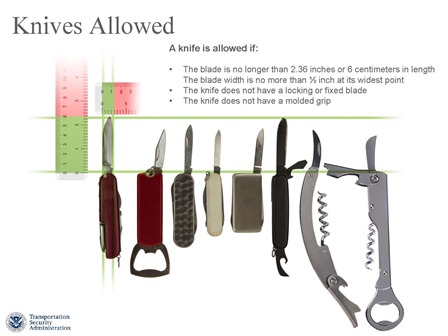
TSA_Permitted Items one

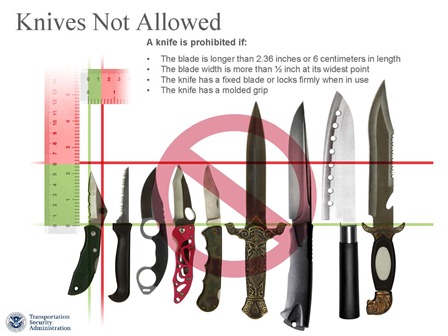
According to the TSA, passengers will be able to carry-on knives that are less than 2.36 inches long and less than one-half inch wide. Larger knives, and those with locking blades, will continue to be prohibited, as will razor blades and box cutters, guns, firearms, and the dozens of other things listed on the published list of prohibited items.

TSA_NOT Permitted KNIVES

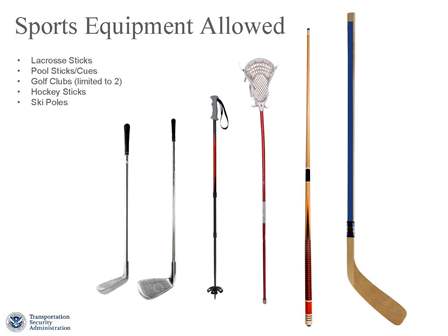
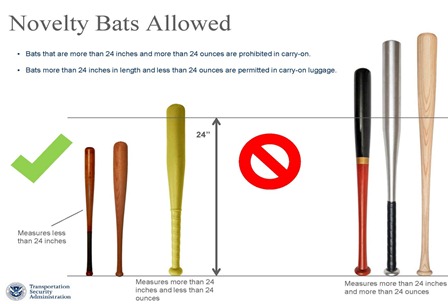
TSA will also soon permit sports equipment such as billiard cues, ski poles, hockey sticks, lacrosse sticks up to two golf clubs to be carried onto airplanes. Souvenir, novelty and toy baseball bats — such as wiffle-ball bats — will also be allowed.

The relaxed rules take effect April 25.

TSA_Sports items Permitted

TSA_BATS Permitted

TSA said the new regulations will allow its officers to better focus efforts on finding “higher threat items such as explosives,” and was made as part of the agency’s overall risk-based security approach.

But the Flight Attendants Union Coalition issued a statement saying they are unhappy with this move, calling it a “poor and shortsighted decision” by the TSA.

“As the last line of defense in the cabin and key aviation partners, we believe that these proposed changes will further endanger the lives of all Flight Attendants and the passengers we work so hard to keep safe and secure,” the statement said.

TSA believes the items it will now allow in airline cabins are “unlikely to result in catastrophic destruction of an aircraft,” and that policies already put in place — hardened cockpit doors, federal air marshals, crewmembers with self-defense training — reduce the likelihood of passengers breaching the cockpit.

“All TSA is doing is catching up with the rest of the world,” said Douglas R. Laird, president of aviation consulting firm Laird & Associates and former head of security for Northwest Airlines. After 9/11 the TSA “overreacted,” said Laird, and put restrictions in place “in the heat of the moment” that exceeded those in other countries.

Removing small knives and some sports equipment from the list prohibited items “will help align TSA’s list with international standards and help decrease the time spent rescreening or searching bags for these once prohibited items,” said TSA spokesperson Nico Melendez. The changes also enable officers to focus on “the greatest threats … which increase security for passengers and improves efficiency, improving the checkpoint screening experience.”

(Images courtesy TSA)

(A slightly different version of my story about the TSA’s decision to take small knives and sports equipment off the prohibited items list is on NBC News.com.)

TSA keeps $531,000 left behind by travelers

moneybags

Frazzled and forgetful passengers left more than a half million dollars in spare change in the plastic bowls and bins at airport security checkpoints last year.

That’s about $45,000 more than the amount left behind in 2011, according to the Transportation Security Administration (TSA).

What happens to all that money?

TSA makes “every effort to reunite passengers with items left at security checkpoints,” said agency spokesperson Nico Melendez. But all those nickels, dimes, quarters – and a smattering of poker chips and crumpled bills – usually end up getting counted, forwarded to the TSA financial office and then spent on general security operations.

Congress approved that TSA expenditure in 2005, but some lawmakers and passengers rights groups are unhappy TSA gets to keep the change.

In 2009, and again in 2011, Rep. Jeff Miller, R-Fla., the chairman of the House Committee on Veterans’ Affairs, introduced unsuccessful legislation that would require TSA to give the unclaimed cash to the United Service Organizations (USO), a private nonprofit that operates centers for military personnel at more than 40 U.S. airports. The lawmaker plans to reintroduce the bill soon, “as a stand alone measure and as part of the Homeland Security Appropriations bill,” Dan McFaul, a spokesman for Miller’s office, told NBC News.

Money left behind by passengers at airport checkpoints is “a windfall TSA does not deserve to keep,” said Paul Hudson, executive director FlyersRights.org, a non-profit consumer organization. But rather than give the money to the USO, he’d like the funds to go to nonprofit groups that look out for the rights of travelers. “Passengers pay a lot of taxes on airline tickets and there is currently no government funding in the United States for organizations that seek to help passengers,” he said.

“Common sense would dictate that the money is returned to the people who lost it … travelers,” said Brandon Macsata, executive director of the Association for Airline Passenger Rights. But he doubts TSA will ever be required by law to give the change left at airport checkpoints to passenger rights organizations.

If the TSA continues to be able to keep the left-behind money though, Macsata would like the agency to be directed to use it for staff training “to better educate them on how to appropriately handle and treat unique travelers, including travelers with medical conditions, children and travelers with disabilities.”

TSA’s Melendez doesn’t know why passengers leave money in the plastic bins at airports, but says “placing spare change or any other items in a purse or briefcase prior to going through security is the easiest and best way to maintain positive control of your belongings.”

Denver International Airport has another option for travelers approaching the checkpoints with change in their pockets. Earlier this month, the airport installed collection jars on the non secure-side of several checkpoints asking travelers to donate change to Denver’s Road Home, an organization that helps the homeless.


Spare change left behind at airport checkpoints

  • 2012 — $531,395.22
  • 2011 — $487,869.50
  • 2010 — $409,085.56
  • 2009 — $432,790.62

Data courtesy TSA

(My story: Travelers left more than $500,00 at airport checkpoints last year; TSA keeps the change, first appeared on NBCNews.com.)


At New Orleans Airport: hello & goodbye Super Bowl fans

SuperBowl  image

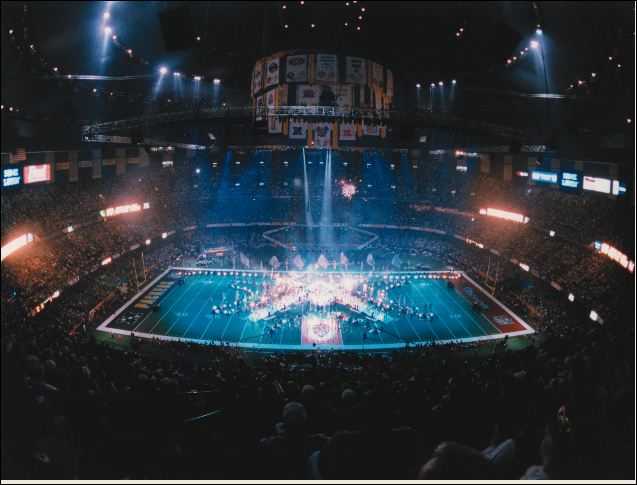
The Super Bowl party is underway at Louis Armstrong New Orleans International Airport(MSY).


Arriving fans were greeted with live music by the Iguanas and many other bands on Thursday and Friday, but there’s plenty of music still on tap for Saturday. Check the schedule here.

The TSA, which has nearly doubled the number of checkpoint screening lanes at MSY for the post-game period, has issued its own list of tips for Super Bowl fans and, on its blog, listed “Items you may WANT to bring on the plane; but CAN’T…

The list includes air horns and flasks filled with liquor, especially “concealment flasks” disguised as something else: “Binocular flasks, beer bellies, cell phone flasks, cane flasks, pen flasks, flip-flop flasks, you name it… You may be able to sneak these into concerts and sporting events, but we’ll find them at the airport,” the TSA warns on its blog.

The TSA also urged Baltimore Ravens fans traveling with a live ravens to check with their airlines for the rules on traveling with pets and warned fans of the San Francisco 49ers that gold mining implements such as pick axes and shovels are prohibited as carry-on items.

Sports fans planning tailgating events were reminded to leave propane tanks, gas heaters and stoves out of checked or carry-on baggage and that, due to restrictions on carrying more than 3.4 ounces of liquids in carry-on bags, food items such as dips, spreads, BBQ sauce, peanut butter, salsa and other items more than 3.4 ounces should be put in checked, not carry-on bags.

Monday, February 4th will likely be the busiest post-game day at the airport, and on that day the TSA will have checkpoints open 24/7.

If you’re flying in on Saturday or flying out after the game, here are some transportation tips from New Orleans Host Committee and from Airport Chatter.

(Photo courtesy NewOrleansOnline.com)

Guns at airports

(Guns at the Airport: TSA Catching Firearms at Record Pace is my first story for AOL Travel. An excerpt from the story is below. More to come. )

TSA Stuffed Animal

Firearms top the list of items passengers are prohibited from taking past airport security checkpoints and onto airplanes. Yet, during 2012 that didn’t stop travelers from trying to get more than 1,500 handguns and other firearms past Transportation Security Administration officers at U.S. airports.

According to the TSA, last year 1,543 firearms — 1,215 (78%) of them loaded – were discovered in carry-on bags at checkpoints at 199 of the nation’s more than 450 commercial airports.

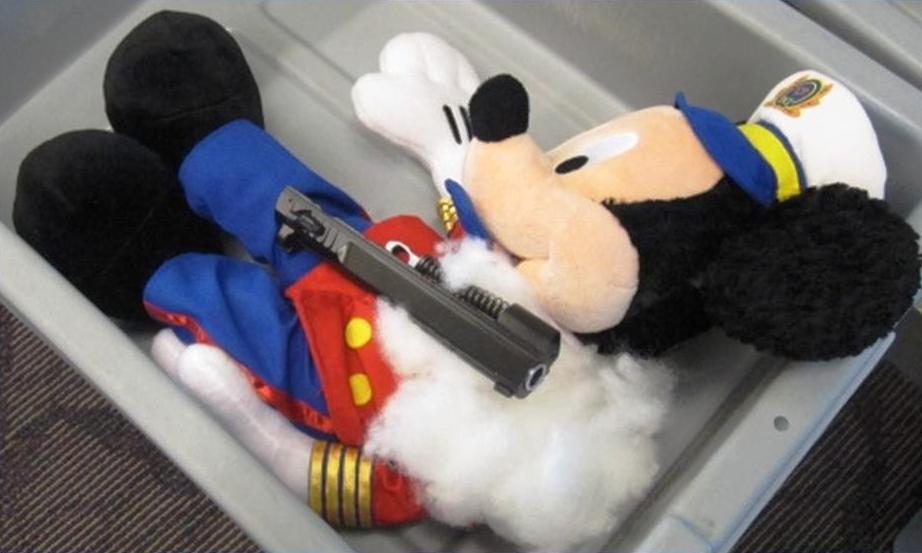
Most of the firearms discovered were handguns. One gun was found inside a hollowed out book at the Honolulu International Airport. A dissembled gun (and ammunition) was found hidden inside three stuffed animals at Providence T.F. Green Airport in Rhode Island. And while some people certainly try to sneak guns past checkpoints, most travelers caught with firearms at airports claim they simply forgot they had the weapon with them.

Hartsfield-Jackson Atlanta International Airport (where in 2008 officials tried – and failed – to have the entire airport declared a gun-free zone) holds the number one spot for 2012 on the list of “Top 5 Airports for Gun Discoveries” posted on the TSA’s blog. During 2012, 95 firearms were discovered at the ATL checkpoint.

Other airports on the “Top 5” list include Dallas/Fort Worth International Airport (80 firearms), Phoenix Sky Harbor International Airport (54 firearms), Houston’s George Bush Intercontinental Airport (52 firearms) and Fort Lauderdale-Hollywood International Airport (42 firearms found).

In response to the Newtown school shootings, President Barack Obama has put new gun control laws on the table. But Adam Winkler, a constitutional law professor at the UCLA School of Law and the author of “Gunfight: The Battle Over the Right to Bear Arms in America,” says he hasn’t heard any new proposals for banning guns in the pre-security areas of airports.

“People are talking about more broad-based types of laws,” said Winkler, “But if there was a mass shooting in a non-secure area of an airport, you’d hear it being discussed.”

In the meantime, TSA continues its efforts to keep firearms (and other prohibited items) from passing through airport checkpoints.

In the first two weeks of January 2013, 49 firearms were discovered in carry-on bags at U.S. airport checkpoints, including one handgun at the Atlanta airport and two at Phoenix Sky Harbor.

During the first two weeks of 2012, “only” 38 firearms were spotted in carry-on bags at airport checkpoints.

(For the full version of this story see Guns at the Airport: TSA Catching Firearms at Record Pace on AOL Travel.)

(Photo courtesy TSA)


Travel Tidbits: private screeners & fish

TSA LINES

Later this month, the Transportation Security Administration (TSA) was scheduled to send out requests for proposals (RFPs) for private security screening firms to replace federal screeners at Sacramento International Airport (SMF) in California and Orlando-Sanford International Airport (SFB) in Florida as part of the Screening Partnership Program (SPP). The contract for private screening services at San Francisco International Airport (SFO), which was one of the first airports to be part of the program, is also going out for re-bidding.

Sixteen airports are currently part of the program, which was set up under the Aviation Transportation Security Act (ATSA) of 2001 and requires private contract companies approved by the TSA to adhere to the agency’s standards.

Some airport administrators believe private screeners do a better job than their federal counterparts but, as you might imagine, the union that represents federal TSA employees – the American Federation of Government Employees (AFGE) – isn’t too happy with the prospect of some of its members possibly losing their jobs.

In California, the union has been lobbying against the move to have Sacramento International Airport join the Screening Partnership Program and on Tuesday the Sacramento County’s board of supervisors voted to back out of the program.

BOS LEGAL SEA FOOD

Meanwhile, at Boston’s Logan International Airport (BOS), which has been the site of some 787 Dreamliner problems, there’s some news on the fish front:

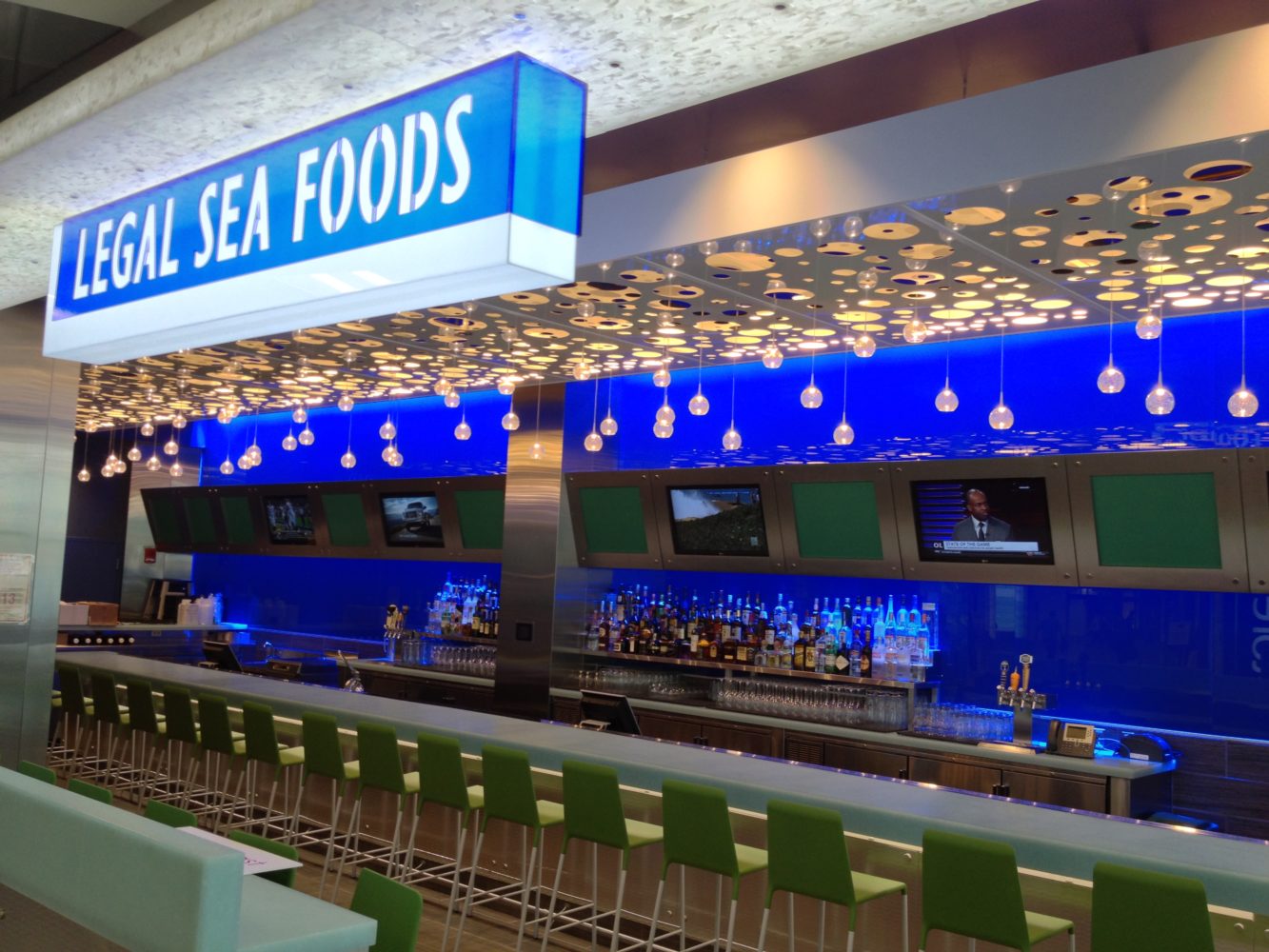
On Wednesday, January 9, Legal Sea Foods, which has been a welcome dining amenity at the airport for almost twenty years, is moving the first of its four airport restaurants from its pre-security location in Terminal C to a new, snazzy post-security spot that will serve breakfast, lunch and dinner.

The new restaurant has a fish sculpture at the entryway, a digital board displaying flight information, a 54-person dining room and a 27-seat bar with stools designed to store carry-on bags underneath.

FCC eases up on in-flight Internet & TSA finds more guns

Some end-of-the-year tidbits for air travelers:

gogowifi

On Friday, December 28, 2013, the U.S. Federal Communications Commission (FCC) issued some new rules designed to “speed the deployment of  Internet services onboard aircraft.”

In its release, the FAA explained that, since 2001, it has been authorizing companies to offer in-flight broadband service on an ad hoc basis. It will now allow airlines to “test systems that meet FCC standards, establish that they do not interfere with aircraft systems, and get FAA approval…up to 50 percent faster, enhancing competition in an important sector of the mobile telecommunications market in the United States and promoting the widespread availability of Internet access to aircraft passengers.

Spokane Airport TSA

And, as the TSA winds up the year, the ever-shocking and entertaining TSA Blog reports in its Week in Review that this week “only” sixteen guns (nine of them loaded) were discovered at airport checkpoints. That’s on the low side for the weekly gun finds, but clueless travelers were also nabbed this week for trying to take hand grenades, razors and other weaponry through the checkpoints. And, as the folks at Skift reported earlier this week, this year TSA discovered more than 1,500 guns at airport checkpoints, a new record for the agency.

Are more people traveling armed, or are more armed people traveling and simply “forgetting” that they’ve got loaded guns in their purse or carry-on bag?

Best new airport amenities in 2012


Air travel may have gotten (even) more irritating during 2012, but on the ground, the scene at many airports has gotten mellower, healthier and a bit more connected.

It wasn’t all that long ago that free Wi-Fi and plentiful power outlets at an airport were newsworthy additions. But in a recent 2012 ACI-NA Passenger Services Survey, 88% of airports reported having electrical charging stations for passengers and 90% of the airports surveyed said they now offer travelers free Wi-Fi. That list includes Los Angeles International Airport and BWI-Thurgood Marshall Airport, which are among the larger U.S. airports that began offering complimentary Wi-Fi this year.

ACI-NA’s survey of U.S. and Canadian airports also found that almost half have children’s playrooms, 86% offer major local art displays, and that live music is a regular feature at 34 airports.

Massage and/or spa services, as well as hair and nail salons, are common sights now at airports as well, but during 2012 some new amenities were rolled out designed to make airport dwell time even more productive. Here are few you may have missed.

Yoga room

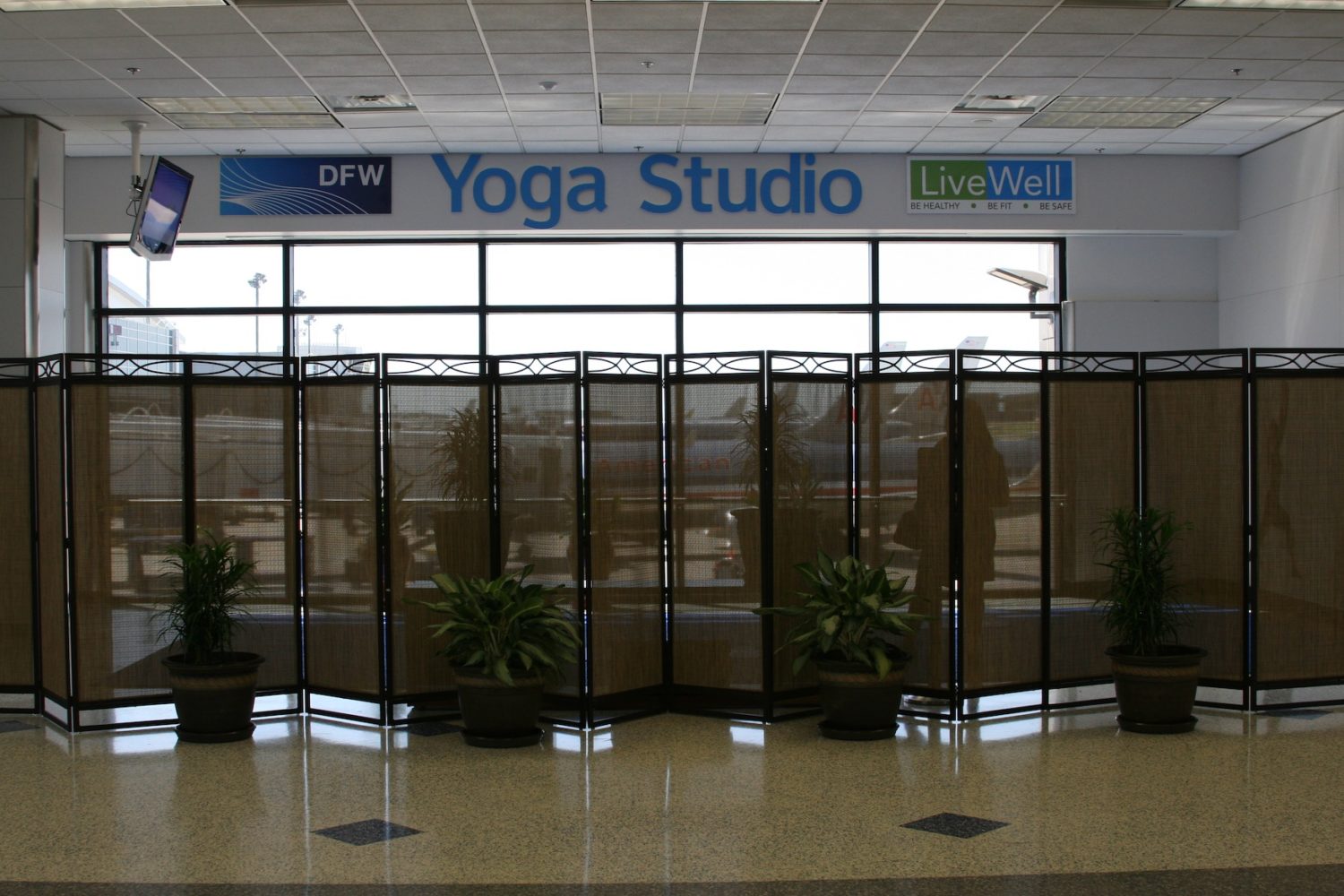
During 2012, San Francisco International Airport began playing music at the security checkpoints in the international terminal, installed a trio of free bicycle assembly stations and expanded the locations of the handy water hydration stations that allow a passenger to empty a water bottle before security, take it through and refill it for free on the post-security side. But the most novel amenity introduced by SFO this year was the first-of-its-kind airport Yoga Room (located post-security in Terminal 2), designed as “a space devoted to contemplation and self-reflection.” DFW airport followed suit four months later with a yoga ‘studio’ equipped with yoga mats and hand sanitizer located behind a partial privacy screen (Gate D40) near one end of the new Terminal D walking path.

Return of landlines

Remember landlines? In November, Denver International Airport installed more than two hundred landline phones throughout the terminal and the concourses offering passengers unlimited free domestic phone calls. International calls are free for the first ten minutes and, much like the “free” Wi-Fi service offered in many airports, the service is ad-supported: callers must listen to or watch a short ad before being connected.

Booze to go

Also in November, Las Vegas, McCarran International Airport, already home to amenities such as smoking lounges, an aviation museum and more than 1,600 gaming machines, became the first airport in the country to have a packaged liquor store in the baggage claim area. On the shelves at the Liquor Library: beer, wine, spirits, cigars, cigarettes, small packaged snacks, mixers, travel cups and glasses. In-store tasting events seem to be very popular.

Better food

Fast-food outlets at airports remain popular, but the number of healthy dining options for passengers continues to expand. Chicago’s O’Hare International Airport introduced a Farmer’s Market Kiosk this year, selling healthy take-away food items, including fruits and vegetables, as well as packaged herbs that are being grown inside the airport at the aeroponic garden, which opened in 2011. Herbs from the garden are being used by many airport restaurants and honey from O’Hare’s on-airport apiary (the nation’s first) is being sold at the airport as well.

Dan Stratman, the former Air Force captain behind the AirportLife app is pleased that there are healthier dining options such as Shoyu, a modern Japanese restaurant and sushi bar, among the dozen or so new restaurants and markets rolled out recently in Delta’s Concourse G at Minneapolis-St. Paul International Airport. Many of those restaurants are associated with local and national name-brand chefs, a trend that Gate Guru’s Zachary Einzig was tracking during 2012. “Popular new places include Lemonade at LAX, Lorena Garcia Tapas Bar at ATL, Bad Daddy’s Burger Bar at CLT airport, and the Food Network Kitchen at Fort Lauderdale International Airport,” he said.

Loyalty programs

Airport loyalty programs gained momentum this year, most notably the Thanks Again program that gives travelers points and miles for money spent at restaurants, shops and parking garages at airports. The program began in 2009 (at Anchorage Airport) but took off significantly in 2012. As of mid-December, the program has presence in 170 airports and facility-wide participation in 40 airports. Marc Ellis, Thanks Again co-founder and CEO, is pleased that the most recent airport to join the program is Hartsfield-Jackson Atlanta International, which is located about 35 miles from the company’s headquarters in Tyrone, Georgia.

Shopping

During 2012, many airports welcomed new shops featuring popular local and national brands and on December, 13, just in time for the holiday season – and all that holiday eating – Hartsfield-Jackson Atlanta International Airport becomes the first airport retail location for shapewear phenomenon SPANX.

TSA PreCheck

Joe Brancatelli, editor of the business travel newsletter Joe Sent Me, thinks the best innovation this year is TSA’s PreCheck program. “As much as it is easy to criticize TSA and the pace at which it implements change, the spreading of PreCheck to dozens of airports is a game changer for frequent travelers,” he said. The program, which initially rolled out in October, 2011, is now at 33 airports, with Ted Stevens Anchorage International Airport the most recent airport to join the program, on December 4. The TSA website offers a full list of airports with TSA PreCheck.

In May 2012, the TSA also extended to passengers age 75 and older, the modified screening procedures the agency put in place for children age 12 and under the year before. The program does not require older passengers to remove their shoes or light jackets at the checkpoints and allows them an additional pass-through (or “do-over”) through the screening machines to resolve any anomalies detected.

Looking forward to 2013, Brancatelli would like to see “more public-access lounges where travelers can go during disruptions or delays– or just to wait and work before flights.” And Raymond Kollau of Airlinetrends.com hopes to see more U.S. airports following the lead of European and Canadian airports that have introduced amenities such as libraries, book-swapping programs and wireless charging for gadgets.

I’m holding out for the opportunity to use my airport dwell time to take short classes in cooking, packing, dancing or Spanish and would like to see a vending machine installed at my home airport’s parking garage and/or light-rail station that will sell me a quart of fresh milk when I’m heading home from a long trip.

What new airport airport amenities were you pleased to see during 2012? And what amenity do you hope to see up at your airport during 2013?


(Best new airport amenities from 2012 first appeared in my At the Airport column on USA TODAY)

TSA has helpful hints for holiday travelers

The busy Thanksgiving and Christmas travel season is just around the corner and it’s a given that airports will be busy airports and airplanes will be crowded. With that in mind, the TSA has gathered up some helpful hints for holiday travelers.

Pies and cakes are OK to take through airport security checkpoints, but the TSA reserves the right to give those food items addition screening. Because there are always questions about what other items will clear the security checkpoint this time of year, it appears that the TSA has updated its sample list of liquid, aerosol and gelled items you should leave home, ship ahead or put in your checked baggage if you’ve got more than 3.4 ounces.

That list includes:
Cranberry sauce
Cologne
Creamy dips and spreads (cheeses, peanut butter, etc.)
Gift baskets with food items (salsa, jams and salad dressings)
Gravy
Jams
Jellies
Lotions
Maple syrup
Oils and vinegars
Perfume
Salad dressing
Salsa
Sauces
Snowglobes
Soups
Wine, liquor and beer

Notice that snowglobes are on the list.

For a long time snowglobes were not allowed in carry-on baggage, but the TSA has revised its position on these items and now snowglobes that “appear to contain less than 3.4 ounces (approximately tennis ball size) will be permitted if the entire snow globe, including the base, is able to fit in the same one clear, plastic, quart-sized, resealable bag, as the passenger’s other liquids, such as shampoo, toothpaste and cosmetics.”

You can find more tips here and you can read more about the TSA’s snowglobe decision and concerns about pet tornadoes here.

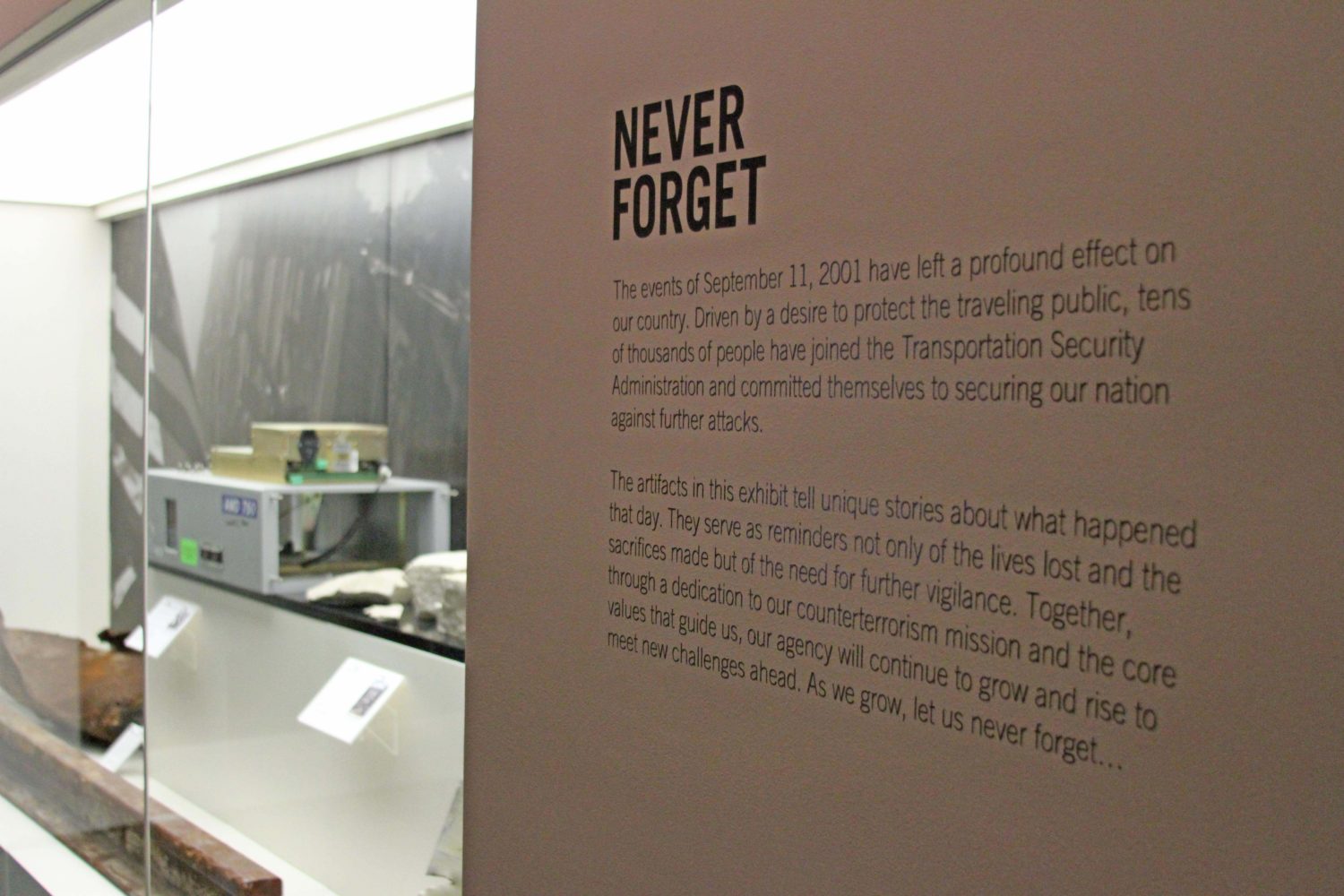
Here’s what’s inside the TSA Museum

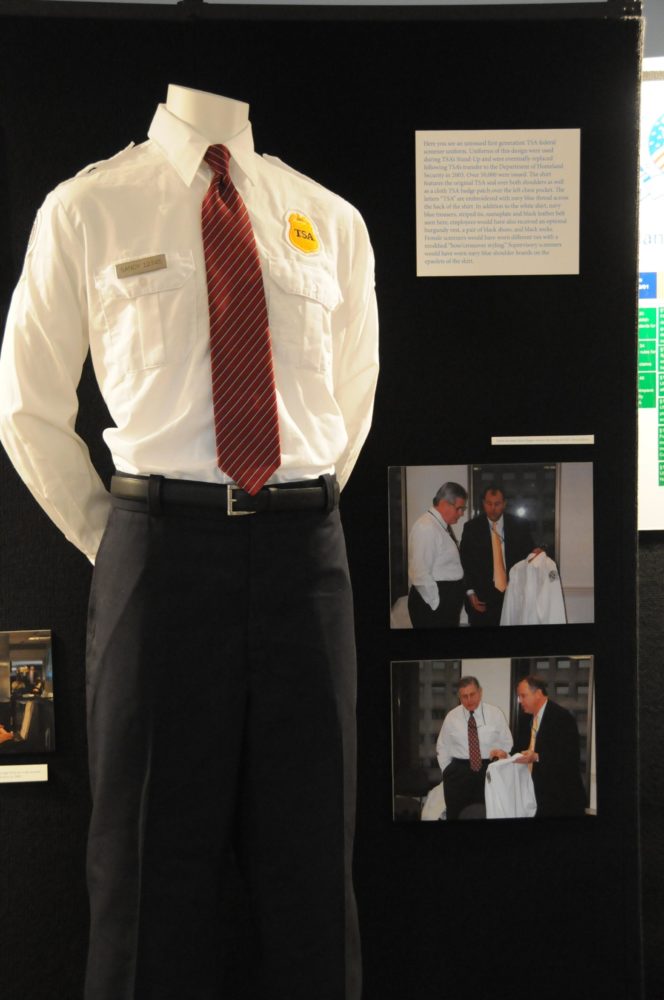
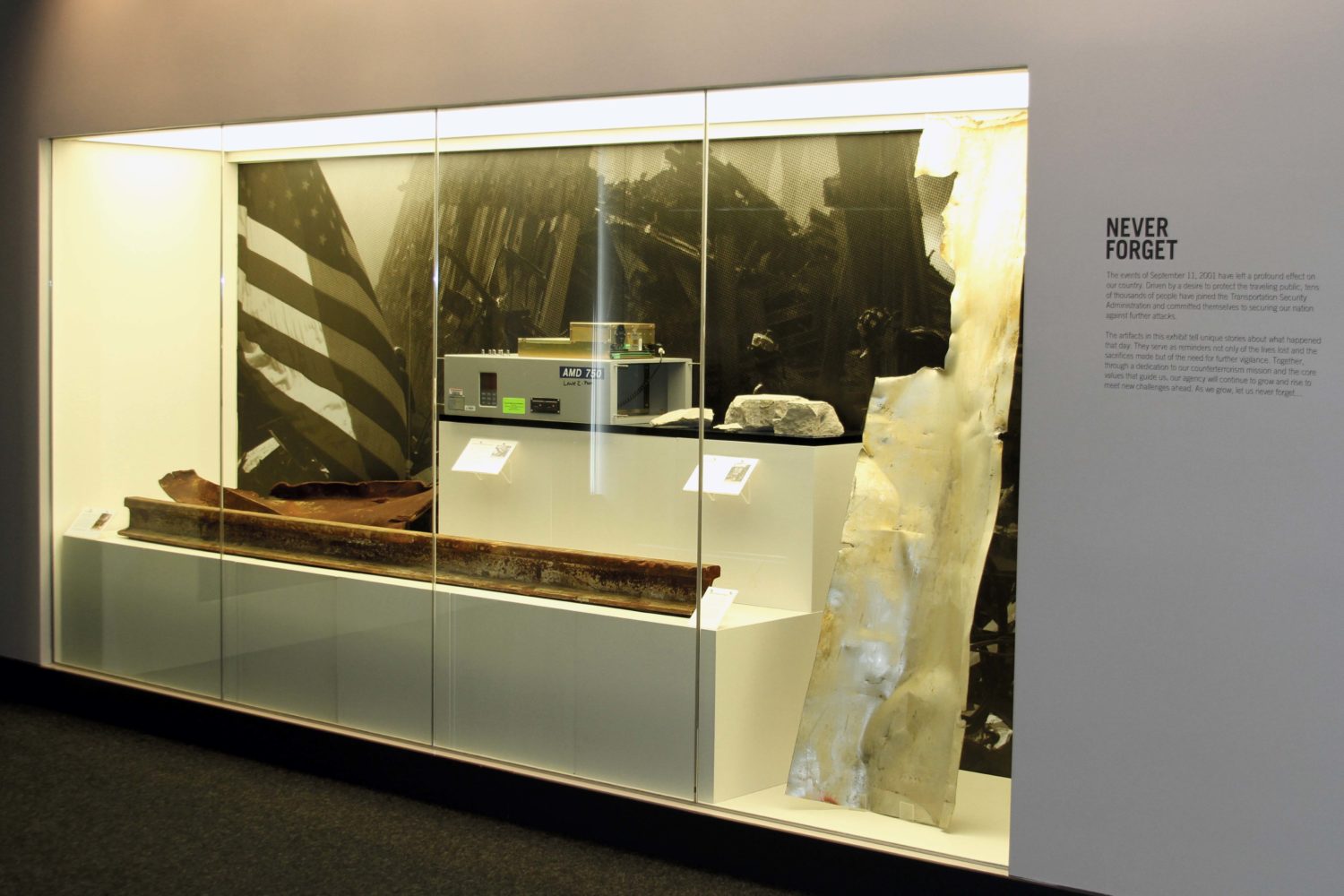
A lot of people were surprised to learn that there’s a TSA Museum inside TSA headquarters. Here’s a look at what’s inside:


An original handheld metal detector used by TSA at Washington Reagan National Airport in 2002.


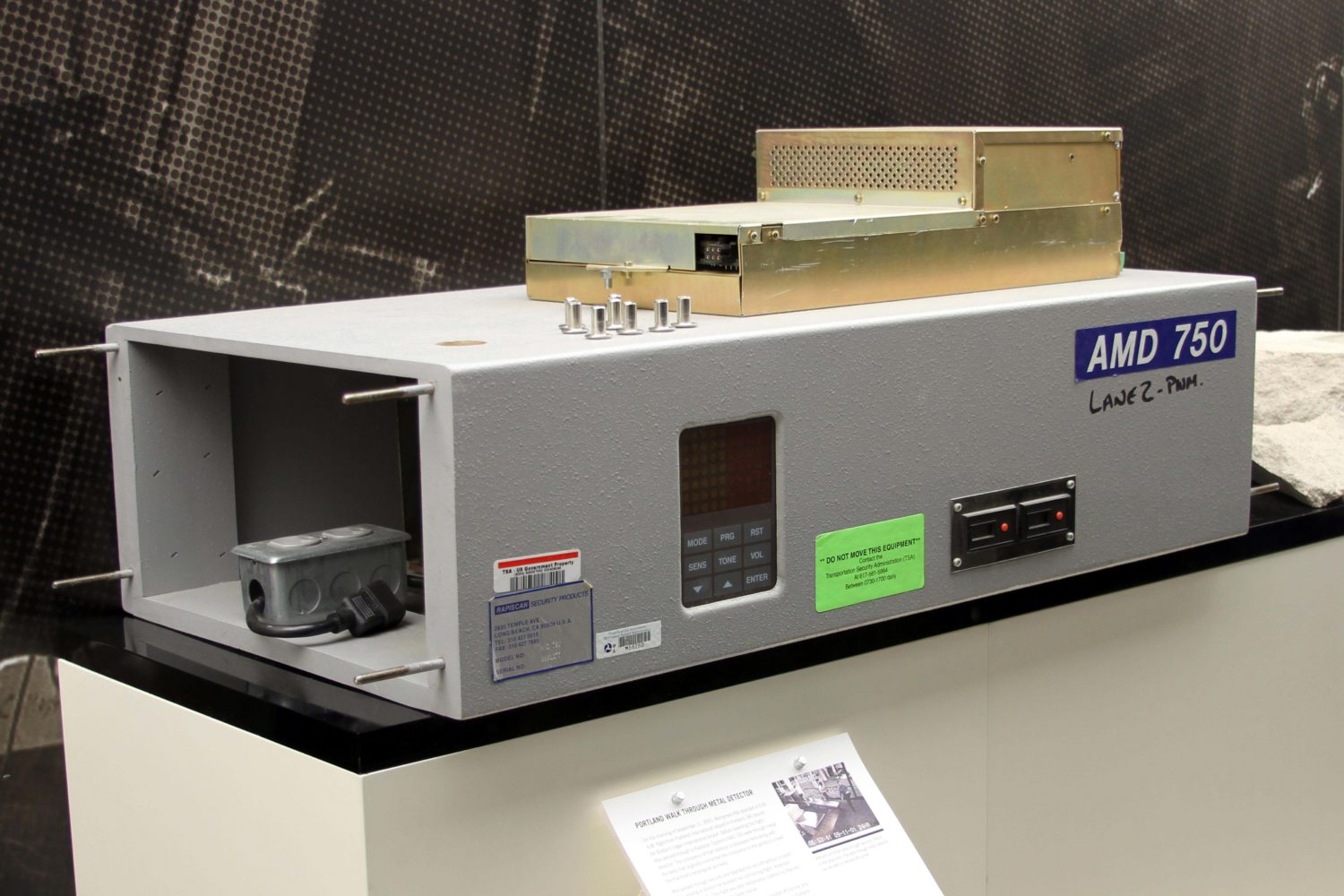
A metal detector which screened hijackers on the morning of September 11th.

This flag was flying over Terminal B at Boston Logan Airport when the airport was federalized in 2002. American Airlines Flight 11 left from Gate 32 in this terminal on September 11th.


The first uniform issued to TSA federal screeners beginning in 2002.


TSA has a museum? Yup, it does.

I’m finishing up a book about museums and the things they can’t or don’t show to the public, so was delighted to learn that the TSA has a museum that’s off limits to the general public because it’s inside TSA headquarters (which is off-limits to the general public) and because the intended audience for the museum is not the public, but the 50,000 or so people who work for that agency.

The TSA Museum at TSA headquarters

TSA and many of its employees give the public many reasons to question and mistrust the work that they do, and I’ve had the opportunity to do plenty of those stories, but this story is simply about a museum that few people know about (including museum program managers at some other government agencies) and the stuff that’s in it.

You can see the full story about the TSA museum in my At the Airport column on USATODAY.com, along with comments from a few people who think I’m a bad person for spending 800 words reporting the fact that there is such a museum and getting details and photos to share about what’s on display inside.