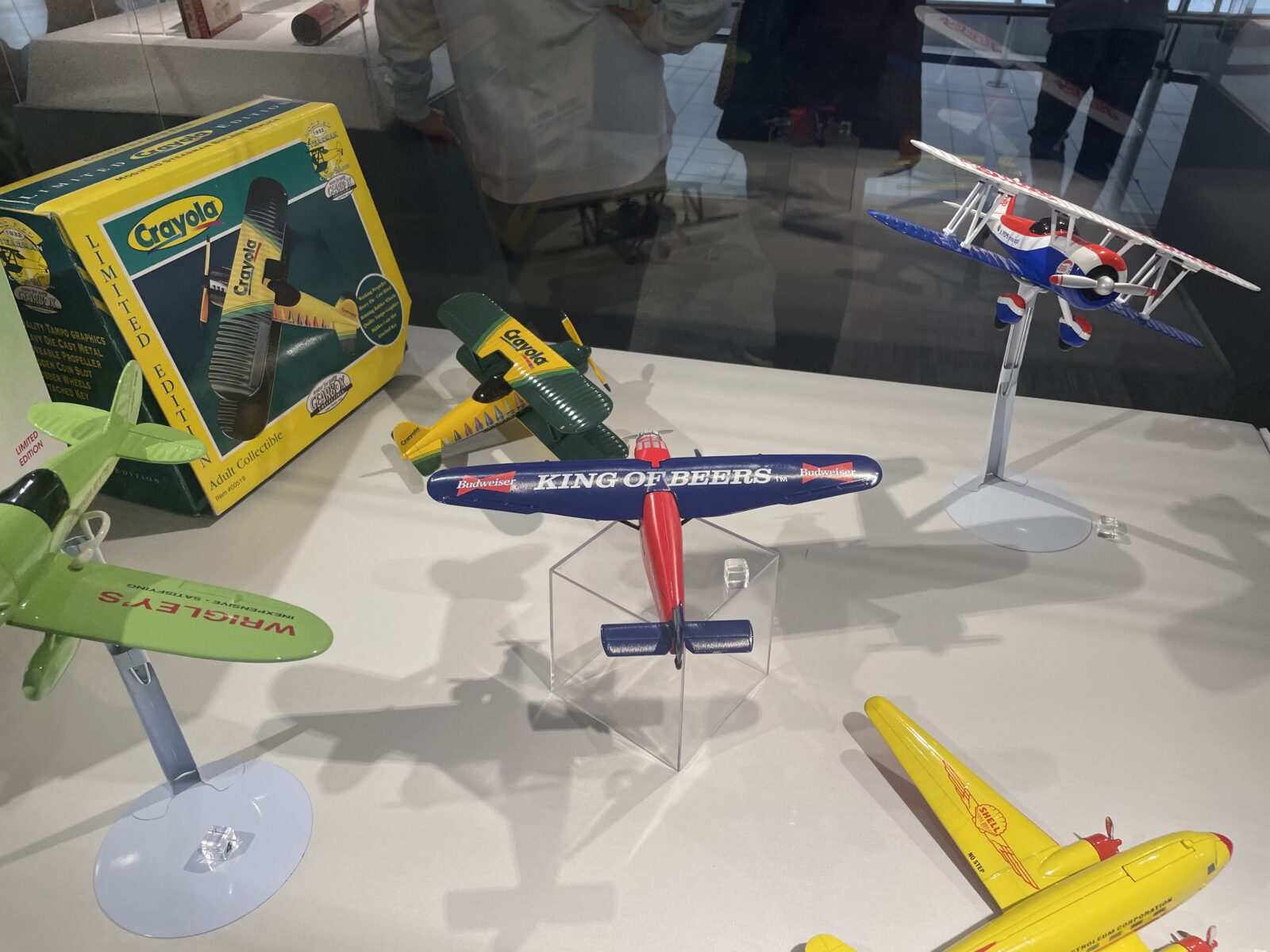
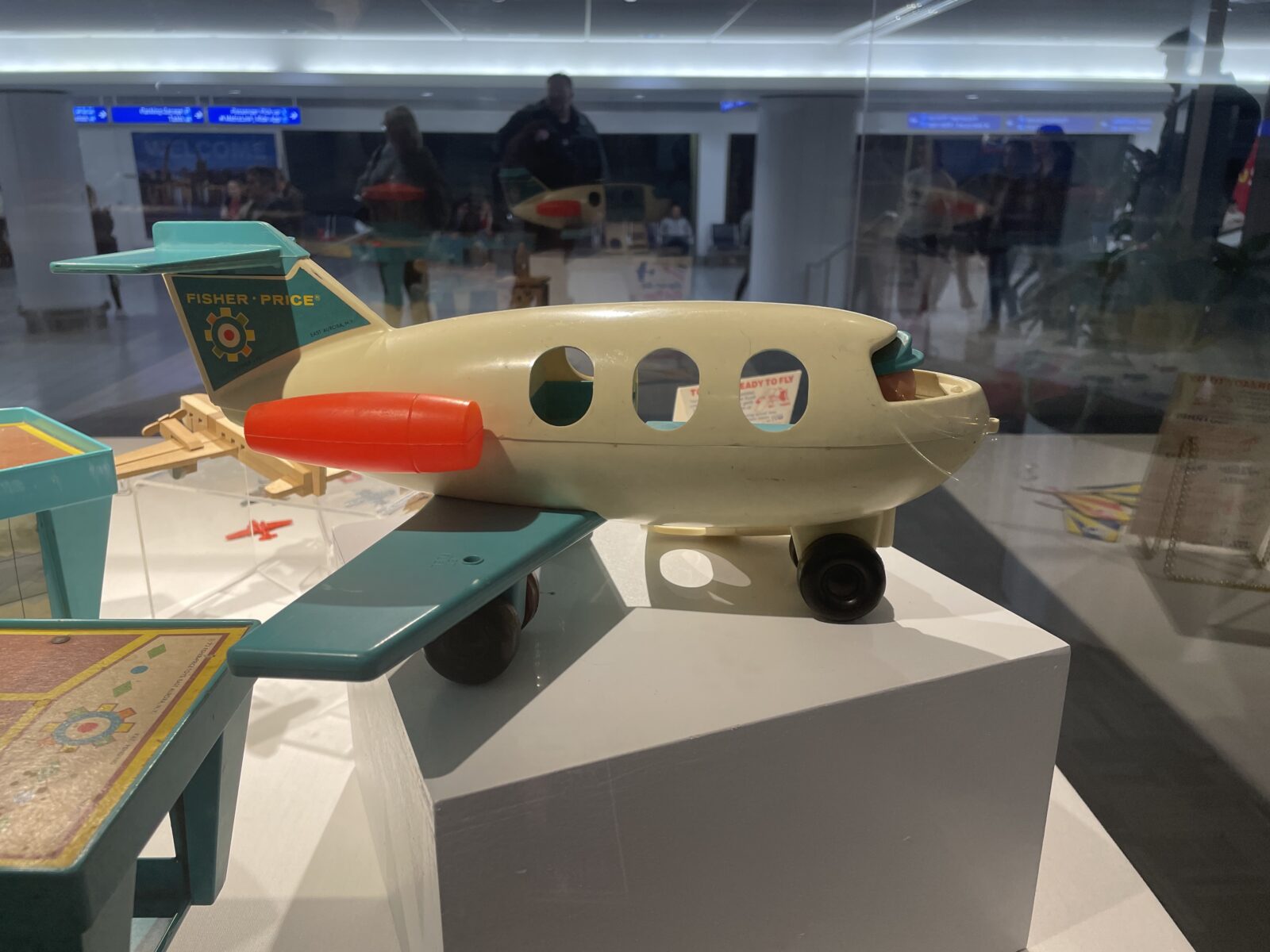
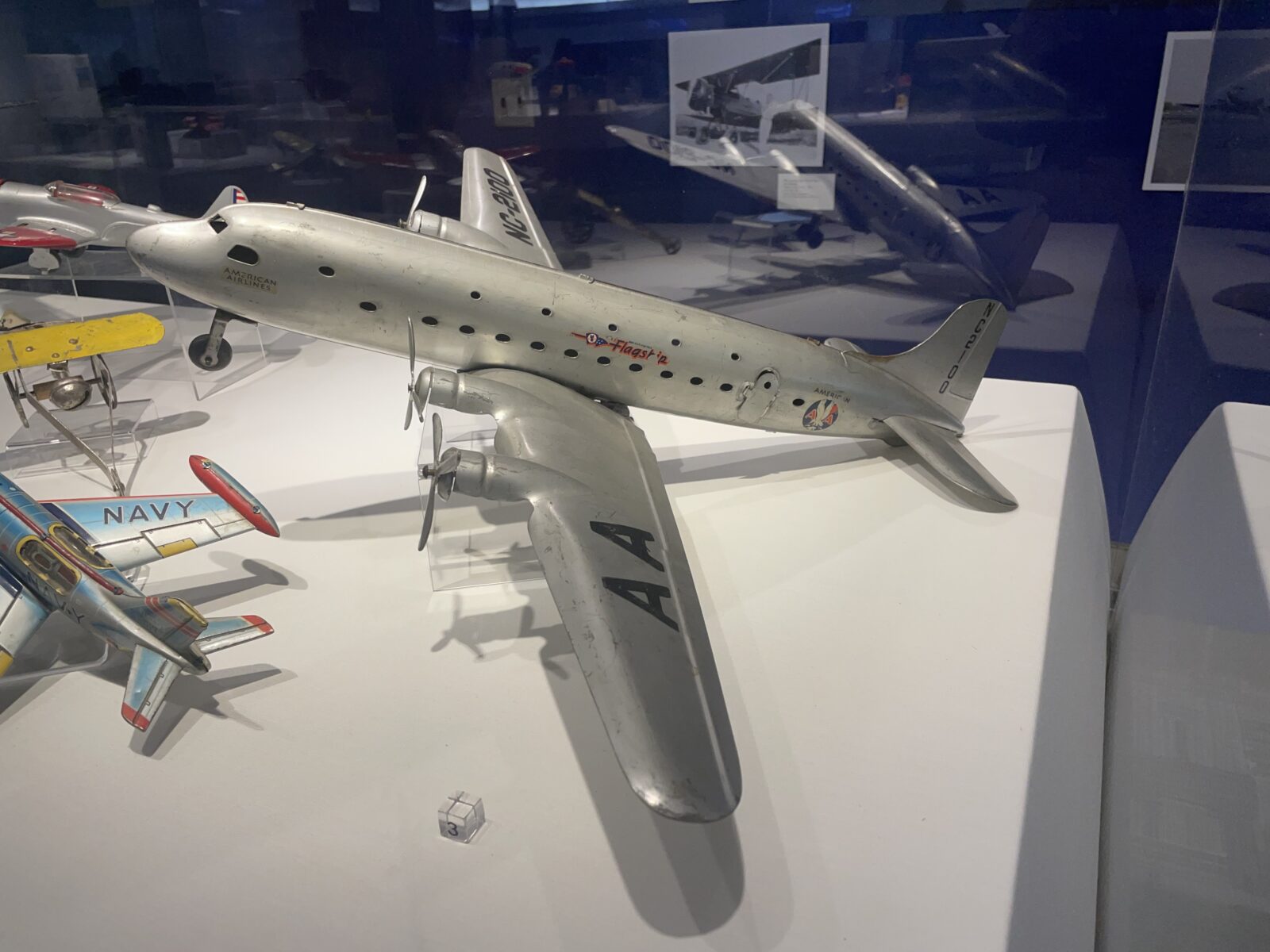
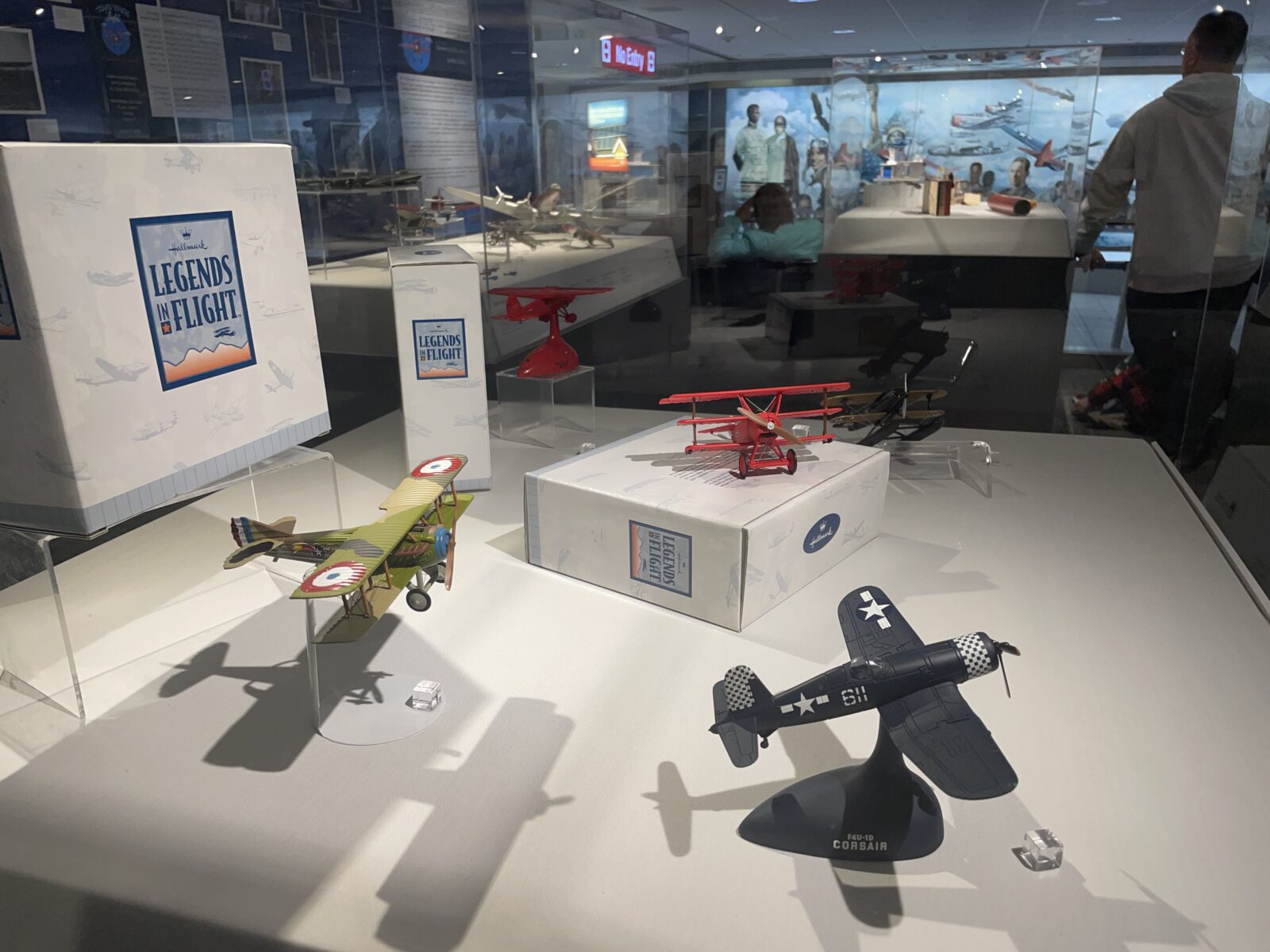
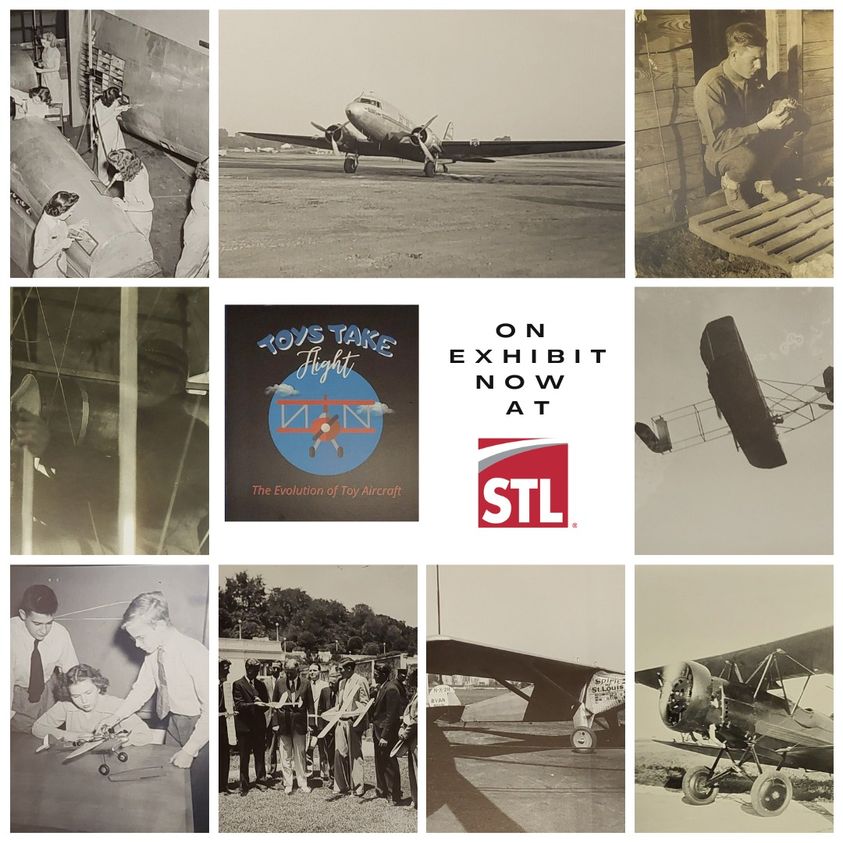
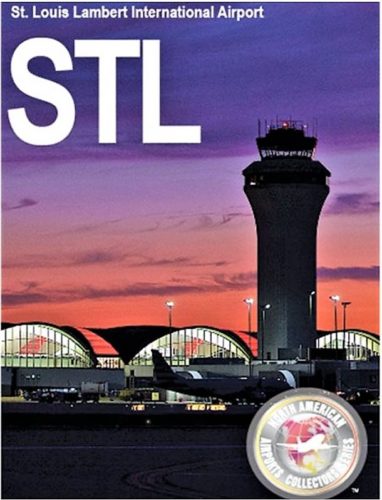
Fans of toy airplanes will enjoy the Toys Take Flight exhibit on view through the end of March 2023 in the Lambert Gallery at St. Louis Lambert International Airport (STL).
“Toy airplanes have been around longer than airplanes themselves,” the exhibit notes tell us. “The earliest model airplane, a glider powered by a rubber band, was created in 1871, 32 years before Orville and Wilbur Wright took their first flight. Through countless fads, innovations, and technological advances, toy airplanes have endured as a testament to humankind’s fascination with flight.”
Here are just a few of the toy airplanes on display at STL Airport.
Look for more toy airplanes on exhibit at St. Louis Lambert International Airport in the Lambert Gallery. It is located in Terminal 1 near Exit 11, close to the C Concourse Exit and is accessible to the public.
So many new things are popping up at airports for the holiday season. Here are just some of the items we spotted over the weekend.
Toy Planes at St. Louis Lambert Int’l Airport
Toys Take Flight is a new exhibit by the Field House Museum now in the Lambert Gallery at St. Louis Lambert International Airport (STL). In addition to toy airplanes and model plane kits, the exhibit includes some great photographs.
Avatar at Sinagpore Changi Airport
The Light & Sound show inspired by 'Avatar: The Way of Water' (in cinemas 15 December 2022) plays exclusively at the HSBC Rain Vortex twice nightly till 2 Jan. Catch it at either 8.30pm or 10.30pm when you're at #JewelChangiAirport! #ChangiFestiveVillagepic.twitter.com/x6ifwYmAoY
Little Free Libraries Filling Up at Seattle-Tacoma Int’l Airport
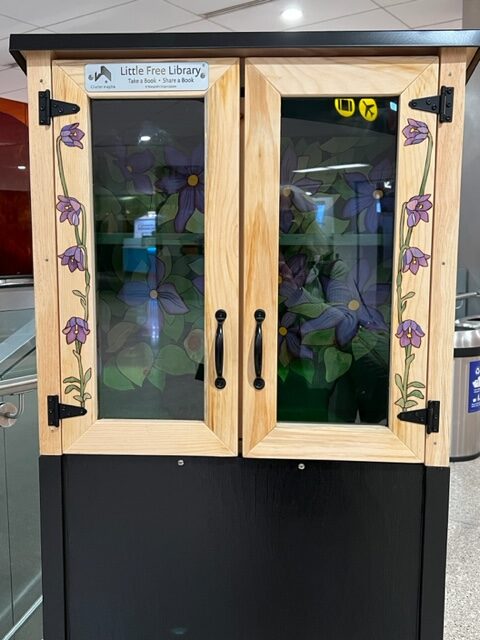
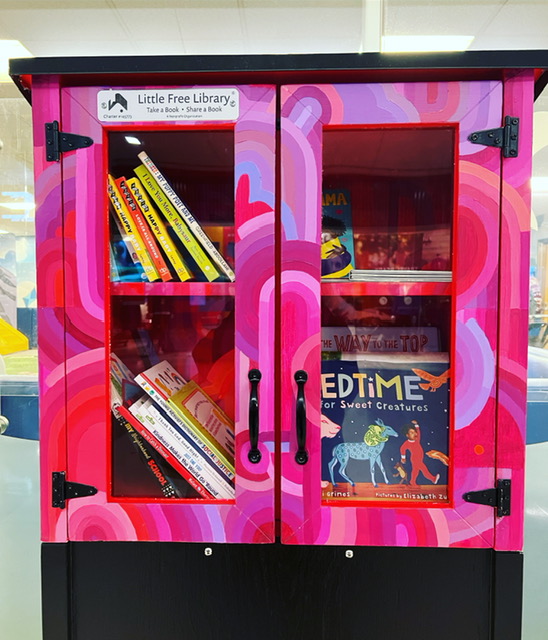
You may have noticed Little Free Libraries in your neighborhood encouraging people to leave books and take books. Some airports around the country host Little Free Libraries too, and Seattle-Tacoma International Airport (SEA) is the newest addition. Look for two artist-painted Little Free Libraries at SEA. One is at the top of the escalator leading down to the SEA Underground train at Concourse A and the other is in front of the Children’s Play Area in Concourse A.
Last time we passed through the airport we were pleased to see that the Free Little Library by the play area was chock full of kids books.
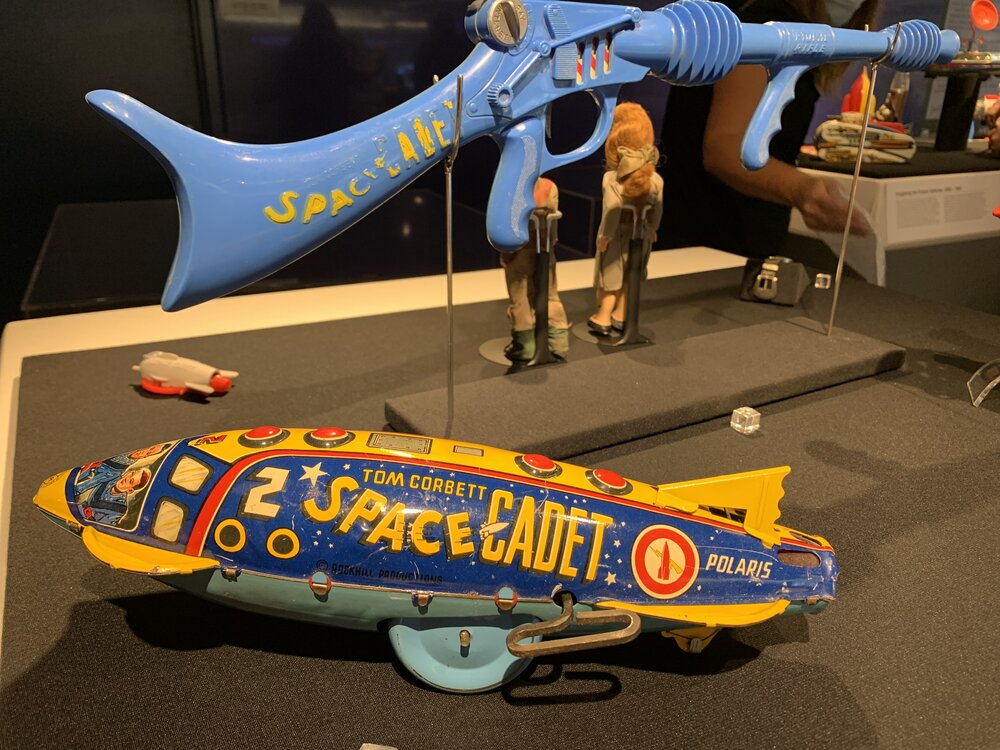
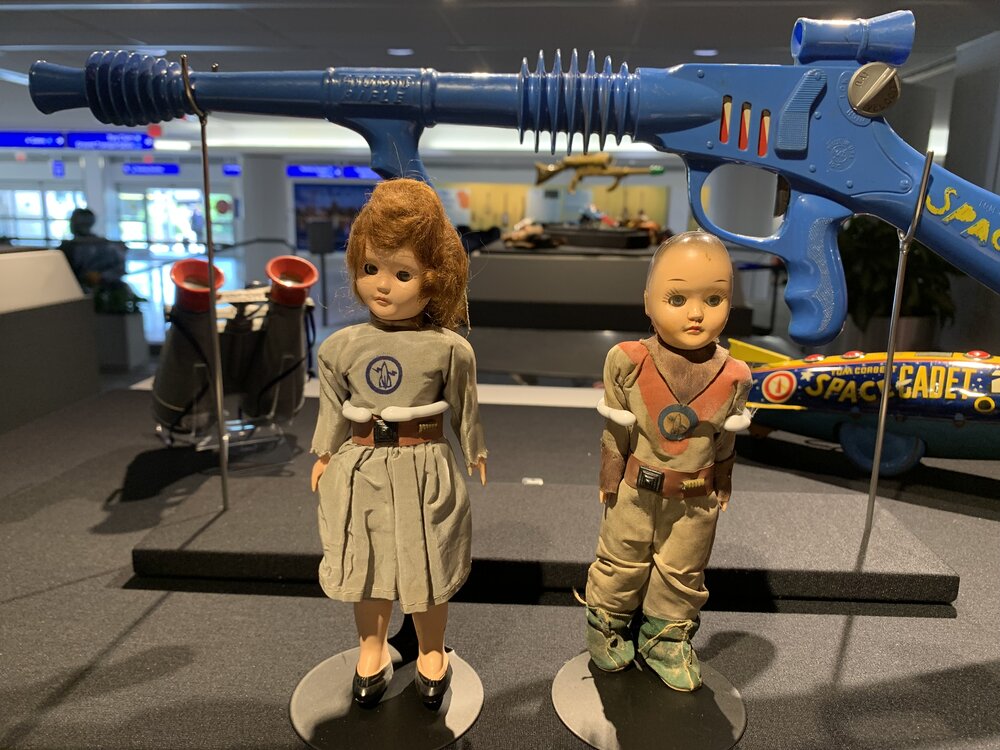
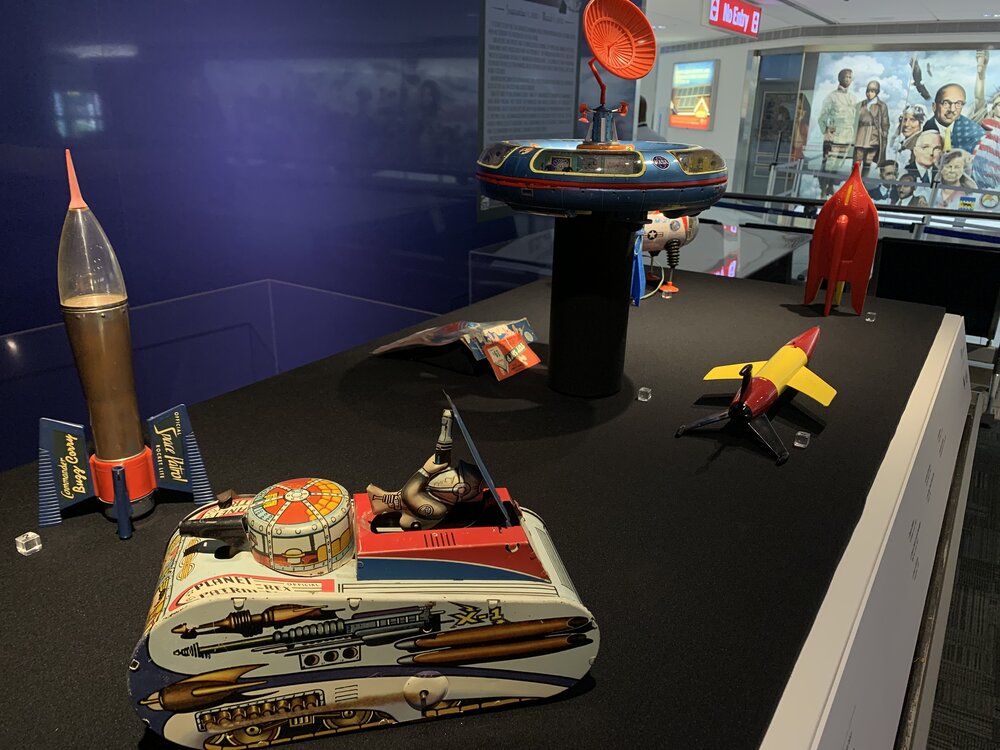
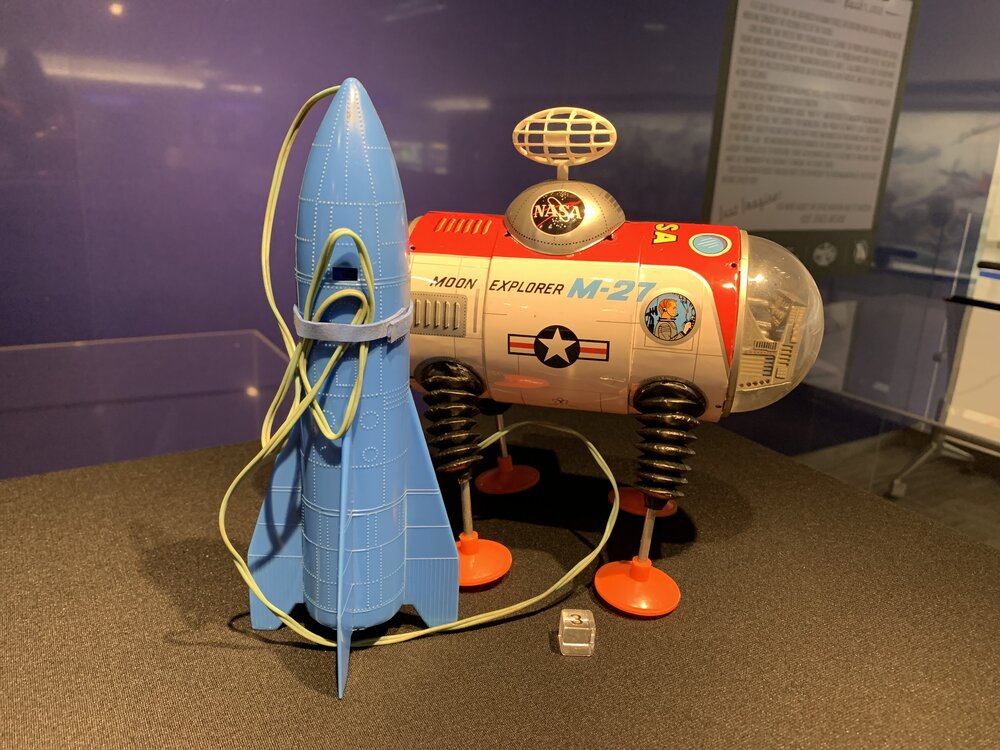
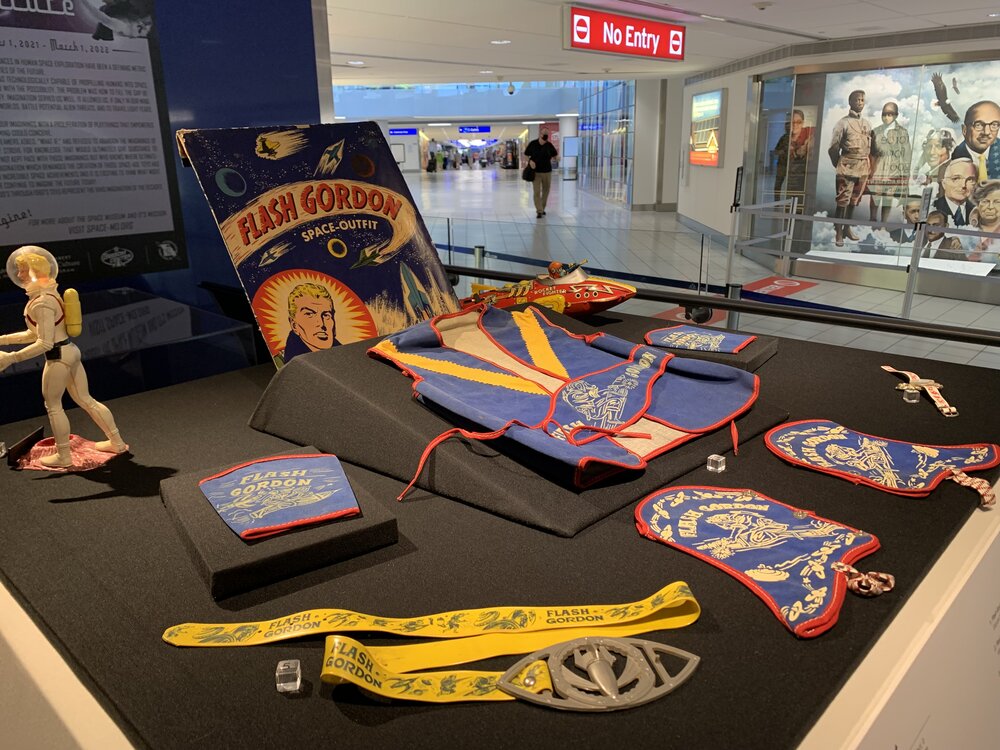
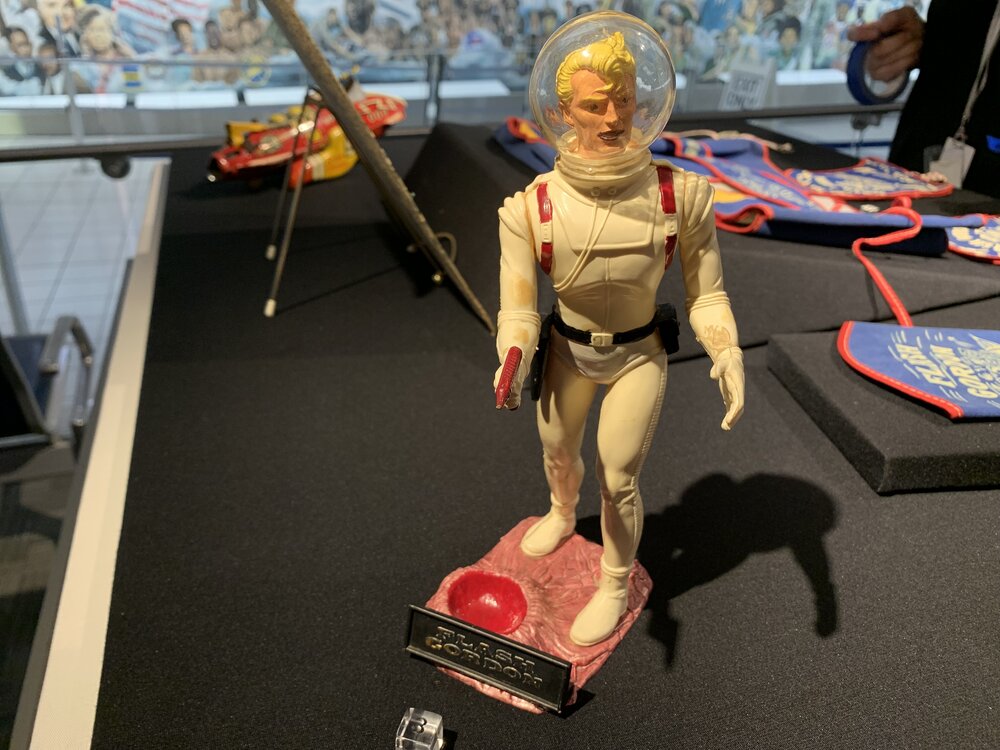
Calling all Space Cadets: a new exhibit at St. Louis Lambert International Airport (STL) features vintage space-inspired toys on loan from the Space Museum in Bonne Terre, Missouri. Here’s a sampling of what you’ll see if you stop by STL Terminal 1, plus a fun video from ‘Living St. Louis’ all about the museum and its creator.
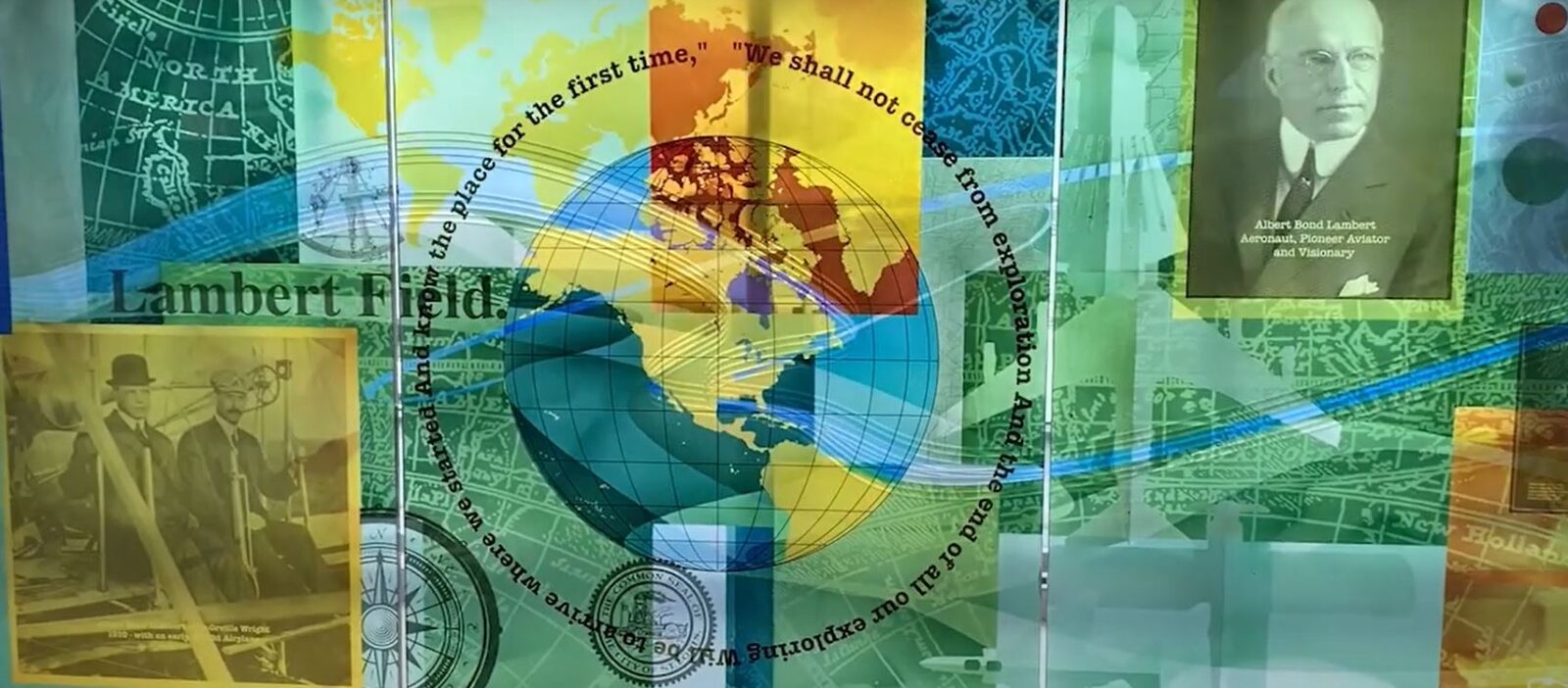
Born in 1875, Albert Lambert was an avid balloonist and an accomplished golfer who competed in the 1900 and 1904 summer Olympics. And, lucky for us, he was also an aviation enthusiast who, after taking a ride in a plane piloted by Orville Wright, took flying lessons from the Wright Brothers’ company. In 1911, Lambert became the first licensed pilot in St. Louis.
In 1920, Lambert and the Missouri Aeronautical Society leased farmland to serve as an airfield for St. Louis. And it was Lambert, whose family owned the pharmaceutical company that made Listerine, who paid to have the land developed as an airfield. In 1925, when the lease ran out, Lambert purchased the airfield property. He sold it in 1928 to the city of St. Louis, at cost.
The new mural, “Dream Beyond the Clouds,” was designed by Martin Donlin. And in the video, below, Donlin describes the artistic inspiration for the mural design, the ‘making-of’ the mural, and what he learned about the airport’s namesake.
You’ll want to see the mural up close. Look for it in Terminal One, across from entry door 4.
Happy Friday. We’re ending the week here at Stuck at The Airport with some tidbits that caught our attention, like this #TBT – “Throwback Thursday” – tweet from O’Hare International Airport
In 1955, O’Hare officially opens to commercial air traffic; the airport serves 176,902 passengers in its first year. Photo series on display in T3 (L Stinger) “Evolution of O’Hare” exhibit. #ORD#DidYouKnow#TBTpic.twitter.com/4yMP2tuNUT
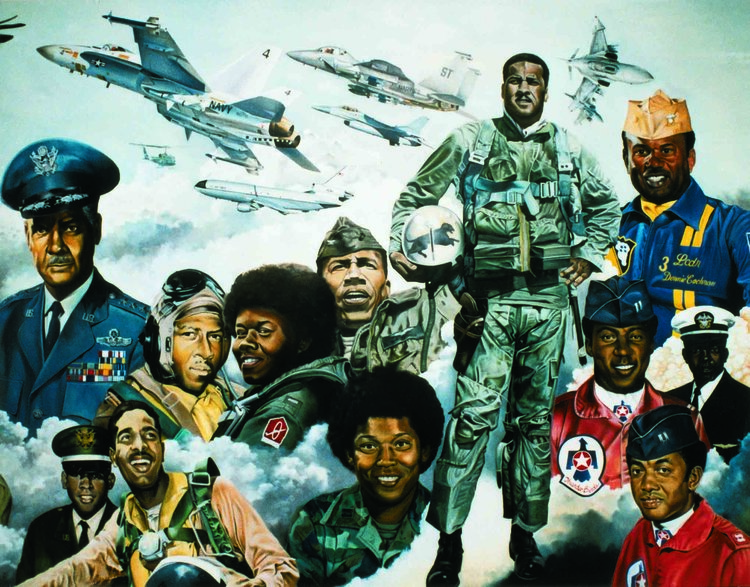
All month long, we’re been paying attention to – and learning from – the tweets from St. Louis Lambert International Airport (STL) highlighting the people featured on the airport’s Black Americans in Flight mural.
STL celebrates Black Americans in Flight during Black History Month. On this date in 1923, Tuskegee Airman Clarence "Lucky" Lester was born. His portrait is located in STL’s Black Americans in Flight mural. The artwork is also online at: https://t.co/wnrLroqfsopic.twitter.com/YjtSNJqKFQ
We’re sad we missed seeing this exhibit at Orlando International Airport (MCO).
Last days to visit the exhibit: “Twenty Years Bold: Wells’Built Museum of African American History & Culture” featuring artworks from the local museum, in celebration of Orlando’s African American Heritage. #BHM 🎨 Located at our Main Terminal, near Checkpoint for Gates 70-129 pic.twitter.com/vagBmtz7HB
And we’re impressed that Delta’s Flight Museum is being used as a mass vaccination site in Georgia.
Our Delta Flight Museum, which opened in 1941 as our first aircraft hangar, is taking on a new challenge as it now houses one of the largest vaccination sites in Georgia. pic.twitter.com/oOCCFHlY8B
The airport is named in honor of Major Albert Bond Lambert, who learned to fly with the Wright Brothers and in 1911 was the first person in St. Louis to receive a private pilot’s license.
Keep in mind that some of the modern-day amenities we love at STL may not be available or accessible due to health concerns. We’re confident they’ll be back.
If we miss one of the STL features you love, be sure to leave a note in the comments section below.
And be sure to take a look at the other airports in the “5 Things We Love About...” series as well.
5 Things We Love About St. Louis Lambert International Airport – STL
1. The Historic STL Terminal
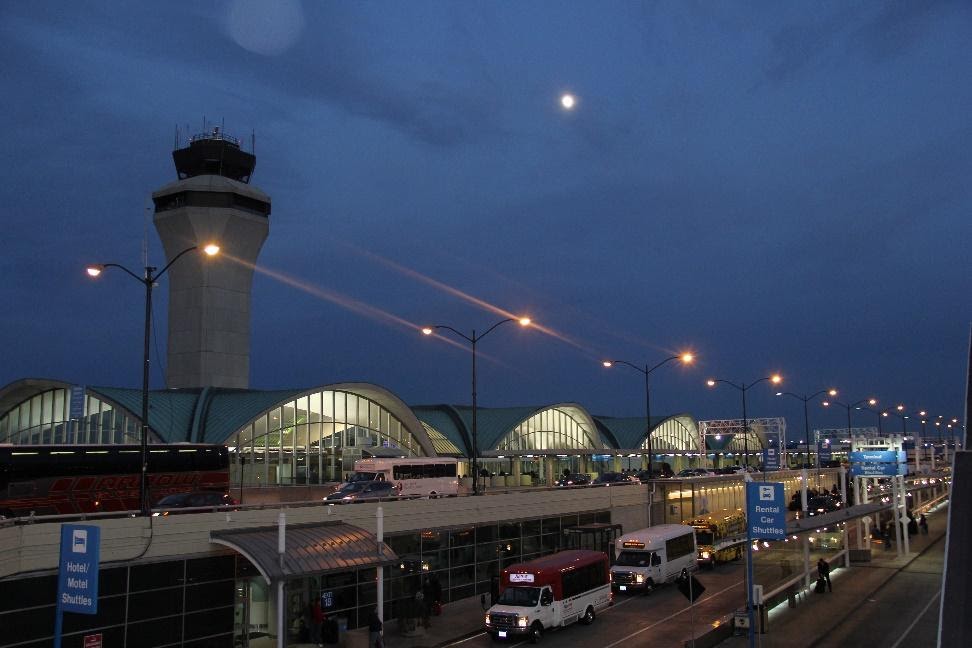
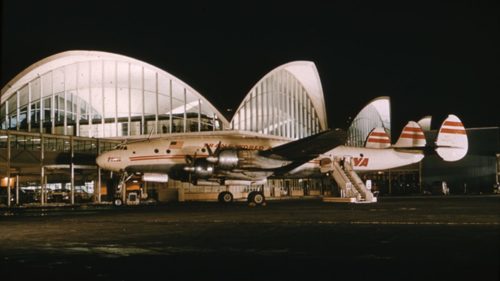
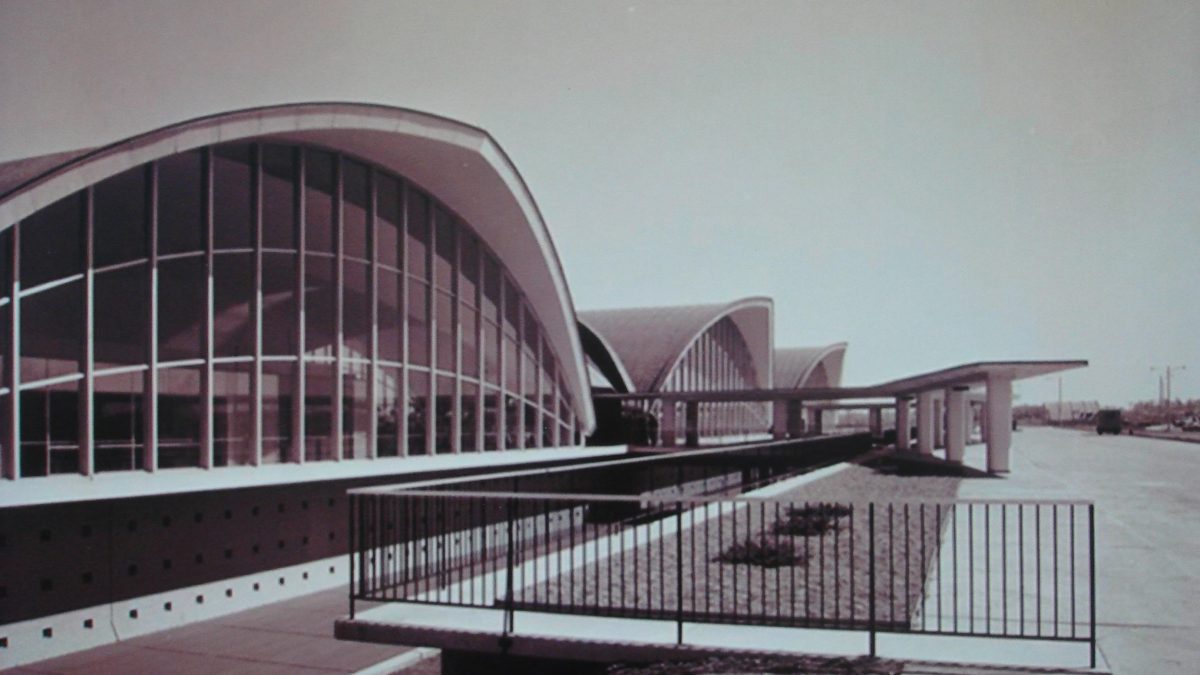
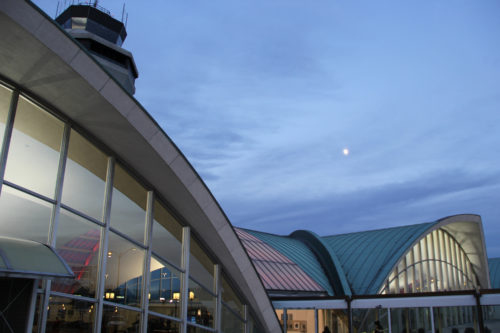
In 1956, famed Japanese-American architect Minoru Yamasaki’s iconic arched terminal opened at Lambert.
Yamasaki also designed the original World Trade Center in New York City and many other iconic buildings.
The signature terminal at STL was originally built as a multi-level facility with a grand ticketing hall topped with three 30-ft high domed, concrete vaults.
The STL terminal expanded in 1965 with a fourth identical dome.
That original mid-century design has been credited with influencing the designs for other iconic terminals, including the TWA Terminal at John F. Kennedy International Airport in New York (now the TWA Hotel) and Dulles International Airport in Washington, D.C., both designed by Eero Saarinen.
2. The art collection at STL
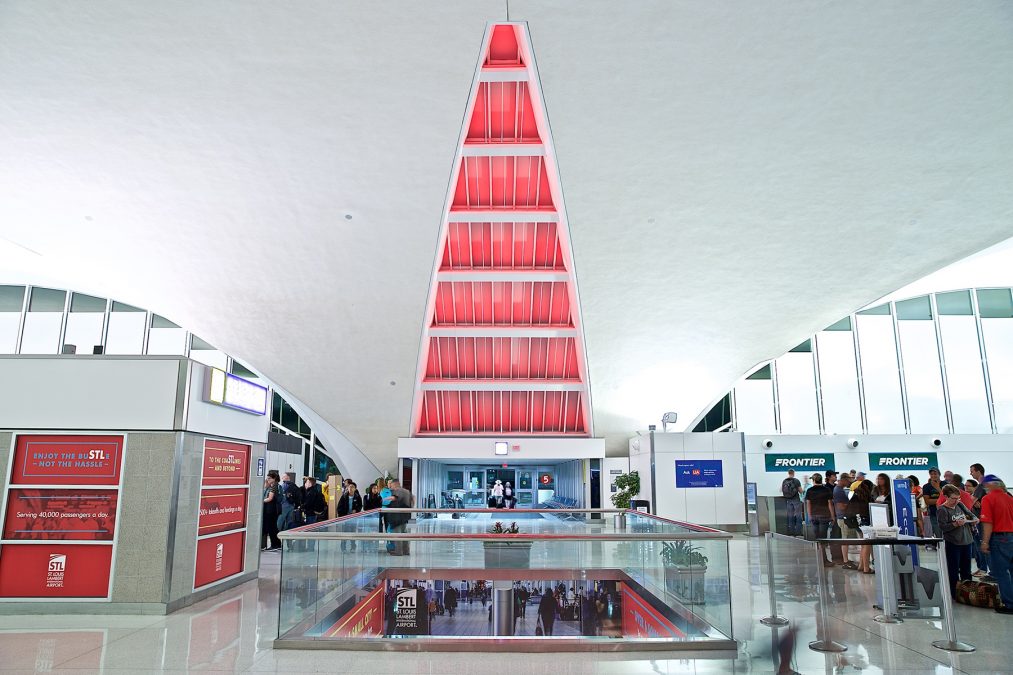
St. Louis Lambert International Airport (STL) has an art museum feel, with ten major works on temporary or permanent display in both terminals.
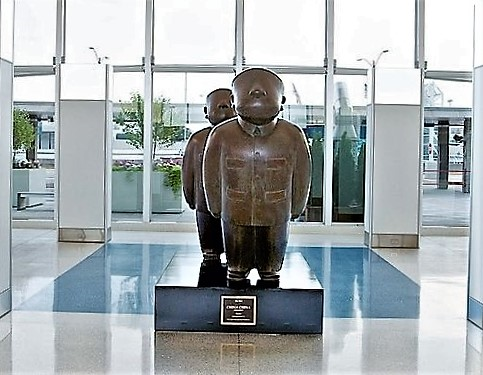
One of the most notable art pieces at STL is Zhu Wei’s China China bronze statue (above), on loan from the Gateway Foundation.
Here’s a sampling of some of the other artwork you’ll find at STL in the Lambert Gallery (in Terminal 1) and on Concourses A and C.
The Confluence, by Joan Hall. Gate C5 in Terminal 1
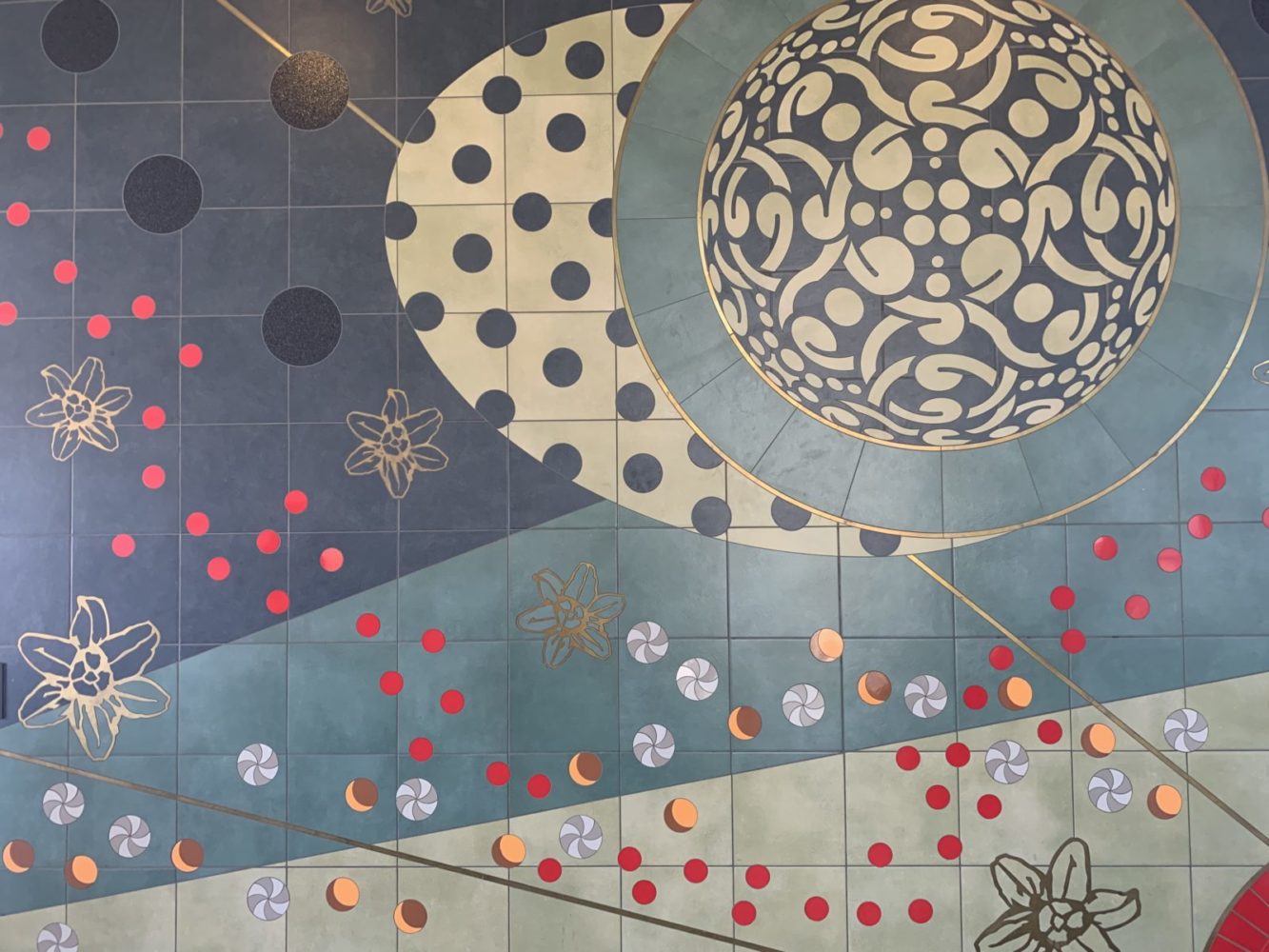
<Nucleic Life Formation – by Amy Cheng
3. STL’s Historic Black Americans in Flight Mural
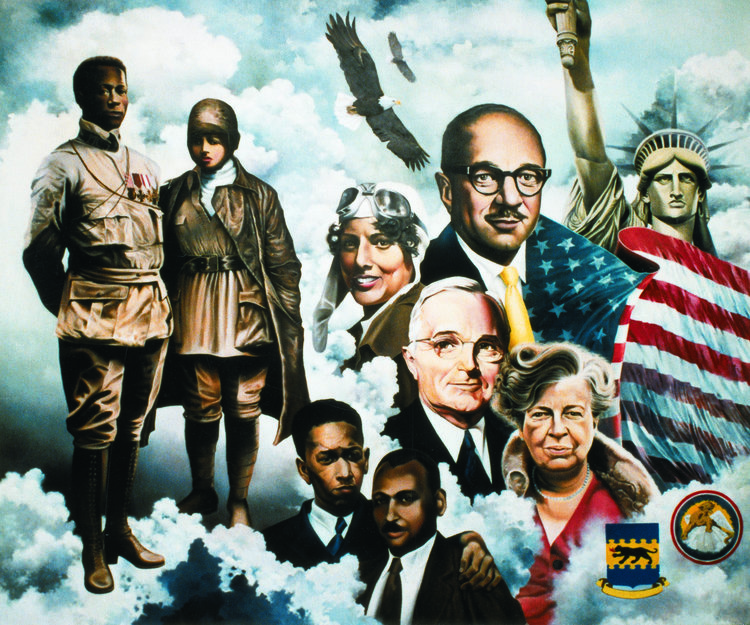
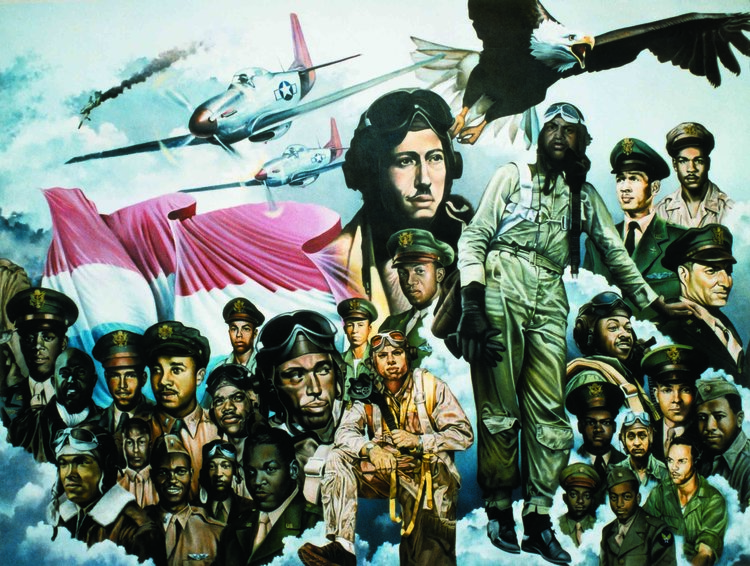
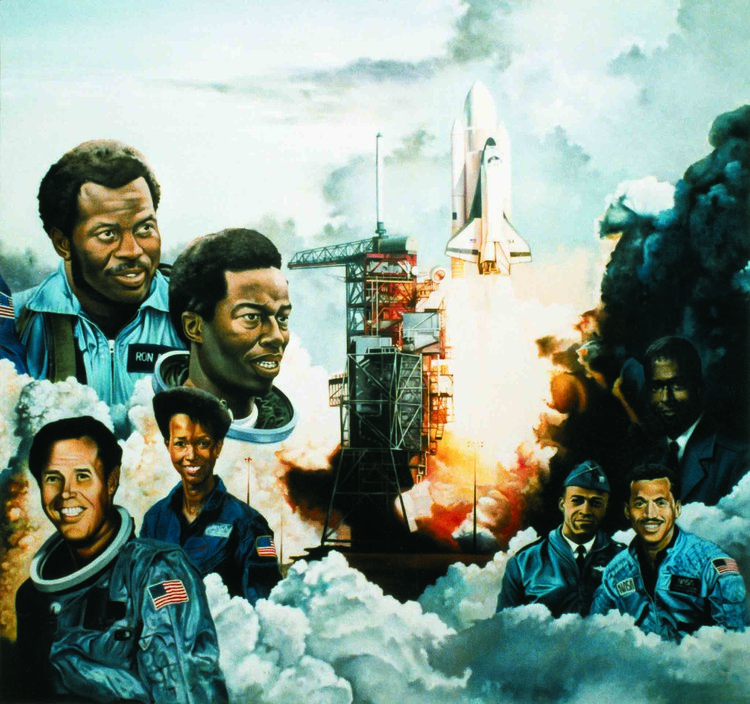
August 2020 marks the 30th anniversary of the dedication of the impressive and important Black Americans in Flight mural.
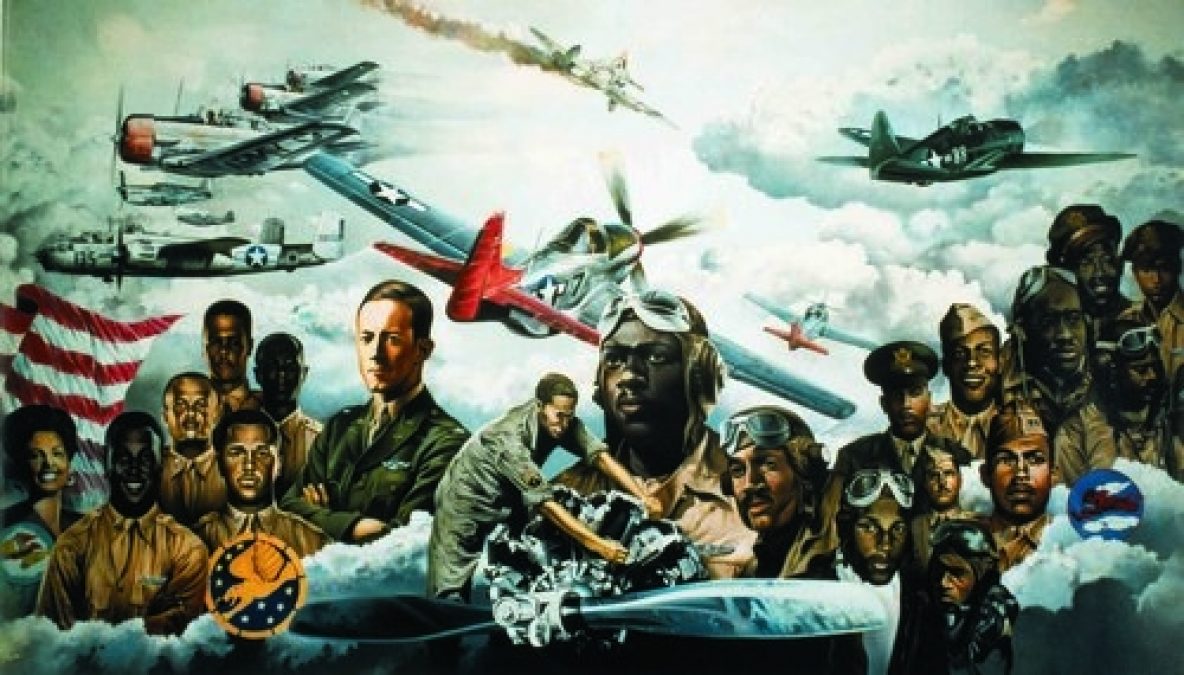
The 5-panel mural is eight feet tall and 51 feet long. It pays tribute to African-American achievements in aviation from 1917 onward.
You’ll find it on the lower level of Terminal 1, outside of security, near Exit 11.
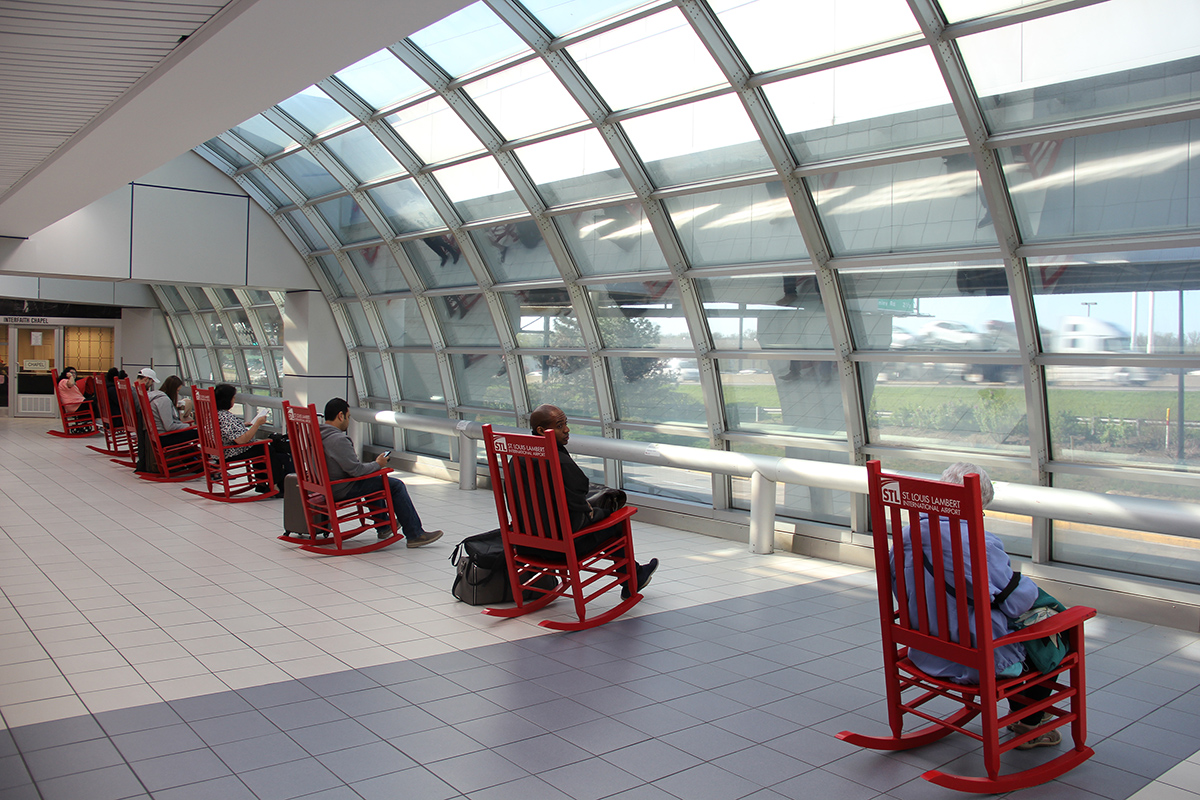
4. STL’s Red Rocking Chairs
Rocking chairs are one of the calming amenities travelers most enjoy when they’re stuck at the airport.
At some airports, the rockers are white or plain brown. Elsewhere, they’re painted by artists and each is different.
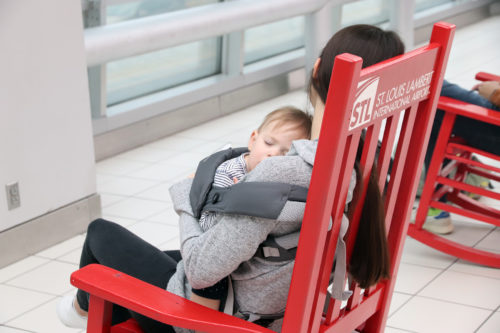
At STL Airport the rocking chairs are bright red and emblazoned with the STL logo.
Is it the cardinal red of the St. Louis Cardinals baseball team? Maybe. But these rockers are hard to miss and clearly very, very comfortable.
5. The bonus views
In the 1960s, Lambert International Airport was the home to a McDonnell Douglas facility that built the Gemini space capsule.
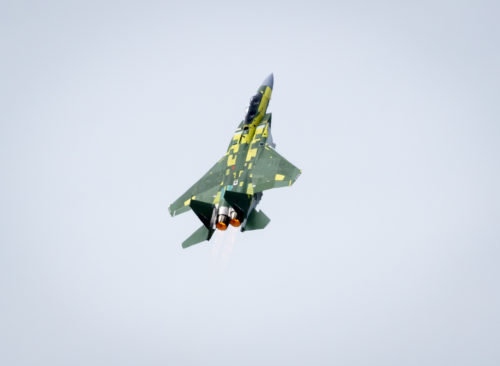
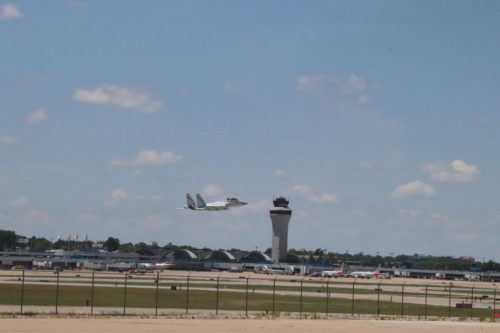
Today, there’s a Boeing plant on the STL property that builds the U.S. Air Force’s F-15 Hornet jet fighter, which can reach a maximum speed of Mach 2.5. The plant also produces the T-7 Air Force trainer jet and the Navy’s MQ-25 refueling drone.
Passengers landing at STL are sometimes treated to the sight of a military or Boeing test pilot making a vertical ascent.
Like this:
Even more thing we love at STL Airport
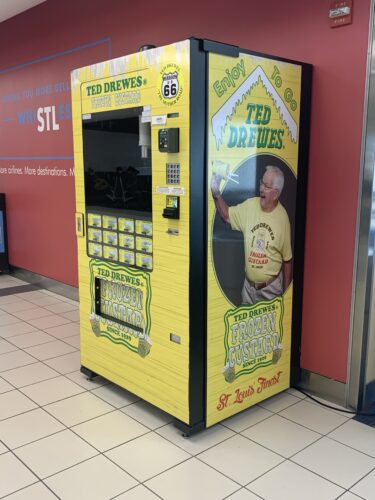
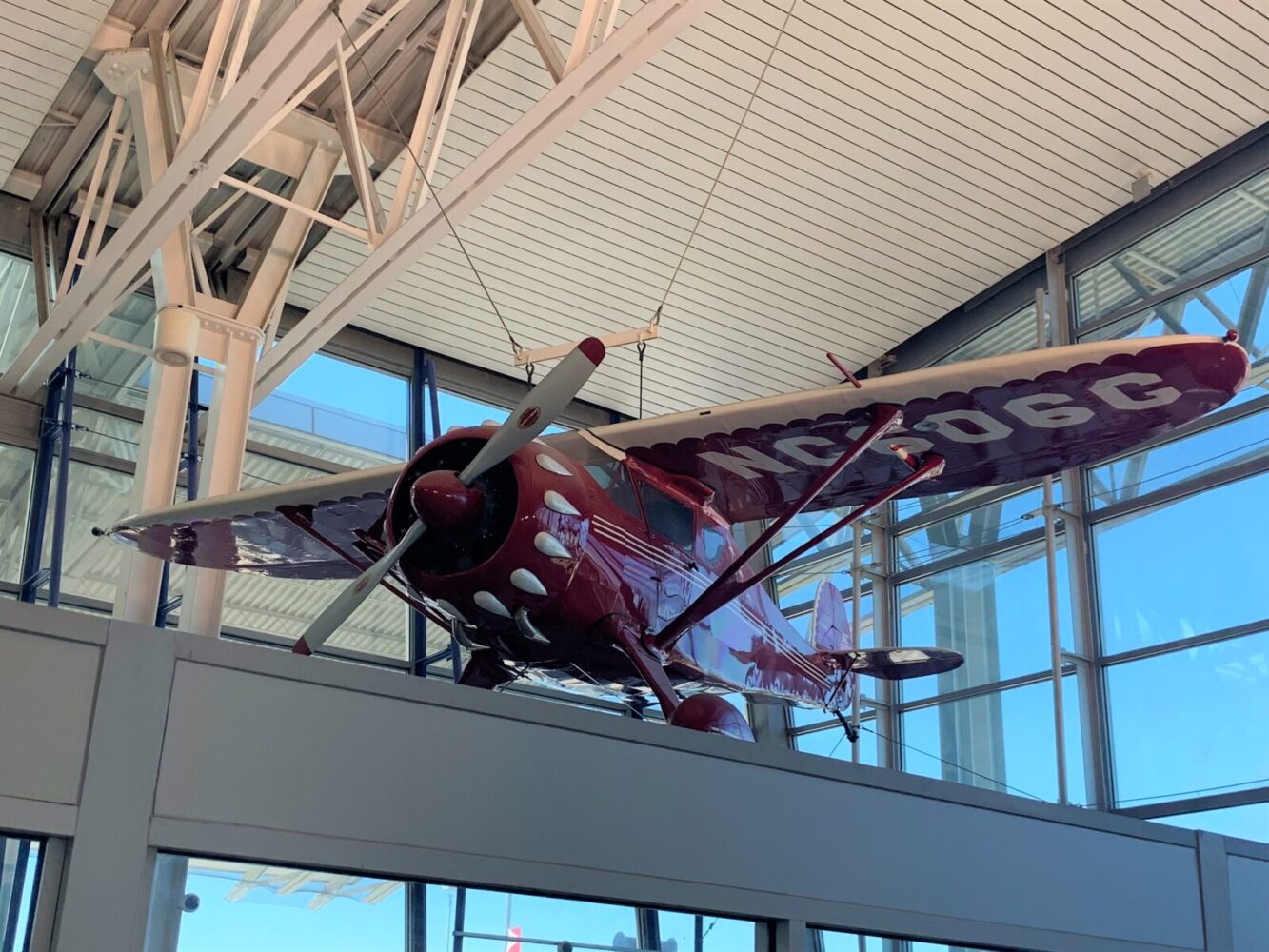
Here are two extra bonus items we love at STL Airport: Vending Machines for Ted Drewes Ice Cream and the Glatz Monocoupe.
Ted Drewes Ice Cream Machines at STL
If you live in St. Louis – or have visited – you’re probably a fan of Ted Drewes frozen custard. Lucky thing, then, that there are four Ted Drewes vending machines at STL airport. Two are in the Southwest Airlines Terminal 2 near Gates E10 and E20. Two other machines are in the historic Terminal 1, by Gate A15 and Gate C15.
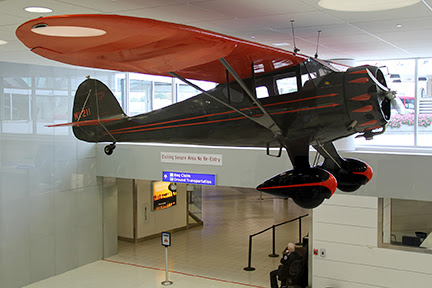
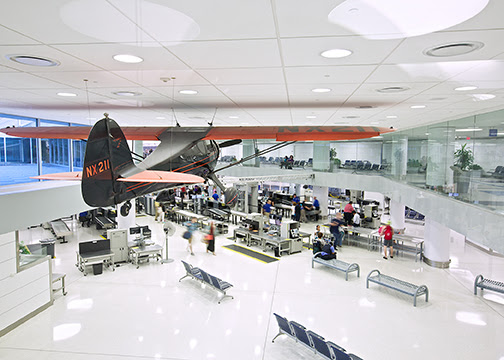
In STL Terminal 2 you’ll find a Monocoupe 110 Special on display.
The “Glatz” Monocoupe, as it is known, is on loan from the Missouri Historical Society and was manufactured by the Mono Aircraft Corporation of Moline, Illinois in March 1931. The plane has been on display at STL since 1998.
Did we miss one of your favorite features or amenities at STL? Be sure to leave a note in the comments section below. And let us know where our “5 Things We Love About …” series should land next.
Make sure to see this historic mural at STL Airport
August 13, 2020 marks the thirtieth anniversary of the dedication ceremony unveiling the Black Americans In Flight mural that now hangs in Terminal One (T1) at St. Louis Lambert International Airport (STL).
The five-panel mural is eight feet tall and 51 feet long. It pays tribute to African-American Achievements in Aviation from 1917 onward.
Included in the historic mural are 75 portraits, 18 aircraft, five unit patches, and one spacecraft.
In 1986 the Committee for the Aviation Mural Project Success (CAMPS) commissioned St. Louis artist Spencer Taylor to create the mural.
The initial assignment was to honor St. Louis African-American pilots that flew in World War II, also known as Tuskegee Airmen. But Taylor worked with another local artist, Solomon Thurman, and expanded the mural to include the much broader story of African-Americans in aviation and the history they made.
Notable people featured in the mural
A few of the notable people you can spot in the mural include:
Capt. Benjamin O. Davis, Jr. On September 2, 1941, David became the first African-American to solo an aircraft as an officer of the U.S. Army Air Corp.
Capt. Wendell O. Pruitt. A St. Louis native, Pruitt was one-half of the famed “Gruesome Twosome.” Capt. Pruitt along and Capt. Lee Archer are considered the most successful pair of Tuskegee pilots in terms of air victories. Both men were awarded the Distinguished Flying Cross.
Capt. Marcella A. Hayes. Hayes is the first African-American woman to complete U.S. Army pilot training in 1979. Following her training, she became an Army helicopter pilot.
Capt. Edward J. Dwight, Jr. He is the first African-American candidate for NASA’s space program.
Ronald E. McNair, Ph.D. McNair was a specialist aboard the fatal launch of the Challenger space shuttle in January of 1986.
Mae C. Jemison, M.D. She is the first African-American female astronaut.
In 2017, STL held an event to commemorate the 27th anniversary of the mural’s installation. COVID-19 means no formal ceremony or event can take place now, for the 30th anniversary.
A
wing and an organized prayer: OK at some airports, but no longer in Orlando
Chapel at Hartsfield-Jackson Atlanta International Airport
My story this week for CNBC is about airport chapels. Here’s a very slightly different version of that piece.
They’re not as ubiquitous as cocktail bars and souvenir shops, but chapels and inter-faith prayer spaces, many with full or part-time chaplains and regularly-scheduled services, are among the amenities offered by more than three dozen airports around the country.
Some prayer rooms occupy what has, over time, become prime real estate in pre or post-security areas of airport terminals. Others are tucked away and may be hard to find on mezzanines, down back corridors or in bag claim areas.
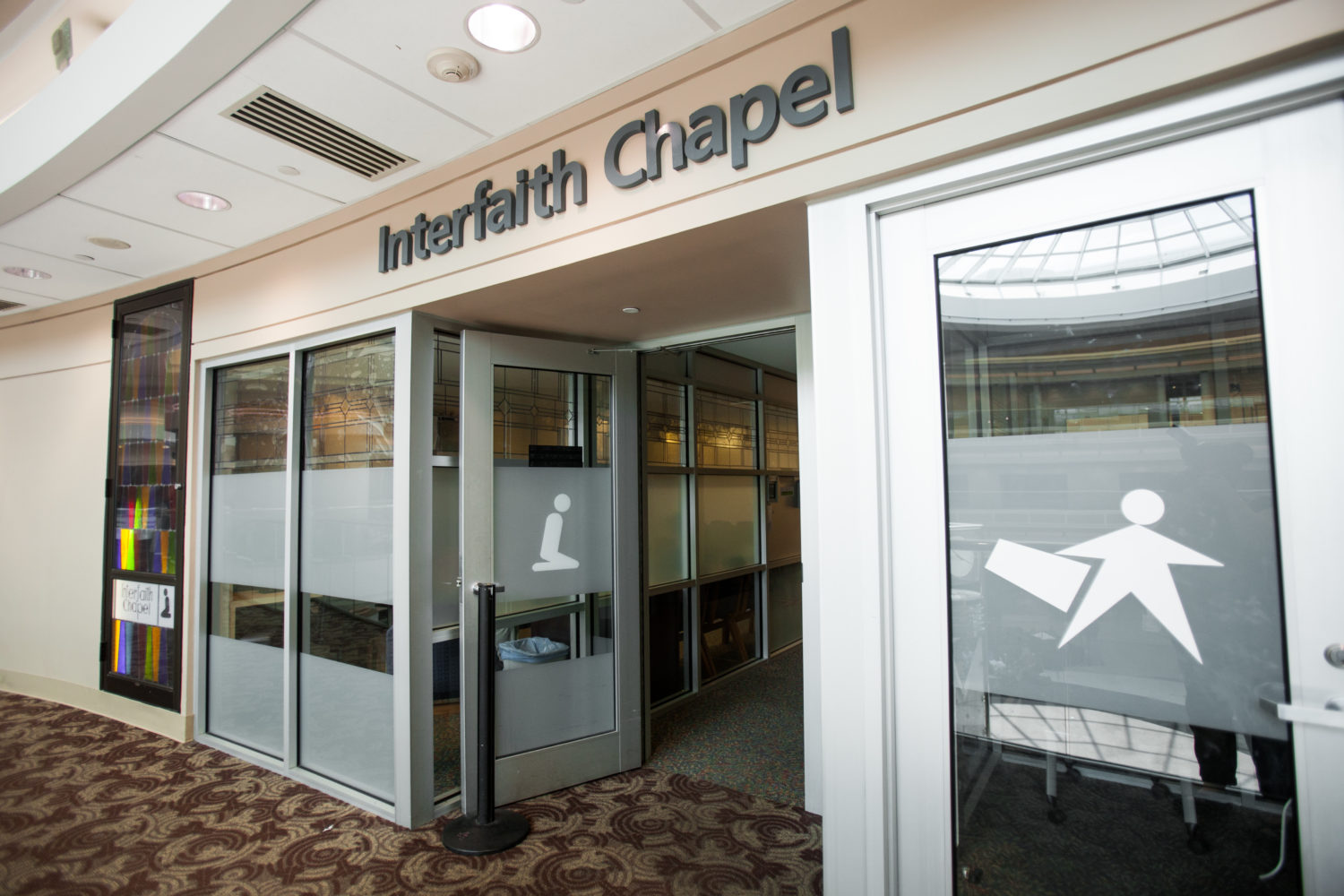
But a recent rise in violence at churches, mosques and synagogues prompted Orlando International Airport to rethink holding religious services at its interfaith chapel and reflection space, prompting some concern about whether other airports will make similar changes.
Interfaith chapel at Orlando International Airport
Earliest airport chapel
In 1951, Boston Logan International Airport (BOS) was the first U.S. airport to set aside dedicated space for prayer. “It was explicitly meant for people working at the airport. A neon light pointed to the chapel,” notes Wendy Cadge, an expert in contemporary American religion, in “A Brief History of Airport Chapels.”
Today
Logan’s appropriately named Our Lady of the
Airways
is located in the airport’s public area. It seats 250, is open around-the-clock
and offers mass daily for passengers, airport and airline employees and the
general public.
Orlando International Airport makes a change
At
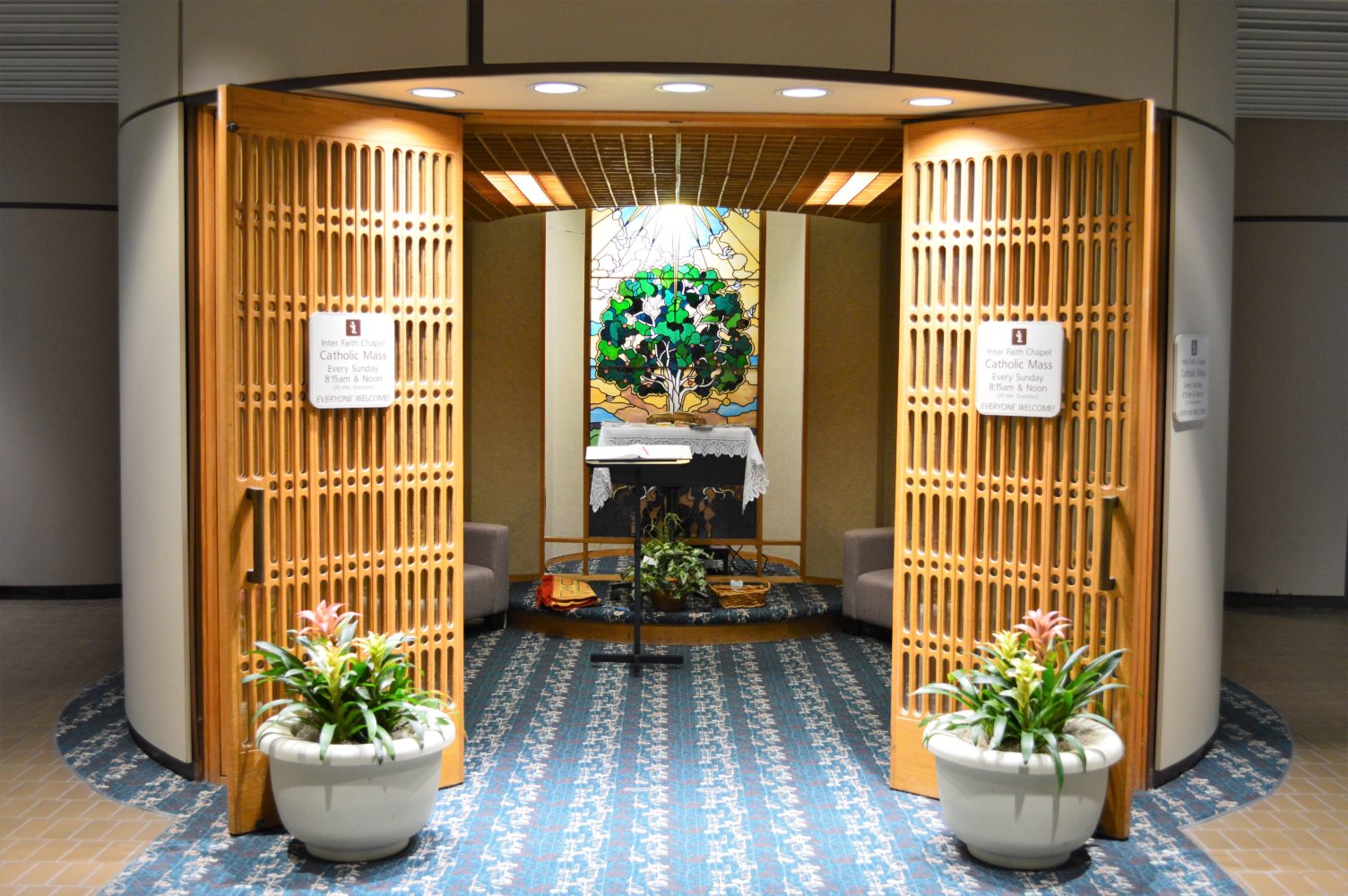
Orlando International Airport (MCO), an interfaith chapel with a Tree of Life
stained glass window dates to the airport’s 1981 opening. A second reflection
space for prayer, with
accommodations for Muslim travelers, was added in 2015, as part of a customer service
enhancement project.
Both
spaces are located post-security and for many years Catholic mass has been offered
in MCO’s chapel each Sunday morning and during holidays. But, citing increased
passenger volume, space allocation and safety, the airport board recently
revised it policies.
Now,
while ticketed passengers and employees are welcome to visit the prayer spaces
anytime, organized religious services of any kind are not permitted.
“Every
airport authority has to make the decisions that they think are the best for
their environment and location,” said Susan Schneider of the Interfaith Airport
Chapels of Chicago, which offers religious services and passenger support services
at both O’Hare and Midway Airports. “If Orlando feels this is something they must
do at this time, you have to trust the decision. You just hope it’s the right
decision.”
Reverend
Rodrick Burton, a pastor is St. Louis, is certain the authorities at Orlando
International Airport have made the wrong decision.
“I believe Orlando’s actions are stunning in
their shortsightedness and in an effort to be politically correct or to
misinterpret the constitutional right of freedom of religion,” said Burton, who
serves as president
of the St. Louis Airport Interfaith Chaplaincy, an organization that has offered
“prayer, religious services, spiritual guidance, empathetic listening” and
other assistance at St. Louis Lambert International Airport (STL) for more than
33 years.
“There’s nothing sacred about those spaces
if Chaplain’s don’t attend to them. Those chapels will become quiet rooms,” he
added.
Status of other airport chapels
I polled about two dozen other airports around the country on the status of their interfaith spaces and organized religious services.
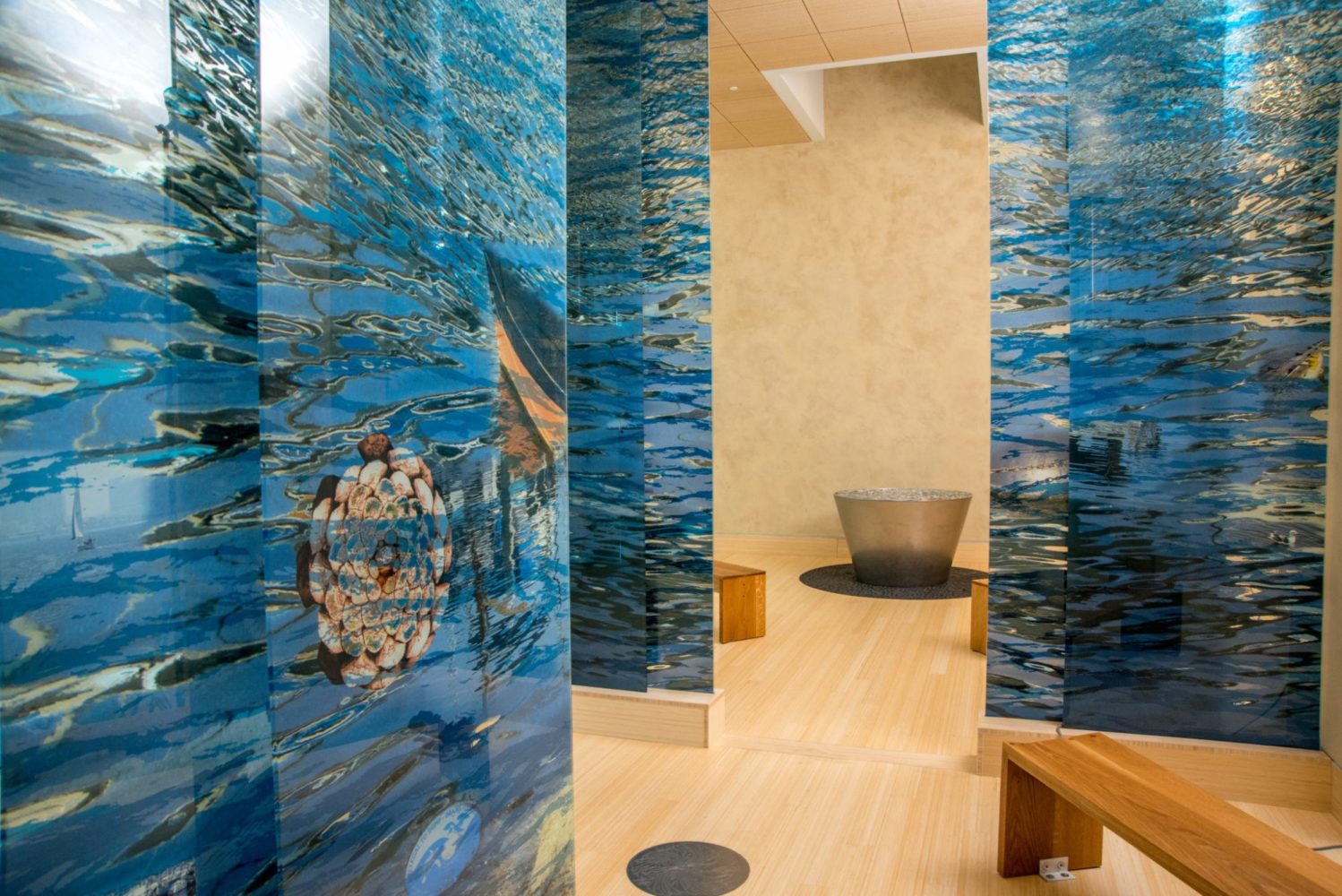
Reflection room at San Diego International Airport
Airports in Phoenix, Pittsburgh, San Diego, Philadelphia,
San Diego, Seattle and many other cities have chapels, quiet rooms, meditation
spaces and/or reflection rooms that welcome travelers at all hours, but do not
offer religious services. “No regular services are held here. It is strictly
self-service,” said Greg Willis, Marketing Program Manager at Florida’s Jacksonville
International Airport, “We provide a book where customers can write down their
thoughts and prayers.”
Interfaith chapel at Phoenix Sky Harbor International Airport
Some airport chapels have been ensconced in
airport terminals for a long time. At Hartsfield-Jackson Atlanta International
Airport, the ATL Interfaith Airport Chapel was established in 1979. Pittsburgh
International Airport opened its post-security interfaith chapel in 1992, along
with the current terminal. And the quiet room at Philadelphia International
Airport was created just last August.
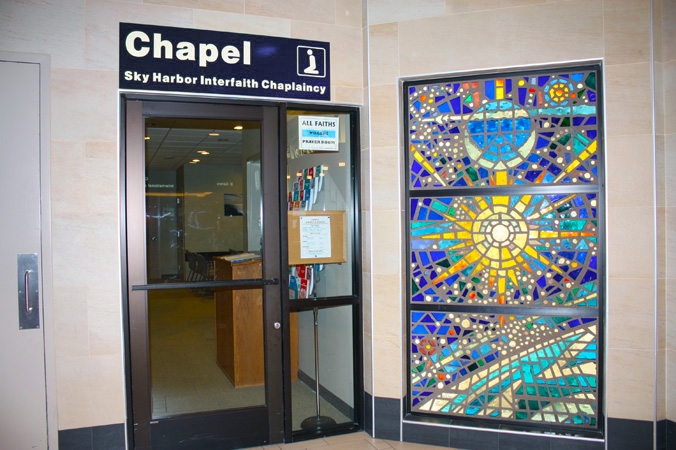
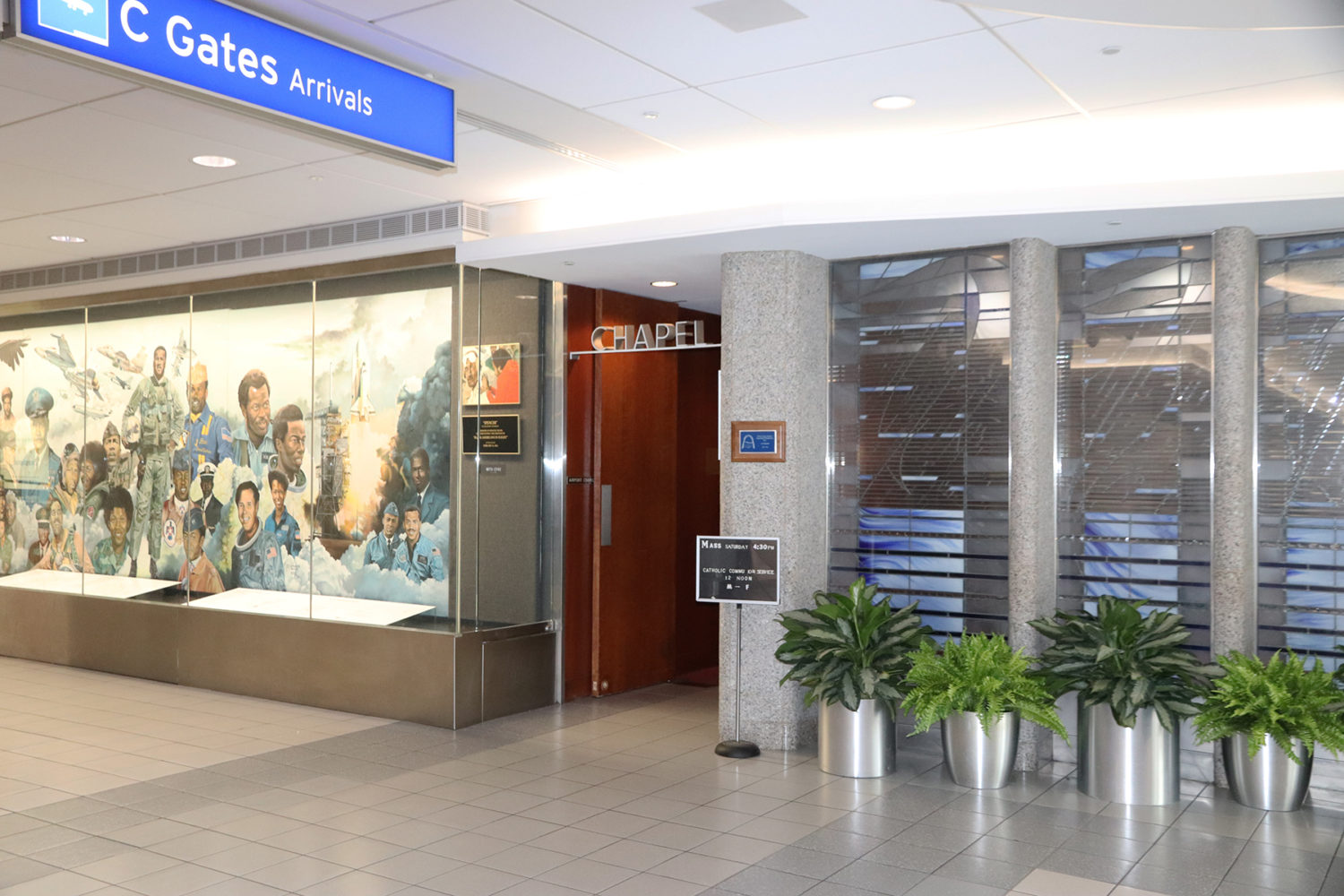
T1 chapel entry at St. Louis Lamber International Airport
In addition to the scheduled religious services offered at Boston Logan and St. Louis Lambert International Airport, airport chapels in Atlanta, Cleveland, San Francisco, Denver, Dallas, New York (JFK) and a handful of other airports offer organized religious services. All airports that responded to my query say they currently have no plans to follow Orlando’s lead in banning these services.
A solution that works
Meanwhile, back in Orlando, after some scrambling
and, no doubt some prayers, there’s now an alternative arrangement for those
seeking to attend Sunday mass at the airport.
Instead of being offered in the post-security airport
chapel, starting this Sunday, mass will be held in the Hyatt Regency Orlando
International Airport hotel, which is attached to the main terminal of the
airport.
The solution is being hailed as a godsend for the
both travelers and the airport.
“Security and Safety will always be a top
priority at Orlando International,” said Tom Draper, Senior Director of Airport
Operations for the Greater Orlando Aviation Authority, “By moving these
activities to a larger and more private location, we are minimizing activity in
secure areas while enhancing the guest experience for those traveling
through the airport.”
For years, the 1934 Model D-127 Monocoupe once owned by aviator Charles Lindbergh has been on display at St. Louis Lambert International Airport (STL), over the Concourse C security checkpoint in Terminal 1.
But the airplane, which has been on loan to the airport from the Missouri Historical Society since 1979, is coming down for good on Tuesday June 12 and put away for what is described as a “much neeed rest.”
“The 1934 Lindbergh Monocoupe is an exceedingly rare aircraft in that it still retains its original fabric covering,” said Katherine Van Allen, managing director of museum services for the Missouri Historical Society, in a statement, “In order to ensure that this unique piece of history is preserved for future generations, the Missouri Historical Society is removing the plane to a humidity and climate-controlled storage facility in accordance with present-day best practices in collections care.”
According to the Missouri History Museum, which received the plane in 1940, Lindbergh flew this airplane regularly, but didn’t really love it.
And even though he’d had it personalized extensively, he wrote that “It is one of the most difficult planes to handle I have ever flown. The take-off is slow…and the landing tricky…[it] is almost everything an airplane ought not to be.”
Still, it is an aviation treasure. And one that could have been lost to history back in April 2011 when a tornado hit the airport, doing millions of dollars of damage. By luck, Lindergh’s monocoupe had been moved to a storage facility just a few weeks before, in preparation for scheduled terminal renovations.
Here’s a video of the plane being rehung in the airport in 2013:
https://vimeo.com/77450464
When you visit STL, you’ll still see an airplane suspended from the ceiling over a Terminal 2 checkpoint. That plane is also owned by the Missouri Historical Society, but it’s a 1933 Red Monocoupe 110 Special with no link to Lindbergh.
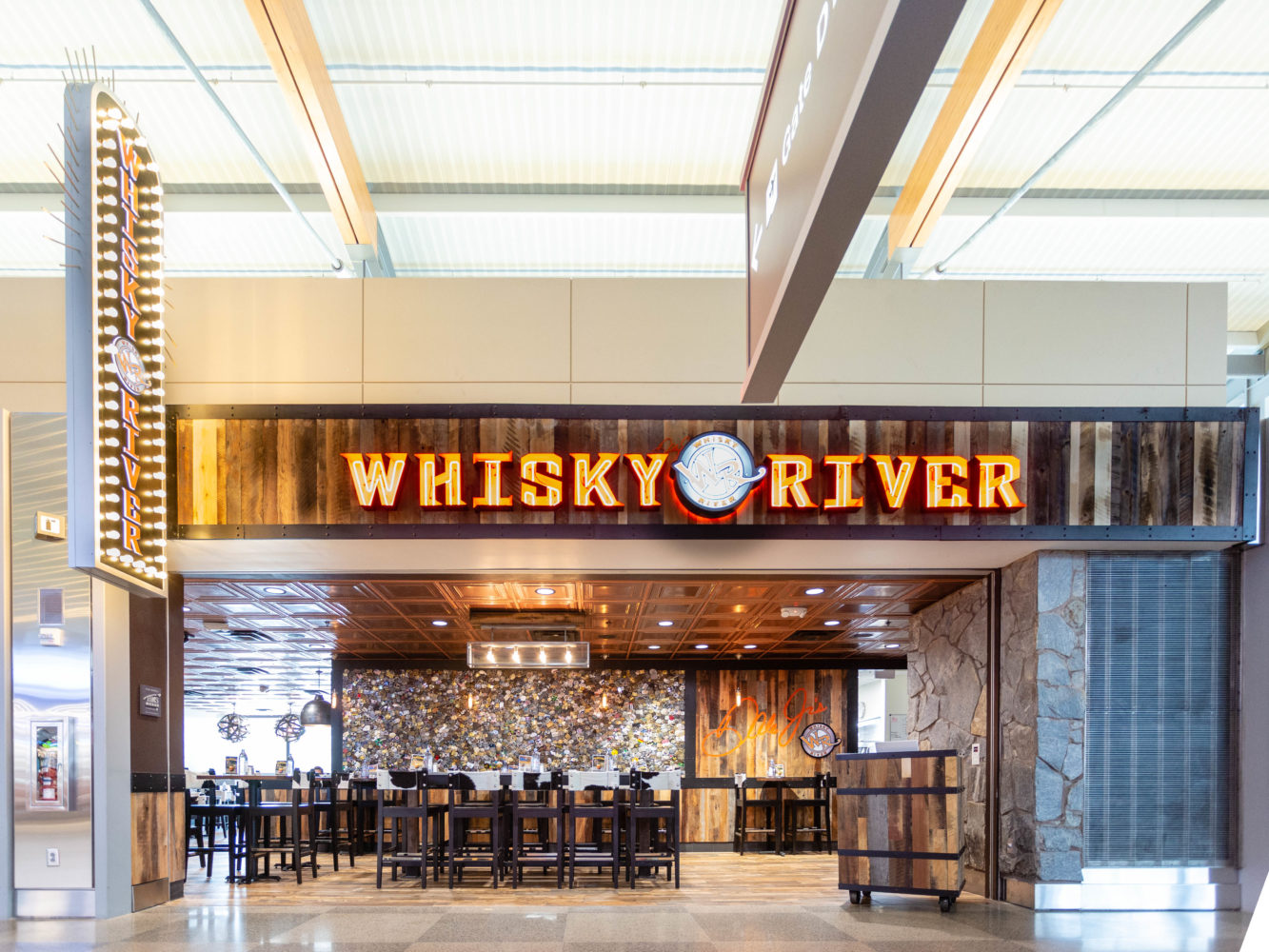
The menu looks suitably honky-tonkyish, with Spicy Beef Chili, Beer Can Chicken, Texas Tequila Bacon Cheddar Burger and (for breakfast) Peaches & Cream Pancakes and Carolina Biscuits.
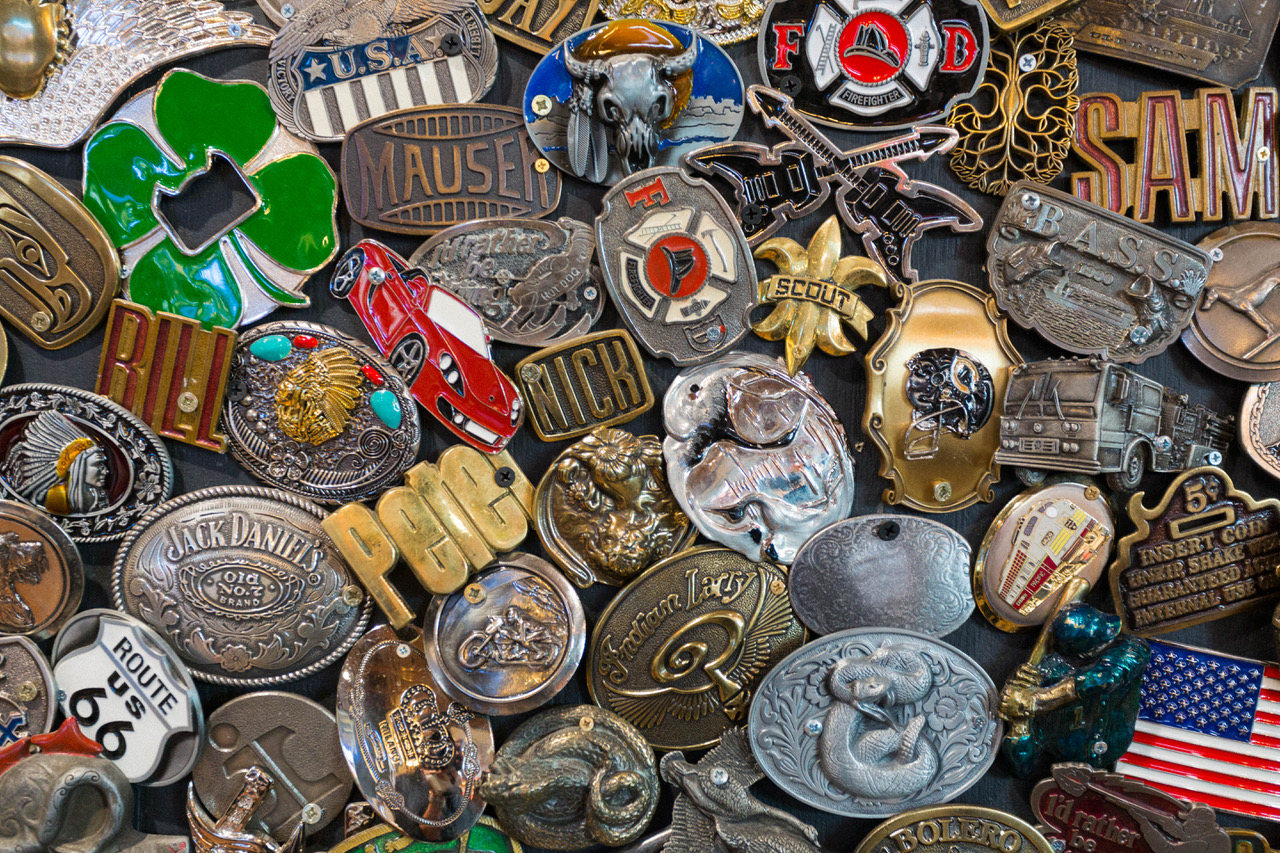
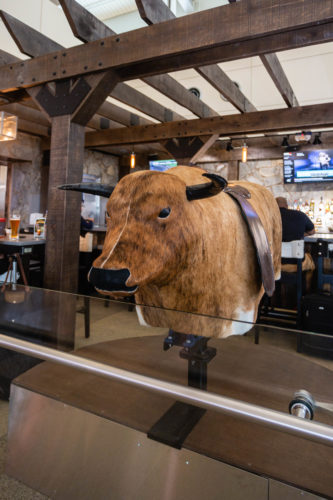
But what really makes this spot a nominee for airport amenity of the week is the fact that there’s a wall covered in belt buckles, live music six days week and a ‘made-for-selfies’ stationary bull that passengers may sit on.
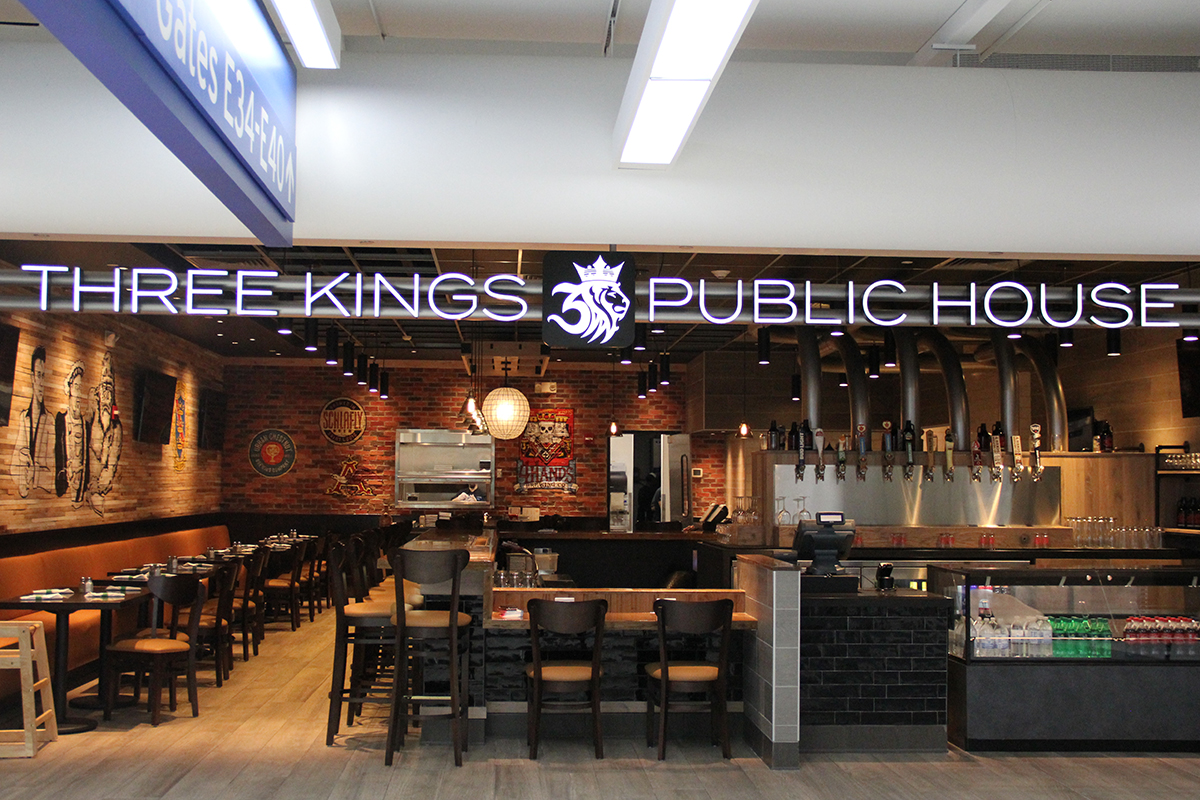
The popular St. Louis-based pub honors three kings – Elvis, Henry VIII and King Kong – has three locations in town and at this fourth ‘streamlined’ airport branch will be serving pub food, house-made infused liquors, local craft brews and an extensive list of specialty beers including the Three Kings Dry Hopped Blonde Ale, made by 4 Hands just for these pubs.