Denver International Airport (DEN) joins the list of airports that allow passengers without TSA PreCheck or CLEAR status to a time to go through TSA screening.
Reservations – which can be made before you arrive at the airport or when you get there – are available for departing, general screening passengers on the Bridge Security TSA Checkpoint daily from 5 a.m. to 5 p.m. Find more details on DEN Reserve here.
Free Wi-Fi for all Singapore Airlines passengers
Starting July 1, 2023, Singapore Airlines will offer complimentary unlimited in-flight Wi-Fi for customers in all cabin classes, including Premium and Economy.
Right now, Suites, First Class, and Business Class customers have free unlimited in-flight Wi-Fi. And since February 2023, KrisFlyer members traveling in Premium Economy Class and Economy Class have enjoyed complimentary three- and two-hour Wi-Fi surf plans respectively.
June 1 marks the beginning of Pride and Indigenous History Month! We kicked things off in a fun way with popsicles by donation for @qmunity as we raised the Progress Pride Flag and @musqueam artist Mack Paul's (they/them) Coast Salish Two Spirit Pride symbol. pic.twitter.com/uyyLJNrhuh
As we kick off #PrideMonth, we want to recognize and celebrate our LGBTQ+ employees and the vibrant community they represent. We are proud to be an inclusive workplace where all employees can bring their whole selves to work. 🧡 pic.twitter.com/zatp0hTwUM
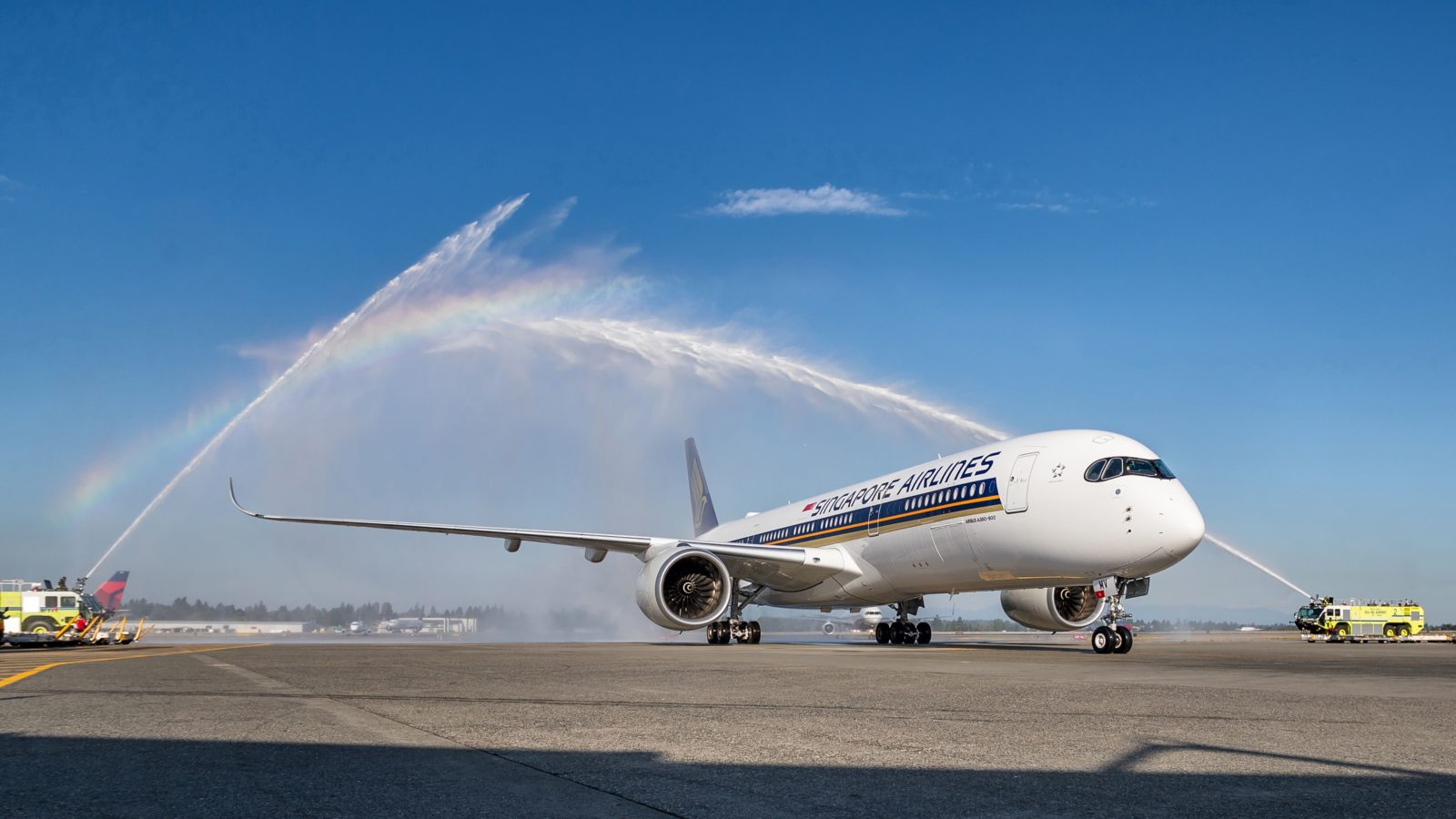
On Tuesday, Singapore Airlines (a codeshare partner of Alaska Airlines) celebrated the inaugural non-stop flight between Seattle Tacoma International Airport (SEA) and Singapore’s Changi Airport (SIN) with a lion dance and ribbon cutting at the gate and a water canon salute.
Seattle now becomes the fourth U.S. city to boast non-stop service to Singapore, joining Los Angeles, Newark and San Francisco.
During September, the flight will between Seattle and Singapore three times a week and expand to four flights a week in October.
The new SEA – SIN Singapore Airlines flight is the first-ever nonstop flight from SEA Airport to Southeast Asia. And, at 15-hours and 50-minutes, it is now also the longest longest nonstop flight from SEA airport.
The new flight is also the inspiration for a cool music video.
Singapore Airlines commissioned Seattle-based producer and musician Chong the Nomad to use an A350-900 aircraft – the same type being used for the SIA-SIN flight – as her musical instrument.
Where is the food and produce you eat on a plane grown?
Starting in September, the answer for passengers on Singapore Airlines’ passengers leaving Newark for Singapore will be “indoors, nearby.”
Singapore Airlines is working with indoor vertical farming company
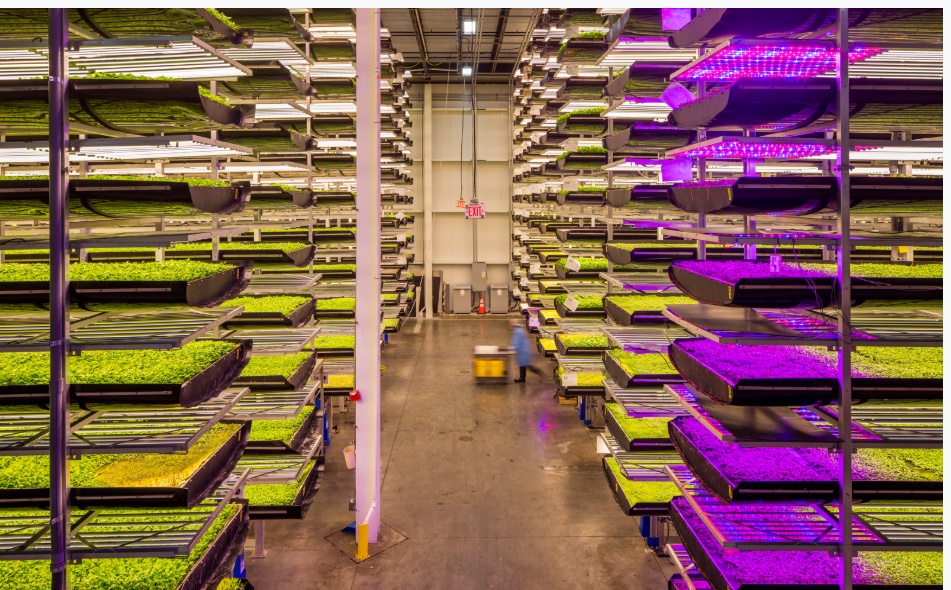
AeroFarms, which has reclaimed an abandoned steel mill in an industrial area
near Newark International Airport and transformed it into a 1-acre, indoor
vertical farm.
The farm, which grows produce ‘aeroponically’ without soil,
pesticides or sunlight, can produce the equivalent of 390 acres of locally
grown produce with up to 30 harvests each year and will grow a customized blend
of fresh produce for SIA’s Newark-to-Singapore flights starting in September
2019.
“Imagine boarding a plane and enjoying a salad harvested only a
few hours before takeoff — literally the world’s freshest airline food,” said
Antony McNeil, director of food and beverage for Singapore Airlines. “The
only way to get fresher greens inflight is to pick them from your own garden.”
Singapore Airlines shared examples of farm-to-flight
dished business class and premium economy class passengers might be able to
choose from on Newark to Singapore flights:
Soy Poached Chicken:Pickled Ginger Vinaigrette, Zucchini Ribbons, with Sweet Potato Roesti, Soy Beans and AeroFarms Baby Pac Choi
The Garden Green: Poached Asparagus, Broccolini, Avocado with Shaved Fennel & Flaked Hot Smoked Salmon, with AeroFarms medley of Baby Ruby Streaks,
Watercress and Arugula, with Lemon Vinaigrette
As I reported last year in a
farm-to-flight feature for USA TODAY, Singapore Airlines’ joins several
other airlines in being super creative and eco about the food served on its flights.
Korean Air has its own company farm.
Jedong Ranch sits on 3,700 acres of South Korea’s lush Jeju
Island and has been operating since 1972, when it was purchased by the former
chairman of the airline’s parent company, the Hanjin Group.
Back then, South Korea had a beef shortage, so breeding livestock
was the first order of business. Early on, the herd was made up exclusively of
imported Angus cattle. Today the ranch is home to more than 2,200 head of prized,
grass-fed Korean native cattle known as Hanwoo.
The organic, antibiotic-free meat from these animals, and
from the farm’s flock of approximately 6000 free-range chickens, is sent to Korean
Air’s flight catering kitchens in Seoul for use in meals served to first and
business-class passengers. Some of the meat and eggs from the farm are also available,
at premium prices, for purchase locally.
In addition to raising cows and chickens, the ranch’s hydroponic
greenhouse also produces more than 210 tons of fruit and vegetables, including
red peppers, cherry tomatoes and blueberries for first
and business class in-flight meals.
JetBlue’s garden at
JFK
In 2015 JetBlue created a 24,000 square-foot milk-crate garden
outside Terminal 5 at New York’s John F Kennedy International Airport. Designed
to both create a welcoming green space and promote local agriculture, the
garden generates more than 2,000 pounds of blue potatoes, kale, carrots, leeks,
arugula, garlic, mint, basic and other herbs for local food banks.
Japan Air Lines agritourism
attraction
In 2010, Japan Air
Lines is scheduled to open an agritourism attraction on land near Tokyo’s Narita
International Airport. The ‘JAL Agriport’ will
offer visitors a chance to pick strawberries, harvest sweet potatoes, picnic,
or purchase fresh produce grown in the region. JAL says it also plans to use
some agriport produce in lounge menus and in-flight meals.
And Emirates
announced last year that it was joining with Crop One to build the world’s
largest vertical farming facility near the airport in Dubai to help create a supply chain of “high quality and locally-sourced
fresh vegetables, while significantly reducing our environmental footprint,”the airline said in a statement.
Singapore Airlines has unveiled its new in-flight safety video, which not only reminds passengers of the safety procedures to be mindful of, but takes viewers on a panoramic journey across Singapore.
In the video, passengers follow the Singapore Girl as she travels to landmarks such as Boat Quay, The Intan Peranakan Home Museum, River Safari, Haji Lane, Adventure Cove Waterpark, Henderson Waves, Capitol Theatre and Gardens by the Bay.
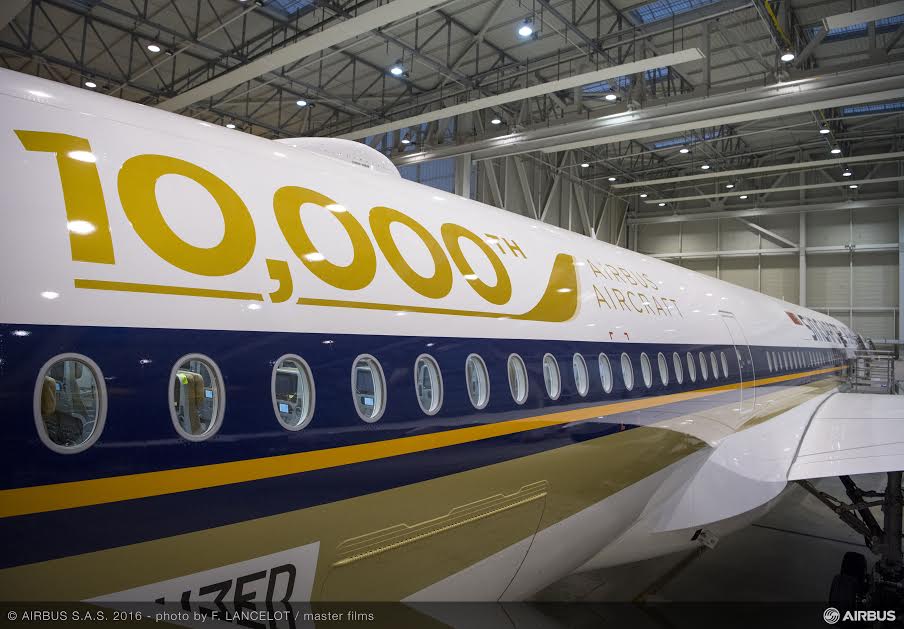
On Friday, Oct 14, Airbus will deliver its 10,000th aircraft – the A350 XWB pictured above – to Singapore Airlines at the Airbus factory in Toulouse, France. On Saturday, this A350 delivery flight – SQ8895 – will take off for Singapore.
Airbus bills the A350 XWB mid-size, long range aircraft family as “the world’s most modern and efficient aircraft family” with an “all-new efficient design” that includes “the latest and unique technologies improving performance in operation,” and making it competitive with the 787 and the 777 (made by, you know, Boeing).
Stay tuned for more details as I’m in Toulouse for a tour of the factory and for the delivery ceremony of the plane. Lots to learn!
Here’s a charming video from Singapore Airlines, which had San Francisco-based paper craft artist Luca Iaconi-Stewart make a model of the A380 out of 100 Manila envelopes.
It’s all there – including the moving seats and the suites!
Airline amenity kits filled with personal care items have been handed out to business and/or first-class passengers on long commercial flights since at least the 1950s. Utilitarian at first, today these chic containers and their posh contents have become coveted and collectible and are often designed by top designers and filled with luxury products.
Here’s a look at some travelers’ favorite kits, past and present from the slide show I originally put together for CNBC Road Warrior.
A Pan Am World Airways amenity kit from the 1960s. “The President Special” was the name given to the airline’s first class service on several high-profile international routes. Courtesy SFO Museum
Courtesy SFO Museum
The SFO Museum has 355 airline kits representing 57 airlines in its collection. The earliest were called “Remain Over Night” kits and produced in “his” and “hers” versions by the Airline Textile Manufacturing Company (AirTex) based in Des Moines, Iowa.
The men’s kit included deodorant, aftershave, hair cream, a razor, shoe polish and a comb. The women’s kit had hair spray, cleansing cream, hand cream and nail polish remover, according to the SFO Museum.
Qantas, the flag carrier of Australia, partnered with Kate Spade New York and Jack Spade a couple of years ago to design exclusive amenity kits for customers traveling in the business class cabin. Each kit includes a selection of luxury Malin+Goetz skin care products as well as an eye mask, ear plugs, socks and other comfort essentials.
Delta’s Tumi amenity kit gets high marks from frequent travelers for both its contents and its re-usability. “It stands head and shoulders above the competition, with a good range of products, including lip balm, which is always something I forget,” said John Walton at Routehappy. It can also “easily be reused to pack thing likes extra batteries or headphone cords,” said Chris McGinnis, of Travelskills.com.
Singapore Airline’s Salvatore Ferragamo-branded amenity kits stand out to Paul Shrater, co-founder of the online travel-size site Minimus.biz because “not only is Ferragamo a well-known luxury brand, but the kits include travel-sized perfume and cologne, a rarity in amenity kits and a product we recently launched due to customer demand.”
Sadly EVA Air has not created Hello Kitty-themed amenity kits to go with its fleet of Hello Kitty-themed aircraft, but when the airline introduced three brand-new Boeing 777-300ERs on its North America routes in the summer of 2014, it also introduced two new colors for its sought-after Rimowa amenity kits. Royal Laurel business class passengers receive one color on inbound flights and the other outbound. Contents complement the shells’ colors and include natural lip balm and moisturizing products by HARNN, lens-cleaning cloths and adjustable silk eye masks.
All the items in Japan Airlines’ kit for First Class passengers “were perfectly color-coordinated,” said Oonagh Shiel, the editor who recently led a review of almost thirty airline amenity kits for Cheapflights.com. “The toothbrush matched the hair brush and the eye mask and we didn’t see another kit with a built-in hanger,” which open up possibilities for after-flight use in a hotel or at home, said Shiel. The airline distributes a beige canvas kits on flights departing Japan and a camel corduroy version on flights headed there.
Would you pay extra to be able to scoot your seat away from small kids on a plane? Singapore Airlines’ budget carrier, Scoot, is betting you will.
The airline, which currently flies from Singapore to 11 destinations in Asia and Australia, has created a premium “Scoot in Silence” section at the front of its economy class cabin.
There, passengers can pay about $14 extra per ticket in exchange for more legroom and the promise that “the under 12s will be someplace else.”
“I’d pay to sit in an adults-only section,” said Keri Coull, an “unemployed mum/graduate” from San Francisco now living in Scotland. She thinks others would too. “I loved my 2 1/2 year-old, but returning from Mexico was traumatic for other passengers.”
Scoot is not the first Asian airline to set aside a cabin section that is off limits to kids.
In February 2013, long-haul, low-cost carrier AirAsia X introduced a kid-free “Quiet Zone” on its aircraft. And last year Malaysia Airlines declared the upper decks of its A380s kid-free. The airline also bans kids from its first class cabins.
“These quiet zones are part of a wider trend that sees airlines providing passengers more choice and control of the onboard experience without having to pay a lot to upgrade to a different class,” said Raymond Kollau of Amsterdam-based AirlineTrends.com.
Of course, in the close quarters of an airplane, a quiet zone can be hard to define.
“What about the passenger seated in the last row of the kid-free section when an infant begins screaming behind him or her?” said Anya Clowers of JetwithKids.com.
For now, representatives from American and Delta said they have no plans to introduce kid-free zones. And the no-kids-allowed idea “doesn’t quite fit the overall familial vision Lufthansa is embracing,” said Christina Semmel, the airline’s corporate communications manager for North America. (In fact, the airline recently introduced new family and kid-friendly amenities, including boarding passes — but no special seating — for stuffed animals and dolls.)
But in the modern unbundled-amenities world of airlines, having the “opportunity” to pay to sit outside a kid zone on a domestic carrier may just be a matter of time.
“I can see airlines such as United and Delta, who already offer separate zones with extra legroom seats, trialing whether they can turn part of these zones into a quiet zone, depending on the configuration of the aircraft,” said Kollau.
The audience rushing to buy these seats might be business travelers, who are “universally in favor of kid-free zones,” said Joe Brancatelli, who runs the business traveler newsletter JoeSentMe. “(At least) until they have kids and are banished to the kid zone when they cash-in miles to take the family on holiday.”
(My story: “Scoot in silence”: Singapore Air budget carrier offers kid-free zone first appeared on NBC News Travel)
The longer your flight, the more importance you’ll likely place on the size and comfort of your seat and on the entertainment amenities offered to you in-flight.
That’s why Singapore Airlines held a big event today in Singapore to introduce new First, Business and Economy cabin products that will roll out first on eight Boeing 777-300ER aircraft and on other aircraft the airline will take delivery of in the future. If you’re flying on certain flights between London and Singapore (a flight that lasts about 13 hours) starting in September, you’ll get to experience these products right away. In the meantime, here’s a preview:
First Class
Designers from BMW helped created the airline’s new First Class seats, which are 35 inches wide, with a fixed back shell, extra storage space, a vanity area, a padded headboard, extra mattress layer and a full-flat bed that stretches up to 82 inches. First Class customers on the new B777-300ERs will also receive a gender-specific Salvatore Ferragamo amenity kit that includes, among other items, a 30ml bottle of Ferragamo fragrance.
Business Class
The new Business Class seat has extra storage space, 32 degree recline, a padded headboard cushion and an improved ergonomic seat cushion that converts into a 78-inch full-flat bed. Business Class customers don’t get an amenity kit beyond eyeshades and socks, but there are plenty of useful amenities in the lavatories.
Economy Class
Economy Class seats are getting a makeover on the new planes as well, with new backrest seat cushions with side bolsters for better back support and an ergonomically sculpted headrest cushion.
In-flight entertainment
The new airplanes will arrive with upgraded an KrisWorld in-flight entertainment systems, including video touch-screen handsets and larger LCD screens in all three classes (24 inches in First Class, 18 inches in Business Class and 11.1 in Economy Class).
Social networking is the new thing here – with a Travel Forum application that will let passengers share travel tips. And in addition to the Berlitz language-learning program and the Culture Quest program that offers tips for doing business in other countries, the airline is adding DK Travel Guides for major cities and Flight Path iXplore, which offers information about points of interest airplanes are flying over.
During a tour of the Singapore Airlines Training Center this week, there was a heavy emphasis on how well-trained the airline crews must be. (See this earlier post for some safety tips.)
But most people are much more interested to learn about the training regimen for the always-beautiful-and- incredibly-poised Singapore Girls that are the hallmark of the Singapore Airlines service.
Becoming a Singapore Girl (that’s the airline’s official term) is not only an honor; it’s hard work. Before taking to the air, Singapore Girls (and boys) must make it through an on-the-ground training course that is 3 1/2 months long – the longest in the industry.
And those chosen to be “transformed from trainees into gems,” explained Foo Juat Fang, assistant manager for cabin crew training – human factors and grooming, must excel in classes designed to teach everything from beauty and deportment to how to handle emergency situations and the age-old tradition of in-flight ‘souveniring’: the tendency of some passengers to pocket anything not tied down.
After watching a short role-playing session in which a class of trainees showed us how they might deal with a variety of stereotypical passengers, our tour group quizzed the instructors:
Q: How would you deal with a passenger complaining about other passengers gathering in the aisle and being too loud?
A: We might encourage the loud passengers to return to their seats ‘for safety’ and offer ear plugs to the person who was complaining.
Q: What would you do if you saw someone pocketing one of the Givenchy plates?
A: We’d assume that they do not know that is not appropriate. And mention that we’ll pass along to the airline the suggestion that there be a way for passengers to purchase these items.
Q: And how do Singapore Girls and all crew members maintain their energy and strength for those long 12-hour flights?
A: We encourage them to get plenty of rest before each flight and stay hydrated during the flight with water, not coffee or tea. And when they are off-duty, we encourage them to be active in sports such as as cycling, dragon boat racing and martial arts.
Q: What other secrets or special skills do you teach them?
A: We teach them to walk without being heard and, especially in business and First Class, we teach them to be there before you push the button – to read your mind.