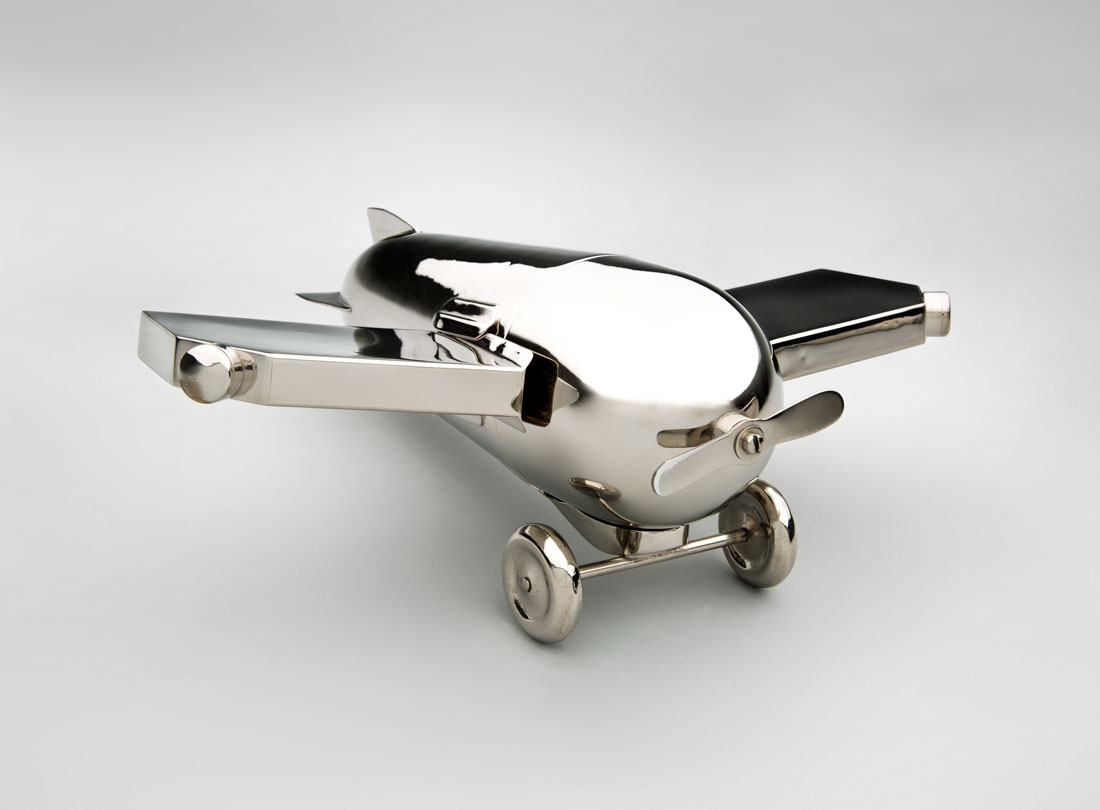
The Stuck at the Airport team was in Geneva, Switzerland this week for an education day with officials at the International Air Transport Association, IATA.
Topics ranged from passenger rights and travel accessibility issues to earnings, sustainability, biometrics, safety, security, air cargo, and more. We’ll be folding what we learned into many of our stories going forward, but we are glad that the odd holiday ‘decoration’ we spotted a few years ago at Geneva Airport was nowhere to be seen this time through.
Airports and airlines elsewhere approach the holidays with a more festive outlook.
Munich Airport (currently recovering from the fallout of a snow closure) transforms each winter into a holiday destination complete with ice skating and curling rinks.
Orlando International Airport (MCO) and many other airports also go all out with holiday decorations throughout their terminals.
Feeling jolly, looking festive! 🎄 Our airport is officially in the holiday spirit with these tree-mendous seasonal decorations. pic.twitter.com/AyRiBsmTtp
[Our story on the rise of unruly airlines passengers first appeared on NBC News)
Air travelers picked up some bad habits during the pandemic that they can’t seem to shake.
Unruly passenger incidents rose 47% globally last year from 2021, even as pandemic-related restrictions faded, according to recent data released this month by the International Air Transport Association, an airline trade group.
Reports of bad behavior rose from a rate of 1 incident per 835 flights to 1 per 568 over that period, IATA found.
Conflicts over mask requirements, which drove a surge in unruly conduct during the depths of the coronavirus pandemic, have largely dissipated.
But as air travel continues to rebound — a record 257 million passengers are expected to hit the skies on U.S. airlines this summer — other sources of contention are still triggering disruptions at alarming rates. And some say official data may only capture a fraction of the problem.
“The public does not hear about the 99% of would-be incidents that are resolved by flight attendants without event,” the Association of Flight Attendants President Sara Nelson said in an email. “We deescalate conflict as aviation’s first responders on nearly every flight.”
Industry experts say that they can only speculate about what’s going on.
“I’m not sure if there is an overall increase in a feeling of self-entitlement,” said aviation security expert Jeffrey Price, the owner of the airport management consultancy Leading Edge Strategies, “or if people are, for some reason post-Covid, feeling more empowered to assert what authority or influence they believe they have.”
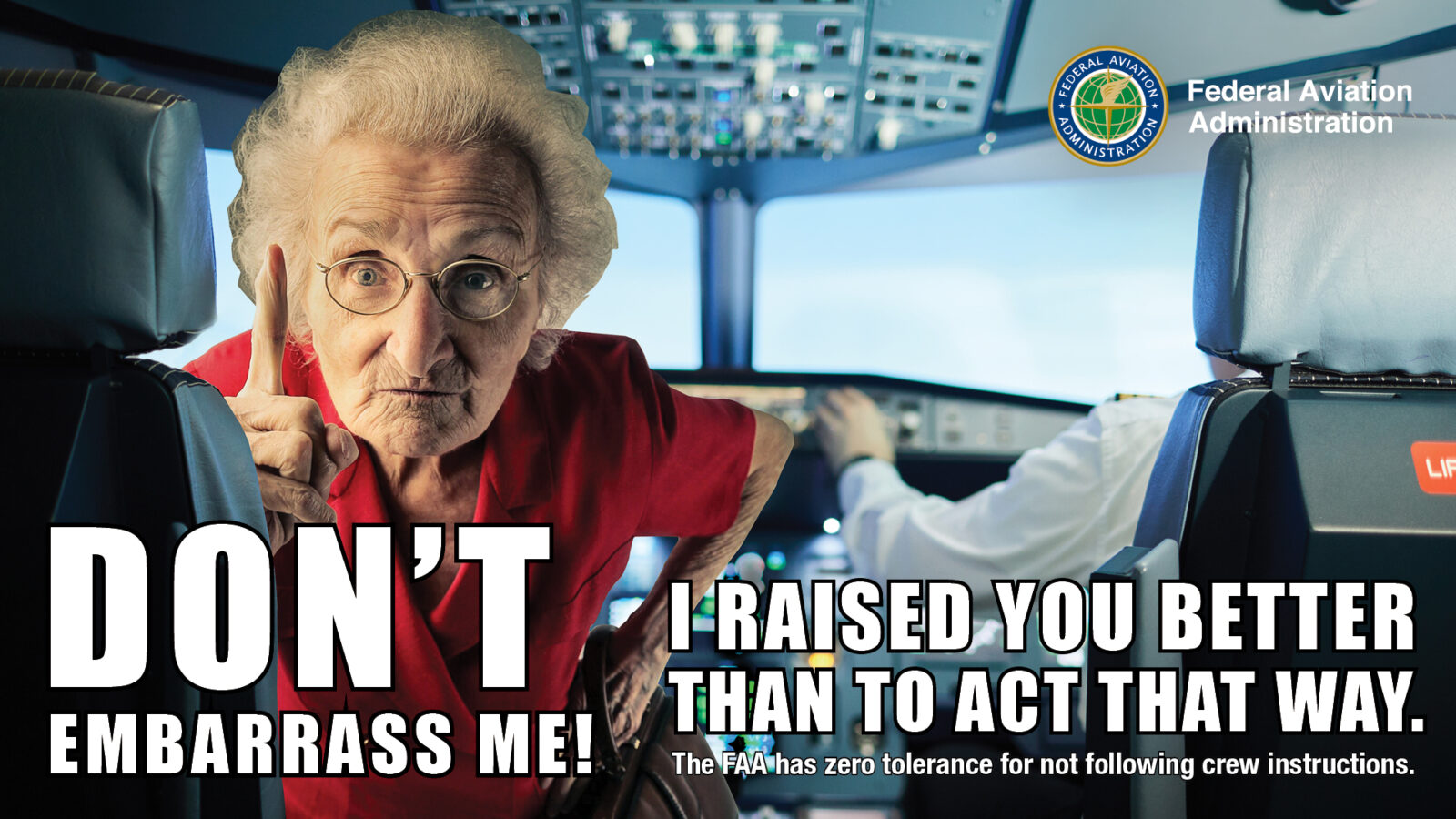
Looking at more than 20,000 reports submitted by around 40 airlines worldwide, IATA found the most common types of unruly conduct last year were non-compliance with crew instructions, followed by verbal abuse and intoxication.
In the last few weeks, a Delta Air Lines flight heading to Detroit from Paris was diverted to Canada for an emergency landing over the behavior of an unruly passenger. And a traveler denied boarding at Hartsfield-Jackson Atlanta International Airport was arrested after allegedly having slapped a Spirit Airlines employee.
While extreme incidents like those remain rare, “it is very concerning to see the frequency of reported unruly incidents increasing,” said Jonathan Jasper, IATA’s senior manager for cabin safety. “And the key here is that the numbers are only a part of the story. It’s the behavior behind the numbers that is causing us some concern.”
IATA attributed last year’s jump in noncompliance to infractions ranging from passengers’ smoking cigarettes or vaping on planes to failing to fasten their seat belts, refusing to stow cabin baggage during takeoff and landing, and drinking their own alcohol onboard.
IATA’s study doesn’t break down incident rates by region. In the U.S., Federal Aviation Administration data shows the problem remains elevated despite having eased considerably from pandemic peaks.
In 2019, the FAA logged 1,161 unruly passenger reports and just 1,009 in 2020, when lockdown orders sharply restricted air travel.
But as flight volumes began ticking back up, the reports skyrocketed to a record high of 5,981 in 2021 — around 72% of which had to do with masking rules, the FAA said.
Last year, the agency tallied 2,455 unruly passenger reports in the U.S., still far above pre-pandemic levels but a sharp drop nonetheless. The decline came in a year when a federal judge struck the Centers for Disease Control and Prevention’s mask mandate for public transportation in late April 2022, by which point masking-related unruly conduct had dipped to 63% of FAA reports.
When mask mandates were overturned, however, the agency had already spent well over a year enforcing a “zero-tolerance” policy for unruly behavior.
In January 2021, it rolled out penalties such as hefty fines and the threat of federal criminal prosecution, including potential jail time, for any passenger who “assaults, threatens, intimidates, or interferes with airline crew members.” The FAA said this April that it had referred more than 250 of the most serious cases to the FBI since last 2021.
While instances of noncompliance fell at the start of last year as more airlines and governments around the world dropped their mask mandates, IATA found the rate beginning to rise again as 2022 wore on, ending the year up.
“Flying is an altogether less enjoyable experience,” said Philip Baum, the managing director of the aviation security consultancy Green Light Ltd.
He noted that the industry let go of huge numbers of personnel early in the pandemic and has struggled to recruit and train new ones. Many airline and airport workers may now be less experienced and more stressed, adding strain to interactions with shorter-fused customers.
In addition, Baum said, “The reality is that post-pandemic, those experiencing poor mental health is on the increase, some of whom may find the depersonalized service offered a trigger.”
Nelson also pointed to the pandemic’s long shadow, saying it “exposed deep social division and resentment over rising inequality,” and she criticized public officials’ “mixed messages and contempt for rules that protect our collective safety” as having made matters worse.
“Our cabins are microcosms of humanity, so this anxiety, confusion and division continues to show up in behavior on our planes,” she said.
Aviation most likely isn’t the only industry more customers are lashing out at. In the National Customer Rage Survey, released in March, a record 74% of consumers said they experienced issues in the marketplace in the previous 12 months.
And 43% of respondents said they had raised their voices at customer service, up from 35% in 2015. Labor shortages in recent years were probably a factor in the jump, the researchers said at the time.
Whatever the underlying causes, the problem shows few signs of fading from air travel.
In fact, after a slight dip in February to 122 unruly passenger incidents, the FAA received 169 reports in May — the highest monthly level so far this year.
The agency didn’t respond to requests to comment further on its data.
The Stuck at the Airport team is in Istanbul this week for the annual general meeting of the International Air Transport Association (IATA) and the World Air Transport Summit.
CEO & representatives from more than 300 airlines are here, along with government officials, equipment suppliers, and all manner of other aviation world players. And the agenda includes not only assessing how the industry is doing now, post-COVID-19, but how it’s going to handle itself going forward.
Unruly Passengers – Still A Growing Problem
The annual report on the number of unruly passenger incidents worldwide always gets our attention.
And this year’s report is both surprising and alarming.
We thought that the incidences of unruly passengers would have dropped when the airline mask mandates did.
But according to IATA data, the number of reported unruly passenger incidents worldwide actually increased in 2022 compared to 2021.
The latest figures show that there was one unruly incident reported for every 568 flights in 2022.
That’s up from one per 835 flights in 2021.
The most common categories of incidents in 2022 were non-compliance, verbal abuse, and intoxication.
In 2022, non-compliance incidents were up about 37% over 2021.
What’s considered non-compliance? Infractions such as smoking, refusing to fasten a seatbelt, failing to store baggage when told to, or consuming your own alcohol on board an airplane.
Physical abuse incidents are also on the rise. While IATA says physical abuse incidents are rare, they’re nevertheless up 61% over 2021, occurring once every 17,200 flights.
What is the airline industry doing about unruly passengers?
Mandatory pre-flight refresh classes in onboard etiquette aren’t on the table quite yet. (Although we like that idea.) But the airline industry has some strategies it is working on to address the unruly passenger issue.
Those strategies include:
*Getting more countries to ratify the Montreal Protocol 2014, which gives governments the necessary legal authority to prosecute unruly passengers no matter their state of origin;
*Training more crew members on how to de-escalate incidents on the planes;
*And asking airports, airport bars and restaurants, and duty-free shops to help spread the word on the consequences of unruly behavior on airplanes.
The frequency of unruly passenger incidents has gone ⬆️ significantly in 2022 vs 2021 despite the relaxation of measures such as the removal of 😷 on most ✈️.
My feature this week for CNBC details two good-for-travelers resolutions voted in recently during the Annual General Assembly of the International Air Transport Association.
One deals with a way to better track baggage. The other promises that the global airline industry will ease barriers for passengers who have disabilities.
Here’s a slightly different version of the posted story:
Airlines spend lots of time, energy and money competing against each other for your travel dollar and loyalty, even though high fares and excessive fees often make it seem like they’re in cahoots to make sure your journey is a frustrating, expensive nightmare.
But
sometimes the industry works together to takes global action in your favor.
At the recent Annual General Meeting
of the International Air Transport Association (IATA), the industry trade group
passed a handful of resolutions aimed at making the passenger experience better
for everyone.
Two of the resolutions that might make
a noticeable difference on your next flight, and on flights into the future, address
bag tracking and accessibility for people with disabilities.
Better baggage tracking. Fewer lost
bags.
Most frequent travelers can share a
story or two about a checked bag that got mangled, arrived days late or went
missing.
But while passenger numbers soared 64%
between 2007 and 2017, information technology company SITA found that the bag mishandling rate per thousand of
passengers fell
by 70.5%.
In 2018, 4.36 billion travelers checked in more than 4.27
billion bags.
“More bags makes things more challenging,”
notes Peter Drummond, SITA’s Director of Baggage, and while “Everyone across
the industry needs to look beyond the process and technology improvements made
in the past decade and adopt the latest technology such as tracking to make the
next big cut in the rate of mishandled bags.”
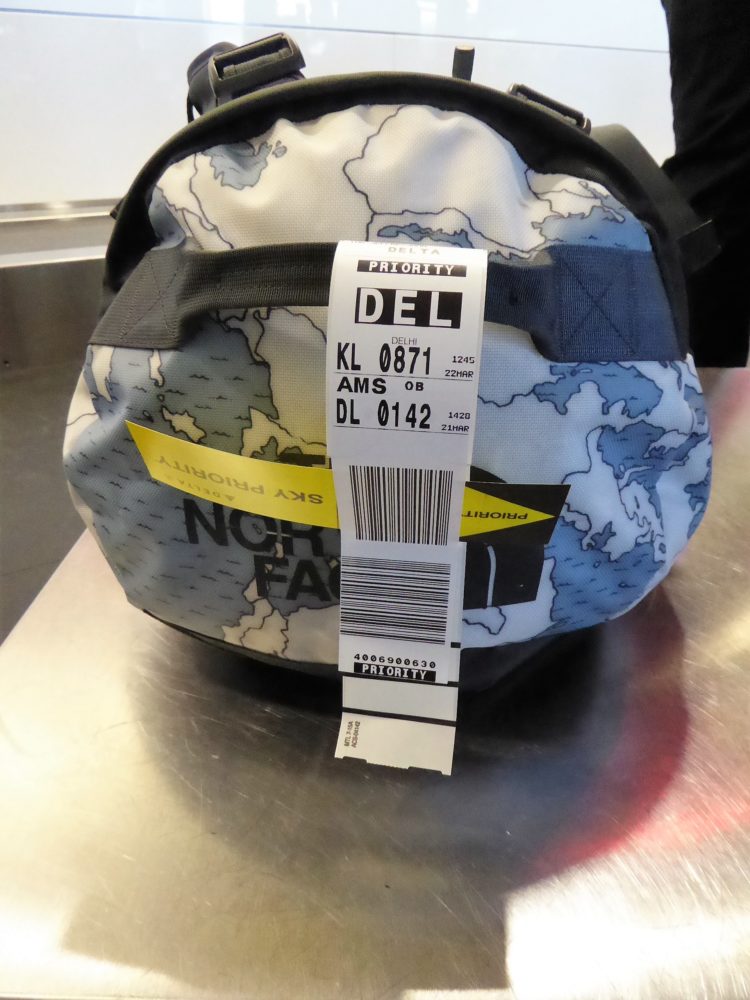
Right now, most airlines use bar code
technology to track bags through their journey. But some airlines, such as
Delta, have switched to RFID (radio frequency identification) tracking,
a form of wireless communication used to track objects with an embedded RFID
chip.
IATA considers RFID tracking to be a more
cost-efficient method to achieve the industry’s target of 100% bag tracking.
And at its Annual General Meeting (AGM) adopted
a resolution supporting the global deployment of Radio Frequency
Identification (RFID) for baggage tracking.
“Passengers want to arrive with their
bags. And on the rare occasion when that does not happen, they want to know
exactly where their bag is,” said Alexandre de Juniac, IATA’s Director General
and CEO, “Deploying RFID and adopting modern baggage messaging standards will
help us to cut mishandlings by a quarter and recover bags that are mishandled
more quickly.”
While fewer
lost bags will make airline customer happy, the push for RFID tracking move
isn’t entirely altruistic.
While the
industry has already seen a 46.2% cut in the annual cost of baggage mishandling
due to better tracking, IATA estimates industry-wide adoption of RFID bag
tracking will see a return on investment of over $3 billion to the industry.
Smoother travel for passengers with disabilities
1 billion people – 15% of the world’s population – live with
some form of disability.
The World Health Organization (WHO) says this number is
increasing due to aging populations, the spread of chronic diseases, better
measurement tools and refinements in the definition of what constitutes a
disability.
ODO notes that since these individuals typically travel with one or two other adults, the economic impact is at least doubled, to $34.6 billion.
But air travel poses a myriad of challenges for people with disabilities.
For example, between December 4 and December 31, 2018 (the
first month the Department of Transportation required airlines to track this
category) major
U.S. carriers mishandled more than 700 wheelchairs and scooters, more than
2% of the 32,229 mobility devices loaded on airplanes.
“That’s 25 people a day who may have been stranded, unable
to work or participate in a family activity,” explains Chris Wood of Flying Disabled.
Noting that improving the air travel experience for people
with disabilities is not only “the right thing to do,” but good for business,
IATA also passed
a resolution committing airlines worldwide to ensuring that passengers with
disabilities have access to safe, reliable and dignified travel.
The industry trade group said its aim is to change the focus “from disability to accessibility and
inclusion” by bringing the travel sector together with governments to “harmonize
regulations and provide the clarity and global consistency that passengers
expect.”
The resolution
has the ability to enhance the passenger experience not only for people who
currently have disabilities, but also for those in years to come, said Eric
Lipp, Founder and Executive Director of Open Doors Organization.
“Most importantly,”
said Lipp, “This is the first time IATA has recognized this on an international
level. And this is in good timing with the UN Convention on the Rights of Persons with
Disabilities. Globally
the time is right.”
Your next
flight – and flights you take in the future – will benefit from discussions and
decisions made by top brass from the global air transport industry in Seoul, South
Korea last weekend.
More than a
thousand airline CEOs and industry leaders were on hand for the annual meeting
of the International Air Transport Association (IATA). On the agenda was everything
from climate change and “flight shaming” to the future of the beleaguered 737 MAX,
congested skies, baggage tracking and a myriad of ways to improve the flying experience.
Also on the
list: A downgrade for the industry trade group’s 2019 profit expectations.
“Although 2019 is expected to be the 10th consecutive year
of airline profits,” Alexandre de Juniac, IATA’s Director General and CEO told
the group, “Rising costs, trade wars and other uncertainties are likely to have
an impact on the bottom line. The prolonged grounding of the 737 MAX aircraft
is taking its toll. And aviation, like all industries, is under intensified
scrutiny for its impact on climate change.”
In December 2018, IATA forecast a profit of $35.5 billion for
the global air transport industry in 2019. The revised
outlook downgrades
that forecast to $28 billion.
“Airlines will still turn a
profit this year, but there is no easy money to be made,” said de Juniac.
Restoring public trust when Boeing’s 737 MAX back returns
to the skies
In his air transport industry report, IATA’s de Juniac said
the two recent Boeing 737 MAX crashes and the grounding of the aircraft have damaged
the aviation industry’s reputation,
“Trust in the
certification system has been damaged – among regulators, between regulators
and the industry and with the flying public,” said de Juniac, who called for
improved coordination in the industry.
“To be clear, I am
not advocating for knee-jerk reactions. But governments and industry must find
a way to maintain public confidence in safety with fast and coordinated
responses,” he added.
Estimates for when the U.S. Federal Aviation Administration (FAA)
will give the 737 MAX the green light to fly again range from this summer to
the end of the year. But even airline CEOs that don’t have 737 MAX planes
in their fleets worry about what may happen if one country’s regulatory agency
lifts the ban before others decide to do so.
“I do indeed believe this is what we are facing,” said
Carsten Spohr, chairman and chief executive of the Lufthansa Group, during a panel
discussion of airline executives, “Probably we will see the MAX flying
domestically in the U.S. first before we see if flying somewhere else. But this
is a global industry and we need global trust. [It will be] difficult to
explain to our global passengers that the aircraft is safe in some part of the
world and supposedly not safe somewhere else.”
To try to avoid this scenario, later this month IATA will meet with representatives from Boeing, 737 MAX customers and regulators from the FAA and other countries, said Gilberto Lopez Meyer, IATA’s senior vice-president for safety and flight operations.
In 2017, private and commercial aviation created about 859
million tons of CO2, or about 2% of all man-made carbon emissions, according
to IATA.
To reduce emissions as air traffic increases, the industry
has agreed to a wide variety of standards, mitigation measures and targets. And,
at its meeting in Seoul, IATA members passed a
resolution calling on governments to implement a
global plan calling for carbon-neutral growth as of 2020 and a 50%
reduction in the industry’s net CO2 emissions by 2050, compared to 2005 levels.
Fuel efficient airplanes, improvements in air traffic
management and increased use of biofuels are among the tools helping the
aviation industry reach reduced carbon emission goals and carbon offset
programs are in the toolbox. But, while passengers tell IATA they support voluntary
offset programs and more than 40 of the group’s member airlines offer them, IATA
has found that take-up rates are low.
In fact, few hands were raised when a room full of airline
executives were asked if they’d purchased carbon offsets for their own flights
to the meeting in Seoul.
Airline industry’s to-do list:
Looking ahead, IATA member airlines, which represent more
than 80 percent of all global air traffic, passed several
other resolutions that could have a real impact on your travel experience.
One commits airlines to move forward with plans for using bar-coded baggage tags with radio-frequency
identification (RFID) inlays, which can help keep checked luggage from going
astray.
Another focuses airline
attention on improving the air travel experience for people living with
disabilities.
The Vivid Sydney festival – which lights up iconic buildings and structures around the city – was a great backdrop for this week’s meeting of the world’s airline executives at the World Air Transport Summit (WATS) and the annual general meeting of IATA – the International Air Transport Association.
All sorts of briefings, reports, discussions, debates and newsy announcements take place at this event each year and will generate stories that will spool out over the course of the next few weeks.
In the meantime, here are just some of the highlights from the past few days:
Courtesy IATA
In his annual report, Alexandre de Juniac, IATA’s Director General and CEO, said that airlines are expected to achieve a collective net profit of $33.8 billion. That’s an average profit per passenger of $7.76 for the airlines, he explained, “A thin 4.1% net margin” in 2018.
Read his full report that also touched on safety, security, environmental issues and other topics here.
CNN’s gregarious Richard Quest was on stage with a panel of airline CEOs, including Calin Rovinsecu of Air Canada, Tim Clark of Emirates Airlines, Rupert Hogg of Cathay Pacific Airways, Pieter Elbers of KLM and Christoper Luxon of Air New Zealand.
Among the notable moments was when the all-male panel was asked to address gender equality (or the lack of it) at the top echelons of aviation:
Other sessions addressed everything from some creative ways getting passengers to and from airports more efficiently to the role airlines play in human trafficking.
For media attendees, the meeting wrapped up with a final debriefing session with IATA CEO and Director General Alexandre de Juniac, Qatar Airways Group Chief Executive Akbar Al Baker, who will serve as chairman of the IATA Board of Governors for the next year, and Alan Joyce, CEO of the Qantas Group, which hosted the IATA AGM in Sydney.
The Qatar Airways CEO is well-known for his bravado and controversial comments, but at an event in which other CEOs expressed a committment to increasing the role of women in the upper ranks of their companies, Akbar Al Baker’s comment that of course his airline had to be run by a man, “Because it is a very challenging position” was met with disbelief.
His comment may have been a ‘joke,’ – and he did go on to mention that Qatar has women serving as pilots, as senior vice presidents and in other top-level positions – but the comment did not sit well with the group assembled (I literally jumped out of my seat!) and just underscores the fact that this sector of industry has some real homework to do.
Shocker at #iataagm – @qatarairways ceo tells press audience his #airline must be led by a man “because it is a very challenging position.” He added stats on women’s roles at #Qatar (pilots, svps) but damage done..
Troubles in the Eurozone have caused the organization representing 240 of the world’s airlines and 84% of global air traffic to revise its overall outlook for the airline industry.
Based on current actions being taken to try to avert a credit crunch in the Eurozone and additional measures central banks are expected to take to avert financing problems facing Italy and Spain, on Wednesday the International Air Transport Association (IATA), downgraded its central forecast for airline profits from $4.9 billion to $3.5 billion for a net margin of 0.6%.
“The biggest risk facing airline profitability over the next year is the economic turmoil that would result from a failure of governments to resolve the Eurozone sovereign debt crisis. Such an outcome could lead to losses of over $8 billion—the largest since the 2008 financial crisis,” said Tony Tyler, IATA’s Director General and CEO.
Tyler was speaking at a meeting held at IATA’s headquarters in Geneva, Switzerland, where a wide variety of ‘state of the industry’ reports and forecasts for security, safety, the environment and other aspects of the airline industry were also presented.
Now that so much of the check-in process is done electronically via kiosks, the web and mobile boarding passes, Paul Behan, IATA’s Head of Passenger Experience predicted that the ‘boarding pass’ will soon replaced by a ‘boarding token’ and said that “baggage processing, is still one of the greatest challenges in terms of simplification.”
Behan described several trials currently underway that allow travelers to print their baggage tags at home and another in which Radio Frequency Identification (RFID) has been embedded right into a suitcase. “This trial simply showed that you can embed an RFID baggage tag, program it at a baggage drop and then use the tag for sortation,” said Behan, but he said the next step is to use the system to make “interaction-free and tag-free baggage drop a possibility.”
Behan also noted that while many airlines already offer the ability to register a lost bag claim online, IATA is working with airlines to move the baggage tracking systems from interactive to proactive.
For example, he said that instead of having a passenger wait to see if their bag shows up at the baggage claim, “The passenger might get a proactive text or phone message from the airline saying they already know there’s a problem with a bag and that the process of locating their bag has begun.”
In the area of security, Ken Dunlap, IATA’s Global Director Security and Travel Facilitation, outlined ways in which airlines are working with airports and governments on a “checkpoint of the future” designed to change the passenger experience and enhance security. He said that while far more high-tech than today’s checkpoints, as designed, the checkpoint of the future only uses personal data about passengers that has already been gathered by other organizations. “That data is now used at the end of the journey [i.e. at customs and immigration]. We want to use it at the beginning of the journey as well to increase security.”
My Well Mannered Traveler column – Mishandled baggage: Mission Accomplished? – on MSNBC.com this week is all about the odds of having your checked baggage arrive at your destination airport when you do – and the airlines’ efforts to improve those odds.
The good news is that those odds have been improving. According to statistics released recently by the Department of Transportation (DOT), in 2009 the major U.S. carriers reduced the rate of mishandled, mangled and lost bags to the lowest level recorded since 2004.
Hooray, right? Well, just maybe. In 2009 major airlines mishandled “just” 3.91 bags per 1,000 passengers. That’s an improvement over 2008’s rate of 5.26 but, still, more than 2.19 million pieces of luggage went astray in 2009.
What’s behind the numbers?
The numbers are better, so we might conclude that airlines aren’t just pocketing our checked bags fees but using that money to improve baggage handling systems.
Some actually did. But last year’s improved statistics have more to do with depressed travel patterns than with airline attentiveness. In 2009, there were fewer passengers, fewer flights and, therefore, fewer checked bags to be mishandled.
Will it last?
The improved baggage handling numbers will only last, says Catherine Mayer, a vice President at SITA, a company specializing in information technology (IT) for the air transport industry, if airports, airlines, and ground handlers “use this slow travel period to invest in fixing the baggage management system.”
One tool being used by airlines, airports and ground handlers is the baggage improvement program, or BIP. Created by IATA, the International Air Transport Association, the program’s goal is to halve the global rate of baggage mishandling by 2012. Not just to make passengers happy, say IATA spokesman Steve Lott, but to help airlines fix their bottom lines: “Globally, mishandled baggage cost airlines $3.3 billion in 2008. So the airline industry has a financial incentive to make sure they close the gap.”
The fixes include some costly, sophisticated technology but also some cheap common sense ones, such as painting spacing lines on the belt behind the check-in counter so bags don’t begin their journey all bunched up.
There are also some things you can do to help increase the odds of your bags arriving safely. In addition to putting your contact information and travel itinerary inside your baggage, inspect the outside of your bags before each trip. If there are old tag stubs and bar code labels stuck on your luggage from a previous journey, remove them. That way you won’t run the risk of confusing the automatic barcode readers in the baggage handling system and having your bags end up in a city you visited back 1999.