aviation

Gifts for Avgeeks

I’m gathering up a list of cool aviation-related products and handicrafts, just in case Santa reads StuckatTheAirport.com, or in case you’re looking for some cool gifts this holiday season.

Two for today:

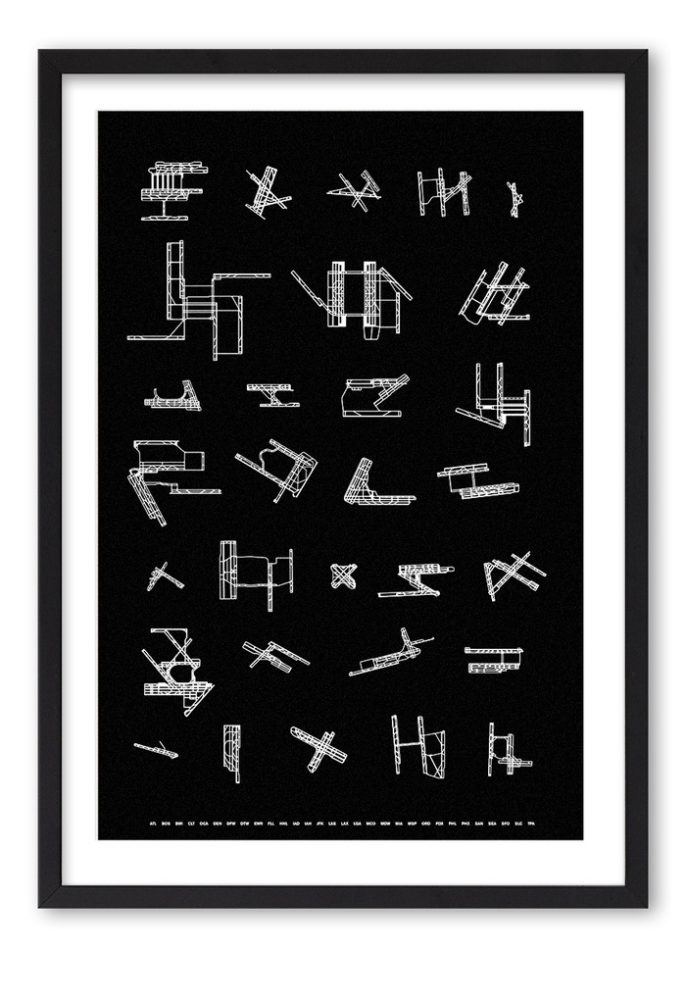
Jerome Daksiewicz has a kickstarter campaign going to create a boxed set of his runway prints of 30 of the large hubs in the US and a screenprint illustrating all the runways.
 
runways

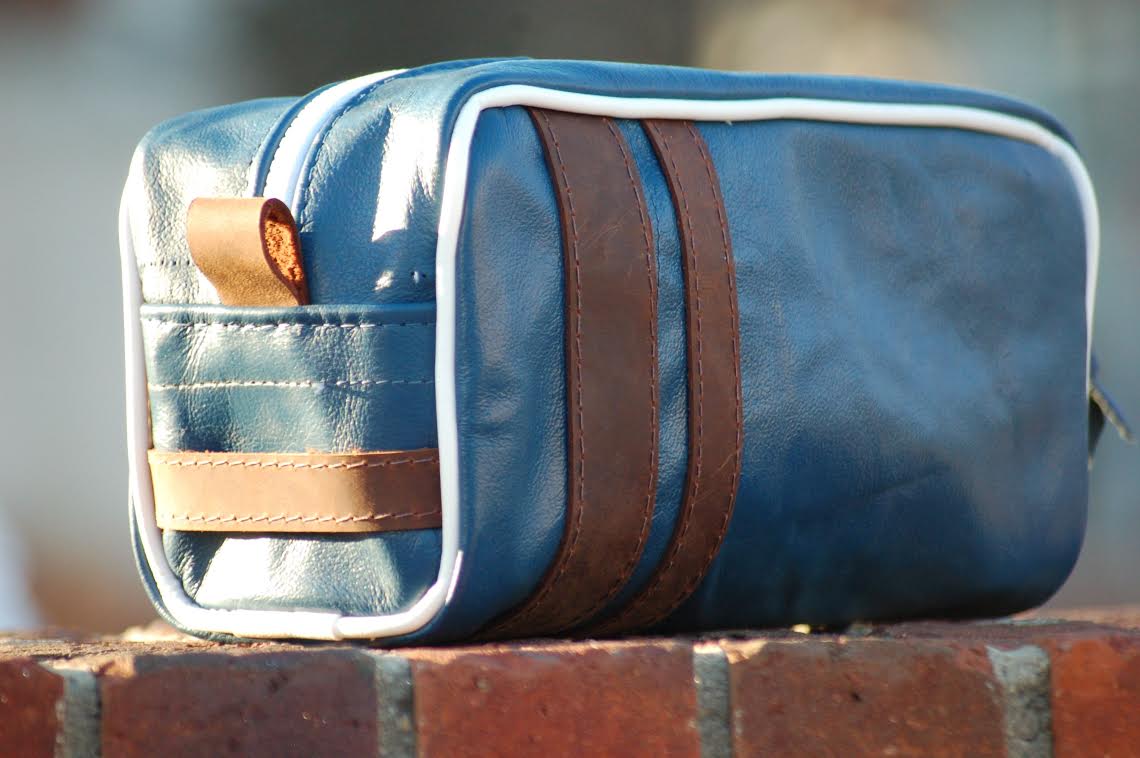
And Matthew Mahler at Skyebags has a refreshed line of items – a wallet, a tote and a Dopp kit – made from upcycled leather from old Delta Air Lines seats.

7_Skyebags Dopp Kit

Have a great avgeek gift to recommend? Send in your suggestions.

Fashionable & frivolous flight attendant attire – part 2

Here are more fun photos from a slide show on flight attendant uniforms I put together for CNBC Road Warrior. Part 1 is here.

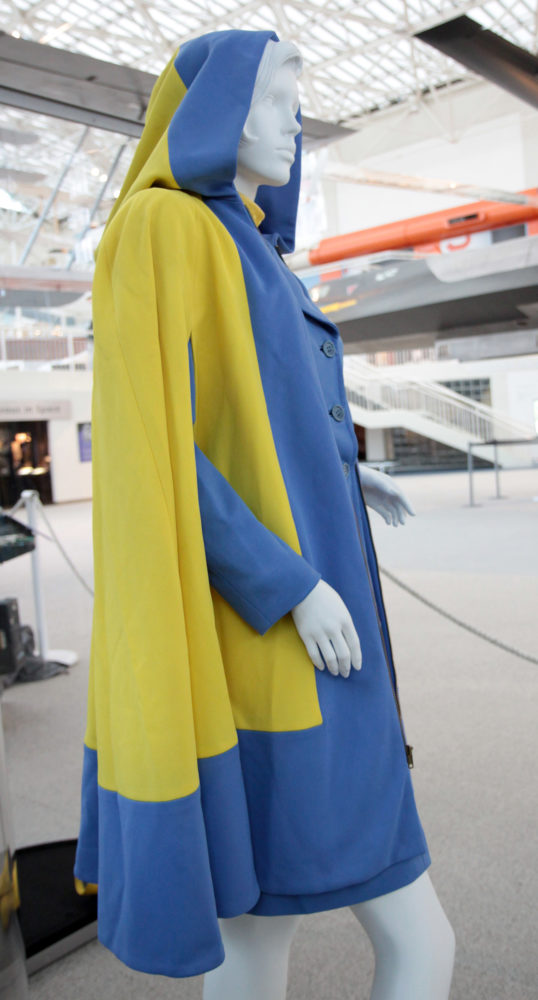
Hughes Airwest, Designed by Mario Armond Zamparelli, 1972-77

Hughes Airwest uniform courtesy Ted Huetter, Museum of Flight Seattle

According to Seattle’s Museum of Flight, in the early 1970s American artist and designer Mario Armond Zamparelli was asked by business magnate and aviator Howard Hughes to create new flight attendant uniforms for Hughes Airwest. A memorable Airwest outfit was a Sundance Yellow princess-line knit dress, which had a matching zippered jacket. When going outdoors, flight attendants could add a hooded cape or a princess-line coat.

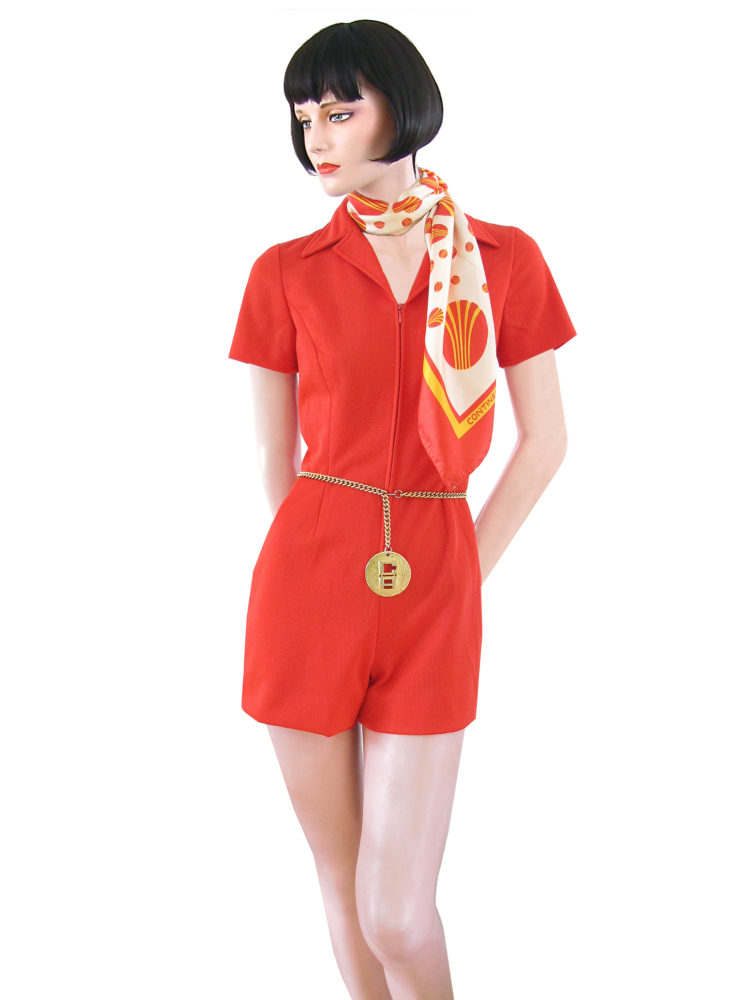
7_Continental1970_shorts


In the 1960s and ’70s, hotpants were common, as seen in this Continental uniform. Courtesy Cliff Muskiet www.uniformfreak.com

“Hot pants and short dresses with hot pants underneath were a common look in the 1960s and ’70s, and Continental, PSA and Southwest Airlines all had uniforms featuring that style,” said Cliff Muskiet of uniformfreakcom. “In those years, the stewardess was used to attract male passengers and hot pants were part of the plan,” he said.

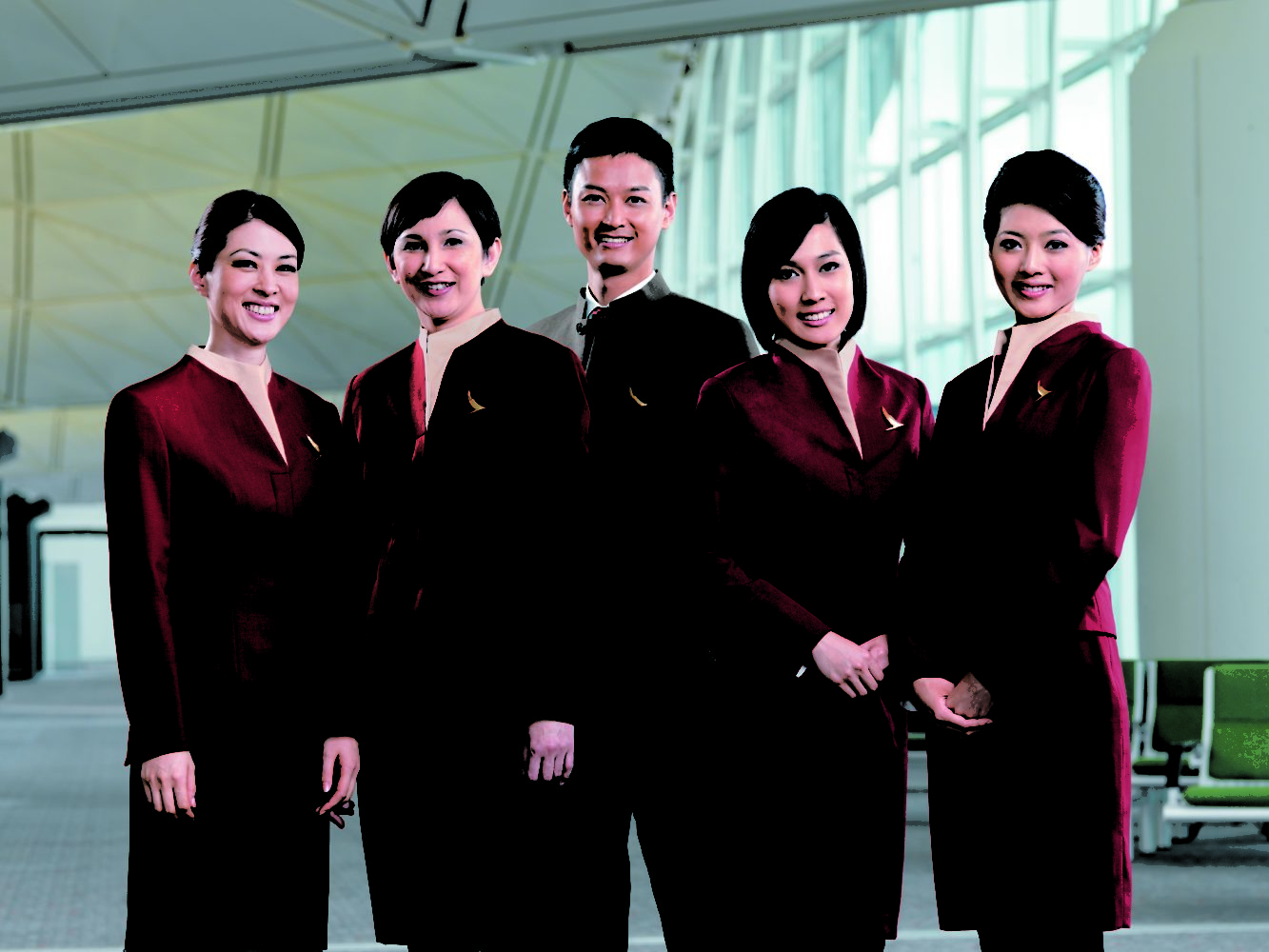
8_courtesy Cathay Pacific

Courtesy Cathay Pacific

Compared with the hot pants-themed uniforms some airlines required their flight attendants to wear during the ’60s and ’70s, these Cathay Pacific uniforms, launched in July 2011, appear to be quite tame. But the union representing the airline’s flight attendants recently complained the outfits were “too sexy.”

In a statement, Cathay Pacific said it has made some modifications to the uniform to address concerns about the length of the blouse and the tightness of the skirt, and crew members “are welcome to exchange their uniform any time if they feel the fit is not right.”

Although many of the older airlines are long gone, some of the classic airlines are looking to return to the skies, such as PEOPLExpress.

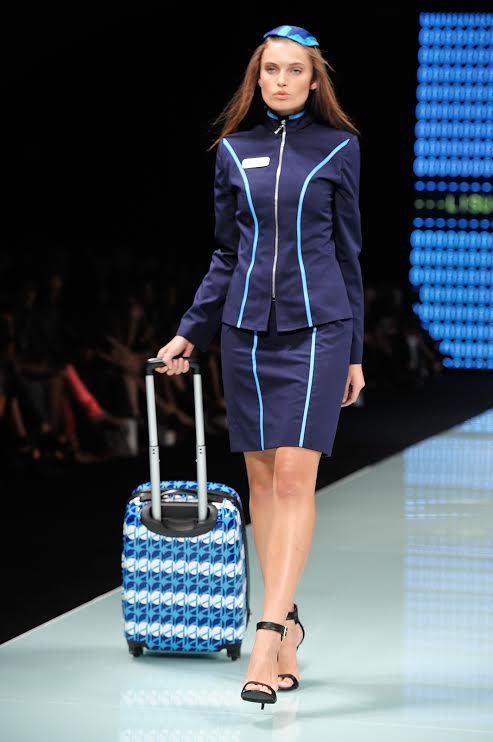
In May 2014, a group trying to bring back Eastern Air Lines, the iconic Miami-based carrier that operated from the 1920s until 1991, held a contest to choose a designer for the uniforms crew members might wear when the airline returns to the skies. The winner was Miami-based designer Lisu Vega, whose collection includes a variety of chic, navy and teal outfits with matching hats and luggage.

9_Lisu Vega_Eastern Air Lines possible uniform

Eastern Air Lines uniform Simon Soong / Courtesy Lisu Vega


Interview with The Lego Pilot

guess muc

In person, he’s surely taller and more animated.

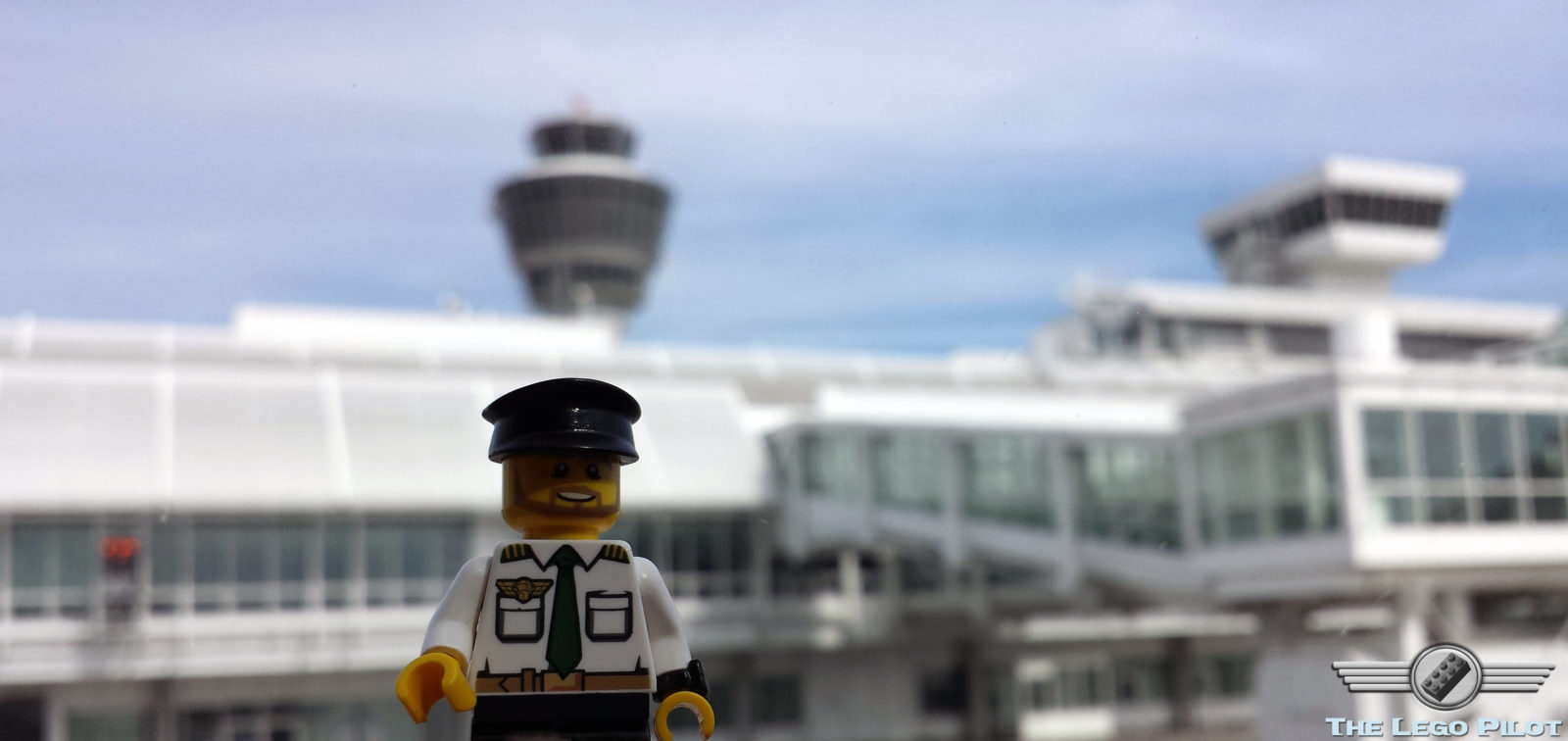
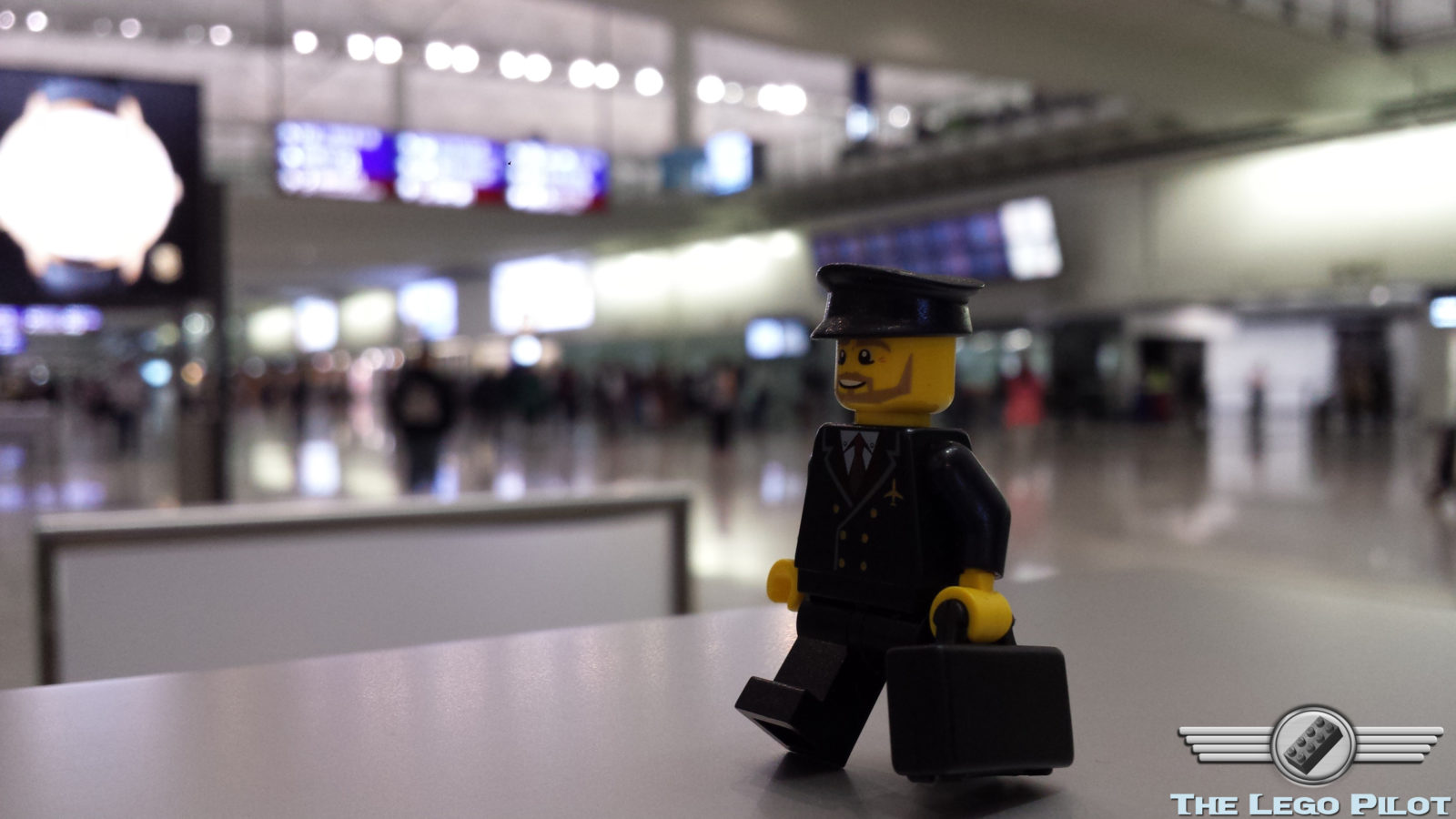
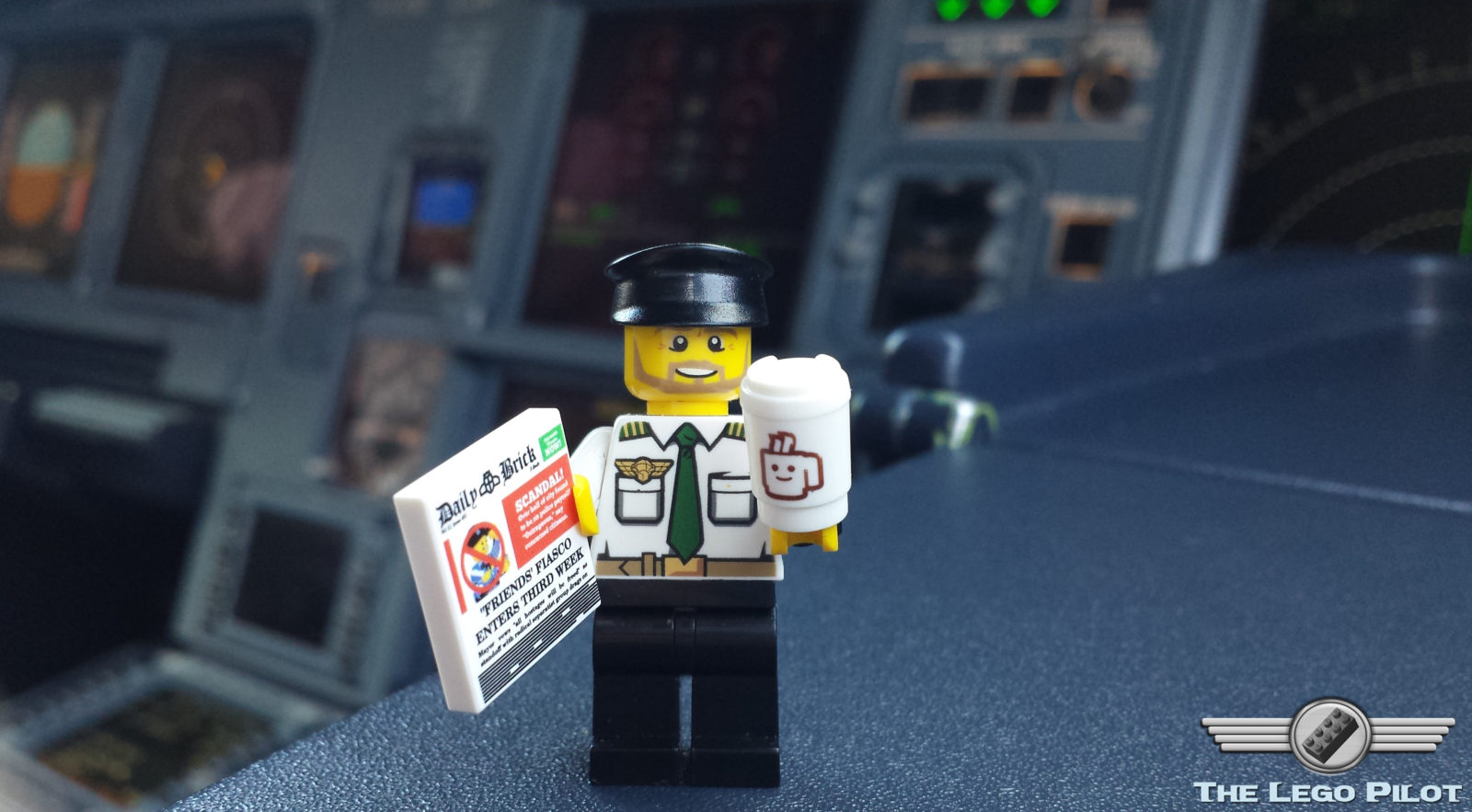
But in selfies online – on Twitter, Facebook, Instagram and YouTube, – the world’s smallest international airline pilot is pretty darn charming.

Since March, the tiny toy has become the alter-ego of a London-based pilot – a first officer in his mid-20s – who for now won’t share his real name and the name of the airline he works for, but via email was willing to share some details about his real life and the adventures of the Lego figure he’s been photographing at work and play in, so far, more than 20 cities around the world.

walk hk

The real pilot told me that about two years ago, he was a given a Lego plane set with a Lego pilot as a joke present from his parents when he got his first commercial airline pilot job. “The pilot was to be like a lucky charm in my flight case,” he said.

That original Lego pilot got lost, but once the Lego Pilot photography project was hatched, the real pilot purchased a new figure.

“I guess he does resemble me. A happy coincidence when building the Lego mini-figure in the Lego Store,” he said.

coffee and paper before to

Finding locations for the Lego Pilot to have his picture taken hasn’t been a problem, but there have been strange looks and some challenges in setting up scenes, “especially outside, the wind tends to knock him over,” said the pilot. “Also I do get worried about losing him.”

headset radio

The pilot said he hasn’t heard from the Lego company’s lawyers yet, but he has posted a disclaimer on his site alerting fans that the project is not an official Lego project. He’s also being very careful about not revealing his identity to honor his company’s rules about social media.

“If the airline doesn’t like [the project] I could face disciplinary action and that would bring an end to the Lego Pilot,” he said. “I have worked very hard to get where I am and I do not want to lose my job. But at the same time, this project is fun and my new hobby gives the world a little bit of an insight into a pilot’s life.”

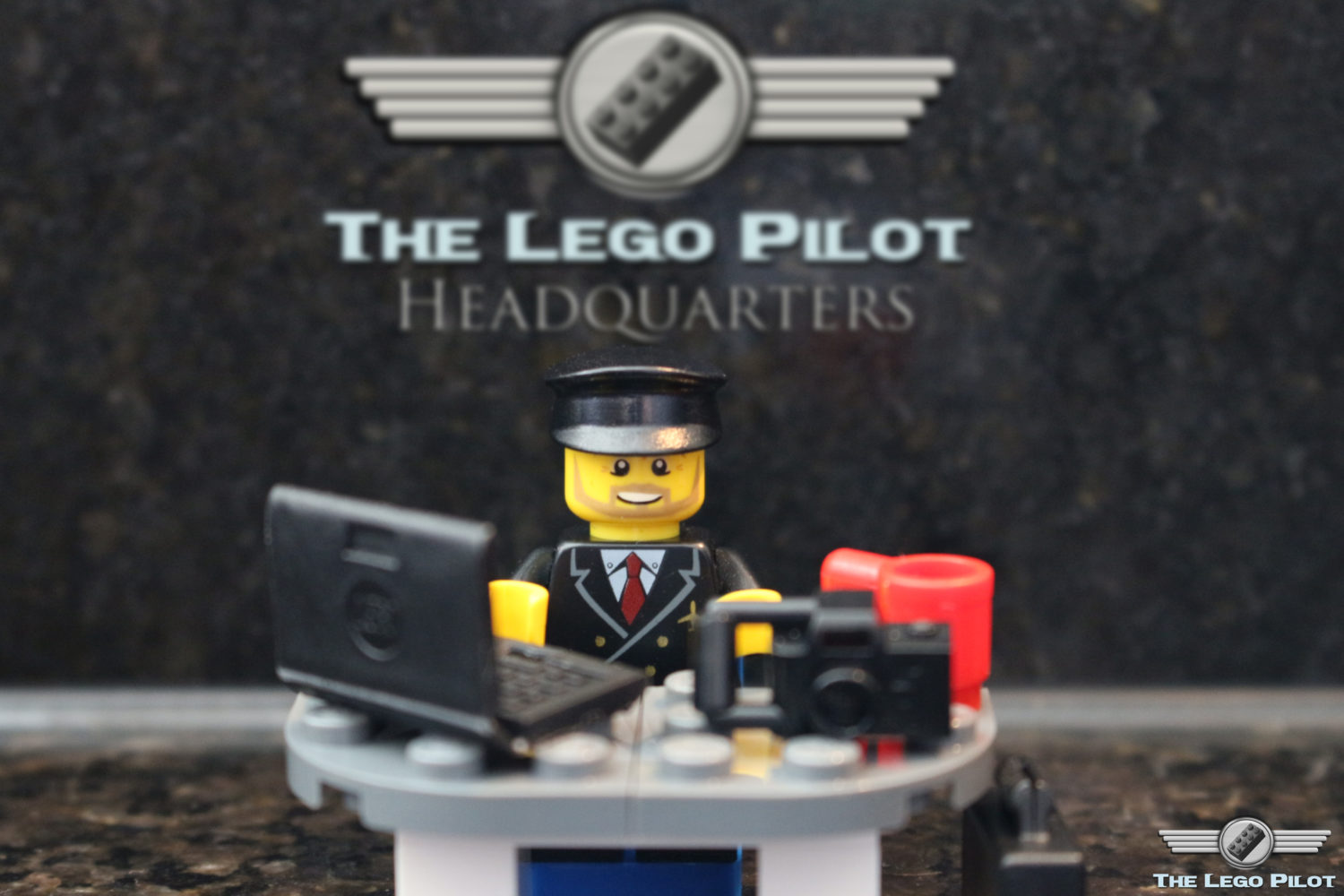
lego pilot HQ

(All photos courtesy of the Lego Pilot)

Fancy a flight to Paris? Charles Lindbergh did.

LINDBERGH_SpiritofStLouis

Spirit of St. Louis courtesy Smithsonian Air & Space Museum

So much chatter these days about amenities we want on long trip from say, New York to Paris, so let’s just take a moment today to tip our hats to Charles Lindbergh, who left New York for for Paris on the morning of May 20, 1927.

Thirty-three hours, 30 minutes, and 3,610 miles later he landed safely at Le Bourget Field, near Paris.

He was flying alone. So no one brought him a meal, a pillow a blanket or even a tiny bag of peanuts.

Read more about the plane and the flight here.

Trailblazing Women of Boeing

(My story about the Women of Boeing first appeared on the Runway Girl Network)

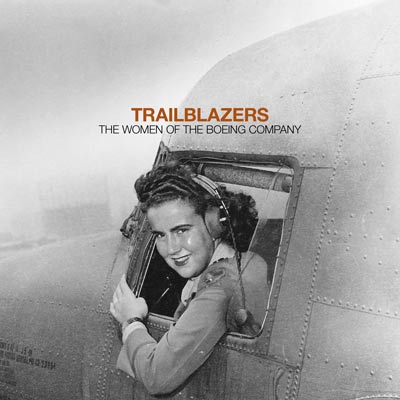
Trailblazers book

Women have played an important role in the history of the Boeing company, beginning in 1916 when seamstress Rosie Farrar was hired by William Boeing to stitch together linen wings for the early B & W seaplanes.

By 1918, women made up almost 25 percent of the company’s employee base, notes Betsy Case in Trailblazers: The Women of The Boeing Company, and since then women have had an important role in every aspect of the company.

Dozens of these trailblazing women, many with the word “first” amongst their accolades, are featured in Case’s new book, which pays tribute to the Pacific Northwest “Rosies” who built Boeing bombers during World War II and to those who have had important roles as aviators, engineers, leaders and trendsetters.

Included are photos and short biographies of women such as Bessie Marie Dempsey, who became the first female aeronautical engineer at Boeing after a career as a ballerina, vaudeville dancer and Hollywood starlet. (She appeared in the Marx Brothers movie “A Night at the Opera,” under her stage name, Yvonne St. Clair.)

Close to a dozen of the women featured in the book, including Boeing’s first female line supervisor and the company’s first female test pilot, gathered in Everett, Washington at the Future of Flight Aviation Center and Boeing Tour in March (Women’s History Month) to celebrate the book release and share some of their stories.

Here are short profiles of just a few of the women who attended:

Diana Rhea 65th

Diana Rhea joined Boing as a clerk in the parts ordering group at the start of World War II and went on to become the first female manager in Manufacturing Engineering. According to Trailblazers, Rhea played an active role in the company’s progression from manual parts ordering to more modern, mechanized methods. Now, with 71 years of uninterrupted service, she’s Boeing’s longest-working employee.

Patricia Beckman

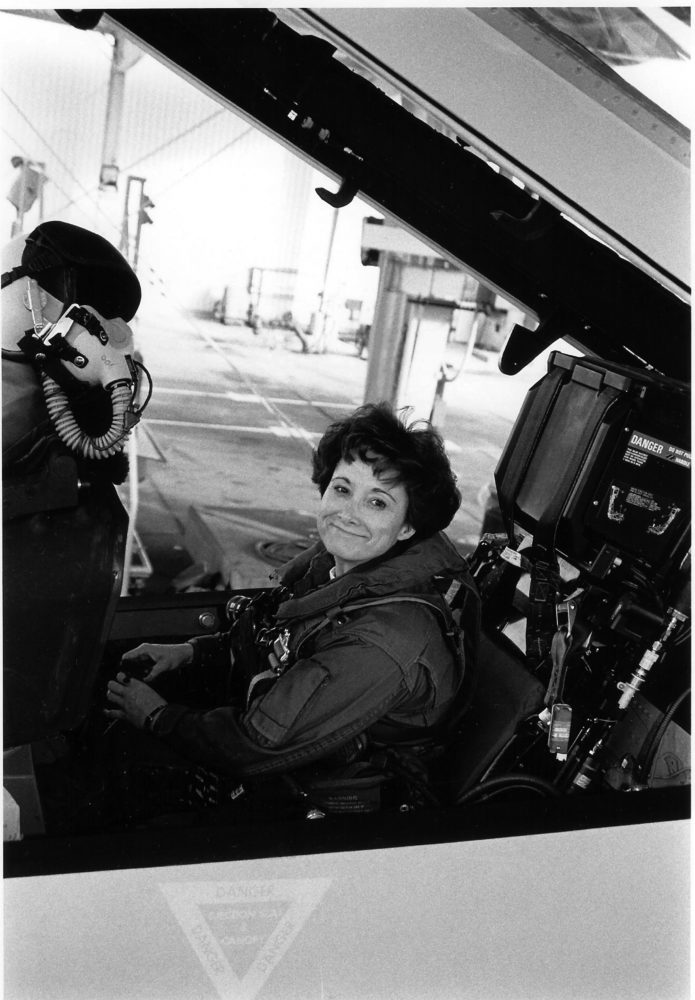
Patricia “Trish” Beckman spent 28 years on active duty in the U.S. Navy and went on to serve at Boeing in production flight testing for the 737. “I flew the first flights on 737s and flew with the customer,” explained Beckman. “Then, as a navigator I also helped the customer cross the Pacific – to China, usually. And as a navigator, I’ve also done three around the world trips in the 777, 737 and the 787.”

According to Trailblazers, in 2010 Beckman was honored by the Women in Aviation, International Pioneer Hall of Fame for being the first woman to qualify as a crewmember in the F-15 and the first American woman to qualify as a crewmember in the F/A-18. She now supports F-18 flight tests for Boeing.

Suzanna Darcy-Hennemann-1

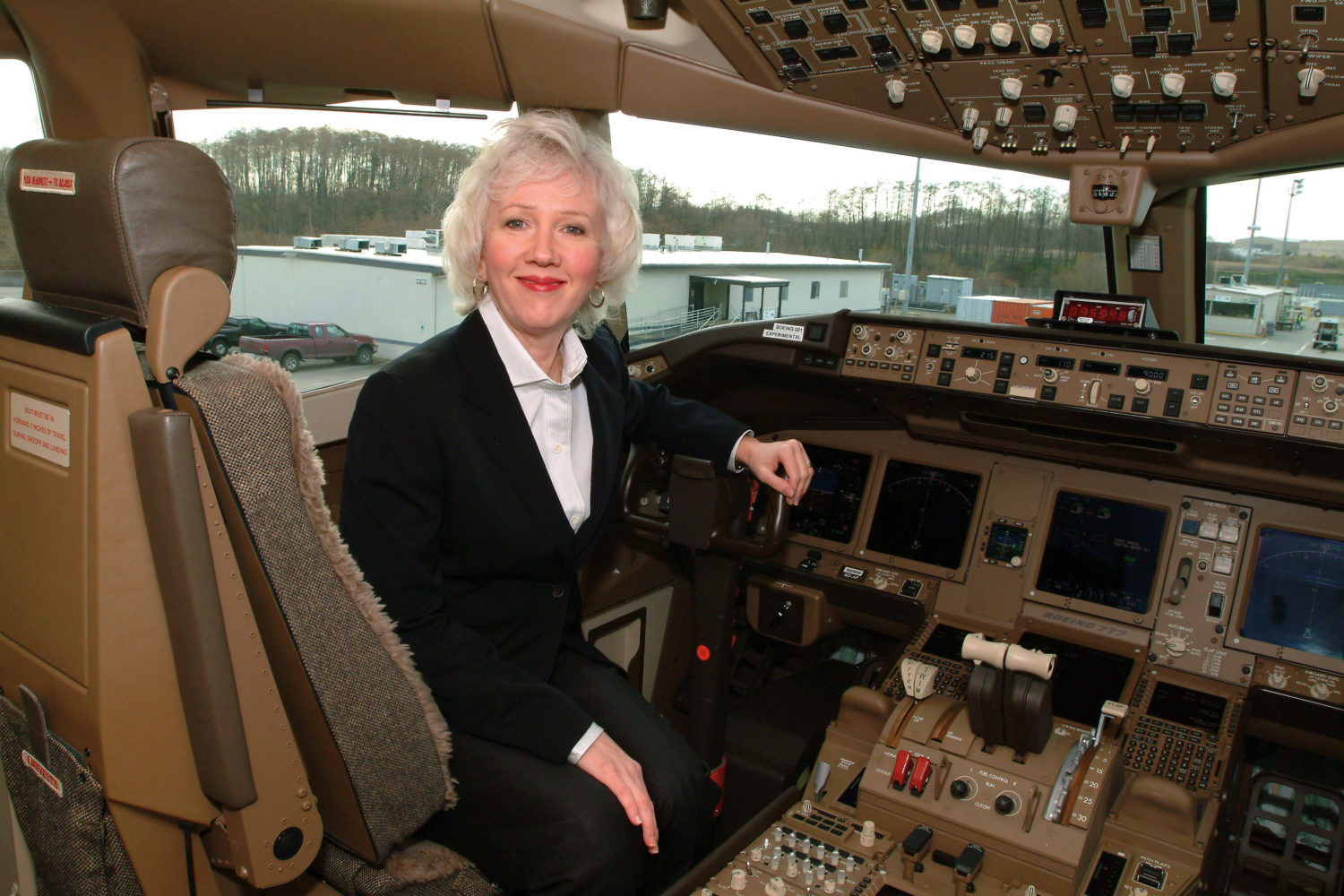
Suzanna Darcy-Hennemann was the first woman to join the elite Boeing Engineering Flight Test group as a test pilot and she’s now the Boeing chief training pilot for instructors worldwide.

“My team does all the ground school training, full-flight simulator training and training in the airplane for airline customers,” she explained.

Based in Renton, Wash. Darcy-Hennemann said she always knew she wanted to fly but that when she started out there were no women flying in the military or with the airlines.

“So I got an engineering degree so that no one could tell me I didn’t have a good enough degree to get a flying job,” she said.

She then took flying lessons and came up through civil aviation positions. “I kept working my way through all my licenses and was chosen as a production test pilot and worked in flight test for 23 years – basically taking planes out for factory test drives,” she said.

She then worked as an experimental test pilot, eventually becoming chief pilot for the 777 for experimental flight testing and, now, chief training pilot for instructors around the world.

Sandra Jeffcoat

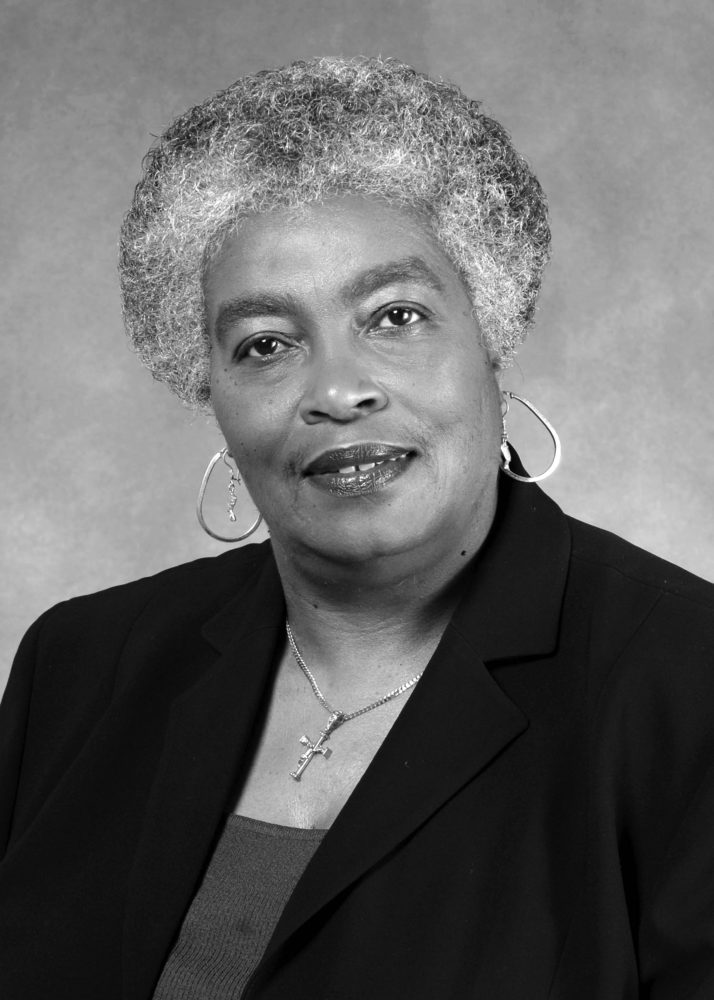
Sandra Jeffcoat was the first African American woman to become a member of the Boeing Technical Excellence Program and was the winner of the 2005 National Women of Color in Technology award.

In Trailblazers, she explains how her career in information technology began as a dare and that her expertise in a complex database system led her to Boeing in 1989, where she helped “clean up a defense contract in trouble.”

Now, like many other women in leadership roles at Boeing, “I find it important that we give back by mentoring others and bring them along,” she said.

Megan Robertson

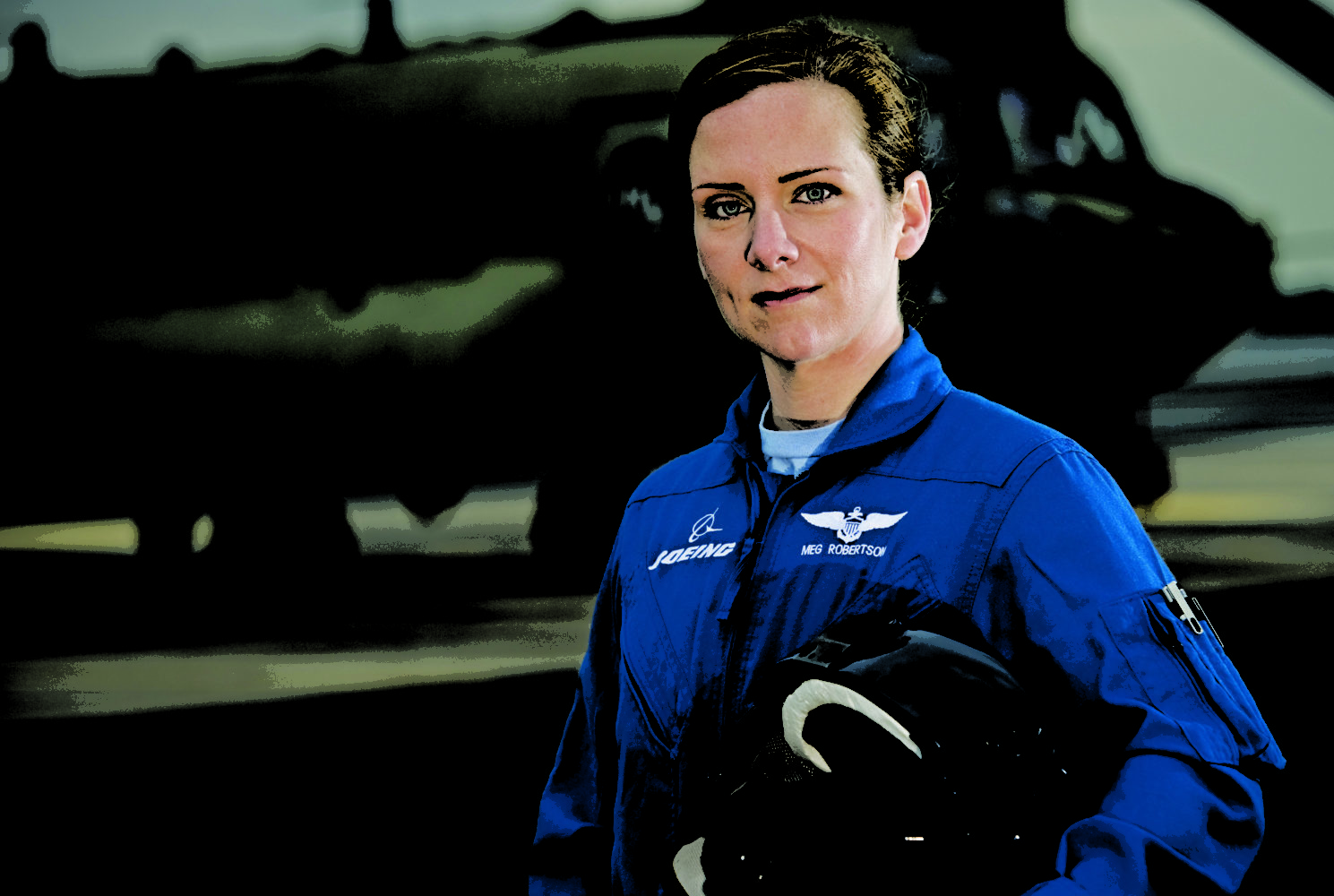
Megan Robertson makes Boeing’s Trailblazers roster as the first female pilot to conduct a Chinook helicopter test flight. Based in Philadelphia, she’s been flying for about 15 years, the past seven with Boeing.

Robertson said she loves her job, in part, because of the role the Chinook helicopters have in the world.

“Anytime there’s any kind of relief mission in the world, if you flip on the news you’ll probably see a Chinook helicopter hovering somewhere in the background,” said Robertson. “And that’s what makes what I do so exciting: I get to see a helicopter that I fly doing these great missions around the world.”

In Trailblazers, Robertson shares some of the advice she gives during career presentations, which includes the importance of building a resume, always learning and practicing leadership. “Care about what you do,” she says, “seek out opportunities and don’t let anyone ever say no to you.”

Thanks to Trailblazers author Betsy Case and the Boeing Company for sharing photos, audio and additional information for this story.

Airlines test new ways to board planes

The task seems straightforward enough. Get passengers from inside the terminal onto a plane quickly and efficiently so the flight can leave on time.

But if you’ve ever stood in the aisle waiting as another passenger s-l-o-w-l-y takes off a coat, fiddles around for a book and then attempts to cram an overstuffed bag into the overhead bin, you know how tedious the process can be.

Airlines would also like to hurry it up. Not just because slow boarding makes already cranky travelers even crankier but because time is money for airlines, and planes earn their keep only when they’re flying.

Most carriers now give first-class passengers and elite frequent fliers a head start down the Jetway; they then board by groups, from back to the front or from window seats toward the aisle.

In March, United Airlines created clearly marked lanes for five different boarding groups.

“We also started going to a window-middle-aisle boarding method,” said United spokesman Charles Hobart. “This reduces the interference that may occur in the aisle as a result of someone having to move to allow another customer to sit in a window or middle seat.”

On many flights, American Airlines gives early-boarding privileges to passengers who won’t be using space in the overhead bins. And Southwest Airlines, which doesn’t assign seats, “lines people up like schoolchildren and avoids the ‘mad rush’ to the door,” said a flight attendant who tweets as @PeanutsnCoke.

“By allowing people to naturally flow to the seat where they want to sit among the available options in front of them, the time savings is unmistakable,” said Southwest spokesman Brad Hawkins. “Across 3,400-plus flights each day, that saved time realizes incalculable savings not only for Southwest but for our customers. Less time to board the whole plane translates into less time sitting and awaiting departure.”

Some airlines will allow passengers to jump ahead in the boarding line for a fee. Others, like Spirit Airlines, “charge a heavy fee for carry-on luggage,” said Raymond Kollau of Airlinetrends.com. “But this seems to be an effective way to encourage passengers to check their luggage and shorten aircraft turnaround times.”

Future boarding scenarios?

Alaska Airlines boarding ramp

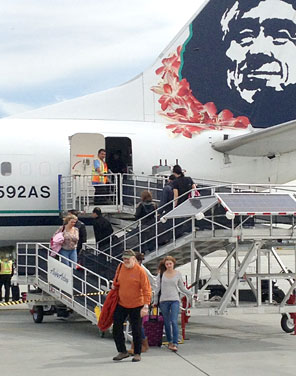
In some airports in Mexico and at some smaller U.S. airports without boarding bridges, Alaska Airlines boards passengers from both the front and rear doors.

Last spring, with the help of a solar-powered boarding ramp made by Keith Consolidated Industries of Medford, Ore., the carrier began testing the use of both boarding doors on some planes at Seattle-Tacoma International Airport (its home base airport) and Mineta San Jose International Airport in California.

The motorized ramp is driven to the backdoor of the aircraft, and three switchbacks covered in a nonslip material offer a gentle slope that makes it easy to pull a rolling suitcase or push a wheelchair from the ground level to the rear door of the aircraft.

“It’s powered entirely by solar panels but can also be hitched to a tug if necessary,” said Alaska Airlines spokeswoman Marianne Lindsey.

Testing is scheduled to continue through year-end, and while the carrier isn’t shaving 10 or 15 minutes off boarding times, Lindsey said, dual-door boarding is speeding things up a bit.

“What this initiative really is about is providing our customers with a more hassle-free flying experience, i.e., saving time boarding and deplaning, which gives customers back time,” Lindsey said. “It’s also right in line with our environmental goals.”

Another option being experimented with is seats that slide out of the way.

Hank Scott, a former Australian Navy pilot who now teaches aeronautical engineering in Colorado, was sick of standing in the aisle behind people who didn’t move very quickly.

“I thought the process would go faster if I could just walk around them.”

Scott’s solution is the Side-Slip Seat, which can be moved a few inches out of the way during the boarding and deplaning process to help widen the aisles.

“We’re looking at a 50 percent improvement in the rate you can get people on an off the aircraft,” said Scott, who hopes to have the seats certified by the Federal Aviation Administration at the end of the year.

And then there’s the Jason Steffen approach.

Steffen, a Lindheimer Fellow in the physics department at Northwestern University, recommends boarding passengers in a line so that when they enter the airplane their seats are spaced two rows apart.

“For example, the first passengers would be 30A, 28A, 26A, 24A, 22A, etc. If speed is the primary goal, I believe that this method is the fastest.”

No airline has adopted the plan, but on Oct. 16, as part of a four-part PBS special called “Making More Stuff with David Pogue,” his method will be tested against that of Southwest Airlines.

“They currently have among the fastest, if not the fastest, boarding method,” Steffen said.

But perhaps not for long.

(My story ‘Airlines test new ways to board planes’ first appeared on CNBC Road Warrior)
Get ready for National Aviation Day

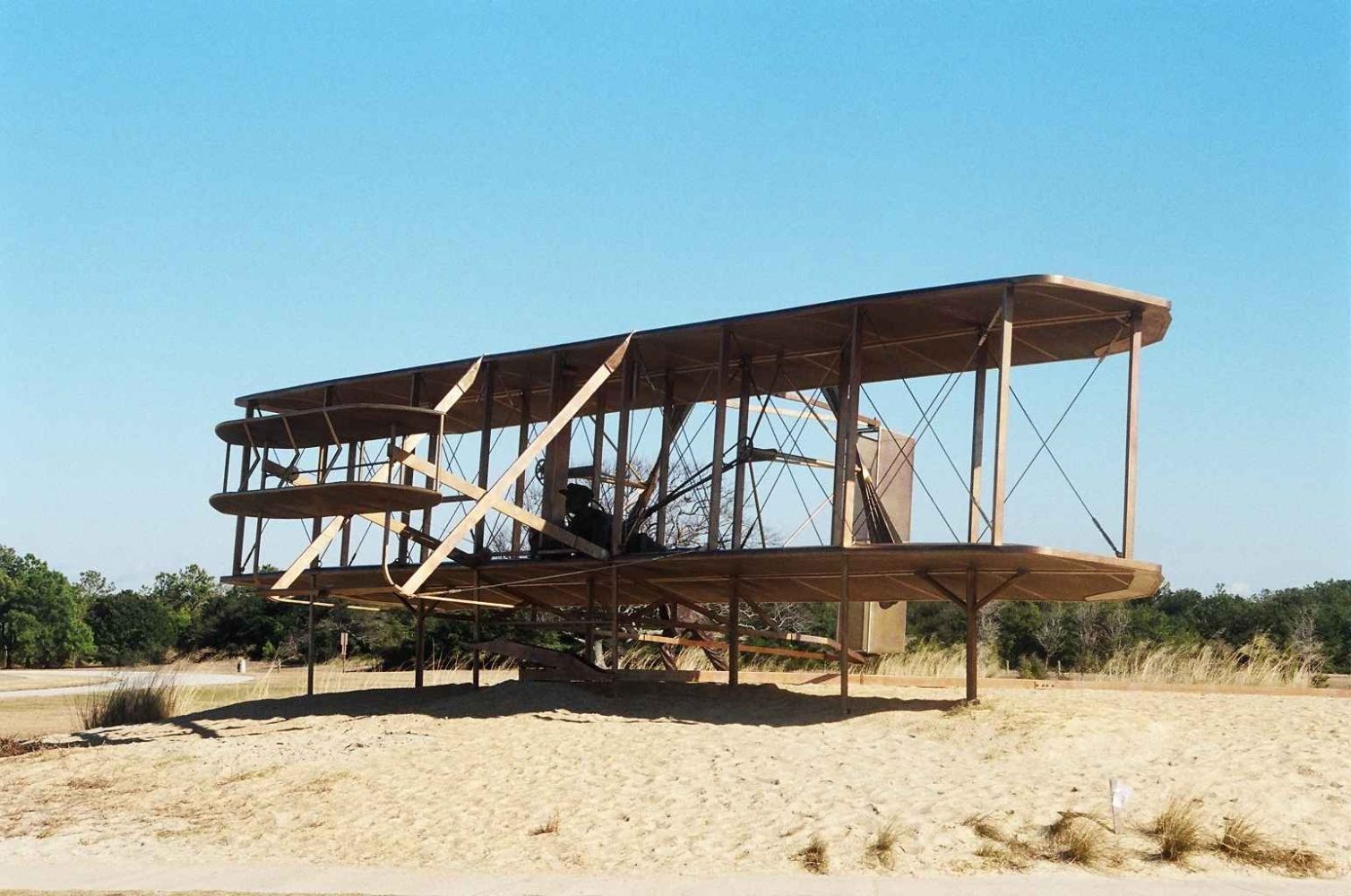
Monday, August 19, 2013 is both Orville Wright’s birthday and National Aviation Day and the place to celebrate will be the Wright Brothers National Memorial in Kill Devil Hills, North Carolina.

Wright Flyer Sculpture

Wright Flyer Sculpture – Courtesy NPS

Park fees will be waived all day and there will be a full schedule of events, including a special Junior Flight Ranger Program, talks about the Wright Brothers and their accomplishments, book signings, kite flying, paper airplane building and lots of other activities.

Name-a-Plane and fly to Frankfurt

Lufthsansa Name the Plane

Betty, Bob, Brutus? What name would you give to an airplane?

In preparation for delivery of its first Boeing 777F in Frankfurt this October, Lufthansa is having a contest to name an airplane. Entries will be taken until July 15, 2013 and the winner will be flown to Frankfurt so they can be on hand when the new plane lands.

Find more details about Lufthansa’s “Name the Plane” contest here.