airline safety

Seatback Safety Cards: A Good Read

We had a chance to chat about airline passenger safety briefing cards with Trisha Ferguson, CEO of The Interaction Group, for a story on The Runway Girl Network.

The Olympia, Washington-based firm has been around for more than 50 years and has designed and printed inflight safety information cards for more than 600 airlines. 

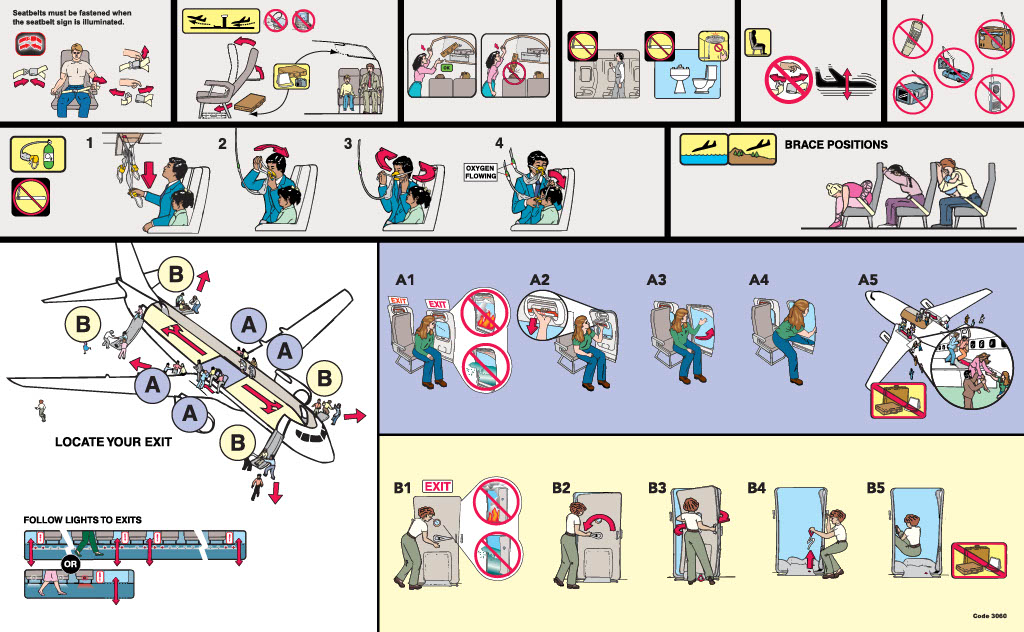
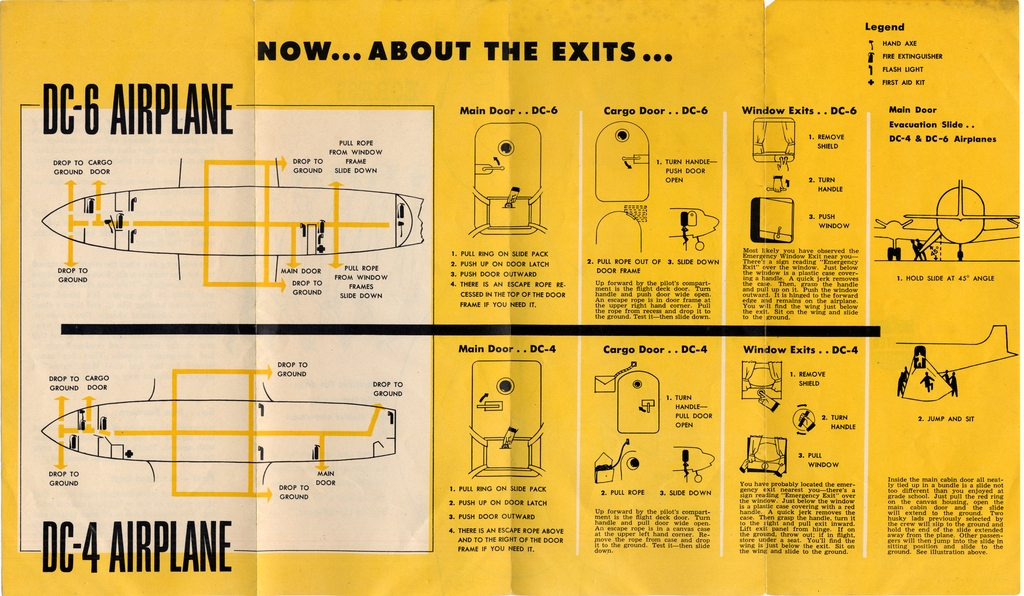
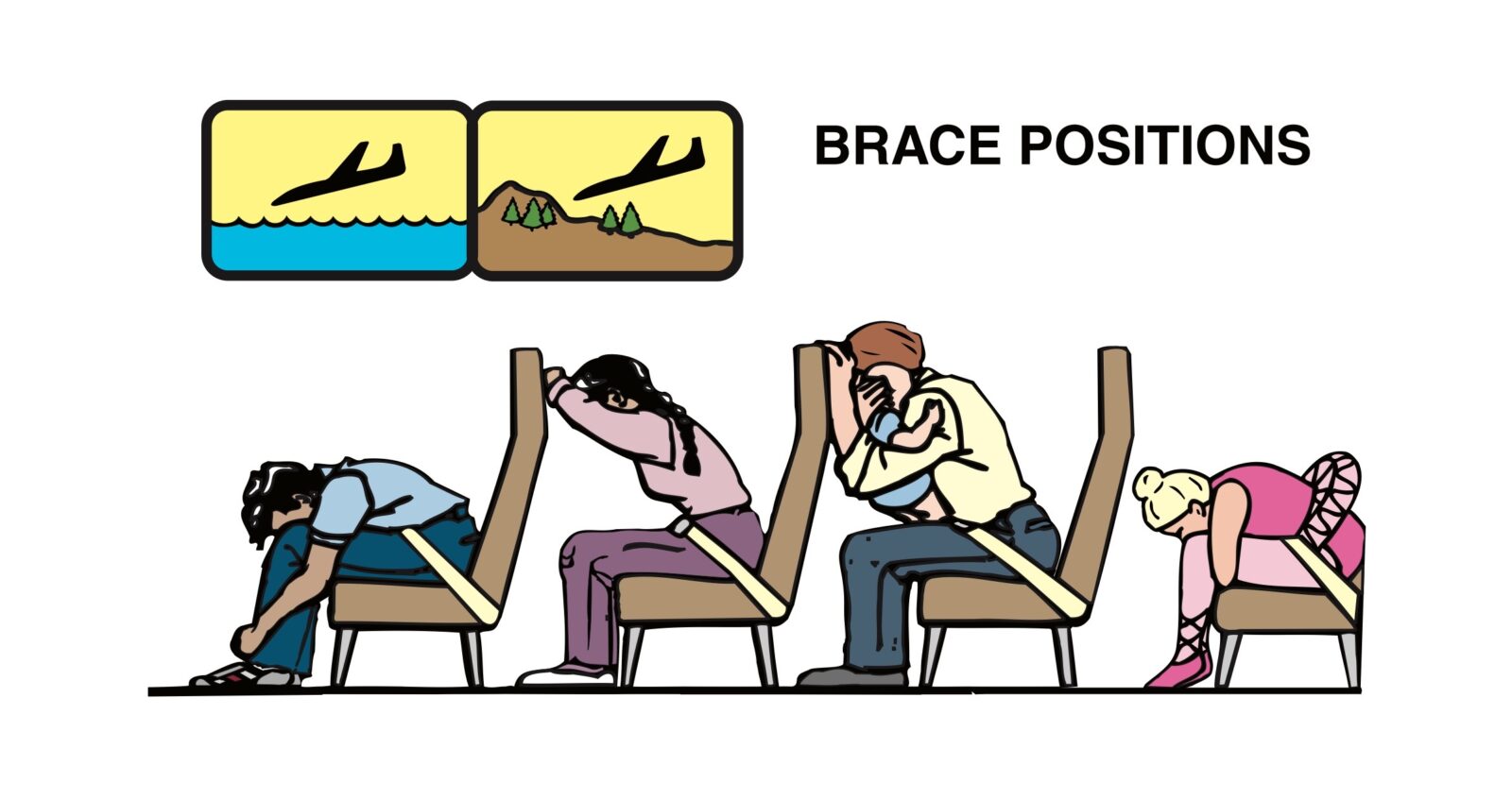
The important and information-rich seatback safety cards have been around for decades but only became mandated in the US aviation industry in 1977. And while it may seem like all the cards are the same, they vary from carrier to carrier, aircraft to aircraft, and have evolved in graphics and design.

“Many of the earliest versions were booklet-style pamphlets that were all or 90% text,” says Ferguson. “The content was unfamiliar to the average passenger. And many of the phrases, words, and terminology were only understood if you were an industry professional.”

Over the years, much has changed in the look of the illustrations in terms of style and culture. And some creative ways airlines tried to get passengers to pay more attention to the cards. 

“One of my favorites was Sun Country Airlines,” says Ferguson. “We hid seven different characters in the illustrations, including a construction worker, a gentleman in a tuxedo, and a ballerina. And the crew would tell passengers that if they found all the characters, they’d get a little prize.” 

Read more about the history and development of airline safety cards in our story on The Runway Girl Network.

Airlines prep for the inauguration with firearms ban, other safety measures

Flying to D.C.? Leave your firearms at home

If you’re flying to any airport near Washington, D.C. in the days leading up to the inauguration, you’ll have to leave your firearms at home.

Based on the events over the past few weeks in the nation’s capital, Alaska Airlines, American Airlines, Delta Air Lines, Frontier, Southwest, Spirit, and United Airlines are imposing a temporary ban on checking firearms.

Additional security measures are being put in place as well.

In most cases, credentialed law enforcement personnel and active-duty military members traveling on orders are exempt from the policies.

A “D.C. Area Firearms Update” on the Delta Air Lines website says:

To ensure the safety of our customers and employees, customers flying into the Washington, D.C. area (DCA, BWI, IAD and RIC) from January 16 – 23 will not be permitted to transport firearms in their checked bags. As a reminder, firearms are never permitted in carry-ons,

Alaska Airlines issued a statement outlining its firearms ban, as well as a variety of other safety measures it will put in place beginning January 15.

The airline’s plan includes:

*Increased mask enforcement on the ground and in the air.

* A limit on the number of tickets to be sold to and from the Washington, D.C. area;

*And and a requirement that all passengers traveling to and from the DC metro area stay seated one hour after take-off and one hour before landing .

“We will have a dedicated command center to monitor every phase of the journey – check-in, boarding, taxi, climb, cruise, descent, and arrival – to ensure compliance and allow us to quickly respond to and resolve any incidents,” the airline said in its statement.

Other airlines are doing much the same. Some are banning the sales of alcohol on flights as well.

More restrictions for flying into D.C.

American Airlines has posted this notice:

The safety of our customers and team members is our top priority. As an additional precautionary measure in advance of the Presidential Inauguration, firearms may not be transported in checked bags on flights into Washington, D.C.-area airports (DCA, IAD and BWI) from January 16 – 23, 2021. Credentialed law enforcement officials and active duty military members traveling on Department of Defense orders will be exempt.

Firearms are never allowed to be brought onboard our planes as a carry-on item.

From Saturday, Jan 16 through Saturday, January 23, United will ban checked firearms on flights to BWI, DCA, Dulles, and Richmond International Airport.

And Southwest is doing the same.

Many airlines are moving their crews out of downtown D.C. hotels and increasing their staffing at the airports. TSA is also beefing up its security measures at airports around the country.

Air New Zealand’s new safety video has a beat

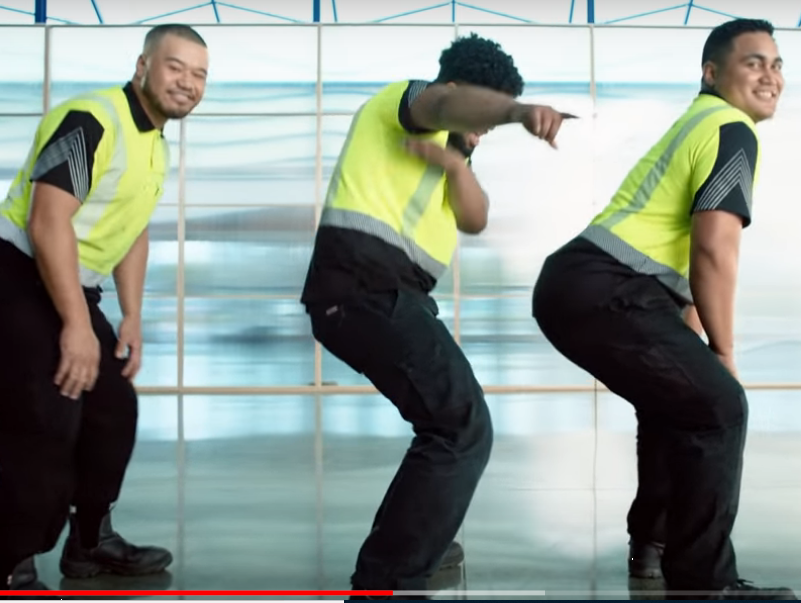
Air New Zealand’s newest inflight safety video is out and this one you can dance to.

Dubbed “Kiwi Safety,” the video has a cast of 600 and stars Kiwi actor Julian Dennison (Hunt for the Wilderpeople, Deadpool2), local musicians Kings, Theia and Randa, load of community groups and, of course, airline employees.

The music? “It’s Tricky” by RUN-DMC  and “In the Neighbourhood” by Sisters Underground


And because they’re just so darn fun, here are some ANZ safety videos from the past.

So long, Sydney: take-aways from IATA’s meeting of world’s airline execs

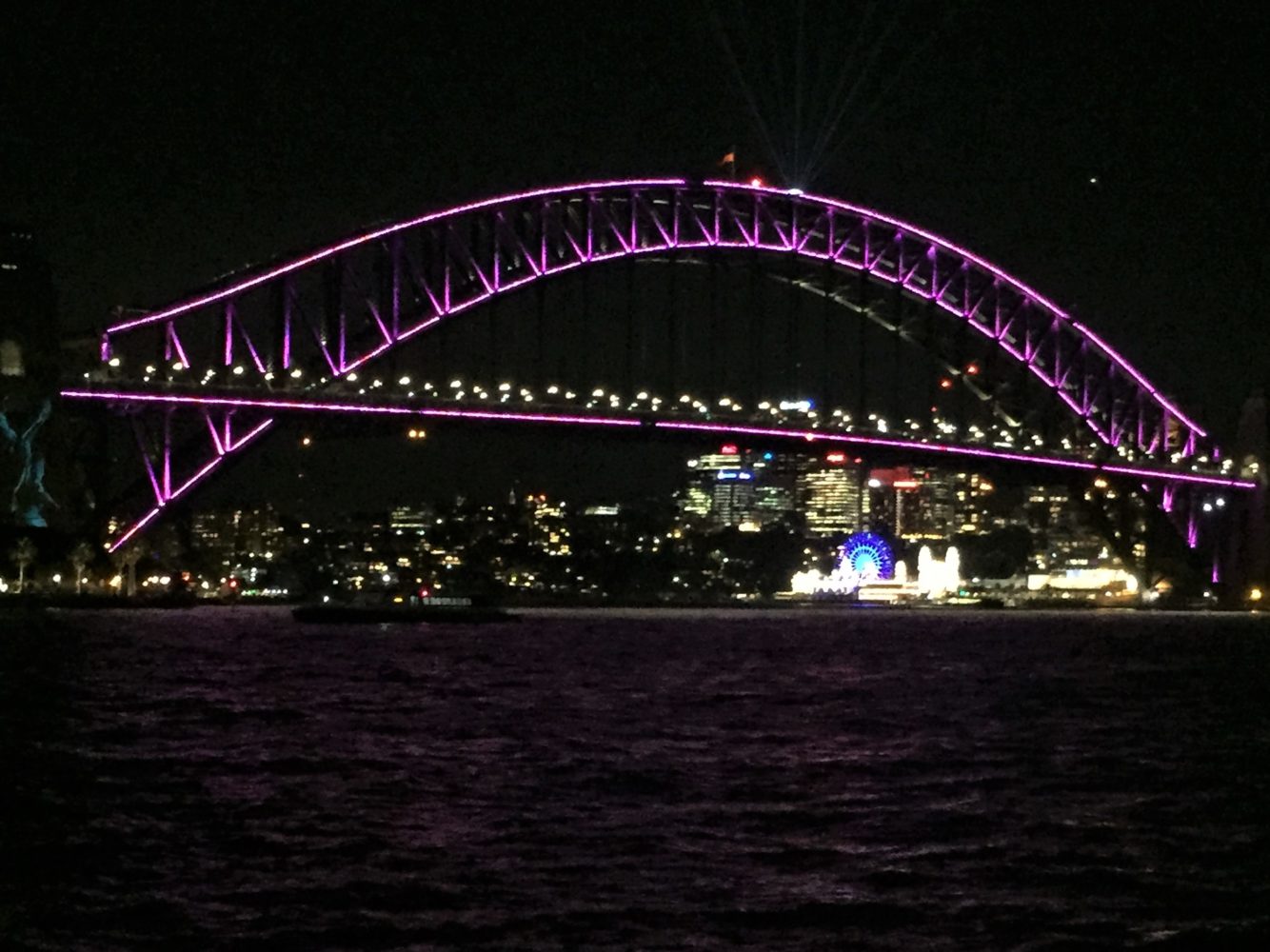
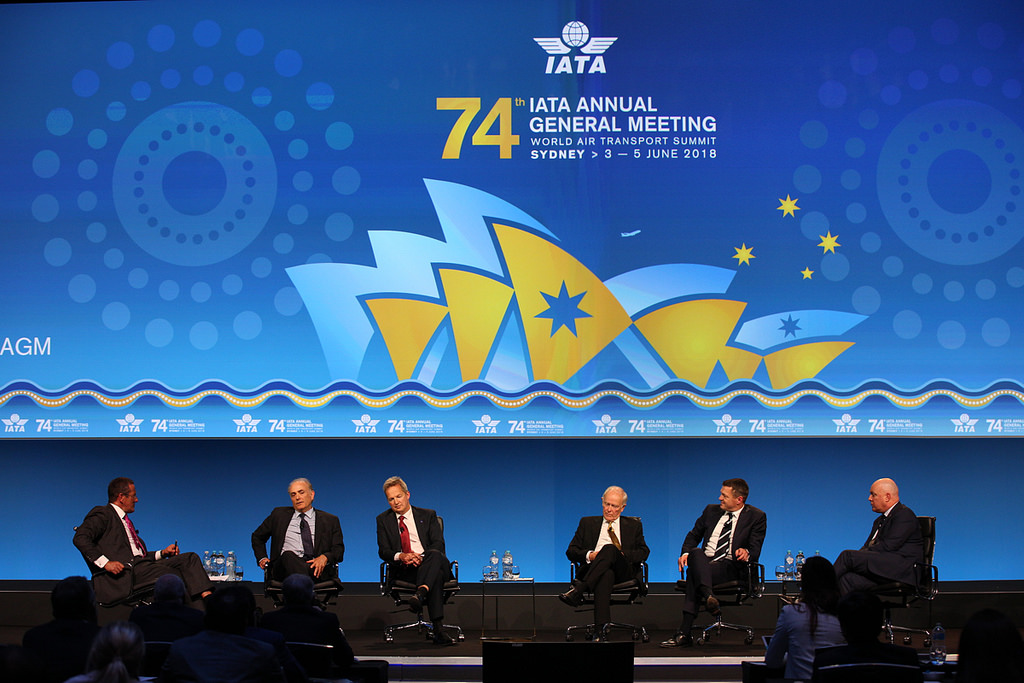
The Vivid Sydney festival – which lights up iconic buildings and structures around the city – was a great backdrop for this week’s meeting of the world’s airline executives at the World Air Transport Summit (WATS) and the annual general meeting of IATA – the International Air Transport Association.

All sorts of briefings, reports, discussions, debates and newsy announcements take place at this event each year and will generate stories that will spool out over the course of the next few weeks.

In the meantime, here are just some of the highlights from the past few days:

Courtesy IATA

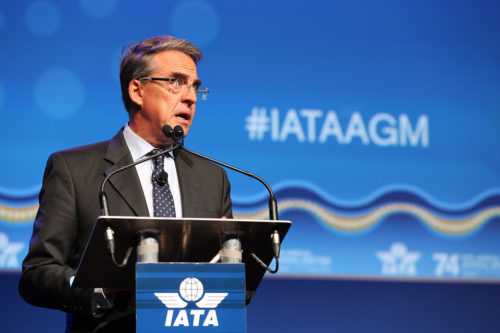
In his annual report, Alexandre de Juniac, IATA’s Director General and CEO, said that airlines are expected to achieve a collective net profit of $33.8 billion. That’s an average profit per passenger of $7.76 for the airlines, he explained, “A thin 4.1% net margin” in 2018.

Read his full report that also touched on safety, security, environmental issues and other topics here.


A bundle of 20-minute on-stage interviews were offered, on topics ranging from alternative fuels, gender equality in aviation, airport privatization and the benefits and risks of travel and tourism. Follow the links for more details from those sessions and videos of the interviews.


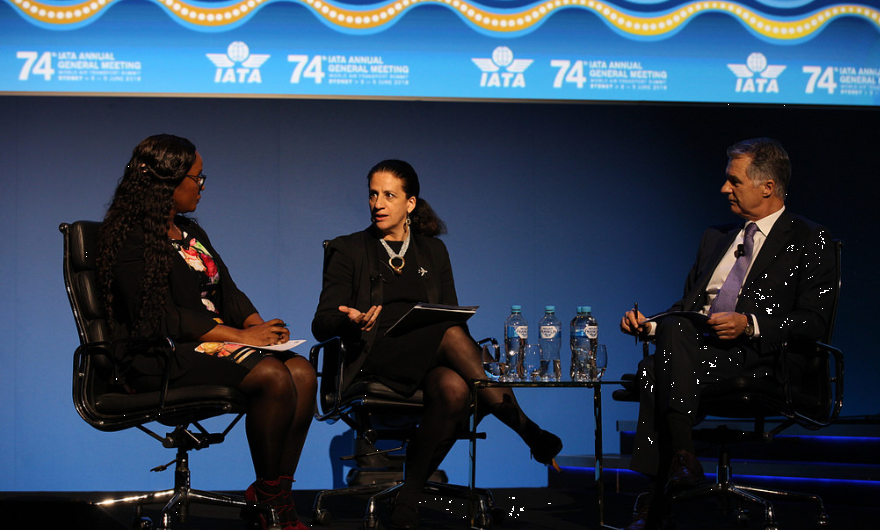
CNN’s gregarious Richard Quest was on stage with a panel of airline CEOs, including Calin Rovinsecu of Air Canada, Tim Clark of Emirates Airlines, Rupert Hogg of Cathay Pacific Airways, Pieter Elbers of KLM and Christoper Luxon of Air New Zealand.


Among the notable moments was when the all-male panel was asked to address gender equality (or the lack of it) at the top echelons of aviation:

Other sessions addressed everything from some creative ways getting passengers to and from airports more efficiently to the role airlines play in human trafficking.

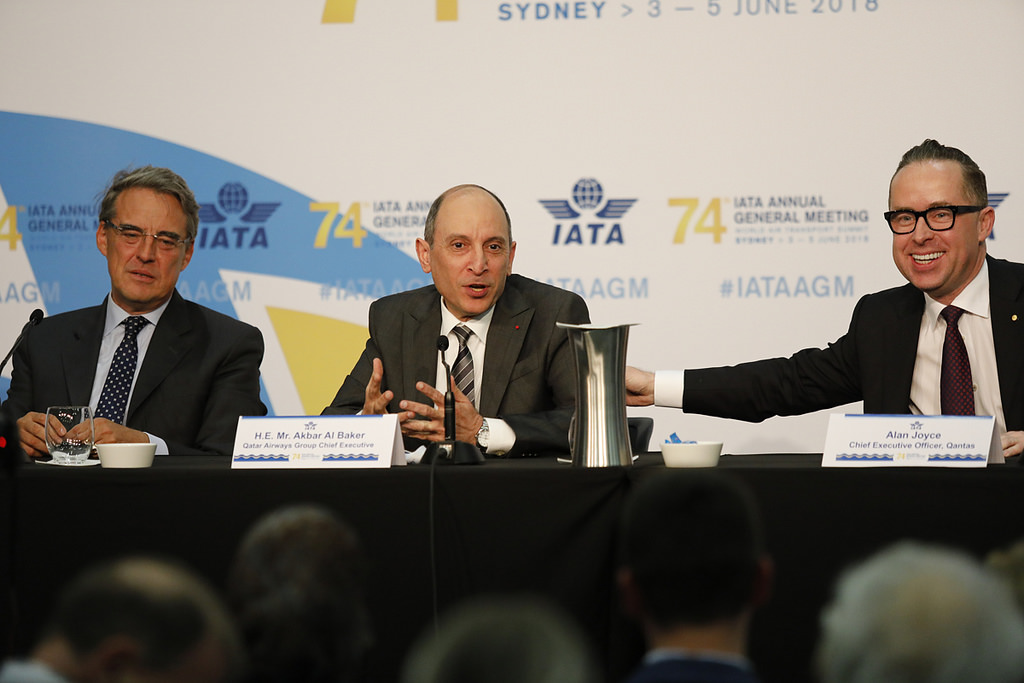
For media attendees, the meeting wrapped up with a final debriefing session with IATA CEO and Director General Alexandre de Juniac, Qatar Airways Group Chief Executive Akbar Al Baker, who will serve as chairman of the IATA Board of Governors for the next year, and Alan Joyce, CEO of the Qantas Group, which hosted the IATA AGM in Sydney.

The Qatar Airways CEO is well-known for his bravado and controversial comments, but at an event in which other CEOs expressed a committment to increasing the role of women in the upper ranks of their companies, Akbar Al Baker’s comment that of course his airline had to be run by a man, “Because it is a very challenging position” was met with disbelief.

His comment may have been a ‘joke,’ – and he did go on to mention that Qatar has women serving as pilots, as senior vice presidents and in other top-level positions – but the comment did not sit well with the group assembled (I literally jumped out of my seat!) and just underscores the fact that this sector of industry has some real homework to do.

New Air New Zealand safety video

ANZ Movie

Here’s Air New Zealand’s newest safety video. This one doesn’t have nearly naked airline staff as stars, or Hobbits, but instead stars actors from Hollywood.

“Safety in Hollywood” stars comic actress Anna Faris (from the CBS show “Mom” and the “Scary Movie” franchise) and New Zealand actor and comedic legend Rhys Darby (from “Flight of the Conchords”). S

Take a look:

https://youtu.be/A5f7ha3Z7xY

New way to see if seat belts are fastened

Here’s a great idea I came across today while walking the aisles of the exhibition hall at the Aircraft Interiors Expo Americas being held in Seattle this week.

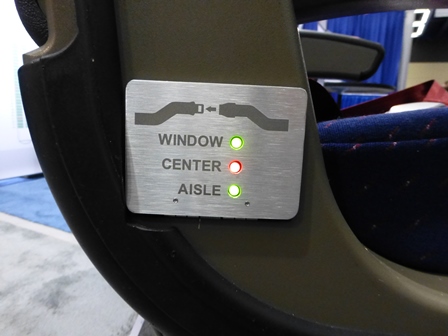
seatbelt

A company called Belt-Tech has developed a way of making aircraft seat belts out of a conductive yarn that incorporates Real Time Information (RTI) technology. When the seat belt is buckled it sends a message to a light or a display screen so flight attendants no longer have to wake passengers up to check if they’ve got their seat belt buckled.

It seems that so far only one airline has placed an order for these belts for planes that won’t be delivered until 2015. But here’s betting that soon this type of seat belt will be standard issue.

TSA nixes plan to allow small knives & more in carry-on bags

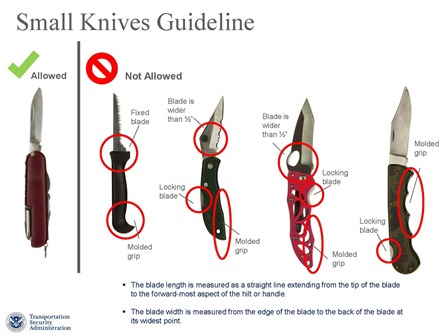
TSA_KNIVES Guide

If TSA head John Pistole could have had his way, the chart above would be in use by now.

But after months of criticism from pilots, flights attendants, airlines, legislators,members of the public and a slew of others, Pistole decided that passengers will not be allowed to carry small knives, souvenir novelty bats, hockey sticks and other previously banned sports items back onto planes as carry-on items.

Here’s how the TSA described the decision:

“After extensive engagement with the Aviation Security Advisory Committee, law enforcement officials, passenger advocates, and other important stakeholders, TSA will continue to enforce the current prohibited items list. TSA’s top priority continues to be expansion of efforts to implement a layered, Risk-Based Security approach to passenger screening while maximizing resources. ”

As you may imagine, all manner of groups that were opposing the plan – already delayed from its scheduled late April roll-out – expressed their pleasure with John Pistole’s decision:

“We commend the TSA for revising its policy,” said Veda Shook, president of the Association of Flight Attendants International. “Terrorists armed only with knives killed thousands of Americans on 9/11/2001. As the women and men on the front lines in the air, we vowed to do everything in our power to protect passengers and flight crews from harm and prevent that type of atrocity from happening ever again.”

“This decision is the right one for the safety and security of every Transportation Security Officer, airline passenger and aviation employee,” American Federation of Government Employees National President J. David Cox Sr. said in a statement.

“We applaud this as a victory for common sense,” said Gregg Overman, spokesman for the Allied Pilots Association.

And here’s some of what Paul Hudson, President of FlyersRights.org, had to say:

“Hopefully, the TSA has learned the lesson that transportation security policies affecting many millions of air travelers need to be fully vetted with all stakeholders, not made just on internal deliberations and secret lobbying by those with special financial interests or insider connections.”

FAA: no more emergency oxygen in airplane bathrooms

Now this is scary:

By order of the FAA, U.S. airlines have removed the emergency oxygen generators on all U.S. airplanes.  Here’s the story I worked on today today for msnbc.com:  FAA: No more oxygen in airplane lavatories.

Citing security concerns, the federal government in secrecy last month ordered every airline in the United States to remove emergency oxygen in every lavatory on all 6,000 domestic commercial aircraft.

Under Air Worthiness Directive 2011-04-09, made public this week, the Federal Aviation Administration directed all airlines to disable the lavatory oxygen generators to “eliminate a potential safety and security vulnerability.”

That means that if there’s a sudden loss of cabin pressure, now only those passengers at their seats will have oxygen flowing to the masks that drop down from the ceiling.

“I’m in shock,” said Kate Hanni, executive director of Flyersrights.org, a nonprofit airline passengers’ rights organization. “We get reports of mid-air decompression events all the time. So now going to the bathroom on a commercial flight can kill you? I’m panicking just thinking about this.”

Although rapid decompression is rare, it does happen. In October, for example, oxygen masks were deployed on an American Airlines flight enroute from Miami to Boston after the cabin lost pressure when a two-foot hole tore open in the plane’s fuselage . The crew declared an emergency, and the plane safely returned to Miami. Passengers were panicked, but no one was injured.

But under the FAA’s new directive, any passengers who happen to be in the airplane restroom should such an event occur would no longer have immediate access to oxygen.

According to the FAA, the airlines completed disabling the oxygen generators in the lavatories of all 6,000 U.S. aircraft on March 4. The FAA said in a statement released Thursday that it delayed informing the public about this action because it was concerned about keeping travelers “as safe and secure as possible.”

The agency told NBC News that the action was done proactively in response not to a specific threat but to general concerns that a terrorist could use the lavatory oxygen to start a fire or ignite a bomb.

“Had the FAA publicized the existence of this security vulnerability prior to airlines fixing it, thousands of planes across the U.S. and the safety of passengers could have been at risk,” the FAA stated.

The agency noted that it is working with aircraft manufacturers “to design, certify, and install a new lavatory oxygen system” on all aircraft, adding that “if there is a sudden loss of cabin pressure, pilots are already trained to guide the aircraft to a safe, breathable altitude as quickly as possible. Flight attendants are also already trained to assist passengers to quickly access oxygen — including those in the lavatories.”

Sara Keagle, a flight attendant who blogs at TheFlyingPinto.com, said flight attendants had not yet received training on the new directive but added that they already have access to portable oxygen bottles that could be used to assist any passengers in a lavatory.

“If a decompression should occur, flight attendants are trained to get on oxygen immediately,” she said. “Once it is safe, we would don a portable oxygen bottle and check the cabin, including the lavs, to make sure everyone was OK.”

But Arthur Alan Wolk, an aviation safety expert and licensed jet pilot, said: “Part of the idea of the oxygen mask dropping from the ceiling during loss of cabin pressure is to keep the occupants of the main cabin alive until an airplane gets down to a breathable altitude. By eliminating the source of oxygen for the unlucky souls in the bathroom, you’ve just killed those people.”

Airlines were expected to begin informing passengers about the lack of lavatory oxygen generators on seatback briefing cards, during the verbal passenger safety briefing presentation and on signs posted in airplane bathrooms.