Carry-ons

Take my bag, please! Delta’s Early Valet program

Delta early valet agent

Perhaps you remember a bit of news a while back that about Delta Air Lines’ test program of pre-loading some carry-on bags for passengers before flights.

The airline said the complimentary service was designed to speed up the boarding process, while some said the early gate valet program might just be testing a new optional paid service.

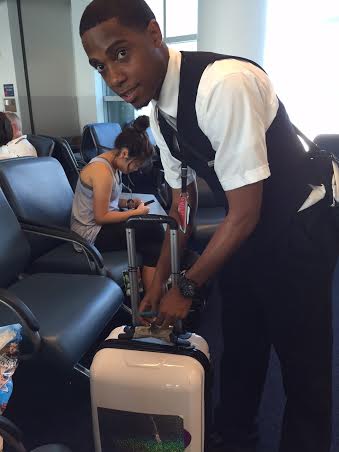
I had forgotten all about that trial program, so was surprised when the young man pictured above approached me at the gate at JFK airport on Saturday while I was waiting for my Seattle flight. He offered to take my bag and put it above my seat before the plane began loading.

I remembered writing a story about the program, so of course said yes – and then proceeded to pepper the young man with questions about how the trial was going.

He said while plenty of passengers loved the idea, there were some that were wary and didn’t want to be separated, even for a short while, from their bags. And sure enough, just moments after tagging my bag, giving me a valet receipt and moving on, another passenger ran up to the gate agents to report that someone was trying to scam passengers out of their bags.

“Not a scam, sir,” the agents told him. “Well, this is New York. You never know,” said the passenger, who then gave the bag valet his bag.

I also asked the gate valet how many bags per flight he pre-loaded and how he chose which passengers to offer the service to.

He said he offered the service first to elderly passengers, then to families traveling with children and then chose randomly from the passengers in the gate area.

I didn’t have any kids with me, so hoped I fell in to the “assorted” not “elderly” category.

Although not ten minutes after I gave the valet my bag, I had a brief “where’s my bag!” moment as I was collecting my things as the plane was getting ready to start loading.

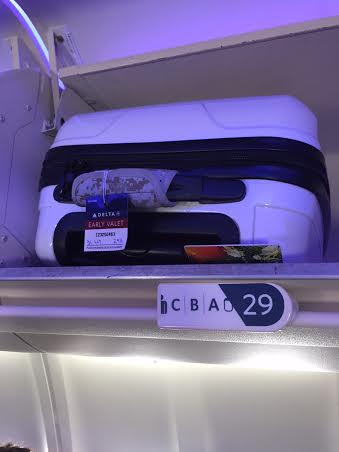
When I got on the plane, there was my bag above my seat. Just as promised.

And the early gate valet service would have indeed shaved a few seconds off my seating process – had I not stopped in the aisle to take a photo.

Delta bag over seat

Tune-up tips for travelers

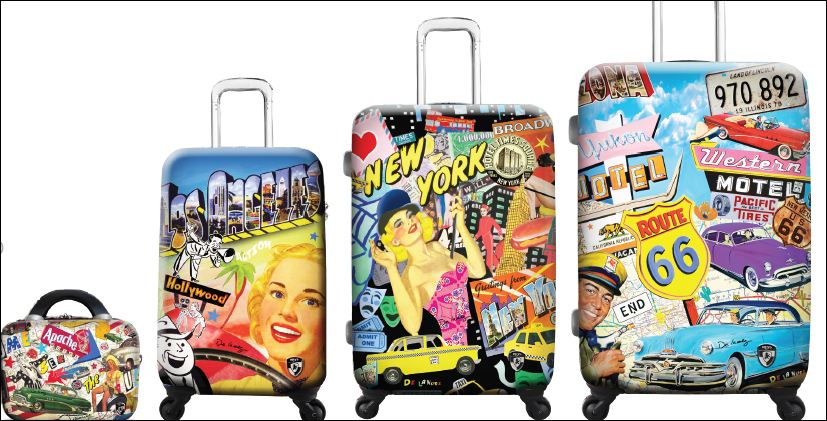
TRAVEL SUITCASES

Even the savviest traveler can use a few new tricks each year, whether on the road for business or leisure.

So here are some of the expert tips I gathered for a recent CNBC Road Warrior piece.

Fly Frugally

Before the end of the year, take inventory of your frequent flier miles. Claim credit for any missing miles and decide if you can top off—with an extra flight, hotel stay or mile-generating purchase—accounts where you are close to getting elite status perks for the following year.

When shopping for new flight reservations, sign up for fare alerts, enlist helpers such as Kayak’s price forecasting tool and remember the “24-hour reservation requirement” put into effect in January 2012 by the U.S. Department of Transportation. The rule requires carriers to hold a flight reservation for 24 hours without payment, or allow a reservation to be canceled within 24 hours without penalty if the reservation is made one week or more ahead of the flight’s departure date.

“If you see an airfare you’re comfortable with, book it,” said Kayak spokeswoman Maria Katime. You can continue your research and, if you find something better, go back and cancel.

Reasonable rental cars

When it comes to cars, reserve once you know your dates and have done some shopping, but recheck prices closer to the time of travel. “Prices can drop last-minute, depending on the actual availability of cars versus what the companies anticipate,” said travel expert Carol Pucci, who saved more than $100 with this method on the Big Island of Hawaii. “It was easy to do because I hadn’t prepaid, which is hardly ever a good idea given the chances of prices falling,” said Pucci.

To make sure a rental car company doesn’t charge you for scrapes, scratches or dings already on the car you’re issued, “take pictures of the car before you drive it away and when you return it,” said Joe Brancatelli, publisher of the business travel website Joe Sent Me.

“Rental firms are getting extremely aggressive about these charges and since the cars in the fleet are older these days than they used to be, there’s more of a chance you’ll be given a car with a ding and/or scratches,” he said.

Honing in on hotel deals

Sign up for the frequent stay program of any hotel you visit to take advantage of free perks that can include complimentary breakfast, free Wi-Fi and welcome amenities such as cheese plates and bottles of wine for even the first-time guest.

Research room rates and hotel property reviews online, but as a final step, call the hotel you’ve chosen. “Once I narrow down my hotel choice, I call the hotel to see if they have any better offers then what I see online,” said Rob Connors, assistant vice-president of marketing for National Car Rental. “Your membership in a club or association might get you an added discount, and many times hotels offer special rates for suppliers calling on nearby companies.”

It’s also a good idea to check city tourism sites for short-run, special promotions.

Some cities have destination marketing funds and packages designed to generate room sales during off-seasons. The inaugural Hotel Week LA runs from Nov. 29 to Dec. 14, and in 2015, more than 30 Manhattan properties are participating in the fourth New York Hotel Week from Jan. 3 to 18. The programs offer significant discounts rate for some of each city’s top, usually very pricey, properties.

Vancouver’s “Be Vancouver” promotion gives guests $125 American Express prepaid gift cards for bookings made by Nov. 16 for stays through Feb. 28, bringing rates in some upscale hotels down to less than $60.

“The offers coming from that program are the best we have on offer,” said Jim Mockford, general manager of the Listel Hotel. “They’re highly targeted in regards to time frame, so you have to be quick and flexible. So it’s always a good idea to put your name on the mailing list of your favorite hotels. You’ll hear about some great deals that you’ll never see anywhere else.”

Choosing travel gear

To get the best bang for your buck when shopping for travel gear “make a list of three to five ‘musts’ for your new bag and prioritize these as you do research,” said Michele Marini Pittenger, president of the Travel Goods Association.

“The manufacturer’s warranty policy can be an indicator of durability, but be sure to check the dimensions of new carry-on bags to avoid getting dinged by extra charges when flying,” she said.

When to use a travel agent

Modern online booking tools and mobile apps make it easy to research and reserve much of your own travel. But the customer services of a travel advisor who can quickly reroute and rebook you when there’s a travel snafu can come in handy.

“When it’s a trip that matters—family vacations, celebration travel, a destination you want to experience rather than ‘see’—that’s when you most need a travel advisor,” said Matthew Upchurch, chairman and CEO of Virtuoso, a network of luxury travel agencies. “Not only will they save you precious time, they can save you money with negotiated hotel benefits and extensive firsthand knowledge to ensure that you get exactly what you expect from the trip.”

Boarding the bus

“Bus travelers typically save 50 to 55 percent versus the train and 55 to 73 percent versus flying,” said Joe Schwieterman, a professor at DePaul University in Chicago and author of the Traveler’s Tradeoff study comparing intercity bus, plane and train fares across the United States.

“The ‘sweet spot’ for bus travel involves trips between 125 and 300 miles. Driving can be tedious, but air travel is often not cost effective,” he said.

When to book the bus?

“As early as possible,” said Megabus spokesman Mike Alvich. “Generally customers booking 30 to 45 days in advance will see the greatest savings, but even last-minute trip tickets are still very affordable in comparison to last-minute airline travel or even the cost of filling the gas tank of your personal vehicle.”

Smarter destination choices

You may not have much choice where business trips take you, but you can save money on leisure trips and avoid crowds by heading for South Africa, Shanghai, Uruguay, Portugal or some of the other “best-value” destinations on Lonely Planet’s Best Travel 2015 list.

Choosing “almost-as-good” alternatives to classic experiences in more expensive cities can also save cash.

“European cities are stuffed full of amazing historic buildings and churches that can be seen and explored for free without the crowds of big-name things,” said Lonely Planet’s editorial director, Tom Hall. “Gorilla trekking might be an unforgettable experience in East Africa, but looking out for chimpanzees and smaller primates can be much more fun and is certainly easier on the wallet.”
Tidbits for travelers: crumbling cookies & carry-on charges

Frontier Airlines, which adopted Midwest Airline’s sweet-smelling tradition of serving complimentary warm chocolate chip cookies to all passengers, has decided to nix that amenity at the end of April. The reason: “offering a free perishable snack did not align with our low-cost business model,” said an airline spokesperson.

What will be served instead? Elite frequent fliers – and anyone who has paid a fare above economy class – will get complimentary packaged goldfish crackers or animal crackers. Hungry economy class passengers can snack on those items as well – if they’re willing to pay $1 a package.

Another change in the pipeline: Allegiant Air – which already charges a per-segment website booking fee and adds charges for seat assignments, beverages, priority boarding, and other services – plans to begin charging $35 for each carry-on bag as of Wednesday. The new fee hadn’t been added to this long list of fees as of early Tuesday morning, but airline spokespeople have confirmed the new fee to various news outlets.

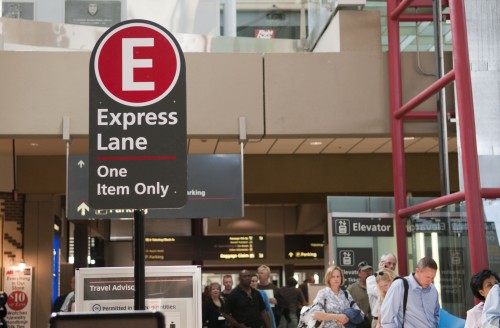
One bag? Use the express lane at PIT airport

Supermarkets have them, so why not airports?

(From my story on msnbc.com’s Overhead Bin)

Air travelers trying to avoid checked luggage fees by taking along extra – or extra large – carry-on bags often clog up the works at security checkpoints.

But passengers flying out of Pittsburgh International Airport now have incentive to pack light and check those bags.

As of Tuesday, September 13, 2001, travelers with just one carry-on item are able to breeze through the airport’s new Express Security Lane, believed to be the first of its kind in the nation.

“Traffic has been increasing at our airport, and the checkpoint lines have been getting longer. This could pull up to 25 percent of the people out of the longer line and improve everyone’s experience,” said Bradley Penrod, executive director/CEO for the Allegheny County Airport Authority.

The express line received approval from the Transportation Security Administration and will be staffed by security officers who will send passengers with both a carry-on bag and another item, such as a computer bag or purse, to one of the other, non-express, checkpoint lines. Jackets will be allowed, but not carry-ons larger than 22″ by 14″ by 9″.

“The program at Pittsburgh International Airport is one example of TSA partnering with airports to improve the passenger experience, while providing world-class security,” said TSA spokesperson Greg Soule.

Frequent flier and registered traveler programs already promise some travelers a quicker path to the secure side of many of the nation’s more than 450 commercial airports, but Pittsburgh airport officials believe they’ve come up with a novel, universally accessible idea.

“Even TSA couldn’t confirm we were the first airport to do this,” said Penrod. “But we expect if it works here, other airports will start offering express lanes as well.”

American Airlines changes rules for gate-checking strollers

On msnbc.com’s Overhead Bin blog, I wrote about the new gate-check rule American Airlines is now enforcing for strollers.


Beginning June 1, 2011, American Airlines is no longer gate-checking certain strollers.

If you show up with a collapsible or umbrella-style stroller under 20 pounds, you’ll still be able to gate-check your stroller. But under the new policy, large, jogging and non-collapsible strollers will have to be checked at the ticket counter.

The good news is that checked strollers will travel fee-free.

“It is simply a matter of many strollers these days being very large and not being collapsible and easily handled at the gate and on the jet bridge,” said an American Airlines’ spokesperson.

United also requires passengers to check big strollers at the ticket counter, but Alaska, Delta, Southwest and several other airlines allow strollers of any kind to be checked at the gate. “We know that traveling with little ones can be a challenge,” said Southwest spokesperson Laurel Moffat. “We want to make that travel experience as easy as possible.”

Maggots and flying cars. Need we say more?

Besides the story about the Charlotte-bound US Airways plane that had to return to the gate in Atlanta because maggots started dropping from an overhead bin (watch video at your own risk…)

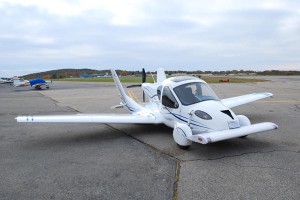
…the best aviation-related story making the rounds today was about yet another FAA-approved flying car. The Christian Science Monitor’s story about the Terrafugia Transition includes some very cool photos and a video describing the prototype of a two-seater car that can be transformed into an airplane – and purchased for $194,000.

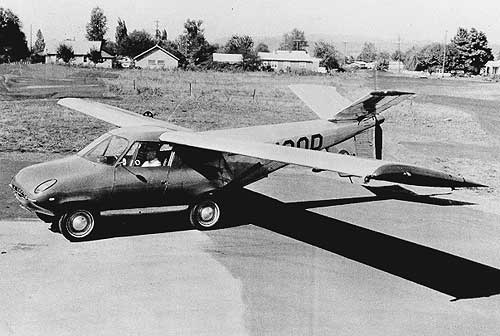
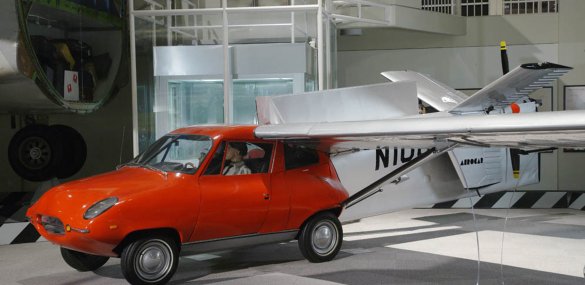
It does seem promising but, The Jetsons aside, it’s not new. Back in 1949, Vancouver, Washington resident Moulton Taylor created a car that did the same thing.

The final version of that car, the Aerocar III, which was actually the sixth version of the car, is on display at Seattle’s Museum of Flight.

Flying car

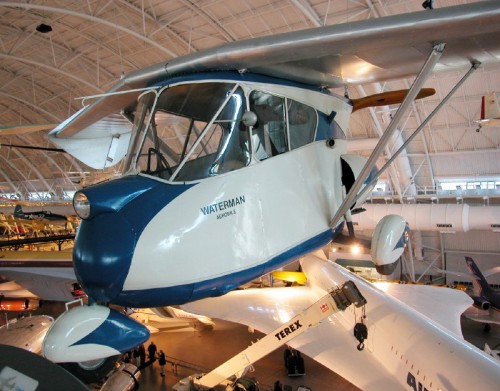
Taylor wasn’t the first to make a flying car. The Smithsonian Institution displays the Waterman Aerobile, which first flew in 1937.

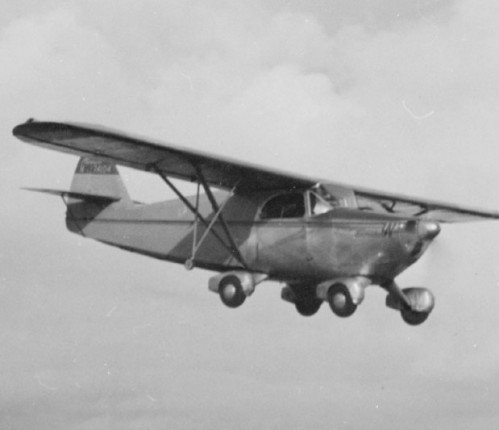
And, from 1950, the Fulton Airphibian

Both the Airphibian and the Aerobile are on display in the Smithsonian Institution National Air and Space Museum at the Steven F. Udvar-Hazy Center near Dulles International Airport.

Pay for carry-on bags? We’ll see about that.

We all knew this was coming – someday – right?

Spirit Airlines announced that, come August 1st, you’ll need to pay a fee (up to $45 if you wait until the last minute) to stow a bag, a box, or that container holding our uncle’s cremains in the overhead bin.

The alternatives?  Check your bags (there’s a fee for that as well) or tote less.  Or, as many of the 45,000 people who voted so far in the msnbc.com on-line survey vow to do, fly a different airline.  “Enough is enough,” wrote one voter. “They must think we’re idiots,” said another.

For their part, Spirit Airlines claims that by unbundling this fee, passengers might save money.

Given the fact that Spirit adds fees for just about everything else, the potential to save money by traveling with no luggage is highly disputed.  But the airline also suggests that charging for carry-ons will reduce boarding hassles.  Spirit Airlines COO Ken McKenzie claims the new charge “will reduce the number of carry-on bags, which will improve in-flight safety and efficiency by speeding up the boarding and deplaning process, all of which ultimately improve the overall customer experience.”

We’ll see about that.  And, of course, we probably only have to wait until about, oh, August 2nd, to find out if other airlines will follow Spirit’s lead.  It’s a good bet.  We were all shocked when airlines started charging for checked bags and snacks but now, as my mother used to say about things far worse than that, it’s all just part of the game.

To add your vote to the msnbc.com carry-on bag survey, to read my column on the topic, and to see all sorts of videos and other reporting on this topic, see Unbundled baggage fees reach the overhead bin.

Millionaire at Reno-Tahoe Airport and fun with lost baggage

According to recently released statistics from the Department of Transportation (DOT),  airlines appear to be getting better at keeping track of checked bags.  Plenty of bags still go missing. And some bags do get stolen.  But according to the Department of Transportation’s Research and Innovative Technology Administration (RITA), in 2009 the mishandled bag rate was 3.91 per 1,000 passengers, down from 2008’s 5.26 mishandled bags per 1,000 passengers; and the lowest rate of lost bags in quite some time.

The numbers are going in the right direction, but it may be because fewer people are traveling and many travelers are doing whatever they can not to pay a checked bag fee.

But just about everyone will get a big kick out of this YouTube video of Rhod Gilbert talking about his luggage problems.

And while Mr. Gilbert may have had bad luck at the airport, on Sunday, February 21st, Denver resident John Johnson had some very good luck at Reno-Tahoe International Airport. Johnson, his wife, and his bowling team went to Reno for the US Bowling Congress Open Championship and, after putting $20 in a Megabucks machine at the airport, Johnson won $10.4 million.

Tidbits for travelers: Free Wi-Fi, Olympic travel tips, and in-flight body-mass tax

We want Wi-Fi

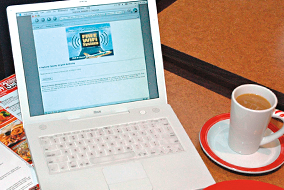
Slowly but surely airports large and small are getting with the program and making free wireless Internet access available in the terminals.

The latest major airport to join the party: Boston Logan International Airport (BOS).

Hooray!

Packing tips from Olympic athletes

Curious about what some Olympic athletes do when they’re traveling – or getting ready to travel? Them you may in interested in the video clips the folks at VISA (a 2010 Olympics sponsor) have posted of athletes talking about what they pack, how they prep for a trip, how skier Ryan St. Onge just had to have an airport burrito, and what Olympic Hockey player Angela Ruggiero packs in her carry-on.


Just as interesting, is the fact that the credit card company is giving away a trip to the Olympics – for life. To enter, you just need to charge something on a VISA card.

Seat tax on Air France for Seatmates of Size

And, just a day after announcing that it was introducing “the lightest and most comfortable short-haul seat in the world,” on some of its planes, Air France announced that passengers who cannot fit into a single seat (on any Air France flight) will have to pay for a second seat – at 75% of the cost of the first seat.

The new policy applies to tickets purchased beginning February 1st for flights April 1st and beyond.

Think the new rules may apply to you? Here’s the policy for Passengers with High Body Mass.

What do you think? Should seatmates of size be asked to pay for more than one seat?

Inside Santa’s Flight Center at the North Pole

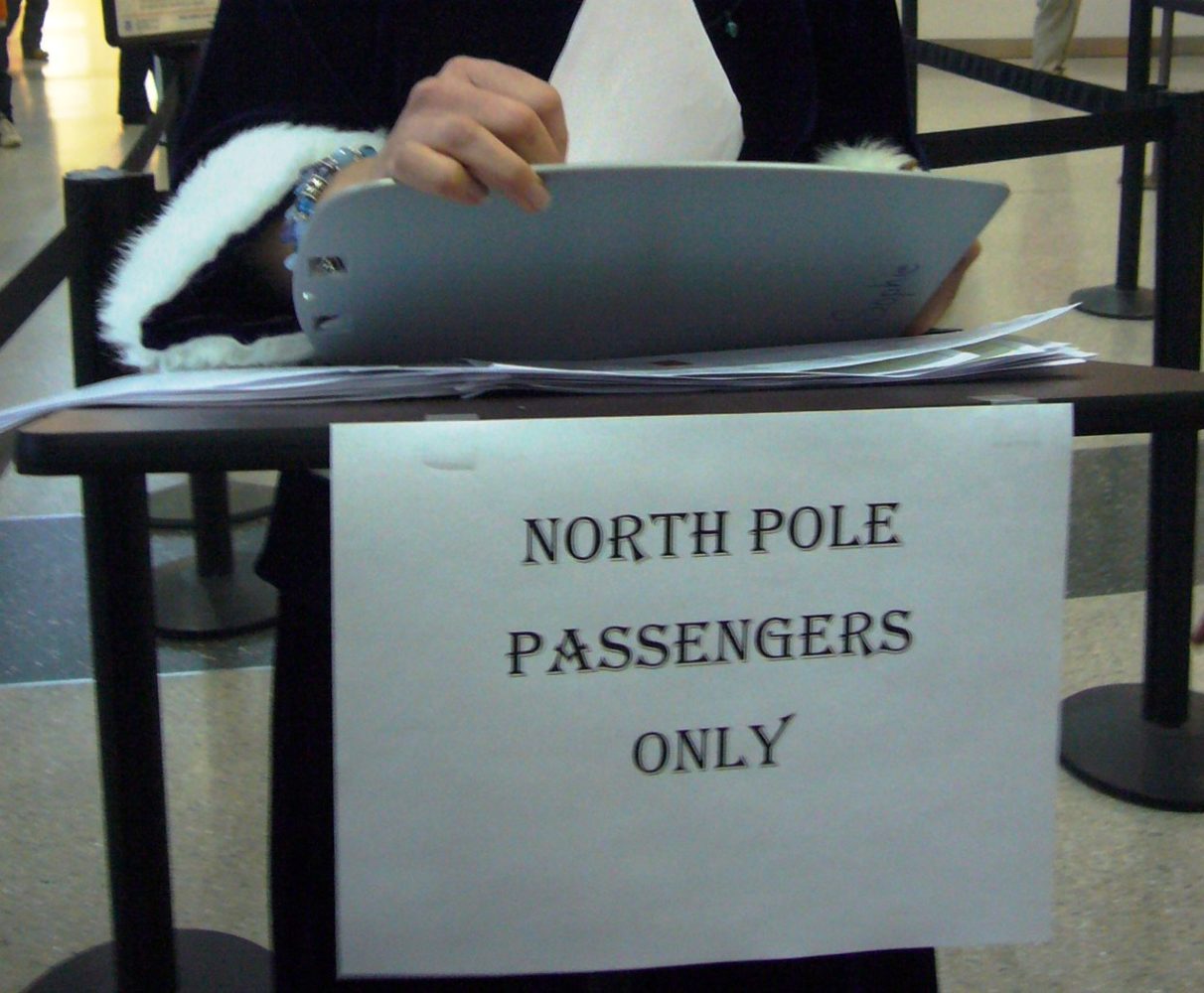
On Saturday, while everyone else was plotting how to get a first view of the 787 Dreamliner during its (probable) Tuesday test flight, I joined a group of children from Spokane for a flight to the North Pole.

North Pole - Passengers Only

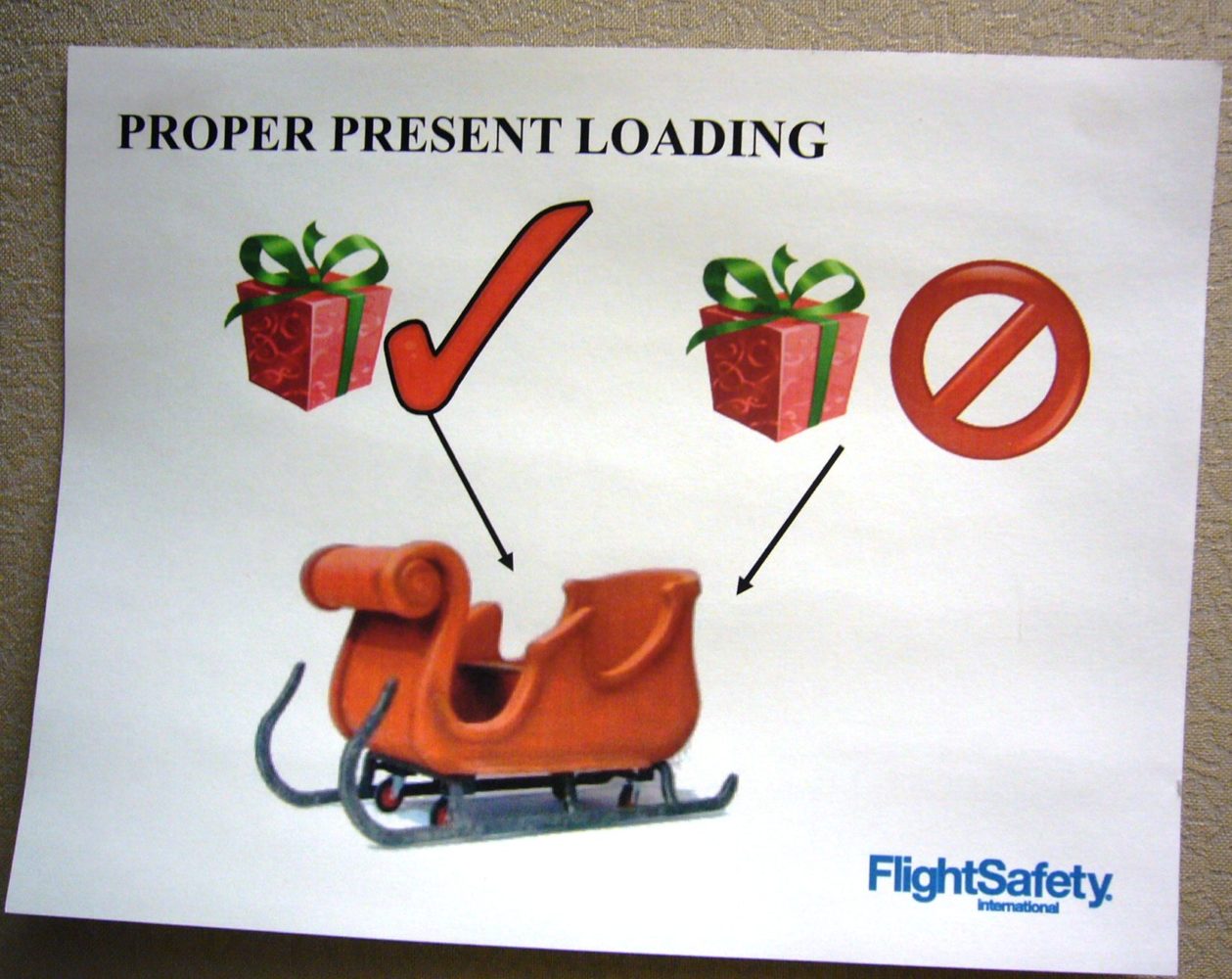
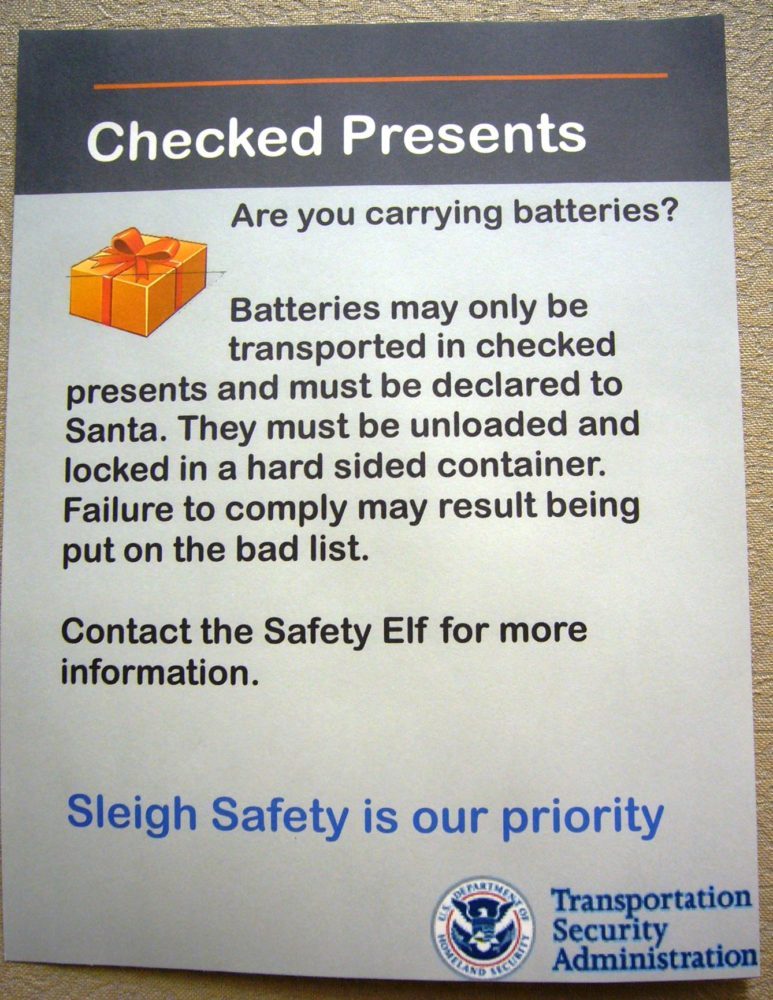
One of the perks of being welcomed into the elf brigade for the night was a visit to Santa’s flight center, where I was able to snap photos of these very important internal memos.

North Pole TSA - Present Loading Instructions

NORTH POLE TSA

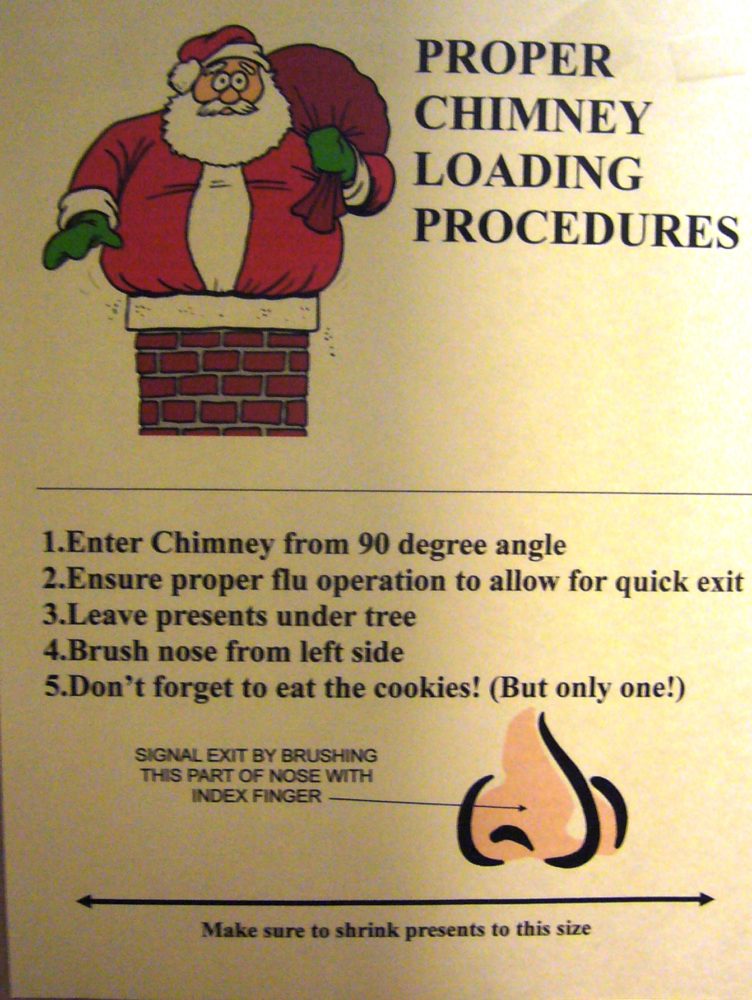
And, my favorite:

North Pole - TSA - Santa chimney tips