aviation

787 Dreamliner delivery

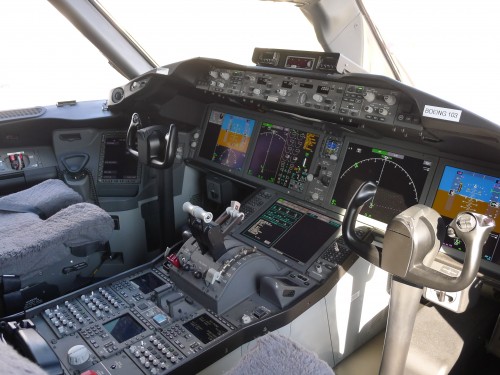
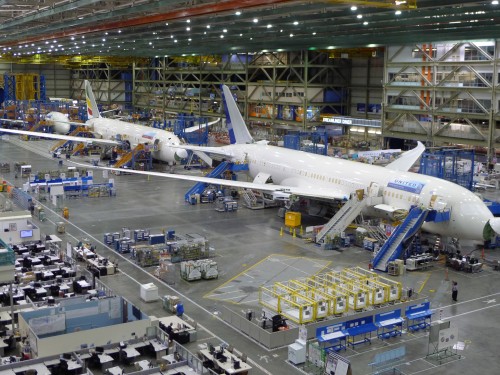
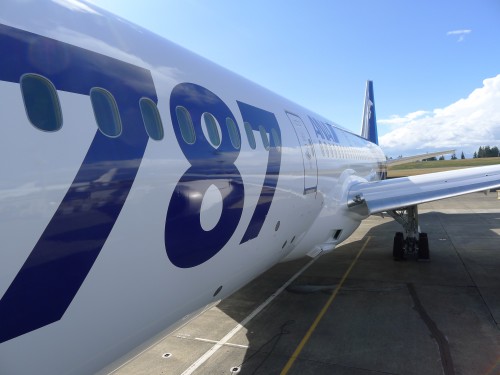
Here are some fun photos from a day spent at Boeing’s Everett campus, learning about and touring the 787 Dreamliner and wandering around the 787 factory floor in preparation for Monday’s long-awaited delivery celebration for the first Dreamliner delivery to ANA.

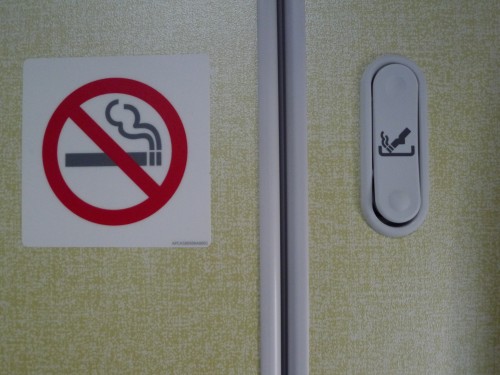
A bit mystifying... No smoking, yet the FAA requires an ashtray.

787 Dreamliner cockpit

More 787s in the pipeline at Boeing factory in Everett

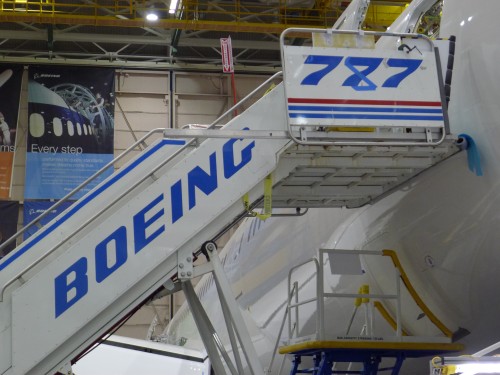
Saving money? Note masking tape fix to turn 777 to 787.

Souvenir Sunday: Alaska Aviation Museum

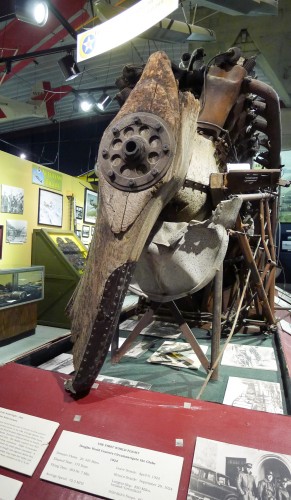
The Alaska Aviation Museum in Anchorage, just down the road from the Ted Stevens Anchorage International Airport, may look small from the outside, but don’t let that fool you.

The museum is jam-packed with restored vintage aircraft, flight simulators, two theaters featuring Alaska aviation films and three hangers filled with bush pilot, military aviation and commercial aviation memorabilia, including items related to Alaska Airlines and other airlines integral to a state with limited ground transportation options.

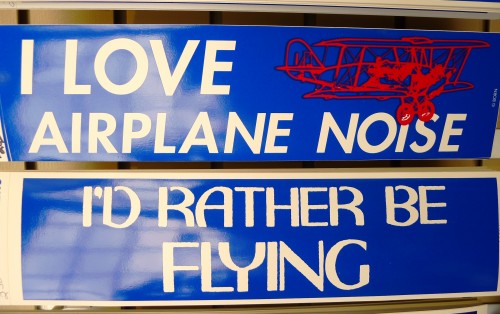
The museum also has an active restoration hanger and a well-stocked aviation-themed gift shop where I found a few Souvenir Sunday treasures, including these stickers –

And this great 3-D float plane puzzle:

Building a better bomb-proof bag

As someone who flies a lot, I try not to fret too much about whether or not there could be a bomb on my plane. But the reality is, there’s currently no way for authorities to make sure that the luggage and cargo put on a plane is 100% bomb-free.

So in putting together this story for msnbc.com’s Overhead Bin, I was glad to learn about efforts underway to build a better bomb-proof bag.

Bomb-proof bag for airplanes being tested

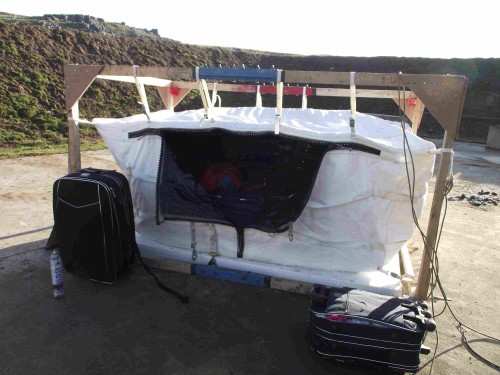
Testing the bomb-proof bag. Photo courtesy of the University of Sheffield

A team of international engineers has been busy blowing up baggage in an effort to perfect a flexible, bomb-proof cargo container for airplanes.

The goal is to replace the large, expensive cases currently used by some airlines and prevent or minimize the damage that might result from an explosion in an aircraft cargo hold.

“Israel puts one [hard container] on each El Al flight where high risk luggage is stored,” said Jeff Price, an associate professor and aviation security expert at the Metropolitan State College of Denver. “But the argument against their use is weight. If you increase the weight of the plane, you must decrease it somewhere else. In the eyes of the airlines, then passengers, cargo or mail – i.e. ‘revenue,’ – must be reduced.”

That’s why the lighter “Fly-Bag,” being tested at The University of Sheffield in England, is drawing attention.

“Airlines have been reticent to fly with hardened containers due to their high capital and ongoing cost. We should be able to offer something cheaper,” said Jim Warren of the university’s department of civil and structural engineering.

The Fly-Bag is made of “multiple layers of lightweight materials, composites and membranes,” including fabric impregnated with shear thickening fluids that increase their viscosity in response to impact, Warren said. Suitcases and cargo are placed inside the larger bag before being loaded onto an airplane. If a bomb detonates inside one piece of luggage, the Fly-Bag is designed to absorb the force of the explosion.

“To test it, we built a full scale prototype, filled it with suitcases containing clothes, towels and other items we bought at a left luggage auction in the UK. We put a surrogate IED [improvised explosive device] in one bag and blew it up,” said Warren, who expects the Fly-Bag to be on market within one to two years.

“I think this type of product has good potential application for select threats,” said Solomon Wong, executive vice president of InterVISTAS, a travel and transportation consulting firm. He notes that other products involving venting and foam or curtain-wall systems to absorb the shock of explosive devices are also being looked at, but these can’t be immediately deployed “due to some unresolved safety issues.”

And while the Fly-Bag may turn out to be a better bomb-proof cargo container, it still does not address explosives terrorists may bring onboard in carry-on luggage or, as officials warned last week, implanted on passengers flying into the U.S. from abroad.

To address that security threat, the Transportation Security Administration said “passengers flying from international locations to U.S. destinations may notice additional security measures in place,” that could include more pat-downs, bag screenings and questioning.

Wong doesn’t foresee a day when passengers will be placed in bomb-proof Fly-Bags, but he does think we’ll see bomb-resistant airplanes, so that “a blast in the cabin of an aircraft or hold does not result in catastrophic failure of the fuselage.”

Aviation-themed waterpark opens in Oregon

Wings and Waves Waterpark

For Washington Journey Online, I put together a story about the country’s newest and perhaps most unusual waterpark, which opened June 6, 2011 on the grounds of the Evergreen Aviation and Space Museum in McMinnville, Oregon.

The museum is best known for being the home of the giant Howard Hughes HK-1 “Spruce Goose,” which made a short, single flight back in November, 1947, as well as a wide variety of spacecraft, helicopters and military, commercial and personal aircraft. An extensive firearms collection, historical artifacts, an IMAX 3D theater and many educational exhibits are also on-site.

So while it may seem strange that an aviation museum would build its own water park, it makes perfect sense that an aviation-themed water park is what got built.

Wings and Waves Waterpark

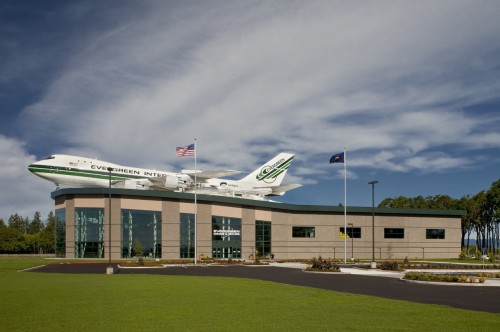
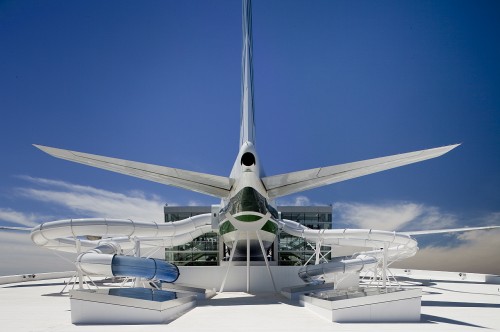
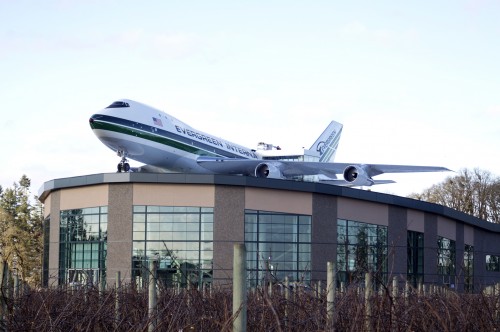
And the aviation-theme is impossible to miss: the new Wings and Waves Waterpark has as its centerpiece a Boeing 747-100 airplane mounted on the roof of a 60-foot tall building.
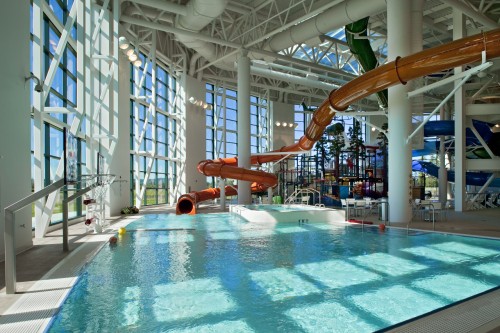
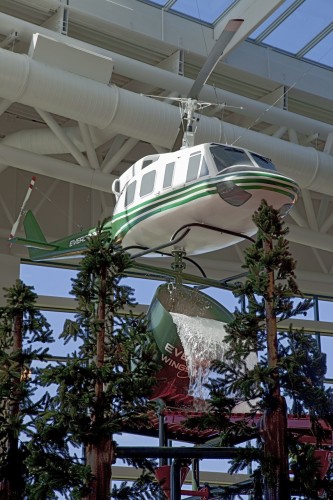
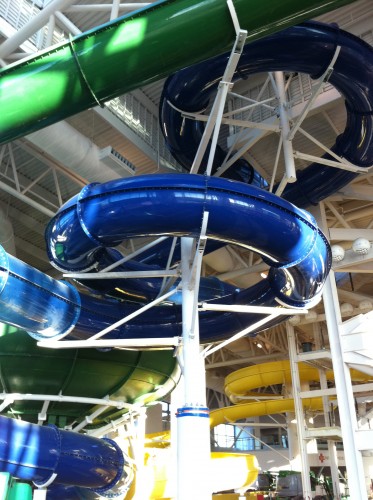
Inside the building, there are colorful, scream-inducing slides, a giant wave pool, a water vortex and a multi-level play structure with slides, water guns, spouts and buckets and a helicopter that hovers overhead and occasionally dumps 300 gallons of water on those below. The park even has its own museum: the H2O Museum has more than two dozen interactive exhibits and explains concepts such as Bernoulli’s Principle, the water cycle and jet propulsion.

Wings and Waves water park

Splashdown Harbor, the 91,000 wave pool, sits in the center of the waterpark and offers swimmers eight different wave motions as well as depth charges and bubblers. A 20-foot wide high-resolution video screen by the pool is slated to show everything from NASA splashdown videos to feature films during the park’s planned “Dive-in” movies events.

And, then, of course, there are the rides. The park has 10 water slides, with four main slides coming directly out of the belly of the rooftop airplane. The yellow Sonic Boom slide, with its open top, is designed for novice riders. The green Nose Dive is just that: a two-person inner-tube ride that starts with a big drop and winds its way to the pool. The fully-enclosed blue Tail Spin speeds riders through a series of tight, figure-eight, high banking curves. And then there’s the Mach 1: described as a “test your mettle ride,” this high-speed, enclosed-body slide requires riders to descend 60 vertical feet on their backs, with their arms and legs crossed.

Sound like fun? Here are the details:

The Evergreen Wings and Waves Waterpark sits just west of the Evergreen Aviation & Space Museum, which is 3.5 miles southeast of McMinnville, Oregon, on Highway 18. It’s about an hour from Portland and 40 minutes from Salem.

Aviation-themed waterpark lands in Oregon

Aviation themed water park

The country’s newest water park opened Monday, June 6, 2011 in an unlikely spot: the Evergreen Aviation & Space Museum in McMinnville, Oregon.

The museum is well-known for being the current home of Howard Hughes’ Spruce Goose, the largest airplane ever built, but it’s claim to fame may change a bit now that the Wings & Waves Waterpark is sending squealing visitors down four giant slides that start inside a Boeing 747 mounted on the roof of a 60-foot-tall building.

“To get kids’ attention these days you need to more interactive. It’s all ‘Been there; done that; got the T-shirt.’ So we built an aviation and water museum with slides it in,” explained Evergreen Aviation museum’s executive director Larry Wood.

Exhibits and artifacts explain concepts such as Bernoulli’s principle, the water cycle and jet propulsion. Rides include the Nose Dive inner tube ride, the Mach One slide that descends 60 vertical feet and a ride that Dave Garske of Hoffman Construction, the park’s builder, calls “a man-screamer. It’s fast and you’re screaming and you’re readjusting your suit when you get to the bottom.”

For more fresh waterpark attractions to seek out this summer, see my story Get wet and wild at these new waterparks on msnbc.com.

The history of flight – in pictures

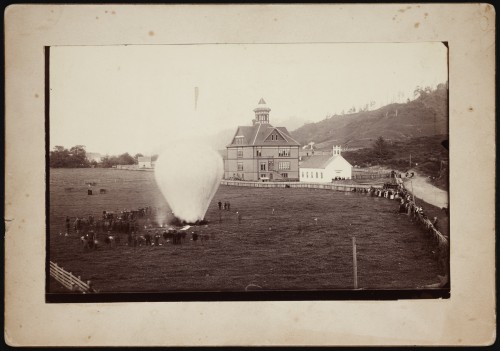
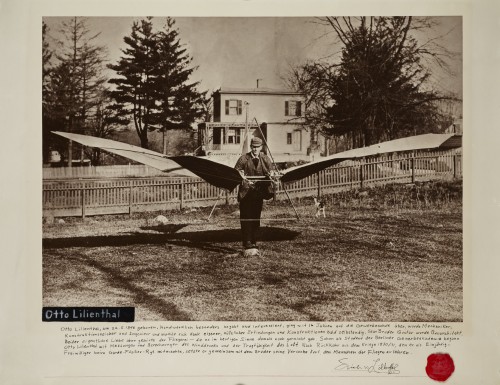
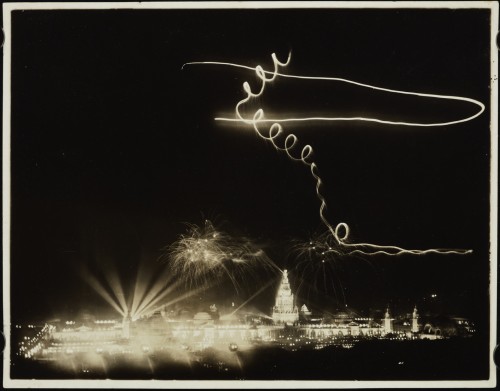
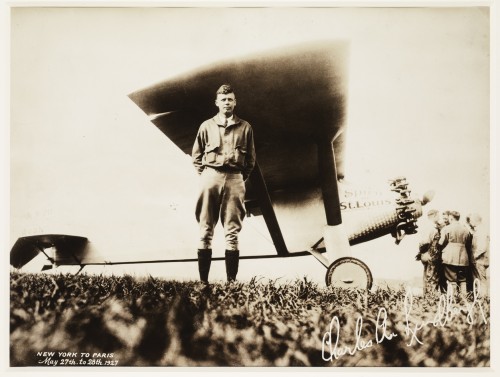
If you’re in Los Angeles anytime soon, make your way over to the Autry National Center to see Skydreamers, a truly wonderful exhibition of photographs from the collection of Stephen White that documents the history of flight. I put together a History of Flight slide show with some of the images from the show for msnbc.com; here’s a short preview.

Skydreamers_Balloon Ascension

As in this 1871 photo of a balloon ascending over Ferndale, CA, some of the earliest attempts to conquer space were in free floating hot-air balloons. Next came heavier than air machines and, ultimately, rocket ships that can elude gravity and soar into space. Lucky for us photographers and artists were often on hand to document and imagine these journeys.


Otto Lilienthal

In his now classic aviation book, Birdflight as the basis for aviation, published in 1889, Otto Lilienthal outlined his theories on flying based on his study of bird wing structure and the aerodynamics of bird flight. He built and famously experimented with a series of 18 bird-inspired gliders and served as an inspiration for Wright Brothers, who studied his gliding techniques.

Stunt pilot Art Smith became well known for aerobatic flying and for using flares to do skywriting at night, a talent he exhibited on the closing night of San Francisco’s Pan Pacific International Exposition in 1915. Smith later went on to work for the US post office as one the first air mail pilots.

Famed aviator Charles Lindbergh stands in front of his airplane, the Spirit of St. Louis, shortly after completing the first solo, non-stop flight across the Atlantic Ocean in May, 1927. The plane is now in Washington, D.C. at the Smithsonian Institution’s National Air and Space Museum.

In 1934, the Griffith Park Observatory was getting ready to open in Los Angeles. This photograph shows the artist, Roger Haywood, sculpting a section of an exact replica of the moon, reduced to 38 feet.

I’ll post more photos from the Skydreamers exhibition tomorrow, but if you want to start planning a trip to Los Angeles to see the full show, you have until September 4, 2011 to see it at the Autry National Center.

FAA: no more emergency oxygen in airplane bathrooms

Now this is scary:

By order of the FAA, U.S. airlines have removed the emergency oxygen generators on all U.S. airplanes.  Here’s the story I worked on today today for msnbc.com:  FAA: No more oxygen in airplane lavatories.

Citing security concerns, the federal government in secrecy last month ordered every airline in the United States to remove emergency oxygen in every lavatory on all 6,000 domestic commercial aircraft.

Under Air Worthiness Directive 2011-04-09, made public this week, the Federal Aviation Administration directed all airlines to disable the lavatory oxygen generators to “eliminate a potential safety and security vulnerability.”

That means that if there’s a sudden loss of cabin pressure, now only those passengers at their seats will have oxygen flowing to the masks that drop down from the ceiling.

“I’m in shock,” said Kate Hanni, executive director of Flyersrights.org, a nonprofit airline passengers’ rights organization. “We get reports of mid-air decompression events all the time. So now going to the bathroom on a commercial flight can kill you? I’m panicking just thinking about this.”

Although rapid decompression is rare, it does happen. In October, for example, oxygen masks were deployed on an American Airlines flight enroute from Miami to Boston after the cabin lost pressure when a two-foot hole tore open in the plane’s fuselage . The crew declared an emergency, and the plane safely returned to Miami. Passengers were panicked, but no one was injured.

But under the FAA’s new directive, any passengers who happen to be in the airplane restroom should such an event occur would no longer have immediate access to oxygen.

According to the FAA, the airlines completed disabling the oxygen generators in the lavatories of all 6,000 U.S. aircraft on March 4. The FAA said in a statement released Thursday that it delayed informing the public about this action because it was concerned about keeping travelers “as safe and secure as possible.”

The agency told NBC News that the action was done proactively in response not to a specific threat but to general concerns that a terrorist could use the lavatory oxygen to start a fire or ignite a bomb.

“Had the FAA publicized the existence of this security vulnerability prior to airlines fixing it, thousands of planes across the U.S. and the safety of passengers could have been at risk,” the FAA stated.

The agency noted that it is working with aircraft manufacturers “to design, certify, and install a new lavatory oxygen system” on all aircraft, adding that “if there is a sudden loss of cabin pressure, pilots are already trained to guide the aircraft to a safe, breathable altitude as quickly as possible. Flight attendants are also already trained to assist passengers to quickly access oxygen — including those in the lavatories.”

Sara Keagle, a flight attendant who blogs at TheFlyingPinto.com, said flight attendants had not yet received training on the new directive but added that they already have access to portable oxygen bottles that could be used to assist any passengers in a lavatory.

“If a decompression should occur, flight attendants are trained to get on oxygen immediately,” she said. “Once it is safe, we would don a portable oxygen bottle and check the cabin, including the lavs, to make sure everyone was OK.”

But Arthur Alan Wolk, an aviation safety expert and licensed jet pilot, said: “Part of the idea of the oxygen mask dropping from the ceiling during loss of cabin pressure is to keep the occupants of the main cabin alive until an airplane gets down to a breathable altitude. By eliminating the source of oxygen for the unlucky souls in the bathroom, you’ve just killed those people.”

Airlines were expected to begin informing passengers about the lack of lavatory oxygen generators on seatback briefing cards, during the verbal passenger safety briefing presentation and on signs posted in airplane bathrooms.
Souvenir Sunday at Kona International Airport

It’s Souvenir Sunday, the day StuckatTheAirport.com celebrates the fun, inexpensive items you can find  in airport shops.

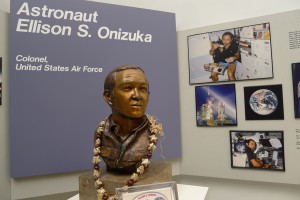
This week our souvenirs come from the souvenir shop at the Astronaut Ellison S. Onizuka Space Center, which is located right next to the charming, open-air terminals at Kona International Airport.

Ellison Onizuka

The center is part museum/part education center and is dedicated to the memory of Ellison Onizuka, who was Hawaii’s first astronaut and one of the crewmembers who perished aboard the Challenger Mission on January 28, 1986.

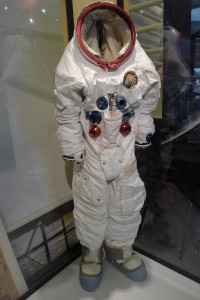
Space Suit at Onizuka Space Center Kona Airport

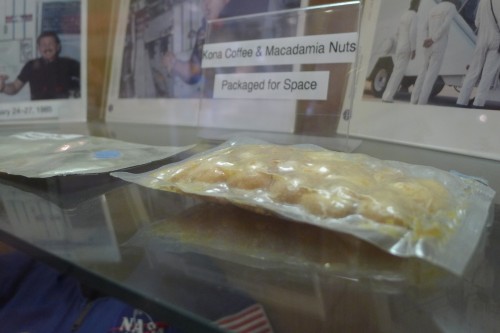
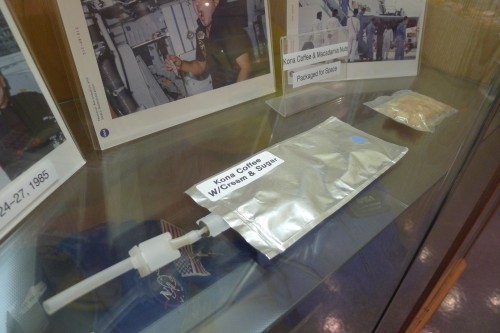
The Onizuka Space Center is jam-packed with hands-on activities that explain space and space concepts as well as a wide variety of displays that include a piece of a moon rock, an Apollo 13 space suit and memorabilia that includes the freeze-dried macadamia nuts and Kona coffee NASA developed for Ellison Onizuka so that the Hawaiian astronaut would feel at home in space.

Onizuka freeze-dried macadamia nuts for space

Onizuka's freeze-dried Kona Coffee for space

The museum is just a 30-second walk from the main part of Kona International Airport and is a much better way for you and your kids to spend your time than sitting out in the sun in airport’s post-security area.

Even if you don’t want to explore the space center’s exhibits, consider stopping in to check out the gift shop. It’s has a carefully selected assortment of space-related books, games and space-related souvenirs.

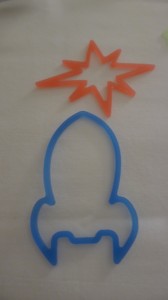
That’s where I picked up these cool, inexpensive and easy-to-carry fashion accessories: glow-in-the dark, Space Shaped Rubber Bands.

Silly banz space shaped

souvenir sunday pick

If you find a great souvenir while you’re stuck at the airport, please snap a photo and send it along.

The favorite souvenirs here at StuckatTheAirport.com are inexpensive (around $10), “of” the city or region and ideally, a bit offbeat. And if your souvenir is featured on Souvenir Sunday, you’ll receive a special airport or airline-related souvenir.

Free cupcakes at Newark Airport; free coffee at LAX, with planespotting

The early bird gets the… cupcake.

CRUMBS free cupcakes

If you’re catching an early flight Friday morning (January 28th) out of Newark Liberty International Airport, be sure to get yourself a free cupcake.

A branch of CRUMBS Bake Shop has opened in Terminal C (by the C2 checkpoint) and, to celebrate, they’re going to give the first 1,000 people who stop by a free cupcake. The sugary celebration starts at 6 a.m.

CRUMBS EWR free cupcakes

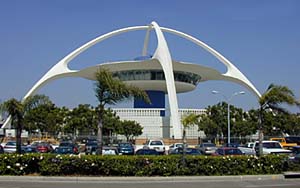
You might bring that cupcake with you to the LAX Theme Building Observation Deck on Sunday morning, January 30th, where Los Angles International Airport officials will be hosting a Sunday Morning Coffee from 8:30 until 11 a.m.

The Observation Deck is usually open to the public Saturdays and Sundays from 8 a.m. to 5 p.m and this Sunday planespotters and aviation buffs will be out in force to see some unusual airplanes that will be stopping by.

Air New Zealand’s new Airbus A320 with All Black Livery will be making at stop at LAX on its way to New Zealand from France. The All Blacks are a rugby team sponsored by Air New Zealand and this fall the 2011 Rugby World Cup games will be held in New Zealand.

Air New Zealand’s new Boeing B777-300 is also scheduled to operate at LAX on Sunday and Qantas Airways’ daily Airbus A380 super jumbo jet service between LAX and Sydney resumes this Sunday as well.

Here’s the Sunday morning schedule sent out by LAX:

  • Air New Zealand All Blacks A320:  ETA 9:25 a.m.; ETD 11 a.m.
  • Qantas A380:  ETA 9:45 a.m. (evening departure)
  • Air New Zealand B777-300:  ETA 10 a.m. (evening departure)

The Observation Deck has a 360-degree view of LAX’s terminals and airfield, and there are complimentary telescopes installed up there for better viewing. On Sunday morning there will also be a portable scanner available so visitors can listen to the radio transmissions between the pilots and the air traffic controllers.

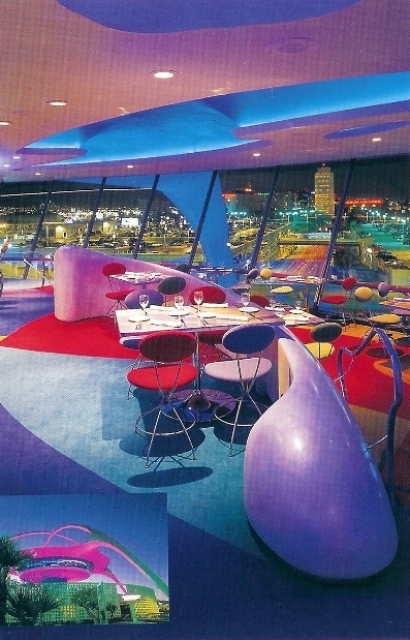
And after the Sunday Morning Coffee event the party can go on: the space-age, retro-themed Encounter Restaurant, right under the Observation Deck will be offering a Plane Spotters Lunch Special.

What I’m watching, reading..instead of working

Don’t tell me this hasn’t happened to you.

You have stuff to do.  Deadlines.  Work someone will pay you for if you just, you know, do it.

So you pour a cup of coffee and sit down at the computer.

But then, dang, the Internet happens.

Here’s a bit of what got me distracted today.

Air New Zealand posted time-lapse video footage of its first new domestic A320 being built and painted with all black livery.

The paint job has something to do with the All Blacks rugby team, so of course I had to visit that site and then the Small Blacks site as well.

As long as I was visiting the Air New Zealand site, I had to check in on what that wild and crazy furry creature, Rico, was up to. I found this reel of bloopers.

A quick check of email and Twitter sent me off in new directions.

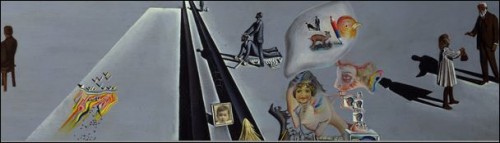
Florida’s Dali Museum was opening in its snazzy new building in St. Petersburg, FL. And as someone who first came upon that museum collection, by accident, when it shared space with a factory in Cleveland, Ohio, I of course had to visit.

While there, I came across this clip of Salvador Dali as a guest on the old TV show, What’s My Line?

Then, of course, it was time to check email and Twitter and catch up on my RSS feed.

A blog post by the folks at the  Smithsonian Air and Space Museum – 5 Cool Things at the Udvar-Hazy Center You May Have Missed – caught my eye because the Udvar-Hazy Center is just down the road Dulles International Airport.

And then I really got tangled up in the web. A comment on the museum blog post mentioned Anita, “the spider from Skylab.”  I didn’t know about Anita so had to follow that thread.

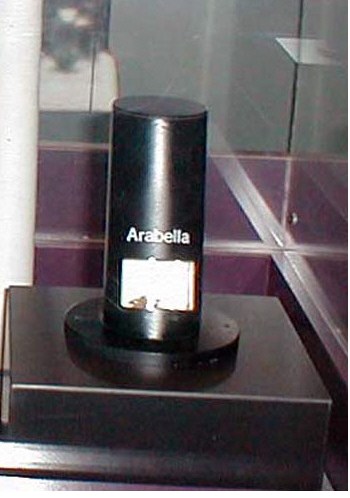
It turns out that Anita and a companion spider, Arabella, were part of an experiment flown on Skylab, a space station launched in May 1973.

According the Smithsonian website:

Scientists and students interested in the growth, development, behavior, and adaptation of organisms in weightlessness provided a variety of biology experiments for flight in the orbital research laboratory. A common Cross spider, “Anita” participated in a web formation experiment suggested by a high school student. The experiment was carried out on the Skylab 3 mission, which lasted 59 days from July 28-September 25, 1973. Astronauts Alan Bean, Jack Lousma, and Owen Garriott carried out the scientific research in space, reported the results, and returned this specimen at the end of their mission. NASA then sent Anita, a companion spider “Arabella,” and the experiment equipment to the Museum.

Anita is on display at the Udvar-Hazy Center.

Anita Skylab Space Station spider

Arabella is in storage.