More airports getting robots to help deliver meals
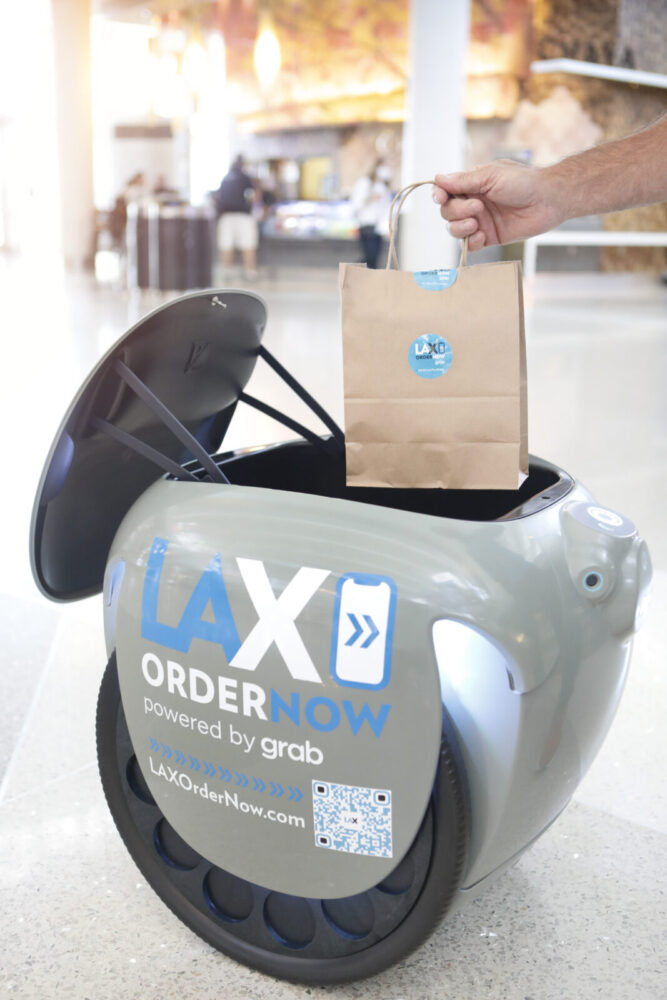
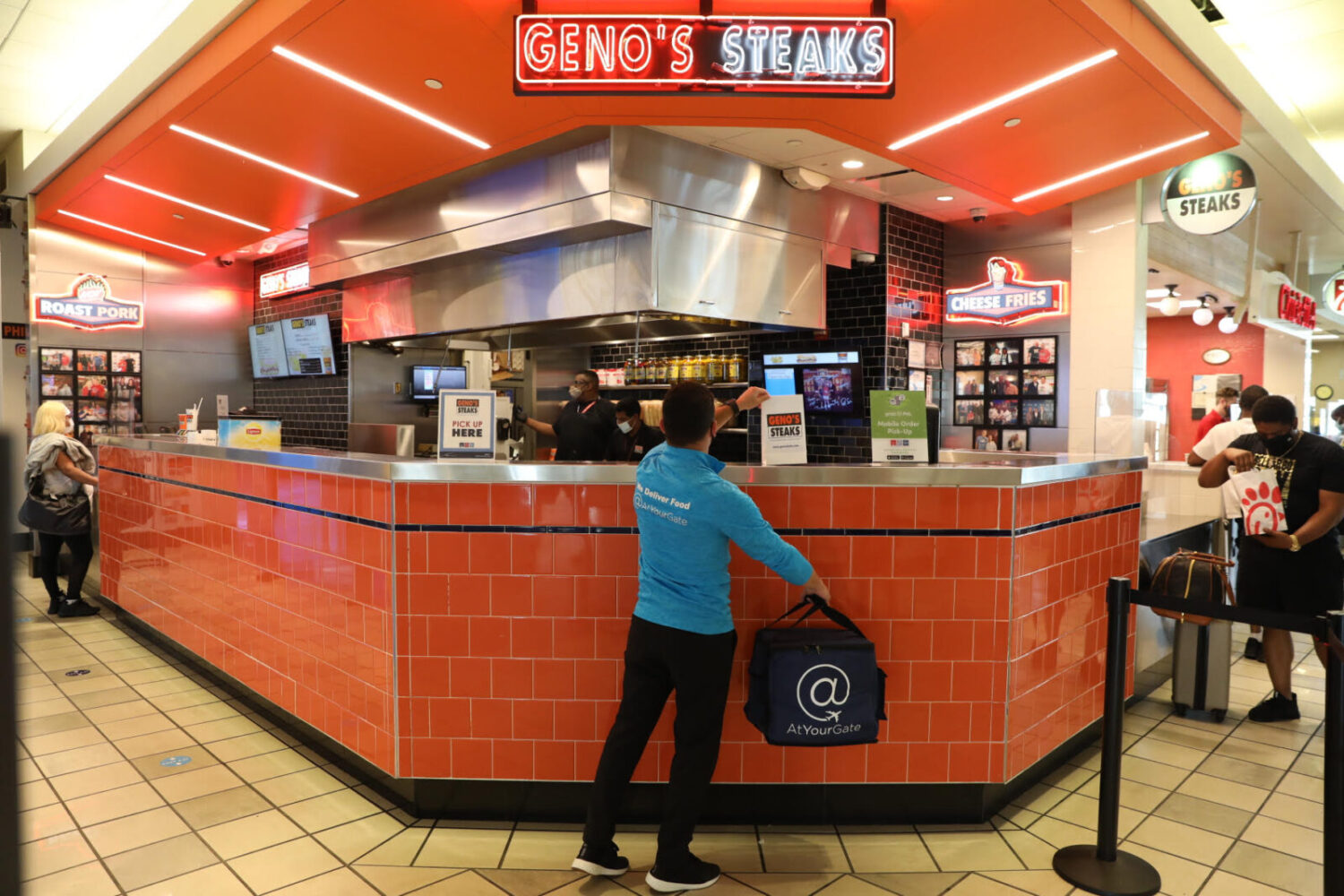
Los Angeles International Airport (LAX) now has a two-wheeled, semiautonomous robot named NomNom helping to deliver food and beverage ordered online as part of the www.LAXOrderNow.com program.
NomNom is a cargo robot that can carry up to 40 pounds of food at a time. It follows behind delivery staff from AtYourGate, which delivers food ordered via LAX Order Now. The robot can move at speeds up to 6 mph and uses a series of cameras and sensors to recognize and follow its handler throughout the airport.
Alaska Airlines’ New Lounge at SFO
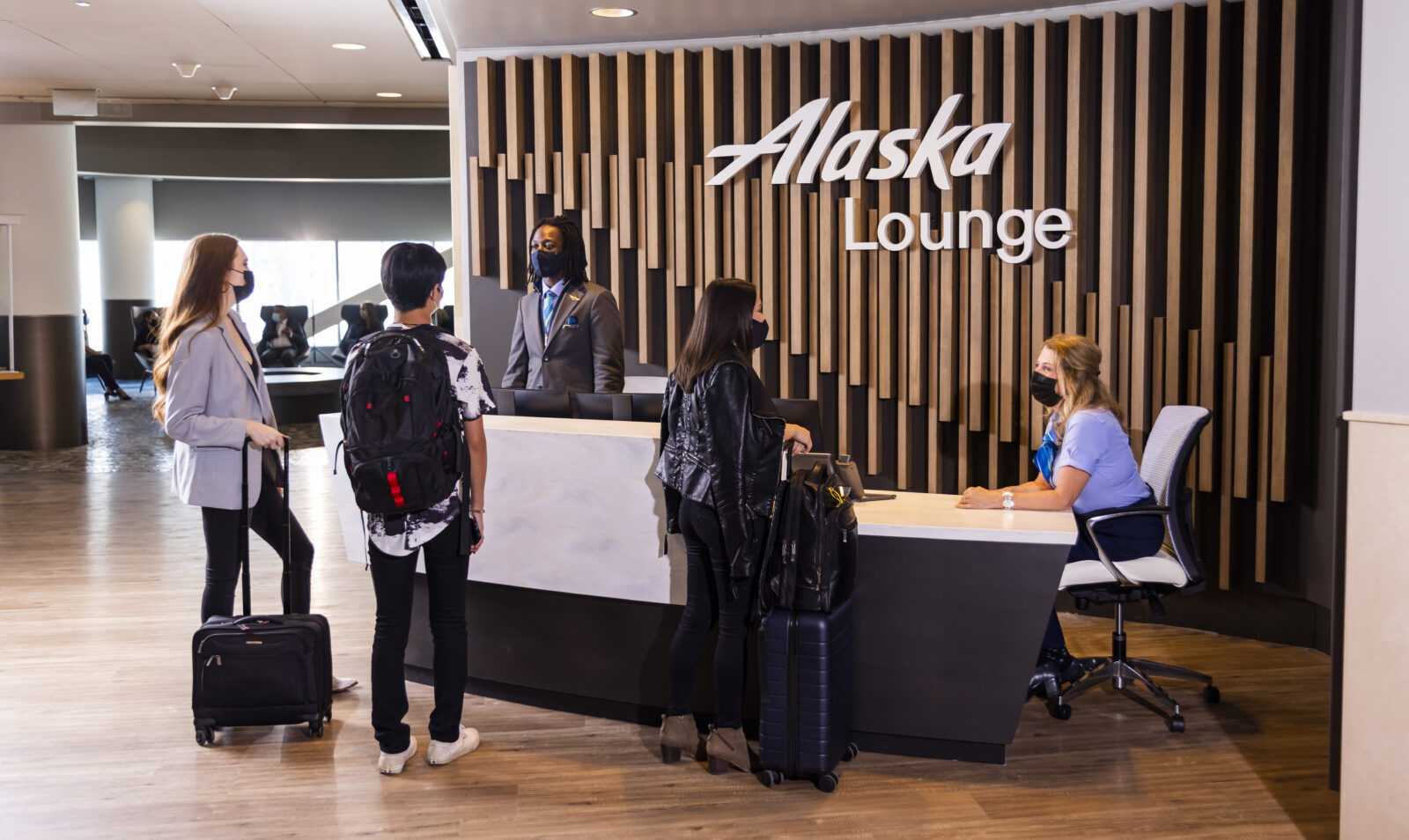
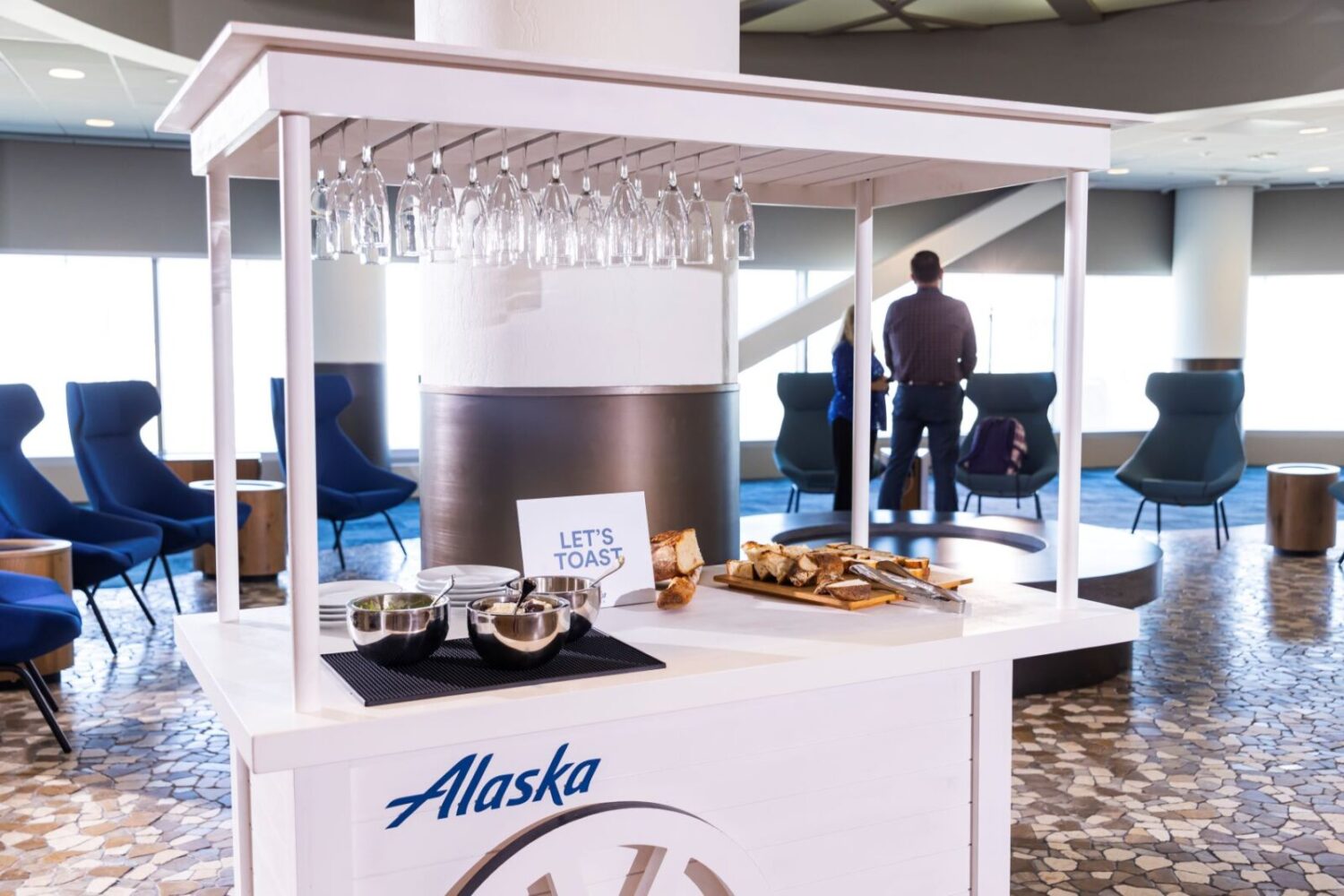
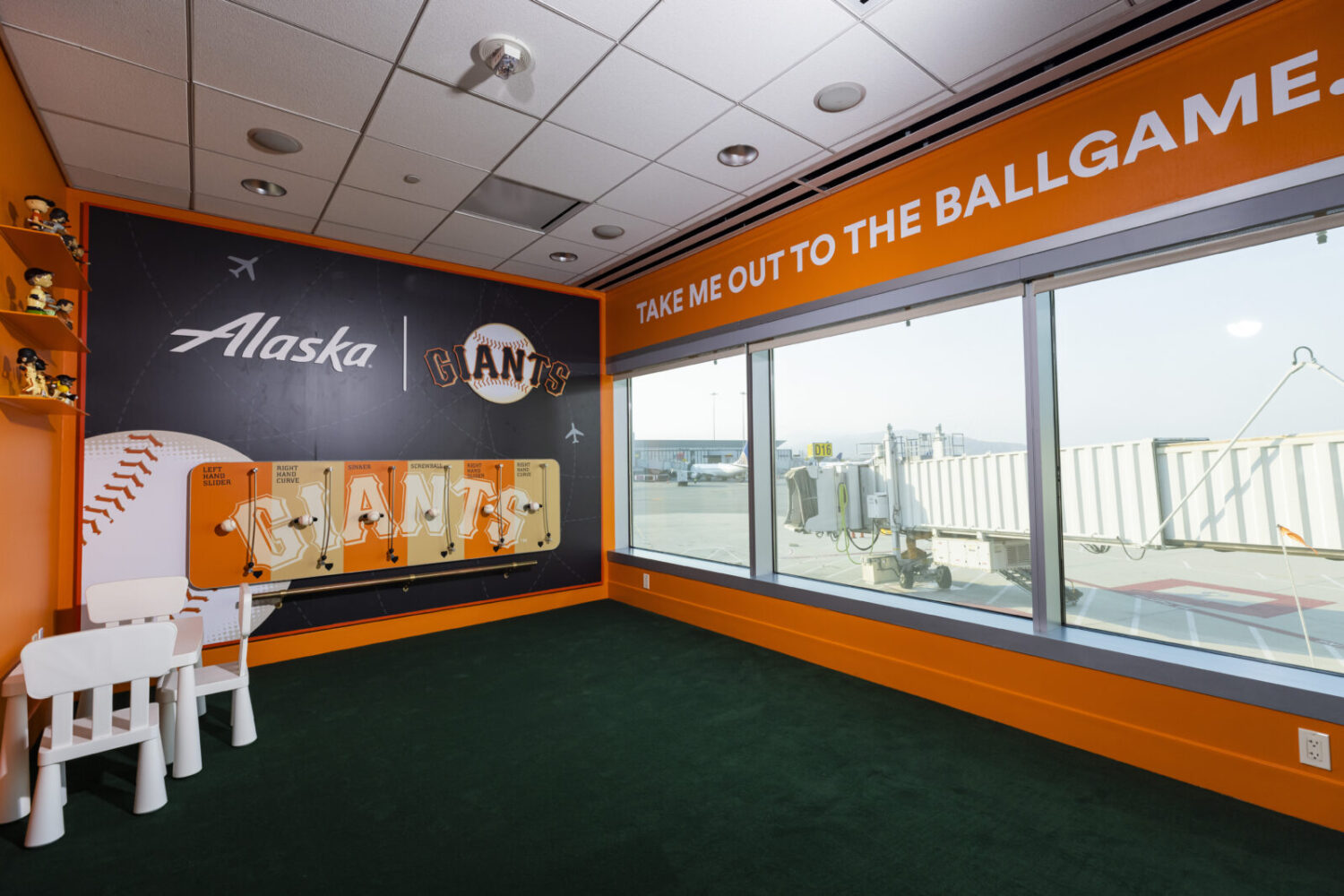
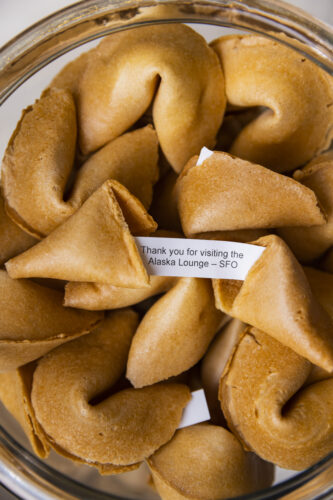
The new Alaska Airlines lounge in Terminal 2 at San Francisco International Airport (SFO) has some amenities we’re very anxious to see in person. In addition to serving Bay Area brews and wines from local vineyards, the lounge has a sourdough toast cart (!), a candy bar that includes Ghirardelli chocolate, Jelly Belly beans, and custom fortune cookies from Oakland Fortune Cookie Factory. There’s even a San Francisco Giants-themed children’s play area. The photos below are from Alaska Airlines; we’re going to have to visit in person to get our own.
But we say it is a ‘this makes perfect sense’ amenity that is one part convenience and two parts sign of the social distance times.
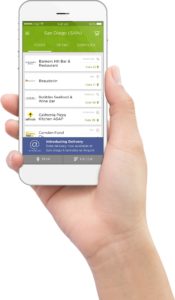
Grab, the e-commerce platform for pre-ordering meals for pick-up from airport food outlets is partnering with AtYourGate, the in-airport food delivery service.
Passengers can order food through the Grab app, a special section of the PHL website, or scan Grab QR codes in the terminals. Merchants are searchable by food type and terminal. And orders can be delivered to wherever you are in the terminal.
Convenient, right?
Participating restaurants at PHL include Auntie Anne’s, Bar Symon, Bud & Marilyn’s, California Pizza Kitchen, Chickie’s & Pete’s, Dunkin’, Gachi, Geno’s Steaks, Jack Duggan’s, Jamba, Piattino Pizza, Smashburger, and Vino Volo.
More merchants will be added soon.
There is a small charge for delivery. But first-time users can use the promo code ‘RUSH’ to save 20% – up to $5 – off their first order.
Roving robots at PIT cuter than ever
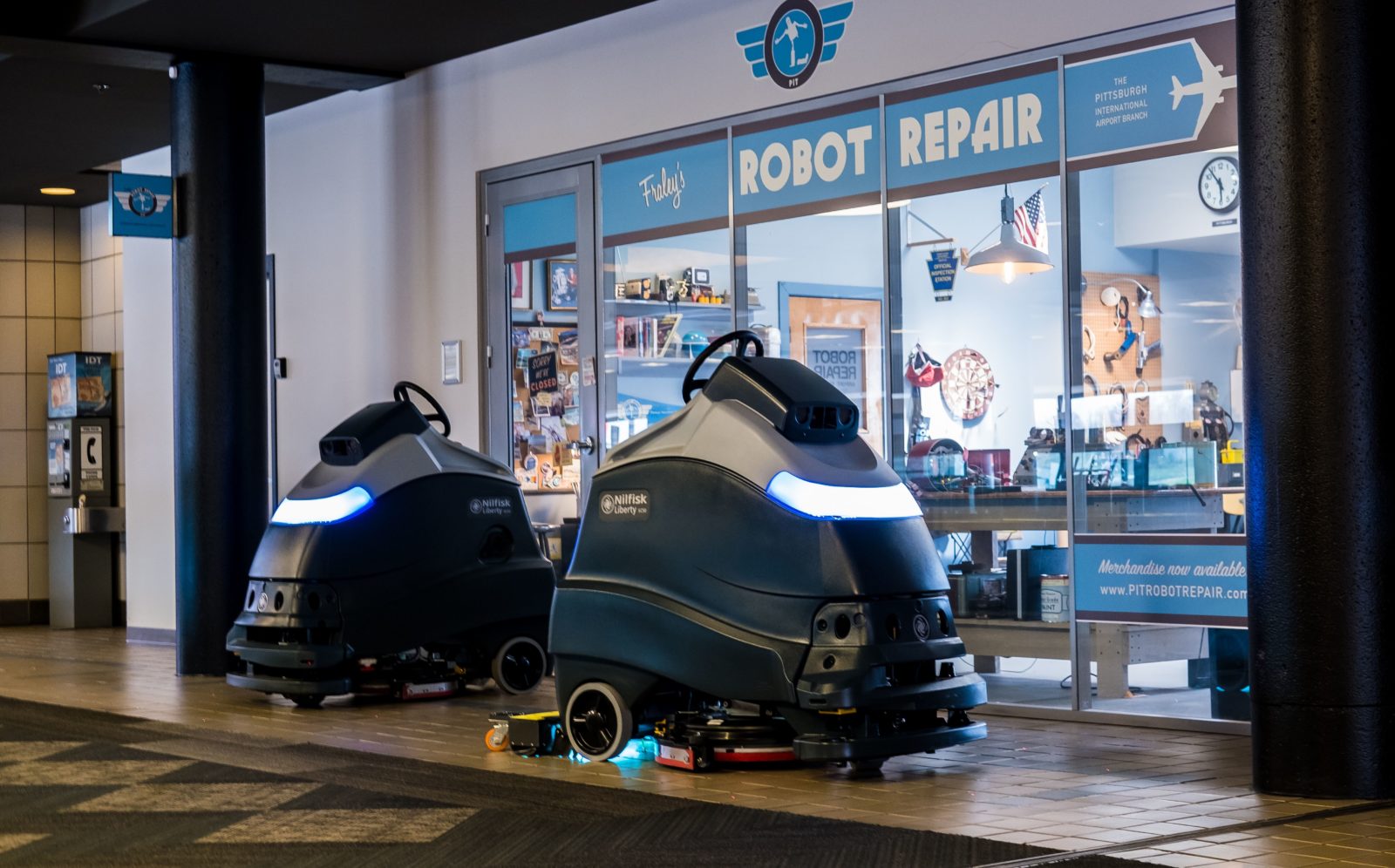
In May 2020, Pittsburgh International Airport (PIT) introduced its team of autonomous cleaning robots with ultraviolet (UV) light technology.
Since then, other U.S. airports have rolled out cleaning robots. But PIT was the first.
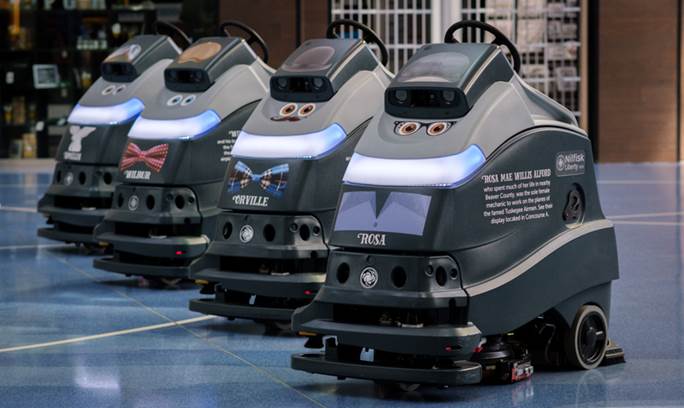
Now PIT is making the hard-working robots even more endearing by giving them eyes.
The robots also have names:
Amelia is named for Amelia Earhart, the famed pilot and female aviation trailblazer.
Orville and Wilbur are named after the Wright brothers.
And the fourth PIT robot is named Rosa. She’s named after Rosa Mae Willis Alford, the sole female mechanic to work on the planes of the famed Tuskegee Airmen.
Travel to a scary galaxy
In the spirit of the Halloween season and the scary, bizarro times, we’re printing out frameable copies of these science-inspired Galaxy of Horrors “travel” posters from NASA’s Exoplanet Travel Bureau.
The posters look like vintage horror movie advertisements, but they are really out of this world.
Gamma -Ray-Ghouls features a “dead” galaxy. Galactic Graveyard is inspired by an explosive gamma-ray burst caused by colliding stellar corpses. And the third, Dark Matter, is a voyage to the unknown via ever-elusive dark matter.
The posters are free to download and are produced by NASA’s Exoplanet Exploration Program Office, which is located at NASA’s Jet Propulsion Laboratory in Southern California.
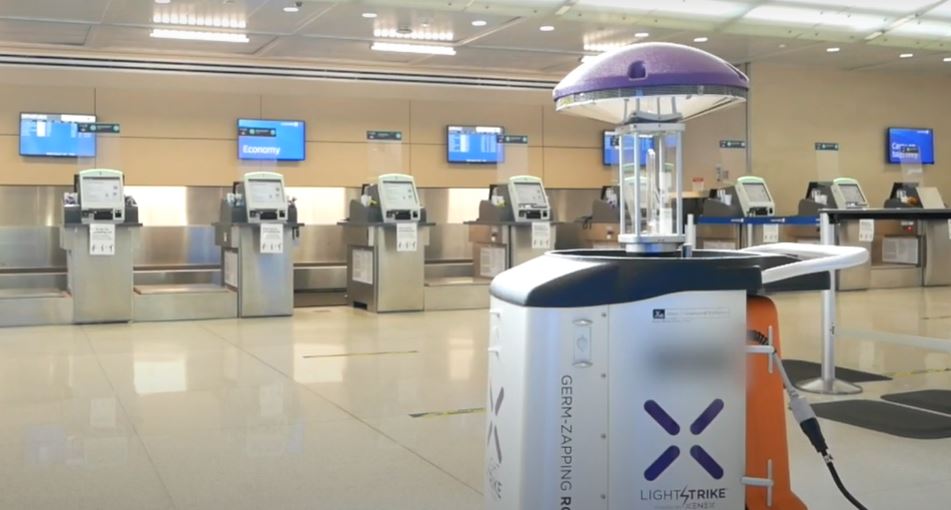
This robot is billed as “the only ultraviolet (UV) room disinfection technology proven to deactivate SARS-CoV-2 – the virus that causes COVID-19.”
SAT says the LightStrike uses environmentally-friendly pulsed xenon and can disinfect an area in less than 10-15 minutes without warm-up or cool-down time. They plan to use it pretty much everywhere in the airport, including jet bridges, gate areas, ticketing counters, baggage claim, concessions, elevators, and restrooms.
And it looks like the LightStrike robot is here to stay. SAT airport plans to have a contest to give the robot a name.
Airports Council International now estimates a drop of more than 4.6 billion passengers globally for all of 2020.
The airport trade group also estimates that total airport revenues worldwide will drop by more than $97 billion for 2020.
Still, airports are making plans for welcoming back travelers.
It's a new dawn, it's a new day, it's a new life and we’re prepared for it. Next time you’re passing by, you’ll notice some changes in our facilities and signage in order to provide a healthy and safe environment to all of our customers.
— Orlando International Airport (@MCO) May 6, 2020
Orlando International Airport (MCO) says passengers will see new social distancing signs and markers through the airport terminal. Acrylic protective screens are being installed at ticket counters and at retail food and outlets as well. Cleaning crews are also out in force. And passengers are being urged to wear face masks in the airport.
What will the airport of the (near) future look like? I’ve got a story in the current issue of AFAR that lays out that scenario. Here are some of the highlights.
Photo -by Harriet Baskas
Your face is your ticket
Get ready for single-token travel. A facial scan and an initial look at your passport is already all you need at some airports.
Smart(er) security lanes
Time-saving, stress-busting security checkpoints will soon be universal. Improved technology speeds up the bin-loading process and allows TSA officers to scan carry-ons quicker and find bags containing prohibited items in a flash
In-airport delivery
Food and merchandise comes to you, wherever you are in the airport. OTG’s tablet-centered ordering and grocery-style self-checkout lanes are expanding, as are app-powered mobile delivery services such as Airport Sherpa and At Your Gate, already on-duty at the Baltimore, San Diego and Newark airports.
Where’s my bag?
Lost luggage is a bummer. But more bags arrive as promised thanks to airports that employ tools such as radio frequency identification (RFID) tags and monitoring apps to track bags from the time they’re accepted at the airport to delivery at the bag claim.
Find your car – and an open restroom stall
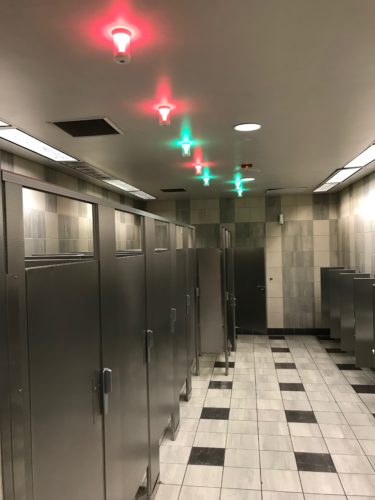
High-tech lighting systems guide travelers to open spaces in giant airport parking garages and direct home-bound passengers to lost cars. Airport restrooms are high-tech too, with occupied/unoccupied signals over the stalls and technology that alerts maintenance teams to lavs that need cleaning.
Count on cryptocurrency.
Australia’s Brisbane International led the way by letting travelers pay for purchases with cryptocurrency. Amsterdam’s Schiphol Airport followed with kiosks that exchange leftover cash for Bitcoin. Count on airports, the first and last city stop for international visitors, to embrace digital currency as its popularity rises.
Airport cities offer milk, medical facilities and more
No longer ‘just’ transportation nodes, airports are branching out with full-service grocery stores, medical facilities, movie theaters and entertainment centers. The observation deck at Incheon Airport’s new Terminal 2 offers virtual reality experiences, while Singapore’s Changi Airport 10-story Jewel complex (opening 2019) promises the world’s tallest indoor waterfall.
Go to Miami – or Mars
As space travel and space tourism moves closer to reality, some airports plan to double as spaceports, so travelers can set out across an ocean – or out of this world.
What features are you hoping pop up at the airport of the future?
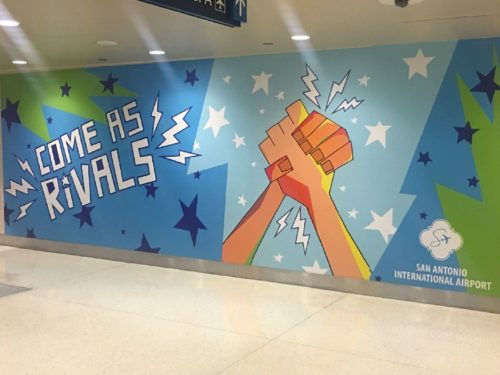
San Antonio International Airport (SAT) is geared up to welcome an estimated 93,000 visitors to the city for NCAA Final Four.
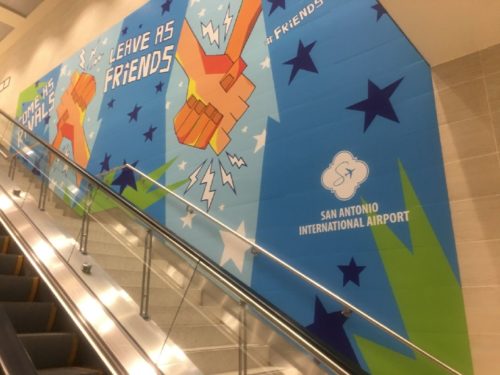
Arriving passengers will be greeted by SAT Ambassadors, NCAA Final Four volunteer greeters and art installations by local artist Cruz Ortiz,
Ortiz’s large-scale “Come as Rivals, Leave as Friends” artwork is in Terminals A and B and features flag-waving basketball fans, clasped hands and #Friends4Ever in Ortiz’s iconic style.
“This project at the San Antonio International Airport was super cool because it gave me the chance to present work on a large scale,” Ortiz said in a statement, “This special opportunity allowed me to show people getting off planes from all over the world what the soul of San Antonio is about.”
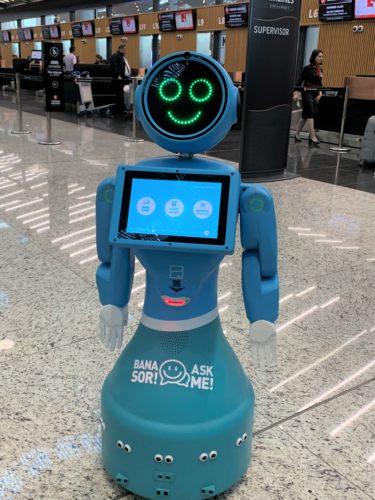
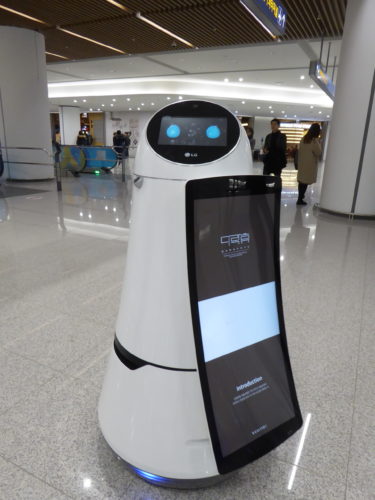
There are also robots helping travelers find food and other amenities at the airport:
The robots have arrived @SAT! I mean you could ask a person about what to eat but playing with robots is just more fun! pic.twitter.com/RJCRZkiADE
— San Antonio International Airport (@SATairport) March 30, 2018
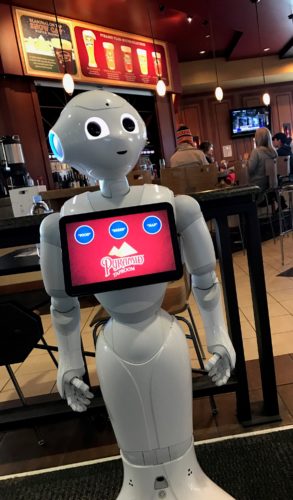
Travelers will be running into robots at more airports as HMSHost adds Pepper, the humanoid robot, to the staff of more of its restaurants.
Her job: to give menu informaton and recommendations and generally entertain – or alarm – guests.
You may have encountered Pepper at her first assignment: the Pyramid Ale Taproom in Oakland International Airport. Now Pepper clones are also working hard at Avenue des Canadiens in Montréal–Pierre Elliott Trudeau International Airport (where Pepper understands French or English), the Washington Redskins Burgundy & Gold Club in Washington Dulles International Airport and at Point the Way Café in Los Angeles International Airport.
According to HMSHost, Pepper customizes her features for each airport so her interactions with travelers vary from location to location. In some airports she not only offers restaurant help, she helps travelers with directions to things at the airport, such as gates and the nearest restrooms.
If yu run into Pepper, let us know what the expereience is like. Cool or creepy?
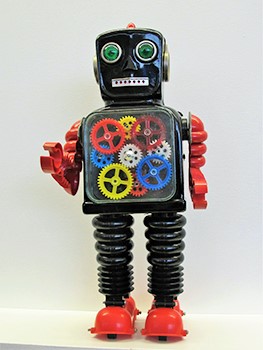
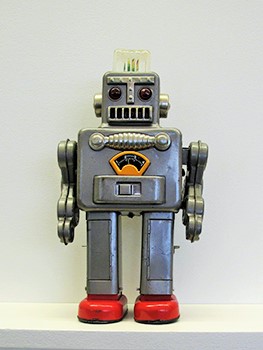
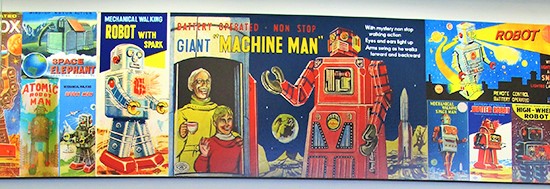
A collection of more than 100 toy robots – many with their original boxes – and robot-related catalogs belonging to an Orange County, CA resident are on display at John Wayne Airport (SNA) in the Vi Smith Concourse Gallery, on the upper level across from Gate 18 through 21 in Terminal C.
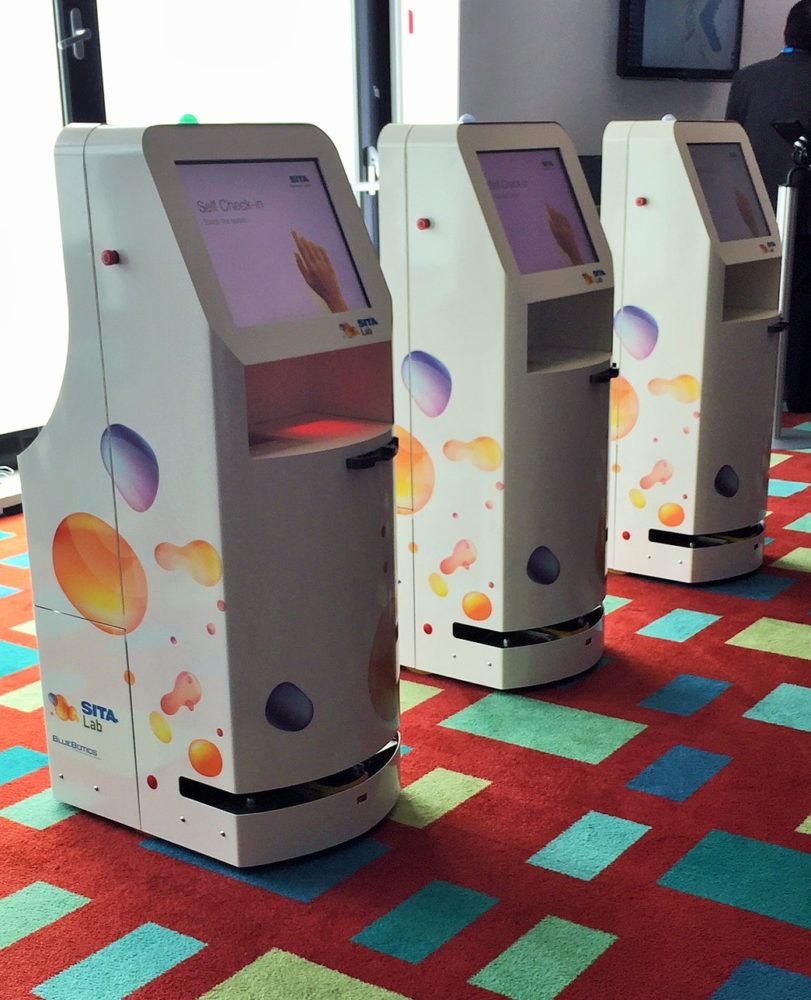
Robots of a different kind – on display this week at the the SITA IT Summit in Brussels – may soon help ease long check-in lines at your airport.
SITA Lab has created KATE, a smart check-in kiosk that knows when it may be needed and can move on its own to congested areas in airports.
The robotic kiosk uses geo-location technology to find its way through the airport and will use Wi-Fi to connect to airline and airport systems, says SITA Lab, so ‘Kate’ can move freely through the airport terminal using obstacle avoidance technology to avoid bumping into people or things.
The robotic kiosks are designed to give airports and airlines an added tool for managing peaks in passenger flow caused by delays, scheduling peaks or other situations and, while brand new, will soon be tested in airports.
We’re coming up on Halloween and the anniversary of the Orson Welles-directed radio show of War of the Worlds.
So it’s a perfect time to schedule a trip to San Francisco International Airport (SFO) just to see a wonderful exhibition filled with more than 300 classic space-related products ranging from the “fantastically silly to the truly visionary.”
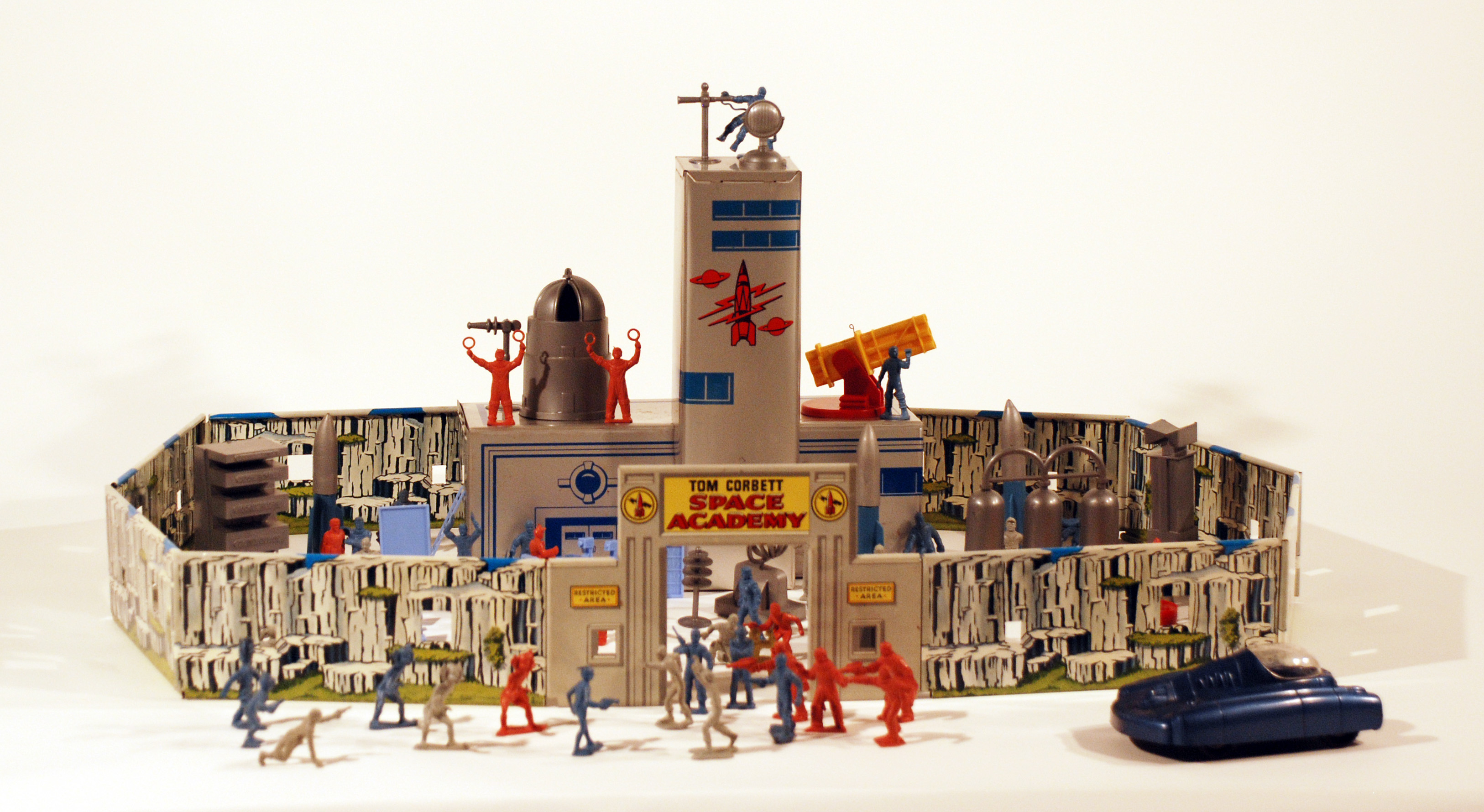
“Out of this World! The Twentieth-Century Space Invasion of American Pop Culture,” features everything from flying saucer toys, space guns, rocket ships and robots, to everyday household objects like air fresheners, sewing needles and packaged foods.
Take a look:
(Tom Corbett Space Academy Set 1952; Courtesy of Mickey McGowan, San Rafael, California)
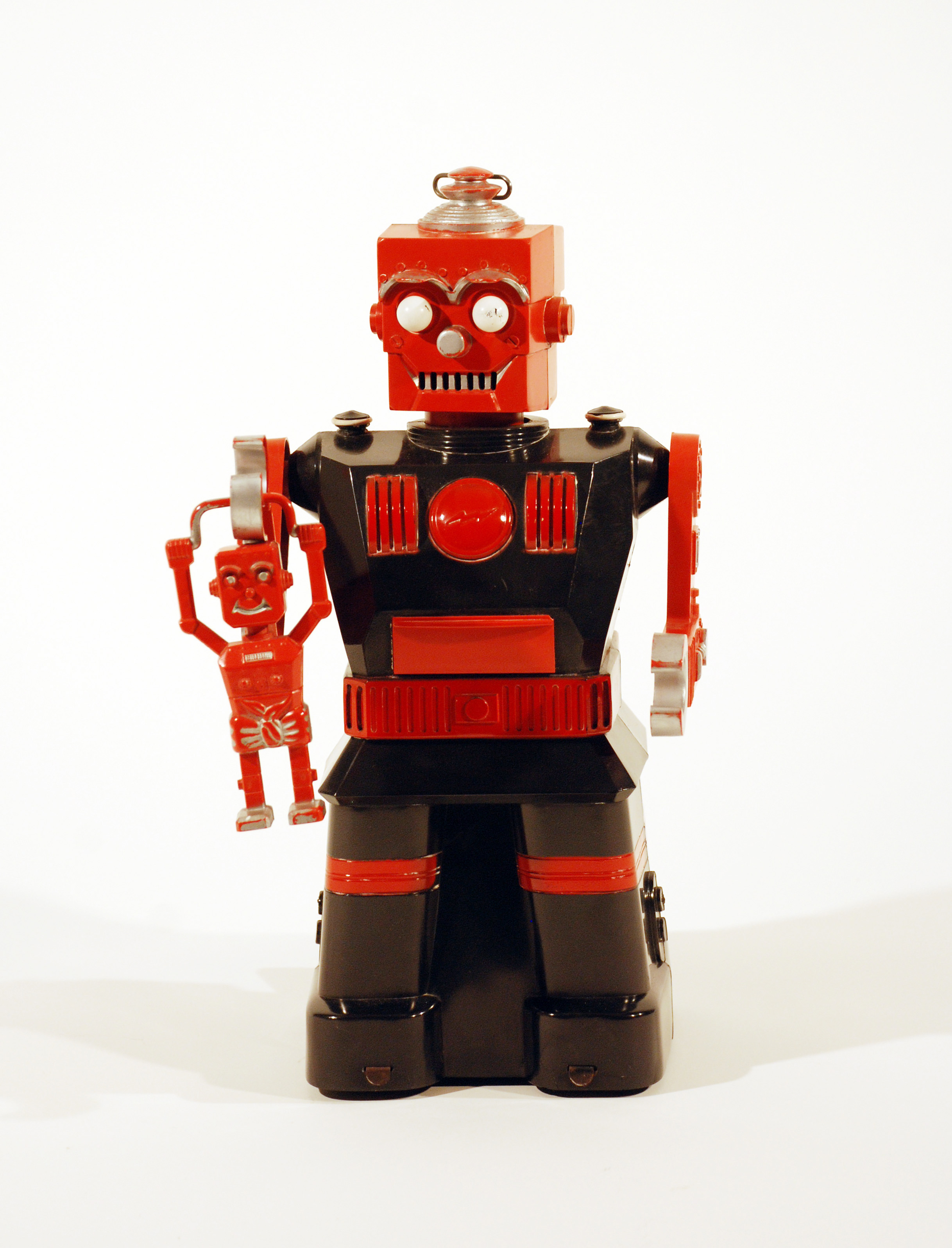
(Robot and Son c. 1956; Courtesy of Mickey McGowan, San Rafael, California)
Out of this World! also includes four sculptures by artist and collector Clayton Bailey, who began making life-sized robots back in 1975 using pieces of cookware, vacuum cleaners, bicycles, automobiles, and a variety of home appliances.
The exhibition is located post-security in Terminal 3 and will be on view through March 14, 2009.
(Rex Mars Planet Patrol Space Tank c. 1952; ection of Betty and Clayton Bailey, Port Costa, California)