KLM

Wee Delft Blue house marks KLM’s 106 birthday

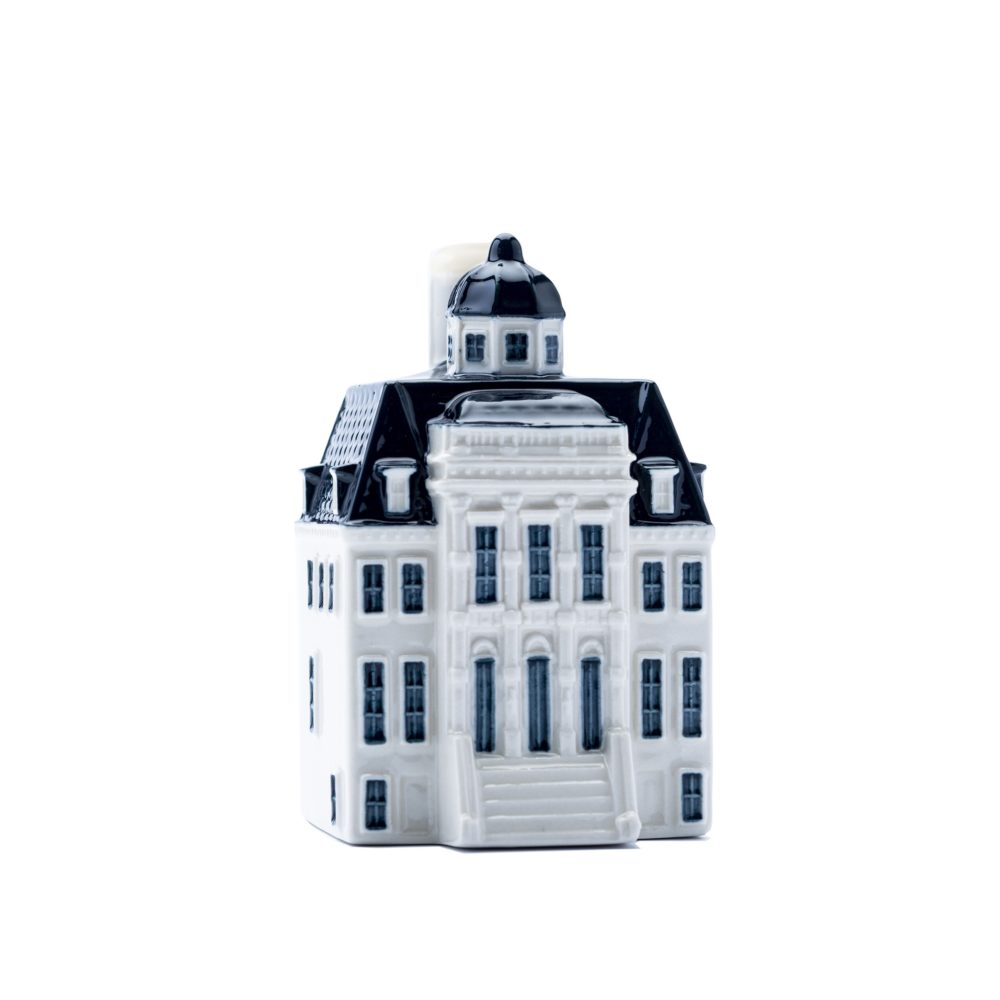
If you fly on KLM Royal Dutch Airlines as a Business Class passenger on an intercontinental flight, you’ll get to choose a tiny Delft Blue house from a cart rolled down the aisle towards the end of the flight.

Don’t pass up the offer.

KLM has been gifting these miniature gin-filled houses representing special buildings in the Netherlands and beyond to business class passengers since the 1950s. And the small buildings have become treasured and collectible souvenirs.

Many travelers are determined to collect them all. Of course, there’s an app to help with that. And some of the very early houses and limited edition issues can fetch quite a lot of money.

Since 1994, the number of houses matches KLM’s age. And each year on October 7, KLM’s birthday, a new house is added to the collection.

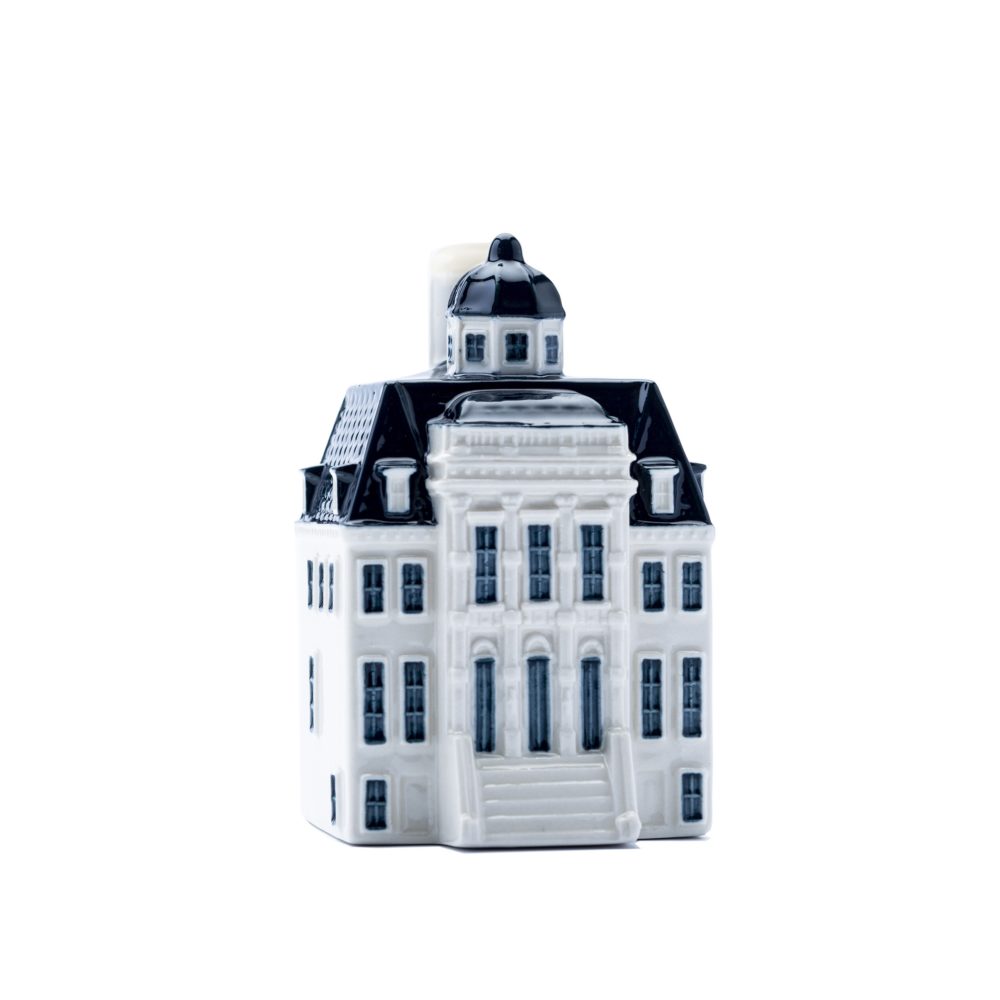
This year is KLM’s 106th birthday, and the newest KLM miniature Delft Blue house portrays the former sexton’s residence, Villa Reameau, located next to Lieden’s Pieterskerk church. The Pilgrims stayed here for twelve years before they set sail on the Mayflower to America in 1620. And the building is now the home of the Pilgrim Museum.

KLM unveils its 105th Delft Blue miniature house

Want a free house? KLM, the Netherlands’ flag carrier, gives them away for free.

There are strings, of course. And more to the story.

You need to be flying in business class on an intercontinental flight. And the houses are just 4 inches high.

But they are filled with Dutch gin and are part of a series of Delft Blue miniatures in the shape of a notable historic or landmark building in the Netherlands or abroad.

KLM began the tradition of gifting a miniature Delft Blue house filled with gin to first and business-class passengers back in the 1950s.

It was a way to get around rules about tax restrictions that once limited the value of the gifts that airlines could give to passengers. A cocktail that just happened to be served in a keepsake miniature house was within the rules.

The houses became so popular that in 1994, on the carrier’s 75th birthday, KLM issued a catch-up batch of houses so that the number of houses would line up with the airline’s age.

Now a new miniature Delft Blue house is released to great fanfare each year on October 7, KLM’s birthday.

The 105th KLM Delft Blue House

This year’s house – the 105th in the series – honors a 17th-century house in Amsterdam known as the House on Three Canals.

Built in the Dutch Renaissance style and renovated several times since 1687, this Dutch national monument has a different canal on three sides of the building.

“It’s one of the most photographed monuments in the city,” said historian Marz Zegeling. “This building – which was originally two buildings – has three different façades, or faces and is still revealing secrets,” such as a hidden hatch leading to a secret hiding spot, he added.


Zegeling is the author of “Little Kingdom by the Sea,” a regularly updated 2-book set with detailed descriptions and histories of each building in the KLM Delft Blue house series.  

On October 7, Marjan Rintel, the President and CEO of KLM, presented the first copy of the Delft Blue miniature of the House on Three Canals to Arthur van Dijk,  the King’s Commissioner in the province of North Holland.

KLM’s birthday and the new Delft Blue miniature house reveal comes at a “challenging time” for the carrier, Rintel acknowledged in a pre-event press conference. While the airline is investing billions in new, more efficient aircraft is also embarking on a campaign aimed at reducing costs, increasing productivity and increasing network capacity, especially on long-haul flights.

For now, though, KLM’s Delft Blue miniature house program is safe from cuts.

“We will look at everything but not the Delft Blue houses,” Rintel said, “We’re well known for it and it will stay as part of our brand.”

Some of the other buildings featured in KLM’s Delft Blue miniature house series include #104, the Valkenburg Station – the oldest existing train station in the Netherlands – and miniature #102, the Tuschinski Theater.

You can get a KLM miniature house as a complimentary amenity when flying business class on an intercontinental KLM flight, on eBay and in antique shops throughout Amsterdam.

And you can track your collection using the KLM Houses app.

Travel Tidbits From An Airport Near You

Courtesy Portland International Airport

Cool New Kids’ Play Area at Portland International Airport

The family travel team at Stuck at the Airport knows that traveling with kids can be trying.

That’s why we’re delighted to see airports adding or refreshing play areas with creative and engaging features.

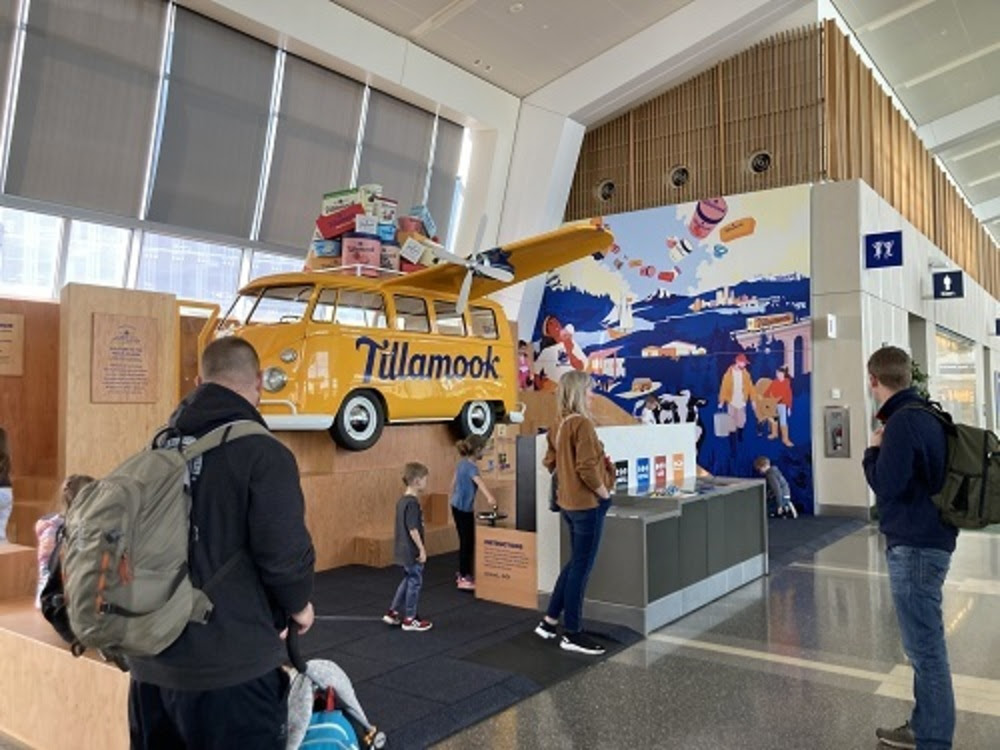
The latest on the scene is at Portland International Airport (PDX). There, the Tillamook County Creamery Association has created a cool new kids’ play area on Concourse E.

The 600-square-foot space has steps, slides, and a flying van designed with children ages 3 to 8 – and people of all abilities – in mind. The bouncy flooring is made from post-consumer recycled materials and the mural on the wall is by illustrator Josephine Rais.

The Tillamook Market, also on Concourse E, serves up meals made with Tillamook’s famous cheese and other locally-sourced ingredients, scoops of Tillamook ice cream, exclusive branded merch, and grab-and-go favorites including famous Tillamook Cheese Curds.

Freshful Fridge at Santa Barbara Airport

Stuck at the Airport is 100% in favor of healthy food options at all airports.

And we’re big fans of the Farmer’s Fridge salad vending machines offering fresh meals at more than 20 airports.

The trend is growing.

Santa Barbara Airport (SBA) has a new Freshful Fridge vending machine filled with locally-sourced snacks, salads, and beverages. Look for it in the SBA baggage claim area on the first floor.

More Limits at Amsterdam’s Schiphol Airport

For a while now, Amsterdam Schiphol Airport (AMS) has been placing caps on the number of departing passengers and flights. The action is an effort to deal with staff shortages that are causing long lines, canceled flights, and giant baggage backups.

KLM, Schiphol’s biggest customer, and a handful of other airlines aren’t happy about those flight caps and have filed a suit against Schiphol.

Now comes word that Schiphol will further restrict flights in an effort to reduce noise pollution.

Beginning “no later than 2025 – 26,” Schiphol will ban aircraft takeoffs between midnight and 6 am and all aircraft landings between midnight and 5 am.

Private jets and the noisiest airplanes will no longer be welcome at Schiphol. And plans for an additional runway are being scrapped.

We need to be sustainable for our employees, the local environment, and the world,” said Ruud Sondag, Royal Schiphol Group CEO. “I realize that our choices may have significant implications for the aviation industry, but they are necessary. This shows we mean business.”

KLM said in a statement that while it believes “operations should be in balance with our surroundings and the climate,” the airline is “astonished” that Schiphol is “unilaterally putting forward proposals that will have far-reaching consequences for airlines, without involving the industry parties in this process.”

Instead, KLM said, it would prefer “to work with the rest of the aviation industry on developing further measures to reduce CO2 emissions and noise pollution.”

How Airports & Airlines Marked April Fools Day

We were pleased to see so many airports and airlines – and the National Railroad Passenger Corporation – Amtrak – having so much fun on April Fools Day.

Aviation museums also got in on the fun.

Here are some of the April Fools Day “news items” we encountered. Let us know if we missed some your faves.

UFO Displayed at Seattle’s Museum of Flight

In an April 1 release, the Museum of Flight in Seattle announced it would put on display an unidentified flying object (UFO) recently recovered from a crash site in a remote area in Washington state.

Here’s what it looks like:

Clearly, it’s an April Fools Day joke. But we love that the museum created a full backstory for this UFO:

Following a rash of inexplicable UFO sightings worldwide, the wreckage and debris field from a small disc-shaped object were discovered at a remote desert location near the decommissioned Hanford Nuclear Site in Washington state. The UFO was initially detected by NORAD as it raced through the restricted airspace of Hill Air Force Base in Utah. The phenomena continued erratically on a northern flightpath and fiery descent to an impact zone in the remote desert hills of Benton County, Wash.

Military officials quickly removed tons of topsoil from the crash site to preserve any toxic fluids or alien biological matter that may have exited the disc. The object has displayed no signs of hostile intent, but extra security measures will be in place while it is on display at the Museum.

Plenty of airports and airlines got in on the fun. And many ‘announcements,’ such as Charlotte Douglas International Airport’s notice that it was removing the rocking chairs to make more room, no doubt made readers look twice.

But others, like KLM’s recline alert system and Geneva Airports’ ski-through-the-terminal updates aren’t totally silly ideas.

KLM’s newest Delftware miniature house

If you’re a fan of airline collectibles, you may already have a handful – or perhaps dozens – of the gin-filled miniature Delftware houses KLM Royal Dutch Airlines gifts to passengers flying in the carrier’s long-haul business class cabins.

KLM has been handing out these charming and, now, highly sought-after, souvenirs since the 1950s. And each one is a miniature version of a historically or architecturally significant building in the Netherlands or in a location abroad that has a KLM connection.

There are more than 100 buildings, plus some bonus editions, in the series. And a new one is unveiled each year on October 7 to mark the anniversary of KLM’s founding in 1919.

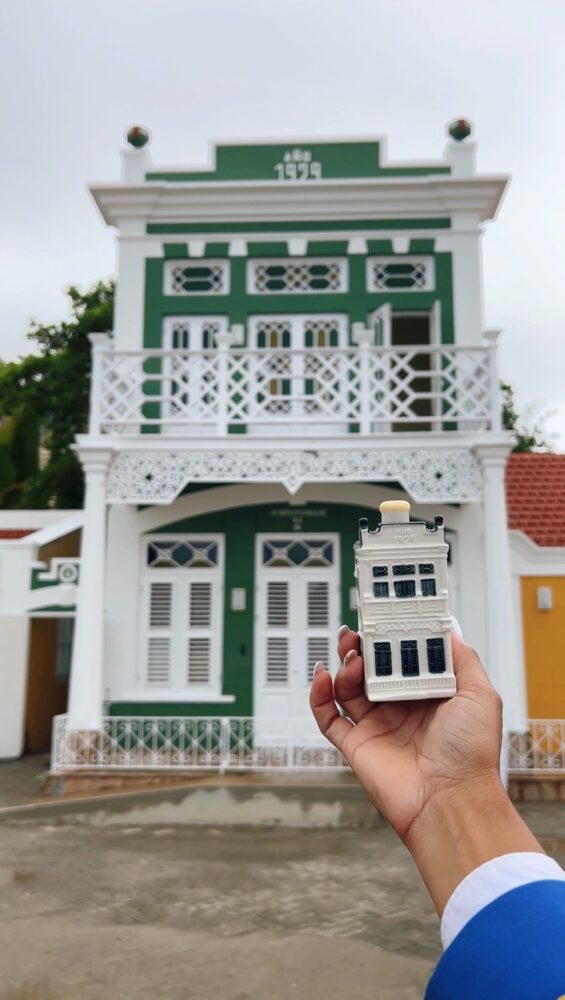
This year KLM turns 103. So, on October 7, KLM unveiled house #103 –  a miniature Delftware replica of the Ecury House in Aruba. This is only the second time a KLM Delftware miniature has been based on a building outside the Netherlands. (A building in Curaçao got that honor on KLM’s 85th birthday).

The significance of the Ecury home

The Ecury home was chosen this year because Aruba will celebrate its centenary of aviation in 2023 and Aruba’s Nicasio “Dundun” Ecury played a significant role in the development of aviation on the island. His son, Boy Ecury, studied in the Netherlands and was a resistance hero during WWII who was betrayed and executed in 1944.

Built in 1929, the Ecury home is now part of the National Archaeolo­gical Museum of Aruba and sits near the site where the first aircraft to Aruba landed.

KLM’s connection to Aruba reaches back almost 90 years

A KLM Fokker-XVIII christened “the Snip,” first touched down in Aruba on December 23, 1934, as part of KLM’s first transatlantic flight. Scheduled service between Aruba and Curaçao began on January 19, 1935 and was the first flight operated by KLM’s West-Indian Branch (WIB). Scheduled service between Amsterdam and Aruba began in 1974, almost 50 years ago. And there are now daily flights between the two destinations.

Miniature houses have big role in KLM history

Well-known airlines such as Pan Am, TWA, US Airways and Virgin America are long gone. And in just the past two years more than two dozen other airlines went from soaring to shuttered.

So, it is noteworthy that KLM Royal Dutch Airlines turned 100 on October 7.

The Dutch flag carrier is not only one of the world’s oldest airlines, it is also the oldest airline still flying under its original name.

It’s also the only airline where the guest of honor at its annual birthday party is the newest version of the three-inch tall porcelain house gifted to business class passengers flying on the carrier’s intercontinental routes.

The history of the houses

Back in 1952, KLM began giving its first-class passengers a gift of a miniature Delft Blue pottery house portraying a historically or architecturally significant Dutch building.

Because there were rules and limits regarding the value of gifts to passengers, the airline filled the houses with gin so that they were technically not gifts but free cocktails that just happened to be served in souvenir containers.  

New editions of the souvenir houses were created on and off for many years until 1994 – KLM’s 75th Anniversary – when the airline commissioned a bonus catch-up batch of miniature houses so that the number of souvenir houses in the series lined up with airline’s age.

Now one of the airline industry’s most sought-after complimentary inflight amenity, a new miniature Delft Blue porcelain houses filled with Bols Genever, a popular Dutch gin, is unveiled at the carrier’s birthday party each October 7. The new house is cycled into the assortment of miniature houses business class passengers can choose from on each flight.

A handy app helps passengers and collectors track the KLM houses they have, or still need. Swapping is popular and there’s a robust secondhand market in Amsterdam shops and online, with prices ranging from about $15 for the common houses to upwards of $550 for some of the rarer editions.  

Over the years, KLM’s miniature houses have depicted everything from the home of Dutch exotic dancer and spy Mata Hari to the Anne Frank House and the Rembrandt House.

In 2014, KLM’s miniature house portrayed the Heineken Brewery in Amsterdam.

Hotel New York in Rotterdam

Rotterdam’s Hotel New York, in the former headquarters of the Holland America line, was the featured house in 2016. And the home in Haarlem where Dutch aviation pioneer and aircraft manufacturer Anthony Fokker once lived was honored with a miniature gin-filled house in 2017.

KLM Delft miniature house #98 depicted the home of Dutch aviation pioneer Anthony Fokker in Haarlem

KLM’s 100th anniversary house

KLM’s much-anticipated 100th Delftware miniature building was revealed at the carrier’s 100th birthday party, held in a hangar at Amsterdam’s Schiphol Airport on October 7.

The event was attended by more the 3500 people, some of whom had flown in just to be among the first to get their hands on the newest miniature house.

Courtesy KLM

The 100th house is a replica of Huis ten Bosch Palace in The Hague, the current home of the Netherland’s King Willem-Alexander and his family.

The palace was built in the mid-17th century for Prince Frederik Hendrik of Orange and his wife Amalia van Solms and was chosen to be KLM’s 100th miniature house to honor the strong ties between the Dutch Royal Family and KLM since the airline’s early days.

The future of the KLM houses

While KLM’s Delftware miniatures are highly collectible and closely tied to the carrier’s branding, KLM is also committed to making aviation more sustainable.

To that end, the carrier uses electric baggage towing tractors, purchases carbon offsets, operates many flights using a biofuel mix and works to reduce waste and weight on flights.

But ditching the miniature porcelain houses to lighten loads has not been considered.

“There are things you should do and things which you shouldn’t do. Period,” said KLM’s President and CEO Pieter Elbers, “For sustainability, we are investing in lightweight containers, trolleys, cargo nets, bottles, glasses and many other things to reduce weight on our planes,” said Elbers, “But those houses, we won’t touch.”

(My story about KLM’s 100th Delft miniature house first appeared on CNBC.)

KLM Turns 100

Dutch flag carrier KLM Royal Dutch Airlines is one of the world’s oldest airlines and the oldest airline still flying under its original name.

The airline celebrated its centenary on Monday, October 7 with more than 3500 friends, frequent flyers and supporters at a party inside an airplane hangar at Amsterdam’s Schiphol Airport.

At the birthday party, there was cake, of course. And speeches.

But everyone in attendance was anxious to find out which historical or architecturally significant Dutch building was being portrayed in KLM’s 100th miniature Delft blue house.

These small porcelain houses are filled with Bols Genever (a Dutch gin) and are highly collectible. They are gifted to passengers flying on intercontinental flights in KLM’s World Business Class cabins.

KLM Then and Now

Courtesy KLM

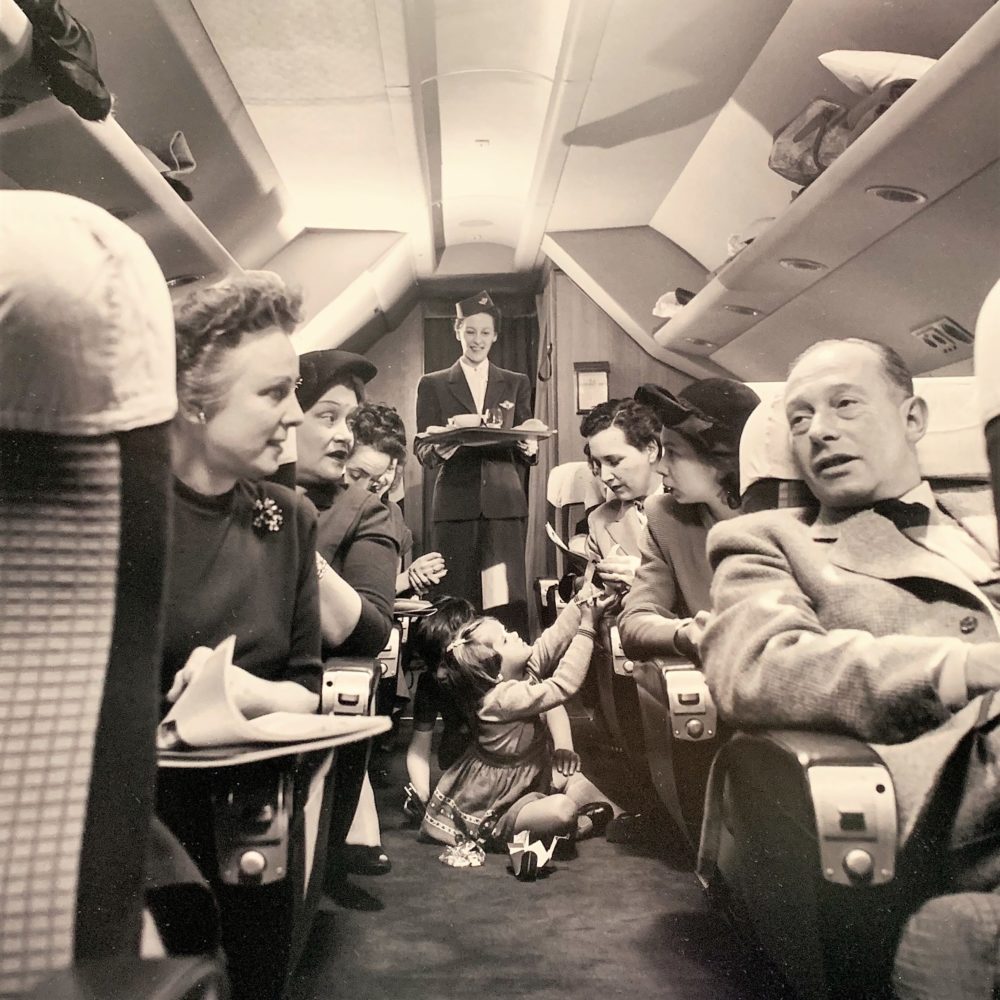
While KLM was officially established on October 7, 1919, the airline’s first flight took place on May 17, 1920, on a leased De Havilland DH-16 flown from London to Amsterdam.

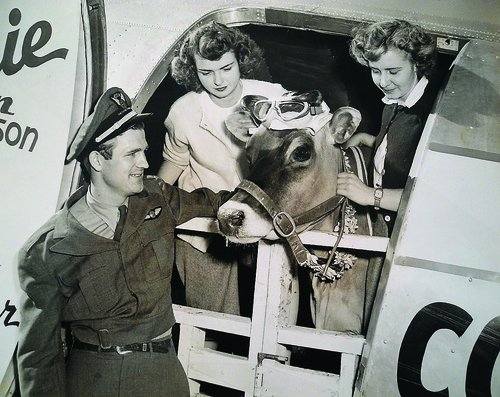
The airline started buying its own airplanes in 1921; transported its first large animal (a stud bull named Nico V) in 1924 and began flying with designated cabin crew to attend to passenger comfort and safety in 1935.

Courtesy KLM

The airline’s inflight magazine – the Holland Herald – was first published in 1966 and is now the oldest inflight magazine in the world

After a 2004 merger, KLM became part of the Air France – KLM Group and today KLM flies to 162 destinations, employs 33,000 people worldwide and has a fleet of more than 214 aircraft.

The airline carries more than 34 million passengers and more than 620,000 tons of cargo a year.

“Airlines operate in an incredibly competitive environment,” said Pieter Elbers, KLM President & CEO “Fuel prices, geopolitical issues, and exchange rates are among the many outside issues that affect our business and can make it tough to operate the airline.”

While other airlines have come and gone, KLM’s longevity, said Elbers, has a lot to do with innovative and pioneering with its operations and its ability to respond to trends in a timely manner.

For example, KLM was an early adopter of social media to serve and engage customers.

Today the airline has a social media team of about 350, one of the largest in the world. Agents are on duty daily, tackling about 35,000 customer service cases a week, in 10 different languages, via WhatsApp, Messenger, Facebook, Twitter, WeChat and other platforms. Artificial intelligence systems help as well.

KLM and sustainability

KLM flew the first biofuel flight, to Paris, in June 2011. And in March 2013, the airline operated the first intercontinental flight with biofuel, to New York.

The airline now has wide-ranging sustainability programs, including the unusual “Fly Responsibly” program which encourages people not to fly – or to fly less often.

Videos and ads ask customers, “Do you always need to meet face-to-face? Could you take the train instead? Could you contribute by compensating your CO2 emissions, or packing light.?”

“It may seem radical for an airline to ask people to consider other options than flying, but we see it as a pioneering approach to creating a more sustainable future in aviation for all of us,” said Boet Kreiken, Executive Vice President Customer Experience, KLM.

As part of the campaign, KLM recently announced that starting March 29, 2020, it will be replacing one of its daily flights between Brussels and Amsterdam with seats on the Thalys high-speed train.

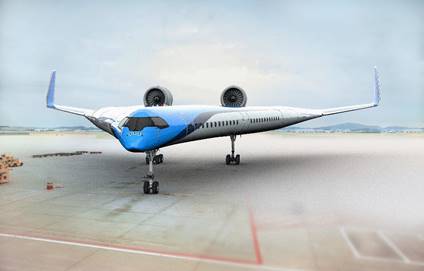
KLM is also supporting the Delft University of Technology efforts to develop the Flying-V, a highly energy-efficient long-distance airplane design that puts the passenger cabin, the cargo holds and the fuel tanks in the wings of an unusual v-shaped aircraft.

The 100th KLM Miniature Delft house

Courtesy KLM

Each year KLM marks its October 7 anniversary by revealing a new Delftware miniature house.

Past miniature houses have depicted everything from the Anne Frank House and the Rembrandt House to the Palace on Dam Square.

For its 100th anniversary, KLM chose a replica of Huis ten Bosch Palace in The Hague, the home of the Netherland’s King Willem-Alexander and his family.

The new miniature house is being given to passengers business class passengers flying intercontinental flights, but we’ve already spotted it on eBay for about $65.

KLM turns 100 on Oct 7

KLM, Royal Dutch Airways, turns 100 on October 7 and celebrations marking the milestone event are already underway.

A great exhibit drawing from KLM’s extensive collection of more the 250,000 images has been on view at the Amsterdam City Archives.

And on October 7, a hoopla event will take place in a KLM hangar at Amsterdam Schiphol Airport. During that party, the much-awaited ‘reveal’ of the 100th tiny Delft house filled with Bols Genever (a Dutch gin) will take place.

The small houses are a given out as complimentary gifts to travelers flying World Business Class and there’s always a wave of excitement in the cabin when the cart with the houses start being rolled down the aisle.

Stuck at the Airport will on hand for this year’s big reveal and we’ll share details on that as soon as we’re able.

Stuck at The Airport was honored to be on site for the reveal of KLM’s 97th miniature Delft House, which was made in the likeness of the Hotel New York in Rotterdam.

The hotel is on the site of the former headquarters of the Holland American Line and for many years, beginning in 1872, the company’s ships sailed between Rotterdam and New York and several other U.S. cities.

Stuck at the Airport was also onsite for the reveal of KLM’s miniature Delft house #98 – which depicts the family home of aviation pioneer Antony Fokker.

In advance of its birthday, KLM has been busy with events, promotions and announcements celebrating the company’s past – and looking to the future.

Take a look at these two short videos, especially the “Fly Responsibly” video that actually encourages travelers not to fly.

Airplane of the future? It may be the “Flying-V”

The airplane of the future may be shaped like a big V.

And it may be super sustainable.

On the heels of its announcement of an investment in a biofuel plant set to open in 2022, KLM Royal Dutch Airlines has announced it will partner with Delft University of Technology (TU Delft) to fund the development of an innovative flying machine known as the “Flying-V.

The new-fangled, aerodynamic aircraft design incorporates the passenger cabin, cargo hold and fuel tanks into the wings of a V-shaped aircraft.

As designed, the unusual shape would reduce an aircraft’s weight and use 20% less fuel than current airplanes. But it would allow the plane to easily land at airports and pull up to gates designed to welcome Airbus A350s.

Designers say the Flying-V will be able to carry the same number of passengers – 314 – and the same volume of cargo as an Airbus A350. But this new plane will be smaller than an A350 and more aerodynamic.

Although the Flying-V will initially fly on kerosene, it is designed make use of innovations in the propulsion system, such as electrically boosted turbofan engines.  

Designers say not only will the Flying-V look different and be energy-efficient, it could offer a better passenger experience, with seating in the wings and with a unique new design for seating and lavatories.

A flying scale model and full-size section of the interior of the “Flying-V” is set to be unveiled in October, during KLM Experience Days at Amsterdam Airport Schiphol, as a potential aircraft design of the future.

I plan to be there!

(Images/video courtesy TU Delft)

KLM’s Delft Blue House #99: The White Ox

It is KLM’s 99th anniversary and the carrier is celebrating with 99 hours of special flight offers (deals end October 9) and a new miniature Delft Blue house in the airline’s series of collectible miniature houses.

This year’s Delftware miniature house represents the first store of Douwe Egberts in Joure, Holland.

The house was chosen, in part, becase at the end of October, 2018 KLM will begin serving Douwe Egberts’ sustainable UTZ-certified coffee on all its European and intercontinental flights.

The shop is now part of a museum and was where grocer Egbert Douwe laid the foundation for the well-known Douwe Egberts brand of today.

“Choosing the first store of Douwe Egberts in beautiful Joure serves to highlight the excellent cooperative relationship shared by our two established brands,” said KLM President & CEO Pieter Elbers. “Good coffee is important to our customers,” he added, “And KLM also considers it crucial to serve sustainable coffee. Two typically Dutch brands with a rich history, both placing quality first, can only serve to strengthen one another.”

KLM’s tradition of presenting Delftware miniatures to passengers traveling in the business class cabin on intercontinental flights began in the 1950s. The houses are replicas of notable buildings in the Netherlands and the number of houses in the collection has corresponded with KLM’s age since 1994.

The carrier now adds a new house to the collection each year on or around October 7.

So we’re already anxious to see which house will be honored on October 7, 2019 when KLM celebrates its 100th anniversary.

While we wait, take a look at this short video that tells the story of KLM’s Delft Blue House #99:


You can also read my stories about being on hand for the festivities surrounding the reveal of KLM’s Delft Blue miniature houses #98 and #97.

House #98 depicts the family home of aviation pioneer Antony Fokker in Haarlem  (near Amsterdam) and was presented at an event in Haarlem’s historic St. Bavo Church.


KLM’s mininature Delft House #97 depicts the Hotel New York in Rotterdam, which occupies the grand structure built in 1901 to house the headquarters of the Holland America line.

Do you have a collection of KLM’s Delft Blue miniature houses (gin-filled or not)? Feel free to boast about it in the comments section below.