Note:I was compensated by National Car Rental for this post. All thoughts and opinions are my own.
As the holidays approach and COVID-19 concerns continue to guide every step we take outside our homes, many households are discussing, debating, and strategizing how they might take a business or leisure trip safely.
Airlines are detailing their cleaning protocols and celebrating a recent study that found the risk of exposure to COVID-19 during air travel is low. Conversely, a recent study noted that consumers deemed car rentals to be the safest mode of transportation during the COVID-19 pandemic.
To build on these studies and further reassure travelers that there’s no need to rush out on the road airlines, hotels and car rental companies are extending expiration dates on loyalty program benefits for those who must or choose to stay home. National Car Rental, for example, is extending its Emerald Club Program Free Days, previously expiring December 31, 2020, a full year, to December 31, 2021. And was the first car rental company to do so.
“Extending Emerald Club Program Free Days a full year will provide [members] with more opportunity to use the rewards that they’ve earned,” said Randal Narike, Executive Vice President, Global Mobility and Customer Experience at Enterprise Holdings. “We hope that this allows them the flexibility to rent a vehicle down the road for that much-anticipated business or leisure trip when they are comfortable and able.”
The Emerald Club is also rolling over any qualifying rentals and rental days above those needed to get the member to the next tier, giving the member a balance into the following year. Not an Emerald Club Member? You can sign up for free.
In many communities, car rental bookings are getting a boost now and into the holidays from both car owners and non-car owners who do not feel safe or comfortable using public transportation right now to travel to and from an airport. And many people feel safer being in a car by themselves now too for day trips, road trips and business travel.
The cleanliness promises and procedures car rental companies now offer make renting a car an appealing option. Staff has had time to be trained in the new systems and the programs have been road-tested.
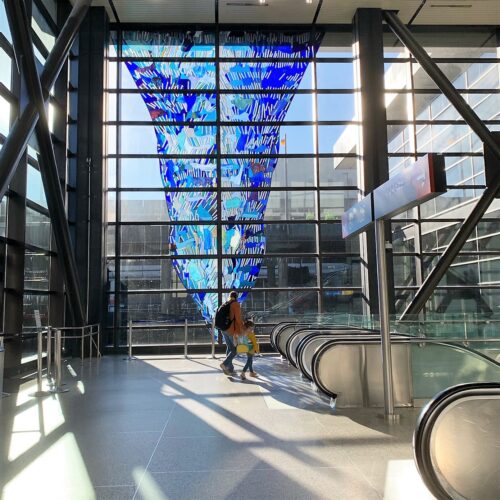
Courtesy Port of Seattle
In preparation for my holiday road trip, I took a close look at National Car Rental’s Complete Clean Pledge, which promises that each car is washed, vacuumed and sanitized according to CDC guidelines. The system lists 20 high-touch key area that are cleaned both inside and outside of cars.
The touch points listed for cleaning caught my attention.
Some I expected. Some I had not considered or been previously concerned about, but find myself pleased to see on the list.
And some made me rush down to the garage to do a good wipe down on parts of my own car.
Here is the list:
Key/key fob
Steering wheel
Steering column
Seat belts
Center console
Door interiors
Door pockets
Door handles (interior and exterior)
Seat pockets and seat surfaces
Cupholders and cup holder compartments
Areas between seats, consoles and the seats and door
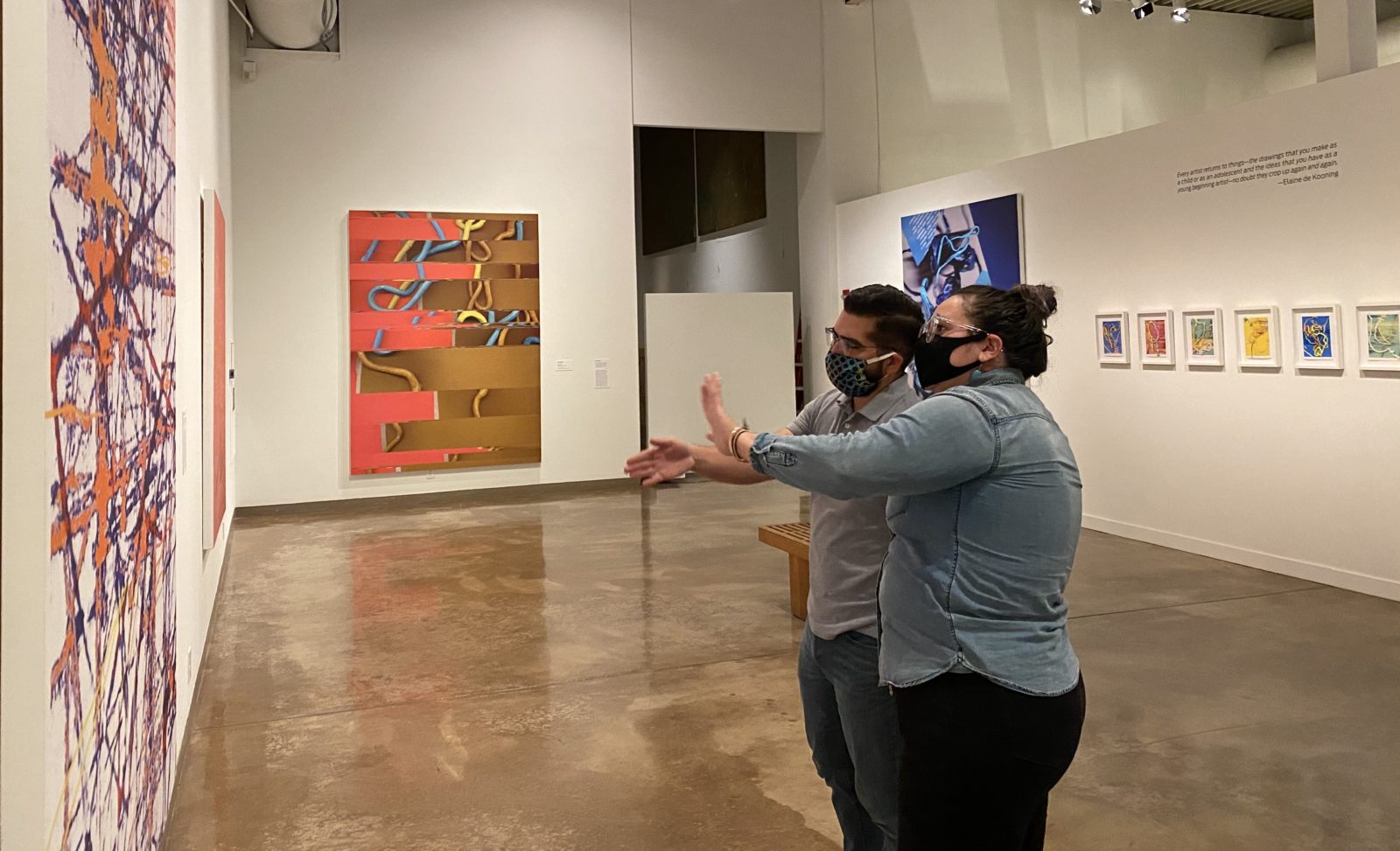
In ‘normal’ times, when we’re not in airports, we’re in museums.
And the ongoing pandemic is wreaking havoc with museums.
“The financial state of U.S. museums is moving from bad to worse,” said Laura Lott, President and CEO of the American Alliance of Museums.
AAM has been surveying its membership since the pandemic began. And in its latest survey of 850 museum directors around the country it finds that 30% of museums remain closed since the March lockdown.
“Those that have reopened are operating on an average of 35% of their regular attendance—a reduction that is unsustainable long-term,” says Lott. “Those that did safely serve their communities this summer do not have enough revenue to offset higher costs, especially during a potential winter lockdown,” she adds.
And, as we know, communities around the country have already begun to institute winter lockdowns.
Here are some other key points from the survey that are sure to alarm museum-lovers.
*Over half (52%) of museums report that they have six months or less of operating reserves.
*Over half (53%) of responding museums have had to furlough or lay off staff. And about 30% of museum staff around the country are currently out of work.
*On average, museums responding to the survey anticipate losing approximately 35% of their 2020 operating income and an additional 28% of normal operating income in 2021.
Why care?
Because besides the wonderful exhibits museum present and the special collections they protect, museums employ a lot of people. And they add a lot to the economy of their communities.
Prior to the pandemic, museums supported 726,000 direct and indirect jobs and contributed $50 billion each year to the economy, according to AAM.
What will help museums make it through the pandemic?
Museums are asking federal, state, and local governments for financial support.
They deserve it.
We can help out museums by making donations to our favorites. By joining museums as new members or by making sure to renew our memberships. We can give memberships as holiday gifts, shop in museum giftshops (many are online), and we can make a point to visit the museums that are open in our communities and/or offering activities online.
(A slightly different version of our story on airport masks policies first appeared on USA TODAY)
Although COVID-19 cases are surging, holiday flight bookings are up.
The uptick in travel is tied to pent-up demand for travel. And to recent studies that say air travel is as safe or safer than many other routine activities on the ground.
Most every airline now requires passengers to wear face coverings and passengers who refuse to comply may find themselves on a carrier’s no-fly list.
But what about airports?
Many groups have been urging the current administration to issue a mask requirement for all commercial travel. But no federal law currently requires passengers to wear face coverings in airports.
Airports in locations that have state or local mask requirements do have the authority to cite, ticket, or, in some cases, eject travelers that fail to comply.
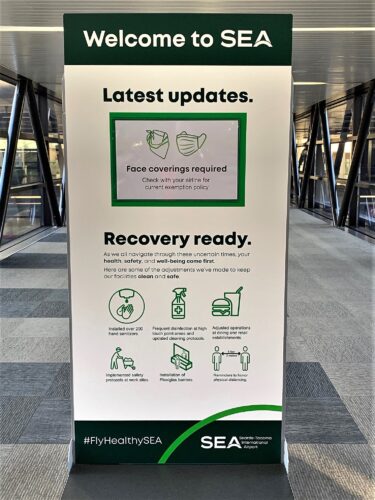
But in most cases, airports report they are instead relying on audio and visual messaging, personal reminders and the airline policies.
At Charlotte Douglas International Airport (CLT) messaging on the public address system reminds passengers that face coverings are required by the governor’s mandate. Reminders of the face-covering requirement also appear on shuttle buses, entrance doors, and throughout the terminal.
In addition to signage about wearing masks, at Denver International Airport (DEN) all employees are encouraged to politely remind a passenger to wear their mask if it is not on or not on properly.
“We may offer a person a complimentary mask to encourage compliance,” says airport spokesperson Alex Renteria, “If a person acts aggressively, law enforcement may be called. But we have not had an instance where a traveler refused to wear a mask.”
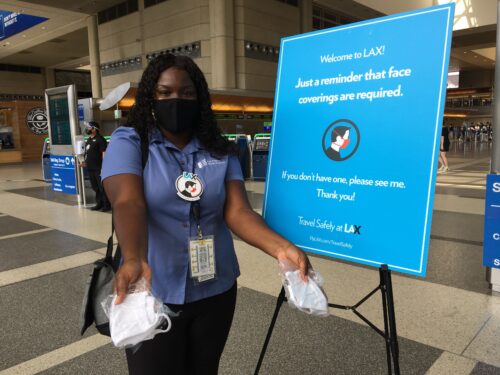
At Los Angeles International Airport, Travel Safety Ambassadors patrol some terminals to remind guests about the airport’s mask policy and hand out free face coverings if needed.
“We do our best to remind people from the moment they step into the building,” said airport spokesman Heath Montgomery, “But the airlines are the ones with the authority to decline service to those who refuse to comply with face-covering policies.”
But there is no firm timetable for the release of that phase of the report.
In the meantime, in addition to encouraging passengers to mask up, airports continue to reassure travelers with assertive terminal-wide cleaning procedures, COVID-19 testing services, and other health and safety regimes.
[This is a slightly different version of a story we wrote for NBC News]
Are you feeling better about traveling somewhere?
Since March 2020, COVID-19 and government-mandated border closings have triggered $443 billion in cumulative losses for the U.S. travel economy, according to the U.S. Travel Association.
Spikes in COVID-19 cases have many grounded travelers worried that the country may go into lockdown mode. But others are buoyed by the fact that President-elect Joe Biden has named a coronavirus task force. And by the promising news from Pfizer about progress made on a COVID-19 vaccine.
Theresa Kauffman of Fort Worth, Texas is anxious to travel to see her parents and her mother-in-law. “You know how when you’re sick and get diagnosed by a doctor and you feel relieved to have a plan? That’s how this feels for travel,” said Kauffman. With the vaccine news, “It feels like we can start to hope again.”
Hospitality industry groups are encouraged by the president-elect’s support of science-based coronavirus-fighting strategies. And by his plan for a coordinated government COVID-19 response for a path to economic reopening and the return of international travel.
The U.S. Travel Association applauds “President-elect Biden’s objective of helping the industries most heavily impacted by the pandemic. The travel industry accounts for more than a third of overall U.S. unemployment, and policies to promote relief, recovery, and stimulus for travel businesses are integral to a U.S. economic turnaround.”
Gregory Miller, Executive Director of the Center for Responsible Travel, expects that a national mask mandate will be implemented.
“This would reduce COVID virus transmission considerably and likely increase the prospects for us to return sooner to traveling by air and public transportation with more safety and confidence,” Miller said.
“The entire travel industry is still suffering from the abrupt, sustained drop in tourism and business travel, and airports need help to get through this prolonged downturn.” said Kevin Burke, ACI-NA’s President and CEO.
A pent-up desire to travel
Due to the global pandemic, there is a great deal of pent up demand for travel.
In a pre-election survey of clients by the Virtuoso luxury travel network, 72 percent said they were ready to travel. 92 percent said that the election made them want to travel.
“We’re already seeing evidence of that confidence coming back with people booking stays for Thanksgiving and the holiday season,” said Virtuoso managing director Misty Belles.
Post-election, it looks like a lot more people are considering traveling.
KAYAK’s Data Dashboard shows that searches hit a 3 month low on election day (Tuesday, November 3), down 62 percent year over year. But in this post-election week, searches are trending upwards. On Monday, November 9, Kayak says searches were up 8 percent week over week and up 21 percent from election day.
And it is not just leisure travelers who are anxious to get back on the road.
The pandemic has forced many college students to forego travel and study experiences abroad, says Linfield University media professor Michael Huntsberger. He says it’s especially hard for seniors, who won’t have another opportunity. “But though COVID-19 has foreclosed these programs for 2020, students are anticipating future opportunities as soon as travel restrictions are lifted, and safety protocols are in place.”
You know Harrison Ford as an actor from the Star Wars and Indiana Jones movies.
Avgeeks know Ford is a fan of vintage planes and a licensed pilot.
Now he’s also a big fan and a supporter of Airlink.
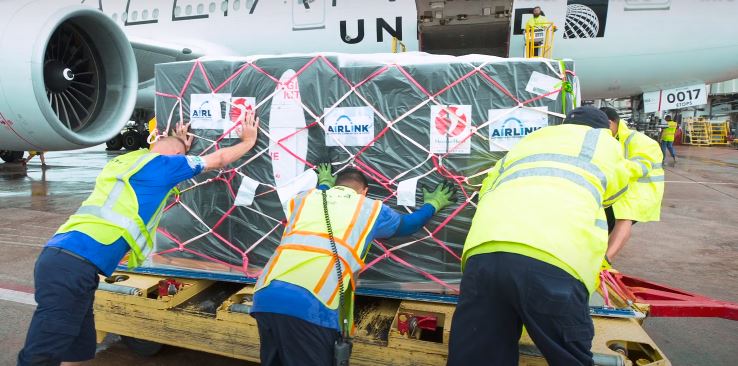
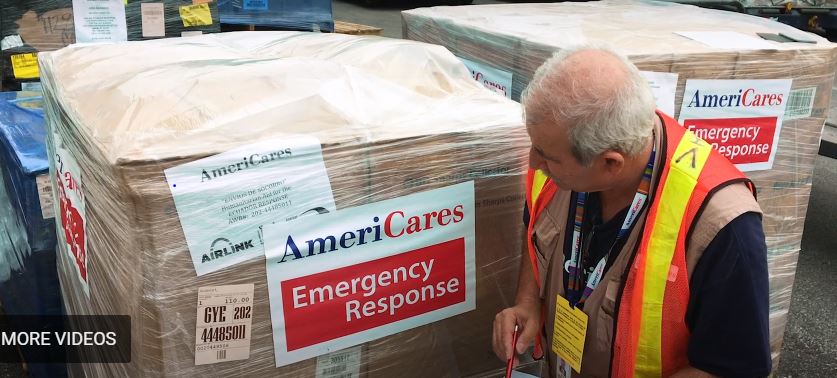
The non-profit connects airlines with non-governmental organizations (NGOs) to help get personnel and emergency supplies to sites around the world experiencing natural disasters and protracted emergencies.
We’re not sure if Ford is standing in his airplane hanger in front of his own airplanes to deliver this message of support. But we’re glad he’s learned of this organization and understands its importance. And is helping spread the word.
Stuck at the Airport first wrote about Airlink in 2016. Back then airlines were reaping benefits from soaring passenger numbers and low energy costs. And there was a $15 billion funding hole in global disaster relief.
Disasters haven’t disappeared. And disaster relief is still very much in need around the world. So the service Airlink provides to get personnel and supplies where needed during and after hurricanes, earthquakes, wildfires and, now, COVID-19 is more important than ever.
Lots of major airlines, airline manufacturers, companies, organizations, and individuals support this 10-year old organization. You can too. With a cash donation or by donating frequent flyer miles you have sitting in your account on Alaska Airlines and United Airlines.
Hawaii reopens to tourists on October 15. Yay, right?
But the only visitors who will be able to skip the 14-day quarantine rules will be those with proof of testing negative for COVID-19 within 72 hours before they depart the mainland.
Hawaii officials will only accept test results from approved providers.
Here’s information about those testing partners from the Hawaii State Department of Health. The list was posted on 10/13/20 and will likely be updated.
Be sure to check with providers for prices and updated information.
Where to get tested
AFC Urgent Care – COVID-19 tests are available at clinics on the AFC Urgent Care website. Tests available for ages five and older. Schedule in advance to guarantee appointment availability. A printed version of the results is provided prior to leaving the clinic.
Bartell Drugs – Only for Alaska Airlines passengers to Hawaii at select Bartell Drugs locations. Tests available for ages five and older. Appointments are required at least one day in advance. Guaranteed results within 72 hours.
Carbon Health – Tests offered at dedicated sites with results delivered within two hours. Tests available for ages five and older for Alaska Airlines passengers in Seattle only. ($135)
CityHealth Urgent Care – CityHealth Urgent Care offers tests utilizing state-of-the-art Abbott Lab instrumentation for results in 15 minutes. Tests available for ages five and older.
Color Tests available for ages five and older for United Airlines passengers going to Hawaii from San Francisco International Airport.
CVS Health – Travelers may schedule an appointment up to two days in advance at select CVS Pharmacy drive-thru locations. Tests available for ages 12 and older. Pre-registration is required. ($139).
Discovery Health MD – Individuals traveling to Hawaii may schedule testing online with same ($329) and next day ($279) results at designated testing sites. Tests available for ages five and older. A limited number of walk-ups can be accommodated.
Kaiser Permanente– Kaiser Permanente members may schedule a test online, or contact the appointment call center or nurse advice line in their home region for scheduling instructions.
Quest Diagnostics – Individuals may order and schedule the company’s COVID-19 Active Infection Test online and select from more than 500 Walmart drive-thru pharmacy locations for a nasal swab test.
Vault Health – At-home tests with real-time audio-visual supervision are available. Tests available for ages five and older. Tests are mailed with accurate results in 72 hours or less.
COVID-19 Testing Information from Airlines and Airports
If you are heading to Hawaii, your airline will offer information about COVID-19 tests and current requlations.
Here are links to the pre-travel testing requirements for Hawaii travelers and additional information about testing options from airlines – and from Oakland International Airport.
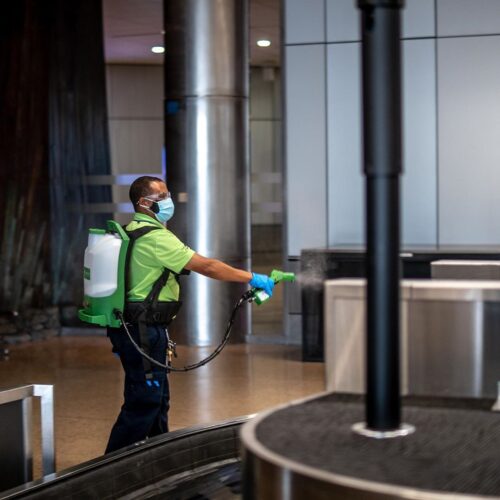
Airports everywhere are doing whatever they can to make their terminals safe and sanitary for your safety.
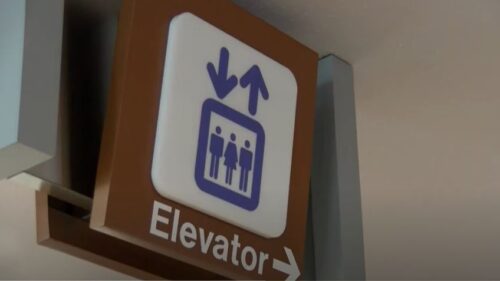
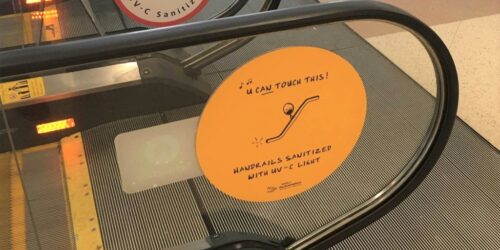
In addition to cleaning systems for handrails on stairways and escalators, some airports are also trying out new ways to bring a touchless experience to elevators.
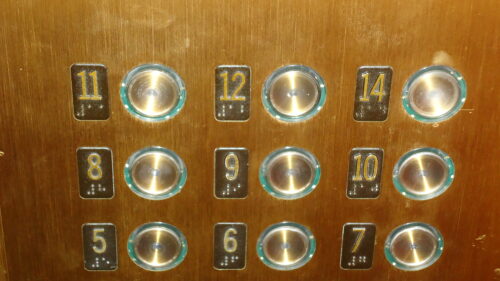
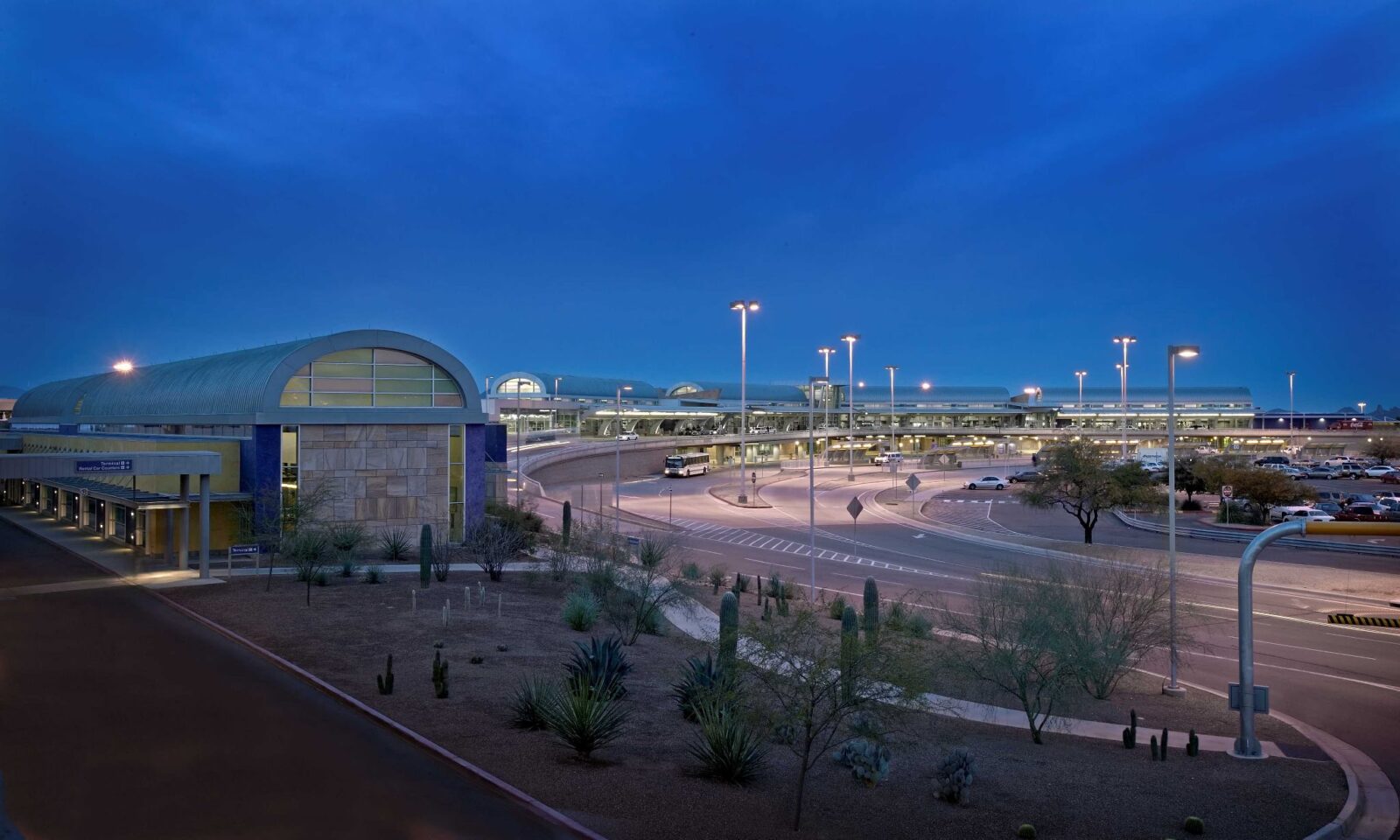
At Tucson International Airport, all five pre-security elevators now have toe-tap buttons.
The buttons are installed to limit the potential spread of COVID-19, but they also seem like they’ll be handy for a wide variety of situations.
And at Toronto Pearson, the route to a touchless elevator ride is a bit more high tech.
The airport is testing a system that lets riders operate the elevator from their smartphones.
We’re testing new touchless elevator technology from @ContactlessAcc.
This pilot program lets you operate our test-elevators from your smartphone. Just scan the QR code and download the app to start elevating!🔼https://t.co/6SHvrwyPlJ
Users download an app that has an elevator button interface that can be used instead of the physical elevator buttons to select a destination.
Of course, you could use a tissue, a key, or an elbow to push the button on an airport elevator – or any elevator. But why do that when you can use a toe-tap or an app?
We know you don't necessarily need a demonstration of our new toe tap buttons, but our COO & VP of Operations Bruce Goetz is mighty proud of these things so we made one anyway. They're our latest move to a "touchless journey" because TUS Cares. DETAILS: https://t.co/5As7YgH3SNpic.twitter.com/4GHJ57NESo
Free gadget cleaning at Toronto Pearson International Airport
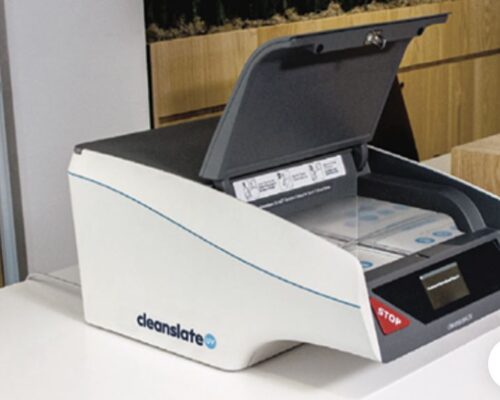
It looks like a copy machine. But if you put your gadgets in these machines at Toronto Pearson International Airport (YYZ) they will get zapped by a UV-C light that destroys novel coronavirus cells.
20 seconds, 360 degrees and 99.979% of novel coronavirus cells destroyed. That’s the power of @CleanSlateuv, a chemical free sanitizer device that uses a burst of UV-C light to clean your handheld electronics. Free to use the next time you fly. https://t.co/4OFdCqKGIopic.twitter.com/q7th0xTz64
Long Beach Airport (LGB) has a new video out to remind travelers that they’ve got outdoor concourses and other amenities that are reassuring for travelers.
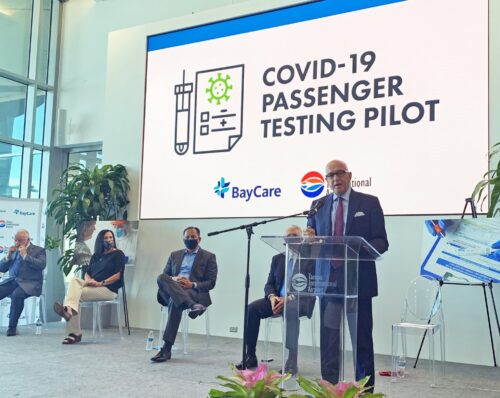
Because so many countries, and some states, require arriving travelers to have proof of a recent negative COVID-19 test, airports and airlines are rushing to make those tests available at the airport.
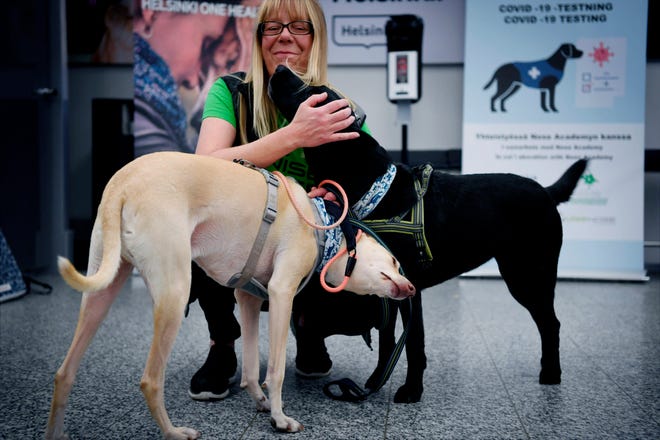
Those services, many of which are labeled as pilot programs, include COVID-19 sniffing dogs at the Helsinki Airport; XpresSpa’s new XpresCheck program at JFK International and Newark Liberty International airports: and Alitalia’s COVID-tested flights.
In advance of Hawaii reopening its doors to travelers on October 15, United Airlines is offering COVID-19 testing at San Francisco International Airport. And Hawaiian Airlines is setting up drive-through testing at both SFO and Los Angeles International Airport (LAX).
In most cases there is charge from $80 to more than $250 for the tests. In some cases, the tests are free.
More COVID-19 tests for air travelers.
A new bundle of airport and airline-hosted COVID-19 testing programs was announced on Tuesday, Sept. 29.
Tampa International Airport (TPA) will run a pilot program in October offering travelers both rapid antigen tests and PRC, Polymerase Chain Rection tests. Fees apply.
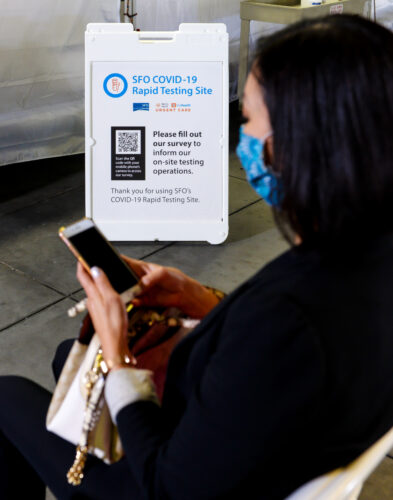
Oakland International Airport (OAK) will begin offering free, rapid-result COVID-19 tests to employees and the public beginning Oct. 6. An expansion of the program is planned for October 15, when travel to Hawaii reopens.
And American Airlines announced it is working with several foreign governments to offer pre-flight COVID-19 tests for customers flying to international destinations.
The program starts in October with flights from Miami International Airport to Jamaica for residents returning home and for flights to the Bahamas.
There are plans to expand to other markets soon.
For American’s domestic flights from Dallas Fort Worth International Airport (DFW) to both Honolulu (HNL) and Maui (OGG), the airline is working with a vendor offering several testing options, including onsite rapid testing at DFW airport. Fees apply.
No doubt other airlines and airports will be rolling out COVID-19 test programs soon. But already the offerings are confusing and, in many cases, costly. Here’s hoping some sort of consistency evolves in the next few months.
I’m honored to be one of the presenters at the virtual Travel 2021 Summit on October 7 and 8 and focusing on what travel might be like in the next year.
With Alaska Airlines, JetBlue, United, and other airlines announcing fare sales and new routes for winter, it may feel like air travel is returning to normal.
But after a spike over the Labor Day holiday, the numbers of travelers passing through Transportation Security Administration checkpoints are still way down compared to this time last year.
Throughout the summer, airports were scrambling to enhance cleaning regimes and install hand-sanitizing stations, plexiglass barriers and other health-focused tools. Now airports are adopting new strategies to keep passengers safe and instill confidence in travel.
Here are some of the programs you may encounter:
Security checkpoint by appointment
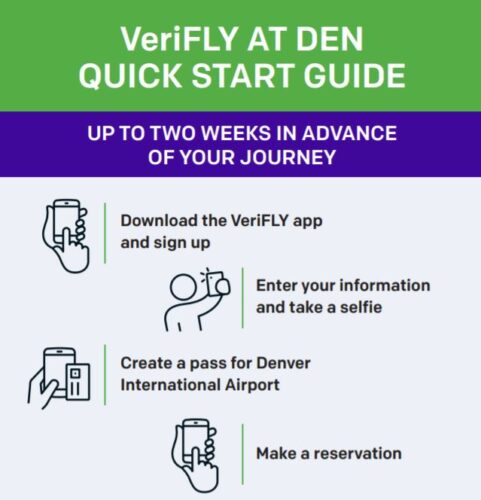
This month, Denver International Airport (DEN) debuted the free, app-powered VeriFLY program, which blends a checkpoint reservation system with a health check. Passengers download the VeriFLY app (an Android version is on the way) and complete a health survey 24 hours before their flight. At the airport, participants get a touchless temperature check before accessing a dedicated TSA lane.
More robots and robot-like helpers
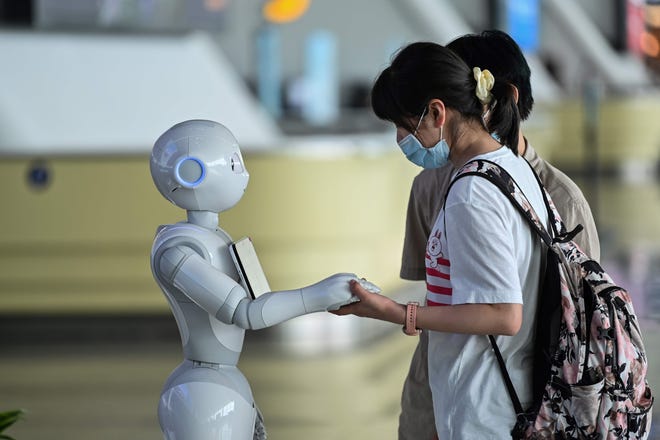
Airport employees serving as Travel Well Ambassadors at San Francisco International Airport (SFO) roam the terminals reminding passengers to wear their masks. Softbank Robotics’ direction-giving robot, Pepper, has been reprogrammed to serve as a mask nanny as well.
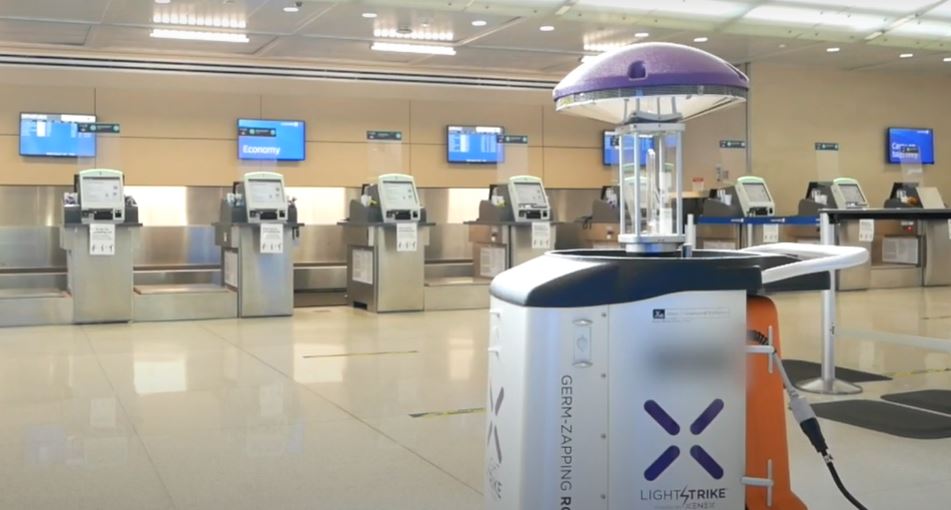
You can’t see it, but some airports have air-cleansing bipolar ionization (BPI) devices installed in the heating and air conditioning systems. And an increasing number of airports are using UV and medical-grade UVC light to zap bacteria and viruses on surfaces and, in some cases, people.
London’s Gatwick Airport is installing a Smiths Detection-made system at eight security checkpoint lanes that will send security bins through a tunnel that uses short-wavelength UV-C light for disinfection.
And Toronto Pearson International Airport (YYZ) has installed UV-C sterilization units inside some escalator and walkway mechanisms to continuously clean the handrails.
The Toronto Airport also has a new, voluntary disinfection corridor that uses a chemical-free spray to give passengers a quick pre- or post-flight sanitizing spritz.
https://youtu.be/3xjR2tKogY0
COVID-19 testing at airports
Temperature checks may become the norm, though there continues to be debate over who should be responsible for carrying them out. Earlier this month, a new bipartisan Senate bill was introduced that would require the TSA to perform that task.
Now, all eyes are on COVID-19 testing at airports.
On Sept. 22, the International Air Transport Association (IATA), joined trade groups such as Airlines for America (A4A), Airport Council International (ACI) World, and Airports Council International-North America in calling for the systematic testing of all international travelers before their flights.
“This should enable governments to safely open borders without quarantine. And it will provide passengers with the certainty that they can travel without having to worry about a last-minute change in government rules that could spoil their plans,” said IATA Director General Alexandre de Juniac in a statement.
Where to get tested before you fly.
Last week, United Airlines and Hawaiian Airlines announced their own COVID-19 testing pilot programs. United will test its system on passengers flying from San Francisco to Hawaii. Hawaiian Airlines is setting up drive-through sites near LAX and SFO. Both will launch on or close to Oct. 15, when Hawaii begins allowing out-of-state visitors to bypass quarantine with a negative test result.
XpresSpa, which has temporarily closed its network of in-airport spas, is developing a network of COVID-19 testing centers at airports. So far they have test sites at JFK International Airport and at Newark Liberty International Airport.
The medical clinic at Vancouver International Airport (YVR) offers travelers COVID-19 tests by appointment, with results typically returned within 24 to 72 hours. YVR and Canadian airline WestJet are also creating a pilot program to offer voluntary preflight COVID-19 testing with fast results to passengers boarding domestic flights, according to the CBC.
And through mid-October, Italian airline Alitalia is operating two of its seven daily Rome-Milan flights as “COVID-Tested.” For these flights, only passengers who have tested negative for COVID-19 allowed on the plane. Passengers who arrive at the airport without a certificate proving they have tested negative for the virus 72 hours before boarding can take a fast, free COVID-19 test at the airport.
COVID-19-sniffing dogs
And passengers flying out of Finland’s Helsinki-Vantaa Airport or Dubai International Airport might also encounter COVID-sniffing dogs.
Look for the seal of approval
Airports Council International (ACI) World recently rolled out a global Airport Health Accreditation program designed to restore public confidence in air travel. The program should also prove to governments that airports are following international health and safety standards.
The voluntary health and hygiene program requires airports to answer questions relating to everything from cleaning and disinfection to physical distancing, staff protection, passenger communications, and facilities.
Airports seeking the Airport Health Accreditation must also provide pictures, videos, and explanations to show how they are following international protocols.
Now other airports are rushing to get the ACI seal of approval.
ACI launched the Airport Health Accreditation in late July with a goal of reaching about 100 or 150 airports, ACI World Director General Luis Felipe de Oliveira told USA TODAY. But so far more than 300 airports have expressed interest,146 contracts have been signed, 46 airports are accredited and 50 to 60 more requests are arriving each week.