The coronavirus (COVID-19) is bringing with it a lot of fast-breaking, bad news for travelers and the travel industry.
Over the weekend, American Airlines and Delta Air Lines announced the temporary suspension of flights to Milan, Italy and United Airlines announced a temporary suspension of flights to Tokyo Narita, Osaka Singapore and Seoul.
Coronavirus schedule updates: We are suspending some service to Tokyo Narita, Osaka, Singapore and Seoul. China and Hong Kong flight suspensions are extended through 4/30. We will stay in close contact with the CDC as we continue to evaluate our schedule. https://t.co/qNMXQnoHLCpic.twitter.com/pR1XwjlHcT
And, because travelers are holding back on buying new plane tickets, on Sunday American Airlines announced it will join JetBlue and Alaska Airlines in offering a change fee waiver on new tickets purchased in the next two weeks.
For the next 2 weeks, there’s no change or cancellation fees* with any of our fares. Applies to bookings made 2/27-3/11 for travel through 6/1/20. Details > https://t.co/Z2MO9WX3Zzpic.twitter.com/tZBI3tL19O
Our Peace of Mind Waiver is currently in place for new tickets booked between February 27 and March 12 for travel through June 1, 2020. Learn more on the Alaska Blog. https://t.co/xsP8wpmbG8
The airline says using wipes to clean armrests and tray tables is fine, but they’re asking passengers not to use cleaning wipes on the leather seats because commercial wipes will deteriorate the top coat of leather.
“The wipe might look dirty, ” says Alaska, “but it’s actually the leather dye color that’s coming off.”
Bad news for travelers may keep coming for a while, so it was refreshing to have Saturday Night Live do this silly bit about traveling through New York’s LaGuardia Airport.
Alaska Airlines has added a “Peace of Mind’ cancellation and fee waiver policy to help travelers worried about what might happen next with the coronavirus.
Our Peace of Mind Waiver is currently in place for new tickets booked between February 27 and March 12 for travel through June 1, 2020. Learn more on the Alaska Blog. https://t.co/xsP8wpmbG8
The peace of mind waiver doesn’t apply to flights you may have booked months ago, only for new bookings.
But if you book a flight prior to March 12 and then decide by that date to change or cancel your trip, this might help. If you decide to cancel, Alaska is offering full travel credit for a flight up to one year from the issuance of your credit. Although fare differences when you rebook will appy.
JetBlue announced a similar program earlier in the week:
For the next 2 weeks, there’s no change or cancellation fees* with any of our fares. Applies to bookings made 2/27-3/11 for travel through 6/1/20. Details > https://t.co/Z2MO9WX3Zzpic.twitter.com/tZBI3tL19O
“Due to evolving coronavirus concerns, we are suspending change and cancel fees for all new flight bookings made between February 27, 2020 and March 11, 2020 for travel through June 1, 2020,” JetBlue says.
The airline notes that there are no current travel restrictions to the locations they fly. But it seems travelers have jitters and airline bookings are down everywhere. So JetBlue, Alaska and likely others shortly – will be taking action to reassure travelers and encourage them to continue getting on planes.
How are coronavirus concerns affecting your travel plans?
The sale runs through January 17 for flights between the Lower 48 and both Fairbanks and Anchorage through February 12. Discounts of up to 35% are being tied to the University of Alaska Fairbanks Geophysical Institute’s aurora forecast.
The more intense the Northern Lights forecast; the more
flyers will save on flights.
“Everyone loves a lighter fare,” said Natalie Bowman,
Alaska Airlines’ managing director, marketing and advertising, “This is just
the start of how we’ll use dynamic data in the future to appeal to our flyers’
passions.”
Here’s how it works:
Alaska Airlines harnesses Northern Lights forecast data for bucket list trip
Through January 17, fares will be discounted daily up to 35% depending on the Kp-index forecast during the travel time period.
Scientists use the Kp-index to help predict how visible the Northern Lights might be. Alaska will discount fares based on aurora intensity:
0 to 3 Kp = 15% off
4 to 5 Kp = 20% off
6 to 7 Kp = 25% off
8 to 9 Kp = 35% off
Want to know more about the Northen Lights before you pack up and go? The University of Fairbanks has an informative webpage on the Aurora seasons that include a real-time Aurora Tracker.
Our story about airports and airlines getting rid of single-use plastics first appeared on CNBC.
Business and leisure travelers concerned about climate
change and “flight shame” may do their part by purchasing carbon offsets and adjusting
the number of trips they take on airplanes.
Airports and airlines are trying to save the planet too with
a wide range of sustainable initiatives that include cutting down the use of
single-use plastics and making reusable water bottles essential travel amenities.
BYOB at SFO Airport
In 2019, San
Francisco International Airport (SFO), launched an ambitious Zero Waste
Concessions Program designed to significantly reduce the amount of single-use
disposable plastics used at the airport.
Noting that in 2018 nearly four million slow-to-biodegrade plastic
water bottles were sold at the airport, in August 2019 SFO became the first
airport in the nation to ban the sale of single-use plastic water bottles.
SFO now actively encourages each passenger to bring their
own reusable water bottle with them to the airport and get free water from one
of the hydration stations in the terminals.
Bottled sodas, teas and juices are currently exempt from the
policy. And bottled water is still being sold, but only in approved packaging made
from recyclable aluminum or glass, or in compostable packaging.
Single-use plastics banned at other airports too
Airports in a growing number of other cities in the United States, and around the world, are getting serious about sustainability projects that are good for the environment and, in some cases, the bottom line.
“Whether through their participation in the Airport Carbon Accreditation program, implementation of more sustainable business practices, or even by the elimination of drinking straws and other single-use plastics, airports are taking a variety of approaches to be good neighbors in their communities,” said Scott Elmore, Vice President, Communications & Marketing for Airports Council International – North America
In February 2019, Glasgow
Airport offered all 5,300 people working in an around the airport free,
reusable bottles.
In September 2019, Dallas Fort Worth International Airport
(DFW) announced a campaign to phase out all single-use plastic straws at the
airport.
🥤🐋 Starting today, we're phasing out plastic straws in the Airport. Learn more about the impact single-use plastic straws and this initiative specifically will have on the environment with this short video. pic.twitter.com/0e4sFqHqgN
In October 2019, the Airports
Authority of India (AAI) announced that at least 55 airports in the country
had banned single-use plastic items such as straws, plastic cutlery and plastic
plates.
Over and above 35 AAI airports that were declared 'Single-use Plastic Free,' 20 more AAI airports have joined the crusade. AAI is committed to preserve the environment and do its bit. #AAICarespic.twitter.com/otAHbr5O7R
And January 1, 2020, is the deadline for Dubai’s two airports, Dubai International Airport (DBX) – the world’s busiest airport for international travelers – and Dubai World Central Airport (DWC) to be entirely free of single-use plastics such as plastic cutlery, drinking straws, meal packaging and bags.
“Along with our partners, including
global brands such as McDonalds, Costa Coffee and Starbucks, we are committed
to not only removing single-use plastics but in their place providing
appropriate and importantly sustainable alternatives,” said Eugene Barry, Dubai
Airport’s Executive Vice President – Commercial, in a statement.
Barry says finding
replacements for plastic bottles remains a challenge for the airports, so for
now bottle recycling efforts are being beefed up.
Change is coming. Find out how Dubai Airports and its partners are preparing for the pledge to ban single-use plastics at the world’s busiest international airport,@DXB.🌍 pic.twitter.com/nUqJzBk5Rh
Going forward, a bill passed by the Atlanta City Council and waiting for the mayor’s approval is set to ban single-use plastics in the city and at Hartsfield Jackson Atlanta International Airport (ATL) by the end of 2020. Following the new law shouldn’t be too much of a reach: ATL’s guidelines for increased sustainability already seek to divert 90% of the airport’s total waste from landfills.
Not all airports are nixing the plastic water bottles,
though.
In its food court, Portland
International Airport (PDX) eliminates a great deal of plastic with its Green
Plate Program that gives travelers the option of having meals served on
reusable plates with reusable utensils.
But the airport’s environmental team hasn’t pressed to impose
a ban on plastic bottles because “not every traveler chooses to tote around
what can sometimes be a very expensive refillable bottle,” said PDX spokesperson
Kama Simonds, “Further, what if
travelers to our airport were unaware of the ban? This could have unintended
consequences of either leaving folks with less hydration and/or potentially
having a sugary drink as the option, which isn’t healthy.”
Airport vendors and airlines doing their part
HMSHost, which operates dining
venues in more than 120 airports around the world, says it is on track to honor
its commitment to eliminate plastic straws in its North American operations by
the end of 2020.
The company has already eliminated plastic
cocktail stirrers and currently only provides straws on request in its casual
dining restaurants.
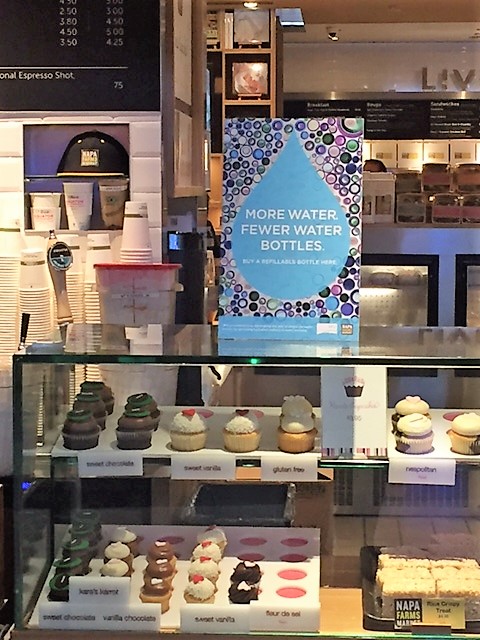
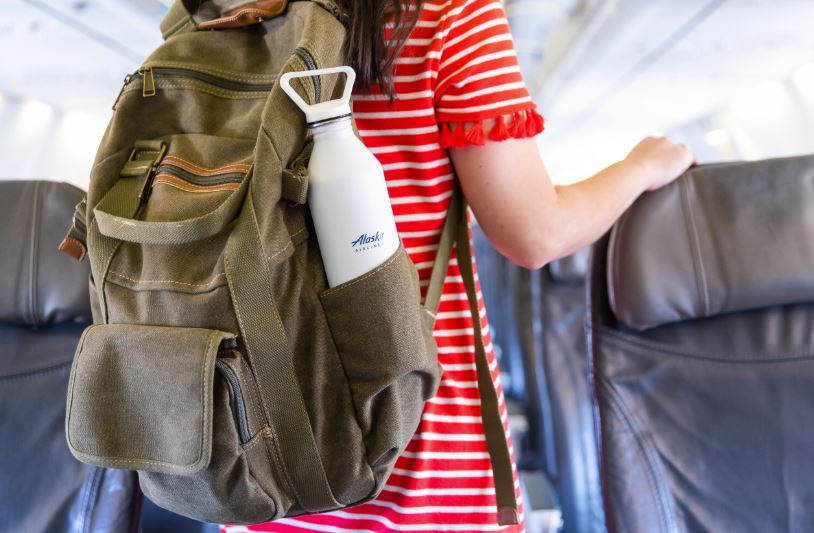
In September, Alaska Airlines kicked off a “FillBeforeYouFly”
initiative, asking passengers to help reduce the use of single-use plastic
bottles inflight by bringing their reusable water bottles to the airport and
filling them at airport hydrations stations before their flight.
In November, Scandinavian Airlines (SAS) introduced sustainable
meal packaging that includes paper with a coating made of organic
plant-based plastic instead of oil-based plastic as well as cutlery made of
plant-based plastic.
And earlier this year, Air
New Zealand removed individual plastic water bottles
from its Business Premier and Premium Economy cabins and switched to compostable plant-based coffee cups
made from paper and corn instead of plastic.
The airline is encouraging passengers to bring their
own reusable cups on board aircraft and into lounges. And, in a truly tasty
move, ANZ is running a test program to serve coffee and ice-cream in edible,
vanilla-flavored cups made by New Zealand-based twiice.
Alaska Airlines snowflake plane + Starbucks cup promotion
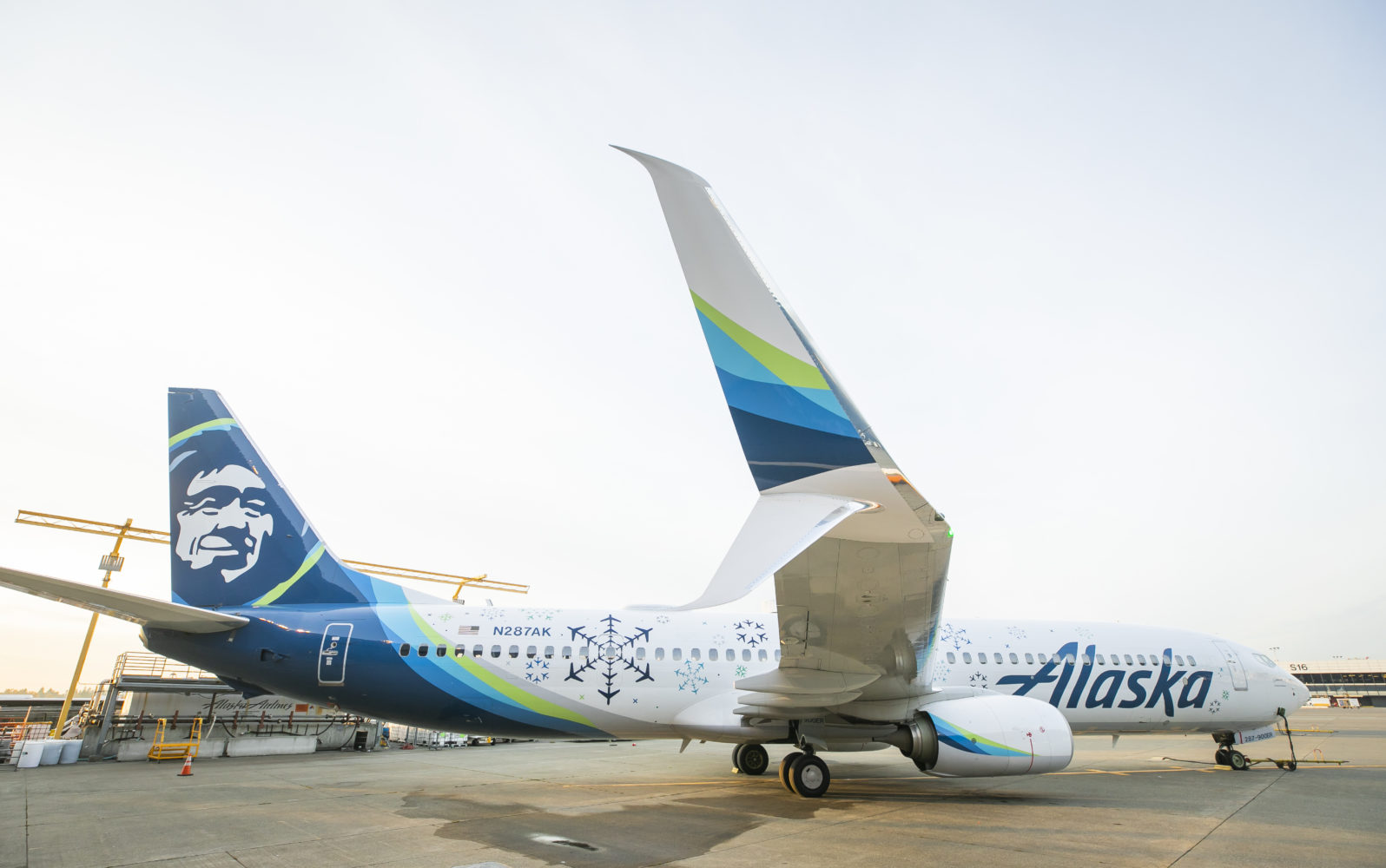
Alaska Airlines has put a snowflake-adorned plane in the air that will keep flying throughout the ski season.
And, through Sunday, November 10, the Seattle-based airline
is also partnering with Starbucks for a “red cup = early boarding” treat.
Show up for your Alaska Airlines flight with a Starbucks drink served in a red holiday cup and you’ll be invited to board the plane in the “espresso lane,” following group B.
Some airport Starbucks, including San Francisco International Airport (SFO), Hartsfield-Jackson Atlanta International Airport (ATL) and Minneapolis-St. Paul International Airport (MSP) are piloting compostable cups. But those airport Starbucks will be serving drinks with a red holiday sleeve and those drinks will qualify for “espresso lane” boarding as well.
And, as a bonus, on some West Coast flights, passengers will be gifted a complimentary reusable Starbucks holiday cup and $5 Starbucks gift card.
Today Alaska Airlines kicks off a campaign aimed at reducing the use of single-use plastics.
The secret weapon in
the plan? You.
The airline’s #FillBeforeYouFly
initiative is asking passengers to pitch in to reduce the use of single-use plastics
inflight by bring their own water bottle and filling it up at the airport before
they board.
To kick off the campaign,
today Alaska will be giving out complimentary reusable water bottles in all 7 Alaska Airlines’ lounges and on select flights leaving
Seattle and San Francisco International Airports.
In addition, the airline says it will plant a tree for
every passenger who brings a pre-filled water bottle onto their flight and
posts a photo to social media tagging @AlaskaAir with the hashtag
#FillBeforeYouFly.
“Our ultimate goal is
to work together with our guests and employees to improve the health of our
water by reducing plastic use,” said Diana Birkett
Rakow, Alaska Airlines’ vice president of external relations. ““Land, water, and animals are incredibly
special parts of the places we live and fly – and we’re in this for the long
term.”
Alaska estimates that
if just 10% of its passengers bring their own pre-filled water bottle when they
fly and choose reusables, it could save more than 700,000 plastic water bottles
and 4 million plastic cups per year.
This isn’t Alaska Airline’s
first step towards helping to save the planet: in 2018, Alaska became the first
airline to replace single-use, plastic stir straws and citrus picks with
sustainable alternatives and the airline recently
replaced bottled beer with aluminum cans, which are lighter and easier to
recycle.
Just about two years after acquiring Virgin America, Alaska Airlines is showing off the first retrofitted version of the fleet of Airbus aircraft the Seattle-based carrier inherited in the deal.
The makeover was revealed this week on an Airbus A3121neo (new engine option) airplane during a short demo flight out of San Francisco International Airport. These retrofitted interiors will eventually show up on all of Alaska’s Airbus fleet of A319, A320 and A321aircraft and on its Boeing 737-700s and three new Boeing MAX 9 planes.
Alaska Airlines
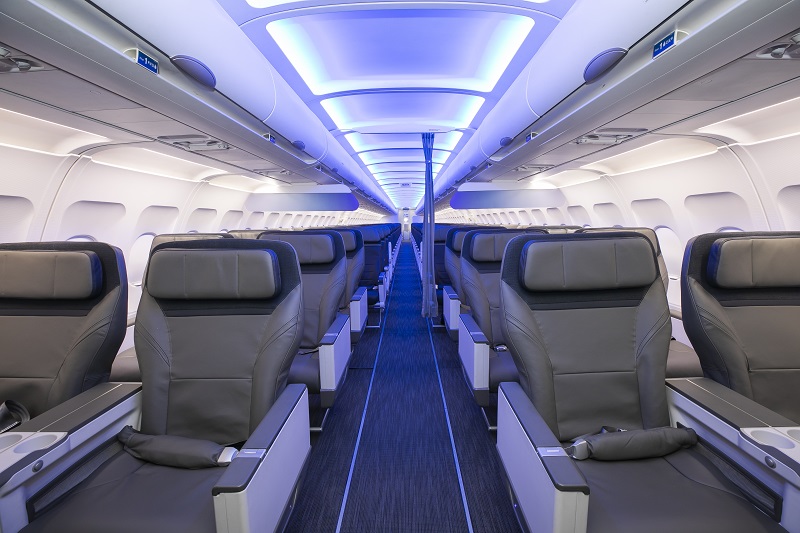
The new cabin features include upgraded seats, Alaska blue (not Virgin pink) mood lighting for boarding, a refreshed cabin color palette and space-saving tablet holders at each seat.
Device holders are on the seatbacks of premium and economy seats. Photo Alaska Airlines
Additional
upgrades range from more conveniently positioned power outlets (USB and 110V)
at every seat (no more sharing) and the elimination of those space-hogging electrical
boxes on the floor under the middle seats.
There are also ingenious pull-out cup holders in the tray tables of the premium class seats and, for everyone , Gogo’s faster high-speed satellite Wi-Fi.
And, in a nod to the hip Virgin America brand many customers still miss, the makeover includes an board and de-planing music playlist that Alaska has programmed to have a “cool West Coast vibe thatcomplements the relaxing and modern ambiance.”
Here are some more snaps of the plane’s new features:
photo: Harriet Baskas
Aircraft seat manufacturer Recaro has created first class seats that include memory foam, a 40″ pitch, tray tables with tablet holders and bonus footrests.
Photo – Harriet BaskasMesh pouches on seat backs have an extra elastic to make them easier to use. Photo Harriet BaskasSeatback screens are gone – replaced by device holders and easier to access USB power ports. Photo Harriet Baskas
Joshua Rappaport, Executive Cheft at LSG SkyChefs was on site – and on the plane – sharing details of a new, refreshed menu that leans heavily to healthy, seasonal, West Coast-sourced and fresh.
Seattle-based fashion designer Luly Yang was on site as well, showing off the line of uniforms passengers will soon see on the Alaska Airlines team.
The first commercial flights from what’s been dubbed “Seattle’s second airport” are set to take on March 4, 2019 from the brand new passenger terminal at Paine Field (PAE) in Everett, WA.
The 2-gate, 30,000 square-foot terminal is a
private-partnership between Propeller Airports and Snohomish County and feels
more like a swank airport lounge than a small regional airport.
Paine Field passenger terminal waiting area. Photo_Harriet Baskas
Here is my “At the Airport” column for USA TODAY about the Paine Field project:
To the delight of many travelers in the
Seattle-metro area who must battle some of the country’s worst traffic to reach
Seattle-Tacoma International Airport, Paine Field is 30 miles north of downtown
Seattle about 40 miles north of SEA.
As avgeeks and avid plane spotters will
quickly tell you, the new Paine Field passenger terminal sits on the same
airfield that houses Boeing’s sprawling wide-body assembly plant.
No telling what you’ll see while waiing for your fligh at Paine Field. We saw this unmarked “Janet Airlines” plane – thought to ferry goverment workers between Las Vegas and locations such as Area 51. – Photo Harriet Baskas
Where
will you be able to fly to from Paine Field?
After a brief setback due to the partial government shutdown, Alaska Airlines is scheduled to launch service from Paine Field on March 4 with flights to Portland, Las Vegas and Phoenix after a ribbon-cutting ceremony at the airport.
By March 12, the full schedule of 18 daily roundtrip
nonstop flights to 8 west coast cities – Las Vegas, Los Angeles, Orange County,
Phoenix, Portland, San Diego, San Francisco and San Jose – should be operating
on their regular schedules.
“I think we’ll have a good mix of leisure and
business travelers,” said Mario Doiron, who will serve as Alaska Airlines’
station supervisor at Paine Field, “The morning flights will likely be filled
with business travelers, as is the pattern now for us at SEA airport. But
there’s been more interest from leisure travelers than we thought.”
United
Airlines, the only other carrier scheduled to operate out of the Paine
Field passenger terminal, will begin flying six daily flights from PAE on March
31: two daily roundtrips to Denver and four daily roundtrips to San Francisco.
Making sure United offered flights from
Paine Field to Denver and San Francisco “Is kind of a no-brainer,” in terms of
giving more passengers a way to get to the airline’s hub airports, said Ankit Gupta, United’s VP of Domestic
Network Planning. “As the airport expands, we’ll look at either flying bigger
jets or flying to more cities.”
Both airlines will operate their flights from Paine Field on
Embraer 175 jets.
What’s inside the new
Paine Field passenger terminal?
Photo Harriet Baskas
Propeller Airport CEO, Brett Smith gave me a tour of the new Paine Field passenger terminal at the end of February, less than two weeks before the facility was set to welcome its first guests.
Construction was complete, but Smith was busy
answering calls and questions about last-minute touch-ups and finish-work and making
adjustments to the lighting and the sound system. In one of the two gate hold
areas, employees from Alaska Airlines, the Transportation Security
Administration, the local sheriff’s office and other groups were doing
operational run-throughs for opening day.
With valet parking and a concierge desk at the terminal door,
Smith says the $40 million terminal designed by Denver-based Fentress
Architects will make passengers feel as if they’re entering an upscale hotel
lobby. Once through security, “They’ll feel as if they’re in an upscale private
airport lounge,” said Smith, “But this lounge is for everybody.”
The lobby has a polished concrete floor, a Swiss-made wood
acoustical treatment on the ceiling, a Bose sound system, check-in stands with
Italian-marble countertops, and a limestone-covered wall complete with
easy-to-spot fossil imprints. Behind a bank of check-in kiosks is a Solari
flight display board programmed to emit the retro flip-board “flapping.”
Smith says the concierge desk staff will offer all
passengers the same sort of service hotel concierge staff might offer,
including direction and recommendations for restaurants and places to stay, as
well as help with bookings. The concierge team will also escort Alaska’s 75
gold and UA 1K and above flyers to the front of the TSA line.
Smith hopes to introduce concierge subscription
plans that might include everything from a fast track through the TSA line to
unlimited valet parking and pickup and drop-off services within a 10 mile
radius of the airport.
“We might also offer services like fulfilling grocery orders
and taking care of dry cleaning or laundry which can be arraigned in advance so
that when travelers return home they will find their requests fulfilled and
waiting in their vehicles,” said Smith.
A short ramp leads to the TSA security
checkpoint area, which will have three lanes, including one devoted to TSA
pre-check.
The
main terminal
Once past the security checkpoint, passengers
enter the main terminal waiting area between the two gate areas. This center
area has a plush, living room-like feel to it, complete with two fireplaces,
plenty of armchairs and other comfortable seating, and a set of display cases
filled with Paine Field-related memorabilia.
The view outside the large glass windows is
unique: because Paine Field is home to the Boeing assembly plant and many other
aviation-related activities, passengers are likely to spot anything from
Boeing’s Dreamlifter and airplanes fresh out of the factory to military
aircraft, private jets and planes in for maintenance. (The day we toured, a “Janet” airlines plane,
said to ferry government employees between Las Vegas McCarran International
Airport and top-secret locations, such as Area 51, was pulling out of a
hangar.)
To insure passengers don’t miss anything out
on the airfield, there are glass-walled jet-bridges leading to and from the
airplanes that will park at each gate
There’s robust Wi-Fi throughout the Paine
Field passenger terminal, multiple options for power each of the 300 seats, and
food and beverage provided by Seattle’s well-loved Beecher’s Handmade Cheese,
including a Café Vita coffee shop pre-security. Post-security there will be a
Beecher’s Handmade Cheese Café, serving soups, sandwiches and mac ‘n cheese,
plus the Upper Case Bar, with Pacific Northwest wines, cocktails and food from
the café.
Arrivals
The one-carousel baggage claim is about a
minute’s walk from either gate and passenger pickup is just outside the bag
claim area. A pet-relief area and a small building where passengers will wait
for taxis, ride-hailed drivers and car rental shuttles is just outside the bag
claim area.
A
bit of Paine Field history
Paine Field –
Snohomish Country Airport (PAE) was originally built in 1936 as a Works
Progress Administration (WPA) project with the goal of being one of ten “super
airports” around the country.
WWII and the Korean War changed those plans and, in 1966,
after Snohomish County took over the airport, Boeing set up its production
facility for the B-747 airplanes at Paine Field.
Commercial passenger service from Paine Field
has been proposed, and hotly debated, for years.
In addition to the new Paine Field passenger
terminal, today Paine Field is home to the Boeing Company’s wide-body assembly
plant and the popular Boeing
Factory Tour, as well as several other aviation-related businesses and
facilities, museums and attractions, including the Flight Heritage & Combat Armor Museum built around a
collection established by the late Paul G. Allen.
Alaska Airlines plans to build a new 8,500-square-foot top floor lounge in Terminal 2 at San Francisco International Airport (SFO) .
The lounge will offer guests great views of the airport runway activities and of San Francisco Bay. It is expected to open in 2020.
To celebrate the announcement, Alaska Airlines is offering flyers traveling through SFO’s Terminal 2 today (February 20, 2019) a chance to win a free Alaska Lounge membership for the entire year.
To enter, stop by Gate 54B.
Alaska will be offering a demo of the upgraded lounge experience and handing out giveaways. There will also be special appearances by San Francisco Giants mascot Lou Seal and San Jose Sharks mascot S.J. Sharkie.
Travelers who take a picture of themselves enjoying the lounge experience (maybe with one of those mascots) and who then post the picture to Twitter and Instagram will be entered in the contest. (Use the tags @AlaskaAir and the hashtag #MostWestCoast.)
“SFO is our second largest hub with an average of 150,000 passengers flying on a daily basis, and we want to ensure airport visitors can rest, relax and enjoy our wide array of lounge offerings.” said Annabel Chang, Alaska Airlines’ vice president of the Bay Area.
In addition to a great view, the new lounge will offer guests complimentary fresh food options, including salads, soups and tapas.
The lounge will also offer made-to-order meals available for purchase, including Asparagus and Goat Cheese Omelet with roasted potatoes or a Korean Rice Bowl with steamed vegetables and gochujang sauce.
Alaska Airlines is on a mission to upgrade and expand its lounges.
The Seattle-based carrier opened its first East Coast lounge in April 2018 at JFK International Airport. A new flagship 15,000-square-foot lounge at Seattle-Tacoma International Airport is expected to open in June.
Marvel Studios’ Captain Marvel opens on March 8, (International Women’s Day) and, in anticipation of the big day, Alaska Airlines unveiled a special-edition plane at Seattle-Tacoma International Airport today featuring Marvel Studios’ first female Super Hero lead.
The Captain Marvel-themed plane took off from SEA to Orange County, California.
The livery shows Captain Marvel taking flight and commanding the attention she deserves as a female pilot who has the necessary special powers to fight for the greater good.
Passengers boarding this plane will see a film logo when they board and an image of Goose the cat (a character in the story) over the wings.
The Captain Marvel-themed 737-800, tail number N531AS, begins flying throughout Alaska’s route network today.
Alaska Airlines is running several film-related promotions on Twitter and on Facebook.
First up: From Feb. 6-9, Alaska Airlines social fans and followers can enter for a chance to win one pair of tickets to the premiere of Marvel Studios’ Captain Marvel, including roundtrip airfare and hotel accommodations for two in Los Angeles. Terms and conditions are available online.
What’s the big deal with this Captain Marvel film?
l
Set in the 1990s, Marvel Studios’ “Captain Marvel” follows the journey of Carol Danvers as she becomes one of the universe’s most powerful heroes. While a galactic war between two alien races reaches Earth, Danvers finds herself and a small cadre of allies at the center of the action.