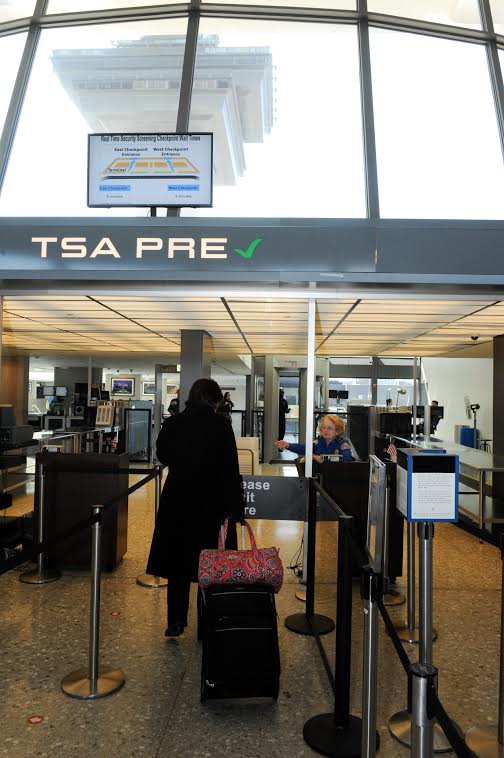
A few weeks ago, the Transportation Security Admnistration announced in the Federal Register that it would be setting up a verification program for passengers who show up at the TSA checkpoint without a Real ID, passport or some other acceptable form of identification.
To cover the costs of the alt-ID program, which is set to roll out on February 1, 2026, the agency said it would charge passengers an $18 fee for the service. The fee will non-refundable, even if verification is unsuccessful.
Now, just a few weeks after announcing the program, TSA says it will be not be charging an $18 fee for the TSA Confirm.ID program, afterall.
Instead it will more than double the charge to $45, which will be good for a 10-day period.
According to a TSA statement there will be an option to pay the fee online before arriving at the airport, but the procedure for the alternative verification program may be different at each airport.
For passengers who arrive at the airport without paying the fee ahead of time, TSA says there will posted information at or near the checkpoints about how to pay the fee, but warns that however they pay, “travelers who undergo TSA Confirm.ID processing at an airport should expect delays.”
If you have a subscription to The New Yorker or can somehow click your way through to access it, be sure to read this revealing and heartstopping story titled: Amelia Earhart’s Reckless Final Flights, by Lauri Gwen Shapiro.
It’s taken from Shapiro’s soon-to-be-published book The Aviator and the Showman: Amelia Earhart, George Putnam, and the Marriage that Made an American Icon, which we just pre-ordered.
(Image above courtesy Smithsonian National Air & Space Museum)
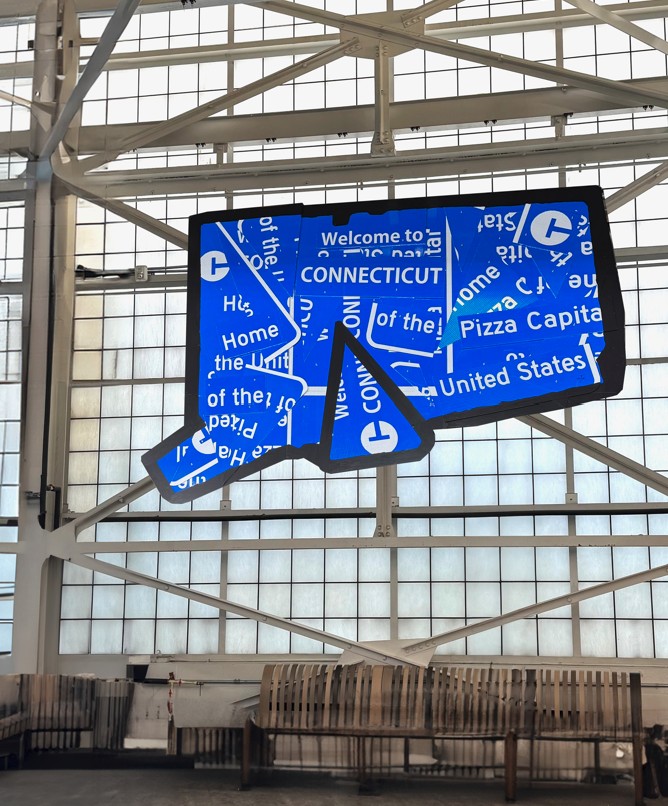
Fresh art at Connecticut’s Tweed New Haven Airport
Connecticut, long known as ‘The Nutmeg State,’ also boasts about being home to the nation’s ‘best pizza.’
Titled, The Pizza State,” the nine-foot by six-foot art piece is made of Connecticut highway signs (which we’re sure were secured legally) and celebrates New Haven-style pizza. The artist is Michael Pollack of the creative entity known as the New Haven Pizza Club (NHVPC).
"The Pizza State” has landed at HVN! 🍕✈️
This new art installation—crafted from CT highway signs—celebrates New Haven-style apizza and was created by local artist Michael Pollack, founder of New Haven Pizza Club. Now permanently on display in Departures.
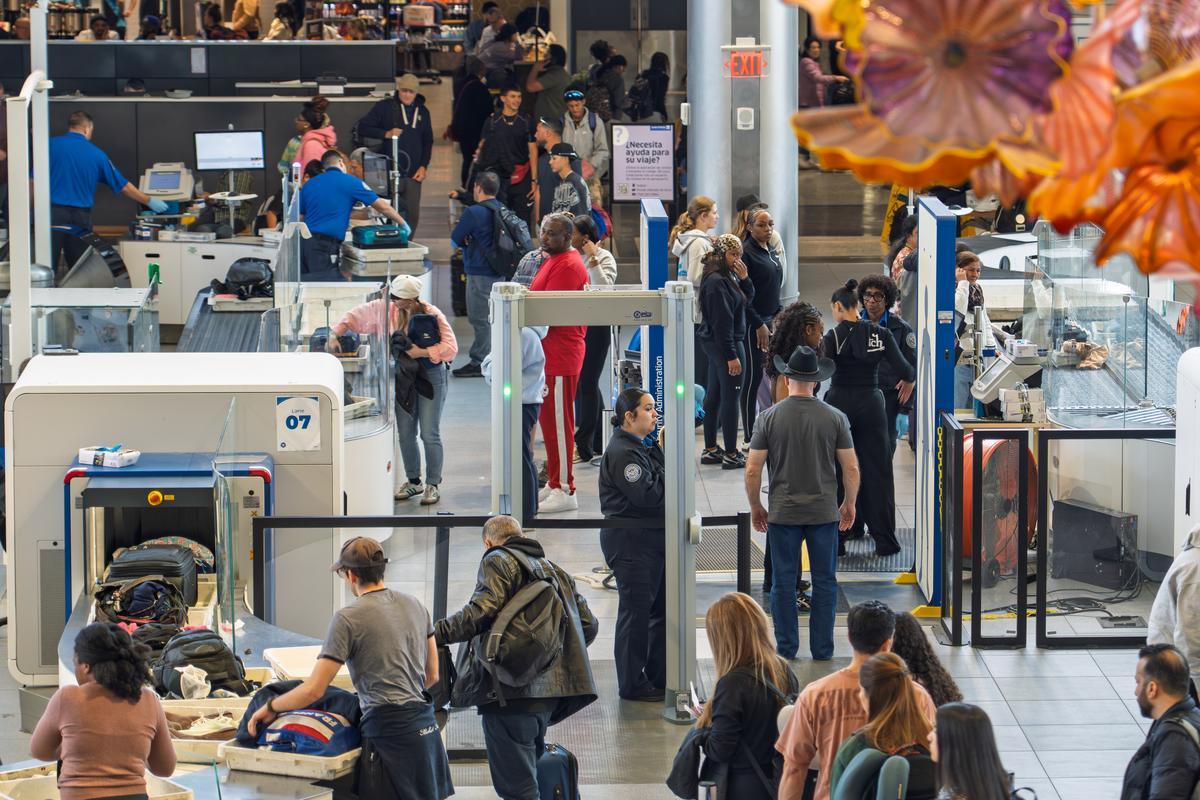
But this Friday’s opening of the new Checkpoint 1 should address some of that congestion by adding five additonal general screening lanes.
Look for SEA’s new Checkpoint 1 on the bag claim level of the airport (that’s unusual!) at the far south end of the terminal.
In addition to a new batch of art being installed along the checkpoint, we spotted some of TSA’s newest body scanning equipment ready to go into operation.
These machines, which we tested out at Portland International Airport’s (PDX) new terminal last year, are more accessible, with wider portals and no neeed for passengers to raise their arms.
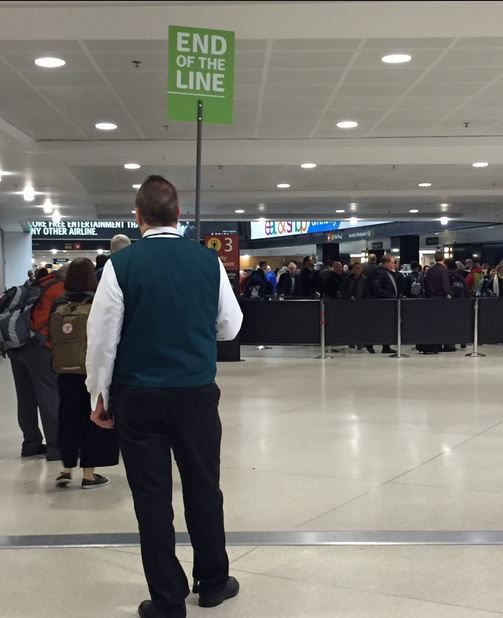
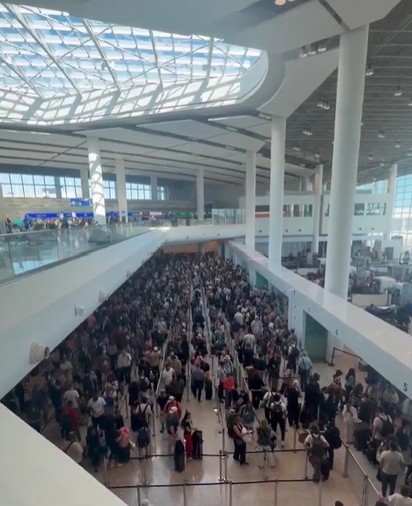
The Memorial Day weekend means longer than usual lines at airport security checkpoints. And if you don’t have TSA PreCheck it’s a good bet you’ll find yourself standing in those very long line.
But there’s a free, ‘secret’ way to bypass those lines at more than 20 airports in North America and Europe.
For travelers without paid memberships in TSA PreCheck or CLEAR, there’s a free virtual cueing program at select airports.
Passengers can go online before they get to the airport – or when they’re at the airport – and reserve a time slot to go through a dedicated lane at the airport.
It’s like a restaurant reservation. And it lets you bypass others waiting in line.
How – and where – to get a reservation to go through airport security and skip the lines
The free airport security line reservation programs are part of Clear RESERVE, which is managed by CLEAR, the company that also runs the paid Clear Plus program that uses fingerprints or eye scans to expedite your checkpoint journey. And to make it just a bit more confusing, the Clear RESERVE program is branded differently at participating airports.
As of May 2024, free timed security checkpoint reservations are being offered at these airports in North America and Europe.
United States
Denver International Airport (DEN)
Los Angeles International Airport (LAX)
Minneapolis-St. Paul International Airport (MSP)
New York John F. Kennedy International Airport (JFK)
Newark Liberty International Airport (EWR)
Orlando International Airport (MCO
Phoenix Sky Harbor International Airport (PHX)
Seattle Tacoma International Airport (SEA)
Canada
Calgary International Airport (YYC)
Edmonton International Airport (YEG)
Halifax International Airport (YHZ)
Montreal-Trudeau International Airport (YUL)
Toronto International Airport (YYZ)
Vancouver International Airport (YVR)
Europe
Amsterdam Airport Schiphol (AMS)
Berlin Brandenburg Airport (BER)
Frankfurt Airport (FRA)
Hanover Airport (HAJ)
London Heathrow Airport (LHR)
Rome Fiumicino Leonardo da Vinci Airport (FCO
How to book your free security checkpoint reservation
If the security checkpoint reservation is offered at your departure airport, use the airport or Clear Reserve website to book your time.
Enter your flight and contact information, and if a reservation slot is available, you will receive a confirmation email with a QR code.
When you arrive at the airport, show your QR code at the designated TSA checkpoint lane.
Your reservation will have a 20-minute grace period. But if you have made a group reservation, everyone on the reservation must be there at the appointment time.
That’s what the Transportation Security Administration has in mind.
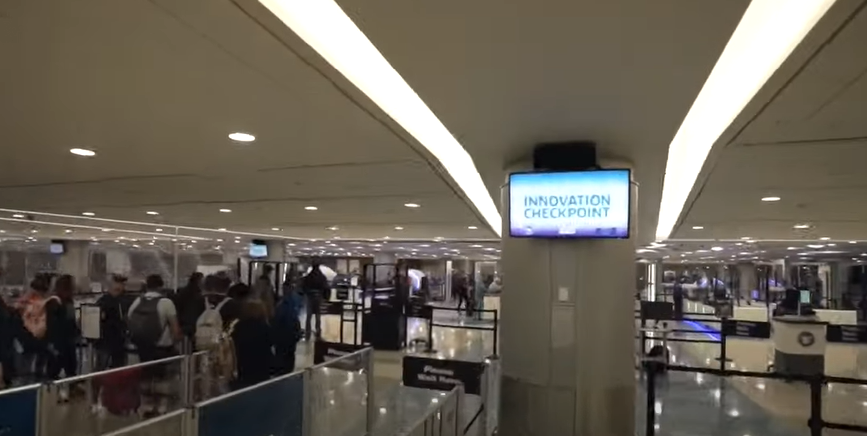
For the next six months, TSA and the Department of Homeland Security will be testing a self-service checkpoint at Harry Reid International Airport (LAS) in Las Vegas.
Starting in mid-March, travelers enrolled in TSA PreCheck will have the option to use TSA’s Innovation Checkpoint at LAS and test out a prototype technology that includes new body scanning technology that lets passengers complete the screening process on their own.
As they do now, travelers will empty their pockets and put all carry-on items into bins that go through the X-ray machines. Then each passenger steps into an enclosed scanning booth.
If, for example, the passenger has left a cell phone in their pocket, the booth directs them to step out, empty their pockets and try again.
The goal, TSA says, is to use this technology to cut down on instances where a TSA agent is required to conduct a pat-down or secondary screening.
Curious about how it works and ready – or not – to give it a try?
Officers for the Transportation Security Administration see a lot of stuff in the carry-on bags of passengers. Some of it is just fine for people to take on the plane with them. Other items, such as baseball bats, meat cleavers, and even Magic 8 balls, falls on the prohibited items.
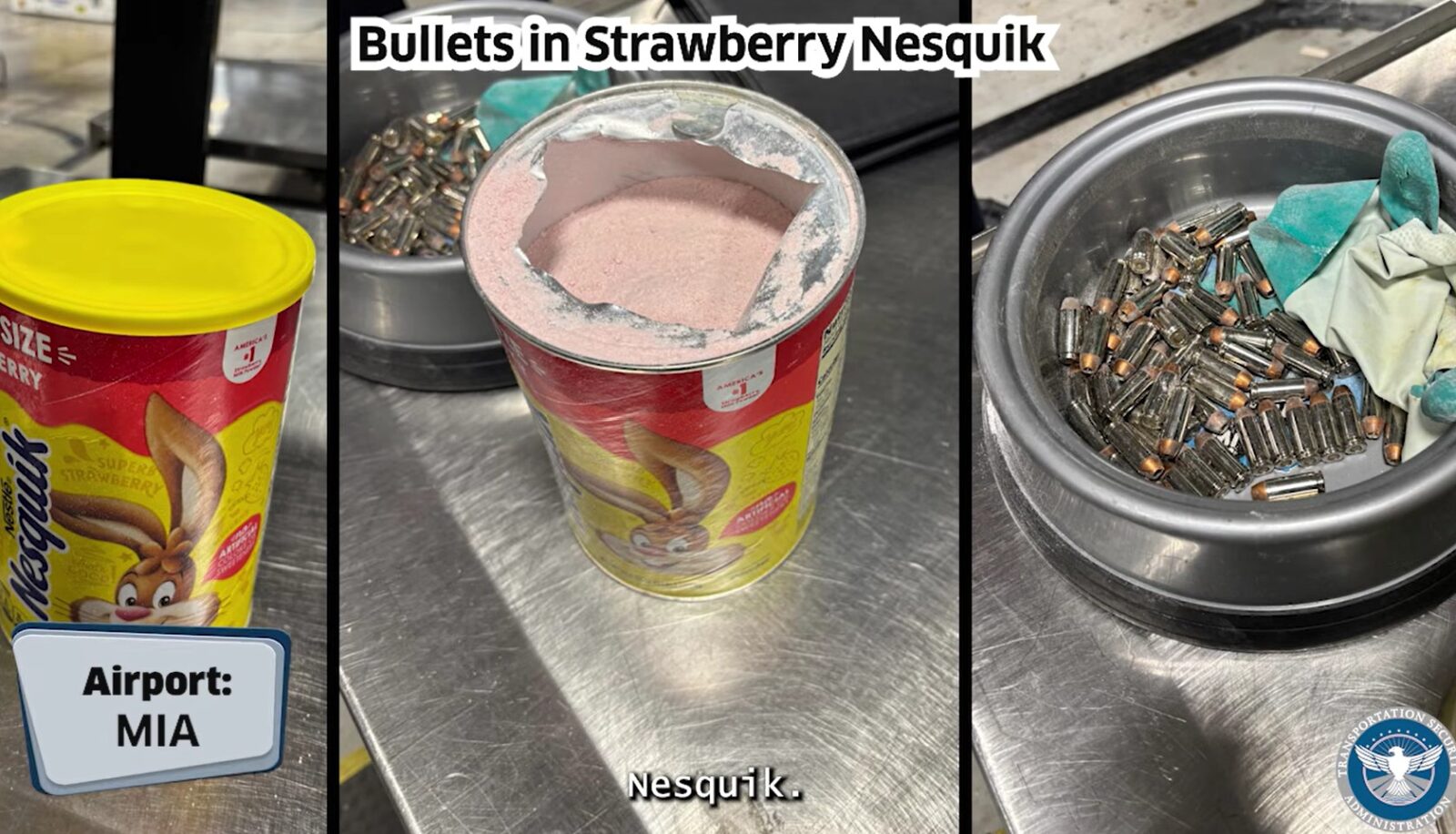
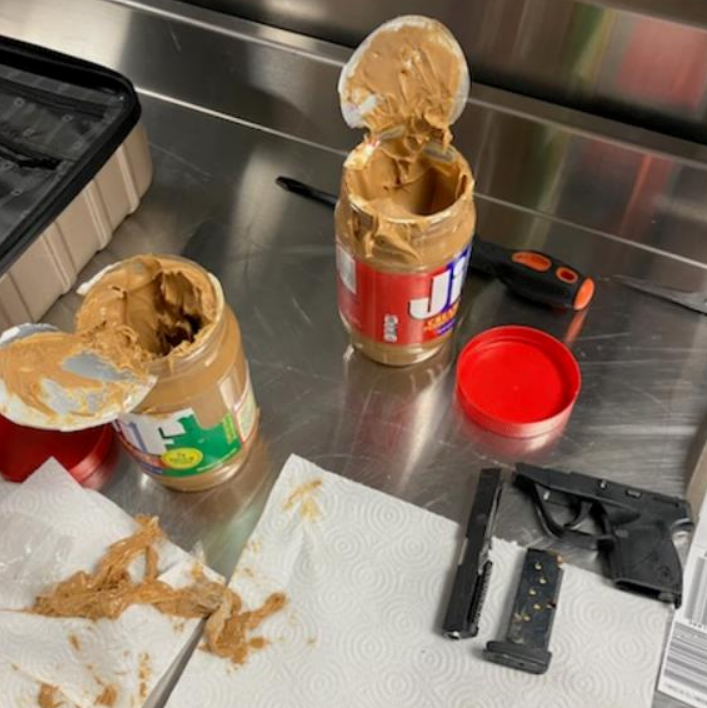
So do knives, guns, and other items that are clearly weapons. Yet people try to sneak that stuff by all the time. In fact, even before the end of December, TSA found a record 6301 firearms in carry-on bags at airports. More than 88% of those firearms were loaded.
Some travelers forget they have a knife, gun, or some other prohibited item in their bag. Others know exactly what they’ve packed and go to creative lengths to try to get prohibited items past the checkpoint undetected.
The most outrageous items end up on the annual list of TSA’s Top 10 Catches.
Here’s the full 2022 list, in a corny video put together by TSA.
The agency has been doing this year-end round-up for a while. And our favorites are still the early ones hosted by the late Blogger Bob” Burns. We’ve included his 2016 round-up below.