Airline food

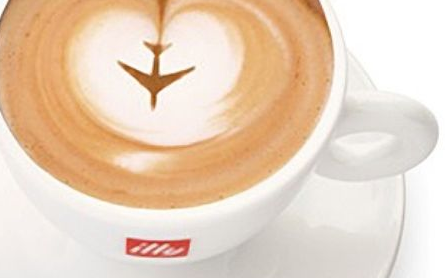
United starts pouring illy coffee on July 1.

United coffee art

You can stop saying “No, thank-you” when flight attendants on United Airlines flights come around offering coffee.

That’s because starting Friday, July 1, the carrier will start serving a specially chosen dark roast coffee from famed Italian coffee roaster illy on all flights.

“We acted on customer feedback and are delivering a product our employees are proud to serve, while bringing excellence and passion to every one of the 72 million cups of coffee we serve inflight every year,” said Jimmy Samartzis, United’s vice president of Food Services and United Clubs in a statement.

After merging with Continental Airlines, United had stopped serving Starbucks brand coffee in favor of the brand Continental had been serving. Customers noticed.

To fix that, United went all out – sending Illy coffee experts and caffeine-conscious employees into airports and onto flights to do taste testing and gather feedback on which coffee blend might be the best replacement – and the dark roast blend “won.”

United began serving the illy coffee in its United Club locations in December, 2015. Now that illy has had time to ramp up a special production line to make enough pillow-packs to supply United with the 50 tons of coffee it needs monthly, United passengers will be getting the better brew too.

United was really serious about this coffee switch and back in April, sent a team of key personnel to illy’s intensive University of Coffee at the Culinary Institute of America’s campus in St. Helena, Calif., where they learned about growing, roasting and preparing great coffee.

United team wiht their cups

I got to go along and wrote a piece for USA TODAY about the experience – and about United’s goals in making the switch.

You can read those stories here and here.

Coffee University_United's Jeffrey Pelch conducts taste test at illy University of Coffee in March 2016

United adds Garrett Popcorn to the menu

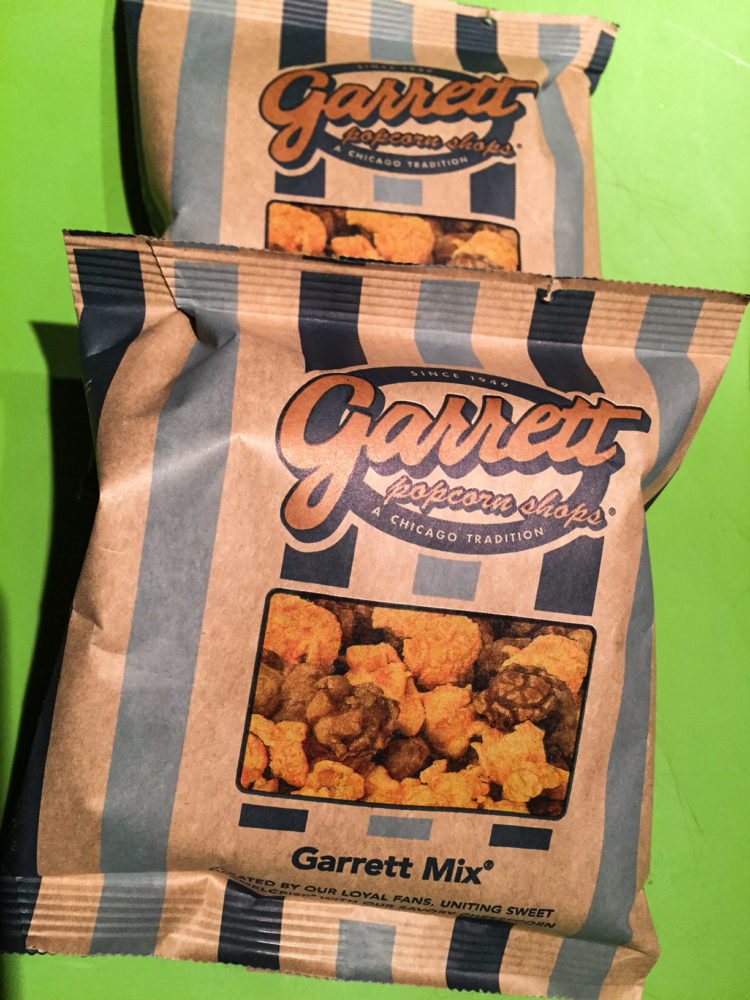
If you’re a big fan of popcorn in any form and trying out locally-themed treats on the road, then you’ll be pleased to learn that United Airlines has added snack-sized bags of Garrett Popcorn to its by-on-board menu.

United Garrett Popcorn_edited

If you’ve ever traveled through Chicago’s O’Hare Airport, you’ve seen – and perhaps bought a bag, or three, of Garrett Popcorn.

And then gone back for more.

Now, if you don’t have time to buy the popcorn at the airport, you can buy a small bag of Garrett Mix -(CheeseCorn and CaramelCrisp) on flights longer than two hours. Price. $3.99

United is also adding a kid-friendly snack box to its by-on-board menu. The Ben Flyin Snack Box will have a turkey stick, animal crackers, apple sauce, a game (Wikki Stix) – but no popcorn.

Help fund a film about airline food

Singapore food testing

If you’ve ever been curious about the food offered to passengers on planes, you may be interested in throwing in a few bucks to help out the folks over at inflightfeed, who not only love eating and reviewing airplane food, they’re got a Kickstarter campaign going to fund a film on the topic.

Their goal: $74,049.

So far, just over $2000 has been raised. But they’re early in the process and, well, who wouldn’t want to see what inflightfeed founder Nikos Loukas describe as “a very cool airline food documentary around the globe about Qantas, Air France, Turkish, Cathay, Air Baltic plus quite a few more airlines.”

The project sounds tasty: “We will have wine tastings, food tastings, and first class cabin mock up experiences,” said Loukas.

As Kickstarter projects go, there’s a long list of perks being offered for folks who pledge at various levels, including the opportunity to be a taste tester on the set.

Yum!

Delta Air Lines coffee cup contest

DELTA CUP CONTEST

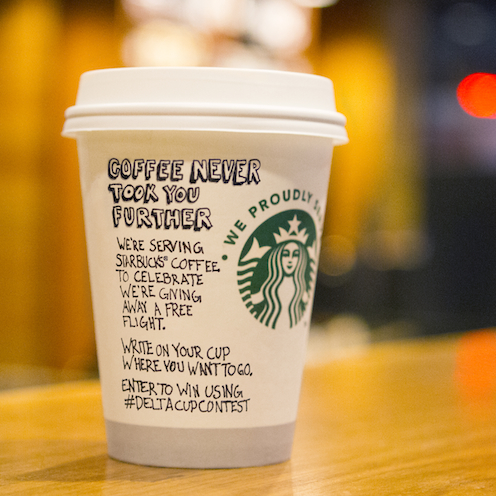
Good coffee is important on the ground and in the air. So it’s good news that Delta Air Lines has decided to join with some other airlines, including Alaska Airlines, in serving Starbucks coffee on flights.

To celebrate the airline is having a coffee cup contest. To enter, write where you want to go on a cup and share a photo of it on line at Twitter or Instagram with the hashtag #DeltaCupContest.

Do that by midnight eastern time on February 8, 2015 to be eligible for a drawing for a free flight on Monday, January 9. The prize: an economy ticket for one anywhere Delta flies.

Snack Saturday: Free Currywurst during World Cup

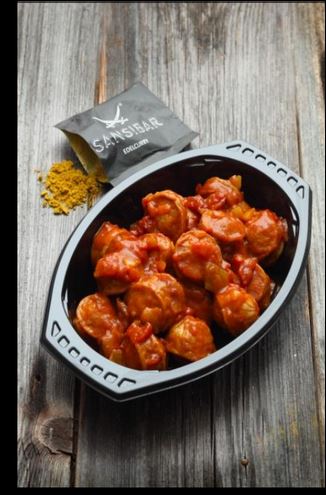
AIRBERLIN CURRYWURST

Germany faces Brazil in the World Cup finals on Tuesday and, as I learned during my visit to airberlin headquarters in Berlin recently, that means free currywurst for passengers on airberlin flights during the game.

Currywurst, a popular fast food dish in Germany that consists of whole or sliced pork sausage topped by a mixture of ketchup and curry powder, is one of the more popular buy-on-board options airberlin offers on its menu of dishes prepared for the airline by the Sansibar restaurant. The on-board version usually sells for about $9 (6.90 euros) and is sliced, made from veal and pork and served with a spicy curry sauce, a packet of extra-strong curry powder, a roll and, as is tradition, a wooden fork.

airberlin pilots have been announcing the results of World Cup matches that take place during flights and offering half-time scores for matches involving Germany. The free curry-wurst is served on all German domestic flights between 5 pm and 8 pm on the days when the German team is playing.

Snack Saturday: KLM’s in-flight Dutch fest

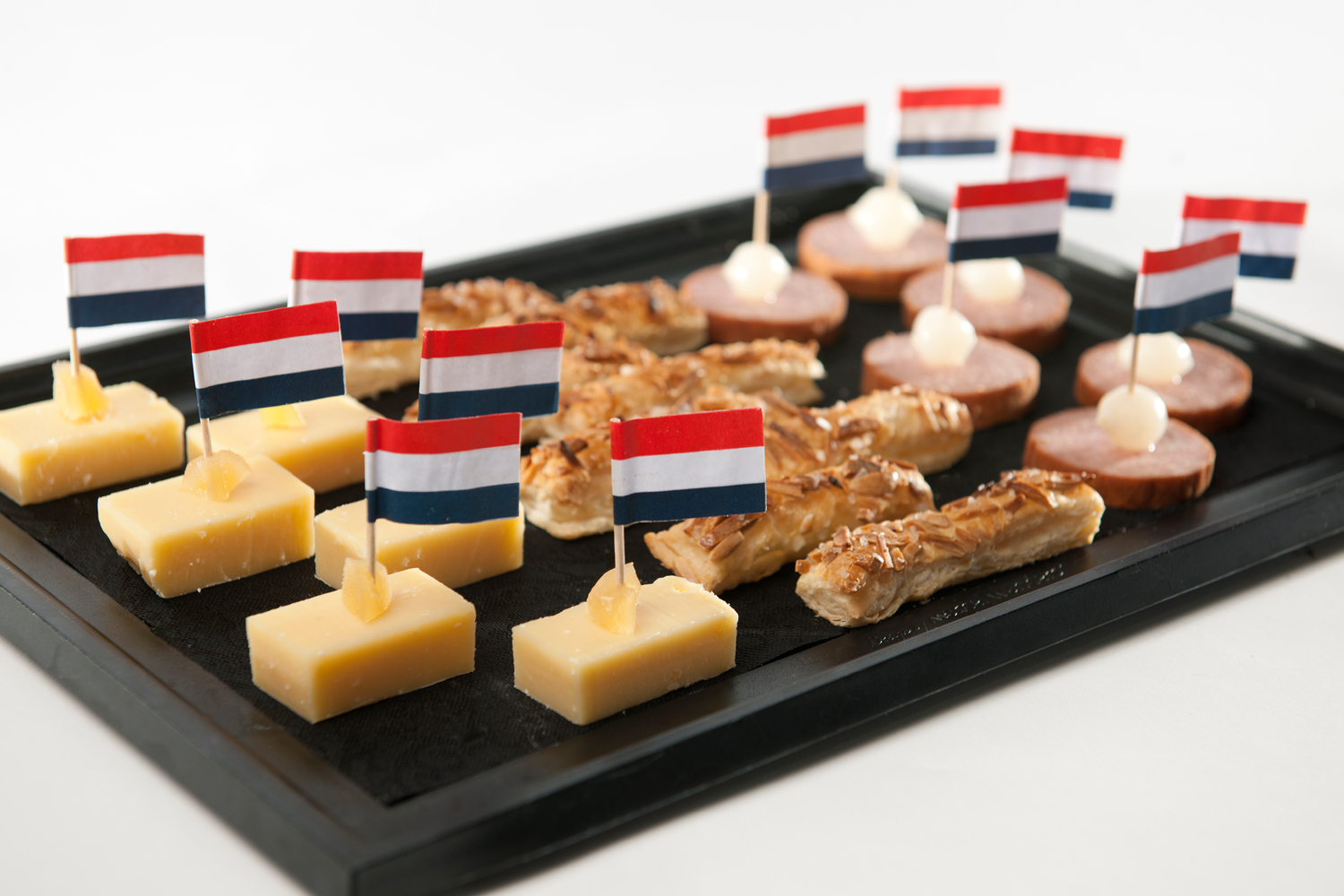
Throughout October and November passengers on KLM Royal Dutch Airlines flights from Amsterdam will notice a special Dutch theme as the airline celebrates its “From Holland” festival by offering food and entertainment featuring Dutch products and farming.

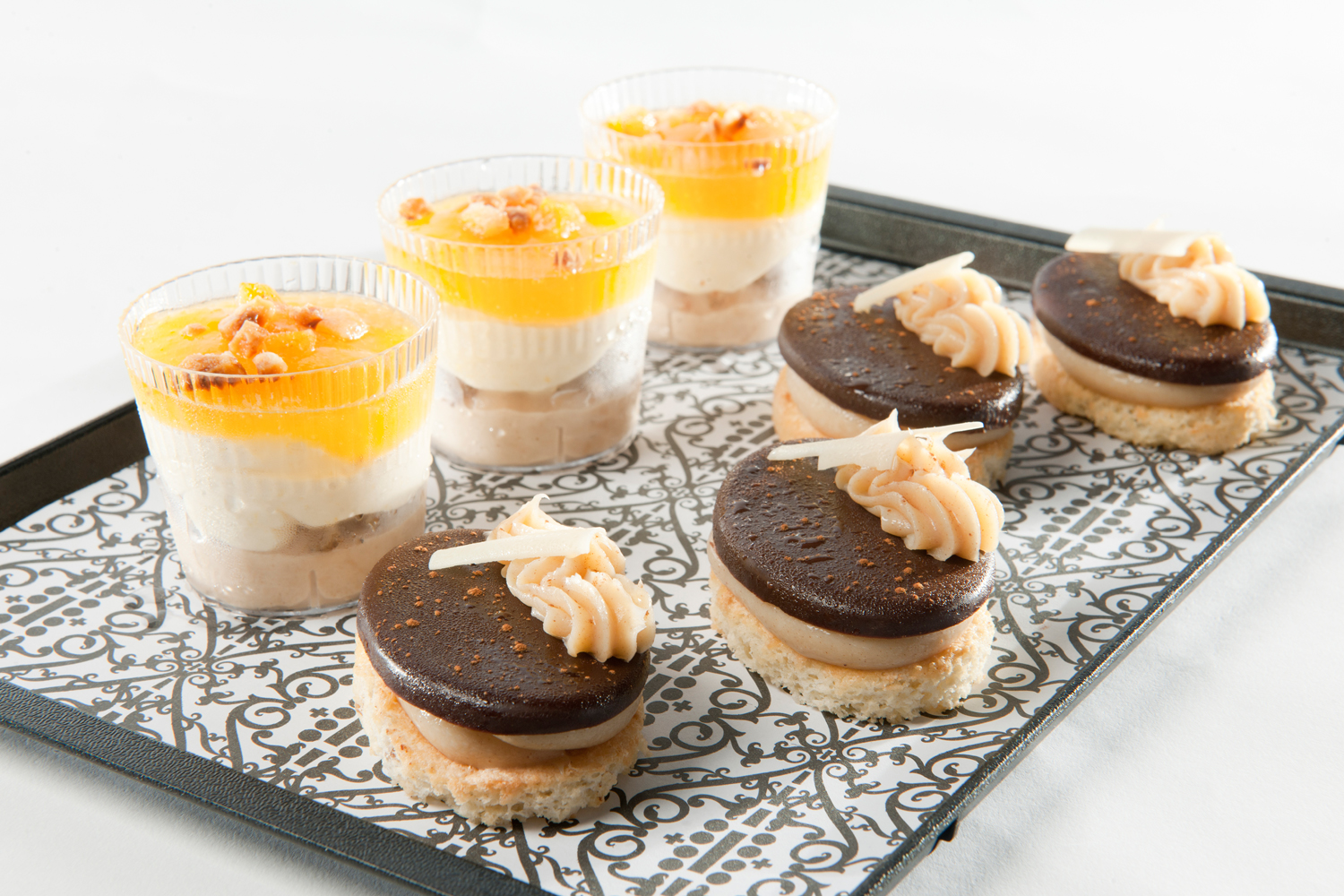
The meals KLM on intercontinental flights in World Business Class (WBC) from Amsterdam during the festival are made from all kinds of ingredients produced by Dutch farms, fisheries and suppliers. KLM will serve Willem van Oranje potatoes from Flevopolder, Reypenaer cheese from Woerden, and wine from the coastal province of Zeeland. The desserts have been developed by Huize van Wely. The pike-perch with the Zuiderzeezilver label are also caught in the IJsselmeer and Markermeer just north of Amsterdam. A range of Dutch autumn vegetables and fruit also feature on the menus.

Yum.

In European Business Class, the “Touch of Dutch” menu will include those Huize van Wely desserts. And in Economy Class on European flights, the Dutch touch will feature large “stroopwafel” syrup biscuits, cheese crackers, and bread rolls filled with Beemster cheese.

Intercontinental Economy Class passengers aren’t left out either: there, the menu will include red cabbage with minced-beef meatballs or a fish dish with a Dutch-cheese sauce.

Not interested in those dishes? KLM says the Dutch products will be offered as an option alongside the international onboard meals it usually serves.

The in-flight “From Holland” festival goes beyond food: on the in-flight entertainment system the airline will be serving up Dutch films, music and other programming.

It all sounds yummy… but I’m still waiting for the opportunity to start collecting those gin-filled, Delft blue, miniature Dutch houses.

Airline food … a lot of it – all in one place

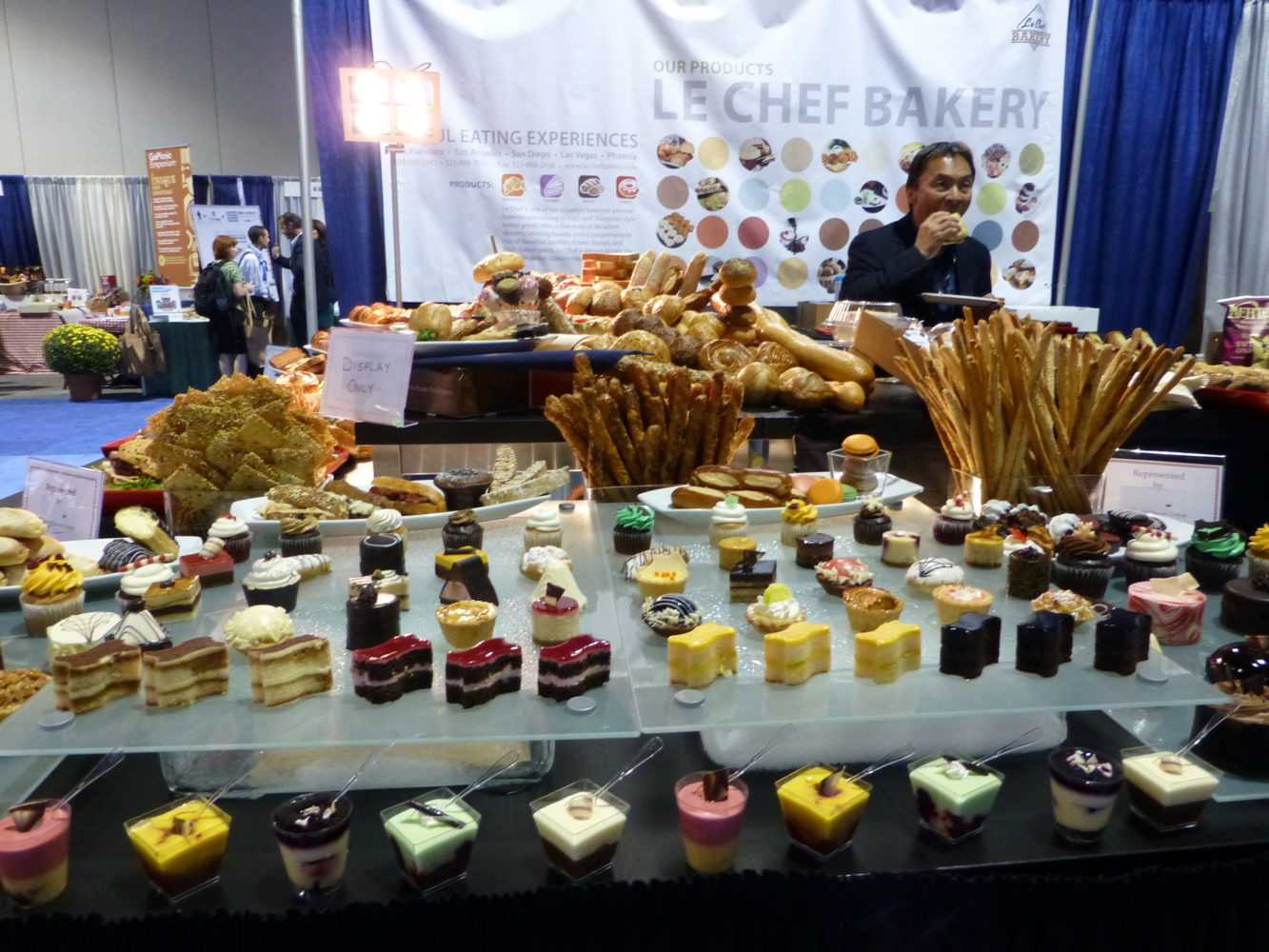
It’s been a educational, acronym-filled week in Long Beach, CA for me while I attend the APEX EXPO (Airline Passenger Experience Association Expo) and nibble my way through IFSA – the International Flight Services Association’s exhibition hall of on-board food products and other items caterers and suppliers were pitching to airlines.

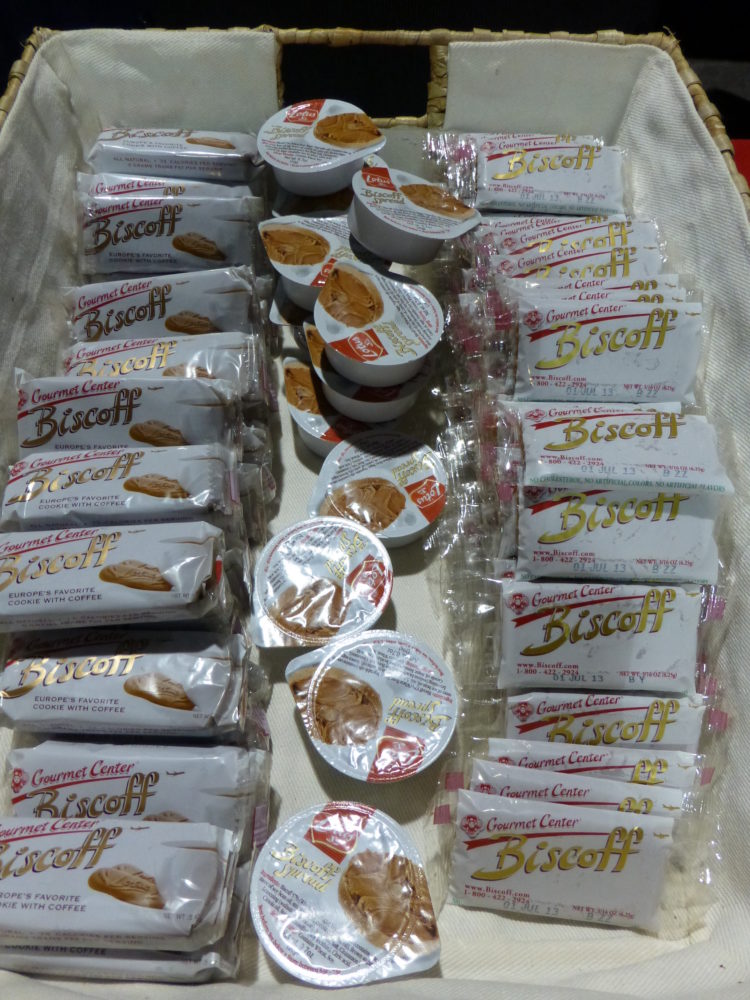
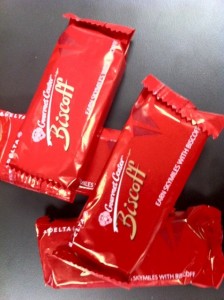
In addition to familiar items such as those Biscoff crackers which, I discovered, also come in a whipped Nutella-like spread,

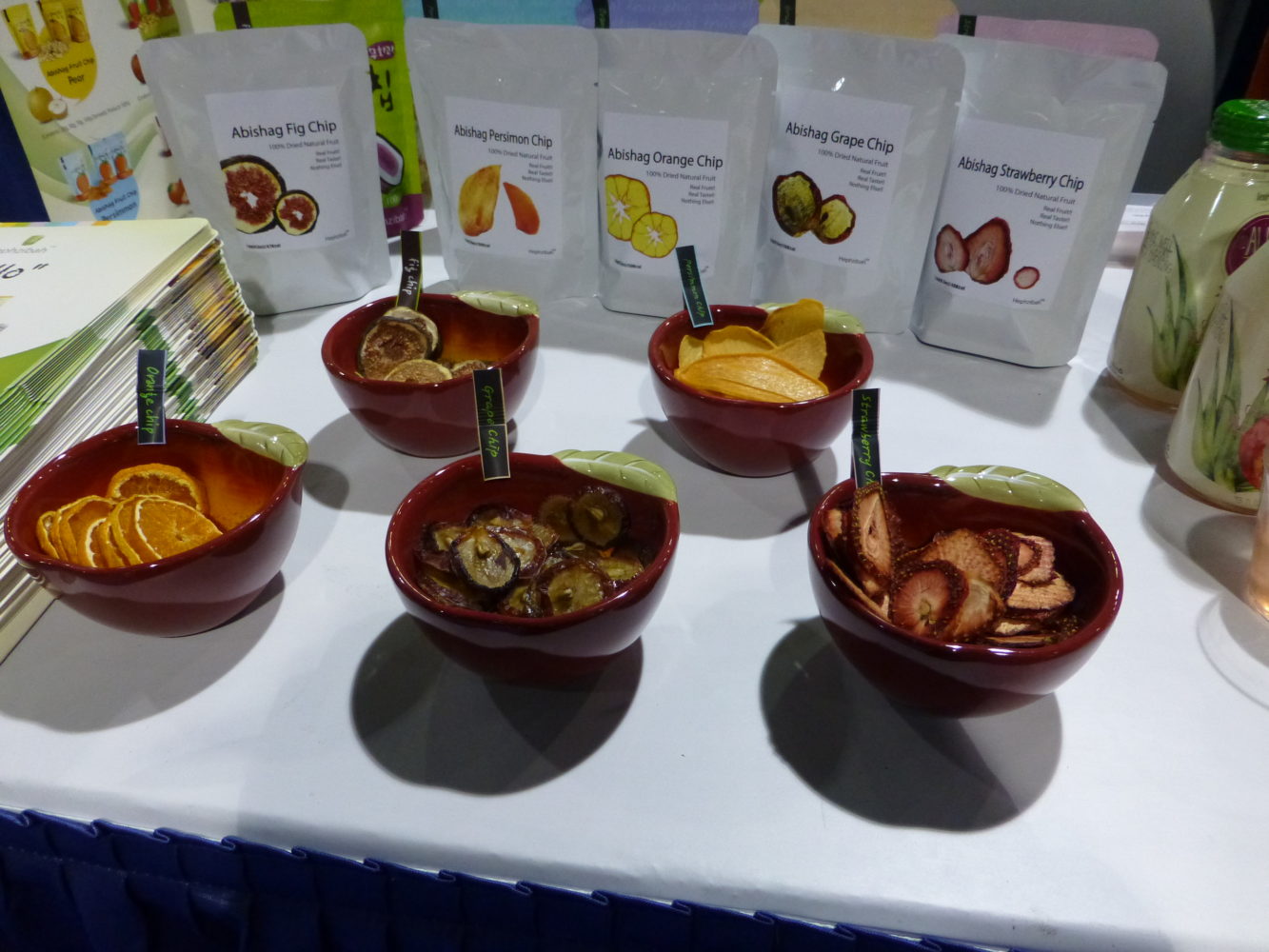
There were many booths offering products trying to get their first foothold in this market. This company’s line of dried fruits includes dried watermelon and persimmons:

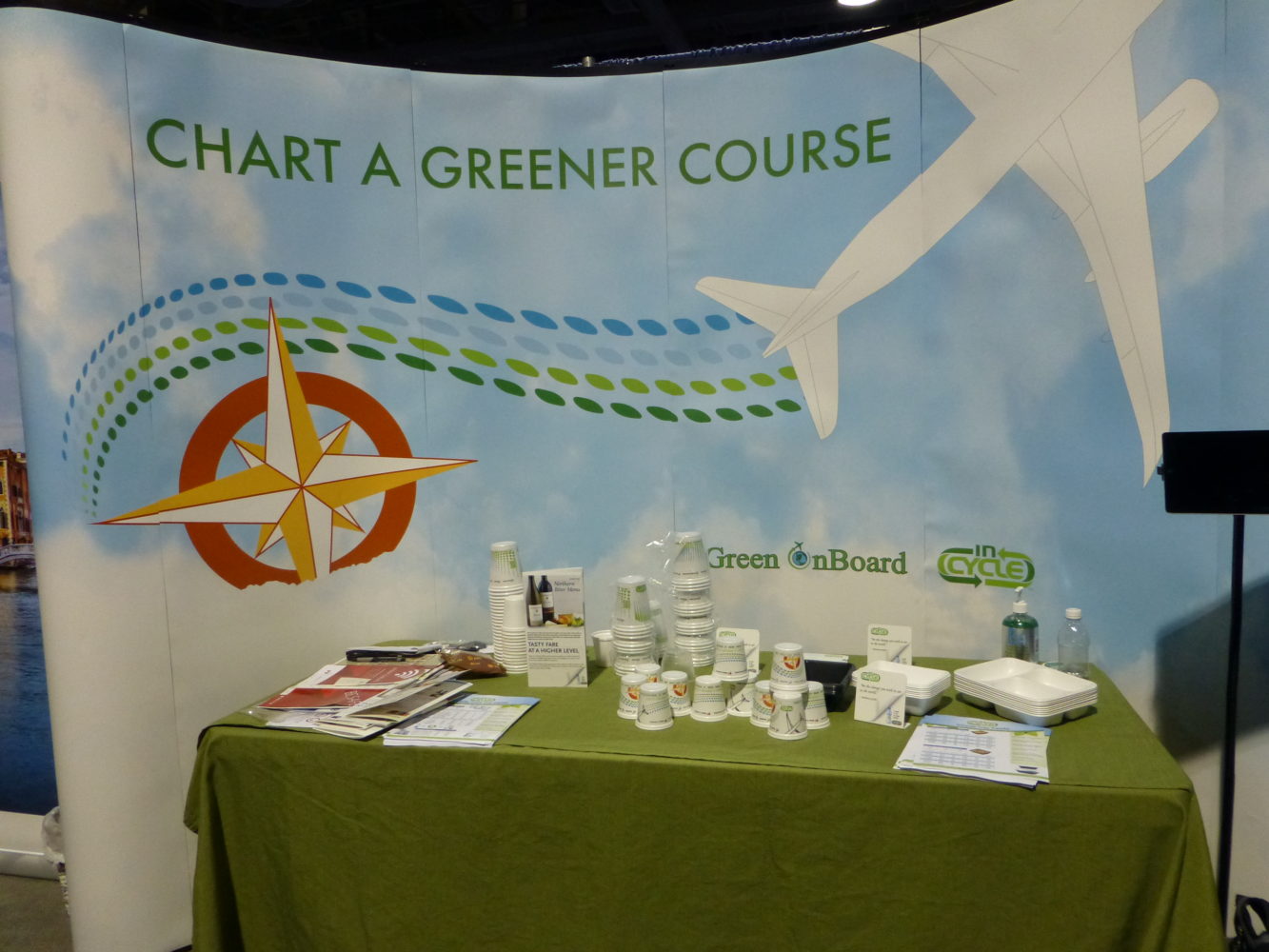
And then there was this encouraging trend: I visited at least five booths that were offering airlines a full line of recyclable and compostable utensils, plates, cups, bowls and other ‘green’ items and learned that several vendors were going home with new orders.

Airline food: there’s a science to it

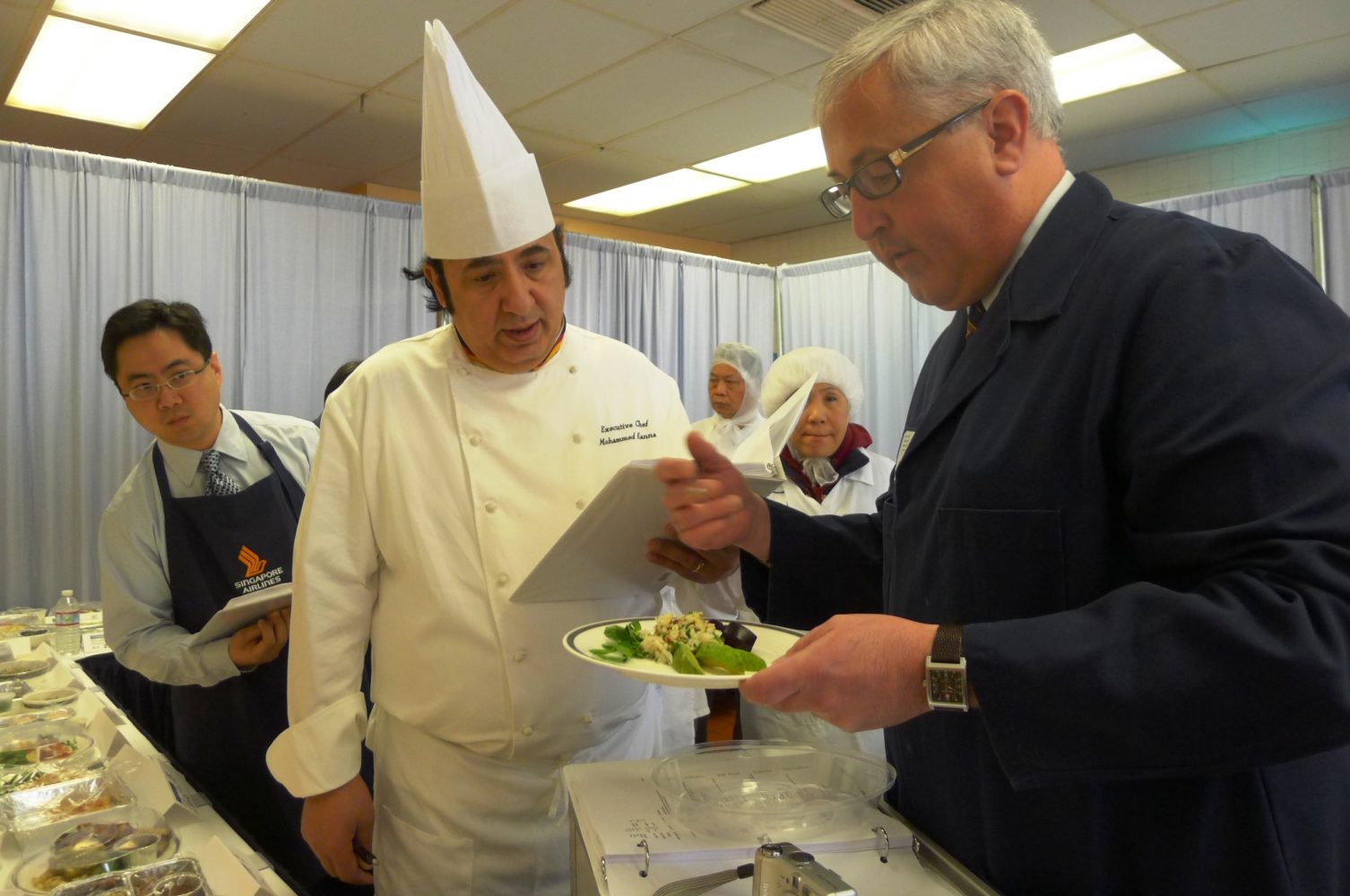
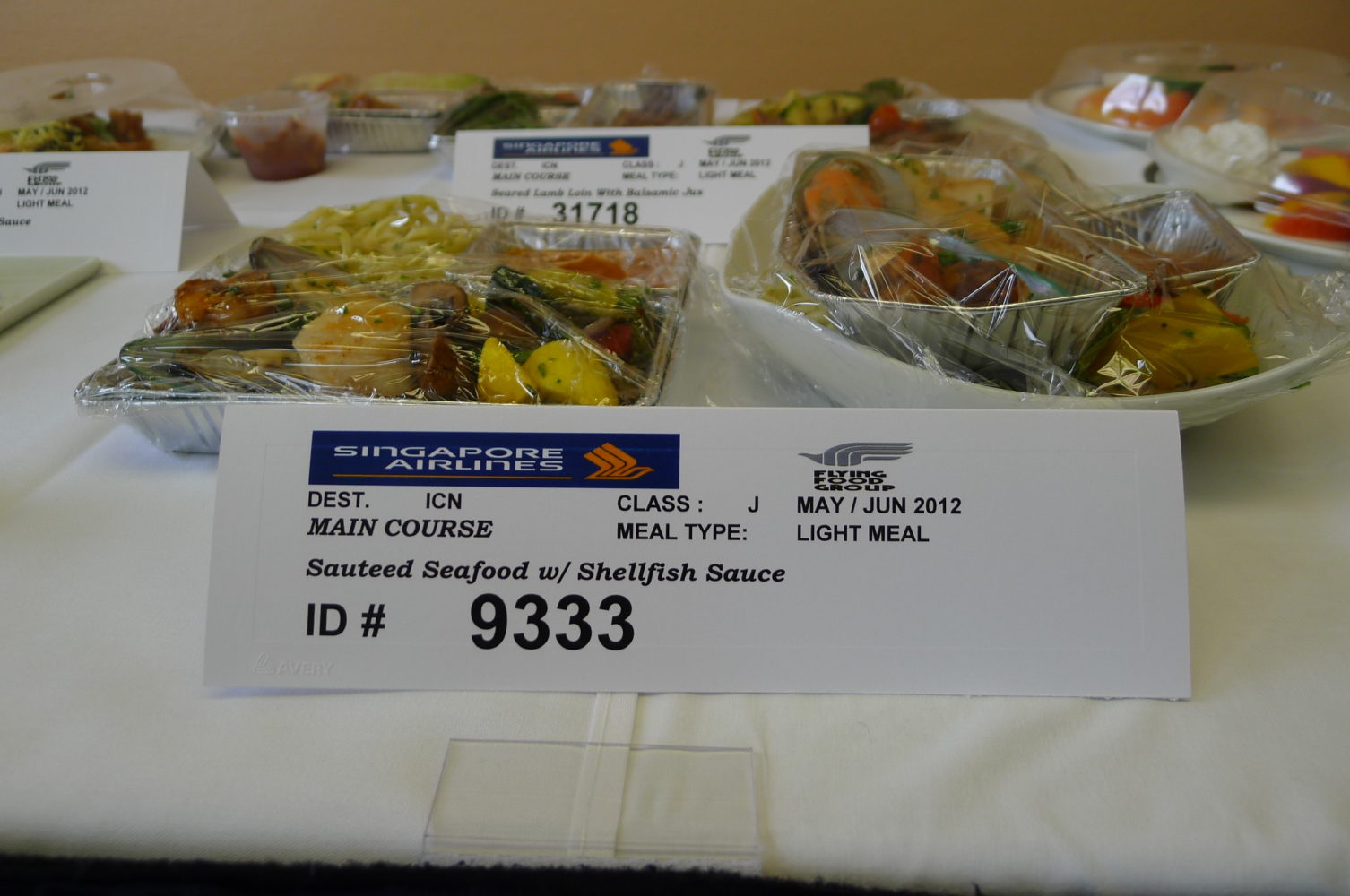
In January, Singapore Airlines invited me to visit the building near San Francisco International Airport where the airline catering company called the Flying Food Group prepares meals for flights heading from San Francisco to Seoul, Hong Kong and, I believe, Singapore.

The occasion: the dishes on the menu for the three month cycle beginning in March were being presented for review.

This wasn’t just an “Oh, that looks nice,” session. As usual, Singapore Airlines had given the Flying Food Group a menu drawn from the airline’s library of more than 15,000 thousand menus and now the catering company was being tested on everything from preparation and taste to the plating and the weight – down to the gram – of each item.

Every airline has a slightly different method for how it tackles this task, but at Singapore Airlines signing off on the quarterly menu involves a day (or two) of tasting, photographing and discussing the details of each and every dish. And once a dish is approved, it is photographed for the “plating guide” given to crew members so they can make sure the meal served on board the airplane looks exactly like the dish that was approved on the ground.

Making food on the ground that will look and taste great in the air is a challenge – and a science. Especially when the cooking process involves cooking the food 60% through, then dropping the temperature to just above freezing before loading it onto carts with dry ice and sending it off to the planes.

The airline spends about $500 million a year on food and views it as passenger sustenance, of course, but also as in-flight entertainment. “When you operate the world’s longest duration flight [From New York to Singapore is about a 19 hour flight] it’s a necessity,” said James Boyd, an airline spokesperson. He also said the airline knows meal time on an airplane is an opportunity to create “credible service interacting moments,” something I can attest to as I recently flew just about around the world on Singapore Airlines: JFK – FRANFURT – SINGAPORE-TOKYO-LOS ANGELES.

As I said, each airline meal program is a bit different and on Sunday, the New York Times published a very detailed article on the subject. In Mile High Grub: Can Airline Food be Tasty?, Jad Mouawad outlines how airlines such as Lufthansa, Air France, Korean Air, Emirates Airlines and, yes, Singapore Airlines approach the task.

Airlines alter menus in response to E coli outbreak


The news about the outbreak of a “super-toxic” strain of E. coli bacteria in Europe is terrible: at least 18 people killed so far and more than 1,600 sickened.

As I wrote on msnbc.com’s Overhead Bin, the culprit may be bacteria on cucumbers, lettuce and other salad ingredients, so just to be safe, American and some other airlines have decided to temporarily remove salads from menus on flights departing Europe.

“We are adjusting our menus out of Europe by eliminating leafy salads, lettuce and tomato garnishes and adding either a pasta salad or grapes,” said America Airline spokesperson Tim Smith. “We are replacing the salad menu items with other menu options to pre-empt any risk and alleviate concerns.”

The airline has alerted travelers to this action with a notice on its website, which also states:

“We will closely monitor and take direction from the local health authorities and the World Health Organization and return to the original menu when we believe it is safe to do so.”

Other airlines, and the companies that prepare in-flight meals for airlines, are also making menu changes.

Lufthansa Airlines spokesperson Martin Riecken said after the May 25 warning from the German Robert-Koch institute about eating cucumbers, salads and tomatoes in North Germany, LSG Sky Chefs, the company that prepares in-flight meals for Lufthansa and 300 other airlines, “initiated preventive action to adjust its meal production in Germany.”

The company stopped the use of raw cucumbers, tomatoes and lettuce and is providing substitute products for meals on flights out of Germany until mid-June.

Delta Air Lines spokesperson Chris Kelly Singley said the airline is monitoring the situation, but “at this time, Delta is not pulling salads from our flights departing Europe.”

And I’m waiting to hear back again from a representative at Gate Gourmet, which on its website boasts 270-plus customers at 120 airport locations around the globe.

Their written statement to me at the end of the day didn’t say whether or not any of their airline customers had changed their menus in response to the E. coli scare, only that:

“We are monitoring very closely what the European and global regulatory agencies are reporting and working with our customers to quickly implement alternate suppliers, if necessary.”

Continental ditches the pretzels

Flying Continental? Don’t expect to be served a complimentary “beverage snack.”

airplane cookies

As I wrote in a story for msnbc.com Travel today (No more pretzels? Airlines ditch free snacks),

On March 1, Continental Airlines stopped serving free pretzels and cookies to domestic passengers flying coach. The new policy is designed to better align its in-flight snack and beverage service with its merger-partner United Airlines.

“We’ve removed the beverage snacks — pretzels and Biscoff — in an effort to reduce costs and align ourselves with the rest of the industry,” said Continental Airlines spokesperson Andrew Ferraro. “Our partner, United Airlines, has the same policy.”

The move could save the airline an estimated $2.5 million a year. Both airlines will continue to offer complimentary beverage service.

This is clearly a reflection of standardizing the onboard experience between United and Continental,” said Henry Harteveldt, an airline and travel analyst for Forrester Research. “Sadly, instead of elevating the United onboard experience, Continental has chosen the lowest common denominator.”

Harteveldt suspects the move may also be tied to — or blamed on — rising fuel costs.

“With fuel costs surging, once again we see an airline take its business problems out on its passengers. I’m sure Continental hopes that by removing the complimentary snacks, more people will buy the snack items the airline sells onboard.”

In addition to Continental and United Airlines, American and US Airways are among the other major domestic U.S. carriers that have already dropped complimentary in-flight snack service.

Not all airlines are rushing to follow this trend. Yet.

Alaska Airlines continues to serve a variety of complimentary snacks on its morning and afternoon flights.

Air Tran Airways continues to serve complimentary Biscoff cookies and pretzels in coach. “At this time we do not have any plans to change that,” said airline spokesperson Judy Graham-Weaver.

Delta Air Lines currently offers complimentary peanuts, pretzels or Biscoff cookies to passengers on flights of 250 miles or more. “There are no changes planned currently,” said airline spokesperson Morgan Durrant.

Continuing a tradition begun by Midwest Airlines, Frontier Airlines still bakes and serves complimentary chocolate-chip cookies to all passengers after 10 a.m.

Southwest Airlines continues to serve free snacks. According to its latest corporate fact sheet, in 2010 the airline served 19 million complimentary bags of pretzels, 87.6 million bags of peanuts, 18.4 million Select-A-Snacks and 29 million other snacks. “We’re always looking at enhancements and new offerings,” said spokesperson Brad Hawkins.

JetBlue Airways also continues to offer coach passengers unlimited, complimentary snacks. During 2010, the airline handed out more than 4 million bags of complimentary chips, said JetBlue spokesperson Allison Steinberg.

“As airlines like Continental continue to make these decisions (to drop snacks), Delta and Southwest, which both still offer complimentary snacks, become that much more of the passenger’s friend,” said Harteveldt.

Raymond Kollau of airlinetrends.com doesn’t believe legacy carriers should allow low-cost carriers to claim complimentary in-flight snacks as a signature service. “One solution for legacy carriers is to team up with brands.” He mentioned the successful free in-flight Wi-Fi campaigns that have been paid for by Google and other companies and said it can also work for food.