Bathrooms

Avatars to offer assistance at NY-area airports

On Monday, the Port Authority of New York & New Jersey introduced a wide variety of customer service improvements at JFK, Newark Liberty and LaGuardia airports, but it was AVA, the airport virtual assistant, that got all the attention.

In July, when the computerized avatars begin offering automated information at LaGuardia’s Central Terminal Building, at Newark’s Terminal B and at JFK’s Terminal 5, it will be the first time the hologram-like technology will be used at a North American airport.

Other improvements to be rolled out in the next 90 days include additional (live) customer care agents during peak travel times, an expanded effort to halt taxi hustling, the installation of additional power poles to charge electronic devices and cleaner restroom facilities.

Here are some more details from the plan:

At Newark Liberty, more than 100 chairs and more than 50 tables will be added to food courts in Terminals A and B, full-time restroom attendants will be on duty in Terminal A and additional quality control visits will be made to airport stores “to ensure customers are treated fairly.”

Newark, JFK, LaGuardia (and Stewart International Airport) are now included in the free FlySmart mobile app that offers real-time flight notifications for smart phones, terminal maps and basic listings for ground transportation and concessions.

The Port Authority is also starting a “We Listen” campaign to give travelers a chance to meet with airport management.

These short-term initiatives, the Port Authority points out, dovetail with the agency’s long-term efforts to improve the infrastructure at all three airports.

It all sounds promising. Except perhaps for those virtual assistants. In the promo “AVA” says she never takes a vacation, but when I arrived at Dubai International Airport recently, the representative meeting our group said the virtual assistants that were supposed to be on duty there hadn’t been working “for quite some time.”

Rate the bathroom at Singapore’s Changi Airport

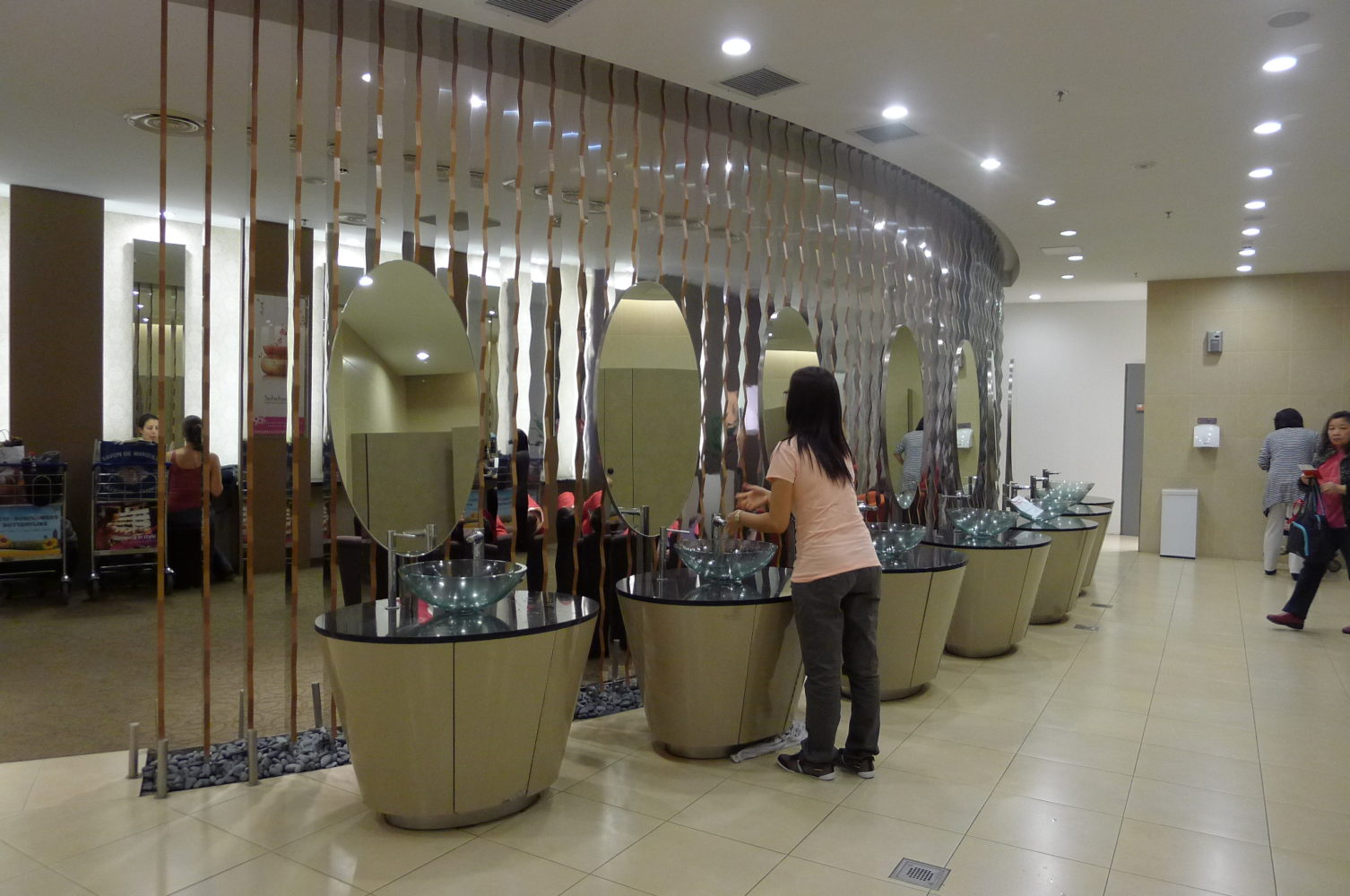
Some of the world’s best airport restrooms are at Singapore’s Changi Airport.

This restroom not only has these lovely pedestal sinks, it has a separate ‘powder room’ area where women can freshen up and apply the cosmetics they’ve purchased in the store just outside.

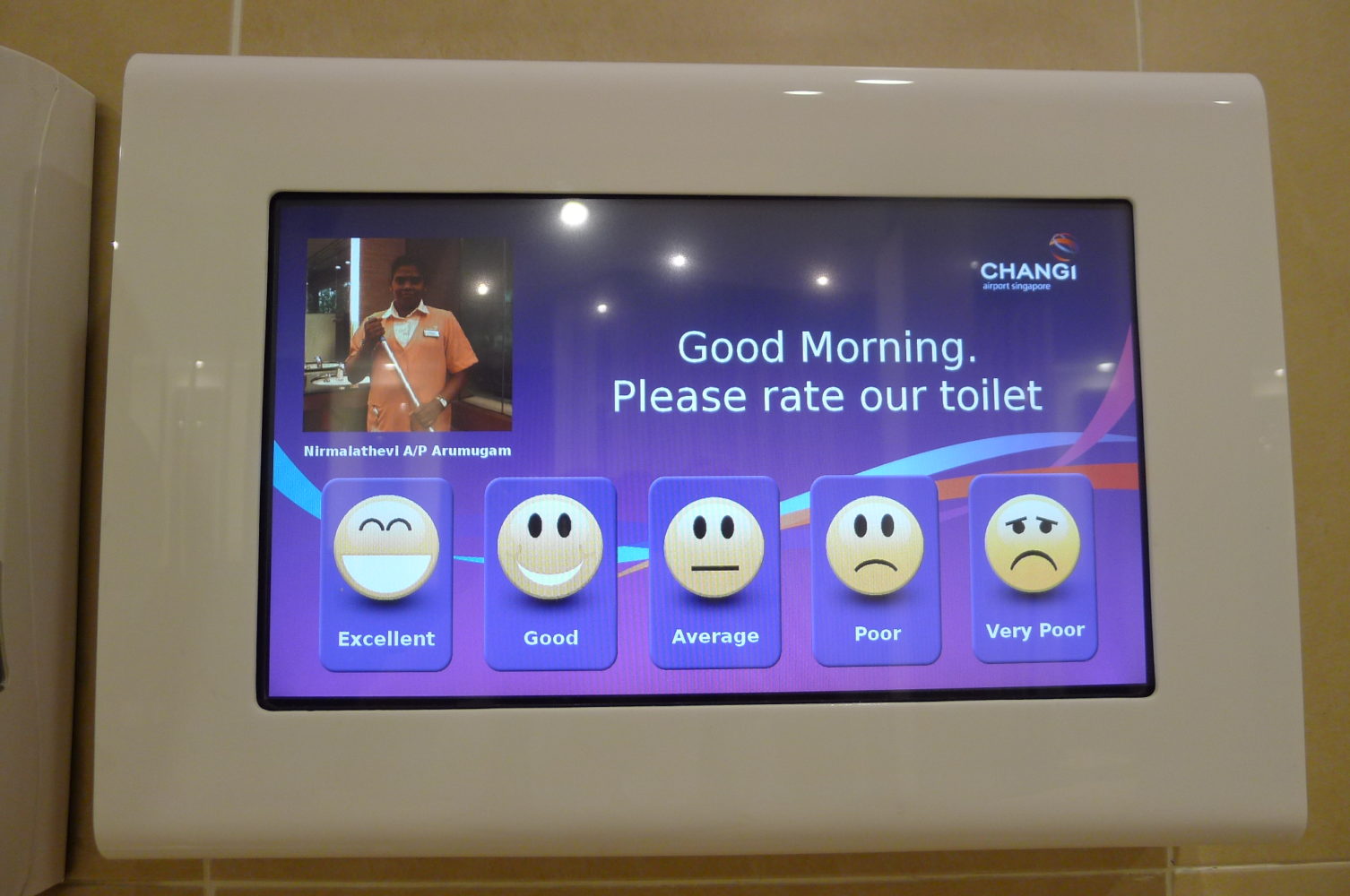
There’s even a digital feedback screen, asking travelers to rate the restroom.

In the few moments I hung around taking pictures, a half dozen women stepped up to the screen, smiled, pressed excellent and were on their way.

And, yes, the woman in the picture was there on duty keeping the restroom neat and tidy.

Paper showers and other ways to stay fresh on the road

Staying shower-fresh and stain-free when you’re on the road can be challenging.

Especially for air travelers who must snooze sitting up and squeeze a week’s worth of cleansing lotions and cosmetic potions into those tiny, zippered, see-through baggies.

Sponge-baths in public restroom sinks can be awkward so, for a story on msnbc.com, I rounded up an assortment of travel-sized products that may come in handy next time you or your favorite road warrior is creased, crinkled or stinky and away from home.

Paper showers and public restroom survival kits

Moist towelettes can be lifesavers when your hands – or the tray table and the armrests on the airplane – are sticky and full of germs. For bigger jobs, there’s the Paper Shower, a two-part packet with a wet side containing a paper towel dipped in alcohol-free soap and skin moisturizers and a second, super-absorbent towel on the dry side to remove what the wet portion leaves behind.

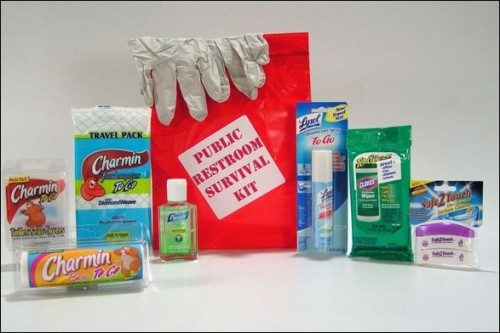
These days you can find all manner of travel-sized soaps, shampoos, toothpastes and hand sanitizers in drugstores but “at the request of several self-proclaimed germaphobes,” Paul Shrater said his company, Minimus.biz,  put together the Public Restroom Survival Kit,, which is stocked with travel-sized packets of toilet seat covers, disinfecting wipes, surface cleaners and toilet paper.

In the on-line cleaning supplies aisle Minimus.biz offers travel-sized odor eliminators and bed bug spray and, elsewhere on the site, Shrater finds that “Travel-sized Febreze and Lysol tend to be very popular.”

Lip-stick sized deodorants and no-brush tooth polish

Over at 3Floz.com (“For those who travel, those who are curious and those who can’t commit”) bestsellers among the personal care travel items include Beze Deodorettes, which are lipstick-sized mini-deodorants that fit into a purse or a pocket, and Supersmile Quikee, a pocket-sized no brush/no rinse tooth polish.

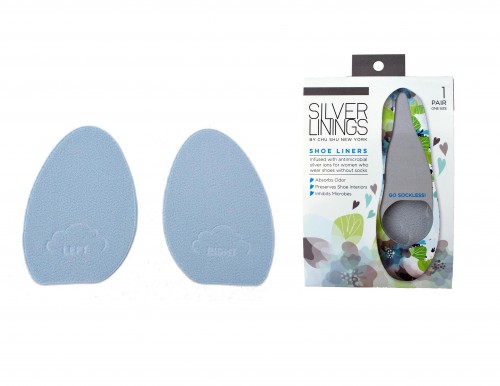
And for those who like to kick off their shoes on the airplane, but are self-conscious about the smell, there are Silver Linings, ultra-thin shoe inserts made with silver to absorb bacterial odor.

Of course, out on the road it’s not just people who get grimy. “For well-traveled smartphones we have cellphone cleaning wipes,” said Minimus.biz’s Shrater. “They’re called Celly Smellys and are a popular and interesting curiosity.”

Going on the go: bathroom news

Although it may be a year before Lambert-St. Louis International Airport can repair Concourse C, which was heavily damaged in a tornado on April 22, 2011, the airport is moving forward with much-needed, scheduled upgrades in the Airport Experience Program.

And right now, airport officials are flushed with pride over some newly renovated restrooms.

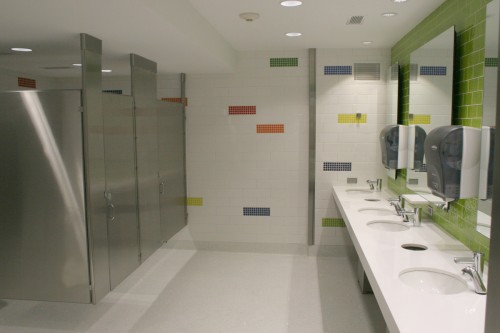
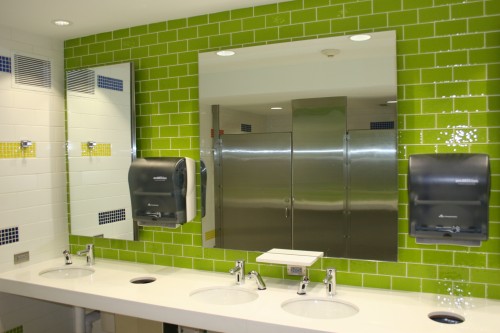
All restrooms in Concourse A, Concourse C and Terminal 1 will eventually get renovated, and let’s hope they all look as lovely as the fresh set bathrooms (Men’s, Women’s and a Family Assist) featuring bright white counters, new terrazzo flooring and colorful walls that just opened on Concourse A (near gate 8).

And while we’re talking bathrooms… take a look at The Bathroom Diaries , Mary Ann Racin’s directory of more than 47,000 public restrooms, with a color-coded key for toilet cleanliness and amenities such as changing tables.

Racin says she’s recently overhauled the site, but is still working on some features and functionality and, of course, an iPhone app.

SFO’s new Terminal 2: preview part 3

San Francisco International Airport will re-open its newly renovated Terminal 2 to the flying public on April 14, but first there will be a media day (April 6th) and a community open house (April 9th.)

For those who can’t attend the open house or who won’t be flying to or from San Francisco on American Airlines or Virgin America – the two airlines that will be using T2 – anytime soon, StuckatTheAirport.com has been offering previews of the terminal.

Part one was about the artwork in SFO’s T2.

That artwork includes a fun piece by Charles Sowers that includes mechanical butterflies.

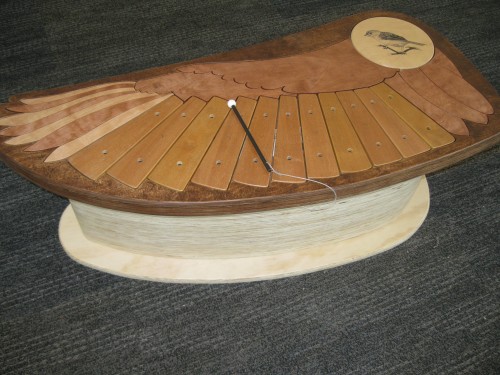
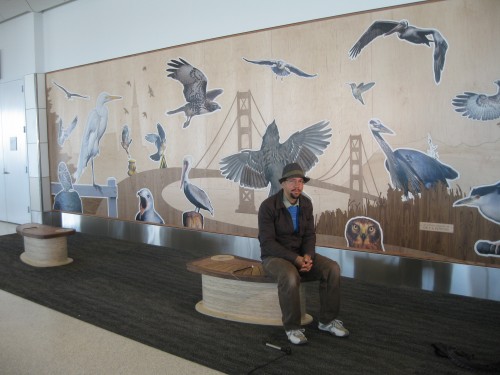
Elsewhere in the terminal, sound artist Walter Kitundu has installed interactive benches that double as musical instruments.

SFO bench doubles as musical instrument

The wings in one of the birds in Kitundu’s mural can also be played.

SFO mural

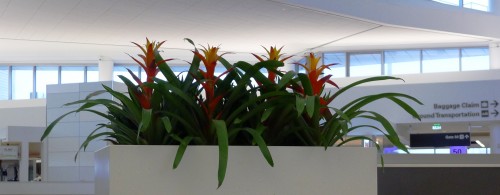
Part two of our SFO T2 preview focused on some of the special touches, such as live plants, living-room style furniture, work areas, generous restrooms and those handy water bottle refill stations.

SFO T2 Refill station

There’s more…

The dining options – which were still under construction when I toured the building – will include: Andale – made-to-order Mexican food
Burger Joint
A restaurant/lounge by Cat Cora, one of the Food Network’s Iron Chef judges
Lark Creek Grill
Napa Farms Market
Vino Volo
Peets Coffee & Tea and Starbucks
Wakaba Sushi & Noodle
and The Plant Organic and Pinkberry frozen yogurt

Shops will include:
Compass Books
Greetings from San Francisco
I-Tech X-perience
Kiehl’s (skin and hair products)
Mango (clothing)
Mosaic Gallery
Natalie’s Candy Jar
Pacific Outfitters
Sunset News
and a branch of XpresSpa

Here a few more photos of what you’ll see in T2:

Artwork that was been stored away during renovation:

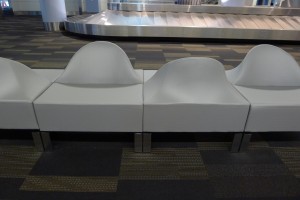
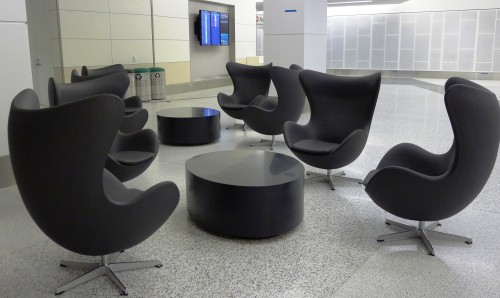
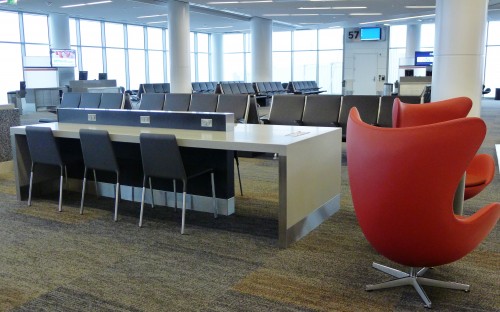
Fun seating – even in the baggage claim area:
Baggage claim seating

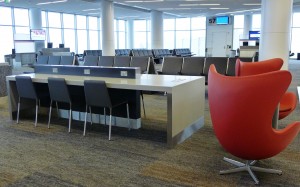
And plenty of places to plug in and get to work.

Sneak peek at SFO T2 – part 2

Little things add up. And in renovating and rebuilding Terminal 2 at San Francisco International Airport, they’ve been paying attention to a lot of the little things.

SFO T2

In a open house for the community on April 9th (It’s free, but you’ll need a ticket) and when it opens to the flying public on April 14th, travelers flying in or out of SFO’s Terminal 2 will see live plants, loads of living room style furniture and lots of inviting, outlet-enhanced surfaces for getting work done.

SFO T2 Seating

SFO T2 work tables

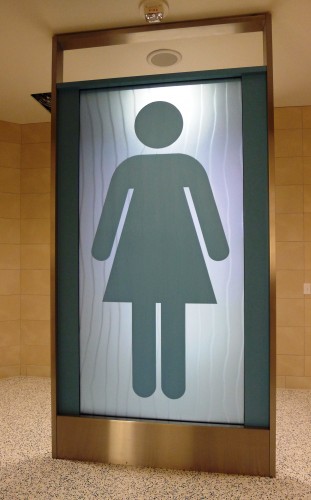
There are some nice touches in the restrooms as well.

SFO T2 restroom

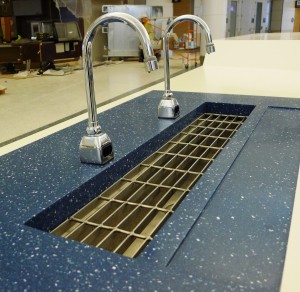
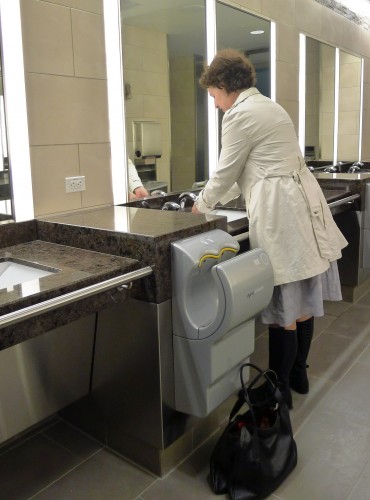
Stalls are deep (so there’s room for you and your carry-on in there) and out at the sinks, you’ll find outlets and those fast-working, Dyson hand-drying machines.

SFO Restroom T2

And for those who travel with their own water bottles, SFO T2 provides these easy-to-access refill stations.

SFO T2 Refill station

The sneak preview continues tomorrow….

In the meantime, take a look at the StuckatThe Airport.com preview of the artwork at SFO’s T2.

Universal access at airports: it could happen

My “At the Airport” column for USATODAY.com this month is about what airports and airlines are doing – or not – to make it easier for people with disabilities to make their way through airports.

Researching the story was an educational and quite sobering experience.

And as the column title says: Travelers with disabilities face obstacles at airports.

Sadly, that’s the case far too often at far too many airports. But if you read through the column a bit, you’ll see that there have been some improvements.  And a lot of those fixes end up making it easier for everyone to travel.

Here’s most of that column:

With laws such as the Air Carrier Access Act and the Americans with Disabilities Act, you might assume that people with disabilities no longer encounter obstacles at U.S. airports.

Unfortunately, that’s not true. “Frankly, there isn’t enough policing going on to go look at all these airports to see if they’re 100% compliant,” notes Tim Joniec of the Houston Airport System. “So at some airports it may take a traveler complaining about a service that isn’t there before attention is paid to a problem.”

And even if a traveler does lodge a complaint, “you’d be surprised at how many airports, including some enormous ones, just don’t care,” says Eric Lipp, the executive director of the Open Doors Organization (ODO), a non-profit that works with businesses and the disability community.

For those that do care, next month the Open Doors Organization (ODO) and the International Air Transport Association (IATA) will host a conference about universal access in airports. On the agenda: tools, technology and training to help both airports and airlines do a better job of serving travelers with disabilities.

One topic sure to be discussed is money. About 55 million people in this country have some sort of disability. This community spends upwards of $14 billion a year on travel; more than $3 billion a year on airplane tickets alone.

With medical care and life expectancy improving, the number of travelers with disabilities is predicted to increase to more than 80 million in the next 20 years. Yet, when the Open Doors Organization surveyed adults with disabilities about travel, more than 80% reported encountering obstacles at airports and with airline personnel.

Universal access universally helpful

Lipp and others point out that removing obstacles at airports makes traveling easier for all passengers, not just those with disabilities. And there are plenty of examples of how making changes makes sense.

Curb cuts help those with strollers and wheeled luggage as much as they assist travelers using wheelchairs, walkers, canes or scooters. Family bathrooms are great for parents traveling with small children, but special lavatories at airports also offer grab bars and other amenities that a disabled traveler, or one traveling with an attendant, might find useful. Many general-use airport bathrooms are cleaner due to ADA-compliant self-flush toilets, automatic faucets and motion-sensing paper towel dispensers. And weave-through entryways reduce germs by eliminating the need for everyone to grab the door handle.

Visual-paging systems, like the high-tech ones now installed airport-wide at Minneapolis-St. Paul International Airport, were originally created to assist hearing-impaired passengers. But all passengers can benefit from having an additional way to receive emergency messages and courtesy pages.

And of course, air passengers must be able to get to the gate before they can fly.

At George Bush Intercontinental Airport, passengers must now either walk or negotiate elevators, escalators or a bus when trying to reach Terminal A from Terminal B. That barrier will disappear in October when the airport’s above-ground train finally links Terminal A to the other four terminals. “Those with mobility challenges will certainly benefit from this,” says the airport’s Tim Joniec, “But because 70% of our passengers make a connection at IAH, this will definitely be noticed by all travelers.”

Some airlines embrace universal access

Airlines, which are responsible for providing wheelchair services at airports, have also made some special accommodations that end up smoothing out the journey for all passengers.

If you travel with a pet, you’ve probably noticed more fenced, landscaped animal relief areas at airports. Those pet parks are popping up because the Carrier Access Act now requires airlines to make relief areas available for service dogs accompanying travelers.

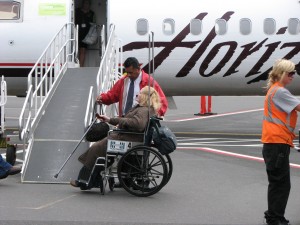
Alaska Airlines/Horizon Air often uses ramps instead of stairs to board all passengers, not just those using wheelchairs, onto smaller Horizon planes at gates where jet bridges are unavailable. “That way no one has to negotiate steep steps to and from the airplane and everyone can enter the airplane the same way,” says Ray Prentice, Alaska Airlines’ director of Customer Advocacy.

And for the past three years, Continental Airlines (which will legally merge with United Airlines on October 1st) has been getting feedback and advice from a thirteen member advisory board made up of passengers with disabilities.

Before the board was in place, the airline would wait for a passenger with a disability to complain about an access issue before a policy would get tweaked.  Continental’s disability programs manager Bill Burnell says “Now we can anticipate problem areas before they become complaints. And try to go beyond the minimum ADA requirements. We’ve learned there’s a big difference between something being ADA compliant and it being universally accessible.”
Good restrooms; bad airports

Sometimes the yin/yang of the inbox is entertaining.

yin/yang symbol

Today, for example, I received an urgent reminder to vote for America’s Best Restroom and a warning about staying away from the World’s Scariest Airports.

Let’s do both.

Each year Cintas takes nominations for the Best Restrooms in Canada and in the United States.

You can see all the past winners in the Hall of Fame, but here at StuckatTheAirport.com we’re still celebrating 2005, when Fort Smith Regional Airport in Arkansas took home the potty-prize.

Award winning bathroom room Fort Smith Regional Airport

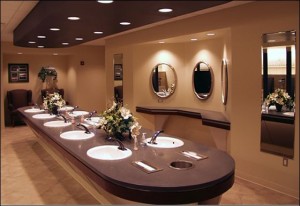
Winning bathroom at Fort Smith Regional Airport

This year, no airports are on the list of ten finalists, but the restrooms at Santa Monica Pier are on the list as are those at New York City’s Muse Hotel and Bryant Park, where the amenities include attendants, flowers, scented oils and electronic seat covers  – amenities we’d be happy to see at all airports..

Take a look at the best-loo finalists and cast your vote for America’s Best Room by August 31st.

Once you’ve voted for the best restroom in the U.S., take a look at the airports SmarterTravel.com has put on its list of World’s Scariest Airports.

old airport photo

In my book, scary airports are those with icky bathrooms, overpriced food or pay-to-use-WiFi. But this list defines scary airports as those where geography and/or weather make take-offs and landings dicey.  Which airports are on the list? In the U.S. the authors list New York’s LaGuardia Airport, Yeager Airport in West Virginia, John Wayne Airport in Santa Ana, CA. – and the airport in Nantucket, MA.  International airports that make the list are in Guatemala, Scotland, New Zealand, Bhutan, Gibralter and Honduras.

What makes an airport scary for you?

Flushing out the truth about travel legends

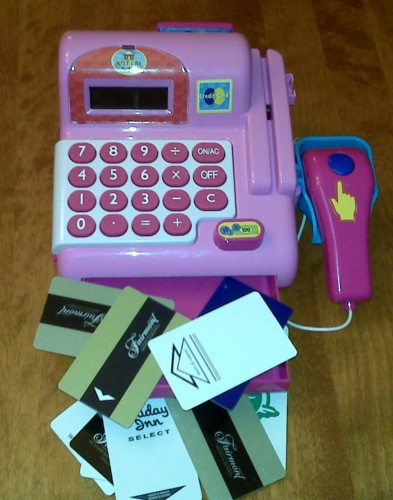
From getting stuck-by-suction on an airplane toilet seat to discovering that your credit card number is stored on your hotel key car or that the strange smell in a motel room is a dead body entombed under your box spring, there are some strange and spooky stories circulating in the world of travel.

Are they true? Some are.  But which ones?

In Travel legends: Separating fact from fiction, my column on msnbc.com this week, experts help flush out the truth.

For example:

Is it possible to get stuck to the seat of an airline toilet if you flush while seated?

This one has been swirling around for years, fueled by a widely distributed “news” story involving an SAS incident that turned out to be a hoax.

Regardless, we asked Paul DeYoung, a physics professor who runs the online “Ask a Physicist” column at Hope College in Holland, Mich., if it could happen. “While an airplane toilet really does use vacuum to suck the material out,” he doesn’t believe that anyone’s bottom would make a perfect seal and “if there is any gap at all, you don’t get stuck.”

But it’s possible. “Technically, it’s not beyond the realm of possibility,” said Boeing Commercial Airplanes spokesperson Tom Brabant. “It has happened in rare cases.”

Bottom line: DeYoung and Brabant encourage travelers to play it safe by making sure to stand up before flushing the toilet in an airplane lavatory. In fact, when Boeing’s new Dreamliner 787 jets start flying, flushing while standing will be your only option: lavatories on these planes have touchless flush mechanisms that automatically put down the lid before flushing the toilet.

TOO MANY BEDMATES

What they say:

Guests staying in foul-smelling hotel rooms have discovered dead bodies underneath the bed or hidden inside the bed frame.

The truth?

Sadly, it’s true. In March, police in Memphis, Tenn., found the body of a woman missing for two months stuffed inside a motel bed frame. The woman had stayed in the room when she was alive, but it was cleaned and rented out several times after her disappearance.

Snopes.com, the go-to site for getting the skinny on “urban legends, folklore, myths, rumors and misinformation,” has long list of documented incidents like this reaching back to the 1980s.

Want to find out the truth about personal information stored on hotel room keys and other travel legends going around?  Read the full column – Travel legends: Separating fact from fiction – on msnbc.com.

And if you’re curious about the veracity of other travel legends, send them along; we’ll ask the experts for advice and let you know.

Have you seen an award-winning airport bathroom?

Been in any great airport bathrooms lately?

If so, then take a moment nominate it for the 2010 America’s Best Restroom Award.

This is the ninth year the Cintas Corporation has been running this wacky contest and there have been some pretty swanky loos among the contestants.  But back in 2005, the grand prize winner was none other than the Fort Smith Regional Airport (FSM) in Fort Smith, Arkansas.

Here’s a description of their winning restrooms:

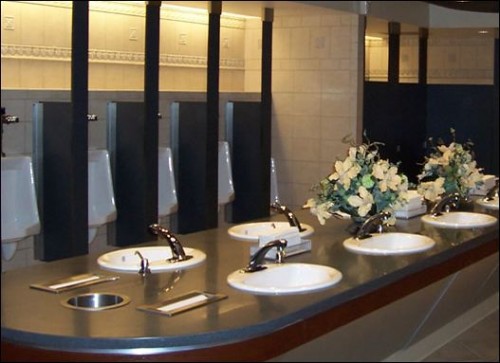
Fort Smith Regional Airport prides itself on the Southern hospitality that it displays for its visitors. The restrooms are always clean, with sanitation being of utmost importance. Beautiful décor and comfortable seating, both inside and outside the stalls, compliment the restrooms’ cleanliness. Dried flower arrangements are always on display. And you’ll never have to manually flush a toilet or turn on a sink here—everything is automated.

Sounds like a lovely spot for a traveler to take a tinkle, doesn’t it?

Nominations for the best restroom – airport or not, in the United States and in Canada – are being accepted through through April 26, 2010. 10 finalists will be announced in July and the public will get to vote for the favorites, with the winner announced in  September.

Besides the Fort Smith Airport, other winners have included the University of Notre Dame; The Grand Casino in Biloxi, Mississippi; Kohler Art Center in Sheboygan, Wisconsin; Jungle Jim’s International Market in Fairfield, Ohio; Hermitage Hotel in Nashville, Tennessee; and in 2009, Shoji Tabuchi Theatre in Branson, Missouri.

You can see the winners and the runners up in the America’s Best Restroom Hall of Fame.