TSA

Travelers leave TSA hefty tips


How much do you love the Transportation Security Administration?

Enough to leave a tip every time you go through security at the airport?

I didn’t think so.

But in their rush to get through airport checkpoints, passengers leave a hefty amount of ‘tips’ for the TSA every year.

For its fiscal year 2016, the Transportation Security Administration reports that passengers left behind more than $867, 812.39 in coins and currency in the plastic bowls and bins at airport checkpoints.

That’s about $102,000 more than was left behind in 2015 and more than $484,000 than was left behind in 2008.

Over the years, the amount of change left behind by travelers at airports has been climbing, jumping from about $489,000 in 2011 to almost $675,000 in 2014 and to almost $766,000 in 2015.

Last year, passengers at New York’s John F. Kennedy International Airport were the most forgetful (or generous…) travelers, leaving behind $70,615 in unintentional ‘tips’ for TSA.

Also on the top ten list for fiscal year 2016: Los Angeles International Airport, where travelers left behind almost $45,000, and Dallas/Fort Worth International Airport, where more than $42,000 in cash and currency was left in checkpoint bins.

What happens to all that money?

Back in 2005, Congress passed a law saying TSA gets to keep that unclaimed cash and spend it on any sort of civil aviation security efforts it deems fit.

In at least two previous years’ reports, TSA stated that the unclaimed money collected from airports would be used to support the expansion of the TSA Precheck program, which gives travelers expedited screening privileges, allowing them to keep shoes and lights jacks on and their laptops and quart-sized bag of liquids and gels inside their carry-ons.

When it filed its report on the almost $868,000 in unclaimed money collected from airports in fiscal year 2016, however, TSA said it had not yet determined how it would spend those funds.

Don’t want to leave a tip?

At some airport checkpoints, passengers can also empty loose change from their pockets directly into donation bins for local charities before moving through the line.

During 2016, travelers passing through Denver International Airport donated $87,106.91 to Denver’s Road Home, a non-profit that works with service providers for the region’s homeless community. And last year passengers at Phoenix Sky Harbor International contributed more than $11,000 to help support the USO operations at the airport.


TSA Year in Review – another record for firearms

Sea-Tac security line

You’d think air travelers would have gotten the message by now. But evidently not.

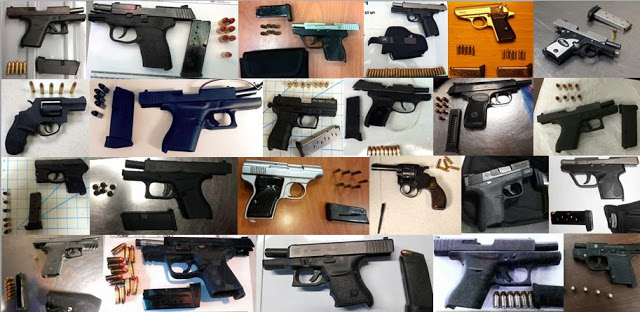
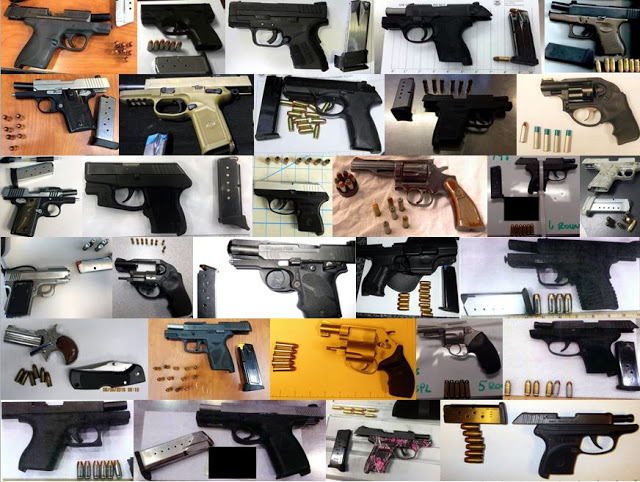
The TSA has done its 2016 tally and found that another record has been broken for the number of  firearms found in carry-on bags and on passengers at airport checkpoints.

According to TSA’s Year in Review report 3,391 firearms were found during 2016.

That’s 28 percent more than the 2,653 firearms found in 2015.

According to TSA’s report, of the 3,391 firearms found during 2016, 83 percent were loaded and the most firearms – 198 – were found at Hartsfield-Jackson Atlanta International Airport.

Top 10 airports for firearms discoveries:

Hartsfield-Jackson Atlanta International Airport (ATL):198
Dallas/Fort Worth International (DFW): 192
George Bush Intercontinental Airport – Houston (IAH):128
Phoenix Sky Harbor International (PHX):101
Denver International (DEN): 98
Orlando International Airport (MCO):86
Nashville International (BNA):80
Tampa International (TPA):79
Austin-Bergstrom International Airport (AUS):78
Salt Lake City International (SLC):75

Beyond firearms, TSA finds lots of other odd things in travelers’ bags.


TSA’s Top 10 most unusual finds for 2016

The TSA has issued its Top 10 list of the most unusual items found at airport checkpoints in 2016.

All are somewhat alarming, although not all were prohibited from being carried onto a plane.

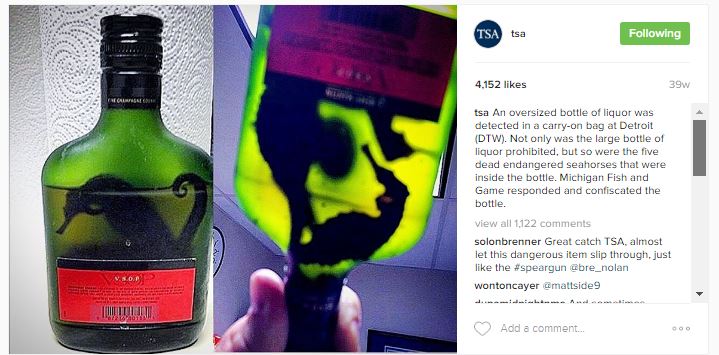
For starters, there were five dead endangered seahorses inside an oversized bottle of brandy,  a replica suicide vest spotted and a trailer hitch cover shaped like a hand grenade.

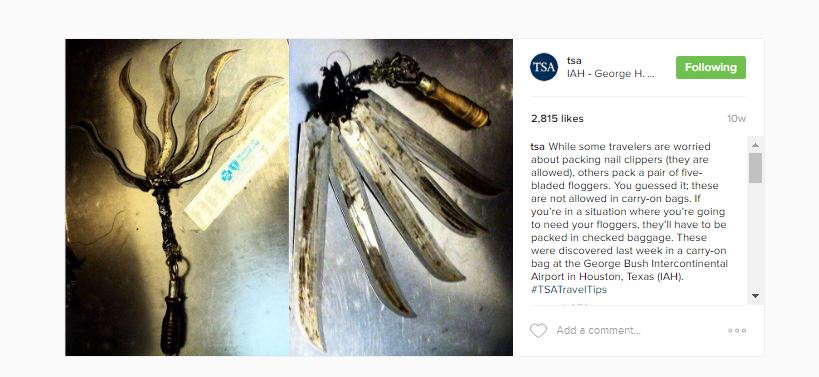
Then there was the five-bladed flogger someone tried to take onto a plane at George Bush Intercontinental Airport in Houston.

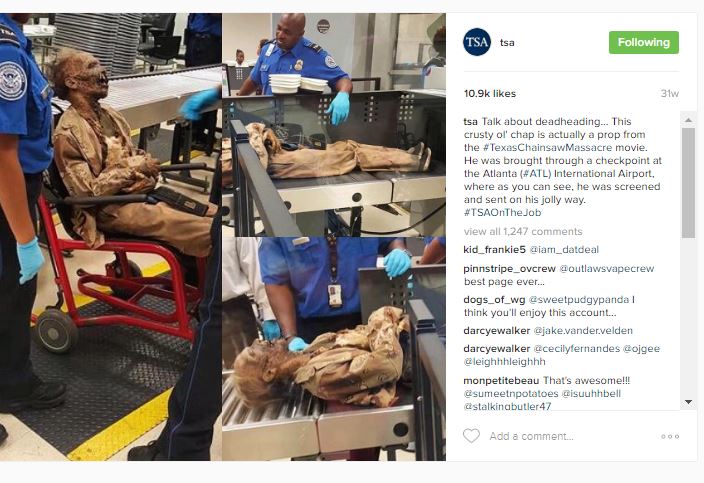
The list also includes a Hello Kitty-themed firearm found at Bradley International Airport in Connecticut and a movie prop corpse that was spotted at the Hartsfield-Jackson Atlanta International Airport checkpoint that evidently had a ticket and was permitted to board, along with its very much alive travel companion.

All ten items are featured in the quirky video in which TSA social media specialist Bob Burns offers a charmingly corny countdown of the list.


Most items in the video will be familiar to those who follow the TSA blog or its popular Instagram account, where the agency shares a weekly report on the number of firearms (loaded and unloaded) and posts photos of notable “finds.”

Travelers who would like to make sure the contents of their carry-on luggage aren’t included in TSA’s 2017 Top Ten List can check to see if an item is permitted on the TSA’s “Can I bring my… through the security checkpoint” tool or on the “Ask TSA” Facebook Messenger site.

Another record number of firearms found at airport checkpoints

TSA guns august 18

There’s got to be something wrong with the fact that, on the heels of the havoc caused by false reports of gunfire at JFK Airport, and after so many years of being reminded that it is prohibited to take firearms through airport security checkpoints, the TSA reports yet another record breaking week for discovering firearms in carry-on bags at the nation’s airport security checkpoints.

According to the TSA’s blog, between August 12 and August 18, TSA officers found 81 (!!) firearms in passengers’ carry-on bags. Of those 81 firearms, 70 were loaded and 30 had a round chambered.

80 firearms founds beats the record of 78 firearms found, a record set just week.


A monkey, a missed meal and guns

Some of the guns found at airport checkpoints Aug 5-11

I’m on fill-in duty this week on the Today in the Sky blog over at USA TODAY and having fun working up a variety of both serious and off-beat stories relating to airports and airlines.

Monday’s line-up:

An update on the “monkey on a plane” story that was all over the news last week;

A story about British Airways replacing a second meal service with tiny chocolate bars and other small snacks on some longhaul flights between London and the east coast;

And a look at the new record set by TSA for most firearms found at airport checkpoints in one week.

Worst days to fly this summer


Courtesy Chiago O'Hare Airport - busy day

My ‘At the Airport’ column this month for USA TODAY takes a look at the days airports traditionally see the highest traffic and the plans in place this year – given all the talk about longer-than-usual TSA lines – to smooth things out.

The good news is that airports and airlines, some of which have pitched in their own funds for extra staffing, are reporting improvements in passenger processing times. And for its part, TSA is working overtime to reassure travelers that its 10-point plan is having its intended impact.

Here’s what some airports have planned:

At Hartsfield-Jackson Atlanta International Airport, the Sunday after Thanksgiving is traditionally the busiest travel day of the year. But Independence Day and Labor Day weekends are also heavy.

ATL expects the same peak days this summer, said ATL spokesman Andy Gobeil, and to prepare, “we communicate on a daily, and sometimes hourly, basis with not only the TSA, but also with our airline partners.”

ATL is also where TSA partnered up with Delta Air Lines to install and test two “innovation lanes” at one security checkpoint to speed up the lines.

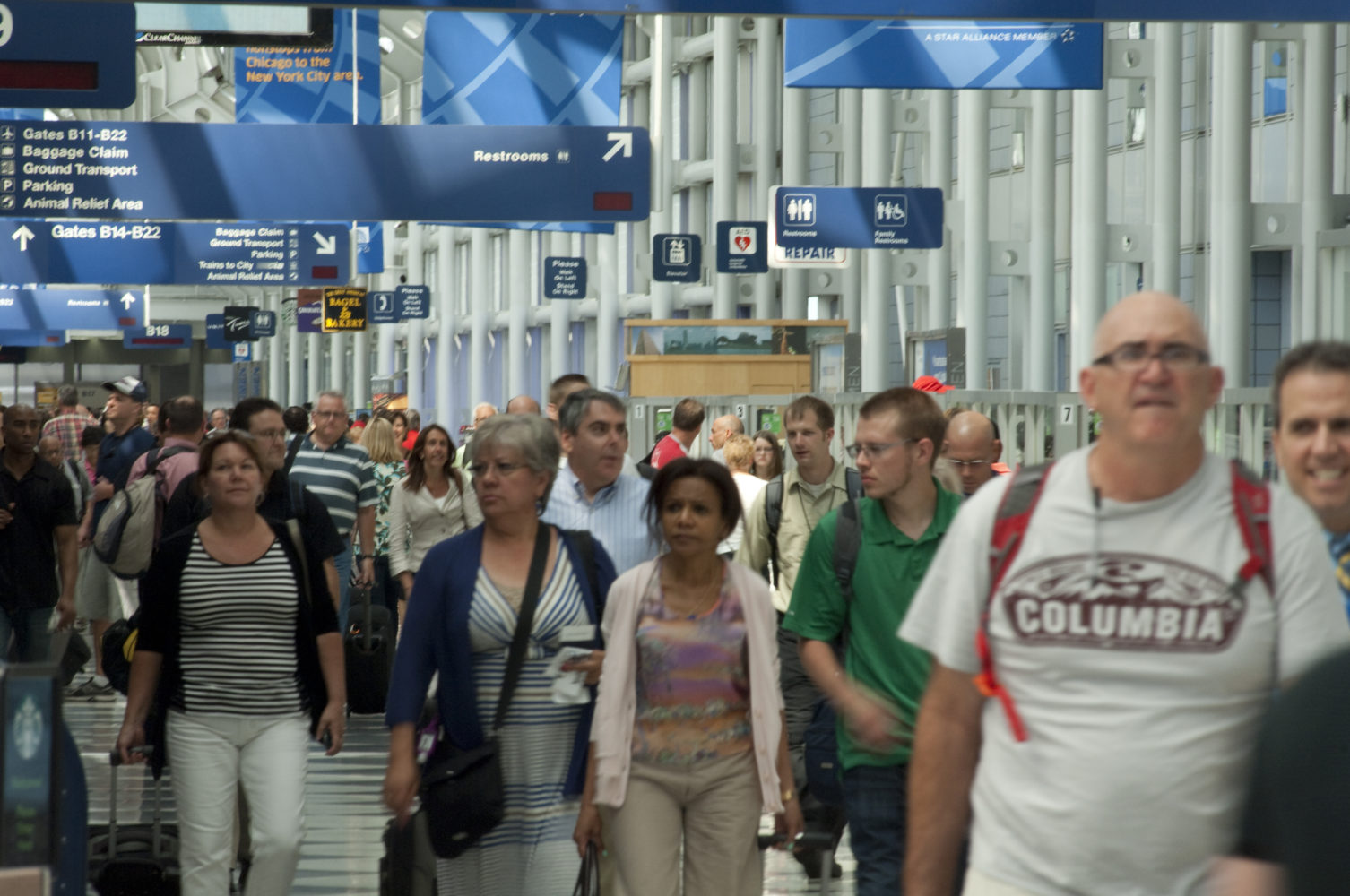
In 2015, the busiest travel day at Chicago’s O’Hare Airport was Aug. 3 (92,497 originating passengers), with July 6 (90, 276 passengers) not far behind.

This year, the Chicago Department of Aviation expects a variety of high-traffic days at ORD during June, July and August and is working with the TSA and its airline partners “to explore every possible option” to help reduce TSA wait times, said CDA spokesman Gregg Cunningham.

Denver Airport planes

Denver International Airport usually sees its peak travel days in July and August and this year os expects the busiest traffic days during the July 4th holiday week.  To help out at the checkpoints this summer, DEN has hired seven contract security workers to assist with passenger divesting, bin management and line management.

July and August (peak season for cruises to Alaska) are traditionally the busiest months at Seattle-Tacoma International Airport, and Thursday and Fridays are the busiest traffic days and this summer SEA hired 90 full-time equivalent private workers to free up TSA personnel.

Peak days at San Francisco International Airport occur during summer, and this year should be no different and to prepare for peak travel days airport officials meet weekly with the TSA to review security checkpoints and other security topics, and have planning meetings with airlines, service providers and other organizations to make sure staffing is appropriate for peak demand periods.

LAX Susan Goldman - pink lightband

Elsewhere, Los Angeles International expects a record 24.5 million passengers to travel through the airport this summer, an increase of 7.3 percent over last summer’s record 22.8 million travelers.

The busiest week of the summer is expected to be July 18-24.

“Lines at the TSA passenger screening checkpoints at LAX are being managed,” the airport said in a statement, “but they are expected to grow longer as the summer progresses with more travelers.”

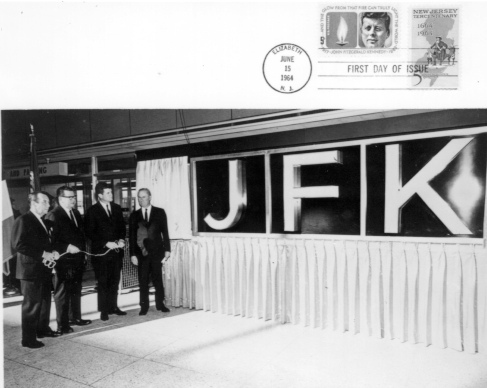
JFK Airport rededication

Based on three years of data, the Port Authority of New York & New Jersey predicts the busiest day of summer at JFK International Airport will be August 11, July 28,  August 4, July 21 and July 14, in that order.

Each of JFK’s terminals are managed separately, but the company that manages Terminal 4 (JFKIAT) teamed up with its 32 airline partners to invest more than a quarter of a million dollars on increasing staff levels at the terminal’s TSA checkpoints through September 10, the weekend after Labor Day.

While March sees the busiest passenger traffic at Phoenix Sky Harbor International Airport, PHX officials expect the July 4th weekend to be the peak travel time this summer.

“We prepare for peak days by meeting with all of our partners – airlines, TSA, concessionaires, law enforcement and others – in advance,” said airport spokeswoman Julie Rodriquez, and during peak times “airport staff who usually work in the office wear special customer service vests and go out into the terminals to assist passengers and answer questions.”

Miami International Airport also sees its highest travel days during the winter travel season. But for the busy summer season, MIA officials went to Washington, D.C. to meet with TSA Administrator Peter Neffenger and other high-ranking federal officials, and came away with a commitment for 60 additional screening officers.

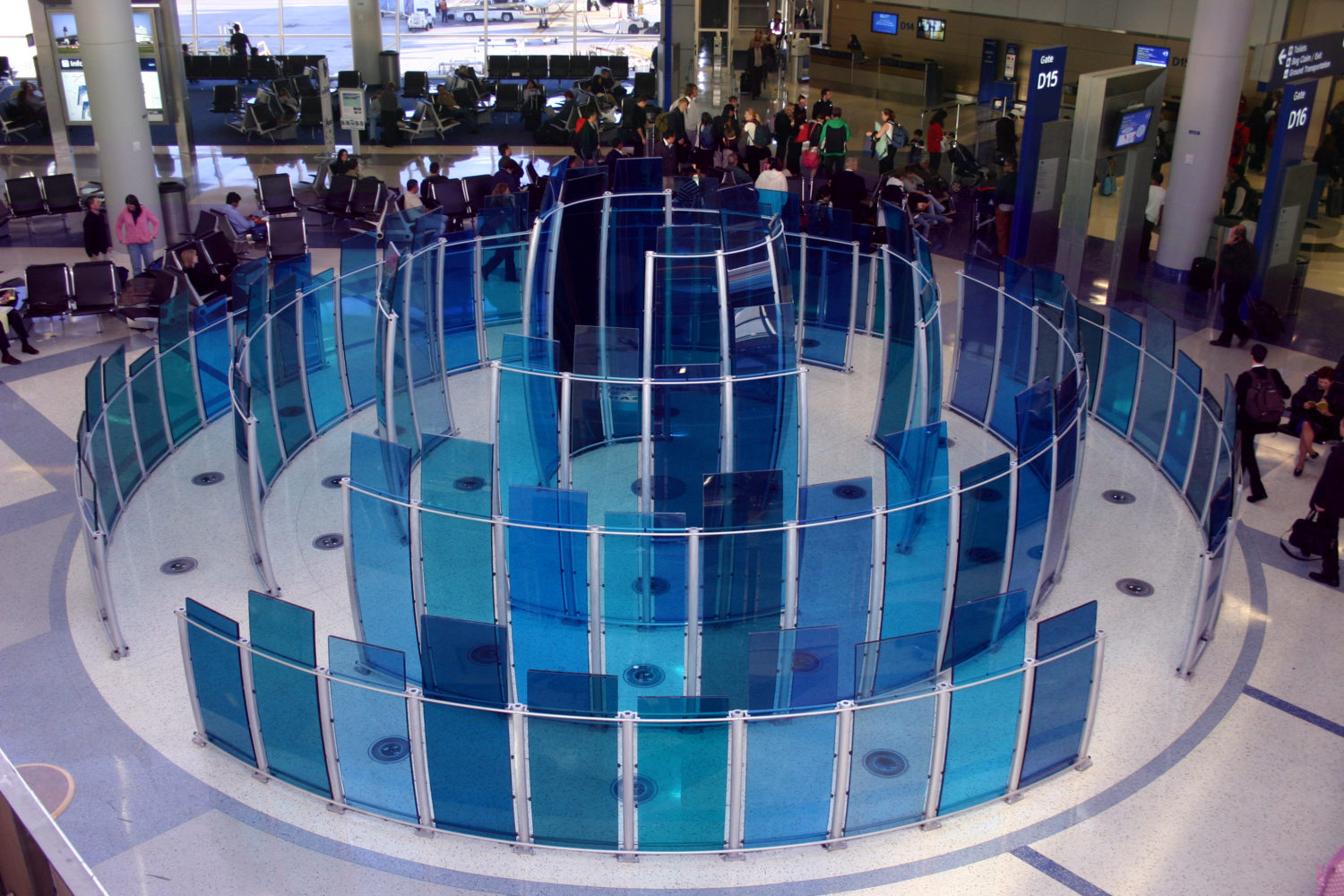
DFW ART in Terminal D

Dallas/Fort Worth International Airport is one of the beneficiaries of the $4 million American Airlines is spending this summer to help ease checkpoint backups at a variety of airports and, on peak days, the airport reallocates its volunteers, ambassadors and other staff as needed.

Going forward, DFW will have one more tool to help manage checkpoint traffic: in June, the airport’s board of directors recently approved a $600,000 contract to have AT&T anonymously track passenger cellphones in the airport to gather real-time information on wait times.


How to fix the TSA

TSA LINES

Thanks to modern inventions such as ATMS, self-checkout lanes in grocery stores and you-pump gas stations, modern day citizens don’t stand in line very often.

And when they do, it is often willingly at a place like Disney World where a thrilling ride or a charming come-to-life cartoon character is the reward.

That makes waiting in line at airport security checkpoints all the worse.

And fixing the current problems all the more challenging.

I outlined some of the solutions being proposed in a story this week for NBC News, starting with the TSA’s own ten-point list of fixes:

1. Maximizing the use of overtime for TSA officers
2. Hiring more TSA officers, including another 768 this year
3. Additional K-9 teams
4. Allowing Federal Security Directors at airports to use more flexibility in training TSA staff for screening
5. Developing specific plans to cut down on wait times at some of the nation’s busiest airports
6. Reducing carry-on luggage (size and number)
7. Asking airlines for help in non-security tasks
8. Doing more research and development into technology that will increase passenger flow through security
9. Encourage travelers to sign up for TSA PreCheck
10. Working with Congress to get additional resources for the TSA

Some of these ideas are already being put into action and some – like the suggestion that airlines stop charging for checked bags – are getting pushback from airlines, which last year made $3.8 billion from checked bag fees.

Some airports have said they want to opt out of TSA and hire private contractors – who may or may not be better and faster – for checkpoint duties, but that process takes at least a year and, in the end, TSA still oversees the checkpoint operations.

Another idea being discussed is a reservation system for the security lines, much like Disney’s FastPass, which allows park visitors to reserve times for attractions and entertainment.

One airport — in Canada — says it’s already using a similar system with success.

Montreal-Pierre Elliot Trudeau International uses a SecurXpress program that sends passengers a text message containing an appointment time for going through a designated security line.

This helps the airport “modulate traffic at peak times and makes the whole process more seamless for everyone,” said YUL spokesman François-Nicolas Asselin, and is currently being used by up to 500 passengers a day.

Checkpoint reservation systems, and policies that allow families with small children and passengers in danger of missing their flights to move to the front of the line, could help ease tensions on airport security lines, said Richard Larson, a professor at the Massachusetts Institute of Technology who’s sometimes known as “Dr. Queue.”

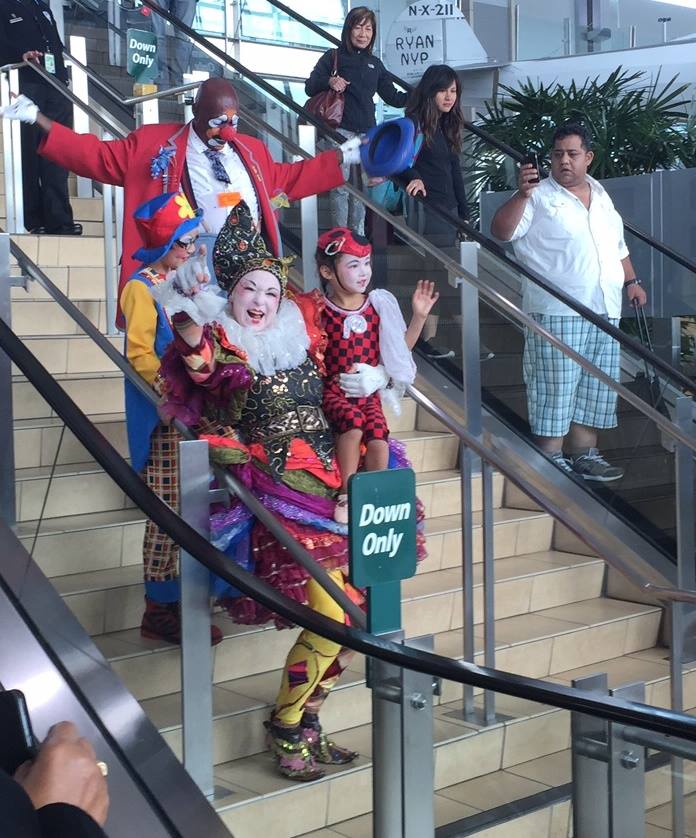
But he says the circus entertainers, therapy ponies, live music and free snacks some airports are offering to those waiting in long checkpoints lines could backfire.

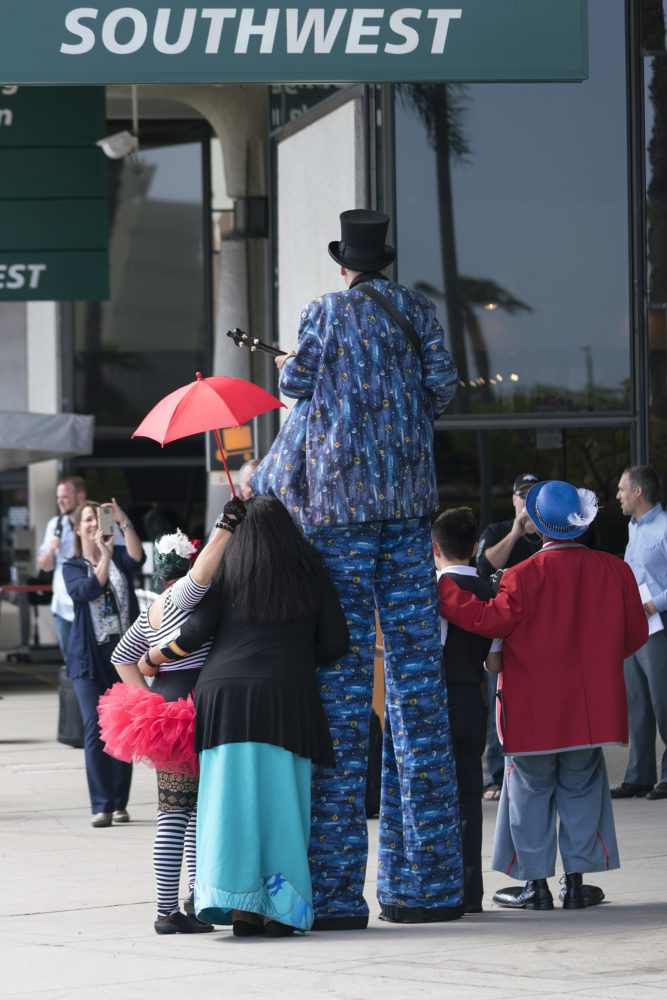
SAN DIEGO, APRIL, 29, 2016: Members of the Fern Street Circus perform at the San Diego International Airport. Photo: Gary Payne

SAN DIEGO, APRIL, 29, 2016: Members of the Fern Street Circus perform at the San Diego International Airport. Photo: Gary Payne

“It works for Disney in the amusement parks,” said Larson. But passengers who miss flights due to long checkpoint lines may end up being more furious “because they’ll feel like they were being distracted from what’s really important — getting on the plane.”

Airports bring in a circus, sweets & tiny horses

SAN CIRCUS

This story I wrote for NBC News is getting lots of lookers; no doubt because the words “circus” and “TSA” appear close together. Staff at Denver Airport initially told me they were handing out “suckers” in addition to Peppermint Patties and Hershey’s Kisses, but clarified that “lollipops” was really what they meant. Because just imagine what the comments would look like if the terms “circus”, “TSA” and “suckers” were all in the same story….”

With mounting delays around the country being blamed on Transportation Security Administration cutbacks and increased passenger traffic, airports are turning to musical performers and free sweets to keep travelers’ tempers in check.

And some airports are getting a little more creative.

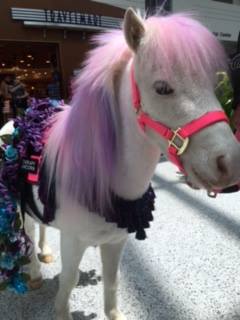
Cincinnati/Northern Kentucky International Airport is now inviting miniature therapy horses and their handlers from the non-profit Seven Oaks Farms Miniature Therapy Horses program in Hamilton, Ohio to visit the terminals several times a month.

cvg pony

“Animals help reduce stress and anxiety levels and put smiles on people’s faces,” said Mindy Kershner, a spokeswoman for the airport.

“Unlike service animals, who are working and should not be touched, therapy animals can be patted and hugged.”

And while many other airports have therapy dog programs in the terminals, “We figured this is Kentucky, after all, so we need horses,” Kershner said.

San Diego International Airport is bringing in the clowns.

As part of a performing arts residency program, Fern Street Circus will be offering performances, rehearsals and workshops in the airport over the next eight months.

“They are creating content inspired by the traveler experience, so they will constantly be visible, trying out new ideas and interacting with passengers,” said airport spokesman Jonathan Heller. “We certainly think they will be at the checkpoints often, as people waiting in line are a great audience for them!”

Sea-Tac Airport is expanding its popular post-security music program to the pre-security areas, and dipping into its coffers to hire extra staff workers to help TSA with some checkpoint duties, such as bin loading and unloading.

The airport in Atlanta is adding extra music performers in the areas before security, and bringing on more staff members to answers travelers’ questions.

During very busy checkpoint wait times, the team will also be handing out snacks and beverages to passengers in line.

“Passengers in the world’s most traveled airport should not be surprised if they find themselves welcomed, offered a bottled water and provided information by ATL’s general manager,” said airport spokesman Andy Gobeil.

At Denver International Airport, the customer service team now occasionally hands out water, Hershey’s Kisses, Peppermint Patties and lollipops to passengers waiting on long lines.

“We can’t participate in security-related procedures,” said DIA spokesman Heath Montgomery, “but we are talking with the TSA about how we can creatively use airport staff for things like bin management and other non-security tasks.”

(Read the full story here.)

Fliers “tipped” TSA $765,000 in loose change

pan am coin purse

In 2015, passengers in a rush to gather their belongings after going through airport checkpoints left behind more than three-quarters of a million dollars in the plastic buckets and bins at airport security checkpoints.

That $765,759.15 was mostly in the form of loose change. And thanks to a law passed by Congress in 2005, after collecting and tallying the cash, the TSA gets to keep it.

Here’s how much passengers left behind in the past:

2014: $674,841.06
2013: $638,142.64
2012: $531,395.22
2011: $487,869.50
2010: $409,085.56
2009: $432,790.62
2008: $383,413.79

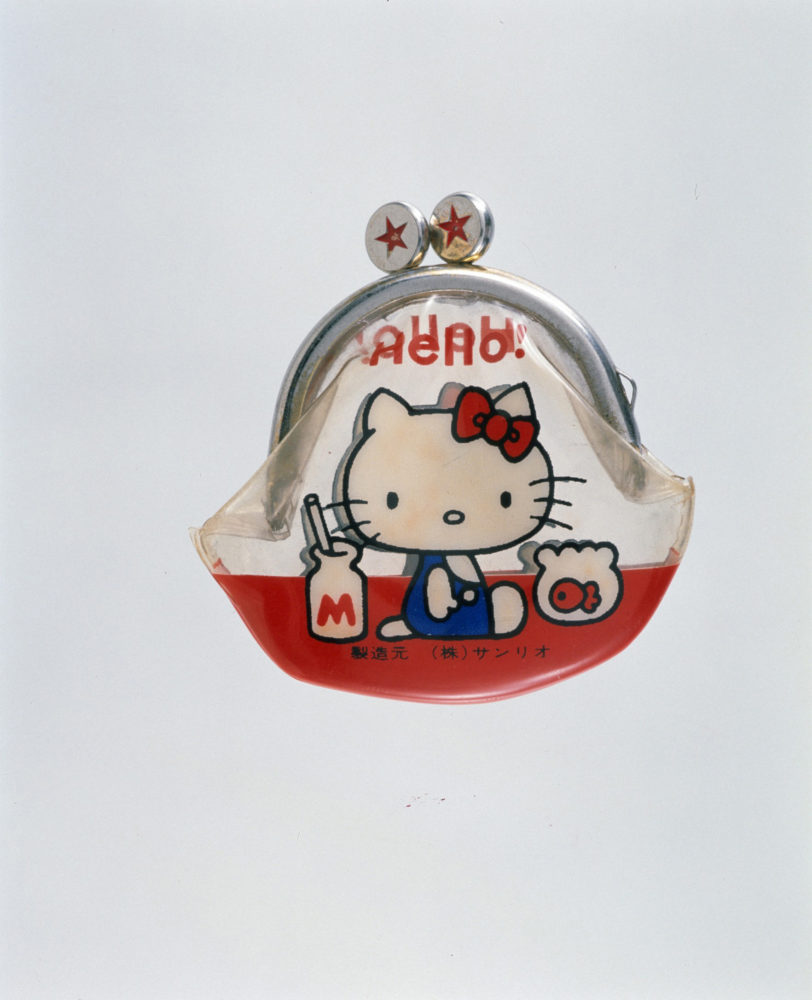
Not interested in tipping the TSA? Then don’t dump the contents of your pockets in the bins. Instead, keep your change in a small change purse and put that into your larger carry-on.

1_Hello Kitty Original Coin Purse