luggage

What to expect for holiday travel

(This is a shortened version of a story we first wrote for NBC News)

This year’s post-pandemic travel boom is continuing into the holidays.

Nearly half (48%) of Americans plan to travel between Thanksgiving and mid-January, up from 31% last winter, a recent Deloitte survey found.

AAA expects 55.4 million travelers to venture at least 50 miles from home during the Thanksgiving period alone, a 2.3% increase from last year.

That means if you’re hitting the roads or the slopes this season, you’ll have lots of company. Here’s what to expect as you pack your bags for a winter getaway.

More affordable airfare

Airline ticket prices are falling even as more Americans intend to fly.

Deloitte found that 33% of holiday travelers plan to take a domestic flight, up from 29% last year. Despite the strong demand, airfares were more than 13% cheaper last month than at the same time a year ago, federal inflation data shows.

Smoother flights?

Airlines and aviation officials sound confident about handling the holiday crush. While major U.S. carriers — including AmericanDelta, and United — expect record passenger numbers this Thanksgiving, many are touting their readiness for the season.

Track records for flight cancellations and missing luggage have improved ahead of the holidays. About 1.7% of flights were canceled during the first eight months of this year. That’s much better than the 3.0% rate for the same eight-month period last year and 2.3% in the comparable stretch of 2019, the Department of Transportation reported.

And in August, the latest month with available data, the mishandled baggage rate dropped to 0.61% from 0.75% the month before.

A broader push to streamline and automate operations “will continue to help curb mishandling as we approach the holiday season,” said Nicole Hogg, head of baggage for SITA, an air transport IT company. But travel experts still suggest adding an AirTag or other digital tracking device to your luggage, especially during busy travel periods.

“Mother Nature will cause some number of cancellations, guaranteed,” said Scott Keyes, the founder of the airfare tracking site Going. But he noted that “cancellations caused by the airlines — the most galling for travelers — are at multiyear lows” and added that many carriers have bulked up on pilots, planes, and staff.

“The entire industry was snakebit from last year’s debacle,” Keyes said, “and airlines have adjusted their operations accordingly.”

Pricier hotel rooms

More holiday travelers plan to stay in hotels this holiday season instead of bunking with friends or family. Deloitte found that 56% plan to stay in hotels, a sharp jump from 35% in 2022.

That could push up room rates, which were already 0.8% pricier in October than the year before.

Jan Freitag, director of hospitality analytics at the commercial real-estate research company CoStar, said this season’s strong travel numbers will likely nudge Christmastime room rates above last year’s levels. In the first full week of November, they were up 4% in the U.S. from the same week a year ago, averaging $156 per night, CoStar said.

Price-conscious Christmas travelers might want to “book early to lock in lower rates, shorten their trips or trade down to a different class of service,” said Freitag, or else take their chances with last-minute reservations. Inventories will be slimmer in the eleventh hour, but hotels may still cut prices on unsold rooms.

How about a 2-inch suitcase?

Would you travel with a flat suitcase? We would.

In March 2020, just days before the world closed down due to the pandemic, our baggage and accessories reporter spent two days at the Travel Goods Show, a for-the-industry event held that year in New Orleans.

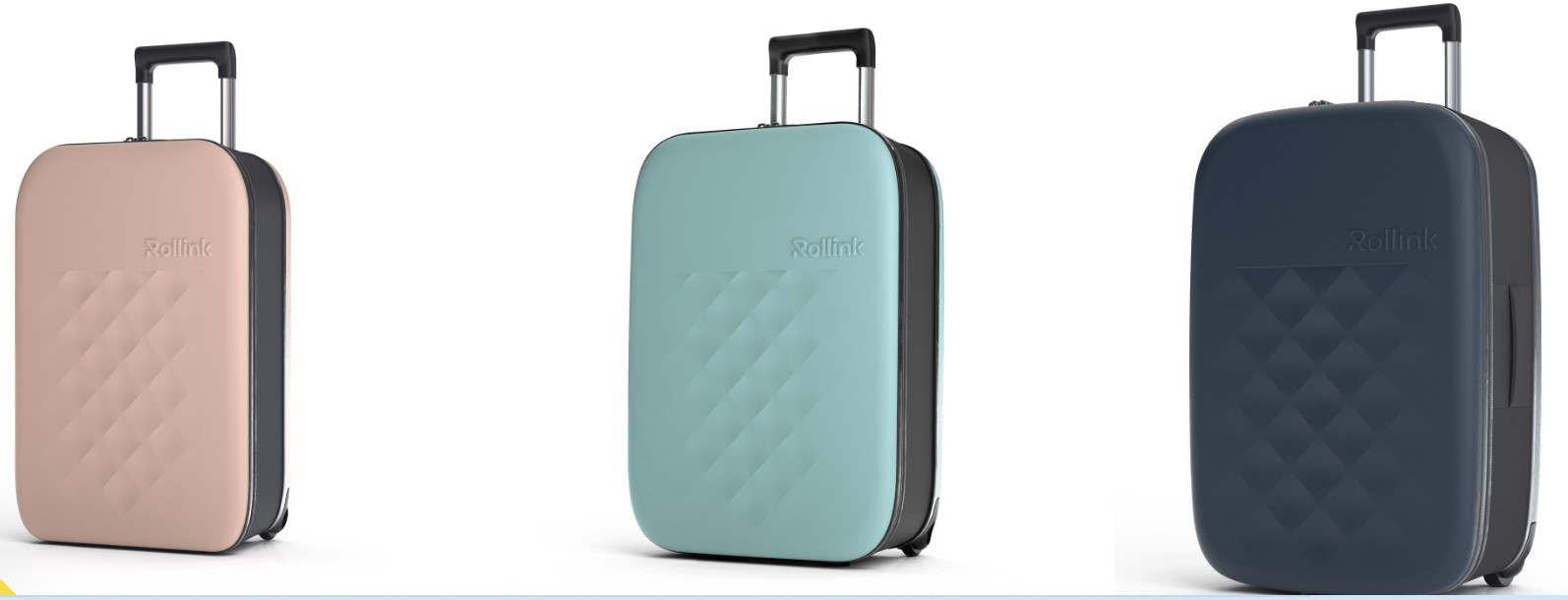
In an exhibition hall filled with travel gadgets and suitcases of all shapes, sizes, and prices, the Rollink collapsible suitcase stood out for its ingenuity and convertibility. And its cuteness.

The suitcase is made with hybrid polycarbonate hard shells and fabric that allows the bag to fold down to just 2 inches when not in use. That made it seem perfect for storage between trips, in a cruise cabin, or when staying in one of those teeny-tiny boutique hotel rooms that are so common these days.

We weren’t the only ones charmed by the Rollink.

At the Travel Goods Show, the Rollink received the “Innovation Award” for best new luggage as well as the overall “Buzz Award,” which is awarded to the most attention-getting item in the new products section of the show. 

Of course, the pandemic meant we had no need for suitcases of any size for a while. But that super slim suitcase stuck in our minds.

Now that we’re ready to get back on the road, we’re pleased to see that the Rollink has made its U.S. debut, in partnership with Macy’s. It comes in three sizes, including cabin and cabin plus, both of which are a TSA standard sized carry-on suitcases. There’s also a medium-sized Rollink that should be checked. Prices start at $155.

Cute, right?

It came in the mail: Beautiful books and a snazzy suitcase

Test-driving a colorful carry-on

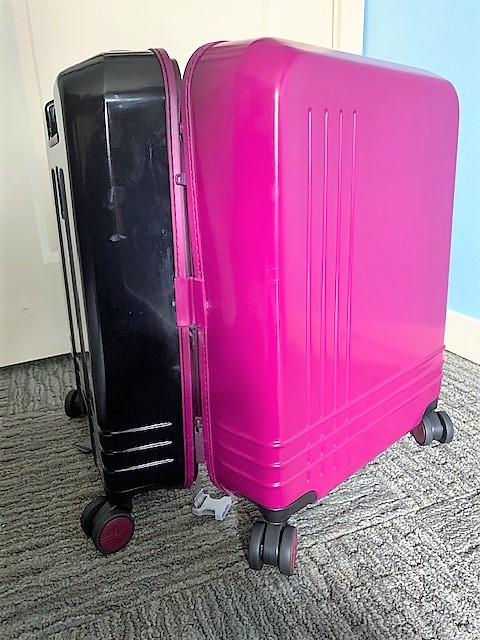
A week before COVID-19 made staying home the right thing for us to do, we had the chance to test drive the Roam luggage carry-on we were invited to design for ourselves.

We’ve been reading about these bags. And besides offering a line of 4 carry-ons and check-ins that are super light and durable, Roam lets each customer customize the color of their suitcase, from the front and back shells to the zipper, the wheels and the handle.

Here’s how our Jaunt XL turned out.

Pretty, right?

If we were to do it again, we’d go a bit wilder with the colors, but this design still stands out in a crowd.

We’re grounded, for now, so the bag has only been road-tested once.

But our Roam bag made it home nick-free after traveling as checked luggage to and from London, through a half dozen London Underground stations and a neighborhood with bumpy sidewalks.

Books we may have time to read

We love the fact that books show up in the Stuck at the Airport mailroom. But we don’t always have time to sit down and read them.

The upside of sheltering in place is that now we do.

Here are two recent arrivals we’ll spend time with this week.

Many national parks may be closed to visitors right now in the interest of social distancing, but Scenic Science of the National Parks – An Explorer’s Guide to Wildlife, Geology and Botany, by Emily Hoff and Maygen Keller, is a good armchair prep tool for when heading to a park makes sense.

The book is filled with scientific tidbits, insider tips, recommended hikes and notes on all sorts of wonders to explore in 60 national parks around the country.

Tokyo Travel Sketchbook – Kawaii Culture, Wabi Sabi Design, Female Samurais and Other Obsessions, is chock full of the charming images Spanish artist Amaia Arrazola created while spending a month in Tokyo.

If travel restrictions have put your trip to Japan on hold right now, try touring Tokyo virtually through Arrazola’s keen and quirky observations.

Apps help travelers find a place to store luggage

There’s that ‘in-between’ time – when you arrive in a town before hotel check-in time, or when you checked out of your hotel or Airbnb and want to do some sightseeing – when you need a place to leave your luggage.

Hotels will sometimes store your gear, but in a story for CNBC this week, I found a group of apps that match travelers seeking short-term bag storage with coffee shops, restaurants, gift shops and other businesses with strage room to spare.

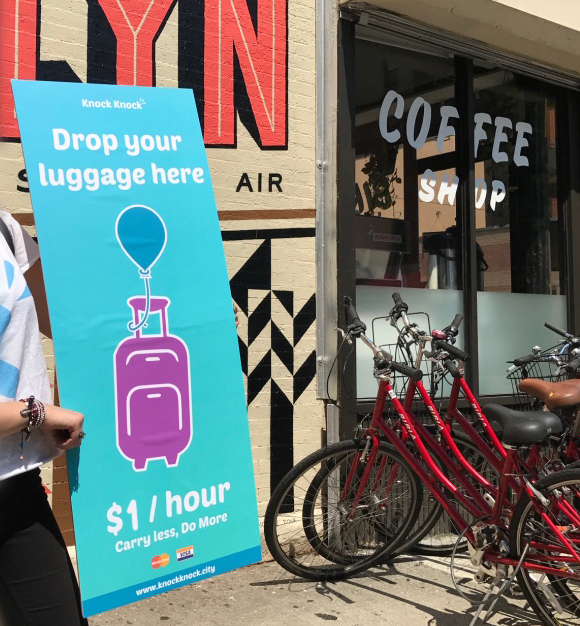
These luggage storage networks, such as Vertoe, LuggageHero, Stasher, Nannybag, Knock Knock City, Bounce and others, have apps that lead users to vetted nearby drop-off spots, with payment made online.

When dropped off, security ties are usually attached to bags to prevent tampering. Insurance is included in the fee and, after pick-up, users are invited to rate the experience online.

Storage fees vary and are charged by either the hour or the day:  

Both Knock Knock City and LuggageHero charge $1/hour or $10/day with a one-time handling fee of $2/bag. Bounce charges $5.99/day. Nannybag charges $6 per bag for the first day and $4 per bag for each additional day. Stasher’s fees are $6/day/per item and Vertoe’s fees start at $5.95 per day/per item (overnight storage counts as two days) and vary by location.

The storage-app ‘industry’ is still young and most company founders I spoke with said they decided to get into the business after finding themselves lugging their luggage around a city after checking out of an Airbnb.

“We started in New York City and Brooklyn with people offering bag storage in their apartments on Craigslist, like Airbnb for luggage,” Selin Sonmez, co-founder of Knock Knock City, told me, “But we found the business hours posted for some people’s homes weren’t reliable or always accurate and others required users to walk up flights of stairs with their suitcases.”

Knock Knock City now also operates in San Francisco, Boston, Washington, D.C., Seattle, Philadelphia, Chicago and Miami and only partners with ground floor venues that have strict business hours. Sonmez said any location with an average star rating below 3.5 (out of 5) is removed.

Like the other luggage storage app services, the list of Knock Knock City partner sites is eclectic. Customers can store their bags at bike shops, clothing stores, restaurants, a massage therapist’s office, an eyebrow bar, at hotels and in hostels.

In addition to helping businesses put unused or underutilized space to income-producing use, “We’re helping local economies by getting travelers to explore neighborhoods and getting foot traffic in the doors,” said Sonmez.

That’s the pitch that convinced ATLAS Workbase, a coworking space by Seattle’s Space Needle, to sign up as a Knock Knock City site.

“There are a lot of Airbnb rentals in this area and a lot of tourists, so it solves a real need,” said Kim Burmester, ATLAS Workbase vice president of sales and marketing, “But our real goal is to get traffic in here as our key target audience is the traveling professional.”

As convenient as storing a suitcase at a coffee shop for a few hours may be, travelers who don’t want to deal with any baggage hassles have other options.

Travelers can send luggage (and golf bags, ski and snowboard gear or bicycles) ahead with door-to-door shipping services such as Send My Bag, Luggage Free or LugLess (part of the Luggage Forward family) that offers both drop-off and door-to-door luggage shipping services. (Pricing depends on destination, weight and how soon you want your bag to arrive).

Or, for $9.95/month and $99 per standard U.S. shipment, you can skip worrying about making travel arrangements for your suitcase altogether. 

Dufl sends customers a suitcase to be filled with clothes or accessories and then picks up the suitcase and stores the items in a “virtual closet.” Customers can request that the suitcase, filled with any of the stored items, be waiting for them at a hotel and then, after their trip, return the suitcase and the clothes back to Dufl for dry cleaning and storage until the next trip comes around.   

Socks with pockets & see-though luggage.

My story for CNBC this week highlights some of the cool gear and gadgets that will be on display later this week in Las Vegas at the annual industry-only Travel Goods Show.

Carry-on bags and checkable suitcases seem to make up the bulk of the products vendors bring to the show. But there are also oodles of travel accessories on display, and many of those are quite useful and clever.

Here are just a few of the items that caught my eye:

Luggage that weighs itself

If you shop for shoes, clothes or books or liquor when you travel, your suitcase will weigh a lot more on the way home. A new suitcase from GetSet Luggage has a built-in battery-powered scale that weighs the bag as you pack.

See-through luggage

This product is sort of puzzling: tranparent luggage.

At least three companies are planning to display their versions of transparent or translucent luggage at this year’s Travel Goods Show. Traveler’s Choice calls their version The Millennial, so maybe see-through luggage has a generation-specific appeal.

Socks with pockets

My household has a variety of clothing with hidden pockets. These snazzyPocket Socks are getting added to the collection. 

Gear for your Grab ‘n Go

We thought attachments for carry-on bags that let you tote coffee cups were pretty cool, but Hontus Milano Group is bringing out a carry-on bag with a built-in insulated pocket for keeping foods (or medication, cosmetics and other temperature-sensitive items) hot or cold.

There are more items in my full story on CNBC – but these are definitely my favorites. Which of these new travel products would you buy?

Want: KLM’s cute little suitcase-toting robot

Wouldn’t it be nice to have a cute little robot to tote your carry-on around the airport and to the gate?

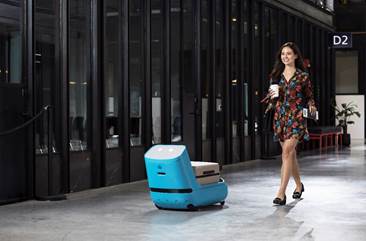
KLM is testing that idea out with its prototype self-driving cart – called KLM Care-E – that is designed to escort a passenger through the airport and carry their luggage for them.

The airline will be testing this out at JFK and SFO this summer, drawing stares and collecting data on autonomous technology at airports along the way.

KLM says the units will use non-verbal sounds to greet passengers after security and somehow prompt them to scan their ticket barcodes.

Then the unit will use GPS data to navigate through the terminal to their gate and – somehow – understand if a passenger wants to stop at a shop, restaurant or restroom along the way.

(Will the cute little blue cart wait outside the restroom with your stuff or try to go with you into the stall? That’s my first question..)

KLM says Care-E will move at 3 mph (the average human walking pace) and is designed to know if there’s a boarding gate change.

“We wanted to surprise our customers with an airport concept that was an extension of our friendly, smiling staff,” said Boet Kreiken, Executive Vice President Customer Experience at KLM. “We have the ambition to revolutionize the delivery of care through the power of existing innovations and move diagnostics from the laboratory to where our customer really is. ”

KLM worked with product development firm 10xBeta to create these e-carts, which are scheduled for 2-day long trials at JFK and SFO in July and August.

Sadly, KLM says it is only testing the interaction between machines and humans and has no plans to roll out permanent or additional Care-E carts anytime soon.

I miss the little carts already!

Souvenir Sunday: a journey with “Luggage”

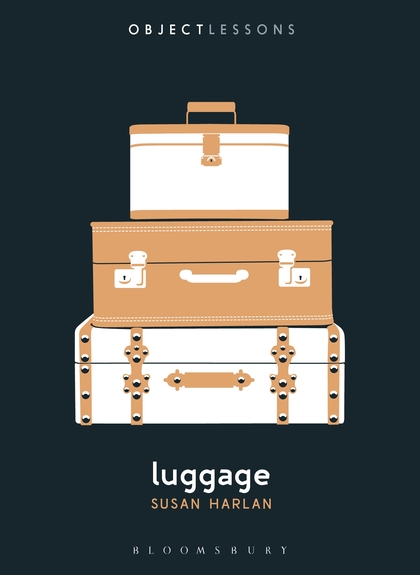
On my travels this week I’ve been toting a review copy of Susan Harlan’s book, Luggage, which is part of Bloomsbury’s charming Object Lessons series.

The slim book is travel-sized, but densely-packed and Harlan has stuffed it with stories and side-trips that touch not just on the actual history and development of suitcases, bags, trunks, carry-ons and valises, but on the role baggage plays in literature, art and films.

Remember Mary Poppins’ carpet bag?

“It contains all of her desires,” writes Harlan, and is a “powerfully enabling object” from which the nanny is somehow able to produce a lamp and a mirror (in the 1964 Disney movie) and, in the novel by P.L. Travers, everything from an apron to an armchair.

Poppins’ luggage was not only magical, notes Harlan, it gave her freedom. “She can come and go as the wind changes, which would hardly be possible with a steamer trunk,” Harlan writes.

In “Luggage,” Harlan tells us about her own collection of vintage luggage, a bit of how she and others approach packing and of her visit to to Alabama’s vast Unclaimed Baggage Center, which is not just a store but a tourist destination.

Along the way she unpacks the role and relationship baggage has to everything from home and gender to class, memory, loss and, of course, travel.

“The history of luggage is the history of travel: how we traveled, and why, and where, and what we have packed,” Harlan tells us at the beginning of this journey, “It is virtually impossible to think of traveling without luggage.”


New gear & gadgets from the International Travel Goods Show

The latest in luggage, travel gear and on-the-go gadgets goes on display each year at the International Travel Goods Show in Las Vegas.

It’s anyone’s bet which of the products displayed by the more than 500 brands in attendance will take flight, but some of these new products have a great chance

Luggage scooter

Villagio of Miami’s Transmover 3-wheeled scooter has a TSA-approved detachable, rechargeable battery, a space to attach luggage (even a pet carrier) and may be a harried travelers’ answer to that long walk out to the gate.

And it’s fun. The scooter’s 12 mph top speed and 12-15 mile range can provide entertainment on a long layover inside or outside of the terminal. (MSRP: $550-$595 for the electric model; $250-$295 for the non-electric model)

Window tablet bag

Italian designer Nunzia Palmieri created a clever and sophisticated line of women’s business-style handbags and shoulder bags featuring a front pocket that can be used to store and cushion an iPad or tablet or, with the cushion removed, provide working access to the tablet via a clear window. At this year’s International Travel Goods Show Palmieri is expanding the collection to include a men’s line of leather and fabric travel bags with tablet-shaped windows as well. MSRP: starting at $228.

One bag becomes two

Thule luggage maker is rolling out a new Subterra collection that includes four rolling luggage pieces and four travel backpacks.

The 22-inch 2-wheel Subterra Carry-On (MSRP: $279.95) has a compression panel that makes it easy to pack more items and to keep clean clothes separate from dirty ones. The versatile, 22-inch Subterra Luggage piece (MSRP: $319.95) can be filled and checked as one piece or split into two smaller, independent pieces of luggage that are carry-on compliant.

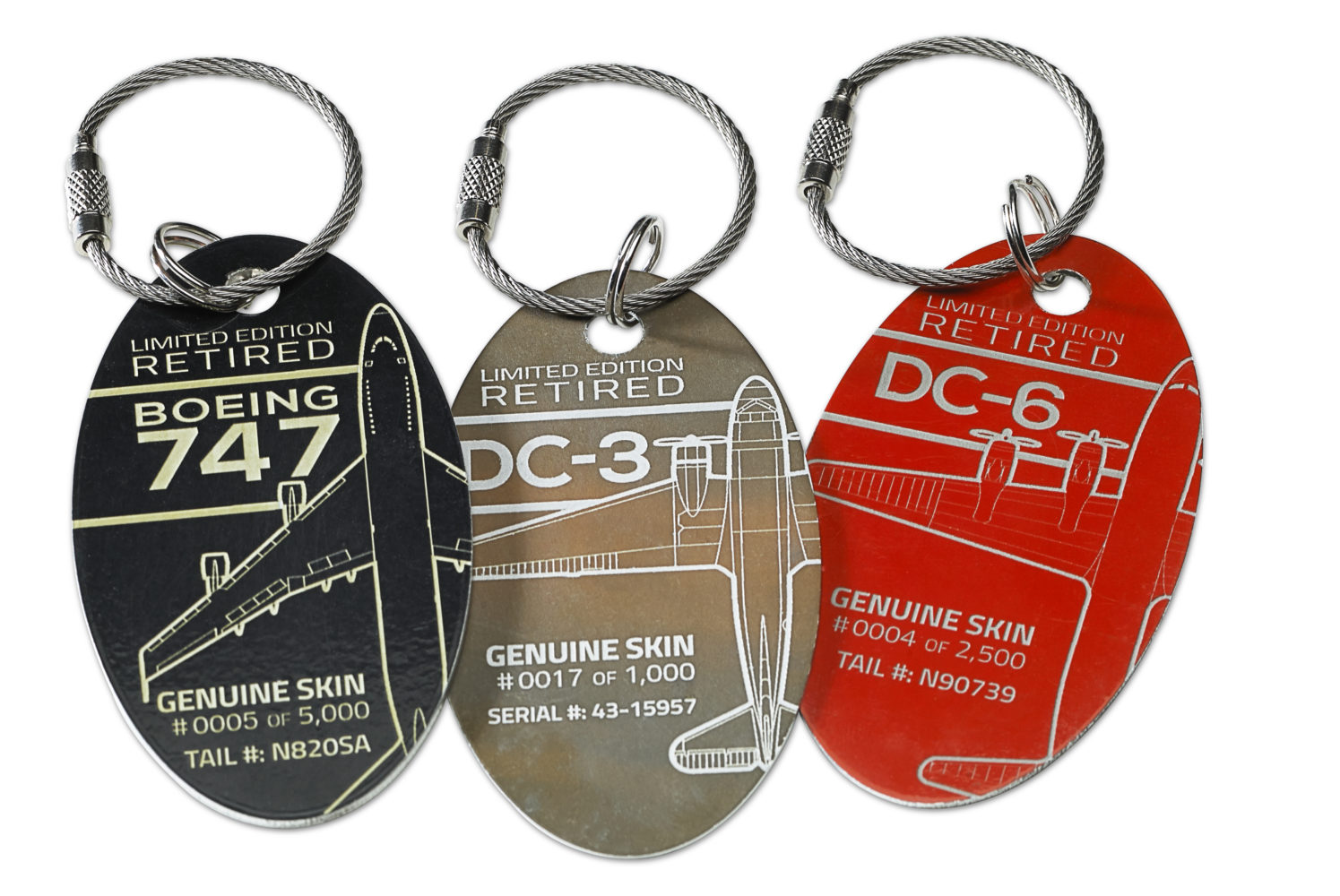
Luggage tags made from airplane fuselage


MotoArt Studios is well-known among airplane aficionados for the conference tables, office furniture and decorative items, such as mirrors, it makes from old Boeing 747 engine turbofan housings, airplane wings and other bits of retired aircraft.

The company has recently expanded its line of offering to include serial-numbered luggage tags ($25 to $100) made from the skin of retired airplanes.

“We include the tail number of the aircraft so you can look up the history of your plane,” said Dave Hall of MotoArt Studios, “And it will tell you how much the aircraft originally cost, what year it was built and the airlines that flew it.”

Sniff, but don’t eat these purses

For fun – and for candy fans – American Jewel has a line of colorful, scented Jelly Belly-branded purses (wristlets), hairbrushes and bracelets.  Wristlet “flavors” include Blueberry Muffin, Birthday Cake, Rainbow Sherbert, Green Apple Bubblegum, Pink Lemonade, Roller Rink Pink and Tutti-Frutti.

Drink and Twist

Buying bottled water on the road at $5 (or more) a pop can get expensive, but packing an empty reusable water bottle to fill at the airport or in the hotel gym can take up valuable suitcase space.

A good fluid-carrying solution? Collapsible bottles, such as HydraPak’s clever 1 liter Stash model (MSRP: $23) which twists and crushes down to an easily-packable quarter of its size and comes in outdoor-inspired colors such as Malibu, Mojave, Mammoth and Sequoia.

Sit on this


Toronto-based Airopedic, which has been making ergonomic office furniture since the mid-1980s, has created a self-inflating, portable ergonomic seat to take to sports arenas, into airports, onto airplanes and to other places where comfortable seating isn’t reliably available.

The seat weighs in at 1.6 pounds, has carrying straps and mesh side pockets for storage and a pressure control button to enable seat density adjustments that the manufacturer suggests will make sitting on the Airopedic Portable Seat (MSRP: $65) feel like “sitting on a cloud.”

(My story about accessories and luggage from the 2017 International Travel Goods Show appeared in a slightly different version on CNBC.)

Packing for a trip? Do you fold or roll?

Blackpool Suitcase

When it’s time to hit the road, do you fold, roll, layer or squish? Do you make a packing list or just wing it?

Those are just a few of the questions Cheapflights.com recently asked travelers in a quick on-line survey.

Here’s what they found:

Just over 56 percent of Americans make packing lists and 77 percent plan or lay out outfits.

Forty-two percent of us start packing two to three days before leaving home and an another 30 percent start packing a week ahead of a trip.

26 percent admitted waiting until the night before a trip to start packing while just over 2 percent said they lived on the edge and and didn’t pack anything until a hour or less before leaving.

No doubt, those are people you see looking for a place to buy underwear at the airport.

Fold or roll?

70 percent of survey respondents said they folded clothes in their suitcases, while 30 percent said rolling was their method of choice.

And maybe it doesn’t really matter what you pack or how: only 45 percent of Americans reported that they ended up wearing everything they packed.

Upcycled carry-on bags from United banners

united recycled bags

The airline industry uses a lot of ‘stuff’ and some of that stuff gets recycled and re-used and made into new things that you may want to buy.

The newest “upcycled” aviation items are a set of 100 carry-on bags made from 20 United Airlines “Fly the Friendly Skies” banners.

The airline worked with the Columbia College Chicago Department of Fashion Studies and the Re:new Project and asked them to come up with a carry-on bag that would look good and be durable, be economical to make and fit under an airplane seat.

The results look appealing and are available for purchase at the United Shop .

Even better: the proceeds from sales of the upcycled banners will benefit Re:new and the Alto Mayo Forest Carbon Project in Northern Peru.