On Sunday afternoon, Air Canada said it was suspending its plan to resume limited flying by Air Canada and Air Canada Rouge after striking flight attendants represented by the Canadian Union of Public Employees (CUPE) defied the government’s back-to-work order.
Instead, the airline says it now plans to resume flights on Monday evening.
Air Canada Express flights operated by Jazz or PAL continue to operate as normal, but for passengers with flights on other Air Canada flights, the carrier has this advice:
Customers whose flights are cancelled will be notified and are strongly advised not to go the airport unless they have confirmed flights on other airlines. Air Canada will offer those with cancelled flights options, including obtaining a full refund or receiving a credit for future travel. The carrier will also offer to rebook customers on other carriers, although capacity is currently limited due to the peak summer travel season.
Cute Korean Air kits for kids
Korean Air has rolled out a charming new collection of amenities for kids that include a hooded beach towel, a memory foam neck pillow, slippers, socks, and an airplane keyring, as well as a coloring pack, a doodle book and a paper airplane.
The items available are adjusted by route length and season across short, medium, and long-haul flights.
Art tour of SEA Airport
The art collection at Seattle-Tacoma International Airport (SEA) was started back in the 1970s and is now one of the more extensive and valuable airport art collections in the United States.
Here’s a fun video put together by Seattle’s Museum of Flight that includes a tour of just a few of the pieces you’ll see when you visit the airport.
Where is the food and produce you eat on a plane grown?
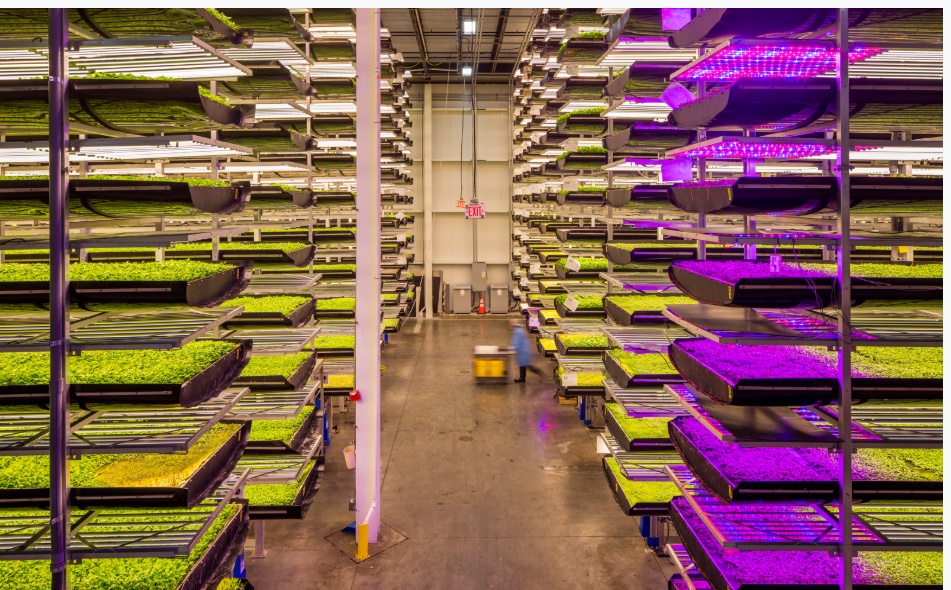
Starting in September, the answer for passengers on Singapore Airlines’ passengers leaving Newark for Singapore will be “indoors, nearby.”
Singapore Airlines is working with indoor vertical farming company
AeroFarms, which has reclaimed an abandoned steel mill in an industrial area
near Newark International Airport and transformed it into a 1-acre, indoor
vertical farm.
The farm, which grows produce ‘aeroponically’ without soil,
pesticides or sunlight, can produce the equivalent of 390 acres of locally
grown produce with up to 30 harvests each year and will grow a customized blend
of fresh produce for SIA’s Newark-to-Singapore flights starting in September
2019.
“Imagine boarding a plane and enjoying a salad harvested only a
few hours before takeoff — literally the world’s freshest airline food,” said
Antony McNeil, director of food and beverage for Singapore Airlines. “The
only way to get fresher greens inflight is to pick them from your own garden.”
Singapore Airlines shared examples of farm-to-flight
dished business class and premium economy class passengers might be able to
choose from on Newark to Singapore flights:
Soy Poached Chicken:Pickled Ginger Vinaigrette, Zucchini Ribbons, with Sweet Potato Roesti, Soy Beans and AeroFarms Baby Pac Choi
The Garden Green: Poached Asparagus, Broccolini, Avocado with Shaved Fennel & Flaked Hot Smoked Salmon, with AeroFarms medley of Baby Ruby Streaks,
Watercress and Arugula, with Lemon Vinaigrette
As I reported last year in a
farm-to-flight feature for USA TODAY, Singapore Airlines’ joins several
other airlines in being super creative and eco about the food served on its flights.
Korean Air has its own company farm.
Jedong Ranch sits on 3,700 acres of South Korea’s lush Jeju
Island and has been operating since 1972, when it was purchased by the former
chairman of the airline’s parent company, the Hanjin Group.
Back then, South Korea had a beef shortage, so breeding livestock
was the first order of business. Early on, the herd was made up exclusively of
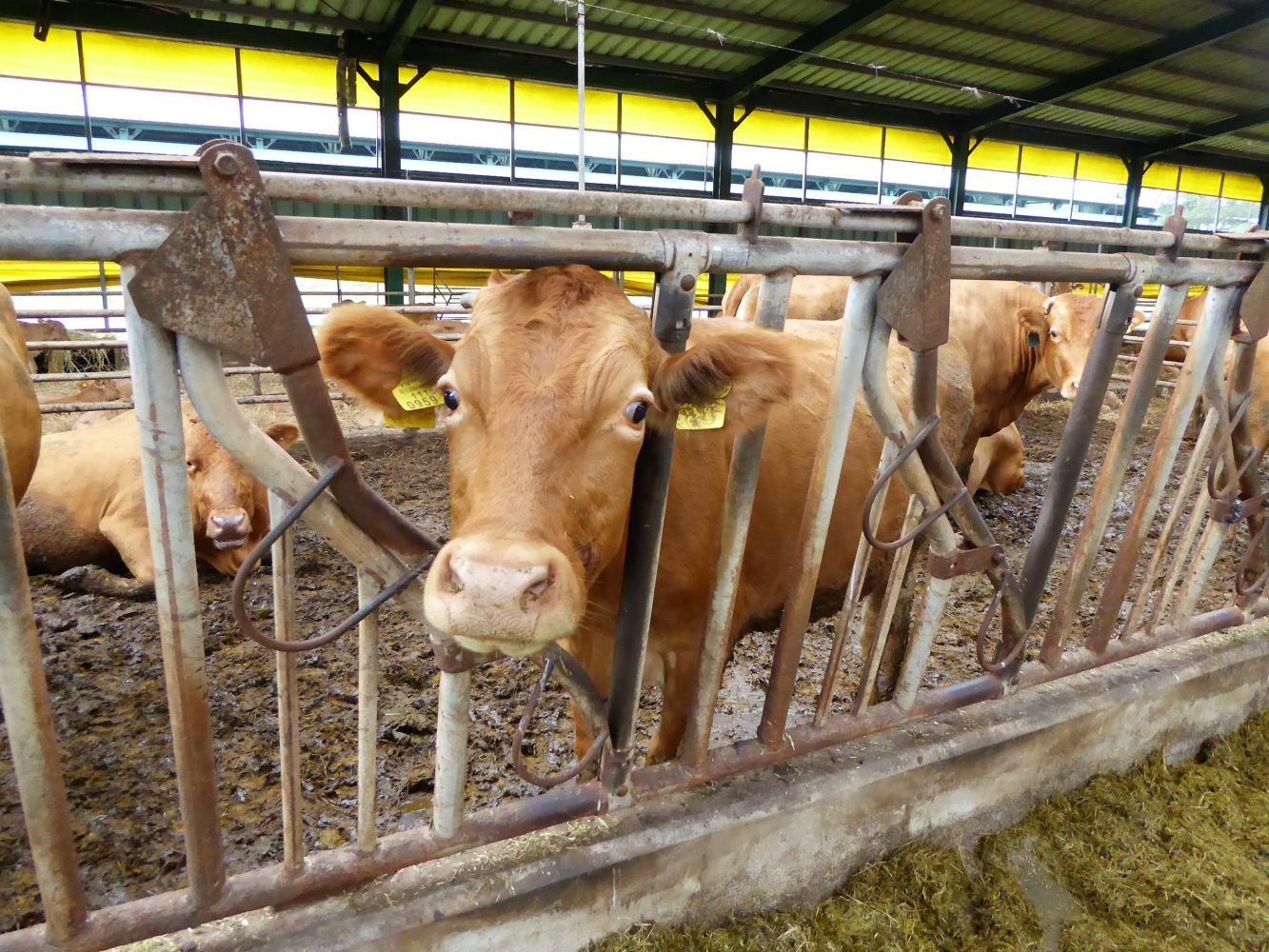
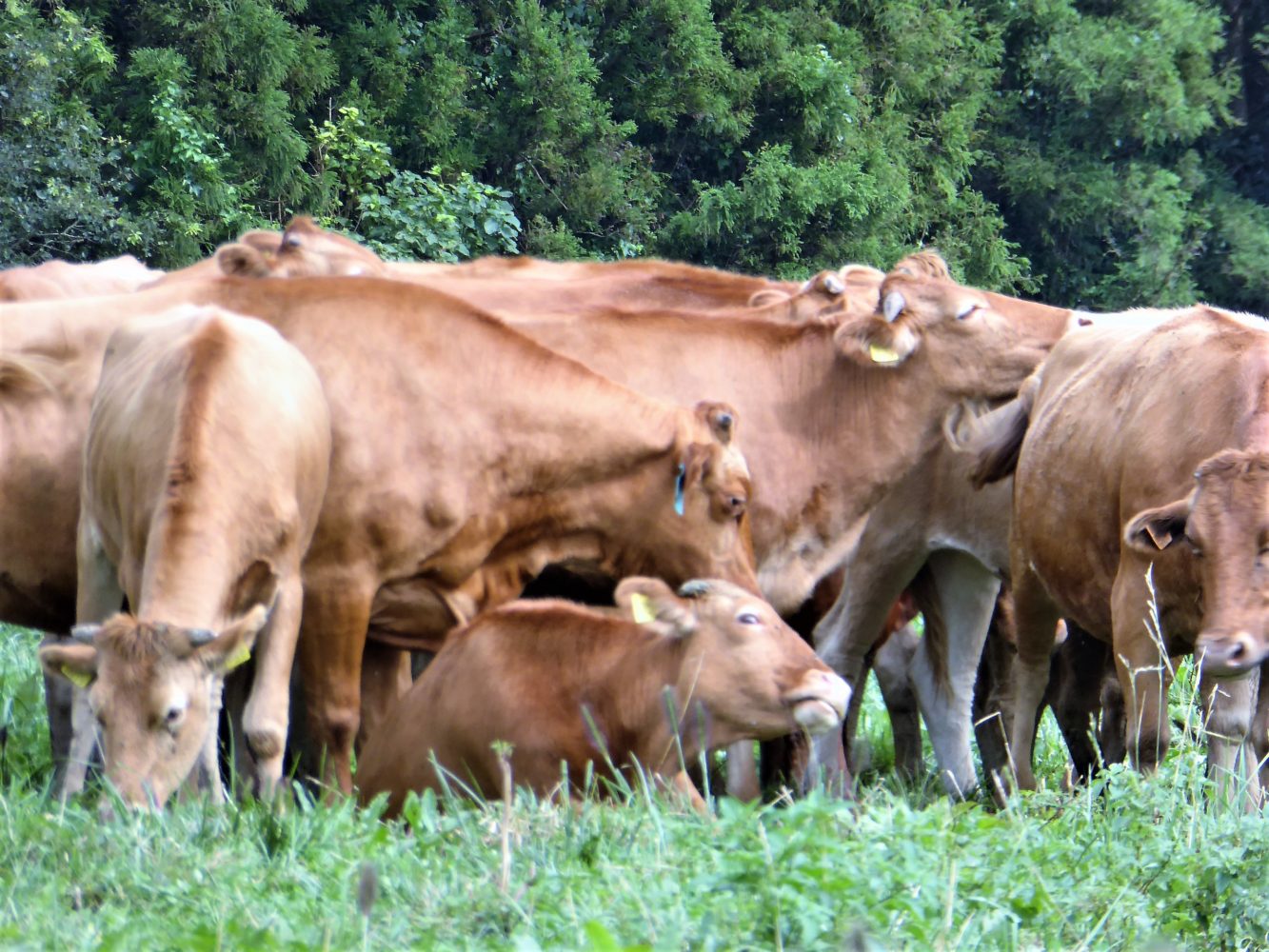
imported Angus cattle. Today the ranch is home to more than 2,200 head of prized,
grass-fed Korean native cattle known as Hanwoo.
The organic, antibiotic-free meat from these animals, and
from the farm’s flock of approximately 6000 free-range chickens, is sent to Korean
Air’s flight catering kitchens in Seoul for use in meals served to first and
business-class passengers. Some of the meat and eggs from the farm are also available,
at premium prices, for purchase locally.
In addition to raising cows and chickens, the ranch’s hydroponic
greenhouse also produces more than 210 tons of fruit and vegetables, including
red peppers, cherry tomatoes and blueberries for first
and business class in-flight meals.
JetBlue’s garden at
JFK
In 2015 JetBlue created a 24,000 square-foot milk-crate garden
outside Terminal 5 at New York’s John F Kennedy International Airport. Designed
to both create a welcoming green space and promote local agriculture, the
garden generates more than 2,000 pounds of blue potatoes, kale, carrots, leeks,
arugula, garlic, mint, basic and other herbs for local food banks.
Japan Air Lines agritourism
attraction
In 2010, Japan Air
Lines is scheduled to open an agritourism attraction on land near Tokyo’s Narita
International Airport. The ‘JAL Agriport’ will
offer visitors a chance to pick strawberries, harvest sweet potatoes, picnic,
or purchase fresh produce grown in the region. JAL says it also plans to use
some agriport produce in lounge menus and in-flight meals.
And Emirates
announced last year that it was joining with Crop One to build the world’s
largest vertical farming facility near the airport in Dubai to help create a supply chain of “high quality and locally-sourced
fresh vegetables, while significantly reducing our environmental footprint,”the airline said in a statement.
Last month I joined Korean Air as a judge for a kids art show in LA, a paint-the-plane event in Seoul, and a tour of the airline’s farm, water bottling plant and various tech centers.
Here are some snaps and part of the story about the tech center and engine test cell I put together for USA Today’s Today in the Sky.
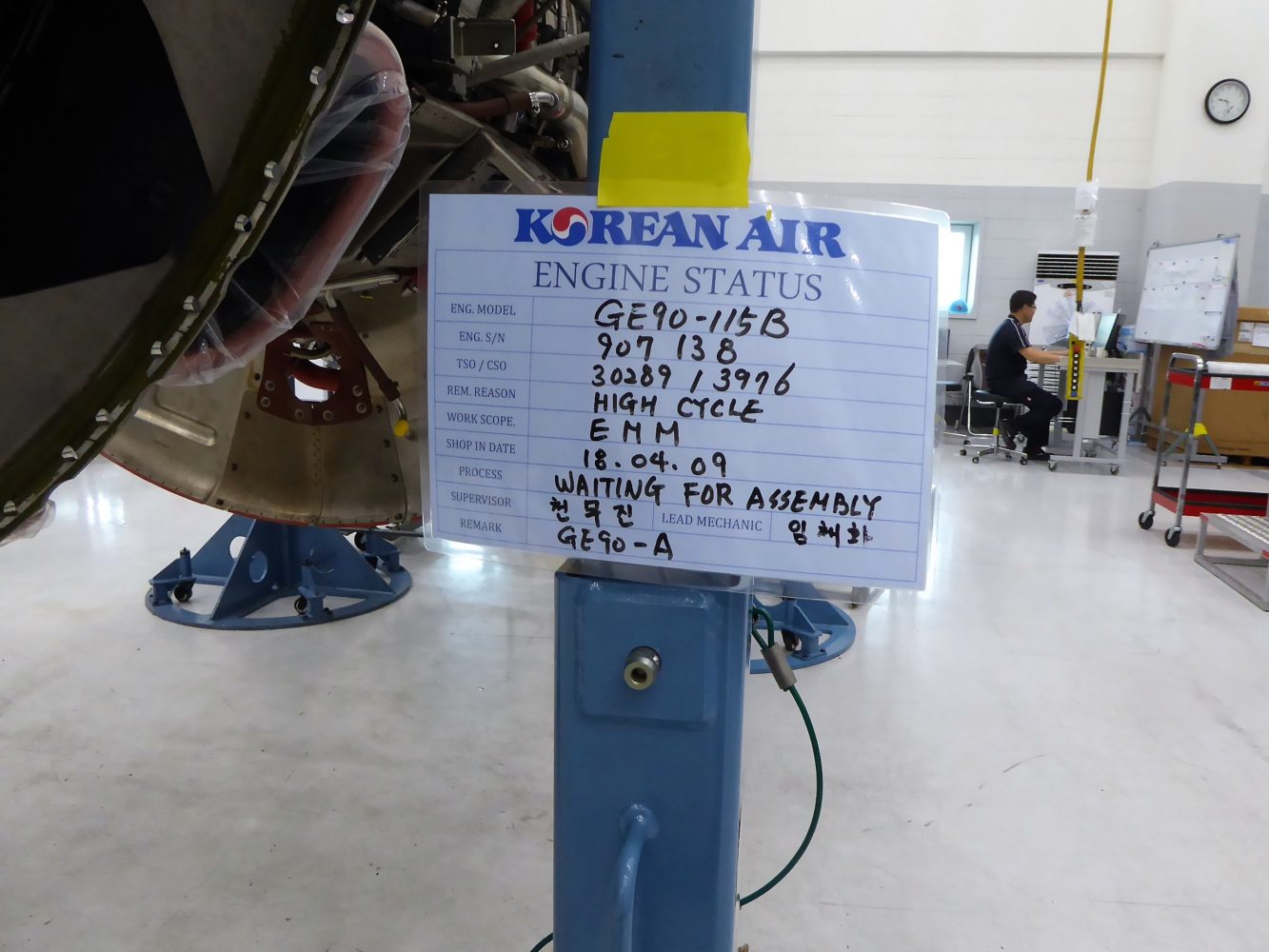
At its sprawling Tech Center in the port city of Busan, South Korea, Korean Air performs a wide variety of services for its own fleet and for many other airlines. In Incheon, Korean Air and aerospace manufacturer Pratt Whitney operate the world’s largest engine test facility as a joint venture.
The Paint Hangar
In Busan, South Korean, the Tech Center’s environmentally-friendly paint hangar has repainted hundreds of aircraft for Korea Air and other airlines since it was established in 1998.
During the visit, a Korean Air 777-200 was well into its 9-day repainting process. On the to-do list: repainting four Qantas A380s between May 2019 and November 2020.
Tech Center
This Korean Air 747 cargo plane was parked inside a 2-bay maintenance hangar undergoing an extremely thorough, required, multi-week inspection known as a D-check, during which all parts of the aircraft are evaluated. According to Korean Air, this type of heavy maintenance is performed on more than 100 aircraft a year.
Inside other buildings at the Tech Center, parts are being manufactured for both Boeing and Airbus (including Sharklets for the Airbus A320).
Elsewhere, hundreds of technicians perform maintenance and repair for aircraft operated by commercial airlines and for Korean and US aircraft, including F-15 and F-16 fighters, CH-53 helicopters and a wide variety of other aircraft we were not permitted to photograph.
Engine Test Cell center in Incheon
Korean Air’s $80 million Engine Test Cell (ETC) opened in 2016, and is a joint project with Pratt Whitney.
The ETC is designed to test the world’s largest jet engines, with a maximum thrust of up to 150,000 pounds.
Currently the largest and most powerful commercial jet engine is on the Boeing 777 and has a thrust of 115,000 pounds, but Korean Air’s ETC is ready for the next generation of supersized engines, which are already in production.
Before this center was created, Korean Air had to send its engines elsewhere to be tested, said Bill Kim, manager of Korean Air’s Engine Test Cell facility. The airline had to pay upwards of $8,000 to transport each engine overseas and then wait up to a month for an engine to get tested and returned.
“Here the turn-around time is far less: just two days,” said Kim, which means far less downtime and less need for Korean Air and other airline customers to purchase as many spare engines, which can cost up to $30 million dollars each.
Airlines growing their own food? It’s a thing. Korean Air recently invited me to visit the company’s ranch in South Korea where they farm livestock, chicken, veggies, fruit and bottle their own water to serve to passengers.
Other airlines have farming projects underway as well.
I have story – with lots of photos- from my farm visit on USA TODAY’s Today in the Sky. Here are some highlights of the story.
Back in 1972, when beef was in short supply in South Korea, the then chairman of Korea Air’s parent group bought a 3,700 acre ranch on South Korea’s Jeju Island.
Imported Angus cattle got things started, but now the herd is about 2,200 Korean native cattle known as Hanwoo.
Meat from these animals, and from the farm’s flock of approximately 6000 free-range chickens, is sent to Korean Air’s flight catering kitchens in Seoul for use in meals served to first and business-class passengers.
In addition to raising cows and chickens, the ranch also produces fruit, vegetables – and bottled water – for Korean Air passengers.
The water bottling plant at the ranch has been operating for 35 years and there they make and fill cups and bottles of the airline’s branded ‘Hanjin Jeju Pure Water.’ The water is pumped from 1,070 feet underground and filtered through layers of the island’s volcanic rock.
Other airlines explore agriculture
In 2015 JetBlue debuted a large milk-crate garden outside Terminal 5 at New York’s John F Kennedy International Airport. Potatoes, vegetables and herbs grown there are donated to local food banks.
Japan Air Lines is creating a ‘you-pick’ agritourism attraction on land near Tokyo’s Narita International Airport that is scheduled to open in 2020. The carrier hopes to add food grown on that farm to in-flight and lounge menus.
And Emirates is having the world’s largest vertical farming facility built near the Dubai airport. At full production, the daily harvest from the the 130,000-square foot facility should be about three tons of pesticide-free leafy greens that will be used in many of the meals Emirates Flight Catering prepares for 105 airlines and 25 airport lounges.
Korean Air’s ranch on Jeju Island in Korea produces beef, chicken, vegetables and fruit for some of the meals served to passengers in first and business class. The airline also bottles its own mineral water.
I spent a day on the farm – and at the bottling plant – for a story that will appear later this month on USA TODAY, but sharing some snaps from the day here.
Jedong Ranch started raising livestock in 1973 with imported Angus. Today the herd is roughly 2000 Korean native cattle – Hanwoo – fed with on grass and grain from the ranch.
The ranch also raises about 6000 native chickens, selling fertilized eggs locally and providing chicken for in-flight meals.
Greenhouses on the ranch produce tons of bell peppers, cherry tomatoes and seasonal blueberries.
And the water plant bottles highly-regarded water that has been pumped from an underground well and filtered through basalt and volcanic stone.
Stay tuned fro more pictures and details from y day at the Korean Air ranch.
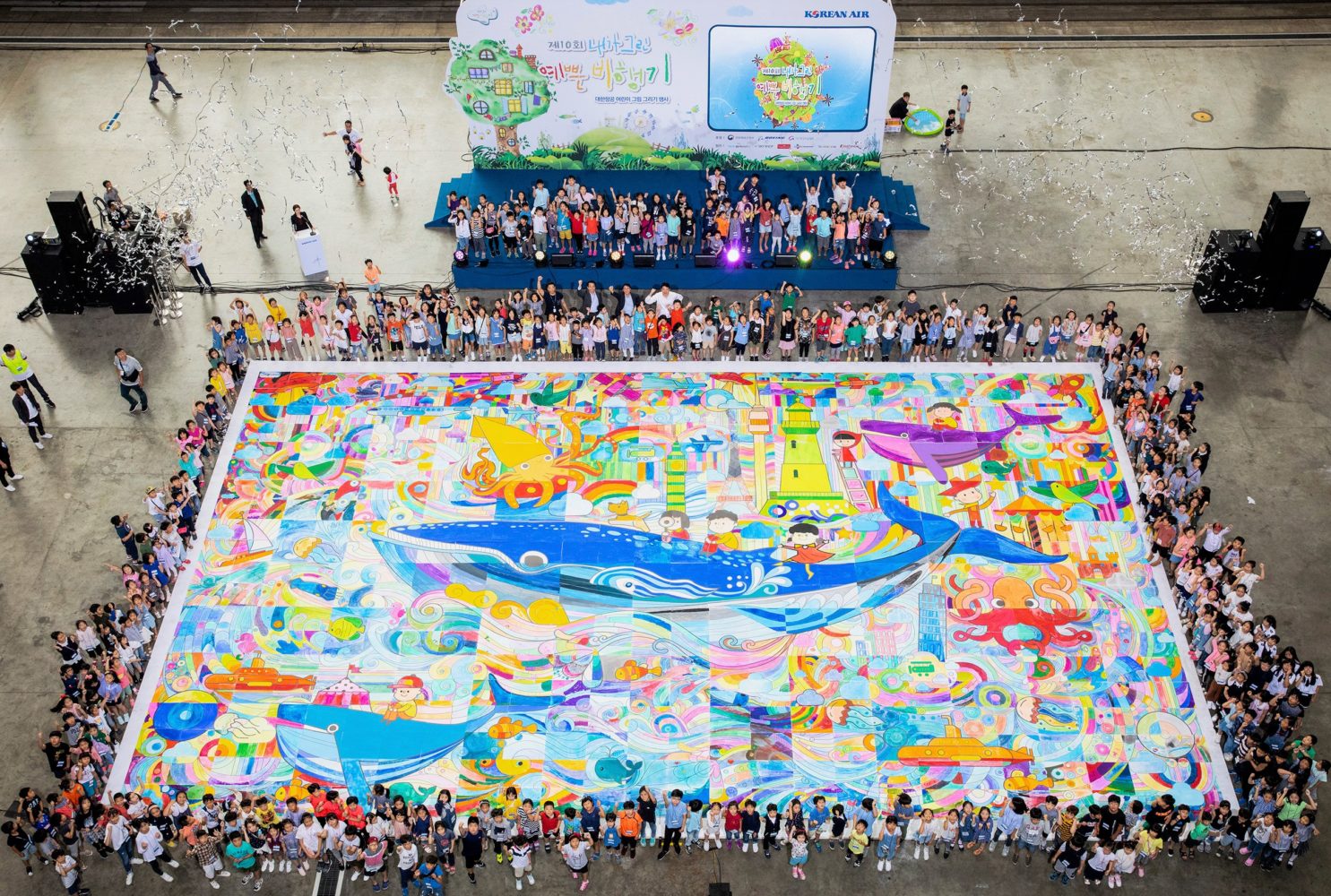
On Saturday morning, 500 lucky kids (and their parents) poured into a Korean Air hangar in Seoul, Korea to help color a giant picture that will soon wrap one of the airline’s Boeing 777-200 planes.
Map of the design to be colored by children – photo Harriet Baskas
The event marks the 10th anniversary of a competitive drawing contest in which one child’s drawing is usually chosen to adorn a plane. This year, however, the airline commissioned its own design and created a festival where children worked together in teams to color and paint sections of the 64 X 40-foot image that were then put together to form one colorful whole.
Here are some more snaps from the day, which included live music, a magician, crafts activities and a chance to tour a 787 plane.
Participants in Korean Air kids coloring festival
Putting all the pieces together
Finished artwork – courtesy Korean Air
My attendance at the children’s coloring festival in Seoul is courtesy of Korean Air and kicks off a week of touring some of the carrier’s operations throughout the country. Stay tuned for more images and stories from my visit.