Restrictions the FAA has on space launches and on general aviation flights at 12 airports will also be lifted.
Flights restrictions that were set to ultimately reach 10% were put in place during the longest government shutdown in history amid concerns about staffing levels of the nation’s air traffic controllers and air traffic safety nationwide.
But once the government shutdown ended, the FAA mandated a 3% reduction over the weekend, down from the 6% reduction that was previously in place.
“Staffing levels have continued to snap back into place since the end of the government shutdown,” the FAA said in a release, noting that “the current data aligns with staffing conditions before the shutdown.”
Record Thanksgiving travelers. Will they fly or drive?
AAA predicts that 81.8 million people will travel at least 50 miles from home over the Thanksgiving holiday period, which this year stretches from Tuesday, November 25 to Monday, December 1.
The estimate is up 1.6 million travelers over last Thanksgiving, setting a new overall record.
But recent flight reductions and delays may cause some Thanksgiving travelers to reconsider how they travel this year.
According to AAA, 6 million U.S. travelers are expected to take domestic flights over the Thanksgiving holiday period, a 2% increase compared to 2024 And AAA projects at least 73 million people will travel but car.
But those numbers may shift a bit because some people who had planned to fly have already decided to drive or take a bus or train in response to all the recent flight cancellations.
Pittsburgh International Airport’s new terminal opens Tuesday
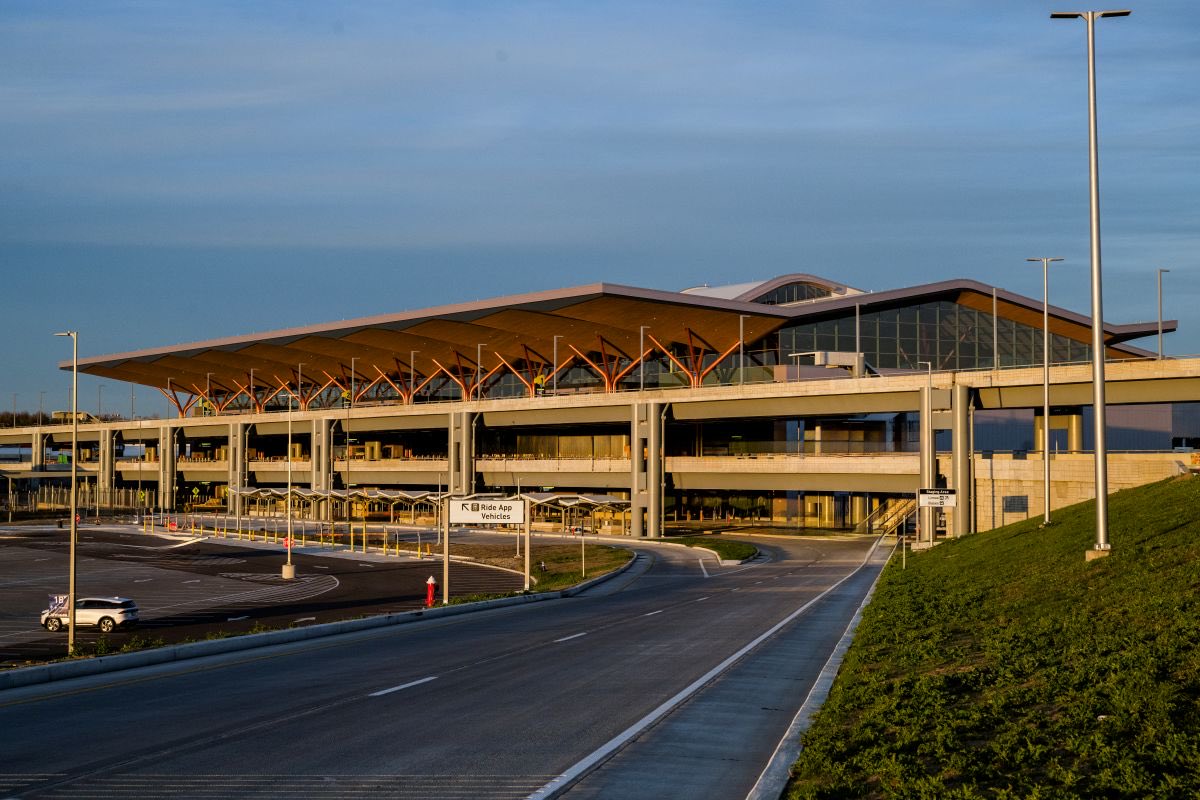
Although they held a ribbon cutting a few weeks ago, the new $1.7 billion main terminal buidling at Pittsburgh International Airport (PIT) will officially open to the public on Tuesday, November 18.
The Stuck at The Airport team will fly in on that day to be part of the festivities.
We’ll get a first look at all the fresh amenities that are part of the new building, including 12 upgraded security lanes, a new state-of-the-art baggage handling system, outdoor decks, new concessions and lots of locally-made artwork.
A fresh new airport terminal building is always exciting.
But we’re glad to see that some of the ‘old time’ favorite features are making the move to the new terminal.
That includes the PIT’s popular statue of Pittsburgh Steeler Franco Harris completing the Immaculate Reception.
FRANCO IS ON THE MOVE! He was relocated to our new terminal last night, so you’ll be able to say hi and take all the selfies with our main guy on opening day this Tuesday!
[Our story on the rise of unruly airlines passengers first appeared on NBC News)
Air travelers picked up some bad habits during the pandemic that they can’t seem to shake.
Unruly passenger incidents rose 47% globally last year from 2021, even as pandemic-related restrictions faded, according to recent data released this month by the International Air Transport Association, an airline trade group.
Reports of bad behavior rose from a rate of 1 incident per 835 flights to 1 per 568 over that period, IATA found.
Conflicts over mask requirements, which drove a surge in unruly conduct during the depths of the coronavirus pandemic, have largely dissipated.
But as air travel continues to rebound — a record 257 million passengers are expected to hit the skies on U.S. airlines this summer — other sources of contention are still triggering disruptions at alarming rates. And some say official data may only capture a fraction of the problem.
“The public does not hear about the 99% of would-be incidents that are resolved by flight attendants without event,” the Association of Flight Attendants President Sara Nelson said in an email. “We deescalate conflict as aviation’s first responders on nearly every flight.”
Industry experts say that they can only speculate about what’s going on.
“I’m not sure if there is an overall increase in a feeling of self-entitlement,” said aviation security expert Jeffrey Price, the owner of the airport management consultancy Leading Edge Strategies, “or if people are, for some reason post-Covid, feeling more empowered to assert what authority or influence they believe they have.”
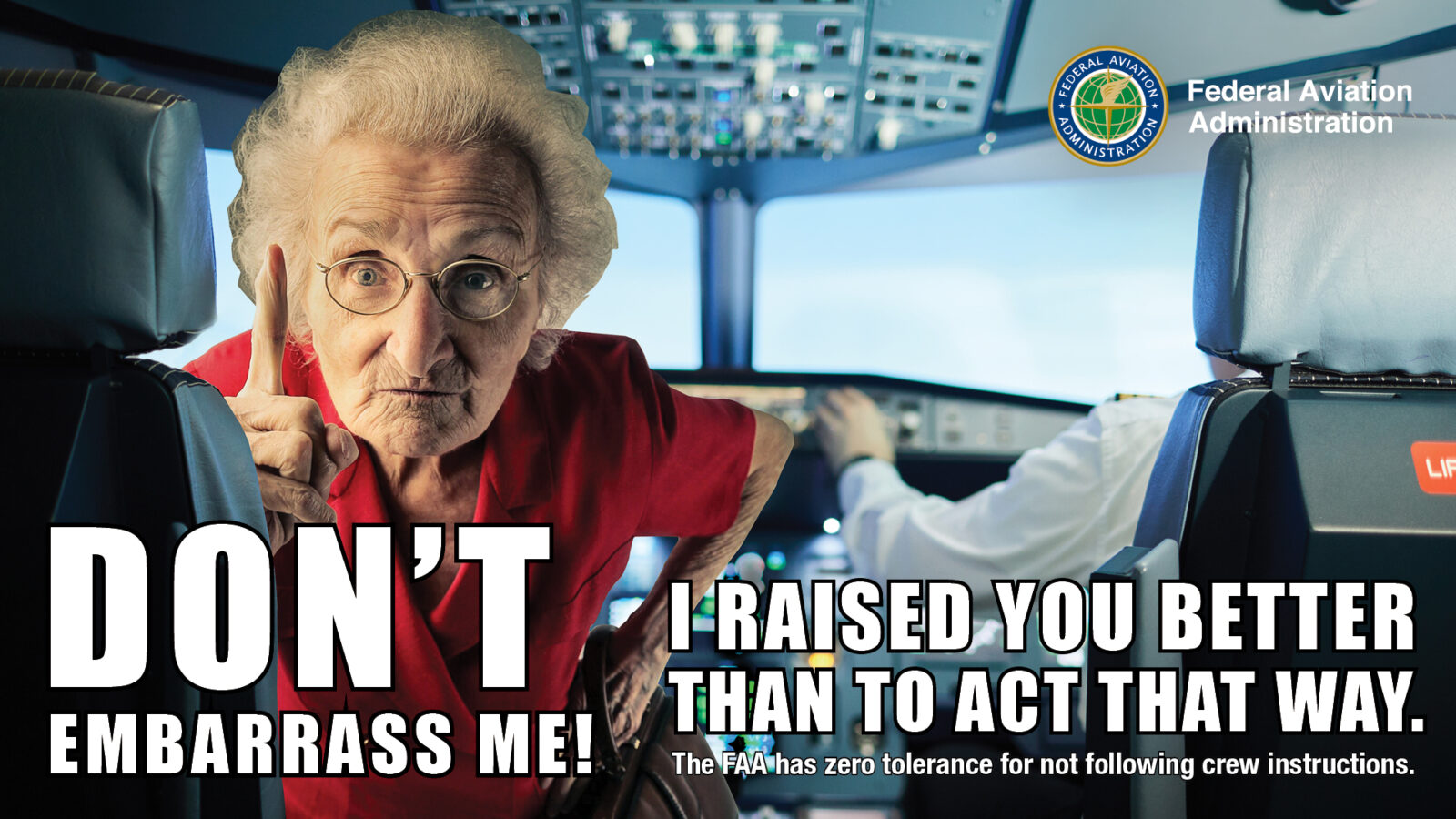
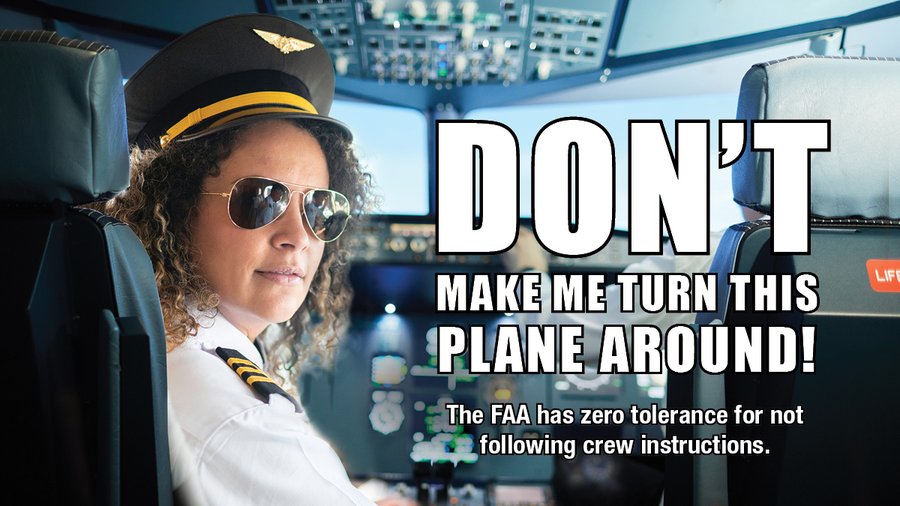
Looking at more than 20,000 reports submitted by around 40 airlines worldwide, IATA found the most common types of unruly conduct last year were non-compliance with crew instructions, followed by verbal abuse and intoxication.
In the last few weeks, a Delta Air Lines flight heading to Detroit from Paris was diverted to Canada for an emergency landing over the behavior of an unruly passenger. And a traveler denied boarding at Hartsfield-Jackson Atlanta International Airport was arrested after allegedly having slapped a Spirit Airlines employee.
While extreme incidents like those remain rare, “it is very concerning to see the frequency of reported unruly incidents increasing,” said Jonathan Jasper, IATA’s senior manager for cabin safety. “And the key here is that the numbers are only a part of the story. It’s the behavior behind the numbers that is causing us some concern.”
IATA attributed last year’s jump in noncompliance to infractions ranging from passengers’ smoking cigarettes or vaping on planes to failing to fasten their seat belts, refusing to stow cabin baggage during takeoff and landing, and drinking their own alcohol onboard.
IATA’s study doesn’t break down incident rates by region. In the U.S., Federal Aviation Administration data shows the problem remains elevated despite having eased considerably from pandemic peaks.
In 2019, the FAA logged 1,161 unruly passenger reports and just 1,009 in 2020, when lockdown orders sharply restricted air travel.
But as flight volumes began ticking back up, the reports skyrocketed to a record high of 5,981 in 2021 — around 72% of which had to do with masking rules, the FAA said.
Last year, the agency tallied 2,455 unruly passenger reports in the U.S., still far above pre-pandemic levels but a sharp drop nonetheless. The decline came in a year when a federal judge struck the Centers for Disease Control and Prevention’s mask mandate for public transportation in late April 2022, by which point masking-related unruly conduct had dipped to 63% of FAA reports.
When mask mandates were overturned, however, the agency had already spent well over a year enforcing a “zero-tolerance” policy for unruly behavior.
In January 2021, it rolled out penalties such as hefty fines and the threat of federal criminal prosecution, including potential jail time, for any passenger who “assaults, threatens, intimidates, or interferes with airline crew members.” The FAA said this April that it had referred more than 250 of the most serious cases to the FBI since last 2021.
While instances of noncompliance fell at the start of last year as more airlines and governments around the world dropped their mask mandates, IATA found the rate beginning to rise again as 2022 wore on, ending the year up.
“Flying is an altogether less enjoyable experience,” said Philip Baum, the managing director of the aviation security consultancy Green Light Ltd.
He noted that the industry let go of huge numbers of personnel early in the pandemic and has struggled to recruit and train new ones. Many airline and airport workers may now be less experienced and more stressed, adding strain to interactions with shorter-fused customers.
In addition, Baum said, “The reality is that post-pandemic, those experiencing poor mental health is on the increase, some of whom may find the depersonalized service offered a trigger.”
Nelson also pointed to the pandemic’s long shadow, saying it “exposed deep social division and resentment over rising inequality,” and she criticized public officials’ “mixed messages and contempt for rules that protect our collective safety” as having made matters worse.
“Our cabins are microcosms of humanity, so this anxiety, confusion and division continues to show up in behavior on our planes,” she said.
Aviation most likely isn’t the only industry more customers are lashing out at. In the National Customer Rage Survey, released in March, a record 74% of consumers said they experienced issues in the marketplace in the previous 12 months.
And 43% of respondents said they had raised their voices at customer service, up from 35% in 2015. Labor shortages in recent years were probably a factor in the jump, the researchers said at the time.
Whatever the underlying causes, the problem shows few signs of fading from air travel.
In fact, after a slight dip in February to 122 unruly passenger incidents, the FAA received 169 reports in May — the highest monthly level so far this year.
The agency didn’t respond to requests to comment further on its data.
Late Tuesday evening, an essential piece of the aviation transportation network operated by the Federal Aviation Administration failed.
And because of that the FAA temporarily grounded all flights nationwide on Wednesday morning.
The ground stop was lifted by 8:50 am east coast time. But the fallout included more than 1,300 canceled flights and close to 10,500 delayed flights over the course of the day, according to flight-tracking website FlightAware.
And, as we know, when that happens, it can take a few days for flight schedules to fully get back in order.
What went wrong?
The FAA’s Notice to Air Missions (NOTAM) system, which provides critical safety and operational information to pilots stopped working. And without that information, it wasn’t safe for any planes to take from any airport.
After the reboot, flights resumed. And by Wednesday evening, the FAA issued a statement with some explanation of what went wrong and a reassurance that the agency wasn’t the victim of a cyber-attack. The agency also promises to ‘further pinpoint’ what went wrong, and “prevent this kind of disruption from happening again.”
“The FAA is continuing a thorough review to determine the root cause of the Notice to Air Missions (NOTAM) system outage. Our preliminary work has traced the outage to a damaged database file. At this time, there is no evidence of a cyber attack. The FAA is working diligently to further pinpoint the causes of this issue and take all needed steps to prevent this kind of disruption from happening again.”
Now What?
Passengers whose flights were canceled are owed refunds by the airlines, even though this was an FAA-induced incident. Most airlines are waiving change fees and allowing ticketed passengers to change plans and trying to rebook passengers on other flights. If your travel plans were disrupted, be sure to see if the credit card you used to book the flight has some sort of travel delay insurance. Here are links to the Travel Alert page for many airlines.
Think you can design a cost-efficient, sustainable air traffic control tower?
The Federal Aviation Administration, (FAA) has more than 100 aging control towers at regional and municipal airports across the United States that will need to be replaced. So, the agency is launching a nationwide solicitation for a new design for control towers that can be built and operated sustainably.
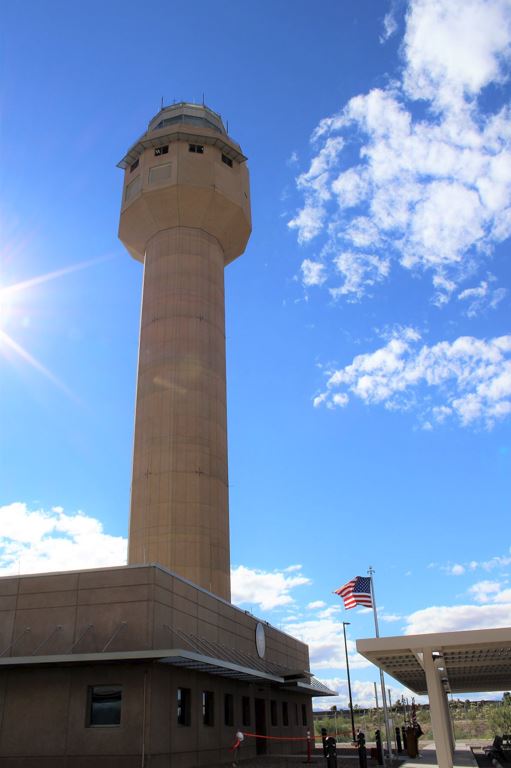
The FAA points to the tower at Tucson International Airport (TUS) as an example of a sustainable tower building already in operation. The TUS tower is the first air traffic facility with net-zero energy consumption. It uses a 1,600-panel solar farm to generate power for all of its electrical needs. And it supplies unused power back to the grid. The solar farm also produces ice, which is stored in large containers and used to cool the building when solar panels are not generating electricity.
But even if you’re not an architect or an engineer, note that the last time the FAA invited architectural firms to develop a modular design concept for new control towers it hired the company headed by then rising architect I.M. Pei. Several of the 16 Pei-designed towers—including at Chicago O’Hare, Sacramento, Madison, and Jacksonville international airports—are still operating.
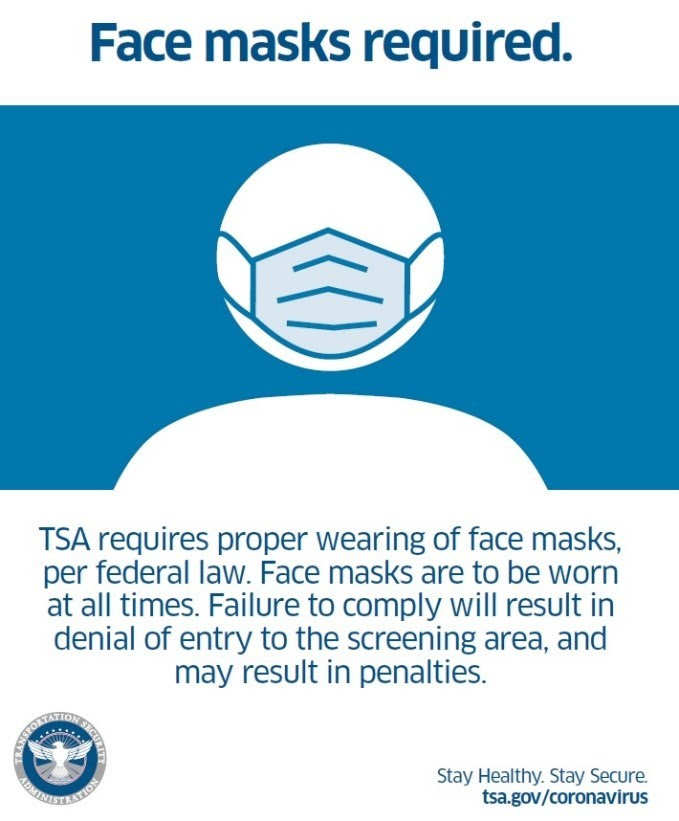
On Tuesday, multiple sources were reporting that federal officials will extend until at least mid-January the requirement that travelers must wear face masks on commercial airplanes, in airports, and on other forms of public transportation.
The Transportation Security Administration’s current transportation mask mandate is set to expire on Sept. 13. The agency is expected to extend the mandate until Jan. 18.
The universal wearing of masks is both an effective safeguard against spreading the virus and boosts public confidence in traveling—both of which are paramount for a sustained economic recovery. Read U.S. Travel's full statement → https://t.co/sQuLd0tDkahttps://t.co/2WriWeTDNO
The mask mandate makes sense, given the rising rates of COVID-19 due to the delta variant. But there are likely to be people who are unhappy with that requirement. Some of those people will likely end up in the FAA’s unruly passenger list.
No official tweet from TSA on the mask mandate as of late Tuesday night, but TSA did post something earlier in the day about the latest pups in competition for the agency’s Cutest Canine Contest.
Drum roll please…Announcing our top 4 match up in the 2021 TSA's Cutest Canine Contest. Meet Alona from @LASairport, Badger from @fly2ohare, Lexa and Lexi from @DFWAirport! Click below on who should take the crown for the 2021 cutest canine!