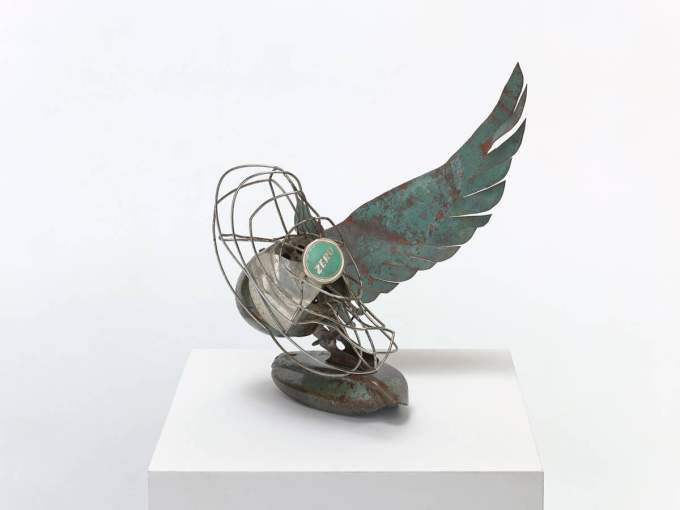
aviation history

Robert Rauschenberg was an avgeek

(“Mercury Zero Summer Glut” 1987, courtesy Robert Rauschenberg Foundation)

October 22 marks the 100th anniversary of the birth of postmodern artist Robert Rauschberg, who died in 2008 and this year there are wide range of exhibitions and activities to mark the centennial.

One of those is Smithsonian Books’ publication of The Ascent of Rauschenberg: Reinventing the Art of Flight, written by Carolyn Russo, who is the curator of the art collection at the Smithsonian’s National Air and Space Museum.

Rauschenberg is most famous for his groundbreaking “Combines,” which are painting and sculpture hybrids that often incorporated everyday objects and a connective tissue through it all was his fascination with flight. 

Throughout his body of work, Rauschenberg skillfully intertwined himself thematically with the subject of flight—spanning birds in nature, aviation, and the vastness of space,” Russo writes.

Her book includes more than 150 images of Rauschenberg’s work, from lithographs inspired by the Apollo 11 launch that NASA invited him to witness and document, to a Combine featuring a taxidermied eagle that evokes Roman mythology.

Here are couple of images from the book.
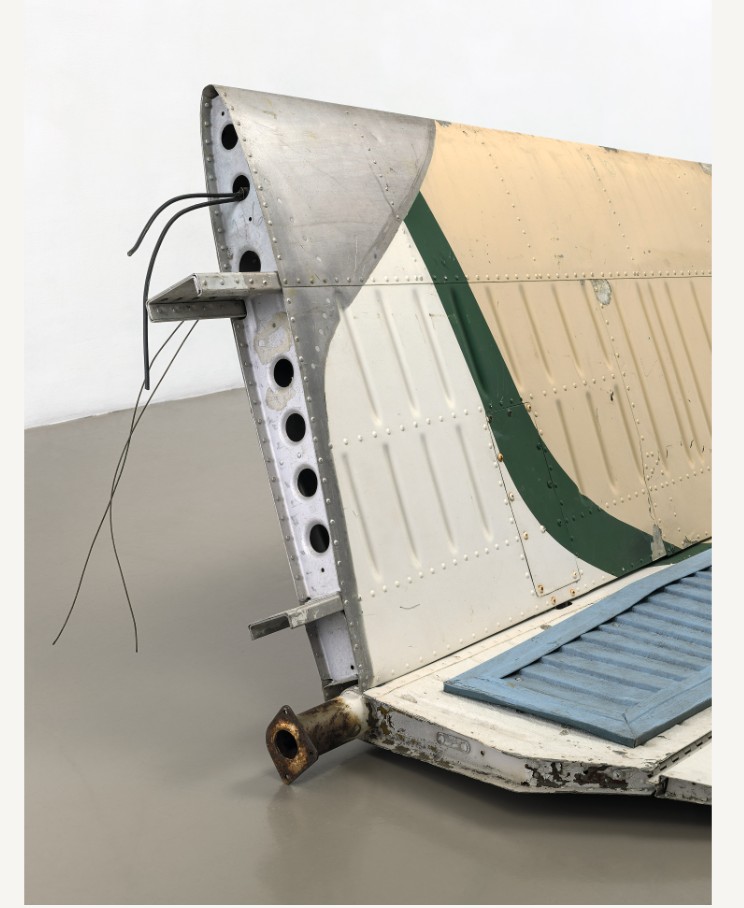
(“Wing Swing Glut, 1988” – ©Robert Rauschenberg Foundation and  Ron Amstutz)

(“Autobiography” (1968) courtesy Robert Rauschenberg Foundation)

Amelia Earhart + pizza-inspired art + a snazzy new checkpoint

Summer reading: The Aviator and the Showman

If you have a subscription to The New Yorker or can somehow click your way through to access it, be sure to read this revealing and heartstopping story titled: Amelia Earhart’s Reckless Final Flights, by Lauri Gwen Shapiro.

It’s taken from Shapiro’s soon-to-be-published book The Aviator and the Showman: Amelia Earhart, George Putnam, and the Marriage that Made an American Icon, which we just pre-ordered.

(Image above courtesy Smithsonian National Air & Space Museum)

Fresh art at Connecticut’s Tweed New Haven Airport

Connecticut, long known as ‘The Nutmeg State,’ also boasts about being home to the nation’s ‘best pizza.’

There’s a 20-stop Pizza Trail for pizza fans to test out the claim. And a sassy billboard campaign underway now in New York city cheekily trolling the Big Apple’s claim to having the best pizza.

Now there’s a pizza-inspired artwork at Tweed New Haven Airport (HVN).

Titled, The Pizza State,” the nine-foot by six-foot art piece is made of Connecticut highway signs (which we’re sure were secured legally) and celebrates New Haven-style pizza. The artist is Michael Pollack of the creative entity known as the New Haven Pizza Club (NHVPC).

SEA’s Checkpoint 1 welcomes travelers

During really busy travel times, the security checkpoint lines at Seattle-Tacoma International Airport (SEA) seem to snake on for miles.

But this Friday’s opening of the new Checkpoint 1 should address some of that congestion by adding five additonal general screening lanes.

Look for SEA’s new Checkpoint 1 on the bag claim level of the airport (that’s unusual!) at the far south end of the terminal.  

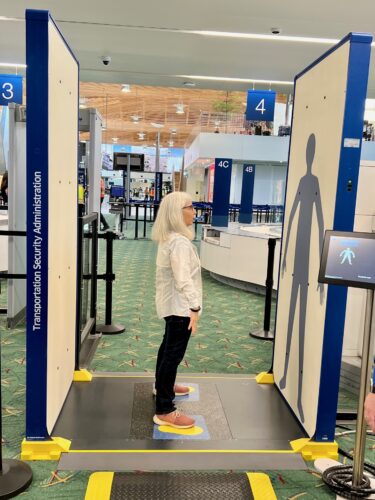
In addition to a new batch of art being installed along the checkpoint, we spotted some of TSA’s newest body scanning equipment ready to go into operation.

These machines, which we tested out at Portland International Airport’s (PDX) new terminal last year, are more accessible, with wider portals and no neeed for passengers to raise their arms.

Celebrating the centennial of the first around the world flight

On April 6, 1924, four U.S. Army planes, each with two crewmembers, took off from what was then Sand Point Airfield in Seattle.

Their goal was to complete the first circumnavigation of the globe by air.

The four planes were Douglas World Cruisers and they were named Seattle, Chicago, Boston, and New Orleans.

Due to weight restrictions, no more than 300 pounds of supplies could be loaded into each open-cockpit plane. And that meant that some otherwise standard equipment, such as parachutes and life preservers, got left behind.

Although each member of the World Flight carried a stuffed monkey as a mascot.

This monkey was named “Maggie” and flew on the Boston plane. (Image courtesy National Air and Space Museum).

The journey was far from easy. On their way around the world, the team encountered freezing temperatures, typhoons, mechanical breakdowns, crashes, and other obstacles.

But, despite losing two of the original four planes, on September 28, 1924, the Chicago, the New Orleans, plus the Boston II (a replacement) landed back at Sand Point.

The journey had taken 175 days, the crew had made 74 stops, and the team had covered about 27,550 miles.

Today, that first flight around the world is marked with a concrete pillar on a small island at the entrance of the former Naval Air Station where the planes took off.

At the top of the pillar is a large pair of bird wings. At the bottom, a plaque with the dates of the flight and the names of the crewmen and their planes.

This week Seattle is marking the 100th anniversary of the first successful round-the-world flight with celebrations at the Museum of Flight and at Magnuson Park, the site of the former Sand Point Airfield.

From September 26 to 29, more an a dozen aircraft representing decades of around-the-world record flights will be on view in the parking lot of Seattle’s Museum of Flight. Inside the museum, there will be flight lectures and films.

A full schedule for the museum events is online.

Over at Magnuson Park, there’s an afternoon of free commemoration events scheduled for September 28th.

Here’s a video about the first round-the-world flight from the National Archives.

And here’s a video about the around-the-world flight aimed at a very young audience, courtesy of the Smithsonian National Air & Space Museum.

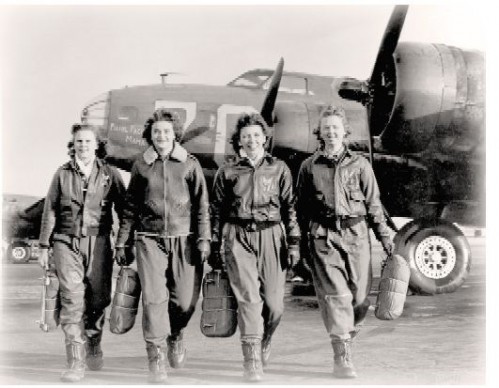
Int’l Women’s Day Aviation Round-Up

March is Women’s History Month and March 8 is International Women’s Day.

Here’s how some airports and aviation museums and others marked the day.

There’s a lot you can learn in a quick scroll.

Aviation lore & more at St. Petersburg Museum of History

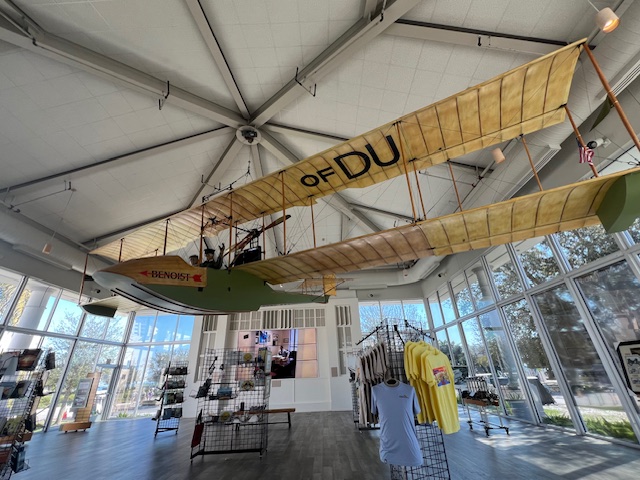
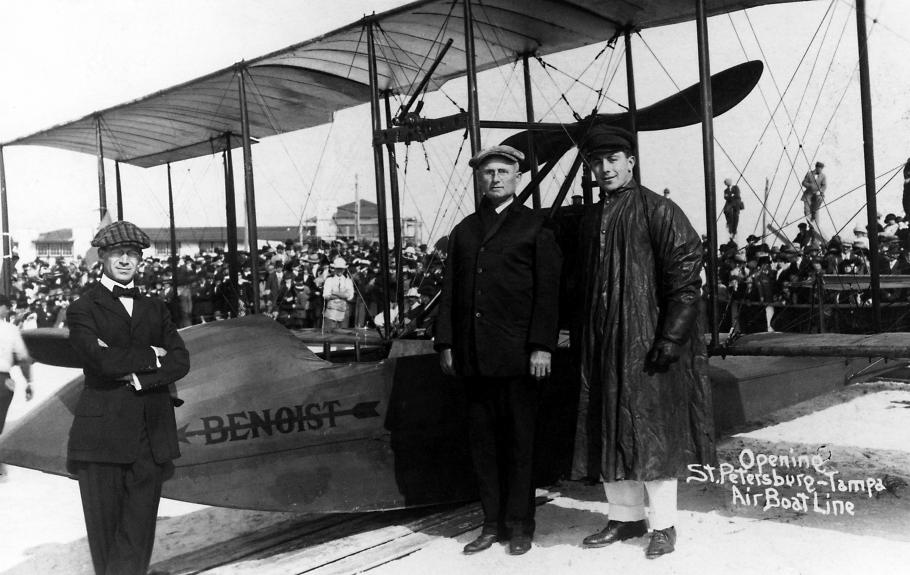
In Florida, the St. Petersburg Museum of History displays a replica of the Benoist XIV airboat used for the first scheduled airline service, which operated nearby.

On January 1, 1914, the St. Petersburg-Tampa Airboat Line began flying across Tampa Bay.

The flight covered 18 miles and 23 minutes. That journey was 11 hours faster than making the trip between St. Petersburg and Tampa by rail.

(Courtesy Smithsonian Institution)

That plane is just one of the treasures we spotted at the museum when we visited. The museum is home to the largest collection of signed baseballs: 5,036 and still growing; a great exhibit about the artists known as the “Florida Highwaymen,” a 3,000-year-old Egyptian mummy, artifacts from Webb’s City – a local roadside attraction – and much more.