Air Travel

Flight reductions underway. Now what?

On Thursday evening the Federal Aviation Administration shared more details about flight reductions around the country in response to stresses the government shutdown has placed on the national airspace system.

According to the FAA, a 4 percent reduction in flight operations will begin Friday, November 7, ramping up to 6 percent by November 11, 8 percent by November 13, and 10 percent by November 14. 

The 40 affected high impact airports include, but will likely not be limited to:

ANC – Ted Stevens Anchorage International Airport 
ATL – Hartsfield-Jackson Atlanta International Airport
BOS – Boston Logan International Airport 
BWI – Baltimore/Washington International Airport 
CLT – Charlotte Douglas International Airport 
CVG – Cincinnati/Northern Kentucky International Airport 
DAL – Dallas Love Field 
DCA – Ronald Reagan Washington National Airport 
DEN – Denver International Airport 
DFW – Dallas/Fort Worth International Airport 
DTW – Detroit Metropolitan Wayne County Airport 
EWR – Newark Liberty International Airport 
FLL – Fort Lauderdale/Hollywood International Airport 
HNL – Honolulu International Airport 
HOU – William P. Hobby Airport 
IAD – Washington Dulles International Airport 
IAH – George Bush Houston Intercontinental Airport 
IND – Indianapolis International Airport 
JFK – New York John F. Kennedy International Airport 
LAS – Las Vegas McCarran International Airport 
LAX – Los Angeles International Airport 
LGA – New York LaGuardia Airport 
MCO – Orlando International Airport 
MDW – Chicago Midway International Airport 
MEM – Memphis International Airport 
MIA – Miami International Airport 
MSP – Minneapolis–St. Paul International Airport 
OAK – Oakland International Airport 
ONT – Ontario International Airport 
ORD – Chicago O’Hare International Airport 
PDX – Portland International Airport 
PHL – Philadelphia International Airport 
PHX – Phoenix Sky Harbor International Airport 
SAN – San Diego International Airport 
SDF – Louisville International Airport 
SEA – Seattle–Tacoma International Airport 
SFO – San Francisco International Airport 
SLC – Salt Lake City International Airport 
TEB – Teterboro Airport 
TPA – Tampa International Airport 

Late Thursday evening, flight tracking website, Flightaware, showed more than 800 flights already canceled across the country for Friday.

Check your inbox & airline app for updates.

Airlines are posting information about their cuts, as well as any policies on refunds and flexible travel options, on their websites and on social media.

On its site, Alaska Airlines said “Guests whose flights are canceled will be reaccommodated on other flights as available or offered a full refund. Those whose flights are impacted will receive communication directly from Alaska and Hawaiian. We have also issued a flexible travel policy that allows guests to adjust their travel during this uncertain time.”

American Airlines is offering refunds and waiving changes fees for travel to/through or from more than 20 airports.

Delta Air Lines says it is “providing additional flexibility to our customers traveling to, from or through the impacted markets to change, cancel or refund their flights, including Delta Main Basic fares, without penalty during this travel period.”

Frontier Airlines posted an alert saying “customers whose flights are canceled or delayed for more than 3 hours (domestic flights) or 6 hours (international flights) can rebook or request a refund.” The carrier has also has issued a flexible travel policy for customers who would like to change or cancel their travel plans.

The JetBlue travel alert says the airline will waive change fees and fare differences for customers traveling now through Monday, November 10, 2025, to/from 20 cities.

Southwest Airlines shared a travel alert that includes options for travelers whose flights are canceled and for those who flights are not canceled, but choose not to travel. “If you would like to cancel your trip and cancel on or after November 6, 2025, you may request a method-of-payment refund (even for non-refundable fares),” the airline said.

Spirit Airlines’ travel alert states that the airline expects to operate “the vast majority” of its flights and will reach out to customers whose flights are affected.

“If your flight is canceled and you decide not to travel, you will have the option to receive a full refund, or we can rebook you on the next available Spirit flight,” the carrier said.

And United Airlines said it is avoiding cancellations for long-haul international flights and hub-to-hub flights operating between these seven airports: Chicago O’Hare (ORD), Denver (DEN), Houston (IAH), Los Angeles (LAX), Newark (EWR), San Francisco (SFO) and Washington Dulles (IAD).

The airline posted a list of all its cancelled flights for November 7, 8 and 9.

The carrier also said that “any customer traveling during this mandate is eligible for a refund if they choose not to fly—even if their flight isn’t impacted. That includes non-refundable and Basic Economy tickets.”

What can you do?

If, like us, you have travel plans over the next few days, here are some tips and strategies that may help you cope.

*Reconsider your plans. If you don’t have to travel right now, consider getting refund on your ticket and booking for another time. Even if your flight is not canceled (yet…) airports are likely to be super stressful places right now.

*Consider driving or taking the train to your destination, if it’s not too far. But check train fares and car rental availability before you cancel your trip. Hertz said today that in the past 2 days, reservations for one-way rentals through the weekend spiked 20% year-over-year.

*Be flexible. If you must travel and your flight is not canceled (yet…) you might consider buying a fully refundable ticket on another airline. Just in case.

*Most airlines have put in place generous offers for refunds and waived change fees. In many cases basic economy and non-refundable tickets are eligible for the offers. Be sure to read the policies carefully, though, before you change your flight.

*Stay alert. Make sure you’ve signed up for and opted in for flight alerts with your airline and refresh you email and airline apps often.

At the airport
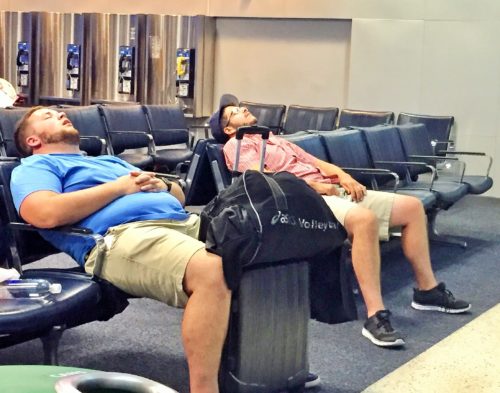
*While airlines are trying to be proactive with cancelations, delays and unexpected cancellations are likely to be common over the next few days. Pack your patience.

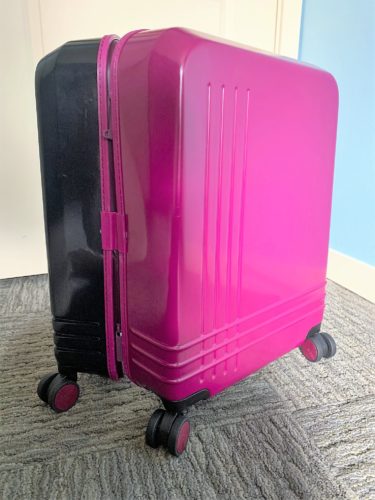
*But pack light. This would be a good time to work on your packing savvy. Pack as light as you can so you don’t have to check a bag. This can be a life-saver if you need to get re-routed and will, of course, save you time.

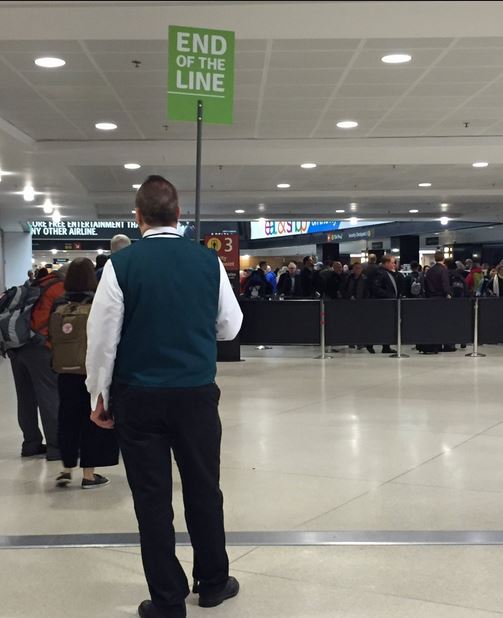
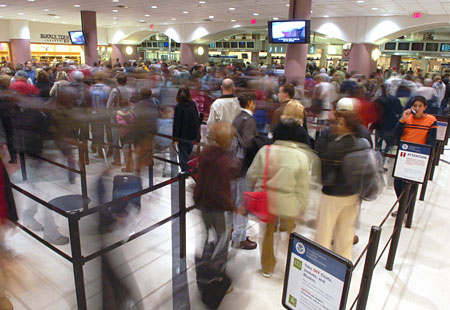
*While security checkpoint lines at many airlines are running smoothly, in many places the lines are already long and getting longer. If you’re flying, be sure to get the airport very early and try to be kind to TSA officers working without paychecks and to the stressed people around you.

*As always, arrive at the airport armed with snacks, an empty water bottles, fully charged electronics and power chargers and reading material.

*Tuck away some ‘mad money,’ preferably cash, so if you get very frustrated (or very bored) at the airport you can buy yourself a treat that won’t show up on the credit card bill a month later.

Listen to this: Freakonomics Radio Takes to the Skies

Freakonomics Radio, which offers a podcast of programs about ‘the hidden side of everything’ is tackling air travel in a three-part series called “Freakonomics Takes to the Skies.”

The series vows to investigate all aspects of airline economics by speaking with CEOs from Delta to Air New Zealand, economists, workers from pilots to meteorologists to flight attendant trainers to aircraft load agents, and – of course – passengers.

Here are links to programs 1 and 2: “Air Travel is a Miracle: Why Do We Hate It?” and “Why is Flying Safer Than Driving?” Program three will be available this Thursday.

Give a listen and let us know what you learn.

Holiday Travel Heats Up, But Service Cuts Continue

(This is a story we wrote for NBC News)

Airlines service cuts that ramped up this summer show no sign of relenting this holiday season, leaving more travelers likely to pay higher fares for fuller planes at crowded airports.

Service has been slashed in half from pre-pandemic levels at 59 small and regional U.S. airports, according to the Regional Airline Association, largely because of pilot shortages and high fuel costs. As of last month, 112 airports had lost at least a third of their flights, the RAA’s review of flight schedules shows, out of 430 U.S. airports with scheduled passenger service.

“The drastic decline between 2019 and 2022 is dramatic and, if not unprecedented, only rivaled by post-9/11 loss,” said Faye Malarkey Black, the RAA’s president and CEO. And while dozens of small cities receive federal subsidies to support air travel through the long-running Essential Air Service program, Malarkey Black said even 29 of those communities are facing potential cutbacks due to pilot shortages.

“And I believe the knife is still falling,” she added, with more reductions expected by year’s end.

Americans already face pricier airfares this season. The travel platform Hopper has forecast Thanksgiving and Christmas airfares to be the highest in five years, with domestic round-trip tickets averaging $350 over Thanksgiving and $463 at Christmas. Overall, airfares were up by a whopping 43% in October from the same month a year ago, the latest inflation data show.

More headaches for communities with no air service

“Travelers who need to drive far to reach another airport and pay for short- or long-term parking while they are on their trip are likely to see total costs for holiday travel rise this year,” said Hopper’s lead economist, Hayley Berg. Hotel stays and extra meals before or after those flights will also eat into wallets.

For the regional flights that do remain, “fares are up markedly as a result of service cuts,” said Scott Keyes, the founder of Scott’s Cheap Flights.

Ithaca Tompkins International Airport in New York, for example, lost its twice-daily American Airlines flight to Philadelphia on Sept. 6. On the remaining United Airlines route to Newark, New Jersey, and the Delta Air Lines route to Detroit, Hopper found the fares for Thanksgiving and Christmas at Tompkins to be around double the national average for domestic round-trip flights. Round-trip Thanksgiving airfare from Ithaca to U.S. destinations is averaging $552, 39% higher than at the same time in 2019, according to Hopper. And Christmas flights from the city cost 10% more than 2019, at $605.

Major U.S. carriers have cited pilot shortages for their cuts at regional airports, with some of them saying the labor crunch would take years to resolve.

United didn’t comment on the potential for further trims. It said it “regularly adjusts its schedule for a variety of reasons including demand, the broader needs of our network and more.”

American, which has left 15 cities since 2020, still has 100 regional aircraft on the ground that it doesn’t have enough pilots to fly, said spokeswoman Andrea Koos, who added that the airline is working with its three wholly owned regional carriers “to ensure we’re able to operate a more reliable regional schedule in the future.”

Delta said that it hasn’t pulled out of any airports entirely since 2020 and that its staffing challenges are in line with the industry’s.

So far, however, consumers appear undeterred. Nearly half of holiday travelers plan to fly, up from 37% last year, according to the 2022 Deloitte Holiday Travel survey. Those looking to save some money should consider shifting their celebration dates by a few days, travel experts say, or at least avoiding the busiest days to dodge the highest fares at regional airports and larger hubs alike.

Hopper said it expects comparatively lower ticket prices on the Monday before Thanksgiving, on Thanksgiving Day, and on the Friday afterward compared with the Tuesday and Wednesday of that week. And for Christmas, Hopper suggests looking at flights on the Monday or Tuesday before the holiday, which falls on a weekend this year.

Tips to Tackle Holiday Travel

If you’re driving to an airport, check for discount parking coupons there or at nearby lots. And make a parking reservation so you don’t risk being turned away from a full lot. If you need to book a hotel so you can catch an early flight, explore “Park, Stay, Fly” rates at hotels near your airport, which often combine a week or more of parking with a one-night stay.

Holiday travelers should also scan Black Friday, Cyber Monday, and Travel Tuesday sales posted by travel booking platforms, hotel chains, and individual properties — many of which are already live. While there will be blackout dates, some of the promotions may include discounted or upgraded stays at airport hotels over the holidays.

In the meantime, some airports in cities suffering cutbacks say they’re fighting to restore lost service.

“The loss of flights has affected businesses and educational institutions in our area,” said Roxan Noble, the director of Tompkins International Airport in Ithaca. She said she’s spending a lot of time on the phone and on Zoom asking major carriers to return or increase their service.

“We’re also looking for a low-cost carrier to come in to serve our leisure market,” she said. “It may not fully fill the gap, but it would help.”

Toledo Express Airport in Ohio lost American Airlines flights to Chicago and to Charlotte, North Carolina, leaving only the ultra-low-cost carrier Allegiant offering Toledo residents service to Phoenix-Mesa, Arizona, and to three Florida locations — Fort Myers/Punta Gorda, Orlando/Sanford and Tampa/St. Petersburg — albeit with nondaily flights.

“All airports are vying for the same aircraft, the same pilots, the same crews,” said Joe Cappel, the vice president of business development for the Toledo-Luca County Port Authority in Ohio. So, in addition to putting competitive incentive packages in front of airlines, Toledo Express is also offering to help new airlines with everything from marketing and advertising to baggage handling. “Anything you can think of is on the table,” he said.

And Dubuque — where the lack of air service “disconnects [the city] from the global marketplace,” according to Molly Grover, the president and CEO of the Dubuque Area Chamber of Commerce — has just hired a public relations firm to help pool the efforts of similarly affected communities to work on restoring air service.

“Commercial air service is an expected amenity to both businesses and residents alike,” Grover said, promising to work “relentlessly, tenaciously” to restore it

Delta variant derailing travel plans

(This is a slightly different version of a story we wrote for NBC News)

Summer travel was the big bounce-back story for 2021, with Covid-weary American travelers spending $6 billion on domestic flights in June alone.

The delta variant of the coronavirus rapidly changed all that.

Domestic online flight bookings in July fell to $5.26 billion, a 13 percent decline from the previous month and 16 percent below 2019 levels, according to data from Adobe’s Digital Economy Index.

August numbers are falling even faster: In just the first three weeks of the month, August 1-21, $2.9 billion was spent online for domestic flights. That’s 33 percent below the same period in 2019.

The numbers show that “U.S. consumers are taking the Delta variant seriously and once again shifting their travel plans,” said Vivek Pandya, lead analyst at Adobe Digital Insights. “At the current rate, we expect spend in the month of August to be significantly under July.”

Reports from other parts of the travel industry tell the same story.

American Airlines said last week that August revenue was coming in lower than expected because Covid cases were driving down bookings. Other airlines, including Southwest, Frontier, and Spirit, have issued similar warnings.

Travelers changing plans, canceling trips

A recent survey of 1,000 American travelers by Longwoods International market research company showed that almost two-thirds of travelers surveyed said they are changing their trip plans because of the coronavirus, up from 43 percent two months ago.

In addition to travelers changing plans, Longwoods found that 36 percent of American travelers surveyed said they have postponed travel to either later this year or early next year, because of the delta variant. That is up 24 percent from just one month ago.

“The summer travel boom is at risk of stalling out as we move into fall,” said Amir Eylon, President and CEO of Longwoods International.

Fueling the drop-off is news that Hawaii’s governor is asking visitors not to travel the state right now and more cities are bringing back their mask mandates and requiring proof of Covid vaccinations to enter dining and entertainment venues.

“The late-summer drop-off in new flight bookings is happening sooner and sharper right now than it had pre-pandemic,” said Scott Keyes, founder of Scott’s Cheap Flights.

But Keyes says there is a silver lining. “This softening in new travel purchases is driving airlines to put their thumb on the scale and spur new bookings by slashing airfares to entice travel bargain hunters,” he said. “Airlines are also offering free flexibility to basic economy ticket holders for the rest of 2021, as United and Delta recently announced.”

What about Labor Day travel?

Looking ahead to Labor Day holiday weekend, domestic flight bookings are down 16 percent compared to Labor Day weekend 2019, according to Adobe.

Many travelers may choose to drive this holiday weekend, feeling safer in a private vehicle than on a plane or other form of public transportation. And while last year’s Labor Day weekend gas prices were the lowest since 2004, this year’s prices at the pump are expected to average $3.11 per gallon. That’s the highest since the summer of 2014, according to fuel savings platform GasBuddy.

“For the most part, people who were planning to travel are still taking their trips, while being mindful to take important safety precautions to protect themselves and others,” said Julie Hall, a spokesperson for AAA. “But with a resurgence of Covid-19 cases, it’s important that travelers remain informed and be flexible.

Ready for July 4th travel adventures?

(This is a slightly different version of a story we wrote for NBC News)

Swimsuit packed? How about your patience?

If you are heading out of town for the July 4th holiday weekend, you will likely need both.

More than 47.7 million Americans will on the nation’s roadways and in the skies during this Independence Day holiday, July 1–5, says the American Automobile Association (AAA).

That will be very close to pre-pandemic levels and the second-highest Independence Day travel volume on record.

In normal times holiday travel can be frustrating. But as the nation makes its way out of the pandemic, there is a lot more than usual riding on this weekend.  

Road Trips Still Rule

Despite the shortage of rental cars and the highest gas prices in seven years, AAA expects more than 91% of holiday travel will be by car. An expected 43.6 million Americans will drive to their destinations, says AAA. That the highest on record for this holiday and 5% more than the previous record set in 2019. 

All those cars hitting the road means congested highways.

“With travelers eager to hit the road this summer, we’re expecting nationwide traffic volumes to increase about 15% over normal this holiday weekend,” says Bob Pishue, a transportation analyst with INRIX. “Drivers around major metro areas must be prepared for significantly more delays.”

In addition to loading up tunes and travel apps, experts suggest holiday road trippers do a refresh on safe following distances and remember that many motor home drivers are still getting used to maneuvering their new RVs.

Advice for Air Travelers

3.5 million people are planning to fly over the July 4th holiday, and air travel volumes are expected to reach 90% of pre-pandemic levels. That is an increase of 164% compared to last year, says AAA.

Earlier this month, analysts at travel site Hopper said a good deal on domestic airfare for July 4th was around $302 round-trip and $775 round-trip for international travel, on par with 2019’s July 4th prices. Prices will, of course, spike closer to holiday weekend, when Hopper expects average domestic round-trip prices to be closer to $500.  

If you do not have tickets yet and are determined to fly somewhere, Hopper economist Adit Damodaran suggests checking with low cost/budget carriers, such as Southwest and Spirit, especially on their new routes. Newcomers Breeze and Avelo, serving secondary airports, may still have good fares as well.

Getting through airports during holiday weekends was frustrating before the pandemic. This year, it could be much worse, due to a temporary shortage of TSA officers, airline staff, and airport shop and restaurants workers. Add to that new airport protocols, the rash of unruly travelers, and passengers who show up at the security checkpoint with everything from oversized liquids to guns and other prohibited items because they’re forgotten how to pack.  

“The challenge will be to keep things moving smoothly,” says Sherry Stein, Head of Technology for SITA, an air transport technology company. But “mobile-enabled technology such as self-service bag tag kiosks that limit contact while improving efficiency” will help.

What about buses and trains?

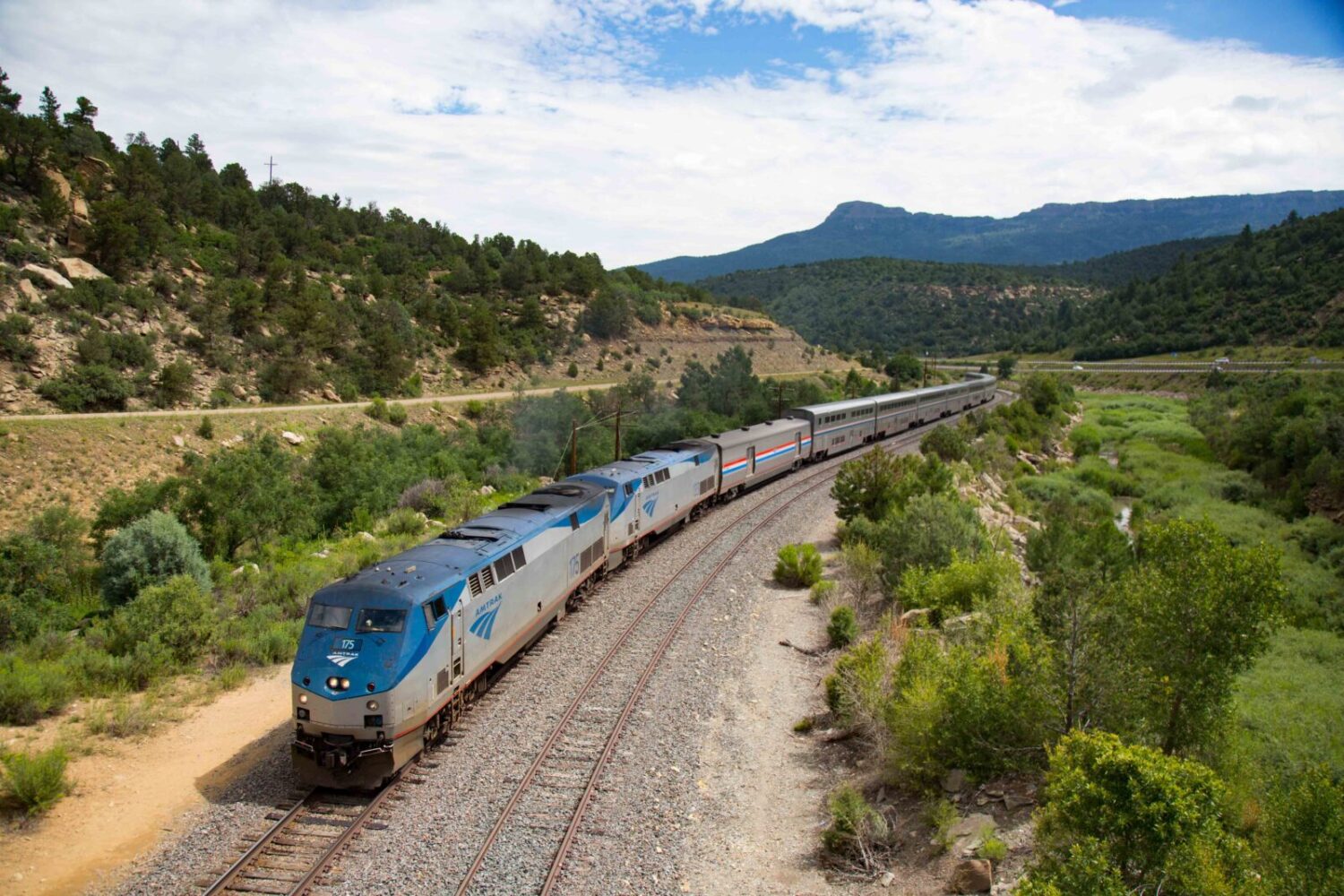
Southwest Chief near Fishers Peak, Colorado.

AAA expects 620,000 Americans to travel by bus, train, and other modes this holiday weekend, an increase of over 72% compared to last year.  

While overall ridership on Amtrak is running at about 55% of pre-pandemic levels, says Doug Duval, an Amtrak spokesman, “We are currently showing riders down 14% compared to FY19. This is trending to be the best holiday since the pandemic started.”

Bus ridership is on the rise too, says Jan Jones, program coordinator for the Hospitality and Management program at the University of New Haven.  

But staffing is a problem here too. “During the pandemic, bus lines furloughed and laid off many employees, “Drivers aren’t rushing back,” says Jones, “So, July 4th travelers may be limited in terms of where they can go by bus.”

Hotels and campsites

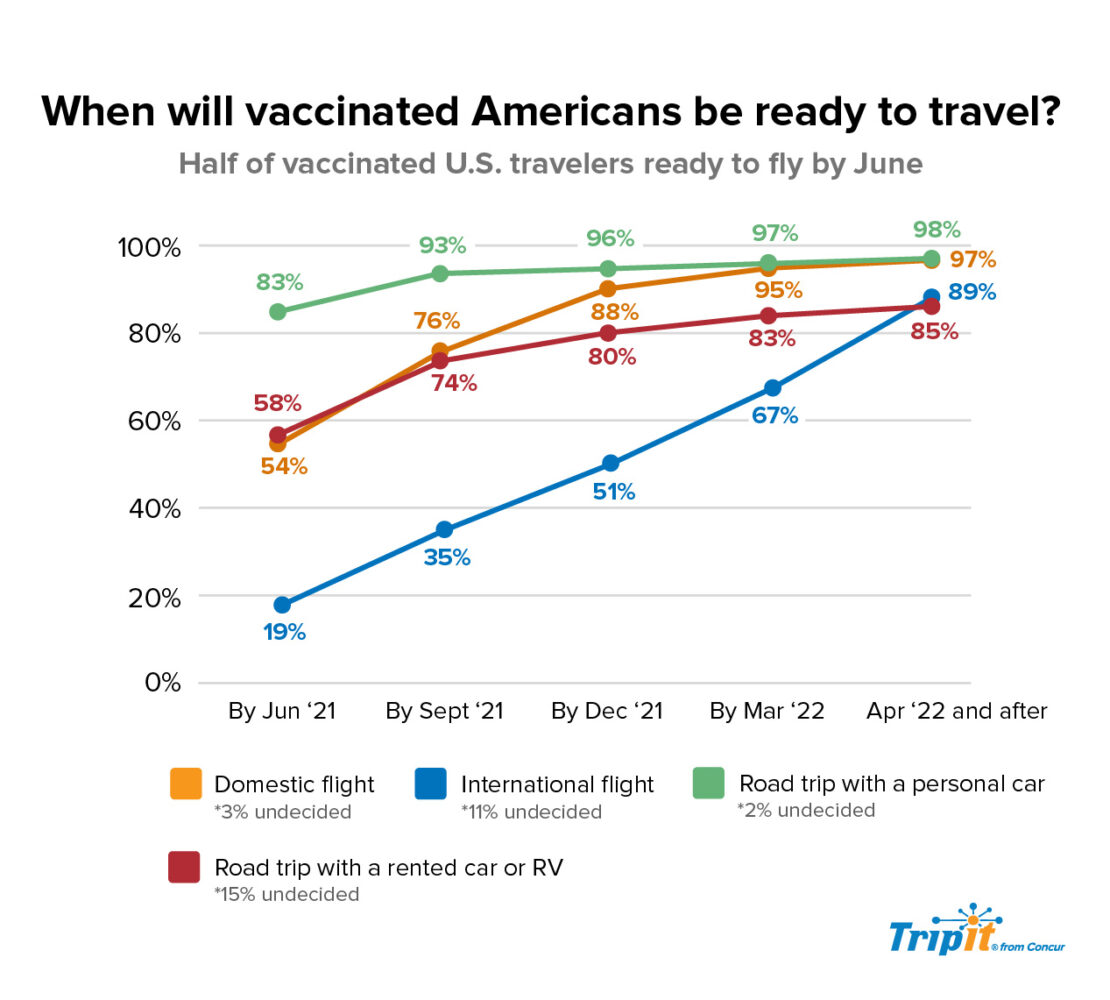
TripIt trip planning company reports that lodging reservations are well above the reservation volume for last year, at 163% of 2020 bookings. 

Many travelers have already booked their July 4th hotel stays and desirable properties in popular destinations, such as Hawaii, Florida and beach destinations in Maryland and South Carolina may already be filled up or showing high prices.

But late planners are not totally out of luck. “If you know the hotel or hotel brand you want to stay with, try their mobile apps or websites because they usually offer a best rate guarantee,” says Paul Barron, EVP Marketing, Hospitality at Amadeus. Loyalty program members booking directly on a hotel website often receive personalized offers not available on other sites, he added.

Campgrounds and RV resort operators are reporting higher than usual bookings for this July 4th holiday too. But not all spots are taken; websites for camping enthusiasts, such as CampFlorida.com, are reporting plenty of vacancies still available.

Too daunting? Ditch the drama.

While you may be itching to get back to big cities and popular tourist locales, for this July 4 holiday, “You will likely find more availability for flights and hotels or vacation rentals near smaller towns,” says Jen Moyse, Senior Director of Product for TripIt.

Or do a pivot and “don’t travel at all,” says Virtuoso travel advisor Jessica Scot, of Denver’s J. Scott Travel. “Instead, spend the long weekend penciling out your travel schedule for the future. If there is anything the pandemic taught us, it is not to wait to take that dream trip, or to visit a far-away friend or family member.”