Museums

SFO Museum exhibits SFO Maps

Modern day digital apps that offer a map of your neighborhood or city are fine if you just want to get from here to there.

But if you want to dig down into the history of a city, nothing can replace the look, feel and gold mine of information found in real old maps.

The folks at the SFO Museum at San Francisco International Airport know that and have dug into the incredible David Rumsey Map Collection for a new exhibition filled with maps and photographs that tell the story of the origins and development of San Francisco.

Here are a few samples:

SFO MAPS EXHIBIT - one

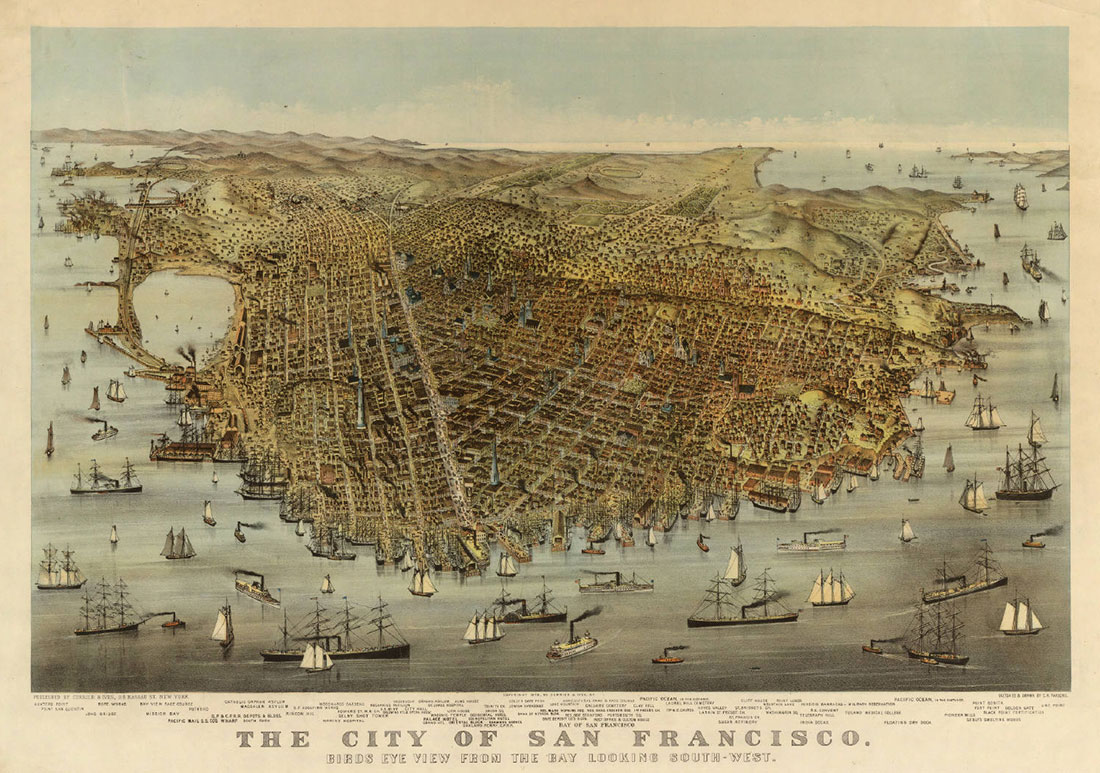
The City of San Francisco: Birds Eye View from the Bay Looking South-West 1878
Charles R. Parsons (1821–1910). Courtesy SFO Museum

SFO AIRVIEW OF CITY TRAFFICWAYS

Airview of City Showing Trafficways 1948 – courtesy SFO Museum

San Francisco: From the David Rumsey Collection will be on view in Terminal 2 at San Francisco International Airport through April 3, 2013.

Here’s a link to an online version of the map exhibition.

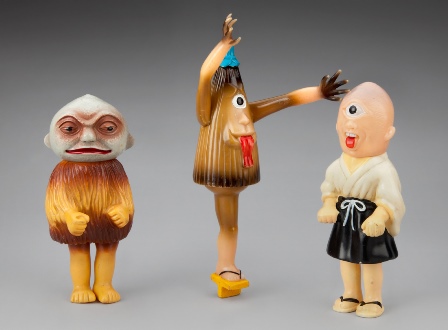
While you’re at SFO Airport, be sure to check out some of the other exhibitions offered up by the SFO Museum, especially the Japanese Toys that will be displayed through April 2014 in Terminal 3.

SFO JAPANEST Toys6

Museum Monday: aluminum Christmas Trees

Aluminum

Heading to Wisconsin this holiday season?

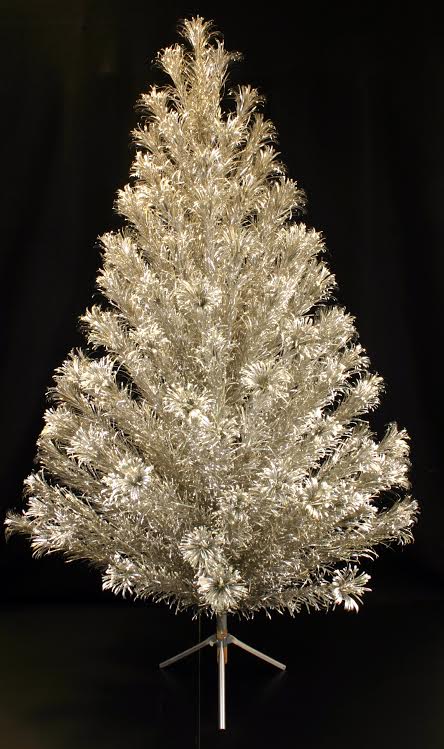
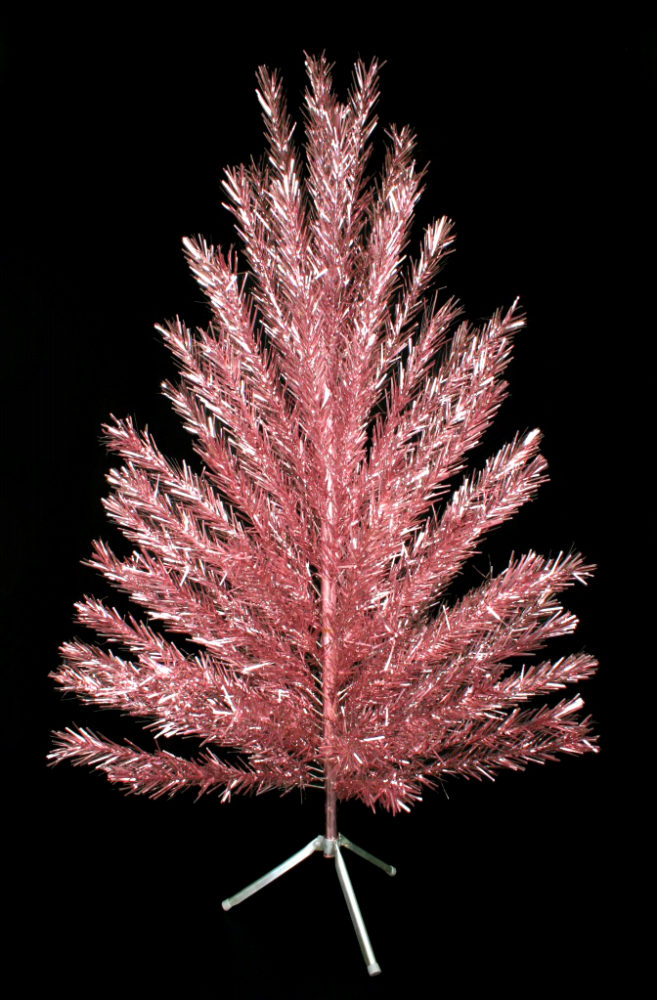
If you are, be sure to stop by the Wisconsin Historical Museum in Madison to see the largest exhibit of silver, pink, gold and green Evergleam aluminum Christmas trees.

Created by the Aluminum Specialty Company of Manitowoc, WI, in partnership with a company that had patented some of the design elements such as paper tube for storing branches, more than a million Evergleam trees were sold during the 1960s.

According to the museum:

Aluminum trees quickly found their place in contemporary popular culture and soon attracted the attention of critics who proclaimed them symbols of the commercialism of Christmas. In the television special “A Charlie Brown Christmas” (1965), Lucy wanted “the biggest aluminum tree [Charlie Brown] could find, maybe even painted pink.” Charlie ultimately selected a real, but skimpy tree because it better reflected his view of the true spirit of Christmas.

And here’s an interesting tidbit:  the museum notes that branches on Evergleam aluminum Christmas trees have a connection to a military item from World War II:

“American airplanes dropped tiny strips of metal, called chaff, to block enemy radar. Evergleams utilized similar finely cut foil, which could be easily twisted into various forms.”

pink aluminum


’tis the Season – an exhibit of aluminum Christmas trees will be on display at the Wisconsin Historical Museum in Madison through January 11, 2014.

Hunting murals in New York City

If you want to see some of the greatest art in New York City, steer clear of the museums and the art galleries.

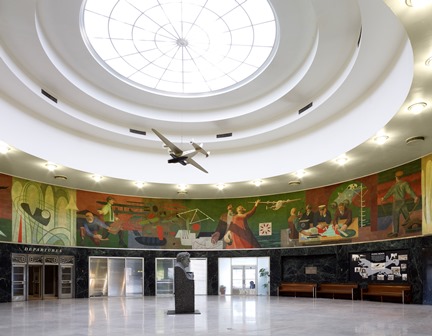
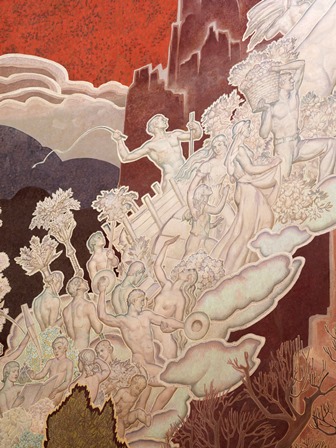
"Flight"  James Brooks  Marine Air Terminal, Queens NY

Head instead to the bars, restaurants, skyscraper lobbies, airports and public buildings where the walls are adorned with murals by the likes of Marc Chagall, Roy Lichtenstein, Maxfield Parrish, Keith Haring and other celebrated artists.

“It’s like a museum, except the art collection is scattered around town and not just under one roof,” said Glenn Palmer-Smith, author of “Murals of New City: The Best of New York’s Public Paintings from Bemelmans to Parrish,” a new book with lush photographs from Joshua McHugh and detailed essays documenting the stories behind more than 30 of the city’s important murals.

Some of Palmer-Smith’s favorites may take a little work to find, but many are clustered in midtown, just steps from the shops, restaurants, museums, theaters and attractions likely to be visited by many of 5 million visitors city tourism officials are expecting in town this holiday season.

MuralsofNYC_Radio City

In Radio City Music Hall, where tourists flock to see the “Radio City Christmas Spectacular,” there are three notable murals. Ezra Winter’s 40-by-60 foot “Quest for the Fountain of Eternal Youth” – a painting Palmer-Smith said was originally “reviled and ridiculed” by critics – is above the main lobby’s grand staircase. “Men without Women,” by Stuart Davis, is in the men’s lounge and, in the women’s lounge, there’s a mural by Japanese painter Yasuo Kuniyoshi that’s based on the flower theme that Georgia O’Keefe had originally created and been commissioned to paint.

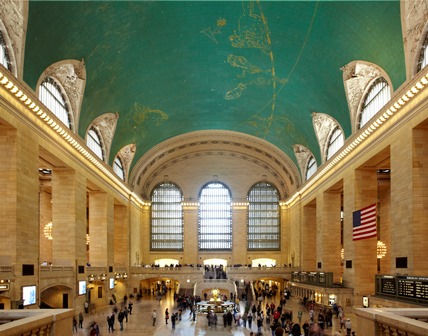
Grand Central Terminal, NYC  Ceiling Mural: Paul Helleu

The city’s largest mural is Paul César Helleu’s 80,000-square-foot depiction of the constellations in the night sky. It stretches across the ceiling of the main room at Grand Central Terminal and, as it took an amateur astronomer to point out about a month after the terminal opened in 1913, the mural displays the signs of the zodiac in reverse. The mural was restored in 1945 and, after becoming blackened by smoke and city soot, refreshed again in the late 1990s.

When you’re in the terminal, look up in the northwest corner,” said Palmer-Smith, “There’s a patch of the ceiling that was left untouched, so you can see what it looked like before the cleaning.”

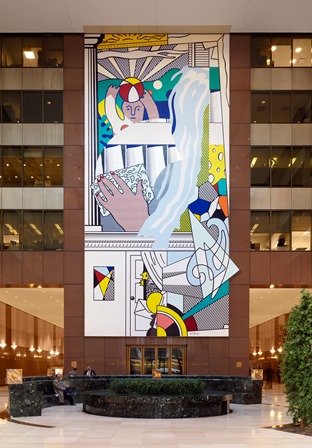
Mural with Blue Brushstroke, 1986.  Roy Lichtenstein. ©Estate of Roy Lichtenstein  Equitable Tower, 787 Seventh Ave., NYC

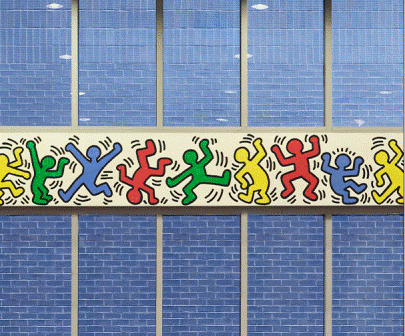
Keep looking around the city and you’ll find two murals by Marc Chagall at the Metropolitan Opera, a mural 62-feet tall and more than 35-feet wide by Roy Lichtenstein in the atrium of the Axa Equitable Center (787 Seventh Ave.), Maxfield Parrish’s 30-foot-long mural in the King Cole Bar in the St. Regis Hotel (2 East 55th St.) and work by Keith Haring in several spots around the city.

murals

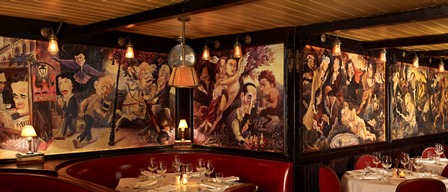
And then there are the two murals created by Edward Sorel, whose illustrations and caricatures are familiar to readers of The New Yorker and many other magazines. Sorel’s mural in the main dining room of the Monkey Bar in the Hotel Elysée (60 East 54th St.) is populated by a caricatured crowd of celebrities from the 1920s and 1930s, everyone from Isadora Duncan, Joe Lewis and Fats Waller to Frank Sinatra, Ella Fitzgerald, Babe Ruth, Cary Grant and Mae West.

The Waverly Inn and Garden, Bank St., NYC  Murals by Edward Sorel

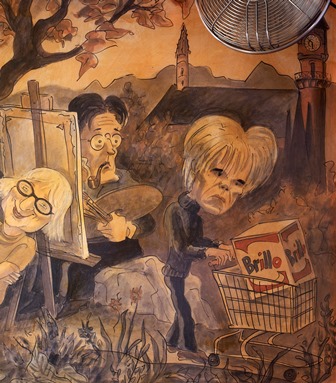
“The Monkey Bar mural is a lot of New Yorkers who were famous celebrities between the first and second World Wars,” said Sorel. “But my favorite is the mural I did for the Waverly Inn in Greenwich Village. That one has caricatures of a lot of the creative, bohemian people who lived in the Village and those people were more interesting to me than the celebrities.”

The Waverly Inn and Garden, Bank St., NYC  Murals by Edward Sorel

Forty-three people are portrayed in the mural Sorel created for The Waverly’s dining room, including Allen Ginsberg, Fran Lebowitz, Edgar Allan Poe, Bob Dylan, Norman Mailer and Jack Kerouac.

Public murals “provide a lens through which visitors or viewers can understand the city with some historical perspective,” said Joshua McHugh, the book’s photographer. “Additionally, though, like all successful artworks, these murals create room for dialogue with viewers of any era, helping to make them living and breathing documents.”

Of course, New York isn’t the only city with an impressive collection of publicly accessible murals. Artists hired by the Works Progress Administration during the Great Depression painted murals that remain in post offices, libraries, courthouses and other civic buildings around the country.

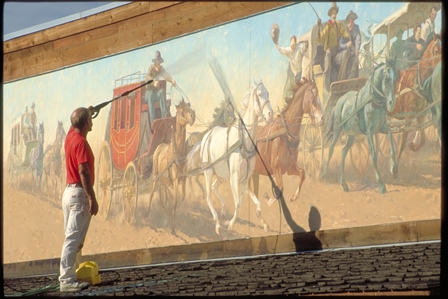
And in tiny Toppenish, Washington 75 historically accurate outdoor murals dot a city less than two miles square. Each year, on the first Saturday in June, the Toppenish Mural Society sets up bleachers so onlookers can watch artists complete another mural in just one day.

toppenish-mural

Courtesy Toppenish Mural Society


“People come in the morning to watch the process begin. Then they go grab lunch, maybe look at the other murals in town or visit a winery,” said John Cooper, president and CEO of the Yakima Valley Visitors and Convention Bureau. “They might return in late afternoon to see the end result or just stay and sit and watch the paint dry.”

“Murals are big and bold and beautiful,” said Jane Golden, executive director for Philadelphia’s Mural Arts program, a city where more than 3,600 murals have been created in just the past 30 years, “and a welcome departure from the billboards all around us.”

(My story about murals in NYC – and beyond – first appeared on NBC News Travel in a slightly different form. All photos, except Toppenish, WA by Joshua McHugh.)
Not TSA-approved. Ever

Multi-bladed folding knife 3

The TSA’s plan to allow passengers to once again carry small knives on board airplanes got nixed a while back.

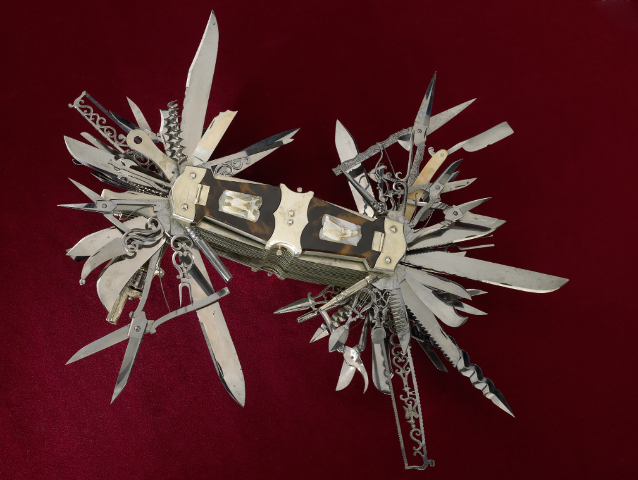
But even if it had gone forward the knife pictured above would never had made the, uh, cut.

Made around 1880 as an advertising item for a store window in New York City, the knife’s 100 “blades” include a cigar cutter, a button hook, a tuning fork and pencils.

Look closely and you’ll even spot a .22 pinfire revolver.

That tiny revolver is why the knife is on display at the Cody Firearms Museum at the Buffalo Bill Center of the West in Cody, Wyoming.

The knife is on loan to the museum until 2015 along with 63 other historically significant firearms from the Smithsonian’s National Museum of American History, which began collecting firearms in 1876.

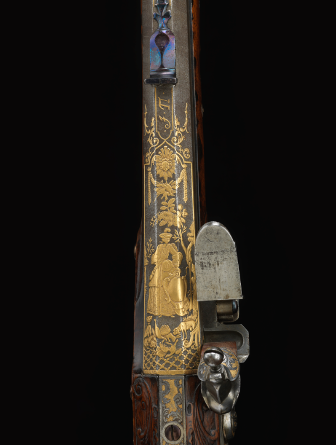
Along with the many-bladed knife, the items on loan include a rifle made for Catherine the Great, Empress of Russia with a velvet cheek piece so that her royal face would not rest directly on the stock.

Catherine the Great rifle 2

(All images courtesy the Smithsonian Institution, National Museum of American History, Kenneth E. Behring Center, via Buffalo Bill Center of the West)

The surprising home of Amelia Earhart’s flight jacket

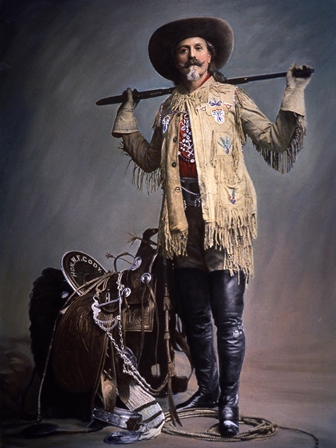
Buffalo Bill

Courtesy Buffalo Bill Center of the West

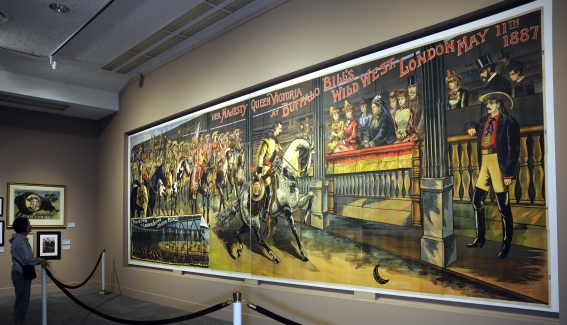
I recently had the great pleasure of spending a day touring the five first-rate museums that make up the Buffalo Bill Center of the West in Cody, Wyoming. Formerly the Buffalo Bill Historical Center, the recently expanded center is home to the Cody Firearms Museum, The Plains Indian Museum, The Draper Natural History Museum, the Whitney Western Art Museum and, my favorite, the Buffalo Bill Museum, which tells the story of the American West through both the private life of William F. Cody and his public life as the showman who created the pageant known as Buffalo Bill’s Wild West show.

Buffalo bill poster

One of the great treats during my day at the museum with a few other journalists was going on a private tour with the curator of each museum and having a chance to see the back rooms.

And – lo and behold – when we went behind the scenes at the Buffalo Bill Museum with John Rumm, senior curator of American History and the curator of the museum, he showed us a box that contained Amelia Earhart’s leather flight jacket. This is the jacket Earhart is  seen wearing in a lot of photographs from the 1920s and 30s and which she likely wore on her historic flight across the Atlantic.

AmeliaEarhart-LeatherJacket

Light brown leather jacket owned and worn by Amelia Earhart on several of her historic flights. Buffalo Bill Center of the West, Cody, WY, USA.

What’s that jacket doing in the collection of the Buffalo Bill Museum?

According to Rumm, Earhart and her husband, George Palmer Putnam, had bought property in Wyoming around 1934 from a friend of theirs, Carl Dunrud, and asked him to begin building a cabin on the site.

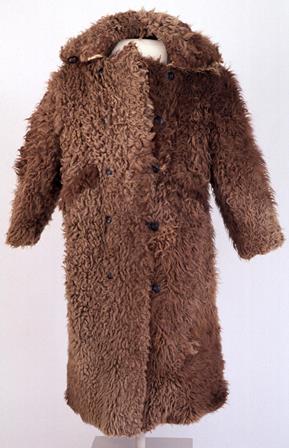
Then, in 1937, before heading out for that ill-fated attempt to circumnavigate the world, Earhart began sending Dunrud some of her personal possessions for safekeeping. Included among those items was the flight jacket and a buffalo coat from the 1870s (below) given to her by the Western movie star William S. Hart.

AmeliaEarhart-BuffaloCoat

Rumm says for many years the buffalo coat was displayed and identified as having belonged to Buffalo Bill. But when Rumm took a close look at the records, he cleared up that mistake.

AmeliaRanchPhoto-OnFence

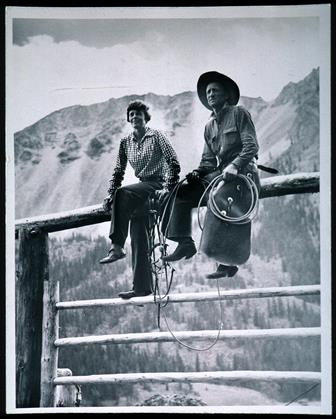
Amelia Earhart and Carl Dunrud at the Double D Ranch in northwest Wyoming, ca. 1935. Buffalo Bill Center of the West, Cody, WY, USA.


America’s Cup artifacts at SFO Museum

SFO SAILING TWO

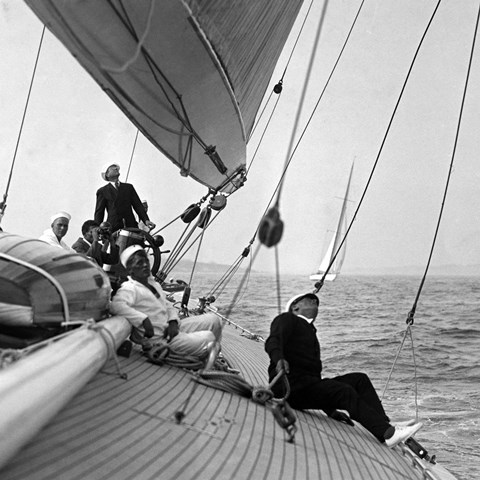
Skipper Harold Vanderbilt and crew on deck of Enterprise 1930. photograph from the Edwin Levick Collection; Mariners’ Museum, Newport News, Virginia. Courtesy SFO Museum

A new exhibition featuring artifacts and historic imagery from the first sixteen campaigns of the America’s Cup contest is now at the SFO Museum at San Francisco International Airport, coinciding with the city’s hosting of the thirty-fourth contest for the America’s Cup.

SFO SAILING ONE

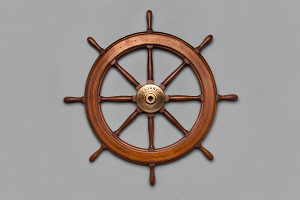
The exhibit offers a historical view of the first eighty-six years of the international sailing competition with great images, ship’s wheels, life rings, crew sweaters, navigational equipment and other artifacts.

Find America’s Cup: Sailing for International Sport’s Greatest Trophy pre-security in the International Terminal Main Hall Departures Lobby at San Francisco International Airport through February 2014.

Can’t make it to SFO but interested in the exhibition? Lucky you: many of the images are included in the on-line exhibition.

Little Golden Books and Presidential Hair

You know how that is.

You go on-line in search of one thing and, an hour or two later, realize you’ve ended up somewhere else equally or far more interesting.

That’s, happily, where I found myself today.

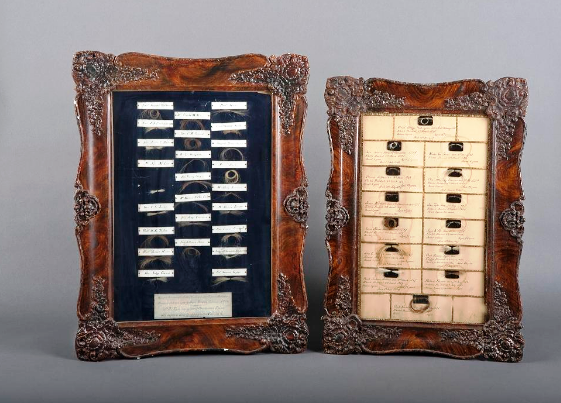
I went over to the  Smithsonian Institution’s website in search of information about an exhibition titled Souvenir Nation: Relics, Keepsakes and Curios at the Smithsonian Castle, which features some choice mementos from the collection, such as a brick from George Washington’s childhood home, a piece of Plymouth Rock and a nicely-framed collection of presidential hair.

Smithsonian Presidential Hair

Hair of the Presidents, 1855 Courtesy National Museum of American History

As I prepare for the October 1 publication of my own book about museum objects (Hidden Treasures: What Museums Can’t or Won’t Show You), I was pleased to see that this is an ongoing exhibit, so made plans to see it next time I’m in town.

While on the Smithsonian website, I discovered another must-see exhibition at the National Museum of American History. This one is all about the Little Golden Books many of us had as children.

In addition to an on-line exhibition telling the story of these inexpensive and colorful children’s books, there’s a fun Flickr collection with more than dozen images from some classic Little Golden Books in the series.

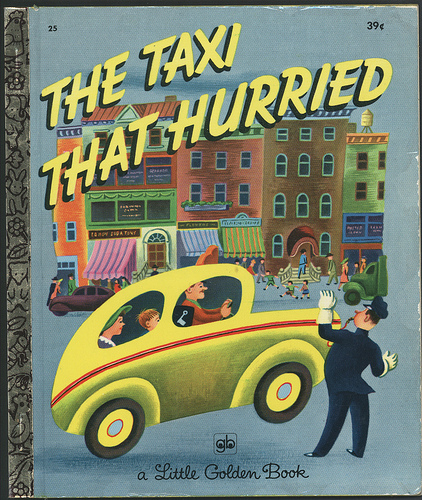
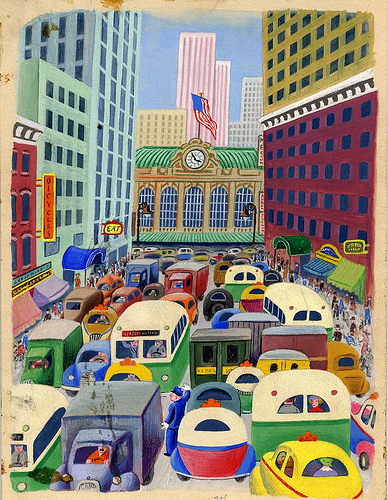
Among my favorites: The Taxi That Hurried

The Taxi that Hurried

Taxi that Hurried 2

Stitching project to recreate Star-Spangled Banner

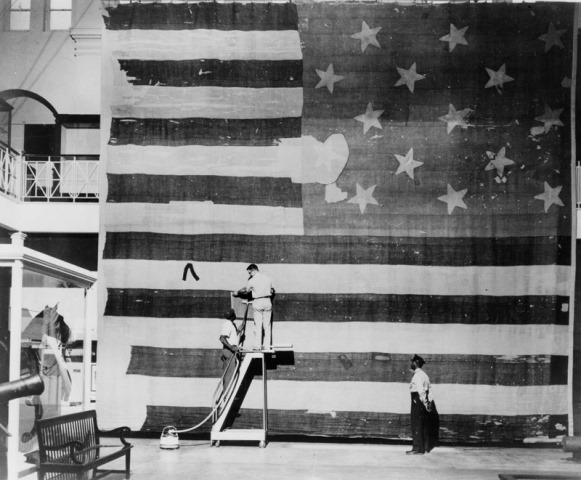
Star Spangled Banner Flag at Smithsonian

Star Spangled Banner getting cleaned and vacuumed in 1959. Courtesy Smithsonian National Museum of American History

It’s a rare day when Baltimore-area quilter Joan Zelinka does not stitch.

So she’s pleased to be part of a project kicking off Thursday, July 4 that will recreate the flag with “broad stripes and bright stars” that flew during the War of 1812 and inspired Francis Scott Key to write the poem that later became the words to our national anthem.

Key spotted the huge 30 x 42 foot flag on September 14, 1814 when U.S. soldiers at Baltimore’s Fort McHenry raised it to signal a victory over British forces. The restored remains of that banner are now displayed – under glass and in a special chamber – at the Smithsonian’s National Museum of American History in Washington, D.C.

As part of events marking the bicentennial of the War of 1812, the Maryland Historical Society is creating a version of the Star Spangled Banner using authentic stitching techniques, method and material and keeping the same timetable that Baltimore flag maker Mary Pickersgill used to create the original flag during the summer of 1813.

“Sewing machines were not around until the 1850s and we know Pickersgill stitched this flag, and a smaller version of it, by hand with the help of just five or six people in about 6 weeks,” said Kristen Schenning, director of education at the Maryland Historical Society.

To recreate the flag, the historical society has recruited more than 100 experienced quilters to construct the majority of the flag beginning on July 4th at Fort McHenry National Monument and Historic Shrine. Members of the general public who sign up ahead of time will be able to add stitches to the flag as well two afternoons of public stitching on Saturday, August 3 and Sunday, August 11.

“However few or many stitches I do, I’m proud I’ll be part of something that lets people know about our nation’s history and the role that Baltimore played in that history,” said Zalinka. “And I’m proud to be able to remind people that Baltimore is not just a football team; as great as the Colts are.”

One completed, the recreated Star Spangled Banner will fly over Fort McHenry National Monument and Historic Shrine. Then, along with Francis Scott Key’s original Star-Spangled Manuscript, the new flag will be part of the 2014 Flag Day celebration at the Smithsonian’s Museum of American History in Washington, D.C.

(My story about the Star-Spangled Banner project first appeared – in slightly different form – on NBC News.com Travel)

Nautical arts at SFO Int’l Airport

SFO NAUTICAL EXHIBIT

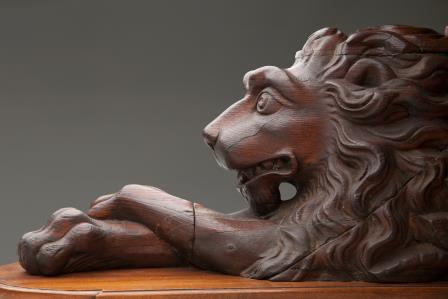
Lion deck ornament from the Himalaya 1863
Collection of the San Francisco Maritime National Historical Park , Courtesy SFO Museum

If you’re traveling to or through San Francisco International Airport (SFO), be sure to leave some time to explore the newest exhibit from the SFO Museum: From Ship to Shore: Nautical Arts from the San Francisco Maritime National Historical Park, on view in Terminal 2 through December.

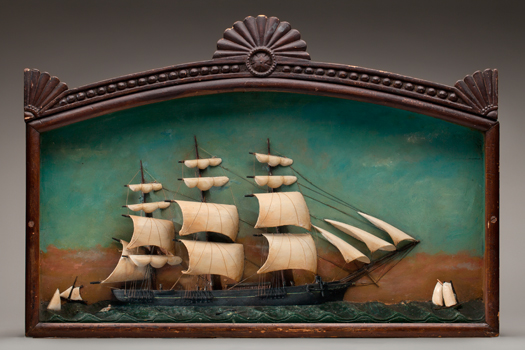
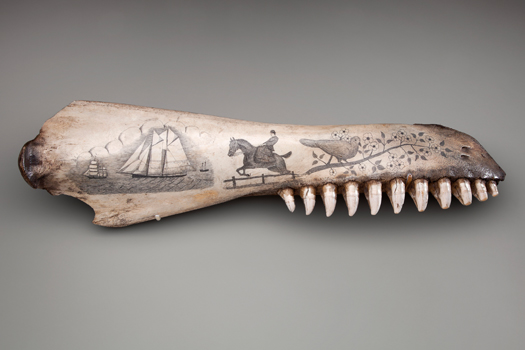
The exhibit displays ingeniously crafted items made by sailors during long stints at sea and includes masthead ornaments, scrimshaw, fancy ropework, ships-in-bottles, shadowbox half models, a hand-painted sea chest, a whalebone chair and other items on loan from the San Francisco Maritime National Historical Park.

From Ship to Shore: Nautical Arts from the San Francisco Maritime National Historical Park; May 2013–November 2013

Shadowbox of a fishing vessel c. 1850–60
Collection of the San Francisco Maritime National Historical Park, courtesy SFO Museum

From Ship to Shore: Nautical Arts from the San Francisco Maritime National Historical Park; May 2013–November 2013

Scrimshaw c. 1850–1900, orca jawbone, ink
Collection of the San Francisco Maritime National Historical Park, courtesy SFO Museum


Souvenir Sunday: a 150-year-old pickle

As souvenirs go, this is a winner.

This weekend I visited the Lynden Pioneer Museum in Dutch-themed Lynden, Washington to give my Humanities Washington Speakers Bureau presentation about things museums have that they can’t or won’t show you.

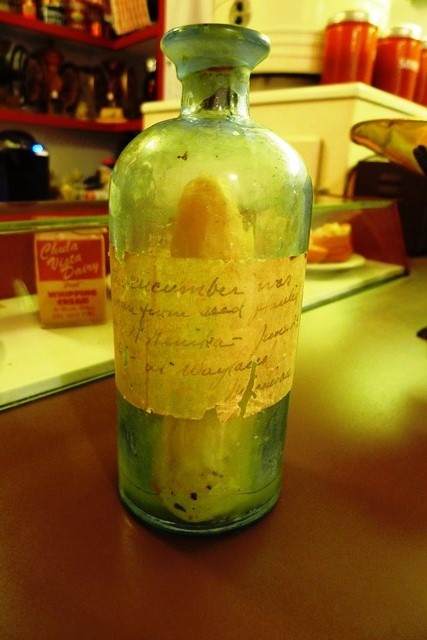
During the event, museum director/curator Troy Luginbill was kind enough to bring out a hidden treasure from the collection that I’d heard about, but never seen: a bottle containing a pickle that is more than 150 years old.

Lynden Pioneer Museum PICKLE

Luginbill found the jar while doing inventory at the museum in the mid-1990s.

“I was cleaning out clothes stored in a dresser in the pioneer bedroom exhibit and as I shut a drawer a clear, blue bottle rolled to the front,” said Luginbill. “I could see something white inside that I thought was going to be horrible and moldy.”

The white thing turned out to be pickle, and from the still-legible label affixed to the bottle Luginbill learned that the pickle had started out as a cucumber planted inside the bottle in the mid-1860s in Wayland, Michigan.

“There’s this thing you can do where you put the flowering end of a plant into a clear bottle so that the fruit or vegetable grows inside. Then you can pickle or preserve whatever you’ve grown right in the bottle,” said Luginbill.

I imagine a child planting the cucumber inside the jar and then choosing to bring the treasure along when the family moved out west. The unusual souvenir was obviously cherished and handed down from generation to generation and then, somehow, forgotten in a dresser drawer that ended up in the museum.

Since its discovery the old pickle has been kept out of view and, for preservation purposes, kept inside one of the museum’s vintage refrigerators that has been humming along since the late 1920s. “We use that old fridge to keep lots of things cool,” says Luginbill, “including staff lunches.”