Lost and Found

New Technology Helping Airports Reunite You With Your Lost Stuff

*Our story about airport lost and found first appeared on NBC News

With recent airline fiascos triggering pileups of luggage at baggage carousels across the country, airports and airlines are increasingly using technology to help track down travelers’ missing possessions.

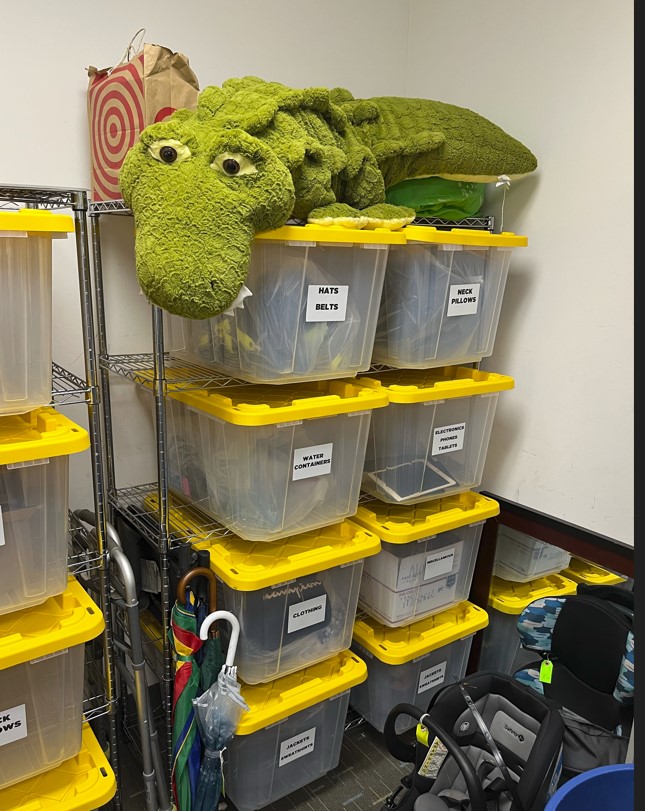
The lost-and-found department at Savannah-Hilton Head International Airport (SAV) in Georgia says it has logged in everything from a set of dentures to three uncooked eggs and a green, 6-foot stuffed alligator.

At Salt Lake City International Airport (SLC), a set of tire chains and a taxidermy rat landed in lost-and-found.

So did Claire Gulmi’s favorite winter jacket.

As she was boarding her flight home to Nashville after a recent vacation in Park City, Utah, the retired healthcare executive was “pretty horrified” to realize she’d left her coat in a bin at the Transportation Security Administration checkpoint. “I thought I’d never see it again,” she said.

Chances were high that she wouldn’t.

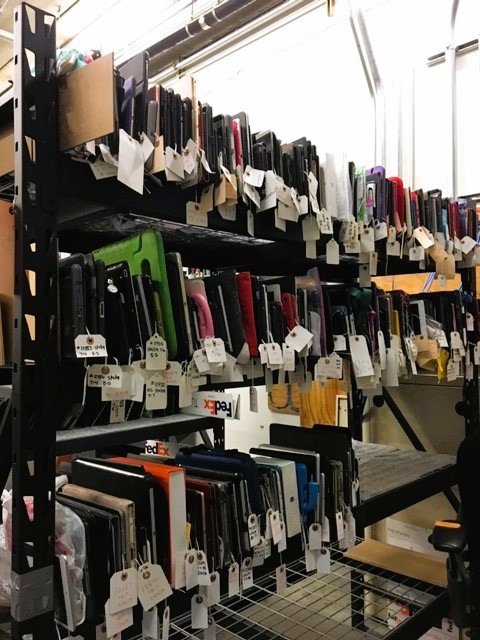
The TSA, which operates its own lost-and-found system at more than 300 of the nation’s 430 airports, recorded more than 552,000 unclaimed items last year, including 25,000 laptops and 6,000 cell phones. Claims can be filed by phone or online, depending on the airport, but “most people don’t try to reclaim their items” or even know that they can, said TSA spokesperson Lisa Farbstein. Matches are made only about 10% of the time.

At SLC and 91 other airports, though, the TSA’s haul is delivered to airport-operated lost-and-found offices, where workers turn to a mix of phone calls, creative sleuthing, and software to clear through their hoards.

SLC, which boasts a 30% reclaim rate on lost items, according to spokesperson Nancy Volmer, routed Gulmi’s coat claim through the online Crowdfind/Pixit software management program — which is also used by airports including Los Angeles International (LAX) and Pennsylvania’s Harrisburg International (HIA), among others. The platform allows airport staff to post photos of unclaimed items publicly, where travelers can search for their belongings. It also streamlines inventory, matching, and claims tasks, and automatically updates passengers about their claim status.

To Gulmi’s delight, her coat was quickly identified. She paid for shipping and had it back in just a few days.

Increasing the chances you’ll be reunited with your lost items

Many travelers have raced to affix tracking devices like Apple’s AirTags to their luggage. Especially after all the travel havoc this winter. But while some have welcomed the ability to trace their lost stuff and at least determine whom to contact to get it back, others have described the agony of knowing an item is sitting someplace where they couldn’t easily retrieve it. Some airports say the popularity of AirTags is even putting pressure on staffers, as passengers who’ve pinpointed their belongings push for faster returns.

Crowdfind is just one of many lost-and-found tech providers across the travel and leisure industry. Chargerback, for example, is used by Austin-Bergstrom International Airport in Texas, Alaska Airlines, and a series of hotels, parks, and lodges. The aptly named Lost and Found Software serves many U.S. and international airports as well as public transportation systems. Despite their differences, each provider promises to help customer service workers not only connect more lost items with their owners but to speed up returns as well.

Lost and Found Software, which launched in 2015 and uses image and text recognition to sort through inventories, recently integrated Open AI’s ChatGPT technology to accelerate the process, said founder and CEO Markus Schaarschmidt. During this winter’s meltdowns, he said, “the time between registering and returning an item was greatly reduced for some of our clients.”

Because found items can be logged into the system in seconds, some grounded passengers were able to retrieve items from their airport’s lost-and-found department directly, he said. In some cases, “if the customer was still close, they could even get it delivered to their gate,” he added.

Hartsfield-Jackson Atlanta International Airport (ATL), Southwest Airlines, JetBlue, Delta Air Lines and others use NetTracer, which has been operating since 2004. The Georgia-based company’s current system is built on image and data matching along with “proprietary algorithms” but also relies on “people to manage the process,” said president Daris McCullough.

SITA, a key IT provider for the air transport industry, offers a WorldTracer program allowing airlines to search through a “massive database across 2,200 airports to quickly find and repatriate a bag,” according to Sherry Stein, SITA’s chief technology officer, Americas. Stein said WorldTracer leads to the return of 60% of mishandled bags within the first 48 hours.

An offshoot of the service that rolled out in 2021 and focuses on property lost in airports and on planes “was able to improve the repatriation of lost or missing items from 25% to 50% within three months” at one U.S. airport, said Stein. That program, which has 10 clients globally, also reduced the cost from $65 to $15 per item returned, she said.

More Airports Turn to Tech to Solve the Lost & Found Problem

One of the newest platforms, called Boomerang, was launched last May by co-founders with experience at companies including music identifier Shazam and car repair booker YourMechanic. Boomerang aims to use its artificial intelligence matching system and automated communication tools to make for a “magical” lost-and-found experience, according to CEO Skyler Logsdon.

The company’s customers include stadiums, universities, offices, and theme parks, but airlines and airports collect the most items, he said. “A stadium can have a home game for the NFL team, but not another for three weeks. For airports, it’s a home game every single day and they’re drowning in lost and found,” he said.

Boomerang recently landed two airport customers: Savannah/Hilton Head (SAV) and New York’s Syracuse Hancock International Airport (SYR).

At SAV, which collects more than 300 lost items each month, airport staff had previously made matches, confirmed owner IDs, created mailing labels and shipped items “all at our cost,” said Lee Ann Norris, SAV’s customer experience manager. She expects Boomerang’s AI-powered system to increase the return rate, save more than 250 staff hours and reduce shipping costs by about $5,000 annually.

SYR, by contrast, has no dedicated lost-and-found team, so airport security staffers have been manually logging in each found item, taking calls from passengers, and then searching through an in-house database for matches.

“It took many hours with varied results,” said Jason Mehl, SYR’s chief commercial officer. The airport rolled out Boomerang just this month, and Mehl expects to see a higher item return rate “due to the ease of use on both sides of the process.”

Some airports prefer handling lost-and-found the old-fashioned way.

While it has successfully used social media to track down the owners of stuffed animals and other sentimental items, Milwaukee Mitchell International Airport (MKE) still uses a three-ring binder to keep track of things left behind in the terminal and in shuttle vans.

“When an item is turned in, our team writes down the details. And we keep the items in a variety of drawers and cabinets at the airport information desk,” said MKE spokesperson Harold Mester, who added that the paper-based system has held up pretty well: “We have a return/reunite rate of approximately 55% of the items turned in.”
Ever lose something at an airport? Tell us about it.

Laptops, cell phones, sunglasses, carry-on bags, suitcases, headphones, stuffed animals, coats, wallets, and wedding rings

These are just some of the items travelers leave behind at airports and on airplanes that end up in the lost & found.

For a news story we are working on about the systems airports and airlines use to catalog and return lost items, we’d like to hear about your experiences with airport lost & found departments.

Did you leave behind something at an airport that was sentimental, irreplaceable, valuable, odd, or unusual?

(We’d especially like to hear about the odd & unusual…)

How did you go about trying to retrieve your lost item? And were you successful or not?

Please share your story in the comments section.

8,000 lost items up for auction at PIT Airport

Items left behind at Pittsburgh International Airport (PIT) make their way to the lost and found, where they are held onto for 30 days.

And if no one claims the lost item, it’s a good bet it will show up in the Allegheny County Airport Authority’s (ACAA) annual auction, an event that’s been held annually since 2011.

This year’s auction is scheduled for Saturday, October 22 and there will be more than 8,000 items up for grabs. The rolling stock and cars can be bid for online, but for everything else, you’ll need to be there in person.

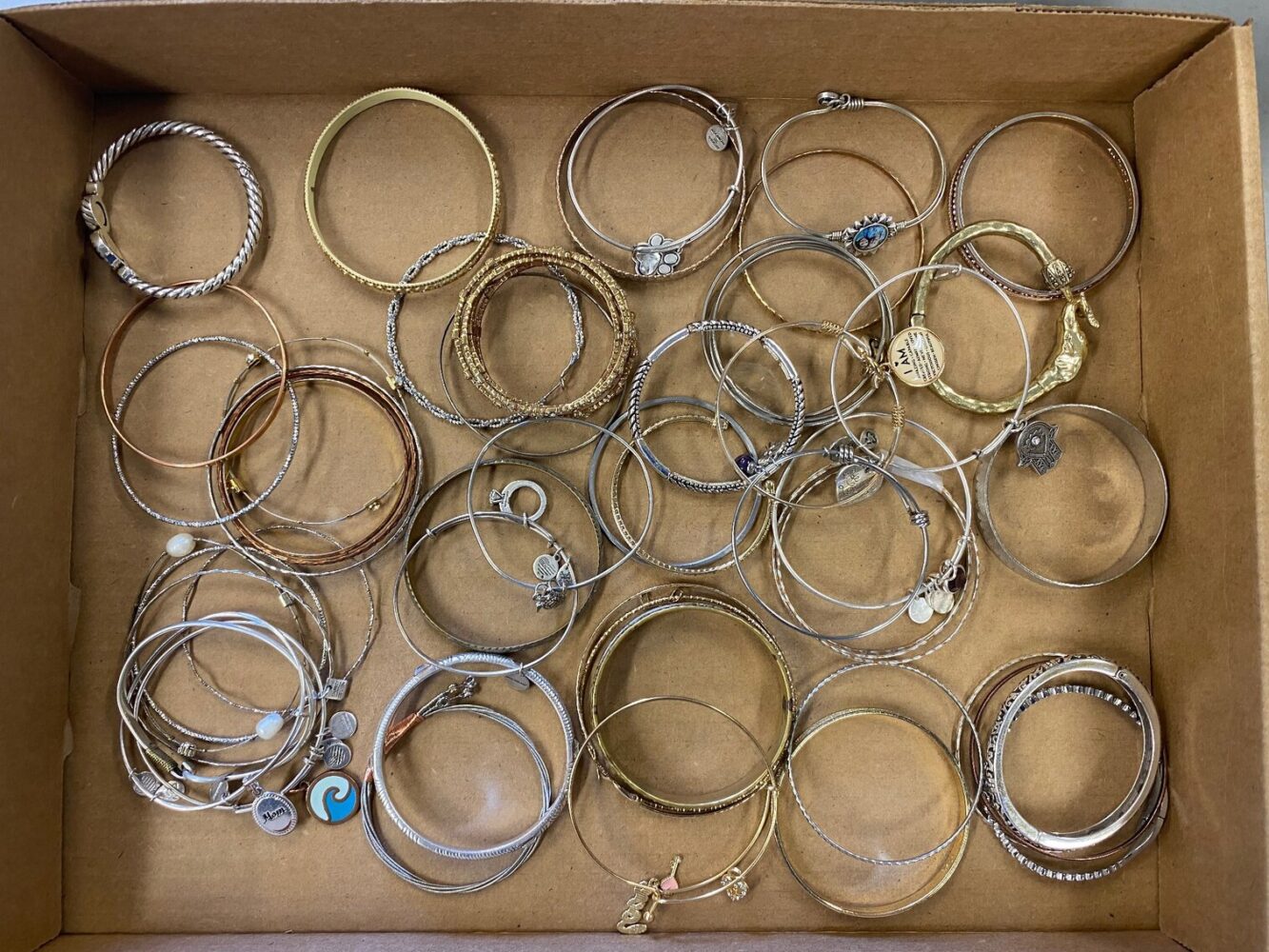
PIT officials say this year’s list features 300 pieces of electronics ranging from computers to Kindles, as well as musical instruments, including a Yamaha flute and a mandolin, Apple watches galore, and more than 350 bracelets, rings, and necklaces.

Over the past year, passengers also left behind sports helmets with GoPro cameras, a security surveillance system, a baker’s rolling pin and apron, flippers, and goggles. There’s a rice maker on the list, along with car seats, a Canon camera, an Alienware game system, and golf clubs.

On Saturday it will all be up for auction.

And it’s not just stuff. There will also be cars up for sale.

If the airport can’t find the owner of a car left too long at the airport, it becomes abandoned property and goes into the auction pool.

This year there are 11 cars in the pool, including a Sonata, two Honda Civics, and a Nissa Ultima.

Who gets the auction money?

Proceeds from the auction of left behind items go to the ACAA Charitable Foundation, which helps support PIT’s Art in the Airport program as well as aviation scholarships and workforce development. Last year, the auction raised more than $75,000 for the foundation.

For bidders, there will be a 15 percent buyer’s premium with 5 percent waived for cash or check purchases. Cash, checks, and credit cards will be accepted. Find details on the auction location and instructions for bidding here.

Gary Gatwick’s Underground Adventure

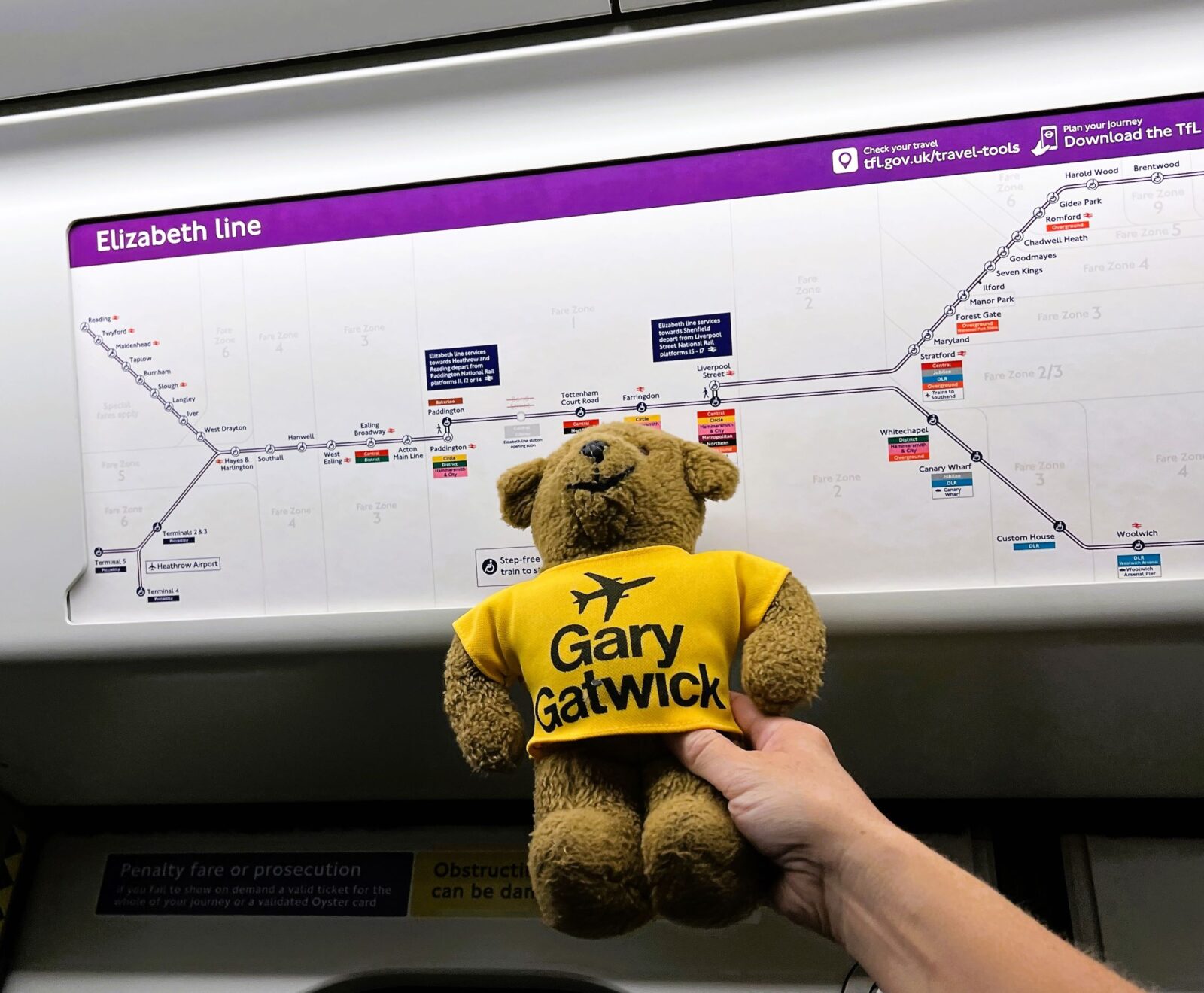
The Stuck at the Airport adventure team traveled in and around London with Gatwick Airport’s mascot, Gary Gatwick, last week.

Our assignment: discover how easy it is to use Gatwick Airport as a base when visiting the region.

We traveled by train and underground to visit attractions in central London, the Brighton seaside, and the historic West Sussex towns of Arundel, and Amberly

Every stop was an educational adventure and Gary Gatwick was a perfect host and guide.

But one trip on the underground turned into a lesson about the kindness and professionalism of the people who work for Transport for London.

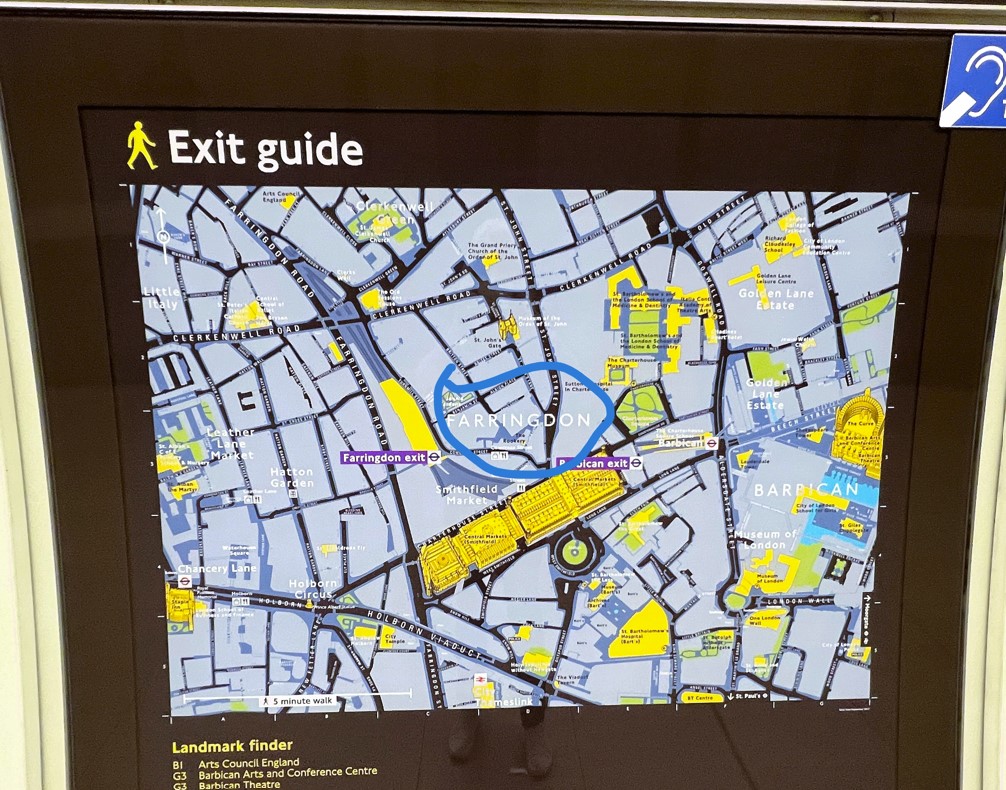
Because Gary Gatwick somehow got left behind at the Farringdon station.

It took about 10 stops to realize Gary Gatwick was missing.

We were, of course, horrified that he’d been left behind.

And we weren’t confident we’d be reunited.

He was traveling in our small blue backpack and, honestly, our experience with public transport in other cities led us to assume that the backpack would be taken by another passenger, thrown out, or, worse, treated as a suspicious, unattended package and blown up!

But none of that happened.

While helpful station attendants at another station made calls to the Farringdon station on our behalf to inquire about our lost item, our little backpack was found and turned in to the lost property office at the station.

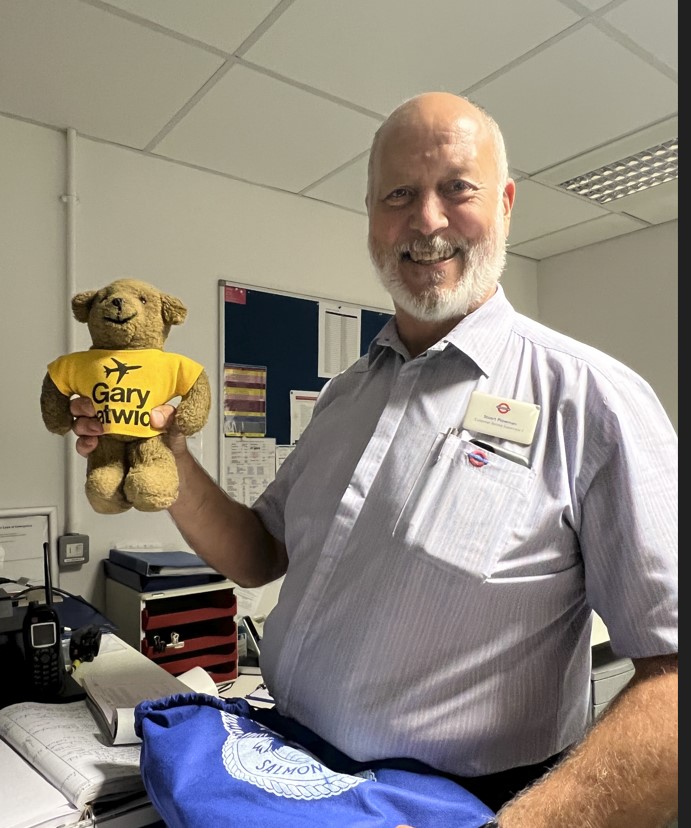
This customer service supervisor recognized Gary Gatwick, took good care of him, and logged his visit into the records.

When we finally made our way back to the Farringdon station and asked to be directed to the supervisor’s office, everyone on duty knew just who we were.

“Oh, you’re the people looking for the bear! Go that way.”

We took a bit of ribbing, but once we signed for our lost property we were back on our way.

The London Underground, like most other public transit networks, is a sprawling system. And, clutching Gary Gatwick close so we didn’t lose him again, we thought we’d just melt back into the sea of passengers.

But when we got back to the station platform we encountered Kevin.

He’s the Transport for London employee who had found Gary Gatwick on the platform and he’s the one who made sure Gary was safe.

Kevin seemed genuinely glad to see us reunited with Gary Gatwick and we’ve declared him our hero!

Denver Airport saves Princess Kitty

DENVER Airport kitty

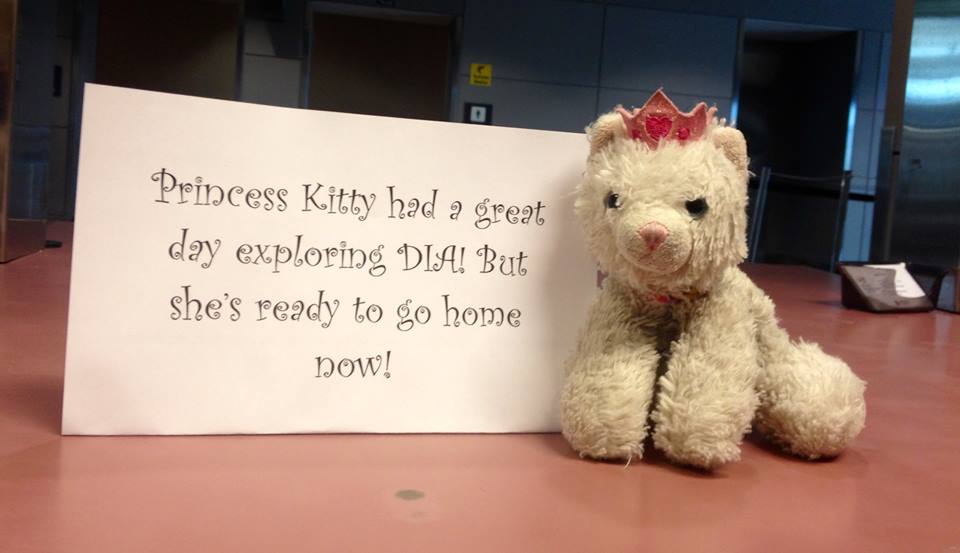
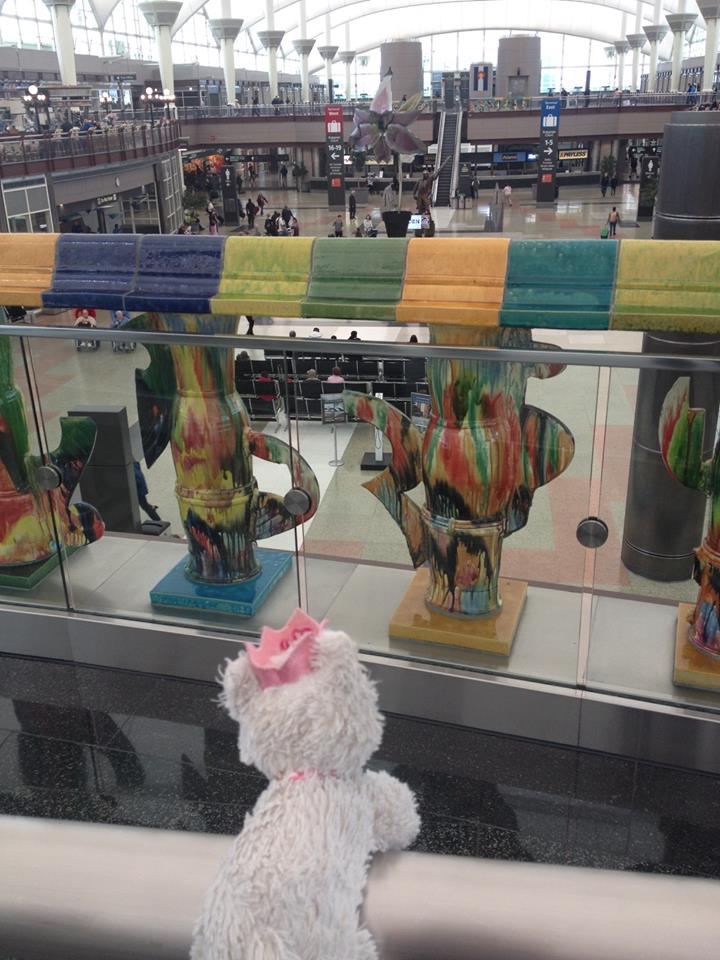
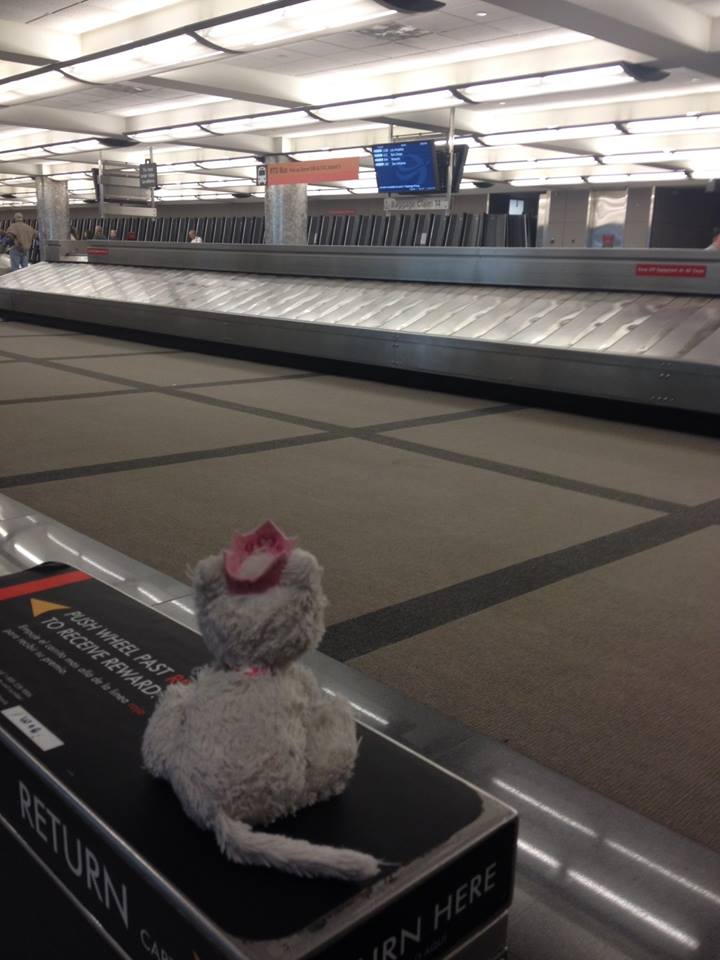
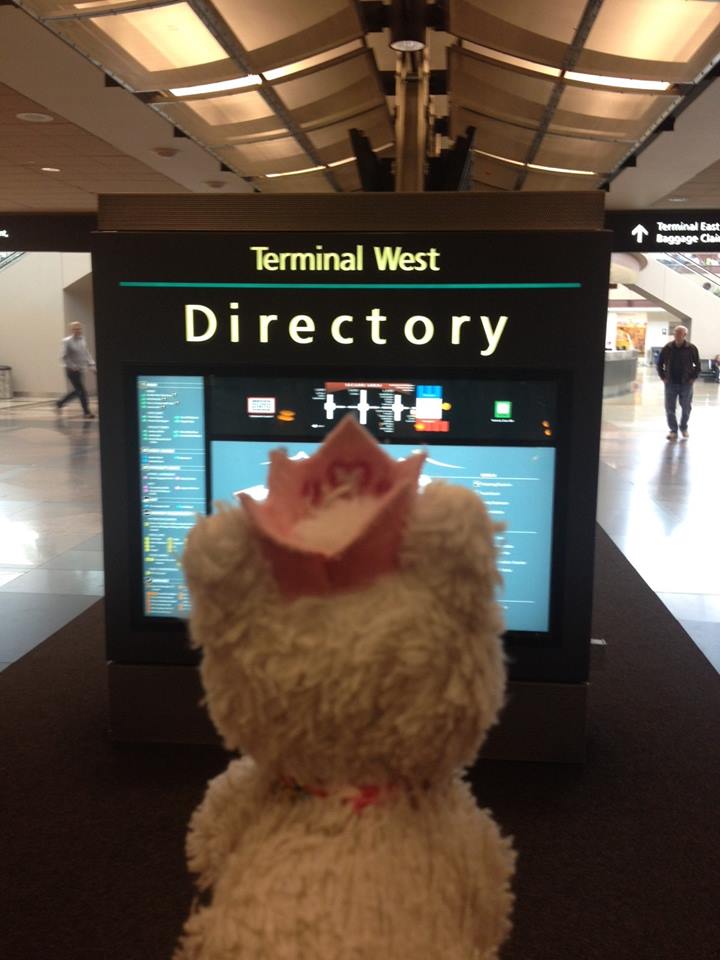
An almost-too-cute story about how the Lost & Found department at Denver International Airport rescued a stuffed animal named Princess Kitty is making the rounds.

Both Sonja Wieck and her 9-year-old daughter, Annie, were devasted when they realized Annie had left the beloved and well-traveled Princess Kitty on a DEN Airport tram.

Wieck sent a tweet to the airport asking for help and the airport staff not only found the stuffed animal but gave it a tour of the airport and the attention that a princess deserves.

Denver airport kitty 2

Denver airport kitty 3

Denver airport kitty 4

Denver Airport kitty 5

Denver airport kitty 6

(All photos courtesy Denver International Airport)

Airports & airlines work hard to return lost items

As a recent NerdWallet study points out, the amount of luggage lost by airlines spikes during the holiday travel season.

But passengers do their fair share of losing things on airplanes and in airports year-round.

In 2011, for example, the lost-and-found department at Portland International Airport (PDX) logged nearly 16,000 misplaced objects. So far this year, passengers have left behind almost as many items, and the hectic holiday travel season hasn’t even begun.

And it’s not just cell phones, chargers, laptops and eyeglasses that distracted and exhausted travelers leave behind.

“We’ve had dentures, a spare tire, a live fish – in water – and a Crock-Pot with food still inside” turned in, airport spokesperson Kama Simonds told NBC News.

A quick review of the searchable database at San Diego International shows a colander, a piñata, a poster of a U-boat, handcuffs and scented, colored pencils among the items waiting for their owners’ retrieval.

At Denver International, items left behind have included chainsaws, a 60-inch flat screen TV and the back seat of a passenger van, spokesperson Laura Coale said.

“We do everything in our power to locate the person and connect them with their lost item,” Coale said. “If the item has a name or state listed on it, we will conduct a search for them. If cell phones are unlocked, we will call the last number and also look for an ICE [In case of emergency] contact,” she said.

Airports and airlines typically have a set time limit for how long an item will be retained. Southwest Airlines states that it will spend 30 days looking for a passenger’s lost item and once all efforts have been exhausted to find the owner of a found item, the item will be “salvaged” and all proceeds donated to charity.

Denver International stores items for 30 days. Beyond that, clothing is donated to Denver Human Services; everything else becomes surplus and goes to auction.

The Transportation Security Agency also has a 30-day time limit for items left at airport security checkpoints. After that, items are shipped to a state-by-state designated collection facility and “are considered nonreturnable,” said spokesperson David Castelveter. Travelers who have left something behind should “contact the lost-and-found number for the respective airport.” Start by calling TSA (866-289-9673) or looking for a specific lost-and-found contact on its website.

Acting fast is essential, but figuring out where you may have lost something and where to file a claim can be confusing. Items lost on airplanes (and sometimes in gate hold areas) are delivered to the airlines. In some airports, such as PDX, items left at TSA checkpoints and on shuttle buses are brought to a central office; in other airports everything is kept separate. Some large airports have sophisticated, searchable databases; others require that you file a claim with a phone call or e-mail, and keep calling back to see if your item has been found.

Websites such as AirportLostandFound.com – which currently displays details for several lost Kindles, a pair of customized earplugs and more than 200 other lost items – promises to search for matches in the lost-and-found databases of multiple airports and airlines as well as those of food and retail outlets within airports. If they find your item, the site will try to organize a reunion, but there may be a fee.

As the busy holiday travel season approaches, here are a few basics for finding your stuff – and not losing it in the first place.

  • Identify cell phones, laptops, books, raincoats and other items with information (phone number, address sticker) that will help someone return a found item.
  • Don’t put anything in the seatback pocket of an airplane. It’s just too easy to leave something behind.
  • If you lose something, act fast. Retrace your steps, call in or log a claim with the airport and the airline as soon as possible.
  • Don’t give up hope. It may take a few days for an item to be found, turned-in and logged into a database.

(My article: Airports & Airlines work hard to return your lost items first appeared on NBC NEW Travel)


What happens to items left at airport checkpoints?

Each Friday on msnbc.com’s Overhead Bin, I track down the answer to a reader’s question. This week’s question was: What happens to all that stuff ‘surrendered’ at airport security checkpoints?

Betty Spencer doesn’t travel much, but she’s curious about what happens to items confiscated or surrendered at airport security checkpoints. “There are so many stories of people having to give up items,” Spencer, a patient accounts counselor in Spokane, Wash., wrote to Overhead Bin. “I wondered if any of the items could be donated or recycled. I would hate to think of so much waste.”

The Transportation Security Administration does indeed end up with a lot of stuff: Since 9/11, the TSA has detected approximately 50 million prohibited items, including 4,600 firearms, during airport checkpoint screening.

Hazardous materials are disposed of, and dangerous or illegal items such as guns and explosives are turned over to law enforcement. But travelers do have some say in what happens to other items.

“TSA offers passengers multiple options at the checkpoint for prohibited items that are less dangerous and not illegal,” said TSA spokesperson Greg Soule. “Passengers can return them to their cars, pack them in checked baggage, or at some airports, mail them home to themselves.”

More often than not, travelers end up surrendering their items at the checkpoint. After that, Soule says, the items end up being donated to state governments “to be auctioned off or sold as revenue. TSA in no way profits from surrendered or lost items at the checkpoint.”

Some states, such as Pennsylvania, operate a brisk and profitable business selling items left behind at airports in the state – and beyond.

“Not all states have a program that’s large enough to accept all the items left at airports,” said Troy Thompson, spokesperson for the Pennsylvania Department of General Services. “But we do. And we receive pallets of items from New York’s JFK and LaGuardia airports and from some airports in Ohio and Maryland.”

Thompson said all the items Pennsylvania gathers end up at a warehouse, where it’s sorted.

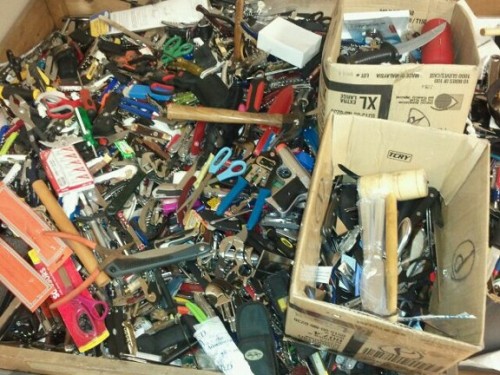
“We get a lot of pocketknives, scissors and corkscrews,” said Thompson, “but also frying pans and other cookware, and tools such as drills, saws, hatchets and machetes. Some of it makes you scratch your head and wonder how people thought they’d get those things on the plane.”

A sampling of the items are put out in a store at the state warehouse in Harrisburg, but most of the items get sold in lots, by weight, online at auction. Since 2004, Pennsylvania has earned about $700,000 from auctions held for many years on eBay and, soon, on govdeals.com.

Lost and found at Frankfurt Airport

I’m tickled to be one of Lufthansa’s guests for a ride on the Airbus A380 airplane traveling from Frankfurt Airport to San Francisco International Airport on May 10th, the first day the giant airplane begins regular service to SFO.

Airbus A380 at Frankfurt

I’ll have lots of photos and details to share after my 10-hour ride, which comes after many hours spent touring Frankfurt Airport.

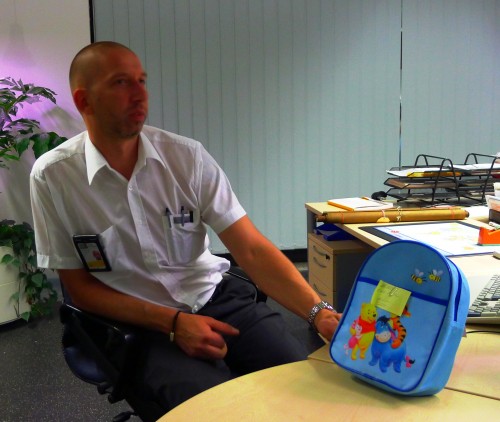
Among my stops today was the airport’s Lost and Found department, where Mr. Wallrodt (pictured below) was kind enough to take a moment away from his task of trying to find the rightful owner of this backpack.

Wallrodt told me that the airport’s Lost and Found department receives about 80,000 lost items a year, and an average of 300 lost laptops each month. Many of the items do end up being returned to their owners, but every three months the airport holds an auction to get rid of unclaimed items.

The strangest item Wollrodt remembers being turned into his office? A parrot that didn’t say too much and was quickly reunited with its owner.

Lost and found at the airport

2,500 canceled American Airline flights means that a lot of people are spending a lot of time stuck at airports this week. It also means that a lot more stuff is going to end up getting misplaced or lost at airports this week.

So maybe it’s a very good thing that this week my Well-Mannered Traveler column on MSNBC.com offers tips on how to improve your odds of finding what you’ve lost at the airport.

lostandfound_inv.jpg