Instead of the annoying buzzer and flashing light that announces the arrival of bags at some airports, the newly redesigned bag carousels at MSP airport send up the alert with nature sounds and a light show.
We’re making this the first nomination for Airport Amenity of the Week.
Feast your eyes on one of our newly redesigned baggage carousels!
Soothing nature sounds & a rippling light show announce that your bags are on the way. The design also offers more square footage and front-facing space — perfect for social distancing. #TravelConfidentlypic.twitter.com/OX4cP8r5gg
Our second nomination for Airport Amenity of the Week is this high-tech hand-washing station Pittsburgh International Airport (PIT) installed to encourage travelers to wash their hands and “scrub away germs in 12 seconds flat!”
🎶You put your left hand in, you take your left hand out…🎶
As part of our #SafeTravels program, an airport first-of-its-kind high-tech hand washing station is being installed near our Landside train platform to scrub away germs in 12 seconds flat! pic.twitter.com/RNbeHoNCO8
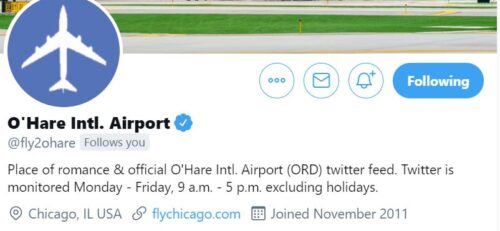
Pete Buttigieg, who has been named transportation secretary nominee by President-elect Joe Biden, put a spotlight on O’Hare International Airport (ORD) during his formal introduction on Wednesday.
During the event, Buttigieg noted that he proposed to his husband, Chasten, at O’Hare. “Don’t let anybody tell you that O’Hare isn’t romantic,” he said.
Avgeeks know that.
So does United Airlines, which sent out a tweet identifying the engagement gate.
(A slightly different version of our story on airport masks policies first appeared on USA TODAY)
Although COVID-19 cases are surging, holiday flight bookings are up.
The uptick in travel is tied to pent-up demand for travel. And to recent studies that say air travel is as safe or safer than many other routine activities on the ground.
Most every airline now requires passengers to wear face coverings and passengers who refuse to comply may find themselves on a carrier’s no-fly list.
But what about airports?
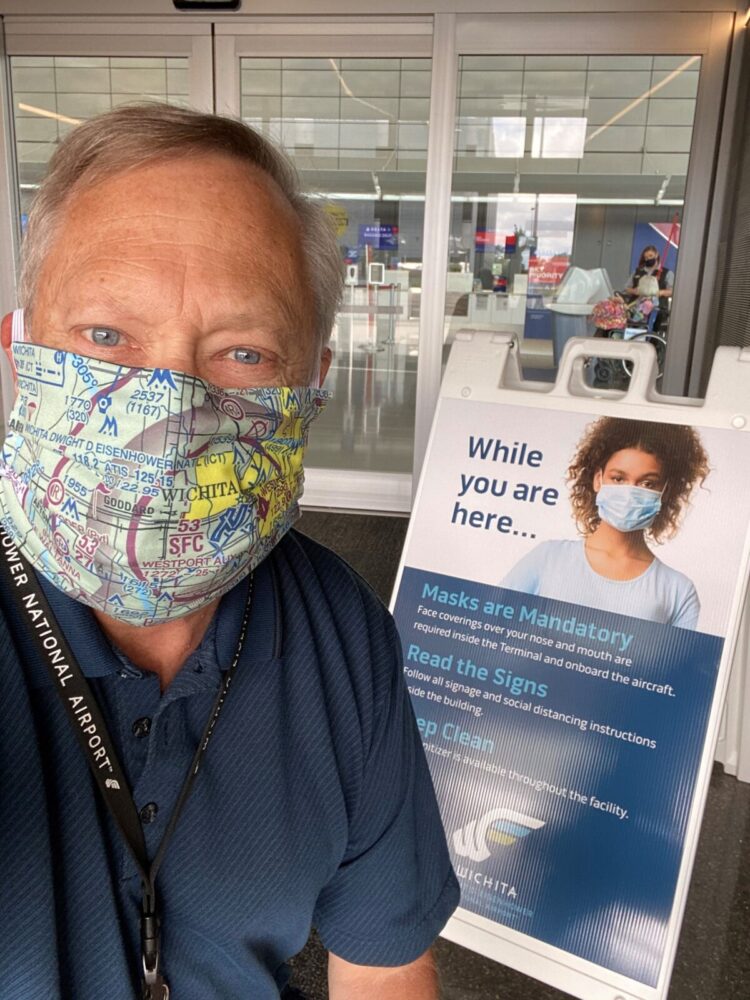
Many groups have been urging the current administration to issue a mask requirement for all commercial travel. But no federal law currently requires passengers to wear face coverings in airports.
Airports in locations that have state or local mask requirements do have the authority to cite, ticket, or, in some cases, eject travelers that fail to comply.
But in most cases, airports report they are instead relying on audio and visual messaging, personal reminders and the airline policies.
At Charlotte Douglas International Airport (CLT) messaging on the public address system reminds passengers that face coverings are required by the governor’s mandate. Reminders of the face-covering requirement also appear on shuttle buses, entrance doors, and throughout the terminal.
In addition to signage about wearing masks, at Denver International Airport (DEN) all employees are encouraged to politely remind a passenger to wear their mask if it is not on or not on properly.
“We may offer a person a complimentary mask to encourage compliance,” says airport spokesperson Alex Renteria, “If a person acts aggressively, law enforcement may be called. But we have not had an instance where a traveler refused to wear a mask.”
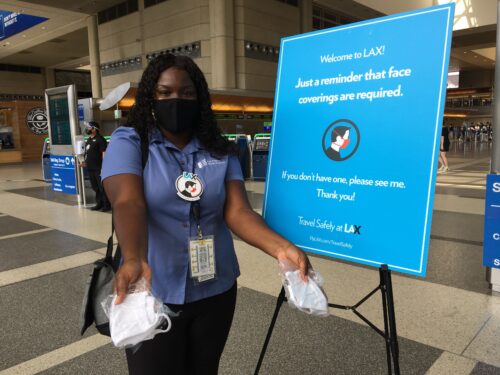
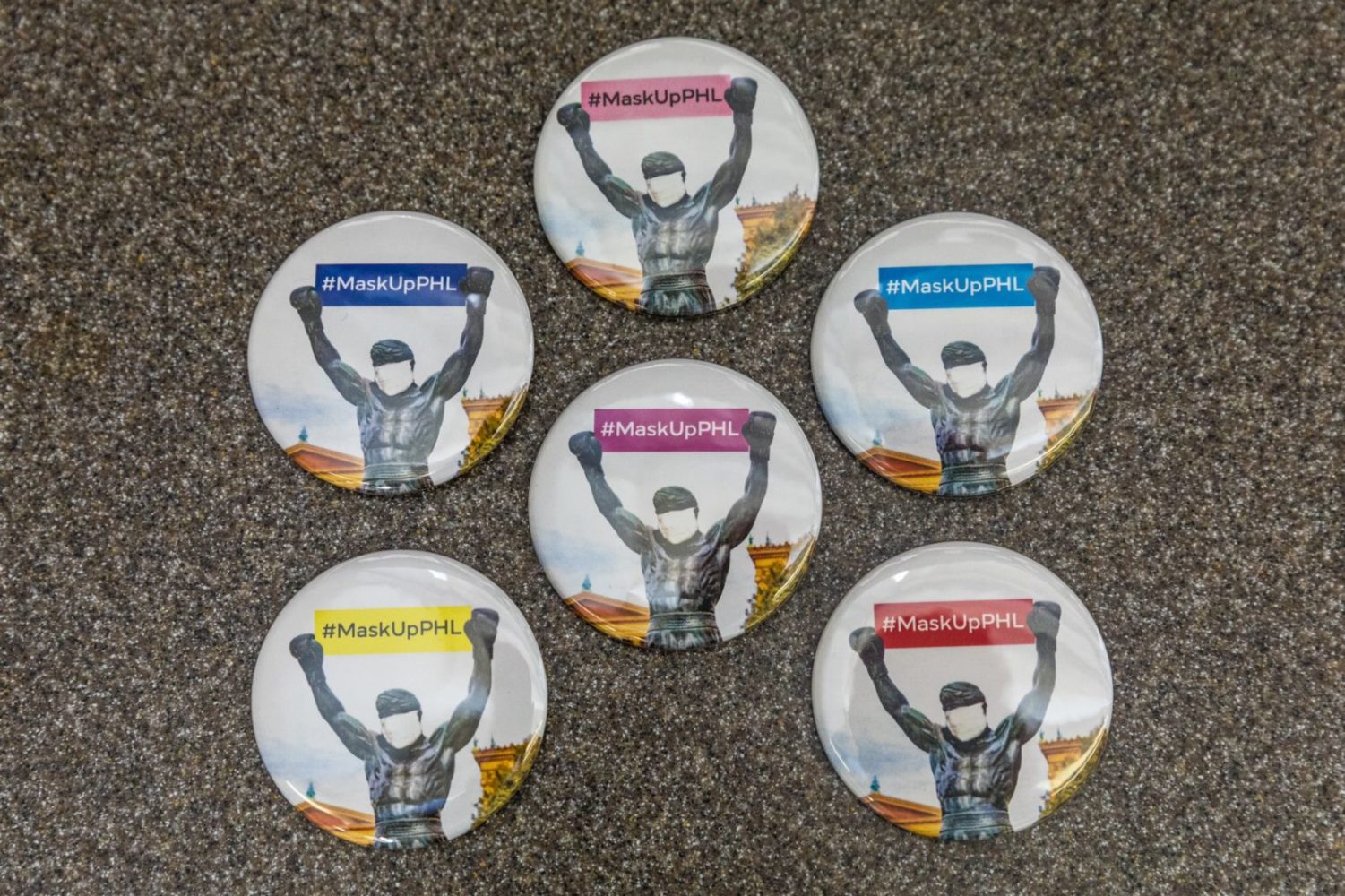
At Los Angeles International Airport, Travel Safety Ambassadors patrol some terminals to remind guests about the airport’s mask policy and hand out free face coverings if needed.
“We do our best to remind people from the moment they step into the building,” said airport spokesman Heath Montgomery, “But the airlines are the ones with the authority to decline service to those who refuse to comply with face-covering policies.”
But there is no firm timetable for the release of that phase of the report.
In the meantime, in addition to encouraging passengers to mask up, airports continue to reassure travelers with assertive terminal-wide cleaning procedures, COVID-19 testing services, and other health and safety regimes.
Hawaii reopens to tourists on October 15. Yay, right?
But the only visitors who will be able to skip the 14-day quarantine rules will be those with proof of testing negative for COVID-19 within 72 hours before they depart the mainland.
Hawaii officials will only accept test results from approved providers.
Here’s information about those testing partners from the Hawaii State Department of Health. The list was posted on 10/13/20 and will likely be updated.
Be sure to check with providers for prices and updated information.
Where to get tested
AFC Urgent Care – COVID-19 tests are available at clinics on the AFC Urgent Care website. Tests available for ages five and older. Schedule in advance to guarantee appointment availability. A printed version of the results is provided prior to leaving the clinic.
Bartell Drugs – Only for Alaska Airlines passengers to Hawaii at select Bartell Drugs locations. Tests available for ages five and older. Appointments are required at least one day in advance. Guaranteed results within 72 hours.
Carbon Health – Tests offered at dedicated sites with results delivered within two hours. Tests available for ages five and older for Alaska Airlines passengers in Seattle only. ($135)
CityHealth Urgent Care – CityHealth Urgent Care offers tests utilizing state-of-the-art Abbott Lab instrumentation for results in 15 minutes. Tests available for ages five and older.
Color Tests available for ages five and older for United Airlines passengers going to Hawaii from San Francisco International Airport.
CVS Health – Travelers may schedule an appointment up to two days in advance at select CVS Pharmacy drive-thru locations. Tests available for ages 12 and older. Pre-registration is required. ($139).
Discovery Health MD – Individuals traveling to Hawaii may schedule testing online with same ($329) and next day ($279) results at designated testing sites. Tests available for ages five and older. A limited number of walk-ups can be accommodated.
Kaiser Permanente– Kaiser Permanente members may schedule a test online, or contact the appointment call center or nurse advice line in their home region for scheduling instructions.
Quest Diagnostics – Individuals may order and schedule the company’s COVID-19 Active Infection Test online and select from more than 500 Walmart drive-thru pharmacy locations for a nasal swab test.
Vault Health – At-home tests with real-time audio-visual supervision are available. Tests available for ages five and older. Tests are mailed with accurate results in 72 hours or less.
COVID-19 Testing Information from Airlines and Airports
If you are heading to Hawaii, your airline will offer information about COVID-19 tests and current requlations.
Here are links to the pre-travel testing requirements for Hawaii travelers and additional information about testing options from airlines – and from Oakland International Airport.
We know you don't necessarily need a demonstration of our new toe tap buttons, but our COO & VP of Operations Bruce Goetz is mighty proud of these things so we made one anyway. They're our latest move to a "touchless journey" because TUS Cares. DETAILS: https://t.co/5As7YgH3SNpic.twitter.com/4GHJ57NESo
Free gadget cleaning at Toronto Pearson International Airport
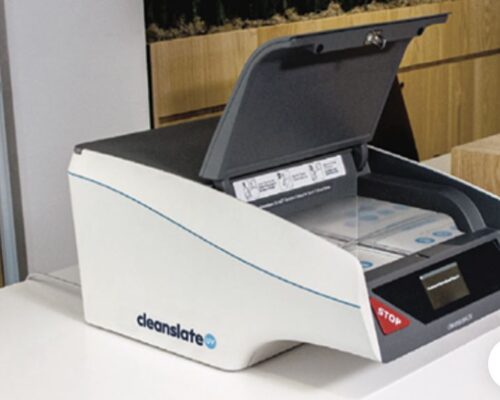
It looks like a copy machine. But if you put your gadgets in these machines at Toronto Pearson International Airport (YYZ) they will get zapped by a UV-C light that destroys novel coronavirus cells.
20 seconds, 360 degrees and 99.979% of novel coronavirus cells destroyed. That’s the power of @CleanSlateuv, a chemical free sanitizer device that uses a burst of UV-C light to clean your handheld electronics. Free to use the next time you fly. https://t.co/4OFdCqKGIopic.twitter.com/q7th0xTz64
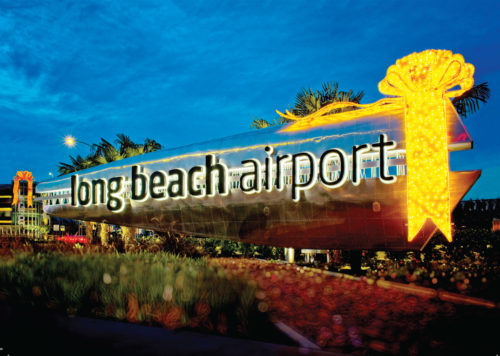
Long Beach Airport (LGB) has a new video out to remind travelers that they’ve got outdoor concourses and other amenities that are reassuring for travelers.
October is Breast Cancer Awareness Month and throughout the month you’re likely to see airports and airlines going pink to raise awareness and, in some cases, to raise funds to support breast cancer research.
We’ll add to this list as we spot and are alerted to other displays, but here are few to get started.
During October, Delta Air Lines raises money to support research projects through the Breast Cancer Research Foundation. Since 2005, the airline has raised over $19 million for the cause.
On Board: Customers can donate by putting cash (any currency) or gift cards into a plastic bag provided by the cabin crew that will be collected by flight attendants wearing gloves.
Delta is also adding a QR code in the Delta-provided snack kit on flights greater than 250 miles. By scanning this QR code, customers can use a card to donate to BCRF.
Online: You can also donate year-round on delta.com and through SkyWish, the charitable arm of Delta’s SkyMiles and frequent flyer program, which allows Delta and its SkyMiles members to donate miles to charitable organizations worldwide.
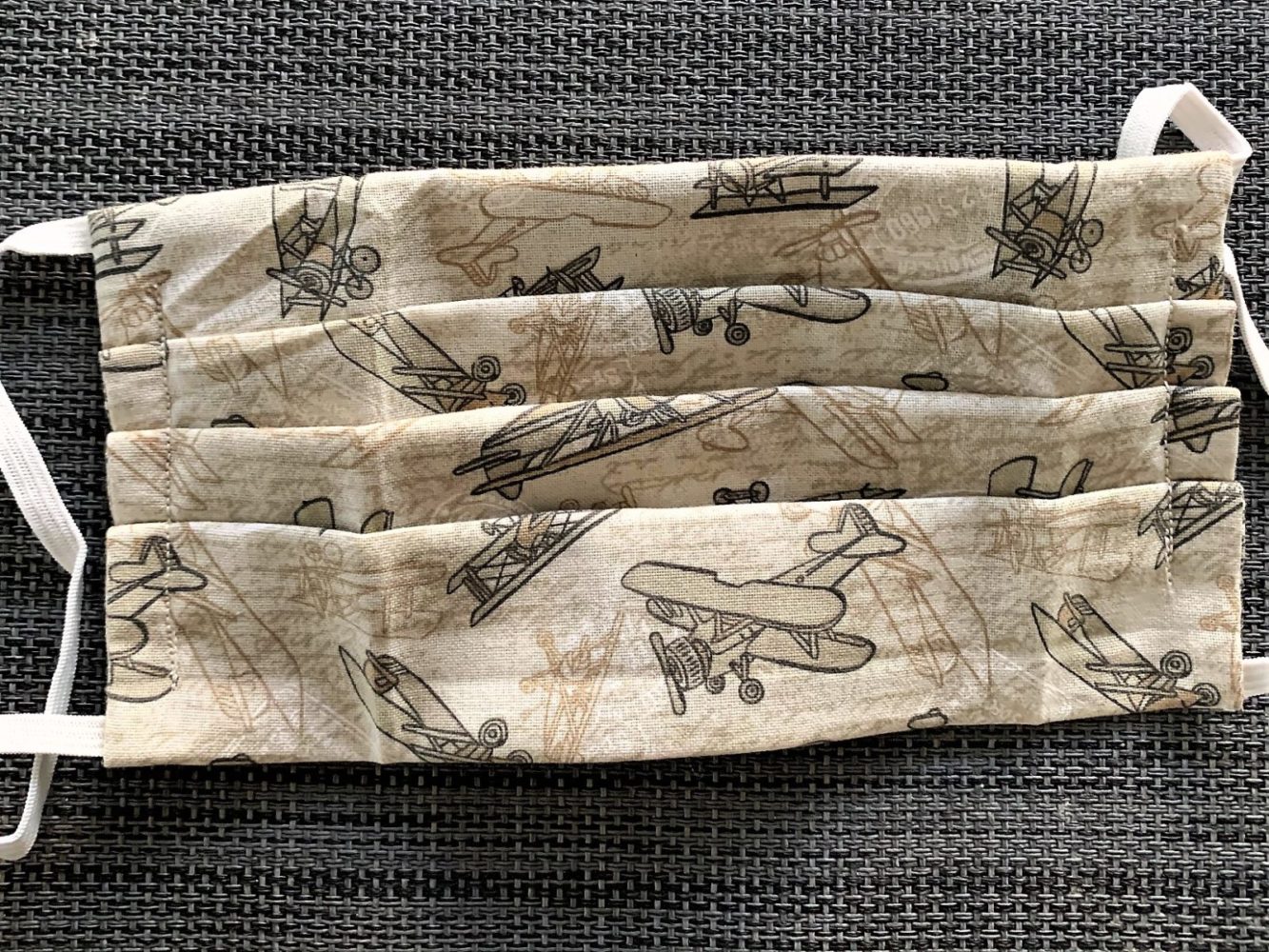
The airline’s Pink Boutique is virtual, offering discounted co-branded Delta and BCRF merchandise, including a BCRF/Delta mask.
Missing you, Mary Catherine Lamb. Damn you, breast cancer.
Because so many countries, and some states, require arriving travelers to have proof of a recent negative COVID-19 test, airports and airlines are rushing to make those tests available at the airport.
Those services, many of which are labeled as pilot programs, include COVID-19 sniffing dogs at the Helsinki Airport; XpresSpa’s new XpresCheck program at JFK International and Newark Liberty International airports: and Alitalia’s COVID-tested flights.
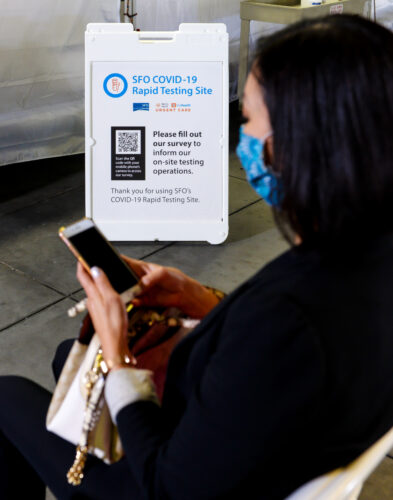
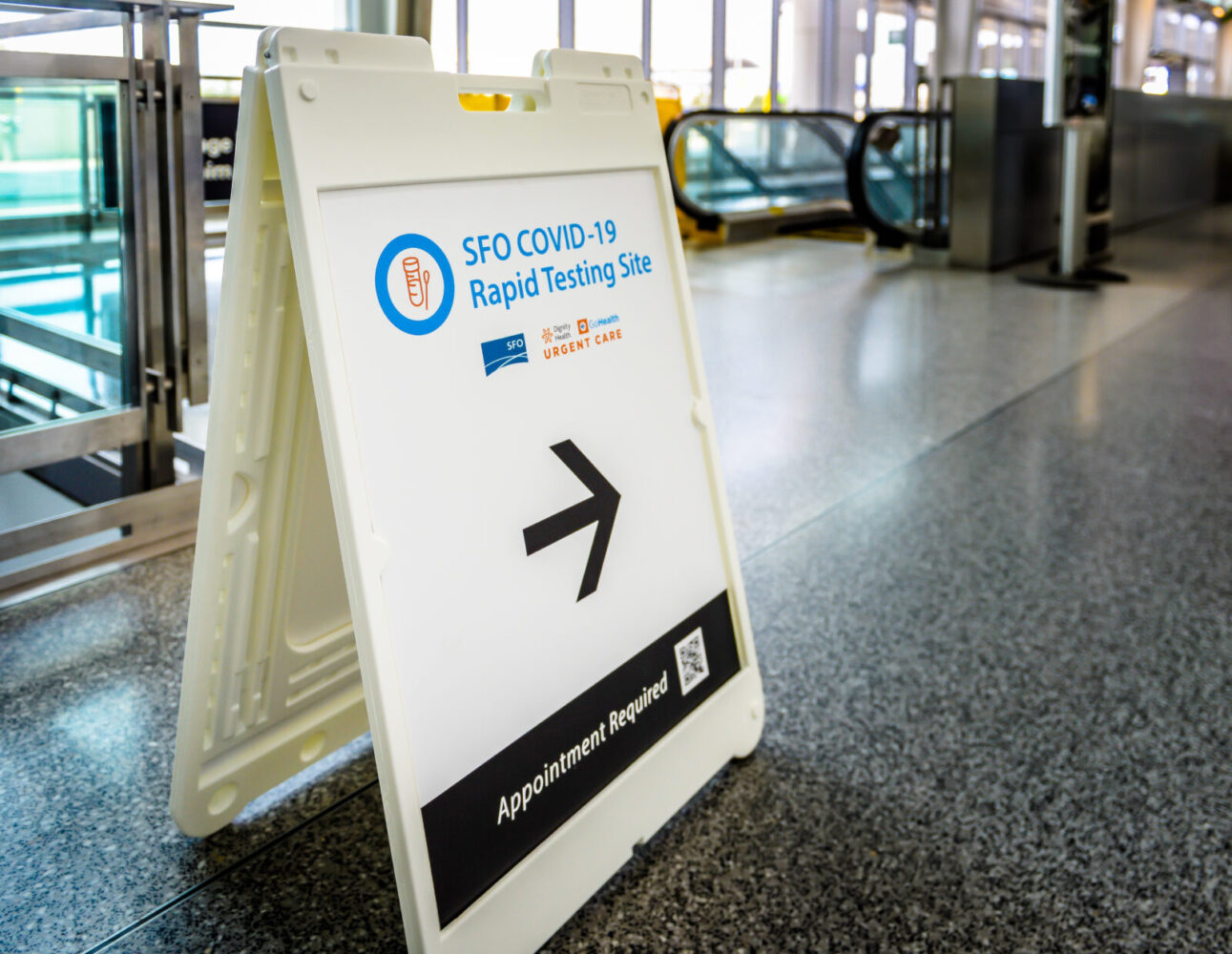
In advance of Hawaii reopening its doors to travelers on October 15, United Airlines is offering COVID-19 testing at San Francisco International Airport. And Hawaiian Airlines is setting up drive-through testing at both SFO and Los Angeles International Airport (LAX).
In most cases there is charge from $80 to more than $250 for the tests. In some cases, the tests are free.
More COVID-19 tests for air travelers.
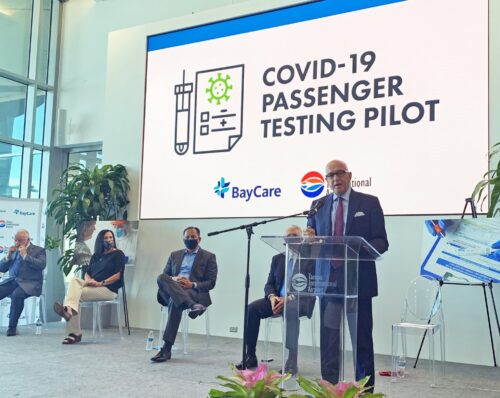
A new bundle of airport and airline-hosted COVID-19 testing programs was announced on Tuesday, Sept. 29.
Tampa International Airport (TPA) will run a pilot program in October offering travelers both rapid antigen tests and PRC, Polymerase Chain Rection tests. Fees apply.
Oakland International Airport (OAK) will begin offering free, rapid-result COVID-19 tests to employees and the public beginning Oct. 6. An expansion of the program is planned for October 15, when travel to Hawaii reopens.
And American Airlines announced it is working with several foreign governments to offer pre-flight COVID-19 tests for customers flying to international destinations.
The program starts in October with flights from Miami International Airport to Jamaica for residents returning home and for flights to the Bahamas.
There are plans to expand to other markets soon.
For American’s domestic flights from Dallas Fort Worth International Airport (DFW) to both Honolulu (HNL) and Maui (OGG), the airline is working with a vendor offering several testing options, including onsite rapid testing at DFW airport. Fees apply.
No doubt other airlines and airports will be rolling out COVID-19 test programs soon. But already the offerings are confusing and, in many cases, costly. Here’s hoping some sort of consistency evolves in the next few months.
I’m honored to be one of the presenters at the virtual Travel 2021 Summit on October 7 and 8 and focusing on what travel might be like in the next year.
With Alaska Airlines, JetBlue, United, and other airlines announcing fare sales and new routes for winter, it may feel like air travel is returning to normal.
But after a spike over the Labor Day holiday, the numbers of travelers passing through Transportation Security Administration checkpoints are still way down compared to this time last year.
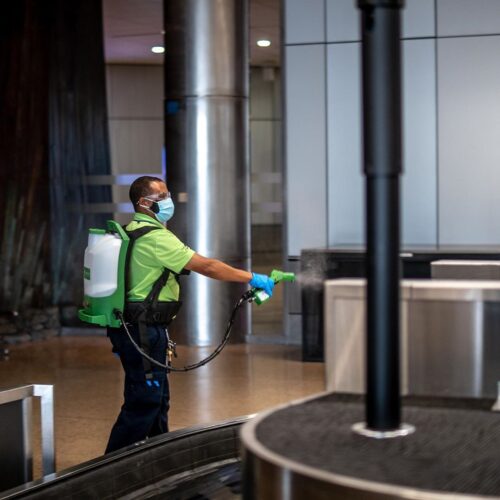
Throughout the summer, airports were scrambling to enhance cleaning regimes and install hand-sanitizing stations, plexiglass barriers and other health-focused tools. Now airports are adopting new strategies to keep passengers safe and instill confidence in travel.
Here are some of the programs you may encounter:
Security checkpoint by appointment
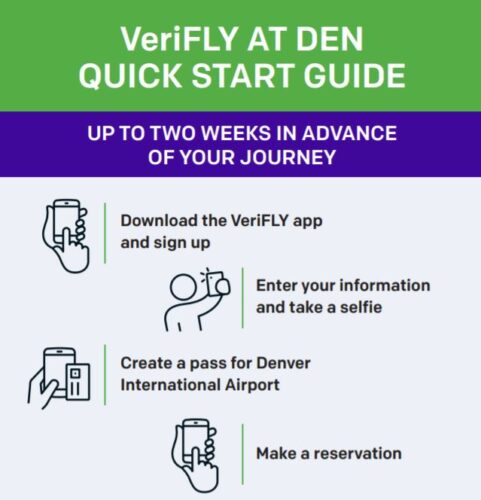
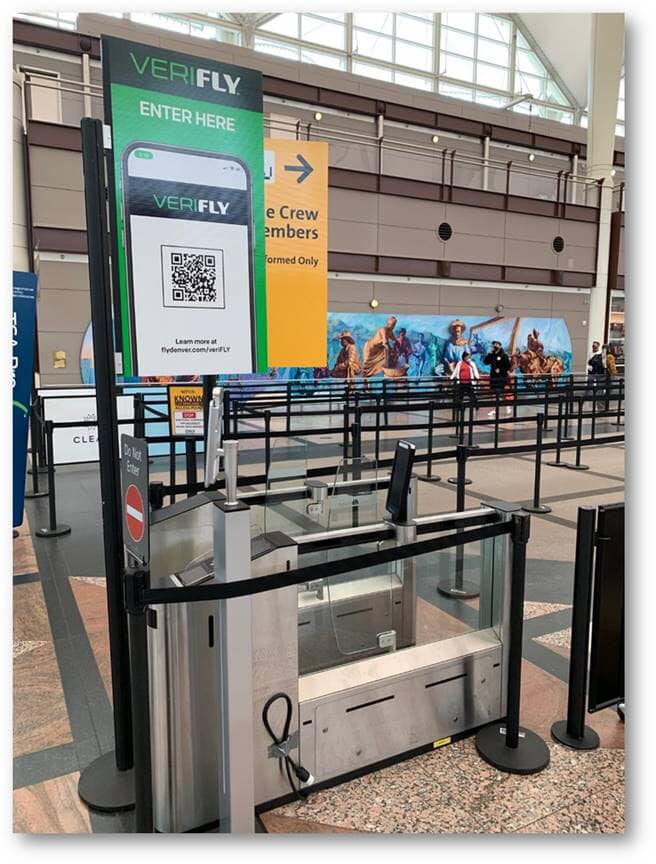
This month, Denver International Airport (DEN) debuted the free, app-powered VeriFLY program, which blends a checkpoint reservation system with a health check. Passengers download the VeriFLY app (an Android version is on the way) and complete a health survey 24 hours before their flight. At the airport, participants get a touchless temperature check before accessing a dedicated TSA lane.
More robots and robot-like helpers
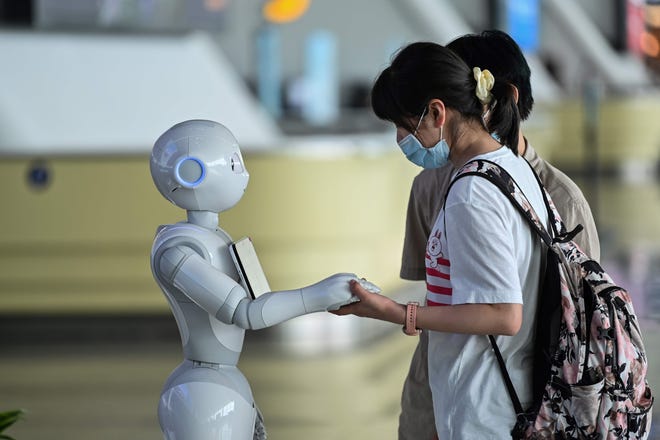
Airport employees serving as Travel Well Ambassadors at San Francisco International Airport (SFO) roam the terminals reminding passengers to wear their masks. Softbank Robotics’ direction-giving robot, Pepper, has been reprogrammed to serve as a mask nanny as well.
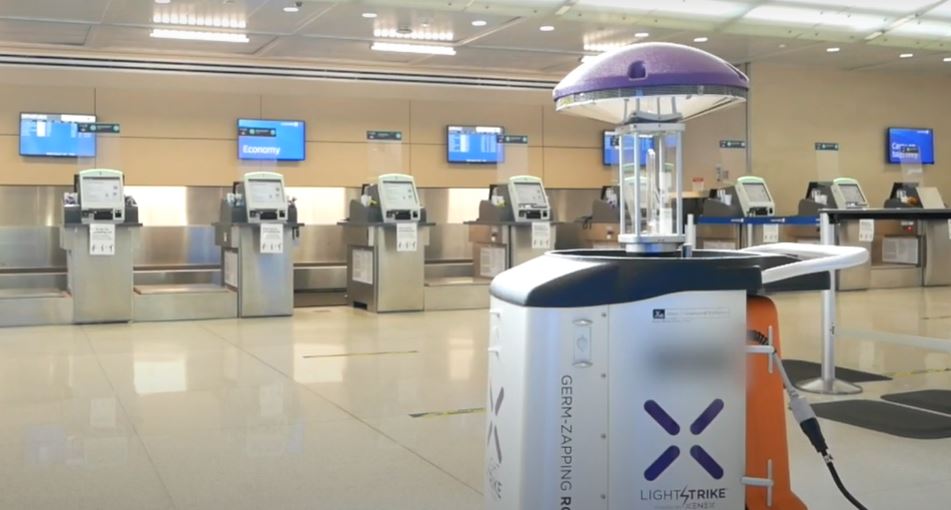
You can’t see it, but some airports have air-cleansing bipolar ionization (BPI) devices installed in the heating and air conditioning systems. And an increasing number of airports are using UV and medical-grade UVC light to zap bacteria and viruses on surfaces and, in some cases, people.
London’s Gatwick Airport is installing a Smiths Detection-made system at eight security checkpoint lanes that will send security bins through a tunnel that uses short-wavelength UV-C light for disinfection.
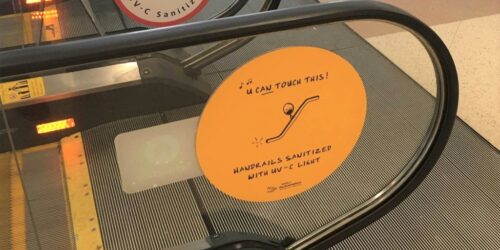
And Toronto Pearson International Airport (YYZ) has installed UV-C sterilization units inside some escalator and walkway mechanisms to continuously clean the handrails.
The Toronto Airport also has a new, voluntary disinfection corridor that uses a chemical-free spray to give passengers a quick pre- or post-flight sanitizing spritz.
https://youtu.be/3xjR2tKogY0
COVID-19 testing at airports
Temperature checks may become the norm, though there continues to be debate over who should be responsible for carrying them out. Earlier this month, a new bipartisan Senate bill was introduced that would require the TSA to perform that task.
Now, all eyes are on COVID-19 testing at airports.
On Sept. 22, the International Air Transport Association (IATA), joined trade groups such as Airlines for America (A4A), Airport Council International (ACI) World, and Airports Council International-North America in calling for the systematic testing of all international travelers before their flights.
“This should enable governments to safely open borders without quarantine. And it will provide passengers with the certainty that they can travel without having to worry about a last-minute change in government rules that could spoil their plans,” said IATA Director General Alexandre de Juniac in a statement.
Where to get tested before you fly.
Last week, United Airlines and Hawaiian Airlines announced their own COVID-19 testing pilot programs. United will test its system on passengers flying from San Francisco to Hawaii. Hawaiian Airlines is setting up drive-through sites near LAX and SFO. Both will launch on or close to Oct. 15, when Hawaii begins allowing out-of-state visitors to bypass quarantine with a negative test result.
XpresSpa, which has temporarily closed its network of in-airport spas, is developing a network of COVID-19 testing centers at airports. So far they have test sites at JFK International Airport and at Newark Liberty International Airport.
The medical clinic at Vancouver International Airport (YVR) offers travelers COVID-19 tests by appointment, with results typically returned within 24 to 72 hours. YVR and Canadian airline WestJet are also creating a pilot program to offer voluntary preflight COVID-19 testing with fast results to passengers boarding domestic flights, according to the CBC.
And through mid-October, Italian airline Alitalia is operating two of its seven daily Rome-Milan flights as “COVID-Tested.” For these flights, only passengers who have tested negative for COVID-19 allowed on the plane. Passengers who arrive at the airport without a certificate proving they have tested negative for the virus 72 hours before boarding can take a fast, free COVID-19 test at the airport.
COVID-19-sniffing dogs
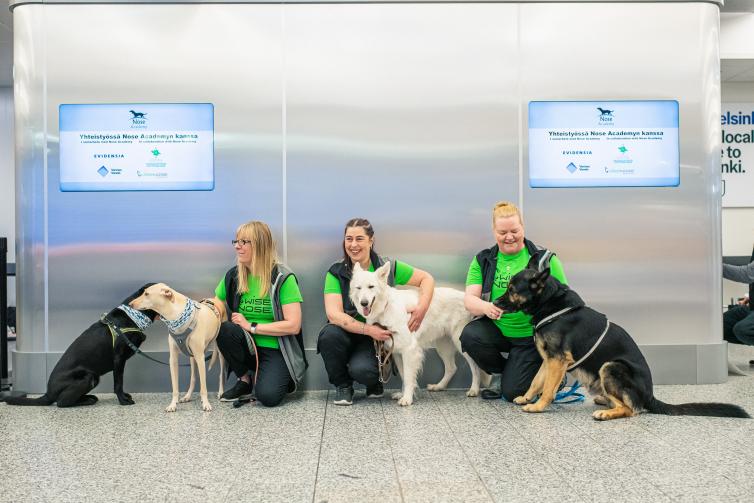
And passengers flying out of Finland’s Helsinki-Vantaa Airport or Dubai International Airport might also encounter COVID-sniffing dogs.
Look for the seal of approval
Airports Council International (ACI) World recently rolled out a global Airport Health Accreditation program designed to restore public confidence in air travel. The program should also prove to governments that airports are following international health and safety standards.
The voluntary health and hygiene program requires airports to answer questions relating to everything from cleaning and disinfection to physical distancing, staff protection, passenger communications, and facilities.
Airports seeking the Airport Health Accreditation must also provide pictures, videos, and explanations to show how they are following international protocols.
Now other airports are rushing to get the ACI seal of approval.
ACI launched the Airport Health Accreditation in late July with a goal of reaching about 100 or 150 airports, ACI World Director General Luis Felipe de Oliveira told USA TODAY. But so far more than 300 airports have expressed interest,146 contracts have been signed, 46 airports are accredited and 50 to 60 more requests are arriving each week.
Organizations representing airports and airlines, including the International Air Transport Association (IATA), are calling for rapid COVID-19 testing for passengers at airports as an alternative to quarantine measures or bans on international travel.
“The key to restoring the freedom of mobility across borders is systematic COVID-19 testing of all travelers before departure, said Alexandre de Juniac, IATA’s Director General and CEO. “This will give governments the confidence to open their borders without complicated risk models that see constant changes in the rules imposed on travel,” he adds.
Most groups are calling for some sort of government agency or coordination for this tests. But in the meantime, airports and airlines are coming up with testing programs on their own.
United Airlines’ offering COVID-19 tests for Hawaii-bound passengers. Brace for the fee.
Starting October 15, customers traveling on United Airlines flights from San Francisco International Airport (SFO) to Hawaii will be able to take either a rapid COVID-19 test at the airport or a self-administered mail-in test at home.
This pilot program is timely and welcome because both residents and visitors arriving from out-of-state to Hawaii are still subject to a mandatory 14-day quarantine. But starting October 15, arriving travelers will be exempt from the quarantine if they have written confirmation of a negative test result secured within 72 hours from their final leg of their departure.
How will the tests work and what will they cost?
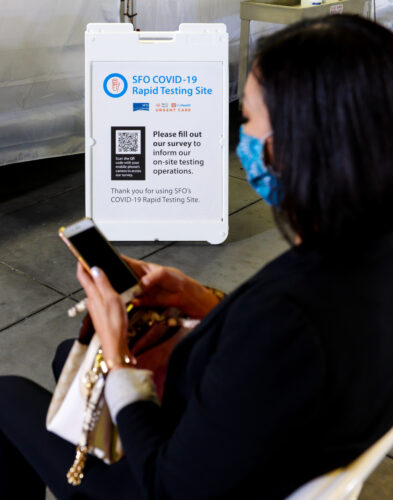
The test at SFO airport will be a rapid Abbott ID NOW COVID-19 testadministered by GoHealth Urgent Care and partner Dignity Health. Passengers can make an appointment at the testing site in the international terminal on the day of their flight. Testing site hours are 9 a.m. to 6 p.m. daily.
The cost is $250. Certainly not cheap. But results should be available in about 15 minutes.
The mail-in test option is less expensive – $80, plus shipping. Still not cheap. This test is offered by a company named Color. They recommend customers order the test kit at least 10 days before their trip so they can send in a sample at least 72 hours before they fly. Results are delivered via email or text.
COVID-19 Testing by Dog
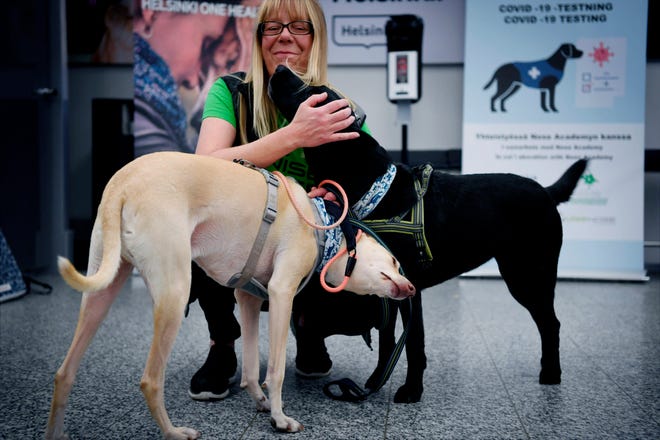
Meanwhile, Finland’s Helsinki Airport now has a team of specially-trained dogs on duty whose job it is to sniff out passengers who may be infected with COVID-19.
Tests conducted by University of Helsinki find that dogs can smell the COVID-19 virus with almost 100% certainty, according to a statement from the airport. The trained dogs can also identify the virus days before the symptoms have even started and from a much smaller sample than tests used by other methods.
“The difference is massive, as a dog only needs 10-100 molecules to identify the virus, whereas test equipment requires 18,000,000.”
Covid-19 dogs started their work today at the Helsinki Airport at arrival hall 2B. Dogs have been trained to detect the coronavirus from the test wipes given by the testperson. Service is voluntary and primarily targeted for passengers arriving from abroad. pic.twitter.com/ieMLm0KuZY
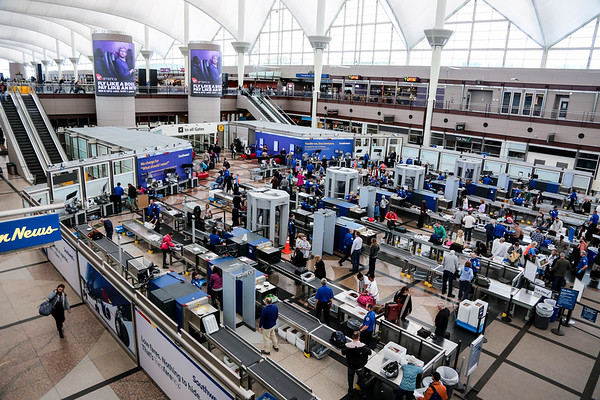
Have you been through an airport security checkpoint recently?
We have. And it has us worrying that as passenger numbers increase TSOs and travelers will too easily revert to the pre-COVID checkpoint mentality and not pay attention to social distancing and safety.
That’s why we’re not even waiting until Friday to declare the ‘Airport Amenity of the Week.’
We’re giving the nod to Denver International Airport (DEN), which is the first airport in the U.S. to begin using the VeriFLY app to let passengers reserve a checkpoint time and then travel to the gates in a reserved train car.
Here’s how it works:
Travelers download the VeriFLY app (only available for iPhone for now), create an account, and then reserve a time to through the checkpoint on their travel date. There’s a 15-minute show-up window and there are a limited number of reservations per hour.
Passengers must fill out a health survey within 24 hours of their flight. Then, on the day of their flight, they go to the designated VeriFLY lane at the south screening checkpoint at their reserved time.
A touch-less, electronic gate will scan the access code on the app. And temperatures will be taken before passengers move to either a standard or Precheck TSA screening lane.
Once through security, passengers using the VeriFLY system will travel to their respective concourses in a reserved train car. For social distancing, only 12 VeriFLY travelers will be allowed in the train car at a time.
Face masks/covering are, of course, required for all travelers.
We hope – and expect – more airports will begin using this system.