Aviation history

Sloths, speedways and fairways: before they were airports

I had way too much fun putting together this story – Sloths, speedways and grave sites: Before they were Airports – for my February At the Airport column on USA Today, which ran along with a slide show of these and other “before” photos.

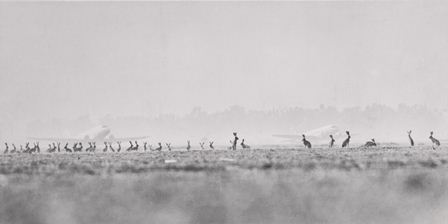
(Be sure to look for the photo of an early LAX – with rabbits.)

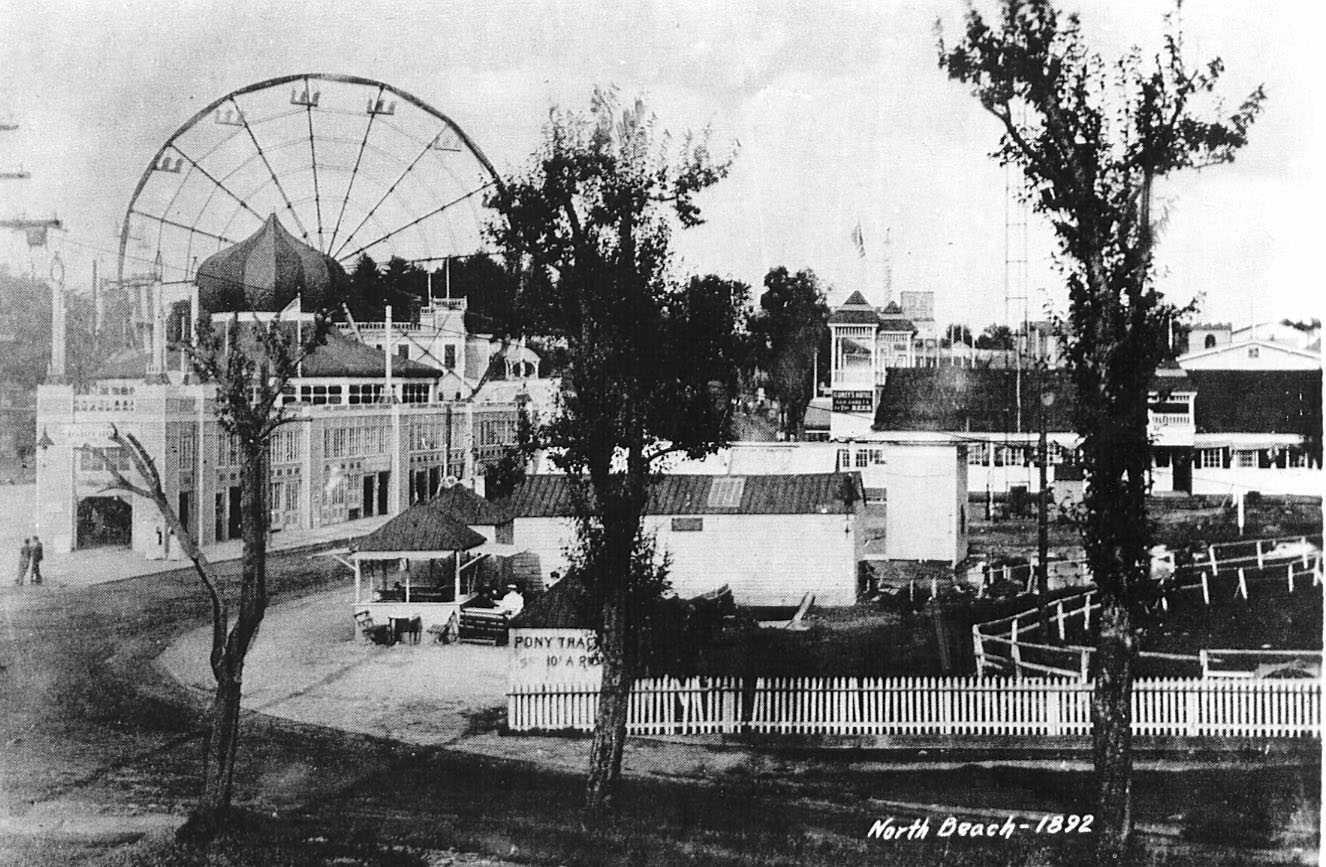
LGA 1892

La Guardia Airport was built on the former site of an amusement park, shown here in 1892.


Many of today’s airports stretch across vast tracts of acreage that don’t hold much interest for anyone but plane-spotters and aviation geeks. But before they housed commercial airports, some of these lands had colorful, non-aeronautical pasts.

Sloths, palm trees, farms and military bases

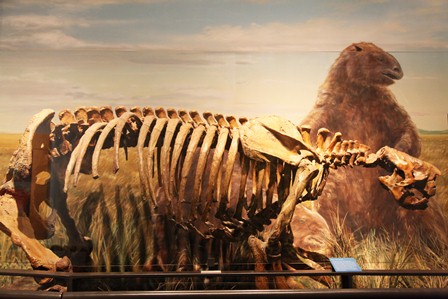
Sloth at Sea-Tac

Skeleton of giant sloth found at Sea-Tac Int’l Airport. Courtesy of the Burke Museum


Going way back to the last ice age, there’s evidence that large creatures roamed the land now occupied by Seattle-Tacoma International Airport.

In February, 1961 a construction crew working in a bog along an airport runway discovered the bones of a 12-foot long sloth, or Megalonyx, that was determined to be more than 12,500 years old. Only the sloth’s skull and some neck and limb bones were missing, so with casts taken from another Megalonyx specimen, a complete Sea-Tac sloth skeleton was created and remains on display at Seattle’s Burke Museum.

In 1992, workers digging up earth to make way for Concourse B at Denver International Airport came across fossils of palm leaves, indicating that long before the area became a prairie, it had a subtropical climate.

“In the historical timeline, the prairie where Denver International Airport was built was most recently farmland,” said airport spokesperson Laura Coale. “Some original homesteading families still cultivated winter wheat, sunflowers and other crops,” and today some airport-owned land is still used for farming.

Many other airports, including Fresno Yosemite, Dulles and Miami International Airports sprouted on undeveloped agricultural or scrub land. Some, like San Jose International Airport, which was built on a former onion field and Los Angeles International Airport (former bean fields), grew up on land that had already been used for farming.

Jack rabbits at the end of the runway at LAX, with 2 DC-3 airplanes in the background.

“Farmland was ideal for airports because the land had already been tilled and cleared of trees and, in the very early days of aviation, you didn’t need such a long runway to take off,” said F. Robert Van Der Linden, chair of the aeronautics department of the National Air and Space Museum at the Smithsonian Institution.

World War II also paved the way for Orlando International and many other modern-day airports. “We covered the country in airfields for military training purposes,” said Van Der Linden, and many of those airfields were later turned over to local governments, which transformed them into commercial airports.

Race tracks and a river

Washington Reagan National Airport “was constructed on landfill” and near the former site of Abingdon, a colonial plantation, said Rob Yingling, Metropolitan Washington Airports Authority spokesperson. “But before it was an airport, it was the Potomac River.”

Several airports have links to former speedways:

What is now Minneapolis-St. Paul International Airport was built on the site of an auto race track called Snelling Speedway. “The airport was initially known as Speedway Field in reference to its auto racing history,” said airport spokesperson Patrick Hogan, “and in early photos you can still see the oval outlines of the former auto raceway surrounding the airport.”

The history of Hartsfield-Jackson Atlanta International Airport reaches back to at least 1925, when the mayor signed a lease committing to the city to developing an airfield on an abandoned auto racetrack. “The infield of the old racetrack had been used as a landing site for many years prior to 1925,” notes the ATL website.

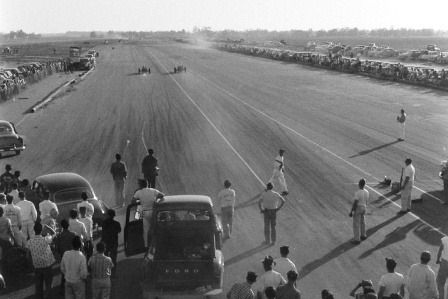
Drag Racing at what is now John Wayne Airport

Drag racing at what is now John Wayne Airport


California’s Orange County Airport, now known as John Wayne Airport (SNA), has its roots in a private landing strip established in the 1920s by aviation pioneer Eddie Martin. But each Sunday from 1950 to 1959 the airport runway doubled as a speedway for the Santa Ana Drag Races.

Golf courses give way to airports

Named for the World War I aviator who started a flying service Fort Lauderdale in the 1920s, the Merle L. Fogg Airport – later Fort Lauderdale-Hollywood International Airport – opened in 1929 on the site of a municipal golf course that had closed a year earlier. The history section of the FLL website notes that, “only a minimal amount of work was needed to convert it into an airport. Trees and bushes were cleared from the perimeter of the course and its bunkers were leveled. Its unpaved runways were the former fairways suitable for the planes of the day.”

Norfolk International Airport (ORF), which is celebrating its 75th anniversary this year, moved in 1938 to the former Truxton Manor golf course. The airports first terminal building “had either been the pro shop or the caddy shack at the golf course,” said Charles Braden, director of market development for the Norfolk Airport Authority.

Until 1929, there was an amusement park on the land that ultimately became New York’s LaGuardia Airport and in 1942 New York City turned Idlewild Golf Course into Idlewild Airport, which was renamed John F. Kennedy Airport in 1963.

Gone but not forgotten

Savannah graves_small

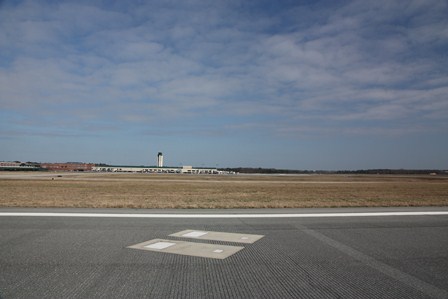
And then there’s Savannah/Hilton Head International Airport, where pilots and passengers are sometimes alarmed when they spot grave markers alongside the runway.

In the 1970s, the graves of some Dotson family members who had been buried in the late 1800s in a remote, private clearing in the woods ended up in the path of a planned airport runway expansion.

The wooden caskets and their contents had rotted away a long time ago and only the grave markers remained. “The airport had power of eminent domain [to take the land and move the markers], but there could have been a court battle,” said Patrick Graham, the executive director of the Savannah airport commission.

Instead the airport and the Dotson family descendants agreed that the grave markers for Richard and Catherine Dotson would be surveyed, removed during runway construction, and placed back in their original spots when the work was done.

Luckily, that those spots are on the side and not right in the center of the runway. “Planes aren’t rolling over them,” said Graham, but passengers and pilots can see them when a plane taxis by.

“We are probably the only airport with gravesites that close to the runway,” said Graham. “But it is in keeping with and respectful of the family’s wishes.”

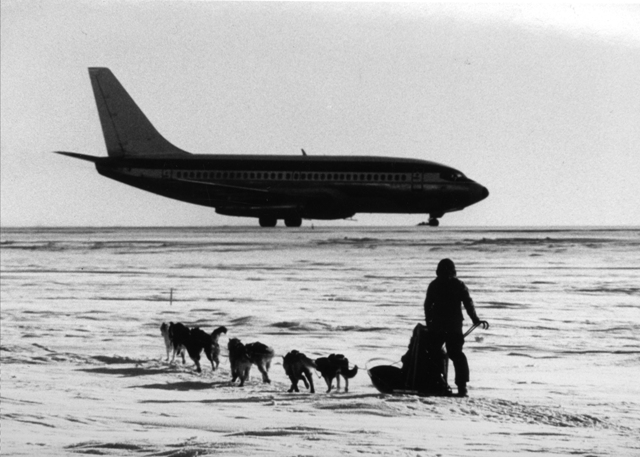
In Alaska: goodbye sled dogs; hello airplanes.

Alaska Aviation

Undated winter view of Wien Alaska Airlines airplane with musher and dog team in foreground. Image credit: Wien Collection/Anchorage Museum


One hundred years after the first powered flight in Alaska, the Anchorage Museum on Saturday opens a major exhibition celebrating the rich and remarkable stamp aviation has had on the Frontier State.

That history began as a spectacle. In 1913, several Fairbanks merchants got together to ship a biplane from Seattle to Alaska by steamboat. They then sold tickets so onlookers could watch two barnstormers fly the plane 200 feet above the ground at a lazy 45 mph.

Ten years after that first powered flight in Alaska, Anchorage officials declared a holiday so people could come out and help clear land for the city’s first airstrip.

“In the early days, Alaska was a very inaccessible, remote place, with very few roads and some dog sled trails crisscrossing the territory,” aviation historian Ted Spencer told NBC News. “With airplanes, though, mail could be delivered in hours rather than weeks. Remote village and towns could be connected. Life changed incredibly.”

The exhibit, Arctic Flight: A Century of Alaska Aviation, showcases photographs and artifacts — including leather and fur-lined outfits worn by bush pilots and the tires and handmade skis inventive pilots attached to bush planes to allow them to land on glaciers and frozen lakes.

Even empty fuel cans, fabric, crates and other flight-related items intentionally or unintentionally left behind had an impact in remote places. “Those items were used to make furniture, clothing and household objects that are still around,” said Julie Decker, the museum’s chief curator. “In Alaska, people are very practical.”

Bush pilots became heroes in small towns and villages, Decker said. “They were a connection to the outside world and they could deliver things to places where things could never get delivered before,” she said.

BIPLANE

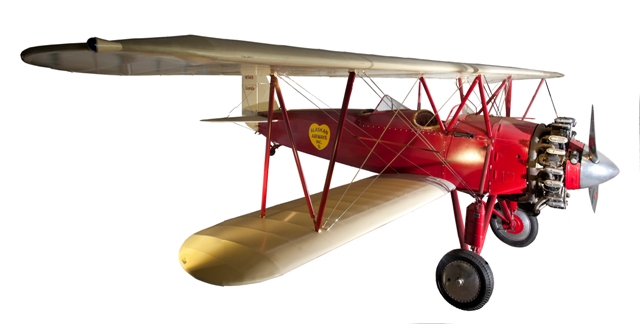
This Stearman C2B biplane was flown by several legendary Alaska bush pilots including Joe Crosson, the first pilot to land on Mount McKinley, and Noel Wien, founder of the state’s first airline. Image credit: Eric Long/Smithsonian National Air and Space Museum


Pilots were also real-life Alaskan characters that had to be skilled in the air and on the ground. “They needed to be able to not only fly the planes, but fix them. And they needed to be able to survive in the cold and in the wilderness,” said Decker. “Imagine how tough and hearty they had to be in the early days of flying when the planes had open cockpits and it was 40 degrees below zero – on the ground.”

Other artifacts on exhibit include a Stearman C2B biplane flown by several legendary bush pilots, ephemera and memorabilia from a variety of former Alaska-based commercial airlines, a 1927 film clip from the first airplane to fly over the North Pole, and bits of airplane crash wreckage, including pieces from the 1935 crash that killed famed aviator Wiley Post and entertainer-humorist Will Rogers near Barrow, Alaska.

And while improvements in technology have made flying much safer than it was when that biplane first came to Alaska, Decker says “weather trumps all” and that flying small or large planes in Alaska can still present a formidable challenge.

“The state is just so huge, with all sorts of water formations, vast and rugged landscapes and extreme, unpredictable weather. Even with modern airplanes, GPS and radio communications, there are still crashes and planes still occasionally disappear,” Spencer said.

“Alaska is still a dangerous place to fly.”

My story: Goodbye sled dogs, hello airplanes. Alaska marks 100 years of aviation history first appeared on NBC News.com Travel.


“Tales of an Unknown Aviator” at Portland Int’l Airport

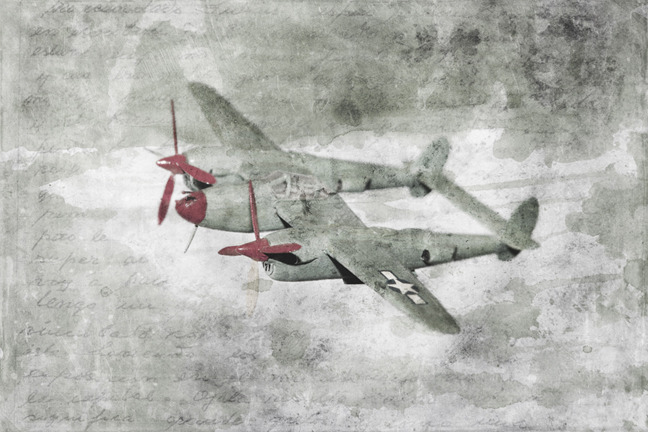
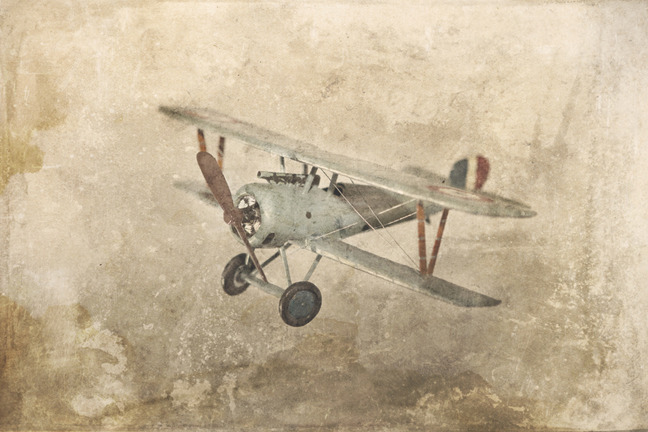
An exhibition of “Tales of an Unknown Aviator,” a photo series by Julian Hibbard and Demetrious Noble, is now at Portland International Airport.

The photos are of a series of model planes made to look both life-like and model-like, constructed by Chilean artist Luis Greenhill using recycled materials, including historic photographs and vintage encyclopedia sets, photographed by Hibbard and digitized by Noble.

The project documents a collection of palm-sized French, Italian, Polish, Japanese, German, Russian, English and American model planes from the World War I & II (1914 – 1945) originally made by an elderly man in Southern Chile.

“Like objects glimpsed in a dream, the model planes have been photographed and then digitally treated in away that further blurs the line between fact and fiction. Seen as a whole, the project speaks of time, nostalgia, memory, simulacra, repetition, intervention, layering, courage, loss, sacrifice and the nature of conflict,” is the way the project is described on Demetrious Noble’s website, which displays 20 of the images.


If you can, go see this special photo series at Portland International Airport in the Concourse Connector before the end of June 2013. In the meantime, see them online.

(Images by Demestrious Noble)

Airport exhibit celebrates history of Miami aviation

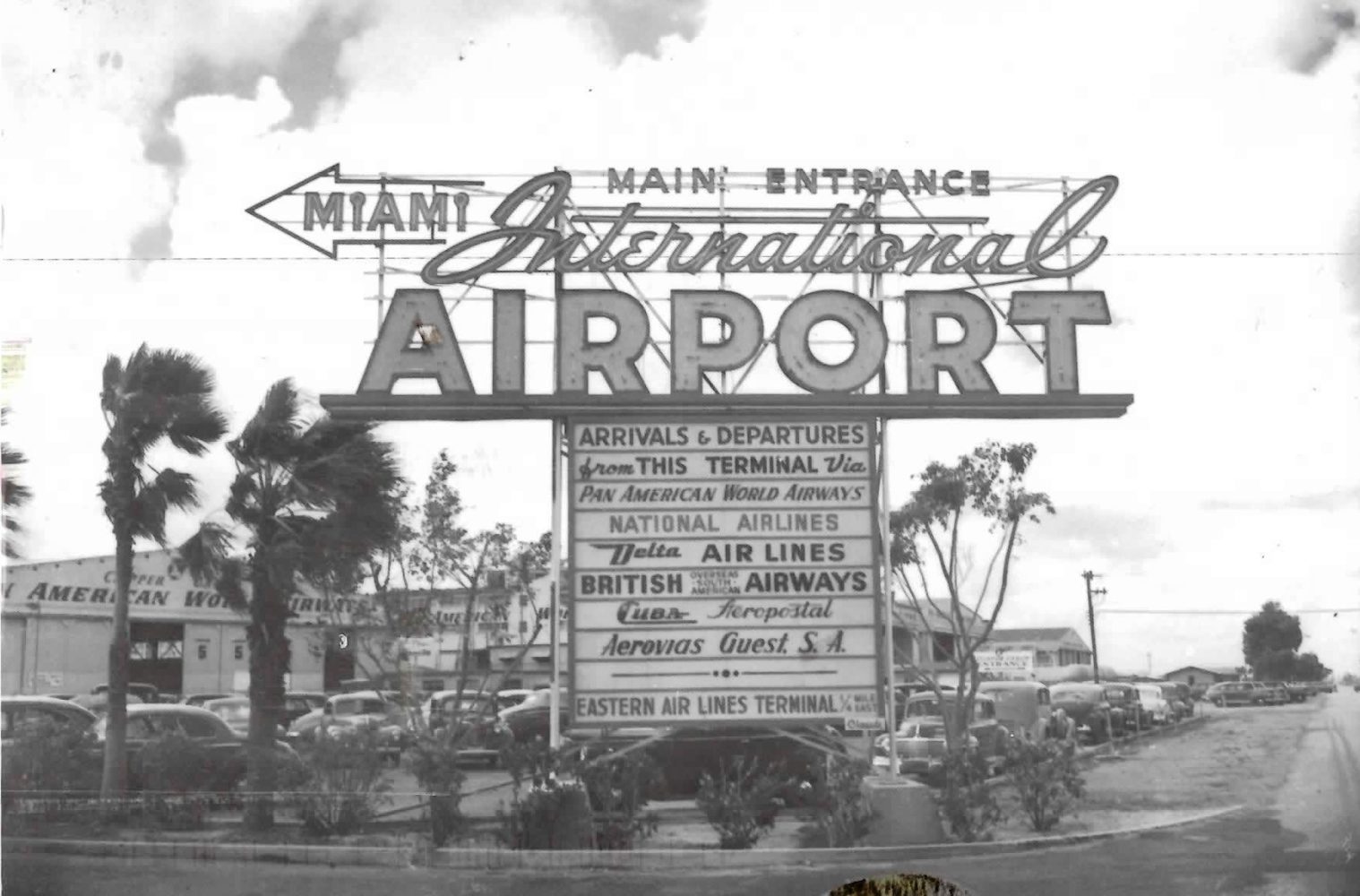
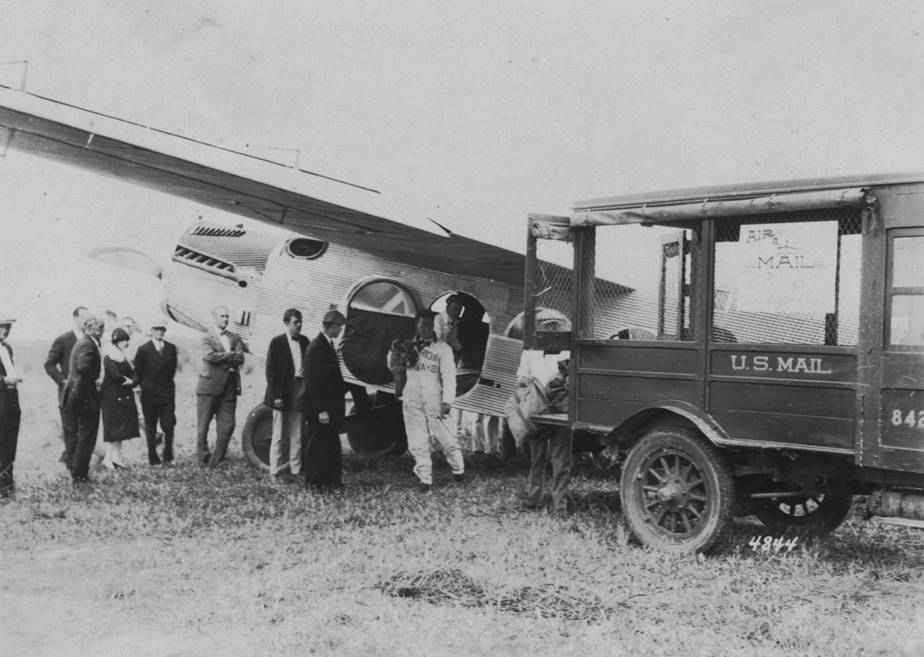
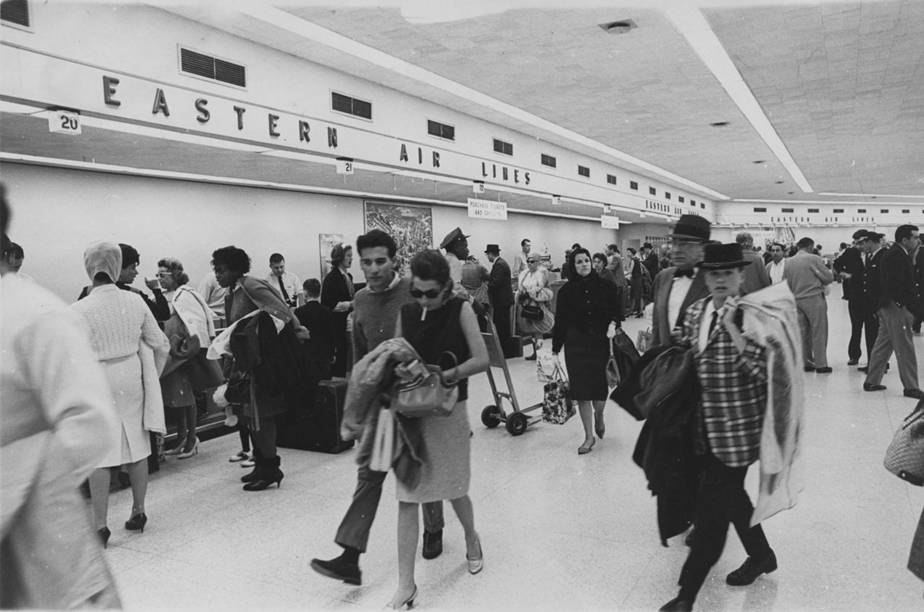
Aviation in Miami: The First 100 Years

A photography exhibit at Miami International Airport (MIA) celebrates one hundred years of flight in Miami, from the first flight in 1911 to the airport’s current status as the second busiest passenger airport in the United States.

The exhibit is in the Central Terminal, Concourse E, just past the security checkpoint.

All photos courtesy History Miami

The Beatles and JFK Airport

(Re-posting 2/7/12)

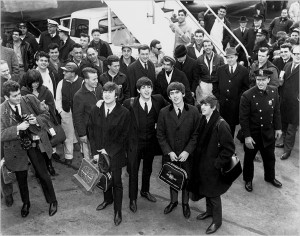
Thanks to ThisDayin History.com for the reminder that on this day, February 7, back in 1964, Pan Am Yankee Clipper flight 101 from London Heathrow landed at New York’s John F. Kennedy International Airport with its special cargo of Beatles.

According to History.com:

It was the first visit to the United States by the Beatles, a British rock-and-roll quartet that had just scored its first No. 1 U.S. hit six days before with “I Want to Hold Your Hand.” At Kennedy, the “Fab Four”–dressed in mod suits and sporting their trademark pudding bowl haircuts–were greeted by 3,000 screaming fans who caused a near riot when the boys stepped off their plane and onto American soil.

Here’s a great video using clips from that day:

Two days after their arrival at JFK, the Beatles made their first appearance on the Ed Sullivan Show.

The Flying Winnebago

The Heli-home

Last June the RV industry celebrated its 100 anniversary and, for a story about the history of the RV industry that appeared on msnbc.com Travel, I visited the Recreational Vehicle/Manufactured Home Hall of Fame and Museum in Elkhart, Indiana.

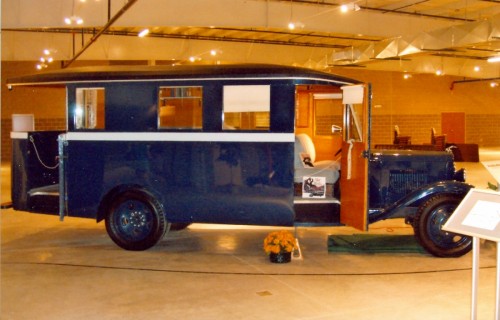
The museum displays the ‘house car’ Paramount Studios provided for movie star Mae West, a homemade motor home based on a 1976 Cadillac Eldorado, a variety of first production units and pristine versions of popular models such as the 1954 15-foot Shasta travel trailer described as a being typical of the “canned-ham” style trailers of the 1950s.

Mae West's 1931 'house car'

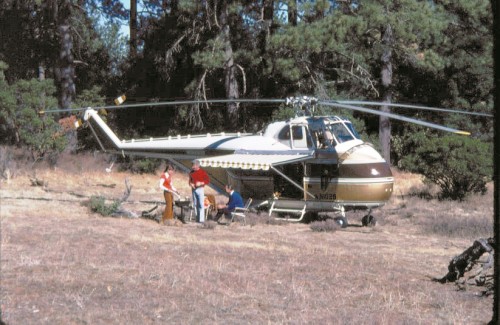
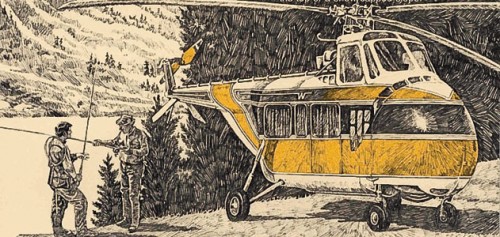
Not on display at the museum, but shown in a photograph there, was a flying camper called a ‘heli-home,’ which I described in a post here on StuckatTheAirport.com.

James R. Chiles contacted me to let me know he was working on a story about that Flying Winnebago for Air&Space/Smithsonian and, now that the story is published, he’s sent a link.

More a novelty than a mass-produced vehicle, Chiles reports that the Winnebago company built perhaps seven Heli-Homes or Heli-Campers. They “… could sleep six passengers, and had an electric range, sink, fridge, couches, eight-track tape deck, television, generator, twin water heaters, parquet-topped dinette tables, mini-bar, air conditioner, furnace, shower, and bathroom with holding tanks.”

And, of course, they could fly.

Don’t you want one? I do!

Here’s a link to the Flying Winnebago story by James R. Chiles.

Souvenir Sunday: Chicks fly in Sacramento

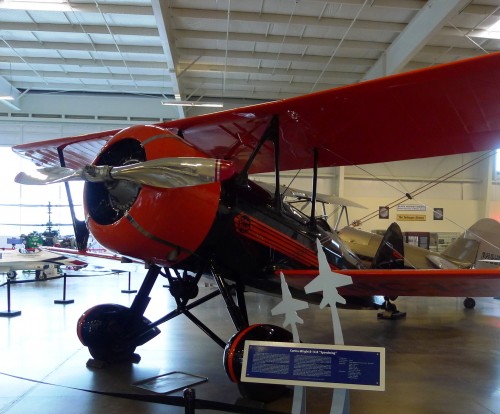
The Aerospace Museum of California, in Sacramento, has some might impressive airplanes on exhibit. Among them, this Curtiss-Wright Model B-14-B Speedwing, which once belonged to the president of the Curtiss-Wright Aeroplane Company.

I saw this and a few dozen other aviation treasures during a recent tour of the museum and spent some time in the gift shop in search of items to share with you for souvenir Sunday.

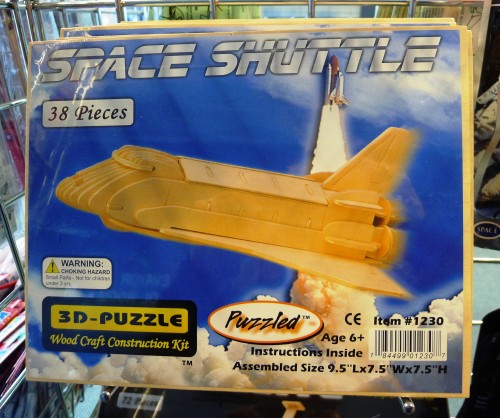
I liked this 38-piece 3-D Space Shuttle puzzle –

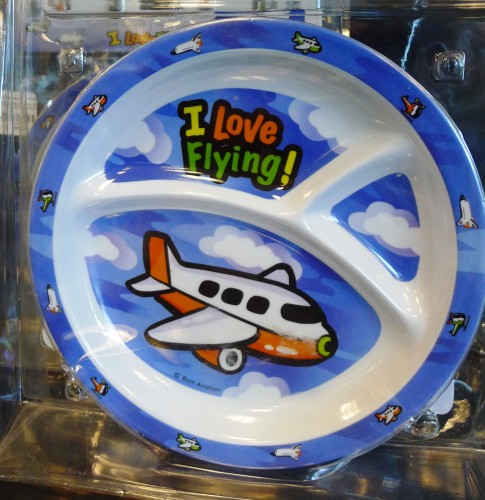
And this cute plate –

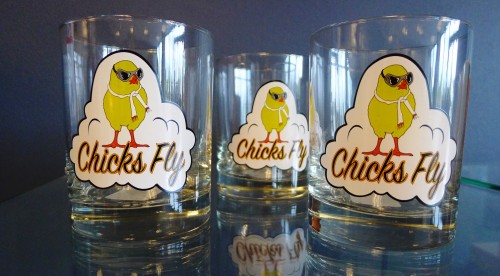
But my favorite items in the gift shop were these glasses celebrating the fact that Chicks Fly.

Travel: Does the “Pan Am” TV version reflect real life?

If you watched the Sunday night premiere of “Pan Am,” you might be wondering if the idyllic version of 1960s air travel matches the reality of those who worked for the iconic airline.

Msnbc.com’s Overhead Bin wondered, too. So I asked two former Pan Am flight attendants to watch the show and tell me if their experiences were anything like those portrayed on-screen.


Bronwen Roberts in a 1958 Pan Am graduation photo.

Bronwen Roberts was hired at Pan Am in 1958 shortly after graduating England’s University of Leeds with a degree in French. She flew until 1989 and kept in a scrapbook the advertisement listing the 15 qualifications required of flight attendant applicants. “You had to have a pleasant personality and speaking voice, excellent health and you had to be single,” said Roberts. “Really single. Not widowed, divorced or separated.”

A weight between 110 and 135 pounds was another qualification. Roberts said the pre-flight weigh-ins and grooming inspections depicted on the show were true-to-life.

“When you checked in for a flight you’d go into the office and there’d be a grooming supervisor on duty all the time,” said Roberts. “She could say, ‘Your hair is too long’ or ‘You are overweight’ and send you home until you fixed it. Just like the TV show, you could get grounded for uniform violations.”

Helen Davey also found the on-screen grooming checks familiar. Now a psychotherapist in Los Angeles, she was hired as a Pan Am flight attendant in 1965 at age 21 and flew until 1986.


Helen Davey in an undated photo from her days as a Pan Am flight attendant.

“Yes, we had to wear girdles,” said Davey. “And if you were one minute late for a trip, they’d send you home.”

In the first episode, a child is escorted into the cockpit mid-flight to visit the pilots. Passengers are also offered ashtrays so they can smoke. Roberts and Davey both said that those in-flight activities were once very common.

“We definitely took children into the cockpit so they could sit in the pilot’s seat,” said Roberts. “And in terms of smoking, we’d have little packets of cigarettes and matches that we’d go around with.”

“Even flight attendants could smoke,” added Davey. “But when they did, they had to be sitting down.”

In the episode (spoiler alert), two of the flight attendants are shown doing work for the CIA. If this seems like the least plausible story line, Roberts and Davey both said it was realistic.

“That is definitely a true story,” said Roberts, who during her tenure heard rumors that at least one flight attendant was involved with the CIA. “At one point she just disappeared. No one knew what happened to her.”

In fact, Nancy Hult Ganis, an executive producer for the show and a former Pan Am flight attendant, told wired.com that her research turned up stories about the airline’s involvement with State Department operations on behind-the-scene missions in dangerous locations.

The TV program also shows flight attendants with plenty of time to chit-chat, and at least one crew member involved in an off-duty affair with a passenger.

“Some of those flights were quite long – 15 or 20 hours – and there were fewer people, so you could get to know them,” said Roberts. “People weren’t glued to their laptops like they are now. And some people did end up marrying passengers they met on flights.”

Roberts and Davey had only a few quibbles with the first episode. Both said their uniforms were a warmer, more subdued shade of blue than those worn by the TV actresses and that flight attendants in their day would never be allowed to have hair touching their shoulders.

But there’s one moment that Davey said was spot on. “I liked the scene when they were ready for take-off and one flight attendant says to the new hire, ‘Buckle up. Adventure calls.’ That’s how it was. We all thought we had lucked into the best job into the world.”