Animals

A monkey, a missed meal and guns

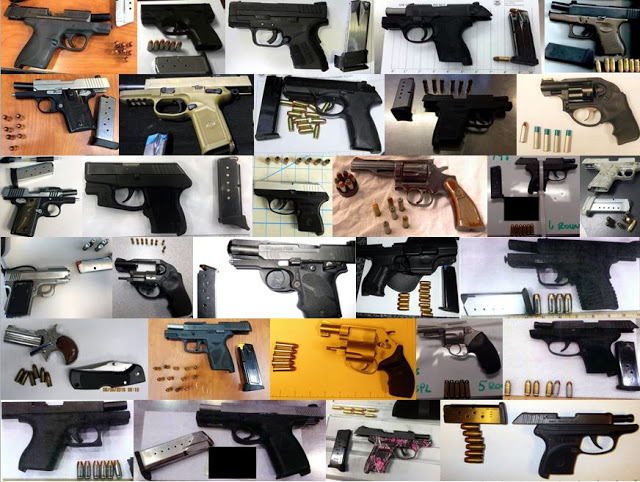
Some of the guns found at airport checkpoints Aug 5-11

I’m on fill-in duty this week on the Today in the Sky blog over at USA TODAY and having fun working up a variety of both serious and off-beat stories relating to airports and airlines.

Monday’s line-up:

An update on the “monkey on a plane” story that was all over the news last week;

A story about British Airways replacing a second meal service with tiny chocolate bars and other small snacks on some longhaul flights between London and the east coast;

And a look at the new record set by TSA for most firearms found at airport checkpoints in one week.

Wild animals at airports

I’ve been collecting photos to go with a slideshow that will go alongside an article about airports and national parks  and wild animals keep popping up.

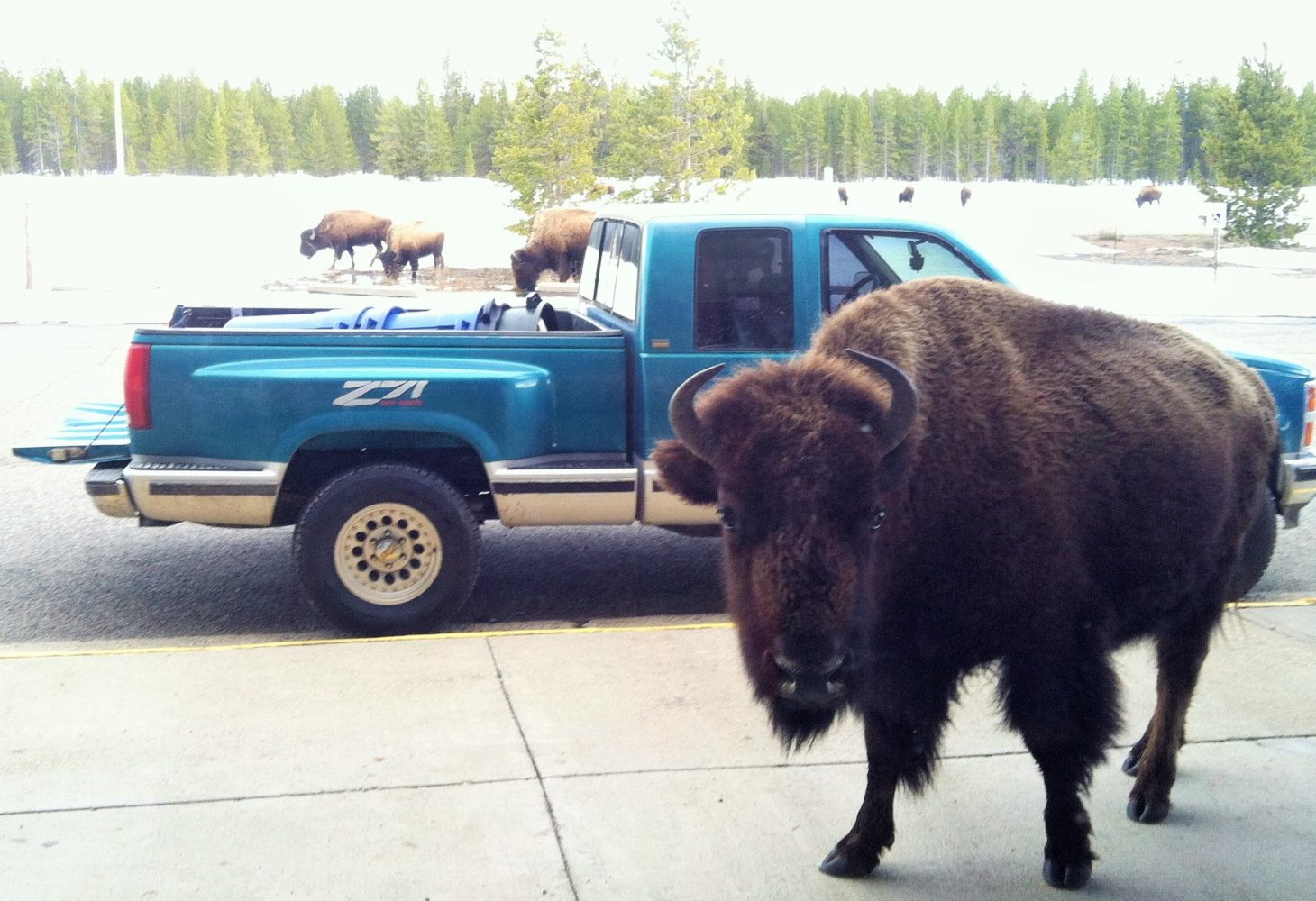
This one was snapped just outside the terminal doors at Yellowstone Airport (WYS) in West Yellowstone, Montana, by airport manager Jeff Kadlec one night as he was trying to leave work.

Yellowstone Bison

And this one of a moose outside the baggage claim doors at Jackson Hole Airport (JAC) in Jackson, Wyoming was taken by airport employee Philip Bollman.

Baggage Moose_Bozeman

The full story about airports near National Parks – and the slideshow that also includes Mountain Cougar and goats in airports – will be my next At the Airport column on USA TODAY.  I’ll let you know when it posts.


Travel Tidbits: burros & bitcoins

I’ve had the honor of filling in for the vacationing Ben Mutzabaugh at USA TODAY’s Today in the Sky section the past few days.

Here are just two of the 18 stories I posted in his space over five days.

Animals on Duty at Chicago’s O’Hare Airport

OHARE -baby burro

This baby burro – named “Butch” in honor of O’Hare Airport’s namesake, U.S. Navy Medal of Honor recipient Edward “Butch” O’Hare – is part of a herd of rescued animals that include sheep, goats, more burros, llama and alpacas eating their way through hard-to-access, unwanted vegetation on airport land this summer. The crew got a visit from the new airport commissioner.

LOT Polish Airlines_ Image_ akopec_b787

LOT Polish Airlines has joined the small but growing list of airlines and travel companies that allow customers to pay for their tickets with bitcoins. Soon this won’t even be news.

Falcons fly in style on many airlines

Falcom Master

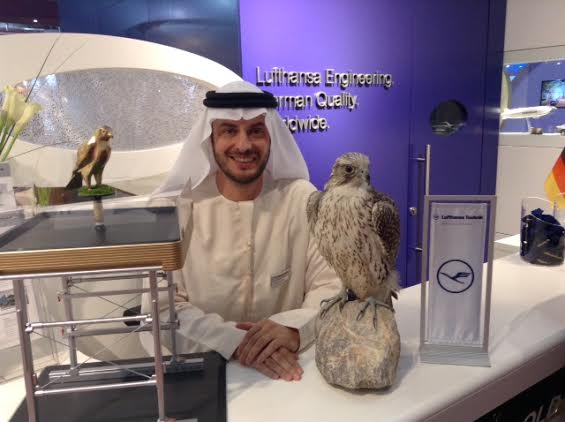
The ancient sport of falconry is so popular in the Middle East that many commercial airlines in that region allow passengers to bring trained hunting raptors into the main cabin, where the birds travel on a handler’s heavy cuff or tied to an adjacent seat.

“If falconers tried that in the states, people would get all worked up about it,” Scott McNeff, vice-president of the North American Falconers Association, “But in the Middle East its part of their culture. Everyone understands that and is around it all the time.”

Etihad Airways, Emiratesand Qatar Airways post falcon policies on their websites, as does Royal Jordanian Airlines, which allows up to 15 properly hooded falcons to travel in wide-bodied economy cabins at a per-bird charge of three times the normal excess baggage rate.

Fans of falconry with private aircraft will soon have a more convenient way to transport their birds.

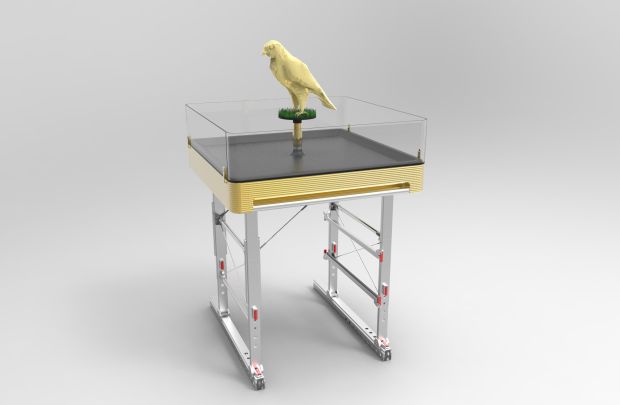
With input from falcon specialists, the Executive Jet Solutions division of Hamburg-based Lufthansa Technik designed the “Falcon Master,” an easy-to-assemble and disassemble kit that connects to standard aircraft seat tracks and provides both a stable bird perch and stainless steel surfaces that can help “maximize sanitary protection of walls, seats and carpets against dirt produced by the birds,” according to a company statement.

A prototype of the product for private jet interiors is currently on display in Dubai, said Ziad al Hasmi from Lufthansa Technik, “and theoretically, it could also be installed in commercial aircraft in the future.”

Falcon Master - courtesy Lufthansa Technik

The price? Depending on the market response and final design, the Falcon Master could sell for about 50,000 EUR, or about $61,760, and be available in the second half of 2015.

“The target market is private and VIP Jet owners especially from the Mid East, who own these precious birds and use them for hunting,” said Lufthansa Technik spokesperson Peter Isendahl of Lufthansa Technik AG.

U.S. airlines don’t allow falcons in the cabins, so Scott McNeff and his fellow falconers usually drive their birds to events and meetings in other regions. “I’d be content to sit on a plane with my bird on my fist,” said McNeff. “But it would be really nice to have perch on a plane where you can put the bird down, go to sleep and not worry.”

(My story on falcons on airplanes first appreared on TODAY.com)

Southwest Air & others urged to cut SeaWorld ties

SHAMU

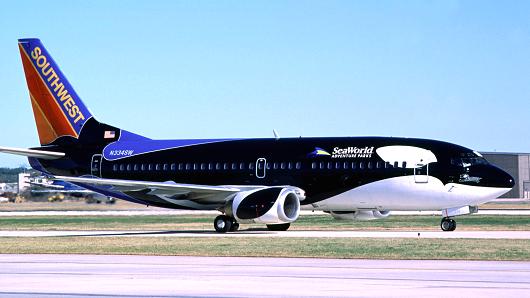
Shamu-themed plane. Courtesy Southwest Airlines


The documentary film “Blackfish” has created a wave of controversy over claims of animal cruelty for SeaWorld Entertainment’s chain of marine animal theme parks. Amid calls for boycotts, performers such as Willie Nelson and Trisha Yearwood are refusing to play concerts at SeaWorld venues, but some of the company’s marketing partners, such as Southwest Airlines said that, for now, no changes are planned.

Southwest is “in a listening and education mode,” airline spokeswoman Marilee McInnis said last week in blog post responding to the delivery of a Change.org petition with 27,000 signatures urging the airline to break ties with SeaWorld. For now, “our partnership with SeaWorld will continue,” she said.

SeaWorld and Southwest have worked together since 1988 in what McInnis told CNBC is a “mutually beneficial partnership” that “is based on travel and bringing families together.”

Co-branded programs include vacation packages and several Boeing 737 specialty jets painted with images of marine park animals. Two planes, Shamu Two and Shamu Three (Shamu One has been retired), feature images of Sea World’s performing orcas. A huddle of gentoo penguins are painted on the newest themed plane, Penguin One.

Southwest Airlines isn’t the only corporate entity being pressured to sever ties with SeaWorld. On Change.org alone, there are more than two dozen “Blackfish”-inspired petitions, including one asking Toys R Us to stop selling a SeaWorld-themed Barbie and another asking Groupon to stop featuring discounted SeaWorld deals.

The “Blackfish” documentary by filmmaker Gabriela Cowperthwaite examines the history of killer whales in captivity and, in particular, the story of Tilikum, a captive orca that has been associated with the death of several people, including of a trainer in 2010 at SeaWorld Orlando in Florida. Petitioners have called for the release of Tilikum and changes to the way in which SeaWorld treats animals in its theme parks.

“These campaigns against our partners are generally orchestrated by animal rights organizations whose views are extreme and entirely out of step with U.S. public opinion,” said SeaWorld spokesman Fred Jacobs, who calls them a form of “digital harassment.”

“We do not have any plans at this time to remove the Barbie I Can Be SeaWorld line from our stores,” said Kathleen Waugh, vice president of corporate communications for Toys R Us. Groupon declined to comment for this story.

SeaWorld defends its practices and, in a variety of public statements, accuses the “Blackfish” film producers of painting “a distorted picture that withholds from viewers key facts about SeaWorld—among them, that SeaWorld is one of the world’s most respected zoological institutions, that SeaWorld rescues, rehabilitates and returns to the wild hundreds of wild animals every year and that SeaWorld commits millions of dollars annually to conservation and scientific research.”

Still, citing the “Blackfish” documentary and petitions signed by fans, performers such as Martina McBride, 38 Special, REO Speedwagon, Cheap Trick, Trisha Yearwood, Heart and Willie Nelson have canceled their events at SeaWorld venues.

“I understand there are petitions going around with thousands of people’s names on it, so I had to cancel,” Nelson said in a CNN interview. “Also, I don’t agree with the way they treat their animals, so it wasn’t that hard a deal for me to cancel.”

For other performers and companies being urged to cut ties with SeaWorld, the decision may not be as easy, said Shailendra Jain, chair of the department of marketing and international business at the Foster School of Business at the University of Washington in Seattle.

Some may choose to encourage dialog “to get to the bottom of the matter,” said Jain. Others may need to “examine analytically the costs and benefits of discontinuing SeaWorld as a co-brand,” staying with them for the long run or, in the short run, adopting a “wait and watch stand—as Southwest is doing,” he said.

Meanwhile, the “Blackfish” film controversy doesn’t seem to be having a negative effect on SeaWorld’s bottom line.

On Monday the company, which operates 11 theme parks in locations including San Diego, Orlando and San Antonio, said it reported preliminary revenue for 2013 of about $1.46 billion. That would represent a record revenue year for SeaWorld Entertainment, which is celebrating its 50th anniversary this year.

For its peak summer quarter, which ended Sept. 30, the parks hosted 8.9 million customers who paid an average $38.38 for admission and an additional $22.36 on food, merchandise and other items, according to the financial filing.

SeaWorldEntertainment held its initial public offering in April and is majority owned by 10 limited partnerships owned by affiliates of The Blackstone Group and co-investors.

(My story about Southwest Airlines and others being urged to sever ties with SeaWorld first appeared on CNBC Road Warrior.)


Houston Airport’s little pony

Houston pony

Horseback riding at an airport?

You bet!

Houston’s Bush Intercontinental Airport (IAH) has a volunteer mounted security patrol – the Airport Rangers – made up of people who ride their horses along the perimeter of the 13,000 acre airport.

It’s a great win-win arrangement: in return for helping to monitor all that airport land, the horses and their owners have access to lots of wooded trails and open space.

Right now, the airport is having a contest to find a good name for a colt born into the Airport Ranger family.

The contest runs through Friday, March 1. Contestants are being asked to suggest a great name for the pony and to guess what kind of horse she is.

The prize: a chance to meet the pony, ride with the Airport Rangers and Mayor Annise Parker and an invitation to a Texas barbecue.

Details on entering are here:

Hungry sheep show up at Atlanta Airport

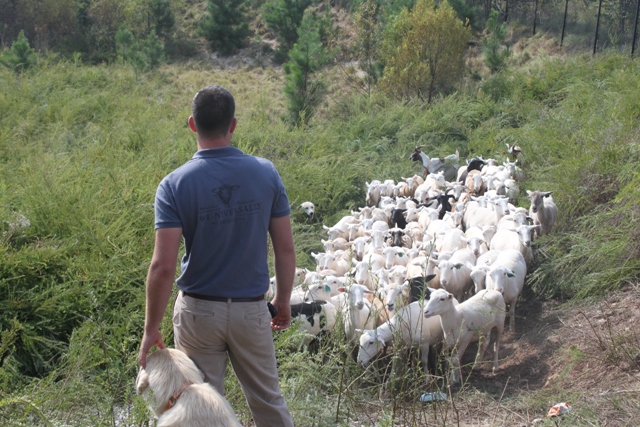
Sheepherder and sheep at ATL Airport. Courtesy ATL airport

Goats do it in San Francisco. Now sheep are doing it in Atlanta.

As part of a pilot project, 100 grazing sheep (plus a few goats) are hard at work this week eating invasive plants such as kudzu on property belonging to Hartsfield-Jackson Atlanta International Airport.

The sheep are hired from Ewe-niversally Green and are part of the “Have Ewe Herd?” program hosted by Trees Atlanta, a nonprofit group dedicated to planting and conserving trees.

Bethany Clark, a Trees Atlanta spokeswoman, said the airport had heard about their programs and asked to borrow the sheep for a week. “The airport will evaluate the effectiveness of the sheep, and we’ll go on from there,” she said.

Clark said that, while on duty, the sheep are protected by an electric fence and have both shepherd dogs to keep them corralled and guard dogs to protect them from predators such as coyotes. There’s also a human shepherd who checks on the sheep a couple of times each day.

Goats from Goats R Us have been munching weeds at San Francisco International Airport for at least eight summers. “They are hired help and used seasonally in an area that is home to two threatened species: the San Francisco garter snake and the red-legged frog,” said Michael McCarron, SFO airport spokesman. “The goats are easier to use than heavy equipment and we expect them to be back next year.”

In 2008, Seattle-Tacoma International Airport hired a herd of goats (and three sheep) from Goat Trimmers to spend 12 days eating wild blackberry bushes, Scotch broom and other weeds around the airport.

They have not been invited back.

“One of our struggles with the goats is you have to protect any foliage you want to save,” said airport spokesman Perry Cooper. “If you have an open field it works great. But when you have areas and plants you want to save within that area, you still have to use staff to build protection barriers. For us it wasn’t the best solution.”

(My story about sheep at Atlanta Airport first appeared on NBC News Travel).

Jack the cat: alive, but not out of the woods yet.

I have to admit, I didn’t think this story would have a happy ending. But, today on msnbc.com’s Overhead Bin, I was pleased to be able to report that Jack the cat, at large at John F. Kennedy International Airport since escaping from his cage in the American Airlines baggage claim area two months ago, has been found.

The cat got loose in the airline baggage center at JFK on Aug. 25, after Karen Pasco checked Jack and another cat in as cargo. A day later, parts of the airport were shut down in preparation for Tropical Storm Irene.

Since then, more than 18,000 Facebook fans of Jack the Cat is Lost in AA Baggage at JFK have been following search efforts that have included at least two Jack the Cat Awareness days, a pet Amber Alert and the hiring of a pet detective.

“He was found when he fell through a ceiling tile at Terminal 8 and was discovered by Customs employees who turned him over to American Airlines,” said Pasco. “He’s in critical condition after being who knows where in the terminal for the last 2 months. He’s being administered fluids, has low blood pressure and is dealing with the effects of prolonged malnutrition. While the prognosis is good overall, he’s not out of the woods yet.”

American Airlines announced the news that Jack had been found on Facebook:

“American Airlines is happy to announce that Jack the Cat has been found safe and well at JFK airport. American’s team of airport employees have been focused on the search effort since Jack escaped on August 25, 2011. Jack was found in the customs room and was immediately taken by team members to a local veterinarian. The vet has advised that Jack is doing well at present.”

Pascoe is in California, but Bonnie Folz, a New York-based search coordinator, saw Jack shortly after he was found. “It was great to know it’s him and to know he’s safe,” she said. “He looked fabulous to me. His eyes are big and beautiful and bright, although he’s lost some weight and he needs some grooming. He’s on IV and is having some tests to make sure he’s OK.”

American Airlines said once Jack is ready to travel, the airline will fly him to California to be reunited with his owner.

In a report of the incident filed with the Department of Transportation and included in the Air Travel Consumer Report issued this month, American Airlines reported that, “The clerk responsible for transporting the kennels to the FIS area loaded one kennel on top of another, and while the kennels were stationary and waiting to be loaded on the aircraft, the kennel positioned on the top fell to the ground. The impact of the fall caused the kennel to separate and the cat escaped.”