TSA

TSA’s 2015 gun tally

For the Runway Girl Network, I put together a year-end review of the guns, weapons and assorted odd items discovered by TSA at airport checkpoints during 2015.

TSA GUN

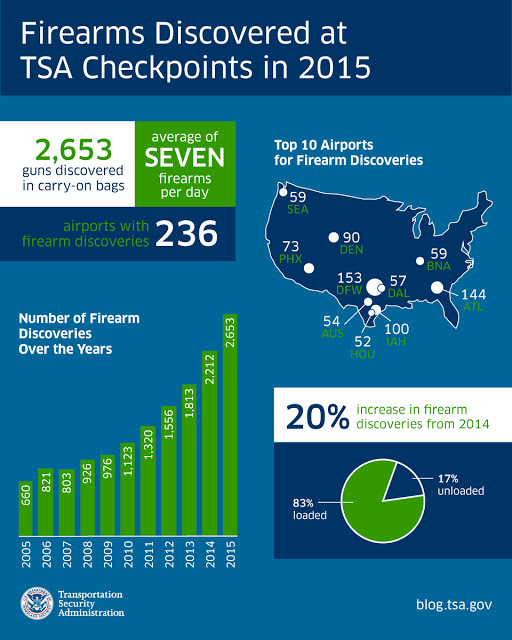
In 2014, the TSA reported that it had discovered 2,122 firearms in the carry-on bags of passengers. That was an average of six firearms per day and was a 22 percent increase over the number of firearms (1,813) found in 2013.

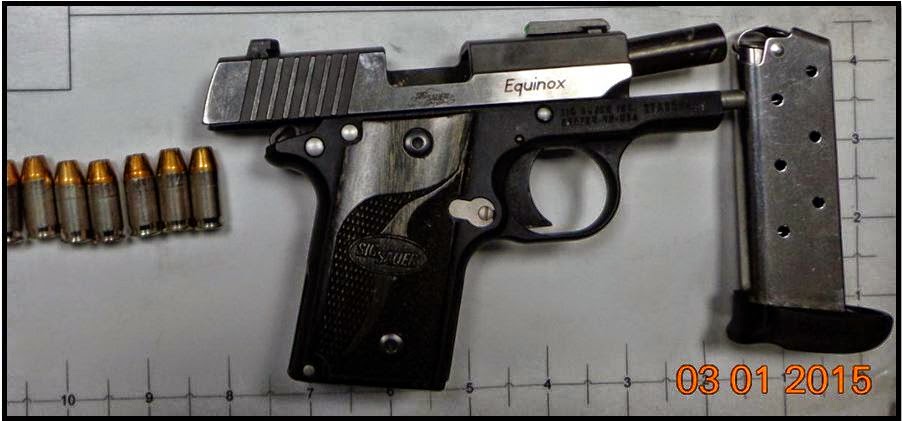
TSA’s official 2015 Year in Review is due out any minute, but my unofficial tally taken from the weekly reports on the TSA Blog adds up to 2,495 firearms found at airport checkpoints this past year – which is yet another new record.

Of course, prohibited items found by Transportation Security Officers in carry-on bags and on passengers passing through security checkpoints aren’t limited to firearms.

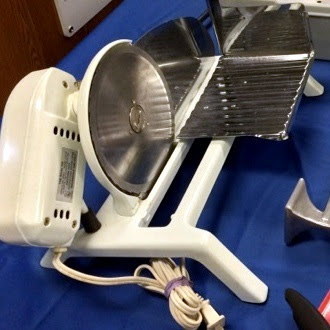
Last year TSA found, 40 pounds of marijuana in one man’s bag at Phoenix Sky Harbor International Airport, a meat slicer at Southwest Florida International Airport and a knife concealed inside a souvenir replica of the Eiffel Tower, found at Oakland International Airport.

Meat Slicer found in a carry-on bag at Southwest Florida International Airiport_edited

And, in the same week in March that the TSA found 55 firearms (51 loaded; 13 with a round chambered) and 13 stun guns, a Chihuahua was discovered inside a checked bag at New York’s LaGuardia Airport.

How did that happen?

“Apparently, the dog climbed in while its owner was packing her suitcase. TSA worked with the airline to identify the owner, and the two were happily reunited,” the TSA reported.

Knife concealed in an Eiffel Tower replica - found at Oakland Airport_edited

Chihauhua found in carry-on bag at LaGuardia Airport_edited

Stop worrying: TSA will accept your driver’s license

Sea-Tac security line

Rumors – and plenty of misinformation – have been flying around about the REAL ID Act – passed by Congress in attempt to prevent the fraudulent issuance and use of driver’s licenses and identification cards – and whether or not the TSA would soon stop accepting driver’s licenses as an acceptable form of identification at airports.

Part of the problem was that the Department of Homelands Security was dragging its heels about setting up a definite timetable for implementing the air travel part of the act.

But the agency finally issued a statement with some set dates.

On its website DHS now says that driver’s licenses issued by all states will be accepted as valid forms of ID until January 22, 2018.

So relax. You – and the states where driver’s licenses don’t yet comply with the national standards – have two years to work this out.

After January 22, 2018, DHS says:

Passengers with a driver’s license issued by a state that is still not compliant with the REAL ID Act (and has not been granted an extension) will need to show an alternative form of acceptable identification for domestic air travel to board their flight.

Passengers with driver’s licenses issued by a state that is compliant with REAL ID (or a state that has been issued an extension) will still be able to use their driver’s licenses or identification cards.

And, starting October 1, 2020, every air traveler will need a REAL ID-compliant license, or another acceptable form of identification, for domestic air travel.

“Right now, no individual needs to adjust travel plans, or rush out to get a new driver’s license or a passport for domestic air travel,” said secretary of Homeland Security Jeh Johnson in announcing the timetable.

REAL ID act may cause issues for air travelers

TSA PINK 2


What’s in your wallet?

If you plan on traveling any time next year, the question is a pertinent one. Travelers with driver’s licenses from New York, Minnesota, New Hampshire, Louisiana, American Samoa or another state or territory the Department of Homeland Security deems not-compliant with the federal REAL ID act may soon be barred from using theirs as legal identification at the airport.

Up in the air, however, is whether “soon” means early or late 2016 — or a year or more.

DHS has already completed three separate phases of its REAL ID enforcement plan, which covers access to nuclear plants and a wide array of federally protected facilities. However, the next phase adds commercial aircraft to the agency’s access list, and will take place sometime after the turn of the calendar year.

The exact rollout date will be announced soon, said DHS spokeswoman Amanda DeGroff adding that the agency will “ensure that the traveling public has ample notice before any changes are made that could possibly affect their travel planning.”

Until then, DeGroff said the Transportation Security Administration will continue to accept state-issued driver’s licenses and identification cards from all states.

This means some travelers may be in for an unpleasant surprise at airports  next year.

While almost two dozen states issue driver’s licenses that are compliant with the law, numerous others have raised privacy and cost concerns. They, along with some independent advocacy groups, actively oppose the measure.

Some states, like Oklahoma, have laws on their books that explicitly prohibit complying with REAL ID; meanwhile, about two dozen non-complaint states have been granted extensions.

Turned away?

It’s unlikely the rule will take effect January 1, given the hurdles to compliance and the broad opposition.

“We expect that New Yorkers with standard-issue licenses will have more than a year notice before any change is implemented,” said Casey McNulty, a spokesman for the Empire State’s Department of Motor Vehicles. “New York has also applied for an extension to the law.”

When the final phase does ultimately take effect, travelers age 18 and over from states that remain non-compliant will need to a secondary or alternate form of identification. These include a U.S. passport or passport card, or one of the documents TSA’s authorized ID list, to pass through airport security checkpoints.

Travelers who do a little planning shouldn’t have a problem getting on their planes, but “rushes on passports will likely result in delays in getting applications processed,” noted Andrew Meehan, policy director of advocacy group Keeping Identities Safe and a Real ID supporter.

Still, “airports in noncompliant states will likely see long lines as travelers unaware of the changes will be turned away.”

(My story about the potential issues for air travelers due to the Real ID act first appeared on CNBC)

What will the new TSA chief change at airports?

TSA PRECHECK - COURTESY TSA

What is the new head of the Transportation Security Administration going to do now that he’s been on the job for four weeks?

Withing 60 days he’s going to make sure all airport screeners are retrained so they can better detect explosives and spot weapons. And he’s going to try to get more passengers to enroll in the agency’s expedited security checkpoint program, called pre-check.

He’d also like to get rid of boarding passes and someday replace them with biometric technology.

Peter Neffenger, the new TSA administrator, went before the House Homeland Security Committee on Wednesday and said it was a “huge concern” that the agency’s officers failed to identify bombs, weapons and other security threats 96 percent of the time during recent undercover testing.

“It greatly disturbs me to know that we had that failure rate at the checkpoint,” he said, and to fix that, the agency will “train out those failures.”

Neffenger also told the panel he wants to increase the use of explosive-detection dogs for passenger screening, expand enrollments in the Pre-check program and phase out “managed inclusion.”

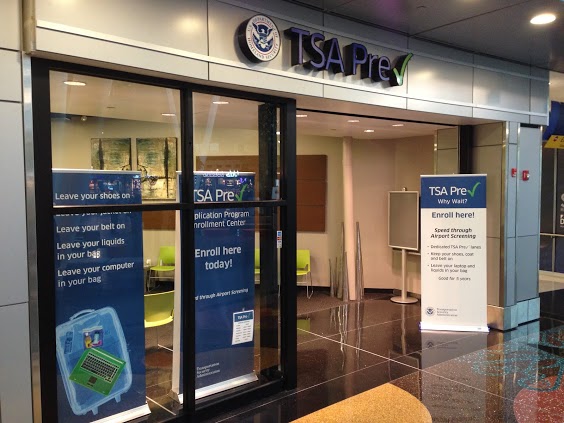
TSA PreCheck Enrollment Center at IND Airport - courtesy TSA

Neffenger said that likes the idea that biometrics – individual characteristics such as fingerprints or facial characteristics for personal identification – might someday mean that “you are your boarding pass.”

What to do with spare change at airports

pan am coin purse

Heading to the airport with loose change in your pockets?

You may not mean to, but there’s a good chance you’re leaving cash tips for the Transportation Security Administration at the airport.

During FY 2014, passengers left behind $674,841.06 in coins and currency in the bowls and bins at airport security checkpoints.

During 2013 travelers left $638,142.64.

That was almost $107,000 more than passengers left behind in fiscal year 2012 and more than $150,000 than what was left behind in 2011.

What happens to all that money?

According to federal law, TSA gets to keep it and spend it on anything it decides helps provide civil aviation security.

If you’re not interested in donating to the TSA coffers you can make sure to put all your loose change in your purse or carry-on before getting to the checkpoint.


Or consider donating to good causes at airports in Denver, Phoenix and Columbus, Ohio, where there are pre-security collection boxes by the checkpoints where you can donate spare change to local non-profits.

Denver International Airport started the trend in early 2013 with change collection containers placed before several checkpoints and in two years has collected over $170,000 in spare change to support homeless programs in Denver through Denver’s Road Home.

Last spring, Fifth Third Bank set up three “Empty Pockets, Full Plates” collection stations near checkpoint entrances at Ohio’s Port Columbus International Airport and in the first six months raised about $1,000 to support the Mid-Ohio Foodbank.

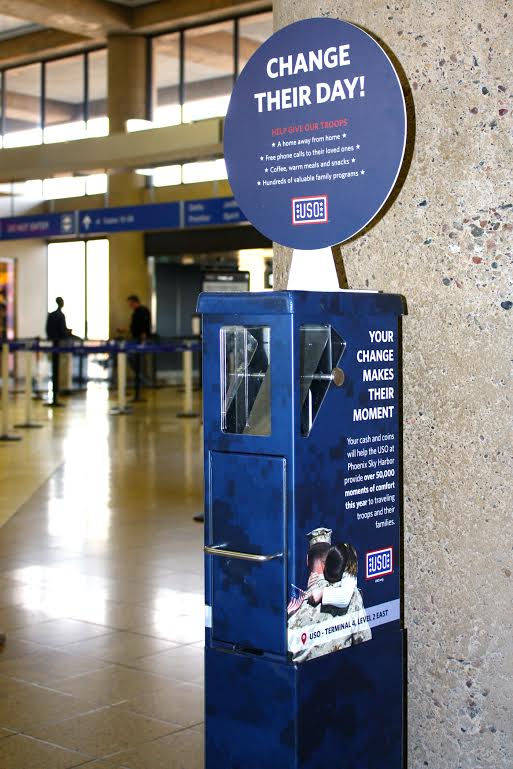
Travelers can support the USO at PHX airport by donated spare change. Courtesy Phoenix Sky Harbor International Airport

Just before all those Super Bowl fans came to town, Phoenix Sky Harbor International Airport kicked off its spare change collection program with boxes set up in front of several security checkpoints.

During February, 2015 $1,113.09 was collected to help fund USO operations at the PHX airport.

And in Sweden, travelers with spare change can donate to the Swedish Red Cross by playing video games at the airport.

Custom-made consoles recently installed at Stockholm Arlanda Airport and Göteborg Landvetter Airport offer travelers the opportunity to pay the classic arcade games Ms. Pac-Man, Space Invaders and Galaga in exchange for coins in any currency.

(My story about spare change at airports first appeared on CNBC in a slightly different version.)


Travel tidbits for April 1

So much “news” today – April 1 …

WetJet has introduced Smart Seats – which let you take a seat in the airport and board the plane in that same seat..

Richard Branson announced that the Virgin Group’s U.S. operations will be moving to Branson, Missouri

There’s a report out of Florida that the Transportation Security Administration is testing a new program to help seniors make their way through airport security. The program is dubbed “Moses.”

Unlike PreCheck, TSA-MOSES requires no pre-registration. Travelers 65 or older should look for a large wooden cane with a curved handle near checkpoints, signifying a MOSES representative is available to guide them through security.

And – finally – Denver International Airport has revealed all the details about the long whispered-about bunker underneath the airport grounds.

DIA BUNKER

More April 1 news to come…

Check your suitcase for Chihuahuas

On the TSA Blog each Friday you’ll find a report on the firearms, weapons and other prohibited – and often really strange – things found at airport checkpoints and in checked bags.

TSA MEM

This week, for example, the TSA found 55 firearms at airport checkpoints. 51 of those firearms were loaded and 13 had rounds chambered.

The fact that so many people just ‘forget’ they’ve got a gun, especially a loaded gun, in their carry-on is always alarming. But Friday’s report that TSA officers at New York’s LaGuardia Airport found a chihuahua inside a checked bag is mostly amusing.

According to the TSA, officers found the dog inside the suitcase while they were resolving a checked baggage alarm. TSA had the airline track down the suitcase owner, who said she had no idea the dog was in there and that the dog – a 7 year old chihuahua – must have climbed into the suitcase as it was being packed.

Bets? How many firearms will TSA find at airports?

ATL GUNS

Each Friday, before I close my office and head to Happy Hour, I check the TSA Blog for the Week in Review posting of the number of firearms (loaded and unloaded) and other prohibited items (inert explosives, big knives, anti-tank weapons, etc.) discovered at airport checkpoints.

You should too.

The blog (and TSA’s Instagram account) offers an informal course on the wide variety of items TSA deems too dangerous to be allowed on airplanes, yet which travelers continue to bring to airports.

TSA find _ Keychain is actually a punching weapon prohibited on planes by TSA

The numbers don’t spike on particular holidays or on Mondays but the tally of firearms, especially, keeps going up.

On June 4, 2014, for example, TSA reported that 18 firearms were discovered in carry-on bags around the country, breaking the previous record of 13 found in one day, set in 2013.

In early November, another record was broken. With two months still to go in the year, the number of firearms discovered at checkpoints had reached 1,855.

That blew 2014’s tally past the overall 2013 total of 1,813. By the close of business on December 15, this year’s tally had grown to 2,097.

“I think the rate is increasing because more and more people are carrying [weapons] throughout the country. It can actually be difficult for people who carry all the time because the gun becomes an extension of them, just like their cell phone and wallet,” said Jeff Price, author of Practical Aviation Security.

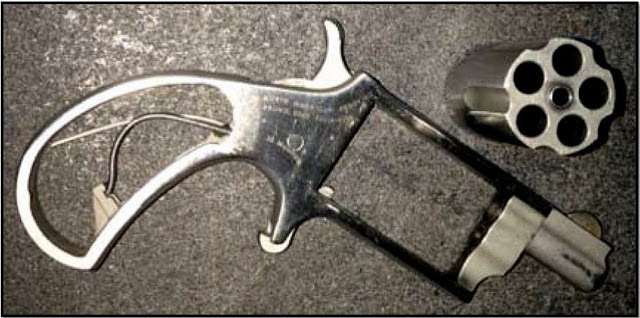
“Oops, I forgot that was in there,” is the most common explanation given by passengers found with firearms in a carry-on bag. But there are people, like the guy nabbed this week at JFK Airport with parts of a disassembled .22 caliber firearm hidden inside a PlayStation 2 console, who certainly know what they’re toting. “Some of these people are just tools trying to get one over on TSA and the system, but there are also those who may be affiliated with terrorist groups that decide to test the system to see what they can get through,” said Price.

TSA_GiantScissors

Thanks to ever-more-sophisticated technology, TSA is confident it is catching 100 percent of all the firearms coming through checkpoints. But Todd Curtis, founder of AirSafe.com, pegs the find rate at closer to 90 percent.

“The technology TSA has isn’t perfect,” said Curtis, “But in most cases, if someone is dense enough to try to take a weapon through the checkpoint they’ll be caught.”

Whenever TSA does spot a firearm in a carry-on bag at a checkpoint, the screening process stops until law enforcement responds and retrieves the weapon. And it’s local laws, not the TSA, that determine if any criminal charges are filed against a passenger.

Criminal charges or not, passengers found with firearms at airport checkpoints are subject to civil penalties, ranging from $1,500 up to $11,000. In 2013, TSA assessed nearly $1.7 million in civil penalties for firearms discovered in carry-on bags nationwide.

What happens to the firearms also depends on local laws. While local law enforcement allows TSA to photograph firearms (and other prohibited items) discovered at checkpoints, “TSA doesn’t take possession of any firearms,” said TSA spokesman Ross Feinstein, “Local law enforcement might confiscate the weapon as evidence or give it back the passenger to return it to their home or to put it in their vehicle.”

Beyond firearms, of course, TSA officers encounter an extremely wide variety of other prohibited items at airport checkpoints, including machetes, hatchets, swords, giant scissors, brass knuckles, cannonballs, bear repellant and, this past October, an unloaded cannon.

“Maybe someone has a lucky inert grenade they brought back from some war, or a nice cane was given to them and they forgot that the thing is actually a sword,” said Price, “It’s the people that are carrying stuff like chainsaws that make me wonder.”

(This story first appeared on the Runway Girl Network in a slightly different version.)
Heading to the airport? Where’s your gun?

ATL GUNS

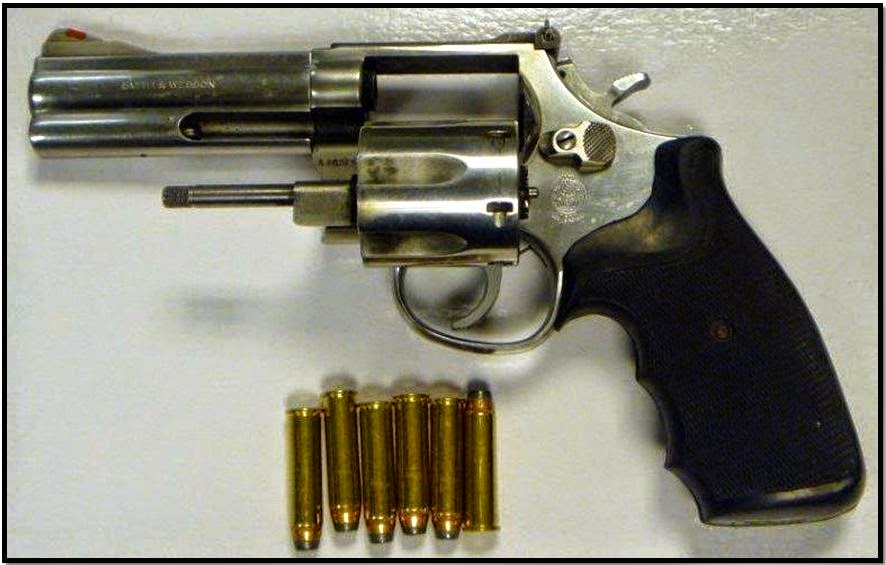
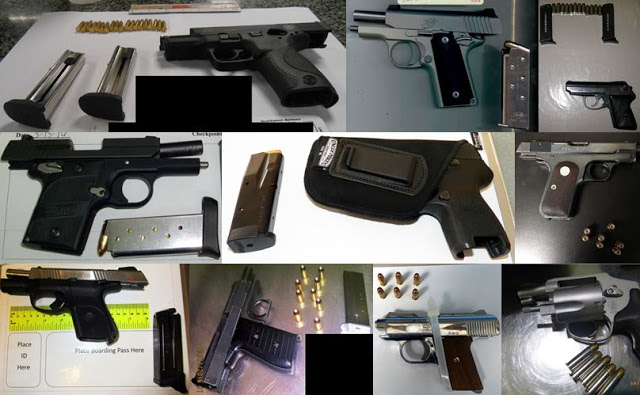
The numbers seem a bit boggling: despite the fact that firearms, ammunition, firearm parts, and realistic replicas of firearms are prohibited in carry-on baggage, an increasing number of passengers continue to show up at airport checkpoints with these items.

In fact, according to the Transportation Security Administration, at the end of the day on November 4, 1,855 firearms had been found at airport checkpoints. 1,471 (79 percent) were loaded.

That number exceeded the 2013 total – 1,813 – by 42. And it’s just November.

Here are the airports where the most firearms have been found in carry-on bags: Dallas/Fort Worth International (DFW) – 104 Hartsfield-Jackson Atlanta International (ATL) – 90 Phoenix Sky Harbor International (PHX) – 66 Houston George Bush Intercontinental (IAH) – 62 Denver International (DEN) – 61 .

Of course, this hasn’t stopped people from bringing guns to the airport in their carry-on bags…

TSA

Are TSA PreCheck centers easy-access?

TSA PreCheck Enrollment Center at IND Airport - courtesy TSA


No balloons fell from the ceiling last week when the U.S. Department of Homeland Security celebrated the fact that over 500,000 travelers have handed over personal data – and $85 – to join the Transportation Security Administration’s expedited airport screening program since the first public enrollment center opened at Indianapolis International Airport in December 2013.

Today, the Global Gateway Alliance, a group that advocates for improvements at the New York metropolitan area airports, released a report offering TSA advice on how to push the PreCheck enrollment numbers higher.

There are currently about 300 PreCheck application sites nationwide processing, altogether, more than four thousand new applications a day. Twenty-eight of those sites are in airports (LAX and ATL each have two), with many others co-located at pre-existing sites in strip malls, office and industrial parks, and a few chiropractic offices contracted to do credentialing for airport and railroad workers and for truck drivers hauling hazardous materials to and from port facilities.

The range of off-airport sites “makes it easier for the traveling public to apply for TSA PreCheck,” said TSA’s Feinstein. But putting enrollment centers “in places where people actually congregate, which can be conveniently accessed, would raise awareness and participation the program,” the GGA suggests.

In the New York area, the TSA currently has enrollment centers at Terminal C at LaGuardia and in Terminal 4 at JFK. GGA’s report urges TSA to expand throughout area airport terminals “to reach travelers at the point when they are most likely to be thinking about airport security.”

Have you applied for the PreCheck program? How did it go?

(My story about TSA Precheck centers first appeared on USA TODAY).