As of September 1, Charleston International Airport and all CCAA owned buildings has become a smoke-free campus. This means that smoking and vaping of any kind will not be allowed inside or outside of the terminal. 🚭 pic.twitter.com/HHwxQOTO3N
There are still a few airports around the country that accommodate smoking inside the terminals.
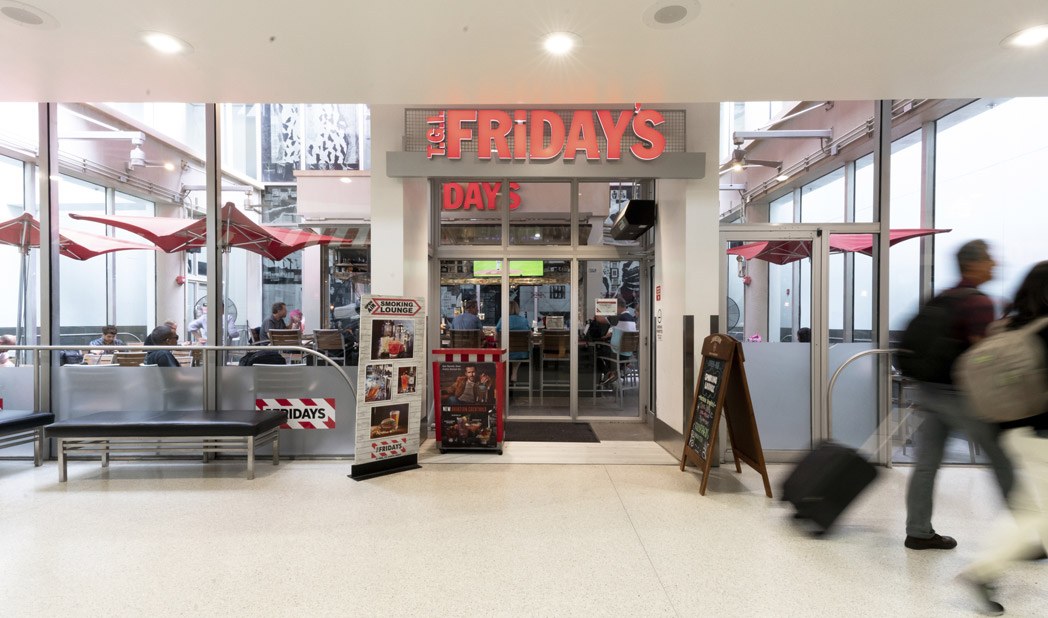
According to the American Nonsmokers Rights Foundation, as of July 1, 2021, four of the top 35 US airports have smoking spaces: McCarran International Airport (LAS) in Las Vegas, Washington Dulles Airport (IAD), TGIF at Miami International Airport (MIA), and Nashville International Airport (BNA).
Some smaller airports around the country do have smoking spaces as well. But now there is one less airport where travelers can light up: Charleston International Airport (CHS).
The smoking ban at CHS is in effect as of Sept 1, 2021, and includes all enclosed public spaces, outside of the terminal, the shuttles, sidewalks, rest areas, as well as public and employee parking lots.
What can’t you smoke? Cigarettes, cigars, pipes, vapes, puff bars, and any device that emits smoke or vapor that may be harmful to travelers.
Why can’t you smoke? Because, according to a Centers for Disease Control study, secondhand smoke travels from designated smoking areas into nonsmoking areas in airports, where nonsmoking travelers and employees can be exposed.
What will happen to you if you light up at Charleston International Airport (CHS)?
The Charleston County Aviation Authority Police Department is enforcing the ban and anyone who does not comply with the ban is subject to a fine.
Charleston International Airport will be 100% smoke-free as of September 1, 2021. This ban includes all enclosed public spaces, outside of the terminal, shuttles, sidewalks, rest areas, public and employee parking lots, and other Airport Authority buildings and facilities. pic.twitter.com/CulnRYBWc2
In ATL, which has held the title of “World’s
Busiest Airport” for many years, there are currently about a dozen
post-security spaces where smokers can light up. The lounges were initially
paid for by Phillip Morris in advance of the 1996 summer Olympics.
Although the
U.S. Surgeon General has determined that there is no risk-free level of
exposure to secondhand smoke, ATL officials have long claimed the lounges benefited
non-smokers as well as smokers by keeping secondhand smoke away from
non-smoking guests and by discouraging smokers from lighting up in restrooms
and other spaces.
But since ATL is part of the city of Atlanta, airport
officials say the airport will comply with the new ordinance and convert the
lounge to other purposes. Passengers will be directed to smoking areas outside
of both terminals.
“We plan to work with our airline partners
to make sure they communicate with their customers that smoking is no longer
permitted at ATL,” said Jennifer Ogunsola, spokeswoman for Hartsfield-Jackson
Atlanta International Airport (ATL), “We also will have PSA [public service
announcements] messaging throughout the airport as well as permanent and
digital signage with like messaging.”
ATL’s shift to smoke free
is “huge,” said Cynthia Hallett, president and CEO of Americans for Nonsmokers’
Rights (ANR) and the ANR Foundation, “As the airport with the largest passenger
volume and a huge workforce, both flight crews and airport staff, going smoke free
means that millions of people will be fully protected from exposure to
secondhand smoke.”
Now, says Hallett, it’s
time for the handful of other U.S. airports that still have smoking lounges to
follow Atlanta’s lead. “Many airports have repurposed smoking lounges for much
desired spaces to sit, including electronic device charging stations or more
food options,” she said.
U.S. airports where
smoking is still allowed
In addition to ATL, a
handful of the country’s busiest airports still offer smoking lounges for
passengers, despite a report from the Centers for Disease Control and Prevention (CDC) showing
that designated indoor smoking areas at airports are not effective in
eliminating secondhand smoke exposure.
Washington Dulles
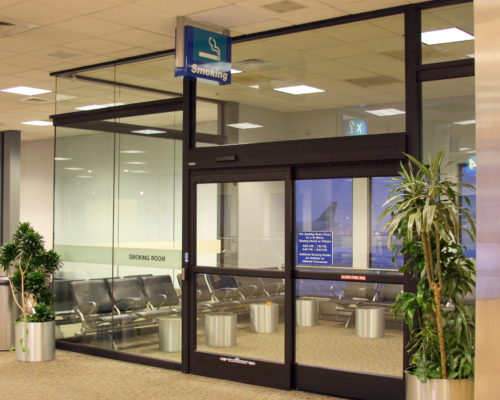
International Airport (IAD) has smoking lounges in each concourse. “There is enough customer demand to maintain their presence in
the airport and there are currently not any discussions to close them,” said
Christina Saull, spokeswoman for the Metropolitan Washington Airports
Authority.
All the restaurants and retail shops at Nashville International Airport Thursday, July 7, 2016 in Nashville, TN.
At Nashville International
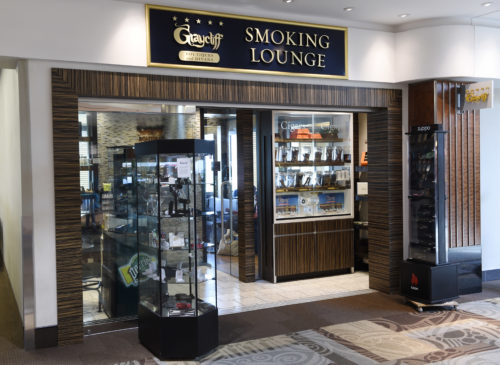
Airport (BNA), there are in-store smoking lounges at the Graycliff Cigar Company stores located on Concourse B, near
Gate B-10, and on Concourse C, near Gate C-10. Passes to the lounge are $5 for
120 minutes.
At Miami
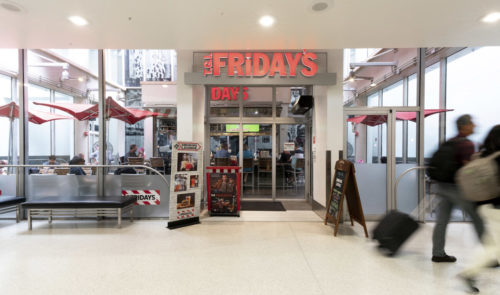
International Airport (MIA), passengers are permitted to smoke in the open-air patio at TGI Friday’s at Gate D36. “Since it is already in an outside area, there
has not been discussion about closing it,” said MIA spokesman Greg Chin.
McCarran, which has slot machines in many parts of airport,
has enclosed, specially ventilated casino gaming areas on each concourse where
passengers may smoke.
“In the past, when
there were no such areas, we experienced repeated issues in which travelers
would smoke in restrooms, companion care rooms or other public spaces,” said Chris
Jones, spokesman for the Clark County Department of Aviation, “ We’d get
complaints from parents who would enter such a room to change their baby’s
diaper and find it filled with second-hand smoke from someone who’d lit up
there minutes earlier, for example.”
Passengers would also open
alarmed doors in attempts to smoke on emergency exit stairways, Jones said.
Clearing the air in
airports
According to the CDC exposure to secondhand smoke has been
steadily decreasing in the United States, due primarily to the adoption of
smoke-free policies prohibiting indoor smoking at worksites, restaurants and
bars.
“However, an estimated 58 million, or 1 in 4, Americans
remain exposed to secondhand smoke in areas not covered by these policies, including
certain airports,” said Brian King, deputy director for research translation in
CDC’s Office on Smoking and Health.
“The good news is that we know what works to protect people
from this completely preventable health risk,” King added, “Implementing
smoke-free policies in indoor public areas is the best way to fully protect
everyone, including airport travelers and employees, from the deadly risks of
secondhand smoke exposure.”
The debate over airport smoking rooms is flaring up again.
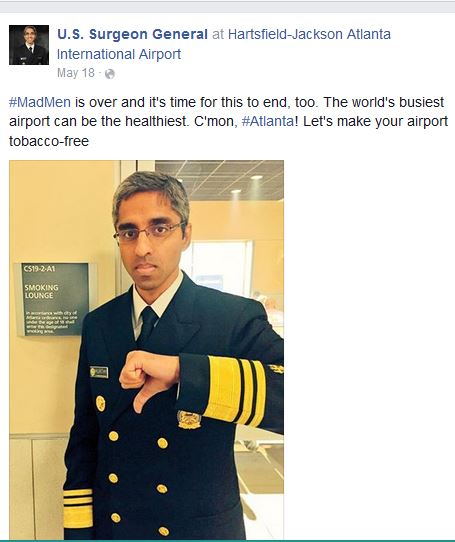
In May, just a few months after the 25th anniversary of the federal law banning smoking on domestic U.S. flights, Vice Admiral Vivek Murthy, the U.S. Surgeon General, posted a photo on Facebook and Twitter giving thumbs down to smoking rooms at Hartsfield-Jackson Atlanta International Airport.
Now, several anti-smoking groups are publicly urging Salt Lake City International Airport, which currently has five smoking rooms, to make the airport’s new main terminal — scheduled to open in 2020 — entirely tobacco-free.
“In a state that does not allow smoking in other major public places and workplaces, it is time that the Salt Lake City International Airport do what is right to protect the health of all of those who utilize it by eliminating all the indoor smoking rooms,” said Brook Carlisle, Utah government relations director for the American Cancer Society Cancer Action Network.
For now, the plan is to keep the smoking lounges as a benefit to smokers who make connections at the airport, says SLC spokeswoman Bianca Shreeve.
The lounges “not only segregate smokers from non-smokers, they keep smokers with short connections from trying to smoke in areas they are not supposed to,” she said.
Initially paid for by Phillip Morris and built before the 1996 Olympics, the twelve smoking lounges at Atlanta’s airport “are an amenity that many of our passengers still use,” said ATL spokesman Andrew Gobeil. “There are no immediate plans to close them.”
In addition to SLC and ATL, there are public indoor smoking spaces in several other major U.S. airports, including Washington Dulles International, McCarran International in Las Vegas, and Denver International.
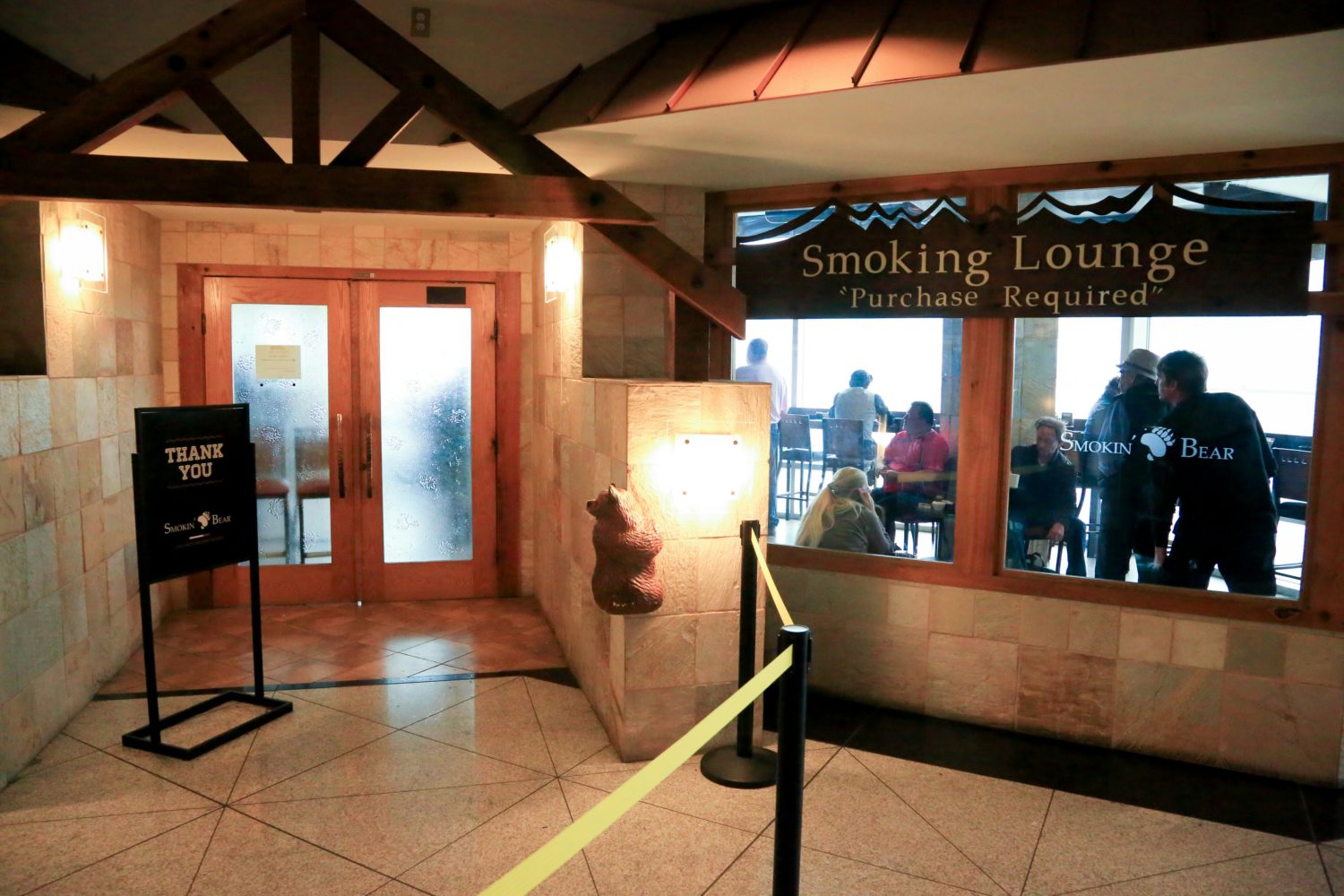
Nashville International Airport has two Graycliff smoking lounges accessible to those paying an entrance fee. T.G.I. Friday’s, in the middle of Concourse D at Miami International Airport, has a smoking lounge for patrons and the Smokin’ Bear Lodge Smoking Lounge located behind the Timberline Restaurant at Denver International Airport is accessible with a $5 minimum purchase from the restaurant.
At Dallas/Fort Worth International Airport, there is a smoking area inside the Admirals Club in Terminal A, although American Airlines says that smoking policy is “under evaluation.”
Dulles Airport has four smoking lounges and considers them an amenity for the “broad cross section of passengers we serve, which includes a large number of international travelers and domestic travelers boarding or getting off long transcontinental flights,” said airport spokesman Christopher Paolino.
In Las Vegas, McCarran International Airport allows smoking in select bars and gaming areas.
While the number of U.S. airports offering smoking spaces has declined in the past ten years, a CDC study found that the average air pollution levels from second-hand smoke directly outside designated smoking areas in five large hub U.S. airports — Washington Dulles, Denver, Salt Lake City, Atlanta and Las Vegas — were five times higher than levels in smoke-free airports.
“Given all the science that we have and the fact that so many cities and states are working towards going smoke-free, the fact that airports aren’t going in that direction more quickly is disconcerting,” said Cynthia Hallett, executive director of Americans for Nonsmokers’ Rights.
The U.S. Surgeon General agrees. “We know second-hand smoke kills,” said Vivek Murthy via email. “By making our indoor spaces — like airports — smoke-free, we can help prevent 41,000 deaths each year in the U.S.”
(My story about airport smoking rooms first appeared on USA TODAY as an At the Airport column.)
Denver International Airport is making good on its plan to close down the smoking lounges.
Since May, when the city’s mayor held a press conference to announce the plan, three of the four smoking lounges at the Denver airport have closed. The fourth lounge, Timberline, located on on Concourse C, will shut down when its lease expires in 2018.
The lounges that closed this past year include two Aviator’s Lounge locations (one was in the Jeppesen Terminal; the other was on the B Concourse. The Jeppesen Terminal lounge will become a Jamba Juice, the B Concourse lounge will re-open as the barbecue restaurant called the Aviator’s Sports Bar and the third lounge, which is located inside of Mesa Verde Restaurant and Bar on the A Concourse, was remodeled.
The CDC studied five large hub U.S. airports with designated smoking areas accessible to the public (Denver International, Hartsfield-Jackson Atlanta International, Las Vegas’ McCarran International, Salt Lake City International, and Washington Dulles International) and also found that air pollution levels inside designated smoking areas were 23 times higher than levels in smoke-free airports. In the study, designated smoking areas in airports included restaurants, bars, and ventilated smoking rooms.
Turkey dinner in the sky and at airports
Virgin America has a holiday turkey sandwich on the buy-on-board menu
If you end up spending your Thanksgiving Day in an airport or on an airplane, you may not have to give up on Turkey Dinner.
In Florida, the Hyatt Regency Orlando International Airport, inside Orlando International Airport, is serving a mid-day Thanksgiving buffet and several restaurants inside Miami International Airport, including the Ice Box Café (Turkey Special with all the works, pecan pie and a glass of vino for $ 20, all week) and the Top of the Port restaurant in the Miami International Airport Hotel, are also planning to serve traditional Thanksgiving dinner.
At JFK International Airport in New York, passengers flying out of the JetBlue’s Terminal 5 (T5) will be able to load up on turkey dinner in the Food Court Hot Bar. (Price is by the weight of your plate.)
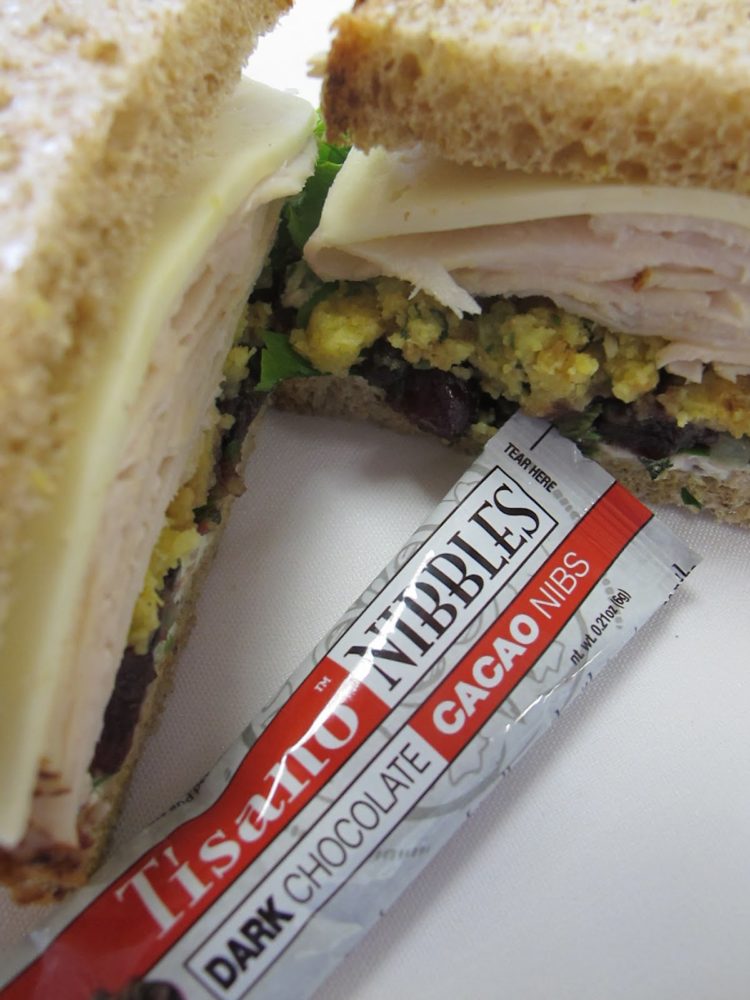
In the air, Southwest Airlines is offering passengers a complimentary alcohol drink on Thanksgiving Day, Virgin America has a holiday-style turkey sandwich on its buy-on-board menu, but no other domestic airline I contacted is making any special note of the holiday.
But several international airlines are:
Etihad Airways, Air Berlin and Singapore Air are among those offering special Thanksgiving meals to passengers flying to and from US gateways.
And many airports have their holiday entertainment schedule underway:
On Wednesday, Nov 21 Minneapolis-St. Paul International Airport will have a costumed character to read to children near the Red Balloon Bookshop across from Gate C12 between 9 a.m. and 2 p.m. on the hour and half-hour.
At Miami International Airport, there’s a whole bunch of activities going on Wednesday Nov 21 and again on Saturday and Sunday, Nov. 24th and 25th, including a caricaturist, opportunities to get your photos taken in a harvest background, craft projects for kids and giveaways.
San Francisco’s You Are Hear concert series is underway, with performers scheduled in various spots throughout the airport on Wednesday, Dec. 21.
There’s live music scheduled for several spots in Chicago’s O’Hare and Midway airports on Wednesday as well. Find details about those airport concerts here.
And the Austin-Bergstrom International Airport, which has 19 (or is it 100?) live concerts each week, has several performances scheduled for Wednesday as well.
Denver International Airport, currently the only public building in Colorado where indoor smoking lounges are still legal, is on its way to becoming smoke-free.
At a May 18th airport press conference, Denver Mayor Michael B. Hancock announced that lease-holders for three of the four smoking lounges at Denver airport have agreed to shutter those lounges by the end of this year and remodel or replace them with non-smoking concessions.
The Aviators’ Lounge in the Jeppesen Terminal will become a branch of Jamba Juice; the lounge on the B Concourse will become a barbecue restaurant called the Aviator’s Sports Bar; and the Mesa Verde Restaurant and Bar on the A Concourse will be remodeled, removing its smoking area.
While Americans for Nonsmokers’ Rights (ANR) issued a statement applauding Denver’s mayor, the airport and “the owners of the smoke-filled businesses who are supporting this transition to a smoke-free future,” the response on the airport’s Facebook page has been mixed, with several critical comments among those voices applauding the decision.
Via e-mail, M. James of Denver speaks out for smoking travelers: “I just think this anti-smoking has gotten too far. There are tons of restaurants where people can eat without smoke. At least one smoking area at DIA should be open for the smokers who have a layover or a delayed plane.”
James mourned the demise of Denver Airport’s smoking lounges, but expressed appreciation for those at Hartsfield-Jackson Atlanta International, which are located throughout the airport and include a new one (on the Concourse F mezzanine level) in the recently opened international terminal complex.
In addition to Atlanta, smokers can still find an indoor place to light up at Dulles International Airport and at airports in Tampa, Memphis, Salt Lake City and several other cities. Some of these smoking areas are simply small, ventilated spaces; others are inside a restaurant or bar that may require a minimum purchase.
At Memphis International Airport, for example, the smoking area is inside the post-security Blue Note Café; at Tampa International Airport, there’s an outdoor smoking patio at the Landside Terminal and caged, outdoor smoking patios at Airsides A, C, E and F.
In Las Vegas, McCarran International Airport currently has two indoor spots where passengers may smoke: the pre-security Budweiser Racing Track Lounge and an enclosed casino gaming lounge at the D Concourse, near Gate D-46.
When McCarran’s new Terminal 3 opens, on June 27, there will be two more enclosed gaming lounges, near gates E-1 and E-15. Another gaming lounge that will welcome smokers is planned for the C Concourse, just past the C Annex Security Checkpoint, and will be available to passengers who walk over from the A and B concourses as well. No date has been set yet for the opening of that Concourse C lounge.
Why add more airport smoking lounges at McCarran when Denver International Airport is getting kudos for its plan to close theirs?
“There is a significant segment of our customer base that wishes to smoke, and past experience has demonstrated that these customers will often light up, even in areas where smoking is not authorized,” says McCarran spokesperson Chris Jones. He adds that ‘unauthorized’ smokers cause problems, such as “smoke in public restrooms or, in some cases, alarms being set off as individuals attempt to open doors that lead to secured outdoor areas.” said Jones.
“The gaming lounges help to alleviate these concerns by providing separate, enclosed and ventilated spaces for these adults to smoke prior to their outbound flights,” he said.
Not all smokers are in favor of smoking rooms at airports. Patricia Murphy, a smoker from Seattle, says “Shut them down!” She said the last time she smoked in one of those rooms – at Tokyo’s Narita Airport – she felt sick for hours. “No ventilation system can handle the amount of smoke in those rooms. They smell so awful!”
Murphy says she tries to have a cigarette before heading into an airport and often finds herself smoking just outside airport doorways, getting “lots of dirty looks.”
She has found one airport smoking lounge she can recommend: The one at Singapore’s Changi Airport, which is outside, in a sunflower garden. “You’re literally standing in towering sunflowers,” said Murphy.
According to the American Nonsmokers’ Rights Foundation, indoor smoking is completely banned at 27 of the top 35 U.S. airports.
Make that 28. Well, almost.
Denver International Airport (DIA), which currently has four indoor smoking lounges, announced Friday that three of those smoking areas will be shutting down.
According to a statement from the airport, two concessionaires, Airport Lounges and Quiz-DIA, have agreed to close the three smoking lounges they currently operate by the end of the year. The fourth lounge, Timberline, operated by Smokin’ Bear, LLC, will shut down after its lease expires in 2018.
Two Aviator’s Lounges will close this year: the one in Jeppesen Terminal and the one on the B Concourse. The Jeppesen Terminal lounge will become a Jamba Juice and the B Concourse lounge will re-open as a barbecue restaurant called the Aviator’s Sports Bar.
The third lounge to be closed is inside the Mesa Verde Restaurant and Bar on the A Concourse. Mesa Verde will be remodeled to offer extra seating.
The fourth indoor smoking lounge – inside Timberline Steaks & Grill on Concourse C – will stay open until 2018.
After that: no smoking at Denver International Airport.
Here’s a link to a (long) list of other U.S. airports that ban smoking.
What do you think: should ALL airports ban smoking?
Every few years I do a review of the state of smoking lounges in airports.
The last one – for my “At the Airport” column on USATODAY.com – was back in 2009. Times – and rules about smoking in public places – change, so I’m planning to do another airport smoking survey soon.
It clearly remains a hot topic. Here’s an excerpt from a note Ramona Mccarty sent me recently after finding that 2009 column.
I am a smoker and have been for a long time, you are right when you said that rudeness is part of the problem trust that! DFW is one of the main airports I use and it is not smoker friendly, if I could get into Dallas another way I would where smoking is not considered a crime! only an addiction, an addiction that needs to be fed otherwise you get grumpy, mean people, who otherwise are not like that, but because they can’t support their addictions this is how WE turn out. I am going to try Dallas Love Field because they are smoker friendly without harming non-smokers, because that is not our intentions.
Our money for buying and flying is just as good as non smokers so wheres the beef?! we aren’t asking to blow smoke in peoples faces we are just asking for a right to feed our addiction, like people eating and diners, drinking coffee and cafes, alcoholics and bars, shopaholics and clothes stores, smokers and smoking designated areas, snap! Helllooo.
What do you think? Should more airports offer smoking lounges for passengers? Should cities that ban smoking in public places make exceptions for airports?