airplanes

Why don’t we all own flying cars?

Cars. Airplanes. Both are great ways to get around.

But wouldn’t it be great if the two were put together so the same vehicle could get you where you needed to go no matter what the traffic conditions?

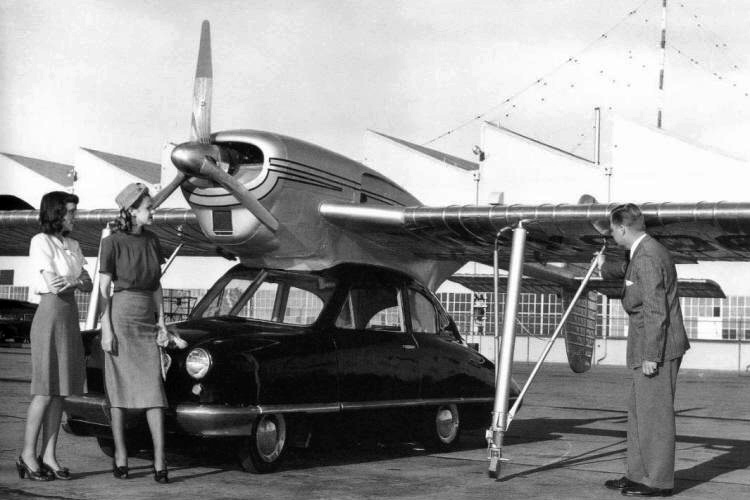
Lots of people have been working on making that dream of flying cars – or roadable aircraft – a reality.

But we’re not there quite yet.

These short videos about Robert Fulton Jr.’s Airphibian – on display at the Smitshsonian National Air & SpaceMuseum; Moulton’s Taylor’s Aerocar – see one at Seattle’s Museum of Flight – and the this-could-be-yours for just $98,000 Jetson One – (a nod to flying car in The Jetsons cartoon show) – prove that it could happen.

Free foam glider & free outdoor movies at Lincoln Airport (LNK)

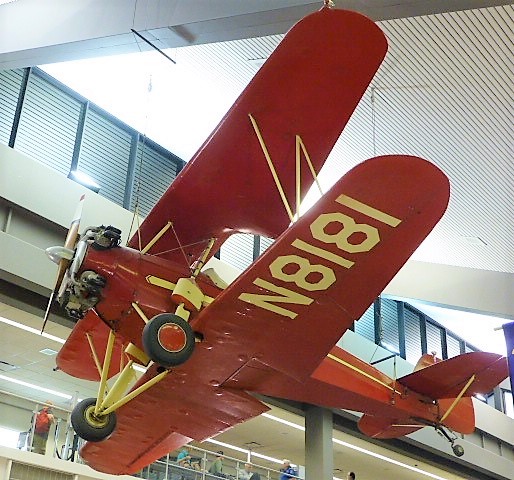
This red Arrow Sport, one of only one of six known to still be in existence, was built by the Arrow Aircraft Company, of Havelock, Nebraska and now hangs in the terminal at Lincoln Airport (LNK) in Nebraska.

If you stop by the airport’s customer service desk, they will give you a free red foam glider plane in honor of the Arrow Sport.

LNK is also celebrating Halloween with free movies and a costume contest.

On Thursday, October 14, and Friday, October 15, LNK will be featuring the movie Hocus Pocus at its outdoor movie event. There will also be a Halloween costume contest.

Something happening at your airport? Let us know.

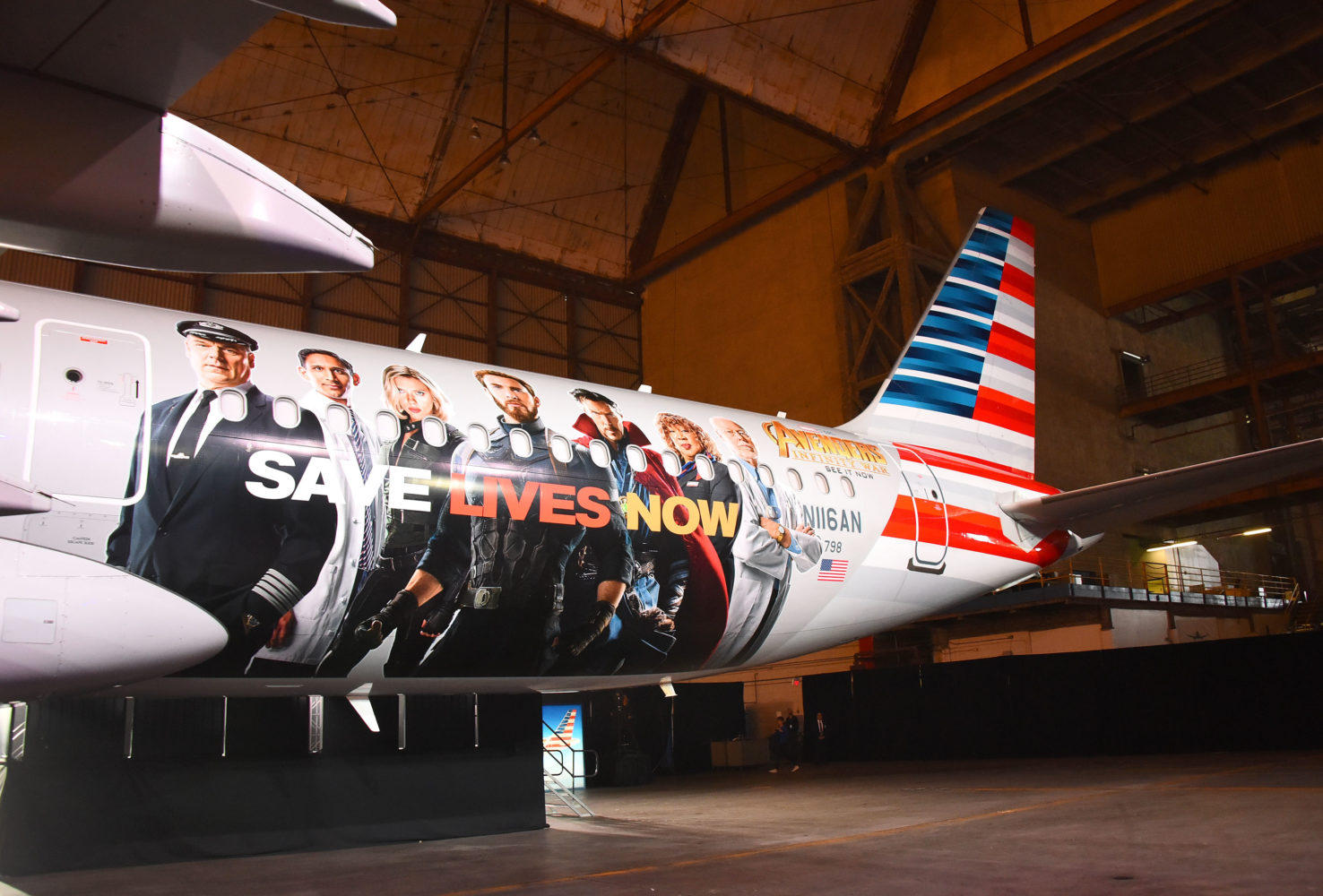
American Airlines rolls out Avengers: Infinity War livery

Photo by Araya Diaz/Getty Images for Stand Up To Cancer

Cancer sucks.

American Airlines and Marvel Studios agree. So they have joined forces in the Stand Up to Cancer campaign to create a special airplane livery showing heroes from the Marvel Studios’ film Avengers: Infinity War alongside the Stand Up To Cancer logo and images of cancer researchers and American Airlines employees who are cancer survivors.


Photo: Araya Diaz/Getty Images for Stand Up To Cancer

The aircraft was revealed at Los Angeles International Airport on Sunday and will fly between New York and Los Angeles as part of the PSA campaign designed to raise funds and awareness for cancer research and treatments.

Want to help? Donate at least $25 to the campaign and you’ll get 10 American Airlines AAdvantage Miles for every mile donated. Details here.

https://youtu.be/djlTUsXkCuQ

An overnight ‘ride-along’ with United Airlines

My overnight ‘ride-along’ last week with United Airlines at Denver International Airport was exhausting – but exhilarating and extremely educational.

I’m working on a full-length slide show (so far, I’ve got 60 photo keepers) and report for my next At the Airport column on USA TODAY,  but sharing a few snaps today here on StuckatTheAirport.com to get the ball rolling.

At around 10 pm, my tour started at United’s Station Operations Center – a darkened room where about 50 people were seated in clusters at desks with multiple computer screens doing everything from making sure passengers made their connections to monitoring weather and  gate assignments.

Then it was off to the maintenance hangar, where 8 airplanes were undergoing service checks and repairs, included an engine swap for an Airbus 319.


While in the hangar, another airplane was visited by a fast-moving cleaning crew, who were doing everything from cleaning the lavs and galley (with different rags and cleaning solutions) to making sure seat back literature was refreshed and the tray tables were washed.


At 3 am it was back to the Station Operations Center, which was pretty much empty, except for Zone Controller Mike Lowrey, who I’d met earlier in the evening. He was checking with maintenance to see if all the planes they’d been working on overnight were ready for morning flights and doing what he could to make sure the first flights of the day would leave on time.


3:47 a.m. : A quick look in the concourse to see if anything was happening. Nothing. Yet.

The Flight Operations Center opens at 6 a.m.  That where captains and first officers such as Michael Daigneault can pick up supplies and plan for their flights.

My flight back to Seattle left, on time, at 8:08 a.m. I even got a set of plastic wings from the crew.

My full report on my overnight ride-along with United Airlines at Denver International Airport will show up during the week on USA TODAY.


Hoverboards don’t fly

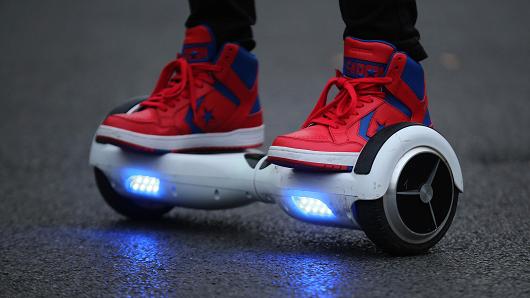
If you got a hoverboard for Christmas, getting your new “it” gift home on the plane is going to be a problem.

Most all domestic airlines have banned from both carry-on and checked baggage and an increasing number of international carriers have done the same.

Here are the highlights of a story on flying with hoverboards I wrote for CNBC.

hoverboard

courtesy Getty Images

Fears about the device stem primarily from their potentially combustible batteries, and the unreliability of poorly made knockoffs and counterfeit batteries have heightened concerns.

For those reasons, Alaska Air, United Airlines, Delta and American began banning hoverboards this month from carry-on and checked baggage.

“Most of the issue is [with] the lithium batteries that are used to power them,” said aviation security expert Jeff Price. “Some manufacturers aren’t accurately reporting the power of the batteries, and airlines generally dislike lithium batteries anyway as they have a tendency to overheat and catch fire.”

Ahead of the end-of-year travel rush — when some travelers may be attempting to make their way back home with newly gifted hoverboards, United spokesman Charles Hobart said the airline was actively “working with customers if they need additional time to find alternate shipping methods for their hoverboards.”

Likewise, Delta spokesman Morgan Durrant said the carrier was advising fliers to take care of shipping a hoverboard before they arrive at the airport.
“We offer our sympathies for those who might find themselves with an inconvenience after opening their holiday loot,'” he said.

Many international airlines, including British Airways, Qatar Airways, Singapore Airlines and Air New Zealand, have newly implemented hoverboard bans in place.

“We did a review independently of other airlines and came to the assessment that actually there is a risk with hoverboards and it not a risk we’re prepared to carry,” said ANZ CEO Christopher Luxon.

Federal regulations, meanwhile, make for a confusing playing field.

A TSA representative said the Federal Aviation Administration and the airlines – not the TSA – bear the responsibility for enforcing hoverboard bans because “this is a safety, not a security, issue.”

Hoverboard makers defend the safety of their products, but some are sympathetic to the airlines’ position.

“I wouldn’t feel safe having my kids on a plane without knowing the devices were safe either,” said John Soibatian, president of IO Hawk, one of the major hoverboard manufacturers.

Soibatian said his company’s personal mobility devices are reliable and rigorously tested, and that cheaper, off-brand products are causing the problems.

“If someone’s kid wants one of these, you see ours for $1,800, you see a knockoff for $300 and it’s the knockoffs being put together by people who have no business in this industry that are exploding or catching fire,” said Soibatian.

“We’re working with Customs and Border Control to make sure fake products don’t make it to the market and with a little bit of education I think some of these airlines will change their policies,” he said.

Travelers who try to ship hoverboards, balance wheels and other devices powered by lithium batteries via United Parcel Service or the U.S. Postal Service may encounter barriers as well.

Out of “an abundance of caution and in line with major retailers and the airline industry,” the Postal Service issued a statement limiting the shipment options for motorized balance boards. USPS alerted customers that it “will ship hoverboards using only Standard Post/Parcel Select. This product travels on ground transportation, due to the potential safety hazards of lithium batteries.”

Earlier this week, UPS issued a reminder notice to customers noting that “the boards are made with a medium-sized lithium battery that when shipped via an air service become federally regulated. Due to these regulations, only shippers with an active UPS Hazardous Materials Contract may send hoverboards using an air service.”

Airports are also barring travelers from using hoverboards.

Tampa International, Charleston International and Minneapolis-St. Paul International are among a growing number of airports reminding passengers to leave their hoverboards at home.

Miami International Airport bans the use of hoverboards inside the airport, under a rule that also prohibits people from riding or driving a unicycle, a go-cart, roller skates, Rollerblades, or a skateboard at the airport.

Perhaps that why a few days before Christmas, MIA already had a few hoverboards in the lost and found.

Rolling Stones plane in JFK Terminal 4

Ben-Hider-BEN_2282

That’s not a mock-up of just any airplane there in Terminal 4 at JFK International Airport.

It’s an “experience” Jose Cuervo had Air Hollywood put together to commemorate the legendary 1972 Rolling Stones tour (dubbed the Tequila Sunrise Tour) and give travelers a mild version of the tour’s party plane experience.

The pop-up plane is in the retail lounge of Concourse A at JFK Terminal 4 through December 30 and Jose Cuervo will be offering tequila sampling Monday through Saturday, 2:30 – 8:00pm.

Ben-Hider-BEN_2256

Germs on a plane? More than you think.

SMART TRAY

Germs on a plane.

They’re far likelier to get under your skin than snakes, screaming babies or smelly seatmates. And they’re most common on tray tables – a surface that is touched frequently during a typical flight, a new study found.

Travelmath.com recently sent swab-carrying microbiologists to five airports and onto four airplanes and then asked them to determine which surfaces were the dirtiest.

The results will make you reach for the hand sanitizer and rethink what you touch when you travel.

Tray tables, which travelers have been known to use as a platform for everything from eating a meal to changing their baby’s diapers, are the germiest surfaces on airplanes, the experiment found. Next on the list: the overhead air vent, the lavatory flush button and the seat belt buckle.

In airports, the microbiologists identified drinking fountain buttons and bathroom stall locks as the dirtiest places.

Hard to believe?

Charles Gerba, a microbiology and environmental sciences professor at the University of Arizona known as “Dr. Germ,” agrees.

He said his research team did similar studies and found much the same thing. “We also found infleunza virus, norovirus and MRSA on the airplane trays,” said Gerba.

Should you worry? Not if you take the right precautions.

John Zautcke, medical director at the Chicago O’Hare medical clinic, which is opening its first seasonal, in-airport flu shot clinic this weekend, said airports and airplanes are not dirtier than homes or other public places.

“Airports and airplanes get cleaned, but there are hundreds of thousands of people moving through those spaces every day,” he said.

And while it is impossible to avoid coming in contact with the germy places on airplanes and in airports, Zautcke says that’s no reason to stop traveling.

To avoid catching a cold or the flu from germs left behind by other travelers, “use common sense,” says Zautcke, “Try not to touch your mouth after touching any of the germy places on planes and in airports. Wash your hands a lot. Bring along hand sanitizer. Use a towel to open the lavatory door and carry a small package of towelettes.”

Zautcke suggests using a hand sanitizer after buckling or unbuckling your seatbelt on the plane and wiping down the tray table before using it.

And what about the strange looks you may get from a seatmate?

“There is no reason to be ashamed or embarrassed,” said Zautcke, “The important thing is to try to avoid germs and stay healthy. In fact, it would be polite to offer your seatmate some sanitizer as well.”

(My story about germs on a plane first appeared on NBC Travel).

Here, kitty: Hello Kitty plane goes to Paris

eva

Eva Air’s Hello Kitty Hand-in-Hand jet is on the move again.

This time, with a beret and a baguette.

Part of a fleet of Hello Kitty-themed jets, this Boeing 777-300ER is the airline’s first long-range Hello Kitty-themed aircraft and has a collage of 19 Sanrio characters joining hands the entire length of the aircraft.

On board, it’s all about Hello Kitty, starting with the boarding passes and baggage stickers. Inside the plane, the cabin crew wears pink aprons with Hello Kitty designs and there are more than 100 in-flight service items with Hello Kitty themes – including the headrest covers, pillows, napkins, paper cups, utensils, snacks and meals.

Hello Kitty economy meal

Want to ride on this plane? EVA operates the Hello Kitty Hand-in-Hand Jet on three of its four weekly Paris flights as BR88 from Paris’ Charles de Gaulle (CDG) to Taiwan’s Taoyuan International Airport (TPE) on Monday, Thursday and Saturday. Return flight BR87 flies TPE – CDG on Sunday, Wednesday and Friday.

E-cigs on a plane & in the airport

Lucky Stirke smoking

Can you vape on vacation? Maybe. Maybe not.

Sales of e-cigarettes and their cousins, re-fillable “vaporizers,” are currently a $2.2 billion market in the United States, according to tobacco analysts at Wells Fargo Securities, up from an estimated $1.7 billion in 2013. And e-cig consumption could surpass that of combustible cigarettes in 10 years, according to the same forecast.

Yet, while the popular, smoke-free, nicotine delivery tools are marketed as being less toxic than traditional cigarettes, the options for where travelers may use the devices can be hazy.

In the air

Although its rules don’t explicitly spell it out, the Department of Transportation believes the existing ban on smoking on domestic and international flights of U.S. and foreign air carriers is sufficiently broad to include a ban on the use of electronic cigarettes.

“We are finalizing a rule that will address whether we should amend the existing regulatory text to explicitly ban use of electronic cigarettes aboard commercial airline flights. DOT expects the final rule will be published in the Federal Register in early 2015,” an agency spokesperson said via email.

While e-cigs are sold at some airport newsstands, their use is determined by local regulations and ordinances.

A handful of airport shops operated by Paradies have been selling e-cigs since July at the request of the airports, according to Paradies Senior Marketing Manager Justin Marlett.

The Hudson Group also sells e-cigs in some airport newsstands. Cigarettes and other tobacco products, including e-cigs, now account for less than 1 percent of Hudson’s overall newsstand sales, “but while only 7 percent of that 1 percent is represented by e-cigs, e-cigarettes are the only tobacco products that are showing growth…albeit only incremental growth,” said Mike Maslen, Hudson’s vice president of sales.

Buying e-cigs at an airport is one thing, using them there is another.

Rules vary airport-to-airport, and sometimes within concession-to-concession. Until earlier this year, when Minnesota enacted legislation banning e-cigarettes from government buildings, e-cigs could be used in the terminals of Minneapolis-St. Paul International Airport.

“We had no ordinance or policy banning them,” said Patrick Hogan, MSP’s director, public affairs & marketing, which mean e-cigs could be used in areas controlled by the Metropolitan Airports Commission. “However, concessionaires and airlines could prevent their use within their leased space. I don’t know how many did,” said Hogan.

Because the city of Los Angeles prohibits e-cigarettes inside public buildings, “the public is prohibited from using e-cigarettes within 20 feet of entrances to terminals, office buildings, and other on-airport properties,” said LAX spokesperson Nancy Castles.

But at Denver International Airport, where some retailers sell e-cigs, “this falls under the airport’s tobacco policy, so their use is only allowed in areas where smoking is allowed, such as the remaining smoking lounge on the C Concourse,” said airport spokesman Heath Montgomery.

At hotels

Hotels also vary widely in their e-cig policies.

While the cluster of hip Provenance Hotels in Oregon, Washington and Nashville, Tennessee, have no formal policies on e-cigs, The Warwick in San Francisco is clear that the hotel’s smoking ban includes e-cigs.

And while some hotels sell e-cigs in the in-room mini-bars, “most hotels use the same policy for e-cigs as they do for traditional smoking,” said Julie Faver-Dylla, executive director of the Hotel Association of Tarrant Country, Texas, which represents about 400 properties in and around Arlington and Forth Worth.

“Although we understand that oftentimes the vapor produced by e-cigs is less damaging to our properties and less offensive than traditional burned cigarettes, there many variants of those products in use, and it is not possible for hotel staff to determine which might be problematic,” she said.

At sea

There is no industry-level policy on e-cigarette use on cruise lines, but “it is something that individual cruise lines are looking at,” said Elinore Boeke, spokeswoman for Cruise Lines International Association, the industry’s trade association.

American Cruise Lines, for example, does not have a formal policy in place for e-cigarette use, but “for our smoking passengers there is a designated area on the top deck of each of our ships. In the event we have a passenger who does use e-cigs or vapes, we encourage them to go up to the top deck as well,” said company spokesman Britt Rabinovici.

On the Holland America Line, “electronic cigarettes are permitted in staterooms but not in other public areas of the ship other than on outside decks designated as smoking areas,” but on Royal Caribbean Cruises, e-cigarette users must join traditional cigarette, cigar and pipe smokers in designated outdoor areas of the starboard side of most ships.

(My story about e-cigarettes first appeared on CNBC Road Warrior).

Hello Kitty plane saying bye-bye to LAX

EVA HelloKit Hand in Hand Jet runway_CourtesyEVAAIR

Eva Air’s Hello Kitty “Hand-in-Hand” jet that has been flying between Taipei and Los Angeles since 2013 will change routes at the end of October and fly instead between Taipei and Paris.

Eva Airways said the charmingly liveried plane starts the new route  October 29, 2014.

The airline operates a total of four weekly flights between Taipei and Paris and in late October will add the Hello Kitty Hand-in-Hand Jet to the regular schedule as BR87 from Taoyuan International Airport (TPE) to Paris’ Charles de Gaulle (CDG) on Sunday, Wednesday and Friday. On the return, it will fly as BR88, CDG-TPE on Monday, Thursday and Saturday.

The Hand-in-Hand Hello Kitty jet, which is painted in a livery that features Sanrio characters holding hands along the length of the airplane, and EVA Air’s five Airbus 330 Hello Kitty-themed jets. which fly within Asia, will also be getting some new themed service items , including new some new Hello Kitty-themed meals.

EVA AIR NEW KIDS MEAL - coming this fall

Hello Kitty economy meal