Weather

Airports and travelers deal with summer heat and weather

Photo courtesy NASA

Temperatures around the United States have been unusually hot. So hot, that NOAA (the National Oceanic and Atmospheric Administration) proclaimed July 2012 the hottest month since 1895, when recordkeeping of temperatures in the United States began.

And so hot that on July 6th, when thermometers in Washington, D.C. reached 100 degrees, a regional US Airways jet bound for Charleston, S.C. left three hours late because the plane’s wheels got stuck in a soft spot in pavement at the airport.

“We tried to have our tug pull the plane out and it wouldn’t budge,” said US Airways spokeswoman Michelle Mohr. “We took all the passengers and all the baggage off the plane and tried again. It still wouldn’t budge. We got a larger tug vehicle and broke it free and the plane finally left for Charleston.”

News reports said the plane was stuck on the tarmac. “But that wasn’t true,” said Rob Yingling, spokesman for the Metropolitan Washington Airports Authority. “All the runways, taxiways and gate area surfaces at the airport meet or exceed FAA specifications.” He said the problem was that the airline had parked the airplane on an area of older asphalt pavement not normally used for aircraft parking. “It was there for an extended period of time, at the hottest part of the day, on one of the hottest days of the year, and it formed a rut,” said Yingling, who noted that US Airways will be getting a bill for repairs.

According to the Bureau of Transportation Statistics, around 40% of all fight delays are caused by weather. And while flight delays due to mushy pavement are rare, delays and cancellations due to thunderstorms, lightning, and heavy downpours are far more common. Winter storms cause plenty of headaches, but summer weather can be far more problematic.

“Winter storms tend to be slow forming and don’t cover a great swatch of area. But in summer, convective weather is different. Storms can spring up very quickly and encompass huge swaths of land,” said an FAA spokesperson.

“Another ‘advantage’ of a winter storm is that airlines can take proactive measures and cancel flights ahead of time. But in the summer, you get pop-up thunderstorms and you don’t know if they’re going to be in your area or not,” said Mike Nonnemacher, director of operations for the Broward County Aviation Department, which operates Fort Lauderdale International Airport.

Nonnemacher said this summer’s weather hasn’t been out of the ordinary in southern Florida, but he remembers one “unbelievable” thunderstorm in 2003 that dumped more than nine inches of rain on the airport in two hours and several occasions when the airport had to close down due to hurricanes.

Preparing for summer weather

Like many airports around the country there’s a daily briefing every morning at Minneapolis-St. Paul International Airport to talk about the weather. “We talk to air traffic control. We talk to the airlines. We compare forecasts and we try to figure out if we’re going to be effected by convective weather,” said Paul Sichko, the airport’s assistant director of operations. “Then we try to plan accordingly.”

And there are many aspects of airport operations that need to be considered. “Things like refueling, baggage handling, and aircraft preparations can be halted or disrupted if lightning occurs within a radius around the airport, often around 10 miles,” said Chris Herbster, an associate professor of Applied Meteorology at Embry-Riddle Aeronautical University’s Daytona Beach, FL campus. He said thunderstorms have to be taken seriously “given the potential for a strong downdraft or strong, gusty surface winds that can severely impact an aircraft while landing or taking off.”

Herbster said excessive heat presents another set of challenges for airport operations. “There are heat issues for the workers on the hot tarmac surfaces. The temperature there can be much higher than the reported air temperature – which is measured over a grassy area – due to the increased heating of the dark asphalt surface. These extreme work conditions can be life threatening to those that are outside working on all aspects of aircraft preparations,” he said.

What do passengers need to know?

Herbster and others say passengers should check the weather forecast for their departure, connecting and terminating airports and keep in mind that a flight can be delayed when a connecting aircraft, flight crew or cabin crew is detained by weather that may seem to have nothing to do with their itinerary.

The best way to avoid delays created by summer weather is to book flights early in the day, before the day’s heat begins to create problems with convection. “And try to avoid airports that have a reputation for weather delays if at all possible,” said Herbster.

If your flight is delayed due to a thunderstorm or heavy rain, “it’s always for safety,” said MSP’s Sichko. “Try to keep a ‘glass is half full’ perspective,” said Herbster, “A ground delay may be what is needed to keep things from getting really backed up at the airport you’re heading to.”

Above all, don’t forget that “Mother nature is a formidable opponent,” said Sichko. “She must be respected at all times.”

And in the summer, that respect may come in the form of delayed, rerouted or canceled flights.

(My story Airports and Travelers Deal with Summer Weather first appeared on USATODAY.com in my At the Airport column.)
 

1400 passengers stuck at DFW Airport

About 1400 people spent Tuesday night stuck at DFW International Airport after bad weather that included thunderstorms, hail and up to a dozen tornadoes damaged more than 100 airplanes and forced the cancellation of hundreds of flights.

According to DFW spokespeople, airlines have cancelled more than 200 departures this morning as a result of yesterday’s storms.

While thousands of passengers headed to hotels for the night, more than 1400 passengers stayed in the terminals. To help them out, the airport distributed cots, blankets, pillows and toiletry kits to passengers.  The local chapter of the American Red Cross assisted with additional blankets.

The Airport also activated its Irregular Operations Concessions Plan last night, which meant that checkpoints, stores and restaurants stayed open past normal closing hours in order to accommodate passengers whose flights were delayed or cancelled due to the storm.

If your plans include – or included – DFW Airport today, be sure to check with your airline or with the flight status boards on the DFW website.

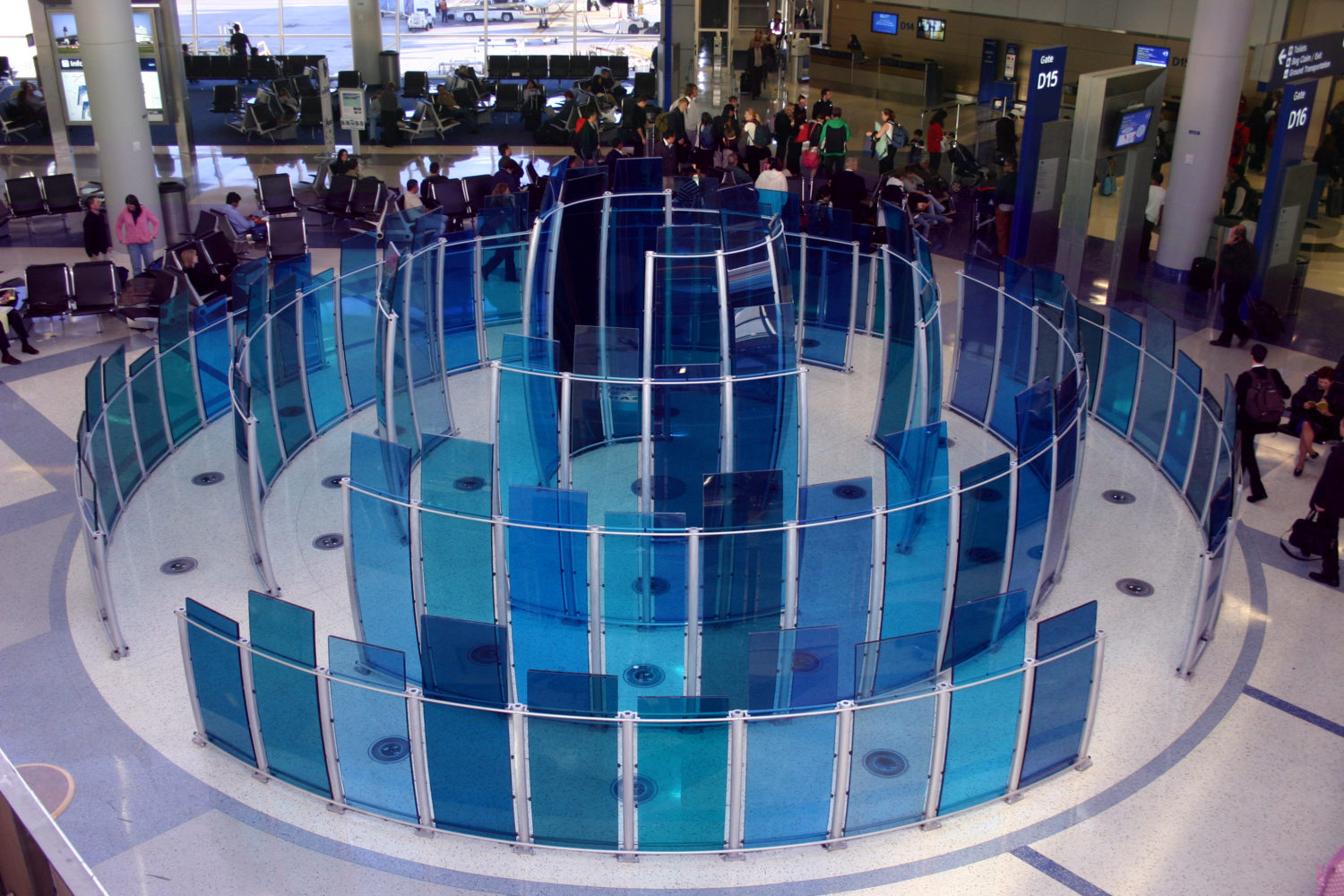
DFW ART in Terminal D


“Snowtober” in northeast strands travelers at airports

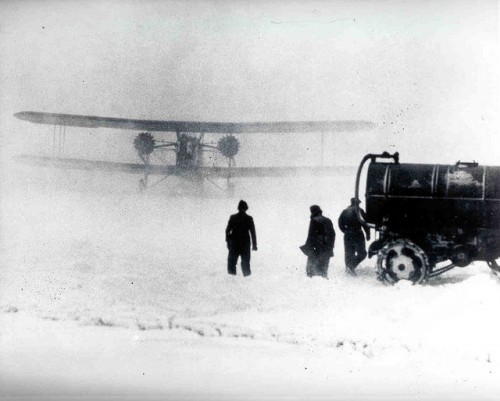
(photo via Flickr Commons/National Postal Museum, Curatorial Photographic Collection)

Thousands of travelers were delayed and stuck at airports all over the country on Saturday due to the giant snowstorm that hit the northeast.

Most notable – as of late Saturday night – were stories coming out of Bradley International Airport (BDL) in Hartford, Conn., which had a least 30 diverted flights touch down and where passengers on at least one airplane ended up stuck inside their airplane for at least seven hours.

As explanation, JetBlue tweeted: “The safety and comfort of our customers is top priority, both weather and infrastructure issues made remote deplaning impossible,” and “We are sorry for the inconvenience. Unfortunately, sometimes weather can foil even the best laid plans.”

The governor of Connecticut was reportedly sending 1000 cots to the Hartford airport, but that seemed little consolation to @kathylubey who tweeted: “Stuck in Hartford airport after being diverted from jfk. Bar closed all day. Seeking congratulations for weeping only once.”

They didn’t call him Lucky Lindy for nothing

Talk about luck.

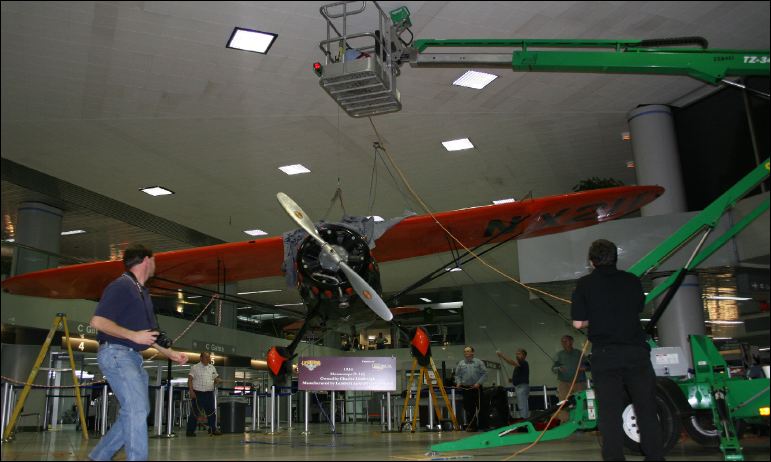
For more than 30 years Charles Lindbergh’s 1932 Monocoupe D-145 hovered over the Concourse C checkpoint at Lambert-St Louis International Airport (STL).

But just last month, to make way for the relocation of that checkpoint, the plane was lowered to the floor, removed from the airport and put in storage at Missouri’s Mount Vernon Municipal Airport.

According to the owner of the company that moved the plane, “Had it still been inside the St. Louis airport when the tornado blew through last Friday, the plane would have taken a direct hit.”

Lucky, right?

That’s what the folks at the Missouri Historical Society are probably thinking. The organization received the plane from Lindbergh back in 1940 and planned to have it restored and put on display at the Mount Vernon Airport while renovations were underway at Lambert.

The timeline for restoring and returning the plane to Lambert airport may be altered a bit by the aftermath of the tornado, but at least the plane is safe and still around.

Tornado closes Lambert-St. Louis Airport indefinitely

We’ll be getting more details today, but Friday night, April 22nd, an apparent tornado ripped through the St. Louis area and caused so much damage at Lambert-St. Louis International Airport that the airport is now closed indefinitely while they figure out what to do.

Here’s a story from the local TV news station KMOV:


Airport spokespeople say at least four people were transported to area hospitals with minor injuries and that:

“At this time, it appears that Terminal 1 and Concourse C suffered the most damage from the storm with high winds that blew out up to 50 percent of windows and caused roof damage as well.  There is also considerable storm damage at the entrances of the airport and along roadways.”

KMOV has also posted a gallery of photos showing what the area looked like after the tornado:

See the rest of the KMOV STL airport tornado damage photo gallery.

The damage is heartbreaking. Especially for those who have been looking forward to all the new features and amenities that were being put in place for a major restoration project.

Let’s hope the Lindbergh 1934 Monocoupe D-145 is safe. Charles Lindbergh’s personal plane hovered over the STL Concourse C checkpoint for 30 years and just last month was lowered and moved to the Mt. Vernon Municipal Airport to make way for a concourse relocation project. The plane is owned by the Missouri History Museum and is scheduled to return to STL when renovations there are complete.

At the airport: snow happens.

In February 2010, snowstorms so inundated Baltimore-Washington International Thurgood Marshall Airport that outside help was needed to cart all the snow away.

Luckily the snow-moving experts at Liberty Mountain Resort and Conference Center were willing to come over and help out with their Bully 600 ski slope and trail grooming vehicle.

BWI AIRPORT snow removal

A creative solution to an icy problem and, as I found out for this column in USATODAY.com – Winter survival strategies from [some of ] the USA’s snowiest airports – not unlike the snow-situations airports around the country must face each winter.

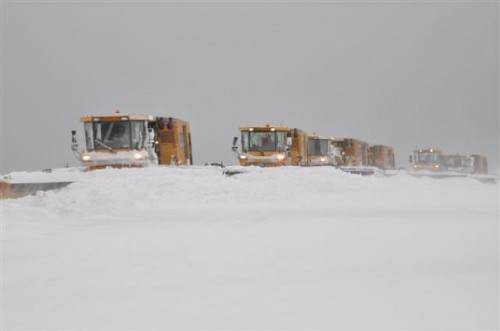
Pittsburgh Airport clearing snow


Clearing snow at Pittsburgh International Airport

Like the plowed snow at many airports, registrations for the 45th annual International Aviation Snow Symposium are beginning to pile up.

Held each April, most often in snowstorm-prone Buffalo, the symposium bestows awards on airports that excel in battling the white stuff and offers airport staff a chance to chill out and swap war stories about what went right or wrong, weather-wise, during the previous winter.

So far this season, storms have triggered the cancellation of thousands of flights and forced the temporary closing of many airports. That means there’ll be plenty to talk about at this year’s conference, as attendees try to take in tactics to make you less likely to get stuck at an airport next winter.

But when it comes to operations in unforgiving winter weather, not all airports are created equal.

Art. Not science.

“It’s not a science. There’s no book out there called Airport Snow Removal for Dummies,” says Paul Hoback, maintenance director for the Pittsburgh International and Allegheny County airports. “It’s more of an art.”

“Experience helps,” adds Hoback. “Our people have to know how to treat different types of precipitation and how to react to wind speed and wind direction so they don’t push the snow off the runway and have it blow right back on. They also have to understand what different types of ice and snow might do when they hit the ground.”

That knowledge, good planning and communication and the right equipment were all in place at Pittsburgh International Airport (PIT) last February 5th when a storm dumped more than 20 inches of snow at the airport.

“The storm was too much for many airports in the Northeast,” says Hoback, “And even we ended up closing for 17 hours. Our crews took that as a defeat but fought to get the airfield back open so that one or two airplanes with transplant organs aboard could land.”

For its efforts during that storm, Pittsburgh airport won one of a coveted Balchen/Post Awards at last year’s International Aviation Snow Symposium. Dulles International Airport, Chicago O’Hare and the Greater Rochester International Airport took home first-place awards as well.

Equipment helps

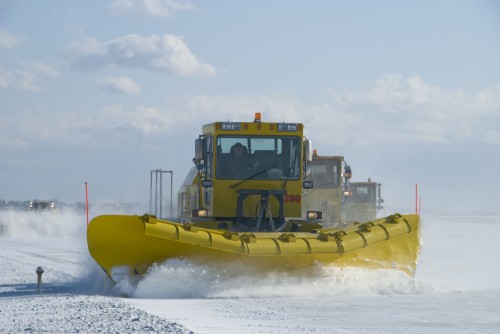
Boston Logan Vammas snow machines

Boston Logan International Airports Vammas machines in action

At Boston Logan International Airport, which won a Balchen/Post Award in 2009, airport spokesperson Richard Walsh says, “We consider snow a four letter word. We go out there and battle storms to the end.”

Logan was closed for a just a few hours last Wednesday during a storm that dumped heavy snow on parts of New England. In Logan’s corner during that storm: a snow plan, determination and eleven, 68-foot long Vammas snow machines, each a giant plow, sweeper and blower rolled-into-one. When working in unison, airport officials boast that the Vammas fleet can clear a 10,000 foot runway in less than 15 minutes.

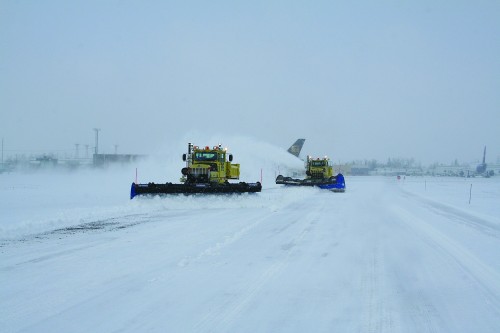
Buffalo Niagara International Airport snow plow

Snow plow shoot plumes of snow at Buffalo Niagara International Airport

Buffalo-Niagara International Airport, which hosts the annual aviation snow symposium, has won the Balchen/Post award multiple times. And although it gets an average of more than 8 feet of snow a year, it’s been more than three years since BUF has had to close due to snow.

“At the first snowflake we’ll send out a whole fleet of broom trucks to immediately begin brushing the pavement,” says airfield superintendent Tom Dames. “When snow piles up, we also have monster truck snow blowers that churn up snow and spit it out into the fields away from the runway. It looks a lot like fireboats shooting out plumes of water; except these are huge plumes of snow.”

Do-over in Denver

A few years back, Denver International Airport learned some important snow lessons the hard way.

Denver Airport clearing snow

Denver Airport has a new approach to snow removal

In 2006, just days before Christmas, Denver got hit with a blizzard that dumped 22 inches of snow in a 24-hour period. “The airport was closed for 22 hours,” says Mark Nagel, Denver Airport’s Acting Deputy Manager of Aviation. “It took us that long to clean up and get a couple of runways and our ramps clear.”

3,000 passengers spent their Christmas stranded at Denver airport that year. Nagel says “No one was too thrilled. We did kind of receive a black eye for that because it took us so long to recover.”

The problem was too big to sweep under a pile of snow. Instead, a consultant was hired; a study was conducted and DIA learned that, when it came to snow, the airport was inefficient, unorganized, understaffed and armed with not enough equipment.

The fixes included retraining, reorganizing and reassessing snow removal priorities. And now, like other airports, DIA has a snow committee that meets year-round with airlines, the FAA and other airport stakeholders to make sure the snow control plan is realistic and up-to-date.

Denver International Airport has also invested millions of dollars in new equipment and switched from single-function to more modern multi-function machinery that can plow and sweep at the same time. “So instead of taking 45-minutes to an hour to clear a runway, we can now do it in less than 15 minutes” says Ron Morin, Denver Airport’s Director of Aviation Field Maintenance.

And instead of having a single snow team, the Denver airport now has eight; each with a dedicated function. Team members were offered the chance to name their machines, but they asked instead to name their teams. Now, whenever it snows, you’ll see the Snow Cats, the Marauders, the Taxi Way Tuxedoes, the Blizzard Busters, the Deice Men Cometh, the Ramp Rats and the Snow Dawgs taking care of business.

Advice from Anchorage Airport and Mother Nature

Anchorage Airport

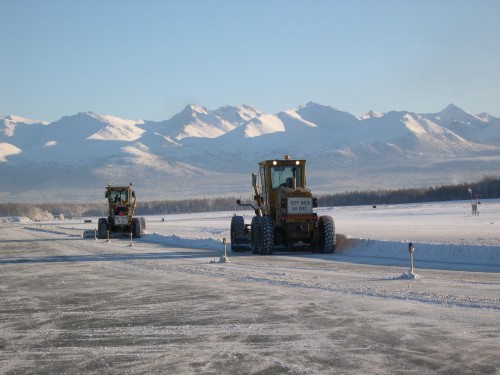
Anchorage Airport has never closed due to snow


Anchorage International Airport has won the Balchen/Post award four times and is always ready for snow. “Our snow season lasts from October through mid-April,” says Airfield Maintenance manager Dan Frisby. “At other airports it will snow and then melt. Here, the snow can stick around all year long.”

Frisby and assistant manager Zaramie Lindseth know the airport has been closed due to volcanic ash, a windstorm, the 1964 earthquake and, like other U.S. airports, for a few days after 9/11. But they can find no records that show the airport has ever been closed due to ice or snow.

In addition to having the right equipment, Frisby says it’s important that airports maintain their equipment and not skimp on the cost of crews and supplies. “Some airports try and hold back on the chemicals. And it just bites you. You’ve got to go into attack mode when a storm starts and use the chemicals as they were designed.”

No matter how well an airport prepares, though, sometimes snow happens and there’s really nothing anyone can do.

“When Denver International Airport opened, it was touted as the all-weather airport,” says DIA’s Mark Nagel. “They said ‘We’ll never close.’ But we’ve learned the hard way that you have to respect Mother Nature and balance safety with the goal of staying open.”

All photos courtesy of the featured airports. Thank-you.

Do you know an airport that does really well in the snow?  Let us know!

Airports digging out from blizzard; will travelers get to fly?

After a frightful day of snow and wind – and then more snow and more wind – New York area airports finally reopened on Monday afternoon.

Now the real “fun” begins as airlines try to reposition planes and find seats for travelers who have been stuck at airports around the country.

Here are some of the stories that have come out of the storm.

From the Wall Street Journal: Snow Keeps City at Standstill

From the Star Ledger: Hundreds of Stranded Newark Airport passengers hope to rebook flights

From the Christian Science Monitor: LaGuardia airport and others reopen, but stranded fliers still face ordeals

You get the picture…

Want to find out when you or someone you’ve been waiting for will get on a plane?

Make sure you’re signed up for all methods of flight status alerts and are following your airline and your airport on Facebook and Twitter – if they’re there.

Now that planes are moving, it should start getting easier to rebook and/or confirm a flight. Try doing it online yourself before getting on the phone or on a long line, which can take hours.  Several airlines are re-booking travelers via Twitter, so give that a try as well.  Keep in mind though, that it will take several days for get everyone where they’re going, so if you’re heading to an airport, take along some food, activities to keep you busy, a charged cell-phone, good humor and lots of patience.  While you wait, my USA TODAY airport guides and assorted apps from airlines, airports and third-party entities may help you find amenities, shops and restaurants.

And if you’ve missed the event you were heading to in the first place, ask for a refund, take out your calendar and start making a new post-blizzard plan.

Valentine’s Day is just around the corner…

Restless Mt. Redoubt nixes more flights

Alaska’s Mt. Redoubt just won’t settle down.  Here’s a Twitter-ed update Alaska Airlines sent out Tuesday about the impact of volcano eruptions on flights:

Nighttime flts in/out of ANC canceled due to Mt. Redoubt. Check flt status in a.m. b/4 leaving home…

This is getting sort of old. Flights into and out of ANC has been canceled repeatedly over the past week.  In fact, as of Monday, Alaska Airlines had canceled more than 250 flights since March 22, affecting more than 10,000 passengers and leaving folks stuck in airports such as Seattle, Phoenix and, of course, Anchorage.

According to this KTUU.com report, those stranded passengers include the Alaska Aces hockey team, which had been scheduled to fly back from Phoenix but has decided to stay in the Lower 48 rather than risk getting stuck in Anchorage and not be able to play at Utah this weekend

Mt Redoubt

In the meantime, they’re getting some great photos!

Mt. Redoubt- March 30th. Photo by Heather Bleick; courtesy of the Alaska Volcano Observatory / U.S. Geological Survey.

Mt. Redoubt, tornadoes, snow nix flights

Due to a mid-morning eruption (re-eruption?) of Mt. Redoubt, Alaska Airlines has suspended all flights into and out of Anchorage, at least until early Friday morning.

Volcano ash is serious stuff; it can limit visibility and ruin engines.  So the airline is taking no chances: 45 flights were canceled earlier this week due to previous eruptions from Mt. Redoubt, leaving more than 4,000 travelers stuck at the airport, at home, or somewhere they didn’t plan to be.

alaska-volcano-2

If you’re scheduled to fly to or from Alaska, check in with alaskaair.com or 1-800-ALASKAAIR.  In the meantime, you might want to follow the mountain’s activities on the Alaska Volcano Observatory Web site.  It has photos, seismic graphs, airport flight status reports, and instructions for collecting ash fall – finally another use for those Ziploc bags!

(Photograph of Mt. Redoubt taken from Diamond Ridge near Homer, by Dennis Anderson. At 9:50 Am  March 26, 2009)

Folks are also ending up stuck at airports all across the country today due to snow in Denver and tornado activity in the south, so if you’re going anywhere, be sure to check in with your airline before you leave the house.

Flights canceled due to volcano

Due to all the volcanic ash in the air caused by the eruption of Mt. Redoubt, Alaska Airlines today canceled flights in and out of the Alaska cities of Fairbanks, Bethel, Prudhoe Bay, Nome, Kotzebue and Barrow.

The airline is still operating flights south of Anchorage and throughout Southeast Alaska, but says that may change as all the routes get revaluated.

To find out about refunds and rebooking, be sure to contact the airline as soon as possible. You can also keep track of their updates on Twitter.

Sometimes, when airlines say a delay or cancellation is due to weather, we don’t believe it.  But I don’t think anyone can make a case against this ash-cancellation.

alaska-volcano

Image courtesy Heather Bleick and Alaska Volcano Observatory / U.S. Geological Survey