Security

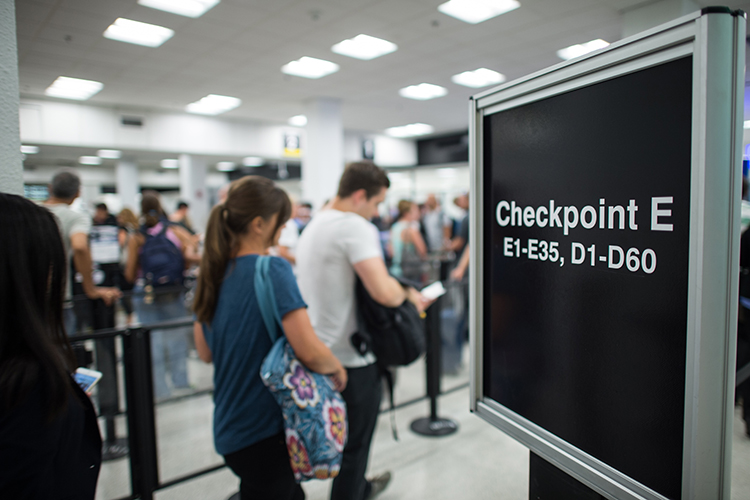
This airport lets you reserve your security checkpoint time

Now you can reserve your time on the TSA line at SEA Airport

(This is a slightly different version of a story we wrote for USA TODAY)

The good news: air travel is picking up.

On Sunday May 2, TSA screened more than 1.6 million passengers, the most since March 12, 2020.

The bad news: long wait times at security checkpoints may be back coming back too.

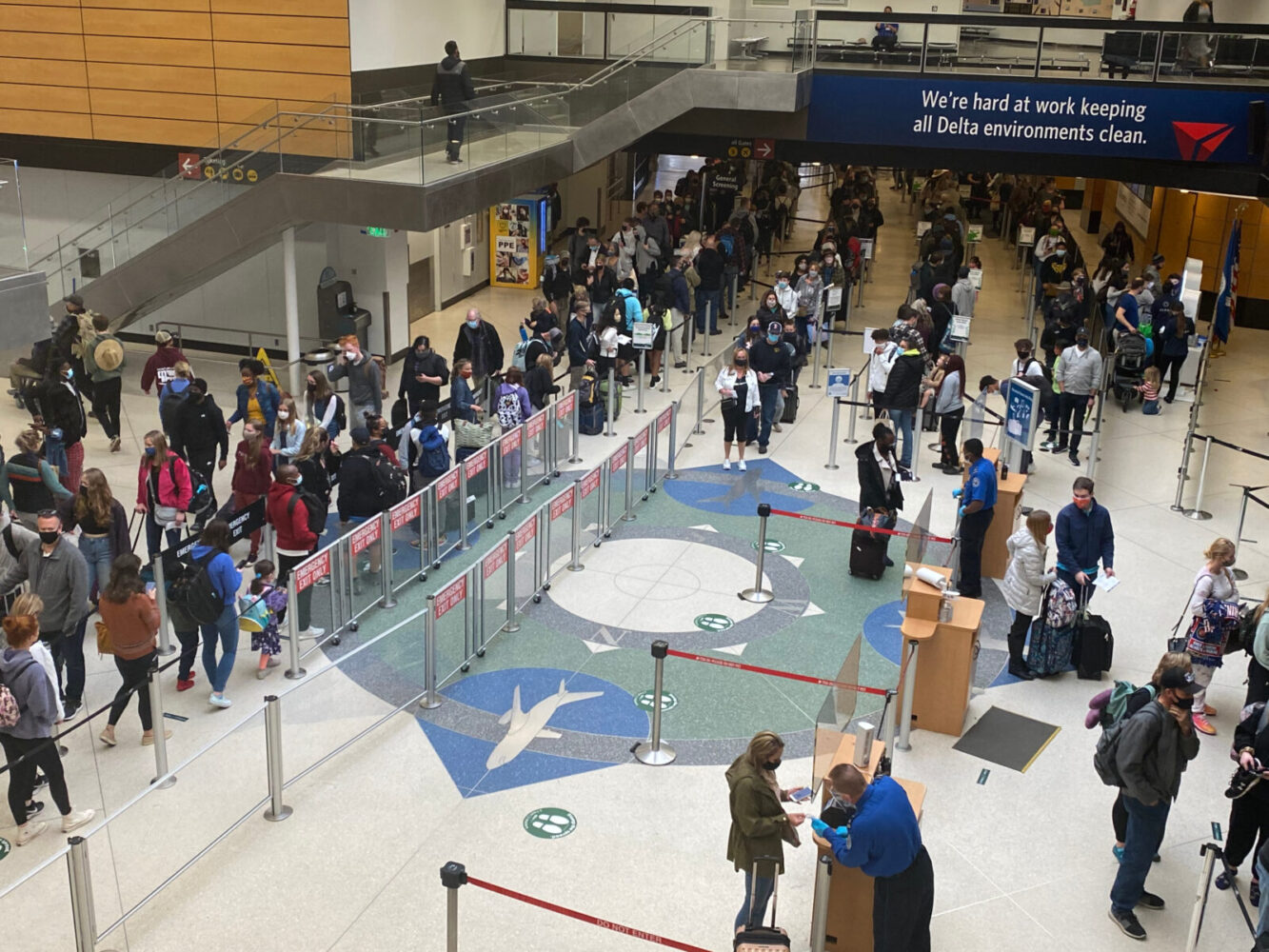
Courtesy Port of Seattle

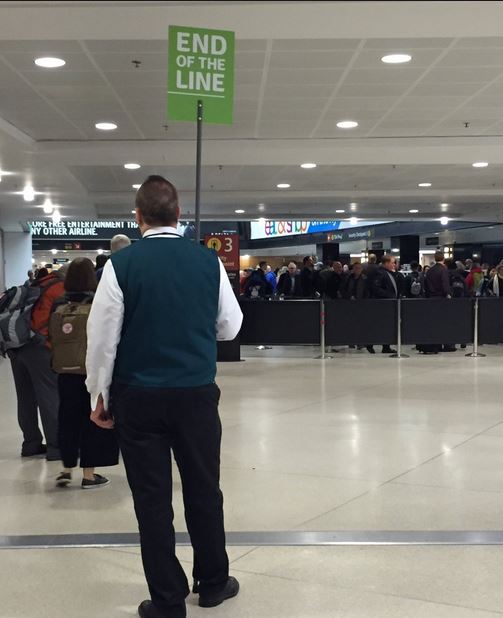
At times during spring break, the lines to go through the security checkpoint stretched into the food court at Orlando International Airport (MCO). At Seattle-Tacoma International Airport, lines snaked across the sky bridge and into the parking garage.

TSA is in the process of hiring 6,000 new screening officers ahead of the predicted summer travel surge. And that should help move things along.

So too could a new pilot program that debuts Tuesday at SEA airport.

The program, called SEA Spot Saver, will attempt to streamline wait times by offering digital reservations, or “virtual queuing” for passengers to go through the screening process.

Here’s how it works

The program will operate daily through August 31, 2021, from 4 a.m. to noon (the airport’s peak travel period) at two checkpoints (2 and 5) and offer expedited screening to general screening passengers for free. No membership or account sign-up is required.

Expedited, non-reserved screening remains available to passengers enrolled in Trusted Traveler programs such as TSA PreCheck and CLEAR.

SEA Spot Saver will be testing two options.

Alaska Airlines passengers can sign up for a security checkpoint appointment online up to 24 hours before their scheduled departure time or once they are in the terminal.

Passengers will receive a QR code to use at checkpoint 5 at their reservation time. This option is offered by Pangiam, and powered by WhyLine and Copenhagen Optimization.

The second option, operated by VHT, is for passengers flying on Delta Air Lines and all other carriers. This option allows passengers to begin booking a checkpoint appointment time by scanning a QR code once they are in the terminal. Passengers will show their emailed reservation appointment at checkpoint 2.

Both options give passengers a 15 minute window for their appointment times. The Alaska Airlines option lets you book up to 12 passengers in a group. The Delta/other airlines option lets you book a group of up to 10.

SEA will be the only airport in the United States currently testing a “virtual queuing” system as a solution for crowded general screening lines. 

Montreal-Trudeau International Airport (YUL) has offered screening reservations since 2014 through SecureXpress, but that program is currently on hold due to the pandemic.

“The pandemic has left very few passengers coming and going through YUL,” said YUL spokeswoman Anne-Sophie Hamel via email, “As such, there is no line-up to get through security, and the service is simply not useful right now.”

From October 2020 through April 30, 2021, Denver International Airport (DEN) piloted the VeriFLY app and program. Passengers could book a timed checkpoint appointment, but they also had to file health data information before arrival and get temperature checks on site.

Port of Seattle officials say that after the pilot program is completed late this summer, they will evaluate usage, customer feedback, and line efficiency and, if successful, launch a broader program. 

“These are the innovations and ideas that we love to make our guest experiences more convenient and stress-free, especially as more people get back flying again,” said Charu Jain, Alaska’s senior vice president of merchandising and innovation. “With very little effort, guests can lean on technology to get them through the security process quicker.”

REAL ID deadline delayed. Again

If one of the many things worrying you during this pandemic has been how to get to a Department of Motor Vehicles office so you can get a driver’s license or identification card that is REAL ID compliant, you can relax.

The Department of Homeland Security has decided to delay the deadline for this. Yet again.

The latest deadline for this was supposed to be October 1, 2021. But now the deadline has been pushed back 19 months to May 3, 2023.

“Protecting the health, safety, and security of our communities is our top priority,” said Secretary of Homeland Security Alejandro Mayorkas. “As our country continues to recover from the COVID-19 pandemic, extending the REAL ID full enforcement deadline will give states needed time to reopen their driver’s licensing operations and ensure their residents can obtain a REAL ID-compliant license or identification card.” 

What is the big deal about REAL ID?

After the terrorist hijackings on September 11, 2001, Congress passed the Real ID act with the idea of adding extra layers of security to the driver’s licenses and other identification documents travelers show when seeking to board an airplane.

Many states have had a hard time (or were opposed to) meeting the stricter requirements, so enacting the law has been delayed many times already.

Now, if nothing else causes the READ ID deadline to be pushed back yet again, beginning May 3, 2023, every air traveler 18 years of age and older will need a REAL ID-compliant driver’s license or identification card, state-issued enhanced driver’s license, or another TSA-acceptable form of identification (such as a passport) at airport security checkpoints for domestic air travel.  

How do you know if you have a driver’s license that’s REAL ID compliant? In most states, there is a star in the upper, right hand corner. To see what the procedure is in your state, check the DHS REAL ID page.

Don’t take your gun to the airport

It’s been a while since we took a look at the count of guns and other dangerous items travelers try to take through airport security checkpoints.

For the record, firearms, grenades and a long list of other dangerous – or dangerous-looking items – aren’t permitted airside in airports.

Yet each week passengers do show up at airport checkpoints with guns, live ammunition and other prohibited items in carry-on bags.

During the peak Thanksgiving holiday period, between November 18 and December 1, TSA officers found 153 firearms in carry-on bags.

Of those 153 firearms discovered, 127 were loaded. And 47 of those firearms had a round chambered.

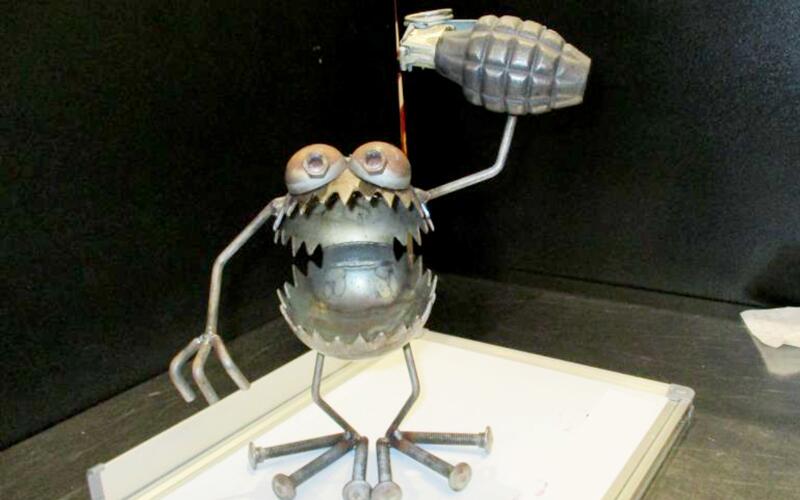
In addition to firearms, TSA officers also found this novelty item at Fort Lauderdale-Hollywood International Airport on November 25. Grenades and inert grenades, no matter how cute, are on the list of items to leave home.

These grenades also showed up recently at airport checkpoints.

In this picture:

An empty grenade discovered by TSA officers at Louisiana’s Monroe Regional Airport on December 1.

An empty grenade discovered during X-ray screening at Raleigh-Durham International Airport on November 24. 

A novelty belt buckle grenade discovered at Louisville International Airport on November 28.

According to TSA, the most common reason travelers give when firearms and other dangerous items are discovered in their carry-ons is “Oops, I forgot that was in there.”

What happens to people who get caught with these items at the airport?

Some get fines up to $13,333. Some get arrested. And TSA Pre-check members run the risk of losing their status.

Now 3 airports offer gate passes to non-ticketed passengers

Another airport invites non-ticketed passengers to hang and visit

You can do it a Pittsburgh International Airport (PIT) and you can do it at Tampa International Airport (TPA)

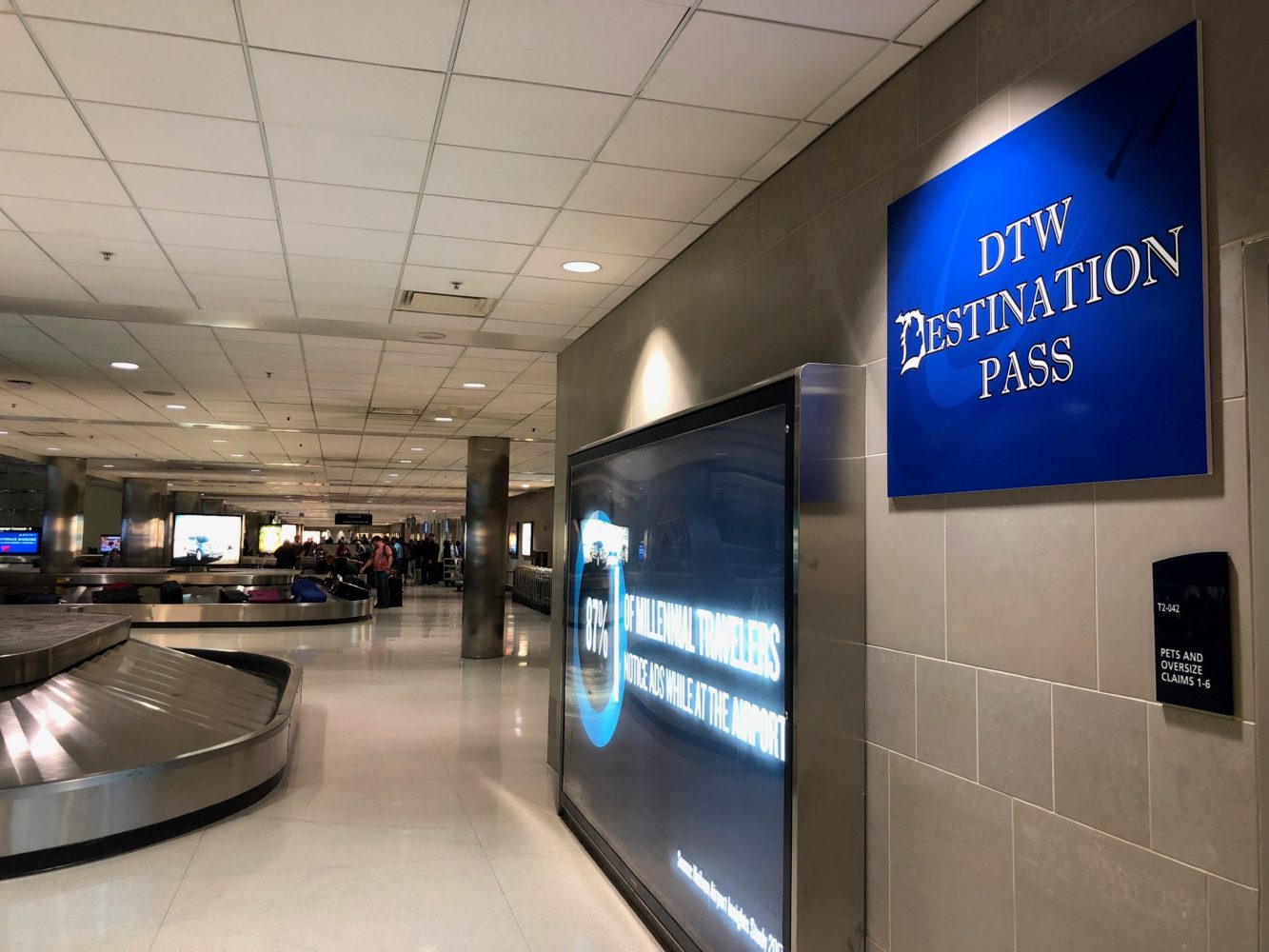
Now Detroit Metropolitan Wayne County Airport (DTW) will let you do it too.

Detroit Metro Airport now allows non-ticketed passengers to spend time on the post-security side of both the McNamara and North terminals.

The “DTW Destination Pass” program allows non-flying ing guests to come to the airport to shop, eat, check out the art, planes pot, people watch, escort a friend or family to their gate or be there when a loved deplanes. 

“The new regulations allow us to expand our gate pass program that already exists for our Westin hotel guests,” said Wayne County Airport Authority CEO Chad Newton in a statement, “Now we can welcome more community members into our home to create memorable moments—from watching planes to greeting family and friends.”

DTW’s Destination Pass program isn’t permanent (yet) but is being piloted through the holidays with an end date of January 5, 2020.

Here’s how it works:

From Tuesday through Sunday, up to 75 non-ticketed passengers will be able to enter the secure side of both DTW terminals from 8 a.m. to 8 p.m.

Visitors will need to apply for a pass through the DTW website the day before their planned visit. Applicants will get an email notification letting them know if the application has been approved. If approved, detailed instructions will be sent electronically.  

Pass holders will need to go through the same security screening as all other passengers going through the security checkpoints. During peak checkpoint times, passengers heading to flights will get priority over pass holders at the checkpoints.  

After their visit, pass holders will be asked to fill out a survey.

When the pilot program is done, “Wayne County Airport Authority will be evaluating the use of the program, along with the airport’s cost to provide this service. We will also be reviewing the completed participant surveys,” said airport spokeswoman Lisa Gass.

Other airports invite non-ticketed visitors as well

While DTW’s Destination Pass is being piloted, the gate-pass programs at Pittsburgh International Airport and Tampa International Airport are permanent.

Pittsburgh International Airport kicked off the trend with the “myPIT Pass” program in August 2017. The program operates Monday to Friday from 9 a.m. to 5 p.m. Non-ticketed passengers may apply for a pass by showing a U.S. government-issued photo ID at a special counter in the terminal.

Tampa International Airport (TPA) introduced its TPA All Access Pass in April 2019. TPA’s pass allows non-ticketed guests who apply at least 24 hours in advance to visit one of four airside areas of the airport each Saturday from 8 a.m. to 8 p.m. There is a limit of 25 people per airside.

Seattle-Tacoma International Airport (SEA) tested a gate-pass program for a few weeks during the 2018 holiday season and had 1,1650 people take advantage of the program. The decision to bring back the program on a temporary or permanent basis is still under review.

According to Transportation Security Administration spokesperson Lorie Dankers, before any airport can offer a gate-pass program to non-ticketed fliers, the airport must submit a formal proposal to the TSA to amend the local airport security plan. If TSA approves the plan, an airport is permitted to invite non-ticketed passengers past security.

So perhaps we’re seeing the beginning of a trend.

(My story about airport gate passes first appeared on USA TODAY in a slightly differing form.)

TSA takes on Star Wars, pups and checkpoint firearms.

Today’s tidbits come from some of the social media notices shared by the folks at Transportation Security Administration (TSA).

First: On its @askTSA site, TSA is answering questions from Star Wars fans heading to a Disney park to visit the Galaxy’s Edge attraction.

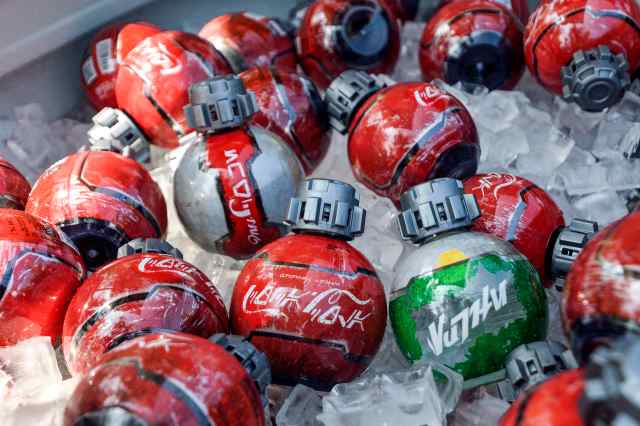
People are curious about how TSA will deal wtih some of the out-of-this-world souvenirs, like “thermal detonator” coke bottle souvenirs.

TSA says don’t try putting these ‘thermal detonator’ soda bottle souvenirs in carry-on luggage. Athough they’re filled with soda, they look like something else.

And that’s why they say those items should be put in checked bags.

TSA also shared the winner of its National Dog Day Cutest K9 contest. Congrats to Alfie!

https://www.instagram.com/p/B1oYetynNrp/?utm_source=ig_web_copy_link

And, as it does most every week, TSA reported the number of firearms found in carry-on bags at airport checkpoints in the previous week.

Between August 19 and 25, TSA officers found 69 firearms in carry-on bags.

That tally is actually on the low end.

But, of the 69 firearms discovered in carry-on bags last week, 59 were loaded and 23 had a round chambered.

Travel Tune-up: “Ask TSA” offers answers.

Want to avoid the TSA tangle? Just ask.

Bowling balls? Yes, you can take them as carry-on

Our column this week for CNBC tackled the TSA experience and offered tips on what you may – and may not – pack in your carry-on. Here’s the story.

Last week, the Transportation Security Administration shared a photo on social media of a missile launcher found in a passenger’s checked bag.

“Man said he was bringing it back from Kuwait as a souvenir,” said TSA spokeswoman Lisa Farbstein on Twitter, “Perhaps he should have picked up a keychain instead!”

As a division of the Department of Homeland Security, TSA is responsible for overseeing security at the nation’s airports. But weighing in on the pros and cons of travel souvenirs and answering questions about what items are permitted on airplanes has become part of the job.

“We get a lot of questions about what people can take through the checkpoints,” said Janis Burl, the @AskTSA manager. “A lot are about food – i.e. ‘Can I take a sandwich?’ [Answer: yes] And over the past few months we’ve gotten a lot of questions about that’s kid toy slime.” [Also yes, but only if the slime is 3.4 ounces or less and is carried with a travelers’ liquids and lotions in the allowed one-quart zip bag.]

On its website – under the header “What Can I Bring?”, and on its app, TSA has an extensive catalog of things travelers may or may not pack in their carry-on or checked bags. Items are listed alphabetically and by category and the list can be searched.

Under “Toys” there are seven examples and TSA notes that while fidget spinners and remote controlled cars are allowed in carry-on luggage, realistic replicas of firearms and explosives are not. The TSA directory also has a helpful note about adult toys (ahem), which are allowed in both carry-on and check bags.

What about toy lightsabers, including those purchased or custom built (to the tune of $200) at Disney’s new Star Wars: Galaxy’s Edge attraction?

TSA’s “What Can I Bring?” database says “Sadly the technology doesn’t currently exist to create a real lightsaber. However, you can pack a toy lightsaber in your carry-on or checked bag,” and adds, “May the force be with you.”

With summer travel in full-swing, it’s good to know ahead of time that tent spikes or poles, strike anywhere matches, spear guns, pool cues, Magic 8 Balls, firecrackers, bear spray, baseball bats and bowling pins are not allowed as carry-on items, but that bowling balls are allowed. 

Also allowed as carry-on: compasses, amethyst crystals, fresh fruit, fishing rods, live lobsters (in a clear, plastic, spill proof container), seashells, fruit gummies, cooked lasagna, jelly beans, electronic bathroom scales and frozen water bottles, as long as the water is completely frozen when presented for screening.

And while the Federal Aviation Administration is emphatic that drones not be flown near airports, TSA allows drones in carry-on bags. However, the agency encourages travelers to check with their airline about specific rules for taking drones on board.

For items not found in TSA’s database, and for travelers who want to make sure a specific item will fly, there is a team of ten full-time TSA employees who monitor and respond to questions sent in via Twitter (@AskTSA) and Facebook Messenger.

Team members are on duty 8 a.m. to 10 p.m. (ET) weekdays, 9 a.m. to 7 p.m. weekends and holidays, (including Christmas) and are quick to respond to all manner of “Can I bring?” questions sent in.

One passenger recently asked about traveling with jars of pickles. They were advised that pickles without liquid in a zip bag were good to go as carry-on, but that pickles with pickle juice were only allowed in a carry-on bag if packed in a container of 3.4 oz. or less.

Another passenger wrote to @AskTSA inquiring about traveling with a whole cantaloupe she’d grown in her garden.

“I want to take it to my mom,” the traveler tweeted to TSA. “You can,” TSA responded, adding “We hope your mom enjoys the treat!”

Other recent questions have covered verything from quesadillas to roach bait. And Burl says, when in doubt, sending along a photo is always helpful.

It may seem as if the “AskTSA” team has likely seen it all by now, but Burl says they sometimes gets stumped.

“If you send in a photo and we don’t know what it is, we’ll go to Google to figure it out.”

And while the @AskTSA team uses its knowledge, TSA’s database and, sometimes, a bit of Googling, to give travelers a thumbs up or down on traveling with certain items in carry-on or checked bags, Burl says the final say-so on any whether an items is a ‘go’ rests with the Transportation Security Officer (TSO) on duty at the checkpoint.

“If they’re looking at something that doesn’t look right, they can make that decision,” said Burl.

In addition to its website, Twitter and Facebook accounts, TSA also has a very popular and informative Instagram account that can help travelers learn about what can fly.

A recent post, in honor of National Kitten Day, for example, noted that kittens, catnip and balls of yarn are good to go through security checkpoints, but warned that cats (and other pets) must be removed from their carrier while the carrier goes on the X-ray belt for screening.⠀⠀⠀⠀⠀⠀⠀⠀⠀⠀⠀⠀⠀⠀⠀⠀

https://www.instagram.com/p/BzvT82fHPGY/

TSA also produces occasional quirky-but-entertaining and educational “They brought what? videos.

More TSA no shows; but more support for TSA workers

The Transportation Security Administration is sending out daily reports on the number of officers who are not showing up for work and wait times at the nation’s largest airports.

No surprise, the numbers of ‘no shows’ has been rising as the shutdown drags on.

On Sunday, TSA reported, 10 percent of its workforce had “unscheduled absences” compared to a 3.1 percent rate one year ago on the same day.

“Many employees are reporting that they are not able to report to work due to financial limitations,” says TSA.

On Sunday, the average security checkpiont wait times at most of the busiest airports were well within TSA’s ‘normal’ range of 30 minutes. But keep in mind hundreds of flights were canceled on Sunday due to weather, so lines may have been light anyway.

Still there were some ‘wowsers’: On Sunday, travelers waited an average of 28 minutes on line at Tampa International Airport, an average of 35 minutes at Minneapolis-St. Paul International Airport and an average of 45 minutes at Louis Armstrong New Orleans International Airport.

The outpouring of support for TSA workers, air traffic contollers and other federal employees who are showing up for work continues.

This week, TheFruitGuys will be delivering boxes of fresh fruit (and, in some cases, take-home veggies) to TSA workers at airports in Atlanta, Chicago, Philadelphia, San Francisco, Phoenix Sky Harbor International Airport, Dallas Fort Worth International Airport.

At Your Gate has expanded its offer of free meals ($10 off, plus free delivery) to TSA workers at airports in San Diego, Newark, New York (LaGuardia and JFK) and Minneapolis.

And SFO Airport is asking onsite shops and restaurants to offer 50 percent discounts to federal employees who continue to work without a paycheck.

To help out, “SFO will adjust its fee structure to protect voluntarily participating concession operators from any financial impact of this discount program,” the airport said in a statement.

SFO is also providing resource sheets to help affected workers access assistance services, and the Airport’s Business and Career Center is offering “Shutdown Support” drop-in hours where affected workers can meet with specialists on managing unexpected financial challenges.

TSA getting love + shutting checkpoints

As the partial government shutdown slogs on, the Transportation Security Administration says an increasing number of its officers are facing financial difficulties and not showing up for work.

That’s causing longer wait times at some major airports around the country. It’s also forcing some airports to close some checkpoints.

Checkpoint A was closed at Baltimore-Washington International Airport.

And the security checkpoint in Terminal B continues to be shut down at George Bush Intercontinental Airport in Houston.

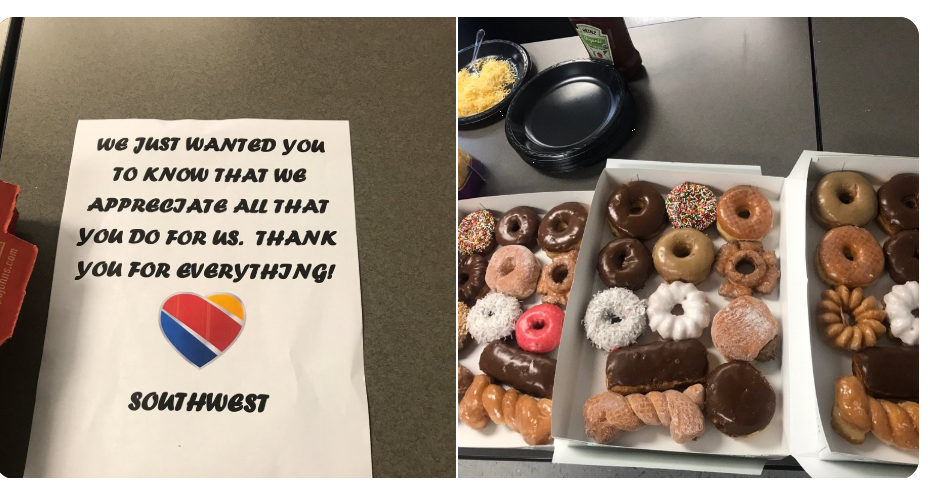
TSA officers, air traffic controllers and other federal workers who have been showing up for work at airport may not be getting paychecks, but across the country, they are getting lots of love, food and assistance from airlines, airports, restaurants, community groups and the general public. Here’s a slightly updated version of the story I filed this weekend for CNBC.

At Bellingham International Airport in Washington, about 20 miles from the Canadian border, budget airline Allegiant Air provided pizza for TSA workers on Thursday.

In Las Vegas, Nevada Governor Steve Sisolak not only visited with TSA workers at McCarran International Airport to express his appreciation for their service and commitment to the airport and to the community, he followed up by having hot pizzas delivered.

These, and many other pizza thank-yous, are coming on the heels of last week’s gesture of goodwill from Canadian air traffic controllers who sent more than 300 pizzas to their counterparts in more than 40 airports in the United States. Air traffic controllers in the Canadian city of Edmonton got the (dough) ball rolling.

Of course, TSA and FAA employees working without paychecks can’t live by pizza alone.

At Seattle Tacoma International Airport, donations of non-perishable food and gifts cards are being collected and distributed daily.

Seattle-based Washington Federal is offering interest-free, 90-day loans, with no loan fees or application fees, to TSA, FAA and other federal workers waiting for paychecks in eight western states, including Washington, Oregon, Idaho, Utah, Nevada, Arizona, Texas and New Mexico.

“We are proud to step in and help our hard-working neighbors get through this uncertain time and support their financial needs,” said Washington Federal President and Chief Executive Officer Brent J. Beardall in a statement, “We hope other financial institutions will do the same.”

And in San Jose, California, the City Council this week endorsed Mayor Sam Liccardo’s proposal to set up a no-interest short-term loan program for many of the 500 federal employees who have been working at Mineta San Jose International Airport without pay.

The program, which may be funded through airport revenues and administered in partnership with one or more financial institutions, proposes loans equal to monthly take-home pay for FAA air traffic controllers, TSA workers and officers working for Customs and Border Protection (CBP).

“We are going to do everything in our power to keep political dysfunction in Washington from creating service disruptions or safety issues here in San Jose,” said Liccardo. “Mineta San Jose International Airport is vital to our local economy and we need our highly-skilled and trained federal workers there to keep it running smoothly. That’s why we are exploring tools, like these local bridge loans, to help keep these essential workers on the job.”

Meanwhile, across the country, airports continue to gather and distribute donations for federal employees affected by the partial government shutdown.

At Orlando International Airport, there has been overwhelming response to a donation drive headed up by the Airline Management Council. On Thursday the airline tweeted a short video of a room with tables piled high with everything from donated diapers to toilet paper and canned goods.

As the shutdown continues, airlines, airport concessionaires and other groups are stepping up with donations, discounts and support.

“Today we were able to help surprise the Sunport’s @TSA with gift cards to local grocery stores and lots of goodies to fill their break room for a few days – all thanks to the wonderful folks with Indivisible Nob Hill and Resist Tyranny Tuesdays,” Albuquerque International Sunport tweeted, along with photos.

And on Thursday, “It was our turn,” St. Louis Lambert International Airport, said in a tweet, “The #stlairport and @HMSHost provided lunches to all @TSA officers this morning and afternoon. We appreciate your huSTLe and dedication. #ThankyouTSA.”https://twitter.com/flystl/status/1086018922267193344

TSA officer dance-off with tiny traveler

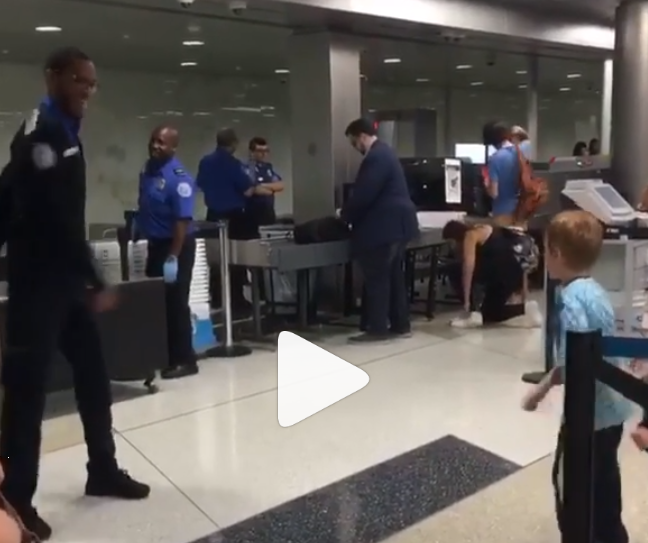
Check out this fun dance-off between a young traver and a TSA officer at Newark Liberty International Airport. Thev video was posted on the TSA’s Instagram account and has gone viral.

Take a look.

https://www.instagram.com/p/BmeY3cxHAW9/?utm_source=ig_web_copy_link

This isn’t the first time a TSA officer with a sense of fun was caught on tape.

Here’s a video posted a while back of an officer matching the moves of a young traveler at Orlando International Airport.

https://www.instagram.com/p/BjdTf_RnNai/?utm_source=ig_web_copy_link

TSA’s Instagram account is surprisingly well-followed, sometimes alarming and often entertaining ( if corny) feed. Here are few examples:

https://www.instagram.com/p/BmPVRHJHbPE/?utm_source=ig_web_copy_link

https://www.instagram.com/p/BmAExOQnPwj/?utm_source=ig_web_copy_link

That ‘unauthorized’ Horizon Air flight: now what?

That “unauthorized” Horizon Air flight at Seattle Tacoma International Airport: now what?

Courtesy Alaska AIrlines

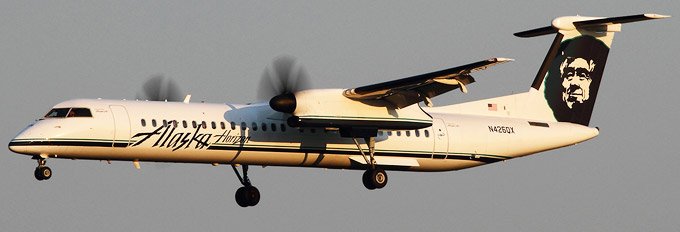
You’ve no doubt heard about the Horizon Air grounds crew employee who took a turboprop airplane – a Q400 – for an unauthorized flight out of Seattle Tacoma International Airport on Friday night. The man, identified later as Richard Russell, flew the plane around the region for about an hour before crashing into a small island.

With military jets trailing, and local media and eyewitnesses reporting what was in process, Russell did some acrobatic stunts with the plane and talked with an incredibly calm-sounding air traffic controller at SEA  airport:

https://youtu.be/C_ifxAQxSbw

Horizon Air is a subsidiary of Seattle-based Alaska Airlines and on Saturday officials from the airlines along with officials from agencies involved in the investigation held a press conference to discuss what they knew at that point -and what would happen next:

Human remains – presumably Russell’s – and the aircraft’s black box have been  located in the wreckage of the plane and now the discussions will focus on how this happened – and how to keep it from happening again.

On his site, security aviation expert Jeff Price writes that this incident – which he says will be filed as an ‘insider threat’ –  “Is not a failure of the airport security system. Airports are responsible for access to the ramp; airlines are responsible for access to the airplane.” He goes on to explore some of the solutions that will explored.

James Fallows has a good recap in The Atlantic – linking to many of the initial reporting that helped us figure out what was happening as the event unfolded.

On his “Ask the Pilot” blog, Patrick Smith, discusses the incident, saying that while an insider threat does exist, “This particular kind of threat, however — the idea of random employees getting hold of planes — shouldn’t be overplayed.” Some other “Now what?” thoughts can be found here. 

But the incident does raise serious question about airport and airline security and, as this story in the Seattle Times notes, “The answers to these questions could eventually alter security procedures not only at Seattle-Tacoma International Airport but at other airports around the country.”

What do you think might – and should – change at airports as a result of this incident?