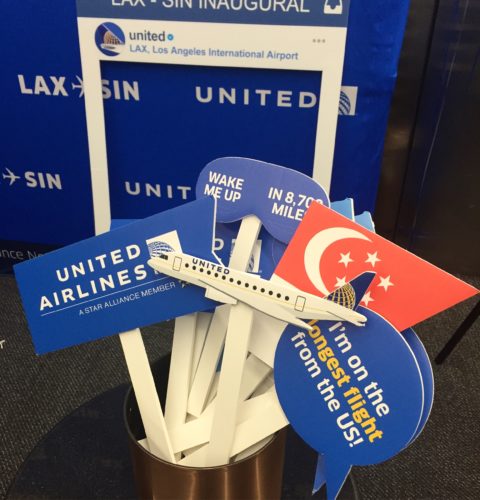
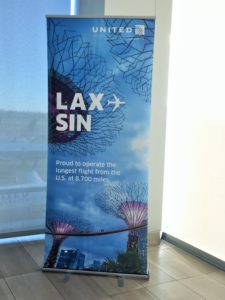
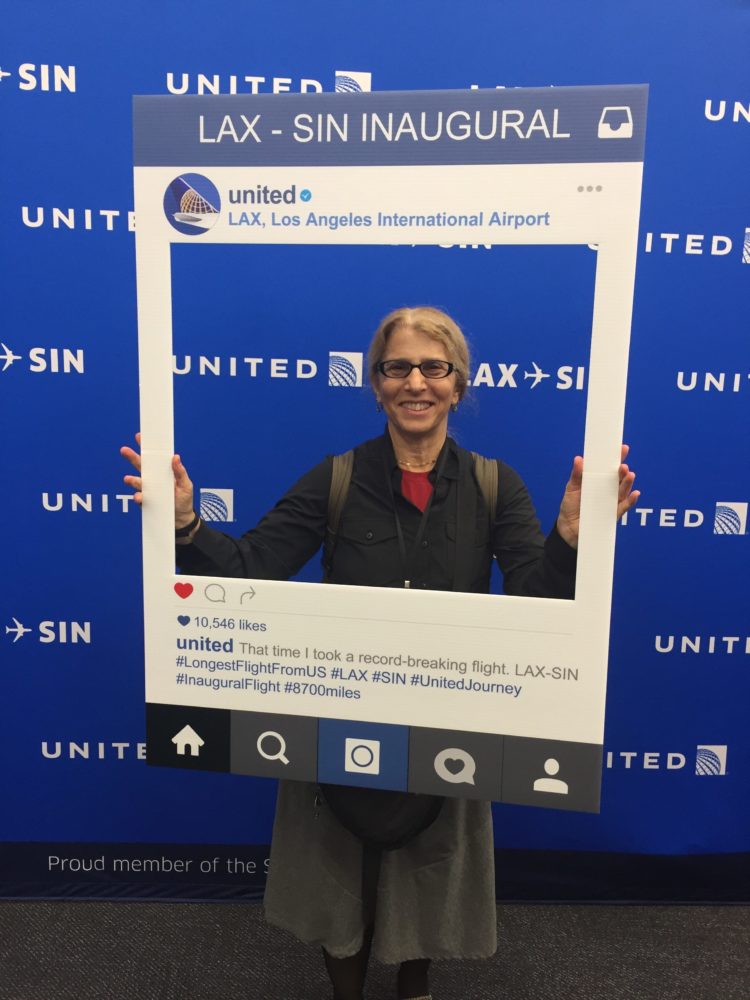
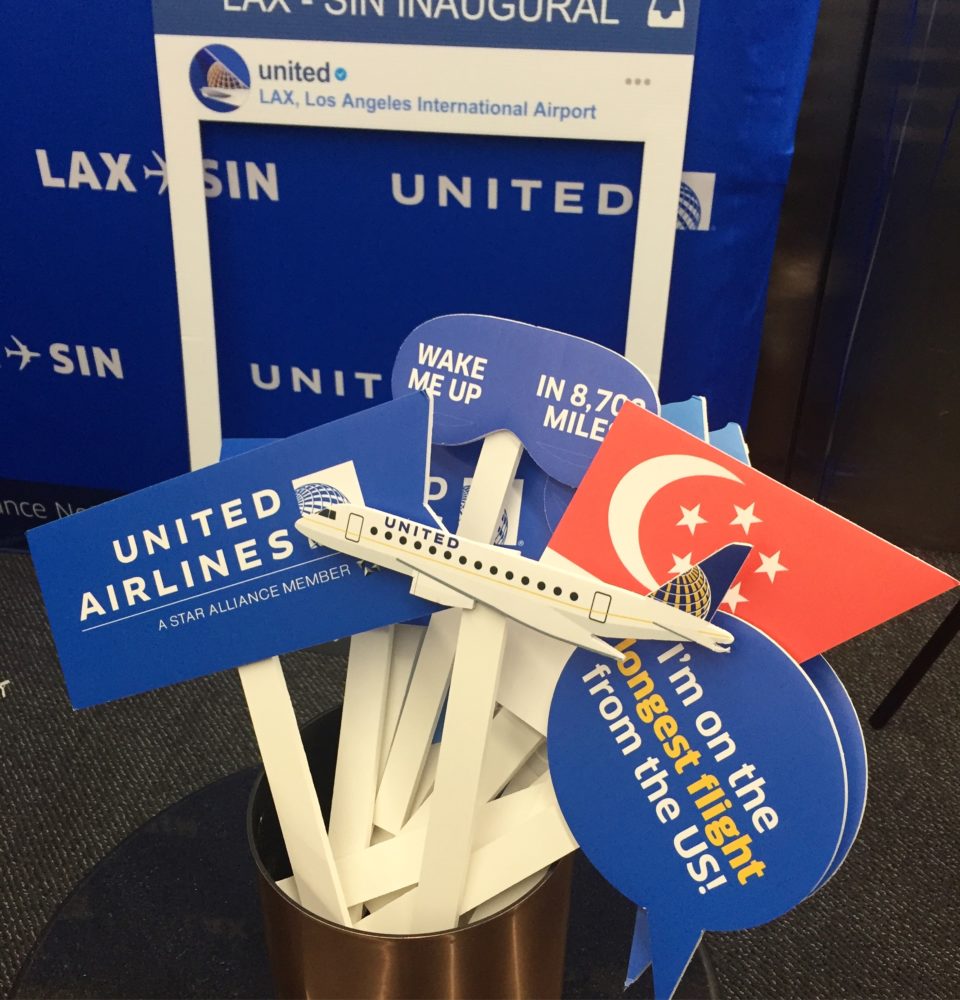
With the launch of new non-stop service between Los Angeles and Singapore, United Airlines set a new distance record among U.S. airlines flying to or from the United States.
Thanks – or rather, due – to headwinds facing westbound aircraft, the published length of the 8,700-mile trip from Los Angeles International Airport to Singapore’s Changi Airport clocks in at whopping 17 hours and 55 minutes, with the return/eastbound trip scheduled to take ‘just’ 15 hours and 15 minutes.
While still long, for many travelers this flight significantly shortens the journey to the Lion City. Until now, passengers had to make a stop somewhere along the way.
“This flight shaves hours off that journey,” said Patrick Quayle, Vice-President of International Network for United Airlines.
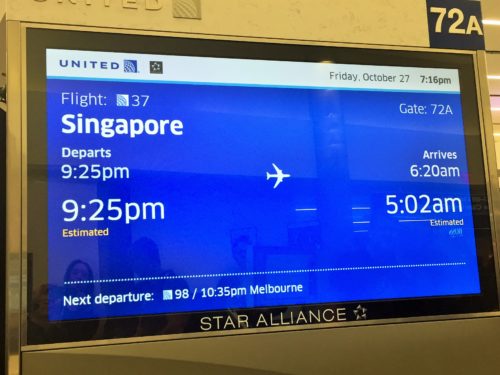
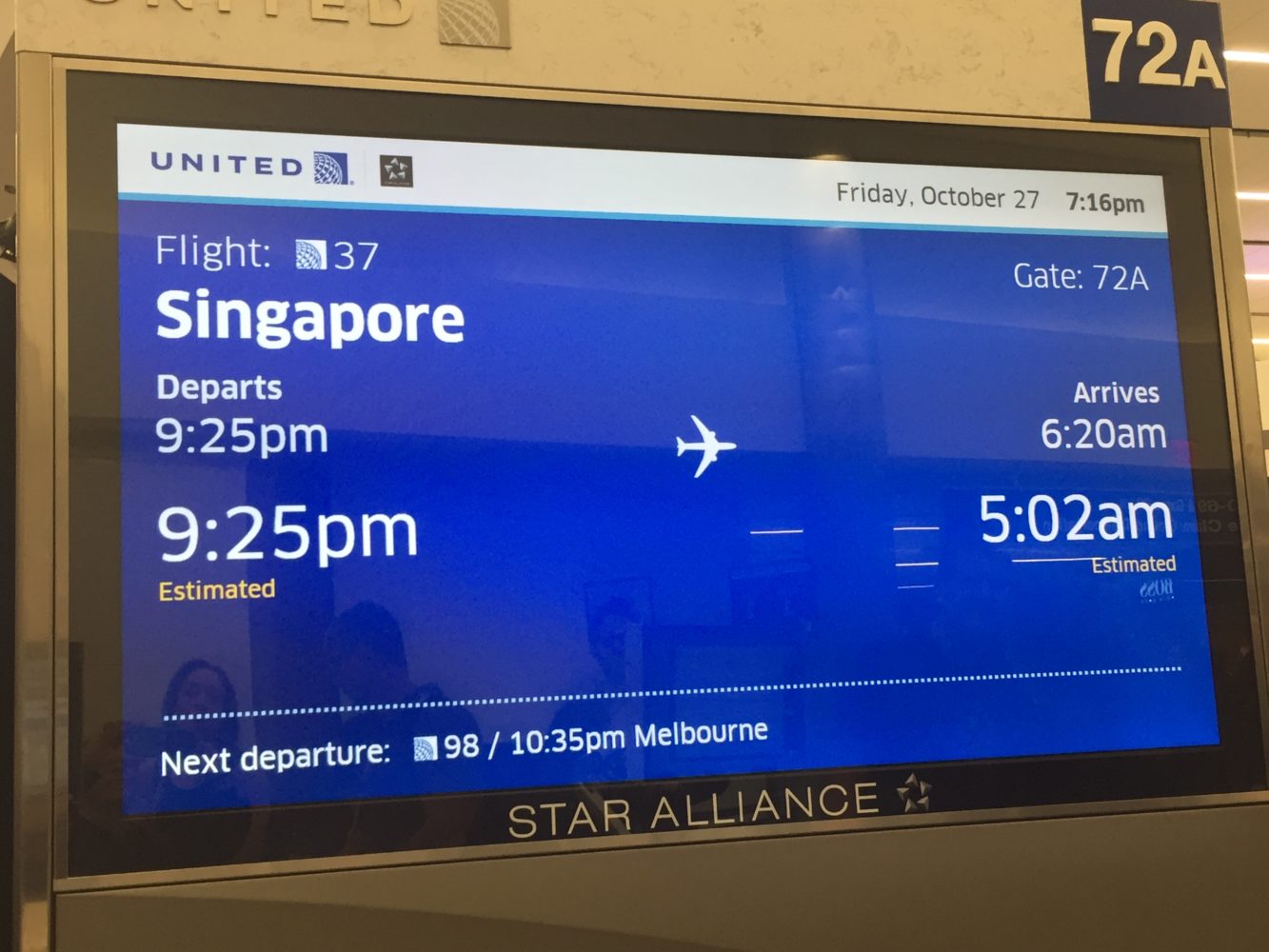
The new LAX to SIN flight (UA37) is scheduled to leave Los Angeles daily at 8:55 p.m. and arrive in Singapore at 6:50 a.m. two days later, local Singapore time. The return flight (UA 38) leaves Singapore’s award-winning Changi Airport daily at 11 a.m. and is scheduled to arrive at Los Angeles International Airport at 10:15 a.m. the same day, local time.
United also serves Singapore with a daily non-stop flight from San Francisco, which at 8,466 miles is now the second longest scheduled flight operated by a carrier from the United States.
In addition to being the longest flight from the United States to anywhere in the world, the new United Airlinesnow holds the record for both the longest (LA – SIN; 8,700 miles) and second-longest flights (SFO – SIN; 8,466 miles) on Boeing 787-9 Dreamliner aircraft. That record is destined to fall in March, 2018 when Sydney, Australia-based Qantas begins flying a 787-9 Dreamliner aircraft between Perth and London, a distance of about 9009 miles.
While these will be the longest flights on Boeing 787-9 aircraft, they won’t be the world’s longest flight. That record is currently held by Qatar Airways, which flies between Doha and Auckland, a distance of 9,032 miles.
Courtesy UNITED
Shortening the flight time between Los Angeles and Singapore is not only appealing for leisure travelers heading to Asia, it gives Southern California an economic edge.
“Over 71 Singaporean companies have operations in the six counties of Southern California,” said Stephen Cheung, President of the World Trade Center, Los Angeles, “They create over 3,300 jobs for the local region and together contribute over 200 million in annual wages. So this new direct flight increases the opportunity for Singaporeans to invest in Los Angeles.”
If you’re going to be on a plane for 18 hours – or any long stretch of time – comfortable seating, upgraded amenities and the aircraft can make a difference in how you feel on arrival.
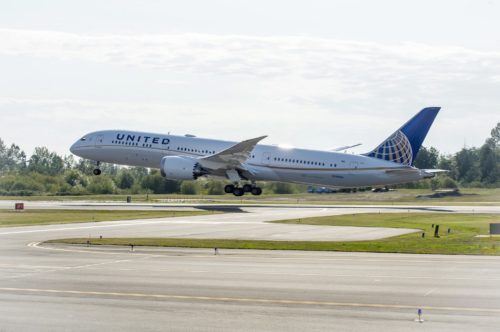
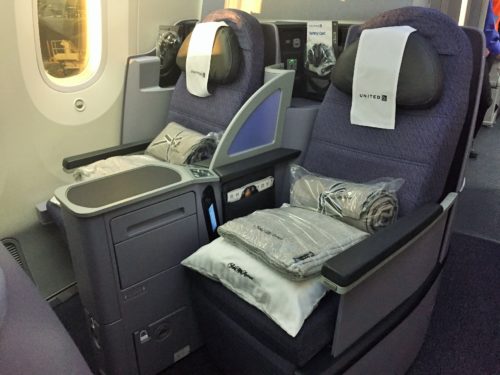
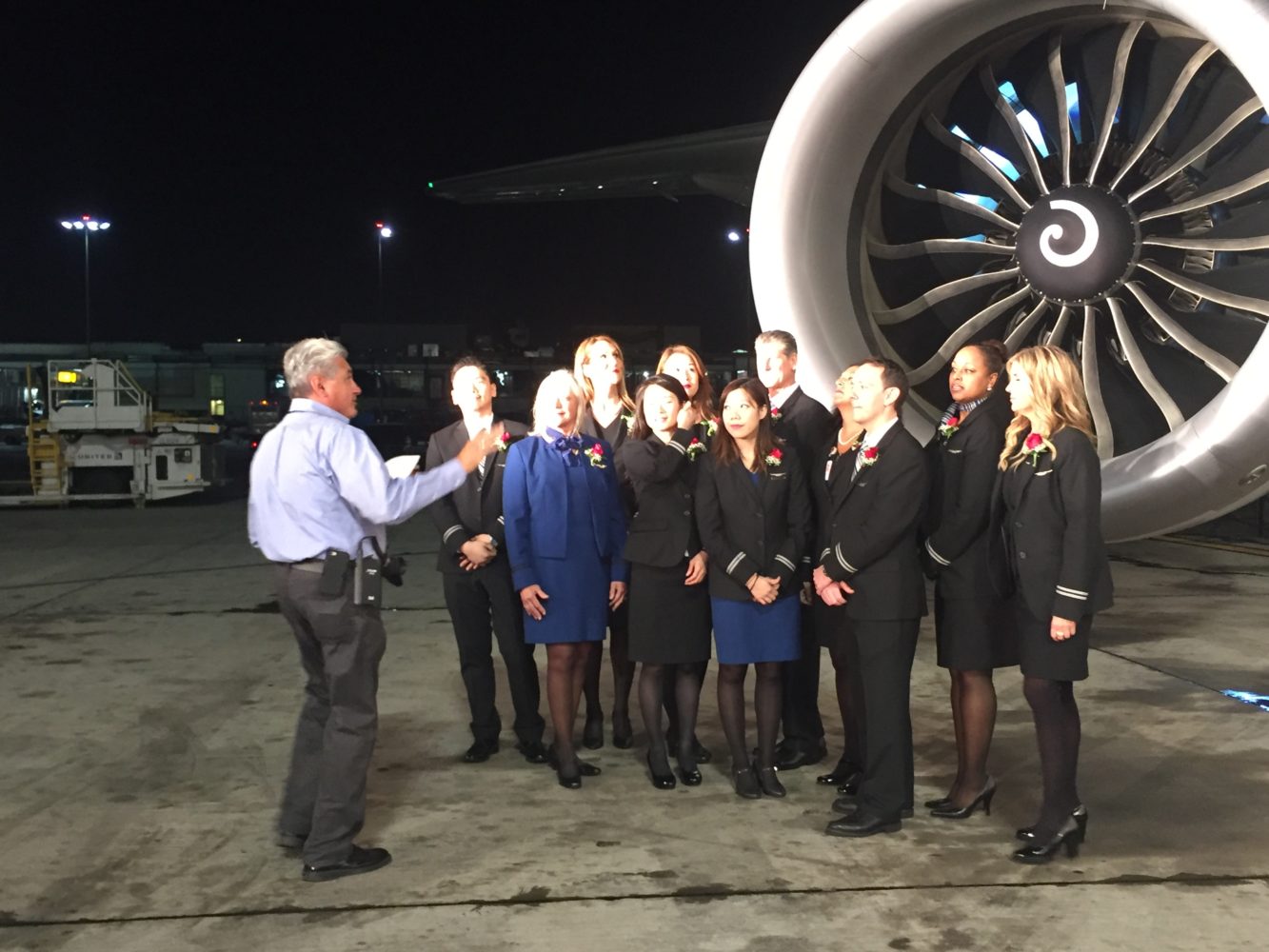
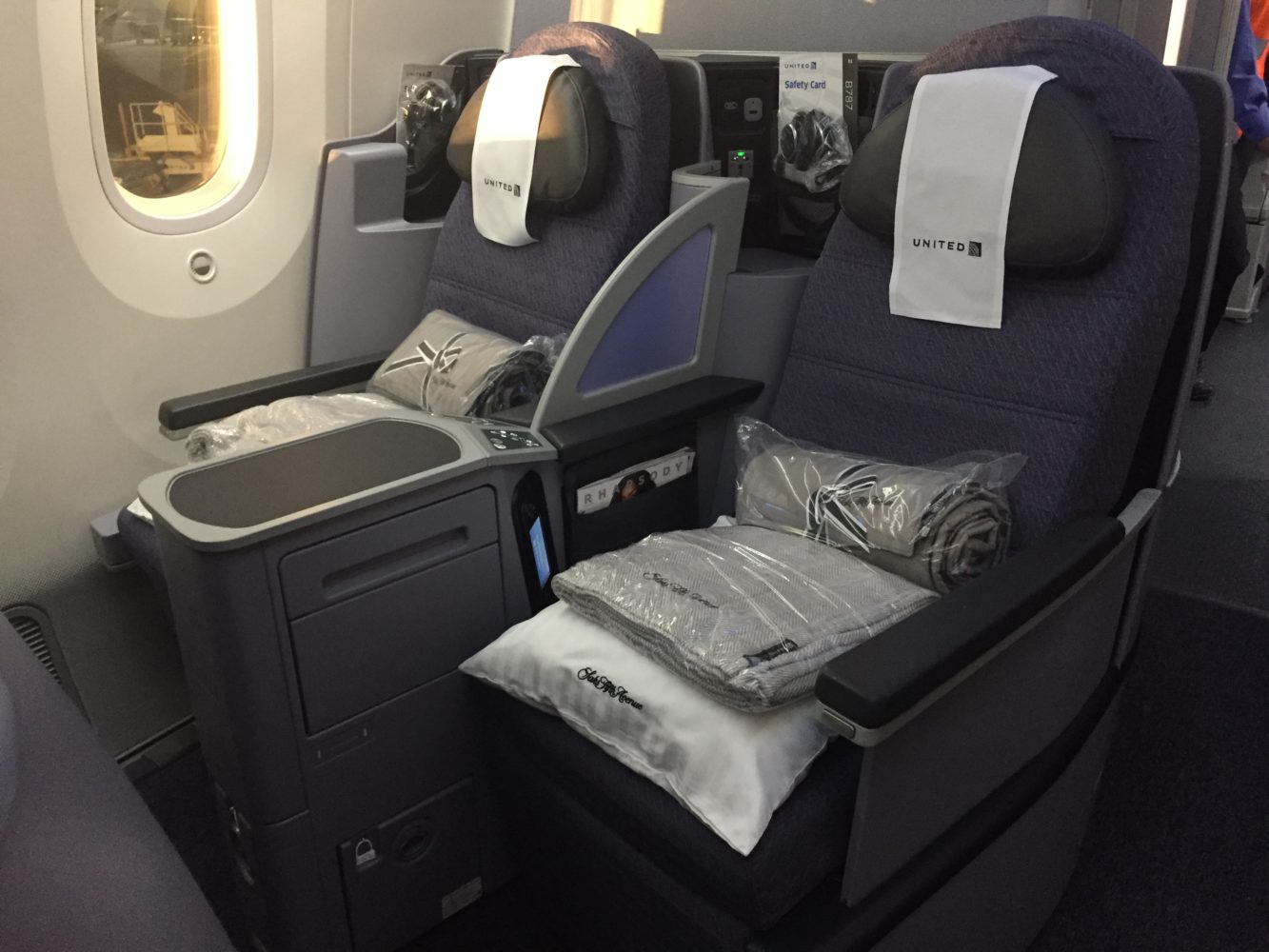
United’s 8,700-mile non-stop flight is serviced by a Boeing 787-900 Dreamliner with 252 seats: 48 in Polaris business class, laid out in a 2-2-2 configuration; 88 premium economy seats and 116 economy seats, in a 3-3-3 layout.
While the 787-9 United used on this route doesn’t have its newest Polaris business class seats (and won’t be retrofitted with them for several years), the business class section does have lie-flat seats and benefits from the airline’s Polaris service, which includes Saks Fifth Avenue-branded bedding and fleece-lined slippers.
The aircraft itself offers benefits to long-haul fliers. The composite carbon fiber material (as opposed to aluminum) used to make the aircraft means the cabin pressure and humidity can be higher than on other airplanes. That makes passengers feel as if they are flying at a lower altitude than on a standard flight and can helps cut down on the fatigue, dryness, and jet lag travelers usually experience.
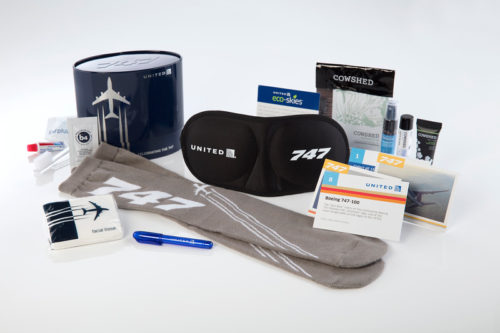
United Airlines is about to retire its entire fleet of 747 aircraft, known as the “Queen of the Skies,” and through January 2018 is giving passengers flying in Polaris premium cabins a collectible 747-themed amenity kit.
In addition to amenity-kit basics such as a travel toothbrush, toothpaste, tiny tissue pack, ear plugs, lip balm and hand lotion, this kit contains some commemorative items, including 747-themed socks, a 747-themed padded eye-mask and a pack of five 747-themed trading cards. There are 15 commemorative 747 cards in the full set, giving passengers on the 18 hour LAX to Singapore flight, and others, an excuse to strike up a conservation and swap cards along with road warrior stories.
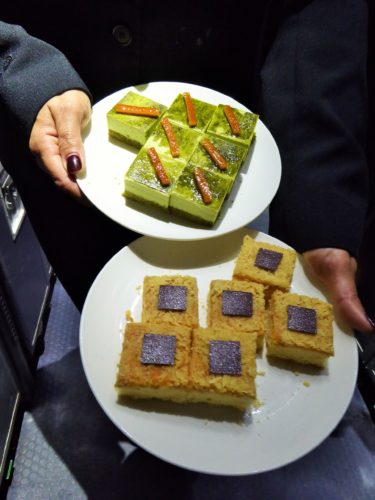
Eating and snacking are important on a long haul flight. United’s Polaris passengers on the Los Angeles to Singapore flights can plan on having a four course dinner, with ice-cream sundaes and Asian sweets for dessert, breakfast before arrival and a choice of serve-yourself snacks, including Ramen noodles, sandwiches, fruit and candy during the flight.
Singapore Airlines, which – like United – flies direct between San Francisco and Singapore, plans to re-introduce direct flights between Los Angeles and Singapore soon. For now, though, United Airlines is the only carrier offering direct flights between LAX and SIN.
Last week, after dipping to as low as $177 for a short time, roundtrip economy fares for United’s non-stop flights between Los and Singapore were as low as $600 (including taxes) for some early December flights.
(My story about United Airlines’ new 18-hour flight between Los Angeles and Singapore first appeared in a slightly different version on CNBC).